Category: Vegan Recipes

This Vegan Chicken Factory Has Glass Walls For A Reason.

This Vegan Chicken Factory Has Glass Walls For A Reason
Planted recreates the textures, tastes, appearances, and nutritional value of chicken, pork, and beef. Credit: Planted Foods

This Vegan Chicken Factory Has Glass Walls For A Reason

Seeking to revolutionize how meat is perceived and consumed globally, Planted aims to trigger a fundamental rethink about the food we eat

by Leigh Venus26th November 2021

“If slaughterhouses had glass walls, everyone would be vegetarian.”

In 2010, Sir. Paul McCartney lent his face and this famous quote to a PETA film that took viewers behind the opaque walls of slaughterhouses and factory farms.

Although one of the most well-known quotes in the animal rights movement, it took the team behind Planted Foods—a Swiss food tech company dedicated to ending animal suffering through tasty plant-based alternatives to meat—to run with the idea.

Convinced the food industry needed to be more transparent about ingredients and processes, Planted made this literal by building an enormous glasshouse around their production in the heart of their Switzerland-based factory.

Slaughterhouses are often miles away from urban centers, guarded by impenetrable walls and perplexing laws. To date, the primary means of drawing attention to the non-transparency1 of the industry has been through activists sneaking out footage of terrible conditions and practices. 

“We built our production under a greenhouse with glass walls and glass ceiling because we want to be transparent in the way we make meat today,” said Planted’s Co-Founder Pascal Bieri. “Unlike the animal meat industry, we have nothing to hide.”

Open, airy, and entirely transparent, the factory and ethos is a sharp contrast to the efforts of meat manufacturers to hide the horrors of their production processes from consumers. 

As Planted goes from strength to strength, the team invites everyone to visit their glass-walled factory to take a closer look at what they do. 

Beginnings and success

While working in the USA in 2017, Bieri became excited by the potential of plant-based meat replacement products coming to market and ​​saw an opportunity to challenge the status quo of the animal meat industry.

Initially collaborating with his cousin Lukas Böni who was completing a doctorate in food process engineering, financial specialist Christoph Jenny and Lukas’ fellow Ph.D. student Eric Stirnemann later rounded off the founding team of Planted Foods. 

United by a love of food, environment, and science, the co-founders spent 2018 deep in research and development at Lukas’ research university, the Swiss Federal Institute of Technology in Zurich.

Their goal was clear from the beginning: create plant-based options that could win over carnivores and vegans alike with clean, 100 percent natural ingredients and transparent processes.

In 2019, Planted received a Pioneer Fellowship, awarding access to infrastructure to fast-track small-scale production and create an early prototype of their first product, planted.chicken.  

Fuelled by new technology and a drive to provide ecologically friendly alternatives that could satisfy the cultural desire for meat, the team was thrilled by how close their plant-based product came to replicating the taste and texture of chicken.

Off the back of their initial success, Bieri and the team founded Planted in July 2019. The same year, dozens of restaurants across Zurich, Lucerne, and Geneva put Planted’s chicken on their menus. 

An injection of seven million Swiss francs powered construction of a production plant and offices in Kemptthal, Switzerland, and in 2020 Planted launched at one of Switzerland’s largest retail and wholesale companies.

Bieri believes the rise of Planted Foods is thanks to strict adherence to four core principles—natural ingredients, animal welfare, taste, and sustainability—nurtured by a team with complementary skill sets and a drive to change the world for the better.

Recently winning the top prize at the TOP 100 Swiss Startup annual awards2, Planted employs over 140 people and welcomes scores of consumers, schools, and groups to their production facility every month. 

Planted is now available at restaurants and retailers across Germany, Austria, France, and Switzerland. 

In the UK, products are available from the Planted webshop, and the company is rolling out its products at a range of venues, including the Elite family of pubs in Kent and Sussex. 

In October, Planted received the Best Artificial Chicken Product award at the Plant-Based World Europe Expo in London. 

“We’re super-excited about our launch into the UK market; consumer feedback has been fantastic,” Bieri enthused, “and winning the Award at the Expo makes our whole team proud too. We know that we’re on the right track and developing great-tasting products.” 

Continued on next page

EU: Member States – Insects Authorised for Human Food and Animal Feed.

House Crickets

Insects authorised for food and feed

25 November 2021

If the legal framework is still in development, why are authorisation procedures moving forward?

The European Commission (EC) will ask Member States to authorise two new insect species for human consumption on 30 November (Comitology). Previously the EC had told Members of the European Parliament (MEPs) in a written answer that “the Commission will continue to develop the legal framework for insects”.

During the last meeting of the Standing Committee on Plant, Animals, Feed and Food (PAFF), an Implementing Act authorised the sale of Locusta Migratoria, commonly known as grasshoppers, as a novel food. On 30 November, the Commission will present a draft implementing act to authorise Tenebrio Molitor, mealworms, and Acheta Domesticus, house crickets as a novel food.

Mealworms

These authorisations follow an amendment to the “Feed Ban” which allowed the use of processed insects in poultry and pig feed. Although authorisations for feed and food products may differ from a toxicological point of view, in terms of the market for the insect producing industry, both are connected and share similar areas of concern. 

The time is now to have a broader political discussion on how to develop an appropriate framework for this growing industry. There is still a significant lack of knowledge surrounding insects and how best to rear them industrially. Taking hasty authorisation decisions today may prove costly further down the line.

Specifically, Eurogroup for Animals suggest considering carefully the following points:

  • Industrial insect farming’s ecosystem impacts: Large scale insect farming may have consequences for local ecosystems, threaten food security and biodiversity. In addition to the destruction of crops or forests, high insect concentrations pose a health hazard as they can spread pathogens, can be parasitic and create extra competition for resources for other species. 
  • The changing climate increases the capacity of invasive alien species to establish: An increased risk of insect-borne pathogens would pose an additional threat to already struggling wild-living insects that are essential for the ecosystem, such as pollinators. Beyond the economic impact, the impact on local ecosystems would compromise both biodiversity and food security. Accidental releases from insect farms can, therefore, lead to inordinate concentrations of a species in a given area or the introduction of invasive alien species into European ecosystems. The economic consequences could be significant, considering that invasive species are the cause of a 14% reduction in global food production.
  • Industrial insect farming is energy intensive and has potential high climate and environmental impacts: While insect protein is touted as an alternative feed that requires less land use, this case can only be made if the insects are fed on by-products. In practice, most producers do not rely on food waste to feed their insects. Life Cycle Analyses (LCA) show that insect farming is energy intensive and uses more land than generally assumed. The EU’s goal “to reduce the environmental and climate footprint of the EU food system” by ensuring that the food chain has a neutral or positive environmental impact may be incompatible with the generalisation and intensification of insect farming. In fact, the EFSA notes that the environmental impact of insect farming will be comparable to other forms of animal production.
  • Placing industrial insect production into the EU’s broader goals: promoting a sustainable food system instead of boosting factory farming: Insect-derived protein is presented as a solution to diminish the use of imported soy and other feed crops linked to deforestation, as well as replacing the use of fishmeal from depleted oceans. Promoting industrial insect production will, ultimately, sustain intensive animal production models instead of facilitating the transition to a sustainable food system as envisaged by the European Green Deal.  A sustainable food system should focus on reducing the amount of animal products and supplying them from systems with higher welfare standards. Animal consumption patterns, therefore, should shift primarily to plant-based diets. Boosting industrial insect production for animal feed will sustain factory farming with its serious animal welfare and environmental concerns. Indeed, the European Commission’s Agricultural Outlook forecasts that the increased supply of insect meal and lower prices could support conventional intensive animal production if the practice is fully commercialised and existing restrictions lifted. 

Read the position paper:

File

Position Paper – Insect farming: a false solution for the EU’s food system – October 202148


Or you can go Vegan !

Regards Mark


Vegan Chef Derek Sarno Delivers TED Talk: Animals Have Families Like Us.

Derek Sarno presenting a TED Talk

Derek Sarno’s recent TED presentation dove into the benefits of plant-based eating.

Vegan Chef Derek Sarno Delivers TED Talk: Animals Have Families Like Us

The entrepreneur and chef spoke about animal suffering, personal grief, and his journey to veganism

Vegan chef Derek Sarno, best known for co-founding Wicked Kitchen, has presented at an official TED conference. The entrepreneur’s talk – which was featured on the TED homepage – touted the benefits of plant-based food, and revealed the paths that led him to it.

In the presentation, Sarno explained he is on a “mission to unleash the mighty powers of plants.” The chef uses plant-based ingredients, especially mushrooms, to create realistic vegan meat and other foods. 

He aims to mirror the flavor and textures of meat and dairy, but without the implications of animal-based food production.

During the TED Countdown Summit, Sarno highlighted the undeniable link between meat consumption and climate breakdown. For instance, animal farming is to blame for a significant amount of greenhouse gas emissions, deforestation, and pollution. 

Further, research suggests omitting meat from one’s diet helps to sidestep the risk of diseases like cancer and diabetes

Grief and the journey to plant-based

But health and sustainability are just some of the reasons Sarno became a vegan chef. 

“My other reason has to do with grief, and dealing with the unexpected death of my partner,” he said in the talk. “The suffering and grief I felt was suffocating. I had two choices: to go down a road of self-destruction, or accept what had happened and find a way through it.”

Before his partner Amada passed, Sarno’s life was “based on ego and attachment,” he said.

“Being the best. Cooking anything and everything without a second thought as to the consequences of my actions. As long as the food tasted great, and I was paid well for it, I didn’t care where it came from.”And so, Sarno laid his “old self to rest,” sold off his food business, and moved to a Buddhist monastery where he lived for three years and “studied compassion.”

“What I discovered was a connection to food and heart that I had ignored. Animals suffer just as we do,” he continued, later reiterating that animals have emotions and families.

“From then on, it became my mission to find alternative ways of preparing food that not only benefited people, but avoided animal suffering as well,” Sarno explained.

“That time reflecting and learning helped me reorientate my own moral compass and opened up a whole new world of creative cooking. It also helped me become much less of a jerk.”

There are many reasons to eat plant-based, Sarno said, and encouraged viewers to find one they identify with. He added that opting for a vegan meal even once a day “makes a huge difference.”

The presentation is Sarno’s latest but not first collaboration with TED. Last month, the media giant held its first in-person climate conference. Sarno was in charge of the event’s menu, which was fully vegan.

Click here to watch the video:

Vegan Chef Derek Sarno Delivers TED Talk: Animals Have Families Like Us – Plant Based News

Regards Mark


England: Verity Bowditch To Expand Vegan Restaurant Amid £1.4M Investment.

WAV Comment – for our overseas visitors, ‘Made In Chelsea’ is a television programme.

Verity Bowditch of Made In Chelsea is eyeing the expansion of her vegan restaurant Clean Kitchen

Clean Kitchen was built to promote sustainable eating Credit: Instagram

Made In Chelsea’s Verity Bowditch To Expand Vegan Restaurant Amid £1.4M Investment

It’s hoping to become the ‘biggest’ plant-based food brand in the country…

Made In Chelsea star Verity Bowditch is eyeing an expansion of her newly opened vegan restaurant following a successful seed investment. Clean Kitchen, situated in London’s Camden secured £1.4 million in its first seed round.

Lead investors include ex-chairman of Quorn, Clive Sharpe, and the fitness influencer and businesswoman Grace Beverley.

Verity Bowditch’s vegan restaurant

Bowditch founded the business with former YouTuber Mikey Pearce less than a year ago, and the site opened its doors to the public over summer.

The vegan outlet offers fast food and built on the premise of maximizing sustainability and “clean living.”

Now, it’s hoping to open 40 new sites across the country. The move comes as the outlet celebrates thousands of daily orders and a 30 percent growth rate month to month.

And, in its first year, 2020, Clean Kitchen says it sold a staggering 50,000 burgers. The business is now valued at £7.5 million.

Clean Kitchen investment

In a statement sent to PBN, Verity Bowditch said: “There’s a clear demand for delicious, sustainable protein alternatives.

People are waking up to the impact that meat production is having on the environment and need a clear solution – one that also fits easily into their lifestyle. We provide exactly that.”

Moreover, Clean Kitchen “isn’t just for vegans,” rather for anyone who cares about the environment. The aim is to “disrupt the industry,” the Made In Chelsea star added.

Mikey Pearce adds that the pair have “big ambitions to be the biggest plant-based food brand in the UK.”

Regards Mark

Time for some music I think – ‘The Cure’ (England) – one of my fav bands !

Visitors to The Netherlands – The Cure performs A Forest live at the Pinkpop Festival in Landgraaf, The Netherlands; 2019.

UK (Scotland): How the ‘Eat Local’ Food Myth Led to COP26’s Menu Failure.

WAV Comment:   Thanks as always to Stacey at Our Compass for sending us the article.

https://our-compass.org/author/ourcompasses/

This is of special interest as I (Mark) have been dealing with the issue of plant based foods (or not) on the menu at COP26.  See the link here:

October 8th;

England: Vegan Food At COP26. Why None ? – WAV Now Write To MP and Ask Him To Contact Mr Sharma For Responses. Keep Ramping It Up Sort Of Thing ! – World Animals Voice

Today (15/11) I have still had nothing back from anyone associated with my request to my MP / Alok Sharma.

UK: Ever Visited Your GP With A Cough And Then Been Prescribed 20 Cigarettes A Day ? – World Animals Voice

UK: UN COP26 Climate Summit – vegan eating can reduce food-related carbon emissions by 73%. Eating meat and dairy is part of what got us into this mess. So Why No Vegan Food At the Summit ???? – Take Action Below. – World Animals Voice

UK: COP26 – ‘You Can’t Be A Meat-Eating Environmentalist’ Declares New (Bus) Campaign (In Glasgow) Aimed At COP26. Go Vegan !! – Also, Don’t Have Blood On Your Hands ! – World Animals Voice

The article below shines a lot more light on the food / menu served at COP26 – I think you will find it interesting; info which goes above and beyond the fancy spin put out at the conference to make us normal people think that they, the conference goers are all so plant based environmentalists.

Please read and absorb.

Here is a link to actions undertaken by Viva! (England) which also relate to COP26 activism:

Viva! Campaigns Newsletter (mailchi.mp)

More reading:

https://www.dailyrecord.co.uk/news/scottish-news/cop26-food-menu-criticised-mostly-25372431

Regards Mark

————————————————

Stopping animal exploitation does not require any human benefit, people don’t need profit to be opposed to human exploitation, the same is true for animals. However, given that nonvegans live on a planet hurtling towards destruction and potential extinction, you would hope people would at least embrace a plant-based diet, if not for them, then for their children.

Using plastic straws and reducing animal consumption is the same as doing nothing. it’s meaningless “baby steps” that will result in the same planetary destruction: don’t pretend to support the disingenuous nonsense that consuming animals is “environmentally friendly”, the scientific data has proven time and again that consuming NO animals is ideal for the environment despite the cherry-picking animal farmers/consumers/execs desperately manipulate to satisfy their greedy agendas: as I have asked previously, if you’re vegan, where will you get the decomposing flesh, rotten blood, bacteria, parasites, disease, necrotic organs, feces, gore, and pus to maintain an environmentally stable position? See? Ludicrous.

I’m not asking anyone to do more than I do, but even if you don’t care about justice or decency for animals – for whom veganism is a moral imperative versus a plant-based diet – at least care about the human ones. SL

Source Sentient Media

By Caroline Christen

he 2021 United Nations Climate Conference (COP26) hosted by the UK in Glasgow is drawing to a close. As the conference unfolded, environmental advocates criticized COP26 for serving animal products instead of a more climate-friendly, plant-based menu.

While the COP26 menu includes vegan haggis, mushroom risotto, and lasagna topped with plant-based cheddar, it also offers beef burgers and haggis made from sheep offal. More than half of the menu’s items contain meat, dairy, fish, and eggs, according to Levy, the company in charge of catering at COP26.

Despite the accelerating climate crisis, yet another COP conference chose to serve attendees some of the world’s most climate-damaging foods. A closer look reveals that livestock producers were selected as suppliers for a simple reason: being based within 100 miles of Glasgow. The COP26 menu failure is a direct result of the “Eat Local” myth, the misguided belief that locally sourced foods are ecologically superior to imported foods regardless of their other qualities.

Continue on next page.

England: Top Chef Quits Claridge’s as Hotel Rejects His Vegan Vision. He Has the Right Vision, Many Critics Do Not.

WAV Comment: Well done Daniel for your actions over plant based. Yes, for sure, it is the way forward in future – you have the means to see this and believe in your actions; you have our full support.

In May, the Swiss cook transformed the menu at Eleven Madison Park, his three Michelin star establishment in Manhattan, scrapping its renowned meat dishes such as glazed duck for an entirely vegan offering, a move that raised eyebrows in the industry.

Critics are just critics; we are all critics in our own right; so what makes them know better than you ?

You have a vision, so stick with it. It is the right vision for sure.

Mark.

Top chef quits Claridge’s as hotel rejects his vegan vision

Claridge’s three Michelin star chef Daniel Humm has dramatically parted ways with the Mayfair hotel in a row over his attempt to give the restaurant a vegan makeover.

Daniel Humm at Eleven Madison Park - Neilson Barnard/Getty Images North America

Top chef quits Claridge’s as hotel rejects his vegan vision (msn.com)

The chef was lobbying for a meat-free future at the helm of Davies and Brook, the five-star hotel’s prestigious restaurant and his first outlet in London.

Talks were under way to overhaul the establishment’s menu, famed for its foie gras, roasted venison and dry-aged duck, after the 45-year-old axed meat from his “world-best” New York restaurant to make it fully vegan.

Claridge’s told The Telegraph on Friday that its culinary offering was under review, “including the possible introduction of a fully plant-based menu”.

But on Friday night the row came to a head as Mr Humm confirmed he was leaving the hotel after just two years, insisting that “the future for me is plant-based”.

A spokesman for Claridge’s said: “We completely respect and understand the culinary direction of a fully plant-based menu that Daniel has decided to embrace and champion and now wants to introduce in London.

“However, this is not the path we wish to follow here at Claridge’s at the moment and therefore, regretfully, we have mutually agreed to go our separate ways.”

In May, the Swiss cook transformed the menu at Eleven Madison Park, his three Michelin star establishment in Manhattan, scrapping its renowned meat dishes such as glazed duck for an entirely vegan offering, a move that raised eyebrows in the industry.

New fine-dining plates included cucumber with melon and smoked daikon, and sunflower butter with bread rolls.

Despite a scathing review from the New York Times’ acclaimed food critic, Pete Wells, Mr Humm justified the decision by stressing that “the current food system is simply not sustainable, in so many ways” and insisted “we need to inspire change”.

A similar vision was being pursued at Claridge’s, prompting concern that its two centuries of culinary tradition, including foie gras torchon, butter-poached native lobster and roasted venison, would be ditched for climate-friendly vegetables with a lower carbon footprint.

Mr Humm said on Friday night it was “with sadness” that in December he would leave Davies and Brook, which has gained one Michelin star, adding: “The future for me is plant-based. This is our mission and what we stand by as a company, and at this time this is not the direction that Claridge’s feels is right for them.”

‘Maybe he should bring back the celery root steamed in a pig bladder’

He said it was a “dream come true” to join the hotel in 2019 and praised the “beautiful restaurant with a dedicated and passionate team”. Claridge’s thanked him for his efforts and promised an update on its future plans in due course.

Mr Humm, a leading voice in the charge to make the food industry more eco friendly, visited the Cop26 environmental summit in Glasgow this week and expressed his wish to “make plant-based food delicious, magical and luxurious”.

After the vegan overhaul to his 12-course New York restaurant drew criticism, Pete Wells wrote in the New York Times: “Almost none of the main ingredients taste quite like themselves in the 10-course, $335 menu the restaurant unwrapped this June after a 15-month pandemic hiatus.

“Some are so obviously standing in for meat or fish that you almost feel sorry for them.”

The critic remarked that Mr Humm achieved “purer, deeper results out of vegetables before the restaurant went vegan” and suggested that “maybe he should bring back the celery root steamed in a pig bladder”.

William Sitwell, The Telegraph’s restaurant critic, suggested that a high-end vegan Claridge’s restaurant could be a “clever idea” without the costs of buying in protein. “That restaurant has driven away classic Claridge’s customers very successfully already and this cements that view,” he said.

While veganism was not for Claridge’s appetite, Alex Gauthier, the Michelin-star French chef, responded to protests at the doors of Gauthier, his Soho brasserie, over the force-feeding process to produce foie gras by turning his restaurant vegan.

Now he cooks a version made of lentils, walnuts and cognac.

Regards Mark

Daniel Humm at Claridges
Photos – the Teklegraph

Comment – thanks Stacey:

Imagine being pissed off and indignant because a chef refused to prepare food requiring violence and suffering.

People are disgusting.

I hope Mr. Humm becomes widely, incredibly successful and famous.

UK: UK Government Asks Chefs for Vegan Recipes to Replace Foie Gras Ahead of Expected Ban.

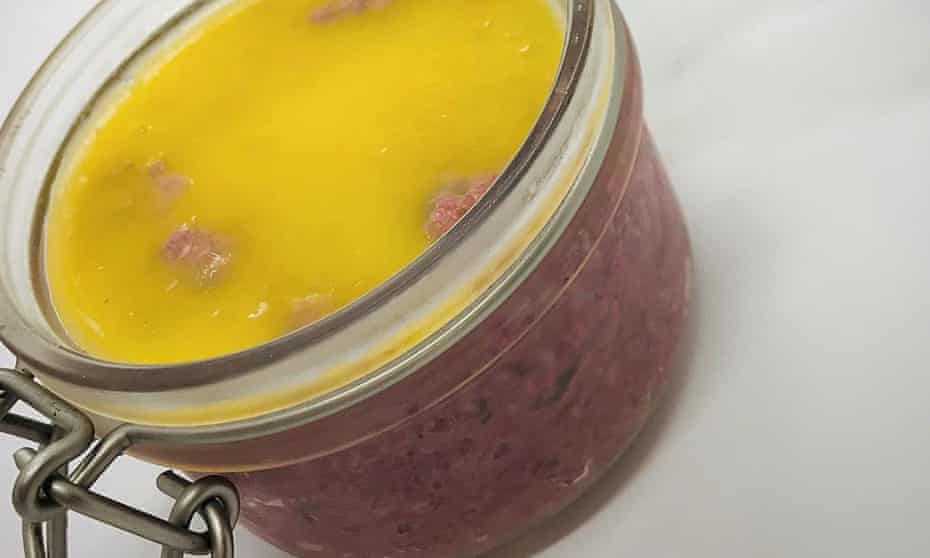
Alexis Gauthier's ‘faux gras’
Alexis Gauthier says he has emulated the buttery taste of the original in his ‘faux gras’ recipe. Photograph: Gauthier

UK government asks chefs for vegan recipes to replace foie gras

Restaurateurs invited to discuss plant-based ‘faux gras’ ahead of expected ban on liver-based spread

It is prized for its rich flavour and exclusive image by top restaurants and gourmands, but now foie gras is going vegan as the government meets chefs to discuss how to make alternatives out of nuts and mushrooms.

Vegan restaurateurs have been invited to meet UK government advisers to discuss how to create plant-based “faux gras” in the event of an upcoming ban, the Guardian has learned. Sources said the government hoped to show that a gap in the market left by a restriction on the trade of the controversial product could be filled by high-end chefs who are willing to produce alternatives.

MPs have vowed to ban trade in foie gras, and the Department for Environment, Food and Rural Affairs (Defra) is consulting on legislation to outlaw the sale and import of the liver-based spread.

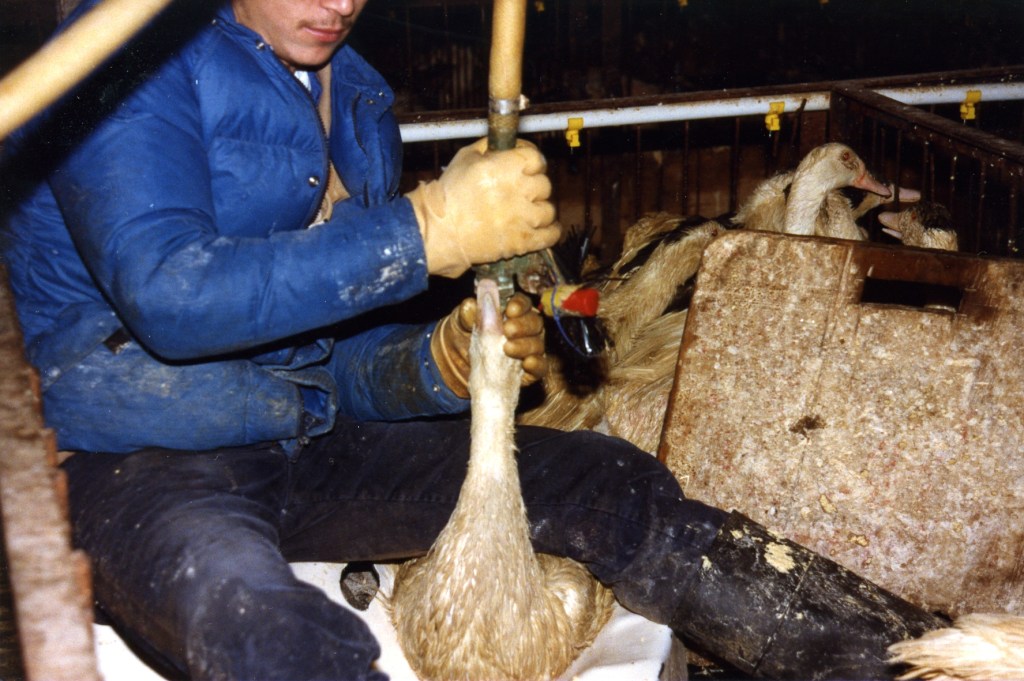
Foie gras production is illegal in the UK on animal cruelty grounds, as the ducks and geese whose livers are harvested are force-fed to make it. However, top restaurants still import and sell from countries such as France.

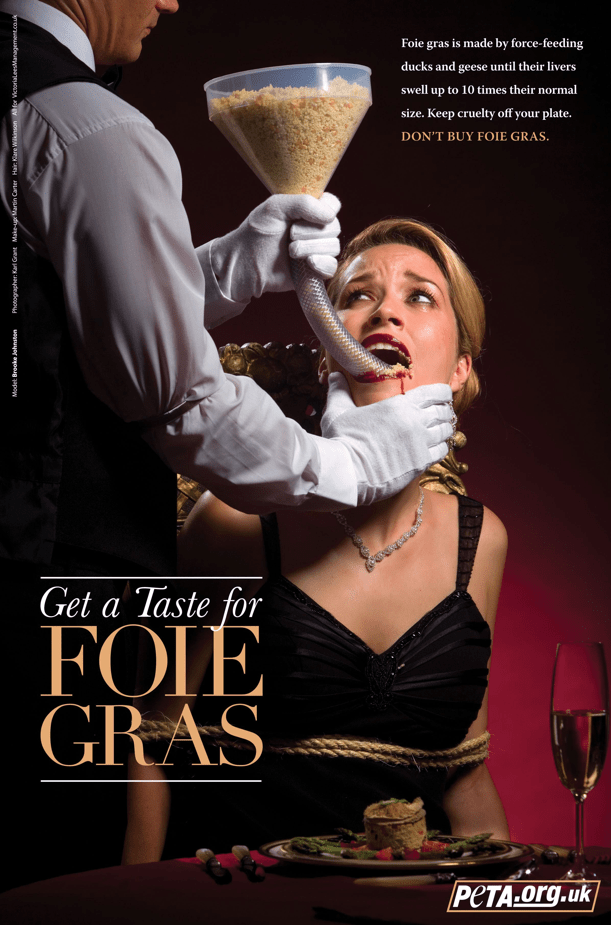
The force-feeding process is known as gavage, where grain is poured into a funnel or tube that has been thrust down the bird’s neck. After two weeks, the liver has swollen to many times its normal size.

Photo – WAV Archive

The French chef Alexis Gauthier, who runs fine-dining restaurant Gauthier Soho and plant-based restaurant 123V in Bond Street, both in London, decided to stop serving foie gras in his establishments after activists from Peta demonstrated outside and he read up on the meat and dairy trade.

He now serves a faux gras at his Soho venue made of mushrooms, lentils, walnuts and cognac, and says the concoction has emulated the buttery taste sought after by foie gras fans. Since this year, all the food served at his restaurants is plant-based.

The government has asked him for his recipe and invited him for talks with policy advisers to see if a gap in the market caused by a ban could be filled by his creation.

An email to vegan chefs, seen by the Guardian, says: “I understand your restaurant serves an alternative to foie gras. We would appreciate the chance to arrange a virtual meeting with the chef or someone else from the team to discuss a few questions in this area. These would be questions about your views on foie gras and the challenges and opportunities associated with ‘ethical’ alternatives.”

Gauthier says foie gras was once a bestselling item on his menu and that he used to sell 20kg of it a week, but claims people are now travelling from around the country to try his faux gras. He said it took patience and precision to emulate the texture, appearance and depth of the delicacy in a vegan version.

Many luxury shops and restaurants are turning their back on foie gras, including Fortnum & Mason, which stopped selling it earlier this year.

A government spokesperson confirmed officials were seeking meetings with those involved in creating faux gras to inform their decision on how the effects of a ban could be mitigated.

Photo – WAV Archive

Alexis Gauthier’s vegan faux gras recipe

Ingredients

1 shallot, peeled and diced
4 tbsp olive oil
4 cloves garlic, peeled and thinly sliced
2 tsp chopped rosemary
2 tsp chopped thyme
2 tsp chopped sage
24 button mushrooms, roughly sliced
2 tbsp cognac
2 tbsp soy sauce
400g cooked lentils
150g toasted walnuts
2 tbsp beetroot puree
Black pepper, to taste

Method

In a heavy pan, sauté the shallot in two tablespoonfuls of the olive oil until translucent. Add the garlic, chopped herbs, and mushrooms. Add the cognac and turn up the heat.

Add the soy sauce, reduce the heat, and cook over low heat for six minutes. Remove the pan from heat and let cool.

In a food processor, process the mushroom mixture, the remaining olive oil, the lentils, walnuts, beetroot puree and black pepper until almost smooth. Add an optional extra splash of cognac to give it that je ne sais quoi.

Place in a small glass jar and refrigerate for a few hours before serving. Serve alongside toasted slices of sourdough or other bread.

UK government asks chefs for vegan recipes to replace foie gras | Food | The Guardian

Regards Mark

Picture – WAV Archive

Photo – WAV Archive

EU Invests €2m to Develop Cultivated Beef for Commercial Markets.

Photo – Like Meat

EU invests €2m to develop cultivated beef for commercial markets

3 November 2021

News

Funding from a Covid recovery package that was set up by the European Commission, known as React-EU, has been granted to two Dutch food firms – Nutreco and Mosa Meat – attempting to lower the costs of growing meat in vitro.

The React-EU package (Recovery Assistance for Cohesion and the Territories of Europe) was first established in December 2020, setting aside €50.6bn in funding for countries to adopt a greener and more sustainable economic recovery in response to the Covid-19 pandemic.

The collaborative project “Feed for Meat” aims to address one of the the leading challenges in cultured meat development; affordability. The grant will fund research and development on lower-cost and sustainable nutrients for the base media in which the beef cells grow in order to make production more commercially viable for European markets.

According to an independent Life Cycle Analysis study, cultivated beef production is projected to reduce climate impact by 92%, air pollution by 93%, use 95% less land and 78% less water when compared to industrial beef production.

The project was ranked first place in this highly-competitive scheme, which received over 60 funding applications – yet another indicator that cellular agriculture has a critical role to play in helping the European Union meet the robust goals of the Farm to Fork strategy within the Green Deal.

Read more at source

Independent

Regards Mark

England: Vegan Bites 19/10/21.


Vegan Bites 19/10/21:

11 (Vegan) Things You Need to Cook in October

11 (Vegan) Things You Need to Cook in October – ChooseVeg

Achievements Of Women Of Color Celebrated At Vegan Business Event

Achievements Of Women Of Color Celebrated At Vegan Business Event (plantbasednews.org)

AMAZING VEGAN TINGA FOR LUNCH!

Amazing Vegan Tinga For Lunch! | Jane Unchained News

Try the PeTA vegan world challenge:

(9) PETA UK on Twitter: “#ReasonsToGoVegan Up for it? Here you go: https://t.co/0tIbv16buX #veganchallenge #worldveganmonth https://t.co/q6l4hMPxmX” / Twitter

Seitan Roast Stuffed With Mushrooms and Mixed Nuts

Seitan Roast Stuffed With Mushrooms and Mixed Nuts – PETA UK

Become a Game Changer: How to Build Muscle as a Vegan

Become a Game Changer: How to Build Muscle as a Vegan – PETA UK

Champions of Breakfast: Urge Major Restaurant Chains to Add Vegan Breakfast Entrees

Champions of Breakfast: Urge Major Restaurant Chains to Add Vegan Breakfast Entrees (chooseveg.com)

Mushrooms Can Help Lower Risks Of Depression, Say Scientists In New Study

Mushrooms Can Help Lower Risks Of Depression, Says New Study (plantbasednews.org)

A RIBOLLITA RECIPE WITH A TWIST

A Ribollita Recipe With A Twist | Jane Unchained News

HOMEMADE VEGAN BUTTER

Homemade Vegan Butter – Loving It Vegan

6 Inflammation-Fighting Foods Plus Recipe Ideas

6 Inflammation-Fighting Foods Plus Recipe Ideas – Center for Nutrition Studies

5 Doctor-Approved Ways To Upgrade Your Health With Plant-Based Food

5 Doctor-Approved Ways To Upgrade Your Health With Plant-Based Food (plantbasednews.org)

How to Make Vegan Black Bean Burgers From Scratch

How to Make Vegan Black Bean Burgers From Scratch – ChooseVeg

Holy Cow – One-Pot Vegan Tater Tot Casserole

One-Pot Vegan Tater Tot Casserole – Holy Cow! (holycowvegan.net)

ANOTHER STUDY LINKS PLANT-BASED DIET TO REDUCED PROSTATE CANCER RISK

Another Study Links Plant-Based Diet to Reduced Prostate Cancer Risk | VegNews

Spanish Vegan Meat Pioneer Heura Enters Mexican Market Via 220 Retailers, Including Walmart

Spanish Vegan Meat Pioneer Heura Enters Mexican Market Via 220 Retailers, Including Walmart (greenqueen.com.hk)

Got Netflix? Then You’ve Got to Watch ‘Seaspiracy’

How to Host a Watch Party for Netflix’s ‘Seaspiracy’ | PETA

Regards Mark

UK: UK Public Now Eating Significantly Less Meat – Down 17%.

Red meat
Getty Images

UK public now eating significantly less meat – BBC News

UK public now eating significantly less meat

Daily meat consumption in the UK has fallen by 17% in the last decade, a study has shown.

That reduction though is not happening quickly enough to meet a key national target, according to scientists.

The aim is to reduce the environmental impact of our diets.

This goal, set by the National Food Strategy, is based on a review of the whole UK food system – from farming and production to hunger and sustainability.

It recommends meat consumption in the UK fall by 30% over the next 10 years.

“We now know we need a more substantial reduction,” said lead researcher Cristina Stewart from the University of Oxford.

The new study, published in the journal the Lancet Planetary Health, revealed that while most people are eating less red and processed meat compared to a decade ago, they are eating more white meat.

High consumption of red and processed meat can increase the risk of health problems including cardiovascular disease, type 2 diabetes, and even certain cancers.

Meat production also has a higher environmental impact – producing more planet-warming greenhouse gas emissions – than other types of agriculture and food production.

Not all meat is equal

This Oxford-based research team used data from the National Diet and Nutrition Survey – a detailed survey of the dietary habits of more than 15,000 people across the country.

This showed that daily meat consumption had reduced by about 17g per person per day.

What it did not reveal was the reason people were changing their diets. But market research in 2019 suggested that almost 40% of meat-eaters were actively trying to reduce their consumption, with many citing either health or environmental reasons.

Dr Stewart stresses that, for those who want to reduce the environmental impact of what they eat, “any reduction in meat will have an impact”.

“You don’t have to be vegetarian,” she said. “Although, in general, meat-free dishes will have a lower impact.

“But if you’re someone that eats meat every day, reducing your meat consumption by 30% just looks like having two meat-free days per week.”

There is huge variation in the environmental impact of meat; it depends on what livestock are fed and where and how the meat is produced.

This Oxford-based research team used data from the National Diet and Nutrition Survey – a detailed survey of the dietary habits of more than 15,000 people across the country.

This showed that daily meat consumption had reduced by about 17g per person per day.

What it did not reveal was the reason people were changing their diets. But market research in 2019 suggested that almost 40% of meat-eaters were actively trying to reduce their consumption, with many citing either health or environmental reasons.

Dr Stewart stresses that, for those who want to reduce the environmental impact of what they eat, “any reduction in meat will have an impact”.

“You don’t have to be vegetarian,” she said. “Although, in general, meat-free dishes will have a lower impact.

“But if you’re someone that eats meat every day, reducing your meat consumption by 30% just looks like having two meat-free days per week.”

There is huge variation in the environmental impact of meat; it depends on what livestock are fed and where and how the meat is produced.

The COP26 global climate summit in Glasgow in November is seen as crucial if climate change is to be brought under control. Almost 200 countries are being asked for their plans to cut emissions, and it could lead to major changes to our everyday lives.

“Locally produced meat has a much lower impact than meat that has been imported,” Dr Stewart pointed out.

She and her colleagues have also been studying the effect of “environmental impact labelling” on consumer choices. They have designed experimental labels that score a product based on its greenhouse gas emissions, biodiversity loss, water-use and water pollution.

“When you don’t have the information about environmental impact of food, it’s really hard to shop with that in mind,” she pointed out.

Having the support of those we eat our meals with, the Oxford researchers say, makes it easier for us to change our diets. And the availability and prominence of meat-free food options has an effect on people’s food choices, too.

“So, for example, if you’re at a restaurant, you often see a vegetarian options ‘box of shame’ at the bottom of the menu rather than at the top with chef’s specials,” Dr Stewart explained.

The team’s ongoing study of what drives people to reduce their meat consumption has revealed some simple strategies that participants have found helpful, including:

  • Trying one new vegetarian recipe;
  • Making one meal in a day vegetarian, rather than going a whole day without meat;
  • Reducing portion size: In a recipe that includes meat, like a bolognese, reduce the amount of meat and supplement that with lentils and vegetables.

“Hopefully this paper will help us understand the patterns and trends so we can tailor public health policies and behavioural nudges to help people choose more sustainable options,” said Dr Stewart.

WAV COP26 Links:

Search Results for “COp26” – World Animals Voice

Regards Mark