Category: Vegan Recipes

The science of plant-based meat.

This is a 4 page article.

Page numbers can be selected at end.

Learn about the science of plant-based meat. Discover resources and research projects on the latest technological developments and key scientific questions.

Introduction to plant-based meat

What is plant-based meat? 

GFI uses the term “plant-based” to refer to products made from plants that are alternatives to animal-based products. This includes plant-based meat, seafood, eggs, and dairy. This overview focuses primarily on the science of plant-based meat and seafood. 

The concept of plant-based meat is not a modern development. The prevalence and variety of plant-based meat has steadily increased for centuries. However, many of the early plant-based meat products were designed with vegetarian consumers in mind. Early plant-based meats did not try to exactly replicate, or biomimic, conventional meat.

Recent concerns about sustainability, food security, and the environmental and public health impacts of industrial animal agriculture have spurred a sense of urgency to develop plant-based meats that appeal to mainstream consumers rather than niche markets. This has led to an explosion of innovation during the last decade. Today’s plant-based meat options appeal to the fast-growing segment of “flexitarian” consumers. 

What is the market for plant-based meat? 

Flexitarian consumers are looking for plant-based meat options that create the same sensory experience as animal-based meat. These consumers deliberately reduce their meat consumption but do not completely give up animal-based products. This decision to eat more plants is often due to concerns about health, the environment, or animal protection. It may also simply be a way of obtaining novelty and variety with flavorful and affordable meals. The rise in flexitarianism is creating considerable market growth for plant-based foods.

Despite the market growth in plant-based foods, plant-based meat is currently only about 1% of the US retail meat market. For plant-based meat to become a significant part of the global meat market in the coming decades, there remains tremendous need for additional R&D. This innovation and subsequent growth of the plant-based meat industry will only be realized through a concerted and collaborative effort to direct resources (financial, human, and technological) to this area.


England: 9/7/21 – Vegan Bites.

9 Badass Vegan Broccoli Recipes That Are Super Easy to Make

9 Badass Vegan Broccoli Recipes That Are Super Easy to Make – ChooseVeg

Vegan Beauty Basics (Quick & Easy Guide to Understand What Vegan Beauty Is)

Vegan Beauty Basics – Easy Guide to Understand What Vegan Beauty Is (ethicalelephant.com)

The best vegan-friendly rooftop bars and restaurants in London

The best vegan-friendly rooftop bars and restaurants in London | The Vegan Review

Research Reveals Which US States Have Highest Number of Grocery Stores Catering to Vegans

Research Reveals Which US States Have Highest Number of Grocery Stores Catering to Vegans – vegconomist – the vegan business magazine

ALL THE BEST PLACES TO GET VEGAN ICE CREAM THIS SUMMER

All the Best Places to Get Vegan Ice Cream This Summer | VegNews

NYC IS ONE STEP CLOSER TO GETTING ITS FIRST VEGAN MAYOR

NYC Is One Step Closer to Getting Its First Vegan Mayor | VegNews

25 Amazing Vegan Potato Recipes

25 Amazing Vegan Potato Recipes | EatPlant-Based

An All-Vegan Ethiopian Restaurant Rides Into the Heart of Santa Monica Soon

All-Vegan Ethiopian Restaurant Rides into Heart of Santa Monica Soon – Eater LA

Regards Mark

UK: Boiling Lobsters Alive to be Banned Under New Government legislation – Also Includes Crabs, Octopuses, Squid and other invertebrates recognised as Sentient Beings Capable of Feeling Pain.

Boiling lobsters alive to be banned under new Government legislation

Cooking lobsters by boiling them alive could be banned under animal welfare plans being drawn up by Government ministers.

The Animal Welfare (Sentience) Bill, currently making its way through the House of Lords, only covers animals with a backbone.

But the House is making amendments to the legislation which would mean crabs, lobsters, octopuses, squid and other invertebrates are recognised as sentient beings capable of feeling pain.

It would give them legal protections and stop fishmongers and chefs boiling crustaceans alive. Instead they would have be stunned or chilled before boiling which is believed to be a more humane way of cooking.

Shrink-wrapping live shellfish or posting them is also likely to be banned under the amendment, put forward by Baroness Hayman of Ullock.

https://www.standard.co.uk/news/uk/boiling-lobsters-alive-ban-new-government-legislation-b944489.html

Lobsters’ feelings loom large as British Parliament debates animal welfare bill

By

William Booth

July 4, 2021 at 9:28 p.m. UTC

LONDON — How does a lobster feel when it’s dropped into the boiling pot? The British Parliament wants to know.

Is an octopus sad, sometimes? Does the squid learn its lessons? The bee feel joy? The earthworm anxiety? The peers in the House of Lords are currently debating the matter.

These questions arise because Prime Minister Boris Johnson is trying to make good on his electoral pledge to enshrine into law the idea that animals are “sentient beings,” meaning the government would be obligated to not only safeguard creatures’ physical well-being but also take into account their feelings — of pleasure, pain and more.

The Animal Welfare (Sentience) Bill is a potentially sweeping piece of legislation that could require all arms of government — not just the agriculture ministry — to consider animal sentience when forming policy and writing regulations. The implications could be moral and profound, supporters hope — or cumbersome and bureaucratic, critics say, with some seeing a power play by vegan activists and animal rights radicals.

The bill does appear to go further than European Union protections, once seen as the most comprehensive on Earth, and far beyond the relatively lax laws in the United States.

What is sentience? As Charles Darwin suggested 150 years ago, it may be the ability to feel “pleasure and pain, happiness and misery.”

In the House of Lords, the peers wondered aloud whether they were not touching on questions of the soul.

“The big picture has changed,” said Donald Broom, a Cambridge University authority on animal welfare.

“I think of the new idea as ‘one biology.’ That human animals and other animals are extraordinarily similar,” he said, “and that sentient animals are individuals who feel pain and suffering and all sorts of other things, and that should be taken into account.”

Broom said he was “not against eating or exploiting animals, but we should think about them as individuals.”

He said the scientific study of animal cognition, consciousness and sentience has galloped forward in recent years and that abilities once thought unique to humans have also been discovered in nonhuman animals, including tool use, language, sense of time and the future, deception, empathy and altruism.

The bill now being debated is unprecedented in scope because it seeks to protect wildlife as well as domesticated and companion animals such as cows and chickens, dogs and cats.

https://www.washingtonpost.com/world/europe/animal-welfare-sentient-uk-parliament/2021/07/04/44593460-d8df-11eb-8c87-ad6f27918c78_story.html

Positive News about time;

Regards Mark

Enjoy ‘Grumpy old Rick’

EU: Finally After Decades of Asking, The EU Consumer May Now Be Given More Detailed Information On Their Food Products – Production; Transportation; Slaughter Method Etc.


WAV Comment:  For decades, we (in past forms), along with other massive numbers of animal welfare groups across Europe, have been calling for this.  Are we now going to see the EU Commission finally wake up and listen to what people have been asking for years ?

One EU wide labelling system is drastically needed, rather than the current dozen different labelling schemes that include farm animal welfare criteria in at least six European countries.  Consumers need to know how their food is produced; is it free range or intensive ? (hopefully cages will go but we need this info earlier); stunned in a slaughterhouse or to religious standards (non stunning / ritual) only ? – we would like to see the country of origin and the country of slaughter; as this will no doubt involve the consumer if the animal involved has suffered live transportation. Labelling needs to apply to ALL products, and to an informative standard, rather than the yukspeak people have had so far. If people knew the facts; we think shoppers would amend their shop drastically. Is this why the EU has never moved on this issue ?

It is time for change, as it was time for change twenty years ago, but then, the EU considered itself above us / more important to bother with issues such as this.  People power is now demanding change, and they want it now; as we have seen with the cage systems; consumers want to know where their food comes from.  We regard this one standard labelling system as a positive move, but ALL aspects of animal welfare must be given / included to a nowdays much informed consumer. 

The days of buying products and not being given any useful information on them has passed, it is now time for change.  Bring it on !

Regards Mark

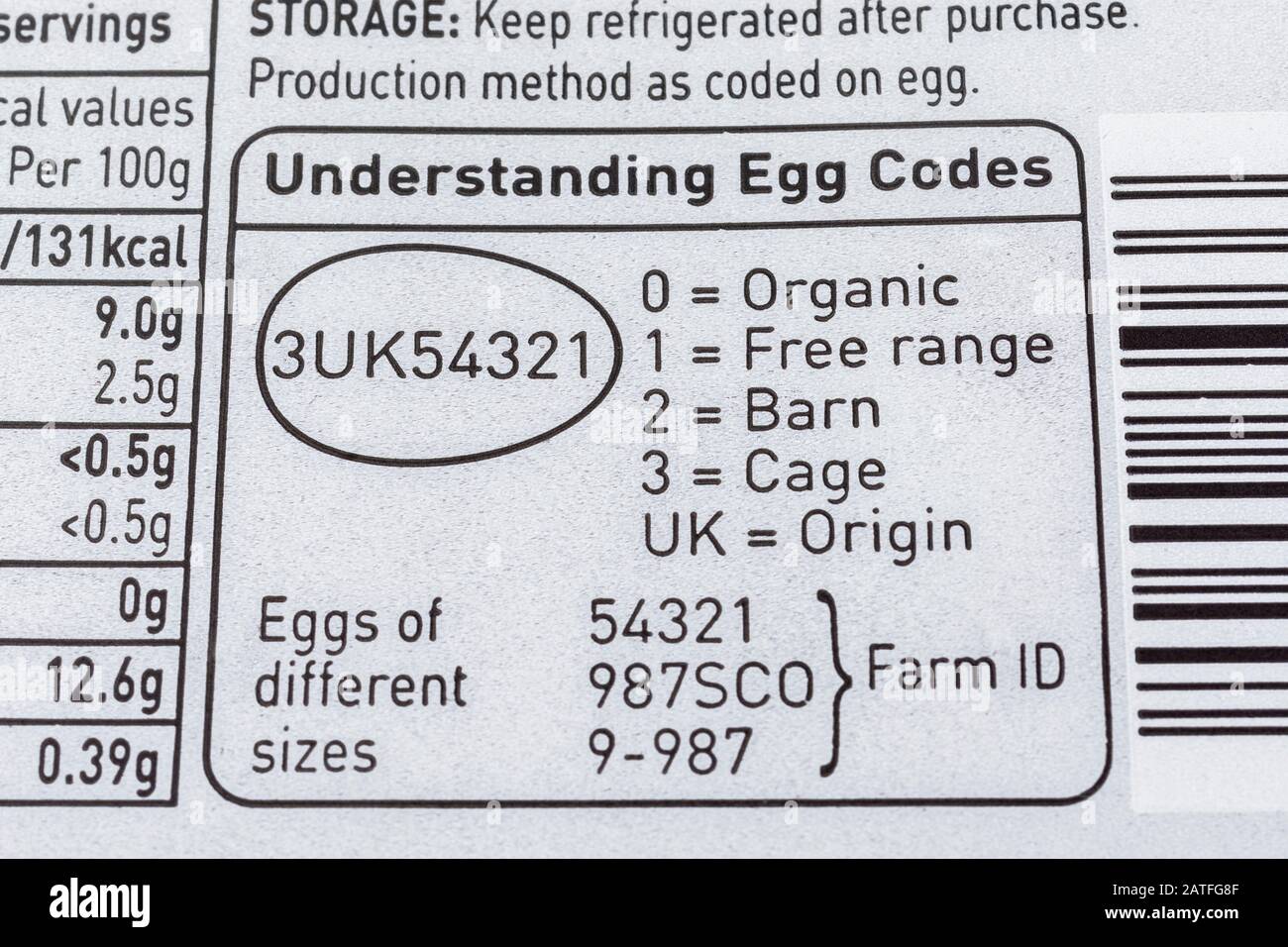
Close up food label on egg box from ASDA explaining UK Egg Codes. Food  packaging, nutrition labels, food labelling, British produce, food Stock  Photo - Alamy

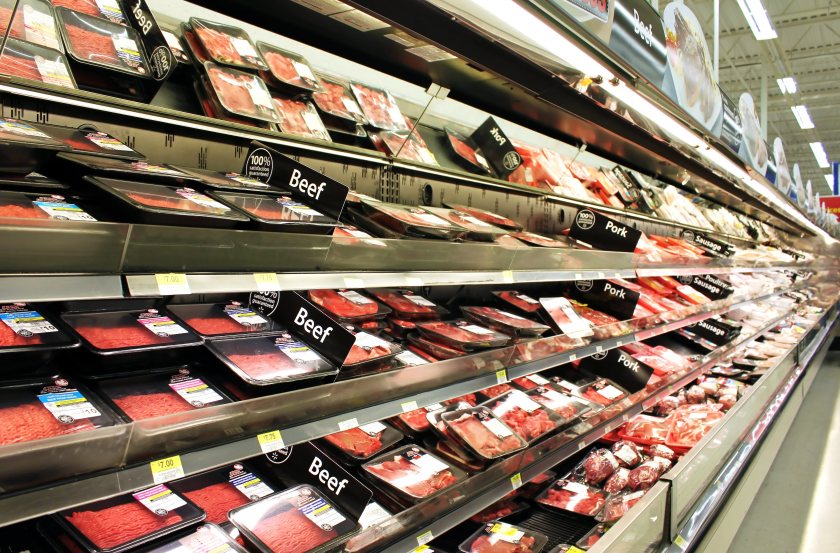
BVA is campaigning for the introduction of mandatory method of production labelling of meat

Lidl trials new meat 'production method' labelling | Food and Drink  Technology

European Commission gives green light for a comprehensive labelling system displaying the well-being of animals over the whole animal food production cycle

7 July 2021

Today, the European Commission’s Subgroup on Animal Welfare Labelling published its final recommendations giving green light for an EU-wide label on animal welfare which will create greater transparency, better opportunities for farmers and a progression framework to improve animal welfare. In order for the labelling system to be effective, it is, however, important the European Commission commits to a mandatory Method Of Production + (MOP+) label which guarantees a harmonised uptake across food industries in the EU.

MOP+ is the most transparent, progressive and fair labelling method. It gives clear and transparent messaging to consumers about how animals are reared as well as allowing for a benchmarking platform amongst existing labels. It also allows for a progression on animal welfare standards by stimulating improvements on animal welfare and providing a full range of products with different levels of welfare to the consumers. On top of that, it provides farmers with a transparent way of demonstrating their achievements on animal welfare, allowing for a fair compensation of their efforts.

The conclusions foresee the labelling to start off as voluntary and state that the possibility of becoming mandatory should be evaluated at a later stage. They also state that a voluntary label represents a great risk to the impact of the label, since not only could the uptake be low but it would also be likely to only be adopted by producers already committed to higher animal welfare standards. The impact of a voluntary label on animal welfare would therefore be lower than of a mandatory label. This would not serve the purpose of providing full transparency to consumers and a fair level playing field for farmers and certainly would not serve the purpose of improving animal welfare across the EU.

Further to that, the recommendations do not mention the coverage of the label in terms of range of production systems. It states animal welfare labels should cover as many individuals as possible. Eurogroup for Animals asks for the scope to be from minimum EU standards to premium standards, also clearly indicating products that do not comply with the minimum EU animal welfare standards, to guarantee the label’s effectiveness. 

Other positive key points of the recommendations:

  • EU animal welfare label should also protect the use of terms and claims indicating a better welfare for animals.
  • The scope should include not only the rearing but also the slaughter and transport phase. Standards used in animals that are directly involved in the production as sows or cleaner fish should also be included in the label.
  • Besides fresh products, processed products or products used in food services should also be covered.
  • The EU label should help harmonise and take existing labels into consideration, helping the consumer gain more clarity on those. 
  • Active participation of all stakeholders is necessary in the creation of an EU wide animal welfare related label and its development should be monitored and evaluated.
  • Animal welfare is an important part of sustainability, but in case of labelling integration, animal welfare can never be diluted.

Currently, there are a dozen different labelling schemes that include farm animal welfare criteria in at least six European countries, risking the Single Market to becoming fragmented.The European Commission aims to counter this trend and is expected to put forward a proposal for a harmonised food labelling scheme in the context of its Farm to Fork strategy (F2F). At the end of last year, the Council of the European Union on Agriculture and Fisheries also adopted Council Conclusions which had called for an EU-wide animal welfare label aimed at improving animal welfare for as many food producing animals as possible. 

File

Animal Welfare and Food Labelling1.84 MB


ENGA pushes for non-GMO food labelling across Europe


Country-of-Origin Labelling, Food Traceability Drivers and Food Fraud:  Lessons from Consumers' Preferences and Perceptions | European Journal of  Risk Regulation | Cambridge Core
For Shoppers - Global Animal Partnership Animal Welfare Food Labeling

UK: Leading British Supermarket Known For Its Animal Welfare Commitment Stop Selling Unnaturally-Fast Grown Fresh Chicken.

WAV Comment:  M&S are a national chain.  With regard food and animal welfare they have always been one of the best promoters of.  Although we do not support meat eating, we accept that people still do, and buy from M&S; therefore, if things can be done to improve animal welfare then we fully support it.  Interesting to note that ‘it beats rivals’; hopefully many other food stores will move away from selling un natural growth chickens in the near future.

M&S becomes first UK supermarket to stop selling unnaturally-fast grown fresh chicken | Daily Mail Online

M&S becomes first UK supermarket to stop selling unnaturally-fast grown fresh chicken – after probe revealed how birds buckled under own weight and spent final days lame and in pain

  • Marks and Spencer beat out rival retailers and promises change by next autumn
  • Several industry leaders have praised the British retail giant’s ‘landmark’ move 
  • Fast-grown chickens used by many major supermarkets use genetic selection, but several media outlets revealed the shocking conditions the birds endure

Marks & Spencer is set to be the first UK supermarket to stop selling unnaturally-fast grown fresh chicken after a probe unveiled the shocking conditions such birds live in. 

The British supermarket giant has become the first in the country to pledge to replace its fast-grown fresh chicken with slower breeds by next year.

And in a further promise and major boost to British farmers, M&S said all the chicken it sells will come from homegrown farms that use slower growth methods and are backed by the RSPCA.

A 2019 report by the Times revealed how the fast-growing chickens, developed using genetic selection, were buckling under their own went and would spend their final days lame and in pain. 

M&S beat out competition from rival retailer Waitrose and other High Street luminaries such as Greggs, Nando’s, KFC and Pizza Express – who have all signed the ‘better chicken commitment’ that promises better welfare for the birds.

Chicken remains Britain’s most popular bird, with more than 2.7million of them eaten daily. 

Marks & Spencer signed the ‘Better Chicken Commitment’ – an industry-wide pledge to better protect the welfare of birds – in 2017.

While most UK chickens are bred with the expectation of gaining almost 100 grams in weight each day for just over a month, slower-growing and less profitable breeds tend to be slaughtered at 56 days.

The Times reports that the growth rates of UK chickens have nearly quadrupled over the last half century from 25g per day. 

After the news broke, a host of industry leaders praised the supermarket’s newest announcement and called on other retailers to follow the ‘landmark’ move. 

Chris Sherwood, RSPCA chief executive, explained that the move by M&S was a ‘landmark achievement for animal welfare’. 

‘By simply switching to using only slower growing breeds of chicken, retailers can make an enormous difference to the lives and welfare of millions of chickens reared in this country every year for their meat.’

Dr Tracey Jones, Director of Food Business at Compassion in World Farming said: ‘We applaud M&S for being the first retailer to sign up to the Better Chicken Commitment, the first to start transitioning supply, and the first to roll out product on shelf with their ‘Oakham Gold’ fresh chicken.

Regards Mark

Marks & Spencer is set to be the first UK supermarket to stop selling unnaturally-fast grown fresh chicken after a probe unveiled the shocking conditions such birds live in

UK: First Ever Vegan BBQ Week ! – 2-11/7/21

Vegan BBQ Week logo

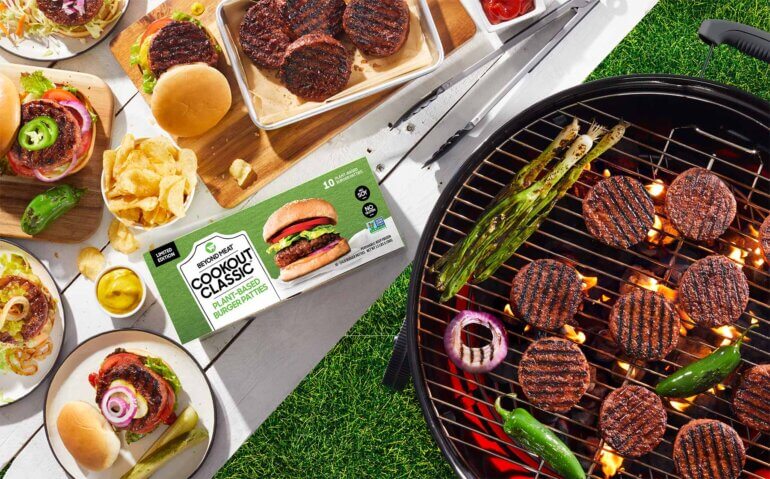
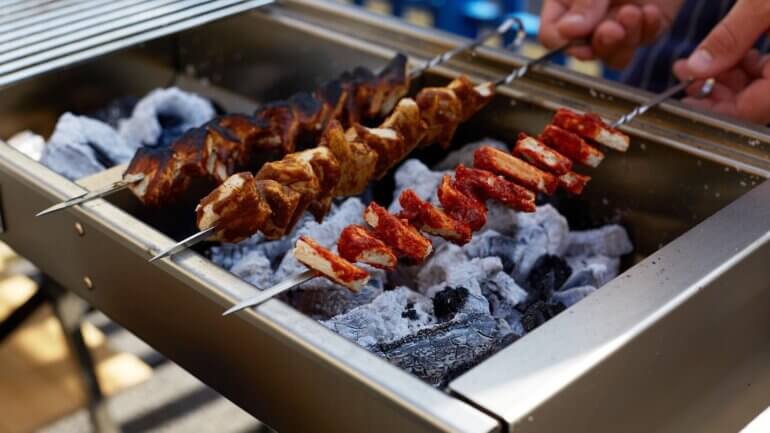
Get ready to fire up the barbecue, because it’s the UK’s first-ever Vegan BBQ Week!

Running from 2 to 11 July, it’s the perfect time to host a long-awaited gathering of friends in the garden or just rustle up a small weekday feast outdoors. Whatever your plans, we’ve got the ultimate vegan BBQ guide for you.

For the ultimate vegan BBQ guide, click here:

UK’s First Vegan BBQ Week: Everything You Need to Know | PETA UK

f you’re joining in the excitement with a delicious summer feast, share your pics with us by posting on social media and using the hashtag #VeganBBQWeek.

The best bit about an all-vegan BBQ is that you get all the flavour without harming animals or burning up the planet. If you’re more of an indoor cook, why not order a copy of our free vegan starter kit for delicious recipes you can prepare in the kitchen and top tips on vegan living?

Order your free vegan starter kit here:

Order Your Free Vegan Starter Kit | People for the Ethical Treatment of Animals (peta.org.uk)

Thanks for helping to make the world a better place!

Sincerely,

Carys B
PETA

Grilling Without Killing
Rudy’s Vegan Butcher

Regards Mark

England: New Post On Vegan Trainers; But Then Their Past Animal Abuses Got Me Running !

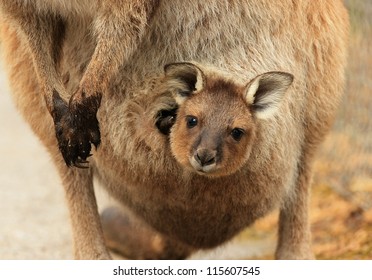
Kangaroo Joey High Res Stock Images | Shutterstock

I was going to do a post on the launch of a new Vegan sneaker range by one of the manufacturers listed below which is made from harvested pineapple leaves.  After all, are we not here to promote veganism and animal rights ?

Then I thought back to issues relating to these same sportswear manufacturers, and their past production processes, which have been in the AR ‘inbox’ for many years.  As a result of my own involvement in AR and past knowledge on this subject, I decided not to promote the product after all; as I am completely against all animal slaughter; but regardless of my personal views, I shall give you more information which you can then use to decide on the way forward. To buy or not to buy ?, that is the question.

The issue that concerns me is:

Nike and Adidas Among Brands Blasted For Selling Kangaroo Leather Shoes — Species Unite

Around 2 million kangaroos are hunted every year to help produce shoes made from kangaroo skin,

The world’s biggest sport brands including Nike, Puma, and Adidas, have been condemned for selling kangaroo leather shoes, as U.S. lawmakers introduce a bill to outlaw their sale.

Kangaroo skin is currently used by the companies to produce soccer shoes known as “cleats”.

The slaughter of 2 million kangaroos every year, and their Joeys !!

But campaigners warn that the kangaroo leather trade is helping to fuel the slaughter of around 2 million kangaroos every year.

Consumers are likely to be outraged to hear that kangaroos – including their joeys – are shot or bludgeoned to death, especially after the global community came together to show their support for Australia’s wildlife during last year’s devastating wildfires. 

“[We] worked with so many teams on the ground in Australia in 2020 rescuing and rehabilitating kangaroos injured by the devastating bushfires,” said SPCA International Executive Director Meredith Ayan. “Kangaroos do not deserve to go through that trauma, be nursed back to health and released to the wild only to be killed in a brutal commercial hunt.”

Nike, Puma, Adidas, Mizuno, and New Balance are among the companies said to be supporting – and profiting – from the cruel kangaroo slaughter which campaigners say is “the world’s largest commercial slaughter of terrestrial wildlife”. 

The hunt results in entire families of kangaroos being shot in the dead of night with night-vision rifle scopes. And according to Australia’s kangaroo killing guidelines, slaughtered female kangaroos should be checked for joeys in their pouches – who should be bludgeoned to death if found. 

Amid the outrage, U.S. lawmakers have now introduced a new bill that will outlaw the sale of kangaroo body parts in the U.S. 

February 2021 – The Kangaroo Protection Act, introduced last week by Representatives Salud Carbajal, D-Calif., and Brian Fitzpatrick, R-Penn, would ban kangaroo leather products, and encourage brands to construct ‘cleats’ from the many alternative fabrics available. 

“Commercial shooters kill roughly two million wild kangaroos a year to profit from the trade in their skins, despite the availability of alternative fabrics that are of similar or better quality. While California has banned the sale of kangaroo products, enforcement of this inhumane practice is lacking,” said Rep. Salud Carbajal, D-Calif. “I’m proud to stand against kangaroo trafficking and have introduced the Kangaroo Protection Act to make it illegal to exploit kangaroos in the United States and impose penalties for violations.”

Nike and Adidas Among Brands Blasted For Selling Kangaroo Leather Shoes — Species Unite

So, decision made – I cannot promote a manufacturer, or any other manufacturer, which has such past animal abuse ghosts hidden in their coffin, regardless of their changes now.  Some of us are old enough to remember what these organisations did in the past as shown above – we remember, we don’t forget !

As I have said, if ‘top trainers’ are your thing, then you will probably be aware of what is now on the market anyway.

For me personally, it is simple, I remember what animal abuses have been undertaken in the past relating to these ‘top brand’ products; and I remember the millions of innocent, sentient animals that were slaughtered to make the top, past products. 

And as a result, I cannot support their ‘new, vegan products’, regardless of the better intentions of these manufacturers to get on the vegan gravy train now by going vegan. Animal abuse used to be undertaken by them same people in the name of fashion; and so for me, they have been no better in their sordid past than still those involved now in the fur trade. We are all individuals and it is our right to make our choice.

I leave it to you to read, learn and decide.

Regards Mark

Here’s Why Millions of People Don’t Eat Lamb Anymore.

lamb – Google Search

Cute to the Max: This Lamb is Melting Hearts - Farm Sanctuary
Farm Sanctuary .org

WAV Comment:

Approximately 250,000 bulls are killed in bullfights throughout the world each year.

More than nine billion farm animals were slaughtered in the United States last year.

Approximately 25 million farm animals are slaughtered each DAY in the United States.


Get a grip on the US meat business by clicking on:

Here’s Why Millions of People Don’t Eat Lamb Anymore

We all know the children’s song “Mary Had a Little Lamb,” but did you ever seriously think about just how messed up eating lamb is? Let us fill you in.

The USDA reported that around 2.2 million lambs were killed for meat in 2015. Like cows, pigs, and chickens, lambs are raised in filthy factory farms, subjected to cruel mutilations, and horrifically slaughtered.

Lambs are usually “tail docked just a few weeks after birth. Farmers claim this is to reduce buildup of fecal matter around the animals’ backsides. But this cruel and painful mutilation is performed without anesthetics and often leads to infection, chronic pain, and rectal prolapse.

Typically slaughtered around six to eight months of age, lambs live a mere fraction of their natural lifespan. Mother sheep are deeply caring and form strong bonds with their babies. In fact, they can recognize their lambs who have wandered too far away by their calls. Sadly, this bond is broken at factory farms where lambs are ripped away from their mothers just a few days after birth.

Lambs are not only sweet and gentle but also highly intelligent. They are capable of problem solving and considered to have IQs that rival those of cows. They also have great memories. Lambs can remember at least 50 individual sheep for years! Through highly developed communication skills, lambs use various vocalizations to communicate different emotions. They can even display emotion through facial expressions.

How can anyone claim to love these gentle animals while still eating them?

People who are opposed to animal cruelty often cling to the idea that eating meat is necessary. But the science is clear: We’re more than capable of living happy, healthy lives without eating meat or other animal products.

It’s time to put our ethics on the table and stop eating lambs and all other animals. We can live our values of kindness by switching to a vegan diet.

Click here to order your FREE Vegetarian Starter Guide.

Here’s Why Millions of People Don’t Eat Lamb Anymore – Mercy For Animals

Regards Mark

Spain: Flax & Kale Unveils 45 New ‘Revolutionary’ Plant-Based Products.

Flax & Kale is unveiling 45 new plant-based products, expanding the limited market in Spain
The brand anticipates ‘enormous potential’ in the future plant-based sector within Spain Credit: Supplied

Flax & Kale Unveils 45 New ‘Revolutionary’ Plant-Based Products

The range consists of 14 vegan meat products and 31 vegan cheese items developed by renowned chef Teresa Carl

Flax & Kale, the brand under a renowned restaurant specializing in health foods, has announced it is launching 45 new ‘revolutionary’ plant-based products.

Moreover, it claims to be ‘the only’ multi-category brand to create local plant-based products in Spain.

Flax & Kale

The range will be one of the biggest Spanish-produced plant-based product lines to date.

It consists of 14 vegan meat products and 31 dairy-free cheese items such as gouda, cheddar, and mozzarella in different forms.Vegan meat on offer will include a beef and chicken alternative available in hamburgers, croquettes, nuggets, meatballs, and mince.

Prices will range between €1.99 and €2.99 for the vegan cheese products, and €3.59 and €3.99 for the meat alternatives.

Celebrated international chef Teresa Carles formed the recipes. Moreover, they have been tested in the group’s restaurants for three years.

All are produced in a modern research and development facility in Lleida, Catalonia. 

‘Plant-based leaders’

The Flax & Kale brand is under the Teresa Carles Healthy Foods restaurant group.

CEO Jordi Barri told PBN: “Our ambition is to become a leader in the plant-based market in Spain over the next few years.

“With a very diverse range and truly competitive prices, which we can offer thanks to 100 percent local production and sizeable investment over recent years in the latest generation industrial production lines.

“This launch is just the first step in that direction, and there will be many more steps in the coming months.”It comes as the brand anticipates ‘enormous potential’ in the Spanish plant-based sector this year.

Additionally, restaurants are adding more vegan options to their menus across the country.

Veganism in Spain

According to figures published on Statista, vegans and vegetarians in Spain are limited. 

This is according to surveys revealing almost 90 percent of the population ate both meat and dairy.However, these figures are from 2019 – and updated data shows an increase in stores offering vegan food.

The products are soon available online and in leading supermarkets and restaurants across Spain.

Specific dates surrounding the launch are yet to be released.

Regards Mark

RIP Amy (Winehouse) – taken far, far too early, as many of the best people are.

Wow, what a voice !

England: 21/6/21 – More Vegan Bites.

21/6/21 – More Vegan Bites

Leading Vegan Chocolate Brand Outlines ‘Extremely Difficult’ Journey Since Launching In Parents’ Garage

LoveRaw Outlines ‘Extremely Difficult’ Journey Since Launching In Garage (plantbasednews.org)

11 Vegan School Lunch Ideas

Looking for vegan school lunch ideas that are kid-friendly and easy to make? You’re in luck! These vegan recipes are easy to pack for lunch, whether it’s for the kiddos, for teenagers, for college students, or the adults who need a grab n’ go lunch for work. These recipes are allergen friendly and include plant-based, whole-food ingredients.

11 Vegan School Lunch Ideas for Kids (Adults Love Them Too!) (dreenaburton.com)

HOW TO MAKE SEITAN – SIMPLE RECIPE

How to Make Seitan – Simple Recipe | Sarahs Vegan Guide

Can veganism be a solution to food-related illnesses, allergies and intolerances?

Can veganism be a solution to food-related illnesses, allergies and intolerances? (theveganreview.com)

6 Best Fruits and Vegetables for Eye Health And Eyesight

6 Best Fruits and Vegetables for Eye Health And Eyesight (vegandietsociety.com) 

ICONIC CHICAGO VEGAN RESTAURANT REBRANDS, REMODELS, AND REOPENS POST-PANDEMIC

Longstanding vegan Chicago neighborhood restaurant Soul Veg City hosts a grand re-opening with an expanded menu on Juneteenth

Iconic Chicago Vegan Restaurant Rebrands, Remodels, and Reopens Post-Pandemic | VegNews

Jeff Bezos-Backed Plant-Based Milk Brand Targets Record $1 Billion Valuation

The plant-based business sector is certainly making money – with giants such as Oatly and Impossible Foods boasting multi-billion valuations

Jeff Bezos-Backed Plant-Based Milk Brand Targets $1 Billion Valuation (plantbasednews.org)

6 incredible facts that will change the way you think about lobsters

Beneath that hard shell there is a soft and sensitive side to lobsters that reveals we have much more in common with these ocean dwelling creatures than you might think! Read on to discover what scientists are learning about the lives of lobsters — and why they need our protection.

6 incredible facts that will change the way you think about lobsters | Animals Australia

VEGAN ICE CREAM SANDWICHES

Vegan Ice Cream Sandwiches – Gretchen’s Vegan Bakery (gretchensveganbakery.com)

EASY 3 Bean Salad

This is one healthy three bean salad recipe that you don’t want to pass up! Perfect for summer picnics and potlucks, this classic vegan salad has been revamped with chickpeas, kidney beans, black beans, and fresh apples to add a flair of sweetness.

Easy & Healthy Three Bean Salad Recipe (vegan, oil-free, gluten-free) (dreenaburton.com)

See also – England: Veggie and Vegan Places In England, Uk, Europe From ‘Happy Cow’. – World Animals Voice

HELP US BUILD BIDELIAS BARN! – World Animals Voice

Get Yummy !

Regards Mark