For chimpanzees, 2013 was a great glimmer of hope when health institutes (National Institutes of Health) announced they would stop using their state-owned chimpanzees for experiments.
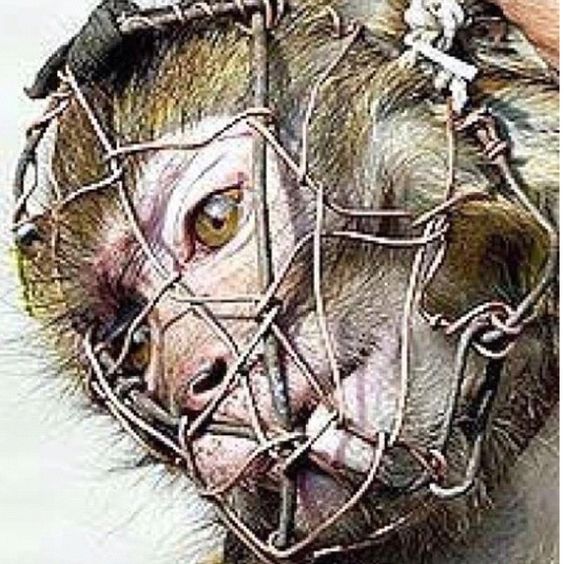
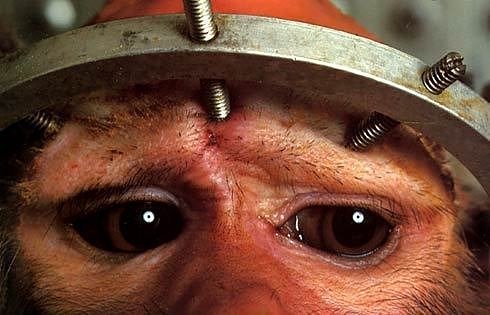
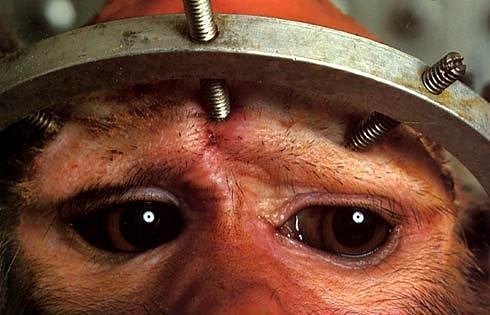
PETA now revealed that there are still 110,000 primates locked up in laboratories in the United States – under dreadful conditions.
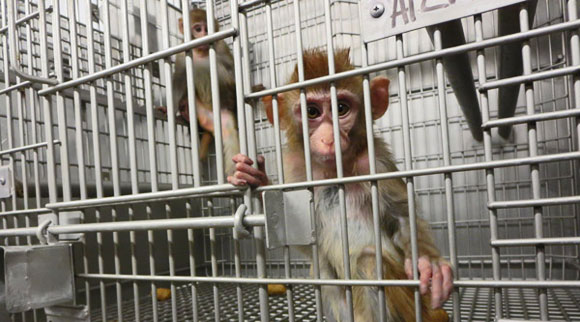
Primate Products Inc. (PPI for short) takes the monkeys from the wild to warehouses where they are often kept in very unhygienic conditions. Subsequently, the animals are sold to laboratories.
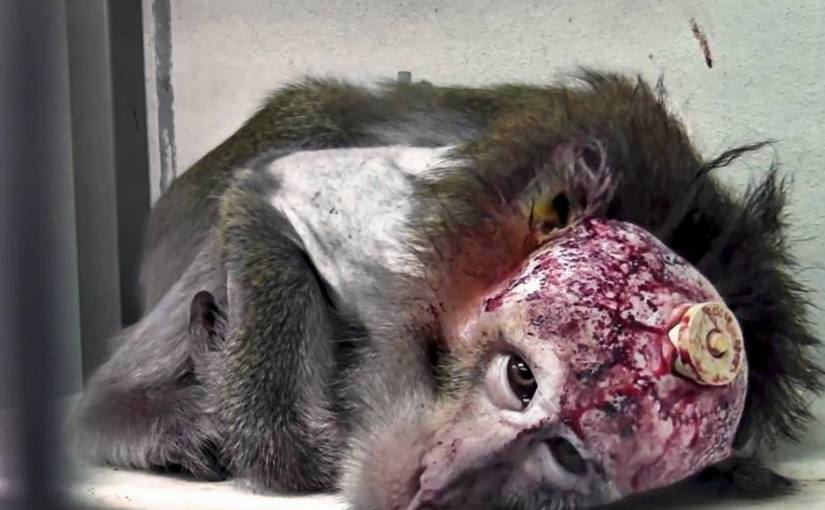
Loretta is one of many monkeys who have suffered enormously.
Tattooed in black ink across her chest, the numbers 1005158 only became more visible as her hair fell out in patches, likely as a result of the stress that she endured at Primate Products, Inc. (PPI), a notorious facility that imports and warehouses primates before selling them to laboratories. A PETA eyewitness gave Loretta a name, likely the first act of compassion she’d ever been shown.
Unilever is taking a stance on products tested on animals, and consumers will approve. First, Dove—one of the most widely recognized and conveniently available personal care product brands in the world—has banned all tests on animals anywhere in the world and has just been added to PETA’s Beauty Without Bunnies cruelty-free list!
Dove will begin using our cruelty-free bunny logo on its packaging in 2019.
On top of that, consumer goods giant Unilever—which owns the Dove brand—has banned all tests on animals not required by law for all the rest of its products. Unilever will be added to PETA’s list of companies “Working for Regulatory Change.” This category recognizes companies that test on animals only when explicitly required by law, are completely transparent with PETA about what tests on animals have been conducted and why, and work diligently to promote the development, validation, and acceptance of non-animal methods.
Consumers Want Compassionate Change
We hope other companies will follow Dove’s compassionate choice to spare animals cruel, horrifying tests and go cruelty-free.
Always make sure that the products you buy are from the more than 3,500 cruelty-free companies that are included in PETA’s Beauty Without Bunnies searchable global database of companies that don’t test on animals.
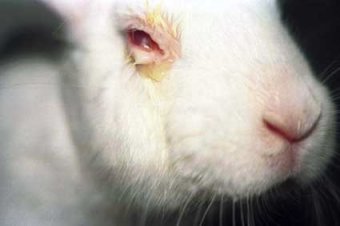
By purchasing only cruelty-free products, you can help save conscious, feeling rabbits, guinea pigs, mice, rats, and other animals from excruciating tests, a lifetime of suffering, and death. Need help finding out which products are cruelty-free? We have you covered:
Target 2023: The European Parliament is pushing for a global ban on testing cosmetics on animals
With a non-binding resolution adopted by 620 votes in favour, 14 against and 18 abstentions, MEPs call on the European Union to launch a diplomatic campaign for a worldwide ban on testing cosmetics on animals by 2023.
Animal testing for cosmetics is already banned in the EU and now MEPs want the ban extended to the rest of the world.
On 16 November a conference will be held at the United Nations office in Geneva, organized by OIPA, LSCV (Swiss League Against Animal Testing and for animal protection) and ATRA (Swiss Association for the Abolition of Vivisection) under the topic “Animal Tests Ban for Cosmetics: Debate on a EP’s Resolution”. Many issues will be discussed during this meeting, among which the current situation for animal tests and the search for strategies to end cosmetics animal testing globally.CLICK HERE TO SIGN UP AND PARTICIPATE
The protection and welfare of animals is something that can be achieved through diplomacy too.
On 3 May, the European Parliament called for the EU to advocate a global ban “on animal testing for cosmetics and on international trade in cosmetic ingredients and products tested on animals”, and invited EU leaders to “use their diplomatic networks to build a coalition and to launch an international convention within the UN framework” in order to ban all animal testing for cosmetics before 2023.
However, this worldwide operation turns out not to be so easy: around 80% of countries worldwide still allow animal testing and the marketing of cosmetics tested on animals, including large producers such as China.
However, even Europe cannot be considered a safe place for lab rats. This is why the initiative also seeks to improve the effectiveness of the ban within the EU. In fact, MEPs note that there are loopholes in the EU system, as some cosmetic products are tested on animals outside the EU before being re-tested in the EU using alternative methods and placed on the EU market. They also point out another serious problem: most ingredients in cosmetic products are also used in many other products, such as pharmaceuticals, detergents or foods, and may therefore have been tested on animals under different laws.
The data collected since the entry into force of the EU ban in 2013 demonstrates that the ban has not prevented the EU cosmetics industry from thriving and providing around two million jobs, and being the world’s largest market in this sector. In short, MEPs say that, looking at the figures, these products can remain safe for our health while not causing falls of production and preserving the animals’ welfare.
Moreover, it has been demonstrated that Europeans care deeply about animal welfare. According to the Special Eurobarometer survey of March 2016 on Attitudes of Europeans towards animal welfare, 89% of EU citizens agree that the EU should do more to promote a greater awareness of the importance of animal welfare internationally and that it is important to establish high animal welfare standards recognized worldwide.
On 16 November 2018 the United Nations office in Geneva will host a conference organized by OIPA, LSCV and ATRA that will bring together experts in the field. This meeting aims at promoting practical strategies for a worldwide ban on animal testing in view of the future convention that the United Nations will, it is hoped, propose for subscription to non-UE states too.
For those interested in participating at the conference organized by OIPA, LSCV and ATRA “Animal Tests Ban for Cosmetics: Debate on a EP’s Resolution”, please sign up through the following link https://reg.unog.ch/event/25958/.
Nearly every single commercial airline refuses to fly monkeys and other animals to laboratories.
But a group is now trying to force them to do so.
If it’s successful, airlines will be have no choice but to ship tens of thousands of monkeys to U.S. laboratories where they’d be caged, poisoned, cut into, and worse—until the day they’re killed.
Federal records show that monkeys in laboratories have died when gauze was left in their bodies after surgery, when they were left in cages that were put through scalding-hot washers, and in other horrific ways.
We’ve worked so hard to help airlines ban shipping animals to laboratories, and we’re not about to let some depraved group of experimenters force them to do it again.
For years, nearly every commercial airline has refused to fly monkeys and other animals to laboratories, where they would face torment and death.
Now, a trade group representing animal experimenters that defends all experiments on animals, no matter how cruel, has filed a legal complaint with the U.S. Department of Transportation to force airlines to transport monkeys to laboratories.
If they’re successful, airlines will be legally compelled to ship tens of thousands of monkeys from China and other countries to U.S laboratories where they’d be caged alone, poisoned, cut into, kept thirsty to coerce them to obey, and eventually killed.
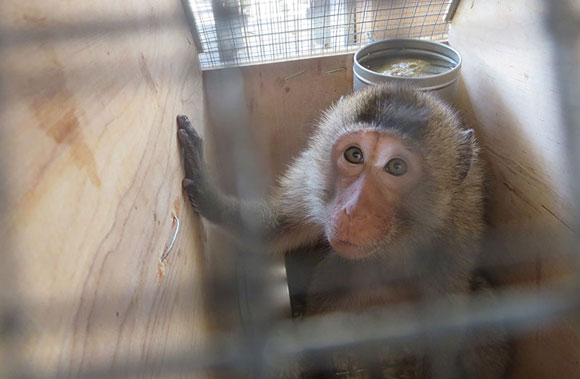
Please take action right now by leaving polite comments stating that you want airlines to be able to make their own policy decisions and that monkeys should never be torn from their families, shoved into tiny wooden boxes, stuffed into the dark and terrifying cargo holds of commercial airplanes, and flown thousands of miles to certain suffering and death in laboratories
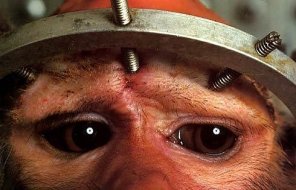
When animal experimenters cut up, burn, torment, and deliberately sicken animals, they’re almost never subject to punishment since that cruelty is being done under the guise of “research.”
In extreme cases, those who torture animals are full-blown psychopaths,having a dangerous personality disorder marked by traits and behaviors that include a lack of empathy, deception, manipulation, impulsivity, and a callous disregard for the rights of others.
The association “Doctors Against Animal Testing” (www.aerzte-gegen-tierversuche.de ) produces an animation film, which explains the futility of animal experiments with simple examples, and refutes, with logical and technical arguments, these cruel practices. It is excellent!!
Especially for children is particularly suitable, who we don`t want to shock with cruel lab images.
Watch the film ALL, this version is in english!
An excellent enlightenment is this film!
“Medical research is important. But animal testing is the wrong way”
This is how animals are tortured at the DKFZHeidelberg: Mice die painfully for questionable cancer research!
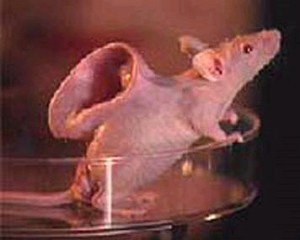
At the German Cancer Research Center (DKFZ), human bone cancer tumors are implanted into mice. They suffer for weeks and suffer agonizingly from the consequences of the cancer. The nationwide association Doctors Against Animal Experiments condemns the experiments, especially since the therapy tested in the mice was already found to be effective in human cell cultures and classified as safe in patients. No efficacy could be demonstrated in the mouse study.
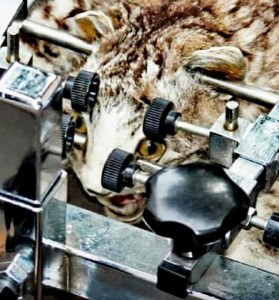
Vivisection has been defined as “The act of cutting into or dissecting the body of a living animal, especially for scientific research.” (The word is derived from the Latin, vivus, for alive, and the English section, which means cut). The term has come to mean any harmful or invasive technique used on animals in experimentation or dissection.
The use of animals as stand-ins for humans can give rise to misleading results because of the intrinsic differences between humans and other species. Human disease and human response to drugs and other chemicals should be studied in human-relevant systems.
Each year, millions of animals are used to measure the safety of household and personal care products. These toxicity tests were developed in the early 1900s and have been criticized for their extreme cruelty and inability to provide reliable data that can be extrapolated to humans.
People trust that the cosmetics and personal care products that they purchase are safe for all their family members, including their companion animals, but object to the use of animals in toxicity testing to assess the safety of these products and their ingredients. Polls have shown that most consumers would prefer to use products from companies that do not test on animals. And innovative alternative testing methods are now available that are more humane, faster, less expensive and better able to predict how these products will affect people. Despite this, the use of animals to test the safety of cosmetics continues in the U.S. and throughout the world.
Despite the inherent limitations with the animal model and advances made in technology, it is estimated that over 100 million animals are used every year by the research industry, which includes universities, pharmaceutical and diagnostic laboratories, as well as military, agricultural and marine mammal facilities.
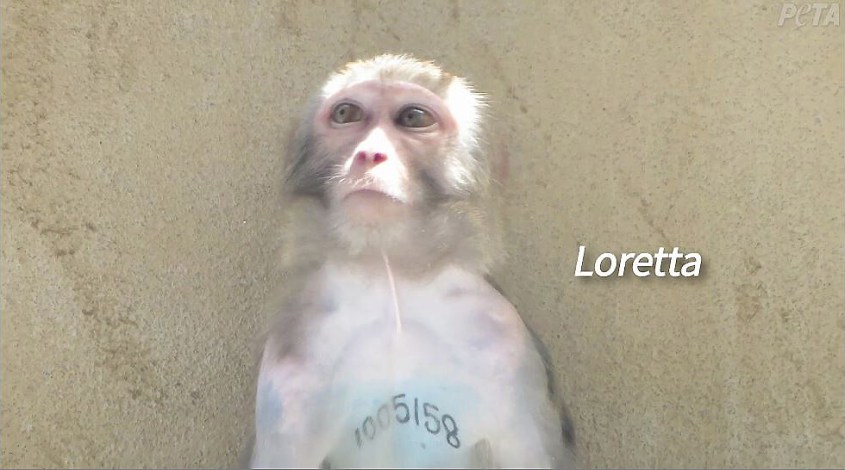 Loretta didn’t even have a name—she had a number.






 World Animals Voice