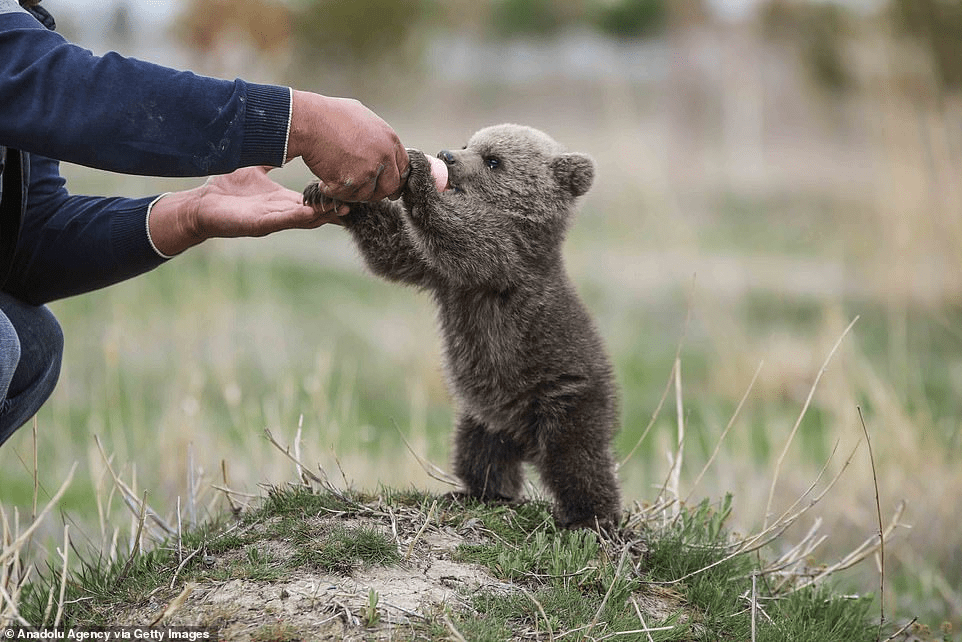
Feeding time: Baby bear ‘Hakvan’ is pictured feeding from a milk bottle by an officer at a rehabilition center in Van, Turkey
Thirstier than the average bear! Adorable orphan cub guzzles milk from a bottle at Turkish rescue centre after he was found wandering alone in the wilderness without his mother
Bear cub ‘Hakvan’ was found wandering the wilderness without his mother near the Turkish border with Iraq
Photos show a rescue centre finding the baby bear and nursing him back to health with a small milk bottle
Turkish rescue workers brought the cub to Van for treatment, feeding Hakvan while under supervision
An adorable bear cub was found lost in the wilderness without his mother by a Turkish rescue centre in Hakkari, a nearby province on the Turkish border with Iraq.
The baby bear, called ‘Hakvan’, is pictured guzzling from a milk bottle after his rescue. Photos show him being nursed back to health after his solo adventure.
‘We will apply a special rehabilitation process for him but he will be a longtime guest here,’ Aslan said. It is not clear at what point the rescue centre will attempt to reintroduce Harkvan back into the wild
After being separated from its mother in Hakkari, Turkish rescue workers brought the bear cub to Van for treatment, feeding Hakvan every three hours and keeping him under supervision.
War exposes many truths, the brutal and the valiant. The war in Ukraine is powerfully and painfully magnifying the interconnectedness of human and animal lives, and, mercifully, our unrelenting commitment to acting with love, even in the face of lethal danger.
Domesticated animals are affected by almost every human decision and those involving violence most of all, whether they’re hidden in factory farms or captured by the lenses of photographers and broadcast globally.
An animal keeper comforts an anxious elephant at the Kiev Zoo in Kyiv, Ukraine, as a large convoy of Russian tanks and other vehicles threatened the capital. (AP Photo/Emilio Morenatti)
In Ukraine, they are exhibiting feelings of intense fear, pain and confusion. They apparently don’t understand why their worlds are being turned upside down.
A woman named Alisa fled Kyiv on foot with her mother, sister, children and two dogs — including an elderly German Shepherd named Pulya — and shared her experience with The Guardian.
“My dog is 12 and a half and she struggled to walk and fell down every kilometre or so and couldn’t stand up again. I stopped cars and asked for help but everyone refused; they advised us to leave the dogs. But our dogs are part of our family. My dog has experienced all the happy and sad moments with us. Mum’s dog is all she has left of her former life. So my husband, at times, carried our dog on his shoulders.”
Alisa’s husband carrying Pulya, their 12-and-a-half-year-old dog, to the border with Poland.
My own family includes rescued German Shepherds, and the images of this 80-pound, grey-muzzled dog being carried to Poland so she would survive gripped my heart. We would do the same for our dogs. We won’t have to, and for that we are deeply grateful. But no one should have to.
Horses are similarly let loose when natural disasters, like forest forest, tear through landscapes. We can anticipate and prepare for some emergencies. Others, like sudden invasions, we cannot as easily plan for — but we can respond in kind.
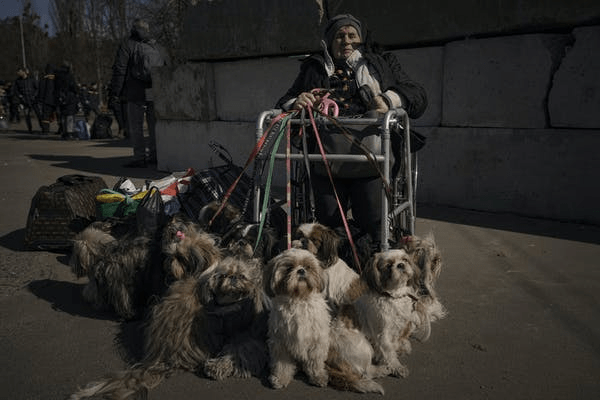
Antonina, 84, sits in a wheelchair after being evacuated along with her 12 dogs from Irpin, at a triage point in Kyiv, Ukraine, on March 11, 2022. (AP Photo/Vadim Ghirda)
The real extent of the damage remains to be seen, but the effects will be wide-reaching. As farms and shelters run out of food, water and workers, or lose electricity, untold numbers of animals will suffer and die, quickly or very slowly.
We are all connected, within and across borders, within and across species. Ukrainians who remain and are defending the lives of others demonstrate profound bravery that resides deep in the human spirit.
Anastasiia Yalanskaya, a 26-year-old woman who refused to leave Kyiv, was killed while delivering food to an animal shelter that had been without food for three days. Another animal advocate, Natasha Derkach, was killed as she worked to save animals in Dnipro, a city under siege from heavy shelling.
There are many more victims. Ukrainians are losing their lives defending animals.
A week before the Russian invasion began on Feb. 24, 2022, I was contacted by a colleague to assist a Ukrainian city hoping to create the country’s first animal cruelty unit. My colleague later received a powerful message from an animal advocate inside Ukraine who was afraid they might never speak again.
This war has laid bare the violence of abusive men who terrorize people and animals. It has demonstrated what losing your freedom really looks like.
But the dedication Ukrainian people have shown to animals reveals that even in the most dangerous times, the human capacity for cruelty is rivalled only by our ability to be courageous and compassionate. We can be more than simply human. We can be truly humane.
See the many photographs associated with this article by clicking on:
Animal rights activists marched on Sunday April 10, 2022 in Havana. Photo: Pedro Sosa Tabio.
“The majority of us here are independent protectors and we seek to raise people’s awareness about looking after animals.”
By Pedro Sosa Tabio
HAVANA TIMES – On Sunday 10th April, Dog Day in Cuba, dozens of people met outside the entrance to Havana’s Colon Cemetery to go on a pilgrimage to Jeannette Ryder’s grave, a US philanthropist living on the island who dedicated herself to looking after plants, children and especially animals.
“The majority of us here are independent protectors and we seek to pay tribute to Jeannette Ryder’s great work, to our own work and to raise people’s awareness about looking after animals,” Gilda Arencibia, an animal rights advocate for many years, said. “We have a lot of love for animals, especially the animals in our country, who have always been unprotected and abused.”
A few days ago, a cat was thrown into the ring during a show at the Rancho Boyeros Fairground, so people could chase it, lasso and beat it. Photos went viral on social media. As did the animal rights community’s outrage. Days later, it was reported that the people responsible were fined 1500 and 3000 Cuban pesos.
“The solutions they give us are fictitious, a simulation. As far as I understand, Decree-Law (No.31/2021 of Animal Protection) doesn’t do absolutely anything to protect animals and animal rights advocates, who are unprotected. There is no law that protects us,” animal rights activist Saily Maria Garcia said.
The cat in the ring incident was the main reason for animal rights advocates meeting at Colon Cemetery, holding signs against animal abuse and wearing orange clothes, the color of this cause.
The idea to march isn’t new, but there were different efforts to quell it this year.
A grave’s symbolism
Jeannette Ryder’s grave displays a statue of the lady’s body lying down with a dog laying at her feet. Rinti was her pet and the story goes that when she passed away, her dog laid in front of her grave and also perished, refusing to eat and drink.
This grave is a symbol for animal rights advocates, which is why it is the final destination for the pilgrimage. They gather around the grave. They fill the edges with different kinds of flowers and cover the grave with a Cuban flag.
They walk past Maria, who receives applause from the whole crowd. Maria is a short and wrinkled old woman, with white hair. They ask her how long she’s been working with animals. Maria remembers being in the cemetery for years, when she was called to look after a dog that had been bitten by rats. Then, there was another dog with scabies. Somebody from the crowd corrects her: her work dates back a lot further, she’s been looking after animals for many years and is one of the founders of today’s animal protection movement in Cuba. Maria nods and says she has photos of that dog’s face full of scabies. She’s only interested in talking about the dog, about how much the dog needed her help.
There are lots of people like Maria taking part in the short pilgrimage, who dedicate themselves to looking after animals, treating them, rescuing them from precarious conditions, looking for families to adopt them…
“Patricia, who isn’t here today, was summoned to a police station yesterday, even though she hadn’t committed a crime, has never had run-ins with the Law, has always given her body and soul to animals and nobody has ever knocked on her door to give her a plate of food,” animal rights activist Freddie Filo tells the crowd. “It’s sad that she isn’t here on a day like this. She is always with us here. She also founded this.”
Behind the group, on the other side of the passageway that separates one block of graves from the next, several State Security agents dressed as civilians supervised the march. The pilgrimage is a new reason for them to deploy their well-known popular “control” tactics.
Animal rights advocates gathered at Jeannette Ryder’s grave. Photo: Pedro Sosa Tabio.
23rd and F Streets
The call for the Cuban pilgrimage for Dog Day was spread on social media with a poster. The poster had a photo of a puppy and encouraged people to meet on April 10th, at 10 AM, in the park on 23rd and F Streets, at the beginning of the normal route to the cemetery.
Days before the scheduled date, some animal rights activists: Patricia Gonzalez, Aylin Sardiña and Betty Batista Romero, were summoned by the police to prevent them from taking part in the event.
“Second Lieutenant Camila and another official showed up at my door around 10:30 PM, to ask me what I’d be doing tomorrow. I would like to take part in the pilgrimage and raise my voice against animal abuse (…), but sadly, I’ve been threatened with charges of sedition if I decide to go. She made this very clear in the subpoena she gave me the day before yesterday, but she believed she needed to warn me again,” Batista Romero wrote on his Facebook page.
On Sunday April 10th, at about 9 AM, there were around four people wearing orange clothes and with their chihuahuas in the park on 23rd and F Streets.
Approximately five minutes later, a stout and grey-haired man, wearing trousers and a checked shirt, told them they’d have to leave. They requested an explanation and he explained that the pilgrimage hadn’t been banned, but that it could only take place within the cemetery’s bounds. The small group agreed to leave.
Susana Bisbe confirmed this on her social media when she informed animal rights advocates that State Security wouldn’t let them begin the march in the park on 23rd and F Streets and that they all had to head to the cemetery.
Hours before the pilgrimage, the Government announced the call for an animal protection fair in different Havana municipalities, on social media. The coincidence with the date and time of the march made some activists suspicious of this government initiative.
What are they scared of?
The first pilgrimage in Cuba for Dog Day was in 1994, from Jeannette Ryder’s grave to G Street in Vedado. However, the 2019 pilgrimage was the most important when hundreds of people took part in a march authorized – and not summoned – by the capital’s government, from Parque Quijote, on 23rd and J Streets, to the cemetery.
In addition to having had a greater turnout than this year, slogans against animal abuse were shouted along the whole way and the police were even present, cutting off streets busy with traffic so that the crowd could pass by.
However, the government’s negative response to similar initiatives in other provinces, suggests that the “authorization” in 2019, could have been a mistake.
What lessons does the animal rights march on April 7th teach Cubans?
The march on April 7th taught many lessons that can be used by those who believe you can legitimately fight for your rights in Cuba or by those who want to expose inconsistencies in Socialist Rule of Law.
Even though the right to protest is recognized in Article 56 of the Constitution, very few initiatives called independently of the Government have been authorized. Others were repressed by police authorities or criminalized when they did finally take place.
On May 11th 2019, Cuba’s LGBTI community held its own march against homophobia and transphobia, after the traditional conga normally held this time of year was canceled. During the peaceful parade, many participants were repressed and arrested by the police, who tried to stop the protest.
On November 27th 2020, a great military operation cut off streets surrounding the Ministry of Culture, where approximately 300 young people held a sit-in to protest the repression members of the San Isidro Movement had suffered. Even though there weren’t any clashes between repressive forces and protestors, the peaceful protest and its leaders were demonized by state-controlled media. Then, some of the participants were interrogated, harassed, and threatened by State Security.
Over a thousand people were sanctioned or sentenced to prison for up to 20 years because of the July 11th and 12th 2021 protests, charged with theft, public disorder, incitement, contempt and sedition.
In October 2021, the Cuban Government denied authorization for a “Peaceful Protest for Change”, arguing that “the reasons for the protest held no legitimacy.” Days later, its main organizers – who created the Archipielago platform – were victims of police harassment and threats, interrogations, slander campaigns in the media and hate crimes.
Against such a backdrop, the Government seems to be intent on stopping spontaneous or programmed protests in Cuban society. However, the pilgrimage against animal abuse took place, even if it was regulated and policed.
One of the reasons for the animal rights advocates’ march was the abuse of a cat during a rodeo show in Boyeros. Photo: Pedro Sosa Tabio.
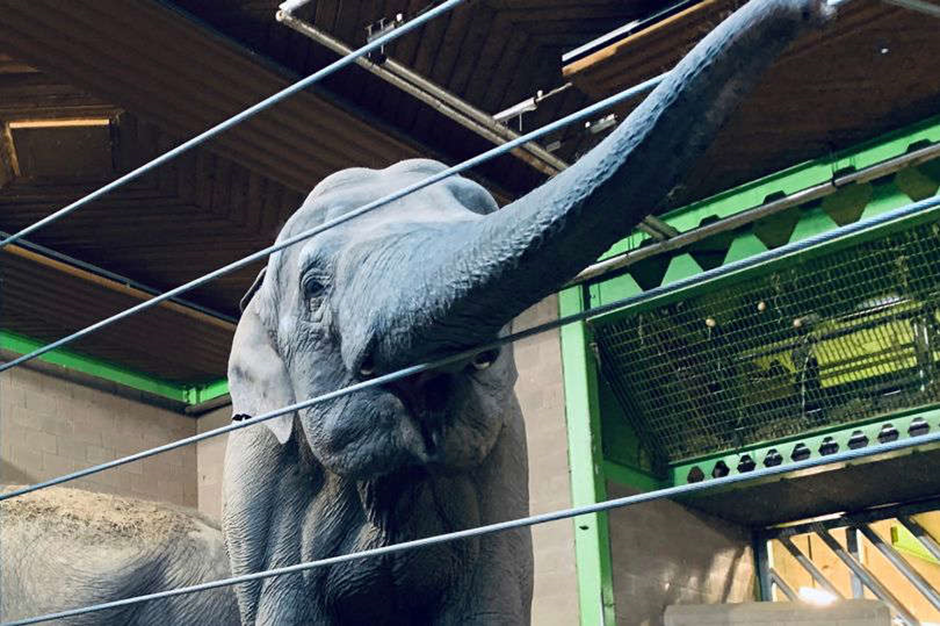
Many told Belfast Live they are delighted for them, and hope they find an elephant sanctuary where they can “roam freely and enjoy the company of other elephants” while others said they’ll be sad to see them go.
“I hope they find a retirement home where they can live out a comfortable life,” one person commented.
Another added: “Hopefully, they’ll send them to the Tennessee Elephant Sanctuary where they can live out their lives wandering the hills of Tennessee, swimming in a lake and just being elephants.”
“Sad but happy to see the elephants go,” said a third.
The size of the elephant enclosure in Belfast was also a recurring theme, with one person telling us “the elephants were the ones that confirmed my decision to never go back – they looked broken”.
“A zoo only serves its purpose if the animals are suitable for the space they are in and not to mention climate and resources to look after them well,” another comment read.
While another said in their opinion “the area they are kept in is far too small, no pool for them to bathe, and very little interaction with other animals. They are an intelligent animal, its cruel keeping them in a shoe box confinement”.
Others praised the zoo for rescuing Yhetto and Dhunja and stopping them from “being abused”.
A zoo supporter said: “Do people not understand these animals where abused most of their lives and due to the trauma they suffered it will always cause them to sway and shuffle… Why not let the poor girls live the rest of their lives at our zoo!”
“Those that work there are passionate about animal welfare – I trust their decisions are in the best interest of the animals,” added another.
“I just hope wherever they are moved to has a larger enclosure for them and more enrichment. It is so depressing seeing them at Belfast zoo. Yes, it is a sanctuary compared to where they were before, but still totally inadequate.”
A Belfast City Council spokesperson said they meet all animal welfare standards and have provided the highest level of care for Yhetto and Dhunja who they took in as “the zoo has provided a sanctuary for older non-breeding female elephants in recent years”.
“The very difficult decision has been made to phase out elephants from the zoo’s future animal collection plan,” they added.
“Dhunja and Yhetto will be transferred together to another zoo in future, and we are working closely with the European Association of Zoos and Aquaria to identify the best possible new home for them.”
The video which is posted here must be seen by as many people as possible.
“Lies, deception and intimidation” – don’t think so; so the truckloads of dead birds being hauled away after gruesome deaths to be converted into compost is footage of ‘lies and deception’ is it ? – we suggest the clown who says this in the video gets in touch with the real world of abuses and Iowa state factory farming which is forever making the news for all the wrong reasons.
HE is the one who needs to distance himself from political lies, deception and intimidation. (I am in England so not certain of peoples positions) but would guess then that he is probably an Iowa state politician who voted for ag gag and who does not want the real truth to come out. Sorry chum, but you are living in your pathetic world of the dim and distant past; people have no respect any more for you or those of your kind.
You may still consider yourself very important, but we look at you in another light; that of the abuser who wants to sweep his abuses under the carpet and keep them hidden. The reality which you dismiss under your pathetic terms is now fortunately being exposed to the world, and will continue to be exposed to the world. Get a grip; or even better, resign. Old fossils belong in the ground, not parliaments.
Regards Mark
There is a saying, and that is:
“The best way to predict the future is to create it!”
– Denis Gabor
Avian Flu kills millions, Gov Kim Reynolds says it’s a “disaster” only when it affects human profit, but it’s ALWAYS A DISASTER for animals who are brutalized and tortured
This Iowa farm just killed 5 million birds during an outbreak of avian flu, and we documented the horrific aftermath of the mass killing, including birds left behind after surviving “ventilation shutdown.”
Taxpayer dollars paid for the farm’s last mass killing after infectious disease ran rampant in 2015. Now, the farm’s billionaire owner, former Senator Glen Taylor, who also owns the Minnesota Timberwolves and Star Tribune,may be getting bailed out once again despite posing a public health threat.
(Because billionaires have a lot of money, you’ll support them having more money to reward their putrid, disgusting actions causing unimaginable suffering?
Would you trust Glen with your cat? I don’t trust Glen with dirt – look at the abysmal mess he’s made out of it already, but he’s old so he doesn’t care that his legacy is cesspools of bacteria, pus, and decomp poisoning a world – much less a live being capable of pain and misery.
Just because the Timberwolves team sucks is no reason to take it out on vulnerable, defenseless animals, who, by their very nature of vulnerability and as acceptably abused by humans, deserve the MOST care and empathy, which excludes exploiting them in any way. SL)
Take PETA’s Cruelty-Free Shopping Guide along with you next time you head to the store! The handy guide will help you find humane products at a glance. Order a FREE copy HERE
Searching for Cruelty-Free Cosmetics, Personal-Care Products, Vegan Products, or more? Click HERE to search.
Free PDF of Vegan & Cruelty-Free Products/Companies HERE
Want to do more than go vegan? Help others to do so! Click below for nominal, or no, fees to vegan literature that you can use to convince others that veganism is the only compassionate route to being an animal friend:
The Timberwolves aren’t done with protesters delaying their games.
An animal rights activist chained herself to the basket stanchion Saturday during Game 1 of the Timberolves-Grizzlies playoff series in Memphis, Tenn.
The woman, wearing a T-shirt that read: “Glen Taylor Roasts Animals Alive” — appeared during a stoppage of play in the second quarter with yellow chains and attempted to secure herself to the stanchion after throwing flyers on the floor.
The protester, who appears to be another member of the animal rights group Direct Action Everywhere (DxE), was unchained by security before five people carried her out of the main area to the cheers of fans inside FedExForum.
The protest seemed to be related to the one carried out by a woman who tried to glue her hand to the court before the Timberwolves’ play-in game against the Clippers in Minneapolis on Tuesday night.
The animal rights group Direct Action Everywhere — which tweeted that the person who chained her self to the basket was Zoe Rosenburg — has accused Taylor, the Timberwolves’ majority owner, of the inhumane killing of 5.3 million chickens in a recent mass killing following an outbreak of bird flu in Taylor’s Iowa egg factory.
Taylor is in his last season as the team’s owner. The NBA approved a $1.5 billion deal that will net Alex Rodriguez and partner Marc Lore, the Walmart CEO, a 20 percent minority share of the Timberwolves with chances to buy more stakes in the team in 2022 and beyond to make them the majority owners.. The deal also includes an ownership stake in the WNBA’s Minnesota Lynx.
Taylor did get some good news in the end as his seventh-seeded Timberwolves stunned the No. 2 seed Grizzlies, 130-117, to take a 1-0 lead in the Western Conference first-round best-of-seven series. Anthony Edwards led Minnesota with 36 points in his first playoff game of his career.
An Arizona man is facing animal cruelty charges after police found he had shoved 183 animals into a freezer, including some that reportedly were still alive.
Michael Patrick Turland, 43, allegedly filled the cooler with dead dogs, rabbits, birds, lizards, turtles, mice and other animals, according to The Associated Press.
Mohave County deputies found the animals on 3 April during an animal welfare check. A woman called the sheriff’s office and complained that she had lent Mr Turland her snakes so that he could breed them, and that he never gave them back. She told them the man then disappeared, and several months later that she received a call from the owner of the property where Mr Turland had been renting. The owner found the freezer full of animals and alerted the original snake owner.
The woman who owned the snake then called the deputies to make the animal welfare check.
The sheriff’s office said the animals were kept in a “large-sized chest freezer” and noted that the positioning of the creatures suggested that some were likely alive when they entered the freezer.
Mr Turland was arrested on Wednesday after deputies returned to the property. The sheriff’s office has not released a motive for the alleged crimes, but noted that its investigation is ongoing. Deputies are currently on the hunt for his wife, Brooklyn Beck, to question her further.
“When interviewed, Turland eventually admitted to placing some of the animals in the freezer when they were still alive,” the deputies said in a statement.
Ultimately, Mr Turland was charged with 94 counts of animal cruelty. He is currently being held at the Mohave County Adult Detention Facility in Kingman.
Animal rights organisations are accusing former agriculture minister Carola Schouten MPs of flouting the Dutch ban on the trade of wild animals for circuses by sanctioning the sale of an elephant to Hungary.
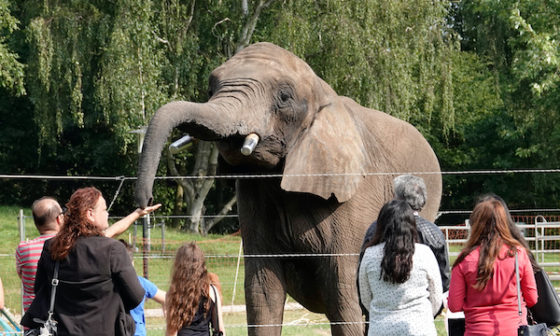
The dispute centres on Buba, the last circus elephant in the Netherlands, which was owned by the Freiwald circus family and went into retirement by the 2015 ban on performing wild animals. In 2020, MPs voted to allow the 45-year-old elephant to remain with the circus family after the Freiwalds rejected a suggestion to move the animal to Elephant Haven, a sanctuary for retired elephants in France on the grounds that it would be happier here. However, claiming they could not longer afford to care for the animal, the Freiwalds have sold Buba to the Kimba Elefant park in Hungary, the Telegraaf reported last month. The park, owned by the Caselly circus family, is part zoo and part circus.
The answers to parliamentary questions from animal rights party PvdD MP Frank Wassenberg ‘only confirm what we already knew,’ animal rights organisations Bite Back and Animal Rights NL said in a statement. ‘After all the sanctimonious drivel about allowing Buba to remain with her circus family in the Netherlands… Buba has been flogged to a park in Hungary where she will be forced to perform tricks again,’ the organisations said. The current agriculture minister, Henk Staghouwer, could not confirm if Buba had been sold and if so, how much for but admitted the necessary papers had been provided to enable the elephant to travel to Hungary.
Tricks. He also said that according to his information, the elephants at the park are ‘trained in the presence of visitors and perform tricks with their keepers’. Slaghouwer expressed regret that the option to take the elephant to the retreat in France had been refused. ‘The objective of the 2015 ban on the use of wild animals in circuses was always to rehabilitate the animals in an environment with knowledgeable staff. It would not be in Buba’s best interest to be used to perform for an audience again,’ Staghouwer said. The animal rights organisations said Buba had been the victim of ‘populist sentiment and political ineptness’ and have said they are considering legal action. The Netherlands found itself in a similar situation with Morgan the orca, which was sold to an amusement park on Tenerife where she has been bred and forced to perform tricks, despite the official agreement.