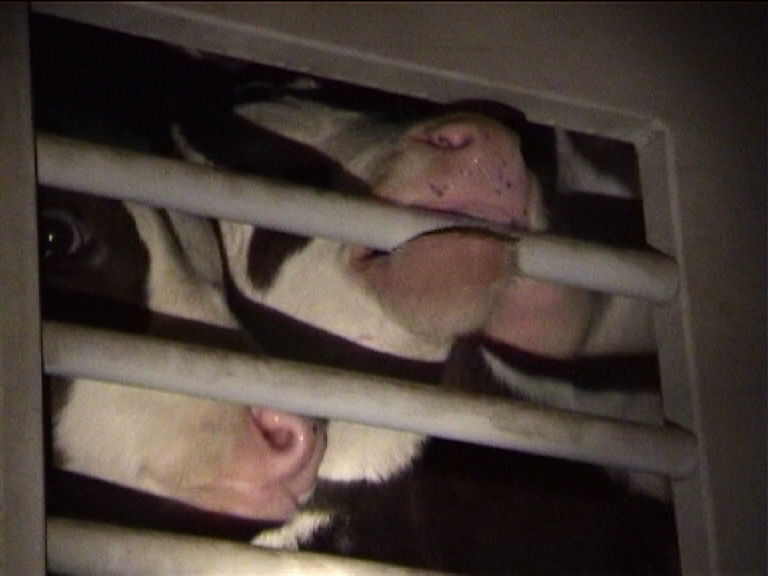
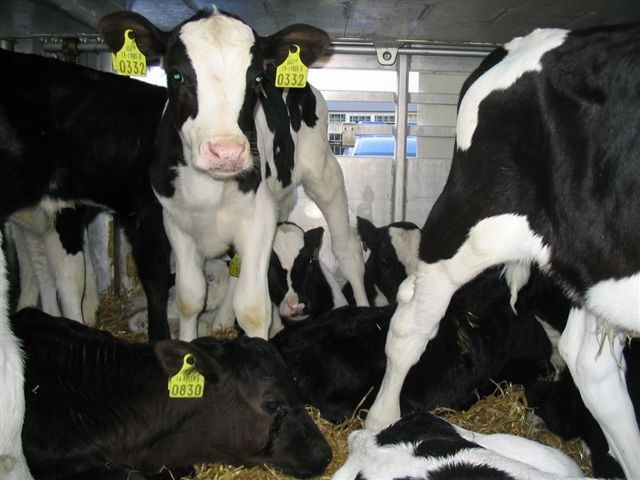
So; EU Sells Pig Meat to Japan, and Under JEEPA; Japan Sells Pig Meat to the EU. That Makes Environmental Air / Sea Mile Sense, Or Does It ? – They Call It An ‘EU-Japan Economic Partnership Agreement’; We Call It Environmental Destruction.

EU and Japan should use their trade deal to do more for animals

27 January 2022

WAV comment – so, under the JEEPA; the EU imports cattle, hens and pigs from Japan. But hey, does the EU not export (from Germany) pig meat to China  ?   Germany is one of the largest meat exporters in the world with approximately 58 million pigs are slaughtered in Germany every year.

So, lets get a grip – the EU produces pig meat within the EU (Germany) that it then exports outside of the EU.  At the same time through JEEPA, the EU is importing pig meat from Japan on the other side of the planet ! – this must be so effective in reducing all the meat transportation miles and cutting down on air and sea miles I don’t think. 

Sounds to me like a to hell with the environment; as long as we have good export and import figures, who cares !

Why not German pig meat be sold in the EU, and Japanese pig meat sold in Japan or China ? – this shown the environmentally destructive results of ‘economic partnership agreements’ that our master politicians pride themselves on so much.  Fools or sense ?

Regards Mark

From Eurogroup for animals.

The EU-Japan Economic Partnership Agreement (JEEPA) entered into force in February 2019, but the partners have not yet started any discussion on animal welfare. At the occasion of the third joint civil society meeting under the trade deal, Eurogroup for Animals calls on the EU and Japan to make use of the provisions on animal welfare cooperation listed in the agreement to foster a transition towards a more sustainable food system, in which animal well being is respected.

Read our report.

While JEEPA liberalised the trade in most animal products without any condition related to animal welfare, it also provided two channels that could be used to improve animal well being: the provisions on animal welfare cooperation, and the chapter on Trade and Sustainable Development (TSD), which covers wildlife trafficking, sustainable aquaculture and fisheries. 

While the EU does not currently import significant amounts of animal products from Japan, reduced tariffs have still led to more imports of Japanese animal products. For instance, between 2018 and 2019, imports of Japanese fresh and chilled beef increased by 31% and pig meat imports more than doubled.

As tariff reduction was not conditional on the respect of any animal welfare standards, and as Japan has poor legal requirements in the field, the increase in trade is likely to have favoured mostly industrialised intensive farming practices. This is not only detrimental to animal welfare, but also fuels challenges such asclimate change, biodiversity loss, antimicrobial resistance, and the spread of zoonoses. 

Using the mechanisms available under JEEPA to promote higher animal welfare is thus essential to ensure that trade policy does not impede the EU’s efforts in combating these problems.

In July 2020, in a reply to a joint letter sent by Eurogroup for Animals, Japan Anti-Vivisection Association (JAVA) and Animal Rights Center Japan (ARCJ), the European Commission agreed that increased animal welfare cooperation should be part of the EU-Japan cooperation. At the occasion of the third anniversary of JEEPA, Eurogroup for Animals reiterates its call for concrete actions to take place in the field through the publication of a report on what the EU and Japan could do for animals under JEEPA. 

The report describes the areas that would be the more promising for EU-Japan animal welfare cooperation either because of the EU imports (cattle, hens and pigs), or because the sectors are key in Japan and therefore any improvement to animal welfare could have a significant impact on animals and on the sustainability of food productions (laying hens and broiler chickens), and lastly  because the EU exports live animals who end up being farmed in these sectors in Japan (horses). 

Hopefully, 2022 will be the year such a cooperation starts. This would contribute to the achievements of the objective listed in the Farm to Fork strategy: to use its trade policy to “obtain ambitious commitments from third countries in key areas such as animal welfare”.

Read our report.

Regards Mark

29/1: A Message From Venus and Mark To All Our Site Visitors.

Venus and Mark; the co founders of WAV, would like to thank some of you for the comments you leave in the way of replies on the site.  We read them all and they are all to be viewed under ‘Recent Comments’ on the left hand side on the site.  We are both of the same feeling on most animal issues; we provide input individually but consult when necessary, and the following has been released with approval from us both.

WAV is an information site run by us, animal advocates.

We run this animal rights blog independently, do not act as representatives any organization or political party (from any country) and we finance our work ourselves – independently; free  from outside sources.  Where possible on our posts, we always publish the original source of our data, as well as providing links directly to animal advocate organisations if we feel it will be beneficial for further progress.

Many WAV visitors often make contact, asking how they can support us.  We do not ask for your money or your financial membership; we have no membership – instead we ask that you invest your donations (if you are able) directly to the animal organisations that we give information on; but just as important, if not more important, is something that everyone can do as supporters, and that is:

Sign the petitions,

Share the videos of the atrocities we provide; films in the slaughterhouse, animal farms, labs, bear bile farms, dairy systems, fur farms, trophy hunting to name but a few; in addition to everyone giving up the support of these businesses which are directly associated with meat, dairy and the use of any animal products.  Plant based is the way forward and we promote that.

These are the minimums that we owe the animals, and with your support, can make such a difference, whilst at the same time have a very positive effect by delivering a severe blow to those who exploit and torture animals.

Thank you for your interests in supporting WAV either financially or in other ways; but rest assured, it is not necessary.  If you can do the above, it is more than we ask in the way of full support.

It is the positive changes that drive us, and we are witnessing this each and every day from the feedback we get from all corners of the world.  Visitor Traffic for Worldanimalsvoice.com (clustrmaps.com) – this is the only inspiration we need to be a world animals voice.

Our best regards and thanks to you all for your actions and support;

Venus and Mark.

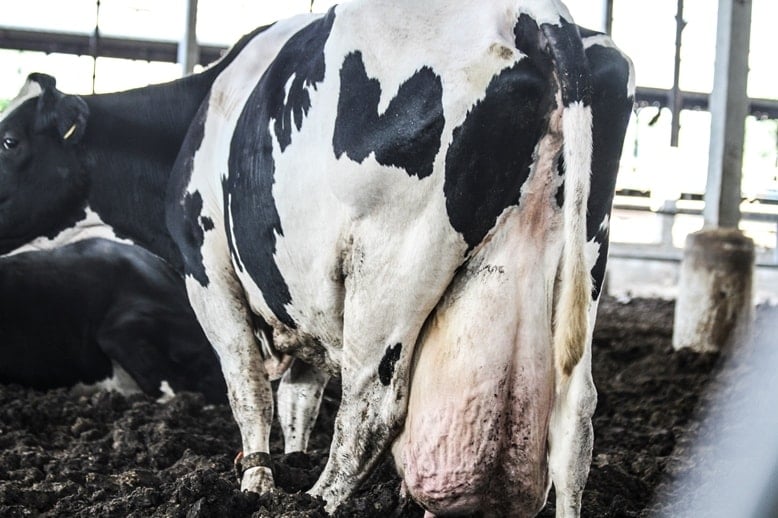
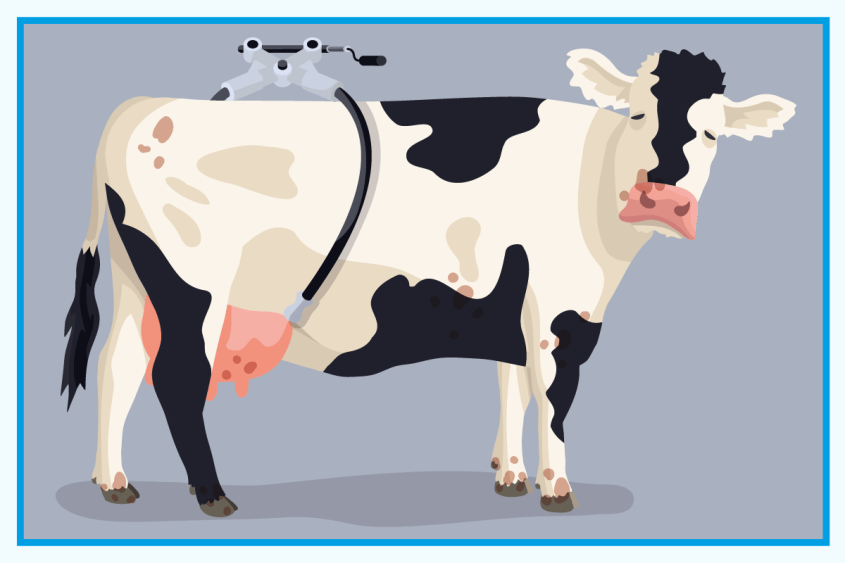
Blow Fixx, hangers, injections: This is how cows are manipulated during milking

Cows and calves lead a cruel existence in the dairy industry. Newborn calves are usually separated from their mothers immediately after birth.
The female offspring usually suffers the same exploitative fate as the mothers and is also intended for milk production.
At the age of about one year, female calves are artificially inseminated for the first time. After birth, they are separated from their child and then milked for the first time.

The dairy industry employs obnoxious and manipulative practices to calm cows during milking and to resolve so-called milk blockages.

Panicked cows in the milking parlour

Young cows in particular sometimes fight back during the milking process.
They don’t stand still in the milking parlor and can’t stand having their udders touched by people and their mother’s milk milked by machines.
The young animals are afraid, panic and try to defend themselves with kicks.

In view of this defensive behavior, the dairy industry does not conclude that they should leave the animals alone and stop stealing their mother’s milk.
Rather, she fixes the young cows with so-called hip restraints or stirrups.
The arched metal devices are clamped around the cow’s waist so that she cannot defend herself with kicks.

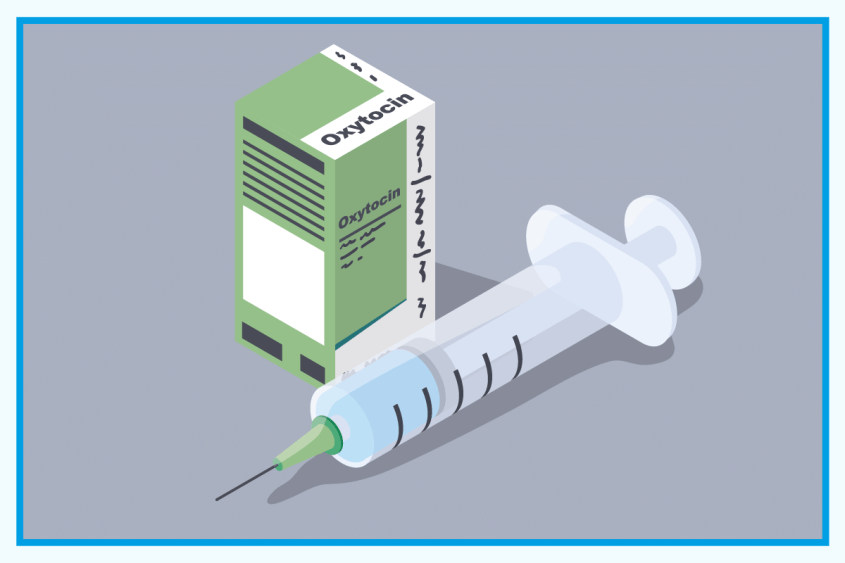
In addition, the animals are often injected with synthetically produced oxytocin. The so-called “mother-child hormone” is supposed to calm the cow so that she willingly “gives” her milk.

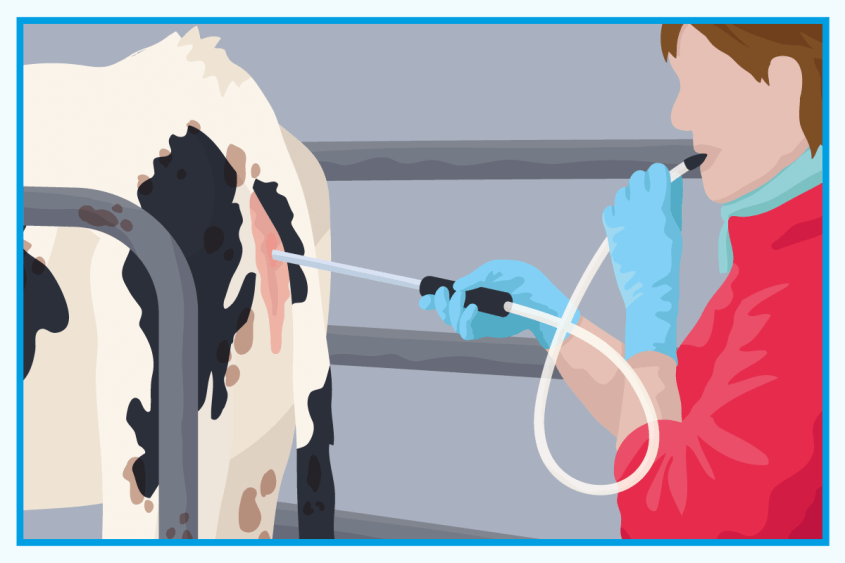
BlowFixx blows air into cows’ vaginas

It is difficult for us to understand how people came up with the idea of blowing air into the genitals of cows so that they “give away” their mother’s milk.
Unfortunately, the dairy industry is unaware that human beings do not need non-native breast milk – and certainly not in adulthood.

On the contrary, the exploitative industry has even developed a special device that uses a stainless steel probe to blow air into the animals’ vaginas in order to be able to milk young, frightened cows better.

This device is called “BlowFixx”.
In the past, some dairy farms are said to have used garden hoses for the heinous practice, which can sometimes be difficult to insert into the animal’s vagina due to their mobility.

Cows are not milk machines

At PETA, we are appalled at the normality with which these disgusting devices are advertised.
Rather than face the obvious question of why cows don’t want to be milked and stop exploiting the animals, the dairy industry resorts to unsavory manipulation and relegates cows to milk machines.

Cattle are social and affectionate animals that naturally take great care of their children and provide them with the best possible supply from their mother’s milk.
Applying the disgusting practices of the dairy industry to dogs or cats would cause a societal outcry – and rightly so.
The classification of different animal species into so-called pets and so-called livestock is man-made.
It rests on a deeply speciesist mindset that urgently needs to end.

Whether cows continue to be deprived of their mother’s milk is in our hands. Please reach for plant-based milk alternatives to break this painful, speciesistic cycle.
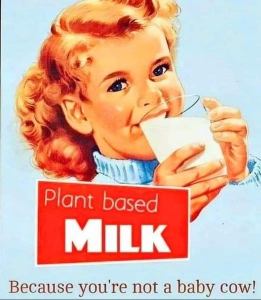
With our free and non-binding Veganstart program, you can easily start an animal-friendly life. The vegan lifestyle offers far-reaching benefits – for the animals, our environment and our health.
It’s best to try it out today!

https://www.peta.de/themen/kuh-melken-manipulation/

And I mean…Humans are the only creature that continues to drink breast milk after weaning, albeit from a different species.

Milk is one of the staple foods for many people – but they are clearly in the minority.
A large part of the world’s population does not tolerate milk.
Around three quarters of all people worldwide are lactose intolerant: They lack lactase, i.e. the enzyme that can process lactose in the body.
In Europe, around 30 percent of adults suffer from lactose intolerance. For them, milk consumption leads to abdominal pain, bloating and flatulence.

The countries in which milk is not a staple food clearly show that people can survive and even live healthily without cow’s milk.

There is hardly a food that is more unnatural for humans than animal milk.
As with all mammals, this substance is designed to nurture a newborn of its own kind.
In order for humans to be able to obtain cow’s milk, for example, the calf must first be removed from the only natural food chain.

This is done by snatching the children from the mother cow immediately after birth.
In order to deliver the quantities that are required, the whole thing is now even being carried out industrially and the cows in this perverse machine are artificially inseminated every year and are practically permanently pregnant for the rest of their lives.

And all this just so that Homo sapiens can also consume the mother’s milk of another species in adulthood.
Anyone who confuses that with naturalness is either an idiot or an ignoramus

My best regards to all, Venus

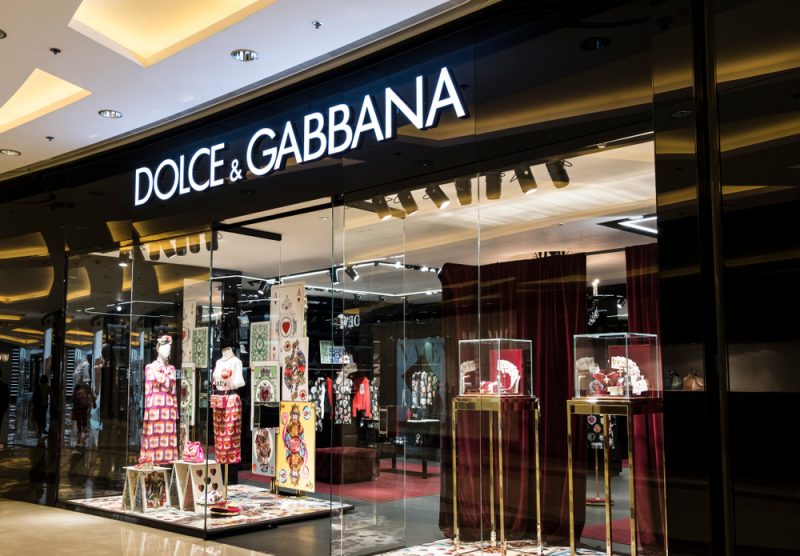
Fashion giants Dolce & Gabbana and Moncler have ditched fur.

The fashion houses’ fur-free policies make ‘it abundantly clear: “fur is cruel, outdated, and ugly.”
Fashion giants Dolce & Gabbana and Moncler have ditched fur.

The two Italian luxury fashion houses are the latest amongst a slew of mega-retailers including Bloomingdale’s, Macy’s, Nordstrom, Neiman Marcus, Saks Fifth Avenue, and H&M, that have committed to eliminating fur from their designs.
Canada Goose, Gucci, Yves Saint Laurent, Alexander McQueen, and Balenciaga, have also announced fur-free policies.

Dolce & Gabbana
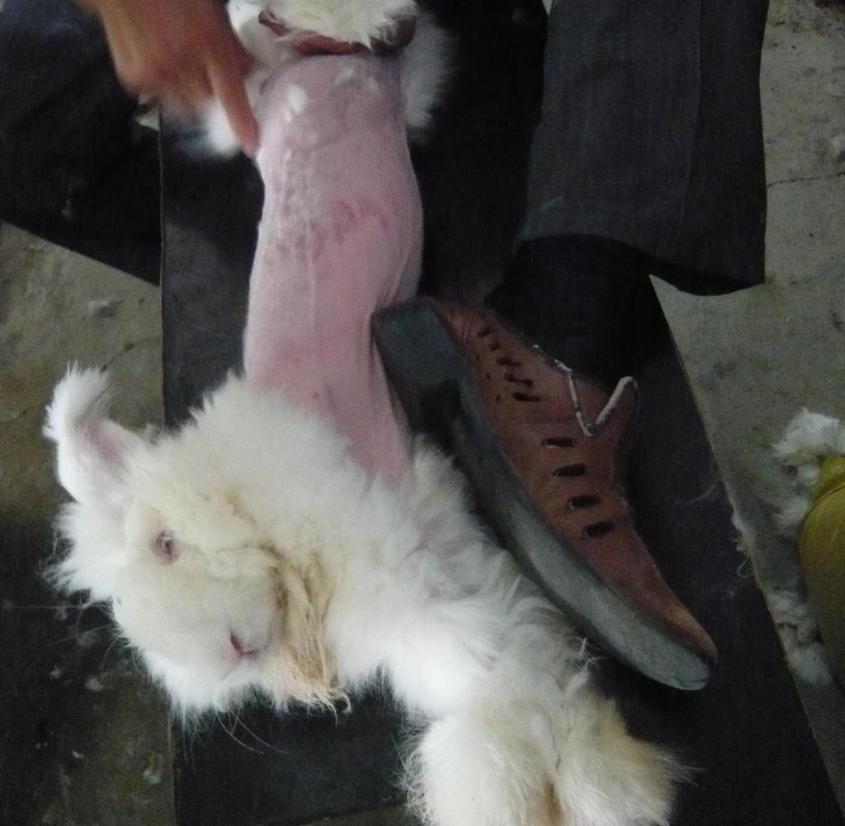
The fashion brand has even confirmed to In Defense of Animals (IDA) that it will ban angora from all future collections.

“Fur and angora cause extreme cruelty to animals, and we appreciate Dolce & Gabbana’s efforts to set the trend for compassion,” Fleur Dawes, Communications Director for In Defense of Animals said in a statement.

“Clothing and accessories needn’t harm animals. We urge all designers to follow suit by ditching all fabrics made from animal fur and skin.”

The IDA has been campaigning to end the fur trade since the 80’s. It has also helped create the longest-running animal protection demonstration in the world, known as Fur Free Friday.

According to the international animal protection organization, the fashion industry kills around 100 million animals for fur each year, including approximately 2 million dogs and cats.
More than 9,000 supporters signed IDA’s latest petition urging Dolce & Gabbana to ban fur.

“We wholeheartedly celebrate Dolce & Gabbana’s decision to eliminate animal fur and angora from its designs. Consumers have made it abundantly clear: fur is cruel, outdated, and ugly,” Julie Massa, Fur Campaigner for In Defense of Animals said.

Moncler
Earlier this week, Italian fashion house Moncler – also a renowned skiwear brand – committed to going fur-free as a reflection of the brand’s ‘dedication to protecting the planet and creating a better future for all’.

The luxury brand further announced that it “will stop sourcing fur this year and the last collection to feature fur will be Fall/Winter 2023.”
In a statement, the firm noted: “This decision is consistent with Moncler’s ongoing commitment to responsible business practises and builds on the brand’s constructive and long-term engagement with the Italian animal rights organisation LAV as a representative of the Fur Free Alliance.”

Moreover, it added that Moncler’s Sustainability Plan 2020-25 will focus on five strategic drivers: climate action, circular economy, fair sourcing, enhancing diversity, and giving back to local communities.

PJ Smith, Fashion Policy Director for the Humane Society of the United States and Humane Society International, said: “We’re thrilled Moncler is committed to making the fashion industry more humane.”

Simone Pavesi, LAV Manager for the Animal Free Fashion Area, added: “LAV applauds Moncler for the responsible decision to permanently discontinue animal furs from its collections.

“Our commitment to Moncler and all fashion companies continues towards new goals for an increasingly sustainable fashion and for the protection of animals.”

Fur is dead, and the world knows it

Apart from fashion brands, fur bans have been enacted in San Francisco, West Hollywood, and Los Angeles within the last several years. In 2019 California became the first state in the country to ban fur sales and fur trapping.

Last year, Italy also added its name to the list of countries that have announced bans on fur farms.

The Italian Senate’s Budget Committee voted on the amendment following the Humane Society International/Europe (HSI Europe) strategy to close its remaining 10 mink fur farms by June and permanently ban fur farming nationwide.

“Italy has quickly become a hub for fur-free fashion now that the country banned fur farming last year and many of its renowned brands—including Armani, Prada, Versace, Valentino and Gucci–are fur-free,” Smith added.

https://www.totallyveganbuzz.com/news/two-top-italian-luxury-fashion-houses-ditch-fur/

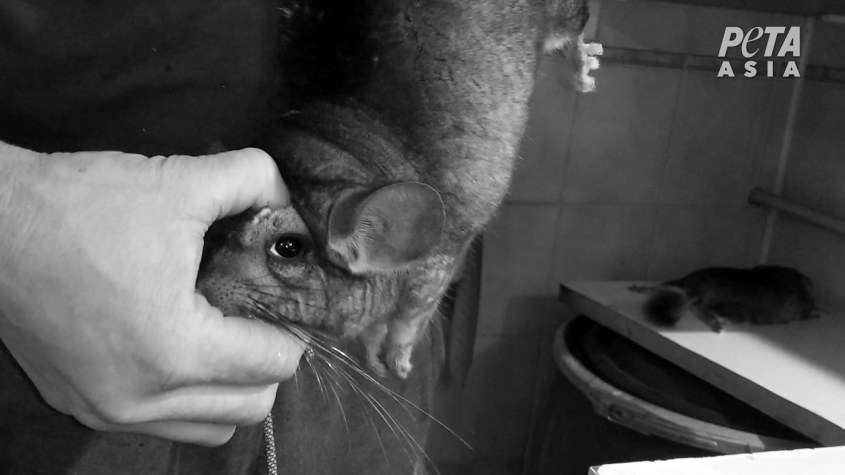
And I mean…Fur is not a natural product, but is “produced” in cruel factory farming of wild animals.
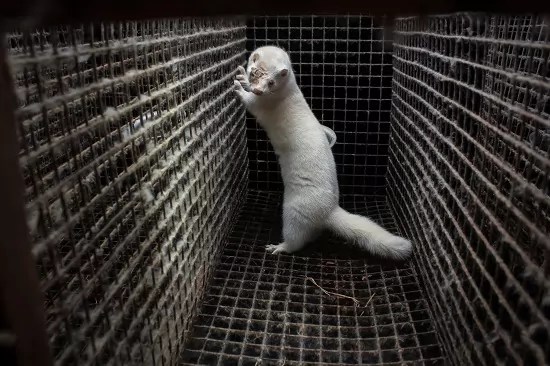
After a life of deprivation and suffering, a horrible death by gassing follows.
Europe is still the second largest fur producer in the world after China.

We are thrilled about the decision of the two luxury fashions.
We’re sure fur’s time is up.
And those few fashion houses that are still lagging behind will sooner or later also stop offering animal suffering and death.

My best regards to all, Venus

England: Archive: Live Animal Exports From Kent, England. By Mark (WAV).

All photos shown here were taken by Val C.

Recent Past  – Live animal exports to Europe from Ramsgate port, Kent, England.

As many of you will know, live animal transport has been a major part of my life for decades:

About Us – New Category (As Requested). – World Animals Voice

I am from Kent County; which lies directly to the SE of London and is the nearest English county to mainland Europe – you can see it’s position here and read about much of past history: Kent – Wikipedia

Being the nearest county to Europe; Kent has several ports which operate ship ferry services across the English Channel.  Dover is the one we probably all hear about most, but there is another – Ramsgate; which was quite an important port until recently but is not used much now. This appealed to live exporters, who did not have to comply with the very tight arrival and departure schedules if they operated from Dover – it was kind of more relaxed for them.

For years I was involved with an English group (as the EU Correspondent) dealing specifically with live animal shipments from SE England ports which included Dover and Ramsgate.  I want to share here just for the record / interest; some (now archive; but recent until a year or two ago) photographs taken by our official group photographer Val C, who was a member of the official journalists union; hence the excellent quality of her work.

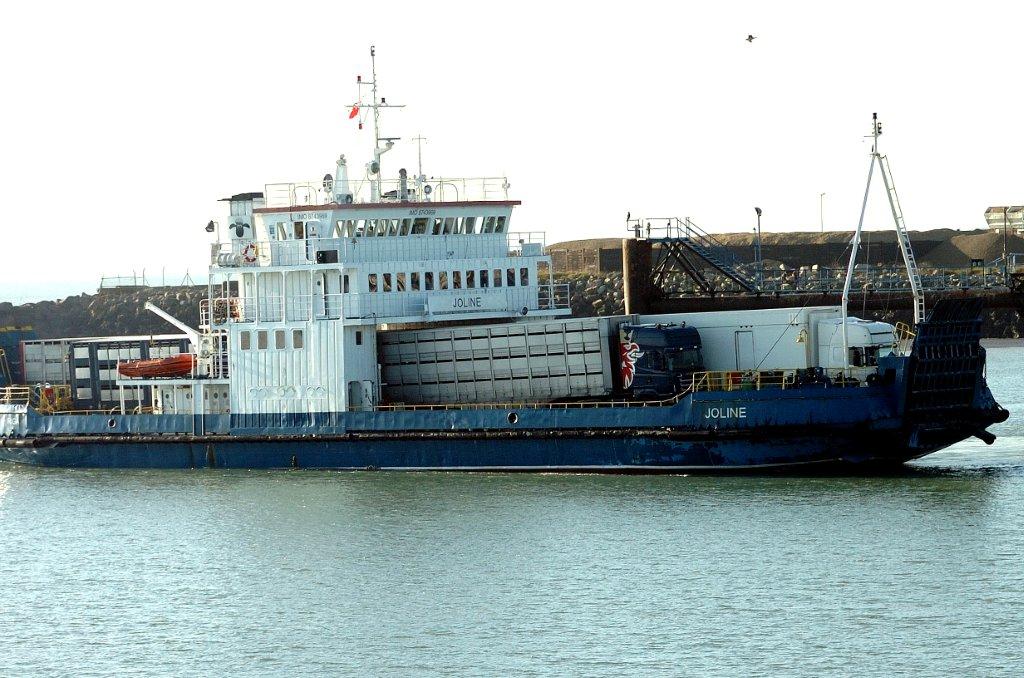
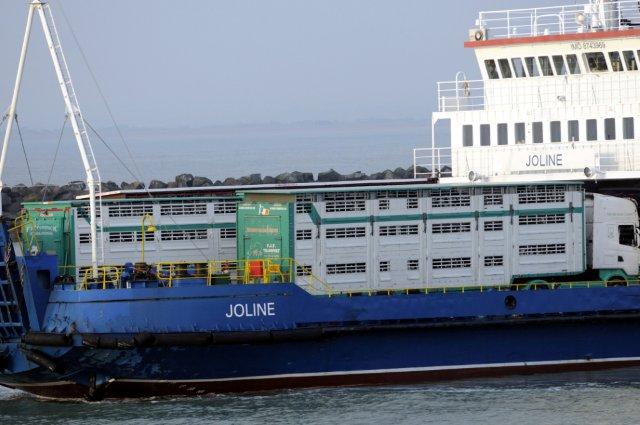
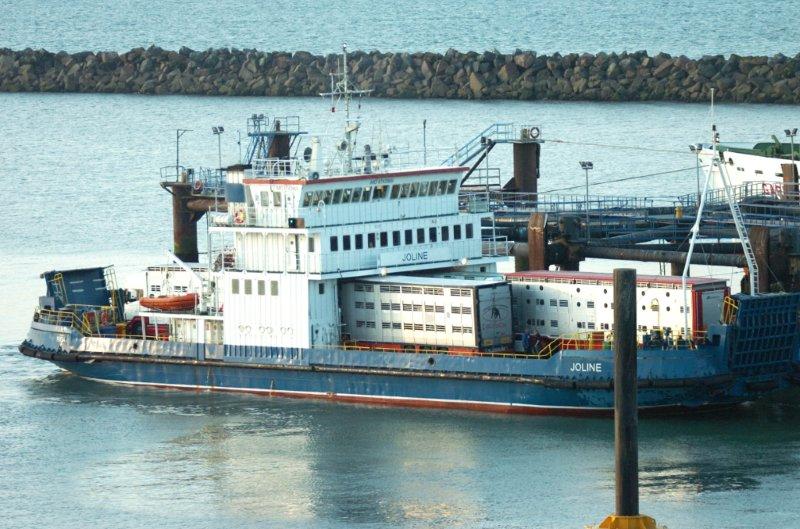
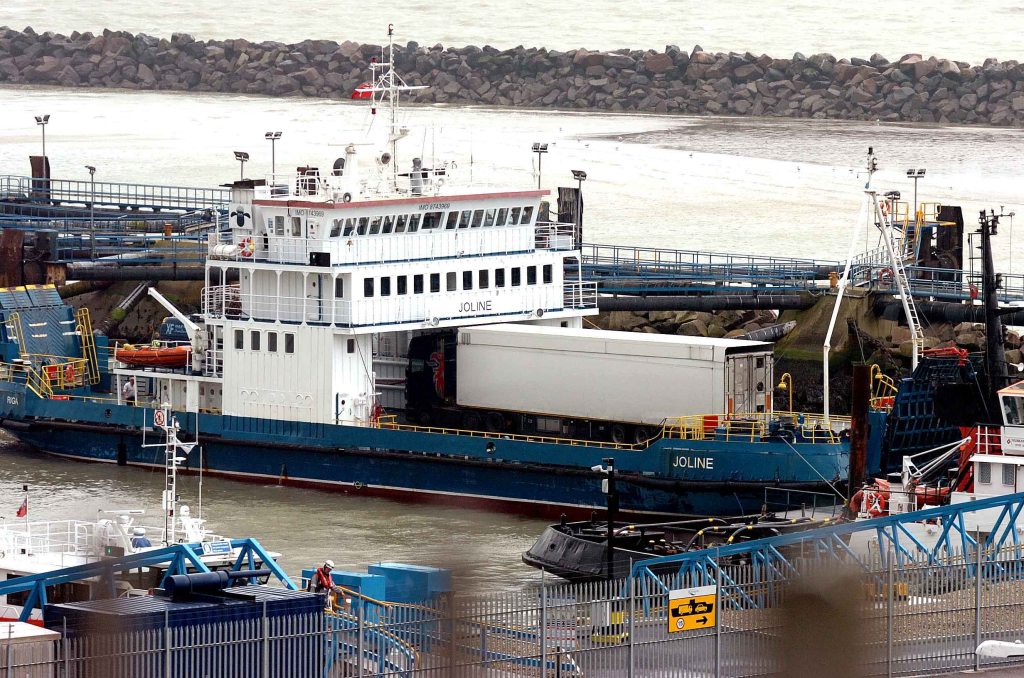
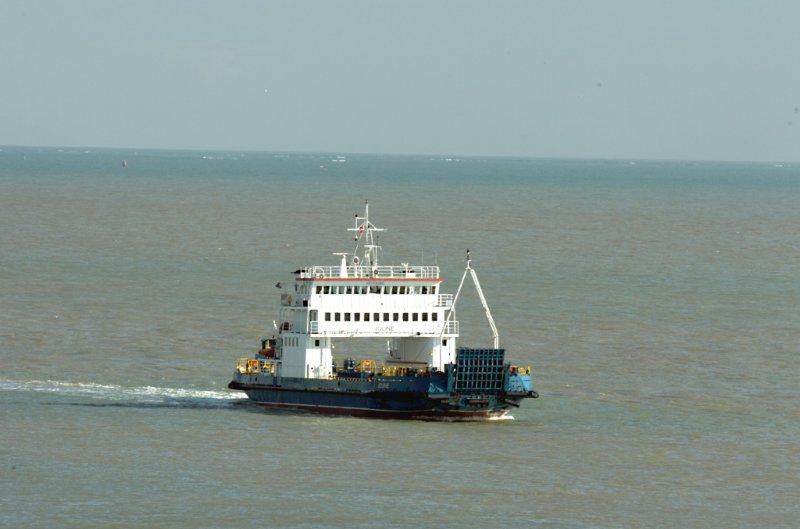
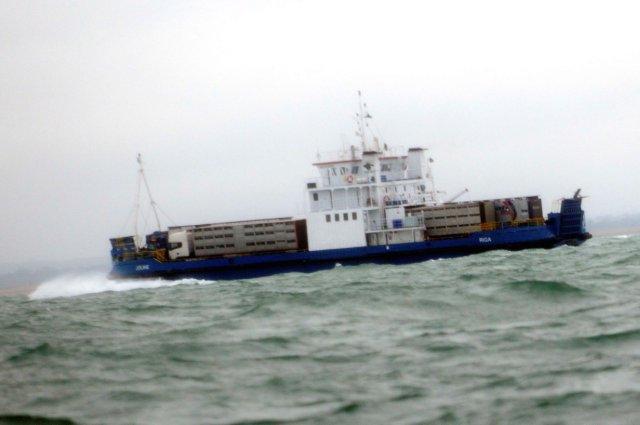
These pictures deal mainly with a vessel operated by a (trader / exported / haulier) Dutchman named ‘Onderwater’; who owns and operates a vessel named the ‘Joline’. 

The ‘Joline’

This vessel was originally constructed as a Soviet battle tank carrier to be used only on rivers; not across the English Channel with loaded livestock transporters full of live animals.  As a vessel it has a low draft (draft in the American spelling, draught in the British) which is defined in technical terms as the distance between the ships keel and the waterline of the vessel.

A battle tank carrier for use on rivers should not carry livestock transporters across the English Channel.
Note the low draught – sides of the vessel – not suitable for Channel waves.

Loaded transporters on the Joline
.. and more.

Continued on next page

Spain: “Ethically and Environmentally” Disastrous; Plans to FARM Octopus in Spain Advance.

26 January 2022

Experts and animal welfare campaigners are appalled as Spanish seafood company Nueva Pescanova announced plans to open the world’s first octopus farm despite multiple ethical and ecological concerns.

Nueva Pescanova hopes to begin marketing farmed octopus this summer, before selling 3,000 tonnes of octopus a year from 2023 onwards. The commercial farm will be based close to the port of Las Palmas in the Canary Islands. As of yet, the conditions in which the octopus will be held captive – the size of the tanks, the food they will eat and how they will be killed – have not been disclosed by the company. 

Experts have been ringing alarm bells about the ethics and sustainability of octopus farms for many years. The London School of Economics concluded in a landmark report last year: “We are convinced that high-welfare octopus farming is impossible.” Compassion in World Farming released a report in 2021 warning that octopus farming is a “recipe for disaster”. In 2019, researchers concluded that “for ethical and environmental reasons, raising octopuses in captivity for food is a bad idea”. 

Cephalopods are solitary animals that are highly inquisitive, intelligent, and carry out complex behaviours and interactions with their environment. They are territorial animals and could easily be damaged with no skeletons to protect them. The barren and confined conditions of farming systems therefore create a high risk of poor welfare, including aggression and even cannibalism. Aquatic animals are the least protected of all farmed species and at present, there are no scientifically validated methods for their humane slaughter. 

Farming octopuses would also add to the growing pressure on wild fish stocks. Octopuses are carnivores and need to eat two-to-three times their own weight in food over their short lifetime. Currently, around a third of the fish caught worldwide is turned into feed for other animals – and roughly half of that amount goes into aquaculture. So farmed octopus are likely to be fed on fish products from stocks already overfished and at the expense of the food security of coastal communities.

PACMA, the Spanish political party for the animals, is organising a demonstration against the farm on the 5th February 2022. PACMA invites any organisations willing to support their demonstration to email laspalmas@pacma.es providing the logo of your organisation.

This issue would seriously undermine the values of a society that is moving towards empathy and compassion towards other species, and an entire scientific community from all over the world is speaking out against the atrocity of opening this farm

PACMA

Regards Mark

Direct Action Everywhere uncovers crimes at Iowa Select Farms

New whistleblower footage shows piglets with their heads stuck between metal bars at this Iowa Select Farms facility. Activists visited the farm to demand a response from local authorities.

https://fb.watch/aNmVcs7QXQ/

Direct Action Everywhere – DxE posted a video to the Trial in Iowa playlist for Exposing “Ventilation Shutdown”.


Direct Action Everywhere
TAKE ACTION: Call the Grundy County Sheriff and ask them to help these pigs — (319) 824-6933

https://www.facebook.com/directactioneverywhere/

And I mean…Some people have responded and called the police.
Here is some messages on Facebook:

“1.Just called and was only told that it is an ongoing investigation and that they don’t provide updates on anything ongoing.
Hopefully if enough people keep calling, they will feel some need to do something.

2.I just called someone answered and they hung up on me once I said it was about this farm. More people need to call because being hung up on is really bad.

3. i just called. the officer said it’s ongoing. i said thank you for your attention he said ‘you bet’. I really want the suffering to end. how much more of this tragedy do we have to witness for it to end? no excuse for animal abuse. these are innocent babies.Just called and was only told that it is an ongoing investigation and that they don’t provide updates on anything ongoing.
Hopefully if enough people keep calling, they will feel some need to do something”

Big thanks to the brave activists of DxE!!

Actually this is a case for the veterinary office.
Which here in Germany and for similar crimes in farms repeatedly failed cracked.

We see animals being abused by professionals, animals eating each other and being horribly disfigured, animals dying helplessly and not even getting the minimal help they deserve…
And as if that weren’t an obvious crime on the part of the Iowa Select Farms, its faithful servants want to declare this place of horror as their personal domain, their high private property including living beings being tortured and massacred.

The police have become accustomed to violence, is nothing more than a necessary evil that goes with it.
We live in a society in which severe violence against animals is considered a trifle.

We must not make it easy for them.
Call and forcefully request the police officers to do their job.
Finally they are paid by us.

My best regards to all, Venus

ALF: High seats destroyed – no more murder from there

From German Media (translation)

The sight of the destroyed, sawn-down hunting high seat, which lies on the ground on the country road between Rheinfelden and Möhlin, annoys Willy Itin, hunting supervisor in the Rheinfelden area.

“2000 francs are over,” he says and adds: “It’s a bottomless impudence – just destroying someone else’s property. (!!!)

” With red paint, the alleged perpetrator has sprayed her abbreviation on the high seat: “ALF” – Animal Liberation Front; to German: Animal Liberation Front.
Their goal is to prevent animal testing and killing of animals. This is done, for example, by attacks on laboratories and animal farms by means of sabotage or arson attacks.

Danger to life and a queasy feeling it is hard to imagine, according to Itin, what could have happened if the perpetrators had only sawn on the stilts or the ladder and a hunter in the seat had fallen as a result.

He says: “In the worst case, you can break your back – or a shot can come loose. In general, it would be anything but easy for hunting today to fulfill its mission of keeping game damage to a minimum (!!!). Animal rights activists don’t want us to hunt anymore and according to some farmers, we can’t hunt often enough,” says Itin.

Two more high seats destroyed it was not the only action against the hunting parties in the lower Fricktal in the night from Saturday to Sunday.
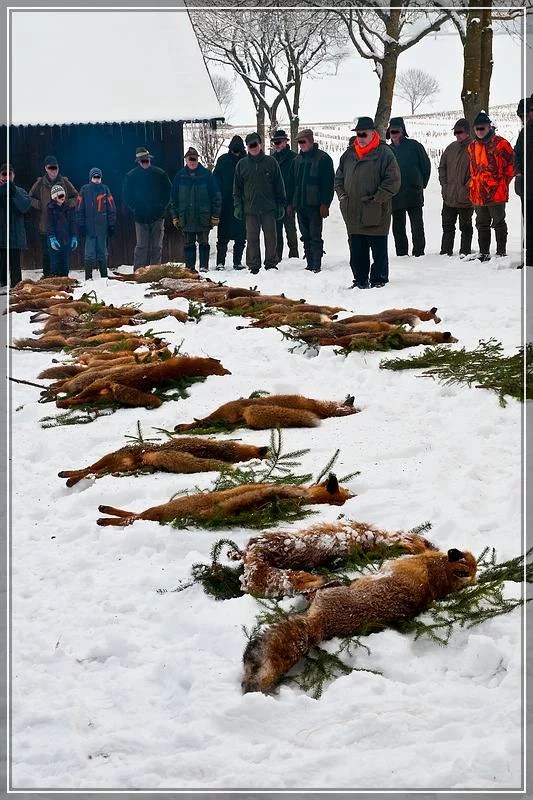
Also in the hunting ground Möhlin-Süd in the Röti area at the foot of the Sonnenberg tower, the ALF allegedly sawed a high seat, a third fell near the brewery Feldschlösschen in the hunting ground Olsberg.

In the past, the three hunting societies had no problems with the said animal liberation front. In principle, one could be against hunting, says Paul Mahrer, deputy supervisor in the Möhlin Süd district.
But: “You should then please collect signatures, but not commit a crime.”

“In the future, you have to check carefully whether the high seat is not manipulated before you climb on it”, warns Mahrer.
He hopes that the police can identify the perpetrators and that they will have to bear the costs on which the hunting party would otherwise remain seated.
The other hunting societies also hope for this in unison. Thus, the reassembly is not only associated with costs, but also with time and work.
Police have started the investigation yesterday afternoon, it was still unclear whether further high seats had been destroyed.

As Corina Winkler, spokeswoman for the cantonal police, says, the police have started the investigation and secured the first traces.Call for witnesses persons who have noticed suspicious persons in the vicinity of the crime scenes from Saturday to Sunday are asked to report for information by telephone…

https://animalliberationpressoffice.org/NAALPO/2022/01/24/alf-topples-hunting-towers-germany-2/

And I mean…In principle, anyone with a license to hunt can set up such high seats.
This makes a high seat one of the very few structures that do not require a permit in Germany, which means that anyone can build wildly.
Where and as much as anyone wants.

Even on someone else’s property, and if the owner on whose property such a building stands does not agree to the construction, he has to calculate with a long process, with costs for lawyer, trouble..etc.
Even though it’s his property.

Most of the time, in front of such murder seats there are feeding barrels for the animals that will soon be executed.
By feeding them, with which they literally fatten up some wild animals and bring them through the winter, they just want to shoot a deer quickly and not sit in their seats for hours and wait for one to run by.
Hunter Willy Ittin claims “hunting today fulfills its mission of keeping game damage to a minimum”.

Hunting is not wildlife management – genocide is not humanitarian aid.
Mentally, morally, socially sane people with decency don’t need the disgusting, murderous hunt.
Thanks to the activists of ALF

My best regards to all, Venus

Monkey on loose in Pennsylvania after crash on way to laboratory

The last of the monkeys that escaped from a truck after it had crashed on a Pennsylvanian highway have been accounted for and three have been euthanised.

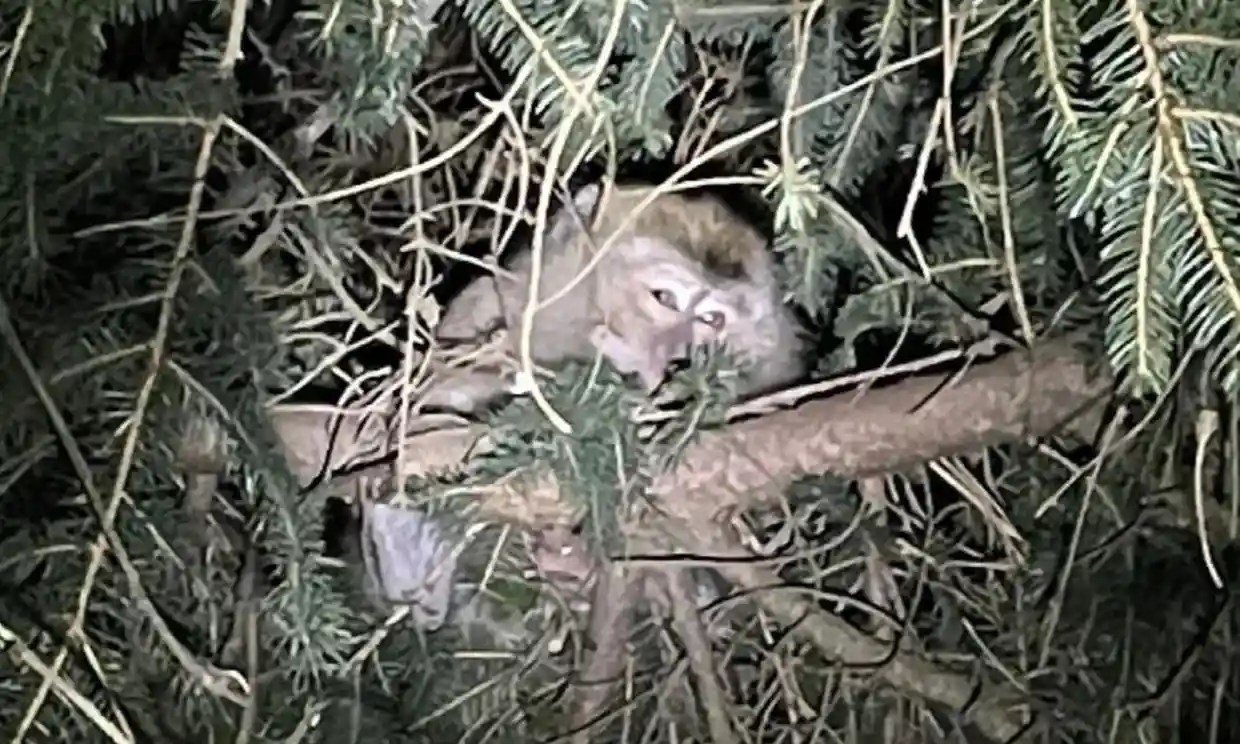
Several monkeys had escaped following Friday’s collision between the pickup truck transporting them and a dump truck, but only one had remained unaccounted for as of Saturday morning, prompting the Pennsylvania Game Commission and other agencies to launch a search for it in frigid weather.

Officials later released the photo of one of the primates perched in a tree in the freezing cold night.

The macaques, originally from Mauritius, were brought to New York by plane on Friday, according to the WNEP television station.

They were to be transported by truck to a laboratory in Florida. Long-tailed macaques, also known as cynomolgus monkeys, can cost up to $10,000, according to a New York Times report, and are in high demand for vaccine research.

Kristen Nordlund, a spokesperson with the federal Centers for Disease Control and Prevention, said in an email on Saturday evening that all 100 of the cynomolgus macaques had since been accounted for and three were euthanised.

The email did not elaborate on why the three were euthanised or how all came to be accounted for. But Nordlund said those euthanised were done so humanely (??)

The shipment of monkeys was en route to a quarantine facility after arriving on Friday morning at New York’s Kennedy airport from Mauritius, police said.

The location of the quarantine facility and the type of research for which the monkeys were apparently destined weren’t clear, but cynomolgus monkeys are often used in medical studies.

A 2015 paper posted on the website of the National Center for Biotechnology Information referred to them as the most widely used primate in preclinical toxicology studies.

Earlier, police had earlier urged people not to look for or capture any monkey.

State trooper Lauren Lesher had said the concern was “due to it not being a domesticated animal and them being in an unknown territory. It is hard to say how they would react to a human approaching them.”(!!!)

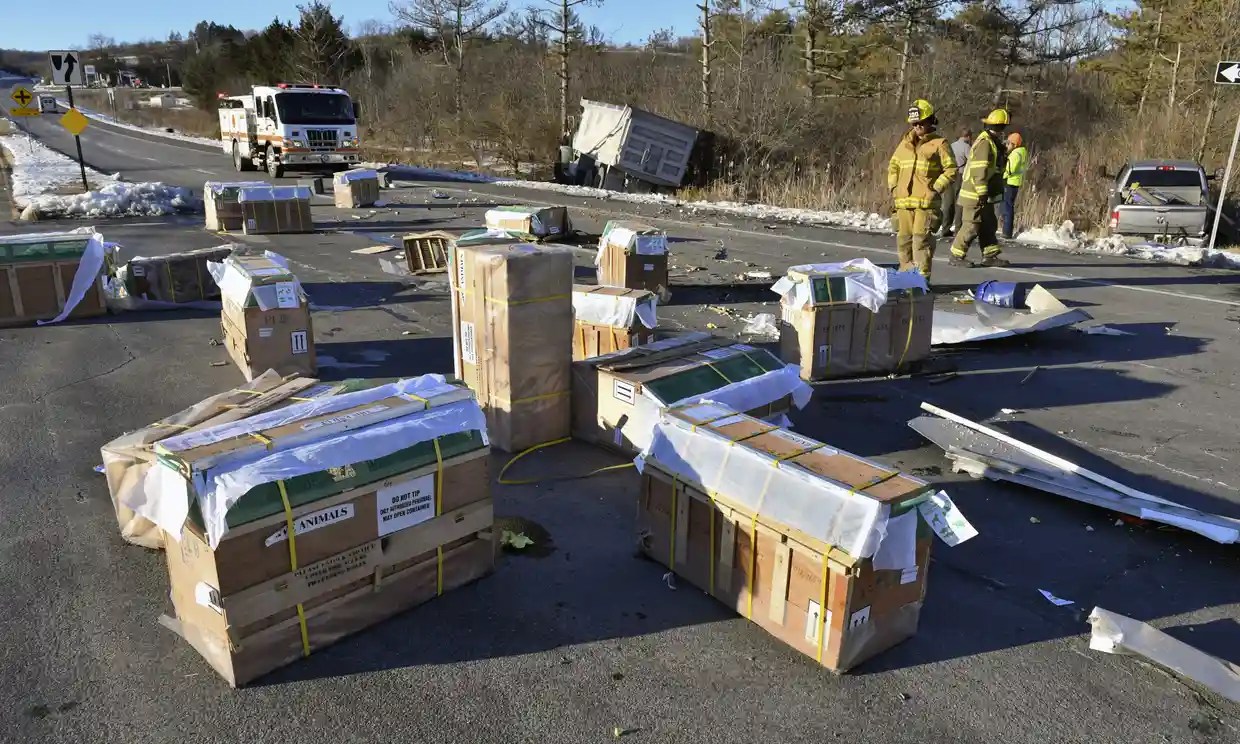
Crates of live monkeys lie after an accident on State Route 54 at the Interstate 80 intersection while police search for more monkeys. Image: dpa

The collision occurred on Friday afternoon near Danville, in Montour county, on a state highway near an Interstate 80 exit.

The drivers of the trucks weren’t harmed and a passenger was transported to a medical centre for treatment of suspected minor injuries, according to the state police’s crash report.

Crates littered the road as troopers searched for the monkeys, rifles in hand. Firefighters used thermal imaging to try to locate the animals and a helicopter also assisted.

https://www.theguardian.com/us-news/2022/jan/23/last-of-escaped-monkeys-accounted-for-and-three-euthanised-after-crash-in-pennsylvania

And I mean…We want to correct the language of the reports´: There are no “laboratory monkeys”.
There are only captive animals that are abused by unscrupulous people for senseless laboratory experiments.

Solidarity with the escaped torture victim!!

If you see him, don’t call anyone, the death penalty awaits him for breaking their fascist rules when he tried to exercise his right to freedom.
We hope and wish that he can live a good life now.

My best regards to all, Venus

EU: EP (Euro Parliament) Plenary: Disappointing Vote on Live Animal Transport.

WAV Comment: The EU never has, does not wow, and never will act in defence of animals in transport – they are instead at the control of the mafia meat industry. The EU talks big on ‘farm to fork’ strategies; but they are just simple words from simple folk that mean nothing. If the EU cared; it would have acted a long time ago; instead the EU citizen is bullshitted to with all the talks, reports and votes which basically result in nothing. The UK left the EU a few years ago; now it has legislation going through Parliament to stop ALL live animal transport. Spot the link ? – NO EU, nations take back control and make their own laws; if you stay in the EU, and you must obey, Commissioners say; regardless of your own national views or consequences.

EP Plenary: disappointing vote on live animal transport

20 January 2022

Press Release

Today the European Parliament voted on the Recommendation of the Committee of Inquiry on the Protection of Animals during Transport (ANIT), watering down an already weak text which won’t stop the suffering of billions of animals.

Stella Kyriakides, European Commissioner for Health and Food Safety, opened and closed the debate reminding the Members of the European Parliament (MEPs) that animal welfare is a priority within the Farm to Fork Strategy and, at the same time, a priority of her mandate and personally for her. 

The European Commission (EC) is due to revise the Transport Regulation (Council Regulation (EC) No 1/2005) and will do it “based on the latest scientific evidence, creating a European database for official controls and auditing livestock vessels in Member States”, alongside making sure that the existing rules will be implemented. As such, a new legislative proposal is expected in the autumn of 2023, whilst executive acts relating to controls on sea transport (under provisions in existing law) will also arrive before the end of this year. 

Some MEPs were quite vocal during the lengthy debate, calling on the EC to act now and put an end to the suffering of billions of animals, as reported in the Committee of Inquiry’s findings. 

The December vote didn’t address several key issues linked to the live transport of animals, within and outside the EU, and today the Plenary missed the opportunity to strengthen the text approved by the ANIT Committee. 

We hoped that the European Parliament would step up the ANIT Report’s ambition and reflect citizens’ views by banning any long-distance transport, and refining, replacing and reducing intra-EU transport.

Reineke Hameleers, CEO, Eurogroup for Animals

After decades of campaigning to stop the suffering of animals during transport, we are disappointed in seeing more failings from the vote.

Photo – Val C. – the white box trailer pictured is full of LIVE SHEEP.

The EP recommends that, in future legislation, journey time for domestic animals going to slaughter should, in principle, not exceed eight hours except transport by sea, which is deplorable (§ 87).

Unfortunately, the EP also voted against amendments that would have called for a definition of journey time as the entire time of movement including the time of loading and unloading (§ 91), against the European Commission interpretation that “time spent for loading and unloading should be included as to establish maximum journey time”(1), thus potentially watering down the impact such a 8h journey time limit could have.

The EP also rejected amendments which would have forbidden the transport of pregnant animals at 40% of the gestation stage, and the call to ban the transport of very young animals (ovine, caprine or porcine, and domestic equidae) below the age of 35 days disappeared (§ 104). The limit of 4 weeks to allow transport remains only for calves.

We believe that the EP missed the chance to support systemic changes and failed in delivering citizens’ demands. Now our hopes lie with the EC and we entrust it to enable the replacement of live transport by a meat, carcasses and genetic material trade only. Not “as much as possible”, as in the EP text.

Reineke Hameleers, CEO, Eurogroup for Animals

WAV Related:

England: Is A Change In Campaigning Now Needed After the Massive EU (ANIT) Failures In Live Animal Transport This Week ? – By Mark (WAV). – World Animals Voice

ANIT Committee vote: An ANTI – animal welfare work – World Animals Voice 

Regards Mark