We can now confirm that things are ramping up in an attempt to close this hell hole for animals down, permanently !
Dear Mark,
We have a number of events coming up and we need YOUR support! Following our undercover investigation of Hewitt slaughterhouse in Cheshire, Animal Justice Project is taking action against this violent company and the UK government in a series of online actions and demonstrations. Will you join us?
During our 200-hour undercover investigation, our cameras caught despicable acts of animal cruelty. Panic-stricken sheep were dragged to the kill room by their horns, where ineffective stunning rendered them conscious as they were slaughtered. A pair of gentle bulls were jabbed over 200 times with a pointed stick and an electric prod, by the slaughterhouse manager himself. Our cameras watched on as a conscious, tiny piglet was hurled into the scalding tank, where they were left to drown.
These illegal acts of violence were commonplace and were carried out right in front of the slaughterhouse’s own CCTV and in the presence of a Food Standards Agency-appointed Official Veterinarian. It is clear that government initiatives are failing to deter illegalities, allowing companies such as Hewitt to flout UK law.
On Friday 30th July, Animal Justice Project are heading to Hewitt slaughterhouse to demand that they are urgently closed down. Placards and banners will be provided to activists, who are invited to join us from 11am-1pm.
Location: G. & G. B. Hewitt slaughterhouse, CH3 9BH
Following our demonstration, we will move to Chester city centre to spread the word about this bloodbath of a slaughterhouse and urge locals to take action. This will be an outreach-style event, with leafletting and placards. Activists can join us at 2pm-4pm, even if they cannot make the earlier event at the slaughterhouse
Location: Eastgate Street, Chester, CH1 1LE
If you can’t make it to our demonstration, you can still join our online events! Taking action for animals is just a click away!
On Thursday 22nd July from 4pm-6pm, our team will be demanding an end to the public funding of slaughterhouses and calling for an immediate, independent review of The Welfare of Animals at the Time of Killing (England) Regulations 2015. We will be tweeting our demands to Boris Johnson, who must be held accountable for the government’s failure to ‘protect’ animals from illegal acts of cruelty inside UK slaughterhouses.
You can use our pre-written tweets, which will be sent next Thursday morning via email. You can also join our Facebook event here, so that you receive a notification when the event is starting. Our online actions help us to share our undercover footage with the public, who have the option to help or harm animals with their daily choices. Online outreach is so quick and simple, so please do join us next Thursday.
Have you sent our letter yet? Our pre-written letter to the Environmental Secretary, George Eustice, makes the following demands:
An urgent and independent review of the Welfare of Animals at the Time of Killing (England) Regulations 2015 (WATOK), following the failure and inaction of the legislation’s January 2021 industry-led review.
Halt public funding to slaughterhouses under the Agriculture Act, including small slaughterhouses that the government has deemed ‘critical’; and channel funding instead into plant-based agriculture.
Our latest investigation has been months in the making and we can’t wait to take action with our dedicated supporters. It is vital that we seek justice for the innocent animals dying everyday inside Hewitt slaughterhouse. Please keep an eye out for further updates on our latest campaign, Scammed! A System Built to Fail Animals.
Just to give you an update; I have now sent my letter re abuses at Hewitt slaughterhouses to both the government Minister responsible for welfare, and also to the Food Standards Agency (FSA).
In August 2020, “SOKO Animal welfare organization” uncovered horror conditions in the Gärtringen slaughterhouse (state: Baden-Württemberg, in Germany).
With hidden cameras, activists from SOKO Tierschutz e.V. have uncovered numerous cases of massive animal cruelty in this slaughterhouse.
The video shows terrifying scenes.
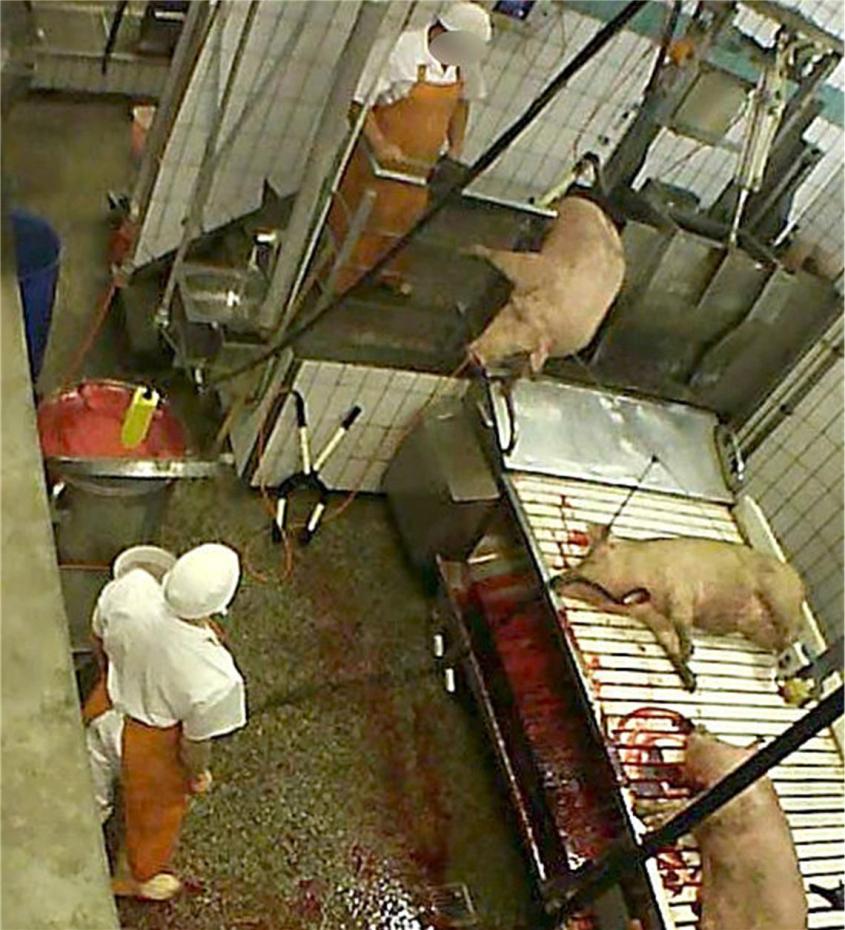
The pictures show pigs that are not properly anesthetized shortly before slaughter or cows that are tormented with stick stitches in the anus. This happens in the presence of inactive official veterinarians.
Here is the video, with the title: “the land butcher from the land- Animal torture in the butcher slaughterhouse Gärtringen”
(Note: At minute 1:39 a pig is brutally mistreated.
The animal is kicked in the face and a pipe is rammed into its eye. You can clearly hear the cries of the animal. Then, in the case of the skidding box, sheer violence prevails. The anesthetic fails again and again)
I have today written a letter about this, which I am sending to all the authorities and UK government; requesting that this facility is immediately closed down for good.
You can read a copy of my letter below.
As I have said; if we do get replies then these will be put onto the site for all to view and make their own decisions. Being fair, unlike the Danes that we wrote to about the Mink cull in Denmark; I am expecting the UK government to at least respond to my letter. It may take some time for a response, but ………………..
Yesterday I was provided with disturbing footage (from January / February 2021) relating to chronic animal abuse at a family operated slaughterhouse – one G & G.B Hewitt Ltd, located in Church Lane, Huxley, Chester, England. Over 200 hours of CCTV footage was obtained at this facility, which I understand currently holds a British government approval rating, and has done for many years in a row.
The footage which I have seen (link provided below), has already been posted onto the WAV site, and the investigation related uncovers several illegalities happening inside this particular facility. Despite this, I understand the slaughterhouse has held a British government FSA ‘generally satisfactory’ rating for six years. Standards are far from ‘generally satisfactory’; they are diabolical.
The footage has also been made public by the ‘Animal Justice Project’ (AJP) and claims (as is clearly shown in the footage) that an ‘Official Veterinarian’ was appointed by the Food Standards Agency (FSA) of the UK government; their job supposedly being to ‘ensure that all animal welfare requirements are met, and to ensure that animals are spared avoidable pain, distress or suffering’. The footage shows anything but, clearly showing when animals (such as a lame cow) enter the line to be slaughtered, the veterinarian does NOT even look at, or make any effort to inspect the condition of animal, which is one of obvious distress. The footage clearly shows that the official veterinarian is failing in her role to any ensure animal welfare, and as a result is aiding breaches of UK legislation.
Key findings which are shown clearly include:
Piglets appearing to be scalded in a hot water tank whilst still alive, due to slaughter failures; and cows being beaten (in some cases over 200 times) by facility workers (including the use of electric prods by the slaughterhouse manager Mark Hewitt). One particularly distressing scene shows a bull being violently prodded hundreds of times using a sharp stick, which is illegal.
In the footage, the alleged FSA professional veterinarian is not even present in the stun room / locations where animals are killed, which they should be; even though many animals (cows) are showing clear signs of lameness, and pigs with large masses on their legs are forced to move by workers using cruel methods. The language used by workers (not repeated here) against these animals who are clearly suffering, shows what a demented facility full of demented humans is being used with UK government approval.
Veterinary professionals working at the location for the UK government to allegedly ‘ensure that all animal welfare requirements are met, and to ensure that animals are spared avoidable pain, distress or suffering’, have by their own actions, missed the poor handling of animals, the failing stun equipment, the insufficient stun times as detailed under UK legislation, in addition to missing clear signs of consciousness from animals that should have been rendered unconscious by stunning.
The disturbing footage also shows a piglet which should be rendered dead though routine slaughter procedures, being put STILL ALIVE into the scalding tank. We are informed that this poor, unfortunate and suffering animal was simply ‘left to drown’ by the demented personnel operating the slaughterhouse.
Alick Simmons, Former Deputy Chief Veterinary Officer declares after watching the footage:
“The overall impression given is of routine poor practice in premises barely fit for purpose.”
In addition, the slaughtering process fell outside of the recommended 15 seconds by the Humane Slaughter Association (HSA). The investigators claim that in the footage, no worker is seen checking for signs of animal consciousness after sticking, displaying yet another breach of regulations which should be acted on by the official veterinarian.
In a further statement to that above, Simmons says: “There are a number of instances where apparent breaches of the law are shown: incorrect use of electric goads, cattle repeatedly struck with a stick – one appears to be pointed and the (UK) law prohibits the use of such pointed sticks – a sheep is dragged by the horns, severely lame cattle, and one severely lame pig being presented for slaughter. Such animals are not fit to be transported. In several instances, immediately after ‘sticking’, slaughtermen are seen to start dressing pig carcasses”.
“The law requires that pigs are bled for a minimum of 20 seconds. The overall impression given is of routine poor practice in premises barely fit for purpose. The circumstances are made worse by poorly trained and poorly supervised operatives. For example, the handling, stunning, and killing of piglets is barely adequate”.
As a result of the footage, the Animal Justice Project (AJP) is calling for an ‘urgent’ independent review of UK slaughterhouses, and urges the immediate cessation of public funding under the new Agriculture Bill. As an independent organisation, we at WAV fully support these demands by AJP. Under the current system, abattoirs nationwide are eligible for financial aid under the new Agriculture Bill act. This has to change, and now !
We support the words / terms used by Animal Justice Project’s founder Claire Palmer, who declared the findings as both ‘law-breaking’ and ‘extensive’ in (animal) suffering and abuse. This was ‘right under the nose of the vet, and CCTV’, Palmer added.
Our (WAV) final summary of operations at this facility is one of utter incompetence throughout all slaughter processes; of utterly incompetent slaughterhouse management supported by unprofessional, incompetent staff. All this supported by an incompetent official veterinarian, allegedly working for a government Food ‘Standards’ Authority who is located at the facility to ensure that all animals do NOT suffer in their final minutes of life.
The whole process can only be described as a complete fiasco, captured throughout on CCTV in England; a nation that (quite rightly) demands very high animal welfare standards that are compliant to the law and maintained to the highest standards set in accordance with the law. This facility is a circus, not an animal slaughtering facility; it is operated throughout by clowns, one being the slaughterhouse manager Mark Hewitt; in addition, it is monitored by clowns under the guise of the FSA, and thus should be immediately and permanently closed down for both the welfare of sick and suffering animals and human beings who still consume the meat products resulting. Action should be taken against the ‘official veterinarian’ who failed so clearly in the undertaking of their work.
We request your formal request to this letter, the utter fiasco shown, which we will also publish on our site, unchanged, for our worldwide audience to view.
We ask – Is the UK leading the way in animal welfare, with incompetents such as this employed in this hell hole ?
The video footage can be viewed at:
Yours with hope of action and one less slaughterhouse facility operating;
Mark Johnson
Co Founder – World Animals Voice.
G and GB Hewitt declare:
Business overview
Established over 50 years – Family run Business
G & G.B Hewitt Ltd is a well established slaughtering company that has built up an enviable reputation over the last 50 years. We pride ourselves on our commitment to provide a professional and speedy service at all times, whilst maintaining the highest quality of work.
Venus has just posted an excellent article / post on a very similar situation in Germany to what we are showing in the UK above. You can see the post on the site; or here is the direct link:
As we are only too aware, and have been for years; politicians will bend over backwards to support the meat mafia business, be it UK, Germany, or any other global location.
Please read the post by Venus, and draw your own conclusions to slaughterhouse operations, where ever they are.
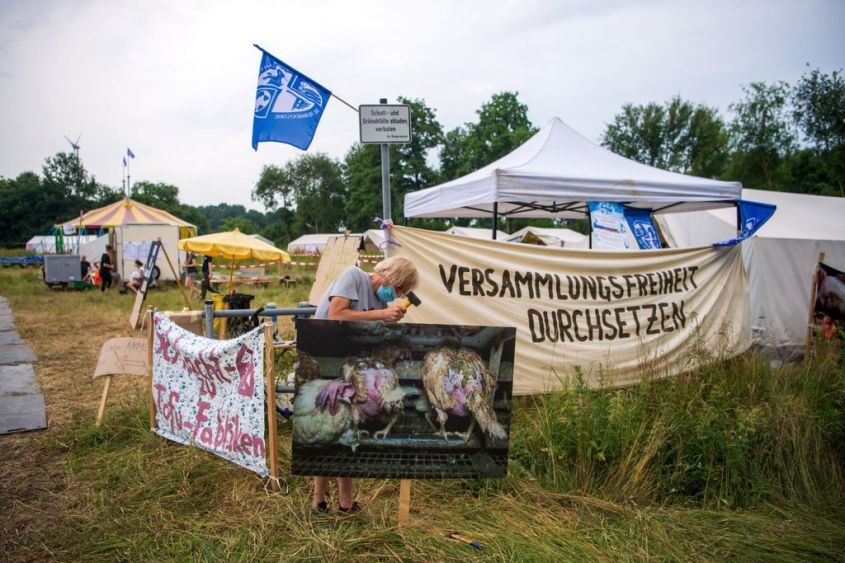
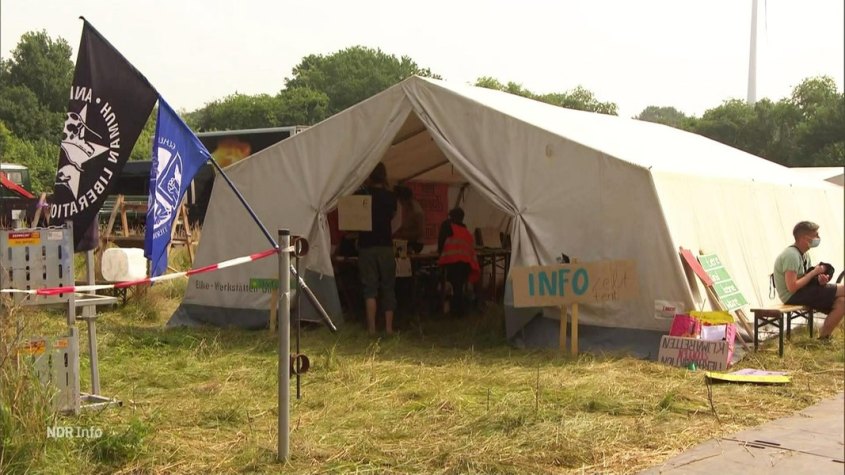
After a legal dispute, on Monday, 12. July, a protest camp against factory farming started in Goldenstedt (a municipality in Lower Saxony).
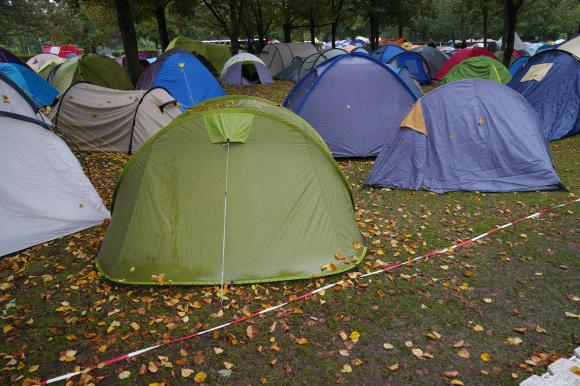
There is space for around 500 people in the tent city in a nature reserve. The district wanted to ban the camp, but failed before the Lüneburg Higher Administrative Court, for a security deposit of 10,000 euros. The number of participants has increased from around 180 to 230 people.
Animal protection and climate activists want to stay there until Saturday.
A “mass action of civil disobedience” is planned. The farmers in the area are displeased.
It was not by chance that the activists chose the community of 10,000 residents as the location for the camp.
The PHW Group is only a few kilometers away. The company is the largest German poultry meat concern, and its “Wiesenhof” brand is best known. “Sure, that’s the reason why we’re here,” says one of the organizers, Franziska Klein. It is also about networking with local agronomically critical groups. The region is one of the strongholds of intensive animal husbandry in Germany.
Anyone walking around here wearing a t-shirt that says “Meat is Murder” will attract attention.
The organizers of the camp, the “Alliance against the Animal Industry”, had announced in the past few days that they wanted to disrupt the group’s operations with various actions under the motto “PHW ade”.
The access road, which was previously open to the public, became the property of Paul Wesjohann & Co. at the end of June, the municipality has sold the road!!
Only later is the council supposed to have approved the sale in a closed meeting.
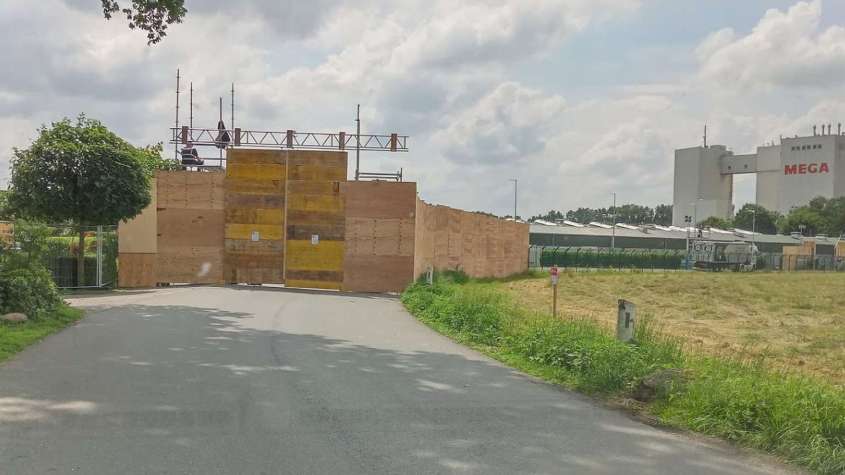
Barricaded: The PHW Group, to which the “Wiesenhof” brand belongs, has been protecting itself against unwelcome visitors with four-meter-high walls since last weekend!!
The PHW Group does not comment on the protest camp in Goldenstedt, which was approved by the Oldenburg administrative court. The camp organizers announced actions of civil disobedience.
According to a spokesman, Wiesenhof also did not want to comment on the camp.
Many farmers in the area are outraged that the camp has been allowed. “A lot of tax money is wasted again because the police have to protect farmers from alleged animal rights activists”, said a farmer in a radio interview in Lower Saxony.
In addition, rumors of alleged acts of sabotage and threats are said to circulate in chat groups. A spokeswoman for the alliance denied the allegations.
“We are not planning any actions that would harm people or animals”, she said.
The police described the farmers’ statements as pure speculation, there are no safety concerns.
And I mean…“The road to the PHW Group premises is barricaded with around four-meter-high wooden panels.”
Why? Do they have something to hide, that they want to wall themselves in, hold guards in front of them and curtail basic rights?
If everything were fine, if there was paradise on earth for animals, as they claim, they wouldn’t really have to do that, would they?
What are they hiding there? What can you imagine …
“A lot of tax money is wasted again because the police have to protect farmers from alleged animal rights activists”, said a farmer in a radio interview.
Some farmers certainly see documentation of animal cruelty in their mega stables as militant actions and try to put this under repression with the help of the state.
The millionaire and former head of the largest German poultry company PHW(Wiesenhof brand)Paul-Heinz Wesjohannsaid in an interview: “Modern poultry farming is a great social act. It made the former luxury product meat affordable for the masses “.
Wesjohann has been awarded the “Federal Cross of Merit”.
One can also bring it to the Federal Cross of Merit with the massive torture and killing.
Fortunately, they still exist, people, courageous people, responsible people who make independent judgments, make decisions and act responsibly. Yes, act!
They have our fully support!
In late December, some 1,800 bulls left Spain for Turkey aboard a ship called the Elbeik. The trip was supposed to take around 11 days, then the cattle were to be sold, mostly to halal slaughterhouses, where they’d be killed with minimal suffering, as required by religious law.
At least it would have been swift. For the next three months, as the pandemic began to wreak havoc on global shipping, the vessel failed to unload its cargo, and the animals began to starve, according to an investigation by the Spanish government. Nearly 10% of the bulls died, their corpses thrown overboard or left to fester in the pens among the living. When the Elbeik returned to Spain, authorities ruled its remaining 1,600 animals were too sick to sell and had to be put down.
The Elbeik has become Exhibit A in the mounting case to ban the controversial, $18 billion cross-border trade in live animals. The pandemic has worsened conditions for the roughly 2 billion cows, sheep, goats, pigs and chickens that are exported each year, and epidemiologists have joined the calls for reform. Animals have been stuck in transit far longer than expected and safety inspections have been dramatically curtailed. With new sensitivity to risks that diseased animals can pose to humans, a growing number of countries are limiting or phasing out the practice altogether.
“When it comes to animal welfare, transport by sea is a big black hole,” said Thomas Waitz, an organic farmer from Austria who is a European parliamentary representative on a committee charged with updating the rules for the cross-border shipping of animals. “Ship transports completely fall outside of any regulations or animal-welfare standards. Public health is at risk if animals are transported in conditions where germs and bacteria can flourish.”
The EU, which accounts for more than 75% of the world’s live animal exports, is “incapable of guaranteeing animal welfare,” according to a report commissioned by the committee, which is expected to recommend a new, tighter set of regulations for exporters by the end of the year. The U.K. has gone further, planning to ban the transport of live animals for slaughter altogether, though it hasn’t set a date yet. New Zealand in April said it will phase out trade in live animals by 2023.
Some 39 million tons of meat were exported globally in 2019, most of it slaughtered, packaged and frozen or chilled beforehand — a process that’s more lucrative for meat producers and avoids the health and safety issues of transporting live animals. But as consumers in countries like China and Vietnam have grown wealthier, they’ve added more meat and dairy to their diets, amping up demand for breedstock and dairy animals. The robust market for halal meat among devout Muslims also means demand has spiked in recent years. Prices for live cattle from Australia are at record highs.
An extensive undercover investigation by Network for Animals (NFA) has discovered utter cruelty at a Tanzanian donkey slaughterhouse where hundreds of donkeys are bludgeoned to death every day. We desperately need your help.Please don’t stop reading…
We have just a few weeks to close the slaughterhouse where up to 1,000 donkeys a day are being brutally and illegally killed. We need to raise funds to pursue these criminals and have them brought to justice, and to meet with authorities to point out the massive amount of cruelty and criminal behavior that is taking place. The slaughterhouse permit is up for review, and if we can raise $6,000 (£4,300), we can take experts to a critical meeting with Tanzanian authorities and reveal to them the true horror of what is going on. We are sure they will listen because what is happening is so barbaric that they will be forced to take action.
Once the slaughterhouse is closed, the next challenge will be providing the long-term care the surviving donkeys will require. We have to be frank here; This is a financial challenge because of the remoteness of the area and because we don’t know how many donkeys there will be. We also have to consider that the government may not listen, in which case we have to take them to court. Please, this is a time when your donation is really needed if we are to end this nightmare.
The Chinese use donkey skins to make a cosmetic called ejiao (pronounced “uh-jee-ow”), a pointless waste because the cosmetic has never been proven to work. 4.8 million donkeys are being killed each year – at this rate, donkeys will be extinct in under ten years! As the number of Chinese donkeys plummeted because of the demand for ejiao, traders turned to Africa, with devastating consequences for donkeys and rural communities that depend on donkeys for their livelihoods.
NFA has been fighting the trade for four years and has rescued donkeys from the Chinese in South Africa and Zimbabwe. A two-year-long investigation has led to a Chinese-run slaughterhouse situated in a remote and desolate region of Shinyanga, in northern Tanzania. We joined forces with the Arusha Society for the Protection of Animals (ASPA) to investigate after receiving reports of cruelty on a massive scale.
We discovered that tens of thousands of donkeys are bludgeoned to death there EVERY MONTH, in a scene of utter cruelty and contempt for compliance with Tanzanian law.
Against the law and against common decency, the donkeys are bludgeoned to death with a hammer, even though the slaughterhouse has a humane killing device.
Donkeys bludgeoned who do not die immediately are left to suffer, with blood running down their faces, with blood running down their faces, until they succumb to their injuries.
The Chinese only have a permit to kill 20 donkeys a day, but kill up to a thousand daily.
We witnessed truckloads of donkeys being delivered. Donkeys were dragged off the trucks by their ears or simply kicked off, tumbling to the ground on top of each other. One had a broken hip, and many were emaciated.
In many cases, donkeys arrive for slaughter in horrific conditions, some with broken legs, severed hooves or maggot-infested wounds, and many in states of near starvation and collapse.
To fuel the trade, donkeys are stolen in neighboring countries of Kenya and Uganda and illegally smuggled across the borders. Donkeys are often transported long distances in poorly constructed, overcrowded vehicles with little or no access to food or water. Journeys may be as long as 72 hours without rest periods. These animals are kept in such shocking conditions that many die along the way from hunger, stress or injuries.
We witnessed pregnant mares, young foals, and sick and injured donkeys being rounded up for slaughter, and because injury and illness often do not affect the quality of the hide, traders have little incentive to ensure humane treatment.
Our team was advised that donkeys are sometimes deliberately starved because people falsely believe that emaciated donkeys are easier to skin.
When challenged about the conditions at the slaughterhouse, the Chinese woman running it is caught on camera telling her interpreter to lie about what actually happens there.
This sickening slaughter of donkeys and trade in donkey ‘products’ is LEGAL in Tanzania. But we have a chance to end it!
The slaughterhouse’s permit expires in October this year. We are working with ASPA to seek justice for the donkeys by persuading the government to end this shame on the face of the Tanzanian nation.
We will take the responsible people to court if immediate action is not taken!
We cannot allow this daily massacre of donkeys to continue, but, we need your help to stop it. The sheer scale of the tragedy is overwhelming.
Literally, as you read these words, donkeys are waiting to be bludgeoned to death with a hammer. In the name of human decency, this must stop right now. If you possibly can, please help us end this horror by making a generous donation to Network for Animals right now.
WAV Comment – This (England) is ‘my patch’. Abuse like this at the family-owned G & G.B Hewitt Ltd. in Chester, England is not acceptable; it should not be acceptable anywhere. The video footage below says it all. When I have reviewed, I am going to do what I can about this – contact various parties and ask for responses; we want answers.
When the letter is written I will copy it onto the site; and any responses if we get some. Or will this be another Danish mink letter and just be ignored by all parties concerned ? – knowing animal rights in the UK; I think the lid is now off and people will be after scalps. Lets hope so. More to come on this soon.
Regards Mark
‘Shocking’ Animal Abuse Recorded At Government-Approved Abattoir, Investigation Reveals
The footage shows a torrent of illegal animal abuse on a UK abattoir despite holding a government approval rating for several years in a row…
A two-month investigation at an abattoir with government approval has revealed ‘shocking’ animal abuse.
Moreover, the 200 hours of footage uncovers illegalities inside the UK animal agriculture facility.
This is despite it holding a ‘generally satisfactory’ rating for six years.
Government-approved abattoir
Key findings included piglets appearing to be scalded in a hot water tank whilst still alive, and cows beaten with electric prods.
One particularly distressing scene shows a bull being violently prodded hundreds of times. It was filmed over January and February this year inside the family-owned G & G.B Hewitt Ltd. in Chester, England.
Moreover, the organization behind the investigation is Animal Justice Project – a non-profit working to expose animal exploitation.
They claim an Official Veterinarian was appointed by the Food Standards Agency. Their job is to ‘ensure that all animal welfare requirements are met, to ensure that animals are spared avoidable pain, distress or suffering’.
However, in the footage, the professional is not present in the rooms where animals are killed.This means they will have missed ‘pre-stun shocks on animals, poor handling, failing stun equipment, insufficient stun times, and signs of consciousness’.
Findings have since been sent to the FSA.
The still from the footage shows a member of staff abusing an animal with an electric prodder
Illegal activity
The investigation also shows stunning equipment fail, resulting in panicked pigs and sheep.
“The overall impression given is of routine poor practice in premises barely fit for purpose.”
Alick Simmons, Former Deputy Cheif Veterinary Officer
Moreover, the slaughtering process fell out of the recommended 15 seconds by the Humane Slaughter Association. And, the investigators claim no worker was seen checking for consciousness, displaying yet another breach.
Alick Simmons is a former Deputy Chief Veterinary Officer for the UK government.
In a statement, Simmons said: “There are a number of instances where apparent breaches of the law are shown: incorrect use of electric goads, cattle repeatedly struck with a stick – one appears to be pointed and the law prohibits the use of pointed sticks – a sheep dragged by the horns, severely lame cattle, and one severely lame pig being presented for slaughter.
“Such animals are not fit to be transported. In several instances, immediately after ‘sticking’, slaughtermen are seen to start dressing pig carcasses.
“The law requires that pigs are bled for a minimum of 20 seconds. The overall impression given is of routine poor practice in premises barely fit for purpose.
“The circumstances are made worse by poorly trained and poorly supervised operatives. For example, the handling, stunning, and killing of piglets is barely adequate.
“The stunning equipment appears to fail on several occasions, repeated shouting by the operatives simply adds to the animals’ distress. And, at no time, are operatives seen to monitor the effectiveness of the stun.”
UK abattoirs
As a result of the footage, Animal Justice Project is calling for an ‘urgent’ independent review of UK slaughterhouses. Additionally, it urges the cessation of public funding under the new Agriculture Bill.
Currently, abattoirs nationwide are eligible for financial aid under the new act. It comes following a wealth of small-scale slaughterhouse closures in the country, with less than 100 left.
Animal Justice Project’s founder Claire Palmer declared the findings both ‘law-breaking’ and ‘extensive’ in suffering and abuse.
This was ‘right under the nose of the vet, and CCTV’, Palmer added.
Now, the charity is calling for the Secretary of State for Environment Food and Rural Affairs, George Eustice, to oversee a review.
Below – just some of the reviews that have been left by the public on the ‘professional, speedy service with the highest quality of work’ !! – ALL gave 1 star out of 5 – which is the lowest that can be given.
Reviews
15 Jul 2021
Holocaust
We condemned the holocaust but we allow it to happen in epic proportions here at Hewitts,this is hell on earth for these poor animals. 14 Jul 2021
Disgusting pieces of ..
Disgusting practices, untrained vet, and breaks the animal welfare laws consistently. Truly terrible people, especially the vet and manager. 13 Jul 2021
Disgusting human beings.
You should be ashamed of yourself. These poor babies deserve so much better. 13 Jul 2021
Barbaric treatment of animals
Total barbaric behaviour shown, no respect for these poor innocent sentients being sent to their deaths! You should hang your heads in shame, and I hope your action haunts you on your deathbed! Beware of KARMA 😡. 12 Jul 2021
Undercover investigation shows extreme cruelty
You should all be ashamed of yourselves for the cruel, violent abuse you have inflicted on 1000s of beautiful, living beings. You could have shown them compassion at the end of their already horrific short existence but instead you showed nothing but contempt and abuse towards these defenseless souls. Shame on you all. 12 Jul 2021
DISGUSTING TREATMENT OF ANIMALS!!!! THIS PLACE SHOULD BE SHUT DOWN IMEDIATELY.
DISGUSTING TREATMENT OF ANIMALS!!!! THIS PLACE SHOULD BE SHUT DOWN IMEDIATELY.12 Jul 2021
Proud Of Their Abuse of defenceless Animals
High Standards??? Are you having a laugh Footage has been released of the abhorrent cruelty and suffering you cause defenceless animals at the final moments of their lives. I hope you lose all your funding and your licence for the suffering you have caused. You are the worst of the worst. 12 Jul 2021
STOP THE ABUSE AND CRUELTY
When the animal rights activists get hold of them they will really regret their disgusting treatment of defenceless animals. Hope Hewitt gets his just deserts and the company suffers a severe loss of custom. Time to stop eating corpses everyone then people like the Hewitts will go out of business. ABSOLUTELY NOTHING GOOD TO SAY ABOUT THIS TRAVESTY OF A BUSINESS!!. 12 Jul 2021
Hell Hole!
I have just read and seen undercover video footage from Animal Justice the most appalling animal abuse… Pigs with open sores clearly in pain evident from the pain in their eyes and shallow breathing..collapsed pigs unable to walk being kicked forward by abusers…pigs covered in flies, pigs living in filth clearly suffering indescribable trauma… CLOSE THIS HELL HOLE DOWN …YOU DISGUSTING PEOPLE SHOULF BE HELD ACCOUNTABLE!!🤬🤬🤬. 12 Jul 2021
Get rid of this place as soon as possible
If I could give no stars I would. I hate animal cruelty. I hope they are prosecuted but even if they are, the punishment will likely be paltry. 11 Jul 2021
sick animal torturers
should have the option to score minus stars. psychopaths is the word that springs to mind. No man is better than any animal. You will lose business now you have been exposed to be the depraved evil animal torturers and murderers that you are. decent companies will not want to associate themselves with you. Hope you get closed down. 11 Jul 2021
Abhorrent cruelty
This company has been exposed by Animal justice Project as published in The Independent, for unspeakable cruelty to animals. “Cows beaten with electric prods and pigs cut while still alive” by the vile criminals who own and work here. This abhorrent and disgusting cruelty to sentient beings has to stop and people need to be educated about what is going on behind their backs. 11 Jul 2021
Appalling Cruelty
Appalled by what I have read today about the cruelty in this abattoir. I am going vegetarian. 11 Jul 2021
Sickening
Sickening footage of the most disgusting and deliberate cruelty has been released. These people need to face charges. 11 Jul 2021
These people need help!
The owners and people that work here are obviously suffering from mental health problems and need to have their freedom taken away and administered medication. 11 Jul 2021
A shameful family!.
I’m sick to my stomach that this has been ALLOWED to happen. NO business out there should be using company!!. Does make me wonder what sort of family they are!!. DISGUSTING!. 11 Jul 2021
Cruelty to the animals.
This evil place needs to be shut down and the workers jailed for the abuse the animals were subjected to. 11 Jul 2021
Slaughterhouse of horror
Just been reading about this vile company and the disgraceful, inhumane way they treat the poor animals. Beyond vile. Shame on anyone that does business with them. Had to put one star rating in order to submit this review, but wouldn’t even give them that. 11 Jul 2021
Protect the animals you slaughter not the ones you employ.
How do you sleep at night knowing some of your employees treat the animals you slaughter, with a psychopathic fervour? Check your CCTV and start caring about the creatures your families have profited from for over half a century. 10 Jul 2021
Horrifying
Never use cruel people for anything!!!
How can Hewitt family sleep at night or eat at anyone’s table given their complacency in the suffering caused????
10 Jul 2021
Abhorrent cruelty to animals
Abhorrent cruelty to animals from disgusting psychopaths. Should be shut down with immediate effect. 10 Jul 2021
Shameful
This is a minus one star review…appalling. This establishment needs to be shut down and prison sentences issued. Horrendous. 10 Jul 2021
Disgusting cruelty
Disgusting cruelty to animals. They should be closed down. Please do not use them. 10 Jul 2021
Animal abuse on an obscene scale.
Disgusting. Unbelievable cruelty shown to living creatures. This place needs to be shut down and the owners jailed. See the report in The Independent. 10 Jul 2021
THE UNSPECIFIED VERMIN SPECIES WHO RUN THIS NEED A SERIOUS WAKE-UP CALL….
PLEASE REVIEW THE JULY 2021 ‘INDEPENDENT’ NEWS ARTICLE COVERING THIS ABHORRANT, HEINOUS AND ILLEGAL SO-CALLED BUSINESS, THEN UTTERLY RIP INTO & BOMBARD THE BREED OF NON-HUMANS WHO RUN THIS VIA THEIR PERSONAL EMAIL USING THE WEBSITE COMPANY ADDRESS… 10 Jul 2021
Abusive and uncaring.
Cause deliberate unnecessary suffering to innocent creatures. Business should be closed down and owners/employees involved in the abuse be put down. There is no place in society for those who think that it is OK to inflict suffering. Such people are obviously wired incorrectly and should not be allowed to pass on their genes. 10 Jul 2021
Abusive creeps
Illegally abuse animals while they are still alive, whoever works there deserves the same treatment. 10 Jul 2021
Author Peter Robinson clearly gottit right
Inhumane treatment of living creatures will only turn more of us off to eating flesh & turning to a healthier diet. 10 Jul 2021
an unspecified species, nonentity breed of callous vermin that exist in this hell-hole….
There is a special kind of hell for all you unspeakable race of non-humans operate this trash can (so-called ‘family’?) business!! Upon this recent newsfeed, I’m keeping the faith that anger and fury is now mounting far & wide – everyone knows just how despicable and abhorrent you vermin operate there – justice will be served no doubt and hopefully sooner rather than later with like-for-like treatment for you all during your final gasps of breath..!! Roll on your much-deserved demise, then may you all rot even further in the darkest of hell that is reserved especially for the loathsome ‘breed’ that you are – how dare you even breath the same fresh oxygen as the standard human race…. 10 Jul 2021
Cruelty to animals in their slaughter house
The hidden cameras at family-owned G & GB Hewitt in Cheshire captured 200 hours of footage that AJP says reveal shocking animal abuse and suffering, extensive breaches of the law and a failure of a government vet to prevent cruelty. 10 Jul 2021
Worthless animal abuse c unts.
Worthless animal abuse c unts. Karma will be calling on you soon. 10 Jul 2021
Evil
Vile evil torturers of innocent animals Real men would never do that Real men would treat the animals with dignity and respect. Professionals would respect the law and standards. You heinous evil men…… 10 Jul 2021
Shutdown immediately
This place should be shut down!!!!!!!!!!!!!! Discusting!!!!!!!!! 10 Jul 2021
Abuse of animals.
The footage of the abusive and disgusting way animals are treated in your facility was upsetting and shocking but not surprising. This is what happens in abattoirs and occasionally they are caught out, all involved should hang their heads in shame but they have no shame, I hope for prosecutions. 10 Jul 2021
Animal welfare crimes.
This place needs to be shut down and the perpetrators prosecuted. 10 Jul 2021
High standards?
“The highest standards?” Indeed. The highest standards of atrocious animal cruelty conceivable. Their approach to their work is one of utter disregard for animal suffering, any legislation to mitigate this suffering and an evident policy of sadistic violence to animals. 10 Jul 2021
Wicked violence
There’s video footage revealing scenes of atrocious animal abuse and gross negligence by the staff of this place, including the slaughterhouse manager – a character called Mark Hewitt.
In a scene lasting 40 minutes, a fat man can be seen tormenting two docile bulls with an electric device and a pointed stick, prodding them more than 200 times. The unfortunate animals are trapped in a confined space, unable to avoid their abuser’s implements – clearly terrified, their torment only ends when they are shot.
Hewitt was caught on film abusing tiny piglets. As the pigs kicked and jolted after having their throats cut, Hewitt can be seen cutting their ankles down to the bone and snapping them, far sooner than than the the length of time stated within slaughter legislation. The agony that these piglets must have endured during their final moments is beyond imagination.
[NB: No stars at all would be preferable – but it’s not an option available here.]
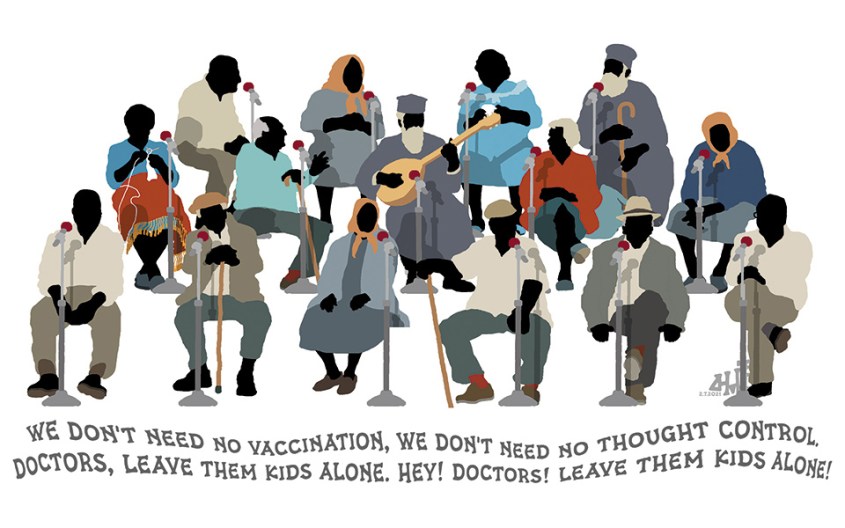
A clever cartoonist from Greece (Hatzopoulos) made a clever adaptation, borrowed from the song by “Pink Floyd”!
If there is someone who doesn’t know this song (which I strongly doubt) here’s the nice video (Mark sent it to me)
Many thanks to the friends from Greece who sent it to us
Yesterday, Senator Cory Booker of New Jersey and Representative Ro Khanna of California reintroduced their landmark legislation, the Farm System Reform Act. This crucial bill would decrease the number of farmed animals kept in extreme confinement and subjected to brutal mutilations, as well as reduce the overuse of antibiotics in agriculture.
Animals raised on factory farms are among the most abused in the world. Yet, there are hardly any federal protections for them in the United States. Big corporations turn massive profits by cramming these animals into barren sheds and massive feedlots. As a result, billions of them suffer miserable lives, not to mention the environmental toll factory farming has on our planet.
In addition to reducing the number of animals raised in low-welfare factory farms, the Farm System Reform Act also calls for uplifting independent family farmers, protecting workers, rural communities and public health, and overhauling our broken food system.
We’ve made it incredibly easy to contact your members of Congress with just one click.



 Barricaded: The PHW Group, to which the “Wiesenhof” brand belongs, has been protecting itself against unwelcome visitors with four-meter-high walls since last weekend!!