Month: February 2021

Canada: Health Canada says it won’t consider animal suffering in strychnine review.

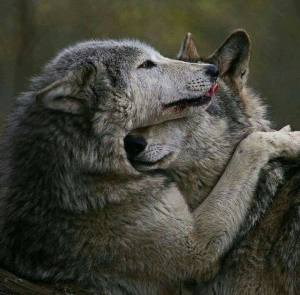
A female wolf, left, and male wolf roam the tundra near The Meadowbank Gold Mine in Nunavut on Wednesday, March 25, 2009.

Health Canada says it won’t consider animal suffering in strychnine review

OTTAWA – Animal suffering won’t be considered when a Health Canada agency next reviews licences for poisons used to kill predators, the department has ruled.

In a decision released this week, Health Canada says the Pest Management Regulatory Agency won’t include “humaneness” in how it assesses toxins such as strychnine.

“Health Canada will not be taking steps towards incorporating humaneness considerations into the pesticide risk assessment framework,” said the department’s ruling.

“There are currently no internationally recognized science-based parameters to evaluate the humaneness of pesticides.”

Sara Dubois, a wildlife biologist with the British Columbia SPCA, said that’s not true. University labs have extensive animal welfare protocols and Australia and New Zealand have also moved toward such criteria.

“An absence of information doesn’t mean that pain and suffering doesn’t happen,” she said. “That’s the frustrating part.”

The decision on strychnine, compound 1080 and cyanide came after more than two years of public consultations sparked by a letter signed by 50 scientists and animal-welfare advocates from across Canada and three countries.

More than 4,000 letters were received, most form letters from letter-writing campaigns. Non-governmental organizations participated as did provinces and municipalities.

“Canadian public respondents are concerned about the humaneness of the three predacides currently registered for use in Canada,” the decision says. “Many of these same respondents feel the predacides should be banned in favour of alternative predator control measures.”

Animal science researchers have called strychnine a particularly painful and cruel way to die.

Within 20 minutes of being dosed, muscles start to convulse. The convulsions increase in intensity and frequency until the backbone arches and the animal asphyxiates or dies of exhaustion.

Groups such as livestock associations said predator poisons are already tightly controlled. Environmental and veterinary groups called for humaneness parameters in the assessment of pesticides.

Provincial governments said the issue was in their jurisdiction.

One of the biggest users of strychnine in Canada is the Alberta government. Alberta uses it to poison wolves in an attempt to protect caribou, which have been made vulnerable by many years of heavy industrial use of their habitat.

The province has poisoned hundreds of wolves in its caribou program, as well as many non-target species.

Health Canada will undertake its regular review of the three poisons later this spring. A petition opposing their use has nearly 700 signatures.

Animal advocates have also requested that federal Health Minister Patty Hadju review Health Canada’s last decision to renew licences for the poisons.

Health Canada says it won’t consider animal suffering in strychnine review | The Star

Regards Mark

USA: Action Needed – Ban Live Wildlife Markets and Trade!

Ban live wildlife markets and trade!

Ban wildlife markets and trade! – The Humane Society of the United States

As the deadly coronavirus continues to spread around the world, it is more important than ever to address the dire public health threats posed by the sale and trade of live wildlife. Markets where live wild animals are sold are a human health hazard and animal welfare nightmare that have been the source of previous pandemics in addition to being the likely origin of the virus that causes COVID-19.

We need the U.S. and all countries to permanently ban the trade and transport of live wildlife for human consumption to reduce the risk of mutation or another pandemic.

The Preventing Future Pandemics Act, H.R. 151 and S. 37, will ban the import, export and sale of certain live wildlife in the U.S. when the primary purpose is for human consumption, and will bolster U.S. leadership and resources to end the trade globally and to eliminate wildlife trafficking. 

Your voice is needed to ensure passage of this critical bill!

TAKE ACTION


Please make a brief, polite phone call to your Senator and each of your U.S. Representatives. 

Look up their phone numbers. 

You can say: “Please support the Preventing Future Pandemics Act, H.R. 151 and S. 37, which will ban the import, export and sale of certain live wildlife for human consumption in the U.S. and will position the U.S. as a global leader in zoonotic disease prevention.”

After making your call (please do not skip that crucial step!), fill in and submit the form below to send a follow-up message. Editing your message will help it stand out.

Ban wildlife markets and trade! – The Humane Society of the United States

USA: The Good News – GOOD CATCH’S VEGAN TUNA SALAD IS NOW AVAILABLE BY THE POUND AT WHOLE FOODS. Overfishing Has To Stop !

GOOD CATCH’S VEGAN TUNA SALAD IS NOW AVAILABLE BY THE POUND AT WHOLE FOODS


Good Catch’s Vegan Tuna Salad Is Now Available by the Pound at Whole Foods
Looks Yummy ! – Pic – Veg News


WAV Comment:  Considering the immense damage that the human species is doing to the environment, especially regarding over fishing, this can only be viewed as a positive move to be welcomed.  Better still that by doing this; the oceans and their stock are given the chance to recover their numbers a lot to the pre mega scoop up numbers.  We really look forward to this hitting the UK and Europe – bring it on !

Made from a six-legume blend, Good Catch’s plant-based, deli-style tuna is now available in the prepared foods section of Whole Foods Markets in 10 states.

Good Catch’s Vegan Tuna Salad Is Now Available by the Pound at Whole Foods | VegNews 

Vegan seafood brand Good Catch Foods recently expanded to the prepared foods section of Whole Foods Market (WFM). Owned by parent company Gathered Foods and created by chefs and co-founders Derek and Chad Sarno, Good Catch makes vegan tuna in easy-to-use pouches in three flavors and frozen meals such as crab cakes and fish burgers, all crafted from a proprietary six-legume blend. Good Catch’s plant-based, deli-style tuna is now available by the pound in the prepared foods section of WFM in California, Oregon, Washington, Connecticut, Maine, Massachusetts, New Hampshire, New Jersey, New York, and Rhode Island. The offering will be available in additional locations in the coming months.

Vegan tuna goes to market
“We’re so excited to launch our foodservice product with Whole Foods Market, an important retail partner of ours, to bring our products into the culinary fold with this exclusive offering of our plant-based deli-style tuna,” Chad Sarno told VegNews. “In addition to this exciting launch, we’re looking forward to continuing our foodservice expansion this year, from fast-casual restaurants to other food retailers.”

Last year, the American brand expanded to the United Kingdom, Europe (the Netherlands and Spain), and Canada.The WFM partnership is Good Catch’s second foodservice partnership, following last year’s launch of an exclusive Tuna Melt at vegan restaurant chain Veggie Grill. Good Catch has aggressive international foodservice expansion plans for 2021.

Regards Mark

USA: The Ugly Secrets Behind the Costco Chicken.

The Ugly Secrets Behind the Costco Chicken

An investigator went under cover and brought back disturbing video from a farm growing those famous birds.

Probably like many of you, I think of Costco as an enlightened company exemplifying capitalism that works. One ranking listed it as the No. 1 company to work at in terms of pay and benefits — a prime example of a business that is both profitable and humane.

Unless, it turns out, you’re a chicken.

Rotisserie chickens selling for just $4.99 each are a Costco hallmark, both delicious and cheap. They are so popular they have their own Facebook page, and the company sells almost 100 million of them a year. But an animal rights group called Mercy for Animals recently sent an investigator under cover to work on a farm in Nebraska that produces millions of these chickens for Costco, and customers might lose their appetite if they saw inside a chicken barn.

“It’s dimly lit, with chicken poop all over,” said the worker, who also secretly shot video there. “It’s like a hot humid cloud of ammonia and poop mixed together.”

You may be thinking: Huh? People are dying in a pandemic. Donald Trump is facing a Senate impeachment trial. And we’re talking about chicken, er, poop?

Yet we must guard our moral compasses. And some day, I think, future generations will look back at our mistreatment of livestock and poultry with pain and bafflement. They will wonder how we in the early 21st century could have been so oblivious to the cruelties that delivered $4.99 chickens to a Costco rotisserie.

Torture a single chicken in your backyard, and you risk arrest. Abuse tens of millions of them? Why, that’s agribusiness.

It’s not that Costco chickens suffer more than Walmart or Safeway birds. All are part of an industrial agricultural system that, at the expense of animal well-being, has become extremely efficient at producing cheap protein.

When Herbert Hoover talked about putting “a chicken in every pot,” chicken was a luxury: In 1930, whole dressed chicken retailed in the United States for $7 a pound in today’s dollars. In contrast, that Costco bird now sells for less than $2 a pound.

Those commendable savings have been achieved in part by developing chickens that effectively are bred to suffer. Scientists have created what are sometimes called “exploding chickens” that put on weight at a monstrous clip, about six times as fast as chickens in 1925. The journal Poultry Science once calculated that if humans grew at the same rate as these chickens, a 2-month-old baby would weigh 660 pounds.

The chickens grow enormous breasts, because that’s the meat consumers want, so the birds’ legs sometimes splay or collapse. Some topple onto their backs and then can’t get up. Others spend so much time on their bellies that they sometimes suffer angry, bloody rashes called ammonia burns; these are a poultry version of bed sores.

“They’re living on their own feces, with no fresh air and no natural light,” said Leah Garcés, the president of Mercy for Animals. “I don’t think it’s what a Costco customer expects.”

Garcés wants Costco to sign up for the “Better Chicken Commitment,” an industry promise to work toward slightly better standards for industrial agriculture. For example, each adult chicken would get at least one square foot of space, there would be some natural light and the company would avoid breeds that put on weight that the legs can’t support.

Burger King, Popeyes, Chipotle, Denny’s and some 200 other food companies have embraced the Better Chicken Commitment, but grocery chains generally have not, with the exception of Whole Foods.

I asked Costco for comment. John Sullivan, the company’s general counsel, viewed the Mercy for Animals video and said that much of it simply depicts “normal and uneventful activity” but that “no system is foolproof when you are raising 18 million broilers at any given time.” He said that the company is working to adjust the genetics of Costco birds to develop a “more proportionate” build, but that this takes time.

In one respect, Costco has shown real leadership. The most barbaric part of the chicken industry is the traditional slaughtering process, which results in some birds being boiled alive. To its credit, Costco has moved toward a far more humane approach called controlled atmosphere stunning, so that birds are stunned before being shackled to the conveyor belt that takes them to their deaths.

Sullivan argued that the company is focused on animal welfare at every step of production, even saying that trucks carrying live chickens are set up “for optimal comfort of the birds.”

Hearing the Costco pitch, you get the sense that Costco chickens are enjoying a middle-class avian existence until the moment they end up on the rotisserie. When birds topple onto their backs and can’t get up, when their undersides sometimes carry ammonia burns, don’t believe it.

Yet what struck me was that Costco completely accepts that animal welfare should be an important consideration. We may disagree about whether existing standards are adequate, but the march of moral progress on animal rights is unmistakable.

When I began writing about these issues, I never guessed that McDonald’s would commit to cage-free eggs, that California would legislate protections for mother pigs, that there would be court fights about whether an elephant has legal “personhood,” and that Pope Francis would suggest that animals go to heaven and that the Virgin Mary “grieves for the sufferings” of mistreated livestock.

Hmm. If the pope is right, Costco chickens may have a better shot at heaven than Costco executives.

I don’t pretend that there are neat solutions. We raised a flock of chickens on our family farm when I was a kid, and we managed to be neither efficient nor humane. Many birds died, and being eaten by a coyote wasn’t such a pleasant way to go, either. There’s no need for a misplaced nostalgia for traditional farming practices, just a pragmatic acknowledgment of animal suffering and trade-offs to reduce it.

Abuse of livestock and poultry persists largely because it is hidden — even as chickens are slaughtered in the United States at the rate of one million per hour, around the clock. We treat poultry particularly poorly because humans identify less with birds than with fellow mammals. We may empathize with a calf with big eyes, but less so with species that we dismiss as “bird brains.”

Still, the issue remains as the English philosopher Jeremy Bentham posed it in 1789: “

The question is not, Can they reason?, nor Can they talk? but, Can they suffer?”

Many of us aren’t quite sure what rights animals should have, or how far to take this concern for animal well-being. We’re learning as we go, but most are willing to pay a bit more to avoid torturing animals, and that’s why fast-food restaurants make Better Chicken Commitments; it’s why Costco will eventually come around, too.

Watch the video expose by clicking on the following link:

Opinion | The Ugly Secrets Behind the Costco Chicken – The New York Times (nytimes.com)

Regards Mark

Austria: woman colors her dog pink

A particularly noticeable case of animal cruelty was reported to us this week: A dog owner dyed the originally white fur of her protégé pink.
She had documented the “beautification measure” in detail in a series of pictures on her Facebook profile.

The animal welfare office was switched on!

The bizarre-looking photo of the tortured dog was leaked to the “Krone” by a terrified animal lover. (Image:, Krone KREATIV)
“The woman should rather get a fashion doll. Abusing a living animal for such a senseless action is ethically and fortunately also unacceptable from a legal point of view, ” said Eva Persy, head of the animal welfare agency.
The identity of the lady could be found out. There are fines of up to 15,000 euros.

Animal lovers horrified by posting on Facebook!

A small dog whose owner – with a broad grin – brushed it with hair dye and, after the deed was done, gave a kiss to the pink head of the “Barbie dog” for a selfie – the pictures caused horror among animal lovers.

“With such a procedure you not only put the animal under enormous stress, but you also endanger its health,” warns Eva Persy.

The chemicals contained in commercially available dyes can cause skin irritation and even severe burns – long-term damage cannot be ruled out.
Even natural colors are not necessarily free from side effects in dogs.
Due to the strange smell and appearance, the colored animal can also have problems communicating with other dogs.

The discoloration of skin, plumage, or fur for commercial or aesthetic reasons has been prohibited in Austria since the last amendment to the Animal Welfare Act in 2017.
Anyone who violates the dyeing ban can expect fines of up to 7,500 euros, in the event of repetition even up to 15,000 euros.

The case of the “Barbie dog” shows once again how much ignorance or even ignorance there is among some pet owners.

“It is, therefore, all the more important to inform people about their needs and the legal requirements before purchasing an animal”, emphasizes the head of the animal welfare office

https://www.krone.at/2330019

And I mean…The newspaper describes this as a particularly noticeable case of animal cruelty.
Is it massive animal cruelty?
We could say it’s not direct, brutal animal cruelty like the ones we read every day.

And yet: even if he has not suffered…
like a pig by the heel
a monkey with electrodes on its head
a dog skinning alive in China …

it is exploitation, after all, even a bad one of its kind.

It’s one that degrades its entire existence to a toy, to an object that enables the owner to fish the desired likes on Facebook.
It’s not just stupid to paint an animal as a clown. It’s disrespectful!
It’s about the dignity and personality of the animal.

And if the animal itself cannot condemn this ridiculousness, so do those who fight for its rights and because they recognize and respect the right to its own physical and aesthetic integrity.

Even if it seems like a luxury problem compared to other crimes

regards and good night, Venus

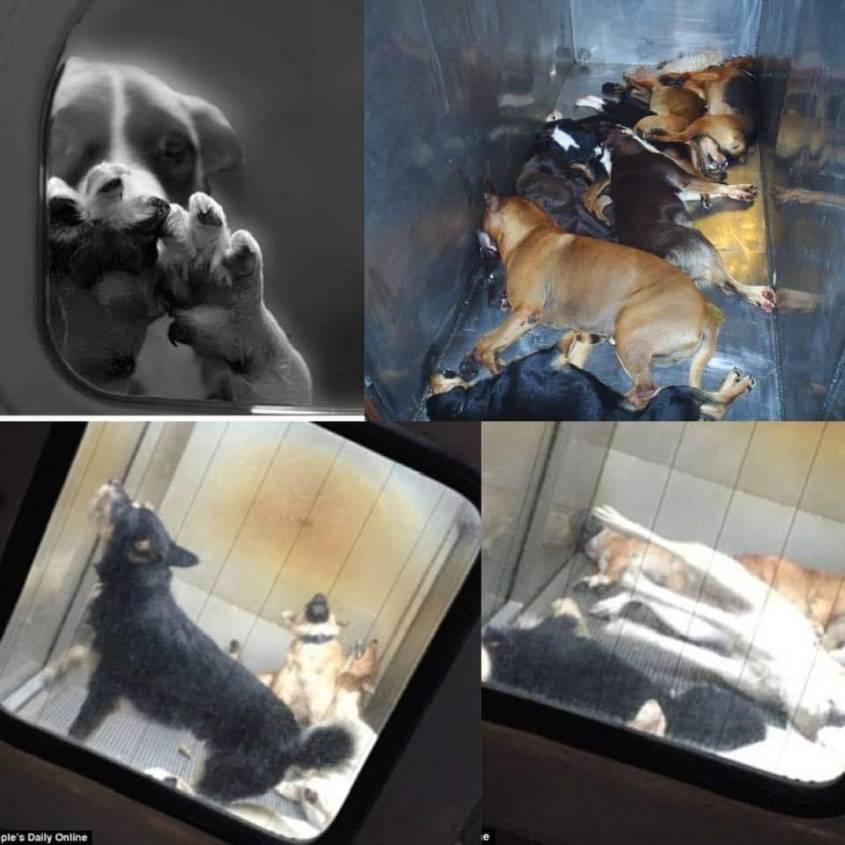
The last look from the gas chamber

Pets are also gassed or poisoned in European countries.
Why??

Because people prefer to order and buy their pets like goods from the breeder.
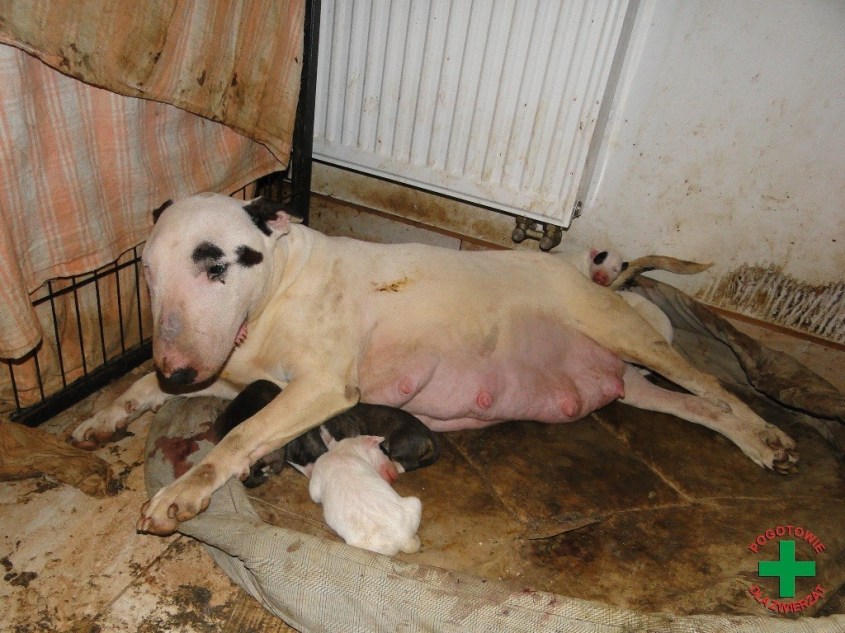
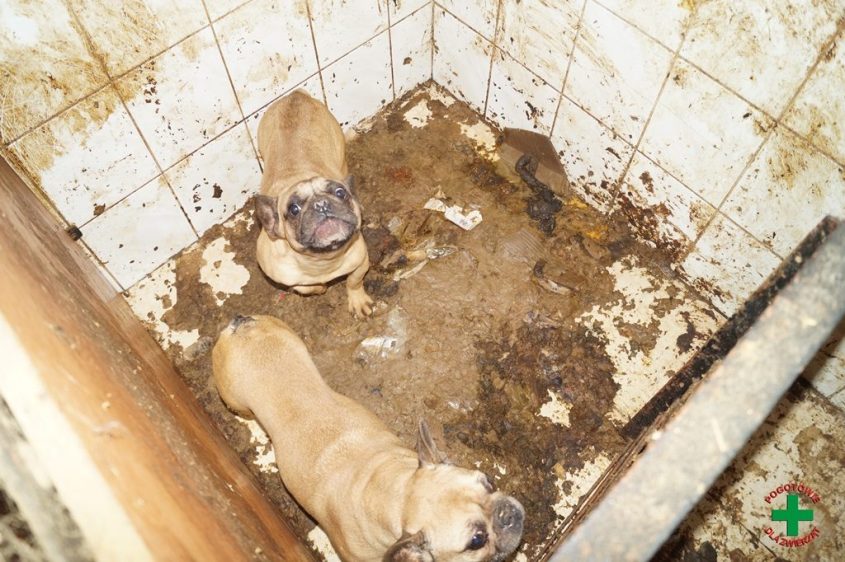
Of course with the right of return if the buyer does not like the “goods” or it behaves differently than desired.
And the breeders are happy.

What an inferior creature must one be to buy a friend like a wardrobe …
And how cheap and decadent you have to be to believe you have to pay for the better animal because that’s the only way to get the right design object!

And then someone looks at the Doodles – Poodles – Labbis – Bulldogs and it horrifies him.

Breeders are slave owners and animal abusers, nothing else.
And they have thousands of animals on their conscience that die in gas chambers because people would rather throw their money in the breeder’s throat than save an animal from lethal injection or the gas chamber.

You can’t buy a friend, you have to deserve one.

My best regards to all, Venus

Spain will ban wolf hunting!

The State Commission for Natural Heritage of the Ministry of Ecological Transition and Demographic Challenge has proposed this Thursday, February 4, the inclusion of all existing wolf populations in Spain in the List of Wild Species in the Special Protection Regime, so it will automatically stop be considered a hunting species.

This implies that they cannot be hunted as soon as the new law takes effect.

The proposal has required a double vote because in the first a tie was reached. Finally, a simple majority, necessary to adopt the decision, has given the go-ahead, thereby homogenizing the status of wolf populations throughout the national territory.

Cantabria, Asturias, Castilla y León, and Galicia, all of them regions with wolf populations north of the Duero, have voted against the proposal, a position to which other autonomous communities governed by the PartidoPopular have joined.

In any case, the proposal has gone ahead with the favorable vote of the rest of the regions.

The inclusion of all Spanish wolf populations in the list of wild species in the special protection regime is based on the opinion of the Scientific Committee, which recommended their protection because it takes into account “their importance as a cultural and scientific heritage, as well as the environmental benefits resulting from the presence of this species in natural Ecosystems “.

“The fact that it is a key species for the functioning of ecosystems, that its area of ​​distribution includes territories of several autonomous communities and that the number of these has increased in recent times as well as the threats that affect the species they made a common approach to action necessary so that the management and conservation of the wolf are coherent throughout the Spanish territory, ensures its populations and long-term distribution and guarantees coexistence with man ”, they add.

The creation of a working group was proposed to develop a new strategy for the management and protection of the wolf in Spain. The objective of this document is to achieve the conservation, management, and restoration of viable populations of wolves as an integral part of Spanish ecosystems, ensuring coexistence with human activities in the areas where they live.

From AnimaNaturalis we hope that they will prohibit the hunting of these animals from now on, and do not wait for the new law to come into force, which will still take a few months to come into force.

https://www.animanaturalis.org/n/45819/espana-prohibira-la-caza-del-lobo

We warmly welcome the decision.
All that remains now is the abolition of bullfighting!

My best regards to all, Venus

UK: Advertising Standards Authority Receives Complaint Over Pro-Meat TV Ad.

Advertising Standards Authority Receives Complaint Over Pro-Meat TV Ad

The TV advert – which describes meat and dairy as ‘essential’ – has been slammed for presenting a ‘false narrative

WAV Comment – the ASA is a UK authority which regulates all advertising standards.

The Advertising Standards Authority (ASA) has received a complaint over a pro-meat TV Ad.

Last month, the Agriculture and Horticulture Development Board (AHDB) launched its We Eat Balanced campaign to highlight the alleged ‘nutritional benefits of enjoying red meat and dairy’.

The campaign, which costs £1.5 million, consists of an advert currently running on UK TV. It aims to showcase the UK’s world-class standards in food production and sustainability. There are three different endings featuring dishes using beef, lamb, and pork. All of which include a dairy accompaniment.

Speaking about the campaign, AHDB’s Head of Marketing Liam Byrne said: “The nation needs a bit of a lift as it’s been a tough time for everyone. So, now more than ever we wanted to create a campaign that feels uplifting and reassuring for consumers who are increasingly being told by the media to reduce their meat and dairy consumption. “As such this is also a very important campaign for our levy payers as it tells the real story of food and farming from Britain.”

A ‘false narrative’

Now, The Vegan Society has put in an official complaint about the advert – saying it is ‘likely to mislead members of the public’. 

It says the ad’s ‘To B12 or Not B12’ slogan presents a ‘false narrative’ as it ‘suggests you can only have Vitamin B12 by eating animal products’. 

The Vegan Society points out that the vitamin is routinely supplemented on a vegan diet through fortified foods such as milk alternatives and cereals – and that B12 deficiency in omnivores is ‘not uncommon’.Moreover, it believes the advert ‘is in direct conflict with government messaging around health, the environment, and supplementation’. 

‘Scare tactics’

Mark Banahan is The Vegan Society’s Campaigns Manager. In a statement sent to PBN, he said: “The AHDB has set out to mislead the public by denigrating the choices of people who don’t want to eat animal products. 

“Most vegans are aware of the need to supplement B12 in fortified foods or a vitamin supplement. And, by doing so, vegans can maintain a balanced diet.

“It is disappointing to see the ADHB resorting to such scare tactics in response to the growing interest in veganism and in reducing animal products.”

Ad remake

Since the campaigns debut, Plant Based News has remade the advert – showing the harrowing reality of animal agriculture

“We’ve all got a lot on our plates right now but here’s something you’ll want to make room for,” the new ad states.

“The story of a food so brutal it steals calves from their mothers and the flesh of creatures we humans incarcerate. Then, markets it as something edible. 

“The nutrients our bodies need to stay healthy exists in plants. Quit meat and dairy. Enjoy food without victims. Eat plant-based.”

‘Quit meat and dairy’.

Moreover, PBN’s co-founder Robbie Lockie, producer of the new ad, says he was ‘absolutely outraged’ by AHDB’s claims. 

“We’re in the midst of a climate crisis,” he said. “It is absolutely essential we cut our consumption of meat and dairy. “

Lockie then added: “However, the makers of the original ad claim they wanted to help people feel good. Because the media is ‘always trying to get people to eat less meat and dairy’. This is not only incredibly irresponsible, but it also denies the fact that animal agriculture is a leading driver for climate change.”


Check this out also, just for ‘interest’ – Mark

USA: CORY BOOKER BECOMES FIRST VEGAN SENATOR ON THE SENATE AGRICULTURE COMMITTEE – Brilliant !

Cory Booker Becomes First Vegan Senator on the Senate Agriculture Committee

CORY BOOKER BECOMES FIRST VEGAN SENATOR ON THE SENATE AGRICULTURE COMMITTEE

New Jersey Senator Cory Booker—who is working to dismantle factory farming—will be the first vegan to serve on the Agriculture Committee. 

Cory Booker Becomes First Vegan Senator on the Senate Agriculture Committee | VegNews

WAV Comment – Brilliant ! – Congratulations Cory – well deserved.

This week, Senator Cory Booker (D-NJ) was appointed to the Senate Agriculture Committee—becoming  the first vegan Senator to serve on the committee. Booker has been vegan since 2014 and is a longtime advocate for reforming agricultural systems, particularly factory farming, to create a more equitable food system for people and animals. Newly elected Senator Raphael Warnock (D-GA) was also appointed to the Senate Agriculture Committee—marking the first time in the committee’s history that two Black Americans have served as members simultaneously. 

“Our food system is deeply broken. Family farmers are struggling and their farms are disappearing, while big agriculture conglomerates get bigger and enjoy greater profits,” Booker said. “Meanwhile, healthy, fresh food is hard to find and even harder to afford in rural and urban communities alike. In the richest country on the planet, over 35 million Americans from every walk of life are food insecure.”

Booker on factory farms
In 2019, the former presidential candidate proposed the Farm System Reform Act (FSRA), a new bill that aims to transition animal agriculture away from factory farming. FSRA bans the opening of new large-scale concentrated animal feeding operations (CAFOs) and limits the growth of existing CAFOs in the meat and dairy sector. The bill also aims to phase out the largest CAFOs—as defined by the Environmental Protection Agency—by 2040 and hold large meatpackers accountable for the pollution they create. With his bill, Booker hopes to protect small-scale animal farmers who are often contractually bound to, and exploited by, large corporations. After the onset of the COVID-19 pandemic in 2020, FSRA has gained support from other Congress members, including Senator Elizabeth Warren (D-MA) and House Representative Ro Khanna (D-CA)—who filed companion legislation to FSRA in the House.  

After slaughterhouses became COVID-19 hotspots last year, Booker also introduced the Safe Line Speeds During COVID-19 Act, which aimed to protect workers, animals, and consumers from the dangers posed by higher line speeds in poultry, pig, and cattle slaughterhouses. “The fact of the matter is that our current food system is interconnected with so many issues of justice in America: racial justice, health justice, environmental justice, economic justice,” Booker said in a keynote speech at the National Food Policy Conference in July. “And our food system is fundamentally broken. It fails to reflect our collective values. And it is not a dramatization to say that the way we produce and consume food in this country is quite literally a matter of life and death.”

Booker on racial justice
Throughout his political career, Booker has spoken out about the inequities that Black Americans face, including in the agriculture sector. In November, Booker—along with Warren and Senator Krisitin Gillibrand (D-NY)—introduced The Justice for Black Farmers Act (JBFA), which seeks to end racist practices that have resulted in a great loss of land holdings and generational wealth for Black farmers. As a Senate Agriculture Committee member, Booker plans to advance a revised version of JBFA through Congress.

———————————————————————–

Just trying to beam out a few positive rays of light this morning (6/2) in this currently dark world for many – Mark.

See also: UK: Things Looking Positive for a UK Live Export Ban Now It Has Left the EU. Campaigning Still to do, but Looking Goood. – World Animals Voice

UK: Things Looking Positive for a UK Live Export Ban Now It Has Left the EU. Campaigning Still to do, but Looking Goood.

Live farm animal exports to mainland EU at a standstill post-Brexit

Lucrative live shellfish trade also hit hard, with consultation over further restrictions on live animal exports ending soon

Livestock and live shellfish exports from the UK to mainland Europe are at a standstill as producers struggle with post-Brexit transport conditions.

In 2019, excluding lamb and cattle traded between Northern Ireland and the Republic of Ireland, a combined 31,000 cattle, sheep and goats were exported from the UK to the EU mainland. About 5% would have been exported for fattening for slaughter and the rest for breeding, the National Farmers’ Union (NFU) estimates.

National Pig Association (NPA) data shows about 12,000 breeding pigs were shipped from the UK to the EU in 2020. The UK does not export pigs for slaughter, the NPA said, although 1,000 to 2,000 pigs are sent from Great Britain to Northern Ireland each year when extra slaughter capacity is needed.

Since 1 January, no cattle, sheep or goats have left the UK for mainland EU markets, the NFU and NPA said.

“There have been no live exports of any [cattle, sheep or goats] since 1 January,” said John Royle, the NFU’s chief livestock adviser. “That’s because there are no border control posts [BCPs] for them at EU mainland ports.” Royle put the value of UK live food animal exports at between £20m and £30m in 2019.

Border control posts are where live animal paperwork and welfare is checked on arrival in the EU. Now that the UK is a third country for EU trade purposes, BCP checks are required.

Breeding pigs face the same problem. Up to 1 January, most UK breeding pig exports went from Dover to Calais on the P&O ferry, said Zoe Davies, NPA chief executive.

Now, post-Brexit, Davies said Calais would continue to take in UK horses, pets and chicks, “because they have a small BCP there that can cope with those. But they don’t feel its big enough to cope with pigs which come in groups of 200.”

“We flagged [the BCP issue] with Defra [the UK Department for Environment, Food and Rural Affairs] last year in June or July. But they basically said it was our problem,” Davies said. Since then, the NPA and NFU have been working together on finding EU ports willing to set up the control posts.

News of the live export standstill comes in the midst of a UK government consultation aimed at banning the export of live animals from England and Wales for slaughter and fattening. Areas outside the consultation’s remit include livestock for breeding, poultry and transport between England and Wales and Northern Ireland.

Royle added that the government consultation was having an additional chilling effect. He said it was “pretty clear” the UK government wanted to end the trade for fattening and slaughter.

Live mollusc exports from the UK have been hit equally hard. “Up to 31 December there was a trade in live mussels and other live bivalves like oysters, cockles and clams that was worth £20m to £30m,” said James Wilson, who farms mussels on the Menai Strait in north Wales, Britain’s largest mussel-growing area.

Since 1 January, bivalve exports have been suspended indefinitely, Wilson said, owing to EU water quality rules for third countries that now apply to the UK.

In Scotland, exports of male calves, which are of little value to dairy farmers, have also halted for a range of reasons unrelated to Brexit. The last shipment left in November 2019.

A Scottish government spokesperson said the trade had stopped because of a number of factors. Fewer male dairy calves were being born, owing to the greater use of sexed semen, for example, and more male dairy calves were being kept for rearing in the UK.

The Scottish government’s own consultation on restricting the live animal export trade is due to conclude on 26 February.

Responding to concerns about the collapse of live farm animal exports, Defra stated in an email that since 1 January consignments of cattle and equines have in fact been exported to the EU. Although the number of livestock exported was not given, Defra said the animals went from the UK to the Irish port of Rosslare, which has a BCP.

But Royle said that live export of farm animals to mainland Europe had “effectively been stopped because of Brexit, and can only resume if we establish BCPs on the EU mainland”.

Animal welfare can be severely compromised by live transportation, and the longer the journey the greater the risks. Compassion in World Farming’s chief policy adviser, Peter Stevenson, said he was “delighted” that the “inhumane” live export trade had “at least for now largely come to a halt”.

There have not, as yet, been any reported disruptions to the trade in day-old chicks, exported from Dover to Calais for breeding, a spokesperson for the British Poultry Council said. The UK exports tens of millions of chicks a year in an industry that was worth £139m in 2018.

Asked about live bivalve exports, Defra said it was in consultation with producers and the EU to ensure the trade could “continue securely”.

Defra added that molluscs such as oysters, mussels, clams, cockles and scallops could continue to be exported to the EU if they were harvested from class A waters. Wilson said less than 1.5% of English and Welsh waters were currently classified as class A for live molluscs.

Earlier this week, Defra confirmed it was putting in place a £23m compensation package for firms exporting fish and shellfish to the EU that can show they have suffered “genuine loss”.

https://www.theguardian.com/environment/2021/feb/05/live-farm-animal-exports-to-mainland-eu-at-a-standstill-post-brexit

And …

England and Wales to ban live animal exports in European first

Environment secretary hails ‘Brexit success’ for animal welfare, but poultry to be excluded and Northern Ireland exempted

This article was corrected on 7 December 2020 because it referred to a UK ban. The planned live exports ban will only apply in England and Wales.

WAV Comment – Start February 21 – we have now submitted our comments to DEFRA (in January 2021) as part of the live export consultation.  When the consultation closes; all submissions will be reviewed and a final decision associated with live animal transport issues will be made over the coming months.

Plans to ban the export of live animals for slaughter and fattening from England and Wales are to be unveiled by the UK’s environment secretary, George Eustice, on Thursday.

The Department for Environment, Food and Rural Affairs (Defra) said the plans were part of a renewed push to strengthen Britain’s position as a world leader on animal welfare.

An estimated 6,400 animals were sent to Europe for slaughter in 2018, according to Defra. Many of those left through the port of Ramsgate in Kent.

“Live animals commonly have to endure excessively long journeys during exports, causing distress and injury. Previously, EU rules prevented any changes to these journeys, but leaving the EU has enabled the UK government to pursue these plans,” Defra said.

The eventual ban would be considered a Brexit success, seeing England and Wales become the first countries in Europe to end this practice.

The beginning of a joint eight-week consultation in England and Wales would mark “a major step forward in delivering on our manifesto commitment to end live exports for slaughter”, said Eustice. “Now that we have left the EU, we have an opportunity to end this unnecessary practice. We want to ensure that animals are spared stress prior to slaughter.”

It is understood from a UK government source that the joint consultation will be used as the basis for discussions with Scotland. Those discussions, and the consultation findings, will then be used to examine ways of harmonising the ban.

However, live exports look set to continue in Northern Ireland which “will continue to follow EU legislation on animal welfare in transport for as long as the Northern Ireland protocol is in place”, according to Defra.

Poultry exports also appear set to continue, Defra added: “The measure on live exports will not impact on poultry exports or exports for breeding purposes.” The UK exports tens of millions of chicks a year in an industry that was worth £139m in 2018.

Above – A Positive Person to Have on Your Side – UK Prime Minister (Boris) Partner Carrie Symonds – Animal Rights Campaigner.

Asked if the eventual ban might be an achievement that could be credited to the prime minister Boris Johnson’s partner, Carrie Symonds, the source would not comment. Symonds is a patron of the Conservative Animal Welfare Foundation (CAWF) which has long lobbied for an end to live exports.

“We are hoping this consultation will lead to an end to live exports for slaughter and fattening, which has caused such enormous suffering, by 2022 or even next year,” said CAWF’s founder, Lorraine Platt. The foundation sent its latest research report on ending live exports to the UK government several weeks ago.

Compassion in World Farming’s chief policy adviser, Peter Stevenson, said the organisation was “delighted that Defra plans to ban live exports for slaughter and fattening. We have campaigned for over 50 years against the massive suffering caused by this inhumane, archaic trade, so this unambiguous proposal is very welcome.”

The RSPCA’s CEO, Chris Sherwood, was equally welcoming and said he looked “forward to seeing this happen as the RSPCA has campaigned on this issue for more than 50 years”.

In other parts of Europe, news of a planned British ban on live exports was welcomed by animal welfare groups. “This is great news, it is far too stressful to export live animals for slaughter,” said Iris Baumgaertner from Germany’s Animal Welfare Foundation, who added that the news followed a recent decision by the authorities in one of Germany’s largest cattle exporting regions not to approve the logs for 132 breeding heifers due to be exported to Morocco for slaughter, meaning the journey could not proceed. An appeal by the exporter was denied by the courts because, according to Baumgaertner, the judge said “whether it was today or in the future, the slaughter would still be inhumane.”

In September, the Dutch had already suggested the EU should begin to limit live animal exports. At an informal Agriculture and Fishery Council meeting, Dutch minister of agriculture, nature and food quality, Carola Schouten, asked the council to adjust animal welfare regulations and limit the transport of livestock for slaughter.

A special EU committee on animal transport has kept live export discussions in the spotlight this year. The European parliamentary committee on the protection of animals during transport began its hearings in October. MEPs critical of live exports have repeatedly asked the committee to consider bans on exports outside the EU, and suggested limiting transport times within the EU. The committee is due to sit again Wednesday afternoon.