Month: April 2022

European Parliament calls for animal welfare to be included in the scope of extra-financial reporting.

4 April 2022

On 15 March, the European Parliament adopted its position on the revision of the EU’s Corporate Sustainability Reporting Directive (CSRD). The report, led by MEP Pascal Durand, calls for animal welfare to be included in the scope of the revised legislation. Eurogroup for Animals welcomes this move and calls on Member States to accept this in the coming trilogue.

The EU’s Corporate Sustainability Reporting Directive (CSRD), initially adopted in 2014, defines how companies should report on all extra-financial activities, including on the impact their business has on sustainability. In April 2021, the European Commission put forward a proposal to review this text, notably to extend the scope to all large companies and introduce more detailed and EU-wide reporting requirements, but the proposal missed out on animal welfare.  

Photo – Mark (WAV)

The position adopted by the European Parliament’s Legal Affairs (JURI) committee suggests adding animal welfare to the scope of the required reporting. According to the text, businesses would thus need to report on how their activities impact the welfare of animals, both in terms of “living and transport conditions”. The report also proposes enhanced reporting for companies operating in high-risk sectors for sustainability, such as “animal production and seafood industry”.

After the EU Code of Conduct on responsible business and marketing practices, which successfully incorporated animal welfare concerns, this report represents another milestone for animal welfare in the context of the debates on corporate sustainable governance. Indeed, the report recognises that animal welfare is linked to sustainability and should be taken into account by companies when establishing and reporting about their impacts on sustainability. 

All eyes are now on the Council as “trilogue” negotiations with the European Parliament have already started. In this context, Eurogroup for Animals calls on the Council to uphold the objectives of the Green Deal and the Farm to Fork strategy and thus agree with the European Parliament on a text encompassing and recognising the inherent links between animal welfare and sustainability. 

Regards Mark

New IPCC report: dietary shift and meat alternatives are needed to reduce greenhouse gas emissions.

6 April 2022

The third report from the Intergovernmental Panel on Climate Change (IPCC), launched on 4 April, covers the mitigation pathways that can reduce greenhouse gas emissions. It follows upon the previous report launched earlier this year that detailed the catastrophic consequences of climate change and concluded that the brief window to secure a liveable future is rapidly closing.

António Guterres, Secretary-General of the United Nations, warned during the press conference that the world is on a fast track to climate disaster. He called for rapid progress to shift to renewable energy, end the funding of coal, protect forests and ecosystems and reduce methane emissions.

The report warns that methane emissions continue to increase, the main source being enteric fermentation from ruminant animals. In addition to its contribution to global warming, diets heavy in animal protein also contribute to land being used inefficiently. Arable land is used to grow crops for animal feed, with negative impacts on ecosystems and biodiversity.

Conversely, a shift to plant-based diets has significant mitigation (action of reducing seriousness – WAV) potential according to the IPCC. More plant-based diets, with only a moderate intake of animal-source food, can lead to substantial decreases in greenhouse gas emissions.

IPCC notes that a dietary shift comes with co-benefits for animal welfare but also reduced land use for feed production, less nutrient run-off as well as health benefits, reduced mortality from diet-related diseases and lowered risk of zoonotic disease and antibiotic use.

The IPCC recognises that cellular agriculture, such as cellular fermentation and cultivated meat, can bring “substantial reduction in direct GHG emissions from food production”. The report notes that these food technologies use less land and water, have a lower nutrient footprint as well as address concerns over animal welfare.

On alternative proteins, the report indicates that insects could be a mitigation opportunity. However, insects are reared industrially to feed intensively farmed animals, thereby propping up animal production and they are often fed on crops that could be consumed directly by animals or people, which accentuates an inefficient way of producing food.

While lifestyle changes can accelerate climate change mitigation, these changes require systemic changes across all of society including on land use, the report states. When governments meet in Egypt this November at COP27 they will discuss the targets for cutting greenhouse gas emissions in line with the Paris Agreement to limit global warming to 1.5°C. 

The report is a strong call on governments to take forceful actions to speed up the shift to more plant-based production and consumption and to reduce the number of animals raised for food production.

Regards Mark

Ukraine: ‘I have no words. Russians even killed dozens of dogs in Kyiv region. WHY??’

Horror as over 300 dogs found dead in Ukrainian shelter after weeks without food or water

HUNDREDS of dogs have been found starved to death after being locked in cages in a Ukrainian animal shelter since Russia’s invasion began.

Almost 500 dogs were left without food or water in a shelter in Borodyanka since Russian troops invaded Ukraine on February 24. After soldiers left the area at the beginning of the month, charity volunteers were able to return to the shelter and found that more than 300 of them had not survived.

Charity organisation UAnimals said 485 dogs had been locked in their cages until 1 April because volunteers could not return to the shelter due to the ongoing conflict.

CBS News reported that when volunteers were able to return to the shelter a few days ago, all but 150 of the 485 animals had died.

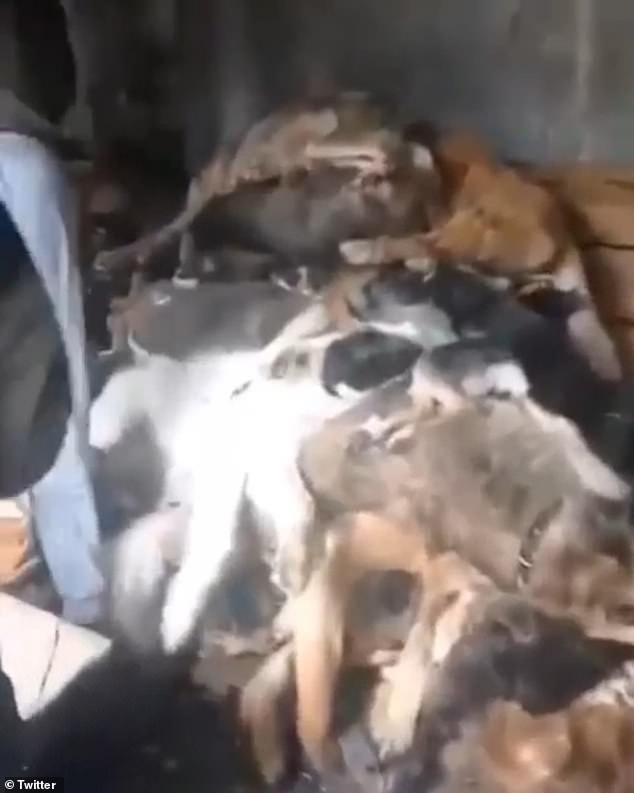
A video was shared on Twitter by Oleksandra Matviichuk, lawyer and head of Ukraine nonprofit Centre for Civil Liberties, which shows bodies of numerous dogs piled on the floor.

In the footage, the female volunteer can be heard narrating the scene in a tearful voice.

She captioned the footage: “I have no words. Russians even killed dozens of dogs in Kyiv region. WHY??”

UAnimals said that 27 of the surviving dogs who were in a critical condition have been transferred to private clinics for treatment.

The charity is also offering 50,000 hryvnias (£1293) as a reward for anyone willing and able to take the others.

Some of the surviving dogs are also being supported by the charity themselves.

Ukraine news: Over 300 dogs found dead in shelter after weeks without food or water | World | News | Express.co.uk

More than 300 dogs starve to death at animal shelter after Russian troops left them to die in their cages while occupying Ukrainian town

  • A total of 485 dogs were locked in cages at the UAnimals shelter in Borodyanka
  • They were left for more than a month without food or water by Russian occupiers
  • Shelter workers were only able to return on April 1 after Russian troops retreated 
  • UAnimals said only 150 of the 485 dogs managed to survive, with 27 critically ill
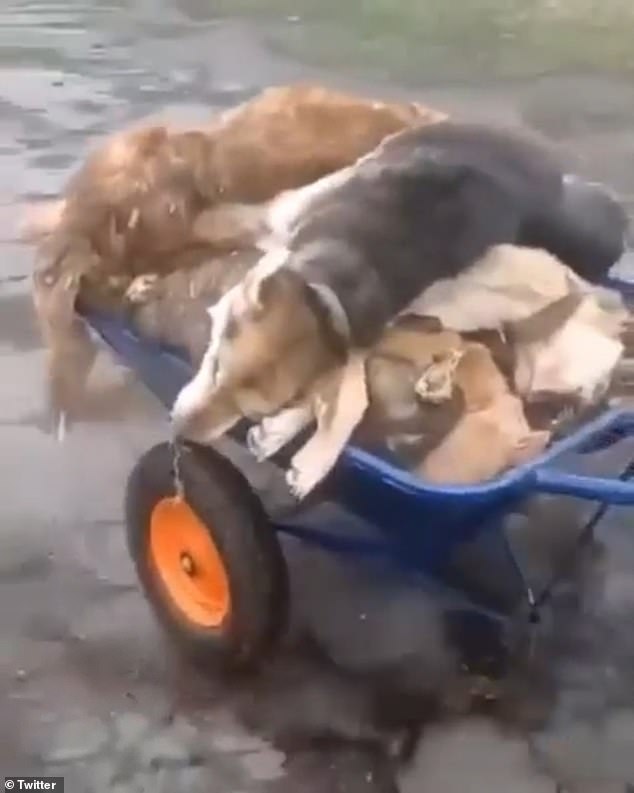
  • Harrowing footage shows workers stacking up a huge pile of carcasses, while other videos show dozens of corpses littering the floors of the shelter 

Hundreds of dogs have been found dead at an animal shelter in Ukraine after Russian occupiers left them to starve in their cages for weeks.

The UAnimals shelter in Borodyanka, just north of Kyiv, said that up to 485 dogs were locked in their cages by Russian forces shortly after the invasion of Ukraine began on February 24.

There they remained without food or water for about a month as the occupiers left them to die, until staff were able to return to the compound on April 1 once the Russian soldiers had retreated.

Footage released by the animal shelter on Instagram showed workers stacking up a huge pile of dead hounds which had wasted away in the presence of the occupiers.

Meanwhile, images of half mangled corpses in some of the cages suggested some dogs had begun to eat their dead cell mates in the complete absence of food. 

‘This is the number of dogs… and this is not all, this is just a part,’ a woman can be heard saying through tears as she filmed workers adding to the stack of corpses.

‘These are the animals of Borodyanka, and the consequences of war. The consequences of complete indifference and negligence. The animals went three to four weeks without food or water.’

Just 150 of the 485 dogs were found alive when the workers returned, with 27 of them transferred to local vets in critical condition.

UAnimals has since announced on social media it will pay 50,000 hryvnia (almost £1300) to anyone willing to rescue some of the animals still left alive, and hit out at the director of the Kyiv veterinary hospital – the owners of the shelter – for not organising proper care or evacuation for the dogs.

One video, posted by lawyer and head of Ukrainian nonprofit Centre for Civil Liberties Oleksandra Matviichuk, showed dozens of carcasses littering the floor at the UAnimals shelter. 

‘I have no words. Russians even killed dozens of dogs in Kyiv region. WHY??’ she tweeted.

Meanwhile, more footage posted by Ukrainian Interior Ministry advisor Anton Gerashchenko showed some of live dogs barking in terror as staff members slowly entered their cages and observed the dead bodies for the first time.

Some of the carcasses had remained untouched, but others had been torn apart by the ravenous dogs still trying to survive.

Though shelter staff were unable to care for the animals while the town was under the control of Russian occupiers, the UAnimals shelter announced on social media it had lodged a police complaint demanding that the deaths be investigated as animal cruelty crimes.

It argued that the head of the Kyiv veterinary hospital, Natalya Mazur, was responsible for arranging care for the animals in the early days of the war, but instead left just one man to look after the entire population.

UAnimals said this man left the dogs to die ‘in agony’, and demanded that Mazur be replaced as director of the Kyiv veterinary hospital as ‘the current director cannot act as a manager and should not interact with animals in the future’.

Mazur in the early days of the war made an appeal for financial donations to help deliver food and aid to animals in various shelters, but said that transporting the animals and arranging evacuations was not possible due to the logistical struggles facing a nation at war.

The haunting revelations made at Borodyanka’s animal shelter come just one day after Ukrainian officials warned the town is also likely to have seen horrific atrocities committed against its human population by Russian forces.

Ukrainian prosecutor-general Iryna Venediktova told Ukrainian TV yesterday that there was a ‘similar humanitarian situation’ in Borodyanka to that of Bucha, where several mass graves and hundreds of dead civilians were found over the weekend.

Venediktova said ‘the worst situation in terms of the victims’ condition’ could be found in Borodyanka, which is a little further from Kyiv than Bucha and was also held by Russian forces until just days ago. 

Meanwhile, Ukrainian President Volodymyr Zelensky yesterday said it had become harder for Ukraine to negotiate with Russia since Kyiv became aware of the scale of alleged atrocities carried out by Russian troops just north of the capital.

‘These are war crimes and will be recognised by the world as genocide,’ Zelensky said, wearing body armour and surrounded by military personnel as he observed the mass graves in Bucha.

‘It’s very difficult to talk when you see what they’ve done here,’ he said. ‘The longer the Russian Federation drags out the meeting process, the worse it is for them and for this situation and for this war.

‘We know of thousands of people killed and tortured, with severed limbs, raped women and murdered children,’ he said, adding that in Bucha and other towns in the Kyiv region ‘dead people have been found in barrels, basements, strangled, tortured’.

Zelensky said that despite the horrific human suffering in Bucha, residents were chipping in together to make sure homeless animals were fed.

‘That’s a characteristic trait of our people, I think – treat animals the way you would treat humans,’ he said. 

‘But you can see around what was done to this modern town. That’s a characteristic of Russian soldiers – treat people worse than animals. That is real genocide, what you have seen here today.’ 

Ukraine’s prosecutor-general said the bodies of 410 civilians, many with bound hands and close-range gunshot wounds, have been recovered from towns surrounding Kyiv after last week’s withdrawal of Russian troops.

Another mass grave containing the bodies of at least 20 civilians including a mayor and her family was also uncovered in woodland near the town of Motzyhn, around 20 miles west of Bucha.

See more photos at:

More than 300 dogs starve to death at animal shelter after Russian troops left them to die | Daily Mail Online

Regards Mark

UK: Snares – Petition Exceeds 100,000 Signatures and So Should Be Debated In Parliament. We Call For Evidence To Be Published Prior To The Debate.

WAV Comment:

This petition has now received over 100,000 signatures, which under UK Parliamentary rules, means that the issue is entitled to be considered for debate in the House of Commons by members of parliament (MP’s)..

We support the Committee’s letter asking for evidence to be published before any debate on this issue, so this can be discussed by MPs.  Hopefully this will be by 21/4/22.

In a UK Government survey in 2012 it was found that three quarters of animals caught, killed or wounded in snares included animals such as badgers, hares, deer, otters and family cats and dogs i.e. not the intended targets.

Snares | League Against Cruel Sports

How many animals are caught in snares?

 Like landmines, snares are indiscriminate, because these wire traps can’t tell the difference between a fox, your family pet or a protected species.

As a result, the amount and diversity of animals that fall victim to these snare traps is immense. Snares capture any animal that happens to step into them. In 2012 a UK government study found that only around a quarter of the animals caught in snares were the intended targets (normally foxes). The remaining three quarters of the animals caught, severely injured or killed in these vicious nooses included hares, badgers, family cats and dogs, deer and even otters.

Based on the government’s 2012 research, we estimate that snares may be trapping up to 1,700,000 animals every year.

Regards Mark

Dear Mark Johnson,

You recently signed the petition “Make the use of free-running snares illegal for trapping wildlife”:
https://petition.parliament.uk/petitions/600593

The Petitions Committee has written to the Secretary of State for Environment, Food and Rural Affairs to ask when the Government plans to launch its call for evidence on the use of snares, which was announced in the Government’s Action Plan for Animal Welfare.

Read the Committee’s letter: https://committees.parliament.uk/publications/9579/documents/162171/default/

The petition you signed, calling on the Government to make the use of free-running snares illegal for trapping wildlife, has passed the 100,000 signature to be considered for debate, and is currently waiting to be scheduled for a debate. The Chair of the Committee Catherine McKinnell MP, in her letter, states it would be preferable for the Government’s call for evidence to be published before any debate on this issue, so this can be discussed by MPs, and asks the Government to confirm when this will be published.

We will share the Government’s response with you when this is received, and will let you know as soon as a debate on the petition you signed is scheduled.

The Government’s Action Plan for Animal Welfare

The Government published its Action Plan for Animal Welfare in May 2021. This set out the Government’s plans, aims and ambitions across animal welfare, and included a commitment to launch a call for evidence on the use of snares. The Action Plan stated that “The government considers it timely to open this call for evidence to make sure it has the very latest understanding on this issue”.

Read the Action Plan for Animal Welfare: https://www.gov.uk/government/publications/action-plan-for-animal-welfare/action-plan-for-animal-welfare

Thanks,
The Petitions team
UK Government and Parliament

England: 71% of People Think Causing Pain and Suffering to Animals is Wrong, Animal Aid Poll Shows.

Posted on the 4th April 2022

A recent ‘One Poll’, commissioned by Animal Aid, has shown that the majority of people believe that it is always wrong to cause animals pain and suffering.

The poll asked the question, “Is it ever acceptable to cause pain and suffering to animals?”, to which 71% of people answered “no”. The results show, as Animal Aid suspected, that most people ‘want to be kind’ but are seemingly unaware that there are many things we do on a daily basis that cause animals pain and suffering – for the food we eat, for entertainment, in the wild, and in laboratories.

Most people wouldn’t dream of harming animals, but our daily actions can cause animals huge amounts of pain and suffering – from the food we eat, the entertainment we choose to attend, and from the products we buy and use.

What can you do ?

Animal Aid (e-activist.com)

In the second episode of our brand-new podcast, Conversations on Compassion, our hosts interview XCellR8 co-founder, Dr Carol Treasure about her journey into living with compassion. We learn everything from what inspired Carol on her journey, to the ethical implications of some scientific language – and if there’s such thing as an average day in the lab! Take a listen now

On Sunday 24th April it’s World Day for Animals in Laboratories and we’ll also be sharing some facts about some of the animals who currently suffer in laboratories – so keep an eye on our social media!

It has been hard to ignore the Cheltenham festival, which this year claimed the lives of four horses. Ahead of the Grand National, we’re asking people to support horses by not betting.

If you’re out and about in London, see if you can spot our adverts on London buses, a reminder that horse racing is a dead sport. We’d love to see your pictures, so do share these with us on social media – and be sure to tag us so we can see them!

This week, we’ll visit London, Bristol and Liverpool (Monday, Tuesday and Wednesday respectively) with our ‘ad-vans’. These will host mobile screenings of our brand-new film “71%”, narrated by the fantastic Benjamin Zephaniah – poet, author, musician and legend. You can watch the full film here!

Enjoy a compassionate Easter with animal-friendly treats for every bunny! 🐰

Find truffle-filled eggs, zesty chocolate bunnies, deliciously dark chocolate hens, white chocolate treats and much more! All proceeds go towards our work to help animals. 🙏

Hop on over the Animal Aid shop and fill your basket with vegan goodies galore

We want to say a big thank you to everyone who supported our campaign to #BanSnares! Together we have reached the target of 100,000 signatures – a month ahead of the deadline! We’ll update you with more details of this campaign in due course.

With kindness,

The Animal Aid team!

Website – Home – Animal Aid

Regards Mark

Enjoy ol Vic – a British icon:

OMG, the moral outrage!!!

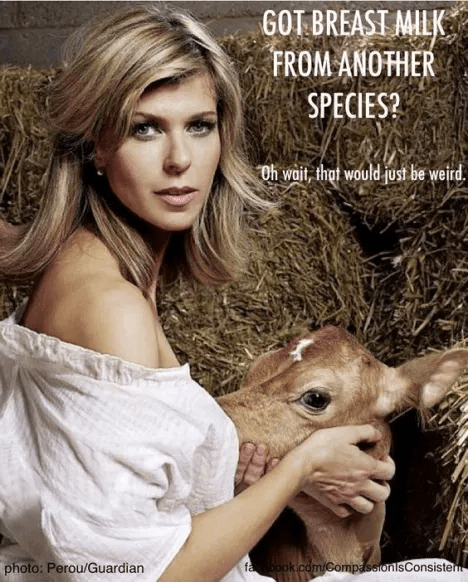
When these Londoners were asked to try a new milk, they were more than happy to offer praise for the creamy drink, but when a disturbing “fact” about the milk was revealed, everything changed. People were disgusted when they were told that the drink (which was actually soya milk) came from a dog. But if the thought of drinking dogs’ milk makes you feel ill, why drink the milk from any other animal?

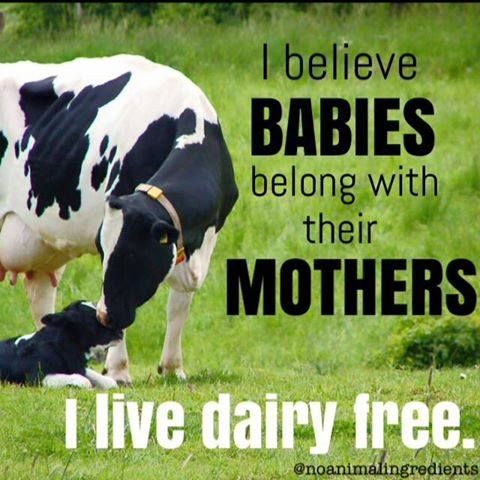
After all, there is nothing “normal” about artificially inseminating a cow and forcing her to give birth, only to tear her beloved calf away from her so that the milk that nature intended for her baby can be consumed by humans instead. Humans are the only species on the planet to drink another animal’s milk, and cows’ milk is no more natural for us than dogs’ or rats’ milk would be.

____________________________

So, if you “accidentally” drank dog’s milk, or cat’s milk, would you be angry? Pissed off? Morally outraged? You’re not the victim who’s forcibly impregnated, separated from her infants, and then violently killed.

Right?

Did you know there are actual industry video shorts on how to “safely” steal a calf from her mother, to protect the kidnapper from an angry and fearful mother trying to SAVE HER CHILD? Yeah, it’s all about how violent cows can be and how the farmer is just the innocent bystander risking bodily injury to nobly take an infant SO HUMANS CAN DRINK THE CALVES’ NATURALLY-INTENDED MILK INSTEAD.

What would YOU do if someone tried to take your child?

But what if, say, dogs were farmed for their flesh and for their breastmilk? Would that be ok? I mean, people say ALL THE TIME how much they love animals, but eat them, and farmers always say they care for the animals better than their own kiddos and then kill them. Right? Effing yikes.

So what about love for Fido or Fluffy or Lassie or Benji? Can you show THEM how much you care?

Find out more about this unique and dog-lover owned business venture at Elwood’s Organic Dog Meat

I bet you can also hear Sam Elliot proclaiming, “Dog. He’s what’s for dinner………………..”

(Be aware that due to some negative feedback they’ve received, ie., angry messages, hostile tweets, violent phone calls, death threats … they are monitoring their feedback more frequently, but want to let you know how important dogs are to them, and how much they love dogs like you love pigs, chickens, cows, lambs, so please keep an open mind and remember this is all for the love of animals.)

SL

Download Your FREE Vegan PDF HERE

Order a FREE vegan kit HERE

Dairy-Free Info HERE

Take the Dairy-Free Challenge HERE

Click HERE for more Dairy-Free

Fish alternatives can be found HERE

Learn about eggs HERE

Find bacon alternatives HERE and HERE

Take PETA’s Cruelty-Free Shopping Guide along with you next time you head to the store! The handy guide will help you find humane products at a glance. Order a FREE copy HERE

Searching for Cruelty-Free Cosmetics, Personal-Care Products, Vegan Products, or more?
Click HERE to search.

Free PDF of Vegan & Cruelty-Free Products/Companies HERE

Click HERE to find out How to Wear Vegan!

Want to do more than go vegan? Help others to do so! Click below for nominal, or no, fees to vegan literature that you can use to convince others that veganism is the only compassionate route to being an animal friend:

PETA HERE

Vegan Outreach HERE

Get your FREE Activist Kit from PETA, including stickers, leaflets, and guide HERE

Have questions? Click HERE

Regards Mark

With thanks to Stacey as always.  Stacey | Our Compass (our-compass.org)

How you can support animal protection organisations in Ukraine.

With tensions involving Ukraine having descended into war, we find ourselves in deeply troubling times and stand in solidarity with everyone affected.

All EU Member States have a possibility to apply exemptions on the non-commercial movement of pets due to an exceptional situation (Article 32 of Regulation (EU) 576/2013). 

We are glad to report that several EU Member States temporarily lifted restrictions on the movements of pets. This is allowing refugees to bring their pets, and other small animals, with them. The Members States are:

Poland (information in UA, PL, EN) 

Latvia (information in LV, EN)

Hungary (information in UA, HU, EN) 

Romania (information in RO, EN, FR) 

Czechia (information in UA, CZ, EN)

Slovakia (information under point 10, in UA, SK, EN) 

Italy (information in IT)

Germany (information in DE)

Belgium (information in FR, NL, EN) 

Finland (information in FI, SE, EN) 

Ireland (information in EN) 

Denmark (information in DK, EN) 

The Netherlands (information in NL)

Sweden (information in UA, EN) 

Estonia (information in EST)

Croatia (information in HR)

Donations

Some members are actively working, or collaborating with other organisations, on the ground. If you would like to support those protecting the animals caught up in Russia’s war on Ukraine, you could consider making a donation to these organisations working in Ukraine or with animals coming from Ukraine:

Deutscher Tierschutzbund – Shelter Tierschutzzentrum Odessa 

Four Paws  

Humanny Pokrok is donating 100% of their e-shop income to support Ukraine

Open Cages

LAV

Společnost pro zvířata

GATO – Animal protection and advocacy Lithuania

World Horse Welfare – British Equestrians for Ukraine Fund

Other organisations collecting donations:

UAnimals

IFAW

OIPA

Lucky strand

Happy paw

UAAA (Ukrainian association of animal advocates)

Fundacja Viva! Polska

Gyvunu Geroves Iniciatyvos

Save the Dogs and other Animals

Rifugio Italia Kiev

Emergency appeal for Ukrainian zoos (European Association of Zoos and Aquaria)

Ukrainian Equestrian Federation Charity Foundation

Shelter Ugolyok

Kyiv Animal Rescue

Vet Crew

Shelter Sirius

Save a Fox

Gostomel Shelter

Help from Romania

The Global Federation of Animal Sanctuaries has shared a list of Romanian Animal Shelters who are accepting refugee animals from Ukraine (some offer shelter for any species, including farm animals): 

Save our paws, Iasi Romania

Association Riga si Berlin, Bucharest, Romania

Animal Society

Adapostul Speranta (Hope Shelter), Bucharest

Casa lui Patrocle, Suceava (very close to the Ukrainian border – also accepts farm animals)

Regards Mark

England: More Badger. – More than one third of England’s badgers now killed as legal battle begins over new Northern Ireland cull.

© Provided by The Independent
Northern Ireland’s badgers are set to be shot officially for the first time

This is an addition to our last post on the badger cull issue –

More Badger – 2/4/22.

At least a third of England’s badger population has been killed in the government’s drive to stamp out bovine tuberculosis, new figures show.Last year, 33,687 of the animals were culled, bringing the total since the campaign began in 2013 to at least 175,000. Estimates put England’s badger population at between 400,000 and 500,000.

The government announced last year’s toll as wildlife campaigners launched a legal battle over plans to begin culling the species in Northern Ireland.

Wild Justice, a lobby group involving wildlife presenter Chris Packham, together with the Northern Ireland Badger Group, is challenging the decision in the courts.

As last year’s English cull tally was revealed, Britain’s Badger Trust warned: “The scale of the attack on one of Britain’s best-loved animals could lead to badgers disappearing from areas across the country and populations becoming unviable in others.”

It said the proportion shot while free running – which may leave injured badgers to die slow deaths – rather than being caged and trapped hit a record of nearly nine out of 10.

The 33,687 was a slight fall on annual figures for 2020 and 2019, but higher than any previous year.

Badgers are known to spread TB, and the government insists its strategy is working. TB infections force farmers to have thousands of cattle culled early each year.

But opponents strongly dispute the efficacy of the cull, saying when badgers are killed, survivors move away from their habitats, potentially carrying disease to new areas.

Peter Hambly, executive director at the Badger Trust, said: “Most people oppose the cull, yet they don’t realise the cull is intensifying and getting worse in its nature, threatening one of the greatest mammals this country has.  We should be protecting badgers, not attacking this protected native species.

“The number of badgers unnecessarily slaughtered every year accounts now for over 35 per cent of the estimated badger population in England and Wales, whilst the percentage of cattle killed each year is less than 0.5 per cent.”

He said the Welsh government was addressing “the root cause of the issue, cattle-cattle transmission”.

Scotland has been declared officially bTB free without a badger cull but with rigorous biosecurity, including risk-based trading of cattle, he said.

The government says it is phasing out culls to replace them with vaccination.

Last month, Northern Ireland’s agriculture minister Edwin Poots announced the first badger cull in the province, saying it was “the most cost-effective and practical way forward” and would be carried out by specially trained farmers.

The Ulster Society for the Prevention of Cruelty to Animals campaigned against a badger cull, presenting a petition with 10,000 signatures to Northern Ireland’s assembly.

Wild Justice, the Northern Ireland Badger Group (NIBG) and Born Free this week filed an application for judicial review of this decision at the Royal Courts of Justice in Northern Ireland and asked for an early hearing.

Mike Rendle, of NIBG, said: “This indiscriminate badger cull will kill thousands of badgers using a method that has been branded by the UK government’s independent expert panel as ineffective and inhumane.”

A government spokesperson said: “Bovine TB is one of the most difficult and intractable animal health challenges that the livestock sector in England faces today, causing considerable trauma for farmers and costing taxpayers over £100m every year.

“Our bovine TB eradication strategy has led to a significant reduction in this insidious disease. As a result of the progress made, we are now able to move on to the next phase of the long-term eradication strategy, including steps to expand badger vaccination alongside improved cattle testing and a possible cattle vaccine.

“We have always been clear we don’t want to continue the badger cull longer than absolutely necessary.”

Natural England says it monitors culling daily to ensure the local extinction of badgers is avoided and to ensure the “humaneness, safety and effectiveness” of culls.

More than one third of England’s badgers now killed as legal battle begins over new Northern Ireland cull (msn.com)

Regards Mark

Do the nation a favour – Cull useless politicians, not Badgers

England: Extinction fears for badgers in England after latest cull figures.

There are new fears over the extinction of badgers in some parts of the country following the Government’s latest cull of the animals. A total of 33,687 were killed last autumn through shooting and cage trapping – triggering fury among animal welfare campaigners.

The Mirror reports that figure takes to 174,517 the total number of the creatures killed since the cull began in 2013 – prompting warnings the species could struggle to survive in parts of the country. The Badger Trust said the death toll over the past nine culling seasons represented “over a third of the entire UK badger population”.

Executive director Peter Hambly described the latest statistics, revealed by the Department for the Environment, Food and Rural Affairs, as “nauseating”, adding: “The figures are appalling; the attack on badgers intensifies. With scant evidence that badgers spread bTB (bovine tuberculosis) to cattle, this assault on a much-loved wild animal is reaching catastrophic proportions and needs to stop now.”

However, chief veterinary officer Christine Middlemiss said: “I anticipate that intensive culls, if they continue to be effective, will continue to see similar benefits of reduced disease incidence in cattle over their licence periods.”

Natural England licensed “badger disease control operations” across southern and middle England, including in Avon, Berkshire, Cheshire, Cornwall, Cumbria, Derbyshire, Devon, Dorset, Gloucestershire, Hampshire, Herefordshire, Leicestershire, Lincolnshire, Oxfordshire, Shropshire, Somerset, Staffordshire, Warwickshire, Wiltshire, and Worcestershire. The killing took place between August 31 and November 2.

Natural England’s chief scientist Dr Tim Hill said: “Contractors continued to show high levels of discipline and compliance with the best practice guide. The level of accuracy of controlled shooting compares favourably with previous years and with other wildlife control activities.”

Experts blame badgers for spreading bTB around the countryside. More than 27,000 cattle in England were slaughtered in 2020 to tackle the disease.

Defra hopes to have a jab for cows by 2025, and eradicate bTB by 2035. And last July, Prime Minister Boris Johnson fuelled hopes the cull would be wound down.

He told MPs: “We do think that the badger cull has led to a reduction in the disease. Nobody wants to continue with the cull of a protected species, beautiful mammals, indefinitely.”

Mr Hambly warned: “The sickening total will continue to rise. We estimate the number of badgers killed will exceed 230,000 by the end of 2023, with further years of culling already locked into current expansion plans and four-year licences still to run.”

Shadow environment secretary Jim McMahon said the “impact of bovine TB is devastating”. He added: “Our approach to reducing bovine TB must be science-led, through improved cattle testing and accelerating the cattle vaccination programme, vaccinating badgers and better controls on the movement of herds.”

A Defra spokesman said: “Bovine TB is one of the most difficult and intractable animal health challenges that the livestock sector in England faces today. Our bovine TB eradication strategy has led to a significant reduction in this insidious disease.”

Extinction fears for badgers in England after latest cull figures (msn.com)

Check out all our past badger articles at: 

Search Results for “badger” – World Animals Voice

Regards Mark

England: The Badger. – World Animals Voice

Badgers have friends, and those friends have votes !! – this culling will cost the government dearly; promise !