Get your banners at the ready! Join us for Ban Live Exports: International Awareness Day on 14th June 2022. The UK Government has promised to ban live exports from Britain for slaughter or fattening. But the Bill that would end this trade has stalled in Parliament. What are they waiting for?
So, on the seventh annual Ban Live Exports: International Awareness Day, we’ll be demanding the Government keeps its promise and ends this cruel trade. Add Ban Live Exports: International Awareness Day on June 14th to your diary now.
Over the last two years we’ve been unable to meet in person due to restrictions on gatherings, so we’re excited to tell you we’re going to be organising a rally in Central London.
But don’t worry if you’re not able to get to London. We plan to live stream at the event as well as having other activities you can take part in online.
We hope you’ll be able to get involved in any way you can in June. I’ll be back in touch soon with more news on our Ban Live Exports: International Awareness Day.
I look forward to marking this important date with you this year. Best wishes,
Sarah Moyes Senior Campaign Manager
PS: Don’t forget to head over to our Facebook event and let us know if you’re able to join us for this day of action.
India is experiencing an unusual and dangerous heat wave.
It’s 42 degrees Celsius (107° F) and it’s sweltering.
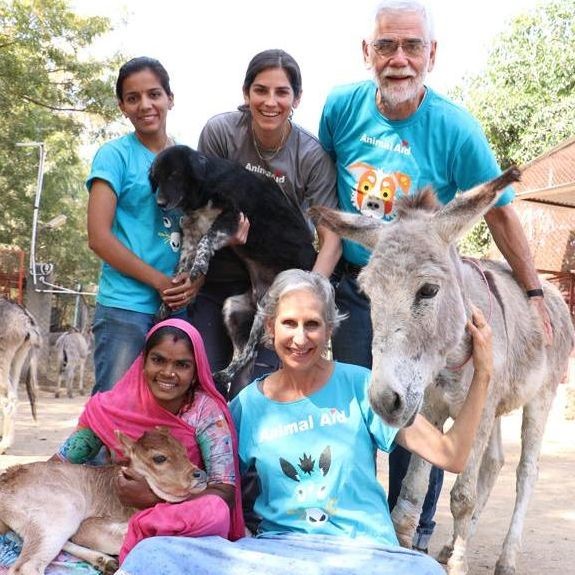
To keep the animals as cool as possible we have air coolers, tubs full of water for animals to lie in, fans and wet towels all around the shelter.
Our amazing staff are working harder than ever,despite the exhausting weather, to protect our animals from over-heating.
Working in Rajasthan’s climate extremes takes perseverance, creativity, material resources and ready helpers.
Thank you for giving us what it takes to make this season bearable, and as much as possible sweet for the animals.
Just-Wouldn’t-Quit Kenny!
When a veterinarian in a nearby government hospital called us to rescue a dog someone had dropped there after finding him unconscious on the road, we hurried to help.
And so lucky that we did, because this sweetheart didn’t have much longer to live.We rushed him back to Animal Aid where we gave him emergency treatment for shock, dehydration and difficulty breathing.
He seemed to have a broken jaw but otherwise no broken bones. With so much blood loss, we weren’t sure he would ever fully wake up. But within a few hours, his eyes brightened and ever so slowly he seemed to absorb the idea that he was in a new place, and that he would be safe here, beginning a second chance at life. This boy’s road to recovery included 2 months of daily therapy to learn to walk again, eat and regain his cognition.
Meet our awe-inspiring little hero, Kenny, today! For angels who just won’t give up,
Magic is about to change your idea of The Possible
When we rescued this little love, we found the biggest wound on a small cat we’ve ever had the challenge to treat. During his first days, it was incredible that he would even eat. As the large and complicated wound closed, Magic’s mind-blowing recovery gave new life to the phrase “I can’t believe my eyes.”
Out with the pain and starvation, and in with an Ocean of love.
Maggots had made an enormous wound on his neck. His pain must have been so gripping that he couldn’t eat, and malnourishment had weakened him. His striking blue eyes were bright with pain and worry. We hurried him to Animal Aid and started his treatment immediately. We boosted him with a hydration drip and started a vigorous feeding schedule, delighted that he loved his food and gained strength rapidly.
With such a large wound, it took two months for him to heal,but long before his healing was complete this loving angel had made friends with every staff member in his area, and most of the dogs too! As he recovered, his amazing eyes revealed intelligence deep as the ocean. And that’s what we’ve called him.
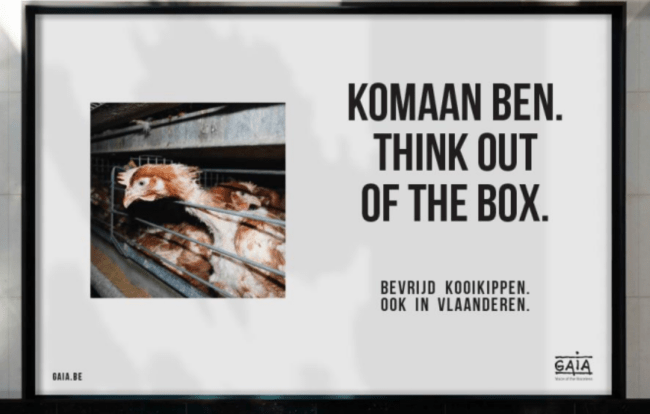
GAIA have sent an open letter in Flemish newspapers calling on the Flemish Animal Welfare Minister to finally ban caged systems for laying hens in Flanders. They also launched a poster campaign throughout the region to raise extra visibility for the issue.
In the previous legislature, Flemish Animal Welfare Minister Ben Weyts announced his intention to introduce a ban on cages for laying hens. Under the Flemish coalition agreement (animal welfare policy note, 2019-2024) the government undertakes to phase out these cage systems. Frustrated by these empty promises, GAIA sent an open letter to the Minister yesterday, urging him to introduce the ban:
You hold the key to open those thousands of cages and give millions of chickens a better life. Let them breathe, stretch their wings and lay eggs without a bad taste. “Think out of the box”, as you’ve done before, and put an end to this misery. The 3,000,000 Flemish chickens thank you.
In Flanders, more than 3.2 million laying hens are housed in so-called ‘enriched’ cages. In such cages, the space per chicken is approximately 1 A4 page with little free-range material. Conventional battery cages, in which chickens only have two-thirds of an A4 space, have been banned in the EU since 2012, but the so-called enriched cages, with about an A4 space per chicken, are still allowed. Wallonia already banned enriched cages in 2018.
More than 70% of Flemish people agree that keeping chickens in cages should be banned. Only 8% disagree with the ban, with the remaining 20% being neutral. This is shown by the opinion poll by Ipsos, which was conducted in April 2022.
“Come on Ben. Think out of the box. Free caged hens in Flanders too.
A man jumped fully-clothed into a canal in Leicestershire to rescue a drowning fox cub. Russ Bellamy dramatically saved the baby fox after swimming into the Grand Union Canal in Market Harborough yesterday.
The 57-year-old from Desborough said he “didn’t think twice” after spotting the animal in the water and leapt straight in. A video of his heroic actions was uploaded to Tiktok with the voiceover “not all heroes wear capes”, gaining more than 8,000 likes on the platform.
The devoted animal lover said the cub showed its gratitude once out of the water by nipping him on the finger. Russ shared how the wildlife drama unfolded near Union Wharf as he walked by the canal with his wife Sharon, 52, and his Yorkshire terrier Bonny, 13.
Speaking to the Harborough Mail after the incident, he said: “Luckily I was in the right place at the right time. I didn’t think twice as soon as I saw the poor thing in the water.
“I leapt straight in because the fox cub could have died. And I’d like to think that the vast majority of people would have done exactly the same as me.
“Bonny hadn’t been very well so we thought we’d get her out for a lovely walk in the country by the canal in Market Harborough. I do a bit of fishing and like to keep an eye on the water.
“Suddenly I noticed a ripple. I saw the fox cub swimming up and down by the opposite bank. He was struggling, he was getting weaker and he had no chance of getting out because the bank was too steep. So I waded straight in in my T-shirt and shorts.
“The water wasn’t too cold but it did get deeper in the middle and I had to swim towards the cub. He came straight to me, he was puffing and panting. I got him out and we dried him off and Bonny had a sniff. He then nipped me on the finger and drew blood before going back to sleep!
“My wife rang the RSPCA because we weren’t sure where to take him. Then a lady walked along and told us about Leicestershire Wildlife Hospital in Kibworth, We were parked up near the town’s police station.
“So I jumped in the car soaked to the skin and wrapped the tiny fox in a blanket in the back. The staff at the fantastic wildlife hospital took him from us and they are caring for him now.
Russ who has worked Joseph Cheaney shoe factory shop in Desborough for 40 years said they have since checked on the baby fox and he’s doing well.
He added: “I am just pleased that I was there to save this little fox’s life. It was a spontaneous thing to go walking by the canal in Market Harborough – usually I’m watching or playing football and Sharon’s shopping on a Saturday afternoon.
“So maybe this was just meant to be. I got checked out for the bite and luckily my tetanus jabs are up to date. I’m an animal lover as so many people are and it feels really good to know that I saved this tiny fox’s life – even if he did bite me!”
Update: Leicestershire Wildlife Hospital confirmed that the fox cub sadly passed away on May 10. They suspect the cub contracted pneumonia which led to heart failure and ultimately caused his death.
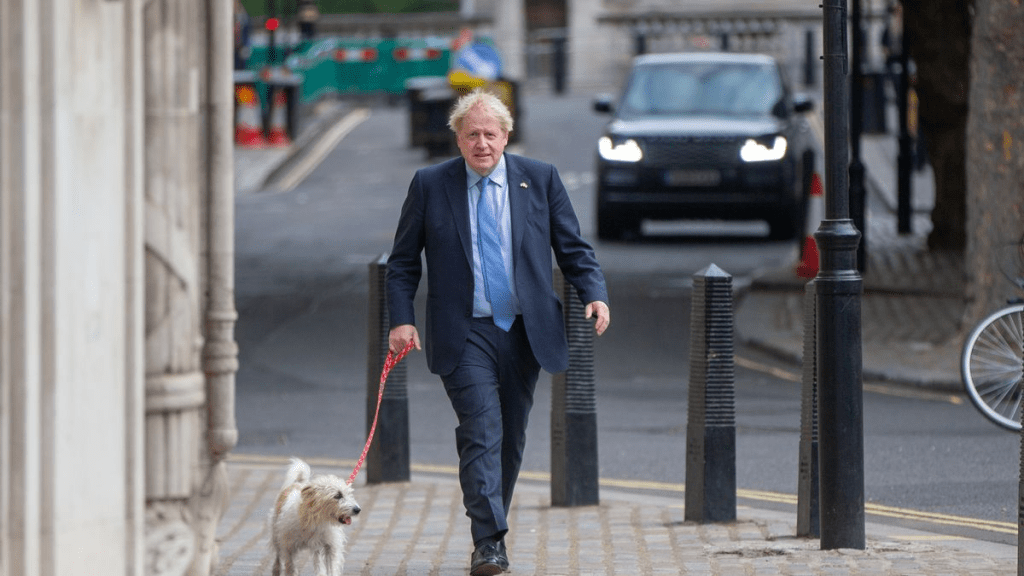
Leading the way or being led by the tail of the dog ? – Boris Johnson does another U turn this time on Fur imports and Foie Gras. Wonder he can walk in a straight line without making a U turn !
WAV Comment – well we all know how to vote at the next General Election don’t we ? – as if the grilling of the Tories in the local elections in the last week is not sending them the message that people don’t trust them; now we seem to have this; a U turn on animal welfare issues and anti cruelty campaigns as supported by the vast majority of the British public; issues now in doubt due to a gutless PM swayed by self opinionated snob Tory MP and his no doubt Foie Gras eating cronies who just stick their middle finger up to the millions of British voters who want to see a drastic change on these issues.
Does the dog wag the tail, or the tail wag the dog ? – something wags Boris Johnson.
Jacob Rees-Mogg, we hate you and everything about you.
7/5/22
Boris Johnson ‘dumps animal cruelty pledges’ from Queen’s Speech to please right-wingers
The Prime Minister had pledged to ban imports of foie gras and fur – but both are said to have been dropped from the Animals Abroad Bill ahead of the speech, after the PM caved to complaining Tory ministers
Boris Johnson has dumped his promise to tackle animal cruelty in the Queen’s Speech, it has been reported.
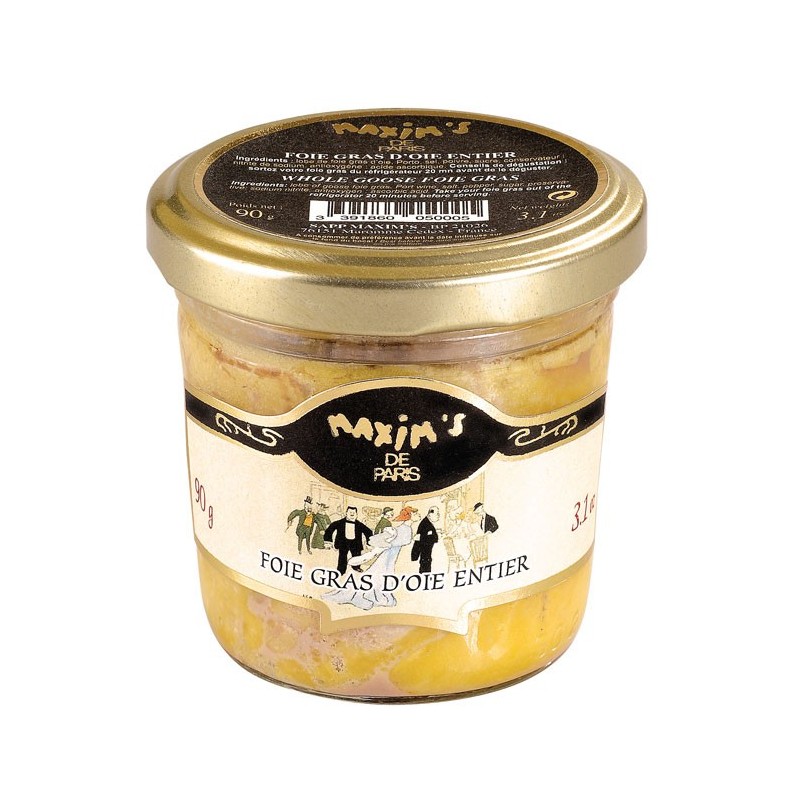
The Prime Minister had pledged to ban imports of foie gras and fur.
But both are said to have been dropped from the Animals Abroad Bill ahead of the speech, after the PM caved to complaining Tory ministers.
Jacob Rees Mogg – Tory MP and ANTI Foie Gras ban leader – probably eats a lot with his ‘supper friends’.
It’s claimed Cabinet ministers, led by Jacob Rees-Mogg, Commons leader Mark Spencer and Scotland Secretary Alister Jack, moaned banning cruel food and clothing was “fundamentally unconservative”.
It’s already illegal to produce foie gras and farm fur in the UK.
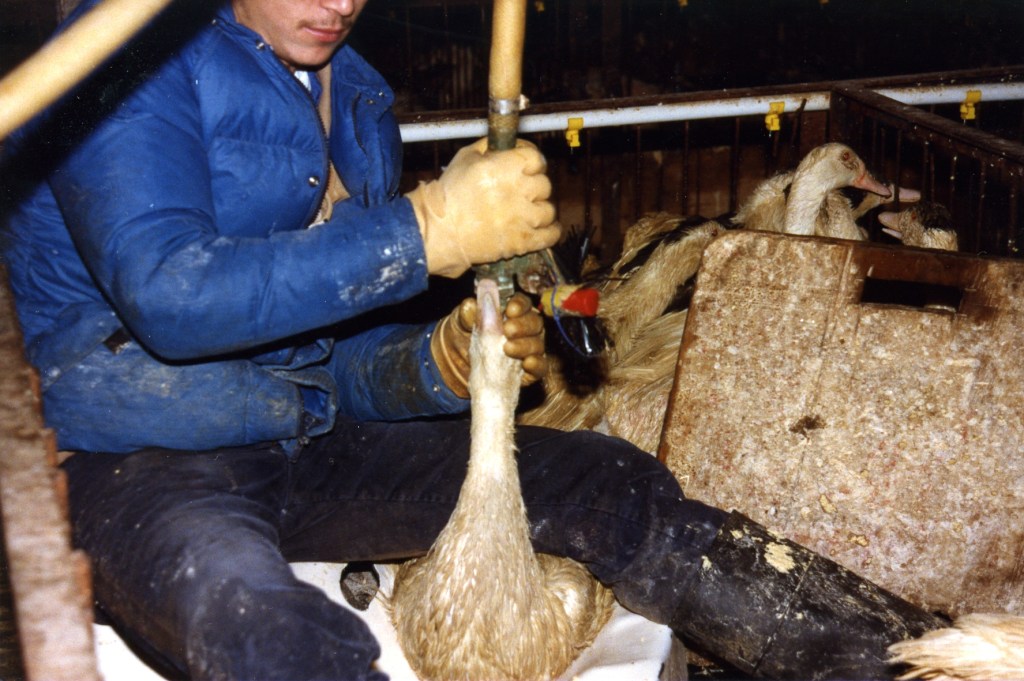
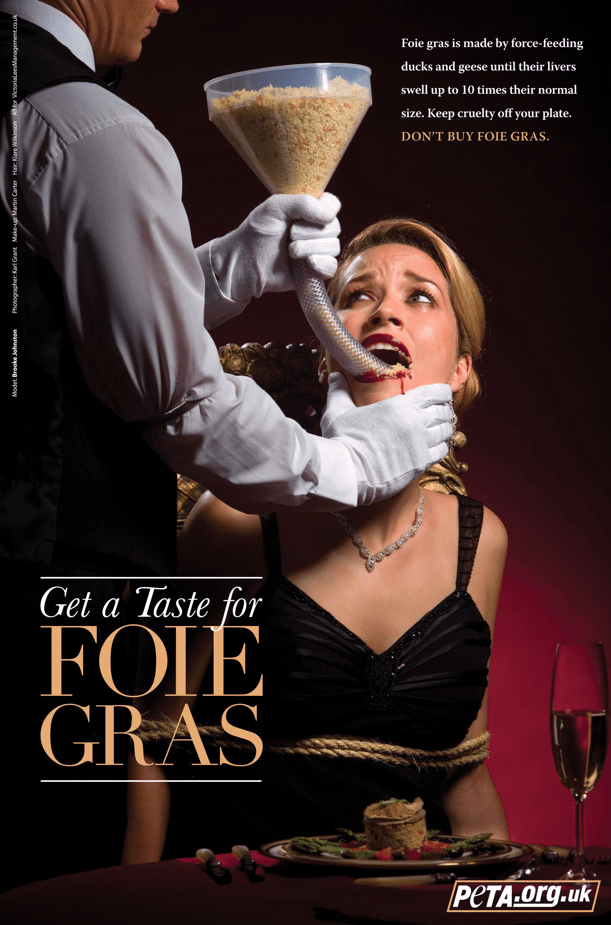
But the UK imports around 200 tonnes of the pate a year, mainly from France and Spain where it is made by force-feeding geese and ducks until their liver grows to several times its normal size.
Campaigners – including a recent intervention by After Life starts Ricky Gervais and Peter Egan – have long called for a ban on products coming from overseas.
In February, Gervais and Egan wrote to the Government, branding foie gras a “cruel and unnecessary product”.
And today Oscar-winning actress Kim Basinger backed the Mirror’s campaign to ban fur sales in the UK.
The Hollywood star has urged Boris Johnson not to “betray the animals”.
Kim, 68, called on the Prime Minister not to ditch the proposed ban on fur imports.
She said: “Please, Boris, listen to the British people. Please ensure the Animal Abroad Bill is in the Queen’s Speech next week.
“Be the voice of the majority of your people. Stop the cruelty and suffering in the name of vanity and greed.
“The UK has to stop buying from Finland, China and the US to stop the bloodbath. It is so antiquated. Until we stop exchanging blood between countries, the suffering won’t stop.”
The Batman star also urged the Prime Minister to consider how he would feel if his dog, Dilyn, was confined to a cage.
It’s said Defence Secretary Ben Wallace has also raised concerns about banning imports of black bear fur, used by military Guardsmen.
Last month, it was revealed that Mr Johnson had backed the use of real black bear fur to make ceremonial hats worn by the Queen’s Guard.
Animal rights campaign group PETA last year named Mr Johnson’s wife Carrie – a passionate campaigner for animal rights – their “person of the year.”
A government spokesperson told the BBC no final decision had been made on imports.
They said the government was “united in its commitment to upholding its world-leading standards in animal welfare”.
I said recently that I would try and write a little more about live animal exports from England.
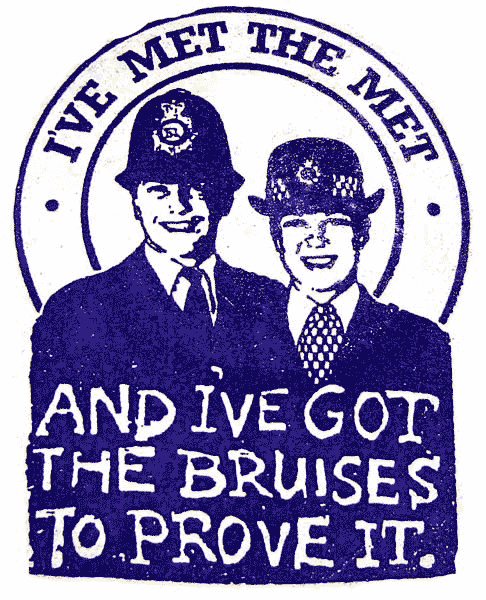
‘I’ve met the Met, and got the bruises to prove it’.
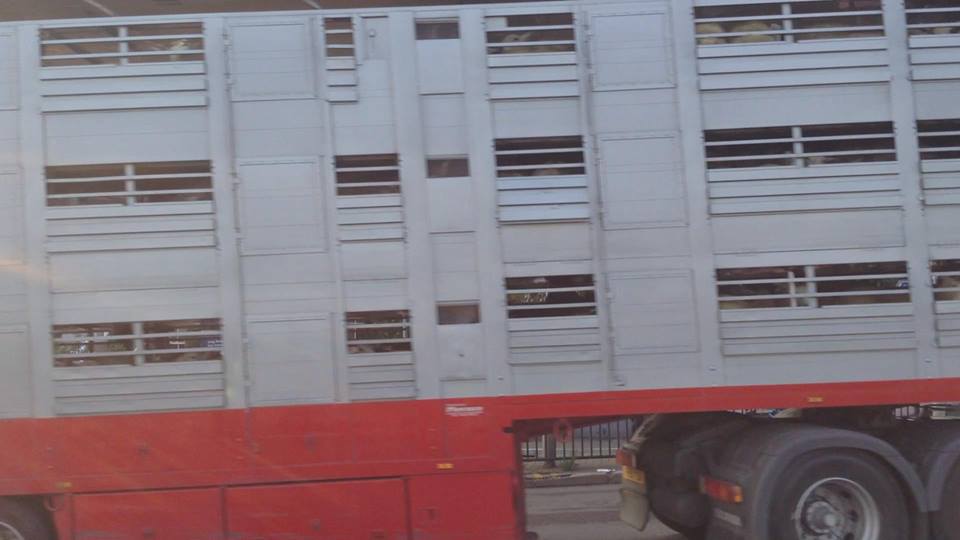
The history of live animal exports from the UK has been a long and troublesome one; with most Brits supporting a ban on the export and consequent suffering of animals, whilst the exporters, hauliers and those involved in the business / trade sat strongly on the other side of the fence.
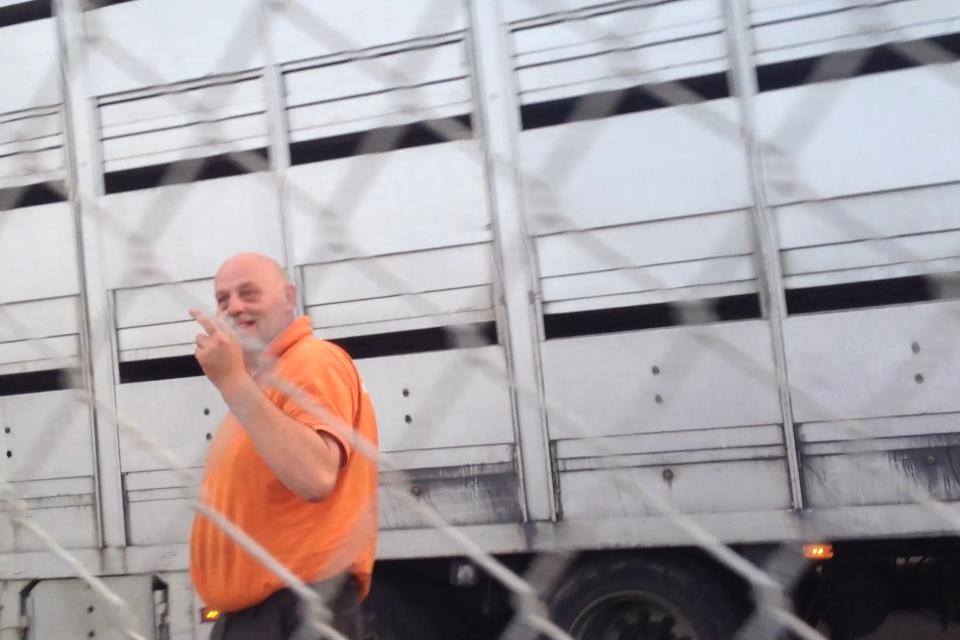
I (Mark) come from Kent county (SE England); and with Dover port being in Kent, it was for years a battleground for anti export campaigners and the pro export lobby. At one point, due to relentless and very effective campaigning by good people, Dover harbour banned the export of live animals. As a result, hauliers and exporters turned their attention to other facilities in Southern England to try and get the animals into Europe. Live calves were even flown out of Coventry airport to be crated in Europe; what with the UK boasting a ban on the use of veal crates, was it somewhat hypocritical for UK farmers to then send their calves to Europe to suffer a fate that had been banned in the UK on cruelty grounds ???
Live calves being exported to mainland Europe – Mark (WAV).
and the crating that resulted …
Banned in the UK on cruelty grounds, UK calves were still exported to Europe for crating ! – hypocritical ??
It was during the anti export protests at Coventry that Jill was run down and killed by an export truck:
February 1995:
Exporter Christopher Barrett-Jolley
Exporter Christopher Barrett-Jolley was behind the calf flights from Coventry; he was later jailed for being a Cocaine dealer which resulted in him being given a 20 jail sentence – read about it here:
I personally journeyed many times to Shoreham to take part in anti export protests whilst Dover (my patch) was closed down. There was a massive opposition to the trade as you can see in the film; the Met police from London had to be transported down to the SE port (at huge costs) every time there was a shipment – and in the end, it was these massive costs that stopped the trade from Shoreham. There is an old saying in animal rights protester circles that they met the Met (police) and have the bruises to prove it – please watch the video and decide for yourselves.
In the end after the High Court ruling which was undertaken by live animal exporter Peter Gilder; the trade returned to Dover. But, Shoreham and the unity of locals and the anti export protesters has and will always go down as one of the great stands by the Brits to defend the animals that cannot defend themselves.
April 1995 – Fury as live exports ban is lifted
Wednesday 12 April 1995
Dover is facing the threat of major disruption by protesters against the livestock export trade after a decision yesterday by the High Court that the port authority had acted illegally by banning the live animal traders from the port.
The court also ruled that Coventry airport and Plymouth City Council must allow live animal exports.
The landmark judgment, which in effect ensured the future of the trade for the foreseeable future, was greeted with glee by exporters and horror by animal rights campaigners. Mark Glover, of Respect for Animals, who orchestrated the original mass protests which led to the recent ban, predicted civil disobedience would close Dover to all traffic.
“The judges were calling for the rule of law to be upheld but they’ve wholly ignored the consequences of their judgment. We’ll be calling on all our supporters to take part in all the demonstrations against the trade and that will include Dover,” he said.
Jonathan Sloggett, managing director ofDover Harbour Board, said that when the trade restarted – probably after Easter – he feared there would be disruption for 99 per cent of Dover’s customers for the sake of the 1 per cent of animal export traffic.
He added: “The board has been, and remains, very concerned that the admission to the port of Dover of the trade in live animals for export will cause considerable disruption to all the other users of the port.
“The board very much hopes that all those who sincerely object on moral grounds to the exportation of live animals for slaughter will accept that Dover has a legal duty to admit this trade and cannot lawfully refuse to do so.”
Kent police have previously warned Dover that, in the event of any serious disturbance, the A2 and A20 approach roads to the port would have to be closed, causing widespread disruption. They are now drawing up plans for dealing with fresh protests.
Lord Justice Simon Brown and Mr Justice Popplewell ruled that Dover, Coventry and Plymouth had no right to surrender to “mob-rule” and they must accept the trade regardless of the protests that will ensue.
The judges ruled that the port and airport authorities must accept all lawful trade despite their determined opposition to accepting livestock exports.
The judges severely criticised the authorities for acting out of “narrow self-interest”. Dover and Coventry had warned the court that their operations would be severely hampered or halted by animal welfare campaigners, who would take their protest wherever the trade was conducted.
The authorities argued that the interests of existing port and airport users must take precedence over newcomers. Dover warned specifically that a 250-strong demonstration could be capable of closing Britain’s busiest port.
The judges said the demonstrators should now recognise it was “impossible” for the ports to submit to unlawful protest and accept “the limitations upon their lawful right to protest”.
Lord Justice Simon Brown said: “If ever there were cases demanding the courts’ intervention in support of the rule of law, these are they.
“It may indeed be doubted whether there remains any logic in protesting at the ports: the only body properly able to ban this lawful trade is Parliament itself – unless indeed the Secretary of State is advised that even that would be unlawful under Community law, in which event the only solution lies across the Channel.”
The decision marked a victory for the livestock exporters Peter Gilder & Sons and Russanglia Ltd, who argued that Dover’s decision to ban the trade was unlawful because the port was duty bound to accept all lawful cargoes.
Their victory was shared by Phoenix Aviation, which argued that Coventry City Council acted unlawfully by trying to block the trade, and by Associated British Ports, owner of Plymouth’s Millbay docks, which argued that it had no power to unilaterally ban the trade despite the claims of the city council.
Liberty, formerly the National Council for Civil Liberties, also joined in the criticism of yesterday’s judgment.
Andrew Puddephatt, its general secretary,said: “A Private Member’s Bill to stop live animal exports was introduced into Parliament in February but ran out of time when one of William Waldegrave’s aides spent 24 minutes reading chunks from the Encyclopaedia Britannica to furious MPs.
“In the face of antics like that, it seems both ludicrous and insulting to claim that people should trust in the parliamentary process rather than engaging in protest that has been largely peaceful.
This film follows weeks of daily demonstrations by hundreds and, at times, thousands of people, who converged on a small harbour port in West Sussex, England, to protest about the export into Mainland Europe of thousands of cattle and sheep.
Thousands of young calves were also destined for veal crates, a system where calves are kept locked into tiny boxes, only able to lay or stand and are chained or tethered, forced to drink iron deficient milk so as to satisfy those who like their flesh (veal) light rose coloured and tender. This system was already banned in the UK and so farmers were exporting these baby animals to Europe where it was still legal.
The film demonstrates the power of ordinary people, when they get together and fight for the rights of those who do not have a voice. Within weeks, these advocates for animals managed to stop in their tracks, big business who were profiteering from what many people believe is a trade in suffering. Other harbour ports across the UK also saw these exports stopped, due to persistent and daily demonstrations. Ordinary folk, from all walks of life, young and not so young, put their own liberty and personal safety at risk to try and protect animals as well as to highlight this issue. Watch this film and be inspired.
View the film – Shoreham live export demonstrations 1995
By watching directly.
Live animal exports have been a subject of tension between animal rights and welfare groups, the public and the farming community since the late nineteenth century. Alun Howkins (1947-2018), a founding editor of History Workshop Journal, and Linda Merricks explored changing attitudes towards live animal exports, drawing extensively on material from the Mass Observation Archive at the University of Sussex which aims to record the everyday lives and opinions of ordinary people. They found that campaigns against the transport of live animals had their origins in the late nineteenth century, corresponding with the growth of the anti–vivisection movement and environmental activism in Britain. Eight animal protection groups had been established in Britain by 1900 and another eight by 1944. While only one more group was formed before 1960, there were a further fourteen by the end of the 1980s. This suggests that interest in animal protection peaked in the late nineteenth century and then, again, after 1960 with the advent of modern animal rights. In the nineteenth century, concern about animal welfare in Britain was associated with religious-inspired moral reform which raised awareness of animal cruelty, whereas from the 1960s it reflected growing public consciousness of the relationship between humans and animals. Interest in animal welfare and animal rights has since become more central to public and political debate in Britain, but it is important to distinguish between the two. Animal welfare permits the use of animals by humans as long as they are provided with adequate food, shelter, veterinary treatment and other needs to prevent suffering, whereas animal rights advocates share the belief that it is morally wrong to exploit animals.
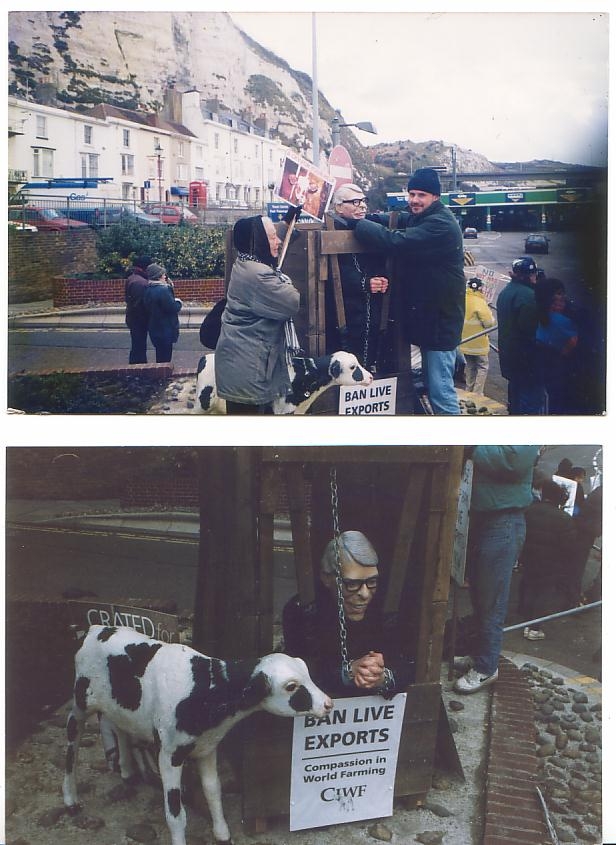
Shaking him warmly by the throat – Mark (WAV) and Barb protest at Dover against live calf exports – a liberated calf and the Prime Minister (then John Major) is shoved in the veal crate; for experience type of thing !!!
Ukrainian teen, 15, killed in artillery fire while trying to evacuate animals from zoo.
Kharkiv area has seen heavy fighting during Russia’s invasion of Ukraineents
A 15-year-old teenager reportedly has been killed in eastern Ukraine while trying to help evacuate animals from a zoo.
The Feldman Ecopark outside the city of Kharkiv – which has seen rampant fighting during the war – said Wednesday that “during the evacuation of buffaloes… the team of our employees and volunteers got under fire.”
“One person died. Two people were seriously injured. Doctors are fighting for their lives,” it posted on Facebook.
“The deceased boy was only 15 years old,” the zoo added, noting that “he helped his parents to feed and evacuate the animals.”
“The blessed memory of the hero will always remain in our hearts,” Feldman Ecopark also said in a statement. “This is the sixth victim from among members of our team.”
Two evacuated white lions from the Feldman Ecopark are seen in an enclosure at the zoo in Odesa, Ukraine, on April 14. (STR/NurPhoto via Getty Images)
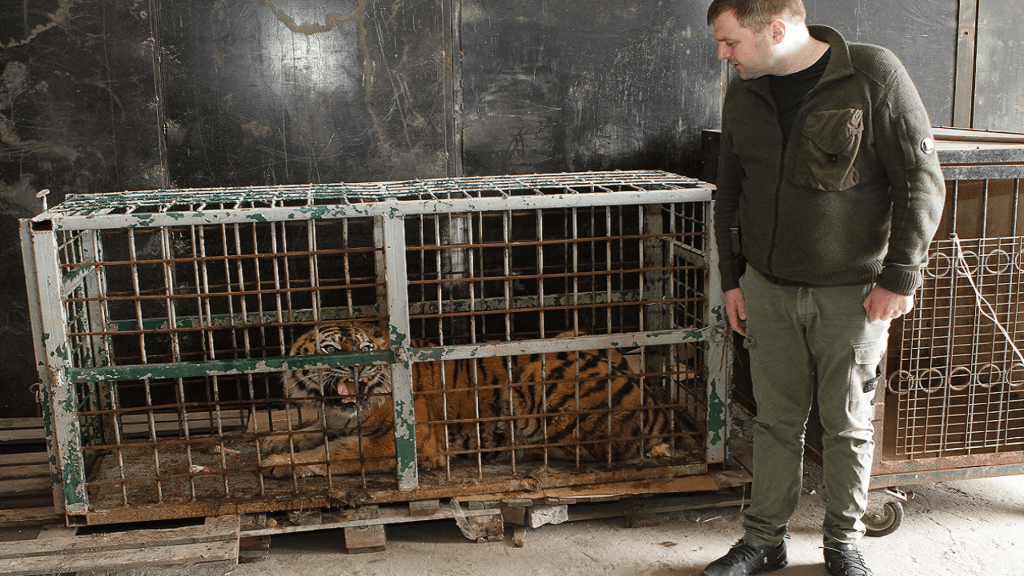
Dnipro deputy city head Mykhailo Lysenko stands by a cage with a tiger evacuated from the ruined Feldman Ecopark in Dnipro, central Ukraine, on April 8. (Mykola Miakshykov/Ukrinform/Future Publishing via Getty Images)
May 5 (UPI) — A 15-year-old volunteer was killed in Russian shelling at the Feldman Ecopark zoo in Kharkiv, Ukraine, on Thursday as rescuers worked to evacuate animals.
Dennis Selevina died 30 minutes after arriving at a local hospital after the Russians shelled the zoo.
Oleksandr Feldman, Ukrainian MP delivered the news of the boy’s death on Facebook.
According to Ukraine media outlet Ukrinform, Russian troops almost completely destroyed the Feldman Ecopark.
Feldman Ecopark said in statement on its website that a team of employees and volunteers came under fire from the Russians as they worked to evacuate animals.
Two people were also seriously injured in the shelling. Doctors worked Thursday to save the lives of the two wounded, according to Feldman Ecopark.
The zoo said the boy helped his parents to feed and evacuate the animals.
“The blessed memory of the hero will always remain in our hearts,” the Feldman Ecopark statement said.
The zoo said this is the sixth victim among workers at the zoo.
On April 21, Feldman Ecopark said two employees who had gone missing in March were found dead.
The zoo has been working to evacuate animals since Russian military attacks destroyed enclosures and other infrastructure.
Ukrainian forces appear to have had some success in a counteroffensive near Kharkiv in recent days, taking several small towns in the area. On Monday Ukrainian troops retook the city of Staryi Saltiv, roughly 30 miles east of Kharkiv.
Ukraine Armed Forces Commander Gen. Valeriy Zaluzhnyi said in a Telegram post Thursday that he had briefed U.S. Joint Chiefs of Staff Chair Gen. Mark Milley on Ukraine’s counter-offensive efforts in Kharkiv and Izium.
In the post, General Zaluzhnyi said Russia is using cruise missiles to try to destroy “logistical routes to provide military and technical assistance to Ukraine.”


















 World Animals Voice