Category: Environmental

A Message From Venus and Mark (Founders – WAV / SAV).


Thank you 3


To all our readers, friends, animal lovers

A year is finishing, a new one is coming.

For all of us who see it as a mission to fight for the rights of animals and to give them a better world, there is always a balance sheet exclusively dealing with this mission.

What have we achieved in this direction is often a difficult decision for us personally, how much do we write that is good, how much do we write that is sad.

We all know that we are always faced with a perfectly equipped system of violence, lobbying and exploitation that makes our struggle ever more difficult.

Witnessing the suffering of any animal(s); through video, photos or other media routes is never an easy one for any of us.  It takes its toll; but we have to be strong against an often stronger opposition of abusers, bureaucrats and politicians.

Through our blog sites, ‘Serbian Animals Voice’ https://serbiananimalsvoice.com/  and ‘World Animals Voice’  https://worldanimalsvoice.com/ , we aim to cover as many issues as we can in often, the harshest of blogs – with us, what you see is what you get; cruelty is cruelty and we will never disguise the daily system of abuse and suffering that many animals have to endure the world over.

On the other hand, we know that only if we all fight together against this ‘system’ of abuse, do we then have any chance of winning campaigns.

Illustration with joyful piggy who says - thank you. For design of funny avatars, posters and cards. Cute animal in vector

Looking back, we realize that all the best this year has already been achieved by many using this very same approach, because we participated in solidarity and cooperation in actions, that wanted to abolish the suffering and slavery of animals.

So we have to continue to move forward into next year: active, solidary, united!

Also in the New Year (of 2019) we will do a part in this fight with our two blogs. With information, education, criticism, and facts !

Stay true to us, we all remain faithful to the animals, and faithful to you, our dear campaigner friends !

What one alone does not achieve, many unite to create victories together.  Be part of our team uniting in achieving victories !.

In this Sense and with this hope, we wish you all a healthy and happy new year of fighting for the voiceless in 2019.

Best wishes – Venus and Mark.


Here is a message from Erika at Animal Aid Unlimited that shows this exactly:


UNITE to make dreams a reality !

EU: Finally It Does Something Useful and Takes Action Against Plastic.


eu-flagge-zerrissen-pg


EU action to restrict plastic pollution: Council agrees its position.

https://www.consilium.europa.eu/en/press/press-releases/2018/10/31/eu-acts-to-restrict-plastic-pollution-council-agrees-its-stance/#

The EU is taking action to reduce plastic pollution by setting tough new restrictions on single-use plastic products. Today’s meeting of member states’ ambassadors in the Permanent Representatives Committee agreed the Council’s position on a proposal for a new directive which is part of the EU’s efforts to protect the environment and clean up the oceans.

The new rules will ban the use of certain throwaway plastic products for which alternatives exist. In addition, specific measures will be introduced to reduce the use of the most frequently littered plastic products, especially those that are often found on European beaches.

Plastic waste is polluting our rivers, our beaches and our oceans. This is why we will ban plastic products for which good alternatives exist. And we will make plastic producers pay for cleaning up. Today’s decision is an important step towards protecting our environment.

Elisabeth Köstinger, the federal minister of sustainability and tourism of Austria which currently holds the presidency of the Council

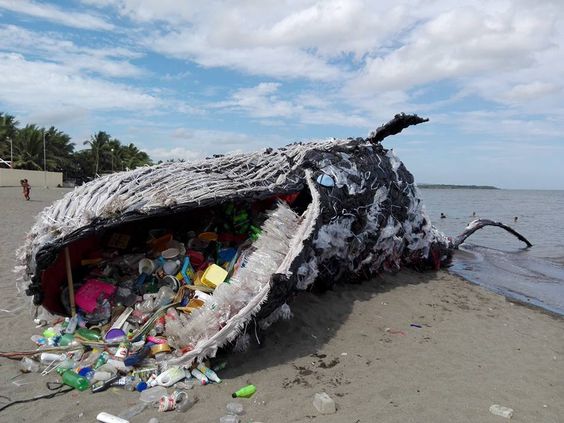
plastic whale trash

The Council has made the original draft directive clearer by being more specific in the listing of the products affected:

  • On the definition of single-use plastic products, the Council clarifies that these products are typically intended to be used just once or for a short period of time before being disposed of.
  • In determining whether a particular item is considered to be a single-use plastic product, the tendency for the item to be littered will play a decisive role. The Council wants the Commission to publish guidelines, in consultation with member states, on examples of what is to be considered a single use plastic product.
  • The Council agrees with the Commission proposal to design single-use beverage containers so that their lids and caps stay attached to the bottle. In this regard, the Council specifies that bottles made of glass or metal are not covered by this directive but that it shall apply to plastic bottles and composite beverage packaging.
  • Up to 2023, paper plates with plastic linings are included in the list of products for which there will be a reduction in consumption. Plates made wholly of plastic will be banned.
  • The Council proposes ambitious extended producer responsibility schemes and an obligation on producers to cover clean-up costs and the costs of awareness raising measures, including for products which no such obligation exists currently, namely wet wipes and balloons.

The Council also wants the legislation to be more ambitious:

  • The Commission has proposed that producers of plastic items cover the costs of litter cleanup. The Council wants this obligation to be extended to apply also to companies which import or sell such single-use plastic products or packaging in Europe.
  • The Council adds expanded polystyrene cups for beverages to the list of items for which there will be a restriction on placing them on the market.
  • There are certain single-use plastic products for which no suitable alternatives currently exist. However measures will be taken at national level to prevent an increase in the consumption of such products through the setting of national targets. The aim is to achieve a measurable and sustained reduction over a set period of time.

plastic beach 2

The Council has introduced provisions to improve the implementation of the directive:

  • The Commission proposed an improved product design for caps and lids made of plastic for beverage containers in order to prevent their leakage into the environment. The Council has underlined the need for the rapid development of harmonized standards to ensure that this part of the proposal is implemented effectively.
  • The Council has been more specific about the markings on those single-use plastic products which are most frequently thrown away inappropriately to allow consumers to make better choices.
  • While the obligation to separate waste requires that different types of waste be kept separate, the Council’s position is that it should be possible to collect certain types of waste together, provided that this does not impede high-quality recycling. The setting of collection targets for plastic bottles should be based on the number of plastic bottles placed on the market or the number of waste bottles generated in any member state. The calculation of the weight of waste should take account of all waste plastic bottles, including those which are littered outside waste collection systems.

Finally, the Council has also taken measures to reduce the administrative costs of the directive:

  • On extended producer responsibility schemes, the Council stresses that the calculation methodology for the costs of cleaning up litter should be proportionate. To reduce administrative costs member states may set financial contributions for cleaning up litter by agreeing multiannual amounts.
  • Provided that the targets and objectives of the legislation are achieved, member states may transpose the provisions on consumption reduction and extended producer responsibility schemes through agreements between the relevant authorities and the sectors concerned.

Member states broadly supported the mandate at today’s meeting, and some member states indicated that the interlinkages between this directive and the existing waste legislation need further consideration in the upcoming negotiations.

give a shit

Background and next steps

The proposal under discussion is part of the EU’s plastics strategy. The Council Working Party on the Environment has been working on the draft directive since it was presented by the Commission in late May 2018. Environment ministers discussed the proposal at their meetings on 25 June and on 9 October.

The European Parliament voted its position on the proposal on 24 October.

Today’s mandate means that the Austrian Presidency of the Council can begin talks with the European Parliament. A first trilogue meeting will take place on 6 November.


USA: Trump and the $5,000,000,000 in taxpayer dollars to prop up coal companies.

USA-Flagge


From the Union of Concerned Scientists.

https://www.ucsusa.org/ 


Mark,

The Trump administration doesn’t want you to know about its effort to spend nearly $5,000,000,000 in taxpayer dollars to prop up coal companies.

After submitting a Freedom of Information request to the Federal Energy Regulatory Commission (FERC) about this funding, which would not only prop up failing coal companies but guarantee their owners’ profits, we waited… and waited… and then got tired of waiting, so we’re taking them to court.

big power plant

We – you! – have a right to know whether Trump’s coal bailout is a quid pro quo for the Big Coal executives who supported his campaign. We’re going to use every tool at our disposal, including the courts, to bring the facts to light and keep this bailout from ever seeing the light of day.

UCS members have been critical in stopping this hare-brained scheme so far. Our policy experts reported on the coal bailout’s many errors. Scientists and activists mobilized across the country to pressure federal and local energy regulators to resist it.

Our efforts paid off. The White House temporarily “shelved the plan amid opposition from the president’s own advisers on the National Security Council and National Economic Council.”¹

But this fight is far from over. One of the architects of the bailout, Bernard McNamee—a career political operative with no experience in utility regulation was confirmed by the Senate to oversee the FERC, one of the key agencies involved in the plan. We expect McNamee to push for return of the wasteful, polluting coal bailout.²³

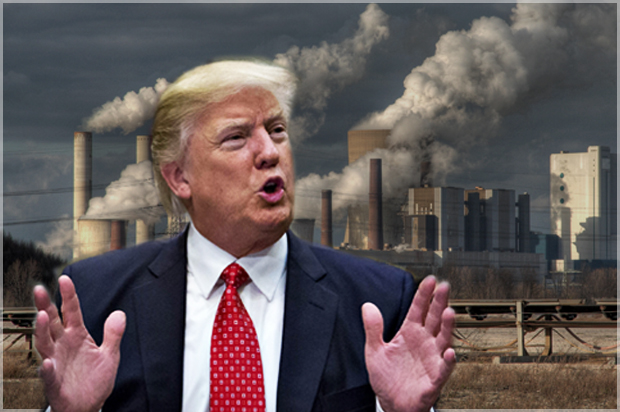
trump en4

We need your help to fight back against polluters and the administration. And now, our National Advisory board is issuing a special match challenge to make sure the environment takes priority over government handouts to the fossil fuel industry.

Though there’s much to be hopeful for in the coming year, we will be keeping a watchful eye on the Trump administration and their coziness with fossil fuel interests. We don’t have the time to tolerate business-as-usual greediness from coal executives, not with the impacts of climate change already being felt by millions of people.

Just last month, the Trump administration’s own National Climate Assessment reiterated what we’ve known for years: the planet is rapidly warming, humans are responsible, and climate change is likely to expose all of us–and especially the most vulnerable among us–to deadly weather conditions, and cause trillions of dollars of damage by the end of this century—unless we act now.⁴

We can’t put Big Coal’s bottom line before everyone and everything else, Mark. We need to win this lawsuit and secure more victories for science, the environment, and our health in the coming year, but we can only succeed with your help.

Thank you,

John Mace,
Membership Director
Union of Concerned Scientists
1. https://thinkprogress.org/as-coal-bankruptcies-soar-is-trump-bailing-on-his-coal-bail-out-be7883d95de7/
2. https://blog.ucsusa.org/sam-gomberg/three-reasons-bernard-mcnamee-is-a-bad-choice/
3. https://blog.ucsusa.org/sam-gomberg/three-ways-a-trump-ferc-could-negatively-impact-us/
4. https://blog.ucsusa.org/rachel-licker/what-is-the-fourth-national-climate-assessment


trump feb 2


Together, we’re moving closer to a better Europe committed to social and environmental justice!


EU- Flagge

WAV Comment:

We are showing this simply because we had it through today.

It does NOT mean that we think the EU is great; quite the contrary.  They have failed in Live animal transport, vivisection, factory farming; stray dogs, and a host of other issues.

Junker and crew are interested in one thing and one thing only – their own survival.  Below – Nigel says his bit (the truth probably).  Junker does not look happy.  This is very shortly after the UK people voted to get out of the EU.


Together, we’re moving closer to a better Europe committed to social and environmental justice!

Because of your involvement, this year:

  • The EU will ban some of the worst single-use plastics.
  • Zara and H&M promised to stop sourcing dirty viscose – a common textile in the clothes we wear often produced– from factories in Asia that dumped toxic chemicals into rivers and streams, produced when making viscose.
  • The European Parliament voted to increase transparency in our food system. Studies on risks from chemicals in our food will no longer be kept secret, once the other EU institutions agree.

Mark, all this was thanks to you! Your signatures to our petitions, your mailings to your MEPs, your social media messages to put pressure on big corporations and your donations all helped us to achieve our wins in 2018!

Thanks for all you do,
Mika (Bordeaux), Giulio (Rome), Virginia (Madrid), and the rest of us at WeMove.EU


https://www.facebook.com/wemoveeurope/videos/2190830364281865/


Japan: Boycott Everything About Them.

Japan says it is to restart commercial whaling in July in a move that is likely to draw international criticism.

It said it would withdraw from the International Whaling Commission (IWC), the body tasked with whale conservation.

Commercial whaling was banned by the IWC in 1986 after some species were driven almost to extinction.

Officials in Japan, an IWC member since 1951, say eating whales is part of the country’s culture.

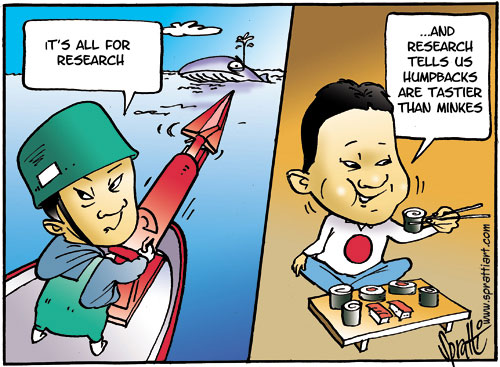
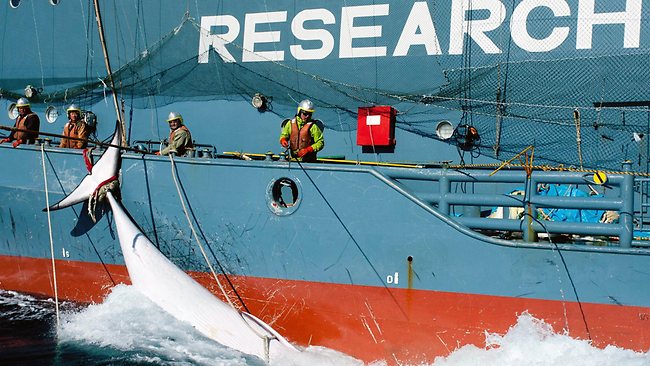
For many years Japan has hunted whales for what it calls “scientific research” and to sell the meat, a programme widely criticised by conservationists.


Read more – https://www.bbc.co.uk/news/world-asia-46682976 

https://www.theguardian.com/environment/2018/dec/26/japan-confirms-it-will-quit-iwc-to-resume-commercial-whaling

https://www.dailymail.co.uk/news/article-6529505/Japan-start-commercial-whaling-year.html

https://www.itv.com/news/2018-12-26/japan-to-resume-commercial-whaling-but-not-in-antarctic/


japan whaling 1

japwhale2

japan whaling 2

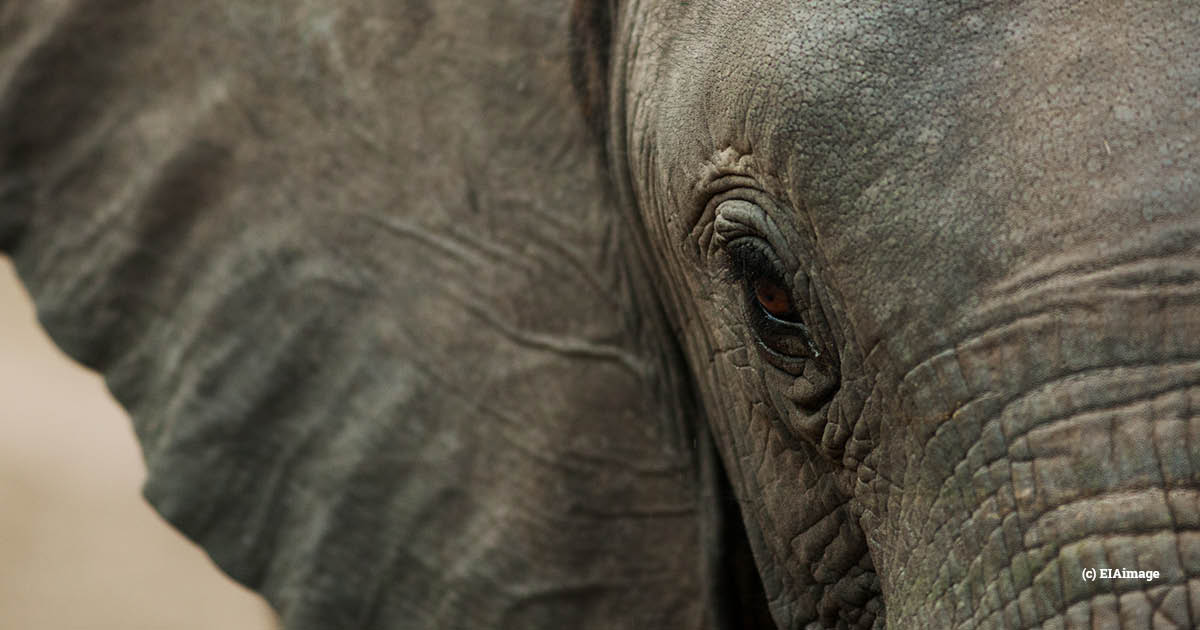
UK: A Christmas Gift From the UK To The Elephants of the World – Dealing In Ivory Is Now A Criminal Offence !


UNKG0001


UK ivory ban becoming law is the best Christmas gift for the world’s threatened elephants!

20th December, 2018

Malawi elephant


Today, we and our nine campaign partnersPDF are delighted to see the UK Government’s Ivory Bill receive Royal Assent to become law.

In future, most ivory sales in, to and from the UK will be treated as criminal offences.

Mary Rice, our Executive Director, said: “Following on the heels of China’s closure of its own domestic ivory market at the start of the year, this is the best Christmas present the UK could have given the world’s threatened elephant populations in Africa and Asia.

“The Ivory Bill becoming law is an important move which recognises the need to take firm action to protect elephant populations from poaching and ivory trafficking.

After years of sustained campaigning, we welcome the news and hope that countries which still have legal domestic ivory markets will see this as the standard to aspire to.”

Source – Environmental Investigation Agency (London) – https://eia-international.org/uk-ivory-ban-becoming-law-best-christmas-gift-worlds-threatened-elephants/


WAV Comment –  ‘Yes’ – Job Done !!!

USA (Arizona): Board of Supervisors (AZ) Passes Proclamation Condemning Wildlife Killing Contests.

USA-Flagge

Project Coyote

FOR IMMEDIATE RELEASE – December 20, 2018

Yavapai County Board of Supervisors (AZ) Passes Proclamation Condemning Wildlife Killing Contests

Unanimous vote follows Dewey-Humboldt Town Council resolution

YAVAPAI COUNTY, Ariz. — The Yavapai County Board of Supervisors voted unanimously yesterday in favor of a proclamation that opposes wildlife killing contests. Arizona citizens belonging to a coalition known as I AM WOLF NATION in partnership with Project Coyote and other wildlife and animal protection organizations have been working to end wildlife killing contests in Yavapai County and other Arizona localities. Yavapai County’s proclamation follows on the heels of a similar Dewey-Humboldt Town Council resolution that passed in November.

Wildlife killing contests are cruel events in which participants compete for fun and prizes by killing the greatest number or the heaviest of the target species. Last week, dozens of coyotes were slaughtered in the Santa Slay Coyote Tournament in Yavapai County and on public lands throughout Arizona. Manufacturers and sellers of firearms, predator-calling devices, and hunting gear were among its sponsors. Though the public at large remains largely unaware of these contests, killing contest social media posts often show photos of participants piling up and posing with the corpses of wildlife they have killed.

Increasing public outrage has led to several national newspapers editorializing against wildlife killing contests. Last week, on December 14, Pulitzer Prize-nominated columnist Linda Valdez wrote in The Arizona Republic: “The wildlife in Arizona belongs to all the people of Arizona. Did anyone ask you how you feel about contests [that] put a dollar value on killing as many wild animals as possible? Is that how you want your wildlife treated?”

Yavapai County’s proclamation recognizes that coyotes and other native carnivores play a key role in maintaining healthy ecosystems—which includes controlling rabbit and rodent populations. Just as importantly, the County proclaims that wildlife killing contests serve no genuine ecological or wildlife management purpose. The County proclamation further acknowledges that wildlife killing contests threaten the safety and well-being of hikers, dog walkers, bird watchers, hunters, horseback riders, and other outdoor enthusiasts who use public lands where killing contests take place.

“We applaud the Yavapai County Board of Supervisors for taking a strong stance against wildlife killing contests in Arizona,” said Matt Francis, Prescott, Arizona resident and a Project Coyote Program Associate. “The Arizona State Legislature should recognize that Arizona citizens will no longer tolerate these barbaric contests and should ban wildlife killing contests statewide.”

“Our team recognizes and appreciates Yavapai County making a statement against killing contests, which are blood sports and should never be compared to hunting as contest proponents try to do,” said Betsy Klein, Sedona, Arizona, resident and co-founder of I AM WOLF NATION™. “As an organization, we recognize the long-standing tradition of hunters and hunting in Arizona. In fact, hunters who practice fair chase principles have called these contests ‘inhumane’ and have openly opposed them, knowing there is a distinct difference between hunting and senseless slaughter.”

Currently, there is a contest slated to take place in Flagstaff in March of 2019 that will target bobcats, coyotes, and foxes.

Coyote killing contest organizers often justify the slaughter by claiming that by reducing the coyote population they are helping to reduce conflicts with coyotes. “There is no documented scientific evidence that coyote killing contests permanently reduce coyote abundance, increase populations of deer or other game species, or prevent conflicts between predators, humans and livestock,” said Dave Parsons, MS, retired career wildlife biologist with the U.S. Fish and Wildlife Service, former hunter, and Project Coyote Science Advisory Board Member. “Wildlife killing contests are symptomatic of a broader problem of misguided wildlife governance by state wildlife agencies that fail to recognize and value the crucial ecological roles of native predators.”

The Arizona Game and Fish Department (AZGFD) itself recognizes that killing coyotes doesn’t reduce their numbers, stating on their website: “Removing coyotes from one area generally results in other coyotes moving in from surrounding areas and breeding faster.” There is no way to know the effect that wildlife killing contests have on coyote populations in Arizona because AZGFD does not monitor the contests or track the number of coyotes killed in these events.

U.S. Congressman Raúl Grijalva of the 3rd Congressional District of Arizona, who serves on the House Committee on Natural Resources, recently weighed in on the issue: “Do you want a coyote-killing contest on your public lands this Saturday? Neither do we. Neither do Arizona locals in the threatened area. Let people know this is happening.”

Earlier this year, the city council of Albuquerque, New Mexico, unanimously passed a resolution calling for a state legislative ban on killing contests. Tucson and Pima County have passed similar resolutions in recent years. Vermont and California outlawed killing contests in 2018 and 2014, respectively. The National Coalition to End Wildlife Killing Contests, a growing alliance of more than 30 state and national wildlife and animal protection groups, along with local citizens, will pursue similar policy changes at the state and local levels across the nation in 2019.

* * * * *

I AM WOLF NATIONThe power of the collective, working to protect the wolf and other persecuted wildlife in Arizona. For more information about joining the local effort to end wildlife killing contests, please visit our website.

Project Coyote, a national non-profit organization, is a North American coalition of scientists, educators, ranchers, and citizen leaders promoting compassionate conservation and coexistence between people and wildlife through education, science and advocacy. Visit ProjectCoyote.org for more information.

To learn more about wildlife killing contests, visit the National Coalition to End Wildlife Killing Contests’ website here.


England: Scientists accuse officials of cherry-picking data to defend Badger Cull.

England


Record 32,000 badgers shot in annual cull

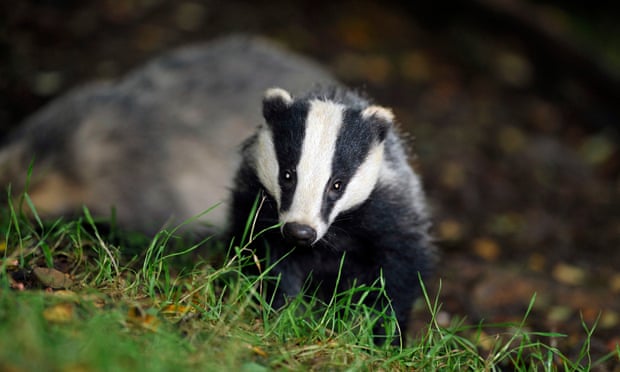
 A badger

Source – https://www.theguardian.com/environment/2018/dec/18/record-32000-badgers-shot-in-annual-cull

Scientists accuse officials of cherry-picking data to defend disease-control scheme

More than 32,000 badgers were killed in England this autumn during the annual cull, which is intended to reduce tuberculosis in cattle.

Government officials claimed the culls were effective and starting to reduce prevalence of the disease in cows. But independent scientists said the officials were cherry-picking data and making up targets as they went along.

TB in cattle costs taxpayers £100m in compensation each year, with 33,000 infected animals slaughtered in 2017. The environment secretary, Michael Gove, approved a huge expansion of badger culling in September. This resulted in the largest number of animals killed to date.

An independent review of TB control, commissioned by Gove and published in November, concluded that frequent trading of cattle and poor biosecurity on farms was “severely hampering” control efforts. It was wrong to blame badgers as the main cause of the outbreaks, the scientists said, although Gove had told them not to assess whether the current badger culls were working.

Data published on Tuesday shows that in the 30 culls taking place across England, 32,601 badgers were shot this autumn, the highest number on record.

An earlier 10-year trial of badger culling showed it was vital to kill at least 70% of badgers in an area to reduce TB in cattle, but as a protected species badgers must not be wiped out either. Therefore, minimum and maximum cull targets are set.

In all but one case, the initial targets were reviewed “as operations progressed”. Almost half the culls failed to meet their initial targets, with one in Devon killing three times more than the initial minimum.

“The ways that these targets were altered varied between sites in a completely non-standard way,” said Prof Rosie Woodroffe, of the Institute of Zoology, who was part of the 10-year trial. “The scientific term for this methodology is ‘making it up as you go along’.” She said the government appeared to have no idea of actual badger populations.

Natural England, the government’s nature agency, licences the badger culls. Its chief scientist, Tim Hill, said: “Industry-led badger control continues to deliver the level of effectiveness required by the policy to be confident of achieving disease control benefits.”

However, Woodroffe said the reduction in badger numbers was impossible to estimate from the information gathered and so there was no basis for such confidence. “We are all used to politicians making optimistic statements based on unreliable data. For a scientist to do so is deeply worrying,” she said.

The government’s chief vet, Christine Middlemiss, said the first cull areas, in Gloucestershire and Somerset, were starting to see drops in TB in cattle, and a full analysis of the data was under way.