Category: Environmental

I’d rather go naked than wear animals, says Alicia Silverstone.

Alicia Silverstone is passionate about animal rights credit:Bang Showbiz

I’d rather go naked than wear animals, says Alicia Silverstone

The 46-year-old actress – who went vegan in 1999 – has underlined her support for animals rights by posing naked in a new campaign for PETA, the world’s largest animal rights organisation.

I’d rather go naked than wear animals, says Alicia Silverstone (yahoo.com)

Regards Mark

England: Reed Bunting and Robin Photos From Pauline – 17/12/22. A VERY Cold Week For These Little Survivors.

Animal buddy Pauline sent me these beautiful phots that she has taken this morning.

Check out all of Pauline’s past photos by visiting https://worldanimalsvoice.com/?s=pauline+photos

The UK has been blasted (well blasted !) for well over a week now by Arctic winters coming down from the high North; a real shock for many after very high Spummer temperatures. In the UK we are used to cold and snow, but this last week has been a real blast.

Finally today (17/12) we are starting to see slow changes for the better as the weather is starting to arrive instead from the Atlantic; tomorrow should see it a bit warmer and the snow starting to clear more.

It always amazes me how these tiny little birds can survive endless night temperatures of -11 or more, as it has been.

My breakfast buddy Robin https://worldanimalsvoice.com/?s=breakfast+buddy and hundreds of other birds here in the garden have been keeping me real busy (and I mean real busy) over the last week getting food out to them all to help them survive these very cold days and nights. Buddy Robin is fine and is first in the queue each morning for something to eat. Pauline’s Robin pictures show that we have had a lot of snow, but with regular feeding I hope that I have helped them get through a very hard period. It makes me feel better.

Regards Mark and Pauline.

England (London): Animal Activists Scale Defra Building To Draw Attention To Bird Flu Crisis and Intensive Farming Practices.

Animal rights protesters scaled the Department for the Environment, Food and Rural Affairs (Defra) head office building in London on Thursday (15 December), to draw attention to the bird flu crisis and intensive farming practices.

Animal rights activists scale Defra building in bird flu protest (msn.com)

Animal Rights Activists Scale Government Building To Demand Plant-Based Future (plantbasednews.org)

Three arrested after animal rights activists scaled DEFRA head office in bird flu protest  | Daily Mail Online

Three arrested after protesters scale DEFRA building in central London (msn.com)

Regards Mark

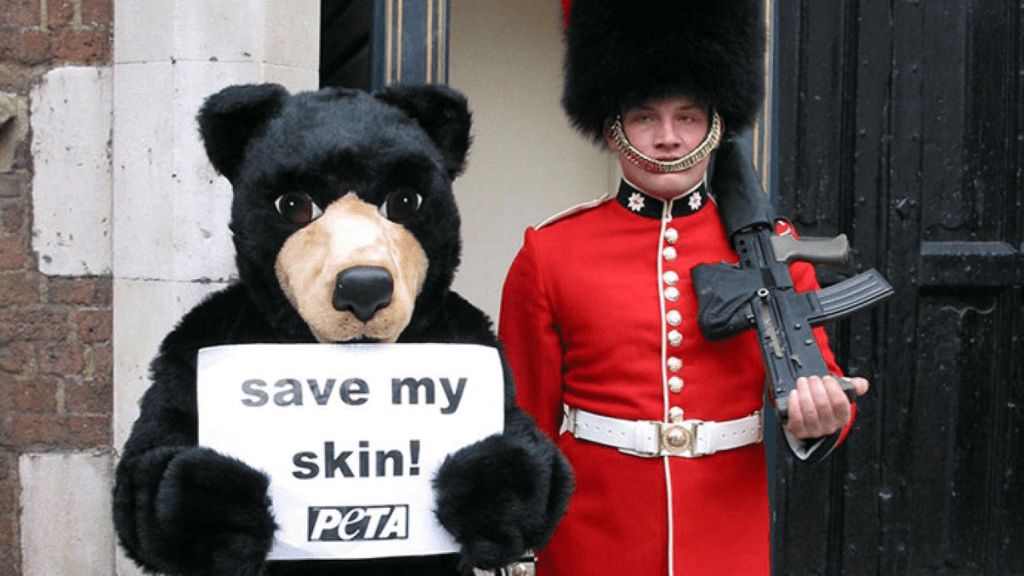
UK; Time To Stop Murdering Bears For Guards Vanity.

It takes the death of one innocent black bear for every guard hat produced.

We (like most) have called for this to stop for years; maybe finally something will be done now to stop this unnecessary murder and replace them in future with faux fur hats. Just as effective – and cruelty free !

Fur used for King’s Guards’ hats outside Buckingham Palace spark animal rights row (msn.com)

https://www.msn.com/en-in/news/world/animal-rights-group-peta-is-suing-uk-military-a-request-to-king-charles-as-well/ar-AA156R2R

Regards Mark

Here is why:

EU: Bad News for Wolves – European Parliament Votes to Downgrade Protection of Large Carnivores.

From Eurogroup for Animals:

The European Parliament votes to downgrade protection of large carnivores

24 November 2022

On 24 November, the European Parliament adopted a Joint Motion for Resolution calling for downlisting wolves’ protection status under the Bern Convention and threatening the continuous protection of large carnivores. These statements ignore scientific evidence and best practices demonstrating that coexistence is the solution.

The vote on the Joint Motion for Resolution on the protection of livestock farming and large carnivores in Europe took place on 24 November. The Resolution has been adopted with highly concerning amendments, calling for the conservation status of wolves under the Bern Convention to be downlisted and mentioning that flexibilities under the Habitats Directive should be explored further. We note that the Resolution does not call the European Commission to downgrade the protection status of wolves under the Habitats Directive from strict protection in Annex IV to protected in Annex V. However, it calls on the Commission to assess populations so that their protection status in particular regions can be adapted as soon as they reach a favourable conservation status. 

These calls, if implemented, would put wolves, large carnivores and other vulnerable species in the EU at high risk. Indeed, these statements ignore the threats on the survival of these species even when their populations increase to satisfactory levels. Downgrading protection of large carnivores has only one objective: generalise culling. However, we know it does not work! Reduction of livestock depredation has been successful thanks to preventive measures such as fencing and guarding dogs, not by killing emblematic species vital to healthy ecosystems. In addition, six out of nine wolf populations in Europe are still vulnerable or near threatened, favourable conservation status has not been reached in six out of 7 EU biogeographical regions.

We ask the European Commission not to implement the problematic measures suggested by the Resolution, and to continue protecting wild animals, including large carnivores, listed under the Habitats Directive for strict protection by promoting coexistence, the only viable solution. This is in line with the results of the European Commission Fitness Check evaluation of the Birds and Habitats Directives that concluded both Directives are sufficient and fit for purpose to achieve the objectives. We also welcome the calls of the Resolution to strengthen funding for preventive measures.


and yesterday …………………………….

Joint Motion for Resolution on wolves and large carnivores will be voted by the European Parliament this Thursday 24 November in the November Plenary session in Strasbourg

23 November 2022

This resulted from campaigns seeking to downgrade legal protection for wolves and large carnivores, and use culling as a strategy to prevent livestock depredation.

The Habitats Directive provides for the strict protection of large carnivores including wolves and provides sufficient flexibility. The European Commission reiterated that the Directive is fit for purpose. Efforts led by the EU and Member States to protect wolf populations are successful and led to an increase in the number of individuals. This is a positive trend since wolves are essential species in keeping their ecosystems healthy and play a key role in maintaining biodiversity in the EU. This conservation success on some populations should be celebrated as an encouraging sign of recovery. Importantly, wolves must still face a number of threats and still need to be protected. Hundreds of wolves are currently killed each year in the EU although some populations are considered as vulnerable and nearly threatened. 

As the European Commission clarified several times, the strategy for wolves and large carnivores management should focus on coexistence measures. Mitigation strategies have proven to be more effective to protect biodiversity, livestock and farmers. For instance, in France and Sweden, the number of attacks is decreasing despite the increasing number of wolves, partly thanks to fencing and other preventive measures. Besides an improved access to such measures such as fencing and guarding dogs, appropriate compensation schemes should be in place across the EU in a view to achieve coexistence. 

We therefore call on MEPs to ensure that the Joint Motion for Resolution does not undermine the conservation and protection of large carnivores, including wolves.

For more information, read our joint letter co-signed by the Humane Society International/Europe, Birdlife, IFAW, the European Environmental Bureau, WWF and ProWidlife and Eurogroup for Animals.


 Regards Mark

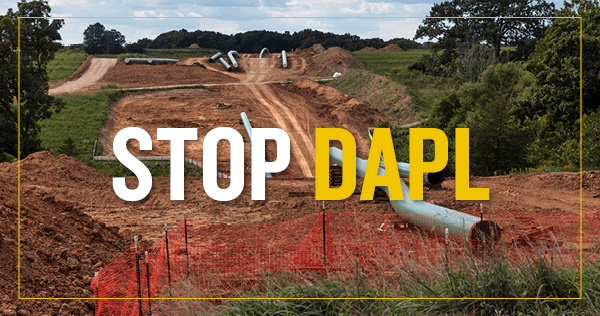
USA: Take Action Against the DAPL – violating Indigenous sovereignty and treaty rights, and posing a constant threat to the Missouri River.

Photo – KeithTurrill/Alamy

Dear Mark,

Each day the Dakota Access Pipeline (DAPL) continues to operate, it violates Indigenous sovereignty and treaty rights and poses a constant threat to the Missouri River — a crucial water source for the Standing Rock Sioux and Cheyenne River Sioux Tribes as well as much of the United States.

Last year a federal court ordered the U.S. Army Corps of Engineers to evaluate the environmental impacts of the pipeline before the project can proceed. But, the U.S. Army Corps of Engineers is refusing to make many of their most critical findings public, especially relating to the effects of a potential oil spill and the effectiveness of spill response plans.

Showing the immense risk that this pipeline poses is an important step in the fight to end the threat DAPL poses to people and the environment. This information is crucial to understanding the immense risk this pipeline poses. The U.S. Army Corps of Engineers has access to data from the Department of Transportation (DOT) — but they won’t make it public.

Urge the Army Corps and the Department of Transportation to reveal the true impacts of a potential oil spill from the Dakota Access Pipeline on frontline Indigenous communities and the environment today.

DAPL crosses the Missouri River one-eighth of a mile from the Standing Rock Sioux Tribe Reservation and travels under Lake Oahe, a reservoir that is the primary water source for the Reservation. The risk of a spill poses an immense threat to the Reservation drinking water system as well as crucial fish and wildlife habitats that provide food for residents of the Standing Rock Sioux Tribe.

While the U.S. Army Corps of Engineers is assessing the environmental impacts of the pipeline, the results of which will likely be revealed next year, the pipeline operator Energy Transfer Partners (ETP) — a company with a disastrous history of pipeline safety violations — wants to double the flow rate of the pipeline to nearly a million barrels a day . This will inevitably put more pressure on the pipeline, increase the risk of oil spills, and risk the safety of the Tribes’ water sources — and makes it even more vital that the Army Corps produces a fair assessment of the impacts of the pipeline in order to head off this threat.

The continued operation of the pipeline and the lack of transparency that is playing out in the review is an environmental justice issue, as the communities being affected the most by the pipeline’s operation and who would be first responders to a potential spill are being left out of the assessment process.

Sincerely,

Matthew McKinzie
Senior Director of Planning and Operations, NRDC

Take Action

Help fight the Dakota Access Pipeline and protect Indigenous rights! | NRDC

Regards Mark

Food Systems Transformation is Brewing at UNFCCC COP27.

Food systems transformation is brewing at UNFCCC COP27

17 November 2022

While food systems does not yet have the place it deserves on this year’s COP27 agenda in Sharm el-Sheikh, it was addressed in important side-sessions.

The United Nations Framework Convention on Climate Change (UNFCCC) held an event on ‘Climate Resilience in Food Systems – why act now?’ where it was recognised that food systems, despite their significant impact on emissions, have been lacking at the climate meetings. The panel projected that food systems would get a stronger place on the COP agenda next year. 

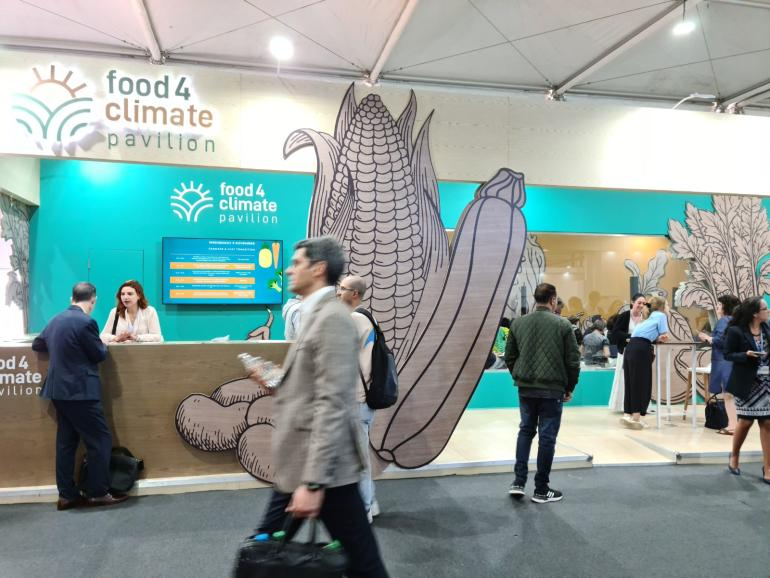
In fact, COP27 was the first time that the UNFCCC has endorsed food systems pavilions to be set up in the ‘Blue Zone’ and that 12 November was a thematic day dedicated to agriculture. The extensive programme in the Food4Climate pavilion, sponsored by a number of organisations including Eurogroup for Animals’ members’ Compassion in World Farming, FOUR PAWS and World Animal Protection, addressed a series of important topics related to animal agriculture and plant-based diets. 

Compassion in World Farming launched the new global petition ‘End of the Line for Factory farming’, calling on the UN and global leaders for a UN global agreement to end factory farming and reduce the consumption of meat and animal products.

Without ending factory farming, we simply cannot tackle the growing climate emergency” – Ben Williamson, U.S Executive Director of Compassion in World Farming

Above – CIWF Campaign Launch

Compassion in World Farming together with FOUR PAWS arranged the event ‘Tackling Climate Change through better Livestock Management Systems’. Martina Stephany, International Director Farm Animals and Nutrition at FOUR PAWS, gave examples of how the meat and dairy industry seeks to reduce methane emissions through techno-fixes such as feed additives.

It shows that the industry wants to further adapt the animals to a sick system rather than let the animals live the way they normally would live”, she said

Martina Stephany also called on governments to stop financing factory farms and to use public money to help farmers transition to better animal welfare systems or to produce more plant-based food.

World Animal Protection presented the new report ‘Climate change and cruelty – the true impact of factory farming’ in a session that showcased the impact of intensive animal agriculture on climate change in Africa as well as U.S farmers applying the principles of a just transition and showing that there are alternative ways of producing food.

Below – Food 4 Climate Pavillion 

World Animal Protection, together with Eurogroup for Animals, also hosted a side-event on ‘Transitioning agriculture systems for sustainability and climate resistance’ bringing together experts in food, climate and animal welfare to discuss why a Just Protein Transition to plant-based proteins and agroecological farming is critical. James Yeates, CEO of World Federation for Animals, spoke about how improved animal welfare and more plant-based diets have climate change mitigation benefits, stressing also the role of marine animal welfare.

Sophika Kostyniuk, Managing Director of Aquatic Life Institute, spoke at the Food Systems Pavilion event ‘Innovation and Technology in Water and Aquatic Food Systems’, emphasising that 2-3 trillion aquatic animals are killed for human consumption every year and that their welfare must be part of the food system transition.

Above – World Animals Protection and Eurogroup for Animals

Other signs that food systems are gaining traction at the climate talks could be seen in the Nordic Pavilion, hosted by the Nordic Council of Ministers, which had a ‘food systems take-over’ on agriculture day to bring food production, agriculture and diets to the front and centre of climate action. 

On the same day, the Singapore pavilion had an event on ‘Alternative Proteins: Boosting Sustainable Food Security Resilience through Science’ addressing both plant-based food and cellular agriculture. Singapore is the first country to have started serving cultivated meat and Low Teng Yong, Branch Head for Risk Assessment and Communications from Singapore Food Agency, spoke about Singapore’s innovation programme and the regulatory process for bringing cultivated meat to market.

In short, food systems transformation is brewing at COP27 but it still has to make its way up on the agenda to get the attention it deserves in order for the world to limit global warming.

Regards Mark

England: Robin Photos From Pauline.

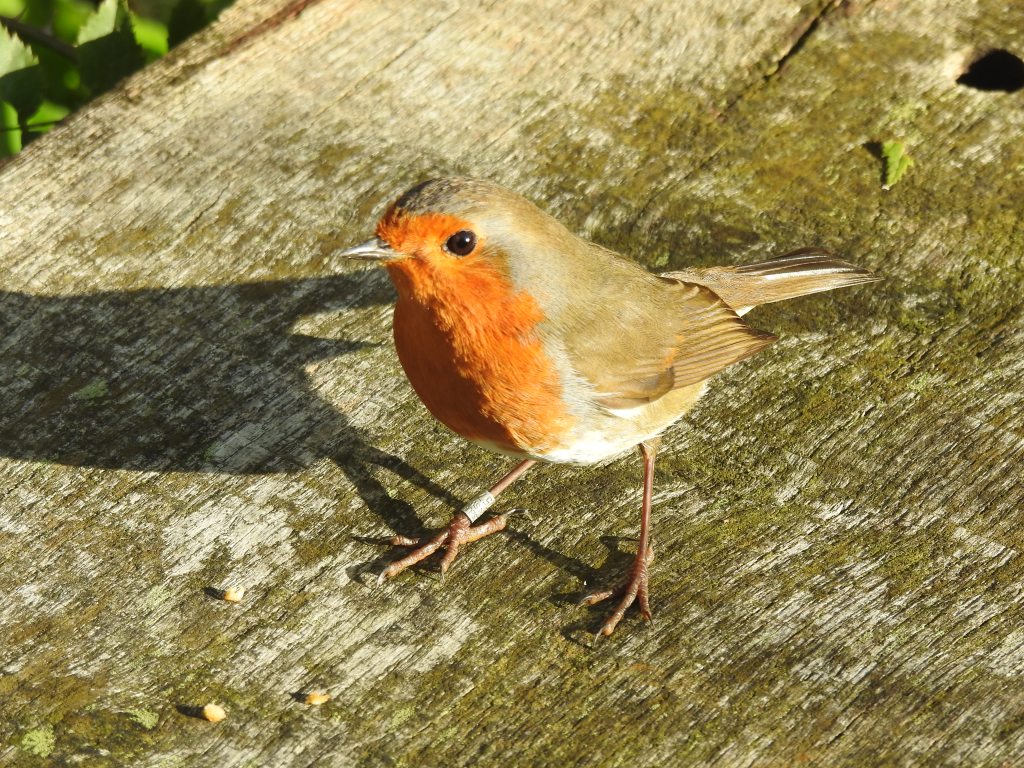
We were just talking about these – I asked if Pauline had noticed that in one photo the bird has a leg ring fitted.

Pauline did notice and said that these pictures were taken at the Sevenoaks (Kent) wildlife trust nature reserve.

Guessing they may have ringed him for monitoring purposes.

Regards Mark and Pauline.
Some past robin photo links: