Category: Farm Animals

Germany: Investigations are being expanded against horror slaughterhouse


banane rep deutschlandpg


Shock for the animal torturers of Bad Iburg, Oldenburg-Germany!!
Now 71 prosecutors are targeted by the prosecutor.

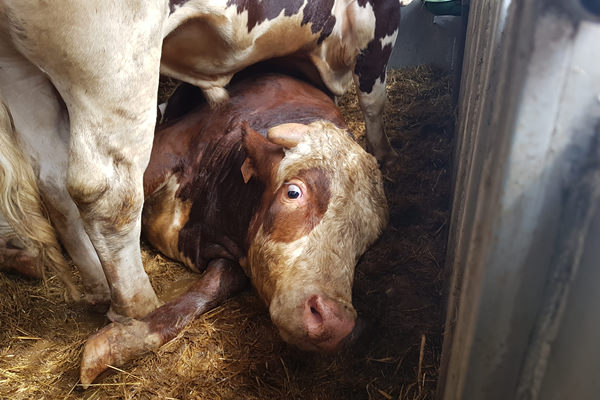
ein-rind-201904121149-fullImage: SOKO Tierschutz

The horror of Bad Iburg, the slaughterhouse that had seriously ill and dying cows dragged to their deaths from all over Germany, will have serious consequences for dozens of animal transport drivers and numerous farmers.
So far, authorities have focused only on butchers and veterinarians.

Now and after alleged animal welfare violations in this slaughterhouse, the public prosecutor’s office in Oldenburg has expanded its investigations to include animal owners and drivers. The agency is now investigating 71 people, as spokesman for the Oldenburg prosecutor, Thorsten Stein, said on Tuesday.

bad Iburg SOKO jpg

Image: SOKO Tierschutz

There have been new allegations against 14 farmers, against 38 drivers and ten responsible transport companies. The reason for the expansion of the investigation is the evaluation of video recordings made by animal rights activists from the SOKO animal protection organization in the slaughterhouse.

The accused animal owners are accused of not properly examining injured or sick animals by the veterinarian and having them transported to the slaughterhouse despite their condition. The drivers are accused of knowing about the injuries or illnesses of the animals and nevertheless having transported them. The police in the Osnabrück district are responsible for the questioning of the accused.

In addition to the new suspects, the public prosecutor’s office is investigating the two slaughterhouse operators, a veterinarian man and a veterinarian woman and five former employees of the company. It is currently unclear when the investigation will be concluded.

In autumn 2018, activists from the “SOKO Welfare Organization” documented the conditions in the slaughterhouse with secret filming and informed the Ministry of Agriculture.
This filed a criminal complaint.
According to the animal rights activists, cattle were sometimes pulled from the transporter with a kind of winch, tortured with electric batons and beaten. The district of Osnabrück closed the slaughterhouse after the video recordings have been published.
Things are going in the right direction.
But SOKO animal protection always called for the dismantling of the entire network.

The animal rights activist Friedrich Mülln, chairman of the SOKO animal protection, shows with the pictures that the company has systematically slaughtered sick and seriously injured animals. –

SOKO Kuh transportiertr

Image: SOKO Tierschutz


Friedrich Mülln: If anyone asks me what was the cruellest thing I’ve ever seen, it wasn’t not China’s fur farms, it wasn’t Hungary’s live plucking or France’s foie gras factories, but an unassuming building in the small town of Bad Iburg in Lower Saxony.

Bad Iburg abgemagerte Kühepg

Image: SOKO Tierschutz


The cows were mostly walking skeletons. The animals were so emaciated that you could really see every bone and vertebra. In about 200 cases, we documented that the general condition of the animals was so bad that they could not even walk. The flap of an animal transporter opens and the entire floor is full of completely destroyed animals.
These animals were then systematically, hundreds of times, with full consciousness dragged out of there with the cable winch or with electric shocks on their knees.
Bad Iburg was hell of the cattle.
I want to see this case in court”!

https://www.welt.de/regionales/niedersachsen/article206464931/Ermittlungen-zum-Schlachthof-Bad-Iburg-ausgeweitet.html


And I mean…Before we Germans put a finger on the Chinese or others, we should check our own stables, most of which are apparently hell for the animals, although we supposedly have the best animal welfare laws in the world!

My best regards to all, Venus

Argentina: Lambs Skinned Alive At Patagonia Supplier. Warning – Bad Video !

Argentina


PETA’s international affiliates have documented cruelty to sheep at dozens of wool farms around the world, including in Argentina, where an eyewitness saw workers hack apart conscious lambs and start to skin some of them while they were still alive and kicking at a facility in the Ovis 21 network – Patagonia’s wool supplier at the time.

A gut-churning PETA video exposé reveals that life is hell for lambs and other sheep exploited for so-called “responsibly sourced” wool on so-called “sustainable” farms. A witness found workers in Argentina hacking into fully conscious lambs, starting to skin some of them while they were still alive and kicking, and otherwise mutilating, abusing, and neglecting lambs and sheep on farms in the Ovis 21 network—Patagonia’s wool supplier.


UPDATE:  Update: On August 17, 2015, after hearing from more than 50,000 people, Patagonia announced that it was dropping Ovis 21 as a supplier, but will continue to sell products made from wool.


Workers picked up gentle lambs and—while they were fully conscious—tied their legs together, plunged knives into their throats, and sawed through their necks. Blood poured from the wounds as they kicked with their only free leg. Workers then snapped their heads backwards, apparently trying to break their necks.

Even after all that, some of the lambs still managed to cry out and gasp.

Minutes later, some lambs were still alive and kicking when a worker drove a knife into their legs to start skinning them. Eventually, they were hacked apart. Their organs were carved out of their bodies and their severed heads dumped into a bloody tub.

All this happened in full view of other lambs. They were just feet away and cried out in what must have been terror and severe distress. Older sheep—used for their wool, then no longer wanted—were lined up, tackled, and dragged away to be shipped to slaughter.


A (Goat) Dairy Farm Worker Speaks Out.

1280px-Cedar_Point_animal_farm_baby_goat_(3004)

Source Wikimedia Commons, Bobby Proffer


With thanks to Stacey at Our Compass – https://our-compass.org/2020/03/09/dissociation-and-delusion-on-a-dairy-farm-a-former-farm-worker-speaks-out/

Source Sentient Media
By Jessica Scott-Reid

Susana Romatz struggled to mentally cope with the demands of working on a dairy goat farm—like separating mother goats from their babies—until she said enough was enough.

Susana Romatz doesn’t consider herself to have been a farm kid, per se, but her grandfather did raise rabbits for meat. Looking back now, she says that navigating that as a child is likely what gave her the “skill-set for disassociating” early on. “I knew what he was doing with them, and it gave me that toolbox to shut that feeling off,” she says.

It was this ability to turn away from her emotions and instincts that would allow the animal-loving, on-and-off-again vegetarian to take work as a farmhand on a goat farm in western Oregon. It’s an experience, the now-vegan—and vegan cheese-maker—says she is still trying to heal from.

At the time, Romatz was a new teacher seeking additional work for extra cash. She wanted something outdoors and physical. That area of Oregon is considered quite progressive, she says. “Ethical,” “free range,” “organic,” products abound. So when a “humane” goat farm was looking for help, she says that she was on board. “I kind of started to buy into that line of reasoning, that you can keep an animal, do animal husbandry, in a way that is kind to the animals,” she recalls. It didn’t take long though, until “things started to disintegrate that idea.”

What made this particular goat farm—which produced milk and cheese and sold goats for meat—“humane” was that the animals were free-range. “They had a lot of land,” Romatz says, and the farm was “family-owned.” Romatz soon realized, though, that these things meant very little. “Just because it was higher up on the level of kindness to animals, compassion to animals, there were still some things that were really bothersome to me.”

At the top of that list, she says, was the disbudding of baby goats—kids—without anesthesia. Disbudding is a standard farming practice, done to stop the growth of horns, and purportedly to prevent property destruction and horn-related injuries. (Horn-related injuries to other animals commonly occur in confined spaces.) Without anesthesia, most animal welfare and rights groups condemn the practice, though it remains common.

“It was really horrifying,” she recalls. “They actually shrieked. [The farmers] would have to hold them down and basically burn off their horn buds with a hot electric poker.” She says some of the kids would never go near humans again. “It was one of the things I had to work really hard at shutting off. I had to not think about it. I could tell it was very, very painful.”

Romatz says that she tried justifying it to herself at the time by considering animal agriculture a trade-off. “With animal husbandry, there are trade-offs that you have to make when you are commodifying an animal, no matter how much you love them. You can’t capitalize on their bodies without making certain decisions that might be questionable,” she once believed. “When you are using animals in that way, you have to make those kinds of decisions,” to earn a financial profit.

But even as Romatz attempted to take a pragmatic approach—much like that of the farm owners—she always felt, in the back of her mind, that it was all very wrong. “The commodification of animals, milk, and bodies in that way, keeping the goats pregnant pretty much year ‘round, being fed grain [rather than their natural diet] year-round to keep them lactating, I knew it all had to be hard on the goats’ bodies.”

The separation of mothers and newborns also weighed heavily on Romatz. “The baby goats were taken away from their mothers almost immediately,” she says. In the dairy industry, mothers and newborn calves are routinely separated in order to reroute milk for human consumption. With the goats, Romatz says she was told by the farm owners that mothers needed to be separated from calves due to fears of a particular virus, the caprine arthritic encephalitis virus, transmitted through the mothers’ milk. (Administering blood tests to identify infected animals and removing them from the herd is also an effective solution.)

Romatz says that the calls between the moms and babies were indisputable. “This is something I would experience on a daily basis during kidding season,” she says, “when there were lots of babies kept in a pen, and lots of the does [mothers] kept in other pens, and you could hear them calling back and forth to each other.” Only the female kids were isolated, though, as the farm owners needed only them to stay healthy—so they too could become perpetually impregnated and lactating one day. The male kids were free to potentially become infected with the virus, she says, because they would be sent off to slaughter at two or three months old anyhow. “It was definitely sad,” she says, of the days the baby boys were sold, “knowing where they were heading.”

In order to mentally cope with with the work, which Romatz did for three years, she says, “you just keep shifting your bottom line, you keep shifting it, until you get to the point where you’re just like, ‘Wow, how was I even able to walk into that every day?’”

Eventually, Romatz left the farm to focus on teaching. She says that it was a relief to no longer have to mentally block out many aspects of her professional work. “All that work you’ve been doing to hold back those thoughts, you can’t do it anymore, and the flood comes, and then you can’t see it the same way ever again.”

Romatz went vegan two years after leaving the farm. After she and her partner rescued a dog, she says, “My partner just texted me and said ‘I can’t do animal products anymore,’ and it literally was so fast that I was able to switch. It took me maybe half an hour.” She says that it just felt right. “It was like everything just fell into place at that moment. All these little doubts and feelings I had been having all this time, and I had been fighting against them, or trying to convince myself—it’s that cognitive dissonance.” She recalls a “constant battle inside myself, doing things that were totally opposite from what my beliefs are.” When deciding to go vegan, “it was so easy for me to finally let all that go. [I realized] that was all an illusion, that was a lie to get me to spend money, a lie to get me to stop looking further into this.”

Her bottom line, she says, immediately rebounded.

Now, Romatz feels a sense of wanting to make up for her past. In addition to being vegan, Romatz is a vegan cheese advocate, of sorts. Out of necessity, she began making her own vegan cheeses, using locally grown hazelnuts and special vegan cultures that she created herself. The cheese is very labour-intensive and expensive (she notes that nut farms are not subsidized in the way dairy farms are) so, for now, Romatz only makes cheese for family and friends. Romatz has a great desire to educate others; she sells her vegan cultures online and provides information and recipes on her website—“to give other people the tools to make these cheeses themselves.”

As for the owners of the goat farm, which is still in operation today, Romatz says, “they aren’t bad people.” They just see things differently. “It was just the older [farmers’] view that animals are more like property,” she says. “They took care of the animals to the degree they needed to [be profitable].”

Romatz believes that the bombardment of messaging—from media, culture, tradition, and family—enables some of us to “become disassociated from the reality of what you are actually experiencing.” She says that it took her a few years before she could really understand all that she experienced on the farm, “before I could allow all the things that had happened there to start to soak in, to realize how I had tricked myself to be able to work there.”

Today, Romatz says she is moving forward, but will never forget the animals of her past. “I’m really trying to respect the lives of the animals who have come and gone. But in understanding and moving forward, you don’t have to necessarily dive into the trauma of the past; you have to understand it and notice it, but you don’t have to beat yourself over it. Thinking about [my experiences] and also moving forward have been very important to me.”

————————————————


Click HERE to go Dairy-Free

Order a FREE vegan kit: http://www.peta.org/living/food/free-vegan-starter-kit/

Take PETA’s Cruelty-Free Shopping Guide along with you next time you head to the store! The handy guide will help you find humane products at a glance. Order a FREE copy HERE

Searching for Cruelty-Free Cosmetics, Personal-Care Products, Vegan Products, or more?
Click HERE to search.

Click HERE to find out How to Wear Vegan!

Want to do more than go vegan? Help others to do so! Click below for nominal, or no, fees to vegan literature that you can use to convince others that veganism is the only compassionate route to being an animal friend:

PETA: https://www.petaliterature.com/

Vegan Outreach: https://veganoutreach.org/order-form/

Get your FREE Activist Kit from PETA, including stickers, leaflets, and guide HERE

Italy: Amadori’s horror farms

Following undercover investigations and a complaint filed by Animal Equality Italy and animal protection organization Enpa, two employees of a massive Italian meat company have pled guilty to charges of cruelty to animals.


italiapg

THE HISTORIC RULING: Four years after Animal Equality and Enpa initially filed a complaint against major Italian meat company Amadori, two employees have been finally charged with mistreating and neglecting pigs raised for meat.

amatori

Their charges include, “maintaining breeding conditions such as to generate unnecessary suffering in animals.” One employee has been charged with three months in prison and €22,500, and the other will pay a fine of €1,600.

16800_BIO_amadori Hähnchen

WHY THIS IS IMPORTANT: This ruling finally sheds light on what animals are forced to endure to become meat in Italy. Amadori is a very well-known company in the country, comparable to the popularity of meat giant Tyson in the United States.

Amadori-3000x0-c-defaultThe reality


WHAT INVESTIGATORS WITNESSED ON THESE FARMS: Our investigators documented horrific suffering of animals at Amadori farms, including:

  • Mother pigs kept in cages so small they couldn’t turn around or lay down comfortably.
  • Pigs so tightly confined that they were unable to defend themselves against swarms of flies and mice among their cages.
  • Pigs languishing in filth, with no dry or clean areas to rest.
  • Chickens with little enrichment in massive sheds.
  • Chickens left to suffer from untreated injuries

WHAT ABOUT THE CHICKENS?: While we’re thrilled that a conviction was made for cruelty to pigs on the farms, the charges for cruelty to chickens were dismissed despite both Animal Equality and Enpa’s evidence of horrific suffering of chickens raised on the company’s farms.

chickens animal equalityjpg

Chickens are arguably the most exploited land animals in the world. As we’ve documented time and time again, chickens raised for meat are bred to grow so large, so quickly, that their legs and organs often give out, unable to support their body’s massive size.

They’re forced to live in dim, filthy sheds amid their own urine and waste. Many are still conscious when their throats are slit and they reach the scalding tanks at the slaughterhouse.

WHAT YOU CAN DO: The best thing you can do to help both pigs and chickens is to avoid eating them. Unfortunately cruelty is commonplace in modern farms, but we don’t have to support it! There are so many delicious plant-based alternatives available.

Follow us on Facebook for more ways to get involved.

dead-diseased-pigs-dumpedItaly,undercover investigation: pigs raised for Parma ham sold in Britain are kept in squalid, cruel and illegal conditions.


https://animalequality.org/blog/2020/03/04/amadori-workers-animal-cruelty/

https://www.eurogroupforanimals.org/news/historical-win-amadori-sentenced-animal-abuse


My comment: Eurogroup for animals seems to be very satisfied with the fine that was posted on two Amadori employees. One goes three months in prison and €22,500, and the other will pay a fine of €1,600. 

And for that Eurogroup speaks of a historic win (see link above)!!

Of course, nobody wants to claim that it is easy to get this sanction.
The animal rights activists have been filming for months and risk their lives and nerves to make these illegal conditions known to the public.

They did an excellent investigation, for which we thank them wholeheartedly!

But Eurogroup, with weak and mild tone comments on the grievances in Amadori’s family business like this…
“This is why Eurogroup for Animals and its member organisations, through their joint End Pig Pain campaign, are calling on the EU and on Member States to fully enforce EU pig welfare legislation.”

Eurogroup knows better than anyone it cannot prompt any of these unsuitable commissioners, not even with the win of 1.5 million votes on its side, as the end the cage age campaign has shown and especially because their boss is the best and strongest agricultural lobby.

Eurogroup has no power in the EU Parliament, this power has only the EU Commission, which does not work for animals, but for the agricultural industry, the meat mafia and other lucrative businesses.
Therefore, EU needs to pay people who occasionally criticize it with a mild tone, or ask them to do their job correctly. That makes their existence necessary.

And the existence of the Eurogroup guarantees the maintenance of the myth that it has the power to force the Commission under pressure and solutions.

My best regards to all, Venus

Spain: ends the cruel shredding of male chicks?


kücken am bandpg

On the heels of France announcing a ban on live-shredding or grinding of male chicks beginning in 2021, Animal Equality Spain (Igualdad Animal) met with Spanish agriculture officials who confirmed that the country is also close to announcing a similar ban.

spanien-flagge-spaniens-r531xg


CHANGE IS ON THE WAY: During talks with the General Director of Agricultural Production and Markets of Spain, we got confirmation that officials are working with the four major chick hatcheries in the country, which had previously been investigated by Animal Equality Spain, to end the egg industry’s cruel mass-culling of male chicks. If passed, this ruling would spare 35 million chicks a year from being killed shortly after birth. 

männliche Kücken

WHY ARE MALE CHICKS CULLED?: Male chicks born into the egg industry are considered useless or “byproducts” because they’re unable to lay eggs.

They aren’t the breed of chicken used for meat, so the meat industry doesn’t want the animals either. As a result, the chicks are typically thrown into massive grinders to be shredded, tossed into trash bags to suffocate, or they’re crushed to death.

WHAT WILL HAPPEN TO MALE CHICKS IF THEY’RE NOT CULLED?: France, and now Spain, are working on implementing a technology that allows employees to determine the sex of the chick before he or she has hatched.

With this new technology, called in-ovo sexing, the male chick eggs can be destroyed before the animal has the capacity to feel pain or emotions.

WHAT YOU CAN DO: If implemented, in-ovo sexing will be a huge step in the right direction. However, birds birds in the egg industry still live miserable lives until the moment they’re killed.

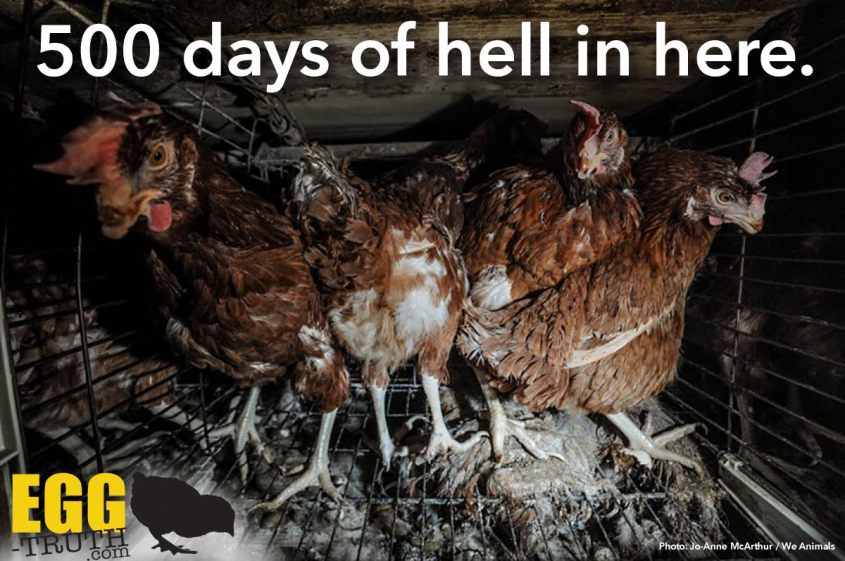
Even on cage-free farms, chickens are typically housed in massive, filthy sheds with thousands of other birds. They’re denied everything a chicken needs to be happy. The best way to help is simply by leaving eggs and other animal-derived foods off your plate!

kücken eins auf das andereo

https://animalequality.org/blog/2020/03/06/spain-egg-industry-chick-culling/


And I mean…The words “annihilation” and “gassing” somehow call to mind events that recall the past, namely the fascism in Germany in 1933.
At that time it was also said that the people who were murdered were not real usable beings at all.

Today, almost a hundred years later, we find that fascism against animals is more alive than ever. All around the world!

Despite the germany animal protection law, wich says … “It is man’s responsibility to protect the animal as a co-creature’s life and well-being. Nobody may cause pain, suffering or damage to an animal without a reasonable reason (§ 1 TierSchG, principle)”  for animals Treblinka is still every day ..

Shredding is definitely criminal but it seems that we think it is a “reasonable” reason to practice it, because eggs and meat are more important than the lives of millions of newborns.

There are many ways to profit, and most of them are dirty.
It is bad enough that we should still be begging for the abolition of this fascist practice today.

But what’s worse is that there are millions of consumers who take part in this daily massacre with a clear conscience or who don’t see it because they don’t want to see it.

Karikatur mit Kücken_n

We can only hope that the Spaniards, like the French, will go a little further than we here in Germany.

Because for the time being, the massacre remains common murder practice, the Federal Administrative Court has now confirmed this, until there is a “practical alternative” (!!)

Consistently considered, one could also shred the Federal Administrative Court.

Because of economical reasons.

My best regards to all, Venus

England: ‘Pester’, You Are a Little Monkey ! – Well, A Pig Actually, but …

England


Pester pig is on a campaign to stop intensive farming. Now at the laundry throwing red socks in with a white clothes wash.


https://actionnetwork.org/letters/pigsinchains?source=direct_link&


Tell high street chains to support high welfare farms!

In the UK, Greggs has made a fortune from their vegan sausage roll, but Pester Pig insists their ethics remain questionable until they source all their pork from high welfare farms.

Vegans and meat eaters alike want to end factory farming, a system that tortures animals, poisons the environment and increases the risk of resistant diseases. Don’t buy from Greggs, or Pester Pig might come for your laundry! Share the video & sign the petition.


Header


Tell Greggs to stop supporting factory farming!

Sign this letter asking the CEOs of Tesco, Sainsbury’s, Morrisons, Greggs and Domino’s to only source high welfare pork.


Sign the petition to all the main UK supermarket COE’s asking them to STOP supporting factory farming and instead to cruelty free systems; sign the petition via this link:


https://actionnetwork.org/letters/pigsinchains/


Most High Street Chains Source their Pork from Factory Farms

Three-quarters of the 60 high street supermarkets & food chains surveyed by Farms Not Factories sell pork from factory farms. The vast majority of these don’t offer a single high welfare alternative. Pigs reared in factory farms (an intensive farming system that is permitted under the Red Tractor labelling scheme) have to endure permanent indoor confinement in barren, overcrowded pens for their entire lives. Mother pigs are kept in narrow metal cages so small they cannot even turn around for weeks on end.

The Solution

RSPCA Assured, Free Range and Organic all have significantly better standards than the Red Tractor labelling scheme and minimum UK & EU standards. Some well known high street chains have already made the switch to one of these high welfare labels. For example, McDonald’s only sell RSPCA Assured pork across their entire menu and the Co-op only sells Outdoor Bred RSPCA Assured pork throughout their entire own-brand fresh pork range. Pigs on high welfare farms, either outdoors or indoors with plenty of straw, are healthy and more contented. They have enough room to roam and express natural instinctive behaviours such as rooting, nesting and playing.


ffarms not factories

Farms not Factories !

USA: Tell Congress to End Factory Farming in the United States! – New Bill to Phase Out Intensive Systems Introduced In Senate – American Activists; Over to You.

american-flag-120402148


Image result for USA intensive animal farming


https://www.idausa.org/campaign/farmed-animal/latest-news/tell-congress-to-end-factory-farming-in-the-united-states/


In Defense of Animals

Tell Congress to End Factory Farming in the United States!


Image result for USA intensive animal farming


An extraordinary bill to phase out horrifically cruel concentrated animal feeding operations (CAFOs) has been introduced to the U.S. Senate.

There are approximately 15,500 CAFOs in the country that imprison billions of birds, pigs, and cows in harrowing conditions. We must work together to end this national disgrace!

CAFOs crowd animals into dirty warehouses or tiny cages where they have little room to move and are forced to live in their own waste. They quickly become ill and are pumped with drugs and antibiotics to survive and grow until their pre-destined slaughter. Senator Cory Booker’s groundbreaking bill called the Farm System Reform Act, would stop existing CAFOs from expanding, prevent the construction of new ones, and phase them out by 2040.

The Farm System Reform Act will also provide financial assistance to farmers who are transitioning away from CAFOs, and establish that CAFOs’ corporate owners are held legally responsible for the environmental destruction they cause.

CAFOs produce enormous quantities of waste that pollutes neighboring communities’ air and water. According to the John Hopkins Center for a Livable Future, these waste products can cause “respiratory disease, mental health problems, and… infections” in local communities that are unfortunate enough to host them.


Image result for USA intensive animal farming


Please join us in urging your two federal senators to sponsor this critical legislation!

What You Can Do

Please contact your two U.S. senators and urge them to sponsor the Farm System Reform Act of 2019.

1) Call your two U.S. senators using the information that appears below.

If you do not see the identities and phone numbers of your two U.S. senators above, then please click on the link below, enter your zip code and click the federal tab, then make two quick calls to their offices.

www.idausa.org/findmyrep 

When the phone is answered, state your name, your town or city, and telephone number.

If you reside in any state except New Jersey, please urge your senators to cosponsor the Farm System Reform Act.

Here’s an example of what you can say:

As the Senator’s constituent, I respectfully urge him/her to cosponsor the Farm System Reform Act of 2019. This legislation will halt the expansion of existing concentrated animal feeding operations and prevent the construction of new ones. These operations cause immense animal suffering and are a public health risk to neighboring communities whose water and air they pollute. It is imperative that the government takes action to stop this cruelty and environmental degradation.

New Jersey residents may also use the above call script when contacting New Jersey Senator Bob Menendez, but please also call New Jersey Senator Cory Booker, and use below script or similar:

As a constituent of Senator Booker, I want to thank him for introducing the Farm System Reform Act of 2019 and express my support!

2) Send our letter to your two federal senators by filling out the form on this page.


England: Joaquin Hits Ol’ London Town To Protest With ‘Animal Equality’ Against Factory Farming.

England


02/02/2020

Joaquin Phoenix joined Animal Equality on Tower Bridge in London this morning, in advance of the 73rd BAFTA ceremony, to draw attention to the link between animal agriculture and the climate emergency.


Phoenix and other activists dropped a 390 square-foot banner that read ‘Factory farming is destroying our planet. Go vegan’ from the iconic landmark, as a plea to the public to stop eating animal products.

Joaquin said “I think we have a personal responsibility to take action right now and one way that we can mitigate climate change is by adjusting our consumption and by going plant-based. And so I feel sometimes like it’s not being talked about enough. So I’m just encouraging people to learn more about eating plant-based and to make a difference to make whatever personal impact they can on the climate emergency.”


He added: “When you witness the horror that really happens behind closed doors and slaughterhouses to farm animals all over the world, it’s impossible not to be affected by it and to realise that we have to do something drastic to stop it. So I’m just doing my part and trying to amplify the voice of these activists that out every day, doing something, taking action, and the least I can do is take some time off today and come here to talk about this issue.

Throughout the action, Joaquin and other Animal Equality activists held placards showing the suffering of animals in factory farms, as well as the devastating impacts of animal agriculture on the environment and climate.

President of Animal Equality, Sharon Núñez, said: “Joaquin’s dedication to animals and the environmental cause is extraordinary, he sees the absolute need for us to have serious conversations around the devastation that factory farming is having on animals, our planet, and our health.


Factory farming is a major contributor to water and air pollution as well as deforestation. Animal agriculture accounts for 14.5% of greenhouse emissions, according to The Food and Agriculture Organisation of the UN. As well as being a leading cause of climate change, animal farming is a major contributor to water and air pollution, deforestation, species extinction, and more. A vegan diet is one of the best ways to reduce our impact on the planet – by changing what we eat, we can change the course of our future.

Find out more about the devastating impacts animal agriculture has on animals and our planet here.

Purchase an Animal Equality hoodie, just like the one Joaquin wore when he joined us to protest, here.


Israel: slaughterhouses like everywhere


An exclusive Glass Walls investigation inside Israel’s largest pig factory


Israel flagge jpg
“You took the pictures which – from your perspective – are the “sexiest” and “most painful” to watch and this is what you show”, says the manager of the horror slaughterhouse!

The factories that produce most of the meat that ends up on our plate, go to great lengths to keep their “business” secret.
And we make it them easy.
Most believe in happy cows that graze in the pasture with their calves, they believe that the neighbors’ pigs lose their miserable lives with a “humane” slaughter, we make it really easy for the meat mafia and therefore it can do undisturbed its criminal business with live animals

It is our participation, our approval wich does it possible.

About a year ago · Nir Galim, Central District, Israel- Glass Walls


No! this is not a private perspective, it is about making money, maximizing profit with torture, sadism, murder in accord.

And that is everyday life in slaughterhouses all over the world.
In some places worse, in some places it is better but that does not change the fact that all slaughterhouses in the world are places of horror.
Wherever the documents of this cruelty are sent to us, we will never tire of showing them.
Everyone needs to know who are the victims of this fascist system.

My best regards to all, Venus