Category: Farm Animals

South Africa; Surprise, Surprise ! – Ship transporting 60,000 sheep on journey of death gets ‘clean bill of health’.

SAfrica

Ship transporting 60,000 sheep on journey of death gets ‘clean bill of health’

Ship transporting 60,000 sheep on journey of death gets ‘clean bill of health’


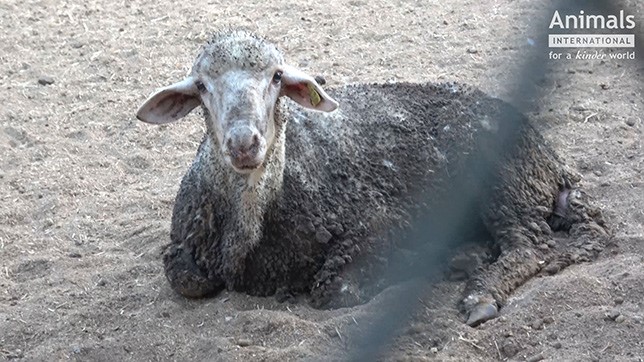
The sheep are doomed to spend three weeks at sea in squalid conditions should a live export permit be granted, and many will not make it out alive.

The Al Shuwaikh livestock vessel destined for Kuwait, which has docked in East London for the past few days awaiting shipping 60,000 sheep onto it has been given a clean bill of health, according to Dispatch Live.

It was earlier reported that a permit had already been granted, but has since been corrected to reflect that this is only expected to take place later this week, department of rural development and agrarian reform spokesperson Ayongezwa Lungisa told Dispatch Live on Monday.

Lungisa says veterinarians are expected to be inspect the sheep for diseases and vaccinations before the Al Shuwaikh heads for Kuwait. If this is in order, a live export permit is expected to be granted.

The sheep are doomed to spend three weeks at sea in squalid conditions, and many will not make it out alive.

Al Mawashi, the livestock transport and trading company facilitating the live export, ironically claims that it does not tolerate poor treatment of livestock in any part of its supply chain.

However, in November 2017 during a voyage on the Al Shuwaikh, an average of 37 animals died each day onboard the ship. In June 2018, an average of 20 animals died per day on a 30-day voyage, and in September 2018, 659 deaths were recorded on a 24-day voyage.

The National Council of SPCAs (NSPCA) urged both government and the public to reconsider the shipment.

The permit being granted has hit them and other animal rights organisations hard.

In a statement, the NSPCA details the gruesome conditions the sheep will face on the ship.

“Onboard this ship, they will be crammed so tightly that many will not be able to lie down and rest. For three weeks, they will stand, with limited access to food and water, and some will have no access at all … They will be forced to stand in their own excrement, wearing what is called “faecal jackets”.

Marcelle Meredith, NSPCA executive director, said: “The South African government have the power to stop this shipment, they have a responsibility to ensure that welfare is a primary concern, especially in light of our success in the high court recently with regards to permitting issues and welfare considerations.”

In a damning statement, the NSPCA has slammed the company’s blatant hypocrisy, pointing to claims that they operate transparently.

The NSPCA continues to advocate that live export by sea for slaughter purposes is unethical, unnecessary, and unacceptable.

According to Animals Australia, over 100,000 litres of urine and faeces accumulate on a trip like this each day the sheep are onboard.

This combined with the Middle East’s high temperatures results in sheep being unable to regulate their own body temperatures causing heatstroke. This, the statement reads, literally results in sheep being “cooked alive” while in oven-like temperatures.

Waste build-up makes it dangerous for the sheep to lie down, as they risk being buried alive, and ammonia from their excrement often leads to respiratory infections, and burning eyes and throats.

“All this mixed with disease, overcrowding, pneumonia, motion sickness, physical trauma and injuries, and stress, creates the perfect environment for excruciating suffering, and many animals will die in transit.”

The fate of those that survive the journey is not good either – they will face “inhumane handling” before being violently slaughtered while they are still alive.

Carte Blanche screened horrifying footage of the live export trade on Sunday evening, with the video still making the rounds on social media.

The NSPCA hoped their online petition would encourage government to reconsider the shipment.

“South Africa must take a stand against this abhorrent and unnecessary practice and rather export packaged meat, which not only ensures that animals do not suffer unnecessarily, but helps the country’s struggling economy.”

Those who wish to make a donation to the NSPCA can do so by clicking here.

https://citizen.co.za/news/south-africa/news-update/2181849/ship-transporting-60000-sheep-on-journey-of-death-gets-clean-bill-of-health/

England: Only 2 Days Left to Stop Pig Farm Planning Application – Add Your Name to the Letter NOW. Time is Short.

England

Signatures from overseas visitors would be most welcome and would strengthen the case – Mark.

Hi Mark,

If plans for an intensive pig farm in North Kesteven, Lincolnshire, are approved, nearly 2,000 pigs at a time will be crammed into a small building, where they’ll never be able to breathe fresh air or see daylight.

At just 20 to 24 weeks old, they’ll be packed onto a lorry and sent to the abattoir, where workers will slit their throats and leave them to bleed out.

We have only two days left to speak out against this proposal – the deadline for submitting comments is Tuesday, 1 October. Please add your name to our petition now:


TAKE ACTION


https://secure.peta.org.uk/page/48844/petition/1?utm_source=PETA%20UK::E-Mail&utm_medium=Alert&utm_campaign=0919::veg::PETA%20UK::E-Mail::lincpig::::aa%20em&ea.url.id=4122095&forwarded=true


Add Your Name


Thanks for your compassion.

Sincerely,

Elisa A
PETA UK


 More info and sample letter that you will be supporting:

Plans have been submitted to North Kesteven District Council for an intensive pig factory farm in Lincolnshire. If the proposal is approved, thousands of pigs will be sent to slaughter every year.

On factory farms, pigs are treated like machines rather than sensitive, living beings. At the proposed facility, nearly 2,000 of them at a time will be crammed into a small building, where they’ll never be able to breathe fresh air or see daylight.

Unable to behave naturally, pigs in extreme confinement often suffer from stress and frustration, which can drive them to engage in aggressive behaviour such as tail-biting, so farmers routinely cut off their tails without painkillers.

The pigs will reach their “finished weight” when they’re just 20 to 24 weeks old, at which point they’ll be packed onto a lorry and sent to the abattoir. At the end of this terrifying journey, the animals are typically stunned with electric tongs or suffocated with carbon dioxide in a gas chamber before their throats are slit and they’re left to bleed out.

Speak Out for Pigs Now

Local residents have described the proposal as an “atrocity” – they are worried about overwhelming odours, noise, and pollution and don’t want this misery on their doorstep.

Please join them in speaking out against these horrific plans by signing our petition to North Kesteven District Council:


Re: Planning application 19/1085/FUL

UN LAB Middleware Label: Petition Title Begins

UN TTL Petition Title Text – *Important Note* You must UNLINK this shared library component before making page-specific customizations.

To: Tom Siddons, Case Officer, North Kesteven District Council

UN LAB Middleware Label: Petition Title Ends

UN LAB Middleware Label: Petition Body Begins

UN MIS Petition Description Text – *Important Note* You must UNLINK this shared library component before making page-specific customizations.

Dear Mr Siddons,

We are writing in relation to planning application 19/1085/FUL, which seeks permission for the construction of a pig rearing and finishing unit on land north of Station Road, Harmston, Lincoln. The building would hold as many as 1,920 pigs at a time in intensive conditions. We object to this proposal for the following reasons:

  • Waste from the farm – including the pigs’ excrement and spent litter and the on-site slurry tank – would likely produce strong odours, which could potentially have a negative impact on local residents’ quality of life.
  • Operations on the farm – including 16 extractor fans, vehicle movements to and from the facility, and the confinement of 1,920 pigs in a small building – would generate large amounts of noise, which could disturb local residents.
  • The 124 vehicle movements to and from the farm each year would intensify traffic in the area, potentially causing disruption for local residents.
  • Ammonia from the pigs’ waste would be emitted from the farm into the surrounding area, which would likely have a negative impact on air quality and potentially a detrimental effect on human health, wildlife, and the environment.
  • The farm would produce large amounts of slurry, which would be stored on site before being pumped overland for spreading. There would be a risk that this material would leak or spill and contaminate the surrounding area.
  • The new building would likely diminish the character of the rural landscape and spoil natural vistas.
  • Finally, the farm would cause immense suffering to the pigs confined there. Pigs are highly intelligent animals who naturally live in small family groups and enjoy playing, exploring their surroundings, foraging for food, and building nests for their offspring. On intensive farms, they are typically crammed by the hundreds into barren enclosures, where they are denied the opportunity to carry out any of these natural forms of behaviour. This extreme confinement often causes them to become highly stressed, which can drive them to engage in aggressive behaviour such as tail-biting, so farmers routinely cut off their tails and clip or grind down their sensitive teeth, often without pain relief. Ultimately, they endure a terrifying journey to the abattoir, where they are typically stunned with electric tongs or suffocated with carbon dioxide in a gas chamber before their throats are slit.

We hope you will take our objections, along with comments made by local residents, into account when making a decision on this application.

Yours sincerely,

England: 40+ Years of Campaigning Has Not Been Wasted !


England


28/9/19 – The news today is positive – ‘Animal Welfare’ is the big issue at the Conservative party conference.

Here in the UK at the moment; we have a Conservative (Party) government. This weekend and into next week is the Conservative party conference; where the ‘table is laid’ about their proposals for the near future. We are very pleased to say that in both the last DEFRA Minister, Michael Gove; and the current minister, Theresa Villiers; we have very animal welfare friendly people. Theresa has always been a big player in the ban for live animal exports. This is reflected in the new manifesto paper released today which outlines the changes which we could see in the future under a Conservative government.

villiers.jpg

 Theresa Villiers – Anti Live Export Minister.


Here below is a copy of the released paper:

image1


More press news:

https://www.independent.co.uk/news/brexit-live-exports-slaughter-transport-animals-ban-tories-boris-johnson-a9123911.html

https://www.theguardian.com/politics/2019/sep/28/tory-green-agenda-criticised-lack-focus-climate-crisis-theresa-villiers-conference

https://news.sky.com/story/every-pet-cat-to-be-micro-chipped-under-conservative-plans-11821487


Whilst we at WAV welcome many of the initiatives set out in the paper; after all we are an animal welfare / rights organisation; we do have concerns that some issues are still not covered; including a reduction of animals being used in experiments; and failures to promote protection for drastically needed animals such as bees, butterflies and hedgehogs. Nothing has also been said about the culling of badgers; which is currently taking place under this same government.

But we do very much welcome the wording regarding a ban on the live export of animals; which is something we have been campaigning for (for) over 30 years; and which as a nation we are against; but unable to implement all the time we are an EU member state. We, as a group; did say a long time ago that if the UK was able to break free from the shackles of the EU, we could take back our own national control; and go for a live export ban. It seems that we have been listened to finally.


Under the proposals; the UK could see:


  • Protection of farm animal welfare standards – that animal products sold in the UK come only from animals raised to UK standards or higher.


  • The end of cages – phasing out of intensive cage systems by the end of the next parliament; supporting farmers who make the transition away from cage systems.


  • Mandatory labelling of all meat – the public will be given information on how animals were raised and slaughtered; enabling them to make a choice on what they buy.


  • The end of live animal exports from the UK for both further fattening and slaughter.


  • The introduction of a new law to recognise that all animals are sentient beings; and by going further than EU legislation, it will allow the government and ministers to take animal sentience into account when making lawful decisions on legislation.


  • Teaching animal welfare to children as part of the national curriculum. Children have a natural affinity with animals; so they will be taught about their needs, sentience, and requirements needed in order to respect and protect them.


  • Banning the import of all Foie Gras products into UK, once we leave the EU.


  • A focus on subsidising farmers and rewarding them financially if they adopt higher animal welfare standards and end cruel practices such as debeaking and the killing of male calves; the by product of a cruel dairy industry, along with the killing of male chicks at birth by the egg industry.


  • Opposing the resumption of commercial whaling; as is currently supported by the UK.


  • Seeking measures to end the terrible business of shark finning.


  • Legislate to improve fish welfare, at production, handling and slaughter.


  • A free vote on non-stun slaughter; and labelling of food to identify how an animal was killed – stun or no stun; enabling the public purchaser to make the choice of what they buy.


Mark Dover 94

Myself campaigning at Dover port against the export of young male dairy calves to Europe for intensive systems.


Veal EU 2

A British  Veal Calf is Restrained in an EU Veal Crate – now that’s worth fighting for !

(see photo above and video below)


The ‘Animal Cruelty Investigation Group’ (ACIG – England) follow British Calves to the Netherlands.


Virginia with my mum

The woman behind my respect for animals – my mum (right) with Virginia McKenna of Born Free Foundation.


After some 40+ years of being a voice for animals, all of the above is very welcome news. Naturally there are other issues that we still have to work on; but hey; main issue at the Conservative conference; 15 years ago ‘animal welfare’ was not even really spoken about.

Mark Brussels live export

In Brussels, Belgium, EU HQ – a long, long time ago !

Mark CIWF netherlands-1997

In the Netherlands with CIWF – European tour against intensive farming systems.


Today is a good positive sign for me; that my 40+ years of campaigning have not been wasted. Finally our voices are being heard where it matters by the people who are able to make the changes we ask for. The changes will not happen in the next week, but some of them could be underway by the time hopefully we get out of the useless EU by the end of this year.

Doverexporttruck

Thanks to the tenacity of many excellent folk I have campaigned with over the years; sadly some of whom are not around now to hear this; I am tonight thinking back at them and remembering what they did to be a voice for animals.


https://worldanimalsvoice.com/2019/04/25/england-another-terrible-loss-john-callaghan/ 


Mike Tucker

Mike Tucker – Live Export Campaign hero  – sadly no longer with us.


Tonight I am thinking and hoping that the 40+ years I have campaigned for animals, will move on in the near future to even better things. Finally we are being listed to.   I also want to send respect and good luck to Greta with her environmental campaigning; she has done wonders with the global support of many activists.

She and her ideas and recommendations are the future; not those of the ignorant ‘Trumps’ of this world.


This is worth a read – with some great photos:

https://www.dailymail.co.uk/news/article-7513303/Greta-Thunberg-hits-people-want-silence-us.html


Regards Mark


OLYMPUS DIGITAL CAMERA


Qatar: High tech stables!

What happens to the many breeding animals that are exported from Germany to the world? They land – for example – in Qatar – by plane. Qatar is one of the richest countries in the world, but relies on imports for food. Now the little emirate wants to be self-sufficient. No matter what it costs. Especially for the animals!


qatar-pintado-de-fondo


On a mega-dairy farm with 14,000 cows. Soon it will be 20,000. A total of 30 luxury stables will be built!!

“This is pretty much the last place in the world where you would build a dairy farm,” says Peter Weltevreden. He must know, because Weltevreden is the boss of Baladna, the most extraordinary cow stall in the world. The company is preparing to provide the desert state of Qatar with milk and dairy products.

170808-bilder-katar-kuehe-102~1280x720

The desire for self-sufficiency has a serious background: Saudi Arabia and the neighboring Emirates of Dubai and Abu Dhabi – traditionally Qatar’s major trading partners – accuse the Qatari of supporting terrorism and seeking proximity to Shiite Iran. In mid-2017, Saudi Arabia closed the border and cut the emirate off its traditional supply routes. Other countries in the Sunni-Arab world joined the boycott. Procuring food has suddenly become a national challenge for the richest country in the world.

190824-katar-karte-100~1920x1080

Especially dairy products were scarce. They were delivered almost exclusively from Saudi Arabia. Every day, 400 tons of yoghurt, milk and cheese crossed the border.

Dairy cattle by air freight

In the future, 20,000 cows will be responsible for milk, yoghurt and meat “made in Quatar”. The first 4,000 cows were flown in without further ado. Now the remaining cows are delivered by ship, Black Holsteiners cows from all over the world. The food is also brought by ship, the water prepared for the animal. A gigantic effort. A muscle game. And part of a larger plan for Qatar to build alternative industries to the lucrative gas business.  Most of the Holsteiner Frisians are from the USA; there were not many in Europe, that’s what the company says.

four-holstein-friesian-cows-pg

Livestock at 50 degrees outside temperature sounds bizarre. But farms like Baladna are nothing new in the Middle East. Everything is imported, including the professionals. Water is recycled. The stables be cooled.

190824-katar-baladna-melkkarussell-100~1280x720

“The special tunnel ventilation system has been specially designed for us,” says Ramez Al-Khayyat, owner of Baldana Farm, “as well as the water mist cooling system that controls the climate – something that is nowhere else in the world.” The air conditioning provides 25 degrees, fans exude a slight breeze in the halls. “The animals will be better off here than in Europe”, so his analysis.

katar-baladna-bau-jpg

And now , cattle from Germany should prevent a food crisis in the Gulf of Qatar. Although the first Holsteiner cows were supplied by a Hungarian dealer, industry experts know that they are originally from Germany.
But in northern Germany, no breeding cattle association currently wants to come out to Qatar as a current or future cattle supplier. “We have no contacts to Qatar and no other customers in Arabia,” says a spokeswoman for the cattle breeding association Schleswig-Holstein in Germany.

Edmund Haferbeck, agricultural expert of the animal protection organization PETA, describes the cow connection as “completely wrong and meaningless”. For one thing, the animals would have been carted to the airports through half of Europe; on the other hand, Qatar has neither the know-how for cattle breeding nor the climatic and holding possibilities.

190824k-katar-kuhstall-100~1280x720

“If I hear that the Qatarians have European animal husbandry standards, it is more of a cause for concern than reassurance,” says the PETA man. “I even believe that there is not even an animal protection law in Qatar.” Completely nonsensical is the action anyway, says Haferbeck, because many people in Arabia, like Asians, lack an enzyme in the body that can process dairy products”!

https://taz.de/Eine-Luftbruecke-der-besonderen-Art/!5426849/

My comment: An end to the blockade is not in sight. But instead of the planned isolation, it seems to bring Qatar economic reforms.
Although Qatar is small, has become extremely rich through the trade in liquefied gas from the Gulf.
With the import of cows Qatar wants to prove (in addition to other political aspects) that the country can provide itself.

A cow in a climate environment under 30 degrees requires 100 liters of water per day. We can imagine how many liters of water need 25,000 cows in a 50 degree desert.

These cows in these mega stables will almost certainly never put a hoof in the desert in their  life because cows should get as little upset as possible to give them as much milk as possible.

They will do what cows all over the world and in any farm do: eat, sleep, calve, give milk.
Heat, embers and gerbils are a potential source of excitement. Everything is obviously kept sterile and eerie, as if they were not live beings.

The animals in the factories here in Europe are not better, they are even worse.

But the air-conditioned mega stables with suffering animals in the middle of nowhere are no progress in the factories of slavery.

“It is not larger, cleaner cages that justice demands…but empty cages, the total eradication of these barbarous practices” (Tom Regan)


My best regards to all, Venus

Boe`s story


🐷You’ve heard of sow stalls, but have you heard of boar stalls?

In an unseen facet of pig farming, boars are kept in small stalls all their lives, only briefly being released for semen collection a couple of times a week.

Please share Boe’s story.
Stay tuned for the full investigation of this facility.

Best regards to all, Venus

Australia: Sheep Mulesing – What Is It ?

australia


Mulesing is undertaken by Australian sheep farmers. It has now been banned in New Zealand.

mulesing 1

Mulesing is when sheep, without any painkillers whatsoever, have huge chunks of skin carved away from the animals’ backsides or attach vice-grip–like clamps.

mulesing 5

Mulesing is the removal of strips of wool-bearing skin from around the breech (buttocks) of a sheep to prevent the parasitic infection flystrike (myiasis). … The scar tissue that grows over the wound does not grow wool, so is less likely to attract the flies that cause flystrike.

mulesing 3

Mulesing is a very cruel and extremely crude attempt to create smoother skin that won’t collect moisture, but the exposed, bloody wounds often become infected or flystruck. Many sheep who have undergone the mulesing mutilation still suffer slow, agonizing deaths from flystrike. Mutilating sheep is not just cruel; it’s also ineffective.

mulesing 7

The Australian Government has no intention of banning mulesing in Australia, with the responsibility for animal welfare resting with state governments, Deputy Prime Minister Michael McCormack said.

mulesing shears

Most people don’t understand why vegans avoid wool products. The wool industry however, doesn’t only exploit sheep, it’s also very cruel to them.

Non mulesed wool:

http://www.novetex.com/en/social_responsibility/the-practice-of-mulesing.html


NZ


mulesing 8

UK: Almost There ! – 2.000 More Signatures For A Foie Gras Free UK. Please Sign.

UNKG0001


We’re less than 2,000 signatures away from reaching a major milestone on our petition to ban foie gras from being imported and sold in the UK.

Foie gras is so extremely cruel that its production is illegal in Britain. Terrified ducks and geese are crammed into filthy cages and violently force-fed until their liver swells to an unnaturally large size.

Will you share our petition today to help us hit 150,000 signatures and show your support for ending this barbaric trade?

petition keyboard

Petition link:

https://animalequality.org.uk/foie-gras/?utm_source=newsletter&utm_medium=email


liver-foie-gras-bigger

foie gras abuse

Feather industry: a bloody business


Human being has always been a murderer, rapist and warrior! Everywhere is the human species responsible for pure horror, sheer horror: in factory farming, in laboratories, in the clothing industry, in the circus industry, in entertainment … absolute lawlessness against animals, absolute sadism of human tormentors.

It’s almost amazing how routinely this torture of plucking is done.

The victims are the animals, victims of brutal auxiliary workers in horror places who treat and dismember living beings like puppets.
And these tortures have been practiced for decades and supported massively by a society that morally and as far as animals are concerned, still lives in the Stone Age. And even with pleasure!

Now that autumn and winter are coming: Buy your blankets, pillows and jackets only from synthetic or natural materials!

The advertising industry is trying by all means to sell feather products as a non plus ultra for warm clothes.
There is no heat in these products, only hell!
And behind them exists a whole mafia industry of exploitation and shocking cruelty .
Everyone who buys feather products is either uninformed or an asshole!

Best regards to all, Venus

Germany: strongest agricultural lobby in Europe


deutsche Flagge mit Bananen jpg


http://www.netzfrauen.org

“Poultry meat is popular. And rightly so. Because in addition to enjoyable taste experiences, poultry meat provides many important nutrients that make it particularly valuable for a balanced diet, “said the German poultry industry.

Chicken

Despite all the criticisms and scandals, the global meat market continues to grow. Particularly popular are the antibiotics-fed chicken. At the Oktoberfest in Munich alone 510,000 whole chickens are sold.
In Germany, more than 90 million chickens are kept for egg production a year, producing about 12 billion eggs. The animals are reared within 32 days, from hatching to slaughter, and then slaughtered in the chord. These are chickens that vegetate in tons of fecal matter, in stalls that are too narrow.

Sterbende HÜhner

“Wiesenhof” wants to kill 240,000 chickens a day in his abattoir in Brandenburg alone.
“Meat is one of the most important drivers of growth in Europe,” says lobbyist and EU Agriculture Commissioner Phil Hogan, and he also funds this industry with millions of dollars in taxpayer money. Meat consumption should be even further boosted. The production of poultry meat is expected to increase above average until 2027. Despite all the scandals and criticism, the meat industry breeds and kills more chickens than ever!
German Minister of Agriculture Julia Klöckner also supports the agricultural lobby. Although a new animal welfare label was presented, but who should check the husbandry form?

Because it’s time, we already have Chinese standards in animal welfare!

trutz über Hühner_o

If consumers knew how chickens are bred, they would never eat their meat again!

Crushed, kicked, and disposed of alive – in Germany live 99% of all broiler chickens in holdings with over 10,000 animals.
In Germany, 30 million chickens die each year before slaughter due to poor housing conditions.

Huhn an blutiger Wandjpg

Not only the animals suffer terrible torments, also the human being is affected. According to a recent report, the practices of intensive chicken production contribute to the increase in antimicrobial resistance (AMR) in bacteria that are transmissible from animals to humans, such as Campylobacter, Salmonella and E. coli.
For decades, factory owners have been pumping antibiotics into the animals to make up for inhuman and disease-causing conditions.

Now fight back bacteria. This is extremely worrying as the number of serious infections with E. coli is at record levels and increasing from year to year. E. coli is by far the most common cause of urinary tract infection and dangerous human blood poisoning, and it can also cause meningitis. These infections can be fatal if they do not respond to antibiotics.

Yet, for the ten-year period 2017-2027, the Organization for Economic Co-operation and Development (OECD) and FAO (Food and Agriculture Organization) forecast global meat production growth. Front-runner is 2027 poultry meat with a market share of 38 percent of total meat production !!

In Germany live about 94 million chickens for chicken production. In the short-mast, the chickens are already slaughtered after 28 to 30 days of life with about 1.5 kg body weight.
Groups of 10,000 or more animals are common in the individual fattening stables, often there are up to 40,000 animals in a fattening facility.

verletzte Hühnerpg

Often the animals, in despair, peck each other so hard that they bleed and sometimes even kill each other. The immense density makes the life of animals a torture.
In most cases, the animals have no access to fresh air, because the haunted by overwhelming ammonia stench halls are fully automated and vented.
Due to poor husbandry conditions, the mortality rate of chickens is particularly high.
There is little or no veterinary help.

Elterntierhaltung/ Wimex

Workers clean the halls of dead animals every day.
To keep the chickens moving as little as possible, they are mostly kept in dim light.

At the slaughterhouse

The transport to the slaughterhouse begins with kicks and punches of the catcher squads. Animals are grabbed by the legs and thrown into the pits. Very often break wings or legs.

Kafige-mit-Huhnern-auf-einem-Transporter-gestapelt

With each slaughter, and according to the German animal protection law applies: Animals may never be killed without previous and appropriate stunning.

In poultry, especially in electrical stunning methods, the required fixation of the poultry may be relevant to animal welfare because, especially when hanging heavier animals in the area of ​​the stand, a high pressure is usually built up.
In electric water bath stunning systems, however, the current flows in parallel through the animals simultaneously. In this arrangement, due to different resistances of the animals flows also different current through in the animals, and therefore, some animals show signs of poor anesthesia.

Chicken.j in Akkordpg

Several scientists point out that malnutrition in the slaughter of chickens routinely occur and cause the animals to suffer unimaginably.

The affected animals are then – hanging upside down on hooks – consciously slashed the throat with a knife.
However, some of the animals manage to avoid the throat-cutting by panicking. They are then usually the complete head separated – also without anesthesia.

https://netzfrauen.org/2019/09/24/huehner-2-2/#more-66140


My comment: And the following undercover investigation (video) of the SOKO Animal Welfare Association will undo the illusions of those who believe in the fairy tale of organic animal husbandry, buy this chicken meat with a clear conscience, and pay extra like idiots for animal cruelty from organic farms! !!


In Germany, 50 million male chicks are gassed annually just because they have the wrong sex. Even so, the undercover investigation proves that many thousands of female animals are also cruelly disposed of, simply because too many of them were produced, although that is forbidden.

When it comes to cutting costs and maximizing profits, the meat mafia knows no laws and no rules.

For the Dachau of the animals is the meat mafia, but especially their helpers, the meat consumers, guilty.

My best regards to all, Venus

 

We’re Not Different In Any Important Way.

Thanks Stacey !


Bigotry begins when categories such as race, age, gender, sex, sexual orientation, or species are used to justify discrimination.

Speciesism—like sexism, racism, and other forms of discrimination—is an oppressive belief system in which those with power draw boundaries to justify using or excluding their fellow beings who are less powerful. A human supremacist line of “reasoning” is used to defend treating other living, feeling beings like research tools, fabric, toys, or even food ingredients—even though they share our capacity for pain, hunger, fear, thirst, love, joy, and loneliness and have as much interest in freedom and staying alive as humans do.

From childhood, most humans are conditioned to view certain species as worthy of care and compassion and others as less important or unworthy—based on arbitrary human preferences. This toxic view also leads humans to draw groundless distinctions between animal species based on the worth of those animals to them. Consider the following examples:


  • Animals are often referred to as property. Many humans call themselves an animal’s “owner” and refer to the animal as “it,” as if he or she were an inanimate object like a table or a chair.
  • Most humans wouldn’t dream of keeping their dog in a cramped, crowded warehouse on a slab of filthy concrete, which is the way pigs are treated in the food industry—even though pigs are able to experience the same pain, joy, fear, and misery that dogs can.
  • Some people wear coats trimmed with fur from coyotes or stuffed with feathers pulled from a screaming goose, but most of them would never consider tearing fistfuls of fur out of a crying kitten’s back with their own hands.
  • Many people judge other cultures for eating dogs or poaching wildlife while willfully turning a blind eye to their own cruel habits—as if eating other animals or hunting deer were any different.


It’s speciesist to believe that the differences between humans and other animals are enough to warrant torturing and killing those we don’t relate to. It’s speciesist to think that we are superior and are therefore somehow justified in raping, caging, and mutilating animals who don’t look exactly like us. It’s speciesist to exploit others because we don’t understand them fully or at all, to assume that they’re not as intelligent as we are when we measure their intelligence in human terms, and to dismiss their suffering because it benefits us.

Whether we have feathers or fur, skin or scales, we’re all able to experience complex feelings such as love, sadness, pain, and joy and we all have a will to live—these things are not unique to humans. Consider these examples:


  • Elephants and chimpanzees will mourn and shed tears if a member of their family dies.
  • Mother cows will walk for miles to find their stolen babies.
  • Many orcas stay with their families for life in the oceans.
  • Rats willingly put themselves in harm’s way to save others.
  • Fish like physical contact with other fish and often gently rub against one another—in the same way that a cat weaves in and out of your legs.

Help end speciesism by pledging to recognize that animals are not ours to use or abuse and that all living, feeling beings deserve to be treated with respect and compassion.


GEN-EndSpeciesism_ShareableImageUpdate-NC-PO-300x300

Order a FREE vegan kit: http://www.peta.org/living/food/free-vegan-starter-kit/

Take PETA’s Cruelty-Free Shopping Guide along with you next time you head to the store! The handy guide will help you find humane products at a glance. Order a FREE copy HERE

Searching for Cruelty-Free Cosmetics, Personal-Care Products, Vegan Products, or more?
Click HERE to search.

Click HERE to find out How to Wear Vegan!

Want to do more than go vegan? Help others to do so! Click below for nominal, or no, fees to vegan literature that you can use to convince others that veganism is the only compassionate route to being an animal friend:

PETA: https://www.petaliterature.com/

Vegan Outreach: https://veganoutreach.org/order-form/

Get your FREE Activist Kit from PETA, including stickers, leaflets, and guide HERE


https://our-compass.org/author/ourcompasses/