Category: Farm Animals

EU: Fur Free Europe ECI – a final stop to fur cruelty.

Can only be signed by EU member state citizens – go here to sign if you are:

https://www.eurogroupforanimals.org/fur-free-europe

18 May 2022

Press Release

Eurogroup for Animals, along with its members and other organisations, today supported the launch of the European Citizens Initiative (ECI) Fur Free Europe: in one year they will have to collect one million signatures to finally end fur in Europe.

The Fur Free Europe ECI calls on the EU to ban fur farming and the placement on the market of farmed fur products, since fur is unethical, unsafe and unsustainable:

  • The complex behavioural needs of wild animals cannot be met in fur farms: keeping them in small cages and killing them solely, or mainly, because of the value of their fur cannot be legitimised for domestic species either. 
  • Fur farms pose a risk to animal and human health, as proved during the COVID-19 pandemic, when hundreds of mink farms were affected by coronavirus outbreaks, and new variants of the virus were transmitted from animals to humans.
  • Fur farming has a significant environmental impact since the dressing and dyeing of fur involves the use of toxic chemicals. In terms of land pollution by toxic metals, fur production is ranked in the top five highest pollution-intensity industries

The fur industry also poses a serious threat to native biodiversity, with some farmed species, like American mink and raccoon dogs, which escaped from fur farms and are now considered Invasive Alien Species (IAS) causing significant adverse impacts on European native wildlife. 

At a meeting of the Council of the European Union (Agriculture and Fisheries) the Netherlands and Austria tabled an information note, supported by Belgium, Germany Luxembourg and Slovakia, calling on the European Commission to ban fur farming. The call to end fur farming in the EU on the grounds of animal welfare, public health and ethical considerations, was backed by a total of twelve Member States during the deliberations on this paper. 

The ECI Fur Free Europe was officially registered by the European Commission on 16/03/2022 and will run from 18/05/2022 for one year. 

We have an unprecedented opportunity to finally put an end to this cruel and unnecessary practice. European citizens have been asking for it for a long time, and their wishes started changing the fashion system, with many historic brands going fur free. Last year’s AGRIFISH Council proved that now there is also a political will. We call on the public to help us make history and ban fur once and for all, and on the European Institutions to support the public demand.

Reineke Hameleers, CEO, Eurogroup for Animals

Notes

The ECI Fur Free Europe  

The European Commission Implementing Decision on the Fur Free Europe ECI

More information on fur farming in Europe 

Recent news on fur farming

The 2021 request to end fur farming in the EU from Twelve Member States

Regards Mark

Italy: New investigation documents the conditions of rabbits bred for meat in Italy: crowded and injured in battery cages.

Image NOT directly associated with this article.

19 May 2022

Essere Animali

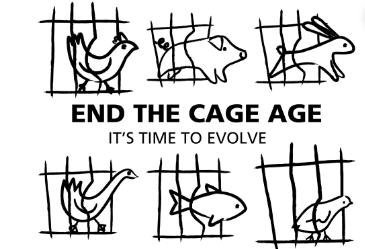
The Italian coalition in support of End the Cage Age – the European Citizens’ Initiative (ECI) calling for an end to the caging of animals reared for food – released a new investigation today carried out in seven Italian rabbit farms. The coalition calls on the Italian government to urgently introduce a national ban on cage farming and support the EU Commission’s commitment.

The footage was filmed between September 2021 and April 2022 by investigators from our member organisation Essere Animali, on farms located in Veneto (the region which accounts for over 40% of national rabbit production), Lombardy, and Emilia-Romagna, with the aim of giving a complete picture of the living conditions of rabbits reared for meat in Italy.

Italy is one of the largest producers of rabbit meat in Europe, with around 20 million rabbits reared in cages like those documented by Essere Animali. Breeding males spend about two years of their lives in these conditions before being sent to slaughter, females are discharged after one year, usually after giving birth to six litters, while puppies raised for meat are killed after 70-90 days, when they reach an average slaughter weight of 2.7 kg.

The animals are bred in sheds and confined in battery cages, inside which there are 2 or 3 adult rabbits or 6-7 young rabbits. The cages are made entirely of wire, including the flooring, and lack adequate environmental enrichments.

The footage shows:
The presence of bodies of dead rabbits inside the cages;
The presence of animals with injuries to their legs, caused by continuous rubbing against the wire, but also to their ears and head, due to the aggression that the animals express towards each other when they are forced to live in a high-density environment with few opportunities to move;
– The display of stereotypes – repetitive behaviour with no apparent function – such as making frequent movements in circles along the cage walls or repeatedly biting the wire.

The End the Cage Age coalition emphasises that these problems can be traced back to cage farming and the resulting lack of living space and positive environmental stimuli for the animals, as demonstrated by the scientific literature.

There is no law regulating minimum cage dimensions: adult rabbits have a space as big as an A4 sheet of paper. According to the European Food Safety Authority (EFSA), the biggest issue for farmed rabbits is movement restriction. A standard cage provides only 1% of the space needed by a group of rabbits that, under natural conditions, would cover an area of at least 50 square metres. Even in enriched, larger cages with a raised platform, the space available to each rabbit remains very limited.

In cages, rabbits cannot fulfil their needs and express their natural behaviour, or even stand upright on their hind legs. Furthermore, rabbits are prey animals, shy in nature, and the absence of shelters or hiding places creates additional stress.

On 30 June 2021, the European Commission pledged to phase out and permanently ban the use of cages on European farms through dedicated legislation – an extraordinary achievement made possible by 1.4 million people who signed the European Citizens’ Initiative (ECI) End the Cage Age. Once presented, though, the legislative proposal will also have to be evaluated and approved by the Council of the European Union, composed of Member State ministers. Therefore, it is crucial that Italy unreservedly supports this transition.

In every farm visited, cases of injured, dead animals or animals with obvious behavioural problems were documented, and this is an unequivocal sign that cage rearing is not compatible with animal welfare. The Italian government is at a crossroads: in the coming months it will have to decide whether to endorse an anachronistic breeding system, which forces sentient beings to live in conditions of severe deprivation inside cages, subjecting them to physical and mental suffering, or whether to support the prohibition of this abominable practice and be a European bulwark of positive change in favour of increased protection of farmed animals.

Italian End the Cage Age coalition

Read more at source

Essere Animali

Regards Mark

EU: Eurogroup for Animals calls the European Commission to stop the production, import and use of eCG in the EU.

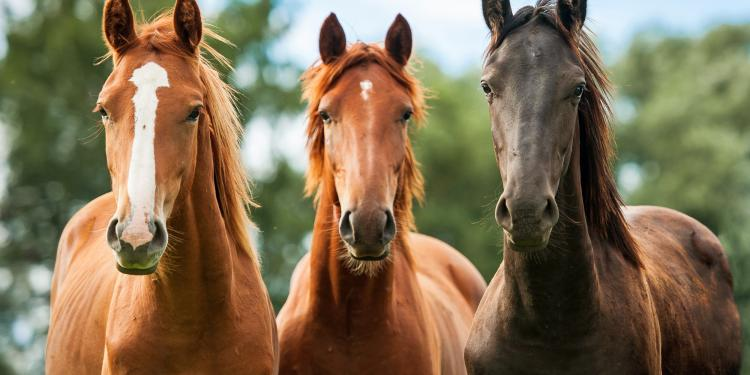
Photo – Act for Equines.

16 May 2022

WELFARM

Equine chorionic gonadotropin (eCG), also called Pregnant Mare Serum Gonadotropin (PMSG), is a hormone extracted from the blood of pregnant mares. It is used in intensive agriculture to increase the reproductive performance of farm animals such as pigs, sheep, goats and cattle.

Repeated investigations by our member organisation Animal Welfare Foundation (AWF) since 2015 have shown that the production of eCG entails serious welfare issues: up to a quarter of an animal’s blood is routinely extracted at one time, resulting in weakness and anaemia.

The blood is taken by force, which causes stress and fear. eCG used in the EU is mainly imported from Iceland, Uruguay and Argentina. In Iceland, semi-wild mares are repeatedly traumatised by violent handling and tight fixation in small boxes. In Uruguay and Argentina, mares are kept constantly pregnant and aborted to speed up the next pregnancy, as eCG is only produced in the early stages of gestation.

In Germany, where a Haflinger stud farm has been extracting blood from pregnant mares for 40 years, 16 litres of blood are extracted per week, which poses serious health risks to the mares.

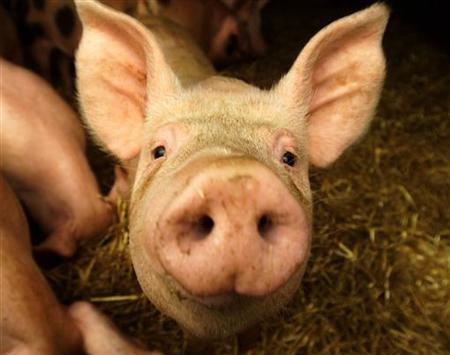
The use of eCG on farm animals also raises a number of concerns. In Europe, eCG is mainly used in pigs, to increase fertility and to stimulate and synchronise oestrus. The sows have no time to recover in between pregnancies, which leads to early slaughter. In addition, the use of eCG leads to bigger litter sizes. If the sows have more piglets than teats, surplus piglets often starve or are killed.

In an Open Letter, Eurogroup for Animals, AWF, Welfarm, Green REV Institute, Dier&Recht, Deutscher Tierschutzbund, Animal Protection Denmark, DSPCA, along with 12 other animal welfare organisations call on the European Commission to:

Recognise and communicate that the production of eCG in the EU is in breach of EU legislation,

Build on future opportunities to ban the production, import and use of eCG.

Procedures such as blood collections are classified at European and international level as animal experiments. Several alternatives to eCG are available on the European market making this hormone dispensable and in breach of the Three Rs principle (3Rs: Replacement, Reduction and Refinement) as provided by Directive 2010/63/EU on the protection of animals used for scientific purposes that applies in the EU and in the European Economic Area (EEA). Production of eCG in Germany and Iceland, both EEA countries, therefore violates EU law. 

In brief, eCG production and use is cruel and unnecessary! To put an end to this practice, the EU must include strong animal welfare standards for the production of veterinary medicines in the revised Good Manufacturing Practice (GMP). Such provisions will ensure that eCG exporters into the EU, and domestic producers, must comply with these minimum standards. The revised animal welfare legislation should also introduce a clear ban on the use, import and production of eCG.

Regards Mark

Associated WAV articles:

Iceland: Animal Welfare Violations On Blood Farms – 5 Litres Of Blood Taken Each Week From Pregnant Mares. – World Animals Voice

The blood business with the mares in Iceland – and Germany – World Animals Voice

PMU mares – dirty million dollar business – World Animals Voice

Blood farms in Iceland – official EFTA complaint filed. – World Animals Voice

Germany: dirty blood business with PMSG – World Animals Voice

The blood farms in South America – World Animals Voice

England – Why Animal Rights Activists are Protesting in (Southampton) City Centre.

14/5/22

ANIMAL right activists are protesting in Southampton city centre today.

Activists from pressure group Animal Justice Project are taking a stand against the dairy industry to mark National Day of Action.

They have set up stands in Above Bar Street to show a 2020 undercover video titled ‘Dairy Still Kills’ to expose the mistreatment of livestock.

The video showing the slaughter of calves is being shown in 20 cities across the UK.

Hope Weatherell, a volunteer campaigner and a vegan for nearly seven years, said that Southampton was chosen as a location for the campaign due to it being a central hub and having “lots of open minded people and young people”.

The activist group says that action was being taken in order to “educate” the public about thinking ethically and giving out free samples of dairy free options.

Why animal rights activists are protesting in the city centre (yahoo.com)

Regards Mark

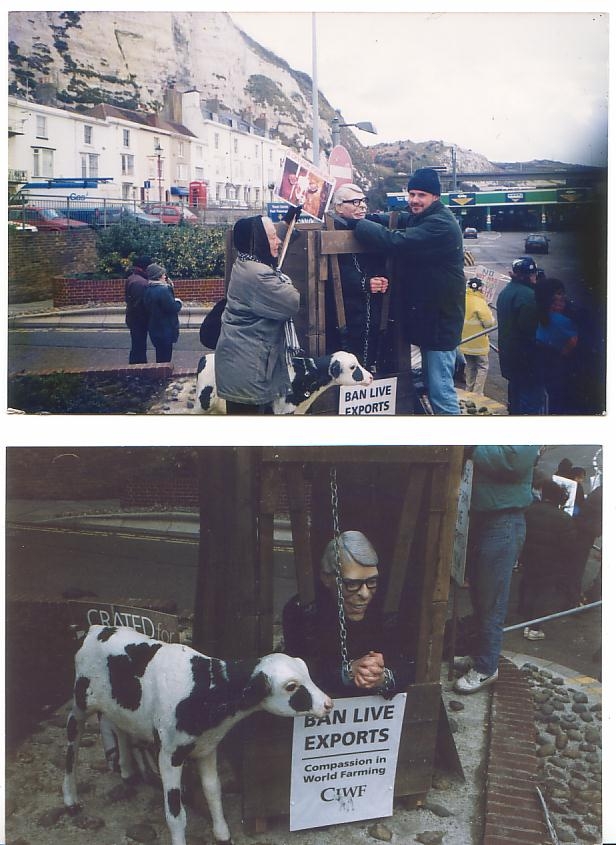
Fortunately this is no more from Ramsgate: – finished 2021 due to Brexit.

h

A Mc Antibiotics With Fries, Please.

McDonald’s storm over antibiotics in its beef: Burger giant faces showdown with investors who say it broke promise to tackle health fears

Fast food chain McDonald’s is under fire for its reliance on antibiotics used in beef farming that critics warn is contributing to a public health crisis. 

The burger giant vowed four years ago to publish plans to reduce its use of the drugs amid fears that the practice is putting millions of lives at risk. However, campaigners say the company has still not honoured its promises. 

Now an unlikely alliance of investors led by Trinity College, Cambridge and legendary corporate raider Carl Icahn – the inspiration for Gordon Gekko in the film Wall Street – are preparing to challenge the firm at its annual meeting later this month. 

McDonald’s is one of the world’s biggest buyers of beef and its influence on the use of antibiotics in intensive farming worldwide is substantial. It says it is committed to an ‘overall reduction’ in the use of the drugs. 

There is growing evidence that the excessive consumption of antibiotics is fuelling the rise of drug-resistant superbugs. Trinity College holds shares in the company via its £1.9billion endowment fund. It has tabled a motion to force McDonald’s to disclose the environmental and public health costs of its continued use of antibiotics in its meat production. 

The proposal says antimicrobial resistance (AMR) ‘poses a systemic, global threat to public health and the economy.’ Two-thirds of antibiotics used worldwide are fed to farm animals. 

Other major investors – including Legal & General Investment Management, which is also a McDonald’s shareholder – have also publicly recognised the AMR threat. The pension fund giant, which voted in favour of a similar motion last year, said in a recent report that AMR may be the next global health event and the financial impact could be significant. 

The World Bank has warned that entrenched resistance to antibiotics could cause up to ten million deaths a year by 2050 unless more is done to combat drug-resistant superbugs. The economic impact could be as bad as the 2008 financial crisis, it said. 

The threat posed by these superbugs may have been underestimated. A study in The Lancet medical journal recently revised the number of AMR-linked deaths in 2019 to at least 1.2million, against previous estimates of 700,000 fatalities. 

The Trinity motion says: ‘These appalling numbers characterise a world in which common medical procedures such as caesarean sections, knee replacements, chemotherapy and organ transplantation come with a massively increased risk of untreatable, lethal infection.’ 

The college, which is led by the special envoy on AMR Dame Sally Davies, received a boost when its proposal won backing from billionaire investor and activist Carl Icahn. 

He is behind a separate resolution to appoint two directors to the company’s board in an attempt to hold it to account over a promise to improve the treatment of pigs.

Icahn, 86, is focusing on the use of ‘gestation stalls’ – cages used by pork producers to hold pregnant pigs. This increases the number of animals that can be held in a limited space. Animal rights activists complain that the sows are confined so tightly that they cannot even turn around. 

The Trinity motion notes: ‘Pigs can only survive such grotesquely cramped conditions if they are awash with antibiotics.’ 

McDonald’s is continuing to use suppliers which employ the stalls despite having vowed a decade ago to eliminate them by 2022. Gestation crates have been banned in the UK since 1999.

Icahn’s recent interest in animal welfare stems from his vegetarian daughter, Michelle Icahn Nevin, who has worked with the Humane Society of the United States.

McDonald’s insists it has made ‘commitments and progress across its global supply chain,’ adding: ‘We are engaged in global partnerships across our supply chain to gather data on antibiotic use helping to inform the development and implementation of responsible antibiotic use policies for chicken, beef and pork.’ 

It has rejected the Trinity College proposal, saying it is committed to ‘the overall reduction of medically important antibiotics where appropriate and measurable.’ 

McDonald’s dismissed Icahn’s claims, saying to source all of its pork from suppliers that never use gestation crates is ‘completely unfeasible’ since such companies represent a tiny fraction of the pork industry. 

A spokesman for the company described Icahn’s intervention as ‘distasteful contortion’ and ‘a thinly veiled, opportunistic attempt to gain relevancy.’

Regards Mark

McDonald’s storm over antibiotics in its beef: Burger giant faces showdown with investors who say it broke promise to tackle health fears (msn.com)

Denmark: Report Concludes Public Health Still at Risk From Mink Farms in Denmark.

12 May 2022

Dyrenes Beskyttelse

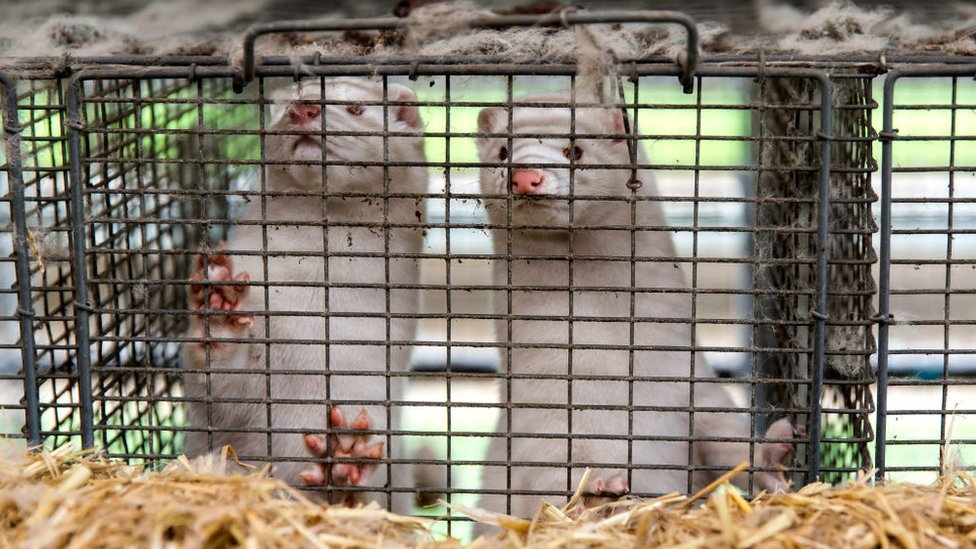
The Statens Serum Institut has published their long-awaited health assessment regarding the reopening of Danish mink farms. The government of Denmark currently has a temporary ban on mink breeding in place until 2023 following a COVID-19 outbreak in several hundred mink farms, which resulted in the country’s entire mink population being culled.

The health risk assessment from the Statens Serum Institut was commissioned by the Minister of Food, Agriculture and Fisheries Rasmus Prehn. In the report, the potential dangers to public health in various scenarios following the reopening of the mink industry in Denmark are assessed.

The report concludes that, in principle, public health is not in imminent danger, but variants of COVID-19 could arise in mink populations, resulting in viral “reservoirs” which vaccines may not effectively protect against. This scenario presents a high public health risk. 

Earlier this year the Food and Agriculture Organisation (FAO), World Organisation for Animal Health (OIE) and World Health Organisation (WHO) issued a joint statement confirming the risks of “animal reservoirs” of SARS-CoV-2. Farmed mink have been shown to be capable of infecting humans with the virus.

Although the probability of a new variant of concern is very low, why take the chance at all? Mink production will be reopened, where predators will be locked in small cages to use their fur. Why run a risk at all when there are so many good reasons not to take it.

Britta Riis, Director, Animal Protection Denmark

According to Animal Protection Denmark, mink breeders themselves have little incentive to continue production: only 15 mink breeders, about one percent, have chosen the dormancy scheme, where they can reopen their mink farms following the temporary ban. The remaining Danish mink breeders have chosen expropriation. 

1243 mink breeders have applied for compensation for shutting down their operations completely, while 15 have applied for the dormancy scheme. The latter may still change their decision and opt for expropriation until 21 December 2023. 

Animal Protection Denmark has long argued that mink production is unethical. The organisation points out that mink are active predators, which in the wild defend territories, often covering several kilometres and stretches of water. On mink farms, however, they spend their entire lives in very small and barren wire cages, where they are deprived of their basic natural behaviour.

Our past links relating to the Danish fur situation:

Search Results for “denmark fur” – World Animals Voice

Regards Mark

Ban Live Exports: International Awareness Day on June 14th.

Celebrate the ban of live exports from Great Britain | Compassion in World Farming (ciwf.org.uk)      

Dear Mark,

Get your banners at the ready! Join us for Ban Live Exports: International Awareness Day on 14th June 2022.
The UK Government has promised to ban live exports from Britain for slaughter or fattening. But the Bill that would end this trade has stalled in Parliament. What are they waiting for?
So, on the seventh annual Ban Live Exports: International Awareness Day, we’ll be demanding the Government keeps its promise and ends this cruel trade.
Add Ban Live Exports: International Awareness Day on June 14th to your diary now.

Over the last two years we’ve been unable to meet in person due to restrictions on gatherings, so we’re excited to tell you we’re going to be organising a rally in Central London.

But don’t worry if you’re not able to get to London. We plan to live stream at the event as well as having other activities you can take part in online.

We hope you’ll be able to get involved in any way you can in June. I’ll be back in touch soon with more news on our Ban Live Exports: International Awareness Day.

I look forward to marking this important date with you this year. Best wishes,
Sarah Moyes
Senior Campaign Manager

PS: Don’t forget to head over to our Facebook event and let us know if you’re able to join us for this day of action.

Regards Mark

India: May 2022 Videos From The Wonderful ‘Animal Aid Unlimited’.

Dear Mark,

India is experiencing an unusual and dangerous heat wave.

It’s 42 degrees Celsius (107° F) and it’s sweltering.

To keep the animals as cool as possible we have air coolers, tubs full of water for animals to lie in, fans and wet towels all around the shelter.

Our amazing staff are working harder than ever,despite the exhausting weather, to protect our animals from over-heating.

Working in Rajasthan’s climate extremes takes perseverance, creativity, material resources and ready helpers.

Thank you for giving us what it takes to make this season bearable, and as much as possible sweet for the animals.

Just-Wouldn’t-Quit Kenny!

When a veterinarian in a nearby government hospital called us to rescue a dog someone had dropped there after finding him unconscious on the road, we hurried to help.

And so lucky that we did, because this sweetheart didn’t have much longer to live.We rushed him back to Animal Aid where we gave him emergency treatment for shock, dehydration and difficulty breathing.

He seemed to have a broken jaw but otherwise no broken bones. With so much blood loss, we weren’t sure he would ever fully wake up. But within a few hours, his eyes brightened and ever so slowly he seemed to absorb the idea that he was in a new place, and that he would be safe here, beginning a second chance at life. This boy’s road to recovery included 2 months of daily therapy to learn to walk again, eat and regain his cognition.

Meet our awe-inspiring little hero, Kenny, today! For angels who just won’t give up,

please donate today

Magic is about to change your idea of The Possible

When we rescued this little love, we found the biggest wound on a small cat we’ve ever had the challenge to treat. During his first days, it was incredible that he would even eat. As the large and complicated wound closed, Magic’s mind-blowing recovery gave new life to the phrase “I can’t believe my eyes.”

Just click on ‘Watch on You Tube’ to see.

For medical treatment, plus the magic wand of love: Please donate today

Out with the pain and starvation, and in with an Ocean of love.

Maggots had made an enormous wound on his neck. His pain must have been so gripping that he couldn’t eat, and malnourishment had weakened him. His striking blue eyes were bright with pain and worry. We hurried him to Animal Aid and started his treatment immediately. We boosted him with a hydration drip and started a vigorous feeding schedule, delighted that he loved his food and gained strength rapidly.

With such a large wound, it took two months for him to heal, but long before his healing was complete this loving angel had made friends with every staff member in his area, and most of the dogs too! As he recovered, his amazing eyes revealed intelligence deep as the ocean. And that’s what we’ve called him.

Pain can turn into an ocean of love. Please donate today

Earth Day 2022, for Extraordinary Earthlings

Happy Earth Day 2022, to all the animals, people, forests, seas and all who live within them, may we be lucky enough to be happy.

And may all who are strong and happy extend ourselves in the service of those who are not. Earth Day 2022, for Extraordinary Earthlings

animalaid_india on Instagram: What a wonderful world we have! Let’s try our best to protect it and all of the wonderful beings within it! Happy Earth Day 🌎…

Go shopping here;

Animal Aid Unlimited Shop

Regards Mark, and ….

Founding family Erika, Claire and Jim, and the Animal Aid Unlimited team.

Belgium: GAIA calls on Flemish animal welfare Minister to free caged hens.

10 May 2022

GAIA

GAIA have sent an open letter in Flemish newspapers calling on the Flemish Animal Welfare Minister to finally ban caged systems for laying hens in Flanders. They also launched a poster campaign throughout the region to raise extra visibility for the issue.

In the previous legislature, Flemish Animal Welfare Minister Ben Weyts announced his intention to introduce a ban on cages for laying hens. Under the Flemish coalition agreement (animal welfare policy note, 2019-2024) the government undertakes to phase out these cage systems. Frustrated by these empty promises, GAIA sent an open letter to the Minister yesterday, urging him to introduce the ban:

You hold the key to open those thousands of cages and give millions of chickens a better life. Let them breathe, stretch their wings and lay eggs without a bad taste. “Think out of the box”, as you’ve done before, and put an end to this misery. The 3,000,000 Flemish chickens thank you.

In Flanders, more than 3.2 million laying hens are housed in so-called ‘enriched’ cages. In such cages, the space per chicken is approximately 1 A4 page with little free-range material. Conventional battery cages, in which chickens only have two-thirds of an A4 space, have been banned in the EU since 2012, but the so-called enriched cages, with about an A4 space per chicken, are still allowed. Wallonia already banned enriched cages in 2018. 

More than 70% of Flemish people agree that keeping chickens in cages should be banned. Only 8% disagree with the ban, with the remaining 20% being neutral. This is shown by the opinion poll by Ipsos, which was conducted in April 2022.

“Come on Ben. Think out of the box. Free caged hens in Flanders too.

Read more at source

GAIA

Regards Mark