Category: Farm Animals

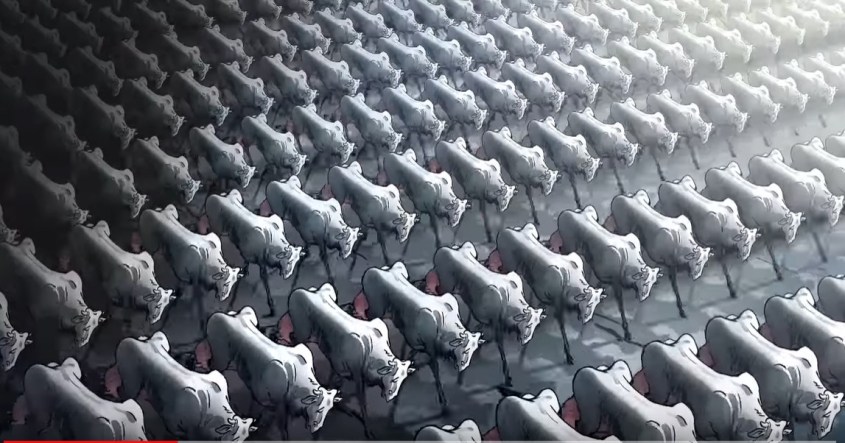
Yes, Cultivated Meat Is Real Meat. 

Cultivated meat is real meat but more beneficial for public health

24 February 2022

In a series of 5 videos, we will address and debunk the most important myths surrounding cultivated meat. In today’s video we explain why cultivated meat is real meat and why it is beneficial for public health.

Yes, cultivated meat is real meat. 

As long as cultivated meat has the same characteristics and nutritional value as conventional meat it is real meat.

The name ‘meat’ is culturally and individually determined. In the past, meat used to be rather a general term for simply food. And, even today, asking consumers living in the same region whether certain products are meat or not, would provide a variety of answers. A steak is definitely meat, but nuggets and hybrid products could be a matter of debate. Some people do not even consider chicken meat as true meat.

On the question about cultivated meat, the American Meat Science Association (AMSA) came to the following conclusion:

Ultimately to be considered meat, in vitro meat must be originally sourced from an animal cell, be inspected and considered safe for consumption, and be comparable in composition and sensory characteristics to meat derived naturally from animals. In particular, the essential amino and fatty acid composition, macro- and micronutrient content and processing functionality should meet or exceed those of conventional meat.’

Yes, cultivated meat is beneficial for public health.

The cultivated meat production process has a great advantage over livestock: it is performed under sterile and closed conditions, so the risk of pathogens is far less. This is important because of the concerns about antibiotic resistance and infectious diseases.

After all, current meat production is by far the largest consumer of antimicrobial agents. 

Moreover, industrial farming is a breeding ground for pathogens and COVID-19 has made very clear to the wide world that zoonoses pose an existential risk.

Studies in other sectors show that in sterile and closed conditions, the incidence of contaminations via bacteria and fungi is very low. This aspect is also important considering foodborne illness. Due to the lack of enteric food pathogens, the risk for foodborne diseases is much lower and it potentially increases shelf lives and reduces spoilage (which means less food wasting).

A final advantage of cultivated meat concerning public health is the absence of trace chemicals. Pesticides, antibiotics, veterinary drugs, heavy metals, among others, are a matter of concern for conventional meat.

These residues are unlikely to appear in cultivated meat. 

Regards Mark
EU legislation on Corporate Sustainability Due Diligence misses out on animal welfare.

23 February 2022

Press Release

Eurogroup for Animals welcomes the Commission’s proposal aiming at further embedding sustainability into corporate governance. However, we call on the European Parliament and Member States to explicitly include animal welfare within the scope of the future legislation.

The Commission’s proposal lays down obligations only for big companies with more than 500 employees and a turnover of €150 million. The obligations and potential sanctions are about how the companies’ operations and value chains can have an “actual or potential human rights and environmental adverse impacts”.

The proposed mechanism would nevertheless apply to medium size companies (i.e. between 250 and 500 employees and more than €40 million worth of annual turnover) operating in high risk sectors. Interestingly, the high risk sectors, which are based on existing sectoral OECD due diligence guidance, cover among others “leather, […] agriculture, fisheries (including aquaculture), the manufacture of food products, and the wholesale trade of agricultural raw materials, live animals, food, and beverages”. 

Eurogroup for Animals welcomes the recognition of the above animal-based sectors as high-risk for human rights and environmental concerns, and calls for the introduction of a comprehensive due diligence mechanism explicitly encompassing animal welfare. 

Indeed, animal welfare is closely linked to environmental protection and human rights as suggested in the annex of the proposed legislation mentioning the violations to human rights (i.e. Annex part I A, point 18 and 19). For instance, highly industrialised and intensive farming systems have devastating effects on the welfare of farmed animals, but they also lead to high levels of water, air and ground pollution, to deforestation and biodiversity loss. 

Poor animal welfare is also linked to systemic human rights abuses troubling the global animal agriculture industry, including the abuse of farm and meat industry workers, child labour, and human slavery within the commercial fishing industry.

The upcoming legislation should explicitly recognise that the health and wellbeing of humans are inseparable from those of animals and the planet. Improving animal welfare by helping to reduce the risk of food-borne diseases and zoonoses and to lessen the use of antibiotics in animal productions, would benefit the right to health, which is a fundamental part of our human rights as recognised by the WHO. Improved animal welfare is also a leverage to fight the violations of human rights in the animal agriculture industry, and is a key element to deliver on the EU Green Deal and the Farm to Fork strategy, which calls for an urgent need to “improve animal welfare to achieve a fair transition towards sustainable food systems.

Stephanie Ghislain, Trade and Animal Welfare Programme Leader, Eurogroup for Animals

Finally, including animal welfare in the scope of the future Corporate Sustainable Due Diligence legislation would be relevant and consistent with actual trends. Existing international standards already recommend companies faced with animal welfare risks to address them in their due diligence policy, and many companies – especially in the food and textile sectors – already include animal welfare in their due diligence efforts. 

All eyes are now on the European Parliament and Member States to adopt a comprehensive Corporate Sustainability Due Diligence legislation responding to the high expectations of EU citizens and consumers. 

Regards Mark

Horse Meat Labelling – Still Not Mandatory – Take Action Now, Demand Change For Clear Labelling.

23 February 2022

Despite the 2013 horse meat scandal, it is still not mandatory for operators and authorities to provide and control information on the origin of horse meat. As a result, to put it simply, there is no certainty on where your meat is coming from.

For the past 10 years, alongside BEUC, the European Consumer Organisation, we have been demanding mandatory country of origin labelling for horse meat regardless of its shape and form.

Today, the European Commission runs a public consultation on the revision of food information to consumers (FIC) Regulation and we call for the inclusion of horse meat within the scope of the regulation introducing mandatory Country of Origin Labelling (COOL).

In 2020, around 60 million horses were registered as livestock worldwide by the Food and Agriculture Organisation for the United Nations (FAO), and just over 5 million of them are slaughtered every year.

The same year, the EU imported 16,340 tonnes of horse meat, mostly from Argentina, Uruguay, the United Kingdom, Canada and Australia. 

Below we present to you three reasons in favour of mandatory labelling requirements on horse meat.

Labelling to empower EU consumers

In 2013, the horse meat scandal exposed that numerous food in the EU sold as beef actually contained horse meat. Despite the public outcry, the situation has not changed as in 2021, Europol and Interpol investigations identified horse meat sold as veal. Mandatory COOL requirements would constraint industry stakeholders to give accurate information so that consumers can make informed decisions. Such requirements are already in place and indicate country of origin, raising and slaughter, for beef, swine, sheep, goats and poultry demonstrating the feasibility of the measure. Furthermore, investigations conducted by a consumers’ association show that origin-labelling provisions for these types of meat were implemented without unnecessary burdens on the meat supply chain and on national administrations.

Labelling to recognise production standards

Investigations conducted by animal welfare organisations have revealed shocking conditions and maltreatment of horses at assembly centres, during transport and at slaughterhouses in Argentina, Uruguay, USA and Canada. Some animals are kept in horrifying conditions in open-air feedlots, without any protection from the weather or veterinary care for six months until they can be slaughtered. The introduction of COOL requirements in the EU giving the possibility for EU citizens to choose local meat will incentivise horse meat industry operators to improve the living conditions of these horses so that they comply with EU animal welfare standards.

Labelling to enhance public health

Consumers build an association between the origin information of meat and a perceived level of food safety. Consumers also question the safety of their food and are particularly concerned about antibiotic residues and hormone levels in meat. Recent investigations have revealed the presence of EU banned chemicals in horse meat samples such as diclofenac or thiabendazole. In addition, issues around traceability and horse passports, as well as  number of horses slaughtered for meat and not registered as livestock raise a question of veterinary medicines in human consumption. These consumer concerns are therefore legitimate and it is essential to improve labelling and traceability of horse meat to ensure food safety for EU citizens.

What can you do?

You can reply to a European Commission public consultation on the food information to consumers Regulation until 7 March 2022. Raise your voice and demand the horse meat labelling.

*According to the French report, the argument of higher food prices due to traceability does not hold, since the impact on the price is minimal.; it represents only an additional cost of + 0.7% or only + 0.015 Euro for a tray of lasagna, for instance. Indeed, these increases are much smaller than the price differences usually observed between retail chains.

Regards Mark

EU: Study About EU-Mercosur Agreement Wrongly States That Animal Welfare Standards Apply to Agri-Food Trade.

17 February 2022

A study requested by the International Trade (INTA) committee of the European Parliament analyses the trade aspects of the EU-Mercosur agreement and recognises that the animal welfare provisions foreseen in the agreement are weak. However, the study wrongly states that imports of animal products must comply with EU animal welfare standards.

Eurogroup for Animals welcomes the study published in November 2021 as far as it recognises that animal welfare “is closely linked to sustainable development” and that the current deal “gives rise to questions as to whether [it] fully responds to the EU’s strong stand on the issue of animal welfare as such and its potential trade implications”. As long stated by Eurogroup for Animals, the EU-Mercosur agreement is a bad deal for animals, nature and people.

However, the study misunderstands the requirements that imports of animal products need to comply with, and hence wrongly concludes that the conditional liberalisation for egg products included in the deal is “closing a gap” for imports of animal products. Indeed, the study argues that in the EU, “animal welfare standards are quite ambitious”, and that given the ongoing revision of the animal welfare legislation and the European Citizen Initiative “End The Cage Age”, these standards “are likely to be defined even more strictly in the future”. As a consequence, the study suggests trade implications “since exporters are often required to conform with EU legislation by way of a certificate on equivalence to be presented on importation (calves, pigs, slaughtering, transports)”. Furthermore, the study, while analysing the liberalisation of agri-food trade, wrongly states that “in general, all products need to fulfil animal welfare standards”.

This seems to be a confusion between animal welfare standards and general import standards. Imports of animal products, which are often produced under poor animal welfare standards, do not need to comply with EU-equivalent animal welfare standards (on farm practices or transport), except for those at the time of slaughter. And imports of live animals, which are low, need certification mainly on health issues. Import standards are for instance, veterinary controls and maximum residue levels (MRLs) for pesticides.

This misunderstanding possibly led the study to assume a “notable exception” for egg products that would not need to comply with animal welfare standards. This “notable exception” would be “addressed by the preferential scheme on eggs, as the EU attached a condition to its liberalisation offer in view of compliance with relevant EU standards”.  However, the conditional liberalisation on shell eggs, far from “closing a gap”, is merely a step in the right direction with the first animal welfare-based condition in a trade agreement. 

Eurogroup for Animals calls on the EU to uphold the objectives of the Farm to Fork Strategy, and to take the opportunity of the revision of the animal welfare legislation to include a trade aspect in the future EU legislation on animal welfare. In parallel, the EU could extend the conditional liberalisation of the trade in shelled eggs, and to agree on animal welfare and sustainability-based conditions required to access tariff-rate quotas or liberalisation in all animal products, including the respect of EU-equivalent animal welfare standards. 

Regards Mark

Standards – What Standards ?

EU: Decerle Report Prioritises the Economic Interests of Farmers Over and Above the Welfare of Farmed Animals.

Press Release

16 February 2022

European Parliament backs retrogressive report, which lacks ambition for animal welfare and flies in the face of citizens’ wishes

On February 15, the European Parliament (EP) adopted the Implementation report on on-farm animal welfare with 496 votes in favour, 140 against and 51 abstentions. 

Eurogroup for Animals, along with its members Compassion in World Farming and Four Paws, strongly opposed the adoption of the final report asking Members of the European parliament (MEPs) to adopt the alternative ENVI opinion instead. 

Despite the use of “animal welfare” in its title, the adopted report focuses more on farmers’ economic interests rather than improving the conditions of animals in EU farming systems.

When the report was announced civil society had great hopes that the European Parliament would pay full attention to a fundamental issue, close to citizens hearts and EU policy makers, as reflected in the European Commission’s Farm-to-Fork Strategy and their commitment to revise animal welfare legislation, as well as in the Parliament’s own position to phase out the use of cages.

The final Resolution – the adopted form of the report – even goes as far as contradicting what was adopted in previous Parliamentary Resolutions, specifically: 

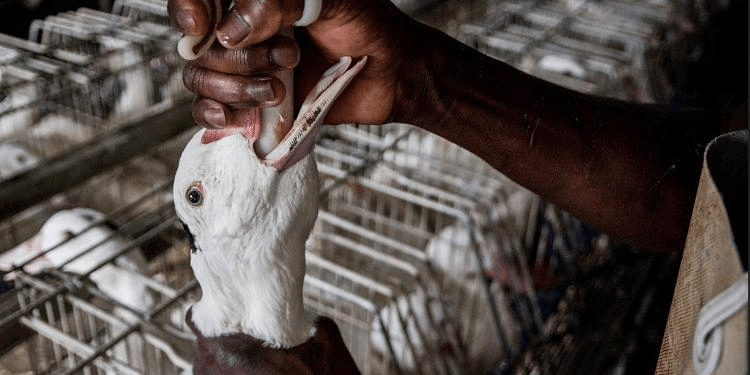
  • Foie gras, which involves force-feeding, is presented as respecting animal welfare criteria despite the fact that the EP recognised the incompatibility of foie gras production and animal welfare in its recent resolution on the ECI “End the Cage Age”.
  • The report suggests focusing on more clarity rather than improving standards. This is not in line with the EP’s resolution on the Farm to Fork Strategy which considers it important to set higher legal standards for animal welfare.
  • The report erroneously claims that some measures believed to improve animal welfare may in fact be counterproductive and undermine other aspects of sustainability, namely health and safety on farm, as well as the the fight against antimicrobial resistance and efforts to reduce greenhouse gas emissions. This is diametrically opposed to the Parliament’s own Resolution on the Farm to Fork Strategy, which clearly states that a high level of animal welfare is important to sustainable development and has the potential to strengthen the economic and environmental sustainability of European farmers.

An implementation report is, unsurprisingly given its name, supposed to assess the implementation of current on-farm animal welfare rules. In this, the adopted Resolution from the EP fails in two respects: it neither addresses the problems with the current rules, nor does it focus on welfare of the animals themselves. Instead it preoccupies itself with the maintenance of a broken system that incentivises the worst kinds of farming for the environment, health and, most of all, for the animals.

MEPs have sent contradictory messages to an ambitious and progressive European Commission. Earlier in the term, they wanted better welfare, new systems of farming and a shift in-line with the Commission’s Green Deal. Yesterday they voted for something that is nothing other than a defence of the status quo. Whilst we commend those MEPs who fought for the far more ambitious opinion from the Parliament’s Environment committee, who stood up for the welfare of animals in-line with citizens’ wishes, the European Parliament has, as a whole, backed down to the narrow interests of big agriculture.

Reineke Hameleers, CEO, Eurogroup for Animals

Regards Mark

EU: The Dog and Cat Meat Trade: Interview With MEP Petras Auštrevičius.

Office of Petras Auštrevičius

18 February 2022

Four Paws

As investigated by Eurogroup for Animals’ member, Four Paws, every year over 10 million dogs and cats are killed for their meat in Southeast Asia, with Indonesia, Cambodia, Vietnam hosting the most robust dog meat trade in the region.

Animals of unknown health status are sourced to supply the trade from multiple locations. Traumatised, diseased, with depleted immune systems and without food and water they are transported in poor hygiene conditions, in many cases, for thousands of kilometres and cross-border, often mix with other species at marketplaces, slaughterhouses and restaurants. Why should it matter to the EU to bring this trade to an end?

MEP Petras Auštrevičius, is Chair of Companion Animals Working Group of the European Parliament Intergroup on Animal Welfare and Conservation.

Many people do not realise that while in the EU most cats and dogs are treated as companion animals, there are other parts of the world where cats and dogs would be qualified as farm animals. Would you be able to elaborate on that? Why is such meat imported and what are the countries that import it?

It is estimated that annually 10 million dogs and cats are killed for human consumption in Vietnam, Cambodia and Indonesia. The trade involves extreme animal cruelty during capture, transport, holding and slaughter with dogs and cats often stolen or forcefully taken from their owners. In Vietnam the trade kills approximately 5 million dogs and 1 million cats, in Cambodia 3 million dogs and an unknown number of cats, and in Indonesia 1 million dogs and hundreds of thousands of cats. The trade is also existent in Africa, although poor data on the topic are available. The meat is largely found as a delicacy, however, there is quite poor social support for continuation of this trade. A great majority of Vietnamese, Cambodian and Indonesian citizens do not see the future for the cat and dog meat trade. The speakers and participants agreed that now is the time for ASEAN countries to ban the cat and dog meat trade and enforce their legislation on animal movement and rabies eradication to protect the consumers and prevent future pandemics.

Looking at the immediate impact on animals, why is it a particularly cruel trade for the animals?

Animals of unknown health status are sourced to supply the trade from multiple locations. Traumatised, diseased, with depleted immune systems and without food and water they are transported in poor hygiene conditions, in many cases, for thousands of kilometres and cross-border, often mix with other species at marketplaces, slaughterhouses and restaurants.

Why does the dog and cat meat trade matter to Europe? What risks does this trade bring?

The cat and dog meat trade and consumption pose a significant human health risk and severe diseases like rabies, cholera and trichinellosis are associated with it. Moreover, the meat contains high levels of antibiotic residues leading to antimicrobial resistance. Finally, mutated canine influenza or canine coronavirus carry a potential of infecting and spreading to humans giving sufficient ground to future pandemics. While human health risks are largest in the source countries, EU citizens can be affected as well. Disease outbreaks and zoonoses can jeopardise European travellers in Southeast Asia. Mutated viruses can be imported through pets rescued from the meat trade. Therefore, the EU has a direct interest to stop the cat and dog meat trade. Nobody expected the outcomes of COVID-19, that is why we must not be complacent.

Are there regulations in place at EU level to address this situation? Have these been sufficient?

ASEAN Delegation outlined the need for the European Parliament to address this issue, as well as for the ASEAN Delegation to commit relevant ambassadors to change. There are certainly things the European Parliament has and will be calling for, however the initiative for any concrete action lies with the European Commission. As there is currently no exchange of data on the movement of cats and dogs, as well as no tracking of animals, even across the EU, it is quite easy to imagine the worst case scenario. In particular, with the increase of demand for cats and dogs, and trends across the foreign rescue animals which is concerning when the health status of the animals is not properly screened.

Is there a way that we can encourage the EU and Member States to improve their response and finally put an end to this trade?

Certainly, the EU and the Member States must raise awareness among their citizens. A ban on the trade and consumption of dog and cat meat and introduction of legislation, as regulation would not resolve the cruelty involved therein and alleviate all health risks are the way forward. Such bans exist in China, the Philippines, Taiwan, Singapore, Hong Kong, and Thailand.

Want to learn more about the dog and cat meat trade? 

Visit Four Paw’s website

Regards Mark

No mega dairy farm in Noviercas -Spain !

Noviercas is a small village of 158 inhabitants in Northeast Spain. It is located in the province of Soria, inside a region known as the “Spanish Siberia” because of the low population density, less than 8 people per square kilometer.

This village became famous when the co-op Valle del Odieta announced last year their intentions to build a 20,000-cow factory farm in the village.

Macro dairy farm of Valle de Odieta SCL in Caparroso- Greenpeace Spain

With 23,520 cows (16,128 dairy cows and 7,329 suckler cows), 900 hectares of land, a consumption of 600,000 kilos of fodder and four to six million liters of water every day – not to mention a planned production 180 million liters of milk peryear – the Norviercas factory farm would be the biggest dairy farm in Europe, and the project immediately became controversial for all the potential impacts it could bring to the area and to the farming sector.

Farmers are leading the opposition, as they estimate this factory farm would destroy 700 direct jobs, one third of the dairy farms in the region.

t would produce around 368,000 tons of manure per year, the equivalent of the waste produced by a city of 4.4 million people.

And the farm would consume between 4 and 6.35 million liters of water per day, more than the total consumption of the city of Soria (40,000 inhabitants). Impacts on the environment and local communities can be huge.

This farm has nothing to do with the European model of livestock farming.
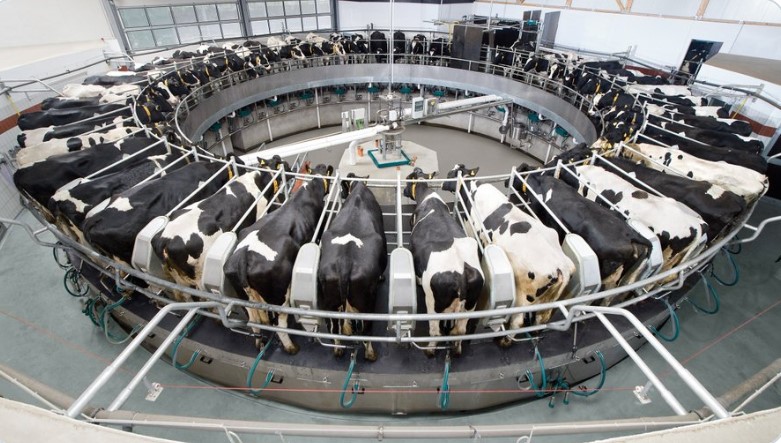
We have witnessed fierce resistance to previous dairy mega factory farms with 8,000 thousand cows in the UK or even actions of civil disobedience against a 1,000-cow farm in France.

We cannot allow this model, imported from the US, to come to Europe.
Impacts of these huge factory farms are well documented and are reason enough to ask for a ban.

Stopping this farm would be a really symbolic step against the invasion of factory farms in Europe to defend a sustainable and social model of farming.
You can read more about it here in English, Spanish and French.

We will campaign with our allies to stop this project. Stay tuned!

https://www.foodandwatereurope.org/blogs/a-20000-cow-dairy-farm-in-europe-no-way/

PETA has started a petition against the construction of the Mega Stall.
Please sign and share

“Help stop plans for a new mega dairy in Spain that would be the largest farm in Europe and the fifth largest in the world.
If the plans go ahead, 23,000 cows will be kept in filthy, cramped conditions so that the owners can maximize their profits.
Can you imagine – 23,000 cows?
That’s more than the human capacity of London’s O2 arena!

Mega farms like the proposed one exploit animals on a scale that is almost unimaginable” (PETA)

Petition: https://secure.peta.org.uk/page/99582/action/

And I mean…One has to think about that slowly: 20 000 Cows on one Farm in North Spain, plus their calfs, as without calves no Milk!
50% of the calves are male, so useless for the further milking business.

All these Cattle have to be feeded, feeded more as usual as they are producers in the process of milk production.
So where will they get all the Power Feed from?
Corn and soy beans? What about the Carbon footprint?

And what about the immense suck of energy, as these cows live and produce best at about 7 dregrees Celsius?
They would have to cool them down constantly with water – another Problem, a lot of water will be spoiled, like at the farm in Saudi Arabia…

Subject to the outstanding approvals, the project is to be implemented in several growth stages over the next five years, i.e. by the end of 2022.
The Farmers Union: described a dairy farm of this size as a “time bomb” for animal health.

A single case of a disease like bovine brucellosis in the herd would require 20,000 animals to be culled. The compensation would amount to more than 16 million euros; Four times more than the annual animal health budget allocated by the regional government.

Although the sale of milk plummeted after the onset of the Corona virus and millions of healthy cattle were euthanized due to the closure of slaughterhouses, pointless investments are still being made in XXL stables!
In order to take action against the investment project, the farmers’ association has started a signature campaign.

But not everyone in Noviercas is against the system.
Some have sold their land to Valle De Odieta.
And politicians are also behind the project.

The mayor, stand up for the farm.
Presenting the 2019 project, Pedro Jesús Millán Pascual said “the dairy farm would bring jobs and more people to the town”.

But not a word is heard about the fate and suffering that awaits the 23,000 animals

My best regards to all, Venus

How Better Animal Welfare Could Stop Millions of People Dying by Damian Carrington.

Spanish flu, bird flu, Marburg virus, Lassa fever, Ebola, HIV, Nipah, West Nile, Sars, Chikungunya, Zika and Covid-19. That is just a partial history of the viruses that have spilled over from animals to humans in the last century.

The outbreaks are coming more frequently, as humanity’s growing population drives its destructive path further into wild areas. An average of 3 million people a year die from these zoonotic diseases.

But the world’s focus on preventing the next pandemic has so far been confined to boosting the detection of new diseases after they have infected humans and speeding the development and rollout of vaccines. That is of course necessary, but it is not sufficient.

Since the Covid-19 outbreak, there have been repeated warnings that action to stop spillovers at source is also vital, and extremely cost-effective. That means ending the destruction of forests that brings people and wildlife into contact, and a crackdown on the wildlife trade. Inaction has left the world playing an “ill-fated game of Russian roulette with pathogens”, experts say, and protecting nature is vital to escape an “era of pandemics”.

But tacking spillover is not mentioned in reports and strategies from the Global Preparedness Monitoring Board (GPMB), a joint initiative of the World Bank and the World Health Organization, or from a G20 high-level panel on financing for pandemic preparedness.

A new report from experts at the International Union for Conservation of Nature provides another angle on the issue. While all zoonotic diseases ultimately come from wildlife, the IUCN report says few spillover into people directly. More commonly the diseases transfer via livestock, or animals like rats that thrive in places despoiled by humans.

So culling wildlife could not be justified, and could perversely make viruses spread more rapidly and animals flee. The IUCN report also says its examination of the scientific evidence suggests that tougher rules, or a ban, on the trade in wildlife would not have much impact on preventing future epidemics. Such moves could also harm the livelihoods of indigenous peoples and local communities, unless alternative ways to make a living are provided.

But the IUCN report comes to the same broad conclusion as the previous reports: preventing increasing rates of outbreaks is feasible, especially if “primordial prevention issues, rather than just preparedness and rapid response” are addressed. “The challenge rests in better understanding how our domesticated animals and human-dominated landscapes create opportunities for the emergence of infectious diseases,” says Jon Paul Rodríguez, chair of the IUCN Species Survival Commission.

So what is the livestock industry doing to cut pandemic risk? Not nearly enough, according to another new report, which rates two-thirds of 60 major meat, dairy and fish companies as “high risk”. The analysis is based on seven, criteria including welfare conditions for both animals and workers, waste management and deforestation.

“Intensive farming environments, housing most of the 70 billion farm animals reared every year, are a known breeding ground for disease,” says Jeremy Coller, chair of the FAIRR Initiative, which produced the report and is backed by investors managing $48 trillion of assets.

“Aggravating factors like low genetic diversity, cramped enclosures and poor conditions for workers that do not offer adequate sick pay amplify [the pandemic] risk many times over,” he said. “It’s time for meat companies and policymakers to learn from Covid-19 and to invest in preventing the next pandemic.”

Another take on pandemic risk is on its way from Bill Gates in his new book, How to Prevent the Next Pandemic. “The plan is three elements,” he says. “First is to constantly improve health systems. The second is to build a global pathogen surveillance capacity so that no matter which country it shows up in, we can apply resources and understand what’s going on very quickly. And finally, innovation across diagnostics, therapeutics, and vaccines that will get us far better tools far quicker than we did this time.”

“I think it’s exciting that we have this opportunity to use our best ideas to stop pandemics for good,” Gates concludes. But there’s no mention of what is to my mind the very best idea of all – trying to stop pandemics at the source. The same was already true of reports from the Global Preparedness Monitoring Board (GPMB), a joint initiative of the World Bank and the World Health Organization, and from a G20 high-level panel on financing for pandemic preparedness.

Tackling the root of the issue by protecting forests and wildlife would cost just a tiny fraction of the terrible losses caused by pandemics, and such action is of course already vital for ending both the climate and biodiversity emergencies. “In the midst of every crisis, lies great opportunity,” said Albert Einstein.

But the world has yet to grasp the opportunity presented by Covid-19.

Regards Mark

Cultivated Meat – Parts 1, 2 and 3. Questions Answered.

Part 3: Everything you always wanted to know about Cultivated Meat – and beyond

16 February 2022

Cultivated meat does not yet fully exist on a commercial level and market introduction will happen stepwise, starting with specialised restaurants. It is currently at the pilot scale progressing towards up-scaled production, currently comprising more than 70 startups.

Read our detailed FAQ here.

Are consumers ready to eat cultivated meat? 

The acceptance studies of the past years show a worldwide positive attitude towards cultivated meat. The consumer groups with the most positive attitude towards cultivated meat are flexitarians or carnivores. A recent study on Belgian consumer attitudes indicates that different protein alternatives are needed. Taste and textures were the main barriers to plant-based meat alternatives for meat-eaters. The main motivations for meat-eaters to shift to cultivated meat were social goods such as avoiding animal suffering, minimising environmental impact, and mitigating global hunger.

Will cultivated meat be as nutritious as conventional meat? 

Yes, it will be vital to pass the comparison with conventional meat. There are even opportunities to ameliorate the nutritional profile. However, cultivated meat developers still need to prove that their products are or will be as nutritious.  

Is cultivated meat halal/kosher?  

It could be, but at this point, there are no clear rulings yet. A lot will depend on the final production process that will need to be inspected by delegates from the religious communities. And it is very possible that there will be multiple contradicting rulings and religious labels, as is the case today for conventional meat.

Will/can farmers play a role in cultivated meat production? What is the social impact of cultivated meat? 

Cultivated meat can be produced by a wide range of companies of different sizes, including local small-scale farms. Future scenarios can involve both large-scale facilities as well as small cultivators on rural farms as a complement to small-scale regenerative farming. For this to happen, it is important to make the production of cultivated meat accessible to SMEs.

While private investments have been crucial in pioneering research on cultivated meat, private investments need to be combined with public funding to expand the possibilities of small enterprises. It is important that public funding for open-access research is made available by governments and the EU so that the future development of cultivated meat production is not left in the hands of large companies but can reach its full transformative potential as part of a sustainable food system.

Did you miss Part 1 and Part 2 of our series?

For more details, you can read our FAQ here.

Related news

Part 3: Everything you always wanted to know about Cultivated Meat – and beyond

New investigation exposes deformities, broken legs and crushed birds at chicken farm

Part 2: Everything you always wanted to know about Cultivated Meat – and beyond

Regards Mark

UK: Vegan Ad Shown On National Television For First Time 14/2/22. – World Animals Voice