The Belgian Constitutional Court upholds the ban on slaughter without stunning in Flanders and Wallonia
30 September 2021GAIANews
Today, the Belgian Constitutional Court supported the judgment of the Court of Justice of the EU (CJEU) on the ban on animal slaughter without stunning.
Following a lengthy legal battle, last December the CJEU clearly concluded, in response to the preliminary questions by the Belgian Constitutional Court, that Member States are allowed to impose mandatory pre-slaughter stunning. With this ruling, the Belgian Constitutional Court also confirms the legality of the ban in Flanders and Wallonia.
Eurogroup for Animals member GAIA has been leading the campaign for a ban on ritual slaughter without stunning in Belgium for over 25 years. In 2014, 10,000 people marched in Brussels asking for a ban. Finally, in 2017 the Walloon and Flemish decrees prohibited the slaughter of animals without stunning. The bans came into force in 2019 for both regions but were then challenged by several religious organisations on the grounds of freedom of religion.
The CJEU judgment considered the latest development on reversible stunning as a method that successfully balances the apparently competing values of religious freedom and animal welfare, and it concluded that “the measures contained in the (Flemish) decree allow a fair balance to be struck between the importance attached to animal welfare and the freedom of Jewish and Muslim believers to manifest their religion”.
This brings to an end a lengthy legal battle in favor of the Flemish and Walloon ban, the sole purpose of which is to avoid inflicting scientifically proven and practically avoidable suffering during the killing of animals, with no exception for slaughter carried out in a religious context
commented Michel Vandenbosch, GAIA’s President
To date, the Brussels-Capital Region still permits slaughter without stunning and that’s going to be the next step for GAIA:
Now that the Constitutional Court has ruled in favor of the Flemish and Walloon bans, there is no longer any valid reason to not introduce a total ban in the Brussels-Capital Region too. GAIA urges the Brussels government and parliament to introduce such a ban without further delay
added Vandenbosch.
We congratulate GAIA for their relentless efforts on these bans. Last December we celebrated together an important victory for the animals and we have more reason today to salute the Constitutional Court’s confirmation. It’s now time for the EU to make it mandatory in the next revision of the Slaughter Regulation
added Reineke Hameleers, CEO, Eurogroup for Animals.
According to evolutionary history, the modern human has lived on this planet for about 200,000 years and has only been consuming dairy milk for the past 8,000 to 10,000 years. Hence, consuming dairy milk is not instinctive behavior nor it is essential to our well being.
This begs the question – who was the brilliant ancestor of ours that saw a cow’s udder, licked their lips, and started suckling?? And why did the others join?
Relative to human existence, the history of milk is considerably short – yet it is truly riveting. Power, corruption, greed, mass manipulation—all are present in the evolution of milk in our modern-day society.
Thanks to the bizarre thinking of that early human, most of us are guzzling down a substance not meant for human consumption. It’s time to leave cow’s milk to the textbooks, and of course, to baby cows.
Fast-forward through the evolution of lactase persistence in European regions (yes, all early humans were lactose intolerant past their toddler stage), domestication of dairy cows, the invention of cheesemaking, millions of people who died from milk-borne illnesses prior to the invention of pasteurization (a fourth of all food-borne illnesses in the US were attributed to cows’ milk prior to the early 1900s), and the invention of the glass milk bottle, and we find ourselves in 1922 with the seminal passing of the Capper-Volstead Act
It wasn’t until the 1950s that skim milk received some commercial attention, though this was in the form of a dry, powdered, ‘just add water!’ mix.
As awful as instant milk powder sounds today, we can’t blame our grandparents – instant was all the rage back then.
The industry also had plenty of skim milk to get rid of, as much of it was leftover from WWII when dry milk powder was used as a relief food. To chisel down this surplus, the industry employed skilled marketers to position skim milk as a weight-loss food.
Milk dealers received backing from physicians to pedal this product as a health food, and by the 1950s, skim milk had transformed from a waste byproduct to a trendy weight loss beverage mostly consumed by affluent society
In reality, farmers just need a way to get rid of (and profit of off) the skim milk they had made during the war effort … which tends to be a theme in milk’s history: made too much? Turn to clever marketing.
Let’s hop back to WWI – the global event that catapulted America’s century-long milk surplus into existence.
The US government started sending canned and powdered milk to soldiers overseas, and dairy farmers responded by ramping up production.
They invested in the latest equipment and even abandoned other forms of farming to dedicate their work to the war effort.
While the war ended, the milk production did not – creating a surplus and dangerously low milk prices. Throughout the 1930s, dairy farmers staged several strikes and unionized to demand a fair price for their milk. To appease these farmers, the government created federal programs to artificially drive demand.
The first of these programs included the 1940Federal Milk Program for Schools and federally subsidized milk advertising under the Works Progress Administration. In 1946, President Truman passed the National School Lunch Act, which mandated each lunch include between one and a half to two pints of whole milk.
Massive Pyeongtaek dog farms are under surveillance by animal rights group Watchdog!
On both sides of the road in Pyeongtaek, Gyeonggi-do province is a dog farm complex large enough to potentially hold 10,000 dogs! Today, Watchdog is at that huge, industrialized dog farm complex, which has been operating for decades and never before been exposed by anyone.
The vicious dog farms in this complex have gone so far as to divide the normal size raised wire dog cages into thirds, making the cages even smaller and more tortuous for the dogs. Tosa dogs, bred in these raised wire cages the size of a plastic dog carrier, barely had room enough to even turn around.😭
Watchdog will be filing civil complaints against the dog farms that have the capacity to hold 10,000 dogs (an annual capacity of 30,000 dogs). Watchdog is committed to shutting these farms down!
Watchdog members are currently serving on a volunteer basis. The goal of the organization is to raise enough donations on an ongoing basis to enable them to hire full-time paid activists to expand and carry out their vision of the complete elimination of dog farms and slaughterhouses. With a dedicated full-time paid staff, Watchdog will be in a position to accomplish even more than they are currently doing.
Click HERE to see some of dog farms and dog slaughterhouses shut down by Watchdog.
Operations like this are only possible thanks through donations to CARE. Please help them continue their important work of shutting down the dog meat industry in South Korea by donating today. Thank you!
Reuters reported on September 27, 2021, “South Korea’s President Moon Jae-in said on Monday there might be a need to prohibit dog meat consumption amid debate over the controversial practice and growing awareness of animal rights.
While no longer as common as before, dog meat is eaten mainly by older people and is served in some restaurants and can be bought at specific markets.
Moon made the remarks after being briefed by Prime Minister Kim Boo-kyum on efforts to improve the handling of abandoned animals and a mandatory registration system for dogs.
“After the briefing, he said time has come to carefully consider imposing a dog meat ban,” Moon’s spokeswoman Park Kyung-mee said in a statement.”
This is great news and gives us hope that perhaps finally changes will come and we will see the end of the horrific dog meat industry in South Korea. This is a sign that the Korean government is starting to feel the pressure from many decades of campaigns and hard work by animal advocates both in and outside of South Korea to end the shameful and cruel dog and cat meat cruelty.
However, while we celebrate this good news, this is not the time to slow our campaign and lose momentum.
Unfortunately, we have heard similarly encouraging news in the past, with few actual results. For example, while he was campaigning for the Presidential elections, Moon Jae-In made a campaign pledge to strengthen animal welfare.
But as President, he has done nothing to address the dog meat issue. It now seems like he may have suggested reforming the dog meat industry as a way to appeal to a domestic and international population which has become increasingly concerned with the cruelty to dogs and cats in South Korea. Regardless of his actual intentions, considering he will only be in office until May 10, 2022, at this point it is obvious that there is very little time remaining for him to actually bring the end to the dog meat consumption.
WAV Comment: This wonderful news, and we send congratulations to our animal friends at KARA (Korean Animal Rights) and all other campaigners who have worked tirelessly and shown endless tenacity in their work to help suffering animals.
This bill should now allow a lot more to be done in the defence of animals rights.
Thanks to everyone; global supporters; who have taken actions in the past – this is your victory.
As we said recently, with elections inn S. Korea next March, politicians need to get the message – you vote for them; and they can be dismissed as well as re elected if they do the things you aim for.
This is a scenario which applies globally; and in the end, often makes long fought campaigns end in legislative reality; as we can see here.
Keep up the pressure on your issue(s) and continue to fight the fight – in the end success will come.
Regards Mark
——————————————————–
Cabinet passes revision bill to grant legal status to animals
The Korea Herald (by Yonhap) News reported on September 28, 2021, “The Cabinet approved a revision to the civil law Tuesday that would grant animals legal status as individuals with lives that deserve to be protected.
The revision was proposed by the Ministry of Justice in July to add the new clause, “animals are not objects,” to Article 82 of the Civil Code.
Currently, animals are identified as “an object that takes up space” and are not separated from inanimate things, so animal abusers have been punished only for damaging property if they face a penalty at all.
The revision came after social consensus was reached on the need to improve animal protection amid a steady rise in the number of companion animals and heightened awareness of animal welfare. It will be submitted to the National Assembly Friday for a vote on its passage. The ministry expects relevant laws to get tough on animal abuse and mistreatment once the revision comes into force.”
ALSO:
SEOUL, Aug 19 (Reuters) – Jin-hui, a cream-coloured Pomeranian, was buried alive and left for dead in 2018 in the South Korean port city of Busan.
No charges were filed against its owner at the time, but animal abusers and those who abandon pets will soon face harsher punishment as South Korea plans to amend its civil code to grant animals legal status, Choung Jae-min, the justice ministry’s director-general of legal counsel, told Reuters in an interview.
The amendment, which must still be approved by parliament, likely during its next regular session in September, would make South Korea one of a handful of countries to recognise animals as beings, with a right to protection, enhanced welfare and respect for life.
The push for the amendment comes as the number of animal abuse cases increased to 914 in 2019 from 69 in 2010, data published by a lawmaker’s office showed, and the pet-owning population grew to more than 10 million people in the country of 52 million.
South Korea’s animal protection law states that anyone who abuses or is cruel to animals may be sentenced to a maximum of three years in prison or fined 30 million won ($25,494), but the standards to decide penalties have been low as the animals are treated as objects under the current legal system, Choung said.
Once the Civil Act declares animals are no longer simply things, judges and prosecutors will have more options when determining sentences, he said.
The proposal has met with scepticism from the Korea Pet Industry Retail Association, which pointed out there are already laws in place to protect animals.
“The revision will only call for means to regulate the industry by making it difficult to adopt pets, which will impact greatly not only the industry, but the society as a whole,” said the association’s director general, Kim Kyoung-seo.
Choung said the amended civil code will also pave the way for follow-up efforts such as life insurance packages for animals and the obligation to rescue and report roadkill.
It is likely the amendment will be passed, said lawmaker Park Hong-keun, who heads the animal welfare parliamentary forum, as there is widespread social consensus that animals should be protected and respected as living beings that coexist in harmony with people.
Animal rights groups welcomed the justice ministry’s plan, while calling for stricter penalties for those who abandon or torture animals, as well as a ban on dog meat.
“Abuse, abandonment, and neglect for pets have not improved in our society,” said Cheon Chin-kyung, head of Korea Animal Rights Advocates.
Despite a slight drop last year, animal abandonment has risen to 130,401 in 2020 from 89,732 cases in 2016, the Animal and Plant Quarantine Agency said. South Korea has an estimated 6 million pet dogs and 2.6 million cats.
Solemn with large, sad eyes, Jin-hui, which means “true light” in Korean, now enjoys spending time with other dogs at an animal shelter south of Seoul.
“Its owner lost his temper and told his kids to bury it alive. We barely managed to save it after a call, but the owner wasn’t punished as the dog was recognised as an object owned by him,” said Kim Gea-yeung, 55, manager of the shelter.
“Animals are certainly not objects.”
Click here for the full Korean Dogs latest newsletter:
We are all sure the UN COP26 conference in Glasgow soon will sort out all the worlds environmental issues; like eating meat rather than plant based; or plant based rather than meat, wont it ?
? are they having plant based food for delegates ? – see what we mean here:
Is it not disgusting, or worse, that the worlds appetite for meat could see parts of the Amazon rain forest turned into wastelands within the next 15 years !
The Amazon Rainforest is home to 427 mammal species, 1,300 bird species, 378 species of reptiles, and more than 400 species of amphibians. All are potentially at existence threat due to the ignorant wanting of meat eaters to stuff their faces with dead animals – meat produced by methods currently causing all this rainforest destruction. I am beyond words and anger about this; especially when I hear that the conference on climate change may NOT even be promoting a plant based diet to delegates and attendees !
There is big talk by the UN that the UN Climate Change Conference (COP26) being held in Scotland (Glasgow) on 31 October – 12 November 2021 will bring big changes; but we wonder if issues such as food options will even be addressed. After all, the last we heard recently was that a plant based food selection was not even being arranged !
This morning (30/9 21) I have written to the conference now to ask if this is still the case; ie that all delegates will only eat meat (probably from Brazil !), where all the destruction is happening to make (Amazon) animal species extinct, or, if there are now (at last) plant based options for food selection. I have asked for, and expect, a formal reply soon.
The Amazon is one of the greatest places on the planet for species of flora and fauna. To think that a lot of this could be turned into arid savannah and dust within the next 15 years due to meat production is, to me, beyond belief; and is something that the UN needs to address NOW at their meat eating climate change conference in Glasgow in the coming months.
Regards Mark
‘World’s Appetite For Meat’ Driving Amazon Destruction, Says New Campaign
‘Experts predict that deforestation at this rate could turn parts of the Amazon into savannas in just 15 years’
The world’s appetite for meat is driving the destruction of the Amazon rainforest, according to a new campaign.
Animal-rights charity Mercy For Animals has released a video as part of its Behind The Firescampaign – which reveals the ‘destructive impact of cattle ranching’.
The video, which is narrated by celebrity actor Calum Worthy, shows how the ‘unprecedented’ number of fires that ‘ravaged’ the Brazilian Amazon last year were intentionally ‘set to clear every last plant from deforested areas’.
‘The biggest drivers of climate change’
“Brazil is the world’s largest beef exporter, and its meat production practices have far-reaching consequences,” Worthy states.
“Experts predict that deforestation at this rate could turn parts of the Amazon into savannas in just 15 years. World leaders must take swift and bold action to stop cattle ranching in the amazon and address the greater climate crisis.
“But cattle ranching in the Amazon isn’t the cause of the problem. According to the UN raising animals for food is one of the biggest drivers of climate change and habitat loss globally. Simply put, the meat we consume is burning up our future on this beautiful planet.”
Worthy adds that eating more plant-based foods can play an ‘important role’ in fighting the climate crisis and ‘protecting vital ecosystems’.
Scientists Warn Human Impact On Amazon Rainforest Is ‘Worse Than We Realize’
The rainforest’s climate is ‘changing fast and in alarming ways’, National Geographic claims and this has wide-reaching impacts on the entire planet
The Amazon Rainforest has been linked by scientists as a leading factor of increased global warming, due to deforestation and resource extraction at the hands of humans.
How humans ‘complicate natural cycles’ in the Amazon, such as logging and farming, is not only affecting its capability to absorb CO2, but contributing to global warming, reports National Geographic.
Scientists argue the world’s largest rainforest landscape may ‘release more carbon than they store’ and fear the rainforest is now a net contributor to climate change.
Climate change
Animal agriculture and meat consumption are widely blamed for causing deforestation and fires across the region by scientists and environmentalists worldwide.
The rainforest’s climate is ‘changing fast and in alarming ways’, National Geographic claims and this has wide-reaching impacts on the entire planet.
A recent report assessed the impact of Amazon rainforest destruction over fears it was rapidly approaching ‘tipping point’.
It was conducted by over 30 scientists and published in Frontiers. They looked at the causes behind interference in the Amazon’s capacity to absorb CO2.
Greenhouse gases
‘Activities in the Amazon, both natural and human-caused, can shift the rainforest’s contribution in significant ways’ according to National Geographic.
They can warm the air ‘directly’, or release other greenhouse gases that do. The article lists a range of resource extractions that can alter it. They include damming and soybean production for livestock feed.
Lead author Kristofer Covey told the organization: ‘Cutting the forest is interfering with its carbon uptake; that’s a problem…
‘When you start to look at these other factors alongside CO2, it gets really hard to see how the net effect isn’t that the Amazon as a whole is really warming global climate.’
Human impact on the Amazon Rainforest
Researcher Patrick Megonigal said the impact human activities have on the Amazon is ‘worse than we realize’.
Rising deforestation may alter the ‘flow of moisture’, another research protested in the article. This ‘could lead to the Amazon become a ‘drier woodland savanna’ permanently.
Moreover, humans have ‘diminished’ the rainforest’s capacity for offsetting its natural methane emissions.
Activists urged Brazil’s president, Jair Bolsonaro to halt deforestation. The harmful practice reached an all-time high last year.
Grana Padano: documents from new investigation reveal shocking conditions on another farm
28 September 2021
Essere Animali
News
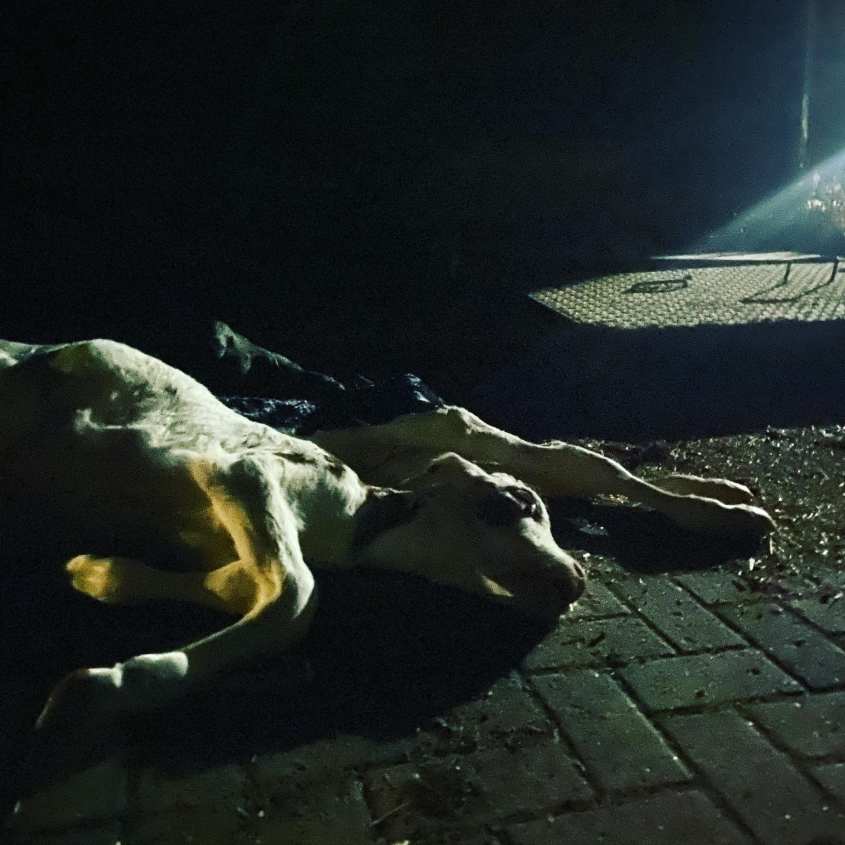
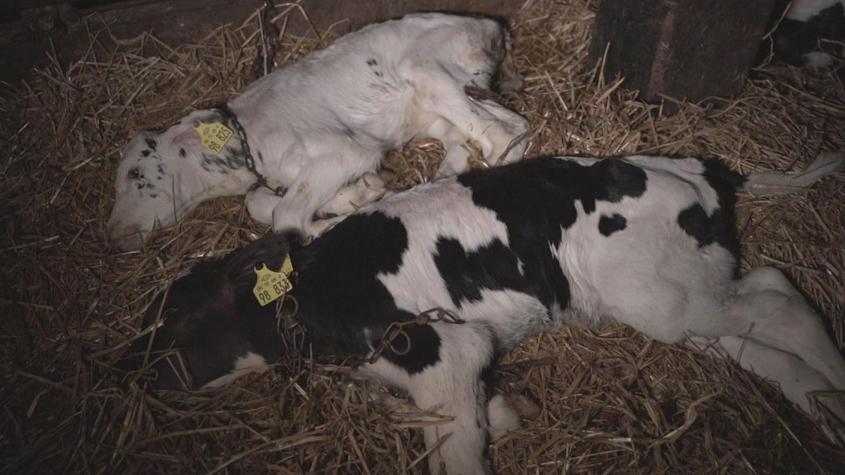
Two months after the release of an initial investigation, Essere Animali is releasing today a new video filmed on another dairy farm producing Grana Padano, the most widely consumed PDO cheese in the world. The footage shows dead calves, and exposes serious hygienic and sanitary neglect by the farm management, with animals forced to live and give birth among their own excrements.
Bologna, 29 September – After the release of an initial investigation on a dairy farm producing Grana Padano, which documented unacceptable living conditions for calves and violence by workers towards the animals, Essere Animali is publishing a new video filmed on another farm.
By releasing this second investigation, Essere Animali wishes to respond to the objections of the Grana Padano Protection Consortium, which previously dismissed the documented problems as isolated cases.
The new investigation exposes conditions on a farm located in the province of Brescia (Italy). The dairy production site is located next to the sheds which house some 1,000 animals, including cows and calves.
The undercover video by Essere Animali reveals:
• The presence of many dead calves, who died on the farm;
• Obvious hygienic and sanitary shortcomings, which indicate general neglect in the management of the farm;
• The birth of calves and ensuing separation from their mothers;
• The sheltering of calves in individual pens.
“With the first investigation on a farm in the province of Bergamo, we documented violence and insulting behaviour towards animals, while this new video of a farm in the province of Brescia shows inconceivable conditions of neglect, with animals forced to live in enclosures that are flooded or covered with excrement to the point that they struggle to move. Calves are also born in an unsanitary environment, conditions that presumably contribute to the high mortality rate found on the farm. With our investigations, we have unfortunately demonstrated that irregularities on factory farms are not isolated cases,” commented Simone Montuschi, President of Essere Animali.
The footage also highlights the maltreatment of calves on dairy farms, in particular the separation of calves from their mothers – which takes place immediately after birth – and their subsequent solitary confinement in small individual pens.
These practices are permitted by law and are carried out on almost all dairy farms, including those producing milk for ‘premium’ Italian products such as Grana Padano, but various studies demonstrate that such practices subject animals to social deprivation, stress, and suffering.
With the release of this investigation, Essere Animali is relaunching the No Animal Left Behind campaign, coordinated by Eurogroup for Animals, an organisation that brings together 79 animal protection NGOs in 24 EU member states, as well as the UK, Switzerland, Serbia, Norway, Australia, and the US.
These organisations are calling on the European Commission – which is committed to the Farm to Fork strategy, an initiative aimed at making the European food system fairer, healthier and more environmentally friendly – to revise the legislation on the protection of farm animals, which is currently considered grossly inadequate to guarantee them a life free from avoidable suffering.
With regard to the conditions of calves, Essere Animali and Eurogroup for Animals are calling for a revision of the current EU animal welfare laws to:
• Allow contact between the calf and the mother for at least eight weeks after birth, during which the animals must be kept in a system that provides for contact for at least half the day, with suckling permitted;
• Provide shelter that meets the behavioural needs of calves, which should be raised in groups and have access to outdoor areas
“This latest investigation proves for the upteenth time that most dairy farms don’t respect basic animal welfare rules but on the contrary, that calves and cows are treated as mere commodities. The revision of the legislation on farm animals is the opportunity for the European Commission to change once and for all this situation without leaving a single animal behind”, commented Reinke Hameleers, CEO, Eurogroup for Animals.
WAV Comment – over many decades campaigning for the rights of animals, I have seen my fair share of disturbing things. Sadly, this expose by PeTA at one of the Nippon Ham facilities in Japan is just another very disturbing investigation which has revealed the horrendous suffering of pigs.
I am providing information and links below; including video footage.
This is disgusting, the human filth that undertakes this cruelty on a daily basis cannot be classified as ‘normal’ human beings; they are the kind that dominated in prisoner camps in the past. This campaign needs your full support and actions. Please do it.
Crosspost please to as many contacts as you can;
Regards Mark
Piglets Slammed Into Concrete, Left to Die at Nippon Ham Farm in Japan
A new PETA video exposé of Japan’s leading pork producer, Nippon Ham, reveals that piglets and their mothers endure horrific abuse. While the company claims to care about human happiness and the “joy of eating,” it’s obviously not concerned about animal welfare. Pigs who are raised and killed for food don’t experience joy or anything else that would make their lives worth living.
Their lives are full of pain and suffering. See for yourself:
Very disturbing Video footage – But Must Be Watched:
Workers at Nippon Ham grab piglets by their sensitive ears and toss them around like inanimate objects.
Those who aren’t considered “profitable,” because they’re too small or sick, are thrown out like garbage.
Workers typically kill unwanted piglets by swinging them in the air and bashing their heads on the concrete floor or by injecting them in the heart with disinfectant. One piglet writhed in agony for five minutes after a worker poisoned him this way.
Another languished for an hour and finally died after a worker bashed his head against the concrete floor.
Piglets at Nippon Ham are taken away from their mothers when they’re as young as 22 days old, just as they are on most pig farms. Workers castrate them and chop their tails off without any pain relievers. A worker was caught on camera cutting into a young pig’s scrotum and yanking out his testicles with his fingers.
Suffering and Nowhere to Turn
Mother pigs, or sows, are forced to spend most of their miserable lives crammed inside metal crates that are so small they can’t even turn around. Their muscles atrophy and they’re constantly stiff and sore. They have no choice but to urinate, defecate, eat, and sleep all in the same cramped crate. Workers were even seen beating them with a heavy piece of the metal frame.
The traumatized sows had to endure the sight of their own piglets’ suffering right in front of them. Their babies squealed and thrashed violently while workers crudely castrated them or cut off their tails, and there was nothing that the mother pigs could do.
Born Into a Life of Abuse
Thousands of sows are confined and repeatedly raped via artificial insemination. They deliver litter after litter of piglets, who are always torn away from them to be raised for meat or breeding. When sows who aren’t forced to live on filthy factory farms are about to give birth, they make a nest in the dirt and cover it with soft grass and leaves. But at Nippon Ham, pregnant pigs have to stand on uncomfortable metal grates. After several years of round-the-clock imprisonment and frequent inseminations and pregnancies, they become exhausted and they’re sent to slaughter.
You Can Help Stop Cruelty to Pigs
Cruelty is pervasive in the meat industry, which treats animals as commodities rather than as living, feeling beings. There’s no need for anyone to eat ham, bacon, sausage, or any other animal-based foods—tasty vegan options are available at most restaurants, stores, and cafeterias today. It’s easier than ever to leave pigs and other animals off your plate.
Will you help pigs by refusing to buy pork and other animal-derived foods?
I watched the PETA video and it truly made me sick to my stomach. If it is within my power, I WILL NOT buy any Nippon Ham product. The people treating those poor pigs like that should be fired.
Thank you for your comment. – yes, disgusting ! – WAV