Category: General News

EU: No Animal Left Behind: why do farmed rabbits need specific laws to protect their welfare?

3 April 2023

Across Europe, millions of caged rabbits are living in a real-life horror story. Crammed into tiny prisons with their peers – with no access to things to interact with and nowhere to exercise, play, and rest – their daily lives are filled with boredom, frustration and physical and mental suffering. The European Commission has the power to change that when revising the animal welfare legislation this year, by including specific laws for rabbits that address their needs.

Rabbits are fascinating, complex animals. Curious and social by nature, they love living in groups and socialising with others – but like any sentient being, it’s also important to them to be able to rest and spend time alone. What’s more, their teeth are always growing, so it’s important for rabbits to always have something to chew on.

Unfortunately, these essential needs are far from met in Europe’s current farming systems. Rather than having the space and opportunities to truly be themselves, rabbits are forced into tiny cages – many of which are no bigger than an A4 piece of paper – and, as our recent exposé revealed, forced to spend their days in the most miserable conditions.

Rabbits in cages experience a wealth of problems – some of which are deadly

These poor beings:

Are frequently stressed and frustrated, which can lead to injuries and health issues. In turn, a higher number of antibiotics are often used on factory farmed rabbits, driving the antimicrobial crisis

Are unable to move their bodies properly – many can’t even stand up or stretch out. This is mentally and physically distressing, and can cause painful problems such as frail bones

Struggle psychologically – high cortisol and low dopamine/serotonin levels are commonly seen in factory farmed rabbits, which are major indicators of poor mental health

Often suffer from digestive disorders due to poor hygiene – which can cause high mortality rates with kittens (baby rabbits) in particular

Can’t look after themselves or follow their instincts – with no materials to chew on, rabbits in cages can’t do anything about their ever-growing teeth, resulting in even more pain and difficulty eating.

Learn more about these issues on pages 17 – 19 of our new exposé report.

Europe’s farmed rabbits don’t have to live this way

Many of the problems farmed rabbits face are enabled by existing loopholes and oversights in the European Commission’s animal welfare legislation. What’s more, there are no existing laws that address the welfare of farmed rabbits specifically – which they desperately need. 

The European Commission has the power to change all of this when they revise the animal welfare legislation later this year, by including strong, precise, and  targeted rules for rabbit welfare that take into account their unique natures. 

Farmed rabbits have not been domesticated for as long as other farmed species, and still exhibit the same behaviours and instincts as seen in their wild counterparts. Life in a cage is an unimaginable struggle for them, and having already promised to End The Cage Age following a successful ECI, the European Commission must now consider how to phase out cages for these dynamic beings in a swift and effective manner. We’ve already done a lot of the groundwork by compiling case studies, scientific evidence, and data from across the EU that explores this transition in our new report.

Rabbits deserve better. They need their freedom and space, along with access to good nutrition, clean water, and enrichment materials with which they can play and look after themselves properly. There is no substitute for these basic needs.

We’re trying to change history for farm animals this year through phase two of the No Animal Left Behind campaign. Find out more.

Regards Mark

England: Good Hugs; Bad Hugs.

Please, no more bad hug nights like this; the right night hug is wonderful and sexy, but only when you get it from someone special; and it is not done by un unseen ‘thing’; then it becomes a bastard.

Fortunately, there are brilliant bands like the Cure; so they bring some solace when things are down.

Sorry folks for not posting recently, but have been having REAL BAD fights with my MS over the last few weeks – we all enjoy a hug, but not this kind.

As the guy says here, it is NOT a nice hug:

Regardless, have been doing a little with a friend still about live animal transport.

Anyway, things a little better today so will try and catch up with a few things; here we go.

Joint letter urges EU Chief Veterinarians to put animal welfare issues on the agenda

3 April 2023

Djurens Rätt

Together with Djurens Rätt, Eurogroup for Animals and eleven other organisations have sent a letter to the EU’s Chief Veterinary Officers (CVOs) asking to put important animal welfare issues on the agenda at the upcoming CVO meeting in April.

Ahead of the EU Chief Veterinary Officers’ (CVOs) planned meeting in Varberg, Sweden, on 25-28 April this year, Djurens Rätt has sent a joint letter along with twelve other animal protection organisations to the chief veterinarians.

The meeting’s theme is sustainability and will address current issues in the fields of animal health, welfare and food safety. 

The letter outlines key animal welfare issues to be addressed at the meeting and urges the group to actively participate in the ongoing legislative process at EU level. They are also invited to participate in a meeting with signatory organisations to further discuss the content of the letter.

The letter addresses the following issues:

Reduced meat consumption and improved welfare for safe and sustainable food production

 A Fur Free Europe

An end to caged animals (End the Cage Age)

Strengthened animal welfare for fish

An end to the distressing and cruel transport of animals

Enhanced animal welfare at slaughter

The full text of the letter is available here.

File

Joint letter to the CVO group for the April 2023 meeting_20230331.pdf261.03 KB

With this letter, a significant part of the international animal rights and welfare movement is sending clear messages to the EU Chief Veterinary Officers ahead of their meeting on sustainability in Varberg in April. Animal welfare is an important part of sustainability and I do hope that the entire CVO group is inspired by the content of the letter, to put the best interests of animals on the agenda and to use the opportunities they as a CVO group have, to contribute to strengthened animal welfare at EU level. 

Camilla Bergvall, President of Djurens Rätt

Hope to be posting more today, but please just accept things have been and are difficult at the moment.

Regards Mark

EU: Press Release – Time For EU Fossils To Update Animal Welfare Rules.

New evidence reveals systematic cruelty of industrial animal farming

23 March 2023

Press Release

Evidence of widespread animal suffering was delivered to the European Commission (EC) today to strengthen its resolve as it prepares the revision of the animal welfare legislation due later this year. We’re calling on the EC to seize the incredible opportunity ahead of us to enact the system change we need for animals.

Thanks to the investigations of our over eighty member organisations in 25 Member States, we at Eurogroup for Animals delivered a video and report today to the EU Health and Food Safety Commissioner, Stella Kyriakides

EU welfare rules remain limited, poorly enforced, and plagued by loopholes, leading to widespread suffering in the farming sector. From the cruel handling of broiler chickens to chaining the back legs of dairy cows, the new exposé reveals how the EU’s farmed animals are being callously treated by those who are meant to care for them.

The EC has an opportunity to deliver – in line with its ambitions contained in the Farm to Fork strategy – a future-proofed legal foundation for evidence-based standards, that provide the ability for all farmed animals to experience a positively affected mental state and lead lives that are truly worth living. Any farming practices that cannot meet such requirements should, in effect, be eliminated. In doing so, the EU would remain a world leader in animal welfare standards, citizens’ expectations would be met, and no animal would be left behind.

A formal impact assessment on the coming proposals is expected to be finalised by the beginning of April, and all the reasons why the legislation needs to be ambitious are there: in 2021 the EC pledged to end the cage of farm animals by 2027, and EU scientific advisors also say that unweaned calves should not be transported. 

Despite the strength of public support shown for the End The Cage Age ECI and the No Animal Left Behind campaign, we at Eurogroup for Animals are concerned that pressure from an array of well-established animal farming interests could weaken the EC’s resolve. Eurogroup CEO, Reineke Hameleers, commented:

The new hard hitting evidence shows once again that the EU is responsible for the biggest animal welfare crisis ever: industrial animal farming. Animals have been decimated into objects as cogs in a big machine whereas the EU legislation is expected to meet their natural needs. This year the European Commission has the once in a lifetime opportunity to turn the page. It is crucial to avoid technocratic changes but to be bold and ambitious. 

Regards Mark

IPCC findings confirm urgency to make sustainable healthy diets easy, says NGO coalition.

IPCC findings confirm urgency to make sustainable healthy diets easy, says NGO coalition

20 March 2023

Press Release

In light of the findings to be released today by the Intergovernmental Panel on Climate Change – that changes to our diets can substantially slash greenhouse gas emissions – we at Eurogroup for Animals are calling for better ‘food environments’ in the EU (1) alongside other influential organisations. This means concrete measures to make healthy, more plant-based diets with ‘less and better’ animal products the easy choice for European consumers.

We’ve recently formed a coalition with the European Consumer Organisation (BEUC) and European Public Health Alliance (EPHA), as the European Commission is due to propose a landmark law on sustainable food systems in September. The law is expected to recognise the role and influence of ‘food environments’ in shaping consumer food choices.

Food is among the sectors where demand-side changes can be most impactful. Yet currently, food environments largely push consumers towards unhealthy and unsustainable foods which are the most available and advertised, as well as often the cheapest options.

IPCC experts recognise the right policies and infrastructure need to be in place to enable shifts to sustainable healthy diets (2). Incredibly, changes to our lifestyles and behaviour can result in a 40-70% drop in greenhouse gas emissions by 2050, while also improving our health and wellbeing (3)!

Our coalition, named ‘Put Change on the Menu’, therefore urges action to:

Ensure that foods contributing to sustainable healthy diets are the most advertised and promoted;

Make sustainable and healthy foods more affordable;

Make food products healthier and more sustainable by design through new minimum legal requirements;

Ensure that these minimum requirements also apply to imported foods.

Reineke Hameleers, Eurogroup for Animals Chief Executive Officer, commented:

European citizens care deeply about animal welfare and have made strong calls for animal welfare to be improved. Products from higher welfare systems in combination with more plant-based food on European plates are also good for the planet and health. Still we see numerous campaigns promoting the consumption of animal products in the EU. This needs to change. Therefore we are joining forces with consumer and health organisations to make sure that the healthy, sustainable option is the one that is the most promoted along the lines of ‘less and better’.

Monique Goyens, BEUC Director General, commented:

Sustainable healthy diets are a win-win for health, climate and food security. Most consumers are willing to change their food habits, such as eating ‘less and better’ meat and more fruit, vegetables and pulses. But that is no easy task. Change must be rolled out at several levels to make the healthy sustainable choice the obvious choice. Regulators, food producers, and retailers have a crucial role to play to adjust pricing, marketing, and every other factor that pushes us to buy one food product over another.

Milka Sokolovic, EPHA Director General, commented:

Making healthy and climate smart food choices the easiest options for all is not just needed to reduce the very real threats to health posed by climate change highlighted in the IPCC report. It’s also needed to help tackle the burgeoning burden of ill health that poor diets largely contribute towards.

Notes

In its 2020 ‘Farm to Fork’ Strategy for fairer, healthier, and greener food and farming, the European Commission announced a new EU legislative Framework for a Sustainable Food System for 2023. This horizontal law will introduce definitions, sustainability objectives and principles to ensure that existing and future EU legislation about food consistently contributes towards the goal of a sustainable food system which operates within planetary boundaries. 

For our coalition, it’s vital that the Framework for a Sustainable Food System paves the ground for further concrete policy measures addressing specific elements of food environments such as advertising and marketing, labelling, public procurement and the affordability of healthy and sustainable food.

(1) The Synthesis Report, the closing chapter of IPCC sixth assessment cycle, will integrate the findings of previous reports released by IPCC during this cycle which began in 2015, including that of Working Group III on ‘Mitigation of Climate Change’ which tackled demand-side mitigation solutions.

(2) Which in the EU means eating more fruit, vegetables, wholegrains, and pulses, and ‘less and better’ meat and dairy.

(3) See IPCC Working Group III contribution published on 4 April 2022.

Food environments have been defined as the “physical, economic, political and socio-cultural context in which consumers engage with the food system to make their decisions about acquiring, preparing and consuming food.”

Regards Mark

UK: Get On With It For Gods Sake Government – Battersea Dogs and Cats Home urges Government to bring back animal welfare bill to benefit so many animals. There IS time, so do it !

Pets4Homes report

A leading animal rights charity is calling on the UK Government to do more to protect pets from abuse.

Battersea Dogs and Cats Home has launched a petition and is urging people to sign it and write to Prime Minister Rishi Sunak to call for the Kept Animals Bill to be brought back to Parliament as soon as possible after months of stalling.

Michael Webb, head of Policy and Public Affairs at Battersea, said: “It is deeply concerning that the Government has continued to fail to commit to a clear timetable to ensure the progress of this Bill. Time is running out, and the harm to animals that this legislation could help counter is still going on.

“We’re urging our supporters to write to the Prime Minister, Rishi Sunak, and call for the Kept Animals Bill to be brought back to Parliament as urgently as possible. The Bill is essential to improving animal welfare in the UK. It would make dog abductions a specific offence in law, and enable the closure of loopholes allowing the importation of dogs and cats with horrific mutilations. 

“Many of these animals are being smuggled into the country in dangerous conditions, completely off radar and forgotten about. 

“With progress stalled, we need your support to break the deadlock. Help us convince the Prime Minister that the Bill must be prioritised as a matter of urgency.

What is the animal welfare bill?

The Animal Welfare (Kept Animals) Bill will look at addressing several significant animal health and welfare issues that are not covered by the law at present.

Under the bill, issues will be tackled including puppy smuggling, dog thefts, prohibiting the import of dogs with cropped ears, and a review of zoo standards across the UK.

[This is a] golden opportunity to improve the health and welfare of billions of animals

British Veterinary Association

Why is it important?

There are currently no laws to protect animals to the level these powers would. Five areas are being looked at specifically. Under the plans, the Government will introduce new powers to tackle the unethical trade of puppy smuggling by reducing the number of pets (dogs, cats, and ferrets) that can travel under pet travel rules. It will also make stealing a pet illegal. At the moment, your pet is considered an item of property.

It will also put bans on exporting live animals for slaughter, and will become the first European country to end the practice, seen as unnecessary cruelty.

Primates will also be banned from being kept as pets and more protection will be given to farmed animals, with police given extra powers to combat dangerous and out-of-control dogs.

What has been the delay?

The Kept Animals Bill was first introduced in the House of Commons on June 2, 2021 and carried over into the 2021-22 Parliamentary session, with its remaining stages scheduled for September 19, 2022.

The date was cancelled after the death of the Queen, and progress of the Bill has since stalled.

Who else supports the animal welfare bill?

As well as Battersea, a whole host of animal rights campaigners support the introduction of the Bill. The Dogs Trust and the RSPCA have encouraged the move, while one of the loudest supporters, the British Veterinary Association, labelled it as a “golden opportunity to improve the health and welfare of billions of animals”.

A spokesman said: “We are urging the Government not to let this important piece of legislation slip through the net.”

What animals are covered by the welfare bill?

The new Animal Welfare (Kept Animals) Bill will improve welfare standards for a wide range of animals. It will help pets, farmed animals, and kept wild animals.

Register now for one of the Evening Standard’s newsletters. From a daily news briefing to Homes & Property insights, plus lifestyle, going out, offers and more. For the best stories in your inbox, click here.

Continue reading at

Battersea Dogs and Cats Home urges Government to bring back animal welfare bill (msn.com)

Regards Mark

UK: Trophy Hunt Ban – Government Has Not Checked Things Enough – Trophy Hunters Can Still Import Mass Dead Body Parts to the UK If They Go First Via Northern Ireland (Still part of UK). !!

Following on from our post yesterday relating to a ban in the UK of trophy hunting imports:

UK: We Have Values, and Being Part of a Trade In Endangered Species Body Parts Is Not Part of Those Values. – World Animals Voice

.. it now appears that the press have delved into this more and found that all is not as perfect as was first sold.

The law to ban trophy hunting imports was approved by MP’s very recently. (See above link).  This has now been exposed as a bit of a farce – why ? – the rules will NOT apply to Northern Ireland, and DUP (Democratic Ulster Unionist Party) MP’s have said that the bill is undermined and that Ulster (in Northern Ireland – part of the UK); will be used as a ‘backdoor’ by trophy hunters to continue getting murdered animals from the hunts into the UK.

It basically means that trophy hunters would be able to fly into Belfast (Northern Ireland), loaded up with dead hunted animals body parts; and then simply cross the Irish Sea to the UK.

Now that the Bill will be moving into the House of Lords before it becomes legislation; where it will undergo a lot of scrutiny; we can ony hope that all the loopholes will be exposed and corrected in the draft legislation.

If things are not entirely sorted out before becoming law; then one has to question all the actions undertaken so far by the government – it would appear that the Bill may have been rushed through Parliament without anyone looking into all the loopholes of what exists; there are even some saying that this current proposal may infact kill more animals than things in the past.

It would appear to currently be a failure to support the excellent work of so many anti hunt organisations and personnel; we can only hope the Lords will undertake an in depth review of the draft Bill before it ever becomes legislation – otherwise, what is he point of it all ?

Sticky time for the government; doing so much wrong as they often do.  General Elections not that far away now so that people can vote on issues such as this and many others; faith or no faith ?

Regards Mark

UK: We Have Values, and Being Part of a Trade In Endangered Species Body Parts Is Not Part of Those Values.

This is about the values that we in Britain have, that we do not want to be part of a trade in endangered species’ body parts.

On Thursday 16/3/22, the UK Parliament in London voted (un opposed) and passed the ‘trophy hunting law’; which will now (once passed into law / legislation very soon) stop trophy hunting ‘items’, including hunted animals heads, the skins and tusks of murdered animals etc from being imported into the UK by the sadistic blood lust killers who pay highly financially to travel to Africa in order to undertake their murdering ‘sport’ (as they see it).

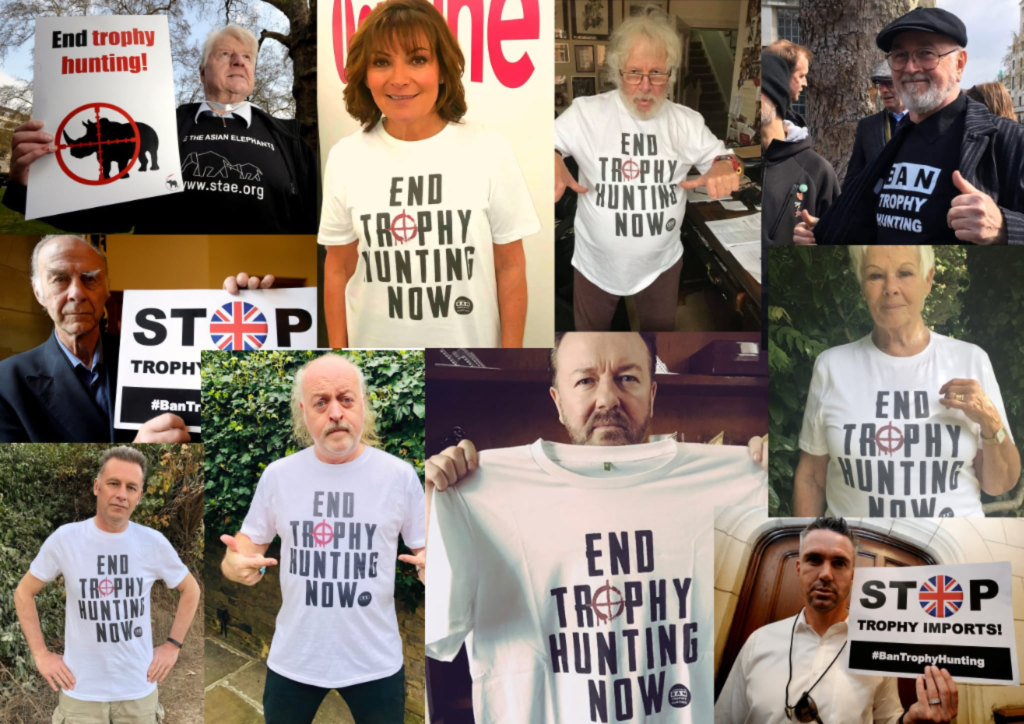
Many organisations, celebrities and good ol normal people here in the UK have campaigned about getting this legislation for years.

As expected, ‘pro hunt ‘conservation groups’ (??) have come out of Africa and expressed their concerns – you can read more here:

UK parliament passes trophy hunting law – Digital Journal

Saying things like ‘it is another way of re-colonising Africa’; But we here in England were ‘colonised’ by the Romans when they invaded us in 55BC; we were also invaded a lot by the Vikings; but hey, that is what happens and is called history; I may have been bummed off as an Englishman in 55BC; but throughout history, times and things change; and for me, this ban is very much to the positive; not really a move to re-colonise Africa !! – get a grip please, most of the world detests hunting animals for ‘sport’; and so they will work to oppose it.

Further reading:

UK parliament passes trophy hunting law (ibtimes.co.uk)

Bill banning import of hunting trophies into UK passed by MPs | Hunting | The Guardian

Bill banning import of hunting trophies into UK passed by MPs | Evening Standard

Cecil the lion did not die ‘in vain’, minister says as trophy-hunting ban passed (kentonline.co.uk)

Regards Mark

Check out all our old trophy hunt posts at:

Search Results for “trophy hunting” – World Animals Voice

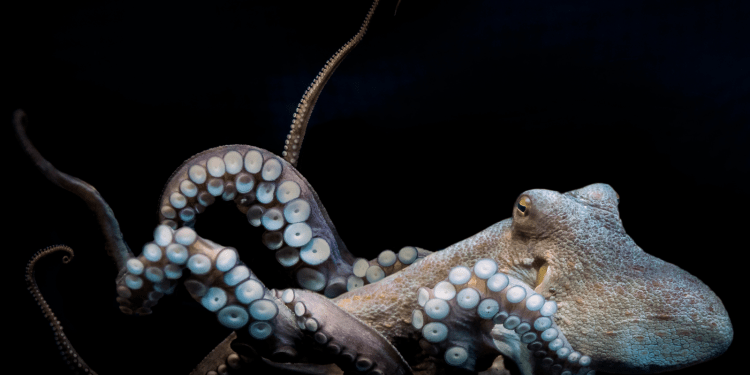
England: CIWF – Uncovering the horrific reality of octopus farming.

Uncovering the horrific reality of octopus farming

16 March 2023

CIWF

Eurogroup for Animals and Compassion in World Farming are calling for the world’s first commercial octopus farm to be scrapped, after plans obtained for its development revealed the animal cruelty and environmental consequences it would cause. Furthermore, they are calling on the EU not to use public funds to support octopus farming developments, or any other new industrial animal-based farming in the light of significant and growing scientific evidence that it is killing our planet.

The plans, submitted to the General Directorate of Fishing of the Government of the Canary Islands by the company Nueva Pescanova, and uncovered by Eurogroup for Animals, have raised serious concerns. These include the use of a cruel slaughter method, the confinement of octopuses in small barren tanks, and practices that contribute to the overexploitation of wild fish populations. The campaigners’ concerns over the plans are outlined in the new report Uncovering the horrific reality of octopus farming and confirmed by scientists in the field. 

They reveal that around one million octopuses will be reared at the proposed farm in the Port of Las Palmas in Gran Canaria, Spain, producing some 3,000 tonnes of octopus each year. 

They also confirm the campaigners’ fears that a number of extremely concerning practices would be implemented, including that octopuses would be:

Slaughtered using cruel ice slurry: a highly aversive and inhumane method scientifically proven to cause considerable pain, fear and suffering as well as a prolonged death. 

Confined in crowded, barren underwater tanks that will result in poor welfare and risk aggression, territorialism and even cannibalism due to the octopuses’ naturally solitary nature. 

Exposed to round-the-clock unnatural light to increase reproduction, which will cause undue stress given the aversion these animals have to light.

Fed with commercial feeds containing fishmeal and fish oil as main ingredients, which is unsustainable and contributes to the overfishing of wild populations. 

Raised within a land-based aquaculture system relating to higher risk of mass mortality due to the overcrowded conditions required for their profitability as well as negative environmental impacts stemming from the excessive use of energy.

In 2021, Compassion in World Farming released the report Octopus Factory Farming: A Recipe for Disaster, arguing that octopus farming is cruel and would cause environmental damage to our oceans. According to the report, experimental trials to farm octopuses suggest that the mortality rate in these systems would be around 20%, meaning that 1 in 5 individuals would not survive the entire production cycle.

Although, if approved, the Canary Islands farm would be the world’s first industrial octopus farm, there are attempts to establish similar octopus farms in other parts of the world such as Mexico and Japan. In February, Washington State in the US signalled a move toward banning octopus farming, which would be the first of its kind. This followed the recent closure of the only active octopus farm in the US, the “Kanaloa Octopus Farm” based in Hawaii, in response to Compassion in World Farming’s campaign. 

Octopus has become an increasingly popular food in recent decades, particularly in Spain. As a result, wild octopus numbers are dwindling. In 2015, the number of octopuses caught around the world reached a high of 400,000 tonnes – 10 times more than in 1950.

Blindly establishing a new farming system without consideration of the ethical and environmental implications is a step in all the wrong directions and flies in the face of the EU’s plans for a sustainable food transformation. With the current revision of the animal welfare legislation, the European Commission now has the real opportunity to avoid the terrible suffering of millions of animals. We cannot afford to leave aquatic animals behind. We’re calling on the EU to include a ban on octopus farming before it ever sees the light of day, in order to avoid plunging more sentient beings into a living hell.

Reineke Hameleers, CEO, Eurogroup for Animals

We implore the Canary Islands authorities to reject Nueva Pescanova’s plans and we urge the EU to ban octopus farming as part of its current legislative review. It will inflict unnecessary suffering on these intelligent, sentient and fascinating creatures, which need to explore and engage with the environment as part of their natural behaviour. Their carnivorous diets require huge quantities of animal protein to sustain, contributing to overfishing at a time when fish stocks are already under immense pressure. Factory farming is the biggest single cause of animal cruelty on the planet, and it’s literally destroying our planet. We should be ending factory farming, not finding new species to confine in underwater factory farms. We must end octopus farming now.

Elena Lara, Research Manager at Compassion in World Farming

Uncovering the horrific reality of octopus farming

BROWSE TO THIS PUBLICATION

Regards Mark