It was the largest dog slaughterhouse in South Korea, a hellish place where hundreds of cramped metal cages confined terrified dogs, suffering as they awaited a painful and traumatic death courtesy of the dog meat trade.
But last week saw the closure of the notoriously brutal Taepyeong slaughterhouse in Seoul, as animal activists gathered to witness the bulldozing of the site.
Humane Society International, Korea Animal Rights Advocates and the Korean Animal Welfare Association worked with the Seongnam City Council to shut down Taepyeong, a move that signifies a growing willingness within South Korea to put an end to the cruel trade.
“Both as a Korean citizen and an animal campaigner, it was incredibly moving for me to be a part of the historic closure of this notorious dog slaughterhouse,” said Nara Kim, HSI/Korea’s dog meat campaigner. “This really feels like a landmark moment in the demise of the dog meat industry in South Korea, and sends the clear message that the dog meat industry is increasingly unwelcome in Korean society.”
Five of the six slaughterhouses at Taepyeong were to be bulldozed immediately, with the sixth to follow once permits are acquired. The site is destined to be converted into a community park.
In further positive progress, the renowned Moran Market — once the largest dog meat market in South Korea — closed down its last permanent dog meat vendor. This market was once estimated to provide 30-40% of the dog meat in the nation and was responsible for the death of around 20,000 dogs every year.
South Korea has long been targeted by animal activists for their dog meat trade, in which an estimated 700,000 to one million dogs are slaughtered every year. Although the consumption of dog and cat meat is widespread throughout Asia, this is the only nation where dogs are intensively farmed for their meat.
With Taepyeong out of action, activists are optimistic that other slaughterhouses will suffer the same fate, spelling the end for this horrifically cruel industry in South Korea.
“Taepyeong’s closure is an historical event, and hopefully may trigger the closure of other illegal dog slaughterhouses throughout the country,” said Hyunji Kim from Korea Animal Rights Advocates. “Until we achieve this, we really appreciate the support of both Korean people and global citizens who love animals, for helping our campaigns to completely end dog meat in Korea.”
Vegetarian “meat” manufacturer Quorn opened its new mega factory in Billingham, Teesside in the UK this month, with the aim of doubling production of their core products to accommodate increasing customer demand for vegetarian and veganmeat alternatives.
The new site lays claim to being the largest meat-alternative production facility in the world and expects to deliver 1.33 million packages of Quorn every week — the equivalent of meat from 1600 cows.
The meat alternative industry is experiencing rapid growth, as consumers respond to both ethical and environmental concerns around its consumption. Quorn reports an impressive 15% in growth annually over the last few years and cite research that says the UK is the “most advanced meat-free market in the world.”
A report released earlier this year projected that market for meat substitutes will increase at the rate of 6.8% every year, and will be work 6.3 billion USD by 2023.
“Around the world we are seeing a significant increase in meat-reduction diets, including both flexitarianism and veganism,” says Quorn Foods CEO Kevin Brennan.
The company said that the new facility will enable them to further reduce carbon emissions — part of their core environmental sustainability commitment. They have already removed 297 tonnes of non-recyclable plastic from the supply chain and have pledged to use only 100% recyclable, reusable or compostable packaging by 2025.
Although the UK is an important market for Quorn products, the US is also a key target market for the company.
Quorn products are produced from a mycoprotein derived from a kind of fungus grown by the process of fermentation. In many Quorn products, egg is a key ingredient; however, the company have introduced a vegan version and say they are committed to producing a wider range of vegan products in the future.
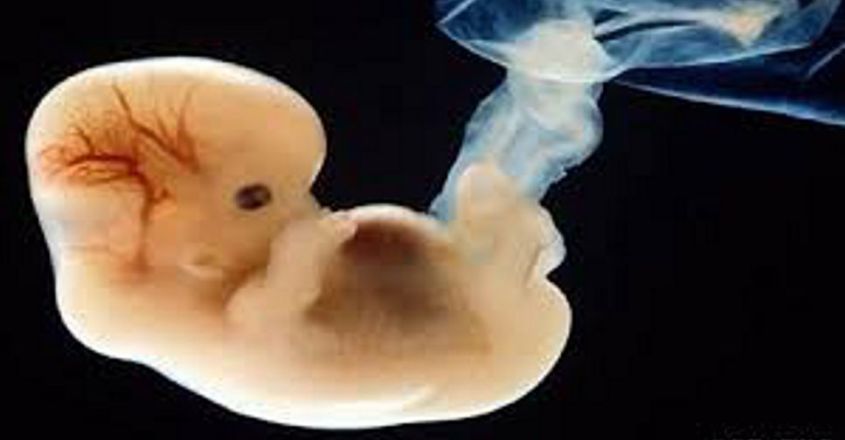
In China, embryos were born by Crispr resistant to HIV. Based on the current case, you see that all the media publish a message without even checking the facts. The message should not have been published according to Chinese media. In the face of many doubts, the official Chinese news agency Xinhua reported that the National Health Commission has ordered the immediate “investigation”. Many scientists warn against a Pandora’s box, but as early as 2011,the first genetically modified baby saw the light of day and triggered a debate on ethics.
In 2011, the first child with three DNA strands was born in England.
Britain is the first country in the world that allows human embryonic gene manipulation. This manipulation of the genes outraged physicians, ethicists and politicians worldwide. The process is a pure experiment and no one can say whether the children would suffer any later health damage from their conception. There was talk of a “nightmare” and the “beginning of human breeding”. Once again in 2014, the first genetically engineered people saw the light of day. Now again worldwide outrage and again a debate on ethics that succeeded in China, the creation of genetically modified designer babies.
And maybe it’s 2019: First genetically modified human got first genetically modified designer baby, that’s not impossible!
That research knows no bounds is not new, and instead of creating global guidelines, one is only outraged and continues to do research.
In China, embryos were made resistant to HIV with the Crispr tool (“Clustered regular interspaced short palindromic repeats” = It is an enzyme used as a processing tool, allowing scientists to cut out parts of the genome) Such interventions are highly controversial.
Two Chinese girls, Lulu and Nana, were said to have been born healthy a few weeks ago. But China is not pleased, and due to the ethical controversy over this technology, the “People’s Network” of the Communist Party, the first to report “successful research”, has been removed.In addition, an extensive investigation has now been announced by the Chinese government.An American scientist said he had participated in the work in China, but this type of “manipulation of genes” is banned in the United States because the DNA changes could be transferred to future generations and other genes violated.
The case is not officially published yet.
It also can not be published because it has banned the Chinese government, as can be seen in the Chinese media today. But the world has yet another attraction!
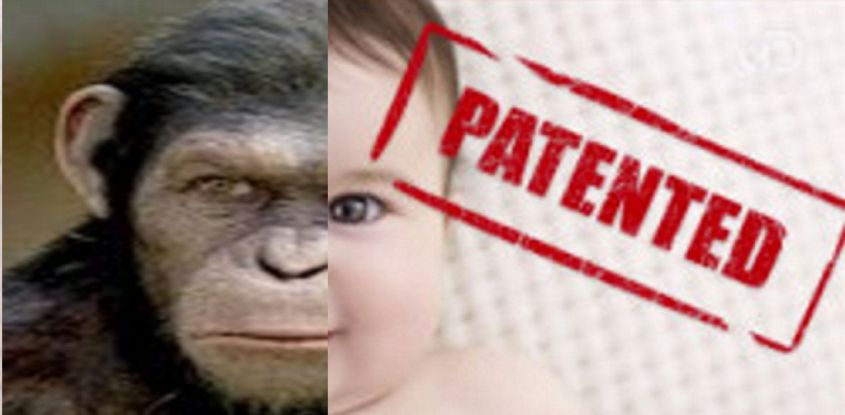
Just like building a very powerful computer, the new CRISPR medical technology can change people by accurately and efficiently manipulating genes. DNA eliminates the defects of genetic diseases, strengthens the genes of high quality and creates a perfect baby. Would you like to order one?
An interesting perspective: Imagine that parents bring superbabies into the world with bones so strong that no surgical drill can penetrate them, and a heart that is less susceptible to disease. Then you find yourself in a world where a child has its DNA of three parents instead of two, a world in which a woman can have a child of her favorite actor by simply collecting some of her skin cells. Genetic engineering makes it possible. Some startle it and others encourage it.
Today there are no limits to research – and Frankenstein himself would never have thought for possible what is possible in research today!
Videos of animals being tortured and killed by beautiful women are going viral in China. Nearly 400,000 videos tagged “abusing animals” are reportedly uploaded each day.
Videos depicting the torture of helpless animals in China are going viral on the internet. These videos feature attractive women, often wearing stockings and high heels, performing acts of animal cruelty and even murder.
Experts claim this trend has been brewing since at least 2010, when a video of a woman impaling a bunny rabbit by stomping it with high heels surfaced on the internet. The Beijing News claims that many of these videos are produced for pay-as-fetish entertainment.
The Cat and Dog Welfare Program of the Animals Asia Foundation claim that nearly 400,000 videos with the “abusing animals” tag are uploaded to Iqiyi, China’s largest video hosting site, each day.
Full-length or specially tailored videos of women torturing and killing animals can sell for between 10 to 10,000 yuan. An anonymous source within the animal abusing video industry told the Beijing Times that, while a typical stomping video costs around 500 yuan, a video in which the entertainer castrates or skins an animal alive can cost as much as 15,000 yuan. The Animals Asia Foundation claims that while Chinese laws are in place to protect endangered and exotic animals, there are not enough protections for the common animals that are the victims in these videos.
Please sign this petition to demand that the Chinese government crack down on for-profit fetish video depicting animal torture.
PETITION LETTER:
Dear Minister Zhenghua,
Videos featuring the slaughter and torture of animals are surfacing and going viral on Chinese video hosting websites. These videos often involve attractive women mutilating, castrating, or skinning living house pets or farm animals and are thought to be produced as fetish entertainment. This trend has been related to the notorious 2010 video of a woman impaling a bunny rabbit with her high heeled shoes. An industry insider reported to the Beijing News that videos of animal abuse can earn as much as 15,000 yuan depending on the amount of specifically tailored cruelty involved.
As many as 400,000 videos with tags like “abusing animals” are uploaded to Iqiyi each day, according to the Cat and Dog Welfare Program of the Animals Asia Foundation. While there are powerful laws in place to protect endangered wildlife in China, the Animals Asia Foundation claims that there are not sufficient laws in place to protect common animals held on farms or as household pets. Please investigate and bring an end to this disturbing trend. I demand that you criminalize and crack down on online videos depicting intentional animal torture.
It was a miracle that she was alive, let alone alert. This beautiful dog was lacerated so deeply that her organs were exposed, her bladder was punctured and her pelvis broken. We were so worried she would not survive her complicated surgery, and because so much of her inner abdomen was exposed to dirt, we feared infection might kill her.
Thank you for helping us fight the odds. And meet adorable Rani today.
Puppy Sisters riddled with wounds, now healed and happy
Two beautiful puppy sisters were almost killed after a wild animal’s attack. They bravely tried to defend themselves but lay unable to move with multiple deep wounds at their necks and on their stomachs. A caring family had tried to help by applying cream to the injuries, but they they needed extensive treatment to fight infection in order to survive. Thanks to your incredible help, we saved them. Meet glorious Charlotte and Lucy now.
Whatever the cause of suffering, little ones sometimes need human help. Please donate for street animal rescue in India.
Recovery of dog trembling in pain from head wound
With blood oozing from a massive head wound, we found this street dog trembling under a car, and it looked like he was waiting to die there. Thankfully a caring person had noticed him go under the car and had called our helpline to report his injury. Once back at our hospital we found the wound filled with hundreds of maggots who had destroyed most of his ear, which had become necrotic. We immediately treated him for pain, applied medicine to kill the maggots and the next morning, sedated him in order to remove the dead maggots and tissue, and start this beautiful boy on his road to an amazing recovery. Meet Sunny-Day now!
With your help, even the saddest animals can be given new life. Please donate today.
Oreo was too injured to get to food and water
We got a call that a street puppy had been hit by a car and was unable to move. We found him under a truck, too injured to move but still wagging his tail when our rescuer approached. The moment we lifted him he cried out in pain. Back at Animal Aid’s hospital we found that his pelvis had been injured, and he would need extensive rest, care and physical therapy to recover. But recovery? It’s an understatement. Meet Oreo today.
Sponsoring a Sweetheart makes a Cherished Christmas gift!
When you sponsor an animal you’ll be sent a beautiful certificate with his or her photo, your name (or the name of a person you’re gifting it to) and a special thank you from Animal Aid.
Unforgettable and heart-warming.
You’ll receive the emailed certificate within 3 days–time enough to get it framed and present it as a gorgeous gift of love.
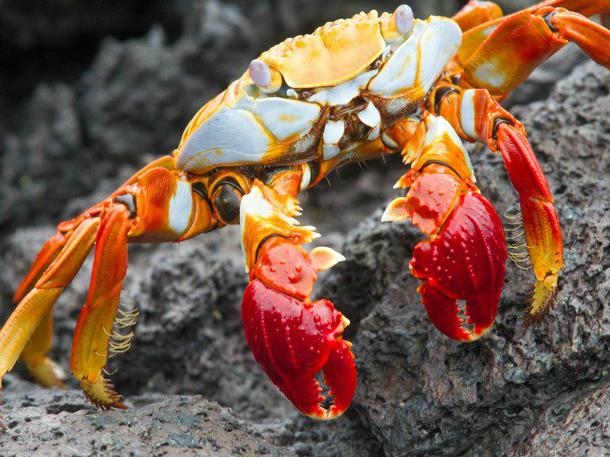
Stone crabs have their claws torn off when they are still alive. Even though they can re-generate their claws , 41% of crabs die from a single amputation and 63% of crabs die from a double amputation.
If one does not have a voice to scream against pain and suffering that does not mean that the individual does not feel pain, when tortured.
Invertebrates have too sense organs, like other animals.
They are also our friends and we do not eat our friends!
Stray dogs in Catania, Italy now have a leisurely, safe, and comfortable place to hang out: their local Ikea. Recently, photos of the dogs lounging and sleeping on the store’s furniture displays have appeared on social media, capturing the hearts of both local customers and animal lovers worldwide.
One customer, Martine Taccia, noticed some of the dogs relaxing around one of Ikea’s living room displays as she shopped on a cold Fall afternoon.
Taccia’s reaction, like many others, was one of approval. In an interview with The Dodo, she said of the dogs: “My reaction was pure amazement. It’s not a common thing.” She took a video of the heartwarming scene and posted it to her Instagram account.
Taccia learned that Ikea had welcomed the stray dogs inside to shield them from the cold. At the store, they receive daily food and water, along with loads of affection from employees and customers alike. The best news? Some adoring customers have even provided forever homes to dogs they met in the store.
Ikea’s Catania store does not advertise that they shelter stray dogs, but word of their generosity has spread far and wide. Shortly after customers began noticing the dogs, photos and video footage of the pups began popping up on social media. The canine sanctuary has since gone viral – Taccia’s video alone has received more than 1.1 million views.
The general consensus surrounding Ikea’s stray-friendly environment can best be described as “two thumbs up.” On one of the many photos of the dogs circulating throughout the internet, one person even commented: “I am now forever loyal to Ikea.”
In the past, Ikea has advocated for animal rights and rescue. In 2014, as part of a partnership with Home for Hope, the store placed life-sized cardboard cutouts of dogs that were available for adoption throughout their stores.
We are giving extra time to live animal exports at the moment. We have plenty of campaign experience for over 27 years to support this. Live exports, and the time that animals have to endure suffering on transporters is the ultimate shame of the EU and its so-called legislation; Regulation 1/2005 on the ‘protection of animals during transport’.
Believe us; there is no protection offered by this legislation; and many EU member states do not even bother to apply the rules of the regulation anyway. In summary it is a complete and utter joke; causing untold suffering to the animals which endure transportation across Europe on a daily basis. Only when the rules are changed to a maximum journey time of 8 hours or less will we see any improvement in the rules.
We feel the need to give a bit more information on the export business from Ramsgate.
All photos are by official photographer and activist, Valerie Cameron.
The animal export trade changed from operating mainly from Dover Harbour in Kent to the smaller facility at Ramsgate mainly because of the amount of ferry traffic that was using Dover to run scheduled services to Europe did not really make it possible for additional ships to take up berthing space.
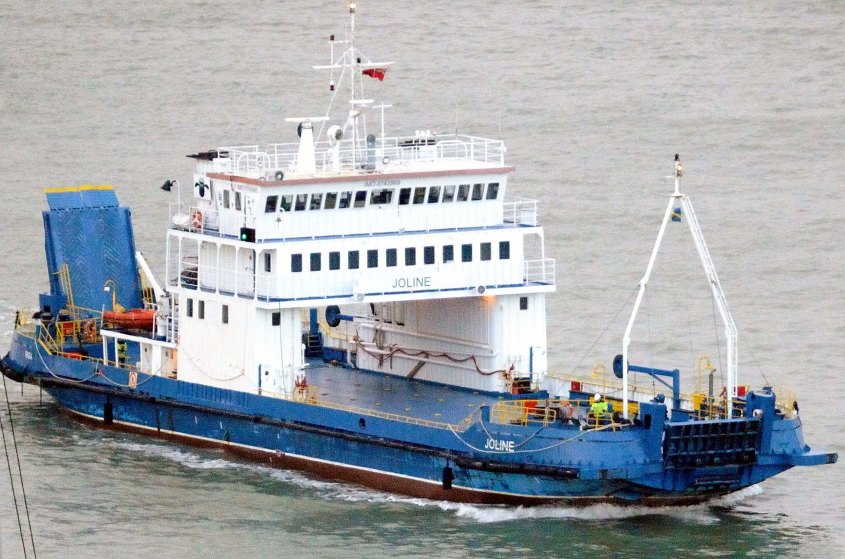
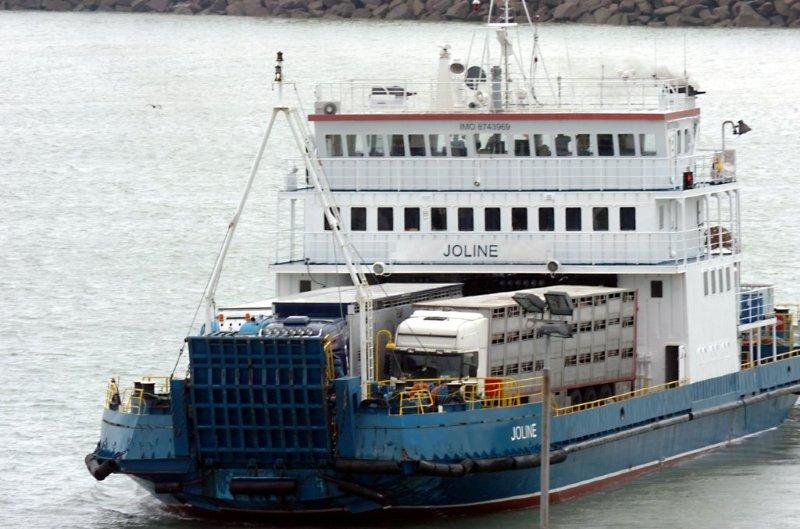
The ‘Joline’
Although it was nothing more than a cheap and nasty ‘bathtub’ – or to be more precise; an ex Russian battle tank carrier to used only on rivers; and not in the English Channel; the vessel; named the ‘Joline’; could not berth at Dover and load animal transporters; and then depart in the time available that was given to it. Hundreds of trucks could load onto ferries for each sailing within the hour; but when it came to the Joline; it was unable to load four, five or even six animal transporters; such was the inability of all those involved with its operation.
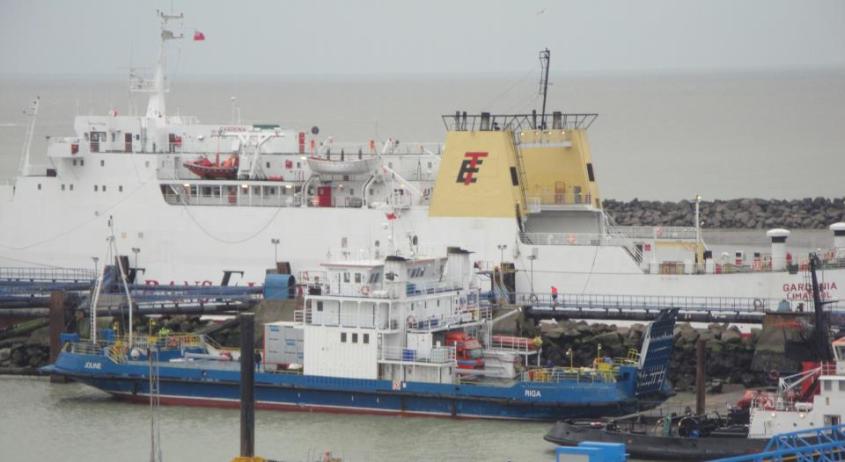
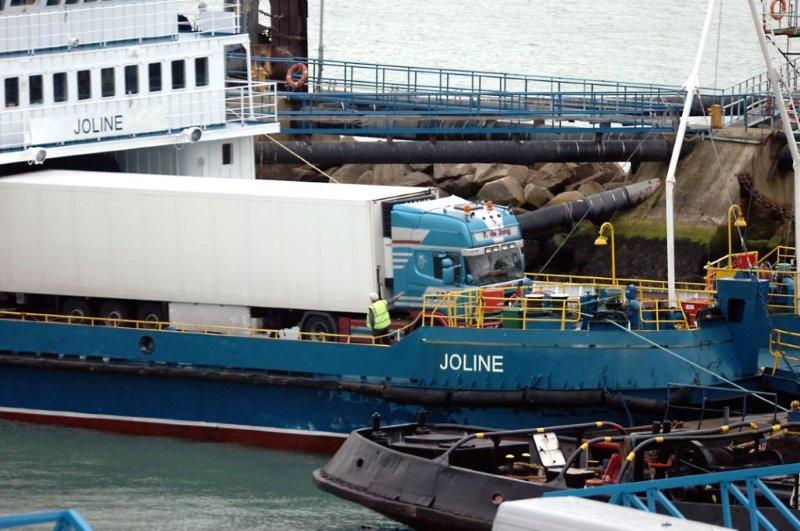
Here are a few pictures of the Joline trying to operate at Dover. Note its size compared to the normal cross Channel ferries doing the same route to Calais. The normal ferries would not take livestock transporters due to a massive and very successful campaign asking them to stop over the years. They stopped taking slaughter animal transporters; and so another way had to be found by the farmers to get animals across to Europe.
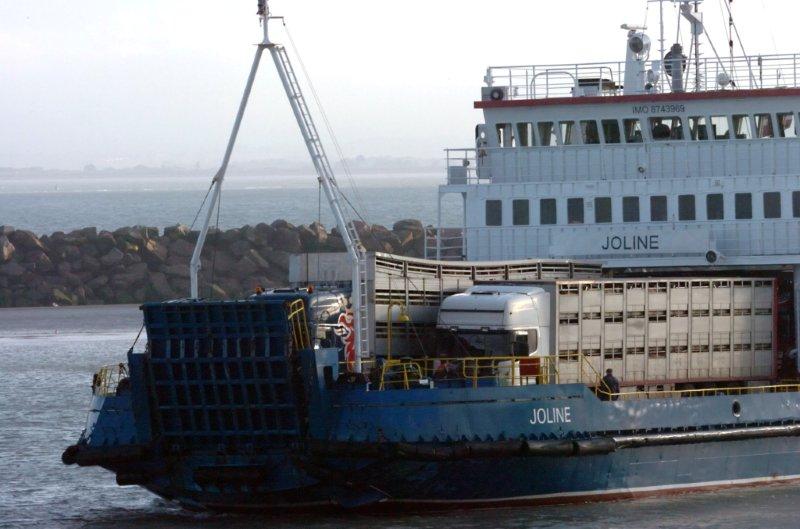
The Joline at Dover – Note its size compared to standard ferries. Even so, the normal ferries could load trucks much quicker !
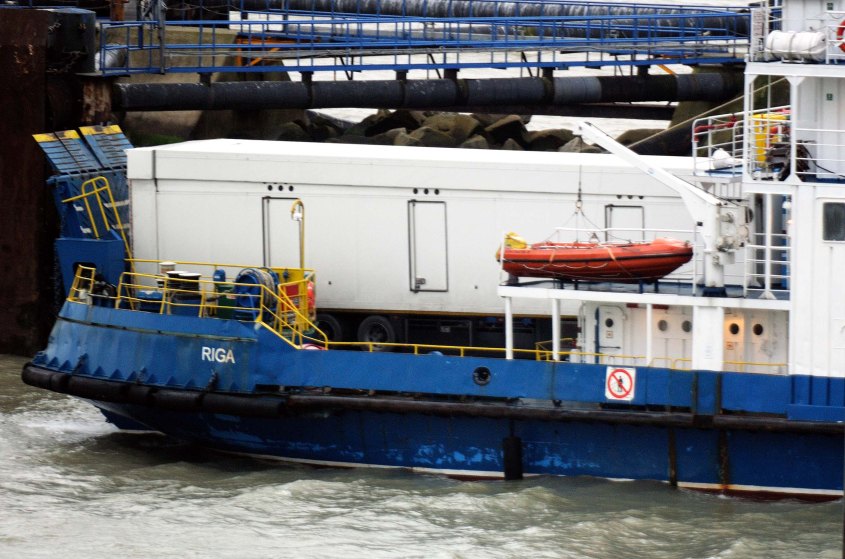
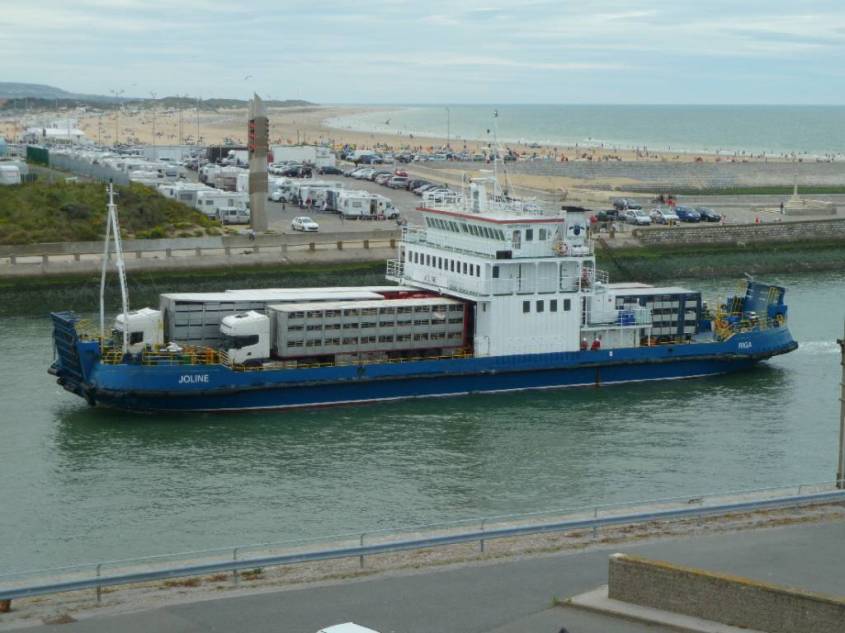
The ‘Joline’ came on the scene as the ‘solution’ to this. It is operated by a Dutchman named Johannes Onderwater. The vessel is registered in Riga, Latvia, which is an EU member state. Onderwater has his own fleet of livestock vehicles; but many other (mainly) Dutch hauliers also use the Joline to get UK animals in to Europe.
The Joline at Ramsgate harbour
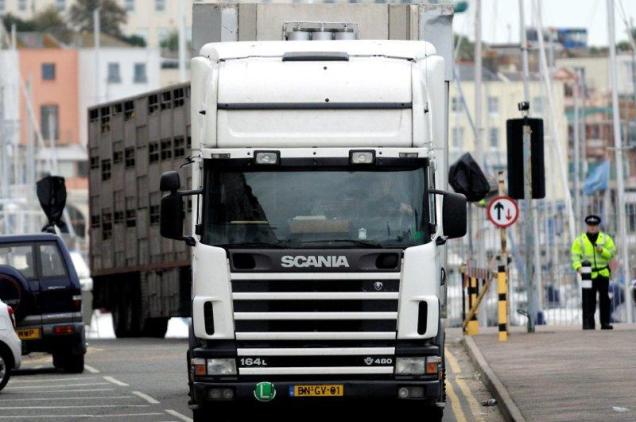
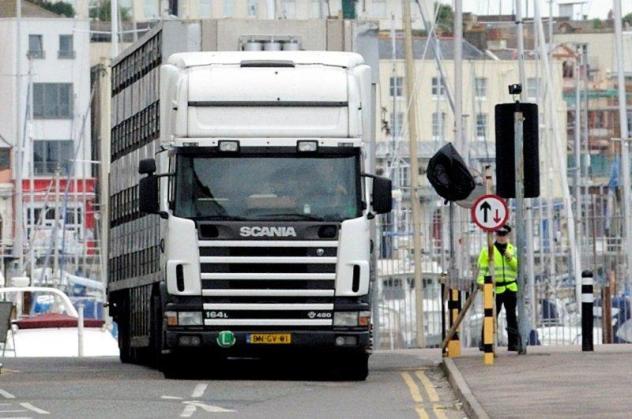
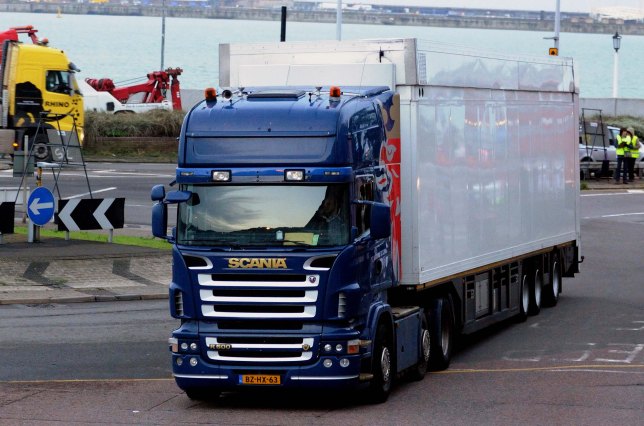
Above – Onderwater’s own white (Scania) trucks carrying livestock en route to the harbour
Although many do not know; we can confirm that until recently; Onderwater operated another live animal transportation business out of Riga, Latvia. We have many details on this. Mr Onderwaters official Dutch registered company is called Onderwater Agneaux BV; and we do have the name of his Latvian business; but we are not going to divulge it.
Confirmation that the ‘Joline’ is registered in Riga, Latvia
Onderwater is very well known to the animal rights movement in Kent, England. He first surfaced several years ago when he (personally) attempted to export animals from the UK to mainland Europe. Using a sealed box type ex refrigerated trailer; Onderwater attempted to deceive his way to Europe by declaring to customs that his load in the trailer contained ‘Boxed Meat’. As such, the vehicle and its contents were allowed to board a P&O ferry for shipment to Europe – via Calais to be precise.
A typical ‘Box Trailer’ arrives at Dover carrying live sheep
Very observant and on the ball crewmen on the (P&O) ferry noticed that things did not seem quite right with the trailer whilst it was on the ferry. Fluid was seen to be dripping from the trailer – this later turned out to be urine. They reported this situation with the trailer to the Captain of the ferry who immediately demanded that the rear of the trailer be opened up.
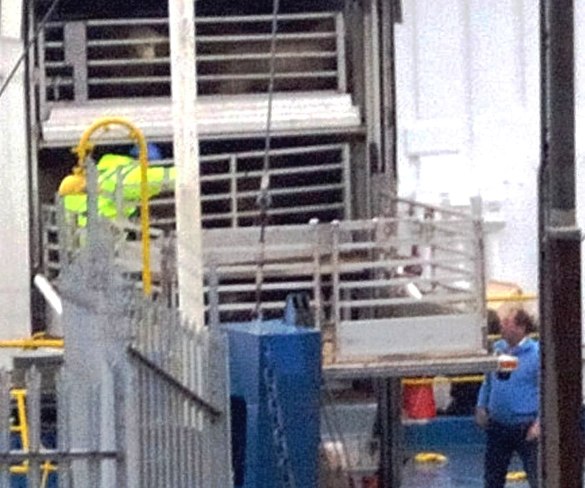
A rare shot by activists taken of the inside of the ‘box trailer’. Sheep can clearly be seen standing on the top deck.
Rather than find loads of ‘boxed meat’ inside as declared on the paperwork; the P&O crew actually found that the trailer contained over 300 LIVE sheep; and it was their urine that was dripping onto the ferry flooring. This issue thereafter went much further with Kent based AR organisations who got Kent Trading Standards involved with taking up prosecutions. After a lot of work by all parties, the ‘Boxed Meat’ case (as it became known) went to court at Folkestone, Kent on 5th July 2010.
At the trial; Onderwater Agneaux BV (Onderwaters Dutch company) pleaded guilty to no less than six (6) offences under the Animal Health Act 1981 of causing the transport of sheep in contravention of the Welfare of Animals (Transport) (England) Order 2006 and EU Council Regulation (EC) 1/2005 (Protection of animals during transport).
As a result, Onderwater’s company, Onderwater Agneaux BV (of the Netherlands), was fined at Folkestone a total of £10,370. And so, under UK law, by being prosecuted in this way, and pleading guilty to offences, Onderwater became a formally convicted criminal. With Kent AR informing Dutch friends in Europe; Onderwater was also prosecuted by the Dutch authorities. In the Netherlands he was given 2 out of 3 ‘strikes’ on his operators license. If he was caught again and given a 3rd strike; then his Dutch hauliers operating license was to be removed; meaning that he would be unable to continue transporting live animals as a business.
So – forward to the current time. The Joline is seen very infrequently at Ramsgate as UK live exports have almost been stopped by very positive campaigns by the animal rights movement. Onderwater now deals primarily with getting UK sheep to Europe at the times of Eid, the Muslim festival of sacrifice. For the rest of the time shipments are very haphazard; often carrying just a few transporters. With the Joline running between Ramsgate and Calais; the cost of fuel, berthing fees and crew employment costs; the question has often been asked how he can make this operation pay ? – it is still a mystery today.
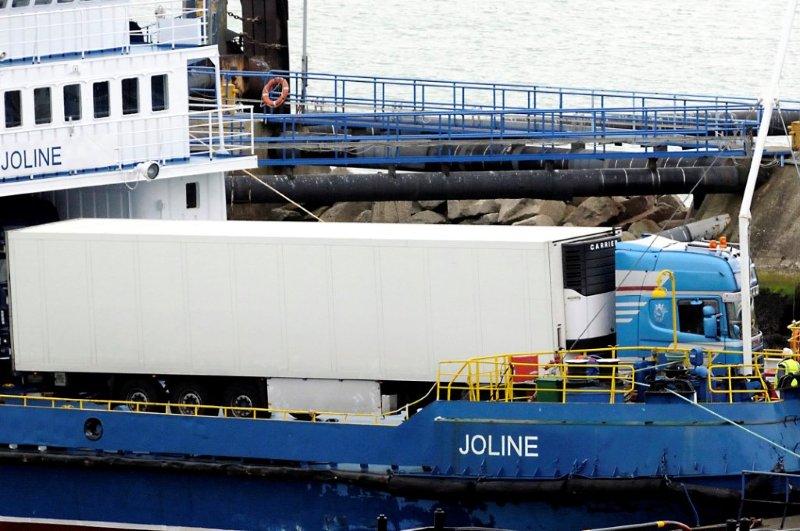
Above – A Box trailer loads onto the ‘Joline’ at Ramsgate, England
Livestock transporters depart on the Joline – note the ‘wonky roof’ on the truck shown left above. How does this comply with the Regulation standards set by the EU ? – the trailer should be scrapped !!!
Now the opportunity to take calves from Scotland has arisen; mainly because the ferry operator which used to ship them to Ireland for onward movement via Cherbourg (France) decided to close down the trade after an expose of the business was made and published on UK television; Onderwater has stepped in as the lifeline for the Scottish farmers wanting to export calves live. It must be remembered that these calves are males; an unwanted by product of the dairy industry as they do not produce milk and so are basically unwanted. They are shipped into Europe for further fattening; where they are usually slaughtered after just 6 months of age. Think about this trade the next time you have cows milk in your tea – convert instead to plant based milk and avoid all of this animal suffering.
Arrival at Calais, France – note the white Scania cabs of the Onderwater fleet of trucks at the front
We will be publishing another post very soon on British exported calves and their final destinations. We think it will come as a surprise to many of you. Watch this space.
*From Helmut.F.Kaplan, Austrian philosopher and animal ethicist
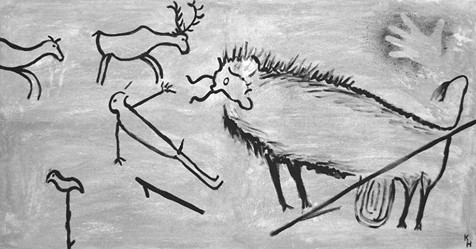
Once upon a time we were helplessly exposed to heat, cold and wet and glad to find shelter in a cave. Today we have highly functional clothes and well insulated houses.
Once we were laboriously and dangerously moving from one place to another. Today we have convenient, safe and fast transportation.
We once died prematurely from untreated or poorly treated injuries or illnesses. Today we have modern hospitals where most of these injuries and illnesses can be easily treated or cured.
Once upon a time, we ruled conflicts with brute force by simply killing each other. Today, we have a sophisticated legal system that strives for impartial, just solutions.
Once upon a time, we had to devote all energy to somehow survive. Today, we are engaged in science and enjoy cultural activities and works that add a whole new dimension to our lives.
We once fed on bloody corpses of barbarously slaughtered animals. Today – we still do that!
Our diet is the only area where nothing has changed for millennia. Every time we sit down to eat, we turn into Stone Age people.
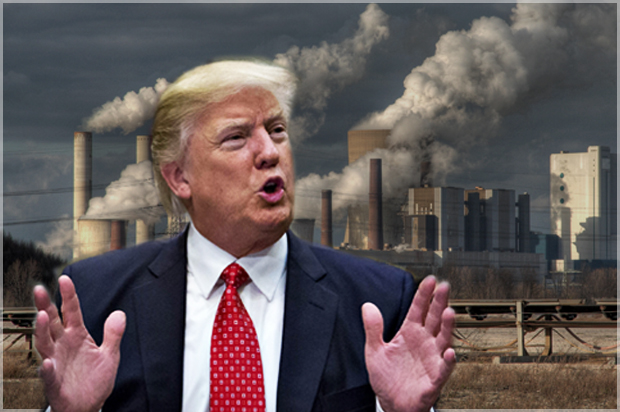
President Donald Trump, Florida Gov. Rick Scott, Florida Sen. Marco Rubio, and others who oppose action to address human-induced climate change should be held accountable for climate crimes against humanity. They are the authors and agents of systematic policies that deny basic human rights to their own citizens and people around the world, including the rights to life, health, and property. These politicians have blood on their hands, and the death toll continues to rise.
As the Earth warms due to the continued burning of coal, oil, and gas, climate-related disasters that include high-intensity hurricanes, floods, droughts, extreme precipitation, forest fires, and heat waves, pose rising dangers to life and property. Hurricanes become more destructive as warmer ocean waters feed more energy to the storms. Warmer air also carries more moisture for devastating rainfalls, while rising sea levels lead to more flooding.
Yet Trump and his minions are the loyal servants of the fossil-fuel industry, which fill Republican party campaign coffers. Trump has also stalled the fight against climate change by pulling out of the Paris Agreement. The politicians thereby deprive the people of their lives and property out of profound cynicism, greed, and willful scientific ignorance.
A group of world-leading ecologists recently highlighted that critical Earth systems could spiral out of control. The Nobel-prize winning Inter-Governmental Panel on Climate Change has also just released a harrowing report showing that the world has just a few years left to move decisively towards renewable energy if it hopes to achieve the globally agreed target to limit warming below 1.5 degrees Celsius above the pre-industrial average temperature of the planet.
The huge bills for Hurricanes Florence and Michael will now start rolling in: funerals, suffering, sorting through debris, and perhaps $30 billion in losses that could have been reduced dramatically through science-based planning and foresight.
The American people are paying a heavy cost for the cynicism and cruelty of politicians in the pocket of the fossil-fuel industry. It is time to hold these reckless politicians to account.