Paris seems to be turning its hunting policy 180 degrees: After the use of limed rods for catching birds was banned only two weeks ago, the Supreme Administrative Courthas now completely stopped lovebird hunting.
The migratory bird has seen a dramatic decline in populations in recent decades – not least because of the completely unrestrained hunting in France and Italy.
In recent years, the Committee against Bird Murder and its partners have used campaigns and actions to draw attention to the dramatic situation with the turtledove in particular – we only submitted a complaint against France to the EU Commission this spring.
Brussels has finally taken the reins and is putting considerable pressure on the countries where endangered bird species are still allowed to be shot en masse.
This success cannot be rated highly enough, because France has so far been one of the great “hunting nations” that have blocked any progress in protecting migratory birds.
We now expect similar restrictions as with the turtle dove for species such as the curlew and the skylark.
There are new government regulations in force now that UP TO 6 people maximum are allowed to meet – the ‘rule of 6’ coronavirus law.
12/9 is known in the UK as the ‘glorius Twelth’ by hunters; as it is the day each year that they can start thier abuse towards animals by having hunting parties to shoot game birds. Anyone else (under the 6 rules) would not be allowed to meet in groups of more than 6 people. But as always, the Conservative Party has given in and made ‘exemptions’ which allow MORE than 6 people to blast game birds out of the sky. How very typical.
Bloodsports exempt from ‘rule of six’ coronavirus laws
Shooting and hunting groups have been exempted from the UK Government’s new ‘rule of six’ coronavirus laws.
The government has made it illegal to “mingle” under the new law enabling the enforcement of the rule in England, which came into force on Monday. But regulations published on Sunday include a number of exemptions, which including shooting and hunting, with both listed under the physical activities people can continue with in groups of more than six.
A statement on the British Association for Shooting and Conservation says: “Shooting has been added to a list of sports that are exempt from the latest COVID-19 restrictions in England. The ‘rule of six’ restrictions brought in today in England could have disrupted game shooting which usually includes eight or more people.
However, the exemption will allow shooting to operate under COVID-safe guidance.”
Ian Bell, BASC’s chief executive, said the decision to allow shooting to continue was “the right one”. “Like other team sports, shooting is able to operate under social distancing guidance, and its benefits to the rural economy and well-being makes its inclusion significant,” he said.
A Cabinet Office COVID-19 Operations ministerial committee scheduled a meeting on Saturday with an agenda item titled: “Exemption: hunting and shooting”, according to the Huffington Post. The meeting was cancelled just hours beforehand and insiders told the publication that the meeting was axed to avoid ministers raising objections.
Former minister Tracey Crouch told the Huffington Post: “Many will find this topsy-turvy prioritisation from government.
I’ve had queries about choirs, community bands, addiction therapy groups, all of whom would be worthy of an exemption and instead we are scrabbling around prioritising shooting animals. It’s bonkers.”
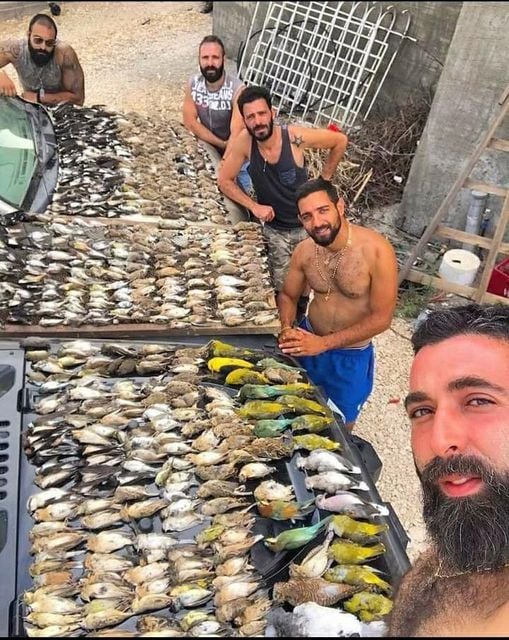
With the beginning of the bird migration, the first evidence of the terrible massacres that Lebanese poachers are causing among our European migratory birds reach us again.
This picture from last week shows a group of men proudly posing for a “selfie” with over 500 freshly shot migratory birds.
The prey consists almost exclusively of species that are strictly protected in Lebanon, such as swallows, oriole, wheatear, bee-eater, woodpecker.
The photo was taken after our research in the north of the country and was uploaded to the Instagram platform last Friday.
The police anti-poaching unit has been informed.
At the same time, preparations are underway for the bird protection mission in the Lebanon Mountains, financed by the Committee against Bird Murder, which begins next week.
By the end of the month, the “Bird Guards”from our partner association SPNL, which we have trained since 2017, will monitor important train corridors and take action against poachers together with the authorities.
The annual hunting range is around 50 million birds, including around 10 million song thrushes, over 1.3 million skylarks, and around 100,000 lapwings.
Our hunters here can’t wait to start shooting down the flying travelers in the sky.
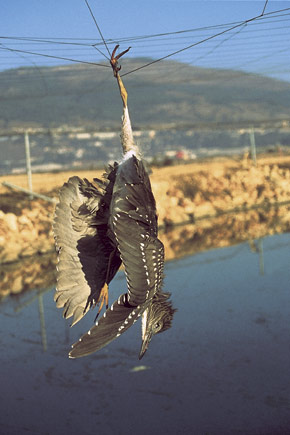
In Italy it is no different, sparrows and other songbirds are considered delicacies. Nets are set up in which the birds get caught and die in agony.
Now the massacres are coming from Lebanon.
We do not differentiate between the EU and other countries. A crime is a crime.
And we will never be tired of bringing to light the cruel crimes of hunters around the world.
Only one thing remains questionable in this particular case:
Would the Lebanese poachers present their faces so cool on the internet if they had to fear a high penalty?
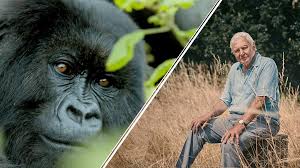
The BBC aired a television programme last evening; called ‘Extinction’.
It involved animal campaigner and naturalist David Attenborough, and lasted for 1 hour.
Basically, the programme was based around the destruction of the environment, and the destruction of the biodiversity – the animals (big and small) which all interact to keep things as they should be.
It showed the ravages that humankind is having on the environment and the abuse and destruction of animal species.
More than anything, it was a warning to mankind and the governments who are turning the other way – the ‘ignorants’. The message was simple, clear; get your act together very soon or face the consequences for all mankind.
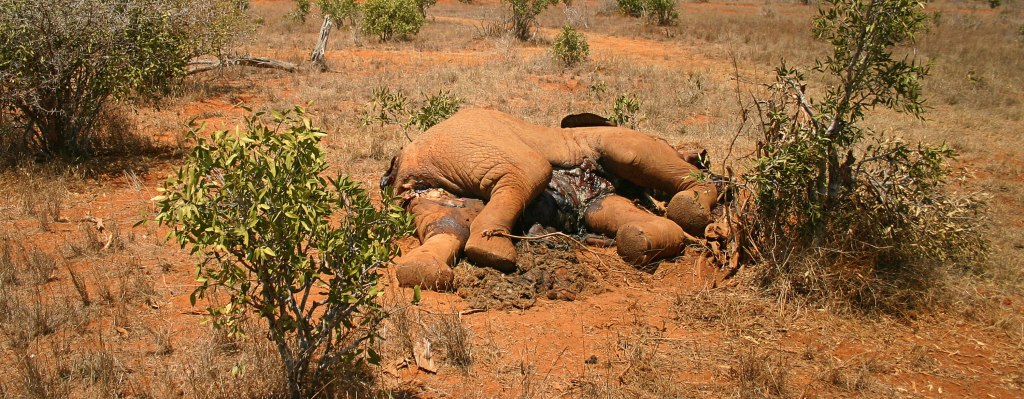
As a campaigner, I was personally pleased that the programme (sadly, the BBC usually keeps it clean and politically polite) decided to push the envelope a bit, by showing footage of caged animals at Wuhan wet markets, destruction of the Amazon rain forest, Bats, Pangolins, White Rhino; interviews with rangers in Africa, and importantly; Covid 19 overview; asking if this was the last virus we would see. The campaigner experts who contributed to the programme gave the message that things are bad, very bad; but we still can sort many of the problems if only the mass dickhead governments woke up to what people are asking; and what they want – IMPROVEMENTS. Is the Amazon destruction not just one prime example ?
This morning; the next morning, there are a couple of reviews by the UK national press which I copy below.
I do not know if the programme can be seen on Youtube, or if it will happen. UK citizens can re watch or first time watch the programme using the iplayer (catch up) system which is only available in the UK.
Wherever you are in the world; this programme must be seen at some time. As I say it is simply called ‘Extinction’. See it as soon as you can.
Here are the newspaper reviews from this morning – no doubt there will be more soon and I may add as extra posts as necessary.
Regards Mark
The ‘Guardian’ – an excellent newspaper which covers masses of environmental issues:
Extinction: The Facts review – a heartbreaking warning from David Attenborough
With an eighth of the planet’s species at risk of dying out, this documentary offered a stark look at the devastation that humans have wreaked, and are wreaking, on the natural world.
It is hard to absolutely, positively look forward to an hour-long programme about the many varied, catastrophic ways we have ruined the world around us. David Attenborough’s Extinction: The Facts (BBC One) was as upsetting as you might expect. If his earlier Planet Earth series delivered joyous portraits of nature at its most spectacular, here we had beautifully shot footage of monkeys desperately leaping into a river to escape a forest fire, a baby bear looking lost in a ransacked, smoking landscape, and the corpses of killer whales, tangled in fishing nets, rotting on the shore.
It was unbearably painful to watch.
People who make programmes about the environment are constantly searching for new ways to force us to pay attention, to make sure we resist the temptation to change channel in search of less distressing content. This time they tried making the theme of extinction feel urgent by filtering it through the prism of the coronavirus pandemic. But there is something depressing about this need to persuade people to focus on the imminent extinction of 1m different species by appealing to our self-interest, highlighting how humans will ultimately suffer as a result of the devastation we have brought upon ourselves.
“This year, we have been shown we have gone one step too far. Scientists have linked out destructive relationship with nature to the emergence of Covid-19,” a mournful Attenborough said. It’s sad that both the scientists and the film-makers sense the problem of extinction has to be shown to hurt us (in the form of triggering global pandemics that cut a swathe through humanity) before we really care enough to engage.
Because, actually, once you had steeled yourself to absorb the stream of images of the tragedy unfolding around us, this was an immensely powerful film on its own terms, and not simply in the context of the extra disruption that Covid-19 has caused over the past six months.
Attenborough’s regretful delivery of the facts only made them worse to hear. There were a few flashes of a youthful, more carefree version of him, laughing as he filmed endangered mountain gorillas in Rwanda in the 70s, but his tone has become stricken, acknowledging the failures of his and current generations to tackle the challenge.
He was joined by a chorus of aghast scientists, offering a bald summary of the accelerating state of decline. One million species out of 8m on earth are now threatened with extinction, they reminded us. Since 1970, vertebrate populations – birds, mammals, amphibians and reptiles – have declined by 60%. While extinction is a natural process, it is the current rapid rate that is the problem. Studies suggest that extinction is now happening hundreds of times faster than the natural evolutionary rate and it is accelerating.
As you would expect from an Attenborough film, we learned much about some of the world’s most extraordinary animals, but touching footage of the giant anteater (who carries its pup lovingly draped over its back) was there only to illustrate the rapidly dwindling area of its remaining habitat in Brazil. Endearing shots of the nocturnal pangolin, which can consume 70m ants a year, was included only because it has become the most trafficked animal in the world, as a result of specious claims about the medicinal properties of its scales.
All this was set against the unforgiving soundtrack of a whirring electric chainsaw, cutting into the thick trunks of ancient trees, and the crunching of industrial machinery crashing through the forests.
The only polar bears and tigers that featured were the decapitated hunting trophies stored in customs warehouses, next to grinning crocodile heads and confiscated snakeskin boots.
There is a formula that makers of this documentary genre struggle to get right. They need the correct balance between displaying current levels of devastation and instilling a sense of urgency, while simultaneously offering an optimistic promise that it still isn’t quite too late for things to change. Contemplating his own mortality, Attenborough did his best. “I do truly believe that, together, we can make a better future. I might not be here to see it, but if we make the right decisions at this critical moment, we can safeguard our planet’s ecosystem.”
He showed how careful work by Rwandan conservationists has ensured that the mountain gorillas he filmed in the 70s have survived.
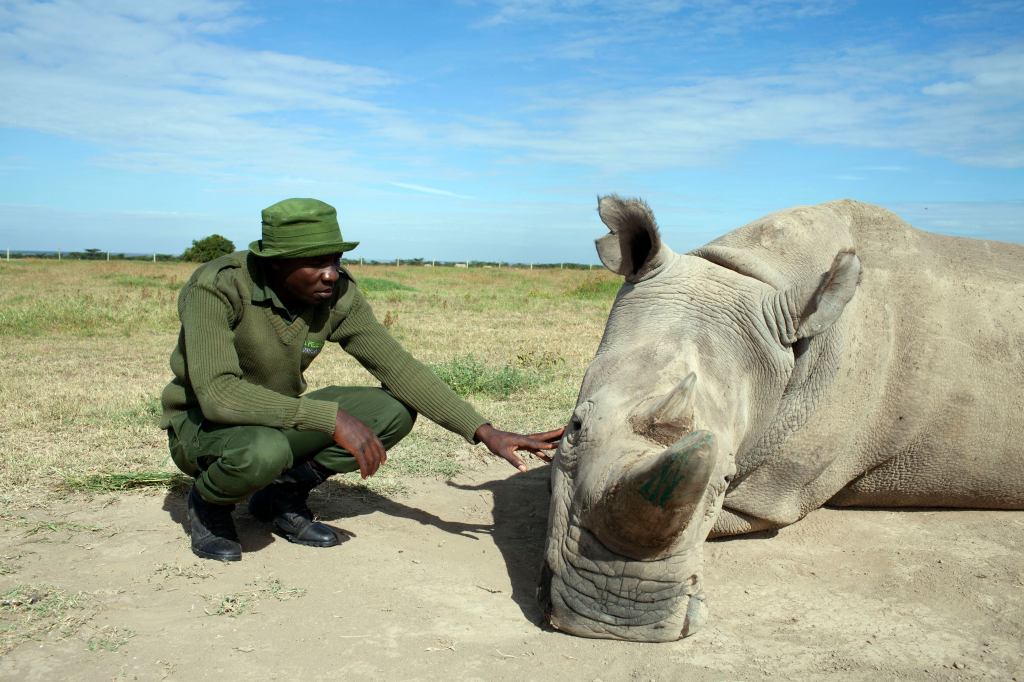
But this offered only a faint glimmer of hope. Images of the planet’s last two remaining white rhinos were the starkest illustration of how badly things have gone wrong. (see photo below)
“We betrayed them,” the Kenyan conservationist James Mwenda said.
A heartbreaking hour, but essential television.
The ‘Independent’ is non politically biased; and again reports on some outstanding environmental and natural issues:
The BBC documentary points out that there is no earthly reason why a new virus won’t one day wipe out the very species that has been trying to kill the planet for the past few centuries – us lot
You might have thought a pandemic that has taken half a million lives, inflicted pain and suffering on many millions more, and cost us trillions would make us think twice about the way we humans interact with nature. It seems not. The poor old pangolin and blameless bats are still being flogged and slaughtered in various so-called wet markets, even though it is widely believed that the coronavirus emerged through the close proximity of humans to these usually harmless wild animals.
As Extinction: The Facts makes clear, however, many deadly viruses – Sars, Ebola, Aids – have infected us via still-thriving wildlife markets and the intrusion of humans into natural habitats to rear cattle or grow soya (for animal feed) or produce palm oil (for processed food and fuel); places we don’t really belong. So, as the impressive collection of environmental talking heads assembled for this latest message from Sir David Attenborough depressingly points out, even when the climate crisis and mass extinctions are a clear and present danger, and coronavirus is taking our loved ones, humanity is still incapable of changing its voracious ways.
The documentary points out that there is no earthly reason why some new virus will not one day appear that is even more infectious and deadly than this coronavirus, and could wipe out the very species that has been trying to kill the planet for the past few centuries – us lot.
You could call it a revenge attack.
Still, it’s always nice to see nature’s survivors on film, and Attenborough is certainly one of them. If it’s possible to be a youthful 94-year-old, then that is what he is, his passion undimmed. He made his earliest TV appearance back in 1954, chasing giant anteaters around scrublands. These days, his knees probably aren’t up to that sort of lark, so his contributions are limited to impassioned pieces to camera, linking the archive footage of cute creatures, breathtaking panoramas and the controlled explosions of anger from thoughtful environmentalists. He also wouldn’t find it so easy to run around with anteaters now because there are fewer about; they too are losing out to land needed for cattle, to feed humans’ insatiable taste for a juicy burger.
Indeed, much of the show is basically a parade of animals that are on their way out – the last killer whale pod around Scotland (rendered infertile by pollution), the last two northern white rhinos (poaching), and of course the beleaguered pangolin (bogus “medicinal” usages for its scales, which are just keratin, the same as your fingernails).
Attenborough and his peers try to offer a little hope with the enviro-doom, because otherwise you’d just wipe away a tear, shrug and help yourself to another Big Mac, seeing as there is sod all anyone’s going to do about anything. Or you could join Extinction Rebellion and glue yourself to a train.
Thus it was genuinely moving to learn that the mountain gorillas Attenborough famously befriended four decades ago, then on the brink of extinction, have actually staged a recovery. That intimate encounter from his landmark series Life on Earth (1979) has lost none of its power, and seeing Sir David so young adds some poignancy. Now, an enlightened scheme taking money from tourists and, basically, using it to pay the local community to protect them, has seen the great apes population rise to more sustainable levels.
The wider message is that the planet too can be saved, if only we ease up on our consumption and waste.
Covid, said one expert, is a “moment” when we can reconsider how we live our lives. That’s true, but the inconvenient fact is that we all know we won’t, and we too are on our way to extinction.
The viruses may inherit the Earth.
Possibly a copy should be viewed by this person who blames everyone else for the issues:
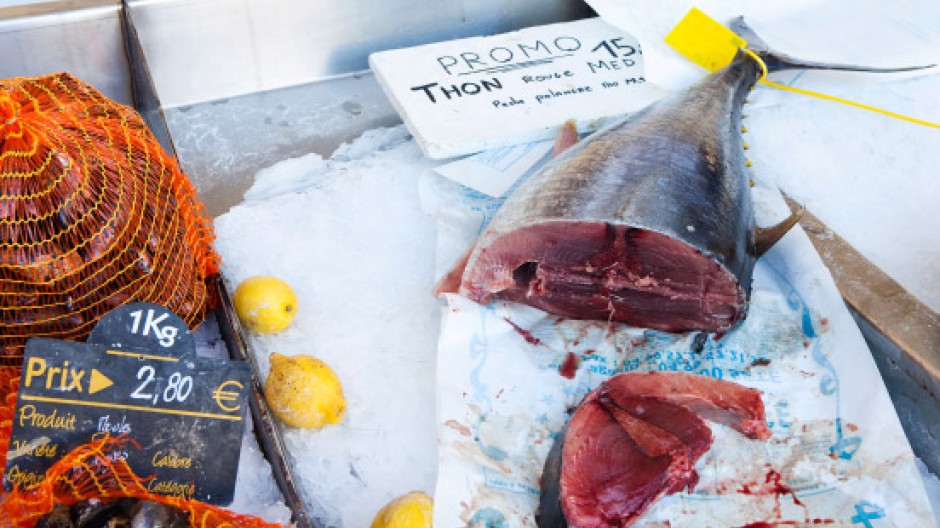
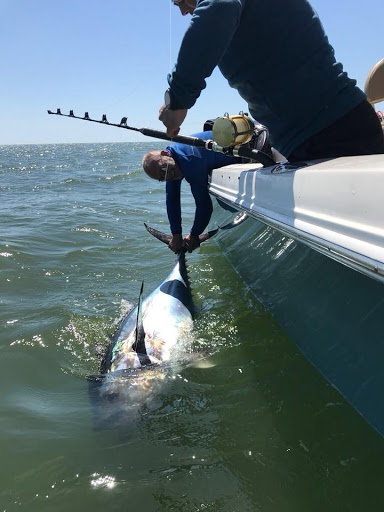
Recent research by the Italian magazine “Repubblica” documents the animal suffering and environmental impact caused each year in Europe by illegal fishing.
The report, entitled “La Guerra del Tonno Rosso”,“The Bluefin Tuna War”, deals primarily with the problems that arise in connection with the commercial catch of a fish whose meat is internationally traded as a valuable commodity.
The market for bluefin tuna, also known as bluefin tuna, caught in the Mediterranean is worth billions of euros a year.
The high market value is decisively influenced by the demand from Japan, which, according to the Repubblica, consumes 90% of the tuna caught in the Mediterranean.
Animal Equality, has documented both the natural behavior of tunas underwater, and the plight of the bluefin tunas who are brutally killed. Bluefin tunas are able to feel pain and suffering like any other animal. This slaughter in Carloforteis a cruel practice that must stop immediately.
INVESTIGATION FINDINGS:
• Unnaturally high densities of tuna at the catching stage presented a significant stressor to individual animals.
• Fish were dragged from the ocean with giant sharp metal pick hooks and brought onboard ships.
• Extensive tissue damage was caused by the piercing, blunt hooks, and this is likely to have inflicted acute pain on the fish, who was still alive and conscious.
• The suspension of the tunas’ body weight caused the further tearing of tissues as a result of gravity working against the hook.
• The struggling, frantic movements of the tuna whilst suspended in the air indicated that the fish were in pain and stress.
• Fish were observed being repeatedly stabbed with knives in the thoracic (chest) region and major arteries, causing death via exsanguination.
• Animals were slaughtered in the presence of conspecifics which is likely to cause additional stress.
Every year, from late May to early June, hundreds of bluefin tuna are caught in traps called “tonnaras” as they migrate to their spawning areas.
“Tonnaras”is a complex system of nets in which the tuna are caught and then slaughtered.
Every year thousands of individuals suffer and die during the well-known “Tuna Slaughter of Carloforte” on the island of San Pietro.
In the Mediterranean, tuna are mainly caught in mobile traps.
However, fixed traps are still used during the slaughter of Carloforte off the southwestern coast of Sardinia.
On the migration to their spawning areas, the tuna are forced to swim through a system of fixed nets that lead into several enclosed areas.
After they have passed these “net tunnels”, they reach the “killing zone” where the animals are herded together and slaughtered.
WAV Comment – Big Howls – Excellent news – Congrats to all involved.
Regards Mark
For Immediate Release: September 11, 2020Washington becomes seventh U.S. state to outlaw cruel and unsporting wildlife killing contests
Washington Fish and Wildlife Commission votes to end competitive killing of coyotes, bobcats, foxes, crows and other species for prizes
SEATTLE (September 11, 2020)—A coalition of state and national wildlife protection organizations is applauding the Washington Fish and Wildlife Commission for its vote today banning wildlife killing contests, in which participants compete to kill the most, the largest, or even the smallest animals for cash and prizes.
The new rule, put forth by the Washington Department of Fish and Wildlife, prohibits the killing of unprotected species including coyotes, bobcats, crows, foxes and raccoons as part of a contest. Contest participants killed at least 1,427 in these events in Washington between 2013 and 2018. Washington joins six other states—Arizona, California, Colorado, Massachusetts, New Mexico and Vermont—that have taken a stand against cruel, unsporting and wasteful wildlife killing contests.
California banned the awarding of prizes for killing furbearing and nongame mammals in 2014; New Mexico and Vermont outlawed coyote killing contests in 2019 and 2018, respectively; Arizona and Massachusetts prohibited killing contests that target predator and furbearer species in late 2019; and in April 2020, the Colorado Parks and Wildlife Commission voted to ban wildlife killing contests for furbearer and certain small game species in the state.
“The majority of Washingtonians respect and value wildlife and this step forward by our Commission is in line with those values,” said Washington Fish and Wildlife Commissioner Barbara Baker, who championed this issue with her fellow commissioners. “As stewards of our state’s wildlife, prohibiting a practice that contravenes sound wildlife conservation, fails to increase game populations and harms ecosystems is simply the right decision.”
“Today, Washington became the seventh state in the country to ban wildlife killing contests, sending a message to the nation that the senseless killing of animals for cash and prizes does not belong in a civilized society,” said Dan Paul, Washington senior state director for the Humane Society of the United States. “We applaud the Washington Fish and Wildlife Commission for passing this rule, which recognizes that the vast majority of the state’s citizens will not tolerate this reprehensible practice.
We urge other states to follow.” “Wildlife killing contests are a bloodsport just like dogfighting and cockfighting, which have been outlawed nationwide,” said Camilla Fox, founder and executive director of Project Coyote. “We commend Commissioner Baker and the entire Washington Fish and Wildlife Commission for relegating these ecologically and ethically indefensible events to the history books.” “The decision to ban these cruel killing sprees is a vital step in promoting scientific management of the state’s native wildlife and aligning our laws with the values of the majority of the people of Washington,” said Sophia Ressler, Washington wildlife advocate and staff attorney at the Center for Biological Diversity.
“We appreciate and respect the action taken by the Washington Fish and Wildlife Commission and the work of the WDFW staff that enabled passage of this rule,” said Diane Gallegos, executive director of Wolf Haven International. “Wildlife killing contests do not reflect traditional hunting values, science knowledge or humane treatment of wildlife. All animals deserve to be treated with respect and indiscriminate killing of wildlife for prizes has no place in today’s wildlife conservation ethic.”
Wildlife agencies and professionals across the country have expressed concerns about killing contests because they reflect poorly on responsible sportsmen and sportswomen. In the last two years, the Arizona Game and Fish Commission, the Massachusetts Fisheries and Wildlife Board and the Colorado Parks and Wildlife Commission voted to prohibit these gruesome killing contests, citing the grave damage that such events could inflict on the image of hunting in their states. Wildlife management professionals have also noted that wildlife killing contests contravene modern, science-based wildlife management principles.
In 2018, Project Coyote’s Science Advisory Board, together with more than 70 renowned conservation scientists, issued a statement citing peer-reviewed science that refutes claims that indiscriminately killing predators permanently limits their populations, increases the number of deer or other game species for hunters, or reduces conflicts with humans, pets or livestock. In fact, randomly shooting coyotes and other wild carnivores can disrupt their social structures, leading to increases in their populations and more conflicts. Nonlethal, preventive measures are most effective at reducing conflicts with wildlife. Wildlife killing contests are also destructive to healthy ecosystems, within which all wildlife species play a crucial role. For example, coyotes and other targeted species help to control rabbit and rodent populations and restrict rodent- and tick-borne disease transmission.
# Project Coyote, anational non-profit organization, is a North American coalition of scientists, educators, ranchers, and citizen leaders promoting compassionate conservation and coexistence between people and wildlife through education, science and advocacy. Visit ProjectCoyote.org for more information.Founded in 1954, the Humane Society of the United States and its affiliates around the globe fight the big fights to end suffering for all animals. Together with millions of supporters, the HSUS takes on puppy mills, factory farms, trophy hunts, animal testing and other cruel industries, and together with its affiliates, rescues and provides direct care for over 100,000 animals every year.
The HSUS works on reforming corporate policy, improving and enforcing laws and elevating public awareness on animal issues. More at humanesociety.org. Subscribe to Kitty Block’s blog, A Humane World. Follow the HSUS Media Relations department on Twitter. Read the award-winning All Animals magazine. Listen to the Humane Voices Podcast.
The Center for Biological Diversity is a national, nonprofit conservation organization with more than 1.7 million members and online activists dedicated to the protection of endangered species and wild places.Wolf Haven International is a globally accredited Wolf sanctuary that has rescued and provided a lifetime home for over 300 displaced, captive-born animals since 1982. Our mission is to conserve and protect wolves and their habitat. _____________________________________________________________________________
In Oregon, a skilled hunter was impaled and killed by a deer he shot hours earlier.
Mark David from Hillsboro stalked a private property in Tillamook, Oregon, with a bow and arrow on Saturday. From his hiding place, he discovered a big elk stag – and shot it.
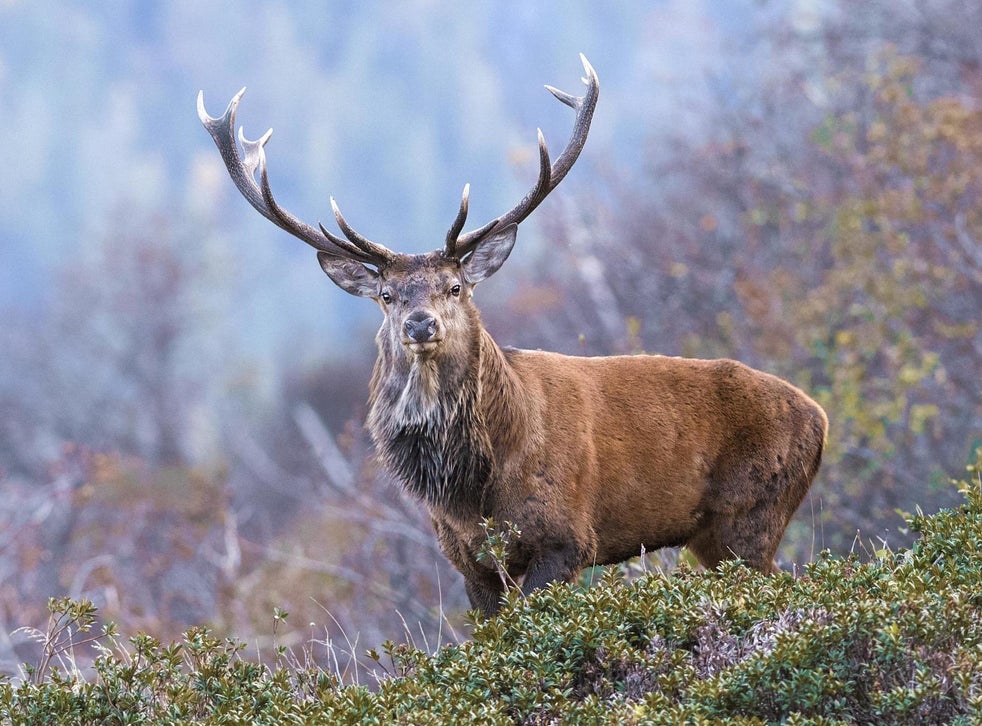
This deer impaled the 66-year-old with his antlers before he died (Image: Oregon State Police)
The arrow hit the bull, but the badly injured animal ran away in a panic and disappeared into the undergrowth. The 66-year-old chased his prey until dark, but without success.
“Forked” by deer
The next morning the American set out with the property owner to search. Around 9.15 a.m. they found the injured elk and David was already drawing his bow to kill the animal when it suddenly attacked.
The stag attacked the hunter with his antlers – hunters refer to this as “fork” – and rammed one of the tips right into his neck. His companion tried to save the 66-year-old, but he could no longer help him.
The man died of serious injury at the scene of the accident.
As the Oregon State Police reports, the elk was shot after the fatal attack. His meat was donated to Tillamook County Jail.
Last November, a 66-year-old hunter in the US state of Arkansas was killed by a deer that he believed he had shot. During the inspection, he was attacked and impaled by the supposedly dead animal.
Migratory bird hunting season starts: In most EU countries the hunting season for migratory birds starts these days.
The stalking has already started in Malta and Cyprus, in France 1.2 million hunters stand for the start of the season on September 13th. Gun at your feet, the 700,000 Italian hunting license holders lay down on September 20. Come on!!
Depending on the country, up to 50 species are approved for shooting. In addition to ducks, pigeons, and chicken birds, various songbirds and waders can also be killed in most southern European countries.
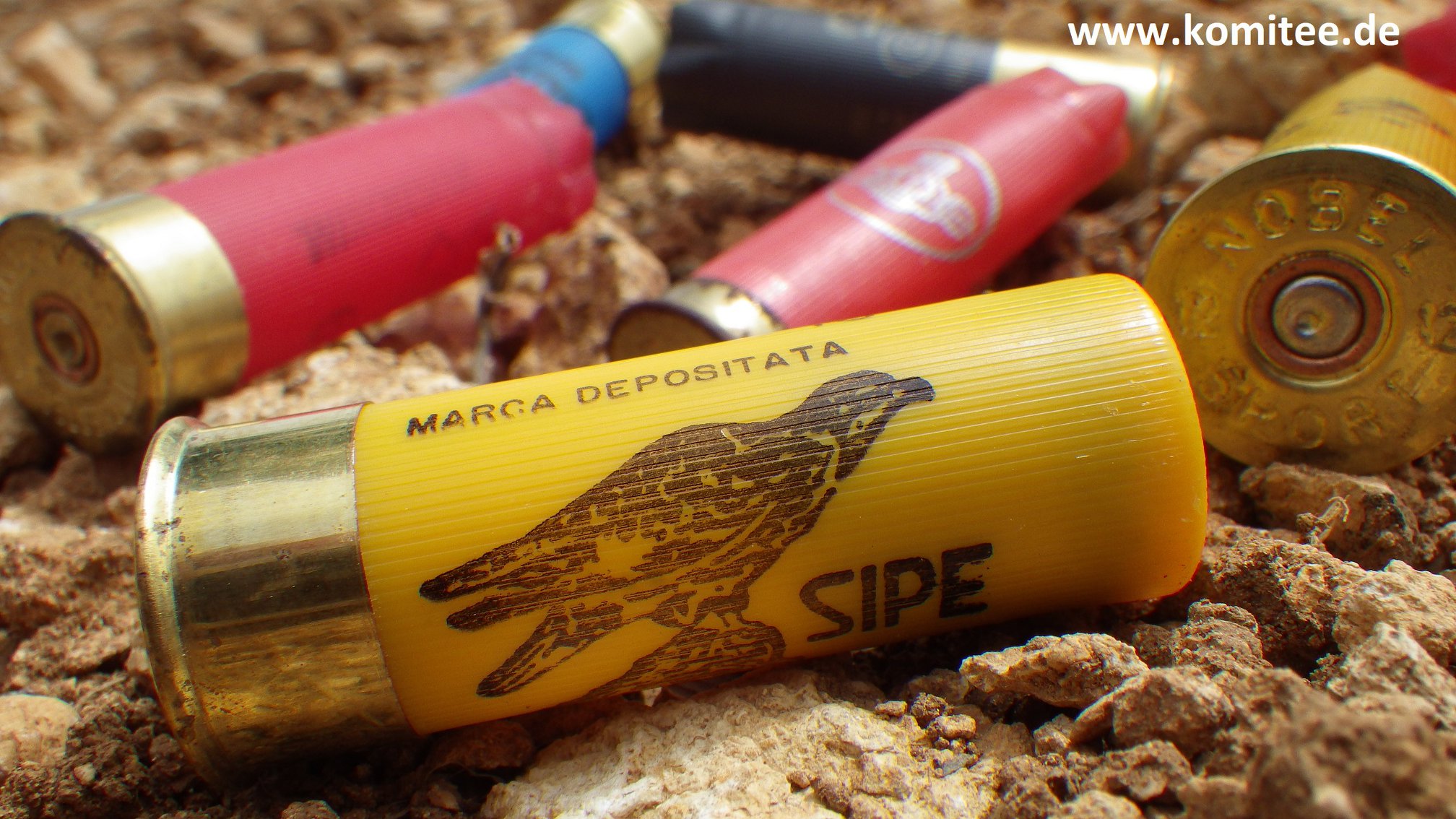
The annual hunting range is around 50 million birds, including around 10 million song thrushes, over 1.3 million skylarks, and around 100,000 lapwings.
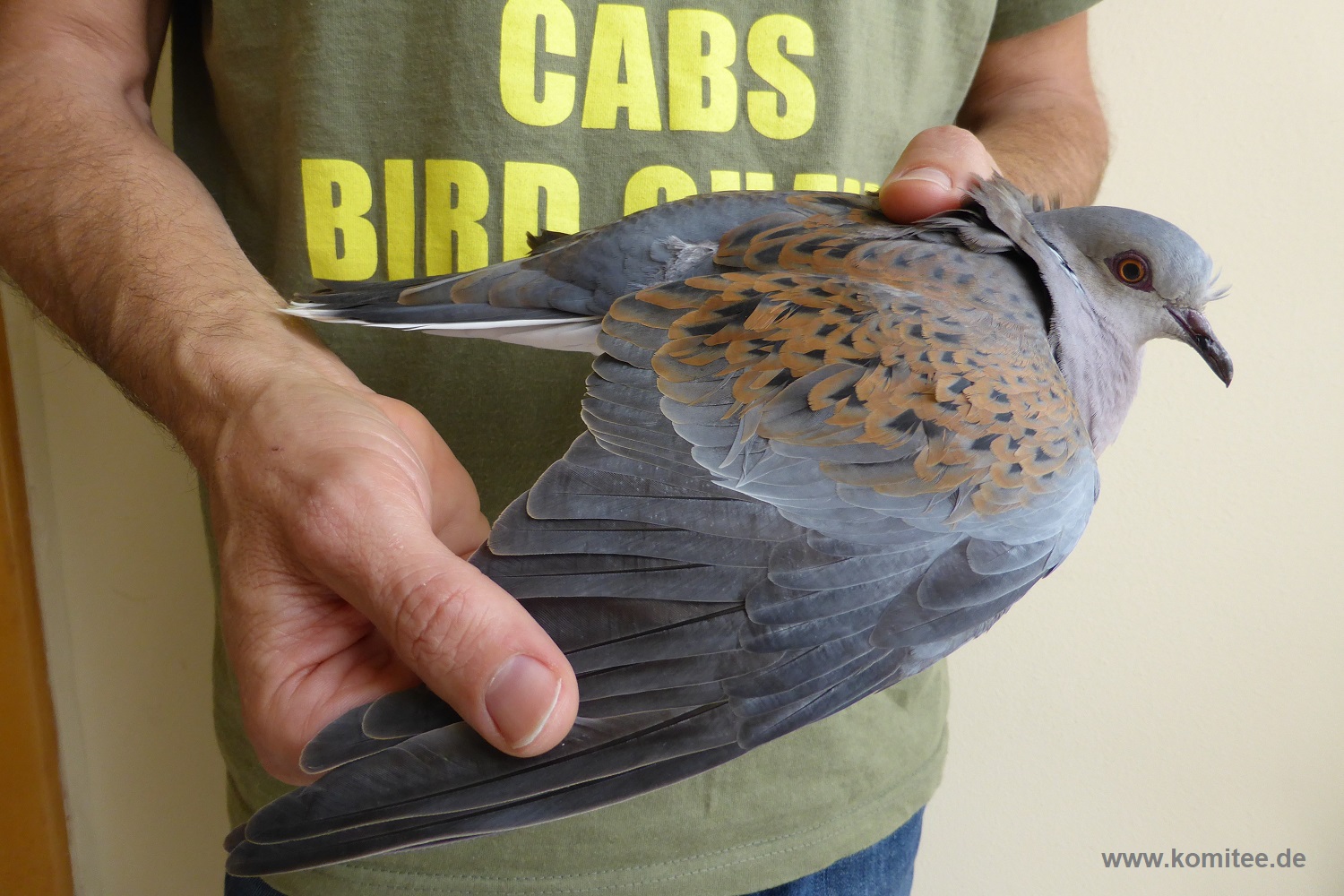
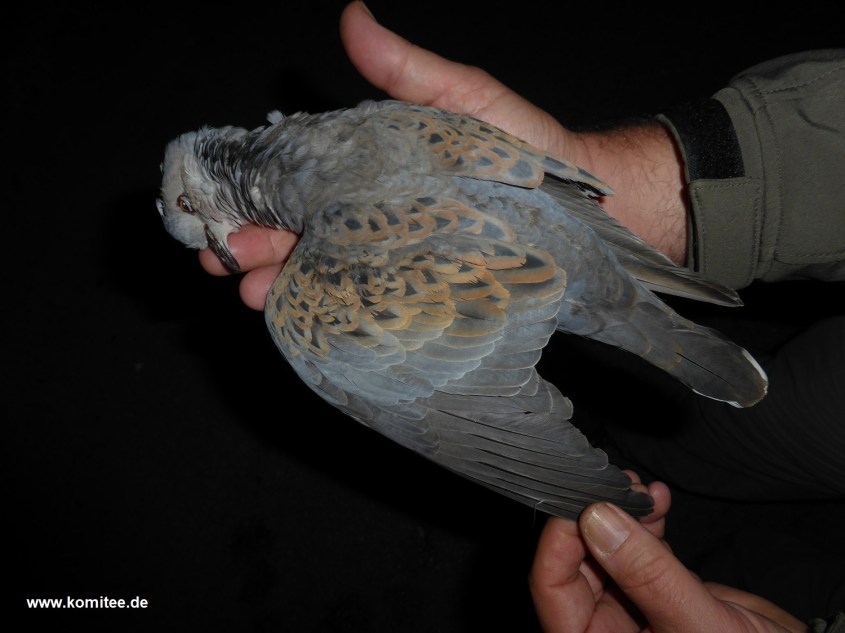
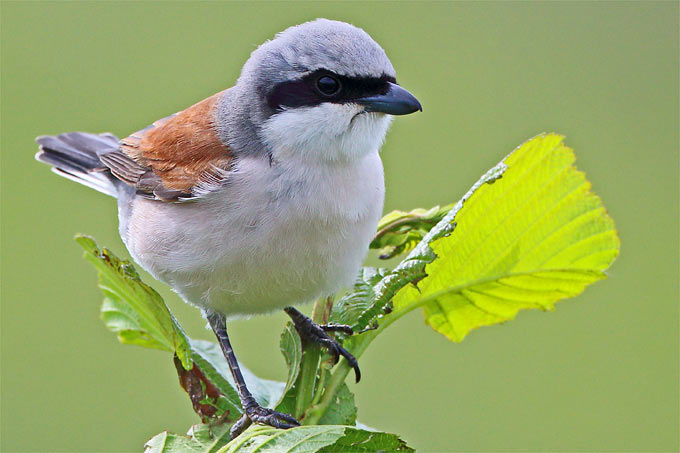
Lovebirds (photo) are also very popular with hunters – although the bird of the year 2020 is endangered throughout Europe, between 2 and 3 million lovebirds are shot legally every year!
And I mean…And that happens in the EU!!!
In the EU, whose countries call themselves civilized
And the EU calls this mass murder legal hunting.
And that’s not mentioned anywhere in the media!!
The hunting lobby extends to the highest levels of government many politicians are hunters … The lobby goes up to the highest levels of government ..That’s why everyone wants to keep the fun of shooting everything around! and therefore it is difficult to change anything.
Add to that the whole shit like tradition, you can also see the same crimes in other areas like bullfighting, whaling etc.
What criminal politicians are we governed by …
what criminal journalism are we being informed about …
and let us become a society without empathy, without conscience, without action…
The Devon and Somerset Staghounds met three times a week before the coronavirus lockdown(iStock)
WAV Comment – I think we can speak for the majority of UK citizens who will be very bummed off when they hear about this. Ex hard working older folk around the country cannot afford to pay a TV license; and yet government money is handed out like sweets to hunt scum. There is something wrong big time ! – and its called ‘a government’.
Stag hunt handed taxpayer-backed £50,000 coronavirus loan and £10,000 grant
Exclusive: Numerous hunts around UK believed to have used government lending schemes during pandemic
A stag hunt has been handed a £10,000 grant and a £50,000 loan from taxpayer-backed schemes that help struggling businesses survive the coronavirus pandemic.
The Devon and Somerset Staghounds is understood to be one of a number of hunts that have won grants or taken out loans through government programmes during the Covid-19 crisis.
During lockdown, hunts have been unable to carry out their usual fundraising activities such as point-to-point horseracing, which pays for expenses such as hound kennels and staff wages.
The Devon and Somerset pack – which rides on horseback to chase and shoot deer – earlier this year applied to its local district council for £10,000 of public cash, which it was awarded, a hunt report revealed.
The hunt, which already had £40,000 in bank accounts, does not have to repay the grant.
Local authorities administer emergency grants for businesses in England, through the small business grant fund and the discretionary grant fund, set up to try to keep traders afloat as economic activity crashed.
The Devon and Somerset Staghounds also used the government “bounce back” loan scheme to borrow £50,000.
The scheme is aimed at businesses that are losing income because of the Covid-19 outbreak. The borrower does not have to make any repayments for the first 12 months, during which the loan is interest-free.
The pack said its income from April to June had been down by 34 per cent on the same period last year but that some of its lost income had been replaced by the £10,000 grant from Somerset West and Taunton district council.
The report by the masters states: “The hunt has taken advantage of a government-backed unsecured Bounce Back loan of £50,000, which is free money for 12 months. This money will be paid back before the interest-free 12-month period ends.
“The money will sit as a form of overdraft facility should it be needed during the next year. Excluding this loan, the hunt has £30,000 in the bank plus a further £10,000 sitting in the Hunt Club account.”
about:blank about:blank javascript:void(0) The League Against Cruel Sports says it understands that hunting groups have encouraged packs to apply for government support to to recover lost income during the pandemic, and that they have widely been accepted.
“Most hunts trade as companies or commercial organisations that make a profit,” said spokeswoman Emma Judd.
Somerset Wildlife Crime, a group that monitors and reports hunts, illegal badger persecution, trapping, snaring and poaching on Exmoor, told supporters: “Bet you’re all delighted to know your council tax is propping up the stag hunts.”
Although the Hunting Act 2004 outlawed the hunting of wild mammals with dogs, it allows hunters to use up to two dogs to hunt wild animals for “observation and study”.
The Devon and Somerset uses this legal exemption to chase deer across Exmoor and the Quantock Hills, helped by supporters in vehicles, before shooting them, insisting it is not illegally hunting for sport.
The group, which usually meets three times a week in season, says it has the support of farmers and landowners in managing the large deer herd on Exmoor.
Dozens of social-media users were outraged at the grant and loan.
One Facebook user commented: “Money should go into public services – never right.”
Others argued residents should withhold some of their council tax.
One said: “Outrageous when we have so many people needing help at this time.”
The Independent has asked the Devon and Somerset Staghounds to comment on the grant and the loan, and has asked the Countryside Alliance to clarify how many hunts in the UK have been given coronavirus support loans.
The Independent also asked Somerset West and Taunton district council on what basis the £10,000 grant was awarded.
None of the three groups had responded before publication.
The hunt for dolphins and other small whale species begins again off Japan’s coasts. In the run-up to the drive hunt, which lasts from September to March, measures were taken against possible protests in the whaling town of Taiji, where most of the dolphins are caught.
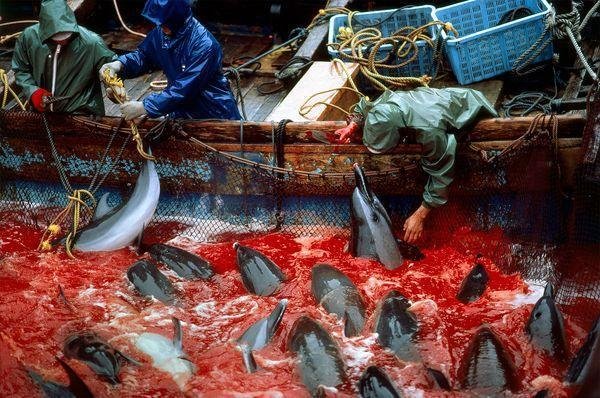
The animals are cornered by several fishing boats in driven hunts. The fishermen hit metal pipes that protrude into the water to frighten the dolphins. The dolphins try to escape this noise and flee to nearby bays.
There they are encircled – and their traders can choose the most beautiful and strongest animals for dolphin shows. Dolphins that are not selected for the dolphinariums are easy prey for fishermen. They are brutally slaughtered with harpoons, spears, or knives.
A live dolphin is worth up to $ 150,000, one dead 600 dollars.
According to local media, emergency services trained to intercept small boats. Drones were also banned in this year. The police set up a temporary guard for the duration of the hunt.
In the picturesque lagoon near the small whaling town of Taiji around 700 kilometers south of Tokyo, animal trainers sort out the most beautiful specimens on behalf of dolphinariums at home and abroad.
Animal rights activists call prices of up to $ 150,000 each. Then a brutal slaughter begins.
Fishermen drag the wildly wriggling animals, which were not sorted out for sale, in three or four groups, hanging on the side of motorboats, into a neighboring lagoon – while doing turning maneuvers they drive over the captured dolphins. Others are slaughtered with spears, hooks, and knives in the bay, which is closed to the public.
These gruesome scenes repeat themselves year after year between September and March.














 This deer impaled the 66-year-old with his antlers before he died (Image: Oregon State Police)