WAV Comment – Like so many live animal transport issues which is always backed up by hard evidence; the EU ignores the same and continues to live up with the fairies on another planet. Over 8 years ago this issue was covered by NGO’s in Argentina; and the EU has not acted. What is the point of the EU we ask ?
Horsemeat imports in regular breach of EU rules
25 November 2020
Today, the Animal Welfare Foundation, supported by other NGOs, released a new documentary underlining animal welfare abuses in the production of Argentinian horsemeat. Unfortunately, as demonstrated by our report, this is not an isolated case.
The documentary, entitled “A Web of Lies”, (click on title to see video) reveals that eight years after the first investigation carried out by NGOs in Argentina, the severe abuses and neglect of horses destined for slaughter continue, despite claims that the situation has improved. The film also puts the spotlight on key shortcomings in ensuring the traceability of the horses.
Similar issues can be witnessed in several countries providing horsemeat to the EU, like Australia, Uruguay and Canada. Consumption and trade of horsemeat in the EU has overall declined between 2000 and 2015; yet, since 2017, EU imports of horsemeat from foreign countries have started to grow again, especially from Argentina.
It is thus high time for the European Commission to address the concerns around these imports.
Eurogroup for Animals launches today a report presenting an overview on animal welfare and traceability-related issues encountered in key producing countries. The report puts forward the following recommendations in order to ensure better equine protection:
All imported equine meat must comply with EU animal welfare standards at slaughter (which are currently the only applicable animal welfare requirements for imported meat).
All imported equine meat should also respect other animal welfare standards applied in EU horse meat production (e.g. related to transport, in assembly centres and in horse feedlots). This means trade agreements should contain provisions on conditional liberalisation of horse meat imports (e.g. liberalised access to the EU market would be contingent on meeting equivalent welfare standards).
Suspension of imports from countries if EU audits demonstrate a lack of enforcement of the applicable provisions of the regulation on welfare at the time of killing and traceability requirements.
Allowing for the possibility of unannounced audits.
Suspension of imports (e.g. from Mexico and Brazil) are not reversed unless the production meets the required EU animal welfare standards as confirmed by EU audits.
Working to improve equine welfare outside the EU through cooperation on animal welfare with relevant partner countries (at present Argentina, Australia and Canada), using technical assistance where required.
Greater traceability of horse meat products by introducing Country of Origin Labelling (CoOL) for fresh and frozen equine meat.
Reduced consumption of equine meat and derived products (through member organisations reaching out to retailers and consumers).
The Cologne Administrative Court has banned 132 pregnant cattle from being transported to Morocco on the grounds that the cattle there are often not slaughtered in accordance with animal welfare standards.
The 132 Holstein cows were pregnant and, according to the carrier, should go to a Moroccan dairy farm. The judges didn’t believe that, however.
According to the court order, the sales contract and the logbook show thatthe buyer was a slaughterhouse.
Berlin, November 24th, 2020:
PROVIEH welcomes the decision of the Cologne Administrative Court to ban the export of live animals to Morocco.
Before the Cologne Administrative Court decided in favor of the ban, the veterinary office had initially refused permission to transport the pregnant cattle to Morocco.
Two exporters had sued against this – and lost in an urgent procedure.
The transport planned for November 18, 2020, was not allowed to take place because the judges in Morocco feared that the animals would be slaughtered in a manner that was not appropriate to animal welfare.
“The decision of the Cologne Administrative Court evaluates PROVIEH as a success for animal welfare. There is a very high probability that the cattle in Morocco would have been slaughtered under conditions that were contrary to animal welfare, ” comments Patrick Müller, Head of Capital at PROVIEH.
“The decision was intended to encourage other veterinary offices not to process any transports that are expected to contain animal welfare violations en route or in the destination country.
We finally need nationwide uniform regulations for animal transports so that there are no more blatant misjudgments, such as the one from the Potsdam Administrative Court a few weeks ago, where the transport of pregnant cattle was permitted with reference to the EU regulation. The European regulation for the protection of animals during transport must also be interpreted uniformly and completely in terms of animal welfare. “
Time and again, massive animal welfare violations occur in the case of live animal exports.
Problems arise from the fact that the animals are not regularly and insufficiently fed and supplied with water, even at high temperatures.
Supply breaks are not observed, appropriate supply stations, especially in third countries, are not approached or do not even exist. In the EU, the regulations are completely inadequate, but compliance with these minimum requirements is not even ensured in third countries.
The applicable law is repeatedly circumvented when live animal exports to third countries: The animals are often declared as breeding animals, although experts doubt that the animals are actually used for breeding. Usually neither the climate is suitable, nor is there a suitable food base for the animals in the destination country. The animals are “consumed” within a short time and are often slaughtered under dire conditions.
This has now also been recognized by the Cologne Administrative Court, at least in the case of a transport to Morocco.
WAV Comment: Just shows; even with all the evidence; how bloody useless the EU is.
Live export from Europe to third countries is booming despite tragedies
23 November 2020
Animals International
Press Release
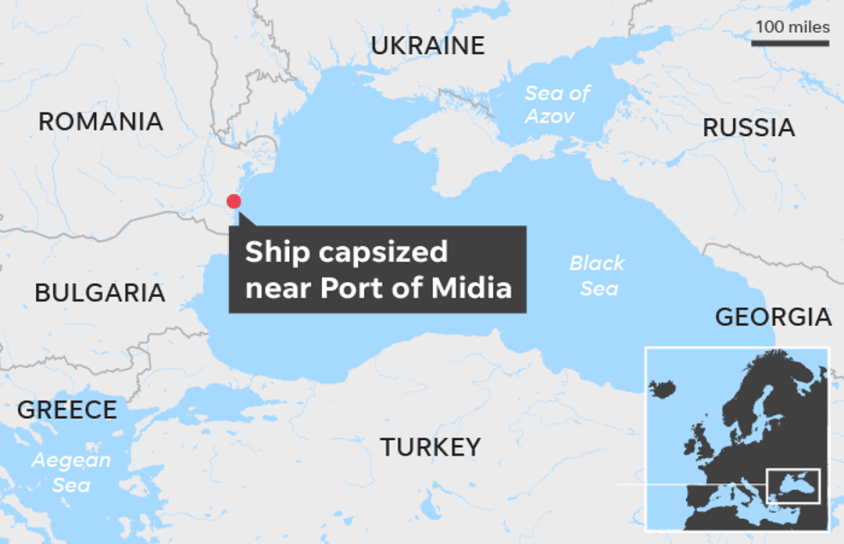
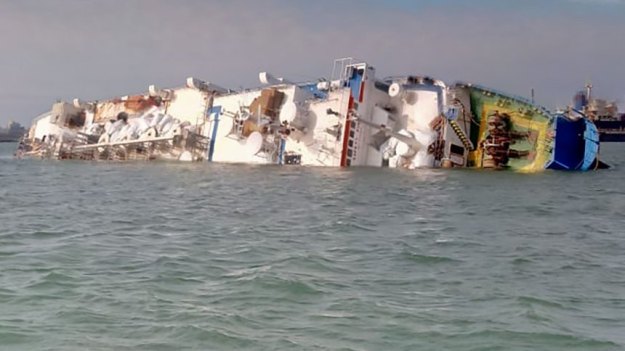
1 year after the live export vessel MV Queen Hind capsised killing thousands of sheep no one is held responsible. Eurogroup for Animals and Animals International, its member organisation in Romania, today remember the thousands of sheep who endured the most horrible death a year ago in the Romanian harbour of Midia.
For immediate release: Brussels, Bucharest 24 November 2020
The tragic anniversary is the opportunity to remind the lack of action by the Romanian Government and the EU Commission which led this barbaric trade to continue, with over 4 millions cattle, sheep and goats being shipped in despicable conditions to countries where animal welfare doesn’t meet the European standards.
Romania alone experienced a major raise in live animal exports since the Queen Hind capsised, with more than 2 million animals leaving the country by sea to reach North Africa and the Middle East, a journey that may take up to three weeks.
While Romanian authorities insist that the density was 10% less than usual, the company hired to take the ship out of the water found secret decks with extra animals that were not part of the official vessel documents. The Romanian Government has not published their conclusions on the incident’s investigation.
The Queen Hind was overloaded, and animals were sentenced to an unavoidable death caused by greed and corruption. The Romanian Government has made no step forward to end live export and has also failed to progress in its commitment to work towards phasing out the trade.
Commented Gabriel Paun, EU Director of Animals International.
Temperatures in the Gulf may reach 50 degrees Celsius in the shade. Despite evidence of Romanian sheep suffering extreme heat stress, in July the Romanian Parliament passed a new law allowing live exports to take place when temperatures rise above 35 degrees Celsius. Even with the added requirements to shear animals and reduce stocking density by 10%, thisnew law breaches the EU transport Regulation that clearly demands Member States to freeze exports if temperatures soar above 35 degrees.
This bill was debated after the Queen Hind tragedy and was initially aiming to improve the welfare of exported animals by freezing exports during summer, as Australia has done, and having a veterinarian on board all ships. But interference by foreign animal trading companies in the Parliamentary debates saw the bill watered down in a form that breaches the current EU Regulation.
The audits carried out by the EC in European harbours indicate major deficiencies, especially in Romania which dedicates more than half of their maritime fleet to export of EU animals to third countries. The Commission concluded that these authorisations were granted superficially and that the fleet endangered animals and crew.
Moreover, within the Farm to Fork strategy the EC intends to revise the EU animal transport regulation and the EP created the Committee of Inquiry on the protection of animals during transport (ANIT).
Thanks to the ANIT Committee we believe that MEPs will have all the evidence they need to investigate how Member States apply the current Transport regulation and finally stop live transport in favor of meat and carcasses trade.
Commented Reineke Hameleers, CEO, Eurogroup for Animals.
Animals International and Eurogroup for Animals call on the EU Commission to start an infringement procedure against the Romanian Government for continuously failing to comply with the EU animal transport regulation.
In the aftermath of the incident Eurogroup for Animals members Animals International and Four Paws were both involved in the rescue operations.
ENDS
Above – The ‘do nothing EU Commissioner Andriukaitis
Below – the ‘animal welfare’ ignorant Romania Minister Petre Deae
EC study find outs the livestock sector is responsible for 81-86% of the agricultural greenhouse gas emission
October 2020
In mid October 2020, the European Commission published a report examining the environmental, economic and social consequences of EU livestock production and how this sector can contribute to sustainable agriculture.
While recognising the important economic role played by livestock production in the EU economy, the report stresses the significant environmental impacts associated with industrial animal production. Such impacts can affect biodiversity, human health, and the functioning of ecosystems.
In particular, by including in calculations the environmental impacts of the production, processing, and transport of feed, the report concludes that the livestock sector is responsible for 86-88% of the EU’s agricultural GHG emissions. Additionally, more than 80% of nitrogen of agricultural origin present in all EU aquatic environments is linked to livestock farming, and livestock farms are the main sources of ammonia.
On animal welfare, the report recalls the results of the last special Eurobarometer on animal welfare showing that 94% of European citizens attach importance to animal welfare, with 82% agreeing that farm animals should be better protected. Three key areas need to be addressed to respond to citizens expectations, and namely the intensification of farming, transportation of animals and slaughter.
The report notes that the specialisation and intensification of livestock farming systems has had negative implications for animal welfare, leading to stress and pain due to artificial living conditions in industrial type buildings, damage to animal integrity (e.g., painful husbandry procedures), separation from familiar conspecifics and unnatural levels of mixing. Citizens expect animals to be spared fear and anxiety and to be offered the possibility to experience positive emotions. Such an approach can also have positive knock-on effects on the reduction in the use of antimicrobials in farmed animals, which should be halved by 2030 compared to current levels according to the Farm to Fork strategy.
WAV comment – having argued the case for animals in transport for over 30 years whilst also calling for a ban on live exports; we have always declared that the EU is utterly useless at enforcing (its own) legislation when it comes to live animal transports. The video here; the first of 3; shows this.
EU = junk = animal abuse.
Welfarm to release three shocking videos to call for a long-overdue end to the export of live animals
12 November 2020
WELFARM
It only takes three videos for Welfarm, Animals International and Animal Welfare Foundation to show the French government the horrifying state of play of what exporters and livestock breeders do to animals they export to North Africa and the Middle East.
From European ports to Lebanese slaughterhouses to Moroccan cattle markets – four NGOs captured the dreadful fate of the thousands of French cows shipped across the Mediterranean every week. These investigations will be released by Welfarm over the next three weeks.
In a petition to the French government, Welfarm calls for the suspension of live animal exports to third countries. “The Ministry of Agriculture, exporters, breeders and the port of Sète are aware of these violations, yet they continue to export animals” states Adeline Colonat from Welfarm. And for good reason as cattle exports generated nearly 1.5 billion euros in 2018, of which 118 million went to third countries.
“France cannot even detect and solve problems in its own slaughterhouses, so how can we imagine that we can have the slightest influence on what happens on the other side of the Mediterranean? The truth is that France no longer has any control as soon as the animals leave our soil. The only way to avoid their suffering is not to send them there alive. ”
Eurogroup for Animals and its members urge the EU to stop live transport especially to Third Countries and to prepare a strategy to shift to a meat and carcasses and genetic material only trade.
Video 1: Death before boarding the boat
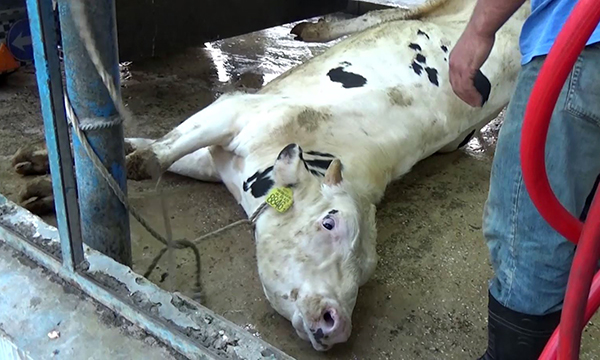
The first video of the investigation series is from July 2020 and sets the scene in Port of Cartagena, Spain, which calls itself a “pioneer in animal welfare”: A cattle with fractured legs is dragging itself along the foot of a ship. Born in the Puy-de-Dôme, exported to Spain for fattening, it is to be shipped to Libya.
A tractor will have to drag the paralysed and screaming animal into a lorry. Heading for the slaughterhouse. By law, it should have been euthanised on the spot, but in this case, it would be impossible to profit from his meat… Like this cattle, 425,000 French cattle are exported every year to Spain for fattening. How many then embark in Cartagena? “It’s impossible to say since they disappear from French statistics”, explains Adeline Colonat, head of the project team on transport in Welfarm, “but we are the leading supplier of cattle to Spain, which in turn is the leading exporting country in Europe.”
Maria Boada (Animal Welfare Foundation), who captured these images alongside Animals International and Welfarm explains further: “In European ports as well as in Third Countries, the lack of controls, infrastructures and sanctions is disastrous for animals. The presence of a veterinarian is not even compulsory on board of ships leaving the EU. Thousands of animals are deprived of care for days or even weeks”
From Lesley; activist campaigner and friend at ‘Eyes on Animals’ in the Netherlands.
Dear donors and friends,
Carola Schouten, the Dutch Minister of Agriculture, Nature and Food Quality, wants a ban on the long-distance transport of unweaned calves. She is committed to a European ban and will therefore urge the EU Agriculture Council to amend the European Transport Regulation. She also wants the ban to apply to animals destined for slaughter.
A ban would mean, among other things, that The Netherlands can no longer import unweaned calves from Ireland, Denmark, the Czech Republic and the Baltic states. There are tens of thousands of them on the roads every year.
The Minister is of the opinion that the welfare of unweaned calves suffers when they are transported over long journeys because they cannot be properly fed. At this age their diet consists only of milk, something that cannot be offered to them on board.
We can only agree with her. Eyes on Animals has trailed many trucks carrying unweaned calves from Ireland, Latvia and Lithuania in the past 10 years. Our investigations proved that animal-welfare laws were structurally violated: calves were on the road for too long and were not given any milk.
We also exposed, in collaboration with the French organization L214, serious physical abuse of young calves at a frequently used control post in France where Irish calves on their way to the Netherlands were unloaded to rest.
Eyes on Animals also revealed the poor condition Polish, Latvian and Lithuanian calves were in once they arrived at veal farms in The Netherlands, many of which were too weak and dehydrated to walk out of the trucks on their own and were instead dragged.
The footage from our inspections made it on the major international news channels and sites, such as Swedish news, The Times, Le Parisien, BBC, Hart van Nederland, RTE Prime Time (Ireland), and The Guardian. After each inspection, we also sent an extensive report of our observations and the violations documented by our teams to the responsible authorities, including the Dutch minister of Agriculture.
We are very pleased that the Minister is insisting that long-journeys for unweaned calves and animals destined for slaughter be phased out and wish her every success. We will continue to carry out our inspections unabated so that the authorities of other countries also push for an EU-wide ban.
Lesley Moffat director Eyes on Animals
In the past, we also presented a big report to the EU regarding the live transportation of live calves between Ireland and mainland Europe; which as expected and proven, documented that calves were not being given the rest times and food required of them by EU laws.
WAV Comment – I stumbled across this today; it is from UK press back in April 2020, and is by Juliet – founder of Viva!
Regards Mark
If more of us were vegan, there would be less chance of a pandemic in the future
As our excessive demand for meat and animal products grows, we destroy ever more wildernesses for animal fodder and grazing, bringing wildlife into closer contact with people. And we put ourselves at greater risk
Animals transmit infections. Who knew? We did, a long time ago.
In the mid-19th century German pathologist Rudolf Virchow was the first to discover that infectious diseases can be transmitted between animals and humans – coining the term “zoonoses” in 1855.
A century later, in August 1958, the World Health Organisation Expert Committee on Zoonoses met at the Karolinska Institute in Stockholm. The outcome of the meeting was a stark warning: the prevention, control and eradication of these diseases were “responsibilities of considerable magnitude in every country”.
Fast forward to today and the world is in the grips of the worst global pandemic for generations. Covid-19 – like SARS, bird flu, swine flu and Ebola – originated in animals.
Three in four of the world’s new or emerging infectious diseases are zoonotic. These diseases are responsible for some 2.7 million deaths per year and are largely transmitted through the wildlife trade and factory farming. Despite knowing the dangers for over 150 years, we continue to put ourselves at risk of devastating outbreaks.
Cramming animals together in markets and subjecting them to intensive farming practices creates a breeding ground for disease. Today some two thirds of all farm animals are kept in factory farms where infections can spread with ease between animals, mutate and become infectious to humans.
As our excessive demand for meat and animal products grows, we destroy ever more wildernesses for animal fodder and grazing, bringing wildlife into closer contact with people. And we put ourselves at greater risk. This is no longer just a matter of animal welfare, it’s a global public health crisis too.
The coronavirus pandemic has inspired thousands to speak up against the unregulated movement of wild animals, ignited calls for stricter controls at airports and brought global attention to the barbaric cruelty of wet markets, all in a bid to prevent future outbreaks. But the most impactful solution is to stop the spread of these diseases at their source by putting an end to our consumption of meat and dairy.
Cramming animals together in markets and subjecting them to intensive farming practices creates a breeding ground for disease. Today some two thirds of all farm animals are kept in factory farms where infections can spread with ease between animals, mutate and become infectious to humans.
As our excessive demand for meat and animal products grows, we destroy ever more wildernesses for animal fodder and grazing, bringing wildlife into closer contact with people. And we put ourselves at greater risk. This is no longer just a matter of animal welfare, it’s a global public health crisis too.
The coronavirus pandemic has inspired thousands to speak up against the unregulated movement of wild animals, ignited calls for stricter controls at airports and brought global attention to the barbaric cruelty of wet markets, all in a bid to prevent future outbreaks. But the most impactful solution is to stop the spread of these diseases at their source by putting an end to our consumption of meat and dairy.
But the most important lesson doesn’t stem from this outbreak alone. It’s the culmination of our history, which has been blighted by preventable outbreaks of lethal diseases spread from animals to humans, and our collective decision not to act.
We’ve known the risks for almost two centuries. Too many lives have been lost. The solution is at our fingertips: it’s time to go vegan now.
Juliet Gellatley is director of Viva! a charity campaigning for a vegan world
Award-winning vegan filmmaker Shaun Monson’s new film, There Was A Killing, tells the story of Canadian animal rights activist Regan Russell, who was struck and killed by a pig transport truck while attending a Toronto Pig Save vigil in June. But the documentary is about more than just this tragedy; it’s about starting a conversation.
Russell, a decades-long fighter for animal rights, spent her last moments giving compassion to baby pigs on their way to slaughter. Footage from that day shows her—full head of white hair, black shirt, and blue jeans—carrying a spray bottle, which she used to give water to the pigs.
More than a month after Russell’s death, the police cited the truck driver with a non-criminal charge of Careless Driving Causing Death. The charge drew outrage among the animal rights community. “I just felt there was this cover-up. Or they were brushing it aside or dismissing it. And that began to nag at me,” Monson tells LIVEKINDLY about his initial desire to make the film.
After watching the cell phone footage, taken by activists attending the vigil, Monson says he was left feeling even more confused. “I’m thinking, how do we only have four minutes from this event? There was very little footage from the day,” he explains. “And it just felt like this haunting mystery. There’s something off. And I felt a little bit like a detective and I had to explore.”
Making Impact-Driven Films
Monson’s no stranger to making these kinds of documentaries. He wrote, produced, and directed 2005’s Earthlings and 2015’s Unity, among others. The former goes in-depth into the day-to-day practices of industrial factory farms around the world. The latter analyzes the destructive relationships humans have with each other, animals, and the planet.
But, according to Monson, making an impact-driven film that resonates with the audience isn’t easy. And a chance meeting with Academy Award-winning director James Cameron fueled Monson to tell harrowing stories like Russell’s in a way that makes people want to see them.
“I met him a couple of years ago here in L.A. at Crossroads—a vegan restaurant. I had on a t-shirt that said “Eat What Elephants Eat,” Monson explains. The shirt caught the attention of Cameron, who’s been plant-based for nearly a decade. “He says, ‘Hey, I like your shirt.’ And so we start talking,” Monson says.
He was blown away when Cameron told him he had seen Earthlings. Monson jokingly asked: “You saw it all the way through?” (The footage shown in the film of how factory farmed animals are treated is gruesome, to say the least.)
“He kind of puts his arm around me. And for a moment I thought: ‘Wow, I’m about to get the secrets of Hollywood filmmaking.’ He says: ‘Let me tell you something. Whenever I make a movie, I do two things. One: I make a movie that people want to see. Two: I put a message in it,” Monson recalls. “And then he pays me this really high praise. He says ‘The message in your film is probably one of the best messages I’ve ever seen.’ And then he leans in close and he goes: ‘But nobody wants to see it.’”
Monson continues: “And he’s right because it’s not like people are running out to get a bucket of popcorn to watch this kind of stuff. They just aren’t, you know?”
After spending more than 20 years making documentaries, Monson says he started to consider how to reach a larger audience. “I just had one of the biggest filmmakers in the world lean over and spend 20 minutes talking about how to reach more people.”
Gaining An Audience
So, how do you make a film about a tough topic that people actually want to see? According to the filmmaker, you’ve got to make it in a way that will get viewers emotionally invested.
“A film is such a powerful medium. Why can’t a film change something?” Monson continues: “It’s a classic statement of a picture’s worth 1,000 words. If you look at what happened with George Floyd, unlike other unjust, corrupt deaths, they weren’t being documented. But when someone films for 8.5 minutes straight—just films the whole thing, it creates this visceral emotional reality. It’s almost like it’s not secondhand information.”
And There Was A Killing certainly provides a wealth of information: It interweaves video evidence along with eyewitness testimony. It provides interviews with attorneys Robert Monson, Lisa Bloom, and David Simon. And it features a former animal truck driver’s perspective on the day’s tragic events. For all intents and purposes, the film appears to accomplish its goal: It makes people think.
Monson hopes his new film will help bring Russell’s case to the court of public opinion. | Provided by Shaun Monson
Raising Awareness For Animals
Monson explains that he believes people are, overall, basically decent—even though there are exceptions to this rule. “They’re just not informed,” he says. “And so it’s almost like you have people that are asleep. And then you have people whose eyes are sort of fluttering open a little. And then you have people that are sort of sleepwalking. And then you have awake people. And the idea is for all of us to be awake—not to be sleepwalking, not to be eyes fluttering, and certainly not to be asleep.”
Through his films, Monson wants to awaken people to the impact they have on animals and the planet.
And Monson hopes There Was A Killing will help bring Russell’s case to the court of public opinion. He also wants the film to raise awareness for ag-gag laws—which seek to silence whistleblowers from exposing the horrors of the animal agriculture industry.
On the day of her death, Russell had been protesting Canadian ag-gag Bill 156—which the government enacted into law just one day before she was killed. Monson says he thinks her case will be a case of first impression—one that has never been decided by a governing jurisdiction.
“It’ll be the first time that law is now being put to trial to see if it’s eventually constitutional. And so attorneys later study case laws. That’s why in the States we have Roe v. Wade,” he explains. “Roe v. Wade is a case study. It isn’t a statute. It’s a case study. Both are very important. So that’s the power of a documentary is that it might challenge a law statute. And then a case can come out of that. And then a case law may change the law.”
Monson also hopes the film will inspire others to be more compassionate.
“And that’s my hope: That more people will maybe see these kinds of messages. And they can have a positive effect. Because I don’t know how to write books. I don’t start organizations. I don’t have a sanctuary. I don’t know what else I have to offer except films,” Monson continues. “Ultimately, all you can do is provide the information to people, hope that they watch it, hope that they actually press play and look at it. And then it’s really up to them.”
“I always say we’re like gardeners, and we’re just casting seeds,” Monson says. “And sometimes those seeds fall in rich soil. And sometimes it’s stony ground. But we keep casting seeds out just to have a positive effect in this world.”
Happy World Vegan Day! We’ve put together some of our favourite recipes from around the world to celebrate this amazing international cuisine.
We’ve just launched our incredible new programme V7 where users can try vegan for a week! You’ll receive a complete shopping list for seven days of delicious recipes, plus handy tips and advice.
Our guest chef this month is the incredible TJ Waterfall (Meat Free Fitness) – specialising in vegan sports nutrition, he has provided us with some healthy and incredibly delicious recipes: win, win!
We’d like to whet your appetite for when international travel is back on the agenda – take a vicarious journey to Paris with our guide to this plant-based city of delights!
Sending you lots of love during this challenging time.
Happy cooking, eating and reading ♥ The Vegan Recipe Club Team
Check out all the Viva ! Podcasts on a whole range of animal / vegan issues by clicking on the following link:
Note: Regarding Protect the Harvest’s ludicrous and deceptive claim of the nonexistence of factory farms, “family” has zero legal distinction regarding farm size; indeed, a “family” can refer to Kraft, Ford, Trump, Smithfield, and Walmart. The government defines size, and anyone with even a rudimentary understanding of Google can easily find this data. To suggest that the greater than 10 billion land animals killed annually in the US alone come from Uncle Ted’s backyard hinges on desperation to continue the animal holocaust unseen and socially accepted. SL
The U.S. Environmental Protection Agency (EPA) defines AFOs as agricultural enterprises where animals are kept and raised in confined situations. AFOs congregate animals, feed, manure and urine, dead animals, and production operations on a small land area. Feed is brought to the animals rather than the animals grazing or otherwise seeking feed in pastures, fields, or on rangeland. There are approximately 450,000 AFOs in the United States.
A CAFO is another EPA term for a large concentrated AFO. A CAFO is an AFO with more than 1000 animal units (an animal unit is defined as an animal equivalent of 1000 pounds live weight and equates to 1000 head of beef cattle, 700 dairy cows, 2500 swine weighing more than 55 lbs, 125 thousand broiler chickens, or 82 thousand laying hens or pullets) confined on site for more than 45 days during the year. Any size AFO that discharges manure or wastewater into a natural or man-made ditch, stream or other waterway is defined as a CAFO, regardless of size. CAFOs are regulated by EPA under the Clean Water Act in both the 2003 and 2008 versions of the “CAFO” rule.
Veganism, at its essence, is the recognition that all animals have the right to bodily integrity. Humans do not own the bodies, families or lives of other animals – we can be guardians to animals in need of rescue, but animals are never our property or commodities.
Donald Trump has demonstrated, over and over again, that he sees animals only as obstacles to be cleared or resources to be used to serve corporate interests and generate maximum profits.
But his actions don’t reveal a detached view of other species as objects or commodities so much as a seething contempt – for the natural world, for animals and for anyone trying to protect them.
Putting animal haters in charge
At every turn, Trump has placed people who actively oppose animal welfare, wildlife and environmental protection in leadership roles at the agencies responsible for carrying out those protections. Not surprisingly, this fox-guarding-the-hen-house strategy has resulted in dire consequences for animals and their habitat.
In 2016 he selected Brian Klippenstein, executive director of a particularly vile organization called Protect the Harvest, to serve as senior advisor to the USDA – the agency charged with safeguarding animals used in commerce.
Protect the Harvest exists to “save the agricultural industry from the growing threat of the radical animal rights movement” by lobbying against animal welfare legislation, supporting ag-gag bills and promoting animal commoditization in all forms – including circuses, rodeos, dog and horse racing, horse carriages, puppy mills and horse slaughter.
One of the group’s campaigns aims to soothe consumers’ growing concern regarding confined animal feeding operations by assuring the publicthat factory farming is just a “fictional concept created by activists.”
Next, Trump chose to appease animal agriculture and fossil fuel industry elites by putting climate change denier Scott Pruitt in charge of the Environmental Protection Agency – a move that led to the rollback of several critical climate and pollution regulations, along with the U.S. decision to withdraw from the Paris Agreement.
Pruitt, once honored with an award for his contribution to the success of the beef cattle industry, has described himself as a “leading advocate against the EPA’s activist agenda” and “a big fan of beef.”
Though he resigned in 2018 under the weight of numerous legal and ethics investigations, EPA leadership continues to prioritize industry demands over keeping the country’s air and water clean. In March the agency used the COVID-19 chaos as a cover to release polluting industries from monitoring and reporting requirements.
Perhaps the most stunning hire Trump made was William Perry Pendley, a former oil and gas attorney he installed to wreak havoc on the Bureau of Land Management. That’s the agency charged with conserving public lands – such as national parks – in 11 Western states and Alaska.
Pendley, who spent the bulk of his career lobbying for oil companies’ rights to drill in pristine wilderness, does not believe public lands should exist at all.
He has joked on video about illegally killing and burying endangered animals, and tweeted that climate change is like a unicorn because “neither exists.” He also has a grotesque obsession with eradicating wild horses and burros – insisting that they (rather than cattle grazing or resource extraction) represent an “existential threat” to public lands.
A judge recently ruled that Pendley’s service violates the Constitution because he was never confirmed by the Senate, but so far he has refused to leave his post.
Please click on the above link to continue reading the full article.