Category: Live Transport

Colombia: Spain: 5,000 cattle found in awful conditions in a vessel bound for Egypt.

colom


Spain: 5,000 cattle found in awful conditions in a vessel bound for Egypt

5 June 2020


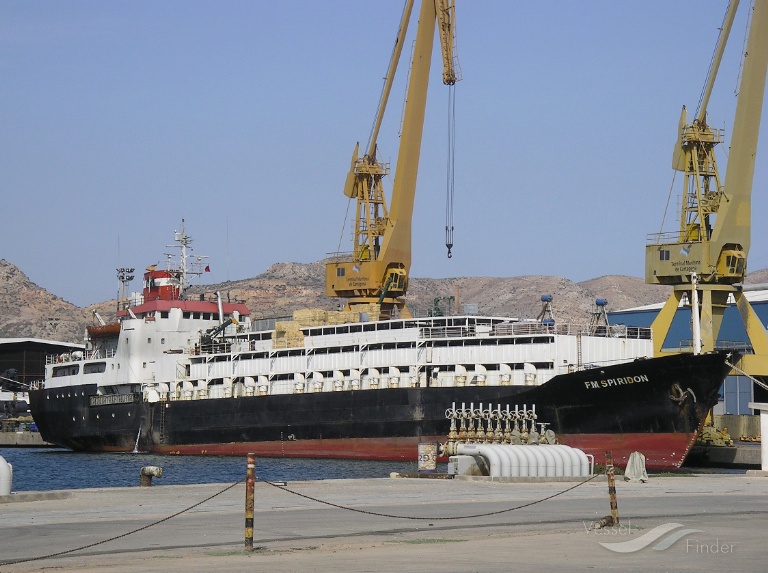
FM SPIRIDON, Livestock Carrier - Details and current position ...


5,000 cattle were found in appalling conditions on the F. M. Spiridon docked in Spain at the end of last month, despite its authorising country, Colombia, having signed up to the World Animal Health Organisation (OIE)’s Terrestrial Code. Given the frequency of serious welfare issues in live export by sea, Eurogroup for Animals calls on the Commission to use the opportunity of the revision of the Transport Regulation to ban this trade for good.

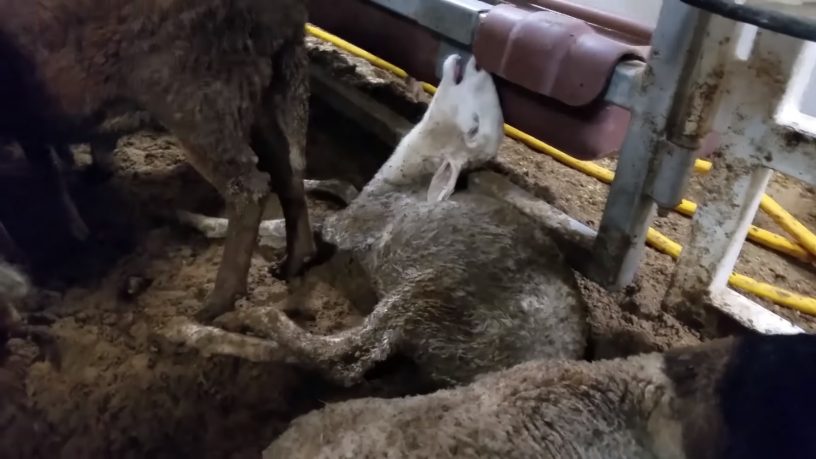
According to Spanish media, the F. M. Spiridon, which is blacklisted under the Paris Memorandum, was inspected by Spanish authorities because of suspected narcotic substances after arriving in Las Palmas in Gran Canaria, Spain on 27th May. However, the  authorities were unable to carry out their inspection due to the deplorable conditions of the animals on board. 5,000 cattle were being transported in overcrowded conditions, standing  on a thick layer of excrement and showing clinical signs of starvation.

Evidently several cattle had died during the journey from Colombia (South America) towards Egypt, as bodies were piled in another part of the vessel. Due to the ammonia and the smell of the animals’ bodies decomposing, the Spanish authorities wore breathing equipment before entering.


F.M.Spiridon (ship, 1973) | F.M.Spiridon (ship, 1973) in the… | Flickr


The F. M. Spiridon was approved by French authorities in September 2015 and inspected by the Animal Welfare Foundation (AWF) in March 2016 at the port of Rasa in Croatia. Even then the investigation revealed, among other things, a risk of injury due to the design and construction of the pens, insufficient deck height for adequate ventilation, inadequate handling of the animals and overcrowding.

Since the beginning of 2020, the F. M. Spiridon has been exporting animals from Spain and Croatia to non-EU countries. Confronted with this latest evidence, AWF immediately contacted the EU National Contact Points asking for in-depth inspections every time this vessel enters a EU port. In addition, to prevent animal suffering, it urged the French government to immediately withdraw the vessel’s certificate of approval.

Despite Colombia, the departure country, and France both being members of the World Animal Health Organisation (OIE), the conditions on the F. M. Spiridon are out of line with the requirements laid down in the OIE terrestrial code for sea transport (Chapter 7.2).

Although Eurogroup for Animals ultimately wants to put an end to this horrendous trade, in the meantime it is calling on the EU Commission to urgently develop harmonised and binding standards for the authorisation of livestock vessels, as well as to centralise the issuing of certificates of approval.


https://www.eurogroupforanimals.org/news/spain-5000-cattle-found-awful-conditions-vessel-bound-egypt 

Scotland: Opinion: Mark Smith: Cruel and unjustified: the legal case against the Scottish Government that you might not have heard about.

scot


https://www.heraldscotland.com/news/18502458.opinion-mark-smith-cruel-unjustified-legal-case-scottish-government-might-not-heard/?ref=twtrec


Opinion: Mark Smith: Cruel and unjustified: the legal case against the Scottish Government that you might not have heard about

There’s an important case coming up at the Court of Session in the next few weeks, but when I phoned the Scottish Government to find out more, they told me it would be inappropriate to talk about it. I disagree. The fact that the case is happening, and the fact that the Government is defending it, is infuriating and depressing and we should definitely talk about it and I hope to God the Government loses.

The issue at the heart of the case is animal welfare, specifically the welfare of young calves, and it’s important because it raises several moral and political questions. First: how should we treat farm animals in Scotland? Second: do we want Scotland to have the highest standards because if we do, why is the Scottish Government allowing a practice that’s no longer happening in England? And third: will we learn lessons from Covid? Because in Scotland we still disrespect animals in ways that have spread disease in the past and could do so again in the future.

I have to say here that, until I started looking into this case, I hadn’t properly realised Scotland was still persisting with a practice that became such an infamous issue 30 years ago. You may remember it: in the 90s, half a million male dairy calves were being exported from the UK every year, mostly for veal, but the dairy industry eventually realised – thanks to a campaign against the practice – that their image was suffering and the number of exports dropped dramatically.

However, the trade does still continue and I’m sad to say that for the last three years the only place in Britain where it’s been happening is Scotland. Since 2017, more than 12,000 calves have been exported from Scotland to Spain where they are fattened for beef. The calves are usually taken from their mothers on their first day of life and loaded on to the trucks at two weeks old. Many other male calves are shot at birth (in the UK, about 95,000 a year).

READ MORE: MSPs back animal welfare reforms 

Ah but wasn’t there a whole scandal about this a couple of years ago and didn’t P&O say they would stop carrying calves from Scotland? True, but the Scottish Government remained supportive of live exports and, after P&O made their decision in 2018, the industry switched its tactics. So now, instead of going by boat from Cairnryan, the calves are driven to Ramsgate where a ship, chartered by the exporters, takes them to France and then by road to Spain.

Which is where the court case comes in. The petitioner in the case is Compassion in World Farming, the organisation that campaigns for better farming standards, and their argument is that, in allowing the export of calves to Spain, the Scottish Government is breaking the law. The Government disagrees and has appointed a QC to fight the case, although exactly what their defence will be we don’t yet know.

What the law says is that unweaned animals should not be transported for more than eight hours unless, after nine hours, they are given water and if necessary fed. Now as far as we know, after eight hours or so, the calves from Scotland are stopped at a motorway service station in Essex and the automatic watering system in the trucks is operated. But each truck is tightly packed with up to 250 calves and no one goes on board to check if all the calves take the water. Chances are many don’t.

As for feed, what calves of that age receive is milk or a milk replacement, but the trucks don’t have the facilities for that so for the entire journey to France (23 hours or so), they will not be fed. What the Government may argue – and it would be a pretty lowdown argument if they try it – is that it’s not necessary to feed the calves. But calves of that age feed at least twice a day (and if they’re with their mothers, a good deal more) and the schedule of documents sent to the Court of Session includes an unequivocal statement from Professor Donald Broom, the UK’s foremost authority on animal welfare: it is necessary to give milk or milk replacement to calves that have been transported for eight or nine hours.

Compassion in World Farming say the Scottish Government has also tried to argue – surprise, surprise – that the problem arises in England and when I got in touch with the Government, they said it would be inappropriate to comment while legal proceedings were ongoing. They did, however, say they were committed to consulting on the recommendations of the Farm Animal Welfare Committee, which includes a nine-hour limit on journeys for calves. “Our preferred policy intention,” said the spokesman, “is not to support unnecessary long journeys involved in the export of livestock.”

But a statement like that raises more questions than answers. First, why support exports anyway – the UK imports a lot of beef so why not use the male dairy calves for beef in this country? Secondly, even if you think live exports are a good idea, why fight a case over a time limit you say you support? And thirdly, is the fight really worth it? The calves being exported represent the rump of an industry that isn’t even economically significant any more. Do we really want to be the last place in Britain where this happens?

And perhaps the fact that the case is happening in the middle of a pandemic should also give the Government pause for thought. If you haven’t watched the recent webinar with the celebrated primatologist Jane Goodall, I recommend it. She didn’t hold back. Humans have brought coronavirus on ourselves, she said, because of our disrespect for animals that have been pushed closer into contact with each other, and they’ve been pushed closer together in markets, on intensive farms, and in trucks parked up at motorway service stations in Essex.

So what happens now? The case against the Scottish Government is due to be heard on August 4th and campaigners on animal welfare will be keeping a close eye on it. There’s also an awareness day on live exports this Sunday. The aim, in the end, is to stop live exports all together and the hope is that the Scottish Government will show some sense. What we’re realising is it may take a judgment of the Court of Session to make that happen.


Info from CIWF:


CIWF Calves court June

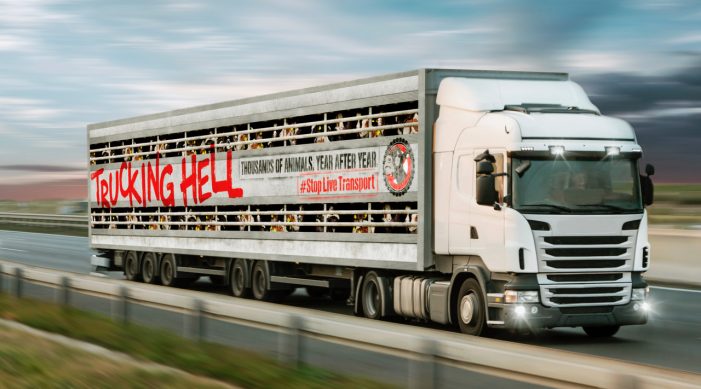
CIWF Trucking hell


CIWF posterCIWF awareness day 2020

Australia: Breaking News 3/6/20 – The Summer Live Export Ban Stands! – Sheep Will Not Suffer Transportation to the Middle East In Extreme Temperatures.

australia


sheep123


WAV Comment


Further update – 1020hrs GMT (England) 3/6/20.


I (Mark) put this new post from Lyn out early on 3/6 to give you the great news from AA about the summer export ban standing.

You can check out our earlier post on this, relating to what it is about, by clicking on

https://worldanimalsvoice.com/2020/06/01/australia-live-exports-rural-export-trading-or-retwa-is-seeking-an-exemption-to-regulations-because-a-disease-outbreak-on-one-of-their-ships-meant-they-couldnt-get-their-last-shipm/

In addition, on this past post I included some old archive information for you to read from October 2018 – regarding Kuwait Livestock and Trading (KLTT) and its Australian subsidiary, Rural Export Trading WA (RETWA), who made this special appeal to continue shipping in the Summer months.

We immediately sent a message of solidarity to our campaigner friends at Animals Australia last week; both of us united in the fight against this disgusting trade; and on 1/6 we had a super message back from Jacqui at AA thanking for being united in support with them. As you can see below, the fight on this particular has paid off and the sheep will not suffer enduring weeks of heat stress on a ship destined for the Middle East.

We want to congratulate AA for fighting the fight so hard, as they always do.

As Lyn (at AA) says, “sadly there will be no ‘happy ending’ for these sheep who will now go to local slaughterhouses in Western Australia. However, they have been spared the extended and extreme suffering of weeks at sea where the risk of ‘cooking alive’ from heat stress is very real. And they will also now not face painful fully-conscious slaughter”.

To resolve all these issues, we suggest going over to a meat free, plant based diet. End the suffering and killing and do yourself some good also. Vote with your stomach !

Thanks to all of you who took action here; and thanks to the Department of Agriculture in Australia who were torn between to sides; but who in the end listened to the people and made the very right decision.

Regards Mark


———————————————

Original message from AA early 3/6/20:


Mark, the summer live export ban stands!

Late last night we received official word from the Department of Agriculture that 56,000 sheep will NOT be sent into the blistering heat of the Middle East summer.

A decision to allow this shipment would not only have subjected animals to extreme and extended suffering, it would also have required an exemption to new laws that prohibit dangerous summer shipments.

I know that, like me, you’ll be breathing a tremendous sigh of relief. It’s been an intense but uplifting few days observing people turn their compassion for these sheep into effective action on their behalf.

Over the last week, we worked every angle and played every strategic card we could to present the strongest possible case to prevent these sheep from being exported. From legal avenues, close consultation and advice to the Department of Agriculture, and media coverage. But perhaps most critical of all was the analysis we instigated from an expert climatologist that warned, if the ship set sail, it would be sending animals directly into the ‘danger zone’ for heat stress. We worked day and night to ensure the regulator had all of the facts in front of her to make the right decision — and she did!

The live export industry has been sent a very strong message: they are no longer above the law.
They can no longer expect to ‘call the shots’.
We are mightily relieved that this decision has been made. It is so very important that precious laws instigated to protect vulnerable animals are upheld, and we are grateful that the regulator has put the interests of animals ahead of the interests of live exporters.

Sadly, there will be no ‘happy ending’ for these sheep who will now go to local slaughterhouses in Western Australia. However, they have been spared the extended and extreme suffering of weeks at sea where the risk of ‘cooking alive’ from heat stress is very real. And they will also now not face painful fully-conscious slaughter.

With heartfelt sincerity, I say thank you for never failing to heed the call for help whenever animals need it. Your support has given these animals a voice and the representation they so desperately needed.

For the animals,


Lyn White AM
Animals Australia


you did it 1


Australia: Live Exports – Rural Export & Trading or RETWA, is seeking an exemption to regulations because a disease outbreak on one of their ships meant they couldn’t get their last shipment out before the deadline.

australia


WAV Comment – have you ever heard such crap from a business of total crap ?

Yet again, we see the filth trying anything they can to continue with the abuse of animals for financial gain.  Lets hope that they go bust – the sooner the better !


Live sheep exporter seeking an exemption to animal protection regulations


Today is the 1st of June, and the first day of the new regulated prohibition period for live sheep export
From now until 14 September, sheep are supposed to be protected from live export into the searing heat and humidity of the Middle Easter summer.
Except one live exporter, Rural Export & Trading or RETWA, is already seeking an exemption because a disease outbreak on one of their ships meant they couldn’t get their last shipment out before the deadline.
This is the most dangerous time for sheep to be exported. These are the months when sheep suffer and die in the largest numbers. That’s why the prohibition is in place.

The answer to RETWA’s mind-boggling request for exemption must be no.

Want to help us stop this? Click below to add your voice to the thousands of people already speaking out to say,

#DontShipTheSheep.

https://www.rspca.org.au/take-action/live-sheep-export?utm_source=Email+Campaign&utm_medium=email&utm_campaign=27921-57274-Enews+May+2020+Subject+A 


October 2018 archive:


https://www.rspca.org.au/media-centre/news/2018/retwa-approval-may-be-final-nail-coffin-live-sheep-exports-rspca


Thursday, 18th October 2018

The RSPCA has expressed its shock and disbelief that another company closely affiliated with disgraced live exporters Emanuel Exports and EMS Rural Exports has had an export licence approved.

RSPCA Australia Senior Policy Officer Dr Jed Goodfellow condemned the Department of Agriculture’s decision to grant an export licence to the Kuwait Livestock and Trading (KLTT) company’s Australia subsidiary, Rural Export Trading WA (RETWA).

“It absolutely beggars belief, how the Department could think it could possibly meet its regulatory obligations in granting this licence,” said Dr Goodfellow.

“KLTT has a horrific track record of animal cruelty and disaster in live exports, and has been implicated in multiple ESCAS breaches and animal cruelty investigations in Kuwait in recent years,

“What the public needs to know, is that RETWA had its export licence cancelled in 2004 by then Nationals Agriculture Minister Warren Truss following 25 high mortality voyages within a two-year period between 2000-2002,

“And when this happened, Emanuel Exports filled the gap providing export services for KLTT,

“Now that Emanuel Exports has had its licence cancelled, RETWA is stepping back in,

“It’s another example of the live export shell game, and KLTT is playing the Department of Agriculture for fools,

“RETWA and disgraced Emanuel Exports are closely affiliated trading partners – they’ve shared the same Directors and the same live export ships,

“Graham Daws founded RETWA in 1973, the same year he became director of Emanuel Exports before stepping down earlier this year following the Awassi Express scandal.

“KLTT leased the Awassi Express, and was the consignee/importer for all five horrific voyages exposed on 60 Minutes this year,

“This decision makes an absolute mockery of our already-troubled live export regulation,

This is another dark day in Australia’s terrible history of volatile live sheep exports and serves as further proof of the incompetence of the live export regulator, ,” said Dr Goodfellow.

The decision comes as the community awaits the long-overdue findings of the Moss review into the Department’s capabilities, investigative capacity and culture as live export regulator, and which were due to be handed down in August.

“What’s clearer than ever before now, is that the live sheep export industry has no capacity or willingness to change,” said Dr Goodfellow.

“It’s business as usual for live exporters and their supporters, protecting their mates and doing their best to get around government regulations,” said Dr Goodfellow.

“But I think we may look back on this shameful day as the final nail in the coffin for live sheep exports,

“An industry that has such reckless disregard for community expectations and Australian regulations has no chance of long-term survival,

“The Australian community are sick to death of this trade and it is only a matter of time before it will be brought to an end,” said Dr Goodfellow.

USA: Full Solidarity From Us (at WAV) To Matt – Re Iowa Factory Farms Roasting Pigs Alive.

american-flag-120402148


Direct Action Everywhere

See our recent post:

https://worldanimalsvoice.com/2020/05/31/usa-dxe-investigator-matt-johnson-was-just-arrested-in-iowa-hes-in-jail-right-now-charged-with-three-felonies-for-documenting-factory-farms-roasting-pigs-alive/


1/6/20 – LATEST NEWS from Matt.

He has now gone back with other activists to the Iowa pig roasting facility.


New video:

https://www.facebook.com/watch/live/?v=247990839820010&notif_id=1590978903978216&notif_t=live_video&source=global-email&care2=0&campaign=vsd-action-live


Hi Mark,

The jail kicked me out.

So I went right back to the farm that we exposed roasting pigs alive through “ventilation shutdown.” 

They’re about to do it again, but activists are locking down at the farm RIGHT NOW, blocking trucks hauling in pigs, and demanding an end to the violence.

Help us elevate the cries of the pigs and get Governor Kim Reynolds to end this horror and start protecting animals and workers.

Join the action now and share the livestream to help us force a response


Then please help us get our message to Kim Reynolds every way that you can. You can tweet at her asking her to end VSD and #CancelAnimalAg. You can call her office at 515-281-5211 and leave a message. You can submit an email through her website here. We need as many people speaking up as possible if we’re going to protect these animals and the workers who suffer emotional trauma in this violent industry.


Australia: Remembering ‘Tommy’ – The Live Export Trade Wants Us to Forget Him – We Don’t !


australia


Remembering Tommy | Animals Australia

9 years ago today, Australians were waking up to the shocking reality of live animal export.

The night before, Animals Australia’s ground-breaking investigation into Australia’s live cattle trade to Indonesia had aired on Four Corners, in a program aptly titled A Bloody Business.

We watched in horror as this Australian steer — who we named ‘Tommy’ — stood trembling on the floor of an Indonesian slaughterhouse, waiting his ‘turn’ as his pen mates were butchered around him.

The months that followed this exposé were a blur of politics and press conferences as the industry came under unprecedented scrutiny and in the end, was forced into a new era of government regulation.

Today, this ‘bloody business’ continues but for live exporters, it’s harder, more expensive and more scrutinised than ever. That’s one of Tommy’s legacies.

The other will be an end to this global trade in animal suffering. Because Tommy’s experience ignited a collective wave of grief, compassion and determination that is as strong today as it was 9 years ago. Thank you for fuelling his legacy and being the reason our work can continue.

Live exporters want the world to forget Tommy. We never will.

https://www.animalsaustralia.org/


Tommy's Story - Indonesia 2011 | Animals Australia

England: Coronavirus: the danger of live animal export.

Sheep legs


https://theecologist.org/2020/may/27/coronavirus-danger-live-animal-export


Coronavirus: the danger of live animal export

Abigail Penny


27th May 2020

As society shifted from liberty to lockdown, life as we know it changed. This global crisis warrants a global response and that’s what we’re giving it… or are we?

We’ve seen schools close and pop-up hospitals open. As planes sat idle, airlines sought bailouts. Anti-bac became our everyday elixir. We’re now living a life full of hand-sewn face-masks, never-ending Zoom calls and supermarket home-deliveries.

In France police patrol the streets checking people’s permits to stroll outside. In Spain some residents resorted to walking toy dogs in an attempt to dodge imposed restrictions. And finally, after two long months of strict lockdown measures, Italy has taken a collective deep breath of fresh air.

So, as we battle this deadly pandemic, it’s only right that ‘Stay Home, Save Lives’ became our quarantine mantra.


Journeys

As many of us keep safe inside, farmed animals continue to roam — though they too are not free. With a one-way ticket to an international destination of the industry’s choice, they are shipped great distances for ‘fattening’ and butchery.

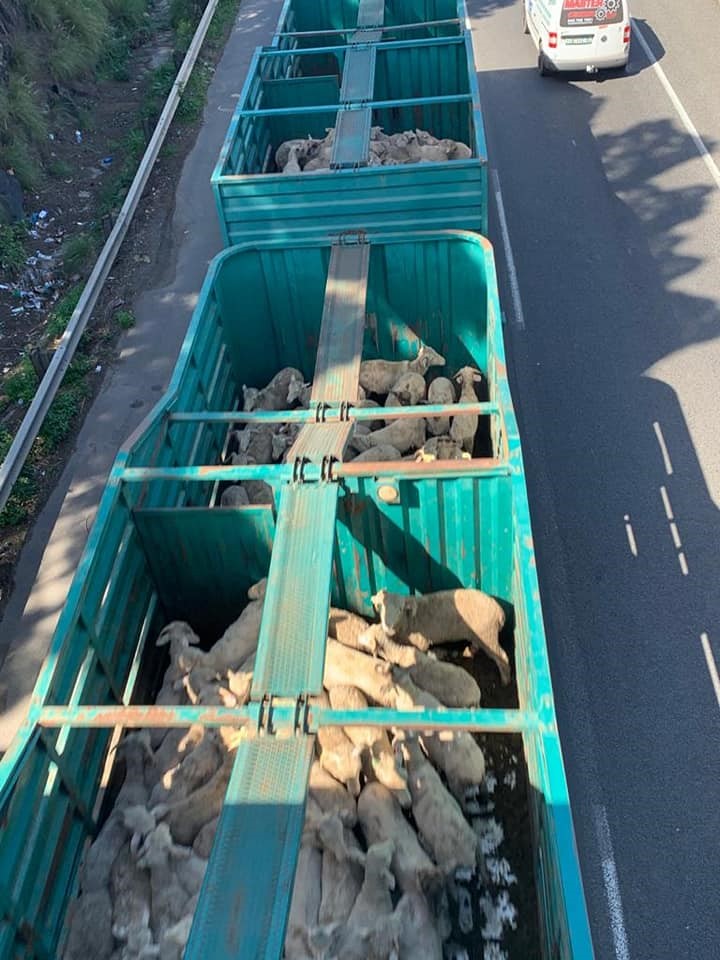
Earlier this month Animal Equality’s team in Spain released heart-breaking scenes of disorientated young lambs and sheep crammed into trucks and ships.

Forced to travel many miles from where they were born, footage showed them in small metal pens, their hooves caught between the bars and their journeys lasting for days or even weeks. Some are pregnant or become injured along the way; most endure extreme temperatures with little food, water or rest; all are unaware of the chilling fate that awaits them.

Last month animal protection organisations, Eyes on Animals and L214, released undercover footage of calves from Ireland transported on long journeys to France for veal, where they were callously kicked and beaten with sticks.

And just a fortnight ago coverage of a newly published European Commission report highlighted that the welfare of millions of animals exported from the EU is being put at risk by failings, “including heat stress, bad planning and a lack of information from the destination country”.

Here in the UK thousands of live sheep, calves, pigs and even horses continue to be exported to countries in the EU and beyond. The cliffs of Dover are witness to lambs on their way to slaughter.


Disease

So, why one rule for the animal agriculture industry and another for the rest of us?

A particularly poignant question at a time when researchers are suggesting that the consumption of animal products may be linked to the coronavirus crisis and when science tells us that 75 percent of new and emerging infectious diseases in people come from animals.

Forcing animals to live in intensive conditions, travel great lengths in restless confinement and suffer a merciless death leaves us in a more precarious position than ever before.

Vets and epidemiologists keep sounding the alarm that live animal export significantly increases the likelihood of diseases to spread; coronavirus knows no borders. The animal agriculture industry is making a mockery of everyone’s social distancing efforts and putting us all in grave danger.

Live export is certainly not necessary on animal welfare grounds, nor for reasons of public safety, so why exactly is this practice still permitted in the current health crisis?

As I write, animals are struggling in overcrowded lorries and ships, stuck in even longer queues than usual as COVID-19 further disrupts transport links. We cast-off these blameless animals with no controls in place for how they are to live or die: once they depart British soil, they may as well already be dead to us.


Profits

Workers too are in imminent danger. Truckers, vessel crews, animal handlers and others are all in close proximity with these frightened animals and will be amongst the first to catch any deadly pathogens that lurk. No one should be forced to be at risk just to make a living.

Though can we really be all that surprised that the meat industry is prioritising profits over people?

Weeks ago we saw workers stage a walkout of a poultry plant operated by Moy Park — one of the UK’s largest chicken producers, responsible for raising and slaughtering over 312 million birds here each year — due to fears over lack of PPE and inadequate measures to combat the spread of coronavirus.

And stories from slaughterhouses and meat packing facilities continue to dominate our screens, with coronavirus cases especially prevalent in abattoirs throughout the US and Ireland. This from an industry that prides itself on ever-increasing ‘kill line’ speeds, where workers are typically in close proximity and made to work as quickly as possible, all to maximise profits.


Inaction

Worldwide, an estimated two billion live animals are transported long distances each year. Since we went into lockdown in the UK on 23rd March, over 350 million live animals have been exported around the world. The numbers are staggering… the risk to us all equally so.

Boris himself has spoken out in the past in favour of a ban, claiming that by “abolishing the cruel live shipment of animals” the UK can demonstrate that “we will be able to do things differently” post-Brexit.

Despite this, no legislation has been put in place. Animal Equality is among many animal protection groups calling for action, including Compassion in World Farming, Eurogroup for Animals, KAALE and more.

The export of live animals poses a serious threat to humans and animals and now, more than ever before, we cannot afford the further spread of disease. The Government must end live animal exports.


This Author

Abigail Penny is executive director for Animal Equality. Animal Equality will be joining Compassion in World Farming’s global twitterstorm on 14 June 2020 to raise awareness of this issue and to signal to policymakers that this cruel practice must end now. Learn more from its website.


South Africa: 27/5/20 – Live Exports Update. Live Sheep to Kuwait.

SAfrica


SA sheep 2


Dear Mark,

So much has happened since the last time I wrote to you about the live export of sheep to Kuwait, in the Middle East.


High Court, February 2020

We headed to the High Court in February 2020 where our case was unfortunately struck off the roll due to procedural issues – the merits of the case had not been argued, and we believe that we still have a strong case to be made.

The Ship Arrives, March 2020

In March 2020, the Al Messilah vessel arrived in South Africa and the NSPCA had teams ready at both the feedlot in Berlin, and the East London Harbour to monitor the loading of these sentient creatures.
It was a gruelling week for the NSPCA who worked tirelessly to protect the sheep that were eventually loaded onto the vessel which was destined for Kuwait and Oman.

It was an uphill battle from beginning to end – court proceedings, protesters, challenges gaining access to the harbour, and our inspectors being treated with contempt by the employees, agents, and associates of Al Mawashi, and the Page Farming Trust – in spite of all these challenges, as well as knowing what the devastating end for these creatures would be, our team stood tall for the voiceless.

We are unsure of the final number of animals loaded on board as the employees and crew were completely uncooperative and hindered our team at every given opportunity, but an estimated 54 500 animals were loaded.

In spite of the NSPCA having an order from the court to inspect the vessel at the end of loading, our Senior Inspectors and Veterinarian were instructed to leave the ship before our inspection was complete, after an injured animal was pointed out. It was impossible to intervene under the circumstances, and Al Mawashi acted in contempt of the Magistrate’s order.

Due to our team being rushed off the ship, a thorough inspection was not possible. In spite of Al Mawashi insisting to the public and the courts that welfare was paramount to their business, and that they had employed an “independent” veterinarian who would travel with the animals on board the vessel, no veterinarian was on board.

Al Mawashi, also known as KLTT, now has a consistent reputation in South Africa for disrespecting South African laws.


SA sheep


The South African Government stops exports during the Middle Eastern Summer months

Like Australian animal welfare groups, notably Animals Australia, who lobbied to the Australian government, the NSPCA has continuously engaged with The Department of Agriculture, Land Reform and Rural Development (DALRRD) in order to end this abhorrent trade. The NSPCA has been advised by the DALRRD that they have advised the Eastern Cape Veterinary Services against any live animal exportation to the Middle East from May to September 2020. The Eastern Cape Veterinary Services have confirmed that they have no intentions of going against the decision from DALRRD.

The NSPCA commends the South African Government for taking a stance against shipments during the Middle Eastern Summer months based on the exacerbated risks during this period.

The route and climatic conditions of the voyage from South Africa to the Middle East are horrendous at this time of the year. The temperatures in the Persian Gulf are already climbing towards the 50 degree Celsius mark.

These enclosed vessels do not have air conditioning as claimed. The hot air outside is simply pumped into the pens, the warmer seawater heats up the hull from below and the hot sun beats down on to these metal boxes, all contributing to the already hot and humid environment caused by the tens of thousands of sheep radiating heat from their own bodies, in an attempt to cool themselves.

Evidence has shown that during voyages, particularly between May to September, the combined heat and humidity literally “cooks” animals alive. Many will die and those that survive will endure unimaginable suffering.

IN SPITE OF THE GOVERNMENT’S DECISION, AL MAWASHI HAVE ACCUMULATED APPROXIMATELY 72 000 SHEEP IN THEIR FEEDLOT IN BERLIN

In light of the amassed sheep at the Feedlot – we have tried to ascertain from Al Mawashi whether a shipment is intended in the near future and have been left to draw our own conclusions.

Our legal team wrote to Al Mawashi on 24 May 2020 to inform them that in light of their silence, and lack of cooperation, they have left us with no choice but to begin preparing an application to the High Court – this is to be set down for hearing on Tuesday, 2 June 2020.

Although the climatic conditions between May and September are severe in the Middle East – we are determined to have the transport of livestock by sea declared unlawful throughout the year.

We thank you for your continued support – we will not give up and we are grateful that we have you on our team.
Thank you for being the difference.

Sincerely
Marcelle Meredith
Executive Director


Australia: Covid 19 Crew; Special Exemptions for Sailing Sheep In Extreme Summer Heat; Possible Covid Spread To Another Nation – What A Desperate Government and Live Export Business !!!

australiapg


AL-KUWAIT - IMO 6705303 - Callsign 9KKS - ShipSpotting.com - Ship ...


WAV Comment

So now the possibility of ‘an exemption’ to allow animals to be exported when they should not. In addition, the ship (Al-Kuwait) with crewmembers suffering from Covid 19, possibly sailing to foreign shores and taking the disease there with them ! – wow; this just sums up how bloody desperate the Australian government and live export industry are to keep their trade going. Prepared to take the risk of human health in another country by potentially allowing this vessel to sail.

Seems like they care just as little for human life as they do for the animals they transport. Sick, all of them – literally !

We totally support Lyn and the crew (and all other folk fighting this trade) at Animals Australia and wish them the best for success in getting this stopped. As for the government and the exporters; they are bastards; simple as that; putting money before the welfare of animals and now humans. Lets hope the trade goes to the wall and that in the near future the Australian people vote in a government that does give a shit about the environment and compassion to all living beings.


Hi Mark,

You may have seen reports in the media of a COVID-19 outbreak onboard a live export ship, the Al-Kuwait, which is docked in Fremantle. This situation is still unfolding, with predictions that further crew members could be diagnosed with the virus.

Back in March, we wrote to the Department of Agriculture expressing concerns about the heightened risks that the global coronavirus pandemic posed to crew members and animals. As you know, seafarers live and work in close and unhygienic conditions and have no access to medical care. Risks of shipment rejections increased dramatically as a result of COVID-19 implications.

The sheep who were supposed to be loaded onto the Al-Kuwait remain in an export feedlot while their fate is determined. In theory, this delay should mean a reprieve from live export for these animals as new regulations prohibiting voyages during the Northern summer come into effect next week.

However, we’ve read concerning media reports that indicate an exemption could be granted to the exporter to allow a shipment in June.

We have expressed our opposition to this in the strongest possible terms to the Department of Agriculture today and will again tomorrow during a teleconference.

Any exemption would obviously be totally unacceptable given the well-known heat stress risks that these animals would face.

I will be in touch again when we know more, and we will of course let you know if we need you to amplify our efforts on behalf of these animals. But for now, I wanted you to know that we are are doing all we can to ensure that the welfare of these sheep is prioritised.

Warm regards,
Lyn

Animals Australia.


https://www.animalsaustralia.org/


EU: Green Deal puts animal welfare back on the EU’s agenda.

Pro-Brexit supporters burn an EU flag during a UKIP demonstration in central London


WAV Comment – this is an un edited copy of the PR from Eurogroup.  We would love to see action on live animal exports.  Make of this what you will.  

Talk is one thing; action is another – especially where the EU is involved.


Sheep legs


Green Deal puts animal welfare back on the EU’s agenda

20 May 2020

EurogroupforAnimals

Press Release

https://www.eurogroupforanimals.org/news/green-deal-puts-animal-welfare-back-eus-agenda


The day has finally arrived: the Farm-to-Fork and Biodiversity to 2030 strategies of the European Union’s Green Deal have been adopted. Both contain positive points that suggest the Commission is ready to take action for animals – but will these strategies deliver the concrete changes the EU needs to move away from intensive farming and the exploitation of wild animals and their habitats?

Last week, an open letter from Eurogroup for Animals and its member organisations asked the European Commission to take our recommendations for both strategies on board, and our members also mobilised to drum up support at national level as part of our “Stop Pandemics – Start Here” campaign.

Indeed, during the preparation of the strategies, the COVID-19 pandemic offered a particularly timely reminder that devastating results can come out of the way we trade, farm and keep animals. Wild and domestic animals have carried viruses and bacteria for millennia, but what has changed is the way we humans interact with them. The legal and illegal wildlife trade, urbanisation and the destruction of wildlife’s natural habitats for agricultural purposes, especially for the intensification of animal farming, are combining to push humans, wildlife and other animals closer than ever before – and heightening the risk of pandemics like the one we’re suffering now.

With the presentation of the finalised texts today, it seems that the Commission has indeed taken most of this to heart.

The Biodiversity to 2030 Strategy takes many of our recommendations on board, committing to keep existing environmental policies strong and stimulating the enforcement of the Birds and Habitats Directives, with ambitious goals for protecting European species. It also makes a commitment to legally protect a minimum of 30% each of the EU’s land and sea areas, and says that at least 25% of the EU’s agricultural land must be organically farmed by 2030.

The Commission will propose a further tightening of the rules of EU ivory trade in 2020, and by 2021, it will revise the Action Plan against wildlife trafficking to step up efforts to combat the illegal wildlife trade. It states that the EU will enhance its support to global efforts aimed at applying the ‘One Health’ approach, by promoting better protection of natural ecosystems coupled with efforts to reduce wildlife trade and consumption, to improve resilience to possible future diseases and pandemics.

However, to ensure that the strategy is implemented effectively, the Commission should also regulate the legal wildlife trade, which impacts global biodiversity and animal welfare, and poses health risks to EU citizens. An EU-wide ‘Positive List’ for exotic pets, specifying which animal species are suitable and safe to be kept as pets, would offer a much-needed precautionary approach, given the continuous shifts in species and numbers of animals in trade, and would be coherent with the ‘Do No Harm’ principle promoted in the strategy.

“The document is ambitious,” says Reineke Hameleers, CEO of Eurogroup for Animals. “However, we will be pushing for implementing actions to regulate the exotic pet trade to protect EU consumers, animal welfare and biodiversity. Going by the strategy’s acknowledgment of the ‘Do No Harm’ principle and the fact that any product on the market should comply with EU and international commitments, we hope they’ll be open to the idea. We also urgently need a full ban on the ivory trade, stricter regulation of the legal trade in wildlife, and a EU-wide Positive List.”

As for the Farm-to-Fork Strategy, happily the Commission makes it clear that animal welfare legislation will be revised and broadened, and the revision will have to provide higher welfare standards than existing ones. This is an opportunity for all existing animal welfare laws to be revised, particularly the Transport and Slaughter regulations, but also others such as the Broiler and Pig Directives. This also opens the opportunity   to deliver on the recent ECI “End The Cage Age”, calling for an end to the use of cages in livestock systems, and to include specific animal welfare provisions for species such as cattle. As the strategy makes the link  between legislative change for animal welfare and the aquaculture sector, this is the opportunity to introduce the first species-specific provisions for farmed fish, too.

However, in other respects the strategy is less ambitious. While the Commission accepts that moving to more plant-based diets and less meat consumption is good for health and the environment alike, earlier versions of the strategy proposed an end to promotional measures for meat. The finalised text now says only that the Commission will undertake a review of EU promotional support for agrifood products with a view to enhancing its “contribution to sustainable production and consumption”. We expect this review to lead to a transparent conclusion that meat should not be promoted, and we regret that the language has become so weak in the final version.

The strategy announces the creation of a framework for a sustainable food system, but remarkably a reflection on the role of the intensive livestock industry in the spread of zoonotic diseases is missing. Eurogroup for Animals believes the new framework law should lead to a profound system change including a phase-out of intensive animal farming practices. Although the strategy commits to considering options for animal welfare labelling, there is no mention of method-of-production labelling, which would provide an objective and harmonised framework to support the transition towards higher welfare and sustainable livestock systems.

The strategy also recognises the detrimental impact imported products can have on the environment in producing countries, calling to avoid the externalising or export of unsustainable practices. The call for EU trade policy to contribute to enhancing cooperation, and particularly to obtaining commitments from third countries on animal welfare, is very welcome.

“This document is historical in so many ways, opening the door to a potential better world for farm animals in the EU and other parts of the globe. It shows the Commission’s willingness to strengthen animal welfare legislation after years of stagnancy, and that they’re listening to the voices of millions of EU citizens,” says Reineke Hameleers. “Nevertheless, we need systemic change and that needs a lot of determination, as well as resources. The Commission’s plan for a sustainable food system is laudable, but will they also provide additional support to farmers in the transition towards higher animal welfare systems and regenerative agriculture?”

Both strategies recognise that the wildlife trade and intensive farming together add up to more than the sum of their parts, and not just where zoonoses such as COVID-19 are concerned. The Biodiversity to 2030 Strategy states several times that it will work in tandem with the new Farm-to-Fork Strategy and the revised Common Agricultural Policy, and that the Commission will ensure that the CAP’s strategic plans lead to the use of sustainable practices such as organic farming, agro-ecology, and stricter animal welfare standards. Similarly, the Farm-to-Fork Strategy asserts that “the Commission will ensure the implementation of this strategy in close coherence with the other elements of the Green Deal, particularly the Biodiversity strategy”.

The finalised strategies will now be rolled out, with the European Parliament adopting a resolution on the content later this year. At Eurogroup for Animals, our next opportunity will be to influence the European Parliament’s response to the two strategies, so our members will start to mobilise citizens in the days ahead to contact their MEPs and make their voices – and our recommendations – heard.