Category: Live Transport

Germany: German federal states further limit live animal transport.

GERM0001


German federal states further limit live animal transport

18 May 2020

Four Paws

News

Four Paws announced that Lower Saxony and Saxony will no longer approve live animal transports to and through the Russian Federation, while Lower Saxony will also prohibit transports to North Africa, particularly to Algeria and Morocco.

Part of the joint call for a national ban and an EU-wide ban on the export of live animals to third countries, it is a success to see two German federal states expanding the list of those countries.

This is due to animal welfare violations since, according to official information, there are no supply stations for the animals in the Russian Federation. Federal states Hesse and Bavaria have included Russia in their list of banned third countries last year.

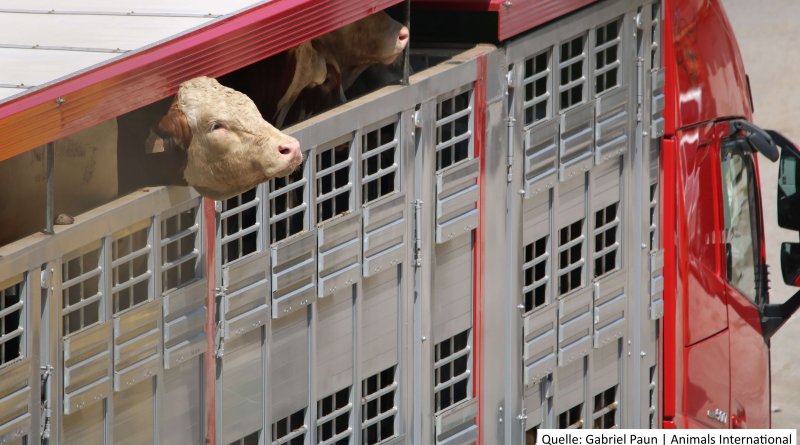
We welcome this decision, but there should a nationwide ban in place. The cattle is still being transported to the high-risk countries concerned via other federal states. It is obvious that the animals are exposed to the worst agonies and an unimaginable torture during transport and also at the destination. In Lebanon, Algeria, Libya, Morocco and Iran, among others, the animals are killed under the cruelest conditions.

Rüdiger Jürgensen, Managing Director FOUR PAWS Germany

The post ‘German federal states further limit live animal transport’ is modified from an article published by Four Paws in their original language.


https://www.eurogroupforanimals.org/news/german-federal-states-further-limit-live-animal-transport


EU: The main culprit for animal suffering

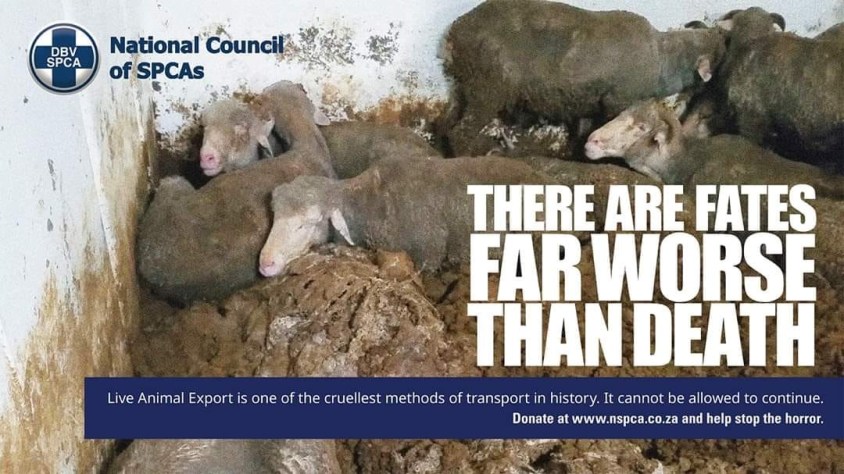
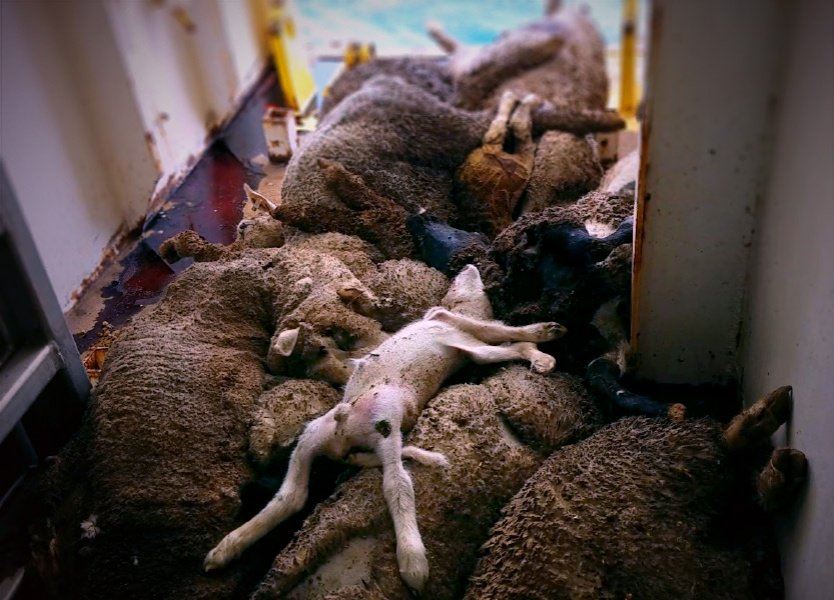
A new investigation from Animal Equality shows the pain and torment of Spanish lambs as they are shipped across long distances, with journeys lasting up to ten days, and slaughtered while fully conscious after arrival.

THE DETAILS: In distressing footage shot by our investigators, we documented how lambs, all less than a year old, are treated during their live transport from Spanish farms.

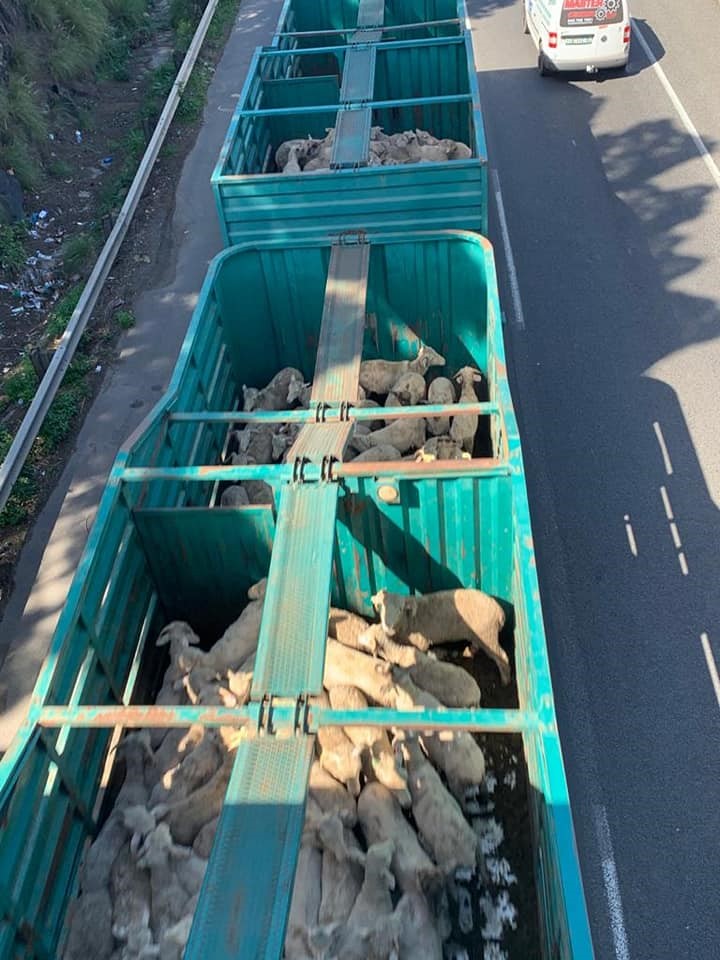
Tens of thousands of lambs are first shipped hundreds of miles by truck to Spanish port cities and then forced to travel by sea to countries in the Middle East to meet the demand for meat coinciding with Ramadan and the feast of the Sacrifice of the Lamb. Lambs are particularly sensitive animals that become paralyzed when they are afraid.

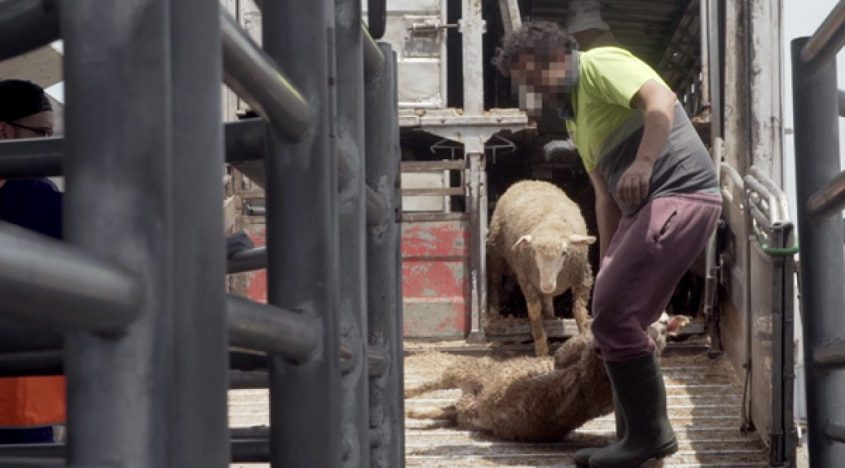
During the journey, workers are shown throwing the animals and grabbing them by their legs to prevent them from retreating.

spain_lambs_2pg COVID-19 A FACTOR: The meat industry is utilizing the exports of lambs to Middle East countries as a way of compensating for the lack of domestic demand due to the COVID-19 pandemic, as 90% of these animals are consumed in bars and restaurants. Data indicates that this year alone more than 250,000 lambs will be sent to countries in North Africa and the Middle East for Ramadan celebrations.

BILLIONS OF ANIMALS ENDURE CRUEL LIVE TRANSPORT: Worldwide, more than two billion farm animals undergo long-distance of travel each year as a means of transporting live meat. Thousands also die during long sea journeys, with their bodies thrown overboard, appearing on beaches days later.

Schafe_Lämmer_Schifftransport_834.600_0_0__95

In a 2019 report following an accident in which 14,000 sheep drowned in the Black Sea while being transported from Romania to Saudi Arabia, the European Commission acknowledged numerous deficiencies in this type of long-distance transport.

The report points out that the welfare of these animals depends largely on the conditions of the ship and because there are no suitable inspections carried are carried out, there are no guarantees that these ships have an adequate drainage or ventilation systems.

tiertransport zum Appel an die EU-Kommissionpg

In fact, for ships bound for Saudi Arabia, port operators or livestock owners are not even allowed access to the vessels’ interior. 

WHAT WE’RE SAYING: “Our investigations have clearly documented the mistreatment of lambs on these trips. It’s time to demand that both the Spanish government and the European Commission ban long-distance travel of live animals,” says Silvia Barquero, Executive of Animal Equality Spain.

WHAT ELSE WE’RE SAYING: “From farms to slaughterhouses, animals exploited for food suffer tremendously. What is often forgotten in this never-ending cycle of violence is the immense cruelty that happens when these animals are transported to be slaughtered. It’s more than time for this cruelty to be stopped and Animal Equality will continue to use its investigations to expose these truths,” says Sharon Núñez, President of Animal Equality.

LIVE TRANSPORT OF ANIMALS OUTSIDE OF THE EU MUST END: In Europe, Animal Equality launched a petition addressed to the European Commission and the Ministry of Agriculture, Food and Fisheries calling for an end to long-distance transport to countries that do not guarantee basic EU animal welfare standards (!!)

We are hopeful that our efforts will lead to much-needed change and will prevent the suffering of hundreds of thousands of animals every year. In the meantime, you can make a difference for animals by sharing out our investigations and ditching animal products.

Saving lives starts with consumer choices, and you can help end suffering by making the switch plant-based.

The animals, the planet, and your health will thank you.


https://animalequality.org/news/investigation-animal-equality-shows-torment-of-eu-animals-shipped-for-slaughter/


And I mean…Since the judgment of the European Court of Justice in April 2015, the legal situation has been clear: The EU animal welfare transport regulation No. 1/2005 must be observed until the animals’ final destination, even if it is outside the EU.

The longer the transport, the more the animals suffer.
The lower the financial ‘value’ of the animals, the worse the transport conditions – mostly with live exports from the EU.

In order to get rid of the overproduction of animals, the member states of the European Union export over three million animals per year to countries outside the European Union, especially cattle and sheep.

Sooner or later the animals will be slaughtered in the countries mentioned without anesthesia. The methods for fixing animals are inconceivable and far from the EU animal welfare laws for animal transport.

And now the following question arises: Why do we need EU law if it is constantly broken?

Has the EU Commission considered what happens to the ships that want to enter the ports of non-EU countries and are not allowed if the countries close their borders because of Corona?
Who will check whether Regulation 1/2005 is complied with in these countries?

The EU Commission has so far confirmed that they are indifferent to the suffering of animals in transports, farms, laboratories, circuses, aquariums, zoos…

Close the altar that worships power, excess, animal torture and tyranny
Let the bloated bureaucrats find real jobs in the fast food industry.

Turn these palatial EU buildings into nature wildlife parks for zoos animals
A Europe without an EU will be a win for everyone!

My best regards to all, Venus

New findings show Australian sheep face dangerous heat stress on export ships.

sheep123


As many of you are aware, live animal transport (live export) is one of our major hates and something we have been involved with for decades; personally acting as investigators into this sordid business – https://serbiananimalsvoice.com/about-us/ – thus we feel that we do have experience in; and feel we have some degree of knowledge to talk about this trade.

After the two articles we have reproduced from ‘the conversation’ which you can read below; with further links in the articles; we have reproduced a few links specifically relating to our own work monitoring sheep exported live from Romania (EU) to the Middle East. We published updates every day of the position of the vessel on its shipment, along with conditions and temperatures for the sheep which were clearly outside of EU regulation 1/2005 on the so called ‘Protection’ of animals in transport.

As we have said many times before, the EU regulation is just a smokescreen behind which all the authorities and regulators can hide, whilst really doing nothing. As always, in the end it is the animals that suffer terribly.

Regards Mark (WAV).


Here are just a few of our recent posts relating to Romanian sheep being exported to the Middle East in extreme temperatures:


https://worldanimalsvoice.com/2019/08/01/romanian-sheep-ship-update-1-8-19-1020hrsgmt-vessel-now-entering-kuwait-city-expected-to-dock-0300hrs-local/


https://worldanimalsvoice.com/2019/07/30/romanian-sheep-transporter-ship-update-30-7-19-currently-moored-at-jebel-ali-dubai-uae-no-speed-moored/


https://worldanimalsvoice.com/2019/07/26/update-26-7-19-2000hrs-gmt-for-romanian-sheep-livestock-carrier-al-shuwaikh/


https://worldanimalsvoice.com/2019/07/25/25-7-romanian-sheep-exports-update-vessel-now-n-the-gulf-of-aden/


https://worldanimalsvoice.com/2019/07/24/eu-se-england-meps-now-asked-by-wav-as-to-why-france-stops-live-transport-and-yet-romania-exports-70000-live-sheep-to-the-middle-east-in-temperatures-10-degrees-hotter/


https://worldanimalsvoice.com/2019/07/23/al-shuwaikh-romanian-sheep-shipment-70000-animals-current-position-red-sea-has-departed-jeddah/


https://worldanimalsvoice.com/2019/07/20/romanian-sheep-shipping-news-20-7-19-new-kuwait-eta-over-another-weeks-sailing-time-now-set-what-are-conditions-like-for-the-animals/


https://worldanimalsvoice.com/2019/07/16/romania-re-70000-sheep-exported-to-the-middle-east-how-to-contact-romanian-meps-to-express-your-disgust-at-their-nation/


https://worldanimalsvoice.com/2019/10/28/eu-remember-the-romanian-sheep-to-the-middle-east-in-extreme-temperatures-the-latest-from-the-eu-but-still-no-infringement/


https://worldanimalsvoice.com/2019/09/18/remember-the-al-shuwaikh-and-the-romania-sheep-now-it-is-trying-to-take-sa-sheep-read-the-latest-from-animals-australia-and-the-rspca/


https://worldanimalsvoice.com/2019/09/06/england-wav-now-write-to-europe-regarding-romanian-sheep-and-animal-carrying-box-trailers/


https://worldanimalsvoice.com/2019/09/04/nightmare-comes-true-for-romanian-sheep-exported-to-the-gulf/


https://worldanimalsvoice.com/2019/08/04/romanian-sheep-exports-on-al-shuwaikh-we-have-all-the-data-and-are-now-waiting-for-the-eu-to-return-from-summer-holidays-then-we-start/



Sheep legs


australia


https://theconversation.com/new-findings-show-australian-sheep-face-dangerous-heat-stress-on-export-ships-137598


New findings show Australian sheep face dangerous heat stress on export ships


May 4, 2020 8.50pm BST


It’s been almost three years since thousands of Australian sheep died during a voyage from Australia to the Middle East. My group’s new research provides insight into the heat stress faced by sheep exported in recent years and casts further doubt on the industry’s future.

We found sheep experienced heat stress on more than half of voyages to the hottest port in the Middle East, Doha, over three summers from 2016 to 2018.

This is the first time the extent of heat stress in live sheep exports from Australia has been quantified, and the findings do not bode well. A federal government ban on exports during the Northern Hemisphere summer is already hurting the industry. And COVID-19 looks likely to affect the annual Hajj pilgrimage and Eid al-Adha religious holiday, when our sheep meat is in high demand.

The future of Australia’s live sheep export industry appears bleak. Sheep farmers would be wise to seriously explore alternatives.

Severe heat stress exposed

Australia to the Middle East is one of the world’s longest sea transport routes of live sheep for slaughter, usually taking about 20 days.

The welfare risk to sheep from heat stress is highest on voyages departing Australia in our winter, and arriving in the Persian Gulf in the Northern Hemisphere summer.

In April 2018, whistleblowers released video footage filmed the previous year showing shocking live export conditions on the Awassi Express ship. More than 2,400 sheep died on the voyage from Fremantle to the Middle East.

The footage triggered public outrage. As part of its response, the federal agriculture department established a committee, of which I was a member, to assess the heat risk facing sheep exports to the Middle East.

The committee recommended measures to ensure sheep experienced heat stress on fewer than 2% of voyages. Subsequent research by my group would reveal just how far the industry is from that target.

Alarming findings

The federal government granted us access to temperature and mortality data from 14 voyages from Australia to the Middle East in May to December, between 2016 and 2018.

We wanted to know at what temperatures the welfare of the sheep began to be affected by heat stress.

To determine this, we analysed so-called “wet bulb temperatures” on the sheep decks. This measures not just air temperature but water vapour, which affects the levels of heat stress actually experienced at a particular temperature.

Wet bulb temperatures typically increased from 20℃ to 30℃ during the 14 voyages in the Northern Hemisphere summer. Ten out of 14 ships stopped at Doha in Qatar, the hottest of the four Gulf ports. There, daily maximum wet bulb temperatures from July to September exceed 27.5℃ half the time, at which point heat stress in sheep increases.

The wet bulb temperatures at Doha exceeded 32.2℃ 2% of the time, at which point sheep deaths are more common.

Ships docking at Doha sit in the sun for about a day and a half while some sheep are unloaded, exposing those left on board to high temperatures.

The ban is not enough

The federal government recently banned sheep exports to the Middle East between June 1 and September 14 this year, due to heat stress risks. Shipments to Doha are banned from May 22 until September 22.

The government has argued that a longer ban would have too great an impact on the industry. But our results show mortality increases during voyages from September to November, compared with May. This suggests more sheep will die as a result of the shorter ban.

The government introduced other measures this year to try to improve sheep welfare on ships.

First, it will require temperature data to be recorded at two sheep pens per deck. However my group has shown this does not produce representative results.

Read more: Grattan on Friday: Live sheep exports tarnish Australia’s reputation and should be stopped

Second, sheep can be unloaded at no more than two ports. But our results suggest that it is not the number of ports that influenced sheep deaths, but whether sheep were kept in hot conditions on board at Doha.

The COVID-19 pandemic has struck a further blow to sheep welfare. The federal government requires that animal welfare audits are conducted at holding facilities in the destination countries. But quarantine requirements have made these checks difficult.

It’s also worth remembering that heat stress is not the only challenge sheep face en route to the Middle East. They usually have very little space and likely get stressed by ship motion.

A double whammy

The Australian live sheep export trade has declined from about 7 million per year in the late 1980s to about 1 million per year now.

Australia has recently been unable to meet the Middle East’s demand for sheep meat – a problem the industry blames partly on the export ban. Middle East buyers are increasingly turning to the horn of Africa, Europe and Asia.

Compounding this, COVID-19 looks set to force the cancellation of the annual Hajj pilgrimage to Mecca in Saudi Arabia culminating in Eid al-Adha – a sheep-eating festival usually celebrated by millions of Muslims.

The double whammy will particularly hurt Western Australia, which in 2019 handled 97% of sheep leaving Australian ports.

If the festival is not cancelled, Australian sheep may be sent early to be stockpiled alive in the Middle East, to avoid the export ban. This would leave them exposed to the high temperatures the Australian government has sought to protect them from on ships.

Looking ahead

Some Western Australian sheep farmers have seen the writing on the wall. In the short term, some are turning to alternative livestock, such as prime lamb or beef cattle for domestic consumption or export as carcasses. This has the added benefit of keeping processing jobs in Australia.

In the long term, farmers would do well to look at the rising popularity of vegetarianism and veganism, and the threat to conventional meat production posed by “clean” meat grown in labs.

Some sheep grazing has already been replaced by cropping, and this is likely to increase in future.

There is no quick fix to the problems facing live sheep exports from Australia. The sooner we shift our economic reliance to more humane alternatives, the better.

Read more: Can meat exports be made humane? Here are three key strategies


https://theconversation.com/the-ban-on-live-sheep-exports-has-just-been-lifted-heres-whats-changed-123998


The ban on live sheep exports was only ever intended to be temporary. The Australian government enacted the ban earlier this year to prevent sheep from being shipped to the Middle East from the beginning of June through to September 22 – the highest heat stress risk period.

During this time, sheep are adapted to the cooler temperatures of a southern Australian winter. And for this reason they find it difficult to cope with the sudden increase in temperature and humidity as the transport vessels undertake the two week journey to the Persian Gulf region

This ban affected any voyages where the vessel would travel through waters in the Arabian Sea north of latitude 11°N at any time – effectively stopping the Middle East sheep trade as the entrance to the Gulf of Aden is at 12°N.

Why are Australian sheep shipped to the Middle East?

It seems outwardly strange to ship live animals (and their feed) across an ocean just for them to be slaughtered for meat shortly after arrival.

But there is a demand for live Australian sheep in the Middle East, which means it’s economically viable for exporters to ship animals from southern Australia, particularly out of Fremantle, but also from ports including Portland and Adelaide.

Read more: Government suspends licence of biggest live sheep exporter

Western Australian farmers received an average price of A$117 for each exported sheep during 2018, so the price of each sheep at the other end must be substantively greater.

There are significant animal welfare challenges in successfully live exporting sheep. Part of the problem has been that the location of the greatest concern for animal welfare is the Australian public. But the Australian public have no consumer power, they’re not the ones buying the sheep.

So, the Australian government has been required to “push” animal welfare requirements down the industry supply pipeline, rather than having these requirements being “pulled” through by market demand.

What we do not know is how the economics would change and whether additional market lines would open up for boxed meat – rather than live sheep – if the live trade were to be stopped.

Why was the ban put in place for the first time in 2019?

The ban was one of the consequences for the live sheep trade after disturbing video footage was revealed in April 2018. The graphic video showed sheep suffering and dying due to apparent heat stress on voyages from Australia to the Middle East.

The government immediately commissioned a review into the conditions for the export of sheep to the Middle East during the northern hemisphere summer.

Read more: Government to announce increased penalties for live sheep trade

That review made a number of recommendations, which were then implemented by the government, including increases in space allowance for sheep on board and independent auditing of ship ventilation systems. Government-appointed observers were also included on voyages, and the notifiable mortality threshold reduced from 2% to 1% of animals during a voyage.

Since government-appointed observers were included on voyages the notifiable mortality threshold on voyages reduced from 2% to 1% of animals.Trevor Collens/AAP

A key recommendation was that the regulatory framework should change from minimising mortality from heat stress to, instead, safeguarding animal welfare.

The government then commissioned further reviews to determine how to implement this recommendation, including an independent technical reference group.

This report was released on September 20, and the government has stated it will be used along with other information to determine the regulations for how (or if) live sheep shipments occur during the northern summer of 2020.

Are the changes sufficient?

The live export industry argues they have succeeded in making substantial changes to how it operates since the original footage was revealed in 2018.

Whether these will be sufficient to prevent further revelations of heat stress incidents or other adverse animal welfare outcomes remains to be seen.

Read more: Australia’s history of live exports is more than two centuries old

Including independent observers on voyages to keep an eye on animal welfare should increase the transparency of what happens to sheep during live export shipments. Although, there has been criticism of the delay in reporting from this initiative.

The new arrangements in place since 2018 and the temporary ban from June to September are unlikely to satisfy animal welfare advocates who are against live exports. On the other hand, the live export industry argues the sector is important for Australian livelihoods, including supporting sheep farmers.

What’s more, the current coalition government has repeatedly stated its commitment to maintaining a live export industry. Interestingly, the 2019 federal election was the first time there was a clear policy difference on the issue between the major parties, with the ALP committed to a phase-out of the live export sheep trade.

It will be interesting to watch whether this policy difference will remain after the ALP’s review of its 2019 election policies.

Read more: The ALP promises to phase out live sheep export

But in terms of what more needs to be done, it’s likely impossible for policy-makers to satisfy all parties in the live export debate.

New overarching standards for the export of livestock from Australia are scheduled to be introduced soon, covering more than just heat stress risk.

However, those who are against the trade in live animals are unlikely to be persuaded to desist in their efforts. A repeated history of damaging incidents and revelations serves as a reminder of what may happen again in the future if the industry does not get to grips with its animal welfare responsibilities.


EU;; Have the Welfare Lobby Been Saying This for Years ? – DG SANTE audit reveals major problems with live export from Romania !

Pro-Brexit supporters burn an EU flag during a UKIP demonstration in central London


WAV Comment – when it comes to the enforcement of EU animal welfare regulations, the EU is basically a chocolate fireman, melting away with do nothings, but putting out press statements which, if you are not involved with EU ‘ways’, would lead the normal person to think that they are on top of the situation. Believe us, when it comes to live animal transport, the EU never has, is currently not, and never will be able to enforce its own slapdash Regulation 1/2005, on the ‘protection of animals during transport’. The regulation is a simple, formal EU smokescreen which all its officials and Commissioners can hide within whilst the reality is that the abuse and suffering of animals in transport continues within the EU (and globally) on a daily basis.


‘After the serious violations of the EU Regulation 1/2005 (Transport Regulation) by Romania in sending nearly 70,000 sheep to the Persian Gulf last summer, an audit by DG Sante has found that the country’s central competent authority did not provide the necessary information, instructions or access to suitably qualified staff to support official veterinarians in checking the technical requirements of livestock vessels’.


So what is actually new here ? – DG Sante investigations now finding out what EU animal welfare organisations have been telling, and showing (with undercover investigations) for the last 25 years or more.

The real question now is ‘what are the EU going to do about it all ?’. We think the response from the EU will be a fairly simple one – ‘nothing really’.

And now at a time when the Coronavirus can be used as an excuse, not a reason, for not taking action. Actions; if there ever were any, by the EU have probably been put back at least another year or more regarding live animal transport (fortunately for the EU) due to a virus called ‘Coronavirus’. And yes, Cornavirus appears to have originated in animal wet markets in China due to the non enforcement of regulations by the Chinese authorities. Spot the link ? – we can.


Bernard Van Goethem (@VanGoethemB) | Twitter

So now are we going to witness Bernard Van Goethem (pictured above) – DG Sante section ‘G’ – ‘Crisis management in food, animals and plants’ actually step up to the plate and do something; or is he going to do his usual, of waving his arms in the air whilst making statements about not being able to do anything !

We know a little about his ineffectiveness; and have had personal interactions with him in the past:


https://serbiananimalsvoice.com/2016/12/03/romania-take-action-for-romanian-live-exports-a-useless-van-goethem-eu-as-always/


https://serbiananimalsvoice.com/2016/09/05/nl-the-situation-in-turkey-gets-no-better-in-fact-even-worse-blame-mr-van-goethem-and-his-in-effective-team-at-the-eu/


Bernard Van Goethem (@VanGoethemB) | Twitter

https://serbiananimalsvoice.com/2016/07/21/mr-van-goethem-and-eu-others-all-talk-and-no-action-a-real-head-in-the-sand-situation/


https://serbiananimalsvoice.com/2016/06/29/mr-van-goethem-resign-now/


https://serbiananimalsvoice.com/2016/06/07/eu-must-ensure-animal-welfare-or-mr-van-goethem-will-get-you-and-the-next-joke-is/


We don’t ask for your money, never have done and never will. We don’t ask for your cash to undertake yet more investigations to gather evidence which as a result, is continually ignored by the EU ‘chocolate brigade’ under the smokescreen of Reg 1/2005.

We don’t need yet more supporter funds to keep on gathering information which forever results in nothing from the EU; we have had experience of this filthy trade for over 30 years; and we know how it works. If legislators cannot enforce the legislation; then possibly it needs a virus to shut the entire system down and make them think what they are going to do next.

A ban on live animal transport throughout the EU by the EU regulators would be more than welcome; but then we have the national financial implications, the meat mafia and the meat lobbyists to contend with. Then again, the huge downturn in milk consumption, combined with the massive decline in meat eating – one could say that the industry is doing a pretty good job in killing itself, without the need for presenting further evidence to the ‘do nothing’ officials at the EU.

Lets now await what action the EU takes with regard to EU member state Romania and the non enforcement of EU Regulation 1/2005 for the ‘protection of’ animals during transport.


Sadly, I think I will be holding my breath for a long time !

But, we keep on fighting;

Regards Mark.

———————————————————————–


https://www.eurogroupforanimals.org/news/dg-sante-audit-reveals-major-problems-live-export-romania


DG SANTE audit reveals major problems with live export from Romania

27 April 2020

EurogroupforAnimals


After the serious violations of the EU Regulation 1/2005 (Transport Regulation) by Romania in sending nearly 70,000 sheep to the Persian Gulf last summer, an audit by DG Sante has found that the country’s central competent authority did not provide the necessary information, instructions or access to suitably qualified staff to support official veterinarians in checking the technical requirements of livestock vessels. Eurogroup for Animals urges the EU Commission to start infringement proceedings against Romania.


The lack of proper checks translated into animals transported alive with inadequate equipment to ensure their welfare during transport, and on a vessel with serious structural problems. Worryingly, this is likely to have affected many more animals: as highlighted in the report, the authority in one port inspected by DG SANTE is responsible for the approval of 43 of the 79 (56%) livestock vessels approved by the Member States, so “there is a distinct possibility that animal welfare issues arise during sea transport on board these vessels”.

Indeed, past investigations have shown that during such voyages, heat and humidity combinations reach levels that cause heat stroke, resulting in animals literally cooking alive in the holds of vessels. Eurogroup for Animals’ member organisation Animals International, who were following this particular 2019 Romanian shipment’s progress last summer, found the vessel stopping at Gulf ports in temperatures of 47°C.

Auditors tasked with assessing the level of enforcement of the Transport Regulation at the Romanian port also found that there is a general lack of records in the system of controls to ensure animal welfare during transport by sea to non-EU countries. There is no evidence of checks confirming that the animals are fit to continue the journey, or of the adequacy of vessels’ drainage systems. Given the absence of documented procedures, records and support to official veterinarians in checking vessels, auditors concluded that “there is little assurance of the effectiveness of most controls carried out”

“We welcome the decision of the European Commission to carry out an audit after the tragedy of last summer, and given the results, Romania should stay under strict scrutiny,” says Reineke Hameleers, CEO at Eurogroup for Animals. Now we call on the Commission to start infringement proceedings against Romania and to start the process of a revision of the Transport Regulation to limit the duration of journeys and end these horrific sea transports for good”.


——————————————————————————————–


We (WAV) covered this shipment of sheep from Romania to the Middle East every day; providing updates of ship positions, temperatures and ports used if applicable. Here are a few links to just a few of our posts so that you can see what we undertook.


https://worldanimalsvoice.com/2019/09/20/eu-finally-after-a-second-try-we-get-one-response-out-of-10regarding-our-concerns-for-romanian-sheep-exports-now-we-wait-to-see-what-happens-if-anything/


https://worldanimalsvoice.com/2019/09/04/nightmare-comes-true-for-romanian-sheep-exported-to-the-gulf/


https://worldanimalsvoice.com/2019/08/02/2-8-19-copy-of-the-letter-from-the-eu-do-nothing-commissioner-to-the-animal-welfare-ignorant-romanian-minister/


https://worldanimalsvoice.com/2019/07/31/romanian-sheep-transporter-ship-update-31-7-19/


https://worldanimalsvoice.com/2019/07/26/eu-does-the-eu-enforce-its-own-regulations-no-what-planet-are-you-from/


Regards to all – Mark.


tiere schmutzig im schif milchgrenzen5_gal


Holland: suspension of animal transports because of Corona

Breaking News: Netherlands suspend animal transports because of Corona

-hollandvlag

The unbearable situation for animals in transport and the protests on the part of animal protection are finally having an effect: From now on, breeding cattle, horses, sheep, goats and exotic animal species should no longer be exported from Holland. Dairy cows that should be transported abroad for slaughter must also remain in the country.

Tiertransport_Schlachtpferde_Italien_2019_07_20

The partial suspension of transports in Holland is a step in the right direction. We would like Germany to be guided by the legal implementation and to have a transport stop as soon as possible.

In view of the backlog of vehicles at the borders, the German Animal Welfare Association is calling for an end to long-distance transport of live animals. In the mega traffic jam on the A4 at the German-Polish border, but also on the border from Poland to Lithuania or in Croatia, animal transporters are currently stuck for hours or days due to the stricter border controls.
The situation is extremely stressful for the animals. They lack water and feed, cows cannot be milked and they are in their excrement because the litter cannot be renewed and the animals cannot be dumped.

Tiertransport-Rinder-Eingeklemmtes-BIGA-TTEU

Transports to third countries are particularly critical

Weekly animal transports to countries outside the EU start every week in Germany. Breeding associations have recently announced further transports to Azerbaijan, Algeria, Uzbekistan, Iran and Turkey. Transports to destinations in third countries, especially breeding animals, have nothing to do with security of supply in the EU, but follow purely economic interests.

tiertransport Schafenjpg

Even under normal circumstances, live animal transports across Europe and the world are torture for the animals. If there are disruptions in the process, as is the case now in the times of Corona, it will go to hell.

Generally, long-distance transport needs to be stopped. In view of the dramatic situation, you have to start immediately, ”says Thomas Schröder, President of the German Animal Welfare Association. “When animals suffer, cows scream in pain because they cannot be milked, everyone should be aware that animals are not a commodity, they are living beings. The current situation shows us clearly how many animals are constantly transported over thousands of kilometers. ”

VIER PFOTEN_ Tiertransportejpg

The German Animal Welfare Association, together with other European animal welfare organizations, wrote to the EU Commission asking them to suspend animal transport due to the current situation. Animal welfare reasons, but also the risk of the driver spreading corona, clearly speak against continuing transport. From an animal welfare point of view, the fundamental goal must be to completely abolish live animal transport.

https://www.tierschutzbund.de/news-storage/landwirtschaft/190320-tiertransporte-tiere-leiden-in-corona-megastaus/

https://vgt.at/presse/news/2020/news20200327mn.php


And I mean…When countries within the EU begin to act independently in animal transport and factory farming in general, there is hope that positive changes will result.
France was the first country in the summer 2019 to stop transporting animals due to heat records. The countries must finally become independent, we all have nothing to expect from the EU.
To do this, the animal rights movement must work in a targeted and united manner.

Tiertransporte_Sommer_Hitze_MOB

My best regards to all, Venus

EU: Over 35 NGO’s Across Europe Add Their Voice to Those of MEP’s Calling For Action On Live Animal Transports.

EOA Turkey 1

Photo – Eyes on Animals (NL)


Further to the post by Venus on the issue of live animal transports being delayed for hours at EU borders; https://worldanimalsvoice.com/2020/03/25/eu-if-you-do-nothing-to-solve-a-problem-you-are-part-of-the-problem-yourself/ , then we can provide you with additional information as reported in the ‘Brussels Times’ on Monday 23/3/20.

As well as important input from 42 MEP’s, we have witnessed an open letter from no less than 35 animal welfare NGO’s writing to the EU Commission calling (on the EU) to ban the transport of farm animals to non-EU countries, as well as intra EU journeys that last over 8 hours.

As Venus says in her article; Europe, if you do not act to solve the problem, then you are part of the problem yourself.

Below is a copy of the article from Monday’s Brussels Times.


https://www.brusselstimes.com/all-news/eu-affairs/102190/coronavirus-humans-suffer-but-also-animals-in-transport-over-borders/


Coronavirus: Humans suffer but also animals in transport over borders


Monday, 23 March 2020

Animal welfare organisations protested on Friday against a European Commission decision to allow transport of livestock between member states and to non-EU countries despite the outbreak of the coronavirus.

Compassion in World Farming and over 35 animal welfare NGOs across Europe wrote in an open letter (20 March) to agriculture Ministers and animal transport contact points of all EU member states that the Commission decision disregard the problems imposed on the health and welfare of farm animals being transported, especially those transported between EU and non-EU countries.

An EU regulation prohibits transport to be carried out in a way that is likely to cause undue suffering to the animals involved. In addition, the regulation states that all necessary arrangements should be made in advance to minimise the length of the journey and meet animals’ needs during the journey

In their letter, the NGOs raised problems at different borders last week. Vehicles with farm animals are being refused entry to Croatia. There have been long traffic queues at the border between Lithuania and Poland and queues on the German side of the border with Poland leading to waiting times of several hours.

Vehicles with farm animals are also getting caught up in very long queues at the exit point between Bulgaria and Turkey – drivers transporting farm animals have reported that they needed three hours to move 300 m inside the border.

Queues at borders risk stopping medical supplies and health professionals from getting through. It is even less likely that it will be possible to attend to the welfare of animals caught up in these queues.

The animal welfare organization call on the EU to ban the transport of farm animals to non-EU countries, as well as journeys that last over 8 hours.

“The trade in live animals threatens not only the health and well-being of the animals, but it also threatens our health,” said Olga Kikou, Compassion in World Farming’s Head of EU Office.

The drivers, animal handlers, vets, civil servants and their families can easily get infected. Unlike others who enter and exit the EU, they are not required to be in quarantine. We are putting them and ourselves at risk.”

The European Commission did not reply in time to requests for a response to the letter.


Update:

European Commission President Ursula von der Leyen said on Monday afternoon (23 March) that the measures introduced to slow down the spread of the virus have also slowed down and sometimes paralysed transport.

In a communication today on “Green Lanes”, the Commission requested from the member states to designate, without delay, all the relevant internal border-crossing points on the trans-European transport network (TEN-T) as “green lane” border crossings. The communication does not address the issue of animal transports but can speed up all transports.

The crossings should be open to all freight vehicles, whatever goods they are carrying. Crossing the border, including any checks and health screening, should not take more than 15 minutes.

All freight vehicles and drivers should be treated in a non-discriminatory manner, irrespective of the origin, destination, or country of registration of the vehicle, or of the nationality of the driver. Member states should not distinguish between vehicles carrying goods for use in their territory and those merely transiting.

The Brussels Times


Additional links (WAV):


We don’t need another consultation from the thickheads at the EU; we need action, and NOW !

https://worldanimalsvoice.com/2020/03/24/eu-consultation-on-animal-welfare-strategy-please-read-and-afterwards-get-involved-if-you-wish-taking-into-account-what-is-said-below/ 

https://worldanimalsvoice.com/2020/03/20/eu-and-corona-totalitarianism-for-people-suffering-for-animals/ 

https://worldanimalsvoice.com/2020/03/18/portugal-mobile-coffin-crashed-100-creatures-dead/ 

https://worldanimalsvoice.com/2020/02/29/eu-to-uk-want-a-trade-deal-you-must-do-better-animal-welfare-like-us/ 

https://worldanimalsvoice.com/2020/02/29/lithuania-poland-croatia-slovenia-israeljourney-to-death/ 


corona tiere in Staujpg


EU: “If you do nothing to solve a problem, you are part of the problem yourself”.


Tiertransport-Kaelber-AA`s pg

Last night, 42 MEPs sent a letter to the EU Commission. Many animal transports have been at the border for hours as a result of the border closure measures in the context of the Covid 19 virus across borders by drivers, zookeepers and border guards.

To stop animal suffering, we call on the Commission to:

-Suspension of all exports of live farm animals by land and sea to non-EU countries
-Suspension of all live livestock transports on journeys of more than 8 hours between Member States
-Ensure rapid communication between senior veterinarians and national contact points to help organizers of cattle breeding events, avoid long queues at border crossings or refuse entry through certain countries.

Click to access Covid-19-and-cross-border-transport-of-live-animals.pdf

Good news!
The 🚚🚚 traffic jams on the border with Poland have resolved and the handling of 🐮🐷 animal transports is, according to our information, running relatively smoothly again. Nevertheless, the long transport routes mean agony for the animals.

This suffering must finally end!
Support our petition: ✍️ https://help.four-paws.org/de-DE/stoppt-grausame-lebendtiertransporte

Polen Grenze

https://www.facebook.com/4PFOTEN/

And I mean…A MEP`s initiative that is very commendable.
The letter is important for the following reason: The pressure on the unsuitable commission comes from the own circles. That is the only reason why it can work!

As with animal transports, the EU has offered nothing in this crisis. To put it very clearly, it is totally “out” and it is nowhere in demand.

But now internal pressure is being used, now the EU has to react to save its internal status, and maybe the good news of the normalization of animal transport to Poland is thanks to this letter.

At least the risk of infection that could arise inside the trucks and the generation of new bacteria is something that should force the EU to act.


My best regards to all, Venus

EU Consultation on Animal Welfare Strategy. Please Read and Afterwards Get Involved If You Wish; Taking Into Account What Is Said Below.

Logo draft

VITA Photo


Mark


We are providing the following as many of you (EU and non EU citizens) may wish to make your views known to the EU authorities in this consultation. There is really only one opportunity to say how you feel at the end of the consultation; so please do it, and consider what we say in the following as information on your contribution.

Live animal transport is an issue that we have many years of campaigning experience with. It is our general opinion that the EU does not need to have yet another consultation on the issue of live transport. We consider that this (consultation) is solely to give the impression that EU citizens can have a say in the issue, and that their views will count regarding an end result.


Lets look quickly at a few points:

The EU Regulation 1/2005 on the ‘protection’ of animals during transport, was created as it says; to provide ‘protection’ to animals during transport. Hauliers and exporters have never complied with the regulation since the day it came into being. Have a look at a few investigations which we were involved with back in   – go to the following https://serbiananimalsvoice.com/about-us/   and then further scroll down until you see the heading:   ‘EU Papers, Official Investigations and the Rest’.

In summary – During 2010 – Mark worked with animal transport investigation teams within the EU, specifically concentrating on live calves being exported from Ireland (EU) to mainland EU. As a result of the investigations, Mark produced a 125 page official investigation report which was sent to both EU Parliamentarians and UK parliamentarians showing failures of Regulation 1/2005. You can read one investigation report; showing all the failures, when you go to the links and titles shown above.

cover


The system was failing the animals in transport way before 2010 and when the report was produced; it has failed them ever since, and it will continue to fail them as long as animals are transported; regardless of what the EU says and yet another ‘consultation’ which we are informed will make things better.

The EU has always failed animals in transport, and it always will. Consultations are simple ‘veils’ to make the common man think that something is being done and changes will result. In compliance with Reg 1/2005, all livestock transporter drivers are supposed to be certified so that they can give animals in their care the best of attention. The system of certifying drivers has never worked from its inception. Animals always suffer – that is the result.

We have slightly different views on another EU consultation within WAV. Some do not want to become involved at all, as they see the delay and tactics of the EU in this policy.   Yes agree 100%, it is another delaying tactic when all the clear evidence of abuses have been constantly provided to the EU for years. But with a consultation; which is underway now, regardless of our views; is there not an alternative way of viewing the consultation ? – send in your information as required and simply declare that EU policy has always failed the animals in transport; and it will continue to fail the animals in transport regardless of what is submitted. You could mention the 8 hours petition, which was undertaken in the past (2012); and further represented in Brussels to the EU on 16/9/2013 – here is the AA release on this: https://www.animals-angels.de/en/news/news-detail/16092013-belgium-brussels.html which will provide you with information:


Wording:

16.09.2013 | Belgium, Brussels

Animals’ Angels addressed the Petitions Committee of the European Parliament in the presence of MEPS and Commissioners in Brussels, to speak on the issue of animal welfare in transport.  Animals’ Angels addressed its petition of 1,103,248 signatures, delivered in June 2012, from European citizens calling for an end to long distance animal transport, and to impose a maximum 8 hour limit. 

We asked why the Commission had done nothing to properly address the democratic voices of European citizens and the European Parliament, which also supports the 8 hour transport limit. Animals’ Angels has asked the Petitions Committee to look into this, and to take any action considered just and appropriate to resolve the issue, and to get a proper response to the democratic voices calling for change.


8 hours logo


So, 2012, 2013; well over 1 million EU citizens calling for an 8 hours (one off) maximum journey time; and here we are now in March 2020 having a consultation by the EU on the issue of live animal transport legislation !!

As we say, delaying tactics by the EU which just go on, and on, and on; and the animals suffer as a result for many more years.

Here below is the official wording of the new EU consultation which citizens are being invited to participate in. You did participate in the past, calling for 8 hours maximum journey time; so why now do we need more delay ?

As we say, the choice to get involved in this consultation is entirely down to individuals. I (Mark) see it as an opportunity to ask the EU formally why the 8 hour ruling of 2012/13 was never adopted by the Commission; despite the huge number of signatures in a petition at the time calling for an 8 hour max.

If you say nothing else in the consultation response; remind the EU that their regulation 1/2005 has always failed the animals in transport; that you signed the petition way back calling for an 8 hour maximum journey time; and the EU never listed or acted on this. So what is the point of a new consultation now, when we see the EU failing citizens who wish to make change for the better and for the animals.

Regards Mark.


PMAF Inv 5


Official EU consultation wording:


Target audience

  • Competent authorities responsible for animal welfare;
  • Business and professional organisations;
  • EU citizens and consumers and organisation;
  • Organisations from the civil society;
  • Independent experts from academic and research institutes;
  • European bodies, including the European Food Safety Authority (EFSA);
  • International intergovernmental organisations active on animal welfare;
  • Third countries;
  • Other relevant bodies.

All targeted stakeholders are invited to give their feedback during the 12-week consultation period.


Animal Welfare: launch of the public consultation on the EU Strategy

The European Commission published a 12 weeks open consultation on the EU Strategy for Protection and Welfare of Animals 2012-2015. This public consultation, available into all EU languages, is part of a one-year external study supporting the evaluation of the EU Strategy. Launched in 2019, this evaluation aims to assess if the EU Strategy delivered its initial objectives and whether they are still relevant today. The results of the evaluation will inform future EU initiatives on animal welfare as well as actions under the EU’s Farm to Fork Strategy. Citizens, experts and stakeholders are invited to give their feedback before 15 June 2020.


Here is the link to the consultation:

https://ec.europa.eu/info/law/better-regulation/have-your-say/initiatives/2140-Evaluation-of-the-EU-Animal-Welfare-Strategy-2012-2015-/public-consultation


and here is the link to the Commissions website:

https://ec.europa.eu/food/animals/welfare/strategy/evaluation_strategy_en


EU and Corona: totalitarianism for people, suffering for animals


Pro-Brexit supporters burn an EU flag during a UKIP demonstration in central London

Endless waiting times and cruel conditions at the border 🚚…
Ever since the EU member states closed their borders to contain the corona virus, we have received reports of kilometers of traffic jams at the borders.

Many animal transporters with live animals are stuck in these traffic jams.

Stau auf der A4 an der Grenze zu Polen
Image: xcitepress


The traffic jams mean additional hours of waiting for the animals, for example at the German-Polish or Bulgarian-Turkish border.
The animals are often crowded in the transporters and often do not even have access to water.

We receive reports of screaming cows 🐄 in the transporters.

corona tiere in Staujpg

Together with other NGOs, FOUR PAWS calls on the responsible EU ministers and the EU Commission to act now.
FOUR PAWS therefore calls for an immediate stop to the cross-border transport of live animals during the corona epidemic‼ ️
Please help us to end the horror and sign our petition ➡️ http://bit.ly/LiveAnimalTransport

Sign and share the Petition: https://help.four-paws.org/de-DE/stoppt-grausame-lebendtiertransporte

VIER PFOTEN


And I mean…Totalitarian regulations currently apply to our social and private life because of Corona.
But the trucks with suffering animals are subject to the rules of the meat mafia, which stipulate that the slaughter business never has to stop.
To serve the carnivores who even in these difficult times share their solidarity only with their conspecifics.

My best regards to all, Venus