Category: Live Transport

EU: EU spending tens of millions of euros a year to promote meat eating; despite all the evidence against it !

Pro-Brexit supporters burn an EU flag during a UKIP demonstration in central London


WAV Comment – we have always called the pro-meat industry; the lobbyists at the EU, the ‘meat mafia’; and in this article by the very respected ‘Guardian’ newspaper in the UK; which we ask you all to read; our labelling is not far from the truth.


“The EU has been accused of an “indefensible” approach to human health and the climate crisis in spending tens of millions of euros each year on campaigns to reverse the decline in meat eating”

“About €60m has been spent in the last three years on 21 meat marketing campaigns …”

“A campaign by the Association of Poultry Processors and Poultry Trade which will be run in six member states at a cost to EU taxpayers of €4.4m aims over the next two years to “contradict myths and fake news” about the rearing and slaughter of chickens for meat”.


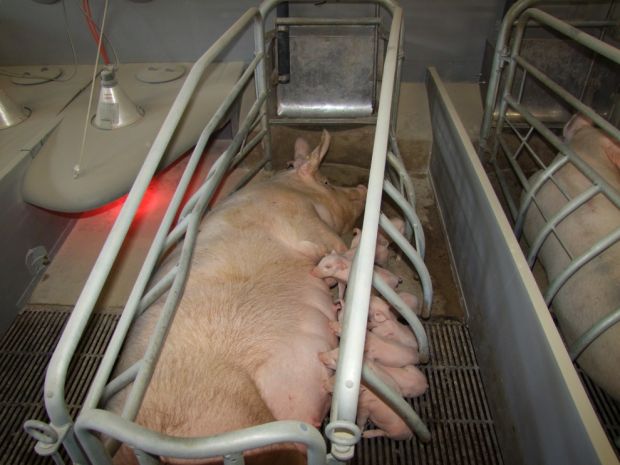
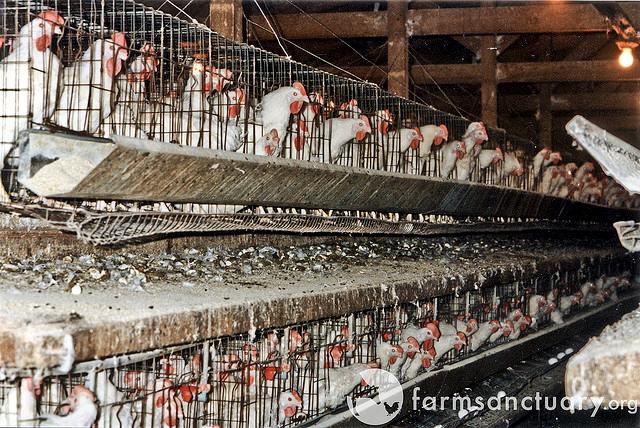
We wait with interest to see if the EU bans the intensive cage animal rearing systems of the EU members states; if Germany takes action about the intensive farming of its pigs, and if the EU will ever get any closer to reducing or stopping the transport of live animals. In all cases, we very much question / doubt that there will be any positive progress; especially when all this pro meat eating campaigns are funded by the european taxpayer; who from all accounts; is actually eating less meat now !

And EU citizens are supposed to have faith in the Parliament that represents ‘them’ in Brussels ?

Regards Mark.
 

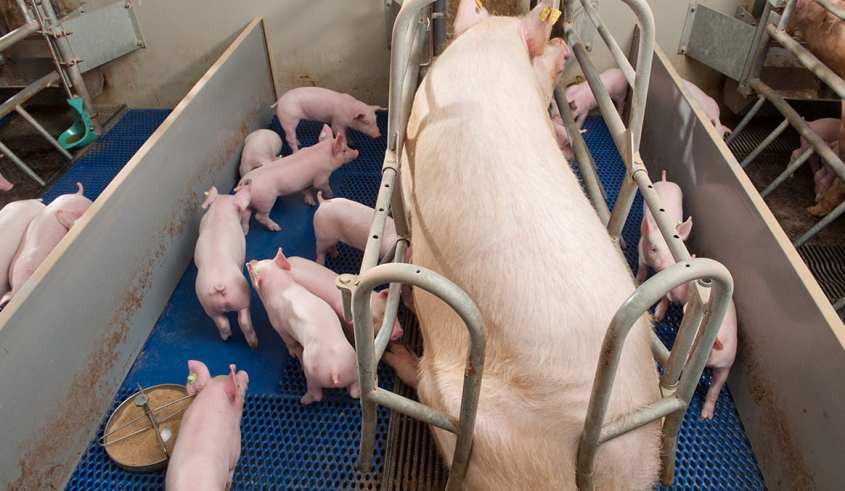
Schweinestall---Kastenstand-34414-detailp

_schwein_sauen_produktinfos

EU spending tens of millions of euros a year to promote meat eating


The Guardian is an English newspaper – WAV

https://www.theguardian.com/environment/2020/feb/14/eu-spending-tens-of-millions-of-euros-a-year-to-promote-meat-eating


Campaigns to promote consumption of pork and veal labelled ‘indefensible’ in light of health and climate concerns

The EU has been accused of an “indefensible” approach to human health and the climate crisis in spending tens of millions of euros each year on campaigns to reverse the decline in meat eating and trying to rebut so-called “fake news” on the mistreatment of animals bred for food.

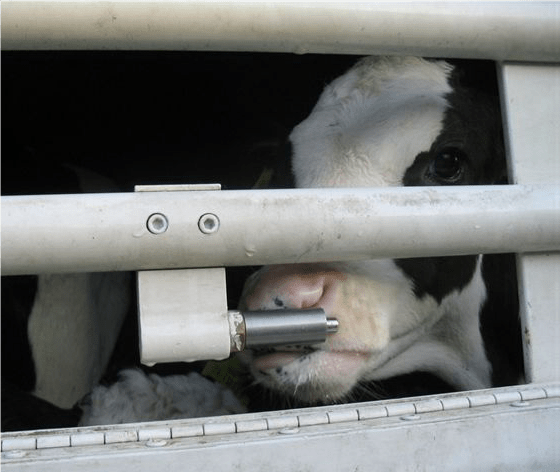
Campaigns range from those designed to counter official warnings about the risk of cancer from eating red meat, to improving the public image of veal products said to be crucial in “deriving value from young male calves” superfluous to the dairy industry.

The EU provides an annual €200m (£166m) subsidy for the “promotion of agricultural products” each year. About €60m has been spent in the last three years on 21 meat marketing campaigns, including in the UK, according to research by the Dutch animal welfare organisation Wakker Dier.
 

irish 3


The stated ambition of many of the projects has been to halt a decline in meat consumption amid a growing trend to vegetarianism among Europe’s young people.

The livestock sector is responsible for about 14.5% of total human-derived greenhouse gas emissions. Scientists have provided evidence of a link between cancer and diets involving pork, beef and lamb products.

The description on the European commission website of one recent campaign entitled Pork Lovers Europe, which secured €1.4m for marketing, including a “road-show” with a pink bus painted to look like a pig, noted “that the consumption of pork meat in Europe has decreased in recent years”
 

caged chicks


It continued: “Therefore, it is very important to promote pork meat to restore the confidence of the consumer, which was shaken by news such as the last IARC [International Agency for Research on Cancer] report.”

Scientists at the IARC, a UN agency, reported in 2015 that the consumption of bacon, red meat and glyphosate weedkiller increased the risk of developing cancer. The Pork Lovers Europe adverts targeted consumers in the UK, Spain, Germany, France and Portugal.

A campaign by the Association of Poultry Processors and Poultry Trade which will be run in six member states at a cost to EU taxpayers of €4.4m aims over the next two years to “contradict myths and fake news” about the rearing and slaughter of chickens for meat.
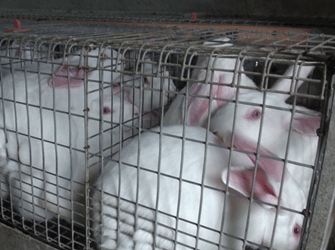
 

Cage age 1


“EU poultry consumption in the European Union is still increasing but at a slower pace, as more and more consumers are mistrustful regarding the poultry meat production,” the European commission’s website says. The campaign, targeting a 1.22% growth in chicken consumption in 2020 and 2021, is aimed at “young children, professionals, media and opinion leaders”.

A second pork campaign received a €2.5m subsidy for an initiative aimed at Danes and Swedes. “Pork is no longer a natural part of the diet of young Scandinavians,” the commission website says. “They tend to eat less meat in general and to avoid pork in particular. The aim is to increase consumer demand and thus halt any otherwise expected fall.”

A campaign in favour of the Dutch veal sector to promote the meat of calves in the Belgian, Italian and French markets received a €6m subsidy.

“The veal market has been declining since the 2000s,” says a description of the project on the commission website. “There are various reasons for this: the economic crisis, changes in consumption behaviour and above all a lack of top-of-mind awareness. France, the Netherlands, Belgium and Italy are minded to fight this fall in consumption by boosting the image consumers have of European veal.”
 

End the Cage Age


Sjoerd van de Wouw, a researcher at Wakker Dier foundation, said the funding policy was outdated indefensible. “We understand that you need to consider the interests of producers but not by completing ignoring the interests of consumers and the climate,” he said.

In response, a European commission spokesman said: “The selection of projects is based on a strict and defined procedure involving external evaluators. The producers’ organisations send proposals regarding their campaign ideas and also participate in the funding of the campaigns.

“In an effort to constantly evaluate and adjust its existing policy, the commission will soon launch a public consultation on the EU promotion policy for agricultural products.”
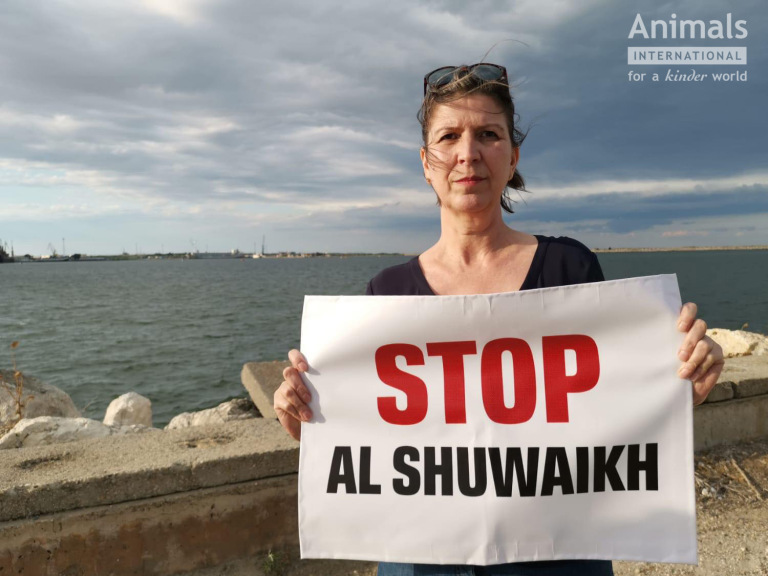
 

anja

Spain: animal transporter tips over


spanien-flagge-spaniens-r531xg


The truck loaded with 170 pigs was headed to a slaughterhouse in Cuenca when it has overturned at 9:05 am at km 23 of the A6 towards Madrid. Two of the animals have escaped from the vehicle while the rest, 168, have remained locked inside the dump truck for about 5 hours.

Time that animals have spent agonizing and crushing each other with their own weight.

The shrieks, deafening during the first two hours, have gone out as time went by. The transport company staff has not opened the truck until approximately 2:00 p.m.

Live animals, about a dozen, have been loaded into a new truck and taken to the slaughterhouse.

On the other hand, the injured have been sacrificed inside the truck itself.

Animal Equality will ask the Ministry of Agriculture and Food to make public the way in which the slaughter of these animals has been carried out, what standards and protocols have been followed. In addition, the animal organization will demand the development of action protocols for accidents of this type that guarantee adequate and humane treatment.

The two pigs that have been released have been tied with ropes to the median by firefighters and subsequently dragged to the new truck to be and taken to the slaughterhouse.

The members of Animal Equality who have been present during the event have documented how the operators dealt with blows and kicks to the surviving pigs to get them into the new truck.

Igualdad Animal


And I mean…Animals are considered things.
Animals are systematically ignored politically, as if they didn’t exist.
There are no animal rights anywhere in the world. Not a single animal has a single right. Nowhere.
Only humans have rights, all other animal species have no rights.
We humans don’t know what it feels like to be without rights.

Transported in trucks for days as if the load were not living beings but sacks of potatoes.
And be picked up with cranes as if the living beings were fallen trees.

That is what I undestand under fascism.
With the right of the superior race to deny the right to life, freedom, integrity, protection to all other animal species.

My best regards to all, Venus


England: Remembering Jill.

gemalt-england-flagge-5d


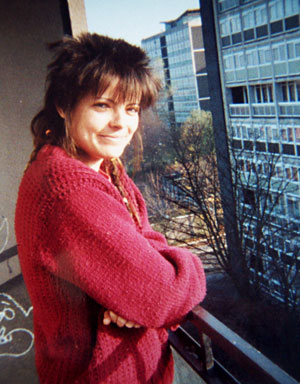
JILL


Sticking a little with some Brits who have been killed in their belief for the rights of animals, this year on 1st February we did not publish anything on Jill as we were heavily involved with the German pig campaign. We know would have wanted us to do something current for the animals.  But now we have a bit more time; here is information on Jill who was killed at a live animal export protest in 1995.  Some of you will know about here; some overseas visitors may not.

Recent post:

https://worldanimalsvoice.com/2020/02/19/in-loving-memory-of-mike-hill/


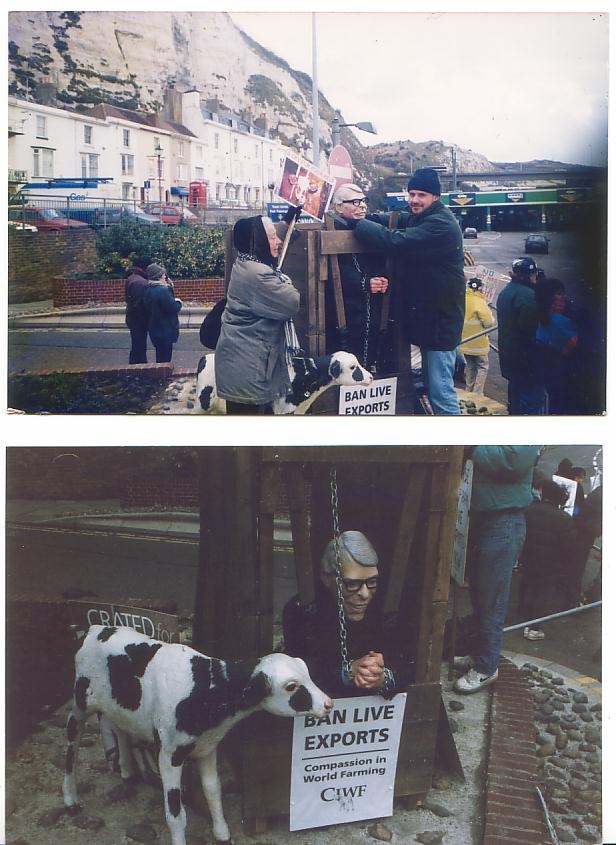
I remember the ‘Jill’ incident well; as I was personally involved with live calf exports around that time from the port of Dover, Kent, SE England.


Mark Dover 94

Top – me at Dover shaking a crated John Major warmly by the neck; bottom: 

the then Prime Minister John Major is shoved in a veal crate. Alongside – a liberated calf !


Jill was aged just 31; was a British animal rights activist who was crushed to death during an animal rights protest in Baginton, Warwickshire, England, while she was trying to slow down a lorry transporting live veal calves heading for continental Europe via Coventry Airport.

On 1 February 1995, Phipps was one of 35 protesters at Coventry Airport in Baginton, protesting at the export of live calves to Amsterdam for distribution across Europe. Ten protesters broke through police lines and were trying to bring the lorry to a halt by sitting in the road or chaining themselves to it when Phipps was crushed beneath the lorry’s wheels; her fatal injuries included a broken spine. Phipps’ death received a large amount of publicity, being brought up at Prime Minister’s question time in the House of Commons.

The Crown Prosecution Service decided there was no evidence to bring any charges against the truck driver. Phipps’ family blamed the police for her death, because the police appeared determined to keep the convoy of calf carrying lorries moving despite the protest. The inquest heard that the driver may have been distracted by a protester running into the road ahead of him, who was being removed by a policeman. A verdict of accidental death was returned and Phipps’ father insisted that she did not want to die as she had a young son to live for.

Veal calf exports from Coventry Airport ended months later, when the aviation firm belonging to the pilot responsible for the veal flights, one Christopher Barrett-Jolly, went bankrupt following accusations of running guns from Slovakia to Sudan in breach of EU rules. One of the planes used to transport the calves also crashed in the UK, when returning empty from a calf delivery flight. https://www.coventrytelegraph.net/news/coventry-news/coventry-news-plane-crash-1994-12346964


Barrett-Jolley

Barrett – Jolly


In 2002 Barrett-Jolly was charged with smuggling 271 kg of cocaine worth £22 Million from Jamaica into Southend airport which is located in the South East of England. He was later sentenced to twenty years in prison. https://www.theguardian.com/business/2002/dec/06/theairlineindustry.drugs

The continuing level of protest was such that several local councils and a harbour board banned live animal exports from their localities. All live exports of calves later stopped due to fears of BSE infection. In 2006 this ban was lifted, but Coventry Airport pledged that it would refuse requests to fly veal calves.

Jill paid the ultimate for her belief in saving animals. On 1st February every year since her death 25 years ago, grassroots animal rights remembrance services in the name of Jill are held all over England and the UK.

She was much to young to die the way she did in the defense of animals – she still had so many years to give to the movement. Sadly, her life was cut short on that fateful day in 95. Jill’s day will always be marled as a day of unity for animal rights campaigners across the UK.


Regards; for Jill

It still hurts and upsets me; a beautiful girl; 25 years on; all she wanted was a world of compassion;

Mark

https://www.youtube.com/watch?time_continue=9&v=78o0Uh9J_aQ&feature=emb_logo


Other Links:

https://worldanimalsvoice.com/2019/04/19/some-questions-about-the-case-jill-phipps/

https://worldanimalsvoice.com/2019/04/18/england-there-is-more-to-the-jill-story-when-you-have-the-facts/

https://worldanimalsvoice.com/2019/02/01/england-1st-february-remembering-jill-warrior-of-the-rainbow/

https://www.youtube.com/watch?v=xFeKx_M-EJ0

https://www.youtube.com/watch?v=5UifagfLMoY

‘Dirty Secret’ – It Is Still Cheaper to Kill Male Calves Than it is to Rear Them.

EPym0LpX0AE8cC_

Have You Seen This Baby ? – Vegan Street


The Dirty Dairy Secret – It is still cheaper to kill male calves than it is to rear them.


Thanks for sending Stacey – https://our-compass.org/2020/02/03/dairys-dirty-secret-its-still-cheaper-to-kill-male-calves-than-to-rear-them/

Please note the use of euphemistic terms and phrases such as “early disposal”, ie., killing infants; “it”, ie, a male, him. Please also note a serious lack of ethics or consideration for sentient beings and the “victimized” farmer who is unable to kill the calves herself but has no issue with hiring others to do so.

Please never forget that caring does not equal killing, if farmers cared for the animals,  they would not exploit or kill them; there is no legitimate way to consider the well-being of an animal if you exploit and kill him/her. Terms such as “red tractor”, “high welfare”, “cage-free”, etc., are phrases meant to console human conscience, while animals are still exploited: subjected to confinement; inflicted with mutilations; separation of mother and child, causing extreme distress and psychological trauma; stealing of milk for other species; and abbreviated lives ended in violent death.

Here’s your dairy:

https://www.theguardian.com/environment/2018/mar/26/dairy-dirty-secret-its-still-cheaper-to-kill-male-calves-than-to-rear-them (UK Newspaper – London)

Dairy farms need female cows to produce milk but with little demand for male calves many farmers can’t afford to keep them beyond birth

The number of male calves being killed straight after birth is on the rise again, despite efforts by the dairy industry to end the practice known as ‘the dirty secret’.

A Guardian analysis shows that it can cost a farmer up to £30 per calf to sell it on for beef or veal, while early disposal costs just £9. A growing number of farmers feel compelled to take the latter option, with 95,000 killed on-farm in the most recent set of figures.

Dairy farms depend on female cows to produce milk, so when male calves are born, they are surplus to requirements and farmers are currently faced with few options.

They can immediately dispose of the calf, either by shooting it themselves or contracting a knackerman to do it [licensed slaughter business that will kill or collect dead farm animals]. They can sell the calf to be raised for veal or beef. Or they can sell the calf for live export. A few farms are experimenting with keeping the calves with the mothers for longer, but this is an expensive and rarely chosen option.

Early disposal is known as the ‘dirty secret’ by farmers, and none relish it. But keeping the calf to sell on to be raised for beef or veal means the farmer will have to rear them for two to four weeks to a good enough weight to interest buyers, at a typical cost of around £2 a day, with selling prices at market as low as £25-40. This doesn’t include extra costs such as getting the calf to market, registering its birth or veterinary bills.

In contrast, shooting the calf costs as little as £9, including the cost of the knackerman who will incinerate the body, or in some cases send them to kennels to be turned into dog food. Calves shot on farm cannot enter the human food chain and farmers can only dispose of calves themselves if they have a licensed incinerator.

Dairy farmers in the UK have been under extreme pressure to cut costs for the last two decades, with milk long used as a loss leader by supermarkets to draw shoppers into their stores. “Some farmers might do the maths and figure out after rearing, transport and time away from the farm it might not add up,” says Chris Dodds, from the Livestock Auctioneers’ Association (LAA).

The estimated 95,000 calves disposed on-farm represents 19% of the male dairy calves born, according to the most recent figures from the dairy industry body AHDB. In 2013 the number had fallen to 13% of male dairy calves born from a previous 21%. The exact numbers shot on farm is difficult to collate as farmers destroying calves within a few days of birth on farm do not need to register the birth – and neither does the company collecting and disposing of the animal.

One dairy farmer, who asked to remain anonymous, explained to the Guardian that she could not find a market for her male calves. “This year we’re shooting the Jersey crosses, because we’ve not got the space or money to keep them. It doesn’t make me feel good.

“We get the knackerman out to do it. I could never do it. I can’t even feed them if I know they are going to be dead in a few days.” She said the issue was still “kept under the carpet” by the wider food and farming industry and that consumer markets needed to be developed and farmers financially supported to rear the calves.

Another farmer told the Guardian: “I shoot black and white bull calves [the Holstein Friesian breed that predominates the dairy sector in the UK], but am still not hardened to like doing it. We have too many calves here. The space available on the farm [an 800-cow dairy herd] is only suitable for a maximum of 80. The less calves I have the better for the overall farm. This is a business and it has to be financially viable to make it worthwhile.”

A joint NGO, retailer, farming and government initiative to promote markets for bull calves, that closed in 2013, estimated more than £100m was being lost from calves killed before realising their economic worth.

The alternatives to early disposal are not simple. Half a million calves used to be exported from dairy farms via ferries to the continent, which has a larger market for veal. But public protests and industry pressure against animals being sent on long journeys in lorries and lower animal welfare standards in other countries has seen that outlet largely disappear. No calves were exported from England last year, although an estimated 5,000 calves did leave from Scotland and a further 20,000 from Northern Ireland.

Attempts to promote a market for high welfare British rosé veal, championed by the likes of Jamie Oliver and Jimmy Doherty, have met with mixed success with margins for farmers tight and consumer interest low. The RSPCA is calling for the food industry to be allowed to rename veal as rosé beef to end consumer misconception of it as a white meat produced from calves kept in crates and fed milk – a system that was banned in the UK in the early 1990s.

Another alternative is to rear the calves for longer and sell them as beef. One of the companies doing that is Buitelaar, set up in 2006 and which collected more than 35,000 calves from dairy farms across the UK last year. It arranges for them to be reared indoors on a mixed diet and then sold after 12-14 months through UK supermarkets, restaurants and fast food chains. But some breeds such as Jersey cows are not seen as suitable for this option.

There has been a steady growth in the use and effectiveness of sexed semen since the early 1990s, accounting for 18% of total semen sales in 2017. It increases costs for farmers but can reduce the proportion of male calves being born to less than 10%.

Supermarkets could play an important role in reforming the situation and providing a market for meat from bull calves. Tesco, Aldi, Iceland, Lidl, the Co-op and Asda do not ban their milk suppliers from shooting bull calves and it is not outlawed under organic standards. But some of the large chains – the Co-op, Morrisons, Sainsburys and Waitrose – have launched schemes, in conjunction with beef companies such as ABP, Buitelaar and Dunbia, to collect calves and ensure they are reared rather than destroyed.

The National Farmers’ Union (NFU) warns that post-Brexit trade deals could make it harder for farmers to find a market for male calves. “A trade deal that allows cheap beef from countries with lower standards of production will most definitely damage many of the positive initiatives that have been developed over recent years to utilise dairy bull calf beef and veal within the UK market,” said NFU dairy advisor Siân Davies.

A small number of dairy farmers are experimenting with trying to make more use of the bull calves. David Finlay, who runs Cream O’Galloway, one of the UK’s largest “ethical” dairy farms in southwest Scotland, keeps his male and female calves with their mothers for the first five months. The male calves are then reared separately before being sold to a veal producer at eight months.

He loses a large proportion of the milk produced by the female cows, but says his use of a dual purpose breeds of cows (good for milk and meat) means he gains a better market price for the animals. “The message coming to farmers from their peers and the industry is still to chase litres at all costs. But if you are chasing milk there will be a cost in terms of bull calves.”

vjeciupx2bpmj5xodhah

Above – Typical US calf rearing system

Click HERE to go Dairy-Free

Order a FREE vegan kit: http://www.peta.org/living/food/free-vegan-starter-kit/

Take PETA’s Cruelty-Free Shopping Guide along with you next time you head to the store! The handy guide will help you find humane products at a glance. Order a FREE copy HERE

Searching for Cruelty-Free Cosmetics, Personal-Care Products, Vegan Products, or more?
Click HERE to search.

Click HERE to find out How to Wear Vegan!

Want to do more than go vegan? Help others to do so! Click below for nominal, or no, fees to vegan literature that you can use to convince others that veganism is the only compassionate route to being an animal friend:

PETA: https://www.petaliterature.com/

Vegan Outreach: https://veganoutreach.org/order-form/

Get your FREE Activist Kit from PETA, including stickers, leaflets, and guide HERE

Have questions? Click HERE


England: Snapshot – Part 2 To Our Recent Post.

England


As we said in our recent post – https://worldanimalsvoice.com/2020/01/31/member-of-the-eu-then-you-have-to-abide-by-these-crazy-regulations-any-wonder-why-brits-want-out-get-real-eu-what-about-important-things/   – ‘Being involved ourselves with live animal transport investigation work for a long time; we have a bit to say about this’.

Hmm; below is a tiny little snapshot of some of the articles we have produced re live animal transport on our WAV and SAV sites over the 30+ years we have been investigating the live animal transport business. As you must be able to tell by now (yes really !); we have no faith in the EU or those involved within EU ‘political elite’ areas it to try and stop live animal transport. We hear now smooth talk of a ‘farm to fork’ strategy only just being recognised by the EU; and we ask ourselves; potential reality or another EU pipe dream ? – pipe dreams look good when they take the form of ‘EU Regulations’; it’s the enforcing of them that is the ‘no go’.

Let us turn to 2 issues that we personally have in depth experience of. Whilst I (Mark) was running SAV in the early days –   https://serbiananimalsvoice.com/ and https://serbiananimalsvoice.com/about-us/ – I was also the EU Correspondent for KAALE- Kent Action Against Live Exports; a Kent group which is now still fighting the live animal trade. We then worked with Kent Trading Standards, an official body, to bring about a (successful) prosecution of Mr Onderwater; a Dutch livestock haulier, who had been illegally shipping British sheep to mainland EU, whilst declaring on the formal export paperwork that they were cartons of ‘boxed meat’ and not actual live animals. At a resulting court trial here at Folkestone Magistrates Court, Kent, England; on 5th July 2010  Mr Onderwater pleaded guilty to no less than 6 offences (under the Animal Health Act) of causing animal suffering of sheep in contravention of the Welfare of Animals (Transport) (England) Order 2006 and EU Council Regulation (EC) 1/2005 (Protection of animals during transport).. He was also fined £10,370 and by being convicted under UK law, effectively became a convicted criminal.

https://serbiananimalsvoice.com/2019/07/18/the-dutch-convict-who-still-exports-sheep-from-the-uk-to-mainland-europe-and-guess-what-the-eu-does-nothing/


More reading on the issue from a Kent newspaper::

https://www.kentonline.co.uk/deal/news/meat-firm-onderwater-agnueax-fin-a83202/


It involved a lot of work on our part. We presented all of our evidence relating to the Onderwater offences / prosecutions to both the EU and Dutch authorities; and guess what, the Dutch simply gave him a ‘ticking off’, but allowing him to continue operations in the live animal transport business, whilst the EU simply and totally ignored all of our evidence which simply allowed him to continue with his operations; which he does to this day regardless of his convictions in the UK under a court trial; now shipping live calves and sheep out of (Ramsgate) England to the mainland EU. And the EU thinks it is more important to have legislation about bent bananas that taking action here ! ? !!! – we disagree rather strongly !

For the ‘boxed meat’ shipments, Onderwater was using a ‘sealed type box trailer’ (see photos below), which carried live animals, but from the outside looked like a normal refrigerated trailer. We have always had issues with this type of trailer being used to transport live animals and have been doing running battles with the EU about it for many years !

box 1

ValCameron141113_7598 _2

Both these box trailers are full of live sheep – would you know ?

– where is the signage we ask ?


We were always very concerned that despite what the EU Reg 1/2005 says; about clear identification that live animals are being transported; trailers that we witnessed on the road (as shown above); and there were many times; they hardly ever carried any hint of signage to say that live animals were being carried within. We had specific concerns that should the trailer be involved in a road accident; local emergency rescue crews would not open access doors as they had no information written on the trailer that live animals were being carried. As a result; many animals could have suffocated or endured serious injuries without rescue teams having any idea that live beings were inside. In our reports, we even proposed signage which should be fitted to All areas of the trailer – top / underside, both sides, the rear – making it utterly clear to any emergency rescue crews that live animals were on board. This was nothing new, it should have been automatically undertaken to comply with EU Regulation 1/2005 anyway; but as with most, if not all animal welfare transport regulations in the EU, the hauliers largely ignore them; knowing that there is not really anyone around to enforce !


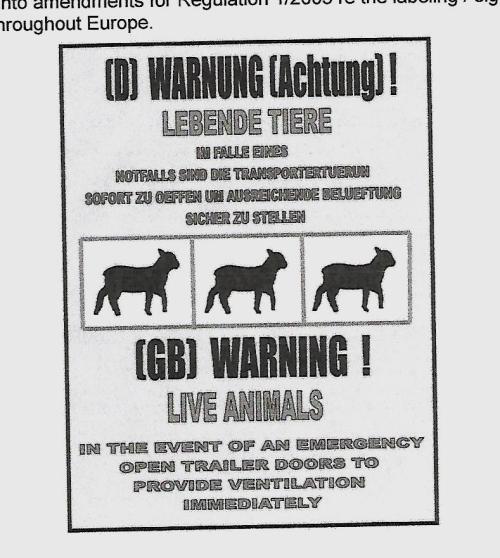
Here below is a copy of the label which we suggested to the EU that should be fitted on all panels to all box trailers carrying live animals.  We suggested about A3 size; with colours of back, red and yellow – a yellow background, wording in red and the animal pictures in black.

In this example we did English and German wording; but suggested that maybe 4 ‘prime’ EU languages should be shown on the warning label.  As you can see at the bottom we made it clear to help emergency services – “LIVE ANIMALS – In the event of an emergency; open the trailer doors to provide ventilation immediately”.

The EU never came back to us about this; what, some 10 years ago.  Un identified box trailers are still hauling live animals in un-identified configurations on a daily basis !


Box trailer warning label


Have a look at some previous posts we have published on this, and the box type sealed trailers:


Onderwater


https://serbiananimalsvoice.com/2019/07/18/the-dutch-convict-who-still-exports-sheep-from-the-uk-to-mainland-europe-and-guess-what-the-eu-does-nothing/

https://serbiananimalsvoice.com/2019/08/08/england-sealed-box-animal-trailers-how-the-industry-dodges-identifying-what-they-carry-and-the-eu-does-nothing-about-it/

https://serbiananimalsvoice.com/2017/07/21/uk-as-we-said-away-from-the-useless-eu-shackles-the-uk-can-and-will-take-back-control-for-the-better-of-animals-and-the-environment/

https://serbiananimalsvoice.com/2017/08/30/england-live-animal-export-protests-by-dutchman-onderwater-ramsgate-kent-24817/

https://serbiananimalsvoice.com/2016/09/09/england-big-protest-against-live-exports-as-always-but-lots-of-sailings-by-dutchman-onderwater-for-muslim-eid-festival-in-eu/

https://serbiananimalsvoice.com/2014/10/09/netherlands-uk-footage-of-live-british-sheep-exported-by-dutchman-onderwater-to-mainland-eu/

https://serbiananimalsvoice.com/2019/05/05/the-cruelty-transport-of-unweaned-calves-direct-from-ireland-to-france-and-from-scotland-via-ramsgate-england-for-further-fattening-in-spain/

https://serbiananimalsvoice.com/2018/02/21/live-transport-new-video-one-sav-commentator-expresses-the-views-of-so-many-eu-citizens/

https://serbiananimalsvoice.com/2017/12/03/the-eu-is-failing-millions-of-animals-exported-live-a-guardian-uk-press-investigation/


Image result for eu bernard van goethem"

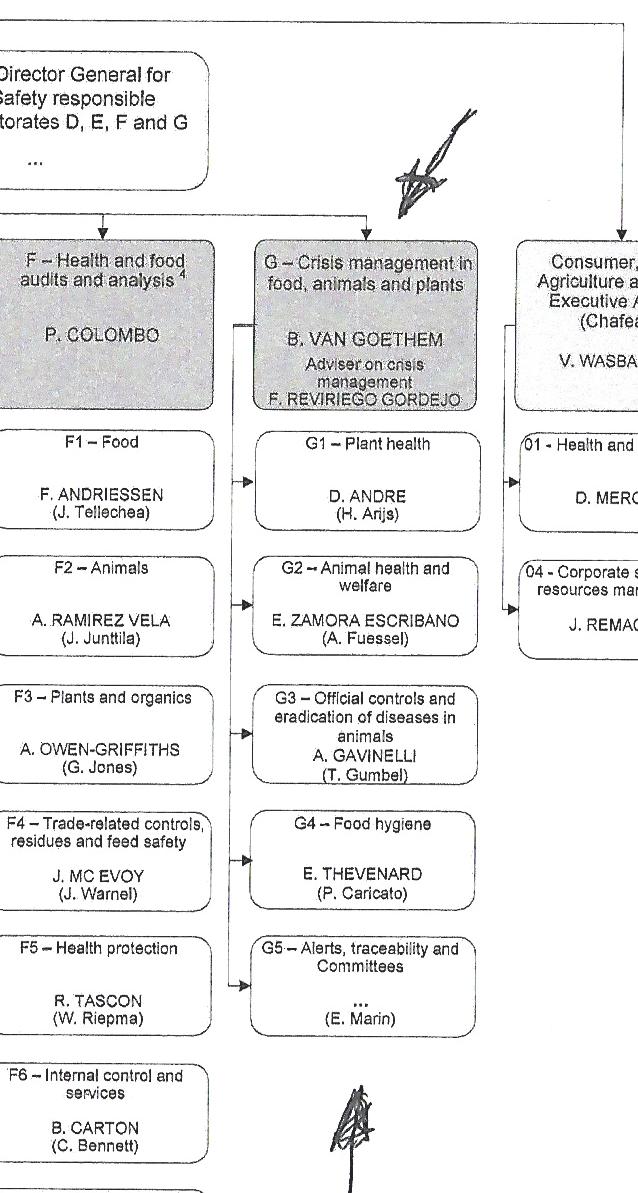
Mr Bernard Van Goethem is an EU official very involved with live animal transport; but in our opinion; he does the animals in transport no favours at all. If you look at the EU (DG SANTE) structure chart for ‘Health and Food Safety’, which includes G” – animal health and WELFARE; there is a so called ‘Crisis Management Team’ which is headed by Mr Van Goethem. Sorry, but we have been pointing out a ‘crisis’ with unidentified animal carrying sealed box trailers to him for probably the last 10 years or more – and like all crisis managers; he has decided to ignore the evidence we give, and remedies to correct we propose. When does a crisis become a real crisis we ask ?

VDG Crisis management EU


In our opinion this man represents everything which is so pathetic about the EU – nice job title; well paid, nice office no doubt; nice suit; but utterly ineffective at taking very important animal welfare issues and decisions on board; and even more seriously; doing anything about rectifying them !

Our section leader at G3; Mr Gavinelli; we have found in our correspondence, is much better than his boss; always willing to listen to our case and being very supportive of animal welfare, for which we thank him. Sadly, Van Goethem is at the top; so in compliance with much of the important things at the EU; nothing really ever gets done.

Here are some posts we have published in the past; many from our ‘SAV’ site – including our requests for him to resign; such is our personal experiences of his animal welfare ‘crisis management’.


WAV – Mr Van Goethem


https://worldanimalsvoice.com/2019/09/06/england-wav-now-write-to-europe-regarding-romanian-sheep-and-animal-carrying-box-trailers/

https://worldanimalsvoice.com/2018/09/08/eu-how-it-is-enhancing-knowledge-on-animal-welfare-or-is-that-dismissing-eu-meat-mafia-or-what/

https://worldanimalsvoice.com/2018/08/24/netherlands-summer-heat-by-margreet-eyes-on-animals-amsterdam/


Image result for eu bernard van goethem"


SAV – Mr Van Goethem


https://serbiananimalsvoice.com/2016/07/21/mr-van-goethem-and-eu-others-all-talk-and-no-action-a-real-head-in-the-sand-situation/

https://serbiananimalsvoice.com/2016/06/29/mr-van-goethem-resign-now/

https://serbiananimalsvoice.com/2016/06/07/eu-must-ensure-animal-welfare-or-mr-van-goethem-will-get-you-and-the-next-joke-is/

https://serbiananimalsvoice.com/2016/06/06/the-eu-excuses-get-more-pathetic-by-the-day-contact-mr-van-goethem-and-show-your-disgust/

https://serbiananimalsvoice.com/2016/12/03/romania-take-action-for-romanian-live-exports-a-useless-van-goethem-eu-as-always/

https://serbiananimalsvoice.com/2016/09/05/nl-the-situation-in-turkey-gets-no-better-in-fact-even-worse-blame-mr-van-goethem-and-his-in-effective-team-at-the-eu/

https://serbiananimalsvoice.com/2016/06/17/uk-map-proves-uk-is-ready-to-wave-eu-goodbye-van-goethem-and-others-have-failed-the-animals/


https://serbiananimalsvoice.com/2017/09/13/uk-campaigners-from-over-25-nations-work-together-today-13917-to-end-live-animal-exports/

https://serbiananimalsvoice.com/2017/07/21/uk-as-we-said-away-from-the-useless-eu-shackles-the-uk-can-and-will-take-back-control-for-the-better-of-animals-and-the-environment/


https://worldanimalsvoice.com/2018/09/21/the-eu-and-its-failure-of-animal-welfare-c-o-junker-tusk-vangoethem-etc/


So; just a very short snapshot of how to do a lot (from our side); gather information; present the evidence; and then be completely ignored by the EU or anyone who can actually make proper, effective changes.

Do we get angry with this attitude to what we say ? – yes; a bit; but we are kind of used to it after all these years, but on the flip side, it just gives us additional conviction to fight those like both the above, and the animal transport industry in general.

We do this for nobody but the animals who suffer – for them it is an ‘Eternal Treblinka’.


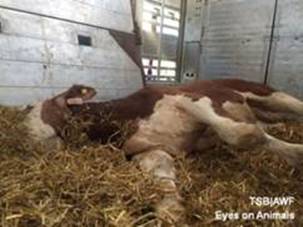
EoA June 5

Photo – Eyes on Animals (NL)


You can run but you cannot hide !


Regards Mark.


Member of the EU ? – Then You Have To Abide By These (Crazy) Regulations. Any Wonder Why Brits Want ‘Out’. Get Real EU; What About Important Things ?

Friday 31st January 2020. Brexit Day, when the UK leaves the European Union.

Ever wondered why the Brits want to get out of this shambles ? – in celebration of the historic event, Express.co.uk has uncovered some of the European Union’s most bizarre laws that the UK has had to abide by (because it was a member state).

We are not even touching animal welfare issues here. Animal welfare is a story book of its own. So here are a few other EU rules which we have (until tonight) had to adhere top as members of the EU:


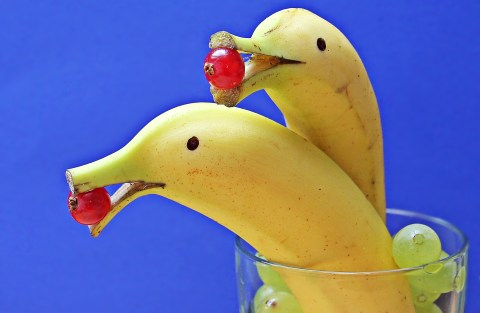
Banana Dolphins


·         Bananas cannot be too bendy

In a widely ridiculed ruling, Brussels bosses banned rogue bananas with “malformations and abnormal curvature”.


Image result for stilton cheese"


·         Illegal to make Stilton in the village of Stilton

The small Cambridgeshire town named after the famous blue-veined cheese for being the first place to sell it is banned from producing Stilton under EU law.

The European law was put in place after officials ruled the cheese originated in another part of England.


Image result for water"


·         Water does not hydrate you

In 2011 the EU banned drink manufactures from claiming that water can prevent dehydration.

EU officials concluded that, following a three-year investigation, there was no evidence to prove drinking water prevents dehydration.


·         Tampon tax


WAV Comment – it is not a ‘luxury non essential’, it IS an essential that should be provided without any tax to ALL girls and women ! – especially when women living on the street (yes Brussels, they do exist !) have to use dirty old rags, socks, woolen hats and anything else they can get their hands on to help them. Give them some respect and dignity – we say feminine sanitary products should be available free of tax to anyone that needs them.  Deprive female EU MEP’s of any tampon use and see how quickly things will change within after 6 months ! – EU ‘officials’ can afford the ‘luxury’; many girls cannot – so get real.


Currently, all sanitary protection in the UK is charged a VAT of five percent, the lowest rate permissible under EU VAT rules.

The UK Government has indicated willingness to scrap the controversial tampon tax, but existing EU laws prevent member countries from introducing a zero percent rate on products.

Britain will be free to scrap the tax, which treats sanitary products as a luxury non-essentials item, from January 1, 2021 – the end of the transition period.

It should be implemented fairly quickly, as David Cameron’s Government included a provision in the 2016 Finance Bill to allow for sanitary protection to be zero-rated, once the UK had discretion to do this.

The European Commission did agree to abolish the tax in 2018 after extensive lobbying from the UK, but it will not come into effect until January 2022.


Image result for fishing quotas"


·         Strict fishing quotas

The Common Fisheries Policy sets annual fishing quotas on each type of fish and mandated that if fish of the wrong species were caught accidentally, they had to be thrown overboard.

As a result, thousands of dead fish ended up being chucked back into the sea as fishermen attempt to reach the right quotas of the required species.

This practice was heavily condemned as tonnes of dead fish were being discarded.

In 2019 the EU outlawed the controversial practice and obliged skippers to land unwanted fish.


Image result for energy bulb head"


·         Halogen light bulbs banned

The EU banned member states from selling halogen light bulbs, replacing them with LEDs.

The final stage of the EU energy regulations was put in place in September 2018.

LED lights are more efficient and require significantly less power to operate but are more expensive than its predecessor.

Earlier versions of LEDs were criticised for being slow to light up, but newer versions of the light bulb instantly light up.

But since the halogen ban was introduced, scientific studies have found LED lights can permanently damage eyesight and disturb natural sleep rhythms.

Last year the French Agency for Food, Environmental and Occupational Health and Safety warned the “blue light” emitted from LEDs can lead to “irreversible loss of retinal cells and diminished sharpness of vision”.

.

Yes, it is all true ! – fortunately we will now leave highly paid MEP’s and Commissioners to come up with even more absurd rulings in the future.


Breaking News from the EU !! – a new animal welfare unit on its way !

Here is what the Eurogroup for Animals have to say about it on their site:


One small step from the Commission, or one giant leap for animal welfare? – new Animal Welfare Unit on the way

https://www.eurogroupforanimals.org/one-small-step-from-the-commission-or-one-giant-leap-for-animal-welfare-new-animal-welfare-unit-on-the-way

According to Politico, the European Commission is poised to establish a new animal welfare unit this March as part of a restructuring of its department on Health and Food Safety (DG SANTE).

Eurogroup for Animals welcomes the news, which comes as DG SANTE embarks on a reorganisation so that it can lead on the Commission’s Farm-to-Fork Strategy, which is the agricultural and food policy component of the new von der Leyen Commission’s European Green Deal.

Such a unit existed previously, but was merged with a much larger team dealing with animal health under the previous Juncker Commission.

“This is welcome news indeed, and bodes well for a prominent role for animal welfare actions within the Commission’s Farm-to-Fork Strategy. After all, animal welfare must be an integral component of any transition to a sustainable form of agriculture,” said Reineke Hameleers, Director at Eurogroup for Animals. Citizens, MEPs and Member States have all now called for stronger animal welfare provisions at EU level, and Eurogroup for Animals wholeheartedly commends the von der Leyen Commission for this development.” 

Since they took office six weeks ago, we have heard several encouraging statements on animal welfare, and now we are seeing the first signs of action.

“Of course, what any unit is tasked with doing is even more important than its creation. The list of actions that it could be tasked with is very long indeed, and it will need to be adequately resourced too,” added Reineke Hameleers. “Only when we know this will we be able to sufficiently judge whether this development amounts to one small step from the Commission, or one giant leap for animal welfare.” 


Being involved ourselves with live animal transport investigation work for a long time; we have a bit to say about this.

See Part 2 which we will be publishing soon to experience some of our experiences. We hope to publish very soon.

Regards WAV.

Australia: Do People Care About the Other Crisis Killing Koalas & Kangaroos? – Another Very Interesting View.

australian-flag-


With thanks to Stacey at Our Compass     https://our-compass.org/2020/01/27/do-people-care-about-the-other-crisis-killing-koalas-kangaroos/      for this interesting article – taking the Australian bushfires a step further (back) and getting people to consider the animal killings that take place regardless of the current fires.   Like:

The World Wildlife Fund reports an estimated 45 million animals are killed each year in the Australian state of Queensland alone just from bulldozing of their habitat, a crisis they note is “driven primarily by the livestock industry“.


Regards Mark – WAV.


australien kangourujpg


Do People Care About the Other Crisis Killing Koalas & Kangaroos?
by Stacey

Source Free From Harm
By Ashley Capps
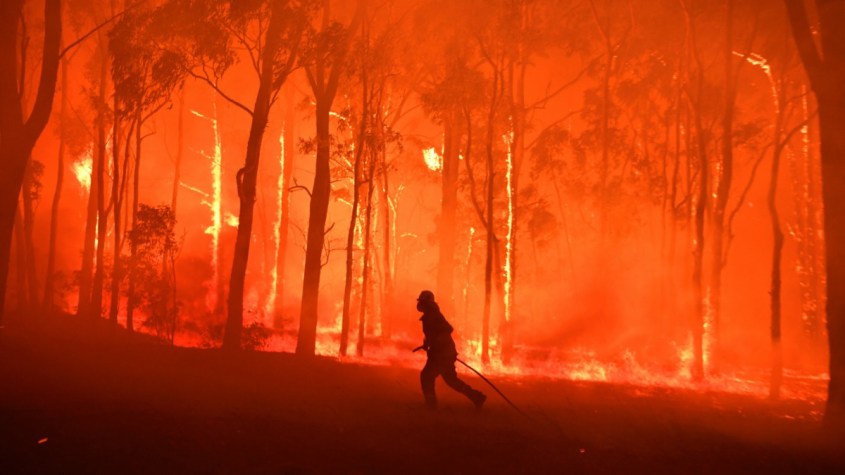
As Australia’s unprecedented bushfires continue to rage, heartbreaking images of scorched koalas and charred kangaroos have devastated viewers around the globe. An estimated 1 billion or more animals have died in the fires, but it’s the pitiful photos of flame-chewed koalas being carried from the blaze like bewildered, beat-up babies that have perhaps most captured our collective sympathy and despair; along with the images of beleaguered kangaroos, their normally genial silhouettes frozen in panic against a backdrop of roaring orange.

It is unbearable to witness.

australien brändepg


Thankfully, these same images have also inspired millions of people to donate to rescue groups on the ground retrieving animals from the fires and tending to their injuries. But as the surge of combined sorrow and sympathy for these iconic animals swells around the world, I find myself wondering: What about the other crisis that is killing Australia’s koalas and kangaroos, and in even greater numbers?

The World Wildlife Fund reports an estimated 45 million animals are killed each year in the Australian state of Queensland alone just from bulldozing of their habitat, a crisis they note is “driven primarily by the livestock industry.”

In just 4 years, between 2012 and 2016, bulldozing of trees killed at least 5,183 koalas in the state. Queensland RSPCA’s Mark Townend notes, “The mass suffering, injury and needless deaths of wild animals caused by the bulldozing of their forest homes is largely hidden but it is Queensland’s greatest animal welfare crisis.”

Queensland had the largest koala population on the continent in 1990, with an estimated 295,000; but in just 20 years that number decreased by more than 40%, while on the Koala Coast, 80% of these animals have been lost.

Thousands of koalas continue to be killed each year as more forests are cleared for cattle grazing in response to consumer demand for beef. But it’s not just Queensland. In Australia as a whole, “beef cattle production is the major driver of tree-clearing.”


Millions of Kangaroos Killed for Burgers & Beef

The same industry is also terrorizing and destroying kangaroos en masse. Since the year 2000, an average of more than two million kangaroos per year have been shot by commercial shooters for the meat industry.

Please read rest HERE

https://freefromharm.org/agriculture-environment/australia-fires-animals/ 


give a shit


Order a FREE vegan kit: http://www.peta.org/living/food/free-vegan-starter-kit/

Take PETA’s Cruelty-Free Shopping Guide along with you next time you head to the store!

The handy guide will help you find humane products at a glance. Order a FREE copy HERE

Searching for Cruelty-Free Cosmetics, Personal-Care Products, Vegan Products, or more?
Click HERE to search.

Click HERE to find out How to Wear Vegan!

Want to do more than go vegan? Help others to do so! Click below for nominal, or no, fees to vegan literature that you can use to convince others that veganism is the only compassionate route to being an animal friend:

PETA: https://www.petaliterature.com/
Vegan Outreach: https://veganoutreach.org/order-form/
Get your FREE Activist Kit from PETA, including stickers, leaflets, and guide HERE

Have questions? Click HERE


EU: ‘Something is wrong’: why the live animal trade is booming in Europe.

Pro-Brexit supporters burn an EU flag during a UKIP demonstration in central London


‘Something is wrong’: why the live animal trade is booming in Europe


Regulation breaches and fewer, larger slaughterhouses have led to growing numbers of animals travelling further to slaughter

  • High risk of injuries in Denmark’s live piglet export trade, audit warns
  • The live animal export trade has ballooned in Europe while the commission fails to enforce its own regulations, MEPs have told the Guardian.
  • A second attempt to set up an inquiry committee to look into the handling of the problem is now underway, after an earlier proposal was dismissed in 2018.
  • In the past 20 years the EU has become one of the global centres for animal export. Within the bloc animals are travelling ever-longer distances, and a steadily increasing number are now being exported to non-EU countries.
  • The EU has long prided itself on its high animal welfare standards, and has had legislation on animals during transport since 1991. In 2005 the commission introduced regulations on animal transport that were far ahead of the rest of the world at the time. A European parliamentary resolution last year stated: “The EU is where animal welfare is most respected and defended, and it is an example for the rest of the world.”

But in 2018 Jørn Dohrmann, a Danish MEP, was asked to check how well the 2005 regulations were being implemented. His findings were damning. The parliamentary resolution that followed his report listed rough handling, inappropriate vehicles, overcrowding, high temperatures, failures to feed and water, uneven reporting and inspections, widely varying punishments for infringements (10 times higher fines in some states than in others), and no centralised record of operators that perpetrate systematic breaches of regulations.

  • Dohrmann’s findings were just the latest of many investigations (including some by the commission) to find that regulations were being breached all over the place
  • Read more
  • “We have known for decades that something is wrong,” Dutch MEP Anja Hazecamp told the Guardian. “We really thought that with the new transport regulations things would start to change. But we see the same old problems as we saw in the 90s.
  • “The member states say they want to do something, but they want a level playing field. And the commission says that they need member states to take action. So the same old status quo continues. This is why I am working together with other members of the Animal Welfare Intergroup to get an inquiry committee set up, to look into what is happening. We cannot wait for two more decades for things to change.”
  • “The commission is not doing its job,” Catherine Rowett MEP said. “It is true that quite a lot of good practice does happen as a result of the regulations, but they are not good enough – and they are not being enforced enough. Yes, it will mean more bureaucracy – but that’s what you have to have in order to make sure that profits don’t take precedence over welfare. It is absolutely crazy, it is bizarre that we can’t get this right.”
  • “What is lacking is political will at European commission and member state level to reconfigure the EU livestock sector to avoid long journeys,” said Peter Stevenson, chief policy adviser at Compassion in World Farming.
  • Over two decades the trade has mushroomed at an alarming pace. The EU’s rapporteur states that “long and very long journeys are increasing”. The value of live animal exports across and out of the EU has trebled from $1bn (£763m) in 2000 to $3bn in 2018, according to UN Comtrade data.
  • The reasons for this growth are complex. The liberation of cross-border trade in Europe, and the growing fragmentation of the farming system has meant that food producers have increasingly taken advantage of cost variations in different countries.
  • So, for example, the Danes can produce piglets more cheaply than the Poles (they have bred their sows to give birth to more piglets than other countries) – but the Poles can rear them more cheaply (their labour costs and welfare requirements are both lower). The result is that five million piglets were trucked from Denmark to Poland in 2018 to be turned into Polish sausage.
  • On top of this the EU has expanded east to include countries that have big rural populations and farming sectors, but limited processing facilities. The EU stamp has made their animals even more attractive to buyers, and Romania, Slovakia, Latvia and the Czech Republic are among those that have built up useful export sectors.
  • The trend for fewer but bigger slaughterhouses is also a key factor. Last year Eurogroup for Animals looked into the sector as part of their call for a shift to a trade in meat and carcasses, rather than live animals. They found there were no centrally held figures – but that where numbers were available the pattern was clear.
  • It’s a similar trend to the US – where the shift to larger slaughterhouses occurred much earlier. According to the Animal Welfare Institute, the number of slaughterhouses fell from nearly 8,000 in 1970 to just under 3,000 in 2018. And in the UK, where the Sustainable Food Trust has been monitoring the situation, the number of red meat abattoirs has fallen from about 1,900 in 1971 to 249 in 2018.
  • But industry figures say that the costs involved in mobile slaughterhouses will make them impossible, given the expectations of the modern shopper. “People aren’t going to buy meat which is three times more expensive – and the labour costs for mobile slaughterhouses will be very high,” Rupert Claxton of international food consultancy Gira told the Guardian.
  • “If you are a big commercial farmer wanting to put lamb into a supermarket chain, you need to keep the bacteria count down on the meat so you can have the shelf life that allows the long supply chain to work, so people can take it home and put it in their fridge for a week or 10 days before they want to eat it. In which case you’ve got to go to a big modern plant that can guarantee all those steps have been regulated and put in place. On-farm kill is not a realistic option in this country, or for most of Europe.”
  • The modern shopper’s expectation of cheap meat, plus issues around labour shortages and regulatory demands, put huge pressure on producers, said Claxton, pointing out that in at least one supermarket chain you can currently buy a chicken for about £1.90 a kg.

AL_SHUWAIKH another 4

  • Hazekamp agrees. “As long as we continue to think that the production of food can’t cost anything, we will not solve this problem.”
  • She is currently pushing for a full official inquiry into the issue. In 2018 Hazekamp and colleagues asked for an inquiry committee to investigate whether the regulations were working. But, despite gathering more than the required number of signatures, the Conference of Presidents instead commissioned the implementation report.
  • But she believes things will be different this time. “The climate has certainly changed,” she told the Guardian. “Animal welfare is no longer a minor issue that can be ignored.”
  • Campaigners believe that under the new commission, headed by Ursula von der Leyen, things look different. “The new team are very different from their predecessors,” points out Joe Moran at the Eurogroup for Animals. “We are obviously dismayed at the growth of this trade, but we are also now more optimistic that new measures will be brought forward by the commission that will begin to address this problem.”
  • A spokesperson for the European commission for health and food safety told the Guardian: “The issue of animal transport is of a major concern for the European commission. Over the past three years the commission has audited member states on road and sea transport to non-EU countries, issued recommendations and is following up on the action plans presented by member states. The commission services are ultimately building evidence to move, if necessary, towards possible proceedings against member states who have systematic non-compliances.”

https://www.theguardian.com/environment/2020/jan/24/something-is-wrong-meps-say-eu-is-failing-to-regulate-live-animal-exports


Romania: The Live Export Sheep Trade Is Killing Farmers -Romania Needs Meat Processing; and Fast !

RMNA0001

‘A whole sheep for £18’: how live exports are hurting farmers in Romania


Country’s lack of meat processing facilities means livestock must be shipped to international markets – at a high cost to both shepherds and welfare

Gheorghe Dănulețiu, also known as Ghiță Ciobanul (Ghiță the shepherd), has more than 500,000 followers on Facebook after he featured in an advertising campaign that went viral, but he leads the modest life of a traditional shepherd.

Looking after 1,500 sheep in western Romania, Dănulețiu’s life changes with the seasons. During lambing in spring, he barely sleeps four hours a night while in winter he leads his sheep in a three- to four-week journey from the mountains down to graze in the valley

Even when the temperature drops below -30C(-22F), Dănulețiu sleeps next to his animals, wrapped in his sheepskin under the starry sky and ready to protect his flock in case of a wolf attack.

“I inherited this [role] from my father – who had a few hundred sheep – but I also love it, I love animals,” Dănulețiu says.

However, like all Romanian shepherds with small and medium-sized flocks, Dănulețiu is struggling in a market dominated by a few live animal exporters, big farmers and hypermarkets.

“The sheep trade has become a mockery,” he says. “We sell a sheep for 100 Romanian leu (about £18). I can’t afford to pay good salaries and I can’t find workers any more – young people see that it’s all going downhill. I have the impression that this is political, that they’re trying to destroy the sector.”


ROMANIA-SAUDI-ARABIA-SHEEPS

ROMANIA-SAUDI-ARABIA-SHEEPS