Category: Uncategorized

England: Shut Down Hewitt Slaughterhouse – Planned Events and Actions (If You Cannot Attend, Send A Letter) – Link Provided.


Following on from our very recent post about mass abuses at an English slaughterhouse:

England: ‘Shocking’ Animal Abuse Recorded At Government-Approved Abattoir, Investigation Reveals. – World Animals Voice

England: Hewitt Slaughterhouse Abuses. WAV Now Write To Government Minister Responsible and Also To Food Standards Agency Re Veterinarian. – World Animals Voice

England: WAV Follow Up With Letter To Relevant Authorities Re English Slaughterhouse Abuses Filmed On CCTV. – World Animals Voice

We can now confirm that things are ramping up in an attempt to close this hell hole for animals down, permanently !

Dear Mark,

We have a number of events coming up and we need YOUR support! Following our undercover investigation of Hewitt slaughterhouse in Cheshire, Animal Justice Project is taking action against this violent company and the UK government in a series of online actions and demonstrations. Will you join us?

During our 200-hour undercover investigation, our cameras caught despicable acts of animal cruelty. Panic-stricken sheep were dragged to the kill room by their horns, where ineffective stunning rendered them conscious as they were slaughtered. A pair of gentle bulls were jabbed over 200 times with a pointed stick and an electric prod, by the slaughterhouse manager himself. Our cameras watched on as a conscious, tiny piglet was hurled into the scalding tank, where they were left to drown.

These illegal acts of violence were commonplace and were carried out right in front of the slaughterhouse’s own CCTV and in the presence of a Food Standards Agency-appointed Official Veterinarian. It is clear that government initiatives are failing to deter illegalities, allowing companies such as Hewitt to flout UK law.

On Friday 30th July, Animal Justice Project are heading to Hewitt slaughterhouse to demand that they are urgently closed down. Placards and banners will be provided to activists, who are invited to join us from 11am-1pm.

Location: G. & G. B. Hewitt slaughterhouse, CH3 9BH

Following our demonstration, we will move to Chester city centre to spread the word about this bloodbath of a slaughterhouse and urge locals to take action. This will be an outreach-style event, with leafletting and placards. Activists can join us at 2pm-4pm, even if they cannot make the earlier event at the slaughterhouse

Location: Eastgate Street, Chester, CH1 1LE

If you can’t make it to our demonstration, you can still join our online events! Taking action for animals is just a click away!

On Thursday 22nd July from 4pm-6pm, our team will be demanding an end to the public funding of slaughterhouses and calling for an immediate, independent review of The Welfare of Animals at the Time of Killing (England) Regulations 2015. We will be tweeting our demands to Boris Johnson, who must be held accountable for the government’s failure to ‘protect’ animals from illegal acts of cruelty inside UK slaughterhouses.

You can use our pre-written tweets, which will be sent next Thursday morning via email. You can also join our Facebook event here, so that you receive a notification when the event is starting. Our online actions help us to share our undercover footage with the public, who have the option to help or harm animals with their daily choices. Online outreach is so quick and simple, so please do join us next Thursday.

Take Action – Animal Justice Project

Have you sent our letter yet? Our pre-written letter to the Environmental Secretary, George Eustice, makes the following demands:

  1. An urgent and independent review of the Welfare of Animals at the Time of Killing (England) Regulations 2015 (WATOK), following the failure and inaction of the legislation’s January 2021 industry-led review.
  2. Halt public funding to slaughterhouses under the Agriculture Act, including small slaughterhouses that the government has deemed ‘critical’; and channel funding instead into plant-based agriculture.

Send our letter:

Take Action – Animal Justice Project

Join and share Facebook events here:

(20+) Shut Down Hewitt Slaughterhouse Two-Part Event! | Facebook

Our latest investigation has been months in the making and we can’t wait to take action with our dedicated supporters. It is vital that we seek justice for the innocent animals dying everyday inside Hewitt slaughterhouse. Please keep an eye out for further updates on our latest campaign, Scammed! A System Built to Fail Animals.

As always,

For the animals.
Ayrton Cooper,
Senior Campaigner

Tanzania: Undercover operation reveals blood-curdling horrors inflicted on donkeys!

All photos – NFA.

Thousands of Donkeys Bludgeoned To death

Undercover operation reveals blood-curdling horrors inflicted on donkeys!


Undercover Operation Reveals Blood-curdling Horrors Inflicted On Donkeys! – Network For Animals

An extensive undercover investigation by Network for Animals (NFA) has discovered utter cruelty at a Tanzanian donkey slaughterhouse where hundreds of donkeys are bludgeoned to death every day. We desperately need your help. Please don’t stop reading…

We have just a few weeks to close the slaughterhouse where up to 1,000 donkeys a day are being brutally and illegally killed. We need to raise funds to pursue these criminals and have them brought to justice, and to meet with authorities to point out the massive amount of cruelty and criminal behavior that is taking place. The slaughterhouse permit is up for review, and if we can raise $6,000 (£4,300), we can take experts to a critical meeting with Tanzanian authorities and reveal to them the true horror of what is going on. We are sure they will listen because what is happening is so barbaric that they will be forced to take action.

Once the slaughterhouse is closed, the next challenge will be providing the long-term care the surviving donkeys will require. We have to be frank here; This is a financial challenge because of the remoteness of the area and because we don’t know how many donkeys there will be. We also have to consider that the government may not listen, in which case we have to take them to court. Please, this is a time when your donation is really needed if we are to end this nightmare.

The Chinese use donkey skins to make a cosmetic called ejiao (pronounced “uh-jee-ow”), a pointless waste because the cosmetic has never been proven to work. 4.8 million donkeys are being killed each year – at this rate, donkeys will be extinct in under ten years! As the number of Chinese donkeys plummeted because of the demand for ejiao, traders turned to Africa, with devastating consequences for donkeys and rural communities that depend on donkeys for their livelihoods.

NFA has been fighting the trade for four years and has rescued donkeys from the Chinese in South Africa and Zimbabwe. A two-year-long investigation has led to a Chinese-run slaughterhouse situated in a remote and desolate region of Shinyanga, in northern Tanzania. We joined forces with the Arusha Society for the Protection of Animals (ASPA) to investigate after receiving reports of cruelty on a massive scale.

Weapon used to bludgeon donkeys to death

We discovered that tens of thousands of donkeys are bludgeoned to death there EVERY MONTH, in a scene of utter cruelty and contempt for compliance with Tanzanian law.

The slaughterhouse permit is up for review in October this year, and, we badly need your help to get this nightmare donkey slaughterhouse closed.

Our undercover operation revealed blood-curdling horrors!

Donkeys suffer appallingly at the Chinese-run slaughterhouse.

  • Against the law and against common decency, the donkeys are bludgeoned to death with a hammer, even though the slaughterhouse has a humane killing device.
  • Donkeys bludgeoned who do not die immediately are left to suffer, with blood running down their faces, with blood running down their faces, until they succumb to their injuries.
  • The Chinese only have a permit to kill 20 donkeys a day, but kill up to a thousand daily.

We witnessed truckloads of donkeys being delivered. Donkeys were dragged off the trucks by their ears or simply kicked off, tumbling to the ground on top of each other. One had a broken hip, and many were emaciated.

In many cases, donkeys arrive for slaughter in horrific conditions, some with broken legs, severed hooves or maggot-infested wounds, and many in states of near starvation and collapse.

To fuel the trade, donkeys are stolen in neighboring countries of Kenya and Uganda and illegally smuggled across the borders. Donkeys are often transported long distances in poorly constructed, overcrowded vehicles with little or no access to food or water. Journeys may be as long as 72 hours without rest periods. These animals are kept in such shocking conditions that many die along the way from hunger, stress or injuries.

We witnessed pregnant mares, young foals, and sick and injured donkeys being rounded up for slaughter, and because injury and illness often do not affect the quality of the hide, traders have little incentive to ensure humane treatment.

Our team was advised that donkeys are sometimes deliberately starved because people falsely believe that emaciated donkeys are easier to skin.

When challenged about the conditions at the slaughterhouse, the Chinese woman running it is caught on camera telling her interpreter to lie about what actually happens there.

Thousands of donkeys are bludgeoned to death EVERY MONTH at Chinese-run slaughterhouse

This sickening slaughter of donkeys and trade in donkey ‘products’ is LEGAL in Tanzania.
But we have a chance to end it!

The slaughterhouse’s permit expires in October this year. We are working with ASPA to seek justice for the donkeys by persuading the government to end this shame on the face of the Tanzanian nation.

Donkey Skin Trade

We will take the responsible people to court if immediate action is not taken!

We cannot allow this daily massacre of donkeys to continue, but, we need your help to stop it. The sheer scale of the tragedy is overwhelming. 

Please donate generously today so that we can stop this donkey slaughter immediately. Every day it continues, revolting cruelty is being inflicted on innocent donkeys, and the Tanzanian government is allowing this nightmare to continue.

Literally, as you read these words, donkeys are waiting to be bludgeoned to death with a hammer. In the name of human decency, this must stop right now. If you possibly can, please help us end this horror by making a generous donation to Network for Animals right now.

For the animals,

Regards Mark

Sustainable Fashion Brand Collaborates With Sea Shepherd For New Clothing Line.

The t-shirts, hoodies, and tote bags are made with organic and recycled materials Credit: TOMORROW

Sustainable Fashion Brand Collaborates With Sea Shepherd For New Clothing Line

A new sustainable clothing line aims to raise awareness about ocean conservation

 Social activism brand TOMORROW has joined forces with Sea Shepherd to release a collection of sustainable, vegan clothing. The range is an effort to raise awareness about ocean conservation.

The new line is TOMORROW’s latest foray into ‘activism you can wear’.

The brand teamed up with six artists to produce the line: B. Thom Stevenson, Ellen Rutt, Humberto Cruz (I SCREAM COLOUR), Kelly Knaga, Kit Agar, and Luca Bjørnsten.

The vegan range includes organic cotton t-shirts and hoodies, as well as tote bags made from recycled fabrics.TOMORROW plans to donate 50 percent of the line’s proceeds to the artists and Sea Shepherd.

The PETA-certified brand said in a press release: “The innovative campaign shines a light on the importance of ocean conservation and enabling real action to protect marine wildlife.”

“Sea Shepherd accomplishes these goals through public education, investigation, documentation and, where appropriate, help to enforce violations of international treaties, laws and conventions designated to protect the oceans.”

Sea Shepherd

Founded in 1977, Sea Shepherd targets issues like whaling, plastic pollution, and marine habitat destruction.

In 2019, the Liberian Ministry of Defense awarded Sea Shepherd the Distinguished Service Order. The order honored the non-profit for its  ‘immense support and contribution in assisting the Liberian Coast Guard to fight against illegal, unreported and unregulated (IUU) fishing in Liberia’.It’s the highest military award that the ministry gives.

The year prior, Sea Shepherd helped arrest and seize the Damanzaihao – the world’s largest fish factory ship. The blacklisted vessel was capable of killing 547,000 tons of fish annually.

Find more information about the TOMORROW X Sea Shepherd range here.

Sustainable Fashion Brand Collaborates With Sea Shepherd For New Clothing Line | Plant Based News

Regards Mark

England: 13 Elephants To Be Flown To Africa (From England) and Re Homed by the Aspinall Foundation.

WAV Comment:  The Aspinall Foundation is based in our (England) home county of Kent.  There are 2 facilities; which are not ‘zoos’ in the typical sense.  Instead, they are breeding facilities with the intention of returning endangered species back to their ‘homelands’; with the hope they will establish new breeding colonies.

This programme to home 13 elephants back to Africa from the UK will be a world first.  We watched Damian on the BBC this morning; and the aim is to fly all 13 animals to Africa in one consignment.  They have each had a special crate for their journey made, and they have been getting used to entering those over the last few weeks.  When loaded; all the crates contain the elephants will be taken to the airport where they will all be loaded onto one single cargo aircraft.  Then they will be flown to Africa and the whole process repeated to get them to their new home.

It is a massive logistical task; but we have every confidence that it will go ok.

What a shame that African elephants have to be bred in the UK and then flown to Africa.  What a shame that some hunter dickheads pay big bucks to kill the beautiful animals that are already there.  But this breeding and rehoming project just shows that there are people and organisations that are better than the hunters.  We have supported the Foundation monthly for over 20 years, and when you see this, it shows your monthly donation is being put to good use.

Below I have included a link so that you can see the conservation work the foundation is doing.

As you can see in the videos below, they also specialise in putting Gorillas back into the wild from the facility at Howletts, Kent, England

Regards Mark

Link – https://www.aspinallfoundation.org/


Herd of 13 elephants to be flown from the UK to Africa in groundbreaking rewilding project (inews.co.uk)

Herd of 13 elephants to be flown from the UK to Africa in ground breaking rewilding project

The ambitious project is the first of its kind in the world

An animal conservation charity is to rewild 13 elephants from the UK to Africa in what will be a world first.

The Aspinall Foundation’s project – the largest it has ever undertaken – will fly the elephants, weighing 25 tonnes, more than 7,000 km (4,350 miles) to their ancestral homelands. 

This is the first time that a herd of elephants has ever been rewilded anywhere in the world and no elephant rewilding project of this scale has ever been attempted before. 

The logistics of the operation have been described as “huge”. 

All of the elephants will be transported on one 777 plane accompanied by a team and vets. 

Prior to the journey – which is set to take place next year – the animals will be acclimatised to smaller spaces. 

Once the elephants are in Africa, the charity will work with The Sheldrick Wildlife Trust and the Kenya Wildlife Service, to rewild the entire breeding herd of 13 African elephants, including three calves.

At present, the elephants  – one of the most successful breeding herds in Europe – are located in an eight-acre enclosure at Howletts Wild Animal Park in Kent. 

They comprise two interrelated families but the intention is to rewild them as one larger herd. 

Two different sites, both in the south of Kenya, are currently under consideration for the elephants.

The elephants will face new risks not encountered in captivity, such as new diseases and different food, but The Aspinall Foundation says its experience of rewilding projects will help guide the animals’ transition.

As will The Sheldrick Wildlife Trust, which has been at the forefront of African elephant conservation for more than four decades and provided a “wild future” to more than 260 rescued orphans and operated projects to ensure they and their families are protected throughout their lives. 

The Aspinall Foundation hopes the project will have a positive effect in the zoo industry by discouraging the trade in elephants and bolster commitment to returning animals to the wild, where possible.

It also hopes to prove that proving such a project can be done will encourage zoos to do the same.

The public can support the project by donating through its JustGiving page. 

Damian Aspinall, Chairman of The Aspinall Foundation, said: “This is an incredibly exciting project and a genuine world-first. 

“As with any conservation project of this magnitude, there are obviously big risks, but we consider them well worth it to get these magnificent elephants back into the wild where they belong.

“By supporting the project, members of the public will be part of conservation history, helping to restore an iconic species to its ancestral homeland.

“If this is successful, I would love to see elephants held in captivity all over the world be rewilded too.”

For more information, or to donate to the project, visit justgiving.com/campaign/backtothewild


Regards Mark

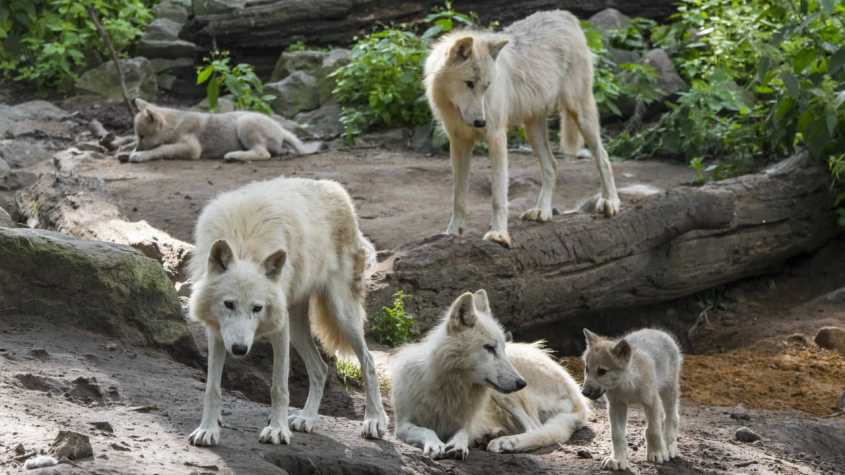
Canada: Poisons for wolves, bears and coyotes!

Every year, with the permission of the Government of Canada, thousands of wildlife die a painful, slow, and excruciating death from poisoning.

The Canadian government allows the deadly poisons strychnine, sodium cyanide, and sodium fluoracetate to be used to kill wolves, bears, and coyotes in the provinces of Alberta and Saskatchewan.

But every year the widespread and poorly regulated use of these poisons leads to the agonizing and painful death of not only these species, but also other animals including dogs.

No question: an unnecessarily long and painful death from poison is inhuman. There are far better ways of dealing with conflicts between animals and humans. If the killing of a wild animal is indeed inevitable, there would also be more humane solutions.

These poisons have no place in modern wildlife policy.

Killing wolves, coyotes and bears is not a sustainable solution to recurring conflicts between humans and these animals. And there is enough scientific evidence to end the ineffective, unnecessary, and cruel use of the above poisons.

Please help us and send an email on your behalf to the Canadian government (Prime Minister Justin Trudeau, Minister for Environment and Climate Change Jonathan Wilkinson, Health Minister Patty Hajdu and Ambassador Stéphane Dion) using the prepared form.
The email can be found further down:

“I am writing to express my concern about the current policy allowing the use of using poison to kill wolves, bears and coyotes in Canada. There is sufficient scientific evidence indicating that the use of strychnine, Compound 1080 and sodium cyanide to kill large vertebrate predators is inhumane, and I would like to see an immediate end to the use of these poisons to kill wolves, bears and coyotes in Alberta and Canada.

The use of strychnine, currently approved for use in the province of Alberta, is in contravention of the guidelines of the Canadian Council on Animal Care, the Canadian Veterinary Medical Association, the American Veterinary Medical Association and the American Society of Mammalogists. The use of cyanide and compound 1080 have also been denounced by many of these bodies.

Strychnine, sodium cyanide and compound 1080 are inhumane and indiscriminate poisons, causing unnecessary pain and suffering and killing far more animals than those for which they are intended. These poisons have no place in modern wildlife conservation practices.

Wolves, grizzly bears and coyotes are apex predators that play a valuable ecosystem role. There is no scientific evidence to suggest that killing predators will assist in the recovery of prey populations, such as caribou, or to reduce human-wildlife conflicts. I urge your governments to invest in humane, non-lethal methods to manage conflicts between humans and wildlife”.

Text: ifaw

Petition: https://action.ifaw.org/page/83576/action/1

And I mean…There are some people, who really think that human civilisation is a blessing even for animals, not the least for wild animals, and that wilderness is the epitome of cruelty and violence.

When did one “violent” wild animal poison another?

Canada is a huge country and the wolves live mostly in very sparsely populated regions.
There are around 60,000 wolves in Canada, they are found all over the country and generally avoid the densely populated south.
Encounters between wolves and farm animals are correspondingly rare.

Nevertheless! The criminal deals of Canada with its wildlife has long been known: in British Columbia, in the far west of Canada, over 460 wolves were shot in the winter of 2019.

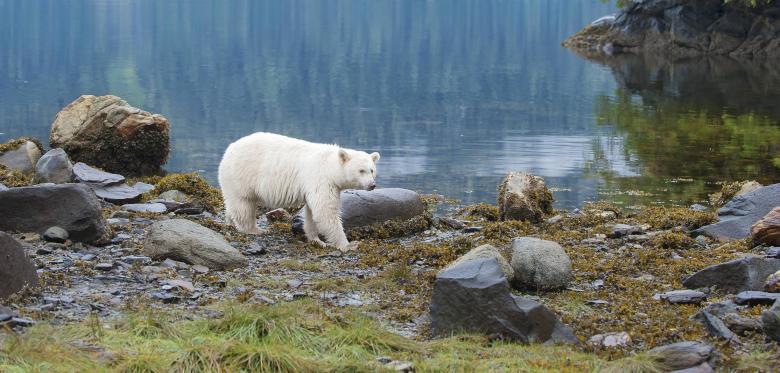
Polar bears are critically endangered around the world. There are only about 25,000 left! Main threats: climate change and commercial hunting!
The living space melts away from the animals’ paws, they fight for survival.
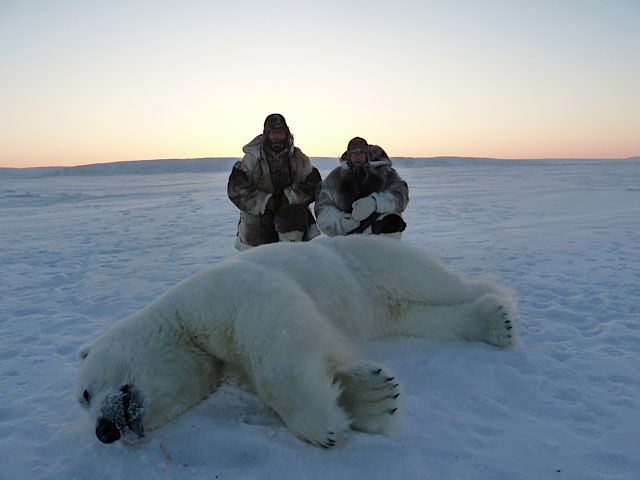
Yet hundreds of polar bears are shot down in Canada every year – quite legally!

=> Canada sells hunting licenses to international hunting tour operators, who in turn directly to trophy hunters – officially!

=> Canada is the only country in the world that allows trophy hunting for polar bears and makes money from it!
Trophy hunters from all over the world come to Canada every year and pay up to 40,000 dollars to shoot a polar bear!

=> In Canada up to 700 polar bears are shot by hunters every year, who then enjoy their “trophy”!

When will this government finally cease to be the unconditional servant of the hunters and farmers?

My best regards to all, Venus

UK: Boiling Lobsters Alive to be Banned Under New Government legislation – Also Includes Crabs, Octopuses, Squid and other invertebrates recognised as Sentient Beings Capable of Feeling Pain.

Boiling lobsters alive to be banned under new Government legislation

Cooking lobsters by boiling them alive could be banned under animal welfare plans being drawn up by Government ministers.

The Animal Welfare (Sentience) Bill, currently making its way through the House of Lords, only covers animals with a backbone.

But the House is making amendments to the legislation which would mean crabs, lobsters, octopuses, squid and other invertebrates are recognised as sentient beings capable of feeling pain.

It would give them legal protections and stop fishmongers and chefs boiling crustaceans alive. Instead they would have be stunned or chilled before boiling which is believed to be a more humane way of cooking.

Shrink-wrapping live shellfish or posting them is also likely to be banned under the amendment, put forward by Baroness Hayman of Ullock.

https://www.standard.co.uk/news/uk/boiling-lobsters-alive-ban-new-government-legislation-b944489.html

Lobsters’ feelings loom large as British Parliament debates animal welfare bill

By

William Booth

July 4, 2021 at 9:28 p.m. UTC

LONDON — How does a lobster feel when it’s dropped into the boiling pot? The British Parliament wants to know.

Is an octopus sad, sometimes? Does the squid learn its lessons? The bee feel joy? The earthworm anxiety? The peers in the House of Lords are currently debating the matter.

These questions arise because Prime Minister Boris Johnson is trying to make good on his electoral pledge to enshrine into law the idea that animals are “sentient beings,” meaning the government would be obligated to not only safeguard creatures’ physical well-being but also take into account their feelings — of pleasure, pain and more.

The Animal Welfare (Sentience) Bill is a potentially sweeping piece of legislation that could require all arms of government — not just the agriculture ministry — to consider animal sentience when forming policy and writing regulations. The implications could be moral and profound, supporters hope — or cumbersome and bureaucratic, critics say, with some seeing a power play by vegan activists and animal rights radicals.

The bill does appear to go further than European Union protections, once seen as the most comprehensive on Earth, and far beyond the relatively lax laws in the United States.

What is sentience? As Charles Darwin suggested 150 years ago, it may be the ability to feel “pleasure and pain, happiness and misery.”

In the House of Lords, the peers wondered aloud whether they were not touching on questions of the soul.

“The big picture has changed,” said Donald Broom, a Cambridge University authority on animal welfare.

“I think of the new idea as ‘one biology.’ That human animals and other animals are extraordinarily similar,” he said, “and that sentient animals are individuals who feel pain and suffering and all sorts of other things, and that should be taken into account.”

Broom said he was “not against eating or exploiting animals, but we should think about them as individuals.”

He said the scientific study of animal cognition, consciousness and sentience has galloped forward in recent years and that abilities once thought unique to humans have also been discovered in nonhuman animals, including tool use, language, sense of time and the future, deception, empathy and altruism.

The bill now being debated is unprecedented in scope because it seeks to protect wildlife as well as domesticated and companion animals such as cows and chickens, dogs and cats.

https://www.washingtonpost.com/world/europe/animal-welfare-sentient-uk-parliament/2021/07/04/44593460-d8df-11eb-8c87-ad6f27918c78_story.html

Positive News about time;

Regards Mark

Enjoy ‘Grumpy old Rick’

India: 5/7/21 – Latest From Our Great Friends At ‘Animal Aid Unlimited’.

Homepage | Help injured animals in Udaipur | Animal Aid Unlimited

Every new patient arriving in Animal Aid needs a little time to take in the new smells, sounds and looks of the other animals and the people caring for them. But within a few short days, most have bonded with one special “other”–a new best friend with whom they feel more confident and secure. Every species has their own way of chatting with each other–a word here, a nudge there, the extension of a playful paw.

Rana was terrified and bleeding, but now he’s doing great!

Rana was overcome with fear after being hit by a car. His lower canine tooth was dislodged and bled profusely and he couldn’t stand. Although he had no broken bones, it took several days before he had the strength to stand on his own.

His broken tooth needed to be removed surgically. When he woke up after surgery, Rana was so upset that he wouldn’t eat until he was cuddled and reassured.

We neutered Rana as soon as he was strong enough, and now he’s as good as new. If courage is measured by overcoming fear, Rana proved to be a very brave little boy.

Some little heroes need extra love in order to heal. Please donate today.

Sweetheart Rollie rescued with a horrific wound

A vehicle must have slammed into this beautiful bull at high speed causing a large and painful wound.Several passing motorists called us immediately after it happened, and we rushed to the site to find one of the most gentle beings we have ever met.

From Rollie’s first wound dressing until now, fully healed, he did everything he could to make his difficult medical treatments as easy as possible. And when he healed, Rollie surprised us all by becoming a father figure to the babies.

Innocence comes in all packages. Please donate today.

Sponsor Honey, the sweetest girl in town!

We rescued Honey in 2017 after someone had thrown acid on her back. She had suffered 3rd degree burns over a large part of her back.

This loveable, bright, infinitely charming honey of a girl was so severely burned that we weren’t sure we could save her. It took months for the wound to heal; in fact there is a little portion of her scar that never fully closes which is why we have given her a forever home in Animal Aid.

Honey is playful and truly one of those brilliant dogs who misses nothing, learns in a flash, knows so many concepts and navigates with wit and unstoppable sweetness through currents of ever-changing people and animals.

Click here to sponsor Honey:

Honey | Animal Aid Unlimited

Cub is all better now, rescued after animal attack.

Beautiful puppy Cub lay unconscious after being attacked by an animal.

Worried neighbors stayed by Cub’s side while waiting for our ambulance to arrive. Completely collapsed, this puppy was close to death. We immediately started him on fluids, pain control and antibiotics, allowed him to rest and thoroughly cleaned and bandaged his wounds. At first, he was too weak and exhausted to interact with his caregivers. But when he started to recover from shock, his little tail-wag told us we had reason to hope he could survive.

Be the reason a tail wags! Please donate today.

Celebrate the lives of Annie and Chintu with us.

On Sunday, Animal Aid lost two of our precious family members. Our hearts are heavy in saying goodbye to beloved Annie and Chintu, whose completely unexpected departures on the very same day left us all deeply shocked and sad. Annie’s memorial service was held in the morning and Chintu’s in the afternoon. We took great comfort in the shared sadness between all of our AA team, and each needed extra hugs from the many thriving animals in our midst.

Annie was born by C-section in 2011 after her mother was hit by a car and her pelvis broken. Her mother died in surgery; Annie was the only surviving puppy and we nursed with syringe feeds every 2 hours as she grew and could eat on her own. During the decade to follow Annie was always on the job as a mighty alpha girl who adored attention and ruled her area-mates with an iron paw. You had the feeling that if she trusted you, she would have been a dog who would sacrifice her life to defend you. Annie died suddenly and unexpectedly after falling into a coma in the morning, without any prior signs of illness. Her absence will forever echo through the hospital.

Chintu–well, now, Chintu was a different kind of hero. Partially paralysed from the neck down after surviving canine distemper as a puppy 6 years ago, Chintu’s astounding sparkle shined so brightly that even though he had major mobility issues, he convinced us that he would “manage” and boy, did he ever. A charmer of the highest order, one simply could not pass through Chintu’s area without being stopped by his insistent eyes and delightfully big ears, always laying flat in an attitude of utter gratitude–grateful for the day; grateful to be caressed; grateful for your love. Chintu became extremely ill with an acute systemic infection. We did everything we could to save him, including giving him the strongest antibiotics we could, oxygen, hydration drips and love, but his little body gave up Sunday. We will never stop missing him.

(20+) Watch | Facebook

Regards Mark

Poland: Victory – Fish sellers who kept carp out of water convicted of mistreatment. Criminal Proceedings Lasted 10 Years !

Fish sellers who kept carp out of water convicted of mistreatment

2 July 2021

Green REV

On 29 June, a landmark animal protection case in Poland was settled in court, after criminal proceedings against fish sellers that lasted more than 10 years. The court found the defendants guilty of mistreatment after displaying and selling live carp outside of water.

The case started in December 2010, when a Polish chain store was selling live carp in the run-up to Christmas. Staff at the store displayed fish for sale outside of water in inappropriate conditions, and then packed the live animals into plastic bags without water for customers who purchased them. 

A representative of the organisation Noga w Łapę Foundation filed a criminal complaint in this case. However, such behavior was common throughout Poland. The police and prosecutor’s office therefore twice discontinued the proceedings, concluding that such conduct towards live fish is not a crime. 

In order for this complaint to reach the courts, the organisation needed to exercise its rights as a subsidiary prosecutor. Karolina Kuszlewicz, the lawyer who initiated the lawsuit, drafted the indictment herself and brought it to court where she read it in place of the prosecutor. However, the court denied all motions and the case was denied in two instances. In 2016, a final judgment of acquittal was passed, in which the judiciary gave a clear signal that keeping carp without water is not against the law in Poland.

The only way to move the case forward was to appeal to the Supreme Court, a difficult move considering this was the first case in history involving the humane protection of fish from suffering.

However, the court upheld the cassation in its entirety, pointing out that “in recent years there has been a radical reevaluation in the relationship of humans to animals. Any legal measures should therefore have their welfare in mind, including their right to exist.” The Supreme Court emphasised that it is grossly incorrect to assume that because carp can survive without water for a period of time, it means they are not suffering. The court overturned both acquittals and ordered a retrial, reaffirming that the general provisions of the Animal Welfare Act also apply to fish.

In 2017, the case was brought back to the court of first instance. In December 2020, after 3 years of legal battles trying to prove that carp suffer, a verdict was finally handed down convicting 3 men (2 salesmen and a store manager) of mistreating the animals. The court pointed out that the verdict, in addition to individual criminal responsibility, also has a general preventive value – it is meant to be a signal to all retail chains that they must not mistreat and mishandle fish. 

The defendants’ counsel appealed, arguing that the statute of limitations had expired and that the defendants’ actions were not illegal. After many months of waiting, the Regional Court in Warsaw heard the appeal on 29 June 2021, finding all defendants guilty of the crime of mistreating carp by causing suffering to them (the sellers) and knowingly allowing them to suffer (the store manager). The court particularly emphasised the responsibility of the manager, who, although she did not physically inflict suffering on the animals, allowed it by arranging for their sale in a certain way.

After 10 years, dozens of hearings, hundreds of hours spent on submitting letters, motions, and attempts to incorporate reliable, up-to-date scientific knowledge into the legal proceedings, Ms. Kuszlewicz finally managed to convince the justice system to take responsibility for the suffering of fish.

This significant case was covered by media in Poland, was cited in scientific articles, and most importantly, gave rise to a landmark Supreme Court ruling in favour of fish protection.

Karolina Kuszlewicz, the lawyer who brought this case to court, serves on the Expert Council of our member organisation Green REV Institute.

Regards Mark

EU: End the Cage. It Started As A Dream; But Now the Dream Has Become Official Reality.

WAV Comment:  The only thing that is missing from this headline below is ‘… and a lot of bloody hard work by the people, for the people’

A major, major win for animals in the future.

People Power | ACLU of Indiana

‘Cruel’ Cages In Europe’s Animal Agriculture System To Be Banned

It took a 1.4 million strong petition and 170 NGOs to press politicians over three years, in what’s being described as the biggest push for animal welfare in European history

The European Commission has announced it will introduce legislation to ban the use of cages in the animal agriculture system by 2027.

Thanks to the calls of more than 1.4 million people, animals will no longer be confined to ‘cruel’ cages in the 27 member states within Europe.

Animal cages banned

The landmark decision comes after a collection of individuals pressed MEPs to increase welfare standards in collaboration with charity, Compassion in World Farming. This involved over 170 NGOs joining forces to make a stand. 

They formed a proposal and took it to the EU Commission, which is the executive governing body responsible for legislation.The End the Cage Age European Citizens Initiative has spent three years working on a proposal to prohibit the cages. 

It applies to chickens, pigs, cows, ducks, geese, among other farmed animals. Additionally, it will apply to all imported animal products too. Moreover, it’s thought to be the biggest push for animal welfare in European history: affecting over 300 million farmed animals.

The organization said: “Farmed animals have never had so many people standing up for them. From caged hens who long to stretch their wings to sows who want to mother their piglets unconfined, and rabbits who deserve the space to hop – each one of them now has a better chance in life, thanks to you.”

European Commission

The commission announced the news on Wednesday, June 30. From the end of this year, it will begin the legislative process.The Initiative confirmed it will ‘monitor’ this process to make sure the EC ‘sticks to its word’, however.

Moreover, the group said it will press each individual member state to embed the ban into each national law.

‘Cages are a desolate reflection on our society’, it added.

Animal agriculture in Europe

The European Parliament voted in favor of the ban earlier this month. 558 MEPs backed it whilst just 37 voted against, and 85 abstaining.

Whilst it banned battery cages for hens in 2012, the controversial practice of ‘furnishing’ cages were still legal.

Further victories for the EU this year included the landmark rejection of Amendment 171, also known as the dairy ban.

The ban sought to reject descriptive words for plant-based dairy products that were too similar to those used for dairy products: such as ‘vegan cheese’ or ‘yogurt-style’.

You can find out more about End The Cage Age here

‘Cruel’ Cages In Europe’s Farming System To Be Banned By 2027 (plantbasednews.org)

Now Confirmed by the EU;

Regards Mark