Category: Uncategorized

The Euphemisms of Animal Exploitation.

SURGE | The euphemisms of animal exploitation (surgeactivism.org)

Thanks Stacey for sending this over to us – sorry its late in publishing !

Regards Mark

  New post on Our Compass   The euphemisms of animal exploitation by Stacey

Surge

People love defining another’s suffering in manners that provides them personal comfort and not the actual victims; animal exploitation is bloody, abusive, violent, and the cause of unimaginable fear and suffering regardless of how aesthetically appealing humans disguise it. If you get angsty by grammar that legitimately describes the horrors animals experience, just remember that nobody takes their beloved cat or dog to be “humanely euthanized” in a slaughterhouse, nor are companies/animal farmers/execs happily transparent regarding this “process” by sharing footage of the gruesome, bloody, agonizing “end” of animals: in fact, the exposure of slaughterhouses is typically only from undercover exposes, former employees, or unnamed current employees. (Although there are some slaughterhouses that film the graphic, fearful, and agonizing killing of unwilling, terrified, innocent animals, the problem is, nobody watches the footage. Who wants to, though, when you can remain willfully ignorant of the violence you inflict on innocents?

And, too, why is footage even needed when the reality of slaughterhouse existences …. well …. exists? It’s a slaughterhouse, its purpose is to kill as fast, as many, as cheaply and efficiently as possible, why people believe that good things happen is one is bizarre.) Stop pretending that just because you’re afforded the privilege of associating violence and pain endured by docile, gentle animals, with pastoral, peaceful, and caring descriptions to provide you comfort means it’s comfortable for the victims: it’s NOT. YOU don’t have to physically suffer the consequences of your delusional grammatical validations, the animals DO regardless of your willful ignorance.

Source Surge Right now, all around the world, the animal farming industries are working with politicians to try and get certain terms banned from being able to be used by plant-based companies. With the EU considering a piece of legislation that could make it illegal to use phrases that “imitate or evoke dairy products, even if the composition or true nature of the product or service is indicated or accompanied by an expression such as “style”, “type”, “method”, “as produced in”, “imitation”, “flavour”, “substitute”, “like” or similar. This could make it illegal to even say ‘does not contain milk’. Yes, that’s right, we’re not even joking. We wish we were. But this got us thinking about the words the meat, dairy and egg industries use and how they themselves hide behind euphemisms to disguise the reality of their industries. So here’s our round-up of the words the EU and other politicians should be looking to ban, if that is, they do actually care about consumer confusion.

Slaughter or processing? If we said to you, what word would you use to describe hanging an animal on a kill line and pulling a knife across their throat, what would you say? Well, if you were a farmer you would call that processing. The animal exploitation industries have a real problem saying that water is wet. In fact, in 2019, at their annual conference, New South Wales farmers voted for the complete exclusion of the word slaughter and for it to be replaced with the word processing. Why? Because in their view the word slaughter is used to create emotions that discredit animal farming industries and undermine trust in animal farming.   One farmer stated: “The word slaughter is not appropriate for our industry… it’s not mass murder.” Whatever helps them sleep at night. But this is a common term used by animal farmers, with slaughterhouses often referred to as meat processing plants. Avoiding the word slaughter seeks to detach the consumer from the reality of what happens to animals by instead using words that allow us to psychologically distance ourselves from what we are paying for. After all, would you rather pay for an animal to be processed or slaughtered?

Mass slaughter or depopulation? At the beginning of the Covid-19 pandemic, many slaughterhouses were forced to close due to outbreaks among the workers. One of the most notable was the Smithfields slaughterhouse that supplies around five per cent of all pig flesh in the US. This caused huge problems in the supply chain. So the next question is, what do you call killing hundreds, even thousands of lives in quick succession because you can’t sell them to have their throats cut? Depopulation. But in reality, depopulation is just a friendlier way of saying mass extermination on farms, which is exactly what it is. One way in which animals are slaughtered en masse by farmers is called ventilation shutdown, where the air supply is cut off to the barns filled with animals. This in turn causes the heat to increase to intense levels causing the animals to slowly suffocate and roast to death at the same time. This method of mass killing is even endorsed by the American Veterinary Medical Association, whilst at the same time they call it unacceptable to leave dogs in cars. Why? Because the temperature will increase which will cause the dog to suffer and die. After this process was exposed by hidden camera footage, the National Pork Producers Council said in an email: “We definitely need to come up with a new name to describe this.” Yet again showing how deliberately these industries attempt to hide the things they do. Other methods of on-farm mass slaughter include pumping foam throughout the barns blocking the airways of the animals causing them to suffocate to death, or using carbon dioxide, where the farmers turn the barns into large gas chambers or create smaller gas chambers in which the animals are gassed to death. By using the word ‘livestock’ we are viewing these animals as mere products, commodities who can be traded and profited from. In essence, it seeks to deny the animals their individuality.


“Euthanasia” Next word. What do you call the act of picking up a piglet by their back legs and slamming them against a wall or the floor to kill them because they’re not growing fast enough or aren’t worth spending money on for veterinary care? Farmers call this euthanasia. But when we think of animals being euthanised, we think of our companion animals being peacefully ‘put to sleep’ because they are severely ill. Well, farmers will describe killing an animal on their farm as euthanising the animal as if it is a merciful act, but instead of it being done in the animal’s best interest, it is done in the farmer’s financial interest. The most common methods of killing birds on a farm include blunt force trauma, which involves hitting an animal over the head until they are dead, neck dislocation, carbon dioxide gassing either head only or in gas chambers, or a captive bolt. For mammals, the most common methods include captive bolts, blunt force trauma, gassing, electrocution or a bullet. But the issue of euphemisms is even more normalised than this, to the point where some of the most common words used to describe animal exploitation actually contribute to the objectification of animals. For example, the term livestock.


Sentient individuals or livestock? By referring to animals as livestock, animal farmers are attempting to create a distinction between the animals they farm and the animals that exist in the world. It essentially ‘otherises’ the animals we exploit and attempts to put them into a different classification, which further perpetuates the idea that it is acceptable to exploit and kill these animals. For example, if you ask someone, “is it acceptable to kill livestock?”, most people will say yes. But if you ask “is it acceptable to kill animals?”, people’s responses would often be very different, even though the question is the same question. However, morally there is no difference between killing a pig or killing any other animal we don’t classify as livestock. This is how ‘othering’ works.

We view the animals we kill as being different and refer to them differently so as to make what we do to them more palatable and less likely to expose our cognitive dissonance. By using the word ‘livestock’ we are viewing these animals as mere products, commodities who can be traded and profited from. In essence, it seeks to deny the animals their individuality. What about the names of animal products themselves, many of which are also named and referred to in a way that disconnects us from the reality of who we are eating? Even though the origins of many of these words can be traced back hundreds of years, referring to animal flesh as meat, pig flesh as pork, cow flesh as beef and baby cow flesh as veal, among others, further detaches us from having to think about the animals whose bodies we are purchasing. Imagine if supermarkets had flesh aisles, rather then meat aisles. Or if instead of bacon, we bought sliced pig flesh with extra fat layers. By turning animals into objects, classifying them differently and using different words to describe them when they are living and when they are dead, it allows us to avoid the discomfort caused by thinking of them in gas chambers or hung up on the kill line about to have their throats cut.

Whether we realise it or not, the animal agriculture industries have been purposefully trying to trick consumers for years, and their on-going attempts to try and censor plant-based companies further proves how worried they are about the prospect of informed consumers making their own decisions. In the end, consumers aren’t being misguided by clearly labelled plant-based alternatives, they are being lied to and deceived by industries that are desperate to keep the objective reality of what happens to animals out of sight and out of mind.


Download Your FREE Vegan PDF HERE
Order a FREE vegan kit HERE
Dairy-Free Info HERE
Take the Dairy-Free Challenge HERE
Click HERE for more Dairy-Free Fish alternatives can be found HERE
Learn about eggs HERE
Find bacon alternatives HERE and HERE Take PETA’s Cruelty-Free Shopping Guide along with you next time you head to the store! The handy guide will help you find humane products at a glance.

Order a FREE copy HERE Searching for Cruelty-Free Cosmetics, Personal-Care Products, Vegan Products, or more?
Click HERE to search.
Free PDF of Vegan & Cruelty-Free Products/Companies HERE
Click HERE to find out How to Wear Vegan! Want to do more than go vegan? Help others to do so! Click below for nominal, or no, fees to vegan literature that you can use to convince others that veganism is the only compassionate route to being an animal friend:
PETA HERE Vegan Outreach HERE
Get your FREE Activist Kit from PETA, including stickers, leaflets, and guide HERE
Have questions? Click HERE    

Far East: The World Has Changed, but Live-Animal Markets Haven’t. Demand The WHO Acts Immediately.

All photos – PeTA Asia

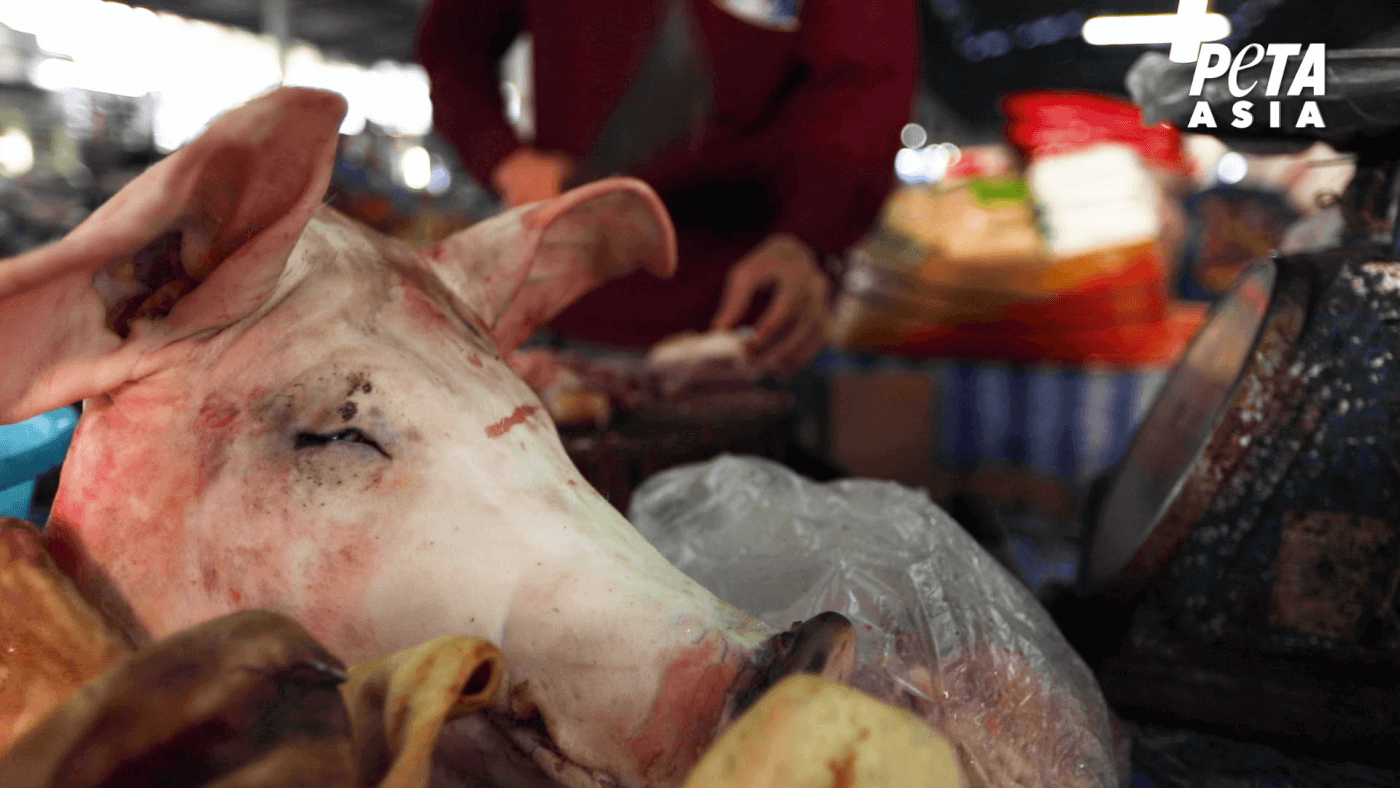
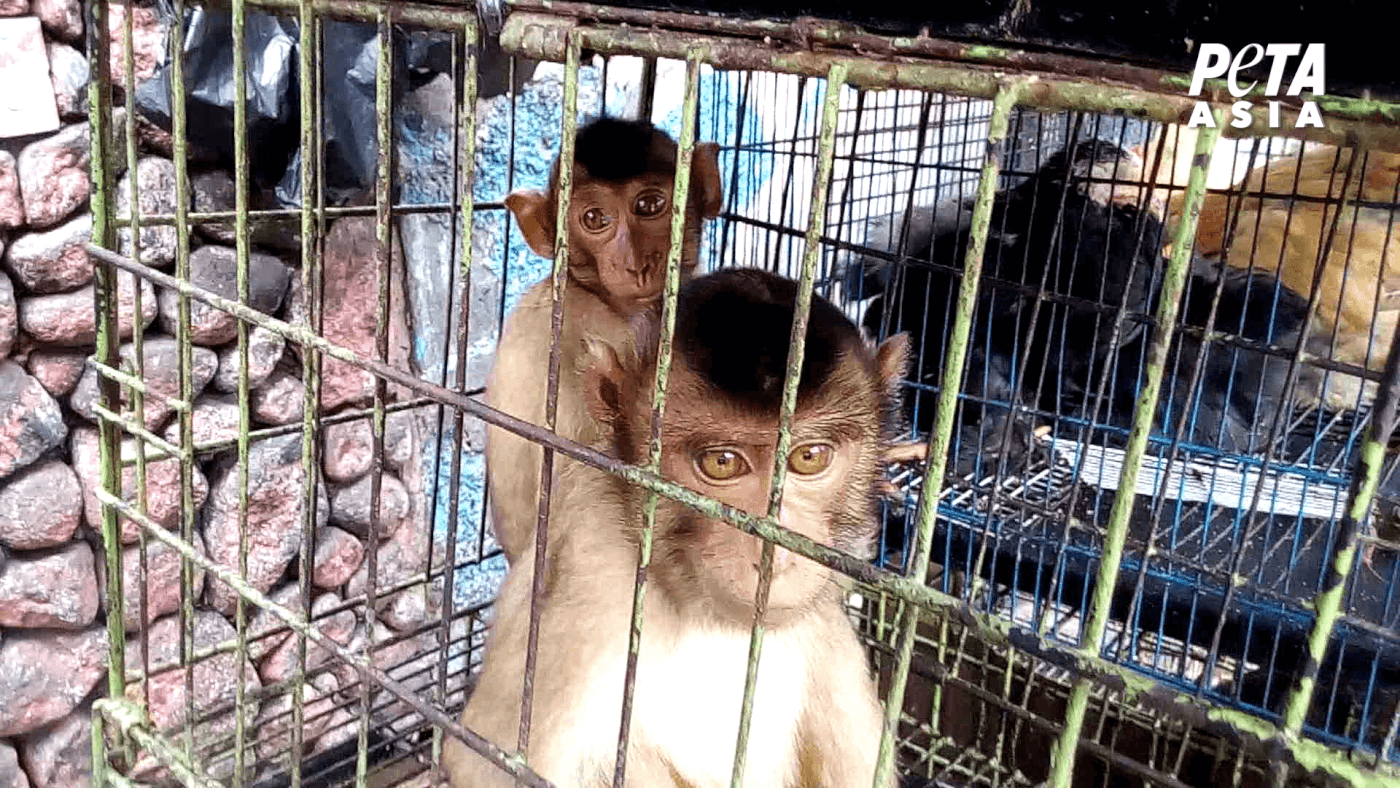
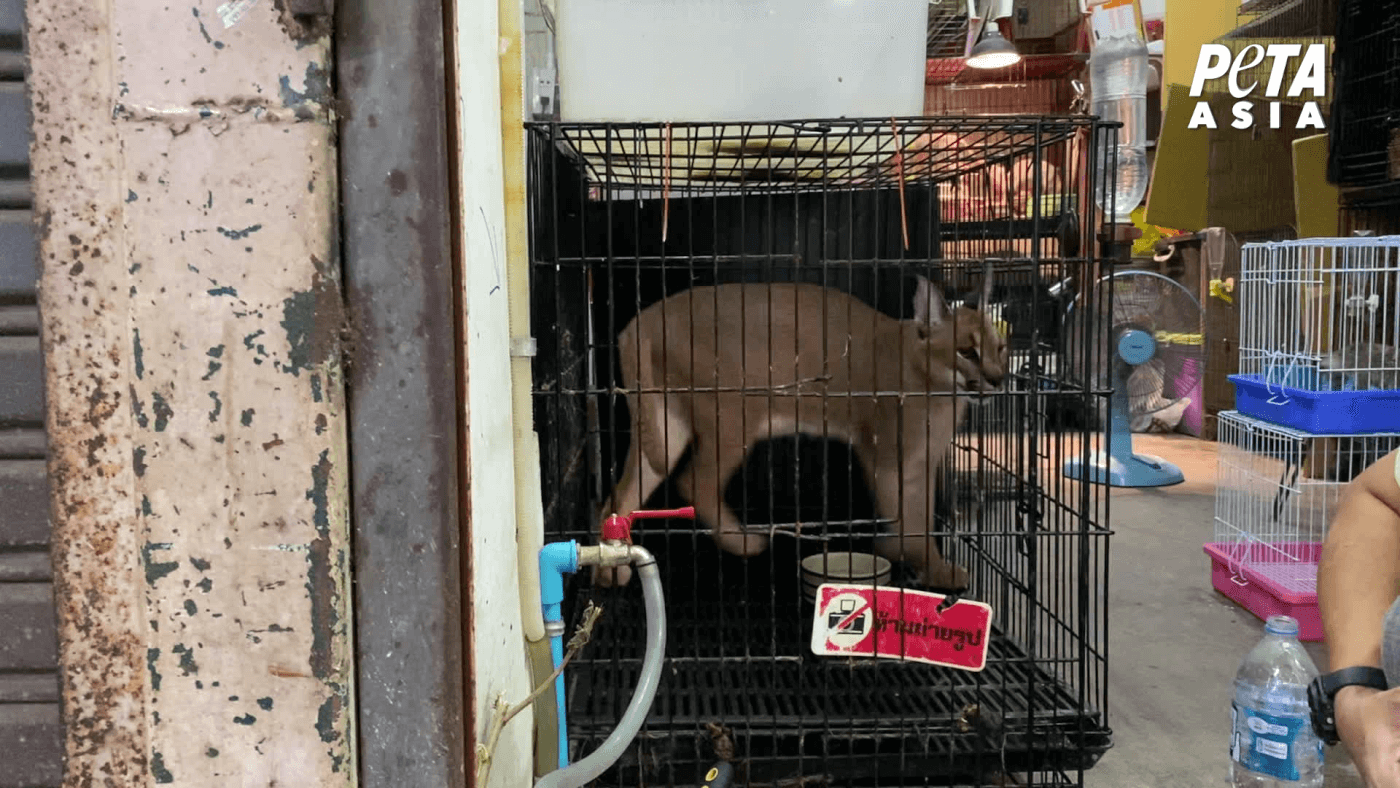
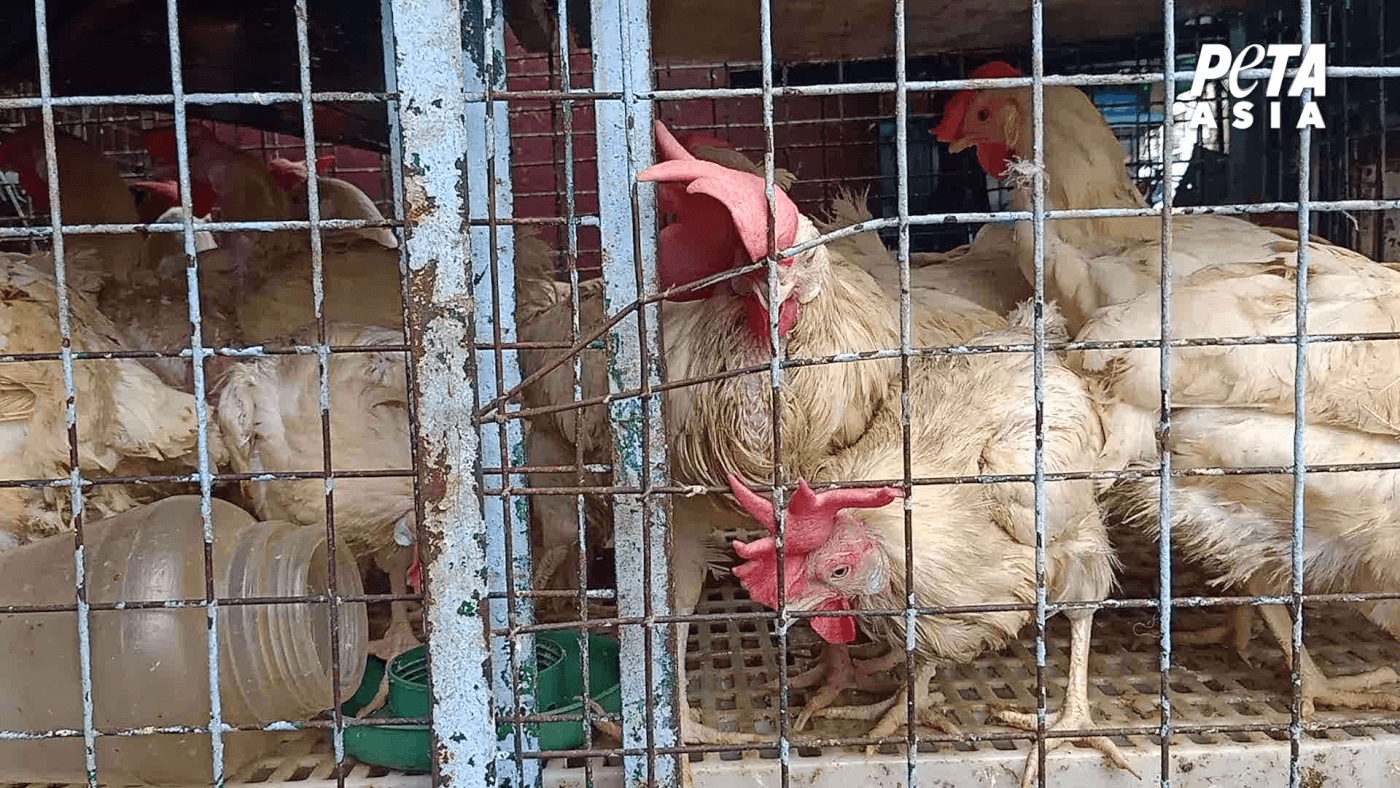
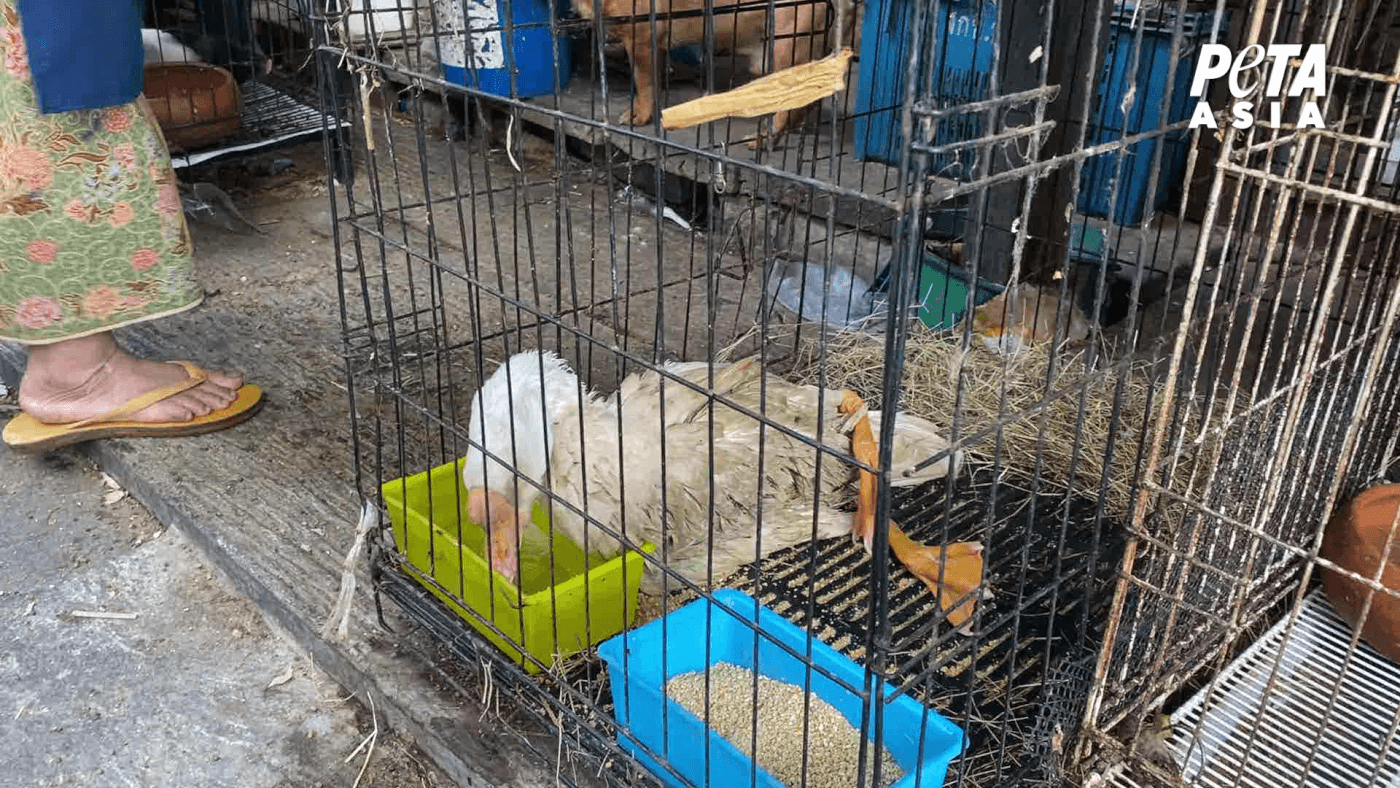
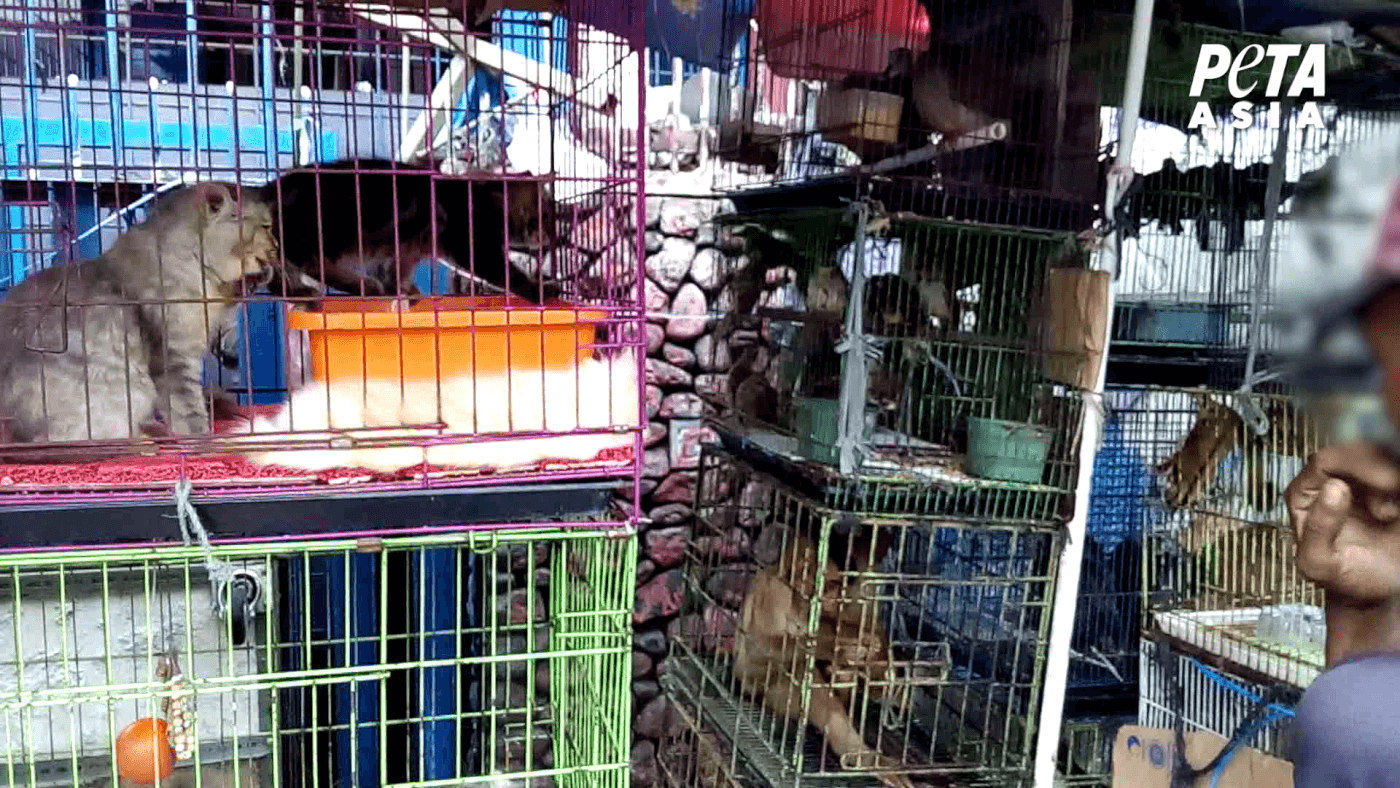
PETA Asia’s latest investigation in China, Indonesia, Vietnam, Thailand, the Philippines, Laos, and Sri Lanka reveals that live-animal markets, in which monkeys, bats, chickens, dogs, cats, and other animals are held in feces-encrusted cages and can be purchased for any purpose—including for their flesh or for the exotic-pet trade—are still operating around the world.

Many of these markets are keeping live animals who are known to be carriers of coronaviruses, flu viruses, and other pathogens transmissible to humans in filthy, cramped cages often stacked on top of each other.

Just last week, the World Health Organization (WHO) acknowledged the public health threat that live-animal markets pose and urged countries to suspend the sale of live wild mammals in food markets. This is progress, but it’s not enough. Join us in urging WHO to call for an immediate end to all live-animal markets.

Learn more and take action – video of wet market included:

Exposé: Suffering and Disease in Asian Live-Animal Markets | PETA

The World Has Changed, but Live-Animal Markets Haven’t

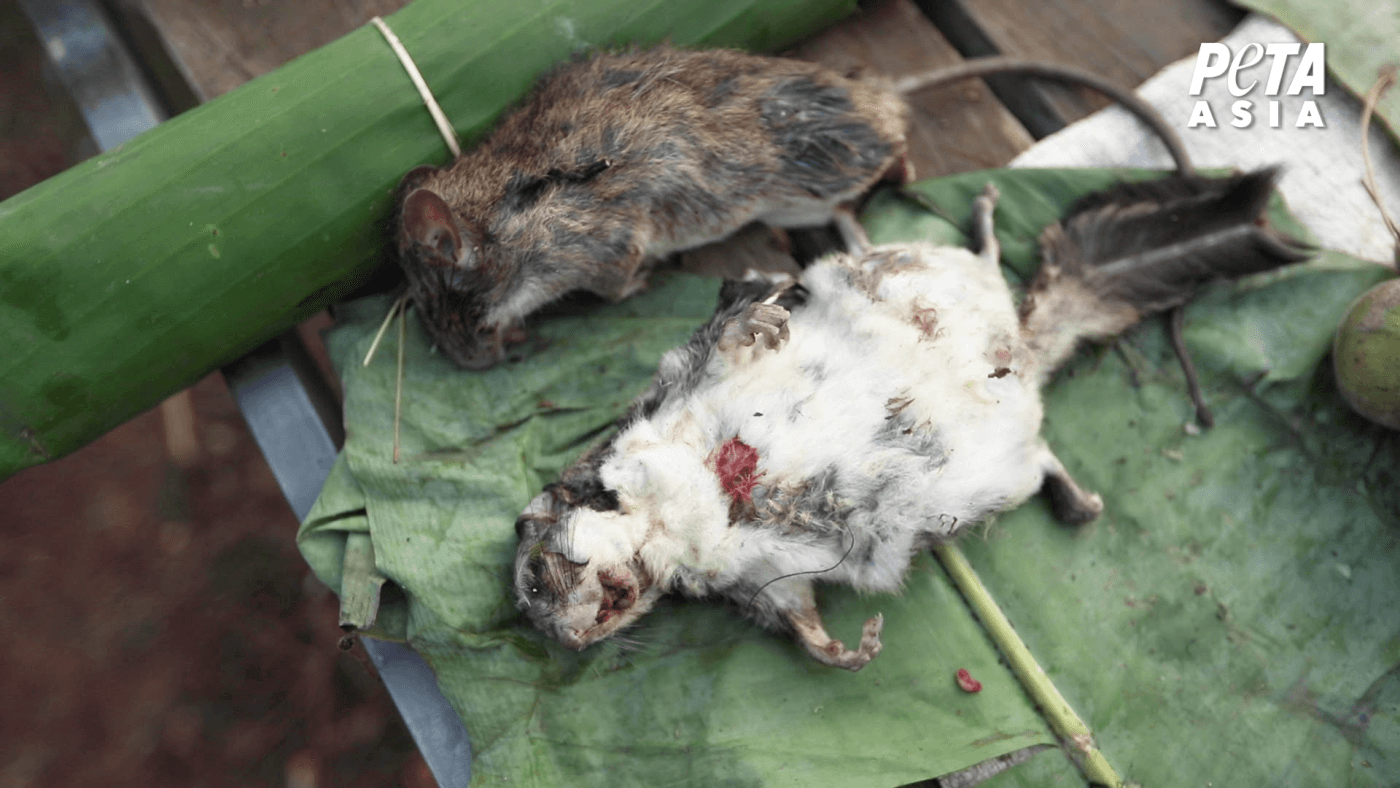
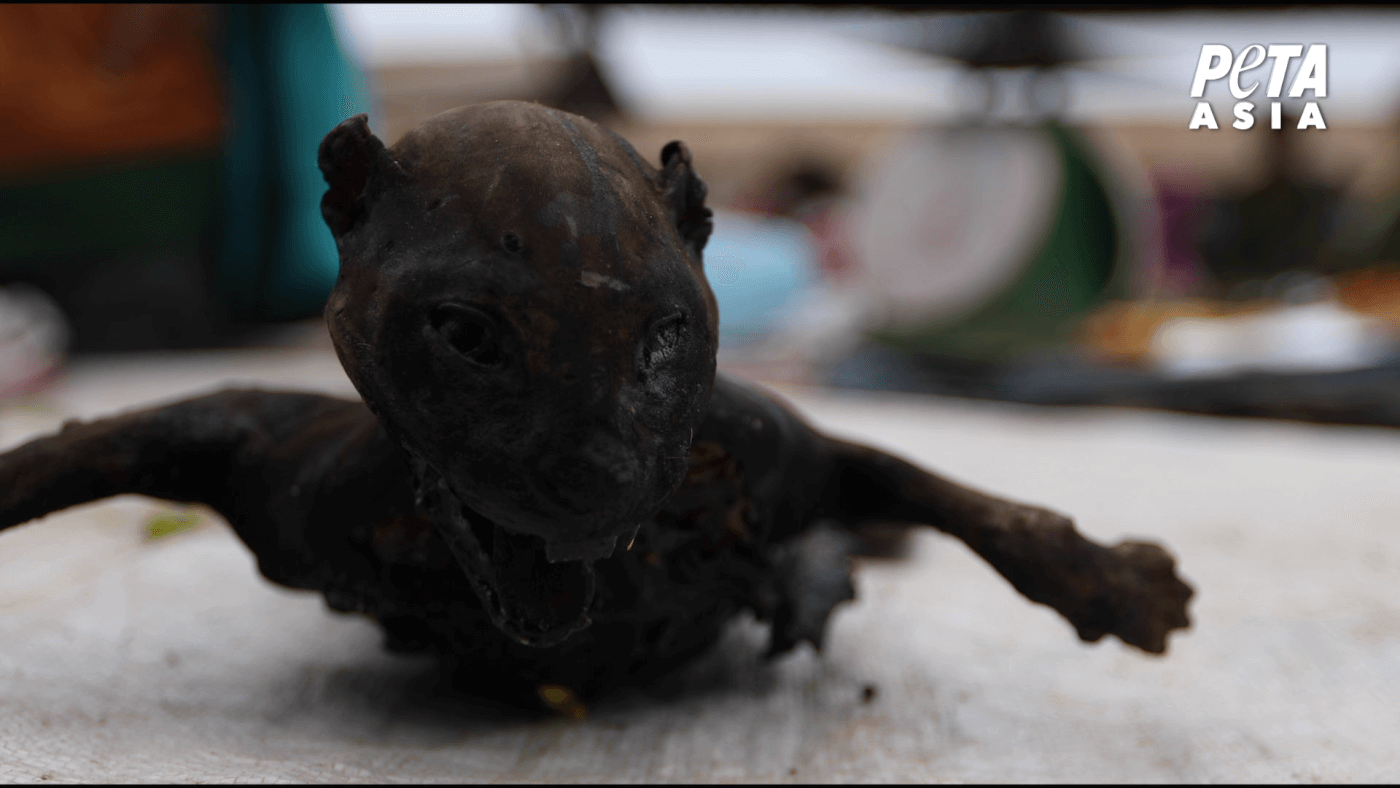
Conditions were nearly identical to those documented in two previous PETA Asia investigations into these markets. Sick and stressed animals of uncertain origin were packed closely together in stressful environments. Chickens, personable animals who enjoy socializing, didn’t even have enough space to spread their wings, and larger animals such as a macaque and a caracal cat, animals who roam far and wide in nature, had barely enough space to turn around in. Some cages had feces encrusted at the bottom, and stacking them up facilitated the spread of disease. Dead squirrels, civet cats, bats, birds, and rats were sold in open-air markets without any apparent hygiene protocols.

An investigator was told that customers could purchase the flesh of bats and monkeys purportedly for medicinal purposes.

Urge WHO to Call For the Immediate Closure of All Live-Animal Markets

After a solid year of appeals from PETA, undercover video recordings of live-animal markets, “blood”-soaked protests, and signatures gathered from more than 200,000 PETA supporters, WHO is finally urging countries to suspend the sale of live wild mammalian animals in food markets as an emergency measure, saying wild animals are a leading cause of emerging infectious diseases like COVID-19.

This is a step in the right direction but does nothing to stop animals like chickens, pigs, fish, and others from being sold, even though confining and killing them in filthy live-animal markets also contributes to the spread of disease.

You can also help prevent the next global pandemic by dumping meat, eggs, and dairy. The only truly sustainable and ethical way to live is vegan.

Use the following link to Urge WHO to Call For the Immediate Closure of All Live-Animal Markets

Learn more and take action – video of wet market included:

Exposé: Suffering and Disease in Asian Live-Animal Markets | PETA

Regards Mark

Turkey: Drought Caused By Climate Change Kills Thousands Of Baby Flamingos.

WAV Comment: Farming doing yet more destruction.

  “the water supplies that typically run into Lake Tuz have been redirected for farming”.


Drought Caused By Climate Change Kills Thousands Of Baby Flamingos

The lake, which is normally home to 10,000 baby flamingos, resembled ‘a desert’

Drought Caused By Climate Change Kills Thousands Of Baby Flamingos | Plant Based News

A severe drought in Turkey’s Lake Tuz has led to the death of thousands of baby flamingos. Environmentalists say the climate crisis is to blame, as well as agricultural irrigation.

Lake Tuz – which means Salt Lake in Turkish – is one of the largest hypersaline lakes in the world, with a surface area of 1,665km2 (643 sq mi). Approximately 10,000 baby flamingos are born there every year.

But this year, only around 5,000 hatched. Many of those who did died soon after.

The lake, which is sometimes a vibrant pink colour, had dried up. Observer for Yahoo! News, Istem Donmez, said the lake resembled a desert – a sight which was ‘very sad’.“There were no live flamingos, we only saw dead birds,” he said. “The water of the lake was all gone and there wasn’t even a reflection of water when you take a photo. In various places, there were dead flamingos, both large and small, on the bed of the lake.”

Environmentalist and wildlife photographer Fahri Tunç spoke to Reuters about the flamingo deaths. Tunç explained that the water supplies that typically run into Lake Tuz have been redirected for farming.

“This is the irrigation canal that comes from Konya. It needs to deliver water to Lake Tuz. As you can see, the water is not coming through. It stopped,” Tunç said.

“It is a sin we are all committing.”

Professor Doganay Tolunay of Istanbul University spoke to the Milliyet newspaper about water scarcity. He warned that precipitation levels are dangerously low in Anatolia, which is where Lake Tuz is located.

“Crops failed to grow due to lack of rainfall. A serious water and drought crisis await us,” he said.

Climate crisis

The drought preceded severe flash flooding that has taken the lives of hundreds of people in Europe and China.

Both flooding and droughts are a symptom of climate change, which is driven by human activity. In fact, according to NASA, humans have been influencing global weather patterns for nearly a century.

Ben Cook is a researcher at NASA’s Goddard Institute for Space Studies and Columbia University in New York City. He said: “Climate change is not just a future problem.”

“This shows it’s already affecting global patterns of drought, hydroclimate, trends, variability — it’s happening now. And we expect these trends to continue, as long as we keep warming the world.”

Denmark: New Footage Emerges Of 2021 Pilot Whale Murders. 175 Whales Killed This Year; Nothing Changes !

Well, the Danes are not showing themselves as an animal caring nation.  Very recently we had the mass Mink murders associated with fur farming and Covid; – and yes, we have never had a response to our letter – Denmark: Still No Response From The Danes Regarding Our Letter of 12/11/20. That’s Life – Or Death, If You Are Danish Mink ! – World Animals Voice

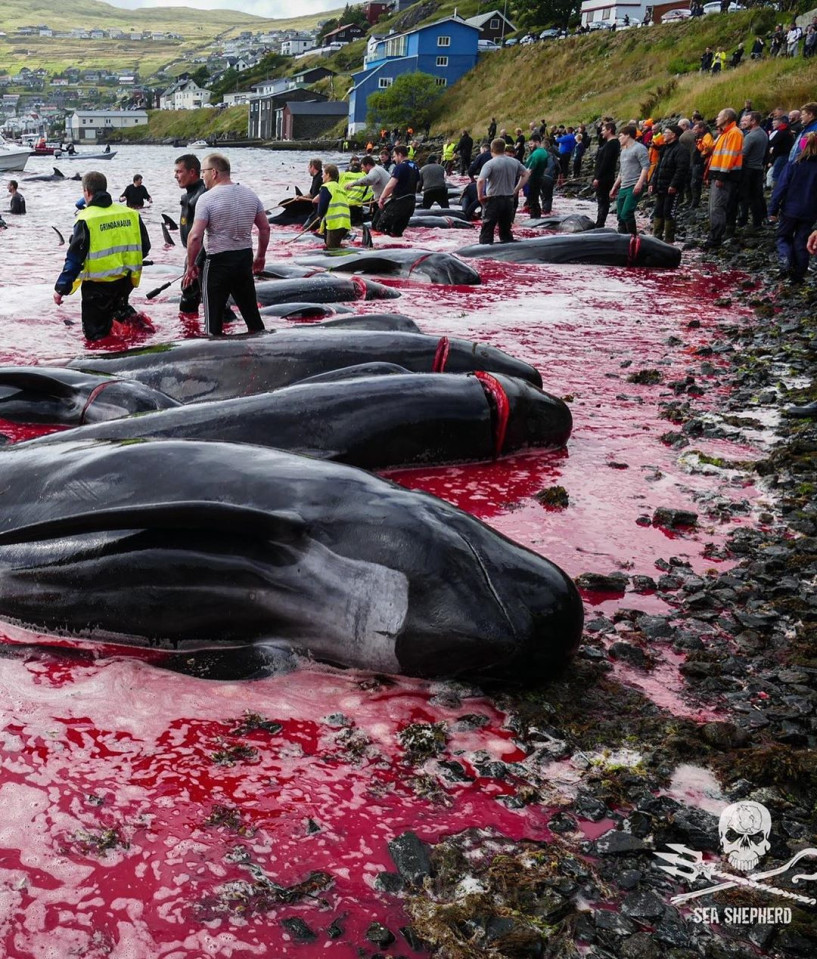
Go here  About Us. | Serbian Animals Voice (SAV) and scroll down until you see the pictures of the pilot whale murders.  Around 1991 Joanne, myself and Trev took to the streets in England demanding that supermarkets boycotted fish products from the Faroes because of this slaughter.  You can see a picture below of us taken by the press / media.

Tesco terrors

So here we are in 2021, some 30+ years later, and the murder is still taking place.  This year it has been 175 innocent, wonderful, intelligent pilot whales.  One could say whales that are much more intelligent than the brain dead human murderers who hack them to bits for what ?

I was angry about it 30 years ago; and I still am.  Nothing has changed, apart from the reputation of Denmark sinking even lower into the mud than it was already

Here is footage I have just had through about the 2021 murder:

I wanted to show this to you; with the news that nothing has changed for a very long time !

Regards Mark

England: Badger Homes and Winter Wonderland – 2 Videos To Watch About the Best In Animal People.

I want to finish the day with something good.

Y’know;  people will give up a lot of their time to help animals.  I am always amazed what some will do, regardless of their own circumstances.  For around 15 years I campaigned to get a voice for Serbian stray cats and dogs.  Check out the site which is still going, at Serbian Animals Voice (SAV) | a voice for the voiceless 

Here are a couple of videos which I want to share with you, and which I think supports this dedication.

I have always campaigned and opposed the Badger cull in England.  Here the badger is a protected species, unless the government decides they are going to be killed !  Now that we have badgers come to visit every night in the garden, and being able to view them ‘in the flesh’ so very regularly, my opposition to the cull and anything associated with it has become even stronger.

The first video shows group of volunteers from the SW of England constructing an artificial badger sett in the grounds of a local school.  Here are their own words:

An opportunity arose at the school to create an artificial sett for badgers currently living under an old scout hut on the site, which is going to be replaced in the near future. The school felt it was important to look after their badgers so we stepped in to help them create a new artificial sett so that the children could continue to enjoy sharing their school with the badgers and learn all about them too.

The second – It goes back to 2009 but is still a great video.  Hillside is a charity located in East Anglia, England, funded entirely by public donations.  It is a typical English winters day, but in the video you can see the peoples dedication that I have spoken about.  Enjoy the ‘Winter Wonderland; for the animals at Hillside, free from the cages and cruelty which they may have suffered at before their  deployment Hillside.

In their own words:

A short film showing some of our rescued animals being cared for on a snowy day at Hillside. To help Hillside or for more info, please see: http://www.hillside.org.uk/HillsideDD… Filmed on 21st December 2009 by John Watson from Hillside.

Enjoy !

Regards Mark

UK: 20/7/21 – Update On Horse Slaughter – Programme Shown On BBC TV. Watch On iplayer, But May Only Be For UK Viewers. ? Try Links At End.

I have given a couple of links to the programme at the end.

If you are NON UK then please try these to view. I dont know if you can view or not elsewhere in the world. I am keen to know if NON UK visitors can view. Please let me know with a short and simple response in our comments – thanks, Mark.

(Mark WAV) – Yesterday, 19/7, we issued a post relating to a Panorama tv broadcast on the BBC (yesterday evening) on horse and race horse slaughter investigation.

Link – https://worldanimalsvoice.com/2021/07/19/uk-19-7-21-horse-slaughter-exclusive-tonight-animal-aids-undercover-investigation-on-bbc-ones-panorama/

Here is additional news in today (20/7) from Animal Aid:

Dear Mark,

We know it isn’t easy to see or read about animal cruelty – so we really appreciate you taking the time to read this email. Having such wonderful supporters helps to keep us going.

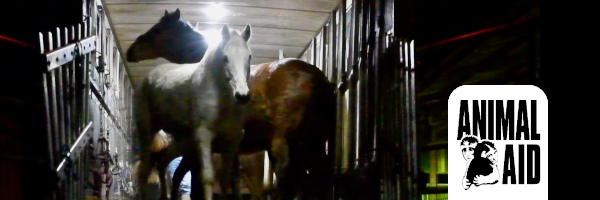
Animal Aid’s ground-breaking investigation into horse slaughter was featured exclusively on BBC1’s Panorama last night, The Dark Side of Horse Racing. Our harrowing footage reveals, in heart-breaking detail, the fate of those horses who find themselves ‘unwanted’. 

Arriving at the abattoir either singly from private owners – or in large truck loads – we see nervous horses being led to a kill room, shot in the head and then hoisted into a butchery where their throats are slit: The majority of the meat is destined for human consumption.

Animal Aid investigators worked tirelessly to film this incredibly distressing footage, showing the slaughter of 267 horses and ponies, between October 2019 and February 2020.

Some of these animals would have once been much-loved companions. A number were from the horse racing industry, whilst others seemed to be from managed feral herds. We saw ponies shot in front of one another – and, disturbingly, our cameras even captured the slaughterman swearing at scared, anxious horses.

We have launched a petition, calling for basic measures to protect horses from this fate. This includes a government-imposed limit on the number of horses bred each year, to reduce the number of ‘unwanted’ horses. We can stop this pointless suffering – but we need your help!

Please sign the petition:

Introduce national limits on horse breeding – Petitions (parliament.uk)

Please share our films:

Animal Aid’s Horse Slaughter Investigation – Animal Aid

Please make a donation:

Animal Aid: Make a donation (netdonor.net)

Help us to keep the pressure on and make real progress for horses.


No animal should have to face slaughter – please take action and be their voice.

Thank you.

Fiona
Campaign Manager

If you missed the programme then can watch it here – but note this is only for BBC Tv I player and may not be visible to non UK residents.  We will try and get a copy of the footage when we can

BBC One – Panorama, The Dark Side of Horse Racing

Or try this link; it may work ???

https://www.bbc.co.uk/iplayer/episode/m000y2xm/panorama-the-dark-side-of-horse-racing

A gamble – sorry but out of my control.

Regards Mark

SINGAPORE TO BAN THE SALE AND SLAUGHTER OF TURTLES AND FROGS IN WET MARKETS. News From Animal Equality – Breaking 20/7/21

3 pages in total Click on page numbers at end to read and see all.

Hi all; we have been getting some very positive news about wet markets through from Animal Equality.  We have thrown everything into one post here – although you may read some things twice, this just because we have provided all the information from various mails we have had in.

The videos are worth a watch if you can stomach them.  I will tidy this up later when there is time – things are arriving en masse now.

Regards Mark

————————————-

Hi Mark,

I have good news for you: We’re starting to see the first steps of progress in phasing out live animals at wet markets!

Here’s a quick reminder of the events leading up to this:

Animal Equality first exposed the reality of cruel and dangerous wet markets ​​at the beginning of the COVID-19 pandemic in April 2020. These live animal markets were still relatively unknown to the general public at the time.

Our investigative team returned to these horrific places in May 2021 and discovered that nothing had changed despite claims of shutting down operations for safety. Wet markets were still a threat to human health and causing unimaginable suffering for animals.

Thanks to this investigation, we were able to show the brutality of these markets and launched an international campaign to demand their closure. The petition received overwhelming support, collecting nearly 600,000 signatures.

In April, the World Health Organization called for a ban on the sale of live wild mammals in food markets worldwide to prevent the emergence of new diseases.

And just a month ago, I delivered your signatures to world leaders at the United Nations asking for a ban on the sale of all live animals at wet markets.

Mark, now here’s the exciting update I have for you:

The Parliament of Singapore has spent a year reviewing legislation concerning the safety and welfare standards of animals sold for food in wet markets. As a result, the Singapore Food Agency (SFA) has confirmed a ban on the sale and slaughter of turtles and live frogs.

This is one of the biggest animal protections made in Singapore’s history.

Continue reading on next page.

UK: 19/7/21: Horse Slaughter – Exclusive Tonight: Animal Aid’s Undercover Investigation on BBC One’s Panorama.

Dear Mark,

At long last, we are able to share with you an Animal Aid investigation, which will be featured exclusively on BBC One’s Panorama tonight (Monday 19 July) at 8.30pm. You may have seen pre-broadcast coverage in newspapers and on the radio today.

Our world leading investigations team were able to film inside a UK abattoir that slaughters horses and ponies.  Their cameras captured, in heart-breaking detail, the final moments of hundreds of these innocent animals, who, finding themselves unloved and unwanted, were shot in the head. We witnessed a wide variety of equines being killed in this place – from tiny ponies to Thoroughbred horses from the racing industry.  The meat of these gentle animals is destined for human consumption.

We do not know the exact content of the programme, but we do know it will use some of our undercover footage and will reveal some shocking information about how many horses from the racing industry face slaughter in abattoirs.

We are asking three things of you today:

1          Please watch Panorama on BBC One tonight and ask everyone you know to do the same

2          Sign our petition to the government which calls for a limit on the numbers of horses being bred each year. Fewer horses produced means fewer horses having their lives taken from them in an abattoir.

3          Please keep an eye on our social media pages while the programme airs and help to amplify our message impact by sharing our posts and tweets

No animal should face slaughter.

Fiona
Campaign Manager

Kashmir: No ban on sale, sacrificing of animals on Eid-ul-Adha in JK, says Admin.

No ban on sale, sacrificing of animals on Eid-ul-Adha in JK, says Admin

Srinagar: Divisional Commissioner Kashmir P K Pole on Friday said that there is no ban on the sale and slaughter of sacrificial animals in the Valley as it’s a religious obligation done in memory of Prophet Ismail (AS).

The Divisional Commissioner said that the administration is providing full support to facilitate the import of sheep, goat, and poultry to Kashmir on the eve of Eid-ul-Adha.

“There is no ban on slaughter and sale of sacrificial animals. It’s a religious obligation done in memory of Prophet Ismail (AS) and we need to respect it,” Pole said. He said the administration facilitates entry of sacrificial animals at Lower Munda into Kashmir after proper testing etc. “We also test poultry birds for bird flu before allowing them to enter into the Valley,” Pole said.

He said that as far as bovine animals are concerned, there is already a ban on killing such animals. “It is not done in Kashmir and if it is done, action will be taken,” he said.

On the letter issued by the Director Planning Animal and Sheep Husbandry calling for the ‘ban on slaughtering of bovine and sacrificial animals’, the divisional commissioner said that letter is not above the rule position and the act is supreme.

“We need to see whether the letter has been issued keeping in view the legal aspect,” he said.

Interestingly, the letter had gone viral on social media evoking sharp criticism from the netizens and also from the Mutahida Majlis-e-Ulema (MMU), an amalgam of Kashmiri Ulemas. Many netizens had termed it as direct interference into religious affairs.

“Care must be taken before passing any information which involves religious aspects and as every religion should be honored and respected”, he added.

Director Animal, Sheep Husbandry department Kashmir Purnima Mittal said, first of all, she didn’t issue any order and it was just an advisory. “This is an advisory issued in response to the Animal Welfare Board of India. These are just norms for the animals for sacrificial animals,” she said.

“This is an advisory issued to prevent cruelty against the animals. This calls for banning the slaughter of animals that are three months old or in case the animal is pregnant.”

She said that there is no ban on sacrificing animals on “Bakra Eid” and the letter issued by the department only focuses on the norms to be followed while transporting animals meant for sacrifices on Eid eve. (KNO)

No ban on sale, sacrificing of animals on Eid-ul-Adha in JK, says Admin | Free Press Kashmir

Regards Mark

A comment left by one of our well known supporters:

Imagine violently killing animals as a “religious obligation” but denying those same beings religion. No god demands suffering to prove loyalty or as an entrance requisite to “heaven”. This is just human barbarity, psychopathy, and blood-lust violence disguised as “religious exercise” and accepted as such.

For sure, MY “religious obligation” is to protect and save animals, how dare they infringe on MY rights when MY rights require ZERO suffering, violence, and pain. These people are trash.

Wildlife Trade Is ‘Key Risk Factor’ Behind Global Spread Of Disease, Study Finds.

Wildlife Trade Increases The Risk Of Next Global Pandemic, Study Finds

The wildlife trade could cause future disease outbreaks Credit: Adobe.

WAV Comment – we see and hear a lot about the causes; the real problem is that nobody has got the balls to take the case in hand and do something positive about it. Roll on more studies, inactive world governments; lots more deaths and ……………… ignorance of the causes !

Wildlife Trade Is ‘Key Risk Factor’ Behind Global Spread Of Disease, Study Finds

New research found that the wildlife trade is increasing the risk of another global pandemic

A new study looked at the wildlife trade’s impact on the transmission of viruses. Researchers warned that the wildlife trade could increase the risk of zoonotic outbreaks, including those with global ‘pandemic potential’.

A zoonosis is an infectious disease transmitted between animals and humans. According to the World Health Organization (WHO), some diseases can begin as a zoonosis but develop into human-only strains – one example is HIV.

The analysis, which was led by The Nature Conservancy, was published in the journal Current Biology. The Nature Conservancy teamed up with the Ashoka Trust for Research in Ecology and Environment (ATREE) in India to conduct the study.

Researchers studied 226 viruses known to cause zoonotic diseases across more than 800 mammal species. They categorized the animals into three groups: traded mammals, non-traded mammals, and domesticated mammals.Researchers found that one-quarter of mammal species in the wildlife trade host 75 percent of the known zoonotic viruses. Compared to domesticated and non-traded species, commonly traded mammals had a ‘much higher’ risk of transmission.

Preventing the next pandemic

Lead author Dr Shivaprakash Nagaraju is a Senior Scientist for The Nature Conservancy in India. He said: “From our findings, it is conceivable that wildlife trade (legal and illegal) is the key risk factor driving the global spread of zoonotic and emerging infectious diseases.”

The international wildlife trade leads to more than one billion direct and indirect interactions between wildlife, domesticated animals, and humans, he added.

Dr Nagaraju said he hopes the research will guide global health experts on where to ‘concentrate their efforts to prevent the next global pandemic’.

Dr Joe Kiesecker is the co-author of the study and a Lead Scientist for The Nature Conservancy. He said: “If we want to stop the next pandemic before it starts, our findings indicate that we should, among other measures, focus our efforts on keeping rodents, bats, primates, ungulates, and carnivores out of wildlife trade.”

Other pandemic concerns

Humans interfering with animals has sparked concerns about disease outbreak before.

A January poll found that roughly 85 percent of Brits support an ‘urgent’ ban on factoring farming, due to concerns about COVID-19. The following month, reports found that the H5N8 strain of bird flu had infected humans for the first time.

And in June, 67 infectious disease experts wrote a letter urging for the end of fur farming.

“The intensive breeding conditions typical on fur farms – animals unnaturally crowded together, poor hygiene, stress, injuries and low genetic diversity – are ideal for the creation and spread of novel pathogens,” the letter reads.

“To risk jeopardising our ability to control and end this or future global coronavirus pandemics, for the sake of fur fashion production, would seem imprudent. 

“We therefore support the call by [Humane Society International] for a permanent global end to the breeding, keeping and killing of animals for the purposes of fur production, and the sale of fur.”

Wildlife Trade Is ‘Key Risk Factor’ Behind Global Spread Of Disease, Study Finds | Plant Based News

Boris Johnson Urged ‘To Lead World Leaders’ Towards Global Fur Farming Ban To Avoid Future Pandemics

67 infectious disease experts have written to the UK Prime Minister – highlighting how fur farms are ideal for the creation and spread of novel pathogens

UK Prime Minister Boris Johnson is being urged to lead world leaders towards a global ban on fur farming. 

67 infectious disease experts have written to the politician ahead of the G7 summit.

The event brings together the heads of governments from a slew of wealthy democracies such as Canada and the US. It will be hosted in Cornwall, England, at the end of this week. 

Global fur farming ban

The letter comes from virologists, epidemiologists, infectious disease specialists, veterinarians, and animal behaviorists from 16 countries. Moreover, it is coordinated by animal protection NGO Humane Society International (HSI).

“It’s clear fur farms have the potential to act as reservoirs of SARS-CoV-2…” reads the letter.

“The intensive breeding conditions typical on fur farms – animals unnaturally crowded together, poor hygiene, stress, injuries and low genetic diversity – are ideal for the creation and spread of novel pathogens. 

“Severe animal welfare deficiencies are inherent to factory fur farming. The trade creates the potential for the many tens of millions of animals on fur farms to act as immediate, intermediate, or amplifier hosts for viral pathogens. 

“To risk jeopardising our ability to control and end this or future global coronavirus pandemics, for the sake of fur fashion production, would seem imprudent. “We therefore support the call by HSI for a permanent global end to the breeding, keeping and killing of animals for the purposes of fur production, and the sale of fur.”

COVID-19 outbreaks

The letter follows more than 400 outbreaks of SARS-CoV-2 on mink farms across Europe, the USA, and Canada. 

Some governments, such as the Netherlands and Hungary, have taken decisive action to stop mink fur farming in their jurisdictions.

Moreover, 14 countries globally have banned fur farming completely. However, species susceptible to COVID-19 are still being reared for their fur across the world.

‘A stark warning to governments’

Claire Bass is the executive director of HSI UK. In a statement sent to PBN, she said: “Virologists, veterinarians and disease experts from around the world have provided a stark warning to governments about the public health risks of exploiting wild animals in unsanitary, overcrowded and inhumane fur factory farms, simply for the sake of frivolous fashion. 

“Not only is fur farming inherently cruel to animals. But, the potential for zoonotic disease spread, and for mink fur farms, in particular, to act as reservoirs for coronaviruses is another compelling reason for governments to shut down the fur industry for good.

“We can no longer ignore that fur farms make for a perfect petri dish for pandemics. 

Bass then concluded: “As the first country in the world to ban fur farming two decades ago… The UK is in a unique position to urge world leaders to take decisive action with a global ban.”

Read the full letter here