
This is important in a way; but will have no real effect on you as visitors to this site.
I (Mark) will try to explain;
A ‘domain’ is a internet ‘address’ which can be used for global access by anyone. Here at WAV, our domain is ‘worldanimalsvoice.com’; we pay each year to have and retain this domain.
We have recently been informed by domain registrars in China that applications have been made for at least 4 domains for ‘World Animals Voice’ and that they will vary from our address – as far as we know, they are worldanimalsvoice.cn/ worldanimalsvoice.com.cn/ worldanimalsvoice.net.cn/ and worldanimalsvoice.org.cn
We have informed the registrar in China that these addresses applications are nothing to do with us (as we are UK and Germany controlled) or are they associated with us and that if they are taken out, then we will have no control over the content of same.
Our real ‘concern’ is that the name ‘worldanimalsvoice’; which we set up and use for this site, is / could be used (in China) when it has nothing to with us; having originated and been registered via the domain controller in China.
Our domain is only ‘worldanimalsvoice.com’
We hope that if these new domains are used, taking the name ‘world animals voice’; then they will be supportive of animal welfare / rights issues; and that their content will be positive towards animals. But we cannot guarantee this, or any of the content on any of these sites.
So you, as supporters to our site, can visit us you always do; but please just be wary that there may be other ‘world animals voice’ sites, namely (worldanimalsvoice.cn/ worldanimalsvoice.com.cn/ worldanimalsvoice.net.cn/ and worldanimalsvoice.org.cn) possibly being used. The info on them is not associated with us; has nothing to do with us and never will be controlled in any way by us.
There is no way to combat this and we have to accept the situation of world (computer) domains as it is.
Please put ‘worldanimalsvoice.com’ somewhere safe on your system so that you know this is the only way to access us. Any other address is outside of our control.
We trust you understand the situation and we will carry on with this site as always.
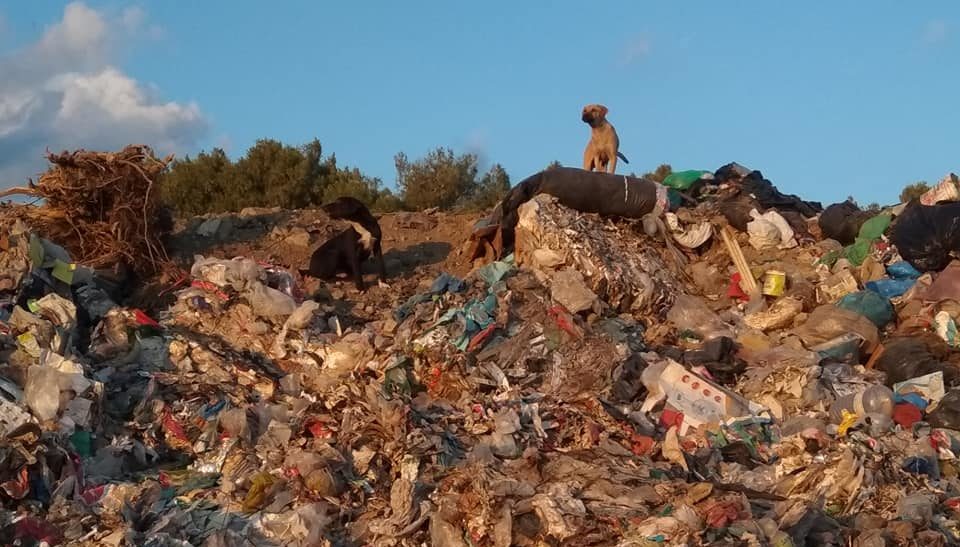
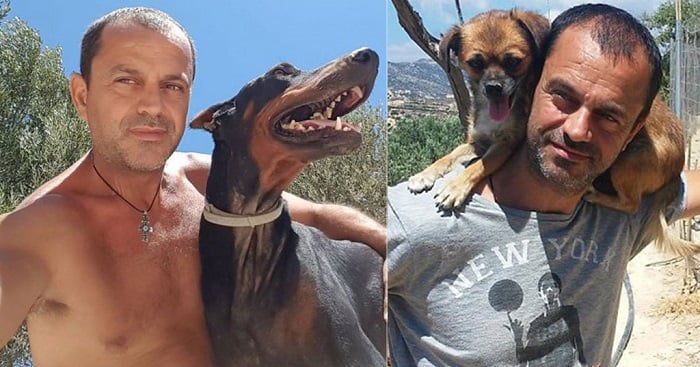
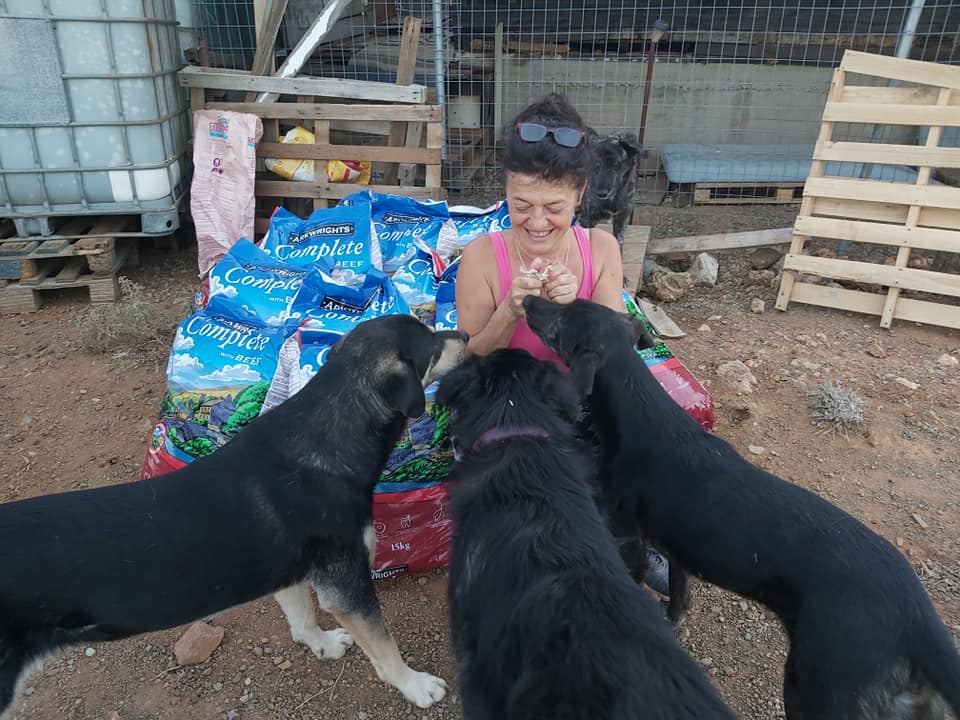
Please check this excellent article out, which has many pictures of the strays and individuals who are devoted to helping them. Aphrodite Tsoulaka, the Greek volunteer who has taken on the mammoth task of helping the dogs at the landfill, does not expect anything in return other than the gratification of seeing them living in better conditions.
If you want to make a donation to help the dogs or to visit the Facebook page dedicated to help and support for the dogs; all the information is given in the article.
The risks from wildlife exploitation and trade have become painfully clear this past year with the worldwide outbreak of the SARS-COV-2, the virus that causes COVID-19. While much of the public discussion around COVID-19 has focused on the potential role of illegal wildlife trade in spreading pathogens, the threats issuing from legal trade have largely been overlooked, when in fact they are at least three orders of magnitude larger than those of illegal trade.
The unregulated exotic pet trade poses health risks to EU citizens that cannot be ignored. In recent years, the growing trend for exotic pet keeping has significantly increased the likelihood of spillover events in the EU, which may have a significant impact under the One Health approach.
Furthermore, the exotic pet trade has a devastating impact on biodiversity, both globally and within the EU. Wildlife populations decline by an average of 62% in areas where species are traded, pushing some closer to extinction. Exotic animal diseases can also be transmitted to native wild animals, with potentially dire consequences for their conservation. Exotic species can threaten native biodiversity if they escape or are released into the wild. The exotic pet trade has been identified as one of the main pathways for the introduction of invasive alien species in the EU by the Bern Convention and the Convention on Biological Diversity (CBD).
Finally, the lack of appropriate legislation on exotic pets may result also in severe animal welfare problems.
Bold action is needed across the EU to reduce the risks from the exotic pet trade, thereby fulfilling the commitments taken under the EU Green Deal and the 2030 Biodiversity Strategy, and showing global leadership to reverse the devastating impacts of human activities on nature and biodiversity.
This event, hosted by the Portuguese Presidency of the Council, and co organised by Eurogroup of Animals and AAP Animal Advocacy and Protection, seeks to raise awareness among European policy makers and to explore the opportunities for better regulation of the exotic pet trade in the EU.
Draft agenda
Opening speech from Maria do Céu Antunes, Portuguese Minister of Agriculture
Video message from Ms Stella KYRIAKIDES, EU Commissioner for Health and Food Safety.
Presentations
How the harvesting of animals to supply the EU exotic pet trade threatens biodiversity – (speaker to be confirmed)
Zoonotic risks associated with the trade and keeping of exotic pets in the EU (including a virtual visit to AAP’s quarantine facility) – David van Gennep, Executive Director, AAP Animal Advocacy and Protection
How the exotic pet trade leads to the introduction of invasive alien species into the EU – Julie Lockwood, Chair and Professor in the Department of Ecology, Evolution, and Natural Resources, Rutgers University
Debate with Panelists moderated by Reineke Hameleers (CEO, Eurogroup for Animals)
Dr François Diaz, Chargé de mission Preparedness and Resilience Department, OIE
Portuguese National Authority for Nature Conservation (ICNF), speaker tbi
European Commission, Direction General for Health and Food Safety (tbc)
Elaine Toland, Director, Animal Protection Agency
Marina Michaelidou-Kadi, Senior Officer of Agriculture, Natural Resources and the Environment, Cyprus
“A mother’s love” is not only reserved for biological mothers. And it’s not just shared with babies. Anyone who has dearly loved an animal, whether an abandoned calf who thinks you’re his real mama, or a senior cat who barely tolerates your presence, knows the incredible joy of being needed like a mother. We’ve nurtured thousands of orphaned newborns, ill and wounded animals, often with intensive care. That’s what mothers–whether they are men, women, cows, donkeys or goats–give every day: intensive care and vital love.
This teenager puppy was badly injured after likely being snagged by a passing vehicle. The wound covered a huge area on her shoulders, and Jewel’s pain must have been excruciating. Infection was a grave danger. We hurried her back to Animal Aid, brought her into surgery to clean and stitched the wound back together.
Shy young Jewel emerged from her ordeal needing extra snuggles while her massive laceration became a tiny scar.Please donate
Colby took months to reveal his inner strengthafter a spine injury laid him low
This beautiful boy was hit by a passing vehicle and his neck and spine were injured. Our protocol for spine injury includes pain treatment, bed rest, good food, and gradual physiotherapy starting with passive movements and progressing to hydrotherapy.But with spine injuries, mobility is not guaranteed.
We were heartbroken that after a month of treatment, this sweetheart still couldn’t stand and our hopes started to fade. But Colby had hidden strength, and he just needed a little more time.
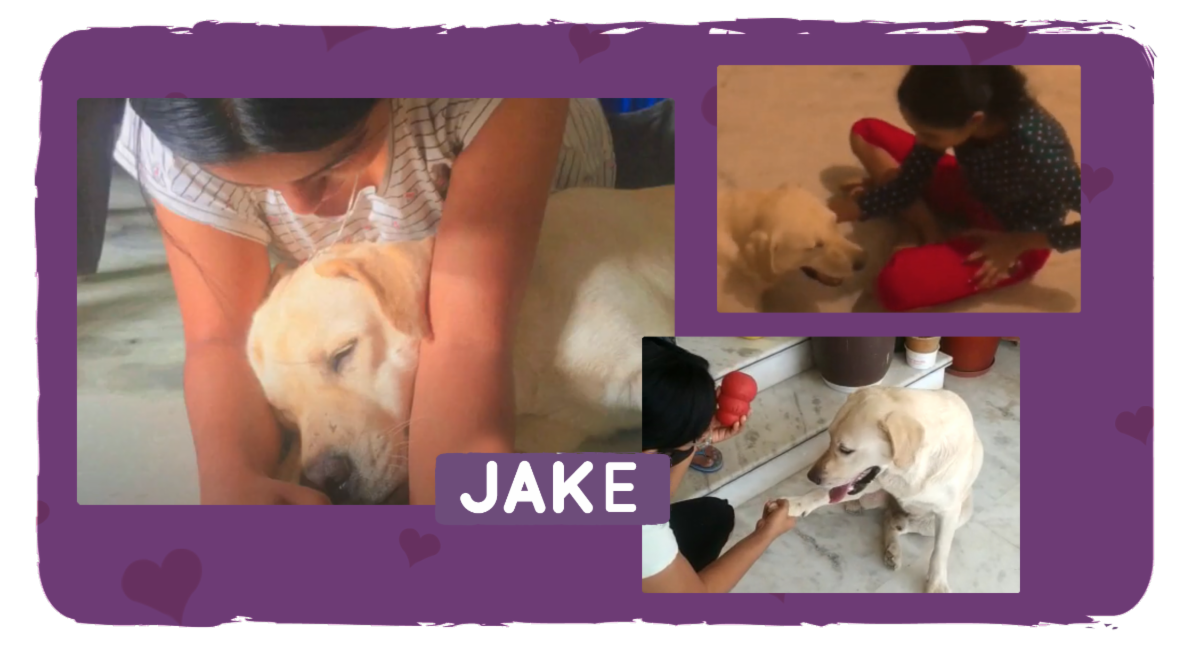
Abandoned and adorable, Jake waited 9 long months before we found a loving family who could care for him in the way he deserved–with abundant play, multiple opportunities to exercise every day, and people who adore him.
Jake’s new family knows the importance of adopting a shelter or street dog rather than buying a dog from a breeder or shop. And they also know the value of unconditional, life-long commitment and love.
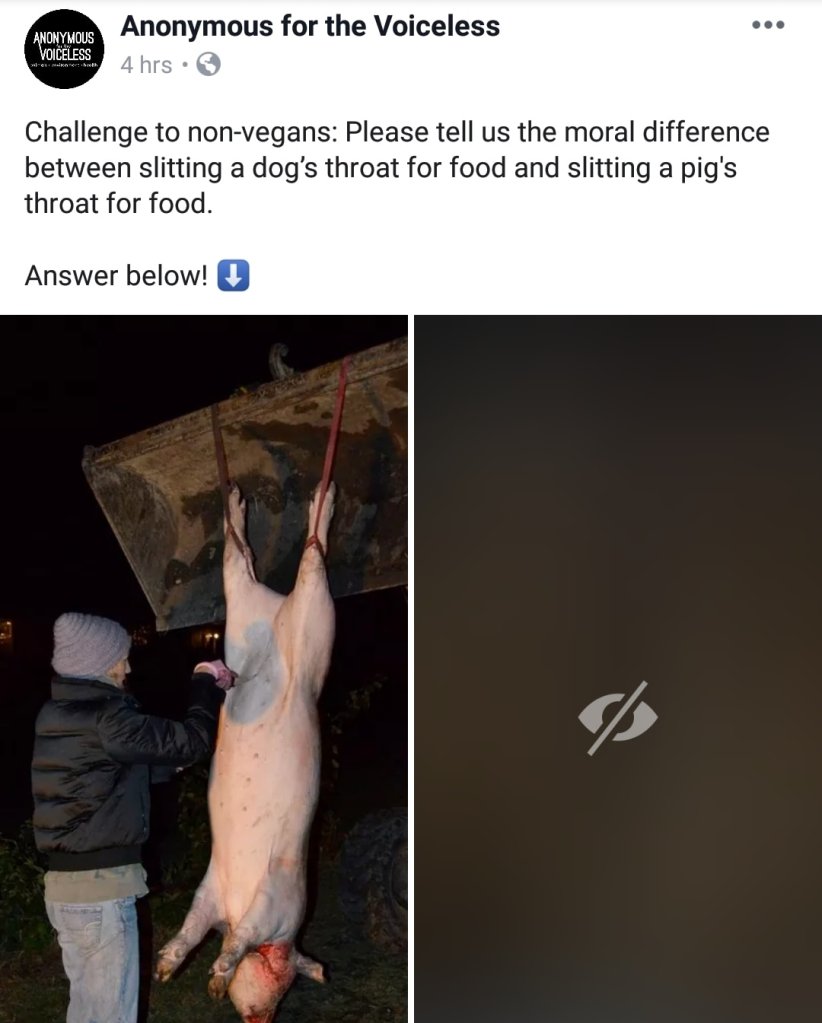
“Want to see cognitive dissonance in action? The photo on the right, of a murdered dog, has been censored by Facebook. The photo on the left, of a murdered pig, has not been. If there was ever anything that both Facebook mods and non-vegans (i.e. the ones who reported the dog image) have done to prove the very point of a vegan post, this is it”.
George Martin
And I mean…We humans, as a species, have successfully eaten our way to the top of the food chain.
And above all we Europeans consider ourselves to be particularly sensitive and animal-friendly when we are exceptionally outraged by the “sick and perverted” Chinese who eat the “wrong” animals.
Because we take animal welfare seriously here.
After all, we are not just some uncivilized animal that has run around. We are Homo Sapiens!
And what does homo sapiens have ?! He has rights! And lots of it.
The right of the strongest, for example. And then it would be an offense against natural law not to apply it.
So let’s do that and think of all kinds of ways to eat animals!
We can destroy any animal because we are stronger!!
The meat-eating home-pet protectors have set themselves the task of explaining to the Chinese that instead of dogs they should finally eat the right animals: cattle, chickens, pigs … just like normal people.
According to the motto … “Nobody cares about eating dogs. It’s about torturing! IT’S ALL ABOUT TORTURING! … “
But if we actually took this seriously, then in the end it would really prevent us from being able to eat animals at all, because every slaughter is about tormenting, and because now more and more people know that the pigs killed here are more intelligent than dogs there, or that they are at least as friendly, playful and trusting if we let them.
But that would be a certain inconvenience for our morality.
And above all, it would conflict with the law of the strongest. After all, this is a law of nature. And we take THAT seriously.
So seriously that we even consider it the duty of the strong to eat the weak.
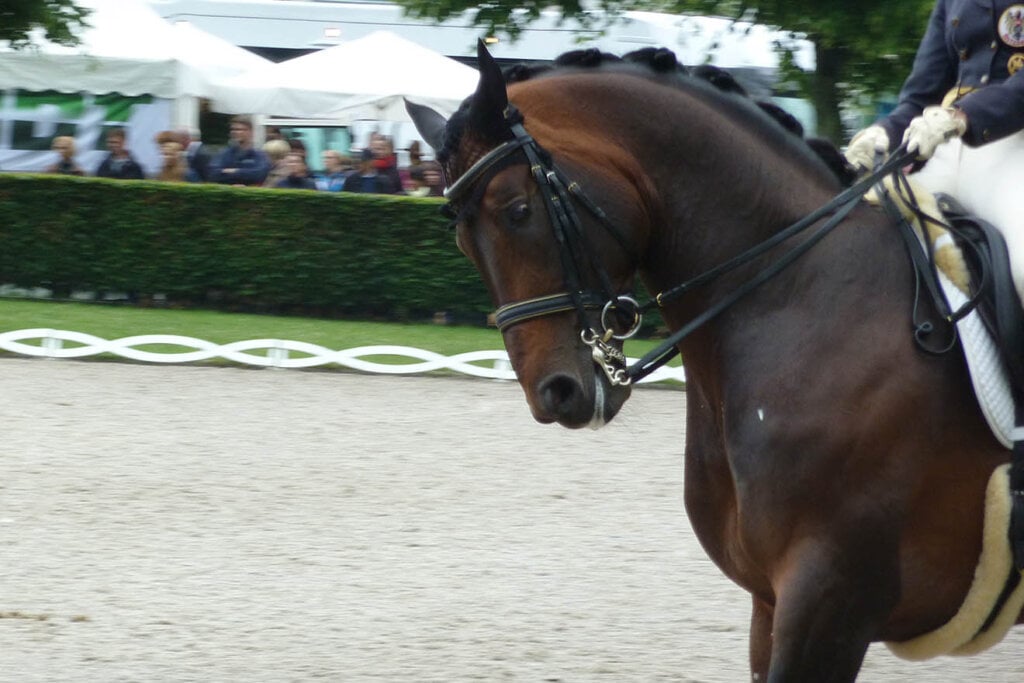
Horse and human can go through thick and thin together as friends.
The intelligent animals build close bonds with their caregivers when all contact is based on respect and understanding.
Many people would like to ride and visit one of the around 6,100 riding schools nationwide in order to learn to ride on one of the 65,000 so-called school horses.
According to a study, 2.32 million people in Germanycall themselves riders – Germany is one of the countries where equestrian sport is very popular.
But: Do people have to ride horses “to do something with horses”?
And is it even okay to ride horses?
Problems dealing with horses
Hundreds of thousands of horses are ridden every day, not only in tournaments, but also in recreational sports.
Around 600,000 households in Germany have their own horse, 920,000 households have a so-called riding participation.
There are also countless other professional and tournament riders, riding students, leisure and occasional riders.
Anyone interested in horses goes horse riding – and that is exactly the problem.
Riding is not the answer to “doing something with horses”, because riding can be physically and psychologically harmful to the horse.
Many horses are exploited by us humans and abused as sports equipment, and not only in tournament sports.
In the leisure sector, too, some so-called horse lovers often put their own interests above those of the horse.
The needs of the animals should be the focus.
Wrong strain has painful consequences
Riding means that a person chooses to get on the back of a horse or pony.
As with all vertebrates, it consists of a complex and sensitive structure of vertebrae, intervertebral discs, ligaments, tendons and muscles. If you do not know the individual needs of a horse, you cannot respond to them and cause great damage to your horse.
Disney is developing a live-action film based on the book Aloha Rodeo, which follows three Hawaiian cowboys who in 1908 traveled to Wyoming to compete in a steer roping competition at what’s still one of the most brutal and deadly rodeos in the world. Please join us in urging Disney to cancel this dangerous project, which will injure and potentially kill animal “actors” while glamorizing one of the cruelest events in rodeo.
The activity at the center of Aloha Rodeo is steer roping. This is the famous event whereby a cowboy on horseback chases down a terrified steer, lassos him with a rope noose, and stops short so the steer is knocked to the ground with incredible force, before the cowboy dismounts and runs to bind the steer’s legs together. Steer roping is so excessively violent that it is not part of the annual National Finals Rodeo, and the Professional Rodeo Cowboys Association (PRCA) has largely removed the event from its website.
This event can result in serious injuries and deaths, and it’s also considered so cruel and dangerous that it’s been banned in several states. The following video filmed by Showing Animals Respect and Kindness (SHARK) shows how rodeo roping can paralyze calves and adult animals by breaking their necks.
The rodeo in the book takes place in Wyoming and still exists as one of the world’s largest. More animals will unquestionably suffer and die there in steer roping and other cruel rodeo events.
This is not Disney’s first rodeo; the company should be well aware of the risks its fictional films pose to real-life animals. In 1955, when Disney released Davy Crockett: King of the Wild Frontier, the film inspired a raccoon skin cap craze that decimated the U.S. raccoon population. Each time 101 Dalmatians or its sequels are released, it spurs a surge in the demand for Dalmatians, which perpetuates puppy mills and leads to an increase in the number being dumped on already overburdened rescues and shelters.
Disney’s live action film will glorify this inherently violent industry which encourages kids to harm animals for fun and inflicts lethal injuries on bulls for entertainment. It will also sugarcoat the serious animal welfare concerns of a scandalous industry that shocked and beat a horse and attacked a bull with dogs.
This film will be a disaster for animals and risks reviving the entire sagging rodeo industry by sanitizing animal cruelty.
Join us in urging Disney to cancel the planned live-action film Aloha Rodeo, which will put animals at risk of harm and glamorize an inherently violent and brutal entertainment.
1. Please call Disney Studios to let the company know that you are not okay with its making a spectacle of animal cruelty in the upcoming live-action film Aloha Rodeo.
818-560-1000 Press 1
Some talking points you can mention:
Steer roping is so excessively violent that it is not part of the annual National Finals Rodeo, and the Professional Rodeo Cowboys Association has largely removed it from its website.
Severe injuries are expected, and death is not uncommon in the rodeo. Animals forced to “act” in Aloha Rodeo are at serious risk of being injured and killed, causing a PR disaster before the film even airs.
These baby animals are taken from their moms at just four or five months old to endure the dangerous torment of roping. After they are too broken to exploit, the rodeo sends them to the slaughterhouse.
When Disney released Davy Crockett: King of the Wild Frontier in 1955, the film inspired a raccoon skin cap craze that decimated the U.S. raccoon population.
Disney should not associate with an industry that harms animals for entertainment. This cruel and violent industry deserves to be left in the past, especially at a time where public respect for animals is growing.
Rodeo is animal cruelty, which is not a suitable topic for a family film. Associating with rodeo can only harm the Disney brand.
@Disney @DisneyStudios @DisneyPlus #AnimalCruelty isn’t entertainment. Cancel your plans to make #AlohaRodeo, a film centered around a rodeo event so cruel and dangerous it’s been banned in several states. #RodeoCruelty
4. Please fill out the form on this page to submit our emails asking Alan Bergman – Chairman and Alan F. Horn – Chief Creative Officer at Disney and Disney’s Corporate Social Responsibility Department to cancel production of this dangerous film.
Sign our alert to immediately deliver your comments to:
Alan Bergman – Chairman
Alan F. Horn – Chief Creative Officer
Disney’s Corporate Social Responsibility Department
It is always difficult to say goodbye to a blog that you associate with a lot of commitment and hard work.
Serbian Animals Voice (SAV) https://serbiananimalsvoice.com/has been a very informative source of news and information as long as active animal rights activists like our unforgettable Slavica Mazak Beslic could provide the necessary know-how and information ‘from the ground up’. We were a great and effective team – Slavica provided the news (from Serbia) and we then created posts on the site for the world to read and view. We also took our campaigns to the heart of the EU in Brussels, and opened and banged on as many doors as we could.
Our dear friend Slavica tragically passed in 2020, and both of us, have tried to keep the SAV blog going by reproducing the (non Serbian animal) news that also appeared on our primary World Animals Voice (WAV) blog World Animals Voice – Animal news from around the world..
After much deliberation, we realized that this global approach is no longer the original purpose of the founding of SAV, so we have decided not to write special postings for SAV and instead offer simple links to current WAV topics.
SAV Facebook (20+) Serbian Animals Voice | Facebook was also created by us back around 2005 as a ‘talking shop’ for animal rescuers and wonderful ‘animal people’ throughout Serbia. Now, with more than 1,300 members from the animal community, it still maintains that ‘animal protection’ policy on the whole, but we have also noticed recently that it is now being hijacked by others who are interested in anything but animals and their welfare. This attitude goes against all the principles that SAV Facebook for Serbian animals was founded for all those years ago.
So, with immediate effect, we are thus withdrawing our involvement for SAV Facebook; and will have no further involvement with any control / input into the site. It is sad when a few non animal people are spoiling things for the vast majority of brilliant animal welfare people in the Balkans by their actions.
World Animals Voice (WAV) World Animals Voice – Animal news from around the world. will very much continue to be the prime site for the posting of information, actions, and discussion topics involving animals the world over. Many of you; our friends and supporters, have been involved with us on this long and traumatic journey to date; we have always welcomed your support and kind comments, and we trust that you will stay with us on this new journey we are taking now down a different path.
SAV will remain as a site and will NOT be closed down. It has over 16 years worth of very informative archive material associated with the fight for justice for stray animals in the Balkans states. All of this information will be retained and is available to anyone who wishes to visit for information and view photographs and / or videos. Simply go to Serbian Animals Voice (SAV) | a voice for the voiceless and select from the ‘Categories’ on the right side, or from the ‘Archive’ on the left.
Finally; we wish all of our animal friends who we have worked with in the Balkans over the years all the very best with their continuing work for animals in need. You are all fantastic people and have our utmost respect for what you do; many of you have become our personal campaigner friends; and we wish you all every success with your future endeavours to put the wrongs right. Animal people around the world must unite and continue to work together in order to achieve success. We, through World Animals Voice, will continue with our work and our long term goal of giving voices to our voiceless animals friends.
We hope that you will remain loyal to us and continue to support us in our work, even after this new order.
best regards to you all,
Mark and Venus.
Above – Slavica – a wonderful person and campaigner friend.
Below – The fight for Serbian strays. This dog has been sterilised and wears a red ear tag to prove it and make this clear. Balaclava clad Shinters (dog catchers) take no notice of this tag, and dart him with drugs which are now taking effect. They wait as you can see, on the street, to take him and then kill him. How do you fight actions like this ? – you try, and try, and try …… and keep on..
Thanks to Maria and Paul for making Serbia No. 1 in their song ‘Unite’:
7 Favourite children’s books with a message of kindness towards animals.
Kids love animals. So it’s no surprise that the vast majority of children’s books feature animals as the main characters. Unfortunately, many of these books still refer to animals as something, rather than someone—so finding animal-themed books that teach respect for animals is crucial to nurturing our children’s natural love of animals.
I sat down with a few parents at Mercy For Animals to find out their favorite kids books that inspire compassion for animals. Here are our top picks:
The Top Countries for Vegans in 2020, According to Google
Hannah Bugga
January 28, 2021
According to analytics tools Google Trends and Google Ads, the pandemic has only increased the popularity of veganism! In fact, Chef’s Pencil reports, data from Google Ads reveals that vegan-related searches in 2020 were up 47 percent from the previous year. Top searches include “vegan recipes,” “vegan cheese,” and “vegan restaurants.”
Using Google Trends, we can dive in for a closer look and compare the popularity of search categories around the world to find the countries with the highest concentration of vegans. Some of the places may surprise you!
Check out the top countries for vegans in 2020, according to Google: