Category: Vegan Recipes

Netherlands: Haarlem Bans Meat Advertising In Public Spaces – Getting Low Quality Meat Off The Streets.

Getting low-quality meat off the streets: Haarlem bans meat advertising in public spaces

20 September 2022

In a historic first, the city of Haarlem in the Netherlands has banned advertising low-quality meat in public spaces, including on buses and billboards. While the finer details of this ban are still being discussed – namely, whether or not it will also apply to more sustainably-sourced meat, such as organic – it’s set to come into effect in 2024.

For the Dutch city, this is a fantastic step towards creating a better food environment, in which high-welfare options and sustainable alternatives to low-quality meat products are encouraged… mirroring the kind of action we’d like to see taken across the EU as a whole. It’s no secret that intensive livestock systems with low animal welfare standards produce greenhouse gas emissions on a staggering scale. In order to align the European food system with the planetary boundaries we should curb animal production and consumption by 70% by 2030 to slow the effects of climate change. 

Dietary change is a major piece of the puzzle

It’s critical to the future of our planet that industrial farming systems, especially those involving animals, are phased out. That’s why the concept of ‘less but better’ meat is central to the suggestions we’ve made to the European Commission for their Sustainable Food Systems Framework, and include:

Pushing low welfare animal products out of the market, such as fast-growing broiler chickens

Restricting advertising for animal products

Introducing compulsory animal welfare labelling – or ‘method-of-production labelling’ – in which information about how animals have been reared throughout their lifetime is made clear

By banning the advertising of low welfare animal meat, Haarlem will support its citizens in making better choices concerning the animal products they buy: championing better farming practices while supporting a more sustainable food system.

Haarlem is first… will the EU follow?

Beyond the horrible conditions animals face and the industry’s effects on the climate, intensive livestock systems are also connected to a host of other environmental and public health crises, related to pesticides, disease, food security and resilience, antibiotics, and more.

Its impacts can no longer be ignored. Haarlem has set the mark, and now it’s time for others to meet it. Because if one town can take the spotlight off cheap meat, why not the rest of the EU, too?

(5) Eurogroup For Animals on Twitter: “🇳🇱🍔 The city of Haarlem in the Netherlands has passed a motion to ban meat advertising in public spaces. This is a great step towards reduced meat consumption and the promotion of more sustainable food systems. https://t.co/yuTFQovb7a” / Twitter

Well done Haarlem, great job !

Regards Mark

England. Animal Rights Activists Celebrate As Controversial Rabbit (Meat) Slaughter Farm Firm Ceases Trading. Activists Send Owner Box Of Vegan Chocolate Bunnies As Retirement Present !

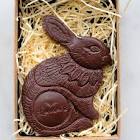
Vegan Choccy Bunny – Happy retirement Mr Kerry !

Animal rights activists celebrate as controversial rabbit farm firm ceases trading

A rabbit farm in Rutland has closed after facing sustained pressure from animal rights activists – including alleged cases of vandalism. T&S Nurseries, ran by Phil Kerry, set up a rabbit farming site at Lyndon Top Farm, close to Rutland Water, and previously submitted plans to expand the farm to breed 10,000 rabbits a year for slaughter.

However, the company, which also had farms in Nottingham and Buckinghamshire, faced significant opposition and scrutiny from residents and animal rights campaigners, including PETA, as it attempted to expand the business.

PETA gathered more than 21,000 signatures on a petition to block Mr Kerry’s plans during a campaign which also won the support of comedian, TV, and film star Ricky Gervais.

Now, Mr Kerry has confirmed he has decided to cease trading because of that pressure and the repeated rejection of his applications to expand the business.

(Friday, August 19), that he was pulling out of the trade. He said: “We’re passing over the last of the rabbits from the farm over to the activists tomorrow and winding down the rabbit farm business.

“I was looking to retire next year anyway, so pushing it forward a few months doesn’t matter to me. But we’re diversifying into other things such as vineyards, orchards, as well as going into the ‘glamping’ business, so nobody is going to lose their jobs from the closure.

“The legal activism outside the businesses through the day was one thing, but we had a lot of activists at night that caused us a lot more issues, especially graffiti and vandalism. One staff member’s car was even covered with paint stripper.

“We were very much a small base of operations for rabbit farming compared to what gets shipped in from Europe. So maybe the focus should be on that now instead.”

In a statement regarding the business ceasing trade, PETA’s vice president of programmes Elisa Allen said: “Animal advocates are jumping for joy over news that T&S Nurseries has read the writing on the wall and will soon be closing up shop – meaning no more rabbits will be bred and killed at its facilities.

“On these farms, sensitive animals spend much of their lives confined to barren hutches, unable to socialise or explore. Then, after enduring a miserable life, they’re hung upside down and their throats are slit so their dismembered body parts can be used for pâté, pies, and other “products”.

“Business owner Phil Kerry revealed the decision to cease trading was made, in part, because local councils repeatedly blocked his applications for new butchering and breeding sites – applications which tens of thousands of compassionate PETA supporters spoke out against.

“In a true sign of the times, the public has once again reminded animal-exploiting businesses that the only viable industries are those which don’t harm other living, feeling beings.”

The animal rights charity also said that it intends to send Mr Kerry a “box of vegan chocolate bunnies to wish him a happy retirement.”

Vegan chocolates – wonderful and the very best !

Regards Mark

Animal rights activists celebrate as controversial rabbit farm firm ceases trading (msn.com)


England: Introducing Viva ! – For Animals and Humans.

Viva! is the UK’s leading vegan campaigning charity, specialising in undercover investigations and high-profile animal campaigns. Founded in 1994 by Juliet Gellatley, we have spent almost 30 years creating a kinder, more sustainable world for humans and animals alike.

Diet is linked to the diseases that kill most people in the affluent West – ‘degenerative’ diseases. Researchers at Viva! Health keep up to date with the latest science to show you why a varied vegan diet cuts your disease risk, and can improve your health.

And let’s not forget our magnificent Vegan Recipe Club which has hundreds of healthy, delicious and colourful recipes, helping people go and stay vegan.

Please, consider joining Viva! today so we can continue educating the public about the benefits of living vegan.

Join or renew:

Donate or join us | Viva! The Vegan Charity

If you can, please give £5 or more a month and become a Viva! Friend. You’ll receive Viva!life magazine PLUS an exclusive I’m a Viva! Friend mug, keyring, sticker pen and bookmark.

You’ll also receive some handy guides, wallcharts, and a free Films For Change 60 day trial where you can enjoy any film on their site – including an expansive collection of vegan documentaries! 

Yours for the animals,

Juliet Gellatley
Founder and Director

Regards Mark

USA: 11 Best Vegan ‘Bits’ In Los Angeles Right Now.

THE 11 BEST VEGAN POP-UPS, FOOD TRUCKS, AND DELIVERY KITCHENS IN LOS ANGELES RIGHT NOW

From veganized fast food to indigenous Mexican to flaky, butter-free French pastries—LA’s vegan street food scene is hotter than ever.

There’s a reason why Los Angeles has been named VegNews’ Best Vegan City three years in a row by VN readers. Dining institutions like Plant Food + Wine, Shojin, and Monty’s Good Burger are revered nationwide and have helped cement the City of Angels’ status as the best vegan dining destination in the country. But there’s another plant-based trick up LA’s sleeve: a world-class street food scene of underground pop-ups, ghost kitchens, and food trucks. And it’s proving once and for all that brick and mortars aren’t the only recipe for success.

The 11 Best Vegan Pop-Ups, Food Trucks, and Delivery Kitchens in Los Angeles Right Now | VegNews

Regards Mark

EU: Join the online consultation on Sustainable EU food system.

9 June 2022

News

The European Commission has opened a new consultation to inform the drafting of a Framework Sustainable Food Systems law.

Due end 2023, this law will be the key piece of legislation under the Farm to Fork Strategy whose objective is the sustainable transformation of the EU’s food system.

According to the Commission, “this framework law should promote policy coherence at EU and national level, mainstream sustainability in all food-related policies and strengthen the resilience of food systems.” 

Although animal welfare is part of the Farm to Fork strategy, it is not yet fully envisaged as an integral part of a food system’s sustainability. Furthermore, the Farm to Fork strategy recognises the need to move towards a more plant-based diet. However, few concrete measures have been proposed to date. It is, therefore, important for the Commission to receive numerous responses highlighting the importance and role of animal welfare in a sustainable food future and supporting a transition towards a more plant-based diet to keep the food system within planetary boundaries.

** The consultation is available here and is open until 21 July at midnight CET. **

Farm-to-Fork

Sustainable development

Regards Mark

How the Netherlands is leading the global food revolution.

29 April 2022

On 14 April, the Dutch government announced that it would allocate € 60 million to support the formation of an ecosystem around cellular agriculture. It represents the largest public funding into the cellular agriculture field ever, globally.

Cellular agriculture, with cultivated meat as its emblematic product, is the technology to produce animal products directly from cells outside of an animal: it is therefore a product derived from an animal, with the same characteristics and nutritional value, but without the need to kill or maintain large numbers of animals in industrial conditions. 

The funding is awarded under conditions by the National Growth Fund, which aims to create structural economic growth by investing in the public domain to support innovative economic sectors.

This financial impulse represents a first step towards funding a larger growth plan proposing to invest € 252 – € 382 million in cellular agriculture, specifically stimulating cellular agriculture education, academic research, publicly accessible scale-up facilities, societal integration (including farmers and consumers) and innovation. The broader growth plan is projected to generate an incremental €10 – €14 billion in Dutch GDP growth per year by 2050, with considerable benefits for animals, the environment and global health.

The National Growth Fund Committee said about cellular agriculture:

Although the products are not yet on the shelves, the science is promising and the first companies are already active. The committee is pleased with the potential and the parties involved.”

The proposal for funding was made by a newly created consortium of 12 organisations (academia, NGOs, startups, industry) called Cellular Agriculture Netherlands. The group is currently shaping the executive teams and governance structure to start executing the proposed growth plan as soon as the funds become available, which is expected to be towards the end of 2022 after meeting a specific set of conditions. The team will also reach out to potential partners in the Netherlands for execution of the programs.

The Netherlands has a strong history of innovating food production. This public investment in cellular agriculture is a demonstration of the Dutch government’s commitment to building an agricultural ecosystem that is healthy and sustainable for both humans and animals. In combination with reforms to traditional farming, cellular agriculture can be an additional tool to satisfy the world’s growing appetite for protein.

While individual cellular agriculture companies have been successful in attracting private funding, the National Growth Fund financing is explicitly aiming to support the public part of the ecosystem. The expectation is that this impulse will attract more companies, more funding, and more collaboration across the cellular agriculture field in and with The Netherlands over the next few years. 

Mosa Meat

Read more at source

Regards Mark

Africa: Cultured Beef Burgers Arrive In Africa For The First Time.

The alternative protein sector – including cell-based meats – is gaining momentum across the globe

Cultured Beef Burgers Arrive In Africa For The First Time – Plant Based News

Africa’s first-ever cultivated beef burger has been unveiled.

Mzansi Meat Co debuted the new burger this week at an event in Cape Town, South Africa. It’s the first cellular agriculture startup on the African continent.

Founded by Brett Thompson and Tasneem Karodia, the company is on a mission to feed Africa’s growing population with sustainably produced protein.

Like most cellular meat companies, Mzansi Meat Co’s food scientists cultivated the burger in a lab, after collecting cells from a living animal (in this case, a cow from a local animal sanctuary). 

The cells were isolated and grown in a culture medium. Then, they were placed on an edible structure and combined with spices and flavoring to produce the end product.

Why produce cultured meat?

Conventional animal agriculture is destructive to the environment and contributes 14.5 percent of annual global greenhouse gas emissions. This has motivated innovators to think of new ways to produce the foods we love, in more sustainable ways.

While many brands are making meat-like products out of plants, the cell-based meat market is growing too.

Mzansi Meat Co is the first to produce a cultured meat burger in Africa, but in Singapore, cell-based meat has already appeared on restaurant menus.

The Singapore Food Authority became the first in the world to approve the sale of cultured meat in 2020. And last year, California brand Eat Just debuted cultured chicken at 1880, one of the country’s top restaurants.

‘Our burger is only the beginning’

Mzansi Meat hopes to follow closely in Africa.

“Cellular agriculture wasn’t an industry in Africa until Mzansi was born,” said Thompson. “Our burger is only the beginning, we now know it’s possible and the next step is scaling up. It starts with one small beef burger and we aim to be producing tons of cultivated meat every month in the future.”

According to Karodia, the brand will now focus on cultivated sausages. After that, it’ll tackle meat that can be substituted in traditional cuisines across Africa. “Everything we make will be braai-friendly and ready for the fire,” she said.

The cultivated meat market has significant potential when it comes to removing animals from the food system. According to McKinsey, a management consulting firm, by 2030, the sector could make up “billions of pounds of the world’s meat supply.”

Regards Mark

New IPCC report: dietary shift and meat alternatives are needed to reduce greenhouse gas emissions.

6 April 2022

The third report from the Intergovernmental Panel on Climate Change (IPCC), launched on 4 April, covers the mitigation pathways that can reduce greenhouse gas emissions. It follows upon the previous report launched earlier this year that detailed the catastrophic consequences of climate change and concluded that the brief window to secure a liveable future is rapidly closing.

António Guterres, Secretary-General of the United Nations, warned during the press conference that the world is on a fast track to climate disaster. He called for rapid progress to shift to renewable energy, end the funding of coal, protect forests and ecosystems and reduce methane emissions.

The report warns that methane emissions continue to increase, the main source being enteric fermentation from ruminant animals. In addition to its contribution to global warming, diets heavy in animal protein also contribute to land being used inefficiently. Arable land is used to grow crops for animal feed, with negative impacts on ecosystems and biodiversity.

Conversely, a shift to plant-based diets has significant mitigation (action of reducing seriousness – WAV) potential according to the IPCC. More plant-based diets, with only a moderate intake of animal-source food, can lead to substantial decreases in greenhouse gas emissions.

IPCC notes that a dietary shift comes with co-benefits for animal welfare but also reduced land use for feed production, less nutrient run-off as well as health benefits, reduced mortality from diet-related diseases and lowered risk of zoonotic disease and antibiotic use.

The IPCC recognises that cellular agriculture, such as cellular fermentation and cultivated meat, can bring “substantial reduction in direct GHG emissions from food production”. The report notes that these food technologies use less land and water, have a lower nutrient footprint as well as address concerns over animal welfare.

On alternative proteins, the report indicates that insects could be a mitigation opportunity. However, insects are reared industrially to feed intensively farmed animals, thereby propping up animal production and they are often fed on crops that could be consumed directly by animals or people, which accentuates an inefficient way of producing food.

While lifestyle changes can accelerate climate change mitigation, these changes require systemic changes across all of society including on land use, the report states. When governments meet in Egypt this November at COP27 they will discuss the targets for cutting greenhouse gas emissions in line with the Paris Agreement to limit global warming to 1.5°C. 

The report is a strong call on governments to take forceful actions to speed up the shift to more plant-based production and consumption and to reduce the number of animals raised for food production.

Regards Mark

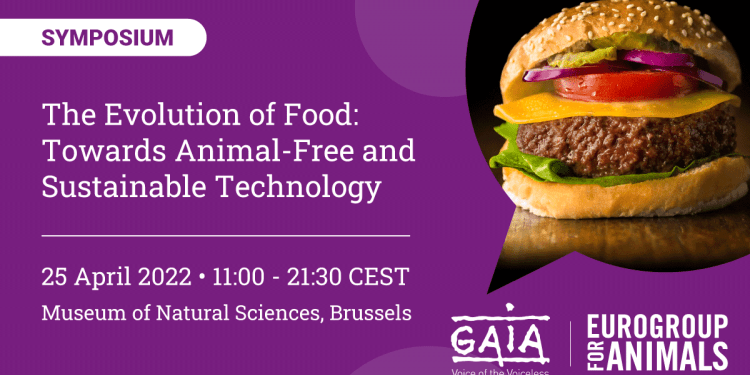
Belgium: The evolution of food: towards animal-free and sustainable technology.

28 March 2022

GAIA (Belgium)

GAIA and Eurogroup for Animals are delighted to welcome you to Europe’s first-ever symposium on animal-free and sustainable meats, which will be held on 25 April at the Museum of Natural Sciences, Brussels.

Novel technologies, including cultivated meat and precision fermentation, are challenging conventional meat production. Which barriers still exist? What are the environmental and social benefits? And what is the perception of consumers? 

Come join us together with international experts who will help clarify, debate and answer such questions and many more. We’d like to take this opportunity to announce the highly esteemed Jane Goodall will be our virtual guest of honour during the event.

Agenda

Please find a copy of the agenda here.

Registration

Kindly note that you first need to fill in your email address on the registration page in order to proceed to the actual registration form. You can find the registration form here.

To go further

You can watch our short video series or read our FAQs that answers your most pressing questions.

Regards Mark

Enjoy !