


Almost 500 cats and dogs were treated at a pop-up shelter in Athens in the course of one week as the wildfires raged (Photo: Dogs Voice)
How animal charities are racing to save dogs, deer, hedgehogs and tortoises from Greece wildfires
Volunteers have been working round the clock to rescue pets and wildlife – from cats to deer -caught up in the fierce blazes
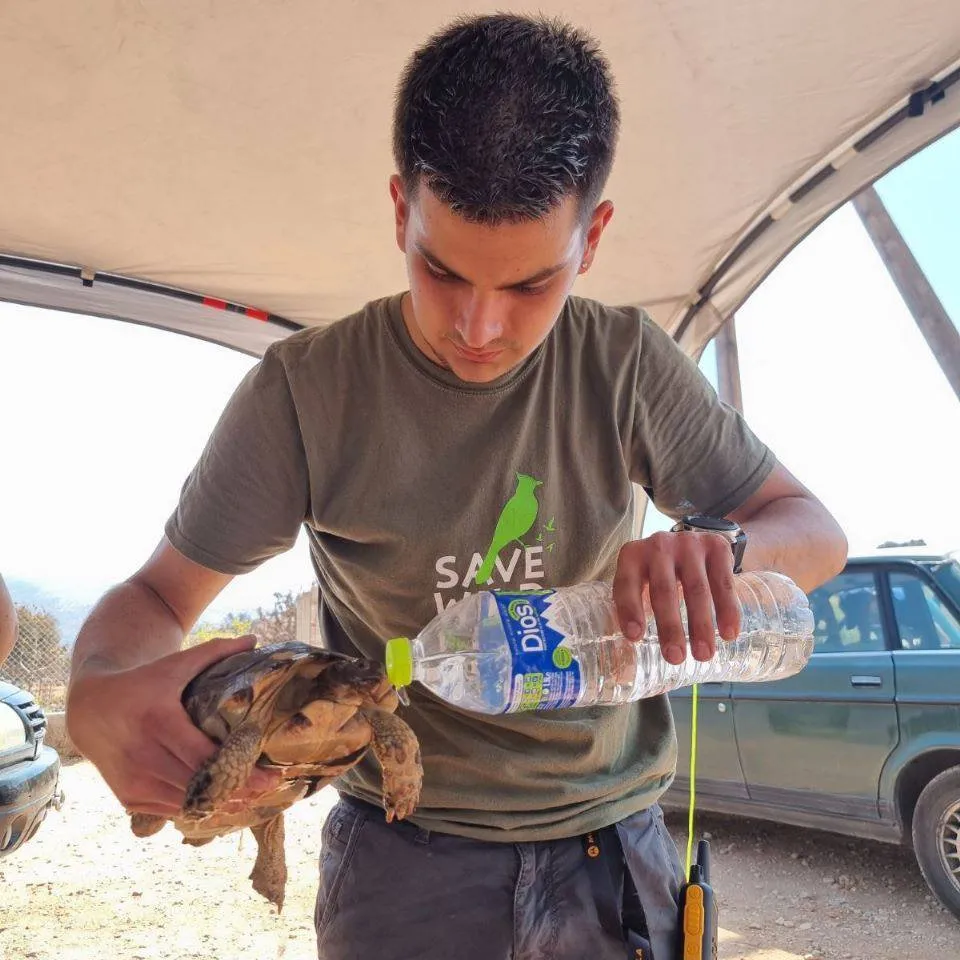
Teams of volunteers from charity Anima have been going out to the areas where the wildfires have burnt to rescue and treat wildlife (Photo: Anima)
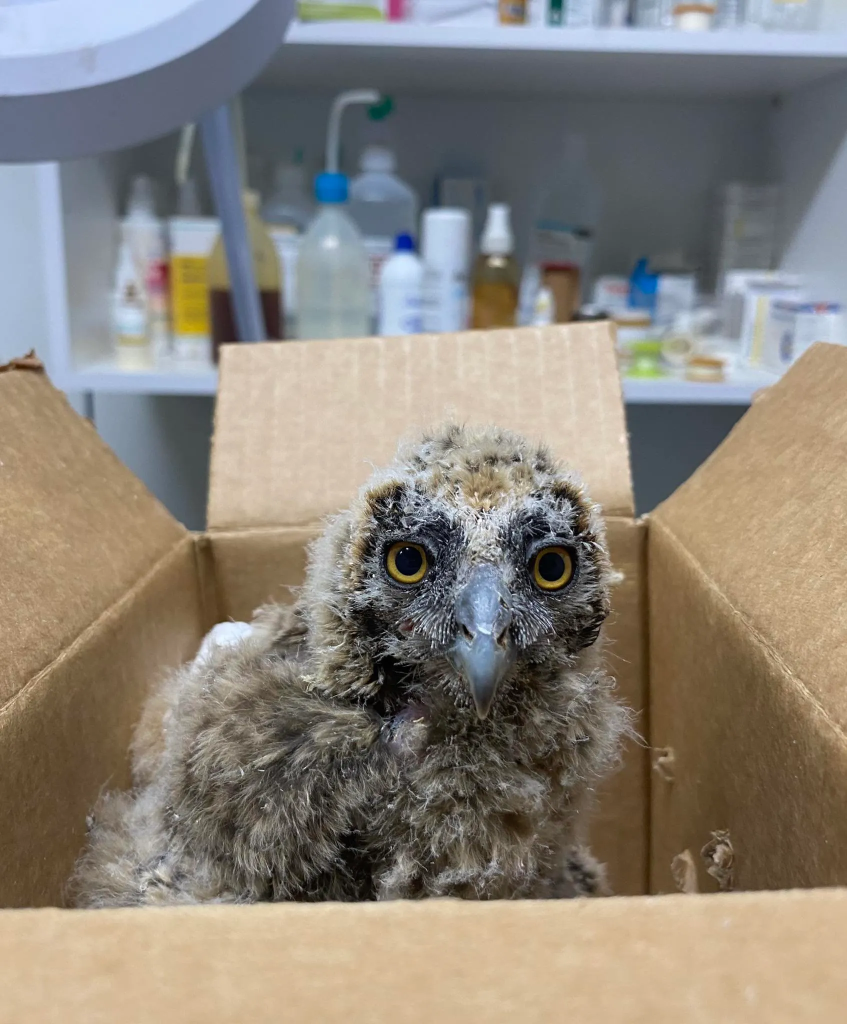
Among the vulnerable wildlife are chicks abandoned in nests as the fires take hold (Photo: Anima)
Greece’s wildfires have ravaged the landscape and taken their toll on the human population, but they have also been a disaster for animals – and animal charities are on the frontline of the scorched habitats.
Continue reading at:
Regards Mark

In one week, Dogs’ Voice treated 444 dogs, cats and one parrot at the shelter in the Greek capital (Photo: Dogs’ Voice)


Demand Justice for Six Kittens Brutally Tortured and Killed in Chicago
Girlfriend Turns Serial Kitten Killer Into Police, Says He Wouldn’t Stop Buying Cats to Torture: Report
He’s been arrested and charged with animal torture
Published 07/12/23

A 22-year-old Chicago man has been arrested and charged with aggravated animal cruelty after his girlfriend found videos and images on his phone of kittens being violently killed.
Thomas Martel is accused of killing at least six kittens in the past three months and buying lookalikes on Craigslist so his mother wouldn’t become suspicious, CWBCChicago reports.
Even more horrific details were revealed in a bail hearing this week reported by The Daily Beast, with prosecutors alleging he drowned and microwaved the kittens.
Judge Kelly McCarthy called it “a pattern” of “going back again and again.”
“Killing an animal, going out and get a replacement. Kill that one, get a replacement. Kill that one, get a replacement,” she said. “And, unfortunately, this was allowed to continue for a sustained period of time and numerous animals lost their lives.”
Martel’s girlfriend, who remains unnamed, says he told her “he enjoyed killing cats and he had been like that since he was eight years old.”
She alleges Martel bought at least five different, but similar-looking, kittens named Shelly over a few week period — each time the previous Shelly disappeared or died.
According to The Daily Beast, when she tried to tell him to stop buying cats he immediately called asking for money to buy another kitten.
She also told authorities he admitted to killing three cats in the microwave, which led them to discover a black, foul-smelling bag in the pantry with parts of “multiple” kittens.
Martel faces four counts of animal torture and two counts of aggravated animal cruelty.
He turned himself in to the police on Monday and is undergoing a week-long mental health evaluation, CWBCChicago reports.
The FBI’s Law Enforcement Bulletin in a post from 2021 discusses animal cruelty and its link to violence against humans. Studies suggest violence against animals is a predictor of future offenses, including domestic violence, arson and weapons charges.
Officials encourage those experiencing or witnessing domestic violence or violence against animals to contact The Humane Society of the United States or the National Domestic Violence Hotline at 800.799.SAFE(7233).
***************************************************************
Chicago Man Accused of Brutally Killing Cats and Replacing Them With Lookalikes
HORRIFIC

Some of the kittens may have been microwaved, a prosecutor said.

A Chicago man has been accused of killing at least six kittens since May and buying lookalike replacements of the animals so that his mother wouldn’t become suspicious.
Prosecutors have charged Thomas Martel, 22, with four counts of animal torture as well as two counts of aggravated animal cruelty, according to CWBChicago.
At a bail hearing Tuesday, Cook County Assistant State’s Attorney Sarah Dale-Schmidt detailed horrific allegations of brutality in which she claimed Martel drowned and possibly microwaved the kittens.
Police reportedly became aware of the alleged cruelty last month when Martel’s girlfriend gave authorities disturbing images and videos she found on his phone, including one picture of a living kitten captioned “just before I murdered her.”
Prosecutors claim he also recently told his partner that “he enjoyed killing cats and he had been like that since he was eight years old.”
At one point during his alleged spree, Martel’s girlfriend said he kicked her out after she told him he had to stop buying cats—only to immediately call asking for more money to buy another kitten.
Martel’s girlfriend also said he later told her he had microwaved three cats and put them in the pantry of his apartment, where police subsequently found a bag containing what looked like parts of “‘multiple’ kittens,” according to Dale-Schmidt.
Martel turned himself into police on Monday.
Regards Mark and Diana
Animal rights campaigners urge Pope Francis to denounce bullfighting
Animal rights campaigners urge Pope Francis to denounce bullfighting | Reuters
VATICAN CITY, July 28 (Reuters) – A group of animal rights activists gathered near the Vatican on Friday dressed in red capes and fake horns to urge Pope Francis to denounce what they see as the barbaric practice of bullfighting.
The corrida, in which the animal usually ends up killed by a sword thrust by a matador in shining costume, is seen by supporters as an age-old tradition to be preserved, but condemned by critics as a cruel ritual.
“Catholic Church: Silence is Violence! Denounce bullfighting,” read a banner held up by the activists near the ancient Roman Castel Sant’Angelo fortress on the banks of the River Tiber, in view of St Peter’s Basilica.
Since bullfighting events “are often held in honour of Catholic saints or during holy Christian celebrations, the Catholic Church can and must help end this abuse by publicly condemning bull torture in the name of religion,” animal rights group PETA said in a statement.
“We are asking the pontiff, the pope, as the representative of the Roman Catholic Church, to publicly condemn, to denounce the torture that is done on bulls in the corrida,” Patrizia Re, a spokesperson for PETA Italy, told Reuters.
The Vatican’s press office did not immediately respond to a request for comment. In 1567, Pope Pius V did outlaw bullfighting, calling the practice “alien from Christian piety and charity” and “better suited to demons rather than men”, but his ban eventually lapsed.
Reporting by Antonio Denti Writing by Alvise Armellini Editing by Peter Graff
Bless you my children !
Regards Mark


Italy bear attacks: Animals behind Alpine attacks spared slaughter
Italy bear attacks: Animals behind Alpine attacks spared slaughter – BBC News

Activists stood outside the court in Rome calling for the cull to be halted
A top court in Rome has ruled that a culling order for two bears in northern Italy should be suspended, backing an appeal by animal rights activists.
One of the bears, a 17-year-old female called JJ4, was captured after it killed jogger Andrea Papi in the Alps.
The other, known as MJ5, had attacked a hiker in the same area weeks earlier.
Italy’s Council of State said the slaughter ruling “appears disproportionate and inconsistent with supranational and national rules”.
The case will now be referred back to a local court for a final appeal by the end of the year.
When JJ4 was captured in April the governor of Trentino province, Maurizio Fugatti, said “we would have liked to kill the bear on the spot”.
Mr Papi, 26, was the first Italian known to have been killed by a bear for years. He had been jogging on the slopes of Mt Peller above the town of Caldes when he was attacked.
JJ4 was taken to an animal care centre near the city of Trento but to this day MJ5, a male bear who attacked a 39-year-old hiker in March, continues to roam free in the Brenta Dolomites mountain range.
However, both bears faced a slaughter order and their case was taken up by animal welfare groups who said the animals were a protected species in Italy.
The local administrative court put a hold on the order until December, to allow further evidence to be submitted and for animal rights groups to find an alternative to slaughter.
Italy’s environment minister said he too was against the cull and last week the government said that authorities in Romania were ready to admit JJ4 to a sanctuary for rescued brown bears, described as the biggest of its kind in the world with a population of more than 100 animals.
Another alternative proposed by animal rights groups is for a reserve to be set up in the Trentino area.
Judges at the Council of State in Rome found on Friday that the slaughter ruling seemed disproportionate. Brown bears were protected by a 1979 Bern Convention on wildlife, they said, and international norms required that “the measure of culling represents a last resort”.
Exceptions to a ban on killing a protected species could only be allowed “on condition there exists no other valid solution”, they added.
The alpine row over problem bears
Brown bears were reintroduced to northern Italy in 1999 under a European conservation project called “Life Ursus”, but their numbers have gradually climbed beyond 100.
The Trentino governor has said the province now has some 70 “excess bears” and has accused activists preoccupied with JJ4’s fate of being ideological.
The recent attacks triggered alarm locally and local mayors threatened to resign if action was not taken to bring the numbers down.
The animal welfare groups who brought the appeal to Rome said that Friday’s ruling “gives confidence and hope to those fighting for a reprieve for the animals condemned to die by the autonomous province of Trento”.
Regards Mark

New study reveals 4.2 million animals used in just three test categories for REACH – and numbers are still rising
28 July 2023
A recently published study, co-authored by the Centre for Alternatives to Animal Testing (CAAT), reveals that 4.2 million animals have been used to date to comply with the REACH Regulation in three test categories: repeated-dose toxicity, developmental toxicity, and reproductive toxicity.
The Registration, Evaluation, Authorisation and Restriction of Chemicals (REACH) Regulation (EC 1907/2006), which came into force across Europe 16 years ago, is the most important piece of EU legislation to protect human health and the environment from the risks that chemicals can pose. It requires the chemical industry to test the safety of all chemicals used in their products. Although animal testing is only allowed as a last resort for safety assessment, i.e. when there is no other non-animal method to obtain the safety information, a large number of animals are still used for this purpose. However, the exact number is neither clear nor publicly available. Therefore, the authors of the study identified the animals used under REACH for the above-mentioned test categories, which represent the majority of animal use under REACH. Based on a direct count of animals in REACH dossiers since 2009, the study shows that approximately 2.9 million animals have been used to date and a further 1.3 million animals are being used in ongoing chemical tests. As compliance checks continue, it is expected that more animal testing will be required.
The study provides clear evidence that the number of animals suffering and dying for chemical testing has been vastly underestimated. The figures for the three test categories analysed to date already far exceed the European Commission’s original estimate of 2.6 million animals that would be used for all test categories as a result of the implementation of the REACH Regulation. The main reason for this difference is that the European Commission’s estimate did not include offspring, although they represent most animals used for REACH. Other reasons include surplus animals to ensure sufficient survival to meet the minimum testing requirements, and additional test animal groups. The authors of the study continue to count all animals used for all test categories in order to obtain a direct estimate of animal use under REACH. Roughly speaking, the number of animals used for other test categories is estimated at between 0.6 and 3.2 million.
The figures are published to coincide with the European Commission’s revision of the REACH Regulation which is likely to expand and increase animal test requirements despite the legal requirement to only use animals as a last resort, the 2021 vote by the European Parliament to phase out such tests in favour of innovative animal-free science, and the well known limitations of animal tests. For instance, an additional 3.5 to 6.9 million animal tests are expected due to the 2022 amendment of REACH. Although the analysis of the use of non-animal test methods was beyond the scope of the study, the authors reported issues with the “read-across” approach (i.e. predicting toxicity by comparison with structurally similar chemicals that have already been tested). ECHA reports that in 75% of cases, read-across methods were rejected during compliance checks, often due to an unsatisfactory justification, triggering the request for animal use to cover the toxicity test.
It is clear the effects of chemicals on human health and the environment are still very poorly understood, with a staggering 70% of EU substances still ‘with poor characterisation of their hazards and exposures’. When we need to communicate or travel, do we resort to antique phones or vintage cars? Of course not. We use the most up-to-date models available, so why is the same not true for chemical safety and research, when such a critical objective- the protection of human health and the environment – is at stake? The implementation and use of non-animal approaches that provide more biologically relevant data is considered by the scientific community to be long overdue and urgently needed to overcome the problems of animal tests, which cannot reliably predict human safety.
In line with the Commission’s commitment to ultimately move to an animal-free regulatory system under chemicals legislation, it is time for regulators and stakeholders to move beyond rhetoric and leave the old ways behind, by taking action to i) make better use of existing methods and; ii) invest in the development of new scientifically advanced, non-animal approaches to better protect human health and the environment. This can and must be done in a risk-free, measured, intelligent way, not only to assess – but also to improve – protection levels for human health and the environment.
Regards Mark

Wow, what a start! We’re just four days into our crowdfunder and we are already at £13,000, meaning we are nearly a third of the way to reaching our target of £40,000.
Thank you to everyone who has donated so far – our advert will have a huge impact in changing people’s minds and we appreciate your support.
If you haven’t yet, will you donate today to help us keep the momentum and reach our next goal of £20,000?
If you can’t donate right now, we completely understand. You can still help by sharing our page with friends, family and colleagues so we can reach as many people as possible.
Also, take a look at a behind the scenes interview with actor, Antonia, who starred in our advert, below.
Thanks again for your support. We wouldn’t be able to do this without you.
Yours for the animals

Juliet Gellatley
Founder & Director
Donate to the tv campaign –
Vegan TV Ad – Takeaway the Meat Crowdfunder | Viva! The Vegan Charity
Regards Mark

Malta – ‘Enforcement is very weak on all animal welfare legislation’ – Commissioner Alison Bezzina
The Ministry for Animal Rights recently unveiled its three-year plan for animal welfare reforms, which has brought the issue back into the public eye and revived discussions on related matters.

In an interview with The Malta Independent on Sunday, Commissioner for Animal Welfare, Alisson Bezzina, reflected that she is extremely happy that the ministry has taken on her recommendations for legislative changes that would benefit animals, saying that a lot of the suggestions that she made over the years have been included as part of the planned reforms.
Regards Mark
—————————————————————


Want to know more about our past Serbian stray dog and cat campaigning ?
Click here to view: Serbian Animals Voice (SAV) | a voice for the voiceless
Want to know a bit more about all our past work ?
Click here to view: About Us. | Serbian Animals Voice (SAV)
(hope you are a bit of a fast jet head)
Regards Mark

Animal rights and environmental campaigners snarl over animal testing ban
Read more:
Animal rights and environmental campaigners snarl over animal testing ban – POLITICO

NCBA President Hits Back at Animal Rights Activists and Policymakers Attacking the Beef Checkoff
Read more:

