WAV Comment: Lets hope that this EU legislation provides better protection for research animals than the farce named (EU) Regulation 1/2005 which is supposed to ‘protect’ live animals during transport. That certainly does not work and never has. Bets on this being any better please !
Regards Mark
Improving the Reporting on the implementation of Directive 2010/63/EU
Directive 2010/63/EU is the European Union legislation that protects animals being used in research. Directive 2010/63/EU is the European Union (EU) legislation “on the protection of animals used for scientific purposes” and is one of the most stringent ethical and welfare standards worldwide. The Directive repealed Directive 86/609/EEC.
The present report provides recommendations that can improve Member States’ reporting on the implementation of Directive 2010/63/EU.
A better and more harmonised reporting by Member States will further increase transparency and openness, and will enable the assessment of the effectiveness of the implementation of Directive 2010/63/EU among all Member States.
Our recommendations are based on the new reporting requirements set out in the sections of Annex II of Commission Implementing Decision 2020/569/EU, and on best practices among the replies of the Member States to the EC 2018 survey on the implementation of Directive 2010/63/EU.
Check the individual EU member state reports here:
This report provides recommendations that can improve member states reporting on the implementation of Directive 2010/63/EU.
28/7/22 – Dear all; here are the latest collection of wonderful rescues sent to us by Erika and the team at Animal Aid Unlimited.
I hope you will enjoy watching these rescues and recoveries; and then please consider giving a donation and / or buying from the shop – the link which is given towards the end.
Little Georgie and the story of his rescue just in time, along with the draining of a huge cyst, just goes to show that if you show animals kindness and help, they will give love and affection in return. A lot in return for giving of little. Please consider giving after watching his rescue story.
Thank you and regards
Mark.
——————————————
Dear Mark,
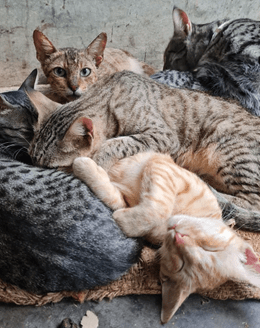
Our Cat Area for many years hosted very few patients, and in fact 7 years ago we didn’t even have a cat area. In the past few years, however, the number of cat rescues have steadily increased, and now our hospital serves (because what human isn’t the servant of their cats?!) an average of 15-20 cats on any given day.
Many are tame enough to pet and play with, suggesting that they’ve had exposure to humans as kittens but some are feral.
We are not sure as to why the number of cat rescues went up – whether because of their growing population, or perhaps due to the increased awareness on the part of the community.
In the very few parts of India where the dog population in under control thanks to spay and neuter – such as several areas of Mumbai – the cat population has increased to the point that some sterilization programs focus on cats rather than dogs. Amazingly, they have also learned how to live together: if you walk in the street of Mumbai, you will easily spot dogs and cats hanging out side by side!
Thank you for your generous support allowing us to help the cats of Udaipur who have been injured by dog bites, accidents, falls, and illnesses.
Would Mitchell be able to walk after his head injury?
Neighbors saw a dog collapse after being hit by a car and immediately called our helpline. We advised them not to move him, and we’re so glad they didn’t because with the first touch, this completely disoriented dog bolted in confusion from the head trauma, which could have caused him even more injury.
Within hours, he began to show signs of slight improvement and his eyes seemed to grant us permission to gently touch him. But the biggest surge of hope we experienced in those first hours was his ability to coordinate his head movement enough to eat by himself. For several days we needed to watch him around the clock. And within a few days of light physiotherapy, Mitchell managed to stand on his own. There’s an old saying: “the rest is history.” For Mitchell, “the rest is a future.”
Georgie’s rays of sunshine will light up the corners of your heart.
Whatever size the package is, love is huge, isn’t it? This gorgeous puppy was almost buried under an enormous pocket of fluid that had collected around an infection. We drained the fluid and treated him with antibiotics. We believe that we rescued him just in time – meet Georgie now!
Ever-loving Joey can’t believe he snapped and growled during his rescue!
Neighbors were shocked to find a local street dog hiding in pain. But what was wrong? There was no blood, no sign of trauma. When our rescue team arrived the poor boy growled and even threatened to bite. We now know the reason was his tremendous pain and fear: something had injured his spine. But though it would take 4 weeks to heal, within hours, his fears were replaced by continuous smiles.
Our protocol for spine injury calls for bedrest along with other medication and care. For a young dog especially, this confinement is really tough. But receiving loving visits, watching the activities of the people and other dogs all around him, meant that Joey’s emotional life was cheerful as he waited patiently for his bruised spine to heal. Meet Joey today–better than ever.
Healing can come from a complicated surgery or a place to rest, be fed and be loved.Please donate today
Thank you Rachel!
Deep thanks to Rachel, returning volunteer and kind friend to animals and all of us. Rachel, an air-traffic controller from the UK, once again brought lots of wonderful supplies, donated funds she herself gave and raised from others; gave energy and appreciation to staff and other volunteers, and best of all, gave non-stop love for the animals.
Give a simply spectacular gift:
Animal Rescue.
All items are donated and 100% of proceeds used for animal help.
First of all – apologies for the delay to this week’s newsletter. You can blame Joe Manchin for that.
The disintegration of President Biden’s climate agenda was playing out almost perfectly in sync with new, graphic reminders of why such an agenda is necessary, with extreme heat and wildfires scorching the US, UK, France, Spain and several other countries.
Biden had vowed he “won’t back down” in tackling the climate crisis, even though in the past month the conservative-leaning US supreme court restricted his administration’s options to do so and a sweeping renewable energy bill appeared to suffer a protracted, inglorious death in Congress.
Then, suddenly, unexpected hope. On Wednesday night Manchin, the West Virginia senator who also happens to own a coal trading company, decided, after all, he was going to support a $369bn package to boost renewable energy rollout, proliferate electric vehicles and aid the direct victims of fossil fuel pollution.
The U-turn by Manchin, a crucial swing vote in an evenly divided US senate and until now a nemesis of Biden’s agenda, provoked both shock and jubilation. Al Gore said it could prove an “historic turning point”. The US, after decades of denial, delay and dysfunction, may finally have policies in place to deal with the climate crisis, giving the world a chance to avoid truly disastrous heatwaves, droughts, floods and other climate impacts.
There are major caveats. Manchin is in favour of expanded oil and gas drilling, citing fears over inflation, and so new leases on public land will be pushed by the bill, giving it a rather contradictory status as a lifeline that also locks in fossil fuel production for decades to come.
But it at least provides a glimmer of hope of addressing a crisis that is unfolding in real time. Temperatures have soared to 46C (115F) in parts of the US over the past week, placing about a third of the population under dangerous heat conditions. At least 20 people have died due to the heat, while so many livestock have died that farmers have resorted to shoving them into landfills.
Wildfires, now a year-round threat in the US west, have chewed up land with such ferocity the federal government has scrambled emergency interventions to save California’s sequoias, the largest trees on Earth, from burning. A fifth of these enormous trees, previously seen as virtually indestructible, have been lost to fire in just the past two years, with officials setting up a system of sprinklers in desperate bid to save Grizzly Giant, a fabled tree that dates back to the time of Jesus and stands more than 200ft tall.
Many climate activists want Biden to do more, urging him to declare a climate emergency that would unlock new presidential powers, as well as ban new oil and gas drilling on public lands. Even with the prospect of long-overdue legislation, these calls will only grow as the climate crisis takes a worsening toll on America.
Proefdiervrij launched a campaign and petition calling for non-animal science solutions to the human organ shortage.
There is an ongoing chronic shortage of suitable human organs for life-saving transplantation. Animal to human transplantation, known as xenotransplantation, has been heralded as the solution to save patients’ lives. Earlier this year, a US man became the world’s first person to get a heart transplant from a genetically modified pig. Unfortunately, the patient died two months after the transplant.
Proefdiervrij are countering this movement to regard animals as spare parts for humans with their online campaign Niet. Gewoon. (Not. Normal.). The foundation that strives for a future without animal testing thinks it is not normal to make animals suffer for the sake of people and wants to make people think more about this controversial subject.
Proefdiervrij wants to move away from outdated methods that cause pain suffering and distress to animals and is focused on human-oriented methods to solve the donor shortage, including a growing investment in disease prevention, the improvement of the still ineffective system of organs donations, and on furthering the technologies that are already providing solutions for some transplantation needs.
For example, at the end of 2021, researchers at UMC Utrecht implanted a complete artificial heart for the first time in the Netherlands. The outside of the heart is made of plastic and the inside is lined with biological material. At the time of this transplant, this was still animal material, but in the future this could hopefully also be human tissue.
Culturing human organoids is also a step towards cultivating organs. Researchers in America have already developed a 3D biological structure for organs that will hopefully one day allow us to grow fully functional human organs in the lab.
Organ regeneration is the body’s ability to repair damaged tissue itself. UMC Utrecht has a department that focuses entirely on regeneration. This department investigates, for example, the regeneration of cardiovascular tissue.
Biomimicry uses synthetic materials and grows tissues from the patients’ own stem cells, which also carries less risk of organ rejection than using animal organs.
In the Netherlands, animal organ transplantation is prohibited.
And it should stay that way. Using animals to solve human problems is a step back in time and we want to prevent donor animals from becoming the new generation of laboratory animals.
Debby Weijers, director of Stichting Proefdiervrij
New study highlights need to shift towards the use of non-animal ingredients in in vitro methods
25 July 2022
The European Commission, academia and animal protection organisations co-authored a study to identify challenges and put forward proposals to promote the use of non-animal ingredients in in vitro methods.
Non-animal methods are increasingly used in research and testing, but some of these methods still use animal-derived components. Cell- and tissue-based models routinely use, for example, coating materials, growth factors and antibodies that are derived from non-human animals. These animals can experience severe pain depending on the procedures they are subjected to. Besides the ethical concerns, the use and production of animal-derived components also raises many scientific issues, generally associated with the presence of undefined components and batch-to-batch variability, which may compromise the trustworthiness of the experimental results. However, non-animal components are becoming increasingly available, and their use is encouraged in EU legislation and in guidelines of the international Organization for Economic Cooperation and Development. Non-animal components include, for example, human cells, alternatives to animal sera or non-animal recombinant antibodies.
The European Commission’s Joint Research Centre, Oltre la Sperimentazione Animale, the Centre for Predictive Human Model Systems, Atal Incubation Centre-Centre for Cellular and Molecular Biology, the Animal Welfare Academy of the German Animal Welfare Federation, and Eurogroup for Animals carried out a study that maps the current state of use of animal-derived ingredients across different sectors and identifies challenges hampering the large implementation and use of non-animal derived alternatives. In particular, the new article provides ideas to: increase awareness about non-animal products/ingredients; improve accessibility of reagents and protocols; and increase funding for the replacement of animal-derived components.
Photo – Konrad Lozivfski – What a Beautiful Sight – A closed and rotting fur farm !
Skinning the fur industry
27 July 2022
The fur industry in Europe may now be facing the same fate as the animals it farms: restricted conditions followed by certain death. Twelve EU Member States have established a full ban on fur farming, three a partial ban, while a further five are considering a ban.
The laggards include Finland and Poland, the EU countries with the highest number of fur farms. Unfortunately, they will likely only be prodded into managing the closure of these businesses by a full ban instituted at EU level across all 27 Member States. Which is why that’s our goal!
Farms on their back paws
Meanwhile in Denmark, following the 2020 COVID-19 outbreak on several hundred mink farms, the Danish government moved to offset the danger to people and other wild animals by instituting a temporary ban on farming and ordering a controversial cull of millions of animals.
The WHO recently confirmed that the infection and spread of SARS-CoV-2 in animal populations could lead to the emergence of new variants that are then passed back to humans. Despite this warning and the Danish public health institute in May highlighting the continued risk of mink farms as potential virus reservoirs, the ban in the country is only due to last until the end of the year.
Fortunately, the vast majority of Danish mink farmers have decided against restarting their operations: 1,243 chose the government compensation on offer for shutting down completely, while only 15 opted for a temporary suspension.
This overwhelming choice strongly indicates that the fur industry has lost a lot of its enthusiasm for what is increasingly seen as an abjectly cruel business that forces inherently wild species to spend their lives in cramped cages, unable to enjoy any natural behaviour.
But, even if Denmark is playing a much smaller role in EU exports of mink and fox skins, these still amounted last year to 4,557 tonnes, with a value of €696,586,228. These numbers are thankfully way down from 2019, when the EU exported over 8,000 tonnes worth nearly a billion. The figures for 2022 will no doubt be even lower, but we are looking forward to 0 tonnes and €0.
In 2019, there were 2,900 mink farms in the EU. Now, there are well under 800. The fur industry is definitely in decline, but we need to bring it to a definitive end.
Scraping the fur off European shelves
Farming is, however, only one side of the fur industry; the other is products including fur from beyond Europe, which are, astonishingly, still on sale in every Member State. This is why our European Citizens’ Initiative Fur Free Europe is not just seeking a ban on keeping and killing animals on fur farms, but also pushing for legislation to make it illegal for any farmed fur to be sold throughout the EU.
From an animal welfare point of view it makes little difference where an animal is bred for fur, as intensive farming of fur species in wire mesh cages is similar worldwide. This part of the business is also on the decline: EU imports of mink fur amounted to over 800 tonnes in 2019 but decreased to just 200 tonnes in 2021. But again, we’d like to see those numbers drop to zero.
Banning the fur trade in the EU would make Europe a worldwide role model alongside a growing number of American cities and states that have put an end to fur sales.
So join us in making a global difference by adding your signature to the campaign. Let’s bring relief to countless animals whose suffering cannot be quantified.
You could say it is a very, very welcome, FUR OUT; hopefully forever.
Pioneering conference on animal welfare in Invasive Alien Species management
22 July 2022
We are closing the bridge between animal welfare and conservation. The “Conference on the management of vertebrate Invasive Alien Species (IAS) of Union concern – incorporating animal welfare” was held on 12 July 2022 in Brussels and gathered 150 experts in wildlife management from across Europe to discuss how to improve animal welfare in IAS management.
The Conference is the final milestone of a project assessing the animal welfare implications of management methods for IAS on the Union list. The manual detailing the assessment will be published by the end of the year. Based on these outcomes, wildlife management practitioners will be able to select the most humane methods, while also taking into consideration the cost-benefit analysis to maximise efficiency. This Pilot Project is funded by the European Commission and implemented by a consortium of academics, conservation and animal welfare organisations, including Eurogroup for Animals.
The participants to the Conference represented a wide range of wildlife management stakeholders including field practitioners, academia, civil society and competent authorities. They could discover the content of the manual presented by the consortium, learn from case studies across Europe on the management of various species and exchange on the gaps, best practices and ways forward for the management of mammals, birds, reptiles and fish species of the Union list.
During the Conference, Eurogroup for Animals and its members highlighted the necessity to raise awareness and find solutions to
Better prevent the introduction of IAS in Europe,
Develop innovative methods that minimise animal suffering when management is needed to protect biodiversity.
In this context, it is essential to explore the possibilities of fertility control and similar non-lethal management methods for the species of the Union list. Such solutions could enable a better implementation of the IAS regulation. The latter indeed provides the use of methods that do not cause avoidable pain, distress or suffering.
Based on the research conducted and the outcomes of this productive Conference, Eurogroup for Animals calls on the EU to build on this momentum, conducting further research needed to develop humane management methods for the IAS of the Union list.Additionally, following this important project, Eurogroup for Animals calls for the inclusion of welfare in management to be legally binding, as well as the publication of a list of prohibited management methods which fail to meet high welfare standards.
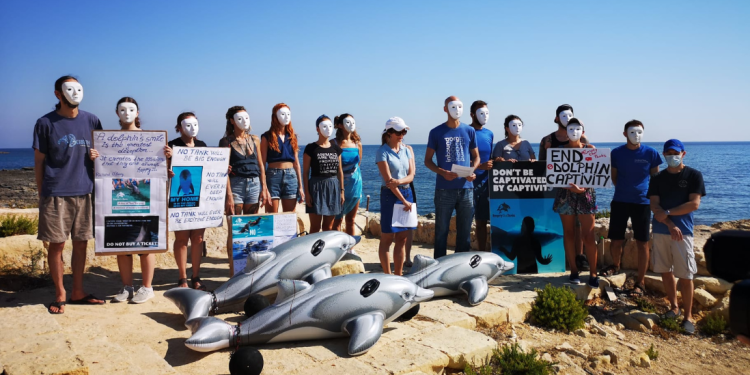
Animal organisations put spotlight on deaths of 3 dolphins in 1 month at Maltese dolphinarium
26 July 2022
Animal Liberation Malta (ALM) has revealed that that between August and September of 2021 three female dolphins died at the Mediterraneo Marine Park at Baħar iċ-Ċagħaq, Malta.
The news was never made public nor was it registered in the non-profit cetacean register Ceta-Base, as is common practice in other international wildlife parks.
Two of the female dolphins that died, named Onda and Mar, were believed to be around 20 and 25 years old respectively, had been caught in the wild in Cuba and kept at Mediterraneo since 2000, the group said.
The third dolphin, Melita, was just seven years old and was born in the park in 2014. She never swam in the open sea.
ALM also called upon authorities to investigate why Mediterraneo is allowed to operate under a zoo licence, when their dolphin shows acted as a “permanent aquatic circus”. The law, they said, defined circuses as places where animals are introduced for the purpose of performance and shows, which Mediterraneo’s dolphin shows offer as a form of entertainment.
Circuses with animal performers have been banned in Malta since 2014.
ALM called on the government as well as the park owners to shut down Mediterraneo and transform it into a rehabilitation center for aquatic animals.
“The location of the park is perfect as it is very close to the coastal shores and Malta would have the opportunity and be the pioneer of not only dolphin care but also of other marine creatures. The remaining dolphins should have the opportunity to be rehoused in sea pens, to live a natural life and end performing displays to the public.”
The Animal Welfare Commissioner Alison Bezzina has opened an inquiry to understand how the investigation was conducted by the government veterinary department.
I was very concerned when first advised of the disappearance of the 3 dolphins from Mediterraneo. A member of the public was told by the park that the dolphins had been moved to a facility in Spain, and contacted us to investigate further on the export. Having contacted authorities in both Spain and Malta, we were advised that the dolphins had not gone to another park but had, in fact, died at Mediterraneo. We continue to work alongside Maltese authorities to discover why the park were not been forthcoming with this information and an investigation is now vital to learn how these animals died, and the true situation at the facility.
Margaux Dodds, Director of UK based NGO Marine Connection
Roadside checks document transport of live animals in temperatures over 36°C without water
25 July 2022
Essere Animali
Roadside checks by Essere Animali investigators document trucks parked in the sun with pigs inside, gasping, visibly out of breath. These are dramatic scenes, but they do not constitute any violation of law, thanks to “an absolutely inadequate EU regulatory system in terms of concretely protecting animals” the organisation states.
Bologna, 21 June 2022 – In these days of extreme heat, the organisation Essere Animali carried out monitoring activities along the A1 motorway, between Lodi and Bologna, to document the conditions of the animals transported for food production.
The organisation’s investigators monitored trucks used for the transport of live animals, intercepting them en route and following them until they arrived at the slaughterhouse. The temperatures were detected through the use of a heat gun, with which it was possible to ascertain the exact temperature inside the compartment of the truck in which the animals were transported.
We have documented trucks that travelled with external temperatures of 36°-38°C and that, upon arrival at the slaughterhouse, stopped for 30 minutes in the sun before unloading the animals. In these cases, it was possible to verify that the pigs were forced to remain in the truck with internal temperatures above 40°C. Unfortunately, the current regulations do not provide for temperature limits inside or outside the vehicle for journeys with a duration equal to or less than 8 hours, merely requiring that the means of transport should be able to protect animals from ‘extreme temperatures’, and prohibiting them from being transported in conditions that expose them to ‘unnecessary injury or suffering’. The lack of objective parameters of reference therefore creates a vast unregulated grey area, which does not facilitate appropriate intervention when the welfare of the animals is not respected.
President of Essere Animali, Simone Montuschi
Regulation (EC) No. 1/2005 on the protection of animals during transport does not place any limit on journeys that last up to 8 hours (or 12 hours if an exemption is granted) with regards to either the temperature inside or outside the vehicle, or the possibility of accessing water; provisions are only in place for long journeys of more than 8-12 hours. In this case, it is specified that the ventilation systems on the means of transport must be designed, constructed, and maintained in such a way that, at any moment in the journey, regardless of whether the means of transport is stationary or in transit, they can maintain a temperature between 5°C and 30°C inside the vehicle, with a tolerance range of +/- 5°C depending on the external temperature.
In a note issued at the beginning of June addressed to the Direction of the Traffic Police and to the trade associations of lorry drivers and veterinarians, the Ministry of Health requires that the transport of live animals must not be carried out with atmospheric temperatures above 30 degrees at the start of or during the journey. However, the reality documented by the investigators of Essere Animali shows that these provisions are not effective in practice, and there is an urgent need for greater legislative protection during transport operations.
If we allow transport for several hours when the outside temperature touches or exceeds 30°C, the pigs inside the trucks, due to crowding and the body heat produced, will be forced to withstand temperatures around 40°C. But the scientific literature indicates that for adult pigs, the thermoneutral zone – that is the range of temperatures within which the animal is able to maintain its normal body temperature – is approximately between 8°C and 25°C. The animals transported in these days of high temperatures were therefore subjected to stress and suffering.
Simone Montuschi adds.
Essere Animali believes that new European laws are needed as soon as possible to better protect animals, as the current ones are too generic, and do not take into account various species-specific requirements and with serious shortcomings, such as the lack of regulatory protection for animals during trips lasting up to 8 hours.
Through the Farm to Fork strategy, the European Commission has set itself the goal of carrying out a complete review of the legislation on animal welfare, including transport and slaughter of animals raised for food, by autumn 2023.
Through the No Animal Left Behind campaign, coordinated by Eurogroup for Animals and supported by dozens of NGOs from all over Europe, Essere Animali calls for the transport of live animals over long distances (longer than 8 hours) to be prohibited. Furthermore, they request the introduction of a range of acceptable external temperatures between 5°C and 25°C, outside of which any transport is prohibited. Finally, fundamental parameters must be clearly defined, such as species-specific and categories-specific conditions for the suitability for transporting animals, as well as the availability of space and method for water administration.
Allowing the transport of live animals when the measured external temperature is 30°C or more, and not providing access to water, is equivalent to not guaranteeing the welfare of the animals. It is clear that the current European laws for the protection of animals are incomplete and inadequate, so we ask the European Union and the Italian government to align the new legislative proposal with current scientific and ethological knowledge.
Simone Montuschi concludes.
The transport conditions documented by Essere Animali are disturbing, and bring to light a reality completely ignored in Italy. A country which, not by chance, was not among the thirteen member states that — on the occasion of the Agrifish Council, among the Ministers of Agriculture and Fisheries on 18 July — came out in favour of an ambitious revision of the regulation on the transport of live animals, which is planned to be presented by the European Commission in 2023. The deafening silence of Minister Patuanelli on such an important issue as animal welfare is unacceptable. Italy once again shows total indifference towards this issue and, on the contrary, unconditional support for a food system based on profit at all costs, as well as on intensive and industrial farming practices that not only exploit other sentient beings as if they were commodities, but also destroy forests, pollute soil and water, increase greenhouse gas emissions, and bankrupt small farmers. This is an unsustainable model for the entire planet, so it is urgent to reverse course without wasting any more precious time.
Eleonora Evi MEP, member of the Committee of Inquiry on the Protection of Animals during Transport (ANIT)
A bear named Bean (shown) fractured his leg, but a supervisor told workers to withhold his prescription pain medication.
From Peta;
A breaking PETA undercover investigation into Yellowstone Bear World, a bear-breeding operation in Rexburg, Idaho, found that workers used traumatized cubs desperate for their mothers in public feeding “encounters,” threatened to beat bears with a stick, denied pain medication to a cub with a fractured leg, and more.
Seeking comfort, this cub tried to suckle while being held in an unnatural position and forced to endure touching and handling by a crowd of visitors at an event at Yellowstone Bear World. (Photo taken by a member of the public in April 2022).
Frantic cubs—who, according to guidelines from the U.S. Department of Agriculture, are too big, too fast, and too strong to be handled by the public—routinely bit, scratched, and bruised workers. PETA’s investigator witnessed a supervisor lash out when a cub named Tootsie bit her, threatening to “throw” Tootsie across the room and rip out her teeth “one by one.”
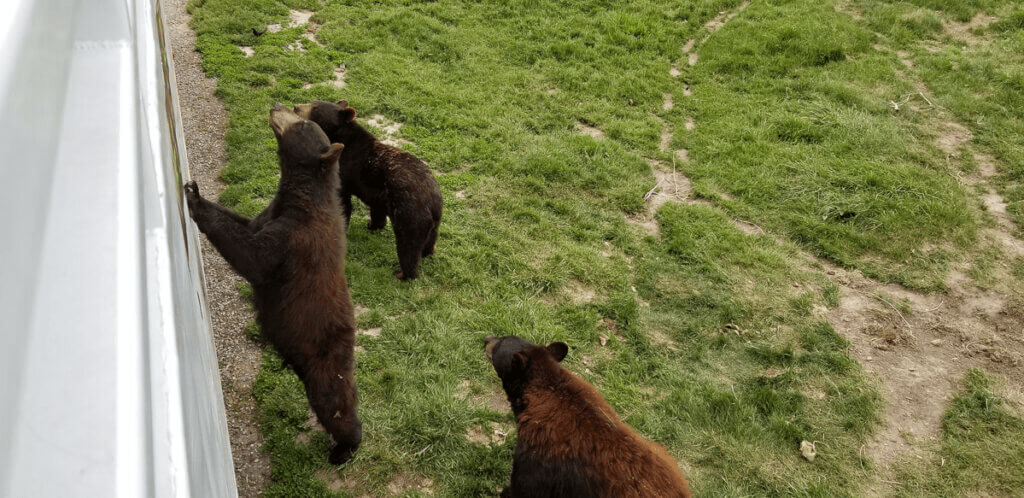
After they become too large to use in profit-driven public encounters, cubs are moved to a drive-through enclosure. There, visitors in tour trucks toss them bread, which is not good for them in excess. They often have nothing to do but beg for food and pace back and forth, a sign of psychological distress.
When the bears are no longer used for public “encounters,” they are confined to a drive-through enclosure where they have nothing to do but beg for scraps of unhealthy bread visitors toss to them from tour trucks.
Help end this exploitation now.
Please ask Yellowstone Bear World to stop tearing families apart and end its cruel breeding operation and stressful public “encounters” now.