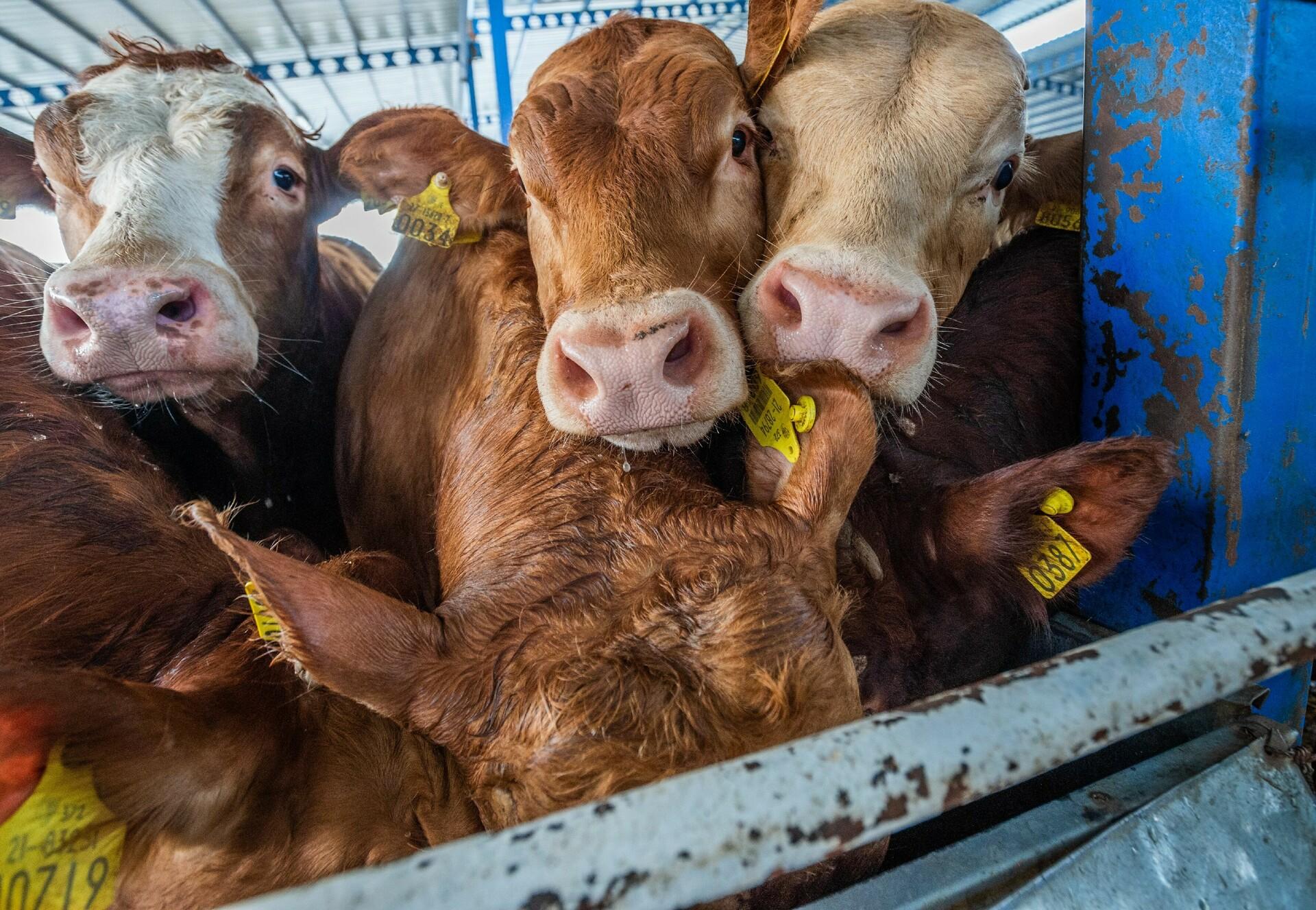
The United Kingdom will ban the import of foie gras and 13 large Italian supermarkets have decided to stop selling this product, considered by the EU as harmful, due to the mistreatment it entails for animals.
While the production of foie gras is illegal in the UK as a cruel practice, the country still imports approximately 200 tonnes of the product from abroad each year.
However, after fierce campaigns by animal rights organizations, the import of foie gras to the UK will finally be banned in a new post-Brexit law.
Animal Welfare MinisterLord Goldsmith has confirmed that he plans to introduce a ban on imports to the UK “in the next few months”.
Lord Goldsmith tweeted: “Foie gras is unbearable barbarism. It’s hard to imagine that anyone can see the process and still enjoy eating it. “ Before Brexit, the UK was subject to laws that considered the product a ‘delicacy’ and integral to French cuisine.
A spokesman for the Department of Environment, Food and Rural Affairs said the foie gras production “raises serious concerns.”
‘These viruses could convincingly spillover from wildlife into either people or animals farmed in the region’
The most likely origin of the COVID-19 pandemic is still the Wuhan wet market, scientists confirm.
Members of a World Health Organization (WHO) delegation to China recently made the claim in a recent Chatham House briefing.
They also found zero evidence to support theories the disease was deliberately made in a lab. Or, that it was caused by an ‘accidental lab leak’.
‘Most likely’ origin of COVID-19
Dr. Peter Daszak is a zoologist and President of NGO EcoHealth Alliance.
The company says it found ‘a viable conduit’ between the Wuhan wet market and where the ‘closest relatives of COVID-19 are found in bats’.
Dr. Dasszak told the Evening Standard: “It provides a link and a pathway by which these viruses could convincingly spillover from wildlife into either people or animals farmed in the region. And ,then [be] shipped into the market by some means.”
He then suggested the disease came from domesticated or farmed animals which then got into the wet market.
Wuhan wet market
It has been long speculated that the COVID-19 outbreak came from a wet market in Wuhan – where live animals are sold and slaughtered alongside dead ones.
According to Animal Equality: “Wet markets get their name in part from the blood, guts, scales, and water that soak the stalls’ floors, remnants of animals brutally killed so customers can eat freshly killed meat…
“These markets are also a threat to public health,” the charity added. “[They] have been the source of documented disease outbreaks in the past, including SARS…
“It’s because of the public health crises wet markets cause, as well as the intense suffering inflicted on farmed animals, that Animal Equality is urging the United Nations to demand a ban on all wet markets. Not only do these markets pose an immediate danger to humans, they are also intensely cruel to animals.”
WAV Comment – Looks Really Cool !! – Things are really starting to move plant based now. That’s the Future.
MINNEAPOLIS TO GET ITS FIRST VEGAN BURGER CHAIN
New vegan burger chain Stalk & Spade—the first of its kind to open in Minneapolis—will expand nationally through franchising starting this spring.
Next month, vegan fast-casual burger shop Stalk & Spade will open in Wayzata, MN, a suburb of Minneapolis. Created by restaurateur Steele Smiley, Stalk & Spade will feature vegan versions of traditional fast food, such as burgers, cheeseburgers, chicken sandwiches, French fries, chicken nuggets, and shakes. All recipes were developed by the team after months of testing.
Smiley believes the plant protein concept can be a market leader and plans to build on the Wayzata location by expanding nationally through franchising, starting this spring. “I’m utterly convinced we’ve cracked the code on plant-based burgers. You won’t know the difference,” Smiley told media outlet Twin Cities Business. “I knew the only way people would come is if the food tastes like classic favorites.”
Plant-based eating is the future
A long time vegan, Smiley says his 11-year-old son inspired him to create the plant-based burger concept when, one night, he asked for a burger while eating at Smiley’s salad chain Crisp & Green. “We’re going to look like a national brand from day one: dine in, order ahead, car-side pickup,” Smiley said. “I believe all-plant eating is our future. It’s exciting to be first.”
Love the plant-based lifestyle as much as we do? Get the BEST vegan recipes, travel, celebrity interviews, product picks, and so much more inside every issue of VegNews Magazine. Find out why VegNews is the world’s #1 plant-based magazine by subscribing today!
WAV Comment – ‘No Objections to the Bill’; your compassion is making a difference.
We see this as a very positive move for the issue of dog meat (farms) in South Korea. But do not stop now, see the newsletter link below for info and to take more actions.
This Bill No.7035, bans the slaughter and sale of dogs and cats as food, and imposes penalties in case of violation. We are also cooperating with the push ahead of the proposed amendment.”
Learn more and further actions:
Click HERE to learn more about the Bill No. 7035 and take actions to help.
PETA is celebrating great news out of China! Beginning on May 1, the Chinese government will allow companies to apply for an exemption to market most imported “general cosmetics”—such as shampoo, body wash, lotion, and makeup—without the usually required animal testing.
This news comes after our determined campaign that ramped up in 2012, when PETA revealed that some formerly cruelty-free companies had quietly started paying the Chinese government to test their products on animals in order to sell them in China. Hundreds of thousands of animals each year have been subjected to tests in which products were forced down their throats, rubbed onto their raw skin, or applied to their sensitive eyes.
After uncovering this, PETA funded training for Chinese scientists in the use of non-animal methods. This work is paying off!
Read more about this breakthrough here. Please continue to support 100% cruelty-free companies when purchasing personal-care products by referring to our Beauty Without Bunnies database of more than 5,200 compassionate companies and brands that don’t test on animals anywhere in the world.
While you’re here, please do more for animals in labs:
The problem is not the individual animal exploiter but the millions of convinced animal exploiters who decide under the fascist privilege of the human race about the life and dignity of an animal.
The devaluation of animals is really so bizarre that it is beyond your imagination.
In autumn 2020 we were on the road together with the “Robin Hood” association(www.robinhood-tierschutz.at) in Slovakia;
The aim of the company was to find a company that apparently operates an active puppy trade.
We noticed the company because of a gaudy website – a serious-looking homepage, then also very professionally made, namely promises great dog luck!
But it immediately catches the eye – this is where the high-level business is done.
From the Akita Inu to the West Highland Terrier, there are all conceivable dog breeds available to order, the animal children are even delivered directly to the house.
The prices for a young life, from 700 euros upwards plus 300 euros for delivery, are relatively high for Eastern conditions (should also represent a ‘quality feature’) but are still only a fraction of those that would have to be paid at the breeder’s site.
In any case, Elitdog – that’s what the soul trader calls itself – is popular and undoubtedly enjoys high earnings.
The fact that these are at the expense of other living beings is, of course, at best a side note of the story for the operators.
The Slovak village, in which the animal traders are based, looks shaken by existence; small single-family houses are lined up, a clear town center is not recognizable.
No structure, prosperity has taken a break. The “big, wide world” happens elsewhere, a life apart from the stream of history.
Our local favourite brother-sister vegan butcher duo will open their second brick-and-mortar later this year. Herbie Butcher’s Fried Chicken is set to open late spring from Aubry and Kale Walch, the pioneering siblings behind The Herbivorous Butcher. The new location on 48th and Chicago in South Minneapolis (735 East 48th Street) will provide comforting and homestyle classics including vegan fried chicken biscuit sandwiches, mac and cheese, seasonal sides, milkshakes, malts, and a fried chicken bucket.
Co-founder Kale Walch said, “Our mission has always been to try to save the world by bridging the gap for omnivores that haven’t quite made the full jump to veganism yet. By making vegan meats and cheeses that are even better than what they were used to, we start to accomplish just that. Herbie Butcher’s Fried Chicken continues our brand’s mission by making a fried chicken that won’t leave anyone questioning if a plant-based lifestyle is possible without sacrificing the foods we love.”
This is second major win for Kale and Aubry Walch who recently stood up to big-time conglomerate Nestlé. Nestlé aimed to trademark “The Original Vegan Butcher,” “The Vegan Butchers,” and “Vegan Butcher,” but met opposition from the siblings and eventually backed down, giving up all claims. Twin Cities residents know that the Herbivorous Butcher’s homemade meat-free meats and dairy-free cheeses are deserving of the term “vegan butcher,” one they have proudly embodied since opening in 2016. Now that Nestlé will not own these titles, it benefits and allows small businesses everywhere to use them.
Announcing a vegan fried chicken concept and trademark victory in less than the span of a month this early in the year is the bit of good news we’ve all been waiting for.
Cultured meat from Eat Just – which debuted in Singapore last year Credit: Eat Just
‘Cultivated meat presents as an achievable low-carbon, cost-competitive agricultural technology that can play role in achieving a carbon-neutral food system’
Cultivated meat, compared with conventional beef, can slash global warming impacts by up to 92 percent, states a new study.
Researchers from CE Delft also found cell-based meat could cause 93 percent less air pollution and use up to 95 percent less land and 78 percent less water.
The studies model a future large-scale cultivated meat production facility. It shows that by 2030, the cost of cell-based meat, when manufactured at scale, could drop to $5.66 per kg.
The LCA analyzes various scenarios. This includes the adoption of renewable energy by both the conventional and cultivated meat industry ‘should they go all-in on their climate mitigation efforts’.
In the most optimistic scenario, which factors in ambitious projections of conventional animal agriculture’s achievements in environmental impact improvements, cultivated meat outperforms all forms of conventional meat.
The LCA shows that cultivated meat, when produced using renewable energy, reduces the cumulative environmental impacts of conventional beef by approximately 93 percent, pork by 53 percent, and chicken by 29 percent.
In these scenarios, the conventional products are also produced using renewable energy.
Moreover, CE Delft says this production cost will enable cultivated meat to ‘compete with multiple forms of conventional meat’. As well as ‘serve as a high-quality ingredient in plant-based meat products’.
‘A carbon-neutral food system’
Ingrid Odegard is CE Delft’s Senior Researcher. In a statement sent to PBN, she said: “We show that cultivated meat presents as an achievable low-carbon, cost-competitive agricultural technology that can play a major role in achieving a carbon-neutral food system.
“This research provides a solid base on which companies can build, improve, and advance in their goal of producing cultivated meat sustainably at scale and at a competitive price point.”
‘Massive reductions in emissions’
Elliot Swartz is a Senior Scientist at The Good Food Institute (GFI). He added: “As soon as 2030, we expect to see real progress on costs for cultivated meat. And, massive reductions in emissions and land use brought about by the transition to this method of meat production.
“This research signals a vote of confidence. It serves as a practical roadmap for the industry to address technical and economic bottlenecks, which will further reduce climate impacts and costs.
“Government investment in R&D and infrastructure will be critical to accelerating the development of cultivated meat. And, help us achieve global climate goals.
Swartz then concluded: “Favorable policies and carbon markets can incentivize the restoration of agricultural land for its carbon sequestration and ecosystem services potential. This maximizes the climate benefits of cultivated meat.”
Alternative proteins
GFI Executive Director Bruce Friedrich also said the world will not achieve net-zero emissions ‘without addressing food and land’. Moreover, he states that alternative proteins are a ‘key aspect of how we do that’.
“Decarbonizing the global economy is impossible with the diffuse production process and range of gases involved in conventional animal agriculture,” Friedrich explained.
“As these new models illustrate… If we can concentrate the environmental impact of meat production in a single, manageable space — and if we power that space with electricity generated from clean energy sources — that’s how the world gets to net-zero emissions.”