And we also know one thing: lazing is contagious
Regards and a good night from Venus
And we also know one thing: lazing is contagious
Regards and a good night from Venus

795 million people are starving – but we feed 56 billion farm animals
Food and Agriculture Organization of the United Nations (FAO) says that in today’s phase of developing its production forces, world agriculture could easily feed twelve billion people normally. So almost twice the world population.
At the same time, according to the World Health Organization (WHO), one billion people are overnourished, that is, massively overweight.
THE REALITY: for the production of only 1 kg of beef are used up to 16 kilos of grain or soybeans and 15,400 liters of water – valuable livelihoods that could feed hungry people.
For comparison: 1,300 liters of water are needed to produce 1 kg of wheat, 255 liters for 1 kg of potatoes, and only 131 liters for 1 kg of carrots.
In industrial livestock farming, food is fed in large quantities – corn, soybeans, and cereals – which the hungry people lack in developing countries.
Large areas are felled or cleared because animals need multiple amounts of feed to “produce” meat or milk. Over 50 percent of the world’s crops are used as animal feed for the livestock of rich countries.

Almost half of the world’s grain harvest and 80 to 90 percent of the soybean harvest go to factory farming.
Due to over-indebtedness, the poor countries are forced to sell high-quality plant food that is necessary for human nutrition as animal feed – even though some of their own population does not have enough to eat.
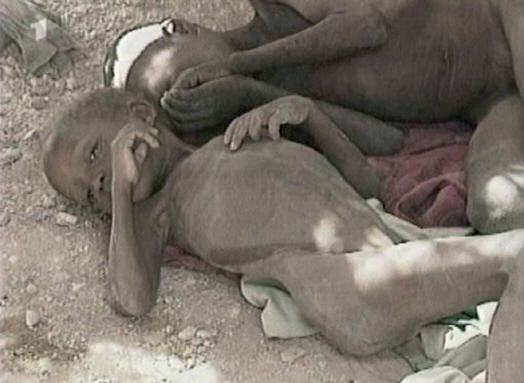
As many as 60 percent of the feed that is fed to industrialized livestock farming in rich countries are imported from developing countries.
In South America, especially Brazil, huge areas of tropical forests are being cleared to grow soy. By the way, the world’s largest buyer of Brazilian soy is Germany – almost exclusively feed for factory farming.
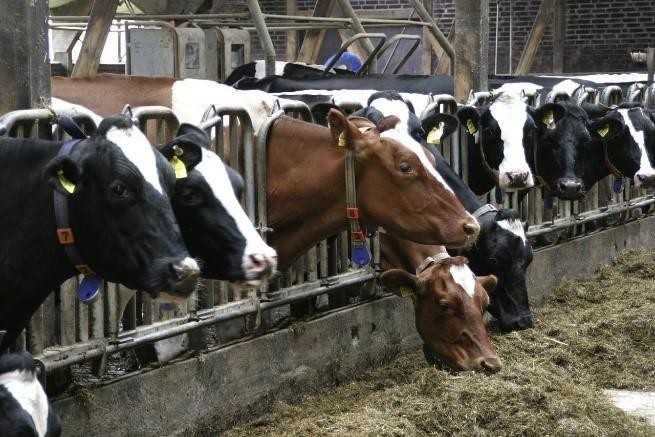
Over 80 percent of the soy imported to Germany comes from South America.
This is despite the fact that the poorer population in Latin America does not have enough to eat.
The clearing of the rainforest is not only problematic for the climate. As a result, numerous previously undiscovered plant and animal species lose their habitat and become irretrievably extinct
»If we maintain current nutritional trends, there will not be enough water to produce the food for the nine billion population expected in 2050. Meat consumption must be significantly reduced so that food for the growing world population can be cultivated with the available water and arable land», according to the study by the Stockholm International Water Institute.
https://www.freiheit-fuer-tiere.de/artikel/welthunger-klimakatastrophe-eine-fleischfrage.html
And the UN is silent. For fear of upsetting the almighty transcontinental private companies. According to the World Bank, the largest transcontinental private groups (all sectors combined, industry, finance, services, etc.) controlled 52.8 percent of the world’s gross domestic product last year.
They have a power that no emperor, king or pope has ever had in history.
They influence the foreign policy of even the most powerful countries. The UN rightly fears its anger.
Do we have hope?
In years of argumentation, demonstrations, actions, and undercover investigations, we have been unable to ensure that people decide against these crimes (for people and animals) and that they no longer cooperate with the meat mafia.
It probably took a long time for the animal rights movement to understand that we have to conduct our struggle politically, that means, that the changes we seek should not be left in the hands of a disinterested, indifferent, irresponsible society, but our goal must be the politicians.
We need sharper and more massive practices to crack the wall.
We have to work on it.
My best regards to all, Venus
A very good article from ntv
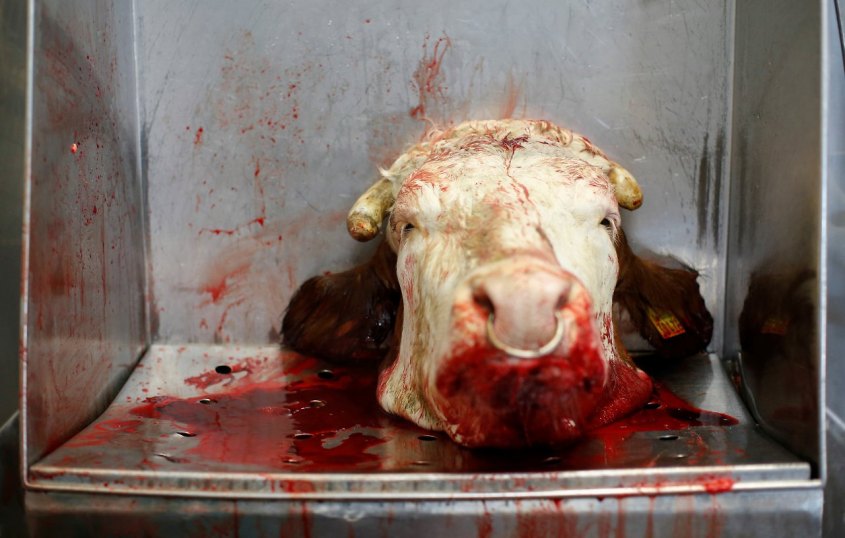
The corona outbreak in a Tönnies slaughter factory in North Rhine-Westphalia, Germany, brought up the pictures that nobody really wants to see.
Animals that just stumbled anxiously over the truck ramp now hang on hooks and bleed from their cutthroats.
The bodies are cut, sorted, and packed on the assembly line. Just as disturbing are the images of people who kill animals for their wages, cut them up, sort innards, and ultimately turn living organisms into cheap food.

It is literally a job that hits the bones – psychologically and physically – that takes place in halls where there is hardly any daylight, where animal cries can be heard and which smells of blood and guts.
And it is an open secret in the industry that many workers numb their pain with a lot of alcohol after work.
No, nobody wants to see these pictures.
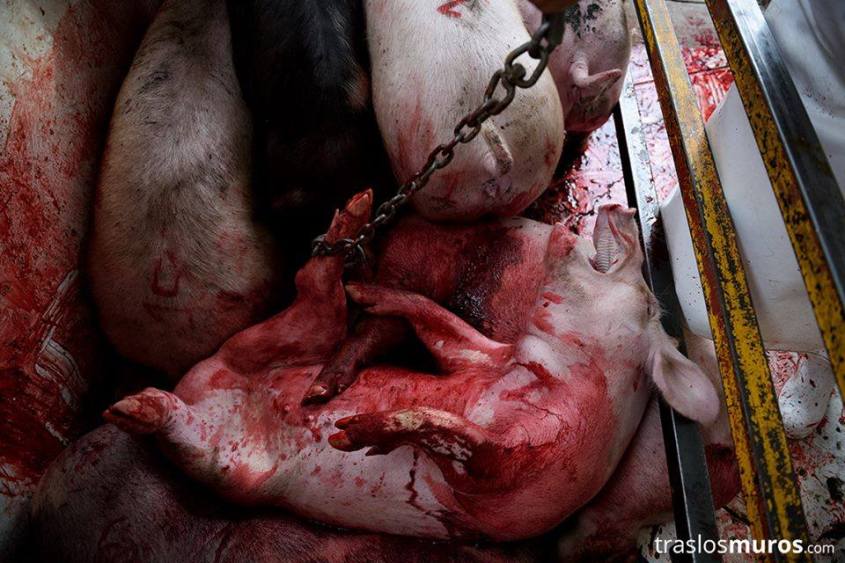
And if they do appear, the guilty parties are quickly found: it is either the slaughtering companies – in the current case, Tönnies, because after all the pictures come from there – or politics, after all, the legislature allows something like that.
Neither is completely wrong. By far the most influential factor is YOU, the consumer.

Dear Mark,
On June 21st, Yulin’s annual dog meat festival began. While progress for animals has been made across China in response to issues brought to light due to the COVID-19 pandemic, brutal events like this continue, and we need to keep fighting until they end permanently.
This year, we were able to rescue a group of puppies from a terrible fate.
Just ahead of the festival, our Chinese partners rescued these animals from a market stall selling live dogs. They are now being cared for by our partner shelter in China, where they’ll receive veterinary care, socialization and love before the search to find loving forever homes.

Animal lovers from around the world also sent a powerful message to Guangxi leaders through a petition with over 220,000 signatures calling for an end to the festival and the dog and cat meat trade.
What activists witnessed ahead of the festival indicates a shift in Yulin for animals.
Most dog meat stalls and shops around the city were consolidated into one central area called the Nanchao market on the outskirts of Yulin. Centralizing dog meat trade activity could be the authorities’ attempt to make it easier to monitor and manage.
The government has also been cracking down on trans-provincial animal transport, meaning that it is more difficult to truck in large numbers of dogs than in year’s past.
Lives were saved this year. Momentum is building in China to confront the dog and cat meat trade, and while Yulin’s horrific festival won’t end overnight, the tide is turning.
Thank you so much for everything that you do for animals.
Sincerely,
Kelly O’Meara
Vice President, Companion Animals & Engagement
Humane Society International
Most people who go horse riding do it because they love horses. They enjoy the joint movement, make sure that the animals do not injure themselves as much as possible, and take good care of them by feeding them and keeping them and their stables clean.
Nevertheless, the question often arises at some point: Can riding be compatible with love for animals at all?
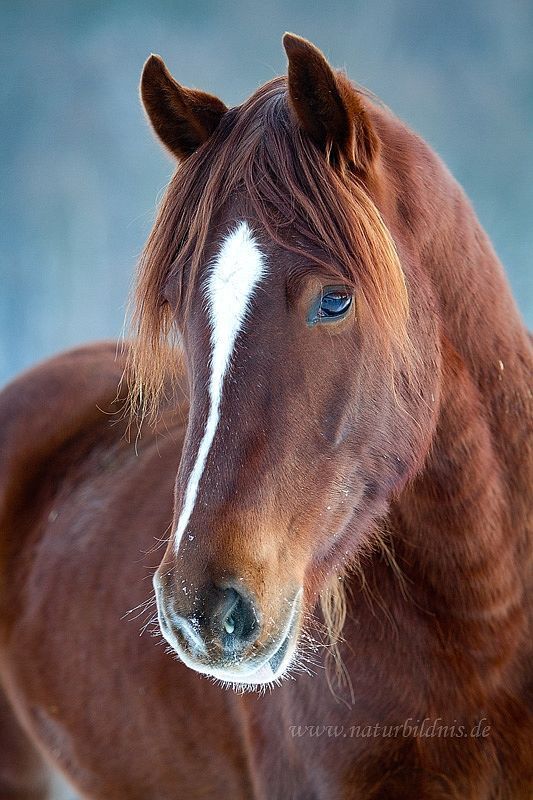
In a perfect world, horses would live in freedom and no one would ask them anything. Horses are herd animals that live together in large groups in the wild, graze in meadows, travel long distances, and woo each other.
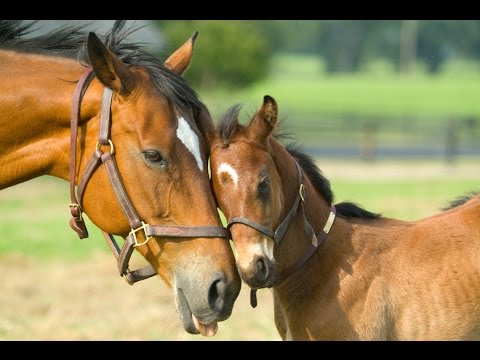
They have their very own needs and interests, and none of them is carrying someone around on their back. This decision is made by people alone.
If you take riding lessons or buy a horse, you unfortunately always support that money is earned with animals that have no say. Even if a horse is perhaps happy about a snack or a gentle brushing: it has not chosen this life.
If we want to stop seeing animals as inferior and subordinate beings, we should question it.
And I mean…The deep affection of many riders for their horses is a wonderful feeling, they would never want to harm their horse. Riding and cruelty to animals? Unimaginable for some riders!!! Quite a few hobby riders eat vegetarian or vegan and are involved in animal protection
Unfortunately, far too often it is not possible to really do justice to a riding horse.
Humans tend to give animals human characteristics. They think that with love and gentleness, the horse voluntarily agrees to ride.
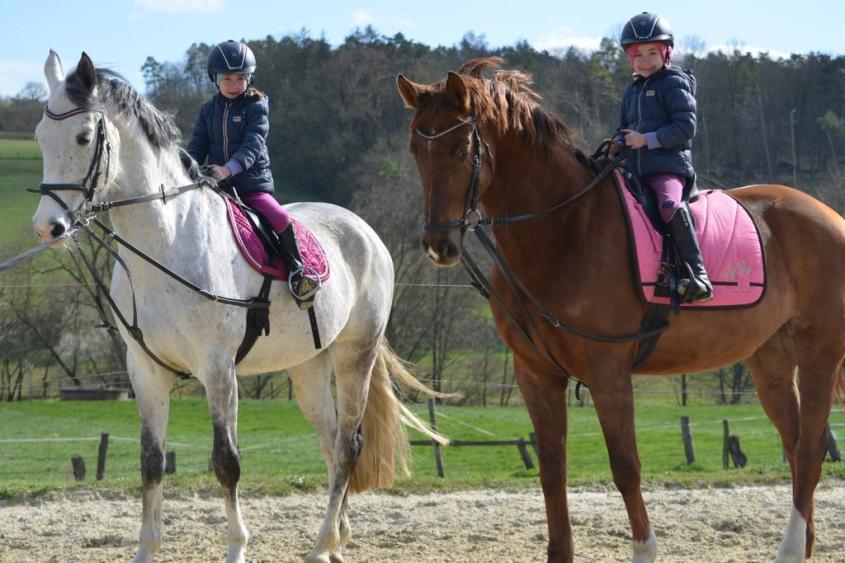
But a stable, small pasture and a lot of love cannot really replace a horse’s freedom – the herds and the expanse that meet its needs
Unfortunately what most hobby riders do not know is that riding horses often leads to illnesses.
Not only a rider who is too heavy but also the stance inboxes and the lack of freedom of movement (fenced pasture, without herd structure) damage the horse in the long term.
Musculoskeletal disorders and feeding-related diseases (e.g. laminitis) can often be directly or indirectly attributed to the use of the horse.

And thus even the closest relationships between man and horse end at the slaughterhouse when the horse is no longer suitable for riding. It loses the purpose that was intended for it.
A visit to the horse slaughter shows how many horses die because their skeleton is bent and their hooves are inflamed and their nature is atrophied.
Because they were loved as a “mount” and later simply disposed of.
The love for horses can also be experienced without using the animals – for example in one of the countless sanctuaries for old horses.
There you can also volunteer if you really love horses.
My best regards to all, Venus
Roquefort is produced from sheep’s milk. To produce this milk, the sheep must give birth to one or two young each year. Thus, more than 500,000 lambs are born each year for the production of Roquefort. In excess, three-quarters of them are sent to intensive farms where they will be fattened for meat. As is the case in this Aveyron farm, SARL Grimal, one of the largest farms in France.

The lambs are crammed into pens without access to the outside. Some are dying slowly in the farm and die before reaching 4 months when they are sent to the slaughterhouse.
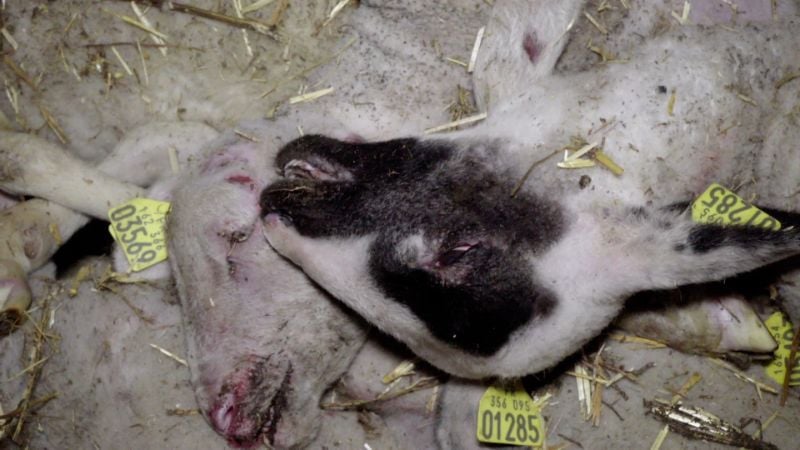
Some of these lambs were killed at the Arcadie Sud-Ouest slaughterhouse near Rodez. Some receive electric shocks that are thought to numb them and cause a heart attack.
Here, the process is not controlled by the employees, so that animals receive the shock without being dizzy. Others are slaughtered alive. Lambs see each other die.
Many are still hanging on the slaughter line.
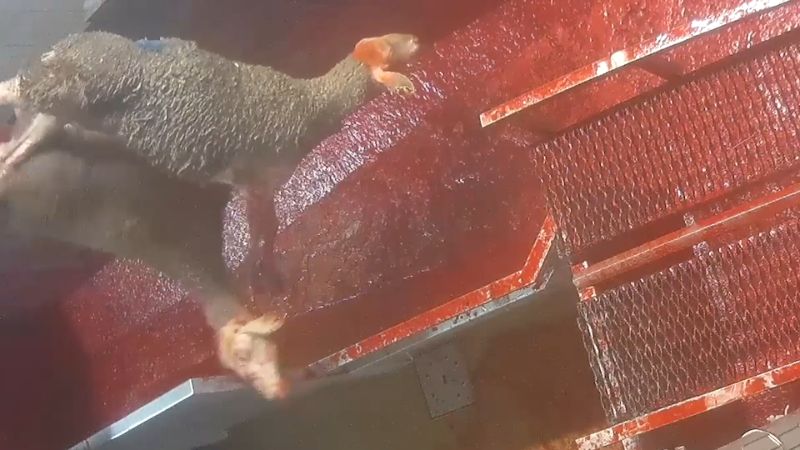
These serious offenses had already been noted in a veterinary report in 2016. Four years later, nothing has changed. Let us demand the closure of this slaughterhouse.
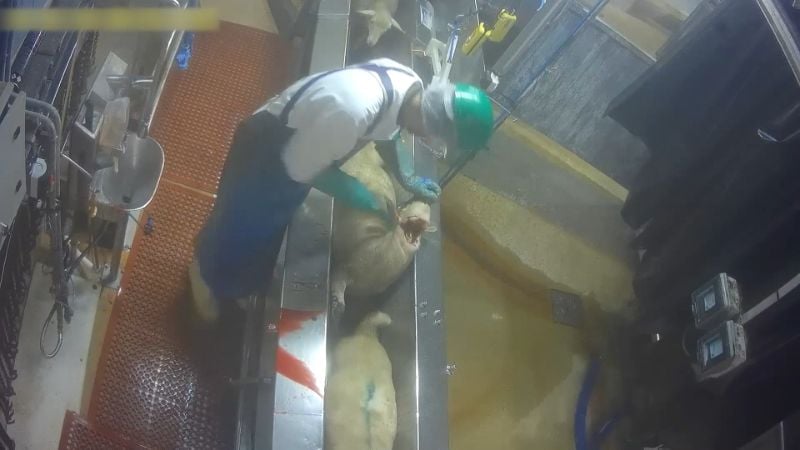
The slaughterhouse is given the worst assessment: “major non-compliance” for the killing of animals!
No protection for 3/4 of the “Roquefort” lambs


VIVA ! – A very well known in UK animal rights group – especially for their recent campaign against Hogwood –
https://en.wikipedia.org/wiki/Viva!_(organisation)
Juliet and the crew at Viva ! have now undertaken another major investigation – this time pigs at Morrisons. For our non UK visitors; we are fortunately not talking Australian PM here; but a UK supermarket chain; probably in the top 5 in the UK. You can see from this link how many stores they have: https://my.morrisons.com/storefinder/
The following is copied directly, without amendment; from Viva !:
Bowser view link – https://mailchi.mp/viva.org.uk/morrisons-pigs-appeal-2020?e=26c03356b8
Or here is the wording:
MORRISONS EXPOSED
Disturbing footage from our latest undercover investigation into two British pig farms exposes shocking conditions at farms supplying Morrisons. Workers were filmed brutally killing young pigs, mutilating others and leaving dead animals out in the open.
The investigations took place over the course of three weeks, using hidden cameras to reveal atrocities both inside and outside the farms’ sheds.
Shocking mutilations
Each newborn piglet is pulled from the farrowing crate and ruthlessly thrown into a metal trough. Investigators captured workers using a barbaric hot knife to slice the piglets’ tails back to a bleeding stump and a pair of pliers to clip away their teeth – all without pain relief.
These cruel acts are supposed to prevent tail biting, a behaviour that manifests from distress and lack of stimulation.
One of the most distressing scenes captured by Viva! Campaigns shows a farm worker ‘knocking’ young piglets – killing them by slamming their tiny heads onto the concrete floor.
It’s a brutally cruel act, which is followed by the worker dumping the bodies aside – presumably because these animals were considered too small to be profitable.
Incinerating public health
As if all this wasn’t bad enough, our team also stumbled upon the farm’s incinerator in an open-ended shed. Most days there were piles of dead piglets – some in empty feed sacks, others dumped on the ashes from previous burns – discarded like rubbish. The door had been left wide open. Next to the shed there were more dead piglets awaiting their turn to burn, writhing in maggots.
One of the most distressing scenes captured by Viva! Campaigns shows a farm worker ‘knocking’ young piglets – killing them by slamming their tiny heads onto the concrete floor.
It’s a brutally cruel act, which is followed by the worker dumping the bodies aside – presumably because these animals were considered too small to be profitable.
These practices are in complete violation of the government’s guidance on how to handle ‘fallen stock’, which states: ‘While waiting for your fallen stock to be collected, you must ensure that animals and birds cannot access the carcase.’
How you can help
Your funds not only provide us with vital equipment to carry out investigations but also the budgets to launch major publicity stunts and campaigns:
As part of our overarching End Factory Farming campaign our major action plan includes:
We know times are tough and as ever we appreciate every contribution made, no matter the size. Mark, together we will end factory farming, before it ends us!
Yours for the animals

Juliet Gellatley
Founder & Director
https://en.wikipedia.org/wiki/Juliet_Gellatley
WAV Comment: Link to undercover investigation videos; select any of the videos shown here:
https://www.youtube.com/results?search_query=Viva+undercover+investigations


The 10-day annual festival in the southwestern city of Yulin usually attracts thousands of visitors. Cat meat, fresh lychees and liquor are also sold at the festival. It began in 2009 to mark the summer solstice. Eating dog meat in the summer months is traditionally believed to be good for health.
It can ward off diseases and increase sexual performance in men, according to some. The custom can be traced back at least 400 years in China and around 10-20 million dogs are killed every year for consumption.
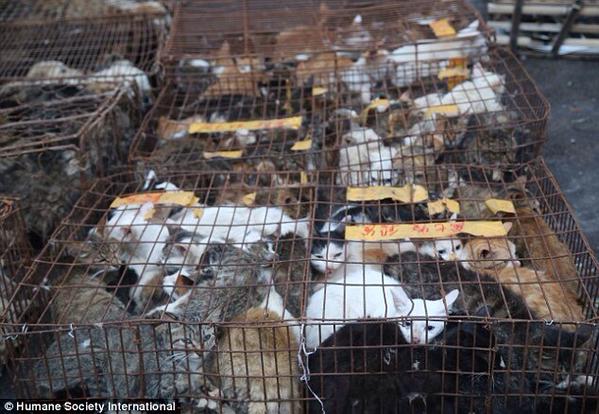
China dog meat festival goes ahead despite coronavirus visitor decline
In Fight to Ban Dog Meat, China’s Activists Find an Ally: The Coronavirus
https://www.nytimes.com/2020/06/23/world/asia/china-dog-meat.html
Chinese market vendors chop up rows of slaughtered dogs while locals enjoy meals on the ‘dog meat street’ as Yulin celebrates notorious festival despite coronavirus pandemic
GRAPHIC WARNING: CHINA’s notorious dog meat festival has opened in defiance of a government campaign to improve animal welfare and reduce risks to health highlighted by the coronavirus outbreak, but activists are hopeful its days are numbered.

WAV Comment – up to 5 years imprisonment and an unlimited fine – well done Scotland (UK) for sending the clear message out that animal abuse will not be accepted. Lets hope this policy (and punishments) are adopted in many other places !
Scotland to introduce five year jail term for animal cruelty
Scotland will have the toughest penalties for animal cruelty in the UK – thanks to a new Bill passed in Parliament this week.
MSPs have supported increased penalties for the worst animal cruelty cases.
And Finn’s Law will also give new legal protections for service animals such as police dogs and horses, removing a legal defence of self-defence for attacks on service animals in the course of their duties.
The Animals and Wildlife (Scotland) Bill will increase the maximum penalty for the worst animal cruelty crimes to five years imprisonment and an unlimited fine.
Animal welfare enforcement agencies will also be given innovative new powers, allowing animals taken into their care to be quickly rehomed – without the need for a court order.
Mairi Gougeon, Rural Affairs Minister, said: “This Bill is an important milestone in Scotland’s long tradition of protecting our animals and wildlife.
“The increased maximum available penalties reflect the seriousness of some of the very cruel crimes seen against domestic and wild animals, although these cases are, thankfully, rare.
“Finn’s Law, named after a police dog brutally injured in the course of its duties, recognises the important role service animals play in protecting us in sometimes very difficult circumstances.
“The Bill also provides new powers, described as ‘transformative’ by the SSPCA, that will allow animal welfare enforcement agencies to quickly rehome animals in their care.”
The Scottish Society for the Prevention of Cruelty to Animals welcomed the government’s decision.
Scotland’s animal welfare charity, which is reponsible for investigating animal cruelty and rehoming animals seized on welfare grounds, said the law will be game-changing for both animals and the organisation.
Continue reading the full story at:

WAV Comment — we have heard this morning (24/6/20) that there are currently 56 actions against SeaWorld by companies who are trying to get their money back. Not confirmed, but we have found the following.

SeaWorld raises cash to stay afloat but can it survive prolonged park closures due to coronavirus?
The theme park company says it was seeing record attendance during first two months of 2020 before the coronavirus shutdown hit
In a move to shore up its finances during a pandemic that last month forced it to shut down its 12 theme parks, SeaWorld Entertainment announced Tuesday it is raising $227.5 million through a private offering that it can use to help pay its bills.
While the company reported it had seen record attendance and revenue during January and February of this year, the good news quickly soured the following month when it closed all its parks on March 16 and later furloughed 95 percent of its workers starting the first of this month.
Read more at the link above.
As SeaWorld Parks remain closed because of COVID-19, the company has taken proactive financial steps to protect its customers, employees and animals.
SeaWorld Entertainment has taken financial steps in response to lockdown measures that are still in place accross America. Interim CEO, Marc Swanson, said that the steps they have taken “will provide us with significant financial flexibility and liquidity to operate in this unprecedented and highly uncertain environment.”
Reducing expenditure
Seaworld Entertainment has reduced its executive officers’s base salary by 20% until its theme parks resume normal operations. Furthermore, the company has substantially reduced its marketing and advertising spending.
Read the full article at:
https://blooloop.com/news/seaworld-financial-response-covid-19/
SeaWorld CEO resigns amid coronavirus furloughs
Marc G. Swanson serving as interim CEO at least through reopening of parks
https://www.clickorlando.com/news/local/2020/04/06/seaworld-ceo-resigns-amid-coronavirus-furloughs/
ORLANDO, Fla. – SeaWorld has named a temporary chief executive officer following the resignation of Sergio D. Rivera, according to the news release.
Rivera, the most recent chief executive officer of SeaWorld Entertainment, Inc. notified the company of his decision to resign last week, days after SeaWorld announced 90% of employees would be furloughed amid closures due to the coronavirus pandemic. Company officials said Rivera also stepped down from his duties as a member of the company’s board of directors.
According to the release, Rivera said his resignation was due to disagreements over the board’s involvement in the decision making at SeaWorld.
Rivera was on the job for less than five months.
Read the full article via the above link.