Glass Walls
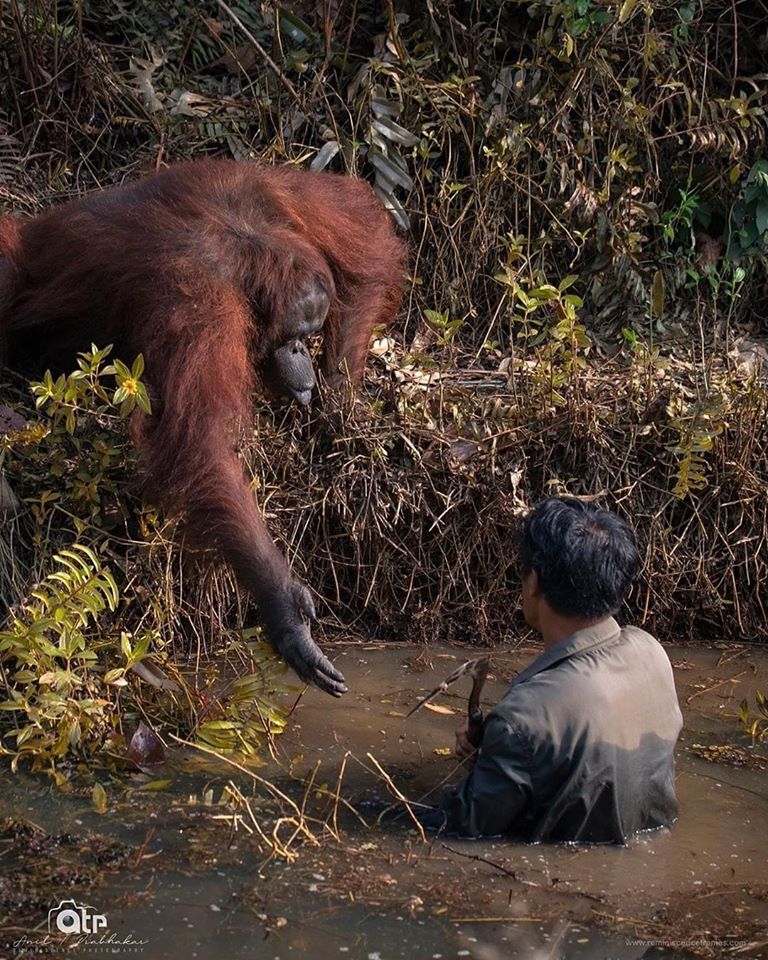
The empathy of “animals ” orangutans are usually scared of water due to the density of their fur . This image depicts one offering a helping hand despite the risk.
A good night and regards from Venus
The empathy of “animals ” orangutans are usually scared of water due to the density of their fur . This image depicts one offering a helping hand despite the risk.
A good night and regards from Venus

Dr. Don Barnes experimented with animals at School for Aerospace Medicine for 13-14 years.
When he was an experimenter, they conditioned him AGAINST applying ethics to animals who weren’t human.
But Dr. Don Barnes knew that using animals as laboratory equipment was wrong.
“We use the wrong models for our experiments,” he says.
He fundamentally changed his life and became an animal rights activist.
A nice video!
My best regards to all, Venus
Check it all out by clicking on this link:
https://vegnews.com/2020/2/10-vegan-celebrity-couples-were-crushing-on-this-valentines-day

This post is based on https://chooseveg.com/blog/americas-first-vegan-fried-chicken-shop/
With modifications to reflect we are now in 2020.
The United States got its very first vegan fried chicken restaurant! On November 22 last year (2019), pop-up shop and catering company Eat Love will finally open a brick-and-mortar restaurant.
Eat Love’s founder, Lynn Torres, chose a location in Orange County, California, just a mile away from where she grew up. Hungry customers will have their pick of seitan-based fried chicken sandwiches and bucket meals akin to Kentucky Fried Chicken’s and Chick-fil-A’s, along with delicious desserts, like chocolate-dipped ice cream sandwiches and fudge brownies. Lynn told VegNews:
We are better than KFC and Chick-fil-A because we want to share amazing and delicious food without harming animals and without harming our health. We actually really care about animals, the environment, social issues, your health, and the world.

Back in 2015, Lynn and her husband, Enrique, weighed a combined 610 pounds. Once they started eating plant-based, Enrique was able to reverse his Type 2 diabetes, and Lynn lost over 150 pounds! This inspired them to open Eat Love and bring delicious vegan food to their friends, their neighbours, and the world. Lynn said:
I believe that the way we can create change is by spreading love, and to me food is love. I hope that people take our food and share it with their loved ones and that this action brings up a conversation about veganism.
Plant-based fried chicken is certainly a growing trend. In August 2019, Kentucky Fried Chicken tested vegan fried chicken that combined Beyond Meat with their signature secret spices. Customers lined up around the building at the Atlanta restaurant that served the plant-based chicken. KFC is considering moving forward on either broader testing or a nationwide rollout. U.S. president and chief concept officer Kevin Hochman stated:
“KFC Beyond Fried Chicken is so delicious, our customers will find it difficult to tell that it’s plant-based. I think we’ve all heard “it tastes like chicken”—well our customers are going to be amazed and say, “it tastes like Kentucky Fried Chicken!”
Inspired to join the plant-based craze? Order a FREE Vegetarian Starter Guide today, and check out our Pinterest page for thousands of recipe ideas!


Dear Mark,
“How big is the wound?”
“Can she stand?”
“When was the last time he ate?”
The answers to questions like these are essential in determining out of the 70-90 emergency calls we receive each day which rescues are top priorities. Even with four rescue vehicles on the road, every day is a rush to get to the next animal as fast as possible. Thousands of callers have stayed by the side of an injured or ill animal keeping them safe until our ambulance arrives. To you wonderful friends, near and far, without whom countless animals would have perished, Happy Valentine’s Day. We just love you.
She looked like an ancient one, shriveled, gnarly and fading away. But this angel was succumbing to advanced mange, which had thrust her into the grip of intense itchiness, and crusted skin which broke apart in massive cracks. Like most mange dogs she had likely run herself ragged trying to escape the maddening itchiness. Now, she was deflated and perhaps preparing to let go of life itself. She faced her regimen of medicated baths with trembling fear, but within a few days came to understand that touch did not have to mean pain; touching now meant comfort. Watch this young lady’s astounding transformation. We named her Shimmer, like dancing sunshine.
The puppy’s heart was still beating. Otherwise, he would have been mistaken for dead. Neighbors were horrified when they saw a passing car run him over, and his head injury was so severe that he didn’t really wake up for another 48 hours. When he did, he couldn’t eat or walk. But one of the first things he did after regaining consciousness was to wag his innocent, adorable tail, and he managed to communicate worlds with those first bursts of joy–joy to be alive. Meet Dil and watch him re-discover his Self: a boy who is charming, subtle, and beams with love.
Meet the Caregivers:

Rakesh Meghwal (above) is a gentle leader in charge of large animal nursing care, introducing new staff who have never before worked with animals to a new world of service to the most vulnerable. From turning a cow on a mattress who cannot stand, or keeping a bull still while his splint gets changed, Rakesh is a teacher, not just a boss. He “leads by example” and we’re grateful to him for his example being so gentle, bright and caring.
Every day, 20-40 animals in Udaipur are rescued and treated.
Some are admitted into Animal Aid’s hospital and some are treated in their own neighbourhoods. Every bandage, every injection, every meal, every cozy tub had a donation behind it.
https://animalaidunlimited.org/donate.html
We’re serving animals like Sophia because of YOU. Sophia’s paw was badly wounded and to see her now, it’s hard to believe this extraordinarily cheerful girl was lost in pain a few weeks ago. Every time a transformation like this takes place, kindness scores a little victory.
A court in Turkey has sentenced three men to ten years in prison for poisoning street dogs.

Ankara – A Turkish court has sentenced three men to ten years in prison for poisoning street dogs.
Ankara Grand Criminal Chamber No. 5 also fined each defendant 15,000 Turkish lira. The decision was welcomed by animal activists who followed the process.
According to the Anadolu news agency, referring to the indictment, the accused had fed chicken dipped in pesticides to street dogs in Ankara, causing their gruesome death.
 Cat massacre with poison, Kos Island-Greece
Movies that show the dogs in agony when residents hurried to the scene of the crime triggered public outrage. Animal activists have long been committed to defining that violence against animals is a crime, not an offense. Existing laws only provide fines for crimes against animals.
Under increasing pressure from the public, the Turkish government had hurriedly announced a new ministerial law on animal rights. The new law is intended to enable the courts to sentence up to four and a half years in prison for the killing and torture of pets and street animals.
 poison bait
According to the changes, people found guilty of killing and torturing animals are sentenced to prison terms between four months and three years. If suspects have injured more than one animal, the sentence can be increased to four and a half years.
People who have forced animals to fight are given a draft of two to three years.
On the subject
– Turkey –
Animal welfare: Turkish police set up new cyber team against animal abusers!
The Turkish Police’s Cybercrime Department now has 11 new teams available. One of these teams will track animal violence online.
The new team is responsible for identifying users on social networks who share and distribute images of violence against animals. The actual perpetrators of the crimes would also be identified, the police said.
And I mean…Although Turkey is not an EU country and no one believes that Turkey will ever enter the EU, one has to say that these penalties are almost unknown in many EU countries.
10 years for the murder of an animal is a punishment that can have a big impact.
Germany claims it has one of the best animal welfare laws in Europe, but such a punishment for murdering an animal has not yet been posted here!
We very much welcome the judgment and hope that other countries belonging to the “civilized” EU will soon follow this example.
My best regards to all, Venus

Most of the following dates back to 2014/15; and so the KaiBao Pharmaceutical ‘five year plan’ to develop and alternative to extracting bear bile should be reaching its end of its term now – 2020.
This is an old article from The Guardian newspaper in London; relating to bear bile farming.
https://www.theguardian.com/environment/radical-conservation/2015/apr/09/bear-bile-china-synthetic-alternative Despite being a few years old it does contain a lot of interesting information on the subject; and alternatives. At the end we have provided a direct link to the ‘Animals Asia’ site from the same time and relating to the very same subject
KaiBao Pharmaceutical is a major outlet for industrial bear bile farms. But as public opinion has turned against the practice of bear bile farming, the company has developed a five-year plan to support alternatives and has even gained support from China’s Ministry of Science and Technology.
http://www.chinadaily.com.cn/business/2014-08/13/content_18302146.htm
We have been looking into the 5 year plan to end bear bile farming and have not found much in the way of news. But this does not mean that things are not moving forward. The younger generation in the Far East areas where the bile is produced are without doubt, becoming more animal welfare conscious; which is great news as they will eventually stop this barbarity. Over the last year or so, here n England, we have been working with Animals Asia UK regarding alternatives to bear bile. We know that Jill has many of the ‘alternative plants’ located at the bear sanctuaries that AA operate. Much can now be reproduced using herbs and plants; so if people decide that they still need something of this type, cruelty free replacements are being researched all the time.
July 2017 – From 4,300 caged bears on bile farms in Vietnam to a future with none – https://www.animalsasia.org/uk/media/news/news-archive/from-4300-caged-bears-on-bile-farms-in-vietnam-to-a-future-with-none.html
BREAKING NEWS: Vietnam agrees plan to close all bear bile farms – https://www.animalsasia.org/uk/media/news/news-archive/breaking-news-vietnam-agrees-plan-to-close-all-bear-bile-farms.html
Positive results to help animal suffering often do not happen overnight – and so the fight goes on to stop this barbaric torment of beautiful bears.
Regards WAV.
——————————————–

After decades of activism against bear bile farms, a Chinese pharmaceutical company has announced it is developing a synthetic alternative
If we grant bears any modicum of intelligence or emotional experience, if we grant them the capacity to suffer pain or mental anguish, then bear bile farming – which houses bears in tiny cages for the breadth of their life in order to repeatedly extract their bile – poses a whole slew of ethical questions.
Indeed, for decades activists have been campaigning to stop the trade, which extracts bear bile for use in Chinese medicine.
But now, the industry that profits from it may succeed in doing it for them. Last year, Kaibao Pharmaceuticals, which supplies around half of the bear bile consumed in China, said it plans to develop a synthetic alternative to the popular curative using government funding.
“If the largest producer of bear bile is now looking into a synthetic alternative to their product, this can only be a good thing for the bears on the farms,” said Jill Robinson, the head of Animals Asia, a group that has been fighting bear farming in Asia for more than 15 years.
In a brief statement, Kaibao announced it was using poultry bile and “biotransformation technology” to create a substance chemically similar to bear bile, but without the bear in it. It intends to spend 12m yuan (£1.3m)of its own cash on developing the substance. In addition, Kaibao won a 5.3m yuan (£570,000) subsidy from China’s government and another 6 million yuan (£650,000) from the regional government. If successful, Kaibao would own the intellectual rights to the new poultry-based, but bear-like, bile.
“This is an opportunity for practitioners and consumers to make a shift from using threatened species, to legal and sustainable alternatives, illustrating the [Traditional Chinese Medicine’s] community’s commitment to conservation of wildlife and legal trade,” said Chris Shepherd, a bear bile trade expert and the conservation group, Traffic’s regional director of Southeast Asia.
“The shift, however, must come from within this community,” he added.
The most important component of bear bile is ursodeoxycholic acid, which has been shown in research to be effective against some ailments, such as select liver diseases. Yet, traditional practitioners prescribe bear bile for much more, including everything from a sore throat to epilepsy.
There are two ways to acquire the bile today: either kill a bear in the wild and cut out its gall bladder or in the case of the so-called bear bile farms (though factories may be a more apt word) repeatedly drain the gall bladders of captive animals.
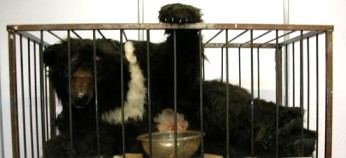
Robinson, who has visited a number of bear bile facilities, describes them as a house of horrors.
“[Bears] are constantly thirsty and hungry, get little or no veterinary care and essentially are tortured their whole lives,” she said. “Today… thousands of moon bears lie in constant pain and anguish in cages that are no bigger than coffins. A number of crude and brutal methods are used to extract their bile – rusting catheters, barbaric full-metal jackets with neck spikes, medicinal pumps and open, infected holes drilled into their bellies.”
The conditions are indeed alarming, according to many who follow the trade. Bears are kept in “crush cages,” which are deliberately too small for animals to stand or move much. In order to extract the bile – often daily – workers make permanent holes or fistula into the bear’s gall bladder. The bile is extracted, or ‘milked’ in the industry nomenclature, via metal tubes or other methods. Conditions are often so unsanitary, and bears so sick, that experts have raised public health concern about consuming bile from these places.
“Some bears are put into cages as cubs and never released,” said Robinson adding that “most farmed bears are starved, dehydrated and suffer from multiple diseases and malignant tumours that ultimately kill them.”
If the bears live long enough – and life-spans are short here – they can be bile milked for decades. However, usually after 10 to 20 years, bears stop producing enough to pay for their room and board. They are then commonly killed and their body parts sold.
Animal rights activists contend that these conditions cause massive psychological harm to the bears. In one rumored incident, a mother bear reportedly broke out of her cage while her cub was being milked. Reaching the cub, the mother suffocated it to death. Then the mother bear bashed her head against a wall until she perished. Some animal rights activists called it a murder-suicide, though the incident has never been substantiated.
Other observers have reported bears refusing to eat until they simply wasted away and died.
Still, not everyone views bear bile farming as cruel.
“The process of extracting bear bile is like turning on a tap: natural, easy and without pain. After they’re done, the bears can even play happily outside. I don’t think there’s anything out of the ordinary! It might even be a very comfortable process!” said Fang Shuting the head of the Chinese Association of Traditional Chinese Medicine in 2012.
Shuting’s comments were in defence of another bear bile company’s, Guizhentang Pharmaceutical, plans to go public on the Hong Kong stock exchange. By going public, Guizhentang hoped to triple its number of captive bears from 400 to 1,200.
But the company’s proposal was met with a passionate, grassroots campaign by Chinese activists that eventually derailed the listing, while Shuting’s comments were derided in social media and condemned by bear bile experts.
In all, experts estimate that there are at least 12,000 bears in bear bile facilities today. The bulk of the bears are housed in China, though Vietnam, Laos, Burma, South Korea also sport facilities. While there is significant demand for bear bile in China, it is also sold across Southeast Asia as far south as Malaysian Borneo.

Despite what it has become, the origins of bear farming was, at least rhetorically, in part to save wild bears. The Chinese have been consuming bear bile for over a thousand years. But before the rise of these farms, practitioners simply went into the woods, killed a bear, and then removed its gall bladder with the lucrative bile inside.
Over the centuries, not surprisingly, bears began to vanish. It’s a similar story to many other animals targeted by the Chinese medicine trade, such as tigers, pangolins, Sumatran and Javan rhinos, Asian turtles, and more. Like bears, these have all faced relentless hunting for purported curatives. This over-hunting, combined with massive habitat loss, has led to the complete destruction of some populations and declines in others.
The main target of the bear bile trade – the Asian black bear (Ursus thibetanus) also known as the moon bear – is today listed as vulnerable by the IUCN Red List. Little is known about its total population, although as few as 25,000 may survive in the wild and it has certainly vanished from much of its former range and is in decline where it persists. The trade, however, has also targeted the sun bear (Helarctos malayanus) – also vulnerable – and various subspecies of brown bear.
But solely from a conservation perspective – setting aside ethical concerns – the start of bear bile farms in the 1980s was initially hoped to relieve some pressure on wild bears. The idea was if bear farms raised a self-sustaining population of productive animals than poachers would have little impetus to capture or kill bears in the wild.
But experts say that hasn’t happened and there are a number of reasons why. For one thing, breeding bears isn’t cheap, and in most cases it’s probably still less expensive and easier to steal bears from the wild to repopulate farms with high turnover. For another, experts believe that more bear bile on the market has pushed practitioners to prescribe the substance more freely and for a broader array of ailments, many not connected to traditional use. Finally, there are those consumers that appear to prefer bear bile from wild animals, either viewing it as more authentic or concerned about the sanitary conditions – or lack thereof – on bear farms.
Illegal metal jacket had just been taken off by the farmer in Weihai in eastern Chinese province of Shandong, and flung into a corner at a bear bile farm in Weihai city, east Chinas Shandong province. Photograph: Imaginechina/Corbis
Robinson says the proof that bear farms are still stealing animals from the wild is as easy as looking at their mangled charges.
“Approximately 30% of rescued bears at our sanctuary in Chengdu are missing limbs or have obvious snare or trap wounds indicating that they were wild caught,” she said, adding that wild-caught bears are often more aggressive as well.
Yet, the paucity of oversight from the government – and the fact that much of the trade occurs underground – means it’s up to NGOs to make guesses.
“We almost have to take on a detective role, working through the injuries and wounds on the bears’ bodies and piecing the evidence together to continue the case against the industry,” Robinson added.
She said some bear facilities certainly do breed animals – and parade the cubs around to prove it – but “we believe that their breeding is not as successful as they would maintain, and it is clearly easier and cheaper to bring in wild caught bears than spend funds on denning pens and the extra food the females require during the breeding season.”
The fact that bear farms have not mitigated threats in the wild is outlined by a 2012 International Union for Conservation of Nature (IUCN) resolution calling for a phasing out of bear farms, including shuttering any illegal facilities and not establishing new ones. The motion said evidence was “lacking” that bear farms had lessened killing of wild bears.
Given this, a paper in Oryx last year suggested that we rename bear farms – which gives the sense of domesticated bears breeding freely – to “bile extraction facilities”.
Still, the Chinese government has recently challenged the IUCN resolution, according to Shepherd, claiming that the industry is capable of providing bear bile without resorting to wild bear capture or poaching.
This is a view echoed by Fang Shunting, “bear farming is the best way to protect wild bears. Given the market demand, how could we prevent wild bear hunting?”
Now, let’s assume Kaibao Pharmaceuticals is successful in developing a synthetic alternative to bear bile, using poultry. Let’s also assume the company – which brings in more than $50m a year in net sales – aggressively pushes the alternative. The big question, according to Traffic’s Shepherd, is will traditional doctors accept that synthetic bear bile – made from poultry – is just as good as the real thing?
Convincing practitioners may prove quite difficult. For one thing, there are already a slew of alternatives available, yet bear bile remains in high demand. Indeed, ursodeoxycholic acid – the most important component of bear bile – has already been synthetically reproduced in the US and prescribed for very specific diseases.
“There are more than 50 herbal [and] legal alternatives that we would also strongly encourage practitioners and retailers to recommend to consumers,” said Shepherd. “If practitioners moves towards these alternatives, consumers would follow.”
So why would Kaibao’s synthetic alternative make any difference? Experts are cautiously hopeful because this version would come from one of the biggest sellers of bear bile today. Unlike Western synthetic versions, it would also be home grown. According to Shepherd, though, the most important thing for Kaibao is to convince traditional doctors.
“The key is the practitioners… people listen to, and trust, their doctor,” he said.
To this end, Animals Asia has long been asking practitioners to stop prescribing bear bile in a campaign they call Healing Without Harm.
“To date thousands of doctors have joined us in pledging never to use or prescribe bear bile,” noted Robinson.
Of course, one of the ironies of Kaibao’s announcement is that their synthetic bear bile would still come from an animal. Although the company did not respond to repeated inquiries, it appears from their statement that they would likely be sourced from already-farmed poultry.
“This remains an ethical dilemma and the debate surrounding the use of all animal products continues and remains entirely worthwhile,” said Robinson. But, she added, “from the point of view of ending bear bile farming, and drastically reducing suffering of animals caged and mutilated for anything up to 30 years of their lives, this is a huge step.”
In the meantime, more than 10,000 bears remain in these facilities where Robinson says they “suffer terribly”. But that brings us back to our first question. What do animals experience? Can we really know if the bears in these facilities suffer or are they “without pain” as Shuting argues?
“Bears, like us, are warm bloodied mammals with a central nervous system and pain receptors, indicating that they deserve the benefit of doubt, and indeed feel pain,” said Robinson.
Indeed, recent research has found that more animals experience suffering – or negative stimuli – than long believed. For centuries, scientists and philosophers have debated whether animals are generally automatons – driven solely by instinct and lacking thought or emotion – rather than distinct individuals with personalities and a rich emotional life. But the famous discoveries that chimps use tools, whales sing, and crows solve problems has largely crushed the automaton argument.
Recent research has even revealed that invertebrates – let alone mammals, birds, reptiles, etc – undergo suffering and have some level of what we call intelligence. For example, scientists have found that crustaceans – such as lobsters – feel pain and may even experience anxiety; wasps maintain long-term memory; bees are capable of counting; and even cockroaches have personalities.
Unlike these invertebrates, though, people have historically viewed bears as particularly clever and sensitive animals. For centuries, people have trained bears as entertainment. Now largely viewed as cruel, such training proved that these big mammals could learn new tasks quickly. Despite such displays of cleverness – and the fact that bears sport the largest brains relative to body size of any carnivore (bigger than your pet dog) – there has been surprisingly little research on bear intelligence.
One of the few studies came out last year when researchers found that bears could “count”. Researchers trained American black bears to select groupings of dots based on which was bigger or smaller. The bears performed as well in the study as primates. In 2012, another researcher documented a wild brown bear carefully selecting barnacle-covered rocks to scratch itself, possible evidence of tool use.
“[Bear] intelligence is often said to be equal to that of a dolphin or a three-year-old child. But I feel that this description really doesn’t do justice to their individuality, and intelligence that we have yet to properly define,” said Robinson, who points to her years of experience working with hundreds of rescued bears at Animals Asia facilities.
“They learn very quickly and work things through. They have pre-emptive and anticipatory behaviour that allows them to improve or benefit their own lives,” she said, noting that bears are particularly choosy about making comfortable beds – maybe Goldilocks was based on real observation – and that her rescued bears quickly learn to sleep during employees’ lunch break because “this is a quiet time at the sanctuaries and that little happens… just before our team return to work, the bears will start to rouse too.”
Robinson also said that rescued bears’ behaviour clearly changes over time. In the beginning, the bears shrink away as people approach and even moan aloud – anticipating that they will be harmed, according to Robinson, as they were in the bile factories – or become aggressive. But after months in the sanctuary, bears become more relaxed, more social, and maybe even, as one could describe it, psychologically sane.
“Bears that previously exploded in anger at the mere presence of a human are calm and trusting, and slowly they comprehend that the approach of our staff is a positive addition to their lives,” Robinson said, adding they are “no longer violently stereotypic, or aggressive”.
Animals Asia’s two sanctuaries – one in China and one in Vietnam – now houses around 500 bears, all rescued from bear bile facilities. If Kaibao synthetic alternative works, though, Animals Asia may have to take on the care of many more bears, though it doesn’t seem they would mind.
“[Rescued bears] ultimately prove to be fun-loving, trusting and forgiving of the species that caused them indescribable pain,” noted Robinson.
But can bears forgive? Are they capable of granting absolution – and even if they are would they really choose to forgive us? Perhaps we may never know, but either way it may well be that we need it.
More reading on this from Animals Asia:

Above – the fantastic Jill Robinson – CEO Animals Asia.
Bear Bile explained – National Geographic –
Bear bile is used in traditional Chinese medicine, but it comes at a cost to individual bears’ welfare and their survival in the wild.
https://www.nationalgeographic.com/animals/reference/bear-bile-explained/
https://en.wikipedia.org/wiki/Bile_bear
https://www.thedodo.com/this-groundbreaking-alternativ-651902447.html
Mice baked to death after a heating system failure, or left to die from hunger and thirst when researchers forgot to put food or water in their cages for a week — and nobody noticed.
Primates kept in a room where the lights were on 24-hours-a-day for nearly five months because a facility manager was said to be overworked.
A vet who failed to provide any care to a female owl monkey used for breeding after she became seriously ill and lost a fifth of her bodyweight, eventually succumbing to heart failure, fluid in the chest and abdominal hemorrhage.
 AFP / RAUL ARBOLEDA Owl monkeys at a zoo in Columbia; documents from a US government lab show a vet failed to provide care to a seriously ill female owl monkey kept for breeding purposes
These are among a litany of animal welfare failures that took place across a 22-month period from January 2018 to October 2019 at the laboratories of the National Institutes of Health (NIH), the taxpayer-funded steward of medical and behavioral research of the United States.
A total of 31 internally reported incidents have come to light thanks to a freedom of information request made by People for the Ethical Treatment of Animals (PETA) and shared exclusively with AFP Agence France-Presse (France Media Agency).
They took place at a variety of centers performing research in areas including diabetes, child health, mental health and more — mostly out of Bethesda, Maryland but some at a facility in Hamilton, Montana.
In a statement, the NIH said it took all “noncompliance” incidents seriously and all of them had been thoroughly investigated by its Office of Laboratory Animal Welfare (OLAW), while changes to procedures had been made as a result.
But animal rights groups, including those that, unlike PETA, are not ideologically opposed to all animal testing, blasted the violations as egregious.
“The laws and regulations exist to minimize animal suffering, pain, stress, and when even those minimal standards are not being addressed or not being followed, then you have significant suffering,” said Eric Kleiman, a researcher at the Animal Welfare Institute.
“Training, veterinary care, food, water: this is the most basic of basics. If you can’t do this kind of thing right you have no business doing anything with animals, it’s as simple as that,” he added, calling the findings “shocking.”
-Repeated failures –
 AFP / Eric BARADAT A total of 31 internally reported incidents have come to light thanks to a freedom of information request made by People for the Ethical Treatment of Animals (PETA) and shared exclusively with AFP
From historic breakthroughs like the discovery of insulin through experiments on dogs, to the development last year of an Ebola treatment via work on genetically-modified mice, and cutting-edge cancer therapies, many scientists believe animal research is crucial to medical progress.
But the testing is supposed to take place under strict laws and policies spelling out its conditions, including the size of cages, room temperatures and the animals’ social needs, as well as vet visits and the need for hygienic surgery and post-operative care.
Federal research facilities are subject to the Public Health Service (PHS) Policy on Humane Care and Use of Laboratory Animals, which in turns mandates compliance with the Animal Welfare Act, a landmark law signed by former president Lyndon Johnson 1966.
Unlike labs in universities and private facilities, they are not subject to site inspections by the US Department of Agriculture and are meant to regulate themselves.
“Yet the repeated violations of policy show that this system is inherently flawed”, said Alka Chandna, PETA’s vice president of laboratory investigations cases.
On no fewer than five occasions, mice starved or dehydrated to death because employees forgot to give them food or water. “The problem was not noted during the daily health checks,” said one report from June 2018.
– ‘What went right?’ –
 AFP/File / Anthony WALLACE An experimenter at a US government laboratory injected 18 zebrafish with a salt solution, even though this procedure had not been approved; 11 died and seven were euthanized
Other examples spoke to serial incompetence, said Chandna, including one where a dog sustained skin burns from an electric blanket used because the procedure room was too cold, but staff failed to monitor its use.On another occasion, 13 mice baked to death after a heating system failure left them in 100 degrees Fahrenheit (38 Celsius) overnight.
In July 2018, an experimenter injected 15 zebrafish with a salt solution, even though this procedure had not been approved. Four of the zebrafish died immediately.
Three weeks later, the procedure was repeated in 18 fish — even though the protocol had still not been approved. Eleven of these fish were euthanized and seven were found dead.
Few incidents led to serious repercussions: A facility manager who allowed primates to remain in a room with the lights on for five months was “counseled” and directed to monitor the lights daily, a report said in March 2018.
The vet who failed to attend to the owl monkey after having been notified by a vet technician that the animal was very sick was replaced, but it was not clear if they were fired or re-assigned.
Commenting on multiple surgeries that took place without regard to aseptic procedure or post-operative care — including on a primate — Kleiman said the question was not so much what had gone wrong as “what went right?”
-Small percentage? –
 AFP/File / Saul LOEB Activists with PETA (People for the Ethical Treatment of Animals) demonstrate during a protest against the US military treatment of animals in Washington, DC in 2012
Animal testing has broad backing from the scientific community even as some advocate for a transition to other forms of research, including computer modeling and test tube based studies in line with the so-called three R’s: Replacement, Reduction and Refinement.
Paula Clifford, the executive director of Americans for Medical Progress that campaigns for animal research, said it was critical to place the new revelations in context.
“Given the size of the NIH and the very large number of animals it cares for, these incidents are actually quite rare and involve a very small percentage of the tens of thousands of animals involved in health research,” she said.
In its statement to AFP, the NIH said: “The incidents you have cited were thoroughly investigated by OLAW. The NIH intramural facilities have implemented numerous changes to prevent a recurrence.”
“There are cases where something (!!!) goes wrong (as in any enterprise) but it is identified, corrected, and evaluated by OLAW to ensure that the correction is appropriate for the problem,” it added.
And I mean...It’s always the same: crime and torture take place in laboratories around the world with tolerance from the state and veterinarians. And financed with tax money.
As soon as someone detects it, the explanation comes: “It can happen that “something” goes wrong, it never comes again, we have taken measures”!!
And with “something” the laboratory actors mean living beings who are tortured, massacred, murdered.
If they weren’t exposed, these crimes would still go on with “something” wrong.
PETA and AFP should find the addresses and names of those responsible and post them on Facebook! that is possible and has even been practiced, namely: by Camille Marino, who published research material from the University of Florida on social media in 2012.
All taxpayers have the right to know who their money is going to.
And then … let’s see if such crimes happen again.
My best regards to all, Venus
After China’s top expert for infectious diseases warned that “pets” needed to be quarantined if they had contact with coronavirus patients, people started buying masks for the animals they live with. But shortly after, the concerns amongst people reportedly gave way to some gruesome measures.
 📷 Zhou Tianxiao
Officials and companies in various provinces, villages and municipalities across China were ordered by their superiors to issue the strict instructions for locals to tackle the epidemic. One village in Hebei urged all households to “deal with” their pets within five days, otherwise officials would “handle” them, reports the site www.express.co.uk.
The World Health Organization (WHO), however, claimed that there is no evidence of the virus being passed onto cats or dogs.
Sadly, the panic is too great to heed any advice from the WHO and humans have always put themselves and their concerns over the lives of the rest of the animals. There’s still the anthropocentric view that at the slightest threat to human health, we, as a species, can dispose of the fundamental rights of the rest.
That’s why we will not stop saying it until the reality tells us otherwise: non-humans are THE MOST OPPRESSED group of individuals on the planet and that is why we focus on defending their rights and changing our collective perception of them.
Be fair, be vegan.
Best regards and good night to all, Venus
As a child, I was told that rats transmit diseases, they are ugly and disgusting, and I was taught that these animals are particularly responsible for the transmission of life-threatening diseases.
There has never been a peaceful coexistence with rats in my house, aggression and family panic have always existed, and cruel measures have been taken to eliminate them, wich was very easy because they are the weakest and most vulnerable.
I’m glad today that I found this video.
And post it for everyone who has taken fear, phobias or even disgust at certain animals from his home.
The sooner the right education about animals begins, the sooner you learn to respect all animals, to respect their rights and existence, the more likely it is that later, in your adult life, you will belong to the civilized.
My best regards to all, Venus
 World Animals Voice