WAV Comment – WATCH THE VIDEO ABOVE – This is VERY important – a chance for positive action for meat dogs and cats in South Korea. Please take action as detailed below – we need to get this revision to the Animal protection Act and stop this terrible suffering and abuse for ever.
We will always try to be a voice for stray and farmed cats and dogs wherever they may be in the world. We had a long battle fighting for the strays of Serbia – About Serbian Animals. | Serbian Animals Voice (SAV) – and now we are working with South Korean activists to shut down this pitiful trade that causes so much suffering.
We are also running regional action campaigns also to support stopping this abuse nationwide. This is not yet complete; but you can see what we have published (so far) by visiting the following and taking actions as detailed.
Please urge the members of the Korea’s National Assembly to support and vote for this legislation and end the barbaric and cruel dog and cat meat industry. Submit your petitions to the South Korean National Assembly Members today. All the work has been done for you, all email addresses are provided and a suggested message has been written. It will take just a few minutes to help with such important work. Thank you!
This year we have an excellent record against the hunt.
1) According to the “New Press” _Magazin in Frankfurt,100 high seats had been eliminated by animal rights activists until July 2020.
Quotes from the newspaper report: “The perpetrators used brute force. Where they couldn’t saw, they bent the metal ladders.” Everything is now unusable, “says the tenant.
(Brute force is only used by hunters against defenseless animals.
Therefore we are pleased that at least from these places no animals are shot anymore)
2) It is a concerted action that began in Hessen in February with the destruction of 42 high seats in the city forest.
The damage is estimated at 20,000 euros.
(What a crap!! The hunters build a high seat with wood, which they loot from the trees of the forest, and costs a maximum of 100 euros each. And most of them aren’t legal!)
3) The police and the public prosecutor are currently investigating who is responsible for the destruction.
Senior Public ProsecutorNadja Niesen confirmed: “We are investigating unknown persons because of property damage.”
The police are not investigating for property damage, but for “politically motivated crime” (!!!)
(The crime is not that someone destroyed the cruel high seats, but that they exist at all).
4) So announces the hunting tenant to go hunting with mobile high stands in the future – smaller, collapsible ladders that can be leaned against a tree.
However, it is inconvenient. “When hunting wild boar, we often have to wait for hours in the raised hide in winter.”
(Clear! who is looking for a victim in the forest has to work hard. And most of the murder seats will be paid – like the others – with money from the community)
The animal welfare organization PETA filed a criminal complaint against the farmer, whose farm burned down last Friday.
This is because 50 calves lost their lives in the flames.
The community residents, on the other hand, show solidarity and collect donations for the affected family (!!!)
That’s what it’s about
– “Inadequate fire protection measures”, accuses the animal welfare organization PETA of the farmer, whose 50 calves died in the fire.
– PETA has now filed a complaint and is calling for stricter legal regulations.
-The mood in Corébert BE is completely different.
–The community as well as various private individuals show solidarity and launched a fundraising campaign.
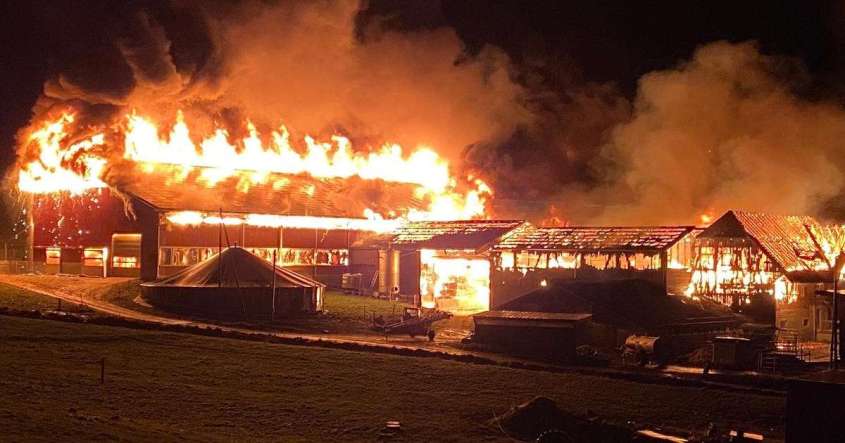
In Rière le Moulin in Cortébert BE, a farm burned brightly on Friday night.
No people were injured – but 50 calves lost their lives in the fire.
The animal rights organization PETA became aware of the death of the calves based on several media reports – and has now filed a complaint against the farmer.
Because:“Due to presumably inadequate fire protection measures, it may have been accepted that the calves will suffocate in agony or burn while fully conscious,” said the animal rights organization.
This is not an isolated case in Switzerland:“Every year hundreds of animals die in stable fires. In Peta’s opinion, every such death is accepted approvingly due to a lack of fire protection regulations. “
The organization also calls on politicians to act and tighten legal regulations.
“Consumers can also do something about such terrible incidents: If everyone were vegan, that would not have happened,” said Ilana Bollag on behalf of Peta Switzerland.
The villagers of Cortébert stand by the farmer and show solidarity.
Various donation campaigns are underway according to 20min.ch to collect money for the affected family (!!). The community provides a bank account and calls for donations.
“Since the family has literally lost everything, donations in kind are also accepted,” the community said on Facebook. The affected family thanked everyone who showed their support via Facebook.
And I mean…The farmer is a homeowner, runs a farm, but has no fire insurance? A loophole in the law! or I would say… why should I donate something …?
And why a donation account?
If there is no negligence, the family will still receive money from the insurance.
Since the corona pandemic there have been many stable fires (also in Germany), it is suspicious, very suspicious, someone might suspect the intention is to collect the insurance.
I think the criminal complaint is the least the farmer has to get.
If 50 people were burned in the barn, there would be no discussion of inadequate fire safety, but the farmer would already be in custody.
50 calves burned alive, that sounds harmless to the donors, and because they are animal- and not human- children, they even feel sorry for the farmer.
But 50 calves char miserably in the fire – you have to swallow empty several times and get into great anger before deep sadness emerges.
To be honest, if I were to read, for example … 50 carnivores would have burned their fingers while grilling, I wouldn’t give a shit.
But the cruel death of the calves hits me in the middle of my heart where it hurts.
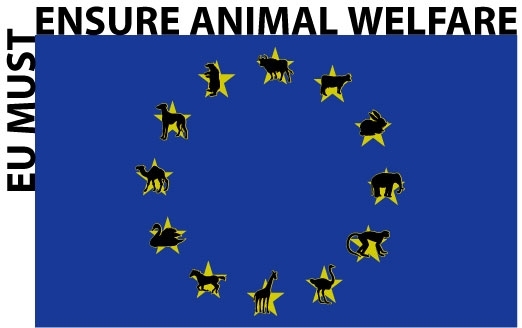
Time to change the rules: Eurogroup for Animals launches White Paper on the Revision of the Transport Regulation
27 January 2021
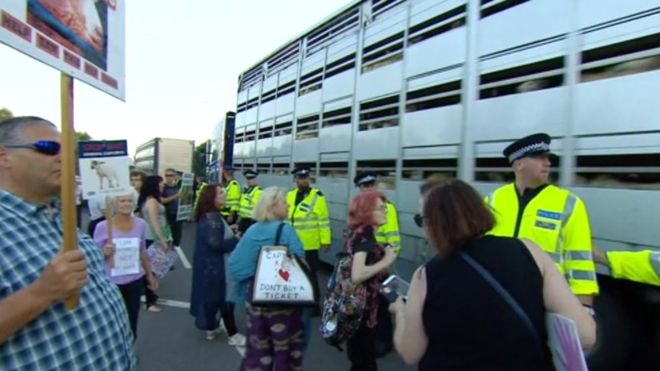
Today, Eurogroup for Animals presented its White Paper on the upcoming Revision of the Transport Regulation during a high-level online event, bringing together more than 150 stakeholders from EU institutions, Member States, civil society and industry. The White Paper outlines how the new Transport Regulation should adhere to the basic principles of reducing, refining and replacing live transport, whenever applicable.
Since its foundation, Eurogroup for Animals and its members have been advocating to ensure effective protection of all animals transported. In 2007, Council Regulation 1/2005 – also known as the Transport Regulation – entered into force with the aim to avoid any injury or undue suffering during transport. However, over the years, investigations revealed that its implementation and enforcement is very poor; and scientific sources reported that its provisions are often unfit to ensure effective protection for the animals transported.
Today, Eurogroup for Animals launches a White Paper as a response to the European Commission’s stated aims to revise the Transport Regulation “to align it with the latest scientific evidence, broaden its scope, make it easier to enforce and ultimately ensure a higher level of animal welfare”.
Every day, a vast range of animal species are transported within the EU and beyond for commercial activities, yet the current Transport Regulation does not guarantee effective protection to all of them. In principle, the Transport Regulation should apply to the commercial transport of live vertebrate animals. However, the majority of its provisions refer only to the welfare of certain terrestrial farmed animal species: the requirements for the transport of fish, companion animals and equines are less developed; and measures to ensure the welfare of a large group of species transported for scientific purposes are completely absent. Additionally, by definition, invertebrates transported for food production remain out of the scope of the Regulation. This needs to change.
Furthermore, it’s been widely demonstrated that existing gaps in the current legislative framework have a significant negative impact on animals. This needs to be addressed by establishing comprehensive species- and category-specific requirements as well as a more efficient enforcement system. To this end, the White Paper provides the European Commission and EU co-legislators with science based key provisions to be included in the revised legislative text to substantially improve the welfare of terrestrial farmed animals, fish and aquatic invertebrates, equines, companion animals, and laboratory animals during transport. To further facilitate compliance and systematic data collection, a reporting system based on transparent communication on the animals being transported (species and numbers, animal welfare status, journey route) and any transport-related problems, is outlined. Such a system would increase Member States’ accountability and fully exploit the enforcement power of the European.
EU fails to strengthen enforcement of sustainable development provisions in EU FTAs
28 January 2021
While the announcements made by the EU institutions on the revision of the so-called “Enforcement Regulation” on trade disputes foresaw stronger enforcement mechanisms for Trade and Sustainable Development (TSD) provisions contained in trade agreements, the draft text adopted at the European Parliament’s plenary session on 21st January does not reflect the awaited progress.
The long-awaited materialisation of the principle that violations of TSD chapters – in which wildlife conservation and trafficking issues are embedded, alongside deforestation or climate issues – are as important as those perpetrated against market access provisions, remains uncertain from the EP’s first reading of the text released earlier this week. While the text interestingly lays down that the Regulation allows for a suspension of the obligations stemming from EU trade deals – which means the EU could suspend preferential tariffs – in response to breaches of TSD chapters, the concept remains largely aspirational – as it is listed in the recitals which are non-binding, legally speaking.
This outcome is disappointing considering the statements made by the EU institutions back in October 2020 that the EU would “examine breaches in the field of sustainable trade with the same attention as breaches of market access”. As a reminder, the purpose of the Enforcement Regulation’s update was to extend its scope in order to enable the EU to impose counter-measures in situations where EU trade partners violate WTO rules or block the dispute settlement procedures available under WTO rules. This is seen as an interim arrangement in reaction to the legal void left by the “WTO Appellate Body crisis” since December 2019. Considering the weakness of enforcement mechanisms attached to TSD chapters, there was hope that the updated Regulation could also provide new tools to address concerns in this field.
Eurogroup for Animals thus regrets that the enacting terms of the Regulation do not include any wording on strengthening the enforcement of TSD chapters contained in EU FTAs.It is also hard to see what the recital listed in the reviewed Enforcement Regulation will add to existing legislation, as the principle that TSD violations could lead to the suspension of the FTA has already been recognised by the CJEU Opinion on the EU-Singapore FTA. ) Back then, we already analysed that this ruling was not a panacea. Suspending the entire agreement in response to the breach of TSD provisions is the equivalent of a “nuclear weapon”. It is thus very unlikely the EU will want to trigger this process. In addition, the aspirational nature of the provisions contained in TSD chapters (which usually list commitments to ‘aim’ or ‘strive’ at ‘promoting’ sustainable development issues) would also make it difficult for the EU to prove failure of commitment from its partner. The recent ruling in the dispute linked to labour rights provisions included in the EU-Korea FTA has clarified that, in their current form, these provisions only impose an obligation of “efforts”, not of “results”.
In conclusion, this regulation does not add any additional mechanism to strengthen the enforcement of TSD commitments in EU FTAs. All eyes will now be on the new EU Trade Strategy, which should be published on 17 February, to assess whether the EU has succeeded to make its trade policy compatible with the EU Green Deal.
Leaked documents suggest the EU-Mercosur agreement needs to be renegotiated
1 February 2021
The agreement, as it stands now, is a bad deal for animals, nature and people. And it cannot be fixed by simply adding a protocol or a declaration.
Leaked working documents from the French government suggest that for France to consider ratification of the EU-Mercosur agreement, it must either be renegotiated to include new provisions, or new EU legislation must be put in place for instance to impose EU standards to imported products.
The Commission’s new proposals to solve the conundrum created by the ratification of the EU-Mercosur agreement will only be presented by mid 2021 but several Member States are also preparing a list of “pre-ratification conditions”, as shown by leaked proposals from the French government. The document suggests that the Agreement would either need to be renegotiated, or that new EU legislation should be put in place, before it can be ratified. Among others, the French government proposes:
The development of “mirror measures”, which means that certain EU health and environmental standards should apply to imports.
Cooperation against deforestation, for instance through the creation of a traceability system for animal and plant based products in order to identify whether those products are linked to deforestation.
A review of all import tolerances, in order to ensure producers from Mercosur respect the environment.
The French opposition to the Agreement grew after the release of the French Impact Assessment on the deal which confirmed the threats identified by Eurogroup for Animals: the deal, if implemented, will lead to an increase of EU’s imports of beef and chicken from Mercosur countries, creating further pressure on EU animal welfare standards. French Prime Minister Jean Castex confirmed in September 2020 that France will oppose the ratification of the EU-Mercosur trade deal in its current shape. Yet, the proposals made by the French government in the leaked working document do not address our concerns related to the impact of the agreement on animal welfare. For instance, animal welfare standards should have been added to the list of standards that the EU should impose on imported goods.
In this context, Eurogroup for Animals still calls for a reopening of the negotiations, which should include amongst other:
A review of the market access offer to further limit the volume granted in tariff-rate quotas (TRQs) for animal based products, especially for bovine and chicken meat.
Animal welfare conditions for all trade preferences granted to animal products.
The clarification that provisions on marking and labelling do not pre-empt the EU from adopting a method of production label that would apply to imports.
A recognition of the precautionary principle in the field of food safety.
Proper monitoring mechanisms to assess the impact of the implementation of the trade deal on the animals, the environment and the people, and the introduction of tools that would allow to revert the negative impact that could be detected by these mechanisms. This could be done by strengthening the TSD chapter and its enforcement mechanisms.
Action alliance – animals do not belong to the circus
A BAN IN ALL BELGIUM APPLIES FROM 2023
A “wild animal ban” has been in effect in circuses in Belgium since 2014.
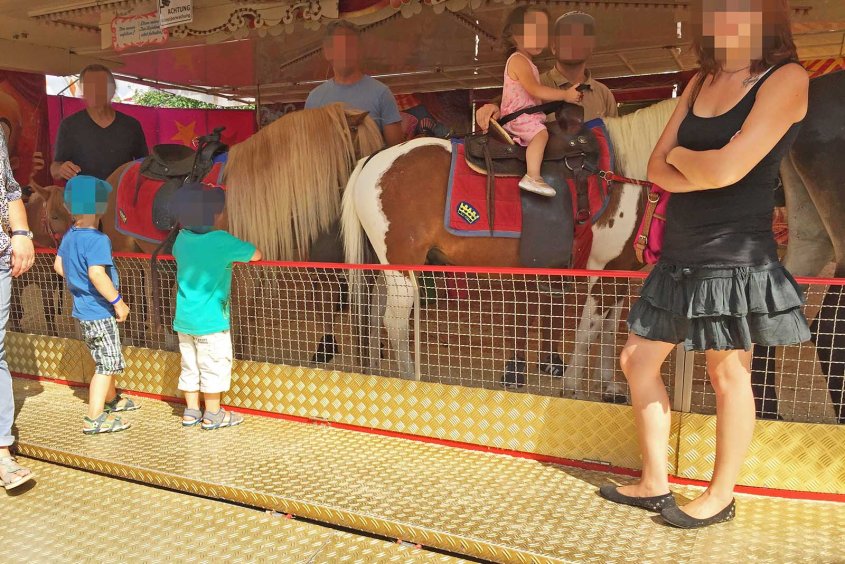
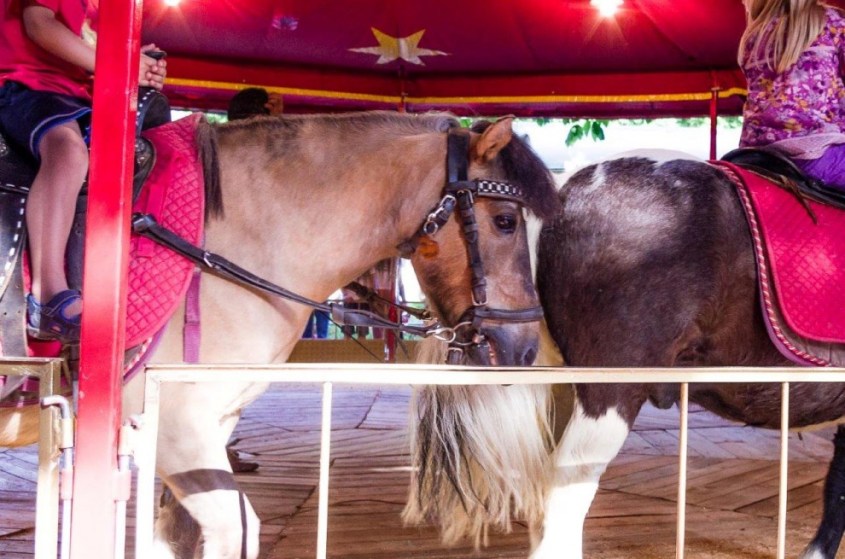
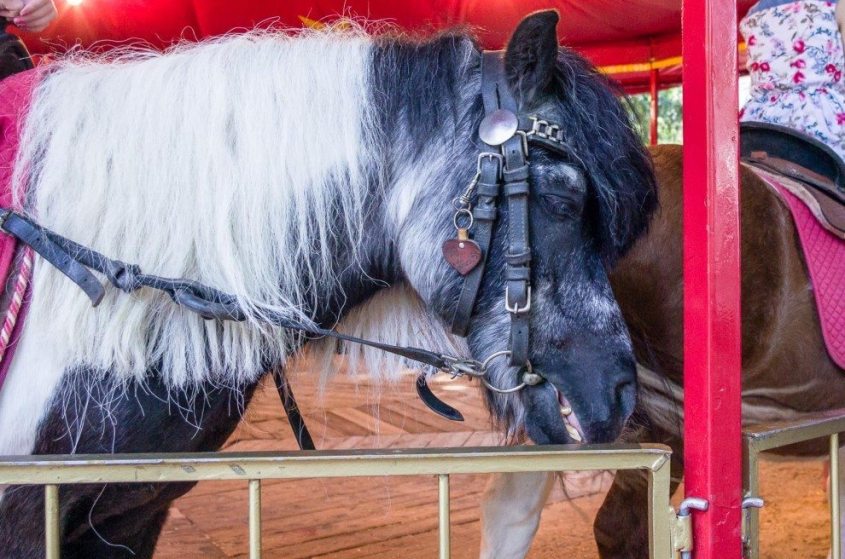
Now the “fun” on the back of little horses that have to go around in circles for hours will soon come to an end.
After the Brussels and Wallonia regions, Flanders has now also banned pony riding at trade fairs and annual markets
This means that this old-fashioned “attraction” will be banned across Belgium from 2023 after a corresponding transition period.
The operators of the pony carousels are to receive compensation.
It is time to sensitize parents and children to the quiet suffering of animals and to show that there are species-appropriate ways to show children the “happiness of the earth on horseback” – with respect for animals.
The pony carousel is not an authentic riding experience anyway. Parents who want to give their children an authentic experience of the horse are certainly better advised to visit a pony farm. With the prospect of it, many a whining child can be distracted from the pony carousel.
And I mean…Pony carousel! the underrated cruelty to animals.
According to the guideline, the animals are allowed to do their stupid, monotonous laps for four hours.
No, they are not allowed, they have to!
If someone talks about love for animals, he has to learn the term again.
An anachronistic entertainment genre that not only means immense suffering for the animals circling for hours on end and circling to the point of complete exhaustion, but also makes people insensitive and teaches children disastrous things about animals.
These circling child slaves – “riding ponies” run in circles for hours, usually even at high temperatures, and are treated with violence and brutality by their slave owners.
And German? it keeps sleeping!
Not only wild animals are still allowed in the circus, but we also still use pony carousels as an attraction.
A year ago there was an online petition to stop pony riding at a Christmas market – over 27,000 people signed up.
Without success, because the veterinary office allowed pony riding, the petition was hopeless.
It is a shame that animals are still allowed to be abused for dull entertainment in this country.
We have been trying to support our friends with the South Korean Dog Meat campaign by publishing their regular and very informative newsletters which you can view at:
We found that the (campaign) e mail blocks given on their site gave us constant ‘undelivered’ replies; and so we set out to try and get it sorted by doing a few tests at our end. We made some very small changes to the e mail addresses and sent out our ‘new’ versions. After a few days everything seemed fine and we had no ‘undelivered’ messages from the administrator.
Our first set of RE VAMPED versions were initially given in post
This was an initial trial post and we hoped to move on with the rest. As everything from this initial trial seemed fine, we decided to take the plunge and issue the other amended versions; which we ask you to copy and send as each post is produced. The second amended version is Post 2 and can be found as follows.
Now it is time to move on and do Post 3 which will cover Mungyeong and Pohang – making 6 regions out of 10..
ACTIONS:
Please send e mails to all as per the lists below, along with the regional covering letter which is also supplied. Please note they are different for each specific region – so do NOT use the same one for both regions.
So lets get started now with Post 3 of 5; and the remaining others will follow very shortly.
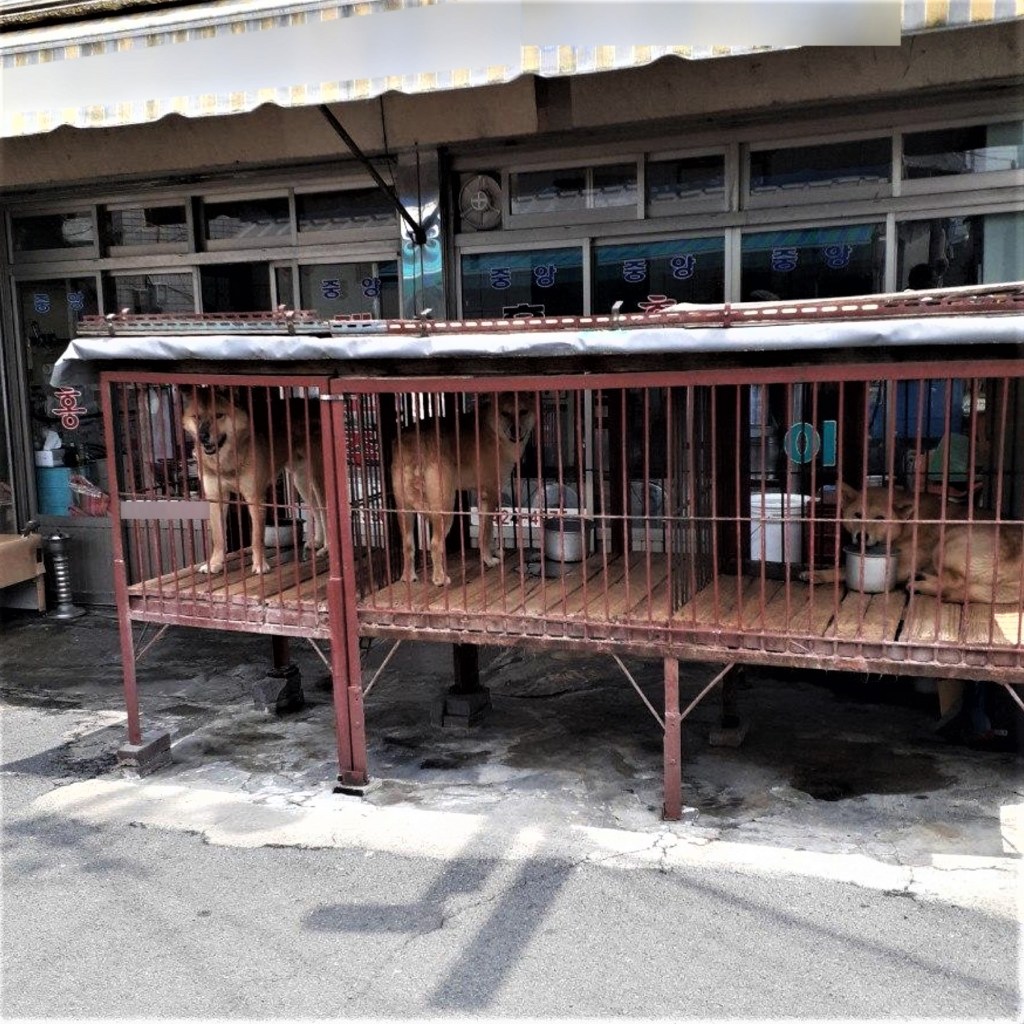
We ask you to take immediate action to crack down on the illegal dog farms, slaughterhouses, markets and restaurants that serve dog meat in your city. We request that an official document be issued, mandating that the following existing Korean laws be enforced by its government officials, police and judges:
Unauthorized processing of food waste fed to dogs in the meat trade is a violation of the Wastes Control Act, Article 15-2, Article 25, Section 3. Suppliers of food waste and transporters of food waste to dog meat farms are violating this regulation.
Food waste fed to dogs in the dog meat trade is a violation of the Control of Livestock and Fish Feed Act, Article 14, Section 1 & 2. Unauthorized collection of food waste and the act of feeding it to dogs in the meat trade is in violation of this regulation.
Excrement and resulting environmental damage produced as a by-product of the illegal dog meat farm is a violation of the Act on the Management and Use of Livestock Excreta Article 11. The excrement produced at dog meat farms causes environmental damage to the immediate and surrounding area.
The act of the slaughtering of dogs for human consumption is a violation of the Animal Protection Act Article 8, Section 1, Clause 4. The act of the slaughtering of a dog, without justifiable ground – such as out of necessity for veterinary treatment, or in circumstances of immediate threat, harm or damage to human life or property, is a violation.
The slaughter of dogs by electrocution is a violation of the Animal Protection Act, Article 8, Section 1, Clause 1. Inflicting injury or death to any animal by the following means: battery by tools, exposure to drugs, exposure to extreme heat or fire, electrocution and drowning is subject to legal punishment. Therefore, the routine slaughter of dogs by butchers and farmers by these methods is in violation of the Act. Further, electrocution as a method of slaughter is internationally recognized as an inherently cruel method of slaughter and banned globally.
The slaughter of dogs from an unauthorized slaughterhouse is a violation of Livestock Products Sanitary Control Act, Article 7 Section 1. The Livestock Products Sanitary Control Act, states that dogs are officially recognized and classified as “animals” that are “prohibited from being slaughtered and distributed as food for human consumption”. Therefore, those vendors operating dog slaughterhouses are operating outside of the parameters of the law and in violation of the law.
The slaughter of dogs for his/her own consumption is a violation of the Animal Protection Act, Article 10. The intent of the Act is to ensure that no animal is slaughtered in a cruel or revolting manner, and shall be free from unnecessary pain, fear, or stress during the process of slaughter. Therefore, the only humane way of slaughtering dogs would be by euthanasia (lethal injection). All currently practiced methods of slaughter by butchers, farmers and traders excludes euthanasia as a method of slaughter, therefore they are all in breach of this Act. This is also a violation of the Livestock Products Sanitary Control Act Article 7 Section 1 Clause 2. According to the Livestock Products Sanitary Control Act, the slaughter of animals for his/her own consumption is allowed only for the livestock animals that are publicly announced as classification of livestock in the Livestock Products Sanitary Control Act and dogs are not classified here.
The display and sale of dog carcasses in traditional outdoor markets is a violation of the Food Sanitation Act, Article 4, 5. Violation of laws banning the sale of harmful food due to the contamination from unsanitary and illegal slaughter of the animal and display of the dog carcass. For example, dog carcasses are routinely contaminated by microorganisms that cause human diseases and food poisoning; this can lead to serious and life threatening health complications. There are also strict laws that ban the sale of meat from sick animals, due to the fact that there is no quality control or formal monitoring of slaughter practices in the dog meat trade it is very likely that violation of these laws is happening routinely.
Dog meat restaurants’ sale of dog meat soup made with dog carcasses from an unknown source is a violation of Food Sanitation Act Article 44 Section 1 Clause 1. Uninspected livestock products must not be transported, stored, displayed, sold or used for manufacturing or processing of food for human consumption.
International coverage of the brutal dog and cat meat trade in South Korea has stained your city’s image. The time to end this tragedy is now. The favor of your reply is requested.
We ask you to take immediate action to crack down on the illegal dog farms, slaughterhouses, markets and restaurants that serve dog meat in your city. We request that an official document be issued, mandating that the following existing Korean laws be enforced by its government officials, police and judges:
Unauthorized processing of food waste fed to dogs in the meat trade is a violation of the Wastes Control Act, Article 15-2, Article 25, Section 3. Suppliers of food waste and transporters of food waste to dog meat farms are violating this regulation.
Food waste fed to dogs in the dog meat trade is a violation of the Control of Livestock and Fish Feed Act, Article 14, Section 1 & 2. Unauthorized collection of food waste and the act of feeding it to dogs in the meat trade is in violation of this regulation.
Excrement and resulting environmental damage produced as a by-product of the illegal dog meat farm is a violation of the Act on the Management and Use of Livestock Excreta Article 11. The excrement produced at dog meat farms causes environmental damage to the immediate and surrounding area.
The act of the slaughtering of dogs for human consumption is a violation of the Animal Protection Act Article 8, Section 1, Clause 4. The act of the slaughtering of a dog, without justifiable ground – such as out of necessity for veterinary treatment, or in circumstances of immediate threat, harm or damage to human life or property, is a violation.
The slaughter of dogs by electrocution is a violation of the Animal Protection Act, Article 8, Section 1, Clause 1. Inflicting injury or death to any animal by the following means: battery by tools, exposure to drugs, exposure to extreme heat or fire, electrocution and drowning is subject to legal punishment. Therefore, the routine slaughter of dogs by butchers and farmers by these methods is in violation of the Act. Further, electrocution as a method of slaughter is internationally recognized as an inherently cruel method of slaughter and banned globally.
The slaughter of dogs from an unauthorized slaughterhouse is a violation of Livestock Products Sanitary Control Act, Article 7 Section 1. The Livestock Products Sanitary Control Act, states that dogs are officially recognized and classified as “animals” that are “prohibited from being slaughtered and distributed as food for human consumption”. Therefore, those vendors operating dog slaughterhouses are operating outside of the parameters of the law and in violation of the law.
The slaughter of dogs for his/her own consumption is a violation of the Animal Protection Act, Article 10. The intent of the Act is to ensure that no animal is slaughtered in a cruel or revolting manner, and shall be free from unnecessary pain, fear, or stress during the process of slaughter. Therefore, the only humane way of slaughtering dogs would be by euthanasia (lethal injection). All currently practiced methods of slaughter by butchers, farmers and traders excludes euthanasia as a method of slaughter, therefore they are all in breach of this Act. This is also a violation of the Livestock Products Sanitary Control Act Article 7 Section 1 Clause 2. According to the Livestock Products Sanitary Control Act, the slaughter of animals for his/her own consumption is allowed only for the livestock animals that are publicly announced as classification of livestock in the Livestock Products Sanitary Control Act and dogs are not classified here.
The display and sale of dog carcasses in traditional outdoor markets is a violation of the Food Sanitation Act, Article 4, 5. Violation of laws banning the sale of harmful food due to the contamination from unsanitary and illegal slaughter of the animal and display of the dog carcass. For example, dog carcasses are routinely contaminated by microorganisms that cause human diseases and food poisoning; this can lead to serious and life threatening health complications. There are also strict laws that ban the sale of meat from sick animals, due to the fact that there is no quality control or formal monitoring of slaughter practices in the dog meat trade it is very likely that violation of these laws is happening routinely.
Dog meat restaurants’ sale of dog meat soup made with dog carcasses from an unknown source is a violation of Food Sanitation Act Article 44 Section 1 Clause 1. Uninspected livestock products must not be transported, stored, displayed, sold or used for manufacturing or processing of food for human consumption.
International coverage of the brutal dog and cat meat trade in South Korea has stained your city’s image. The time to end this tragedy is now. The favor of your reply is requested.
[Your Name & City/Country]
Please try to copy and send – help the Korean Dogs;
Additional Note –
We will be publishing a combined listing of ALL the 5 posts when we have completed everything; so if you have missed any you can check back; or alternatively, you can copy in full again and re send everything; and really ramp up the pressure !










 World Animals Voice