Category: Environmental

Fight the Good Fight For Animals in Transport.

zerissene EU-Flagge am Stock

Want to hear a story about the EU ?

The European Commission should actually be paying us to do the job of being EU inspectors. But desperation is not in our vocabulary, so we work independently. We have been doing this blog since the first day (15/7) of the shipment from Romania, and only with the modest resources that we have available.

It is illegal and ethically unacceptable for a ship with 70,000 live sheep to be at sea since 15 July.

Primarily the biggest disgrace was that no one was able to forbid the ship to depart in the first place.

Commissioner Andriukaitis (below) has failed.

vytenis-andriukaitis-75902633

EU countries, as member states, should be forced (policed) to comply with EU animal transport regulations. EU Regulations (1/20005) stipulate that animals can be transported in heat only as long as the temperature in the vehicles does not exceed 30 ° C (with 5 ° C tolerance upwards).

This is stipulated by the Regulation for animal transports over 8 hours journey time.

AL_SHUWAIKH another 3

The ‘Al Shuwaikh’ is on the sea since July 15 with 70,000 Romanian sheep.

It has previously docked in Jeddah; and today (29/7) in Jebel Ali which is located in United Arab Emirates.

How many animals are still being carried ? – are they all offloaded at previous ports or are some still aboard and alive ?, what has become of the bodies of those who have died painfully in the past?

Should we wait until they are sighted by tourists and share the beach of Tenerife?

Image result for sheep suffering in transport

Is not it to be feared that half of the sheep are already dead when they drive around the sea for two full weeks at a temperature of over 40 degrees?

And is not it shameful that none of our highly paid EU Commissioners are worried, how are the sheep going to be disposed of?

Disrespect! Not only towards animals, but also towards the environment, against the law, which is designed by the EU itself to keep everything correct and in check !!.


We at WAV / SAV reported about it.

We were among the 70,000 living beings in this way, that was the least we could do for them, we could not do anything else.

Now we are talking with other animal organisations to approach future campaigns against actions such as this.

In the future, we will often take to the streets.

We are fed up with corruption, indifference, the cheating of people and animals by non-compliant governments and EU oligarchs.

We are many who want to abolish mass animal husbandry and torturous animal transports.

And we will fight hard and consistent for our Animal Companions.

Regards – Mark and Venus.


Borneo: Support BOSF and Get Orangutans Back Into the Wild – They Have – 400. Read and See Amazing News Here.


Get Orangutans back into the wild !

Dear Mark

We couldn’t be more grateful to have you with us.

Because of your support, we made history, again!

With our latest release of four orangutans in the Kehje Sewen Forest, the number of rehabilitated orangutans released since renewed efforts started in 2012 is up to 400  !

When you watch this video, remember that it all started with you.


This is just the latest milestone in our efforts to ensure that future generations get to see these magnificent creatures in the wild.

Still, there is more work to be done.

Read this newsletter to learn more about our exciting collaborative work to save our closest relatives.

Thanks for your continued support

Dr. Jamartin Sihite
CEO of BOS Foundation


BACK TO WILD

Release candidate profiles

The release of four more orangutans – Anna Friel, Edgar, Elder and Mori – for the third consecutive time in 30 days to the Kehje Sewen Forest.

Get the profiles, complete with photos at:

http://orangutan.or.id/release-candidate-profiles-for-the-20th-orangutan-release-from-bos-foundations-samboja-lestari-orangutan-rescue-and-rehabilitation-centre/


CLEVER CREATURES

Photo – BOSF

Rachel, a Model Forest School Student

In our rehabilitation centres, orangutans learn through the guidance of our surrogate mothers, but they can also learn from each other. Rachel shows how!

Click here for more:

http://orangutan.or.id/orangutan-rachel-a-model-forest-school-student/


Get away from Plastic bottles – support the Orangutans with a BOS Foundation Aluminum Tumbler


SHOP TO SUPPORT

New colour tumblers on Sale

What better way to veer from the use of plastic bottles or disposable plastic cups than by getting our new aluminium tumbler?

Click here for a range of great BOS products which you can purchase to support Orangutan FREEDOM:

https://www.instagram.com/orangutanshop/


Contact Us
Address:
Jalan Kumbang No.31
Bogor 16128
West Java, Indonesia

Phone Number: +62 251 831 4468
E-Mail: bos_communication@orangutan.or.id
Website: orangutan.or.id

USA: Take Action for the Dolphin Brutally Impaled and Left for Dead.

UNST0001

SIGN: Justice for Dolphin Brutally Impaled and Left for Dead

Petition – Take Action for the Dolphin Brutally Impaled and Left for Dead.


petition keyboard

Petition Link:

https://ladyfreethinker.org/sign-justice-for-dolphin-brutally-impaled-and-left-for-dead/?utm_source=Newsletter&utm_medium=Emailhttps://ladyfreethinker.org/sign-justice-for-dolphin-brutally-impaled-and-left-for-dead/?utm_source=Newsletter&utm_medium=Email    


PETITION TARGET: Director of NOAA’s Office of Law Enforcement Jim Landon

Florida wildlife officials discovered a fatally wounded bottlenose dolphin along the coast of Upper Captiva Island in Lee County, reports the National Oceanic and Atmospheric Administration (NOAA).

“There was a wound penetrating from above and in front of the right eye, extending almost 6 inches toward the top and back of the head. The wound ended inside the head at the top of the skull and had evidence of hemorrhaging, indicating wounds consistent with being impaled prior to death,” the NOAA stated

The necropsy revealed the dolphin was likely “begging” for food when gruesomely stabbed by a “spear-like object.”

“People can help prevent future harm to wild dolphins by not feeding or attempting to feed them. Not only is it illegal, dolphins fed by people learn to associate people, boats, and fishing gear with food, which puts dolphins and people in harmful situations,” the NOAA informed.

“Harassing, harming and killing wild dolphins is also illegal,” the Miami Herald warned.

Sign this petition to urge NOAA Director Jim Landon to use all available resources to investigate this horrific crime against protected wildlife, so the perpetrator can be identified and prosecuted to the fullest extent of the law.

Anyone with information about this case is urged to call the NOAA Enforcement Hotline as soon as possible at 1-800-853-1964. 

There is a $38,000 reward for information leading to an arrest.


UK; Victory for Cetaceans! – Virgin Holidays Stops Booking Captive Whale and Dolphin Attractions.

Related image

Related image


WAV comment – well done Sir Richard !

Victory for Cetaceans!

Virgin Holidays Stops Booking Captive Whale and Dolphin Attractions

Posted by Carly Day | July 18, 2019


Tour operator Virgin Holidays has announced that they will no longer be promoting or selling trips to attractions that have captive whales or dolphins. 

The company — part of Sir Richard Branson’s Virgin Group — plans to initiate the changes as soon as possible, with a deadline of July 31st.

We have now decided the time is right to discontinue offering attractions featuring close encounters with captive whales and dolphins,” said Joe Thompson, managing director of Virgin Holidays. “We will instead focus our efforts on encouraging customers to see these creatures in the wild. We will also continue our efforts to support the development of sanctuaries for whales and dolphins currently in captivity.”

Virgin Holidays has donated $100,000 to the National Aquarium in Baltimore for their project, which aims to relocate their captive dolphins to a purpose-built sanctuary, set to open in 2021.

“We want to actively support this direction by encouraging more responsible wild watching, which puts animal welfare at the heart of things, meaning our customers get to experience these amazing animals with peace of mind and future generations can enjoy these wonderful experiences too,” said Thompson.

Virgin joins many other travel providers around the world who refuse to support animal-related attractions, such as TripAdvisor and Thomas Cook.

Since 1977, 70 orcas have been born in captivity; 37 of them are now dead, and none have survived for longer than 30 years. The average lifespan of a wild orca is 50-80 years.

According to National Geographic, there are 58 orcas in captivity on the planet; a third of these are held in the United States. These incredible animals live in social groups and are exceptionally intelligent and complex individuals, who cannot thrive when taken from their natural environment.

“It’s basic biology,” says mammal scientist Naomi Rose from the Animal Welfare Institute. “A captive-born orca that has never lived in the ocean still has the same innate drives. If you have evolved to move great distances to look for food and mates then you are adapted to that type of movement, whether you’re a polar bear or an elephant or an orca. Not one marine mammal is adapted to thrive in the world we’ve made for them in a concrete box.”

We applaud Virgin Holidays for taking a stand against animal cruelty and putting their money where their mouth is by supporting humane alternatives to marine animal attractions.

Related image


The Waorani won the appeal! – They Send Thanks to Friends Who Supported Them Around the World.

WAV Comment:

What incredible news that we were proud to be part of.  Indigenous rights of tribes upheld; the mighty Amazon saved from destruction – Oxygen wins !! – Mark


Our past posts on this issue:

https://worldanimalsvoice.com/2019/04/29/ecuador-waoranis-victory-against-oil-companies/

https://worldanimalsvoice.com/2019/05/13/our-land-is-not-for-sale/


Dear Mark,

The Waorani won the appeal!


This marks a game-changing victory for the Amazon and a historic precedent for indigenous rights.

The impact here is monumental. With last week’s court ruling, the Ecuadorian government’s attempt to sell 500,000 acres of ancestral Waorani forest to oil companies is indefinitely BLOCKED.


But now is not the time to rest on our laurels, we have to keep the momentum going. The verdict is final but now the Waorani need to make sure the judgment is enforced. Ecuador’s Executive Branch has vowed to continue drilling in the Amazon “no matter what” to pay off mounting debts, so it’s up to all of us to keep up the pressure and turn the verdict into action.

Help us grow this movement by sharing this card and inviting your friends to join the fight!


This victory also sets a major legal precedent for the seven other indigenous nations whose 7 million acres of rainforest homelands are STILL ON THE AUCTION BLOCK.

Opportunities to amplify impact at this scale don’t come around all that often. Join us in backing the Amazon’s oldest guardians to protect their way of life, their forest and our shared climate.

For indigenous rights, the Amazon and our planet,

The Waorani and Amazon Frontlines Team


“We called on the world to support us and they did.

We told them the government wasn’t listening to us, and hundreds of thousands of people made our voices heard.

Thank you to all our friends around the world for joining our fight.”

– Nemonte Nenquimo, Waorani leader.


Germany: the land of 8 million tons meat!


deutsche Flagge mit Bananen jpg


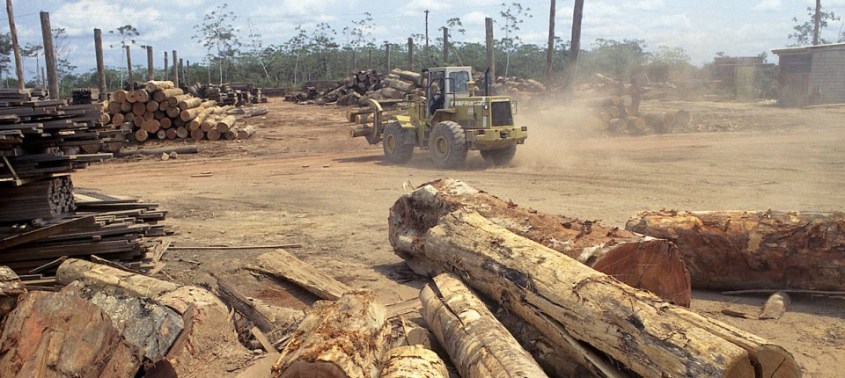
German Development Minister Gerd Müller returns to Germany on Sunday after a week’s state visit to Brazil and complains that the rainforest is being cut down!!

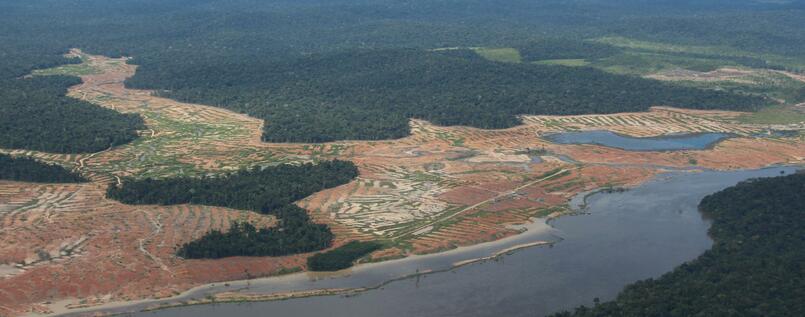
Abholzung in BrasilienpgClearcutting: According to the Brazilian space research institute INPE alone in June 2019, 920 square kilometers of Amazon rainforest were destroyed. This is an increase of 88 percent over June 2018

 
His mission was to further develop the cooperation projects, in particular for the protection of the rainforest, the indigenous population and the Amazon Fund.
He says in the media: “I expect more engagement in the Amazon (!!!)

abgeholte Flächen in Brasilienjpg

Why does he say it in the media and not his colleague, Minister and lobbyist of Agriculture, Julia Klöckner?

It is well known that Germany not only supplies Brazil with dangerous pesticides, which are banned even in the EU, but is also responsible for cutting down the Amazon in Brazil.

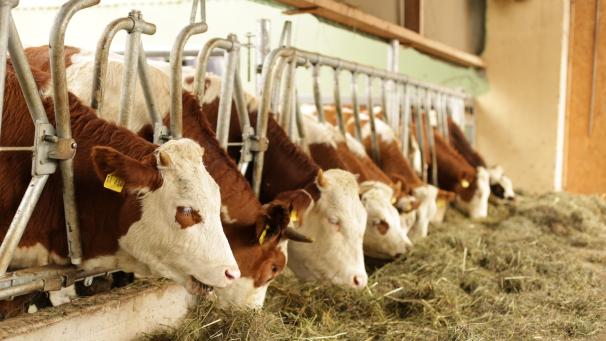
Germany is not only one of the largest milk producers, but also one of the largest meat producers in the world. Subsidized with tax money!

Germany produces 8 million tons of meat every year! In order to be able to produce that amount of meat at all, it needs food for the animals.

Kühe im Stall

Germany imports most of the soya from Latin America. Incidentally, the most important supplier of beef to the EU is Argentina. To be able to produce this amount of soy, forests are cleared and burned. An extraordinary ecosystem with a high biodiversity disappears.

animals-in-brazils-amazon-rainforest

Few people are aware that an invisible bond of destruction is moving from European mass animal farms to the forests of South America. There huge soy plantations destroy the native fauna and flora. It is an environmental crime that often forests are cut down for cultivation, the soil is leached out and water is polluted.

regenwald amazonasjpg

In 2016, this was about 2.9 million tonnes of soy and soy products.

This soya is used by food and meat processors and is used for the rearing of chickens, pigs and cattle or for the production of eggs and dairy products, which are sold in many German supermarkets and restaurants.

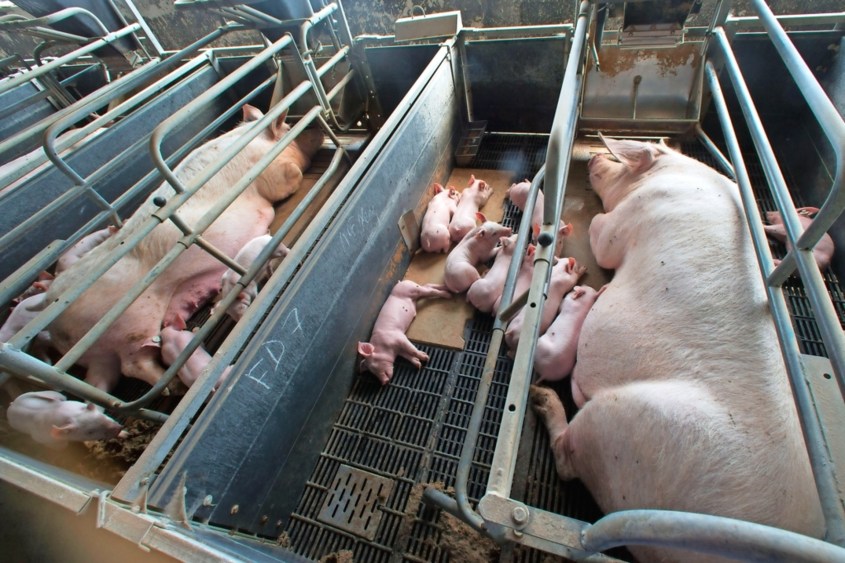
So if the topic of Amazon, climate change or CO2 is discussed, why is the issue of factory farming not mentioned? Animal products are associated with high greenhouse gas emissions, water consumption and inefficient land use!

Poultry Farm And A Veterinary

Livestock for meat, eggs and dairy products has high CO2 emissions and produces 15% of the world’s greenhouse gas. That’s more than all the cars, planes and other means of transport in the world.
A person who eats plant-based foods 1 day a week for 1 year can lower their CO2 emissions by 234 kg per year (estimated based on the carbon footprint of various foods).

Please calculate this now, if you consider that Germany produces 8 million tons of meat per year and about 33 million tons of milk!

The agricultural lobby is powerful, that means. And it is subsidized in Germany with tax money, which then for education, care and so on. is not available.
From the EU, the German agricultural lobby receives about 6 billion Euros and these are causing severe damage in other countries. On average, every EU citizen pays 32 cents a day for the EU criminal agricultural policy.

Massentierhaltung_

It is estimated that over 30 million tonnes of genetically modified feed are imported into Europe each year to feed pigs, poultry, dairy and beef cattle and farmed fish.
Much of the soybean and corn used for this purpose is grown in South America, including Brazil, Argentina and Paraguay.

Cheap meat, milk and eggs can only be produced with cheap soybeans, which, however, cost the countries of origin expensive: Deforested rainforests, destroyed environment, poisoning of humans and animals are the result.

abholzen-in-suedamerika

This is not agriculture. This is a murder factory in the field.

This documentary explores the effects of soybean cultivation in South America and shows people in South America and Europe alternatives to the devastating vicious circle. The Video is in English and Spanish with German subtitles.

https://netzfrauen.org/2019/05/17/agrar/


My comment: The solution would be a Germanexit.

Only incompetent and irresponsible politicians have Germany.

We are dealing with a ruling clique, with corrupt oligarchs who are at least interested in the rights of animals and the rescue of the climate.
Everywhere scandals and manure stands in slaughterhouses we read lately.
And instead of finally abolishing factory farming or at least punishing criminal slaughterhouse operators, the slaughterhouse’s girlfriend, Agriculture Minister Klöckner, wants stricter penalties for activists exposing these crimes.

No more subsidies for the meat.
Meat consumption must be private, as well as smoking.
This state-subsidized factory farming must cost as much as the damage it does.
I consider it a political prostitution to subsidize meat.

My best regards to all, Venus


USA: Trump Administration Proposal to Remove Federal Protection for Gray Wolves Is Scientifically and Legally Flawed. Last Day for ACTION.

UNST0001


FOR IMMEDIATE RELEASE – July 15, 2019

Trump Administration Proposal to Remove Federal Protection for Gray Wolves Is Scientifically and Legally Flawed


Washington, D.C. Today is the final day to submit comments on the Trump Administration’s proposal to strip Endangered Species Act (ESA) protection for all gray wolves living in the lower 48 United States, except for the separately listed Mexican gray wolf.

Comments submitted by conservation groups The Rewilding Institute, Project Coyote and Wildlands Network point to substantial flaws and omissions in the U.S. Fish and Wildlife Service’s (USFWS) analysis of the relevant science and their interpretation of various ESA mandates.  The ESA requires that decisions to remove endangered species from federal protection under the ESA must be based on “the best scientific and commercial data” available at the time of the decision.  It also requires a determination that the species is no longer in danger of extinction “throughout all or a significant portion of its range.”

Wolves are as essential to the health of their ecosystems as they are reliant upon healthy ecosystems for their survival.  When allowed to exist at ecologically effective population densities and distributions, vital functions of wolves include keeping large herbivores from overgrazing their habitat and limiting populations of mid-sized predators.  Removal of wolves or other top carnivores from an ecosystem can unleash a cascade of responses that diminishes biodiversity and overall ecosystem health.  By disproportionate predation on the sick and weak, coursing predators such as wolves generate evolutionary selection for healthier, faster prey.  With Chronic Wasting Disease rapidly infecting big game herds across the country, scientific studies indicate that restoring wolves to vast areas of their former range could be an effective strategy for reducing the prevalence and checking the spread of this devastating disease and other wildlife diseases.

“The USFWS proposal erroneously claims that restoring gray wolves to the three Great Lakes states of Minnesota, Wisconsin, and the Upper Peninsula of Michigan plus the three Northern Rocky Mountain states of Idaho, Montana, and Wyoming at a minimum population of about 2,000 wolves will assure their long-term survival in the lower 48 United States throughout all or a significant portion of their range,” said David Parsons, a wildlife biologist who formerly led the USFWS’s Mexican Wolf Recovery Program and who is now the Carnivore Conservation Biologist for The Rewilding Institute and a science advisor to Project Coyote.  “It is hard not to conclude that the proposal to delist gray wolves represents a political decision in search of a science-based justification, rather than a well-reasoned decision that flows from a critical application of the best available science, as is required by the ESA.”

Gray wolves formerly ranged throughout all or parts of 42 states and historically numbered at least in the hundreds of thousands.  The USFWS has determined that the restoration of gray wolves to about 10 percent of their historic range and only a fraction of 1 percent of their historical abundance is sufficient to deem them recovered and no longer in danger of extinction.

“No credible conservation geneticist would consider the USFWS’s gray wolf recovery goals to be anywhere near adequate to ensure the long-term viability, ecological function, and evolutionary potential of gray wolves in the lower 48 states,” said Dr. Michael Soule, a Project Coyote science advisory board member and a founder of the discipline of conservation biology.

“The proposed rule ignores vast swaths of existing, highly suitable habitat, which will remain indefinitely impoverished by reduced biological diversity and impaired ecosystem health,” said Kim Crumbo, Senior Carnivore Expert for Wildlands Network. “Today, wolves inhabit only a small fraction of their historic range within the lower 48 states. But wolves have yet to recover in additional parts of the country—including the Pacific Northwest, northern California, the southern Rocky Mountains, the Grand Canyon ecoregion and the Northeast—where prime wolf habitat still exists.”

A peer review by independent scientists, commissioned by the USFWS, found demonstrable errors of scientific fact, interpretation and logic throughout the proposed gray wolf delisting rule and the accompanying biological report.  Substantive reviews by other conservation organizations and independent scientists corroborate and add to the findings of the commissioned peer reviewers.  For example, on May 7, more than 100 scientists and scholars sent a letter to Interior Secretary David Bernhardt stating that the proposal to remove Endangered Species Act protections for gray wolves across nearly all of the lower 48 states “does not represent the best-available science pertaining to wolf conservation.”

The peer reviewers’ recommendations leave the USFWS with two options:  1) produce a proposal that is consistent with the best available science as informed by the independent peer reviewers and others, or 2) retract the proposal altogether.  Ignoring the peer and public review findings and recommendations in part or in whole will be met with public outcry and most likely litigation.

Americans remain supportive of wolf conservation and of the ESA.  Recent research indicates three in five hold a positive attitude towards wolves.  Even those living in wolf range have a largely positive attitude toward these magnificent animals. In 2013, the last time the USFWS proposed a national delisting of wolves, approximately one million Americans stated their opposition to stripping endangered species protection from gray wolves, and it appears there will be substantially more public opposition this time.

###

Comments on the gray wolf delisting proposal are being accepted until midnight July 15.  Click here to submit comments. 

###


References:


See Project Coyote’s and The Rewilding Institute’s comments on the proposed rule here.

See Wildlands Network’s comments here.


Learn more about gray wolves here.


###


Project Coyote, a national nonprofit organization headquartered in Northern California, is a North American coalition of wildlife educators, scientists, ranchers, and community leaders promoting coexistence between people and wildlife, and compassionate conservation through education, science, and advocacy. For more information, visit ProjectCoyote.org.

The Rewilding Institute’s mission is to develop and promote ideas and strategies to advance continental-scale conservation in North America, particularly the need for widely distributed and ecologically effective populations of large carnivores and effective landscape corridors for their movement.  TRI offers a bold, scientifically credible, practically achievable, and hopeful vision for the future of wild Nature and human civilization in North America. Visit Rewilding.org to learn more.

Wildlands Network is a western-based, national organization whose mission is to reconnect, restore and rewild North America so that the diversity of life can thrive. We envision a world where nature is unbroken, and where humans co-exist in harmony with the land and its wild inhabitants. Visit WildlandsNetwork.org to learn more.

Portugal: Putting pigs in the shade: the radical farming system banking on trees – or, How It Used to be Before Intensive Factory Farming !

PORT0001


Putting pigs in the shade: the radical farming system banking on trees

A farm in Portugal is showing how the ancient art of silvopasture – combining livestock with productive trees – may offer some real answers to the climate crisis

The land to the north of the village of Foros de Vale Figueira in southern Portugal has been owned and farmed through the centuries by Romans, Moors, Christians, capitalists, far rightists, even the military. It has been part of a private fiefdom, worked by slaves as well as communists.

Now this 100-hectare (247-acre) patch of land just looks exhausted – a great empty grassland without trees, people or animals, wilting under a baking Iberian sun.

But look closely and you can just see the future: tips of thousands of tiny oak and nut trees following the contours and poking through thick mulches of grass and leaves.

“This will be the new montado,” says Alfredo Cunhal, referring to a pre-medieval Portuguese system of farming. He is an agricultural scientist whose great-grandfather cleared the cork and olive trees that were once scattered around, and whose family then overworked the land by dosing it with chemicals and growing monocultures of cereals.

The montado system combines herds of animals with productive trees and shrubs. Cunhal’s vision is to create an oasis-style abundance on land where there is often no rain for nine months of the year and where temperatures can reach 49C (120F

“Imagine tall trees, like 40-metre tall walnuts, putting down leaves, letting light through, drawing up water. Below them, cork oaks giving shade, and a line of citrus and olive trees; and then imagine vines climbing the trees. The fruit and nuts will provide the food for the pigs, chickens, cows and other animals who graze there,” he says.

“Animals are the key,” he says. “They are important for the whole ecosystem, as well as part of the food chain. They must be balanced with the tree system. Pigs provide digestion, and are good for the soil, they disturb the ground and fertilise the land. The natural fertility cycles work better with them. The pig is not a meat machine but a friend of nature.”

The “new montado” at Herdade do Freixo do Meio farm will take years to mature but will repay itself many times over with the variety of food produced and healthier soils, he says. “It offers resilience against fires and global heating and it soaks up the carbon,” he says.

‘The pig is not a meat machine but a friend of nature,’ says Cunhal
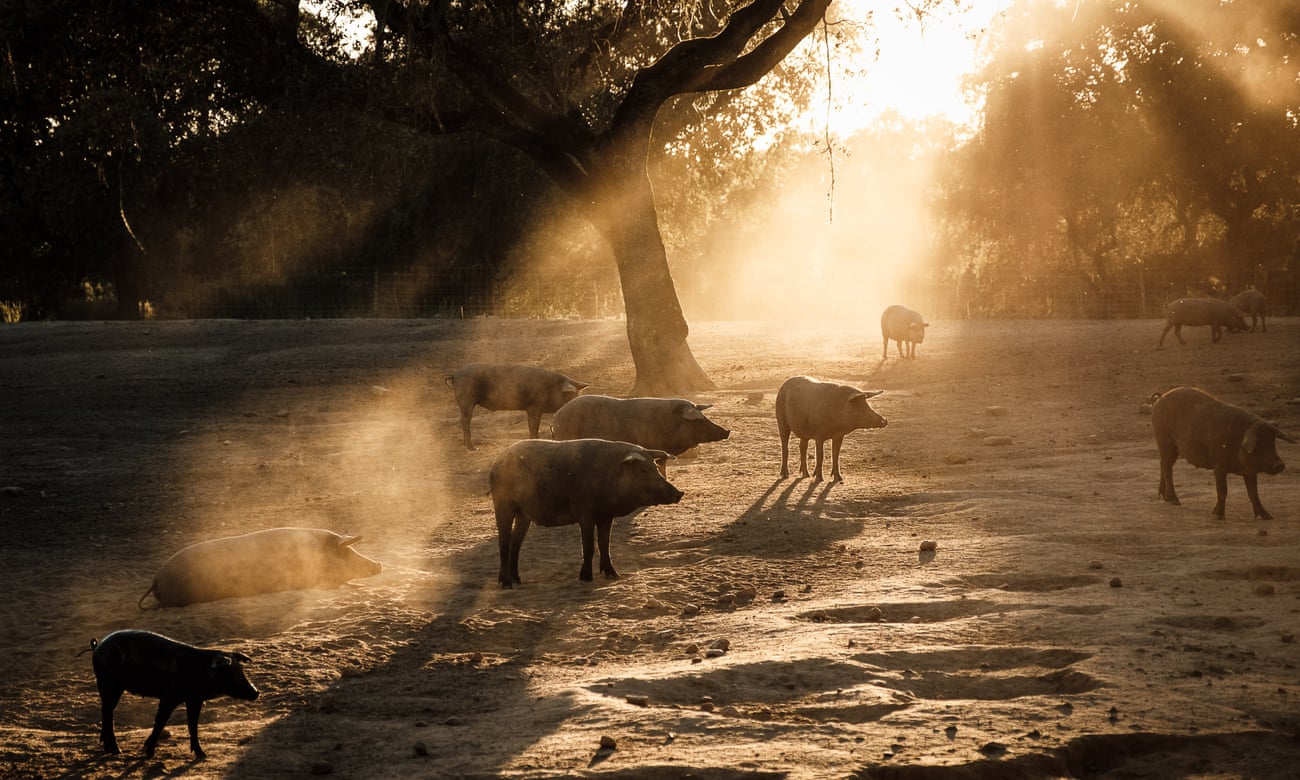
Animals are free to roam under the shade of trees and shrubs at a co-operative farm in Portugal.

“We are aiming to go from zero to abundance in a few years. We can put chickens on the land soon, pigs and sheep will follow, cows come later. We invest now, and the next generation sees the real benefits,” he says.

Cunhal, who comes from a large landowning family related to Portugal’s legendary communist leader Álvaro Cunhal, says he has had to reject much of what he was taught about farming at college.

“I spent five years studying agriculture and I never heard the word ecology. We were taking more and more from the land but we were farming monocultures. We were eating the system. I was managing 7,000 hectares for my family but I never noticed the trees. I really didn’t know anything. I produced a lot but I needed so many inputs. I needed carbon, energy, chemicals. I could do nothing efficiently. The land was eroded, the soil damaged.”

Demoralised, he gave up managing the family estate in 1990, took a share of the land, and started to run 600 hectares on organic, co-operative lines with a collective of 35 people, many of whom had worked on the estate for years. Together, these “partners” are converting the whole farm into a full montado system.

The results are beginning to show. Wild boar, lynx and deer roam freely, while old varieties of pig, cattle, chickens and turkeys are rotated among the established oak and olive trees and in newly planted orchards. The farm grows almost every type of Mediterranean food among the trees, as well as 40 varieties of fruit and nut.

“We can grow water,” says Cunhal. “By planting trees whose roots go deep we are drawing moisture up and building soils, creating the possibility to grow even more.”

The complexity of the system baffles conventional farmers who mostly specialise in a handful of crops or products. But Cunhal dismisses monocultures as “the end of life” and insists there is resilience and safety in diversity.
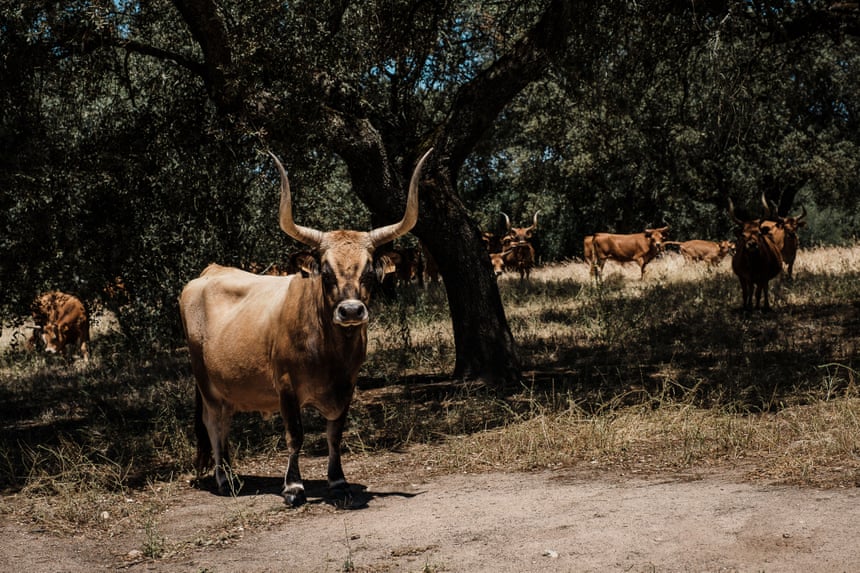
Cows at Herdade do Freixo do Meio

The variety of food produced is astonishing. The farm grows dozens of fruit and vegetable crops and makes and sells 600 different products, ranging from eight kinds of oak flours and breads, to meats, wine and olive oils.

“It’s far more than any normal farm would ever consider. This used to be a cork oak farm. Now cork is just 5% of the turnover. Four years ago we were 100% dependent on the open market and wholesalers. Now nearly 50% of what we grow is sold directly to consumers. We have a butchery, bakery, olive oil press, smoker,” he says.

A montado system also demands a new social approach. “It’s not right that a system of farming as complex as this should be run by one person. Far better that a whole community should propose how it works. Eventually we want consumers to be part of the farm, too,” says Cunhal, who says he intends to eventually hand the land over to the co-operative.

“It works because the risks and the benefits are shared. Together we are resilient to shocks. We employ more people. We produce variety. It’s a different approach.”
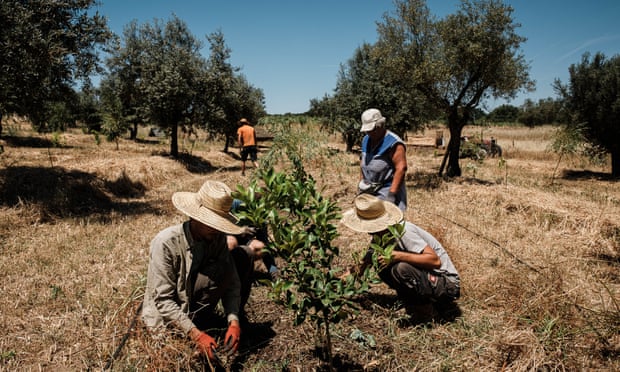
Partners working at Herdade do Freixo do Meio

“It is very exciting. This is the meeting place of trees, crops and animals,” says Ricardo Silva, a trained biologist who switched to forestry before coming to Herdade do Freixo do Meio. “The results are measured not just in profits, but in the social and ecological benefits created. We cannot say exactly, but our hypothesis is that we can double, even treble production without taking away from the land.”

Twenty years ago, an approach like this might have been dismissed as marginal, perhaps as an ecological experiment to be conducted by wealthy landowners. But that idea is changing fast as the needs of the environment are recognised, says Patrick Caron, chair of the UN’s high-level panel of experts on food security and nutrition and a former head of Cirad, the French food research agency.

“We need a transformation of our food systems. It does not involve a return to the way our grandparents farmed – that would be a catastrophe. But we must take stock of the principles of what they were doing, and their knowledge.

“Change is happening. The big companies know it, too. The meat industry used to laugh, but now they are preparing for change. It is possible to move from mass production to quality.”.

“Farmers became fascinated by the baubles of technology in the 1930s. They tried to simplify everything,” says Patrick Worms, senior science policy advisor at the Nairobi-based World Agroforestry Centre.

“What Cunhal is doing is the opposite – using more animals, growing more crops, making everything more complex. He is supported by the science, which shows that you get much greater production when you mix things up, and when animals and plants interact.”

Studies from Africa, Brazil, Europe, Sri Lanka and elsewhere all show conclusively that interspersing trees, animals and crops can boost food production, but also build soil, increase biodiversity and sequester CO2 from the atmosphere, he says.

“Agro-forestry isn’t a ‘no man’s land’ between forestry and agriculture,” says Maria Helena Semedo, deputy director of the UN Food and Agriculture Organization. “We know it can help diversify and sustain food production and provide vital social, economic and environmental benefits for land.”

But even as scientists and policy-makers wake up to the potential of silvopastoralism as both a better way to grow food and as a way to respond to the climate crisis, the speed and the scale of change challenges the farm.

“We are more resistant to climate than our neighbours who farm conventionally, but a 3C rise in temperature here, which is where we are heading, means everything is lost. Higher and more extreme temperatures are a death threat to the animals. The land will go to desert. I am really worried. I have no doubt the climate crisis is happening. I feel it every day … Now we get more irregular summers and temperature increases every year,” says Cunhal.

He is one of eight Europeans trying to sue the EU over its climate change policies, which they argue are inadequate. “We had 49C last year. We are used to 43C. In 2017-18 we had an eight-month drought. Then in mid-December we had 100mm of rain in two hours. I have lived here for 30 years. It’s more unpredictable now; we risk stopping almost all the biological process.”

Barring disaster, Cunhal says he will continue to plant trees and rear animals. “We don’t want a square metre without shade. We must treat the farm as a common good. The satisfaction is in creating something beautiful.

I want to leave a landscape where everyone – humans and animals – feel good.”

https://www.theguardian.com/environment/2019/jul/13/pigs-radical-farming-system-trees-climate-crisis


…… and what system would you prefer ? ……

σψηςειν ιν Καστεν 3jpg

England: London – Interview With Founder of Save the Asian Elephants – Duncan McNair.

England


Watch the Interview with Save the Asian Elephants Founder Duncan McNair

Asian elephants are kidnapped as babies in the wild and tortured in unimaginable ways just to entertain tourists for human profit. That’s why prominent attorney and hero for the elephants Duncan McNair founded Save the Asian Elephants, an organization working to stop the cruelty.

Watch him discuss the plight of Asian elephants in the latest episode of LFT’s Activists in Action video series.

https://stae.org/


Holland: Bus stop as bee houses!


bienen dacht Utrechtpg

In the Dutch city of Utrecht, 316 bus stops have now become an oasis for bees and other pollinators. These bus stops not only look good and help prevent bee mortality, but also provide better air quality in Utrecht.

The fact that something has to be done to tackle pollution in the cities has already arrived in many countries.
Not yet in Germany !!

netherlands-flag -2

The bus stops are now covered in sedum plants – succulents that can purify the air – and these attract bees whose populations have declined, as well as butterflies. The roofs also absorb fine dust and store rainwater.

Utrecht-Bienen pg

Bee mortality is increasing alarmingly worldwide – and also in the Netherlands.

In the Netherlands, a Bee Foundation has been set up, which has been working for bees since 2010, protecting them from extinction.

massensterben von Bienenjpg

The best known pollinators are the honey bee and the bumblebee, which together make up between 80 and 90% of the total pollination in agriculture.

Many are of the opinion that the bumblebees are not affected by species extinction. After all, they see bumblebees flying through their garden. However, of the 29 different species of Dutch bumblebee, 21 have already shrunk. Many of them are rare today and six species have already completely disappeared from the Netherlands.

-hummel-jpeg

If bee mortality does not end soon, it could have serious consequences for food supplies worldwide, because not only in Europe, but also in other parts of the world there is a mass extinction of bees.

Bees not only produce honey, they pollinate more than 90 vegetables and fruits. Apples, nuts, avocados, soybeans, asparagus, broccoli, celery, pumpkins and cucumbers are likely to be rare without bees. Sweet things like citrus fruits, peaches, kiwis, cherries, blueberries and strawberries and a variety of melon varieties depend on the fertilization of the flying workers.

bienejpg

The bus stops are now covered with sedum plants that can also purify the air. They attract bees and butterflies. The roofs of the bus stops are cared for by urban workers driving around in electric vehicles.

As part of its plan to become more environmentally friendly, Utrecht is also planning to introduce 55 new electric buses powered by wind energy.

Busse.hollandjpg.jpg

Sedum plants are robust and winter resistant. This plant is a subspecies of succulents. Like the succulents, sedum plants can live everywhere due to the very robust construction of the leaves and thus also on roofs.

Honeybees are the world’s most important pollinator, but they and many other bee species are declining worldwide due to human activity. Utrecht hopes to be able to further increase the bee population with its new bus roofs.

The citizens of Utrecht are also invited to turn their own roofs into “green roofs” and they can apply for special subsidies. The city suggests residents replace their worn-out roofs with green roofs instead of having them traditionally renovated.

https://netzfrauen.org/2019/07/13/bees-


My comment: A great idea that every city and every country should implement!

Everyone talks about the climate, nobody does anything.
The last media manipulation with the “climate Greta” is known, and except for the tremendous media attention this campaign received, something else did not work.
The Dutch have started to protect the climate in practical areas, and that is effective and useful.
People do not learn from lectures, people learn from examples that come from governments in the form of organized solutions.

We can hope to report from here soon about the green roofs of private houses in Holland.

My best regards to all, Venus