Category: Farm Animals

America’s hen slaves get bigger prisons

July 1, 2020, Animal Equality

The state becomes fifth in the U.S. to impose minimum space requirements for hens and ban the sale of cage-produced eggs.

hühner in Batterien

DENVER, CO.Today, Colorado joined the growing ranks of U.S. states to enact legislation ending the cruel practice of caging hens raised for eggs.

In a bill-signing ceremony live-streamed on Facebook earlier today, Colorado Governor Jared Polis inked his name on H.B. 20-1343, making the Centennial State the seventh in the nation to enact such protections.

Five of those states’ laws—including Colorado’s—also ban the sale of eggs from caged hens.

WHAT THE LAW DOES: The new law’s primary feature is its minimum-space guarantees for hens raised in commercial egg operations, as well as banning the use of cages.

anonymous hühnerjpg

Currently, the industry standard is just 0.67 square feet per bird—roughly the size of a piece of notebook paper. At that density, chickens cannot even fully stretch their wings, let alone engage in natural behaviors essential to their welfare. By contrast, Colorado’s new mandates that hens have a minimum of 1.0 to 1.5 square feet per bird, depending on the type of housing system used.

The law will also require egg producers to provide hens with enrichments that allow them to exhibit more natural behaviors, including, at a minimum, “scratch areas, perches, nest boxes, and dust bathing areas.” These features are critical to hens’ psychological well-being, according to chicken welfare experts worldwide.

mastanlage Hühner

And chickens aren’t the only birds to benefit from Colorado’s new law. Female turkeys, ducks, geese, and guinea fowl raised for the purpose of commercial egg production will receive the same legal protections, though their numbers are far lower than the state’s 5.5 million chickens in commercial egg production.

ARIWA-bio puten

SALES BAN: In addition to providing hens with minimum space and enrichments, H.B. 20-1343 also bans the sale of eggs in the state that do not conform to these minimum standards. Coloradans have made it clear: They do not want these products of cruel confinement within their borders.

Bilder aus einer Farm in Twistringen, in der "BIO"-Eier produziert werden.

WHAT THE LAW DOES NOT DO: The law does not apply to small egg producers (those with flocks of 3,000 or fewer hens) or too small retailers (those who sell fewer than 750 dozen eggs per week).

It also does not apply to hens during transport, hens used in medical research or hens exhibited at state fairs or in 4-H programs.

hühner tot 5

Continue reading “America’s hen slaves get bigger prisons”

Meat production: organized and institutionalized criminality

SOKO animal protection-report

banane rep deutschlandpg
A year later – a conclusion

A year ago, the agony of the cattle came to the public in the mega-dairy farm in the Allgäu, Germany.

-Animals that were dragged, beaten, kicked, slowly died with head wounds, thirst, hunger, sight, violence, suffering.

(we had already reported on a similar case: https://worldanimalsvoice.com/2020/03/11/germany-investigations-are-being-expanded-against-horror-slaughterhouses/)

The operation “Allgäu” is unchanged 12 months later.
-The tons of milk a day go into cheese, drinking milk, or yogurt.
-The animals are still handed over to the same perpetrators.
-Factory farming continues successfully.
-The new state-owned Bavarian Food Safety and Veterinary Control Authority act under the guise of secrecy and there are considerable doubts about its effectiveness.
-The responsible veterinarians were able to successfully evade prosecution.

Soko Allgäu 2_nSmall farms with dire conditions were partly taken over by the mega farmers after the celebrated closure and their cattle empires were growing.

The structural area-wide problems of exploitation for cow’s milk which lead to massive animal suffering have remained untouched.

Kuh Undercover Mülln jpg

Problems such as slatted floors, claw problems, mastitis (udder inflammation), calf disposal, tethering, consideration, spatial confinement, mutilation of the cows, animal transport, long-distance animal transport and dealing with decay and Downer cows caused by husbandry remain.

It is a good thing that the police actions have deterred and the authorities have been sensitized, and there is still hope for a public trial.
But it is also clear that our joint action will only work if the authorities are unable to master this gruesome system.

soko allgäu 3n
This is only possible if we finally stop consuming the milk of a different animal type as an adult, weaned people.

Otherwise, the cycle of exploitation, violence, illness, and death simply continues forever.

https://www.facebook.com/sokotierschutz.ev


And I mean…Here in Germany, we have a humorous so-called “animal protection law”. It says:
“Nobody should cause pain, suffering, or harm to an animal for no reasonable reason.”
For no reasonable reason !!
But because the meat industry wants to make millions with it, then is pain and suffering considered as a reasonable reason.
And we claim that we are a lot further, in terms of animal welfare than the Chinese.

No public trials against the animal torturers from the meat mafia.

Termination of proceedings against officials and civil servants.

Criminal charges are filed, unscrupulous veterinarians join the business.
Trust zero.

kuh im Glass jpg

My best regards to all, Venus

India, Nagaland: end of dog meat trade

Dog meat trade Nagaland in India announces the end

Hundefleisch: So grausam werden die Tiere bis zu ihrem Tod gequält ...

In a groundbreaking decision, the Indian government of Nagaland ended the brutal dog meat trade.

The decision announced today by the cabinet will end the import, trade, and sale of live dogs and dog meat.

Animal welfare organizations have been campaigning for years to end the Indian dog meat trade and welcome this decision as an important turning point in ending the cruelty of the Indian trade in hidden dog meat.

It is estimated that around 30,000 dogs are smuggled into Nagaland annually, where they are sold in living markets and beaten to death with wooden clubs.

Vietnams Hundefleisch-Debatte | Asien | DW | 27.06.2015


The animal rights activists’ campaign to end the dog meat trade started in 2016 with an investigation that revealed shocking video footage of dogmeat death pits in Nagaland.

Dogs were beaten to death in front of each other and beaten several times in protracted and painful deaths.

Alokparna Sengupta, Managing Director of Humane Society International, India, said: “The suffering of dogs in Nagaland has long cast India in a dark shadow, and this news marks an important turning point in ending the cruelty of the Indian dog meat trade.
Our own investigation in Nagaland found that terrified dogs have suffered horrific deaths in some of the worst inhumanities to animals HSI / India has ever seen. And the dogs we saved from this trade over the years had to learn to trust people again after the cruel treatment they endured. “

Hundefleisch Indien 3

Dog meat is banned in India by the 2011 Food Products Standard and Additives.

However, this is insufficiently enforced, and in the states of Nagaland, Mizoram, Tripura, and Arunachal Pradesh thousands of dogs are used every year illegally captured from the street or stolen from houses and cruelly transported from neighboring states in burlap to be brutally slaughtered for consumption to be beaten to death.

Continue reading “India, Nagaland: end of dog meat trade”

Be on the side of justice

anonymous -hängende schweine o

“In all the ways that matter morally human and non-human animals share the same characteristics to deserve consideration and respect.

We’re equal in our capacity to experience life in a subjective matter and the desire to have positive experiences.

Unlearn the concepts that make you a victimizer and the needless cause of suffering for thousands of other beings during your lifetime”.

Be on the side of justice, be vegan!

Anonymous for the Voiceless

And I mean…The sooner we learn that morality is indivisible, the sooner we will stop cooperating with the fascist system of exploitation, slavery, and the extermination of “other” animals.

My best regards to all, Venus

England: COVID-19 – STOPPING THE ABUSE OF SENTIENT ANIMALS – BY PHILIP LYMBERY (CEO CIWF London).

England


Mark (WAV) and Phil (CIWF) campaigned together for many years regarding the live export of animals from English ports.  They are still friends and communicate on current animal issues when necessary.  Although (I am) not religious; I find this article by Phil interesting – and feel that it should be included in our posts.  I have included the link below should you wish to see the pictures, and have also included the un amended article also..

Regards Mark.


Article Link:

https://catholic-animals.com/uncategorized/covid-19-stopping-the-abuse-of-sentient-animals-by-philip-lymbery/


COVID-19 – STOPPING THE ABUSE OF SENTIENT ANIMALS – BY PHILIP LYMBERY


Philip Lymbery is the Chief Executive of Compassion in World Farming and Chair of Eurogroup for Animals. He is author of the books Farmageddon and Dead Zone.

Here he describes how Covid-19 demonstrates why we must ban wildlife markets and improve farming standards if we are to prevent the next pandemic or Farmageddon.


Farmageddon: The True Cost of Cheap Meat: Amazon.co.uk: Lymbery ...
Dead Zone: Where the Wild Things Were: Philip Lymbery: Bloomsbury ...


In early April whilst most of the world was coming to terms with the horror of the Covid-19 pandemic, Compassion in World Farming, along with some 200 other organisations, signed an Open Letter to the World Health Organisation (WHO).

We called upon the WHO to take actions including recommending that governments worldwide institute a permanent ban on live wildlife markets, drawing an unequivocal link between these markets and their proven threats to human health.

Covid-19 is just the latest example of an infection that has made the leap from animals into humans – and when infections do this, they can be particularly deadly. Three out of four new or emerging infectious diseases in people came from wild animals, including Severe Acute Respiratory Syndrome (SARS), Ebola, MERS and HIV.

The risk of transmission of new and deadly diseases is heightened by the ways in which wild animals are typically farmed or captured and exacerbated by the inhumane and unhygienic conditions in wildlife markets, where close proximity provides the perfect opportunity for pathogens to spread between humans and animals.

Whilst our call for action has received widespread support, it has also received criticism on the grounds that wildlife trade bans might risk increased illegal trade, increased involvement of organised crime and be detrimental to livelihoods. Frankly I’m astonished by such arguments. I could not agree more with Jill Robinson, Founder and Chief Executive of Animals Asia, who has spent over three decades investigating the wildlife trade and wildlife markets. Responding to criticisms of the Open Letter to WHO, Jill commented, “The trade is already controlled by organised crime. Far better to spend millions or even billions on defeating and ending this crime and ending the trade now, rather than the trillions in the next pandemic caused by the very same dysfunctional and largely corrupt components of the wildlife trade”.

During my own investigations around the world, and particularly in Asia, I’ve seen the suffering of wild animals, caged and confined in markets. I’ve been forced to watch as they’ve been treated with no more regard than would be afforded vegetables or tin cans.

In the 1970s Peter Roberts, Compassion in World Farming’s founder, feared that by adopting a violent attitude to Nature, man would find himself “threatened on all sides by disease, hunger and pests”. Today the world faces an onslaught of health issues, often linked to the abuse of animals, both wild and farmed.  The Coronavirus tragedy, like SARS before it, is demonstrating to the world how treating animals as mere commodities is like playing Russian Roulette with peoples’ health.


Reconnecting with our Humanity to Animals

A key component of reducing the risk of devastating diseases tomorrow is to reconnect with our humanity for animals today. Our cruel abuse of animals, both wild and farmed, is damaging our health and will continue do to so unless we fundamentally reassess our relationship with animals and recognise our ethical obligations to treat them with respect.

As a first step, I’d like to see governments around the world acting to ban wildlife markets and instituting the other measures called for in the Open Letter to WHO, as a matter of urgency.  There are many examples of successful bans that have been combined with measures that address cultural practices and provide alternative livelihoods for those in need, for example the ban on dancing bears in India.

As we move away from wet markets and the use of wildlife for food, some will call for these food sources to be replaced by factory farming. But this too is a hot house of disease linked to the emergence of deadly diseases, including highly pathogenic Avian and Swine flu strains. Indeed, I fear that factory farms may be the source of the next global pandemic.

Everyday we understand more and more how the health of animals and people are closely intertwined. As Albert Schweitzer once said, “Until he extends the circle of his compassion to all living things, Man will not himself find peace”.


Factory Farming – A Health Crisis for the Future

With the world gripped by the worst pandemic in a lifetime, questions are starting to be asked about how our treatment of animals is storing up health crises for the future.

Whilst Covid-19 is thought to have its roots in wildlife, future pandemics may be triggered by the way animals are factory farmed. The sad fact is that factory farming is not only extremely cruel, but also a major public health risk. Keeping animals packed into cages and confined provides the perfect breeding ground for disease.  Factory farms are a ticking time-bomb for future pandemics.

Hundreds of coronaviruses are in circulation, most of them amongst animals including pigs, camels, bats and cats. Sometimes those viruses jump to humans – called a spill-over event – and can cause disease. When SARS (Severe Acute Respiratory Syndrome) emerged from China in 2002, it swept across the globe – largely through air travel – causing deadly illness. More than 8,000 people fell ill and 774 died, numbers surpassed by Covid-19 within two months. The 2009 Swine flu pandemic was linked to the factory farming of pigs in Mexico. Within a year, according to the WHO, the virus was linked to over 18,000 deaths worldwide.

Three out of four new or emerging infectious diseases in people come from animals, including Swine flu, Avian flu, HIV, Ebola, MERS and SARS. They are known as zoonotic diseases. The Wuhan coronavirus is the latest example of an infection that has jumped from animals into humans – and when infections do this, they can be particularly deadly.


Breeding Grounds for New Pandemics

The caged, crammed and confined conditions of factory farms provide the ideal breeding ground for new and more deadly strains of virus. Swine flu and highly pathogenic Avian flu being just two examples. When faced with a disease crisis involving farmed animals, the industry’s reaction is to fall back on locking animals inside. After all, if they are confined indoors then they are surely protected in ‘biosecure’ units that can keep out vectors of disease transmission.

What is overlooked is that those very same ‘biosecure’ intensive farm buildings are the cause of the problem. The perfect breeding ground for disease. The hothouse where new and more dangerous strains of disease emerge, often with devastating consequences for both animals and people alike.


Playing Russian Roulette with our Earth

Keeping too many animals in too small a space, often in darkened, filthy and crowded conditions, provides viruses like Avian Influenza the conditions they need to spread rapidly. As they replicate at speed, mutations can occur in the virus’ DNA, causing new strains to emerge. This allows new and deadlier strains to form and spread quickly. So, contrary to the myth levied by the industrial farming industry, keeping animals indoors simply increases the risk of disease.

The coronavirus tragedy, and Swine flu a decade earlier, have shown that treating animals as mere commodities – be they domesticated or wild – is like playing Russian Roulette with peoples’ health.


One Health, One Welfare

What I’ve come to see is that a key component of reducing the risk of devastating diseases tomorrow, is to reconnect with our humanity for animals today. The coronavirus epidemic is not a warning, but a potent demonstration of what is going wrong, what life could become. A global lifestyle that just months ago seemed invincible, suddenly seems extremely fragile. The way that the wellbeing of people, animals and the environment are interlinked have become increasingly clear. Factory farming is a public health disaster waiting to happen and it is clear that future generations will be well served by its abandonment.

Your help is vital. Thank you for your support in our movement to end factory farming. For animals, people and the planet, let’s take action today.


Vietnam: Breaking Great News ! Animals Asia Rescues A Bear Named Cotton Blossom That Was Held Captive In A Barren Cage For Over 14 Years.

viet nam flag

All images – Supplied by Animals Asia.


https://worldanimalnews.com/breaking-animals-asia-rescues-a-bear-that-was-held-captive-in-a-barren-cage-for-over-14-years-in-vietnam/


See our (WAV) other recent post on this:

https://worldanimalsvoice.com/2020/06/29/vietnam-29-6-20-breaking-news-bile-bear-cotton-blossom-to-be-rescued-by-animals-asia-team-on-the-road/

Breaking! Animals Asia Rescues A Bear Named Cotton Blossom That Was Held Captive In A Barren Cage For Over 14 Years In Vietnam


For over 14 years, a bear that Animals Asia has named Cotton Blossom was held captive in a barren cage, robbed of her freedom and dignity in the Gia Lai province in Vietnam.

The poor bear has been within hours of rescue before restrictions caused by the coronavirus sabotaged the first attempt. Frustrated by the delay, the team at Animals Asia’s sanctuary planted a cotton blossom tree on the grounds of the Vietnam Bear Rescue Center as a promise to this bear that they would never forget about her or leave her behind. Now, three months later, Animals Asia kept that promise and has returned to rescue her.


With Animals Asia’s rescue team in action, this is the very start of a new life for this poor bear. New tastes, new sensations, new experiences, new environments, and new friendships all await her now. Hopefully with enough love and time, all of the suffering, pain, and fear will fade into distant memories.

Coronavirus has created fear, panic, loss, and heartbreak around the world. The sense of isolation and helplessness can be overwhelming. But we all take strength from the glimmers of hope and the snippets of kindness that remind us that we can get through this trying time –  with courage and tenacity.

This amazing rescue by Animals Asia is Cotton Blossom’s saving grace for her courage and tenacity that has helped her survive. Please donate today to support her rescue which took Animals Asia’s team to a remote location; a military outpost on the Cambodian border. The rescue is only the beginning for Cotton Blossom, when she finally arrives at the sanctuary, she will need ongoing support and love to overcome nearly a decade and a half of neglect and confinement.


At her new home at the Vietnam Bear Rescue Center in Tam Dao National Park, preparations are being made for her arrival. A nutritious and varied feast is being prepared and the team are carefully devising an enrichment plan that will begin her rehabilitation.

For 14 years, Cotton Blossom has endured a dark winter, but now Animals Asia welcomes her to her new home, and looks forward to seeing her bloom, like a cotton blossom in spring.

Please help Animals Asia continue to care and rescue more bears from a life of captivity by donating HERE!


A fantastic victory – celebrate – Regards Mark


4/7/20 – Additional footage just in of the Vietnam sanctuary – and bears doing what they should do away from pitiful bile farming.

Germany: shameless and obvious animal law violation

The Federal Council today approved an amendment to the Animal Welfare and Livestock Ordinance, which means that the cruel box keeping of breeding sows can take place for another eight years.

banane rep deutschlandpgMost of the Greens involved in the government in eleven federal states justify this step by saying that after this transition period there will be a change in the system to keeping sows in groups.

In order to achieve this long-term goal, the Greens agreed to a “compromise” (!!) that legalized the sows’ previously illegal keeping conditions.

For the next eight years, the animal no longer even has the right prescribed by law to be allowed to stretch out unhindered when lying down.

Schweinezucht-PETA-D

But what the Greens are now celebrating as “the beginning of getting out of crate keeping” is assessed by the association “Veterinarians for Responsible Agriculture” as a “dirty compromise”, the animal protection law is trampled on:

“Like the old regulation, the new regulation counteracts and undermines the Animal Welfare Act and is still a violation of the law,” says veterinarian Dr. Ines Advena. “It is shamelessly and unashamedly violated.”!

schweine kasten mit ferkel-PETA-D

Paragraphs 1 and 2 of the Animal Welfare Act clearly regulate that ” an animal must be accommodated in a behavioral manner and that pain, suffering, and damage must not be caused to it without a reasonable reason”.
An often weeks-long fixation of sows in narrow metal cages is undoubtedly not behavioral. 

You don’t need to be an expert to see that. But according to the “new” law, it stays that way!!

Schweine mutter und ferkelt4

“The box crate principle is the basis of industrial pig production. It has made the development into systems with 200, 300, 500, 1000, 5000 and more sows possible, and as a result, has massive displacement and concentration problems in piglet production, and on the other hand, has led to animal welfare and ecological problems, ” wrote numerous animal welfare organizations in a joint open letter to the federal states.

“Once again we are experiencing that the competitiveness of German pig production is at stake – a disregard for the citizens’ will, who voted against with 600,000 votes, it cannot be worse. Most Greens in federal and state fractions are just opportunistic tacticians. To be able to participate, they sell their souls.”, comments veterinarian Dr. Ines Advena.

The consumer protection organization Foodwatch also criticizes that the decision passed by the Federal Council “has absolutely nothing” to do with animal protection.

“The political parties, including the Greens, support the meat companies – from Tönnies to Westfleisch – to continue to produce cheap meat for the world market. With fatal consequences, always on the animals, who have to pay with massive physical and mental agony. “

Mutter Sau in Kasten_n

https://www.spiegel.de/wirtschaft/bundesrats-beschluss-zur-schweinehaltung-arme-saeue-a-5c8cc624-8ac4-46f2-b958-c185cdbc2b7a-amp


And I mean: The corrupt Agriculture Minister of Germany Julia Klöckner has thus successfully legalized an illegal condition.

The Higher Administrative Court ruled: “The ordinance stipulates that sows kept in a crate must be able to take a reclining position in the crate at both sides, where their limbs do not encounter obstacles.”

The regulation has existed since 2001 and has been violated for almost 20 years. Illegal is Illegal is it so difficult to abolish it?

Here it becomes clear how strong the lobbyists of the meat mafia are among German politicians.

The Greens are making every effort to reinterpret their sale to animals as progress.
They cheer the dirty “compromise” as “getting out of the crate”, and by that, they mean that they managed to shorten the fixation in the farrowing area to five days. But even that only comes into force after 17 years.

Let’s be honest: you don’t have to be Chinese to operate such a shit policy against animals; Germans can do it too.

My best  regards to all, Venus

Thailand: the slave monkeys of the coconut industry

A disturbing PETA exposé reveals that terrified young monkeys in Thailand are kept chained, driven insane, abusively trained, and forced to climb trees to pick coconuts used to make coconut water, milk, oil, and other products that are sold around the world, including in Australia.

For the Thai coconut industry, many monkeys are reportedly illegally abducted from their families and homes in nature when they’re just babies. They’re fitted with rigid metal collars and kept chained or tethered until they’re no longer useful to farmers.

Coconut monkeyThe terrified young monkeys are forced to perform frustrating and difficult tasks, such as twisting heavy coconuts until they fall off the trees from a great height. An investigator learned that if monkeys try to defend themselves, their canine teeth may be pulled out.

Affenhalter.Thailand jpgSome monkeys were transported in cramped cages that were barely large enough for them to turn around in, and others were left in locked cages on the back of a ute with no shelter from the pouring rain. One monkey was seen frantically shaking the cage bars in a vain attempt to escape.

Take Action

Please make sure that your coconut products don’t come from suppliers that use monkey labor. Avoid the brands Aroy-D and Chaokoh – also sold as TCC in Australia – and all coconut products from Thailand.

In general, coconut products originating in Brazil, Colombia, Hawaii, India, and the Philippines are supplied by companies that don’t use monkey labor.

Sign below to urge Aroy-D and Chaokoh to stop supporting this cruel industry by obtaining their coconuts from companies that don’t exploit monkeys.

https://secure.peta.org.au/page/54877/action/1


My Comment and Information: The next time you use coconut milk when cooking, check out the packaging. If it comes from Thailand, the nuts were probably picked by tortured monkeys, southern pig monkeys. Don`t buy it!

In the province of Prachuap Khiri Khan, Thailand’s largest coconut palm growing region, they work as slaves eight hours a day, six days a week – as the Thai labor law also stipulates for people as maximum working hours.

They take a break at noon only when their slave owners also take a break, and all of that also on rainy and Sunday. When they are not working, they are chained to tree stumps. They often fall fainting from exhaustion.

Schweinsaffe- Kokosnussindustrie g

The male primates can harvest up to 1,600 coconuts a day, the female about 600. Humans could harvest just 80 pieces under the same conditions. And above all, they would have to work!!

They see the animals as free workers and let them work as they please. The primates do not demand higher wages and are not corrupt. They don’t need social or accident insurance. So that’s why they are used as “living machines”!

There are no rewards. Loafers are flogged according to old slave manners.

schweineaffe Thailand jpgMost often the mothers of the baby monkeys are killed beforehand.
Pig monkeys are protected under the Wild Animal Reservation and Protection Act of 1992 and must not be caught.

Coconut plucking monkey

Pig monkeys are one of 61 animal species that can be bred. They may only be sold by farms that are registered on the Department of National Parks, Wildlife, and Plant Conservation (DNP).

If the breeder issues a document that identifies the monkey as from his farm, the buyer shows it to the (DNP)  which checks the animal’s new home for suitability and then issues a license.

kokonus thailand jpg

Since the law came into force in 1992, the government has issued such licenses twice, in 1992 and 2003. Regardless of where the animals came from.
Animal rights activists say that monkey owners are tricking the law by using one animal license for several.
“According to licenses, they have 15 monkeys, but effectively 15 to 20 more, says Edwin Wiek, founder, and director of the Wildlife Friends Foundation of Thailand.

“If the authorities enforced the law according to the legal text, the attitude could become a burden for the owners. Nobody really cares about monkeys. But when it comes to tigers, bears, or elephants, everyone screams.”

The instructors use constant threats of physical punishment to force the monkeys to the coconut pieces. Monkeys do not voluntarily get on a bike and do not run on wire ropes. They don’t harvest the coconuts because they want to, but because they’re afraid of being punished.

thailand--kokosnuss-farm-affe

It is estimated that there are at least 20 mini zoos under the guise of monkey training centers on Ko Samui, Phuket, Chiang Mai, and Pattaya, but most of the monkeys are used for tourist shows because many of the tourists want to watch monkey training.

http://www.taeglicher-wahnsinn-thailand.de/2015/09/effiziente-industrielle.html

My best regards to all, Venus

England: A new strain of the swine flu virus, H1N1 G4, has been detected both in pigs and humans in China.

England


A new strain of the swine flu virus, H1N1 G4, has been detected both in pigs and humans in China.

More than 1 in 10 pig farm workers in the new study had already been infected, according to antibody blood tests which showed exposure to the virus.  The tests also showed that as many as 4.4% of the general population also appeared to have been exposed. Pigs have been shown to be hosts or “mixing vessels” for this new virus dubbed G4. Although the virus has not caused illnesses in people, and has not yet passed from humans to humans, scientists fear that it might mutate and cause another global pandemic.

Besides a new vaccine, I fear that the preventative measures will be focussed on increased factory farm biosecurity instead of ending a flawed system. Last April we wrote about pandemics and factory farming, and interviewed Dr Michael Greger MD who explained, “the sheer number of animals, overcrowding, the stress crippling their immune systems, the ammonia from the decomposing waste burning their lungs. The lack of sunlight, lack of fresh air, put all these factors together and we have the perfect storm environment for breeding these so-called ‘super strains’ of influenza”.

London’s top public health official has said that meat processing plants are one of the areas where a second wave of COVID is most likely to emerge in the capital; “food factories are an ‘emerging area’ of concern because of the proximity of workers to each other and the low pay, meaning staff were unlikely to be able to afford to self-isolate at home if they fell sick”.. Outbreaks have been seen in meat processing plants in Wales and Yorkshire, and in Germany, France, Spain and the US. The USA reports 20,000 infections of COVID in meat packing plant workers.

This week two democrat senators are accusing Smithfields (and other meat factory companies) of manipulating the COVID crisis to force ‘deregulatory measures’, allowing them to stay open in the name of feeding the American public. Turns out sales to China were up more than ever during that time, in fact they were record breaking! Meanwhile, China has banned imports from specific US, Brazilian, UK and German packing plants with a high incidence of COVID. Was this because Chinese authorities were concerned about the possibility that the meat itself could carry the COVID virus?

Last May we made a short film about the COVID and African Swine Flu outbreaks at Smithfield Foods, the biggest player in the US pork industry. The driver of this corporate take over from family farms to massive factory farms is the development banks. For example, in the nineteen-nineties Smithfield was granted a $100m soft loan to expand into Poland where they could take advantage of cheap labour and poorly enforced worker and animal welfare standards to outcompete pig farmers across the EU – farmers must ‘get big or get out of the industry’. See the documentary about this corporate take-over in our Channel 4 film Pig Business.

If Parliament fails to add vital amendments to the Agriculture Bill, Smithfield no longer has to go to Poland to get their deeply flawed factory farmed pork onto our shelves . In response to the NFU’s 1 million-strong petition to protect UK farmers from being undercut by substandard imports, the government has set up a Trade and Agriculture Commission. But it won’t be enough to protect UK farmers as its recommendations will only be advisory and not legally binding. A dangerous position when members of Boris’s cabinet, like Liz Truss, are prepared to sacrifice our farmers on the altar of so-called free trade.

London –  As the Bill continues to be debated in the House of Lords, Lord Dundee has tabled some additional amendments to include support for rearing livestock outdoors, for agro-ecological smallholder farming and for making land available to new food growers.

So, lobby politicians to improve the Bill by sending your own version of this letter to your MP or member of the House of Lords, forward our newsletter to friends, family and networks, share Farms Not Factories posts on social media, and urge your friends and local restaurants to buy only high welfare local pork/meat products.

Please share this newsletter or just the videos/info with your friends and networks.

Best wishes,


Tracy WorcesterDirector
farmsnotfactories.org


Regards Mark

Netherlands: Unweaned Live Calf Exports. EU Commission confirms that there is NO derogation to the feeding intervals in the case of animals transported on RORO (roll-on roll-off) vessels.

niederländischen-flagge


PMAF Inv 5


WAV Comment:  Congrats to our good friend Lesley at EoA in the Netherlands.  Excellent work to get the confirmation.  We have already taken this info to the team at CIWF who are fighting justice for the calves transported from Scotland.

Live calf exports is an issue that has bugged me for the last 30 years – see more at https://serbiananimalsvoice.com/about-us/  and our work with Lesley and others to get justice for the baby calves at the EU.

This is a great result for Lesley and all live export campaigners.  It can, and will be used in the courts to fight for justice.  The issue of Scottish calf exports could be one of the early uses here.

See more at: 

https://worldanimalsvoice.com/2019/05/05/the-cruelty-transport-of-unweaned-calves-direct-from-ireland-to-france-and-from-scotland-via-ramsgate-england-for-further-fattening-in-spain/

https://worldanimalsvoice.com/2020/06/16/scotland-live-calf-exports-from-scotland-judicial-review-latest-news-from-ciwf-london/

https://worldanimalsvoice.com/2018/11/27/england-dutchman-onderwater-exports-scottish-calves-from-ramsgate-plus-more-info/

https://worldanimalsvoice.com/2018/11/15/november-2018-scottish-farmers-now-exporting-calves-via-ramsgate-england-with-help-from-dutchman-oderwater/


Regards Mark


PMAF Inv 7


Derogation

derogation; plural noun: derogations

  1.  an exemption from or relaxation of a rule or law.

“countries assuming a derogation from EC law”


Thus ‘no derogation’ means the existing law must be enforced; read on the info from Lesley.


IMPORTANT NEWS: EU Commission confirms that there is no derogation to the feeding intervals in the case of animals transported on RORO (roll-on roll-off) vessels.

Animals transported on journeys including a RORO must be fed at the same frequency as ones transported solely by road.

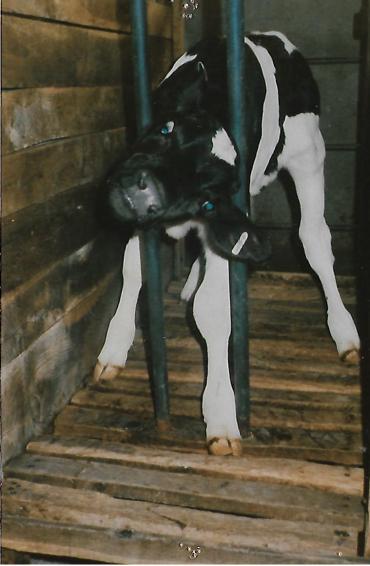
This means the journeys of unweaned calves being trucked from farms in Ireland to Irish harbours and then ferried to Cherbourg, France should be phased out as they are in conflict with the law. These calves are going for 23 and up to 29 hours in total without being fed, whereas the EU law stipulates feeding unweaned animals after 18hours maximum.

The EU confirms that the exemption in point 1.7(a) of the EC 1/2005 specifically only refers to journey times and rest periods, and the requirement 1.3 and 1.4, such as watering and feeding intervals, must still apply to transport by sea. Point 1.7 (b) refers only to journey times and resting periods without altering the meaning of point 1.7(A) regarding watering and feeding intervals.


PMAF Inv 4


Unlike weaned cattle, which are ruminants and can technically be fed on board the vehicle by placing hay inside the vehicle, unweaned animals cannot yet eat forage and are dependent on milk or milk replacer to get the nutrition they need and feeling of satiation. Because this is impossible to do on board a truck, and is not being done by any of the transporters, unweaned calves (and other unweaned animals like kids and lambs) can never be kept on board a vehicle for longer than 18hrs in total.

(Technically, even leaving them on board for longer than 9hrs is illegal, as the law stipulates that after 9 hrs unweaned animals must receive their first water break, and if necessary be fed. Although the trucks do have a water system, it is known that not all unweaned calves know how to use it or can use it. And in any case, they never can be fed either during this first break, despite it being mandatory if the calves need it.)

Please see attached the questions sent to the EU Commission and their response. I am also attaching our most recent investigation trailing unweaned calves from Ireland via Rosslare port to Cherbourg port, France via the Stena Ferry.

With best wishes, also on behalf of L214, Ethical Farming Ireland and Animal Welfare Foundation,

Lesley

Lesley Moffat, MSc Ethology
Director, Eyes on Animals