Category: Farm Animals

We won! Who is “we”?


tatu pire und slogan

WE WON!!  (???) Thanks to over 80,000 of you Care2 activists signing the petition!


china-flag-

After finding that the deadly coronavirus most likely made the leap from animal to human in the illegal wildlife market of Wuhan, China, the country has declared a total ban on the trafficking and consumption of wild animals, effective immediately!

But the terrifying virus has not stayed within China’s borders, and neither should this important ban.

Tell Asia’s governments to follow China’s example in the fight against Coronavirus and BAN all wildlife markets!

https://bit.ly/2HWxxYj

https://www.thepetitionsite.com/de/takeaction/906/819/294


And I mean…It would be ridiculous if it wasn’t that life-threatening, the Oscar-nominated corona virus.

It is the topic of the day.
We have currently put aside our old enemies Iran, Turkey, Syria, Refugees… and are intensively dealing with a lousy virus called “SARS-CoV-2” – which is classified as the top terrorist for human health.

The war against China has been planned for a long time: China is developing into a world power, so that didn’t like Trump ( and many others )  and came up with another kind of “punishment” for the cheeky Chinese.

Corona Virus came to his aid, or was perhaps even generated.
So … war started against China from all media, petitions, horror videos, press reports, animal rights activists, pet owners … … all participated and the virus caused enormous economic losses for China. The pharmaceutical industry is also involved in the success with several billion profits, after all, some animals are already being massacred in laboratories to “save” humanity from a corona epidemic, wich is not one at all!

The animal rights activists are currently declining the dog and cat consumption protests against China, and they are concerned with the consumption of wild animals, because the media have said that this is the cause of the development of the corona.
Who wants to research here and search for the truth, we rely on the media, is more convenient and easier.

In two or three months the vaccine will be on the market, the virus will be defeated and the files will be closed.
Europe will continue to export around 1.2 million tonnes of fresh / frozen pork (as in 2018) to China, and the animal transports to third countries will also return to normal.

Perhaps we should instruct China to talk to the EU Commission about the petition end the cage age. China is obviously quicker to respond to petitions than our unsuitable commission.

My best regards to all, Venus

USA: Previously Banned Beef Products from Brazil will now be Approved for Export to the U.S.

american-flag-120402148


It is not for us (WAV) to declare what is wrong or what is right. We simply gather evidence from a variety of different valid sources, and then present it to you; our friends and fellow campaigners; with the hope that you will have more information with which to make choices about issues.

We also provide historical information on some issues; which you may be able to use during some of ‘those’ discussions that we have all experienced at different times. Remember; information is knowledge; and as President Harry S Truman once said:

“I never gave anybody hell, I just told the truth and they thought it was hell”

This has also been my animal policy for a long time; and so far; having never had any legal problems acting against me; I am quite happy that just telling the truth and exposing the ‘hells’ for animals is the correct way to approach it.

We try to provide information; but the final actions and choices remain with others as well;

We wish to inform that according to info below; the US Food Safety and Inspection Service (FSIS) audit team inspected only eight of the 28 plants. So, is a policy of inspecting just 8 of 28 facilities a guarantee that there is still no corruption going on ? – you decide. Why not inspect 20 out of 28 ?, or even all of them ? – after all; is it not ensuring the health of US beef eating citizens that needs to protected ?

Regards Mark.


Image result for beef cattle face


25th February 2020.

The U.S. Department of Agriculture (USDA FSIS) has announced that previously banned beef products from Brazil will now be approved for export to the U.S.

Upon completion of an audit of Brazil’s inspection system for beef slaughter and further processing, USDA’s Food Safety and Inspection Service determined that raw intact beef from Brazil IS eligible for export to the U.S. from cattle slaughtered on and after February 21, 2020, the date that the Department lifted the suspension. However, raw intact beef products derived from cattle slaughtered in Brazil and certified as slaughtered before February 21, 2020, are not eligible for entry into the United States. 

In early 2017, Brazil’s meat safety practices came under fire when inspectors were accused of taking bribes to allow the sale of expired, Salmonella-tainted meat. At the time, reports indicated that police found meat that had been treated with water and manioc flour in an effort to disguise the spoiled meat’s discoloration and foul odor. As a result, Brazil’s meat products were temporarily banned in Chile, the EU, and South Korea. Initially, beef imports from Brazil were still allowed into the U.S. because it was believed at the time that food safety checks and balances were strong enough to weed out and detect any problems like contamination.

Two months later, in June 2017, USDA suspended imports of all raw intact beef from Brazil due to “recurring concerns about safety of the products intended for the American market,” Specific concerns were centred around “public health concerns, sanitary conditions, and animal health issues.”

Nearly 2 years passed before the U.S. announced plans to audit Brazil’s beef and pork inspections. The audit was meant to verify that Brazil’s products meet American sanitation requirements.

Brazil is one of the world’s largest exporters of beef. In August 2016, the U.S. finally began allowing beef imports from Brazil after a 13-year ban due to multiple complications with foreign beef producers.
https://www.foodsafetymagazine.com/news/us-welcomes-imports-of-previously-banned-brazilian-beef/


U.S. market is again open to raw intact beef from Brazil

By Dan Flynn on February 25, 2020

Raw intact beef from Brazil is again eligible for export to the United States beginning with cattle slaughtered on or after Feb. 21, 2020.

U.S. Secretary of Agriculture Sonny Perdue had suspended all imports of fresh beef from Brazil because of “recurring concerns about the safety of the products intended for the American market.”

That USDA ban on Brazilian raw intact beef was imposed on June 22, 2017, and was ultimately USDA’s answer to the widespread bribery of Brazilian meat inspectors. That scandal put Brazilian food safety checks in doubt.

The USDA’s Food Safety and Inspection Service (FSIS) sent its auditors to Brazil June 10-28, 2019, and again just last month, Jan. 13-24, 2020.

The most recent visit was to verify that Brazil’s “central competent authority” took corrective actions regarding the 2019 audit findings. It was also to determine whether Brazil’s food safety inspection system is governing raw and processed meat equivalent to that of the United States, with the ability to export products that are safe, wholesome, unadulterated, and correctly labeled and packaged.”

The FSIS audit confirmed that Brazil had fully implemented the corrective actions from the prior audit findings. The FSIS audit team inspected eight of the 28 plants that may now export fresh, intact beef to the U.S.

The inspections confirmed the application of written guidelines that prescribe the body temperature at which livestock are to be condemned during antemortem inspection; and the implementation of post-mortem inspection procedures, which ensure that only wholesome carcasses, free of contamination and defects, receive the mark of inspection signifying approval.

Also, the FSIS auditors confirmed Brazil’s control of specified risk materials (SRM) and the verification of proper operation and maintenance of retorts.

During the raw intact beef ban, Brazil was able to export processed beef and pork and raw intact pork to the United States. With $7.3 billion in fresh and processed beef exports last year, Brazil is happy to see the end of the ban.

Brazilian Agriculture Minister Tereza Cristina Dias announced the U.S. market was opening on Friday in Brasilia. The USDA confirmed it on Monday in a short FSIS Notice.

In the weeks prior to the beginning of the USDA ban, Brazilian Police charged 63 people in a corruption scheme that involved the country’s Ministry of Agriculture.  Federal auditors at meat processing facilities were accused of having taken bribes for years in exchange for fraudulent sanitary permits.

The scheme reportedly also included selling spoiled meat and injecting water into poultry in order to sell it at high prices. Police also found chemical ingredients being used to make rotting meat spell better.

At the time, the U.S. had only been accepting fresh beef from Brazil since 2016 and the volume was small. None of the plants targeted by Brazilian police had shipped meat to the U.S.

Last October, Brazil’s BRF SA admitted to bribing food inspectors with cash and health benefits. This included payments of nearly $5 million through 2017. BRF SA reached a “leniency agreement”  with the government. The European Union banned 12 BRF SA plants from selling in its member countries.

Police also said 39 of the 60 bribed inspectors remained on the job. About 2,500  food inspectors are employed by the Agriculture Ministry.

Before the USDA ban on Brazilian beef, FSIS was reinspecting all Brazilian meat entering the U.S.

https://www.foodsafetynews.com/2020/02/u-s-market-is-again-open-to-raw-intact-beef-from-brazil/


More Information:


The United States is the largest producer of beef in the world followed by Brazil & the European Union. The United States, Brazil and the European Union produce roughly 47% of the world’s beef. The United States produces nearly 20% of the world’s beef.


According to records from the USDA Economic Research Service, the U.S. imported 140.9 million pounds of beef from Brazil last year. … The most recent data shows imports of beef from Brazil in January 2019 were up 39 percent by volume compared to January 2018 (11.5 million pounds vs. 8.3 million pounds, respectively).29 Mar 2019


Approximately 80 percent of beef produced in Brazil is consumed domestically. Almost 50 percent of export volumes head to China, where demand for Brazilian beef rose by 50 percent last year. In 2016, the last full year before the ban was imposed, the United States imported roughly 70,000 tons of beef from Brazil.4  Apr 2019


Reuters 2017

https://it.reuters.com/article/idUSKBN19D2VE


South Africa: The NSPCA and Gerrie Nel head to the High Court against Live Export by Sea.

SAfrica


‘dangerously high ammonia levels on some of the enclosed decks, widespread diarrhoea, with much of it falling into the feed and water troughs’

26/2/20.

The NSPCA and Gerrie Nel head to the High Court against Live Export by Sea

https://nspca.co.za/ 

Dear Animal Warrior


The National Council of SPCAs (NSPCA) confirms that an urgent application to the High Court has been launched to interdict the impending export by sea of live sheep to Kuwait. The matter is set to be heard in the Grahamstown High Court on Friday, 28 February 2020. This, following the live export by sea horror that took place in October 2019 where sheep were transported to the Middle East in horrendous conditions.

Since the shipment in October 2019, the NSPCA has attempted to gain information from both the exporters and the government, of when the next shipment is scheduled, to no avail. The NSPCA was recently made aware that the sheep are mounting in the feedlot owned by the Page Farming Trust and leased by Al Mawashi in Berlin, Eastern Cape, and there were in excess of 30 000 sheep in the first week of February 2020. This number has increased by another 40 000 since 13 February 2020 – totalling 70 000 sheep. It is clear that an imminent shipment is planned.

Afriforum agreed to assist the NSPCA with this High Court case. Advocate Gerrie Nel leading the team, along with advocates Phyllis Vorster and Gustav Weich. The attorneys for the NSPCA case are Matthew Klein and Justin Powers. The NSPCA is indebted to Gerrie Nel and Afriforum for taking this important case on. The NSPCA has a bevy of esteemed experts, including Australian Veterinarian Dr Lynn Simpson who has first-hand experience on these ships, Professor Gareth Bath, Dr Shaun Morris, as well as our own veterinarian, Dr Bryce Marock. The papers will be served to the following respondents:

  1. Minister of Agriculture, Land Reform and Rural Development
  2. The Director General, Department of Agriculture, Land Reform and Rural Development
  3. The Director, Veterinary – Public Health, Department of Rural Development and Agrarian Reform, Eastern Cape
  4. The Provincial Executive Officer, Rural Development and Agrarian Reform, Eastern Cape
  5. The MEC for Rural Development and Agrarian Reform, Eastern Cape
  6. The Chief Veterinary Officer Department of Agriculture, Land Reform and Rural Development
  7. The Director for Veterinary Public Health and Welfare, Department of Agriculture, Land Reform and Rural Development
  8. The Harbour Master, National Ports Authority
  9. The Director, National Ports Authority
  10. Al Mawashi Reg K2018520686
  11. Dave Muller T/A The Meat Men
  12. John Page
  13. Bruce Page
  14. Glen Page


It has come to light that other exporters wish to export live cattle by sea to the likes of Cambodia. The voyage is even longer than that of the Kuwait exports, it exceeds 21 days.

“This case is not only important for this shipment of sheep, but for all the animals that are destined for this harrowing journey to various countries around the globe – we simply cannot allow the perpetuation and growth of this cruel and brutal trade” explained Senior Inspector Grace De Lange, manager of the NSPCA’s Farm Animal Protection Unit.

Afriforum’s CEO Kallie Kriel emphasises that the action is not intended to stop the trade in animals, but rather the way it is done, bringing about cruelty to the animals involved.

In November 2019, the NSPCA laid criminal charges in terms of the Animals Protection Act No 71 of 1962 against the Department of Agriculture, Land Reform and Rural Development (DALRRD), as well as Eastern Cape Rural Development and Agrarian Reform, Al Mawashi – the owners of the Al Shuwaikh vessel, who have a company in South Africa, the captain of the Al Shuwaikh, the Page Farming Trust, and individuals from the Page Farming Trust following the harrowing days spent at the East London harbour by Inspectors of the NSPCA in October 2019, when approximately 57 000 sheep were loaded for shipment to the Middle East. The matter is with the South African Police Services (SAPS) and the investigation is still ongoing.

Conditions on board the Al Shuwaikh in October 2019, included dangerously high ammonia levels on some of the enclosed decks, widespread diarrhoea, with much of it falling into the feed and water troughs, sheep in respiratory distress, together with other serious welfare concerns. On the dock and feedlot, animals were treated in an inhumane manner, and attempts were made to load sick, injured and lame animals onto the vessel. These sentient beings meant nothing to the handlers and exporters.

The costs incurred thus far have been exorbitant and the matter is far from over. The motion will be heard in Grahamstown in the Eastern Cape, so travelling costs, as well as legal costs are placing huge pressure on the NSPCA’s resources. We appeal to caring citizens to assist the NSPCA with this landmark case.

Let us stand together against this abhorrent suffering.


Account Name: SPCA National Council of SA

Bank: Standard Bank

Account No.: 220 639 744

Branch Code: 051 001

Reference: Sheep


Kind regards

The NSPCA Team


EU: EU spending tens of millions of euros a year to promote meat eating; despite all the evidence against it !

Pro-Brexit supporters burn an EU flag during a UKIP demonstration in central London


WAV Comment – we have always called the pro-meat industry; the lobbyists at the EU, the ‘meat mafia’; and in this article by the very respected ‘Guardian’ newspaper in the UK; which we ask you all to read; our labelling is not far from the truth.


“The EU has been accused of an “indefensible” approach to human health and the climate crisis in spending tens of millions of euros each year on campaigns to reverse the decline in meat eating”

“About €60m has been spent in the last three years on 21 meat marketing campaigns …”

“A campaign by the Association of Poultry Processors and Poultry Trade which will be run in six member states at a cost to EU taxpayers of €4.4m aims over the next two years to “contradict myths and fake news” about the rearing and slaughter of chickens for meat”.


We wait with interest to see if the EU bans the intensive cage animal rearing systems of the EU members states; if Germany takes action about the intensive farming of its pigs, and if the EU will ever get any closer to reducing or stopping the transport of live animals. In all cases, we very much question / doubt that there will be any positive progress; especially when all this pro meat eating campaigns are funded by the european taxpayer; who from all accounts; is actually eating less meat now !

And EU citizens are supposed to have faith in the Parliament that represents ‘them’ in Brussels ?

Regards Mark.


Schweinestall---Kastenstand-34414-detailp

_schwein_sauen_produktinfos

EU spending tens of millions of euros a year to promote meat eating


The Guardian is an English newspaper – WAV

https://www.theguardian.com/environment/2020/feb/14/eu-spending-tens-of-millions-of-euros-a-year-to-promote-meat-eating


Campaigns to promote consumption of pork and veal labelled ‘indefensible’ in light of health and climate concerns

The EU has been accused of an “indefensible” approach to human health and the climate crisis in spending tens of millions of euros each year on campaigns to reverse the decline in meat eating and trying to rebut so-called “fake news” on the mistreatment of animals bred for food.

Campaigns range from those designed to counter official warnings about the risk of cancer from eating red meat, to improving the public image of veal products said to be crucial in “deriving value from young male calves” superfluous to the dairy industry.

The EU provides an annual €200m (£166m) subsidy for the “promotion of agricultural products” each year. About €60m has been spent in the last three years on 21 meat marketing campaigns, including in the UK, according to research by the Dutch animal welfare organisation Wakker Dier.


irish 3


The stated ambition of many of the projects has been to halt a decline in meat consumption amid a growing trend to vegetarianism among Europe’s young people.

The livestock sector is responsible for about 14.5% of total human-derived greenhouse gas emissions. Scientists have provided evidence of a link between cancer and diets involving pork, beef and lamb products.

The description on the European commission website of one recent campaign entitled Pork Lovers Europe, which secured €1.4m for marketing, including a “road-show” with a pink bus painted to look like a pig, noted “that the consumption of pork meat in Europe has decreased in recent years”


caged chicks


It continued: “Therefore, it is very important to promote pork meat to restore the confidence of the consumer, which was shaken by news such as the last IARC [International Agency for Research on Cancer] report.”

Scientists at the IARC, a UN agency, reported in 2015 that the consumption of bacon, red meat and glyphosate weedkiller increased the risk of developing cancer. The Pork Lovers Europe adverts targeted consumers in the UK, Spain, Germany, France and Portugal.

A campaign by the Association of Poultry Processors and Poultry Trade which will be run in six member states at a cost to EU taxpayers of €4.4m aims over the next two years to “contradict myths and fake news” about the rearing and slaughter of chickens for meat.


Cage age 1


“EU poultry consumption in the European Union is still increasing but at a slower pace, as more and more consumers are mistrustful regarding the poultry meat production,” the European commission’s website says. The campaign, targeting a 1.22% growth in chicken consumption in 2020 and 2021, is aimed at “young children, professionals, media and opinion leaders”.

A second pork campaign received a €2.5m subsidy for an initiative aimed at Danes and Swedes. “Pork is no longer a natural part of the diet of young Scandinavians,” the commission website says. “They tend to eat less meat in general and to avoid pork in particular. The aim is to increase consumer demand and thus halt any otherwise expected fall.”

A campaign in favour of the Dutch veal sector to promote the meat of calves in the Belgian, Italian and French markets received a €6m subsidy.

“The veal market has been declining since the 2000s,” says a description of the project on the commission website. “There are various reasons for this: the economic crisis, changes in consumption behaviour and above all a lack of top-of-mind awareness. France, the Netherlands, Belgium and Italy are minded to fight this fall in consumption by boosting the image consumers have of European veal.”


End the Cage Age


Sjoerd van de Wouw, a researcher at Wakker Dier foundation, said the funding policy was outdated indefensible. “We understand that you need to consider the interests of producers but not by completing ignoring the interests of consumers and the climate,” he said.

In response, a European commission spokesman said: “The selection of projects is based on a strict and defined procedure involving external evaluators. The producers’ organisations send proposals regarding their campaign ideas and also participate in the funding of the campaigns.

“In an effort to constantly evaluate and adjust its existing policy, the commission will soon launch a public consultation on the EU promotion policy for agricultural products.”


anja

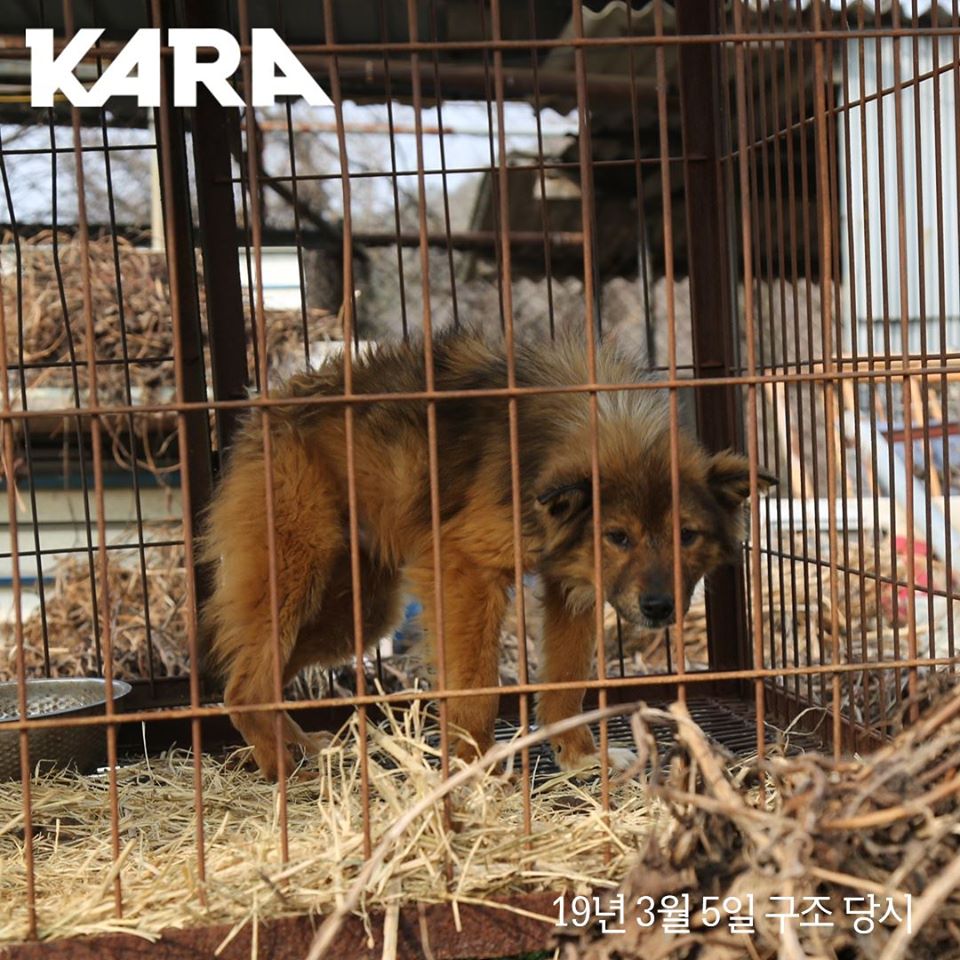
South Korea: Korean Dogs – 24th February Newsletter. Take Actions.

korea-national-flag--sjpg


koreandogs.org

Korean Dogs – 24th February Newsletter:


https://koreandogs.org/newsletter-february-24-2020/?utm_source=sendinblue&utm_campaign=Will_Copenhagen_and_Sintra_speak_for_the_Korean_dogs&utm_medium=email


A couple of the issues in this newsletter:


New Friendship City Campaigns 
Will Copenhagen and Sintra Speak for the Korean Dogs?

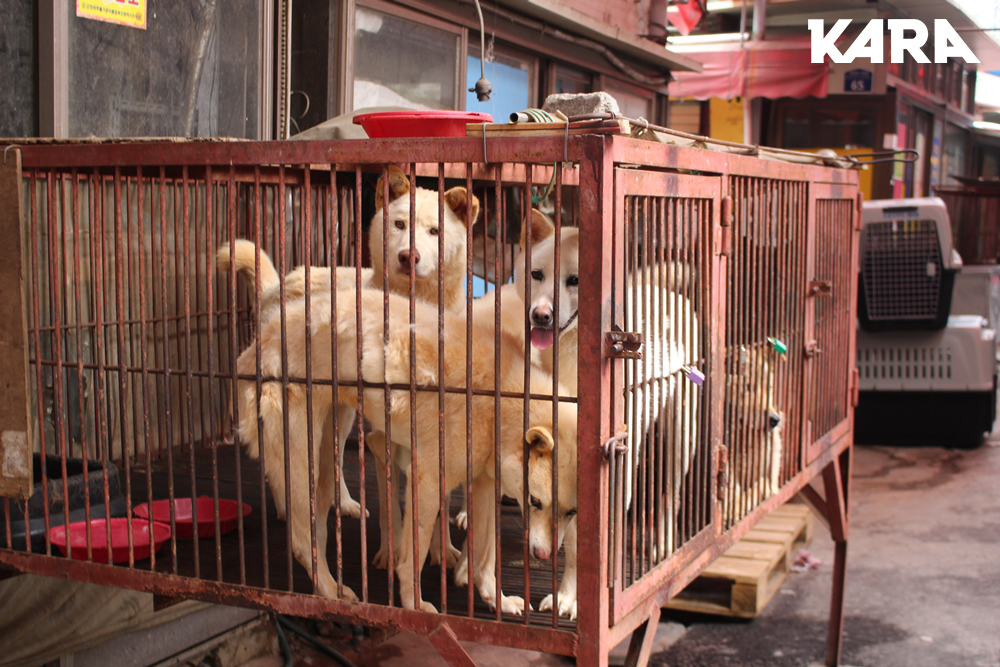
Sister and Friendship City Agreements are formed between two cities with the aim of being mutually beneficial (for trade, cultural exchanges, business links etc., and to foster friendship), and many cities throughout the United States and around the world have such ‘twin cities’ all over South Korea. We can bring the unacceptable practices of South Korea’s dog meat trades to the attention of the relevant City Mayors and their Offices, and to urge them, in the spirit of friendship and for the good of the Korean people, to reach out to their counterparts in South Korea, asking them to enforce their laws and to put an end to the cruel dog and cat meat trades. Click below buttons to take actions today.

Click HERE for Sister City Campaign Center (US).

Click HERE for Sister City Campaign Center (Non-US).


“Visit Korea” Facebook Campaign

Money is a major motivator for change. If we impact Korea’s tourism industry, it will help put the pressure on the Korean government to bring an end to their cruel and vile dog and cat meat industry.

We have set up “Visit Korea” sites to help prospective visitors to learn more about Korea to help them make the right decisions. Please visit and “Like”. Feel free to post and comment on the pages. Thank you!


Ditch Dairy -‘Natural’; ‘Humane’ – Don’t Think So !

Why you need to ditch dairy – is this ‘natural’ ? – don’t think so – simply the abuse of man over the animals once again.  Watch the second video for more.


mark 3

Regards to you all – Mark.

Victim and perpetrator


Many people buy sheep and goat milk products without worrying about where this milk comes from.
Dairy companies often produce ads where happy lambs and goats graze in beautiful green fields.

lämmer auf der Wiesejpg
But the reality of how that milk ended up on your supermarket shelf is cruel.
Cruel and deliberately kept in the dark.
Just like the cows, sheep and goats are forcibly impregnated and their babies are taken away from them within hours after birth.
Because the milk they produce is for a few billion consumers who don’t care about animal suffering.

lämmlein sieht die Schlachtpg

The mothers are treated like milking machines and their babies are locked away as if they were objects, like uncomfortable by-products, thrown away to be killed at a later date.

Their life is hell on earth.
WE, human beings have made animal life hell.

We act with our own judiciary.
Equipped with perfidious, ice-cold, cynical morality, we still remain barbarians towards the animal.

We value a high culture at every opportunity, and thereby commit the most hideous atrocities on millions of defenseless creatures every day.

“Only when this simple and undoubtedly valid truth has reached the people’s consciousness that the animals are mainly and essentially the same as we are, will the animals no longer stand as lawless beings”.
Arthur Schopenhauer, German philosopher

weisses LämmleinpgAnd the next victim is already selected for the Easter circus.


My best regards to all, Venus

Thailand: Screaming pig is clubbed to death in shocking images from Thai slaughterhouse.

Thai


A pig is pictured dying in a pool of its own blood on the floor of a Thai slaughterhouse in this undated photograph


Read the full article via this link – WARNING – Very distressing images.


https://www.dailymail.co.uk/news/article-8012293/Screaming-pig-clubbed-death-shocking-images-Thai-slaughterhouse.html

An undated photo shows a sow screaming as the butcher swings his club down towards her head to stun her before slaughter in Thailand


Screaming pig is clubbed to death in shocking images from Thai slaughterhouse where animals are sliced with iron nails to force them into pens

  • WARNING: DISTRESSING IMAGES
  • Jo-Anne McArthur, 43, took the photos at a slaughterhouse just a few hours from the Thai capital, Bangkok
  • She founded We Animals Media and uses storytelling and journalism to try to put an end to animal cruelty  
  • The Thai owner of the slaughterhouse routinely invites people to see how the animals are killed, she said
  • She said a group of veterinary students had been there earlier and they vomited after seeing the slaughter 


Men can be seen butchering a truck-full of pig carcasses at an outdoor market near the Thai capital of Bangkok, Thailand

A man with a stun gun (left) immobilises the pig, while a butcher prepares to slit the animals' throats at the Thai slaughterhouse

A man holds a metal bowl to collect the blood of the pig after it's dispatched by the butcher in the Thai slaughterhouse


Austria: This Bull was chained to a wall for his entire life. This is his touching reaction to freedom.

österreichpg

Bull was chained to wall his entire life.

This is his touching reaction to freedom


Imagine being chained your entire life, never able to move freely, or run in the fresh, clean air. That was the fate of Bandit, the bull, one of the millions of animals who are locked up and confined to chains and narrow stalls. But for Bandit, life changed for the better.

Gut Aiderbichl Sanctuary, an Austrian rescue group, freed Bandit from his bondage. Despite his confines, Bandit shows nothing but pure enjoyment as Christian, his rescuer, scratches his face and head. Then, when he is released from his chain, Bandit seems genuinely surprised to be free.

He moves tentatively at first, as if unable to believe any of this is actually happening. Suddenly, he leaps up and begins to dance around, celebrating his freedom. He jumps around and rolls in the mound of clean hay before him. This large bull thinks he has hit pay dirt, but he has no idea what is coming next!

Bandit is loaded onto a comfortable trailer and taken to the Gut Aiderbichl Sanctuary, home to hundreds of rescued cows, donkeys, horses, geese, and other animals. There, Bandit is given a large pen with fresh straw to stay in, and this gentle giant can’t help but express his happiness and joy! He jumps and bucks and trots through the straw, shaking his chain-free head with exuberance.

Toward the end of the video, Bandit nuzzles against Christian, thanking this young man for giving him a life of freedom. It is an incredibly heartwarming moment, and proof that animals have feelings, too!

At Gut Aiderbichl Sanctuary, Bandit now lives the life he was meant to live, grazing outside on the green grass and sleeping under the stars. Watch Bandit’s amazing rescue video below. Be sure to share his dance of freedom with your friends and family on Facebook!

https://land.worldofanimals.org/2017/05/26/bull-was-chained-to-wall-his-entire-life-this-is-his-touching-reaction-to-freedom/?src=fbfan_60113&t=fbsub_pawpulouscom&rp=20200216&fbclid=IwAR3ZqvO0txNzWQcXqnIFglQlI8bWpg3eatSUmmcaGmmjVIR3tT0bxKxZUcE