Category: Farm Animals

Living sushi…and we thought, we would have seen everything


And there is nothing that does not exist!!We are now prepared for everything.

Also on live frogs that are eaten.

It is an older video where the half-living frog was served with ice cubes, soy sauce, a piece of lemon. The upper body of the amphibian is served as a decoration on the plate and is in the last live moves. The big eyes gaze at the restaurant visitors, the muscles twitch every now and then, the arms move, even the eyelids blink.

We don`t  just dig ourselves for such a research, but since we were asked if frogs are really eaten alive in Japan, we went on the search and it was really disgusting!
So allegedly cooked frog meat with bitter gourd is a popular remedy for dengue fever.

What is the reason for this belief?

Mosquitoes bite humans, frogs eat mosquitoes and people eat frogs. That’s why we humans are still the strongest in the food chain. Idiotic, right?
And what happens if there are no more frogs?

Frogs are a delicacy especially in the kitchens of France, Western Switzerland, Belgium, Luxembourg, Portugal, Louisiana and the Caribbean, and generally in South and East Asia and parts of Africa. These frogs are mainly imported from Asia. The main exporter is Indonesia. Over thousands of miles, they must endure in tight transport boxes. Arrived at the destination, their legs are cut off without any anestheticdesperately wriggling, the frogs die a painful and slow death.

Froschjpg


Would you eat a live frog? Frogs from the kitchen are otherwise known only from France. But frogs are also eaten in far-away Asia. In Japanese restaurants, a very special and cruel delicacy is prepared: live frog sushi.

The frog is broken up into pieces with a sharp knife. It seems he lives and can watch him being eaten. The animal is served in a bowl full of hot broth and fresh vegetables.

Frosch Kopfpg

It is really horrible that we must read that in Central Asia it is a delicacy to eat fallopian tubes of frogs or even the ovaries, also known as ovaries. The court is called Hasma (Harsmar, Hashima).

Frosch-Getränk mit ierstöcke4

These are usually used by the Asian Common Frog (Rana chensinensis). Because of its whitish appearance, Hasma is often falsely described as a “snowflake fat”. Hasma is produced in the provinces of Heilongjiang, Jilin and Liaoning in China. The soup from Hasma is also served in North American cities with a large Chinese population. But mainly in China, Taiwan, Singapore and Hong Kong.

Frosch Suppepg

At Singapore’s Frog Farm in the Kranji countryside, the meat is bred by the American bullfrog and sold worldwide as a frozen product.

In the following video you can see the frog farm, here live tens of thousands of frogs.

https://netzfrauen.org/2016/08/18/froschsushi/


My comment: It is frightening to see how many places in Europe now sell frogs’ legs again and are prepared and eaten in restaurants.

In the “wild frog harvest” the back frog extremities are separated, from living body!!
Most of the imported frog legs are still from these wild catches.

Frog thighs may not look anyone in the eye, but they are ALSO a horrible cruelty, like any food made from animal corpses.
Only that the “civilized” society in Europe can not endure the living gaze of a victim on the plate and therefore dead body parts are preferred and served.

Best regrads, Venus


Undercover in Poland: becoming a butcher!


Poland flag, vector illustration


The undercover journalist Patryk Szczepaniak tells very excitingly how he prepared for his role as “butchers” for a slaughterhouse in Poland. The results of his investigative work were sensational. https://gijn.org/2019/08/05/becoming-a-butcher-lessons-from-working-undercover/

His report follows:

“In early October 2018, Tomasz Patora and I started to take a closer look into the Polish cattle industry. We had a tip-off: A slaughterhouse (or abattoir) in Poland was selling the meat of sick cattle, some of which had arrived at the facility already dead. After conducting some initial background research and sneaking around the slaughterhouse a few times in the cover of night, we knew our source was telling the truth. The only problem was how we were going to get inside to prove it. After a long discussion with our editor at the investigative program Superwizjer of TVN Discovery Poland, we decided that one of us needed to go undercover and get hired as a butcher.

Happily, I got the job.

undercover. PolandpgPatryk Szczepaniak went undercover to investigate a slaughterhouse in Warsaw, where he secretly recorded video. Image: Courtesy TVN Discovery Poland


Where’s the Beef?

We knew a few things before going in. We knew the slaughterhouse where I would work had been buying sick and dead cattle from farmers, and that it usually paid a farmer a maximum of $200 per sick cow; by comparison, a healthy cow costs between $800 and $1,400.

We also knew that the slaughterhouse would take in diseased, dead cows for free. We knew that sometimes the sick cows had broken legs, or that their bones wouldn’t pop back in their hips after giving birth. We also knew that after those sick cows were slaughtered, the carcasses were cleaned and visible marks of diseases were cut away, and that the meat of those sick cows were regularly sold on for human consumption. And we knew that all of this was done without any oversight by the state’s veterinary office.

We estimated that by killing around 20 sick cows per day, the slaughterhouse would earn around $660,000 of pure profit per year; if it killed only the healthy ones, its profits would come in at around $91,000 per year. Poland produced almost 438,000 tons of bovine meat worth $1.5 million in 2018, and more than 80% of that was exported to European Union and beyond.

We had much of our background research in the bag. Now it was time to get inside to show how bad things looked up close. But first, I had to prepare for my role.

Becoming a Butcher

It wasn’t my first undercover assignment. In the past I had been abused as a temporary worker in the Netherlands. I hired myself out as an Uber driver to show how the company was avoiding taxes as well violating labor laws. I also frequented Warsaw’s strip clubs to document the robbery of foreign tourists. My experience from all of these past assignments was crucial for my preparation in becoming a butcher.

Here’s what I learned about going undercover:

Setting the story. The best character is built on real events, emotions, and histories. Use memories and experiences from your own past to make your story authentic. Before going to the slaughterhouse and asking for the job, I prepared two stories and, based on how the situation inside developed, I could choose two different paths to explain how I ended up at a slaughterhouse in the countryside, far away from major cities. During the job interview, I began to sense that my initial story paths wouldn’t work, so I had to come up with a third story path. So I said my girlfriend had fallen pregnant by another man, which left me distraught and far away from home. I know it sounds really cliched, but that’s the one that landed me the job.

Lies. You’ll be lying a lot. My advice is that it is better to say as little as possible. Memorize your story and be prepared to have it checked by anybody at any time.

Digital footprints. “Delete everything you can from the internet, including all social media. Profiles need to be deleted and, if necessary, replaced with new ones”. Do it carefully and well before the assignment. Learn from my mistake: I left one of my old photos that appeared under my real name on the sixth page of a Google image search. It later led to my exposure where, during one of my night shifts at around 3 a.m., I was invited to my boss’s office “to sign a contract.”!!

Change of appearance. Shaving, growing, or dying hair; cutting or growing a beard; growing or cutting a mustache — it is worth taking a closer look at your external appearance, as well as inside your wardrobe. If the clothes don’t match your story, buy new ones, including socks and underwear. For example, I normally wear colorful socks. Can you imagine a butcher with socks like that? I also shaved my head, beard, and mustache. My colleagues didn’t recognize me when I passed by them in the office hallways. I also recommend reading “Black Like Me.” John Howard Griffin was a white journalist who chemically altered the color of his skin and headed to the racially segregated Deep South in the United States in 1959.

Change of personality. Adapt to your environment. If it is an academic environment, behave and speak like an academic. If it’s a slaughterhouse, behave and speak like a butcher”.

I graduated from a decent university in Poland and before the assignment began, my colleagues expressed concern that those years of education might ruin my story. “You won’t sound like the other butchers,” they said. So I spoke very little about myself and kept to the most important facts. Pretending to be an introvert helped a lot.

Research. Learn whatever you can about your assignment. I watched plenty of documentaries about meat production, and some pretty nasty videos on LiveLeak and YouTube regarding animal cruelty. I also read a few books for beginning butchers, and went to other slaughterhouses to learn how they work. It’s good to know if you’re about to puke or faint during slaughtering before going undercover.

Identification card. Faking an ID is a crime in Poland, so we decided not to do it during my assignment, and there wasn’t really a need for it. But if you go into an undercover situation where your personal information might lead to threats on your health or life, you might need to fake it. While this will certainly depend on where you are working and what story you are working on, most courts will likely acknowledge that this was done in a pursuit of the greater good.

Observe and document. These are basic ethical rules of undercover journalism. You’re there to document systems or criminal activities, not to provoke or to stage situations. While working on night shifts — where the illegal butchering was happening — I tried to be a useful worker at every step of the slaughter, from pulling sick cows with a rope to stunning and killing them, as well as decapitating, skinning, and cleaning out their guts. I wasn’t pushing anyone to give me a particular job. I knew the graphic footage filmed with hidden cameras would be newsworthy, and I had only a limited time to film certain scenes. I had to go with the flow of work and film everything whenever I could.

Worst-case scenario. Prepare safety rules and know your way out. Create a communication system, such as secret text code messages. Report back daily about any unusual behavior in your working environment — your colleagues might notice something relevant. If possible and necessary, have someone nearby to help you. I was exposed as a journalist during the night. It wasn’t the most comfortable time in my life, but I knew there were people watching my back all the time. This helps.

Investigative Impact

I worked undercover for almost three weeks in November 2018 to expose the slaughterhouse.

I managed to document and film the pulling, by a rope, of sick and dead cows into the slaughterhouse; the preparation and cleaning of the sick and dead cows for further sale; the slaughter of cows in advanced stages of pregnancy; the disposal of both small and large fetuses; a wide range of animal cruelty acts; the loading of rotting carcasses into trucks for further sale; stamping by workers, my boss, and myself with an official veterinary stamp that was intended to show that the meat was examined by the veterinary service when it was not; and conversations with workers and the head of the company about procedure. Altogether we had around 120 hours of undercover footage.

kuh .jPolen pgImage: Courtesy TVN Discovery Poland


After our piece came out in late January, it had significant impact, including:

  • The slaughterhouse and its closest business partners were shut down by the government.
  • Every slaughterhouse in Poland — around 800 of them — was put under the strict control of state veterinary inspectors.
  • Unexamined meat from the slaughterhouse where I worked was found in 14 EU states, including in schools, kindergartens, military bases, restaurants, and shops.
  • The chief deputy of the General Veterinary Inspectorate was dismissed.
  • A trade war between Poland and the Czech Republic unfolded, with the Czech government urging its citizens to buy domestic products instead of buying Polish meat.
  • Upscale restaurants in Prague were exposed for selling meat from the slaughterhouse where I worked as Argentinian beef.
  • EU inspectors examined meat production in Poland, and their report confirmed our reportage.
  • It is estimated that the Polish beef industry will lose around $150 million in 2019 in the aftermath of our reportage.
  • In the latest polls, 43% of Poles stated that they have reduced meat consumption or eliminated it from their diet.

In Data We Trust

There could be another way to dig deeper into this story. My colleague Julia Dauksza is one of the few true data freaks in Poland, constantly digging up and analyzing all sorts of data. She obtained data from the Polish Ministry of Agriculture, the Agency for Restructuring and Modernization of Agriculture, and the Institute of Agricultural and Food Economics, and found that in 2017, Poland reported it had slaughtered almost two million cows, of which only 4,513 — or just 0.22% — were reported unfit for human consumption by the government’s veterinary office. These numbers are just waiting for another investigation”!

https://gijn.org/2019/08/05/becoming-a-butcher-lessons-from-working-undercover/
https://www.tvn24.pl/tvn24-news-in-english,157,m/meat-from-sick-cows-on-sale-shocking-report-by-superwizjer-tvn,904899.html


My comment:  And we immediately remember the German scandal, which has the same criminal barbarity against sick and injured cows here, in civilized Germany.

The SOKO organization also got acquainted with undercover video material, we had reported it . https://worldanimalsvoice.com/2019/04/13/germany-crime-continues-in-slaughterhouses/

That was in March and April 2019, and that was the tenth slaughterhouse scandal in Germany within two years. Connected to this is a criminal network of hundreds of farmers, livestock dealers and veterinarians who operate and support the illegal and highly profitable trade in so-called downer cows.
A farmer who was confronted with pictures of his farm said without any sense of guilt:

“It is not an isolated case that animals are so charged when they can no longer walk independently. That’s just like that. That’s economy. We do business. “

kuh deutschland undercovergImage: SOKO Tierschutz e.V, Germany


Our Agriculture Minister of germany, Julia Klöckner said: We do not need a self-proclaimed stable police, which controls the compliance with animal welfare. It is up to the state to prosecute farmers who keep their animals bad “.
Klöckner announced that the federal government wanted to punish stabling burglaries even more in this legislative period. So far, activists often go unpunished, gaining access to stables and secretly filming. Farmers criticize this.

Klöckner: “The thing is very clear: burglary is burglary. Animal rights activists would have to abide by laws”.

No thing is clear in slaughterhouses before a brave undercover team goes in and films what corrupt politicians consider as “clear”.
Thanks to these people, we know how every system, and not just that of Poland, works with the meat mafia.
The walls of slaughterhouses have long been made of glass, but no one wants to know what’s going on in there.

My best regards to all, Venus


I Think We have Presented All the Evidence Needed to Show That EU Legislation for ‘ the Protection of’ Animals In Transport Is Up With EU Commissioner Fairies ! – Read on and Find Out Why.


I am supplying the following as additional reference / information to the excellent post which has recently been provided by Venus relating to animal transport guides: https://worldanimalsvoice.com/2019/08/14/eu-animal-transport-guides-animals-are-transported-in-the-best-possible-ways/


The following all directly relates to EU Regulation 1/2005 on the (so called) ‘protection’ of animals during transport. Relevant sections and what they state are given.

A full copy of Reg 1/2005 can be accessed by the following link: https://eur-lex.europa.eu/legal-content/en/ALL/?uri=CELEX%3A32005R0001


As an additional reference, we give you a link to a very specific document produced by ‘Eyes on Animal’ in the Netherlands, which specifically deals with the issue of the importance of access during transport.

Here is the link to the report: https://www.eyesonanimals.com/wp-content/uploads/2011/12/Downloads_Eyes_on_Animals_report_Importance_of_Access.pdf


We will identify our own (WAV) specific concerns clearly in relation to the Regulation in the following.


As Venus says in her post:

And we mean: The video work is actually very good, congratulations.
What we do not quite understand, to whom are the videos directed.
To the truck driver?
And before 2018, before the project is completed, did the drivers not know which laws apply to animal transport at EU level?
And now that they finally know, do they have to follow these rules? Or only if they want?

Exactly Venus  – as we will show below, since the implementation of Reg 1/2005 in December 2004, all livestock drivers are supposed to be certified (since then) to ensure they are knowledgeable and competent in the transport of live animals.

If this is the case; then why have the EU wasted a lot of time and money in producing new videos on animal transport (links shown in your post)  ? – is this rather like making a video to instruct a qualified pilot the basics of flying a plane ? – drivers are supposed be certified by 1/2005 since 2004; so what is the real point of these new EU videos; apart from wasting lots of money ?

Anyway; we move on.


EU Regulation 1/2005 on the protection of animals during transport declares:


ANNEX IV

TRAINING

  1.  Road drivers and attendants as referred to in Article 6(5) and Article 17(1) shall have successfully completed the training as provided for in paragraph 2 and have passed an examination approved by the competent authority, which shall ensure that examiners are independent.

The training courses referred to in paragraph 1 shall include at least the technical and administrative aspects of Community legislation concerning the protection of animals during transport and in particular the following items:

(a) Articles 3 and 4 and Annexes I and II;

(b) animal physiology and in particular drinking and feeding needs, animal behaviour and the concept of stress;

(c) practical aspects of handling of animals;

(d) impact of driving behaviour on the welfare of the transported animals and on the quality of meat;

(e) emergency care for animals;

(f) personnel handling animals.


Article 6

Transporters

  1. No person shall act as a transporter unless he holds an authorisation issued by a competent authority pursuant to Article 10(1) or, for long journeys, Article 11(1). A copy of the authorisation shall be made available to the competent authority when the animals are transported.
  2. Transporters shall notify to the competent authority any changes in relation to the information and documents referred to in Article 10(1) or, for long journeys, Article 11(1), no more than 15 working days from the date the changes took place.
  3. Transporters shall transport animals in accordance with the technical rules set out in Annex I.
  4. Transporters shall entrust the handling of the animals to personnel who have received training on the relevant provisions of Annexes I and II.


ANNEX I

TECHNICAL RULES

(as referred to in Article 6(3), Article 8(1), Article 9(1) and (2)(a))

CHAPTER I

FITNESS FOR TRANSPORT

No animal shall be transported unless it is fit for the intended journey, and all animals shall be transported in conditions guaranteed not to cause them injury or unnecessary suffering.

When animals fall ill or are injured during transport, they shall be separated from the others and receive first-aid treatment as soon as possible. They shall be given appropriate veterinary treatment and if necessary undergo emergency slaughter or killing in a way which does not cause them any unnecessary suffering.


CHAPTER II

MEANS OF TRANSPORT

  1. Provisions for all means of transport

2.  Additional provisions for transport by road or rail

2.1 Vehicles in which animals are transported shall be clearly and visibly marked indicating the presence of live animals,


article 2

article 1

Clearly and Visibly Marked ???


WAV Comment – Regarding the last couple of points shown red above, we draw your attention to one of our recent posts on how the industry is not being compliant with EU Regulations when transporting live animals in box type trailers.

Here is the link: https://worldanimalsvoice.com/2019/08/08/england-sealed-box-type-animal-trailers-how-the-industry-dodges-identifying-what-they-transport-and-the-eu-oks-it/


We ask; when box type trailers are being used:

  • how is access to ALL animals being transported provided for the driver ? – he cannot hear them and he most certainly cannot see them in a box trailer – unless he has x ray vision !
  • As we have clearly shown in our photographs and reports, vehicles ARE NOT clearly and visibly marked indicating the presence of live animals. Is this not what my report from vehicles using Ramsgate harbour proved ? – we included in the report our suggestions as to the labelling which we suggested should be used; and also suggested the locations on the trailer where these signs should be applied.


Nothing has ever been done by the EU Commission to address our concerns about live animals being transported in box type trailers.

So, we add all this up and what do we get:

Nothing much really – we (and many other organisations) provide all the evidence top show that adherence to EU rules are a complete and utter joke within the live animal transport sector;  we show that the EU does nothing except make nice new videos for drivers who are supposed to be fully trained and competent in the first place, and we see a Eurogroup for Animals which does not really do much to address any of the issues; when they are supposed to be the direct link to MEPs at the European parliament, who can make changes to the law !

Fed up; disgusted on behalf of the animals; and don’t even ask me about the Brussels crowd; I think we have now proved they in EU circles are utterly incompetent.

Regards to all – Mark.


We have also today (14/8) attempted to make contact by e mail with the 2 primary contacts at the Eurogroup about the live transport issue; but the following has come back to us:


Thank you for your message. I will be on summer leave until 25 August 2019 and will respond to you upon my return. 

For urgent matters you can contact my colleague Alessia Virone, a.virone@eurogroupforanimals.org

Best regards,

Andreas Erler

Senior Political Adviser, Eurogroup for Animals


And Alessia (the urgent contact) says:


Thank you for your message!

I will be out of the office until the 18th of Augustus. 

I will answer to your email as soon as possible upon my return.

If your question is urgent, please contact my colleague Andreas Erler (a.erler@eurogroupforanimals.org).

Best,

Alessia

But he has just automatically mailed us that he is also on holiday !!!


Strong cup of tea, please !


Yes, We Have Something to Say About the EU (DG SANTE) Visit and Report of 2017 to Turkey Re Live Animal Transport – and The Question Is, What Progress Has Been Made In 2 Years ?

EOA Turkey 2


From Mark – this is what I have to say.  I am sure Venus will want to say more, and I leave the page open for her to write further posts if she desires.

The text below (at the end) is from the ‘Eurogroup for Animals’ – we have provided the link so that you can see the site. We have reproduced the text in full.

We (WAV) as a group have over the past few weeks have, shall we say, ‘had a different view’ to some organisations over the subject of live animal transportation. As you have probably seen with some of our past posts, we don’t really hold back; and if we feel that not enough is being done by institutions such as the EU with regard prosecutions or following up on specific incidents, then we shall say so; simple as that. We are not simply content to just sit back and accept non action after non action on issues that we consider are so important in the welfare of animals, such as live transportation in extreme temperatures.

So, here are a few instances where we. as an animal  advocate organisation, would for example disagree a bit with the statement which is put out (By Eurogroup) below. We give the statement form the site, and then follow on with our own perspective. This is for you; our visitors, to read and then hopefully discuss. We are not saying that either party is correct or wrong in what they say; there is though, a difference of opinion on the issue, and importantly; how it should be addressed.


Statement – “Despite a warning from the EU Commission to Member States not to export animals during hot weather conditions, evidence collected by NGOs at the main EU exit points demonstrates that animals are systematically loaded into trucks and vessels regardless of weather forecast and EU requirements”.

Our Comment – we think here that really the Eurogroup are saying that no (or not many) EU member states actually adhere and act to warnings given by the EU about hot weather transportation. So why is the EU continually allowing its member states to ignore what it requests / warns ? From the statement it is clear that even the EU itself, accept that ‘animals are systematically loaded into trucks and vessels regardless of weather forecast and EU requirements’. We would say rather than just continually pushing the actions of member states who break the rules to one side; the EU needs to wake up and through the Commissions, needs to take firm and decisive actions against those member states who are non compliant. What is the point in having a ‘Regulation’ on the so called ‘protection of animals during transport’; ie. 1/2005 of 22nd December 2004, and to which all member states should adhere to, when many of them just turn around and give 2 fingers to the rules ?


Statement – “Transportation of live animals outside the EU has proven to be problematic from a welfare point of view even under normal circumstances.”

Our Comment so the EU is basically accepting itself in this statement that live animal transport from a welfare point of view is not really working; or in other words, that member states are not following the regulations to ensure better welfare, or no shipments under such circumstances. If the engine of a particular type / series of car is found to be ‘problematic’; then the manufacturer usually does a recall of vehicles involved and attempts to rectify the problem. So in this case, why is the EU not attempting to look at the reports and evidence provided to them by NGO’s (and there sure is enough !!) and then actually do something to rectify the ‘problems’ ? – you could call it turning an EU blind eye to the problems.


Statement .As concluded by DG SANTE: “Due to the inability of the livestock vehicles ventilation system to lower the temperatures in the animal compartment below the external environmental temperature […] it is very difficult for transporters to ensure that animals inside the lorry are kept below 35°C when ambient temperatures are over 30°C”. 

Our Comment – An EU (DG SANTE) ‘fact-finding mission’ took place in Turkey from 5 to 8 September 2017, as part of the published DG Health and Food Safety audit programme. The objective was to collect information on causes of delays in the import of EU animals into Turkey at the Kapitan Andreevo-Kapikule border point, in order to identify actions that allow the transport of live animals to Turkey to operate smoothly, while ensuring a satisfactory level of protection for the animals concerned.

The report concludes that “there is a high risk of causing unnecessary pain and distress to animals transported on this route during hot days”.

Due to the inability of the livestock vehicles’ ventilation system to lower the temperatures in the animal compartment below the external environmental temperature and the limited opening hours of the veterinary control point, it is very difficult for transporters to ensure that animals inside the lorry are kept below 35 degrees C when ambient temperatures are over 30 degrees C. This is made worse by the lengthy administrative procedure”.


Section 4 ‘Background’ of the report states:

“After a sudden drop in exports to Turkey between 2012 and 2013 this trade has been increasing significantly in recent years. The number of live ruminants exported to Turkey in 2016 (more than 290,000) has surpassed the numbers for 2011 (more than 280,000) and is expected to reach similar numbers in 2017”.


“The central (Turkish) competent authority indicated that national guidance points towards not performing official veterinary controls at the border during the night as there is limited visibility to perform an appropriate inspection”.


“There is a dedicated lane for livestock vehicles waiting to undergo veterinary controls.

This lane has one single water source available for vehicles; on the day of the visit there were six (6) trucks present here.

Shade is not available for vehicles waiting to undergo veterinary controls.

There are no facilities at the border inspection post to unload any animals. If the animals are detained due to shortcomings detected during controls, they have to remain in the vehicle”.


“The veterinary border control point opens for the veterinary checks at 8:30 and closes at 17:30. During this time, controls stop between 12:00 and 13:00 (lunch break)”.


“Conclusions on conditions at the veterinary border control point:

The scarce availability of facilities to address the needs of the animals and the lack of facilities to unload them is a high risk to the welfare of the animals transiting this border, in particular during the hotter periods of the year and/or when they have to be detained. This makes it difficult for transporters to comply with EU rules when travelling along this route”.


So, move on to now, almost September 2019; 2 years later; and ask yourself what improvements have there been ? – we ask why is there a ‘limited opening hours (8-30 am to 5-30pm with an hour lunch break !) of the veterinary control point’, when transporter vehicles are turning up at all hours of the day and night often in temperatures that very easily the maximum permitted ? – could it be that the EU authorities really need to talk with Turkish counterparts and ensure that facilities at control points are open 24/7 ? – and could they also not take action to reduce the ‘lengthy administrative procedures’ ? – are we missing something or is this NOT quite rocket science !


The (Turkish) competent authority’s response to the recommendations can be found at:

http://ec.europa.eu/food/audits-analysis/rep_details_en.cfm?rep_inspection_ref=2017-6110


Ask the 290.000+ animals being exported if they are now benefitting as a result of the DG SANTE fact finding mission of 2017 and the resulting actions of the Turkish ‘competent’ authority.

We have no further information showing us that there have been any follow up visits by DG SANTE to see if their comments in the report of 2017 have actually been addressed by the Turkish competent authorities. If anyone does have information, then please let us know via the ‘contact’ route.


Hungary is one EU member state that has taken action regarding these shipments, and we congratulate them on their actions. The Eurogroup for Animals states:

“We welcome the Hungarian ministerial decision and we urge other Member States to follow this example,” says Reineke Hameleers, director of Eurogroup for Animals. We call on the Member States and the Commission to suspend the live export during summer, as compliance can’t be guaranteed. We need to avoid the immense suffering of the animals as witnessed over the past years at all costs.”


We ‘urge’ and we ‘call on’ ! – “We need to avoid the immense suffering of the animals as witnessed over the past years at all costs”.

Here at WAV, we also ‘urge’ and ‘call on’; we call on a 2017 follow up visit and report by DG SANTE to investigate exactly what improvements, if any, there have been. We urge the EU officials and Commissioners to come out from behind their desks in ivory towers and actually take action, in the way of prosecutions, towards members states who are exporting animals in conditions; and who have paperwork which is non compliant with the (1/2005) regulations.


How much longer do we have to wait for positive action ?

Will the EU ever really wake up to the issue of live animal transport ?

With all these EU animals being exported to a non EU state, does this not tell us that the EU is overproducing – EU subsidies to pay farmers, to produce, and then export the ‘not required’ produce to non EU nations ?

Like everything with the EU, finance is the driving force. Other issues such as those shown above take a very lowly second place in the stack

We vote for the European Parliament to act on our (EU citizens) behalf. It never really happens with live animals, despite positive votes in the Parliament in the past, the Commissioners never act to follow up what the people and parliament say.

Why ? – that is our simple question – they are in a position to take action – so why don’t they ?

Eurogroup for Animals:

https://www.eurogroupforanimals.org/despite-eu-commissions-heat-wave-alert-most-member-states-are-continuing-to-transport-animals


If you’ve been feeling the heat this week, imagine what it’s like for animals crammed into trucks for transportation – often for several days or weeks – without receiving water and veterinary care, and in temperatures largely exceeding 30 degrees. 

Despite a warning from the EU Commission to Member States not to export animals during hot weather conditions, evidence collected by NGOs at the main EU exit points demonstrates that animals are systematically loaded into trucks and vessels regardless of weather forecast and EU requirements.

Transportation of live animals outside the EU has proven to be problematic from a welfare point of view even under normal circumstances. With the increase of temperature, the situation drastically worsens. As concluded by DG SANTE: “Due to the inability of the livestock vehicles ventilation system to lower the temperatures in the animal compartment below the external environmental temperature […] it is very difficult for transporters to ensure that animals inside the lorry are kept below 35°C when ambient temperatures are over 30°C”. 

Some EU countries are starting to take action to ensure that animals don’t have to endure this hell during heatwaves such as this one. Hungary has recently made a ministerial decision to suspend the export of ruminants to Turkey in high temperatures. The suspension applies to all consignments of live animals without air conditioning, and means that if the temperature of the vehicle reaches a maximum of 30°C + 5°C, the vehicle will be directed to the nearest rest station.  The Ministry of Agriculture decision also forbids trucks to continue on from the Hungarian resting places to Turkey if animal welfare conditions are not met. Some restrictions are also in place in Germany, Austria and the Czech Republic, where due to extreme temperatures for 3 days starting from today, the State Veterinary Administration announced that it will not dispatch consignments of farm animals from the Czech Republic for more than 600 km.

“We welcome the Hungarian ministerial decision and we urge other Member States to follow this example,” says Reineke Hameleers, director of Eurogroup for Animals. We call on the Member States and the Commission to suspend the live export during summer, as compliance can’t be guaranteed. We need to avoid the immense suffering of the animals as witnessed over the past years at all costs.”

The Federation of Veterinarians of Europe (FVE) stresses that transportation of live animals should not be started if temperatures are expected to exceed 30 degrees during any stage of the journey.


“This is a massive double moral”!


-germany


Friedrich Mülln lies somewhere in Hungary in the bushes. He is well camouflaged, wears camouflage and has covered his face. He must not be discovered under any circumstances. Because what he is currently filming with his camera, no one should actually see. The animal rights activist of SOKO Tierschutz” is in the process of revealing a scandal.

He sees how brutally a Hungarian subcontractor treats turkeys to be slaughtered in Germany. The animals are beaten, kicked and thrown by force into the livestock truck. “When I lay there in the bushes and saw how the animals are beaten and they are smashed into the van from one meter away,” says Mülln, “then you feel powerless and can not do anything, otherwise you’re the next one yourself is beaten. ”

kranke-pute-Foto: SOKO Tierschutz e.V, 2014

Turkey is delivered to Bavaria

The turkeys are to be transported to Bavaria, Germany. More specifically, after Ampfing. There sits the turkey slaughterhouse “South German Turkey AG”.
The turkey farm in Hungary is one of the subcontractors, where the brutal pictures that we see in video have been made.

“In 2014, SOKO Animal Welfare ” actually documented the whole potpourri of this company’s horror: unbelievable brutality in the fattening farms, where animals were thrown alive into the trash, turkeys were beaten down with truncheons, even animals were hunted alive,” says Mülln.
“That happened in Bavaria and also in Baden-Wuerttemberg – documented by us.These recordings now from Hungary show: The company has learned nothing”!!

“The system causes the problems”

After loading, the animals travel to Germany for over seven hours. The recipient of the animals – the South German Turkey AG is one of the largest turkey slaughterhouses in Germany.

“In this company is often advertised with regionality: In fact, it has now created a huge network of suppliers – about 700 businesses, most of them in southern Germany and Austria, but now also in Hungary and the Czech Republic. There is a reason for this: because it is even cheaper to produce, you can drive that even more to the limit, “says Friedrich Mülln fromSOKO Animal Welfare”.

putenfarm-pgTurkeys Farm, Germany, 2014 Foto: SOKO Tierschutz e.V


In total, more than 35 million turkeys were slaughtered in Germany last year. There are around 20,000 animals a day at “South German Turkey AG” alone. The customers: gastronomic shops and butchers as well as well-known supermarket chains and discounters in Germany, Austria and Switzerland.

This mass of animals explains, at least in part, the brutal actions of the suppliers.

“It`s hardly getting better, the system causes the problems,” says Mülln. “If you want to load animals in such a mass in the shortest possible time, you dress animal suffering, for that people are not made.”

Politics wants to pursue the matter

Faced with animal cruelty in the Hungarian fattening farm, the “South German Turkey AG” replies: “Both the inspection by the veterinary authority before loading in Hungary and the inspection by the German veterinary authorities after arrival at the slaughterhouse and meat inspection were inconspicuous.”

But it seems almost impossible that the animals arrive safe and sound after such a treatment.

Tierqual-Transporte aus Ungarn für Schlachtung in BayernFoto: SOKO Tierschutz-loading of turkeys-Hungary


The Bavarian Ministry of the Environment has also seen the pictures of the agonizing loading of turkeys in Hungary and wants to pursue the matter.
“Once the allegations became known, we asked the authorities involved to clarify the facts – this is retrospective and once in the future, and of course we will carry out checks,” says Gerhard Zellner, head of the Consumer Health, Food Safety and Veterinary Department in the Bavarian Ministry of the Environment and Consumer Protection.

In addition, the Social Democratic Party of Germany (SPD) in the Bavarian state parliament calls for a new meat labeling requirement at the federal and EU level for consumers. “We need a mandatory state animal welfare label, where it says: from the birth of the animal to the slaughter, how the animal was kept, under what circumstances, whether it had exit to the outside, etc”.

“This is a massive double moral”

And what about the consumers? For those who see Friedrich Mülln of the SOKO animal welfare “a massive double moral”.
Many are outraged, but few of them have consequences.

“If indignation were the same as selling the products, there would be no factory farming anymore,” says Mülln.

However, the numbers speak a different language. Whether cattle, pigs or chickens: In recent decades, the development means: significantly more animals per farm.

Mülln is sure his revelation will once again cause plenty of indignation.
“We keep people in the mirror, and when people get upset, we say, ‘They should look in their own mirrors and see who the actual patron of the mess is.’

https://www.zdf.de/nachrichten/heute/soko-tierschutz-deckt-auf-so-qualvoll-werden-puten-nach-deutschland-transportiert-100.html


My comment: Paul Mccartney said, “If the walls of the slaughterhouses were made of glass, all humans would become vegans.”
The walls have been of glass today.
We have never had as many undercover investigations in Germany as in recent years.
In mass animal husbandry, in experimental laboratory, in fur farms …

“Good information is hard to come by.
It’s just harder to do anything with them, Sir Arthur Conan Doyle said.

We have information today, more than ever.
If something is permanently abused today, that is the right of the other, of the animals, we know it.
But by the state legitimation of the brutal animal mass murder nobody commits itself to the consequent action, and eating meat everyone considers as his good right.

Whether the animals suffer or not, most people simply do not care. Main thing cheap and a lot of meat.

Mülln  is right, consumers are not innocent of these crimes when they still consume animal products. They know what it’s all about, they know who do they pay for the dirty work.

The walls of the slaughterhouses are already made of glass, but we live in a society of childlike and indifferent meat-eaters, who regard indignation as the highest moral duty.

My best regards to all, Venus

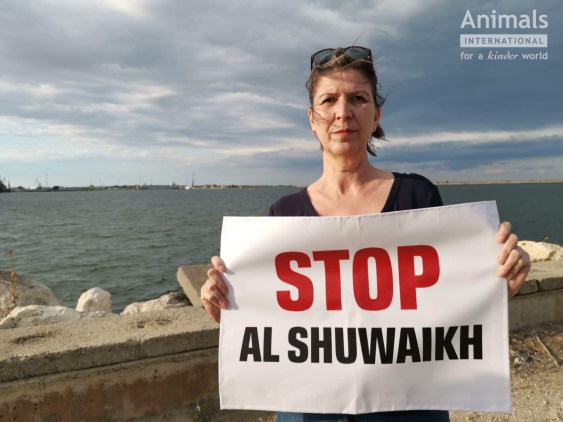
Romania: Exporting Over 100,000 Sheep to Iran Per Month ? – After ‘Al Shuwaikh’; We Are Interested in the Current Situation.

-flag-of-romania-pg

Iran

As regular visitors to this site will know, we have been tracking the export of live Romanian sheep to the Middle East in recent weeks.

You can see all our articles on this, along with other live export posts at:

https://worldanimalsvoice.com/category/live-transport/


In February – Romania will once again be able to export sheep and sheep meat to Iran, according to an announcement made by the Romanian Ministry of Agriculture and Rural Development (MADR).

Following the opening of this market, the Ministry declared that Romania will export nearly 800,000 sheep in the first six months.

The export market for (Romanian) sheep with the Republic of Iran has been opened due to the diplomatic efforts and the Government of Romania. In January 2019 the export certificate model was agreed between the National Veterinary Sanitary Authority and Food Safety in Romania (ANSVSA) and the Veterinary Organization of Iran, due to the ban on live sheep and goat exports to Iran being suspended.

To get things started, on 4/2/19 a shipment of 20 tonnes of sheep meat from Romania reached Iran. The (Romanian) export company, Agricola International, from Bacau, Romania, is in talks to send an estimated 1,000 tonnes on a monthly basis to Iran. Agricola International Bacau has unveiled plans to invest €9 million to upgrade its facilities and expand its output capacity by up to 30 per cent.

The Romanian Ministry is said to welcome this success. A very high demand in Iran of sheep and sheep meat in live is ever increasing, in a field where Romania has ample possibilities.


WAV Comment:

As an organisation which campaigns against all live animal exports; and which has recently reported in the issue of 70,000 live Romanian sheep being exported to the Middle East in temperatures up to 46 degrees; we have vey strong concerns for the welfare of any livestock being exported from Romania to Iran, especially as the Romanian Ministry declared that almost 800,000 sheep would be exported in the first 6 months. We are currently unaware of what percentage has been exported as ‘dead’ meat, and what amount has been exported live.

Note the statement above says ‘sheep and sheep meat’ – so it can only be assumed that live animal shipments have taken place.

As Romania is a Member State of the EU, when the EU politicians return from their Summer holidays in the fall, we will be writing to them and asking more about this and trying to obtain more facts. To date, EU Commissioner requests about ensuring animal welfare have been ignored by the Romanian authorities; and the EU does not appear to be very quick in taking any action against them regarding this ignorance.

So; what is the situation for any sheep exported live from Romania to Iran ? – are we going to hear just more meaningless words from the EU that are just ignored by member states; or are we actually going to see the EU do something about it all ?


Regards Mark.


Further reading:


http://www.msn.com/en-xl/europe/top-stories/romania-irks-eu-over-controversial-export-of-70000-live-sheep-to-persian-gulf/ar-AAETHKz?li=BBKxOeh&ocid=spartandhp&fbclid=IwAR21lR-Kkt8YCDpv_fjAQwgWtoJp1zdblPZfOQuj_FOPOewobaiBmjFFmeI


Vessel from Romania carrying 13,000 heads of sheep denied entry after 40% found dead

By Hana Namrouqa – Jun 03,2015

AMMAN — The Ministry of Agriculture on Wednesday sent back a vessel carrying 13,000 heads of sheep from Romania, after 40 per cent of the animals were found dead, according to an official:

http://www.jordantimes.com/news/local/vessel-romania-carrying-13000-heads-sheep-denied-entry-after-40-found-dead

https://en.mehrnews.com/photo/142482/Iran-imports-sheep-from-Romania


https://www.dailystar.com.lb/News/Middle-East/2019/Aug-08/489267-shipping-sheep-romania-defies-eu-before-eid-al-adha.ashx


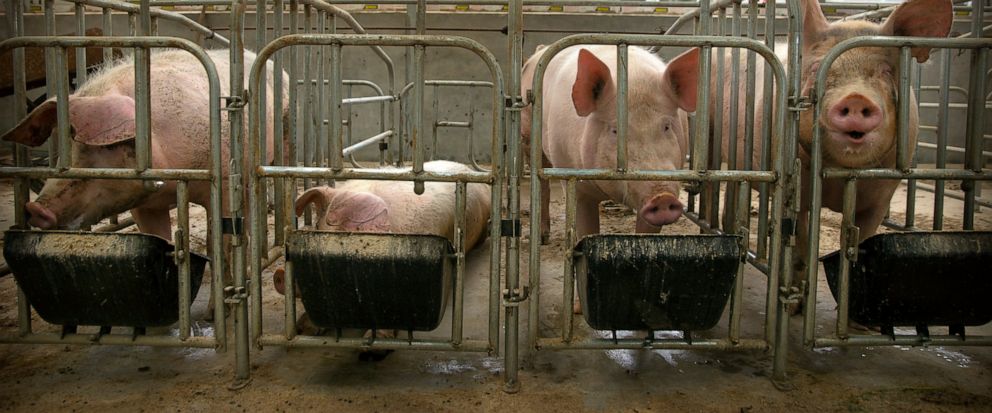
Italy: Life and Death on an Italian Pig Farm. An Investigation by ‘Animal Equality’.

Italy

WAV Comment – we fully support Animal Equality Italy that has reported its findings (shown in the following video) to the Italian authorities and is calling for the farm to be shut down with immediate effect.  Yes, close it down now !


Trapped inside a filthy cage on an Italian pig farm, Rose lives in utter misery.

She is desperate to be able to comfort her babies. She longs to feel sunlight on her back and soil underneath her feet, but the meat industry denies Rose all of her natural needs.

It’s not just Rose who’s suffering. It’s a similar story for the 300,000 mother pigs on UK farms who are also kept in tiny cages for weeks on end.

Our investigative work has once again exposed what’s really happening inside factory farms, destroying the idyllic image often portrayed by the meat industry.

We urgently need your support to continue to reveal the abuses animals suffer at the hands of this cruel industry – please consider giving today to help us build a better world for animals.

Thank you,


Italian Pig Farm

Animal Equality Italy, in collaboration with media outlet Tg2, has exposed deplorable conditions inside a pig farm in the Italian region of Lombardy. Our investigators found thousands of pigs living in filthy sheds, with discarded dead bodies left to decompose.

Our investigators visited the farm multiple times between February and April 2019. Despite Italy’s animal welfare laws, we found distressing cruelty taking place, including:

  • Dead bodies of piglets abandoned in the corridors
  • Piles of decomposing bodies
  • Pigs forced into tiny cages, causing wounds which had become infected
  • Animals forced to live in overcrowded conditions
  • Feeders full of faeces
  • Infestations of cockroaches, mice and worms

More than 8 million pigs are bred every year in intensive factory farms in Italy, with almost 4 million in Lombardy alone. Of those, more than 500,000 female pigs are forced to spend weeks at a time between the bars of cages without the ability to move or look after their babies. The UK imports pig meat products from many EU countries, including Italy, to be sold here.

Animal Equality Italy has reported its findings to the authorities and is calling for the farm to be shut down with immediate effect.

Once again our investigative work has exposed the extreme suffering taking place inside factory farms, destroying the idyllic image often portrayed by the meat industry. We need your support to continue to reveal these abuses – please consider donating today to impact the lives of millions of animals.


England: Sealed ‘Box’ Type Animal Trailers – How the Industry Dodges Identifying What They Transport – And the EU Ok’s It !

zerissene EU-Flagge am Stock

eu crisis 2

Above – an EU official does his usual.


From Mark – This is not going to be short – but I will aim to keep it that way if possible.

Now that we are covering a lot at present with regard live animal exports; I have decided to go public with some work which I did back in 2012 regarding live British sheep being exported by Dutchman ‘Onderwater’ on his ship, the ‘Joline’.

21 9 2

Above – A sheep carrying sealed box trailer boards the ‘Joline’.

The main issue of this report which I produced was to show up (yet again) the complete inconsistencies of the EU and the non adherence to the regulations set in animal transportation protection order EU Regulation 1/2005.

The regulations say that (animal) transporters should be clearly ‘signed’ to alert people that live animals are being carried. Ok, you can see this is not necessary with a ‘normal’ tiered livestock transporter, but with the ‘box’ type transporters which are used in Europe, we enter a different region where the carrying of live animals in a vehicle is not clear at all. This for example, is how Onderwater (the Dutch livestock haulier) deceived the UK authorities by making it look like he was carrying boxed / chilled meat in a ’box’ type animal trailer, when actually it was carrying live animals (sheep).


Read all about it at:

https://worldanimalsvoice.com/2019/08/05/england-the-onderwater-facts-from-campaigner-jane/


https://worldanimalsvoice.com/2019/05/28/england-i-went-to-europe-and-all-i-got-was-slaughtered-who-am-i-david-or-goliath/


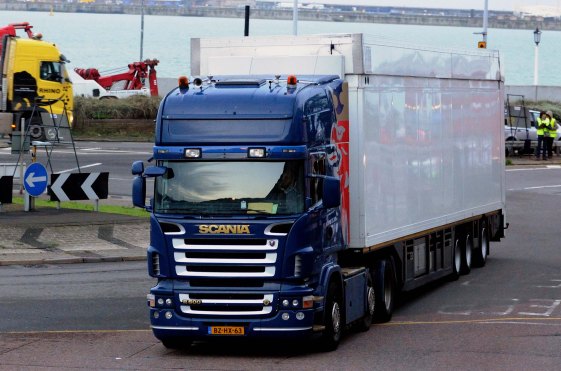
Below – Would you be aware if you were driving on the motorway that this truck is NOT carrying chilled produce, but instead is full of live animals ?

article 2

Above – a typical sealed box trailer in the EU – this time full of live sheep.


See my report photographs (taken by friend Valerie Cameron) – Page 4 – which actually show the rear doors of the ‘box’ open and live sheep standing within. 


article 1

Above – a sheep carrying ‘box’ trailer in the docks, ready to load on ship.


We even gave the EU some suggestion as to how the type of signage which we suggested should be carried on all box type trailers; on the top, bottom, sides and rear. On Page 2 of my report is the example of a sign we gave, written in both English and German; for emergency services to read when applicable.

We put forward suggestions of box trailer labelling for several reasons:


  • If, for example, the truck was involved in an accident and was turned onto its side; then our wonderful emergency services would see the signage and know that live animals were being carried. Consequently, they could immediately access the live by the rear doors, cutting into the roof etc. My argument was that without clear signage, emergency services, like many people; may wrongly think that chilled foodstuffs were only being carried, and hence not worry about trailer access.
  • EU Regulation 1/2005 for the ‘protection of animals in transport’; makes it clear in the legislation that labelling is to be shown on vehicles which provides this info to emergency services. Very sadly, as you will read in my report; many animal carrying box trailers are going all over Europe carrying live animals; but without any labelling to make this clear.
  • We have no faith in the EU enforcing anything; so we, (animal welfare organisations) have to act independently to be a voice for the animals and get them the justice they deserve.


I put forward my report to the EU on this issue and how we exposed that ‘live animal’ labels were being covered up whilst the vehicle was on the road. My report gives and example and shows exactly how the labelling is covered up; yet can very easily be removed by the driver when he is going to the authorities at a port for inspections.

eu crisis 2


In their typical way, the EU authorities were fully of words about how things should be done; but when presented with information on how the rules are broken; as detailed in my report; the EU did its normal and turned the other way.  My report shows the EU fancy words which mean nothing.

Cut to now – August 2019; animal carrying but un identified ‘box’ trailers are still being hauled all over the EU. So still, in the event of any accident; emergency services are still completely unaware that live animals are being transported within the trailer. Another issue is access and ventilation. There is obvious lack of access to sick or injured animals in a ‘box’ type trailer so that they can be identified and removed. How can a driver see that animals are ‘ok’ when they are concealed behind the solid walls of a box type trailer ? – and even if he could, which he cannot, how would sick animals be removed from the trailer ?

Livestock carrying trailers have airflow, be it through the tiered vents or via fan systems which are integral to the trailer design. Sealed ‘box’ type trailers have neither. There is usually only a small (30cm) vertical opening at the rear of the trailer through which outside air passes. Is this sufficient for a trailer full of animals ? – I personally think not; but the EU authorities allow it, and seem to turn blind eyes to all the anti evidence provided.

So; here s my report on how very small labelling is covered on the road; and quickly removed by the driver once in port going for inspections. Has anything changed over they years ? – NO. Our labelling system was ignored by the EU, and emergency services attending and incident are still none the wiser if live animals are being carried and may require very quick attendance and help.

For me personally, this again shows how the EU preaches one thing in its Regulations, but does not actually give a damn in reality. It is wrong and unjust; and is exactly the reason why I fight to give animals a voice.

They do not deserve to be abused like this – I wont give up trying to help those who suffer in silence.

Regards Mark.

https://serbiananimalsvoice.com/about-us/ 


The Report:

Front Page

TEXT


do something

Mark Comment –

all I can say is that I hope this gives an insight into non animal looking trailers that are actually on the roads of Europe but in reality, carrying live animals.

So drivers of Europe, keep an eye out for these – they are not what they may first appear to be.  If you see one involved in an accident; inform emergency services that animals could be on board and need attention.  Do not blame emergency services; blame the EU authorities – who do NOTHING !

Don’t give in without a fight !

England: New Expose by CIWF – The grim reality for millions of Dairy Calves across the EU. Another EU Shame !

Pro-Brexit supporters burn an EU flag during a UKIP demonstration in central London


https://www.ciwf.org.uk/news/2019/07/grim-reality-for-millions-of-dairy-calves-revealed


CIWF logo

Our new undercover investigation released today (22 July) exposes the grim reality for millions of dairy calves across the EU. Separated from their mothers shortly after birth and confined in small, individual pens, these dairy calves are deprived of their natural behaviours and social interaction.

The investigation film – which contains new footage obtained from five Polish dairy farms as well as footage from other EU countries (Netherlands, Germany, Italy, Czech Republic and Denmark) – exposes further welfare concerns; hungry calves repeatedly attempting to suckle an investigator’s hand as well as evidence of poor hygiene and inadequate protection from cold temperatures.

Additionally, there were incidents of EU law infringement: with calves completely unable to see and touch each other; and calves around three to four months old being kept illegally in pens that were too small for them.

Best estimates suggest that in the European Union as a whole, over 60% of dairy calves – in total over 12 million each year – are similarly restricted during the first few weeks of their lives.

“This investigation reveals the cruel reality for millions of dairy calves in Poland, and across the EU” says Malgorzata Szadkowska, Head of our Polish office. “These calves are separated from their mothers hours after birth, and spend their first eight weeks in isolation, away from the comfort and support that close companionship can provide to social animals like them. This is a completely barbaric and unnecessary practice.”

Our new investigation proves once again what we have documented on multiple occasions: caged systems used in many EU countries, including the UK, are equally cruel.

Emma Slawinski, our Director of Campaigns and Communications says: “It is hard to comprehend that a vulnerable young calf is kept isolated for weeks. Worse still, EU legislation allows this, despite evidence that alternative practices can provide welfare and health .”

calf eoa


ACTION !

You can join the fight to End the Cage Age. Please take action today.

Join over 1 million people and sign the European Citizens’ Initiative, calling for an end to the cage age in the EU.

https://www.ciwf.org.uk/


https://donate.ciwf.org.uk/page/8027/donate/1?supporter.appealCode=LAWE_UK1018a


https://twitter.com/ciwf?ref_src=twsrc%5Egoogle%7Ctwcamp%5Eserp%7Ctwgr%5Eauthor


https://www.facebook.com/farm.animals/