
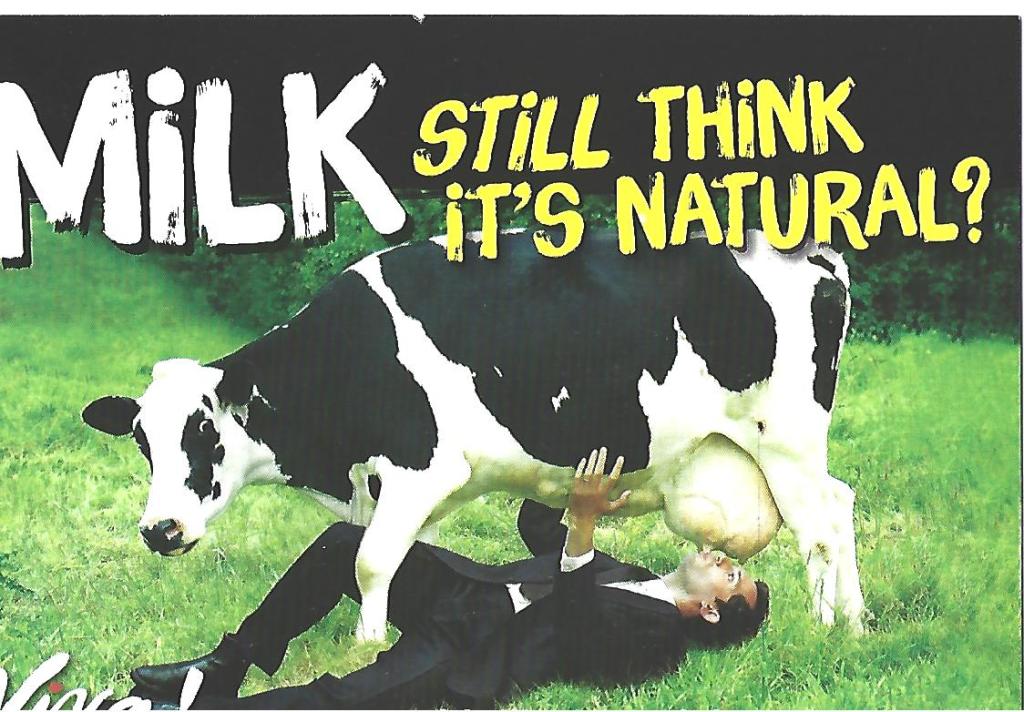
My Mums milk is for me, not you.
Face off with Juliet – Viva !
Scary Dairy | Viva! The Vegan Charity
Regards Mark


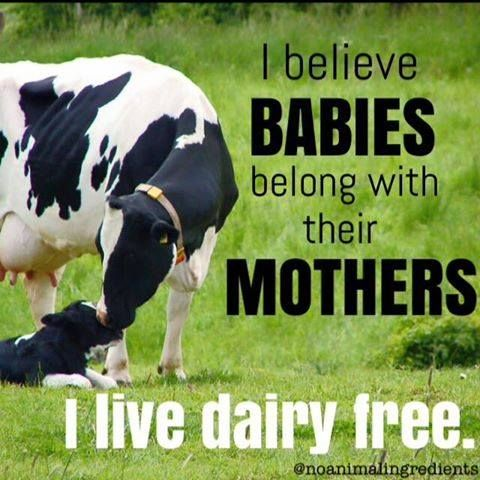
My Mums milk is for me, not you.
Face off with Juliet – Viva !
Regards Mark


Dear Mark,
We’re so thrilled to start this month off by sharing the wonderful news that the T&S rabbit farm in Nottinghamshire is finished for good, after the farmer announced he is retiring from fur farming due to the pressures from animal activists! When asked about his decision by local media, he replied “I made the decision to give into their demands. We couldn’t fight them anymore because they are too strong.”
This success brought together Animal Aid’s undercover investigations and planning expertise with amazing local teams on the ground, including Shut Down T&S Rabbits and Rabbit Farm Resistance – an inspiring reminder that campaigning does make a real difference to the lives of animals!
See our recent WAV post on this victory:
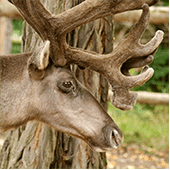
We have a late but urgent request for people to please object to plans for a new reindeer farm in the UK – and we only have until tomorrow to make our objections! Reindeer are herd animals, adapted to live in a cold climate. These sensitive animals should not be confined to a reindeer farm in the UK. Please submit your objections today!
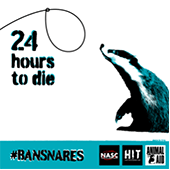
Last year our petition to help ban snares reached over 100,000 signatures – and now it’s time once again to put pressure on Ministers. The wonderful group, OneKind are holding a demonstration outside the Scottish Parliament on Saturday the 17th September from 11:30am-1pm, calling on the Scottish Government to make history and ban snares. Whether or not you’re able to attend the demonstration, you can still use this opportunity to apply pressure – either by writing to your local MP, or by contacting Scottish ministers via email or social media. Don’t forget to use the #BanSnares hashtag!

VegFestUK London, one of the largest vegan lifestyle fairs in Europe, is back! Our Head of Campaigns is speaking at the event, and you can also chat to the campaigners at our stall, where you can help make a positive change for animals! VegFestUK are launching a buy-one-get-one-free offer on tickets from today, so be sure to come along and say hi to us!

Thanks for helping us help animals.
With kindness,
The Animal Aid Team x
Regards Mark

WAV Comment – congratulations to our friends and fellow campaigners at Equalia for their tireless work in establishing legislation that will require cctv to be installed in all Spanish slaughterhouses. Wins such as this don’t come easy and they don’t arrive overnight; you have to show tenacity and have it in you to continue the fight until you win. This has happened here – congratulations all you guys.

Spain becomes the first EU country to legislate the installation of video surveillance cameras in all slaughterhouses
31 August 2022
Equalia
Equalia has been pushing since the end of 2018 for better regulation in Spanish slaughterhouses, which was ratified last week with the approval of the royal decree in the Congress of Deputies.
Three years ago, the NGO Equalia started the campaign “Ley de Cámaras de Videovigilancia en Mataderos” (Law on Video Surveillance Cameras in Slaughterhouses), to call for the mandatory installation of video surveillance cameras in all Spanish slaughterhouses, with the aim of effectively and rigorously guaranteeing compliance with animal welfare and food safety regulations.
This royal decree makes Spain the first country in the European Union to establish a law for the protection of animal welfare and food safety in slaughterhouses.
All abattoirs regardless of size will have to abide by the law. Large slaughterhouses will have one year to implement the change while smaller facilities will have two.
The NGO Equalia drew up an action protocol together with the veterinary services of the meat sector, which was presented to and adopted by several of the most important companies. It specified the three basic measures of the proposal: the placement of cameras in all areas where live animals are handled, the storage of the images for one month, in strict compliance with the Personal Data Protection Act, and access to the images by the Official Veterinary Service of the autonomous community in order to review them, apart from the operator.
In parallel, an initial law proposal, presented by Equalia, was approved through non-legislative propositions in the parliaments of the Balearic Islands, Navarre, La Rioja, Community of Madrid, Community of Valencia and the Canary Islands.
This work with institutions, entities and companies in the sector was accompanied by the publication of six investigative reports in Spanish slaughterhouses. In them, Equalia highlighted the need for a more exhaustive control of the practices carried out in these facilities. Following the publication of images of serious irregularities in animal welfare in a slaughterhouse in Ávila, where operators were seen cutting the legs off cows while they were still conscious, the meat sector, through ANICE, took a stand in favour of the installation of cameras in slaughterhouses. The same happened with other interest groups such as trade unions (Comisiones Obreras) and consumer associations (Facua).
The national and international repercussions of the images of the investigative report provoked the reaction of the Ministry of Consumer Affairs, which, through AESAN (Spanish Agency for Food Safety and Nutrition), initiated a draft royal decree establishing measures for the control of animal welfare in slaughterhouses through the installation of video surveillance systems. The Ministry of Consumer Affairs, on which AESAN depends, submitted the text for public consultation on 20 October 2020. After studying the allegations received from the interest groups that participated, the royal decree that has been approved today in Congress was drawn up.
In 2018, we started the debate on the need for video surveillance in slaughterhouses in Spain. Today, after positioning the meat sector, government, trade unions and consumer associations in favour of the proposal, this royal decree makes Spain the first country in the EU to require video surveillance systems in slaughterhouses.
Even though it is only a first step, we have to recognise that this royal decree has some weak points such as the viewing of the images. The treatment of the viewing will fall mainly on the operator (slaughterhouse), and not on the official veterinary service of the autonomous community, in addition to not specifying an exhaustive procedure for reviewing images in terms of the periodicity and time of viewing them.
Guillermo Moreno, Director of Equalia
Regards Mark
Largest Modern Pig Farm In The World – Million Dollar Pork Processing Technology & Cutting Line
Is ‘happy music’ supposed to dress this up as being ok ?
Regards Mark

New EFSA scientific opinion on pigs
26 August 2022
Written by Dr Elena Nalon
Severe animal welfare problems persist, but solutions are at hand, now it’s the time for action, starting with the abolition of sow stalls
The new EFSA scientific opinion on the welfare of pigs on farm analyses the latest scientific and practical evidence on the welfare challenges caused by the most common rearing systems in the EU and gives detailed recommendations on how to prevent or manage them.
The opinion presents 16 highly relevant welfare consequences along with their possible preventive and remedial measures. Additionally, the panel selected several animal based measures (ABMs) – e.g. the presence of certain lesions or behaviours – that can be reliably used for monitoring or enforcement purposes.
Measuring animal welfare has traditionally been considered a challenge but this new report makes it clear that there are tools available that can help the legislator go in the right direction.
The most frequent welfare challenges identified by EFSA across pig rearing systems and categories of pigs were:
Group stress
Inability to perform exploratory or foraging behaviour
Soft tissue and integument damage
Prolonged hunger (affecting dry sows and gilts, piglets, and boars)
Of these, the EFSA considered that inability to perform exploratory or foraging behaviour was the most relevant for all the pig categories under consideration, including for sows during lactation and suckling piglets. This point warrants a reflection because current EU legislation on pig welfare mandates that all pigs should have access to appropriate enrichment materials to keep them meaningfully occupied with rooting, foraging, and exploring, all activities for which pigs are highly motivated. Unfortunately, this norm has been systematically flouted by the vast majority of the pig industry, with the effect that pigs continue to be kept in predominantly barren conditions and tail docked to manage tail biting.
In this updated opinion, the EFSA reinstates in no uncertain terms that pigs have an intrinsic need to explore and to forage and that bad welfare follows if they are denied this opportunity. Thus, pen floor design should allow for the provision of appropriate enrichment materials in sufficient quantities. Alternatively, rubber mats should be placed in pens with fully slatted flooring. The substrates most suitable as enrichment materials are straw, hay and silage. Other materials are suboptimal, as already clearly stated in the European Commission’s (EC) Recommendation on measures to reduce tail docking. The EFSA also concludes that during a tail biting outbreak pigs should be immediately given novel and attractive organic enrichment materials.
Another conclusion of the report, an aspect that animal advocates have been stressing for decades, is that intensive indoor rearing is the practice that causes the most welfare issues. This means that, to be impactful in improving the welfare of the 146 millions of EU pigs, revised legislation will have to introduce profound changes as alternative, higher welfare systems currently represent less than 1% of the total number of pig farms. In particular, the EFSA recommends giving growing pigs more space compared to the current minimum legal requirements as this will have a positive impact on animal welfare and even on growth rates. Part of the flooring should be solid to allow the animals to rest by lying down and to facilitate the provision of bedding and enrichment materials.
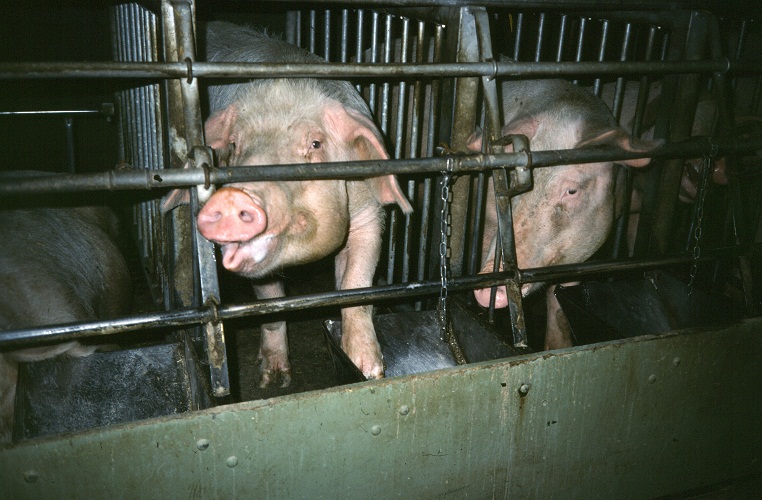
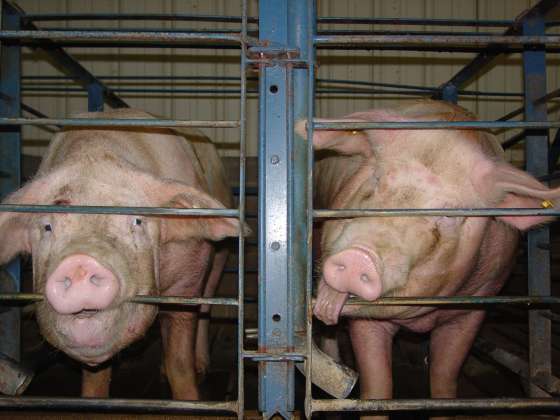
In response to the successful “End the Cage Age” ECI, the EC specifically required EFSA to assess the advantages, the welfare challenges and the mitigation measures associated with eliminating the use of individual stalls for gilts and sows and the report provides guidance on how this transition could occur. The EFSA concludes that gilts and sows should be permanently kept in groups. Hence, gestation stalls and conventional farrowing crates should no longer be used. As for farrowing and lactation, the EFSA concludes that, with the necessary adaptations in management and training of stockpersons, free-farrowing pens are as effective as conventional farrowing crates in terms of pre-weaning piglet mortality (14.2% for “fully crated” sows). Importantly, the EFSA highlights that temporary crating systems for farrowing and lactation should not be adopted unless their size is the same as free-farrowing pens and unless they can be easily converted into free-farrowing pens. This is a very important recommendation for the legislator to avoid the “enriched cage” escape route, an unscientific half measure that would cost sows and piglets yet more decades of unnecessary suffering.
The opinion also stresses the importance of providing sows with nest-building materials, the most effective being those with longer structures provided in a deep layer, such as long-stemmed or long-cut straw or hay. Selection for large litters has several negative welfare consequences for sows and piglets alike and should be reconsidered. The EFSA recommends that selection for litter size should be limited to an average number of 12–14 piglets born alive.
The current minimum weaning age of 28 days for piglets should remain (and possibly increased based on further research). Additionally, the derogation allowing weaning at 21 days, which is largely used to maximise productivity, should be reconsidered. Piglets weaned at 28 days or later have better immunity and gut health and they may be less predisposed to tail biting later in life.
The opinion states that immunocastration and keeping entire pigs are preferable to surgical castration in terms of animal welfare and that in any case surgical piglet castration without anaesthesia and analgesia should no longer be performed. Additionally, tail docking should not be performed. The EFSA does acknowledge that these procedures can and should be avoided, stressing that effective pain relief protocols are mostly unavailable or impractical on farm. However, the report still offers recommendations on how to carry out these painful procedures when they are considered unavoidable.
By contrast, we believe that – with the exception of individual animals or litters requiring veterinary care and if the procedures are carried out by a licensed veterinarian with adequate pain relief – revised pig welfare legislation should no longer include derogations to a full ban on pig mutilations, as there is a high risk that such derogations will become the rule (as is currently the case for tail docking).
On the specific request of the Commission, the EFSA also reached a consensus on seven ABMs that can be scored at the slaughterhouse to assess on-farm pig and cull sow welfare. At the moment, some indicators are already routinely collected for food hygiene and animal health purposes but they can also be very useful to monitor animal welfare on farm. Reliable classification systems and their harmonisation will be necessary in some cases to standardise the use of these AMBs in the future across Member States.
The widespread presence of chronic hunger, lameness and other injuries in some categories of pigs are also worrying and should be taken seriously in the upcoming revision of pig welfare legislation. In particular, chronic hunger in pregnant gilts and sows and the welfare of suckling piglets and breeding boars need to be urgently addressed, and in the case of boars also better studied.
This new EFSA opinion provides many useful indications on how to at least partially mitigate the serious animal welfare challenges in intensive pig farming. Of course, considering the opportunities ahead, it could have been even more ambitious. For instance, the mandate was limited to negative aspects of animal welfare. This is a missed opportunity as animal welfare science now recognises that kept animals should not only be spared suffering but should also experience positive mental states, which is the closest we can probably get to giving them “lives worth living”. The new legislation should definitely include this fundamental aspect, which lies at the core of our recent white paper on the revision of the EU animal welfare acquis.
Regards Mark

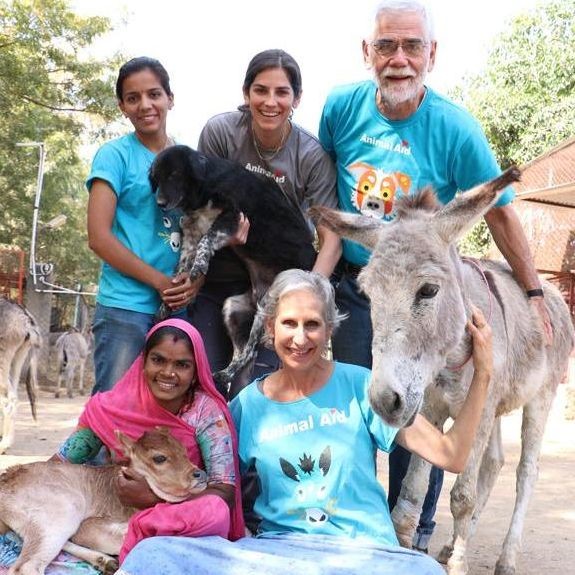
Dear Mark
Rajasthan has received more rain this year than in the last 70 years! This meant the need for even more shelter around the hospital and sanctuary. We put up new roofing, did repairs, elevated and leveled earth and removed unstable trees.
As the saying goes, “when it rains it pours.” And indeed, not only is it the dreaded maggot season that comes every year during monsoon, but Rajasthan has been hit with an outbreak of a viral disease amongst cattle called Lumpy Skin Disease. Many of our hospital and sanctuary cows have already been affected and are under treatment. Sadly, we haven’t been able to save them all but most are recovering with supportive care. We are currently vaccinating and doing our best to treat those affected.
Just two tiny holes were left for air to enter. A traumatic face wound had injured her nose so badly that the entire tip was missing. In a state of shock, however, she surrendered any resistance she might have had to being caught and brought to the hospital. She simply seemed to give us permission to try to save her life.
But saving her was not going to be easy. She was in a great deal of pain and refused to eat for several days which made us worry if the injuries were deeper and affecting her ability to eat.
On day 4, something changed! And the rest of her sweet story is–ahead of her! Meet Lovebug now!
Every. Single. Soul. Precious. Please donate today
Children gathered around the struggling puppy, whose little hind legs flopped behind him after he was hit by a car. It was heartbreaking to see. Our rescue team scooped him up and found, to our relief, that he seemed to have no spinal injury, no open wounds, and no fractures. But still, he couldn’t bear weight on his hind legs.
We treated him for spinal injury, though he was completely unwilling to obey the “rules” of bed-rest and kept on playing. Within a few weeks, his balance was starting to catch up with his determination to have fun. His legs aren’t perfect, but they take him wherever he needs to go. And Neemo wants to go everywhere!
Kindness is powerful: Please donate today
This beautiful boy had a massive wound on his chest. He had a family who stroked and loved him and seemed to somehow let him know he needed to go with our rescue team without any resistance. But he was terrified of the wound cleaning process, and it broke our hearts to see the fear leaping from his eyes.
Suturing the wound closed was not an option because of the place and size of the wound, so it would need to heal by daily bandaging. When the first treatment was finished his entire face changed to reveal trust and comfort as he began the beautiful process of bonding with his new hospital caregivers.
How wonderful it was to be able to return Kalu to his neighborhood and the people he simply loves!
Love means diligence, because serious wounds need weeks of treatment.
Piyush, at just 21-years-old, is already an experienced animal rescuer in Jamshedpur, Jharkhand, who has formed a small team of volunteers to respond to emergencies in his locality. He came to volunteer at Animal Aid for a month to observe how a busy animal shelter works.
His bright and eager mind combined with a tremendous compassion gave us all a big dose of optimism. He and his team are helping as many animals in Jamshedpur as they can, focusing on street treatments, preventing small problems from becoming large ones, and they have managed to temporarily house recovering dogs who need immobilization into foster care.
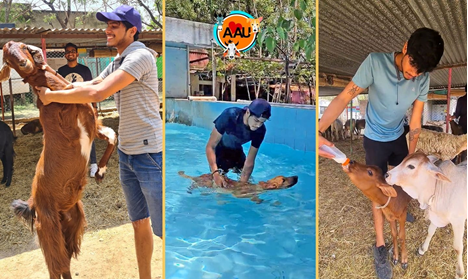
We wish to Piyush and his team an amazing future!
We are delighted that our beloved Mangibai is back with us and all the animals who dearly missed her.
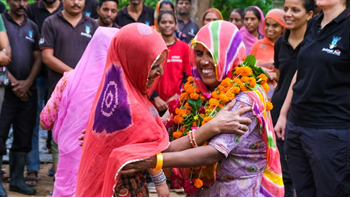
In mid-July, Mangibai and her husband were bitten by the most poisonous snake in India–a krait–in the middle of the night, and remained in critical condition for many days. We all were beyond worried, and the ICU ward she was recovering in was flooded with Animal Aid staff in and out at every time of the day. Miraculously, they both made it through the first critical days, and they were able to return home a week later. They would still need weeks of rest to completely regain their strength.
A staff member for over 10 years, Mangibai is one of our most experienced care-givers, and a beautiful person. We celebrated her return with garlands, hugs and tears of joy – so incredibly lucky and grateful to have her back with us.
We’re excited to announce our partnership with FreeWill, an online tool that helps you write a will in about 20 minutes. This service is completely free to use and allows you to support animals in need by including Animal Aid Unlimited in your estate plan. Your planned gift costs nothing today and secures the future of our compassionate service to all animals we know you care for deeply.
Non-U.S. residents: FreeWill’s self-help estate planning solutions are valid for the disposition of property located in the fifty states and DC. Will-makers residing outside of the United States should consult with a local lawyer before using FreeWill’s tools.
Go shopping here:
Regards Mark
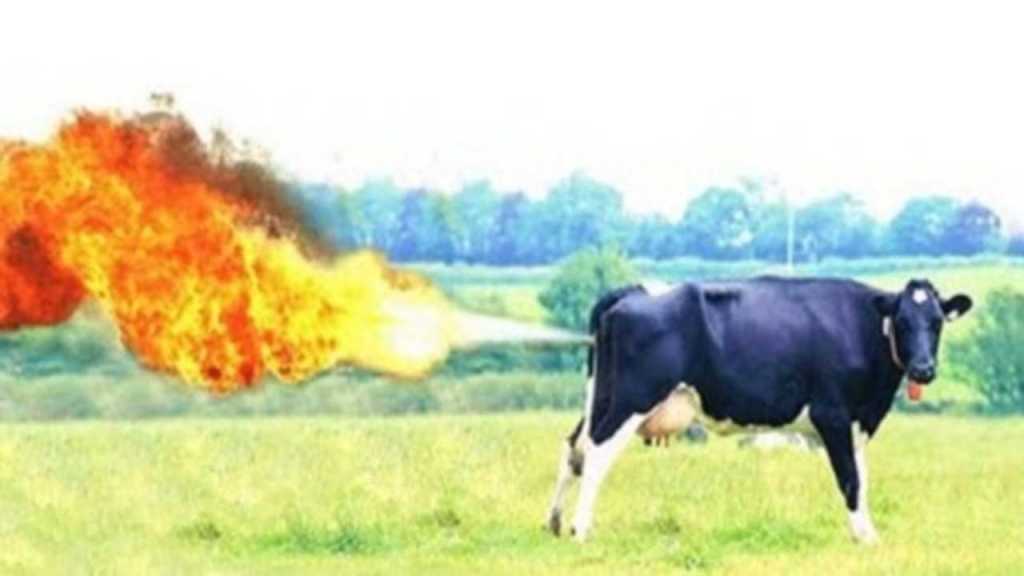
A group of 22 environmentalists, public health, and animal-rights aficionados led by the Stand Up For Factory Farms coalition is petitioning Oregon to adopt new air quality rules — specifically targeting dairy.
Filed on August 17, the petition was submitted to the Environmental Quality Commission seeking to create an emissions program that applies to “large” dairy farms — those the federal EPA defines by housing 700 or more mature cows.
Oregon is home to over 200 dairy farms — most which have been family owned and operated for multiple generations. The state is known for producing high-quality milk and consistently ranking amongst the top five states nationwide for milk quality. Although the petition purportedly is aimed at “mega dairy,” a 700 mature cow operation hardly qualifies as a large farm. In fact, 700 mature cows doesn’t place a dairy into the top ten largest dairies in the state … or the top 50.
The introduction to the petition reads, “Air pollution from the State’s growing number of exceedingly large mega-dairies threatens the public health and safety of Oregonians, as well as the environment. Yet the Oregon Department of Environmental Quality neither monitors nor regulates this air pollution through its current Air Contaminant Discharge Permit program. It is past time for Oregon to address air pollution from large dairy concentrated animal feeding operations.”
The coalition’s petition calls for a requirement that proposed and existing dairies obtain an air quality permit to “curb” harmful emissions. The permit would likely apply to 39 percent of Grade A dairies in the state, which house 84 percent of cattle. The commission has 90 days to respond by denying the request or by beginning rule-making proceedings.
The groups support their claims with a “fact sheet” by Food and Water Watch, which reads, “Mega-dairies have wreaked havoc on communities in eastern Oregon for years. Nitrate from fertilizers and animal waste infiltrates groundwater and threatens the health of those who drink it.” In their conclusion, they state, “The numerous problems that mega-dairies create and the incalculable damage that they inflict on Oregon are not going away without strong action from the state’s leaders. Touting factory farm gas as a solution is only entrenching pollution among frontline communities. Oregon’s legislature must take strong action to protect our air, water and health, beginning with a moratorium on new and expanding mega-dairies.”
The removal of dairy cows from the U.S. agricultural industry wouldn’t do much to reduce greenhouse gas emissions. In fact, data from Virginia Tech suggests that emissions would only drop about 0.7 percent, with far worse implications for human health if dairy was removed.
Dairies are already under regulation by the Oregon Department of Agriculture and Department of Environmental Quality. Since 1993, all Oregon dairies have maintained a Confined Animal Feeding Operation Permit, which provides a checks and balances system that ensures protection of the state’s waters.
Eco- and animal groups petition against Oregon’s ‘mega-dairies’ | AGDAILY
Regards Mark

Animal rights activists celebrate as controversial rabbit farm firm ceases trading
A rabbit farm in Rutland has closed after facing sustained pressure from animal rights activists – including alleged cases of vandalism. T&S Nurseries, ran by Phil Kerry, set up a rabbit farming site at Lyndon Top Farm, close to Rutland Water, and previously submitted plans to expand the farm to breed 10,000 rabbits a year for slaughter.
However, the company, which also had farms in Nottingham and Buckinghamshire, faced significant opposition and scrutiny from residents and animal rights campaigners, including PETA, as it attempted to expand the business.
PETA gathered more than 21,000 signatures on a petition to block Mr Kerry’s plans during a campaign which also won the support of comedian, TV, and film star Ricky Gervais.
Now, Mr Kerry has confirmed he has decided to cease trading because of that pressure and the repeated rejection of his applications to expand the business.
(Friday, August 19), that he was pulling out of the trade. He said: “We’re passing over the last of the rabbits from the farm over to the activists tomorrow and winding down the rabbit farm business.
“I was looking to retire next year anyway, so pushing it forward a few months doesn’t matter to me. But we’re diversifying into other things such as vineyards, orchards, as well as going into the ‘glamping’ business, so nobody is going to lose their jobs from the closure.
“The legal activism outside the businesses through the day was one thing, but we had a lot of activists at night that caused us a lot more issues, especially graffiti and vandalism. One staff member’s car was even covered with paint stripper.
“We were very much a small base of operations for rabbit farming compared to what gets shipped in from Europe. So maybe the focus should be on that now instead.”
In a statement regarding the business ceasing trade, PETA’s vice president of programmes Elisa Allen said: “Animal advocates are jumping for joy over news that T&S Nurseries has read the writing on the wall and will soon be closing up shop – meaning no more rabbits will be bred and killed at its facilities.
“On these farms, sensitive animals spend much of their lives confined to barren hutches, unable to socialise or explore. Then, after enduring a miserable life, they’re hung upside down and their throats are slit so their dismembered body parts can be used for pâté, pies, and other “products”.
“Business owner Phil Kerry revealed the decision to cease trading was made, in part, because local councils repeatedly blocked his applications for new butchering and breeding sites – applications which tens of thousands of compassionate PETA supporters spoke out against.
“In a true sign of the times, the public has once again reminded animal-exploiting businesses that the only viable industries are those which don’t harm other living, feeling beings.”
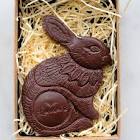
The animal rights charity also said that it intends to send Mr Kerry a “box of vegan chocolate bunnies to wish him a happy retirement.”
Vegan chocolates – wonderful and the very best !
Regards Mark
Animal rights activists celebrate as controversial rabbit farm firm ceases trading (msn.com)


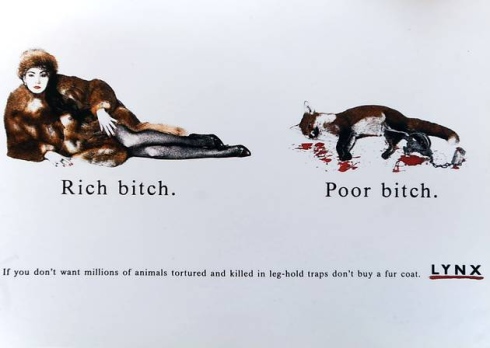
Already Quarter of the way to a Fur Free Europe
25 August 2022
260,000 Europeans have already signed our Fur Free Europe ECI. That means we’re over a quarter of the way to our target of 1,000,000 validated signatures backing this European Citizens’ Initiative, which will oblige the European Commission to respond and take action to ban fur farms and farmed fur products on the European market.
Outfoxing the laggards
The EU-level legislation we are seeking with this ECI would compel Member States that are still lagging behind to take the necessary steps. And such steps would be popular: a majority of people in every country across the EU consider that breeding animals for fur is an unacceptable cruelty.
Malta has just fallen into line, bringing the number of EU nations with a full ban on fur farming to thirteen. Three have a partial ban, while a further five are considering their next moves. And meanwhile the fur industry is on its back paws, the latest victim being the fur garment industry in Greece, which has been forced to shut down due to EU sanctions on Russia.

Fur jumps off the catwalk
And, in Denmark, once one of the biggest fur exporters in the world, this month’s Copenhagen Fashion Week followed Amsterdam, Helsinki and Oslo in going fur-free, after several luxury brands including Gucci, Alexander McQueen, Balenciaga and Moncler announced fur-free collections. Next month, we will look more closely at how we must keep fur-free trending in fashion.
So now is the time to act!
Make sure you have added your signature to the campaign. And if you can get three other people to sign then we’ll soon have the further three-quarters of a million we need!
Start of the collection period
2022-05-18
Registration number
ECI(2022)000002
FUR FREE EUROPE
Fur farming is inherently cruel and it is widely rejected by EU citizens.
It is impossible to improve the welfare of animals on fur farms. Whilst no animals should live in a caged environment, the keeping of inherently wild species in cages can only be defined as abject cruelty.
The keeping and killing of animals solely for the purpose of fur production is ethically unacceptable.
Numerous outbreaks of SARS-CoV-2 on mink farms have evidenced the veterinary-public health risks associated with the production of fur.
The existence of production bans in some Member States has a distorting impact on the market for the supply of farmed fur products. This favours traders in those Member States where there is no production ban, to the detriment of those EU countries where outright bans are already in place.
The placing of fur products on the internal markets of several territories and jurisdictions has already been prohibited. This includes dog and cat fur within the EU.
Echoing the calls from many Member States we, EU citizens, invite the Commission to prohibit by law, throughout the Union, the:
keeping and killing of animals for the sole or main purpose of fur production.
placement of farmed animal fur, and products containing such fur, on the EU market.
274,665 have signed. Let’s go to 500,000
Act Now – please sign the ECI

NOTE THIS IS A PETITION WHICH CAN ONLY BE SIGNED BY CITIZENS OF EU MEMBER STATES – Nobody else sadly.
Regards Mark


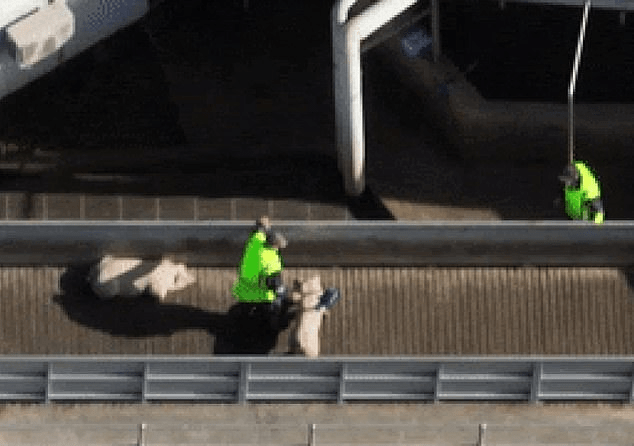
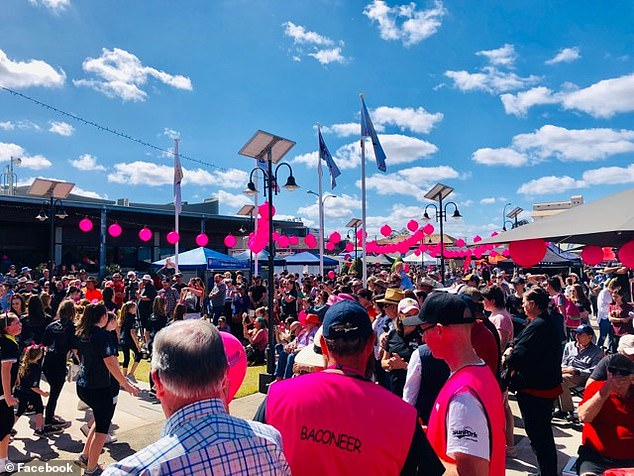
Animal rights group releases shocking footage from inside a pig abattoir as activists reveal their plan to target a weekend festival dedicated to BACON
The release of the video comes as the annual BaconFest kicks off in a rural Queensland town.
Kingaroy is hosting BaconFest from August 19 to August 21 in what the festival organisers describe as a ‘three-day sizzling food festival in Queensland’s beautiful South Burnett celebrating the versatility of bacon and putting Australian pork on centre stage.’
Thousands of people are expected to attend the event in what is a usually quiet town but are set to be joined by some unwelcome guests in the form of activist protestors.
On Friday ALQ announced they would target the rural festival, driving mobile billboards through the town showing abattoir images from across Queensland.
ALQ’s campaign manager Amanda Holly told the Courier Mail she believed Australia’s pig farming industry is hidden behind a ‘veil of secrecy’.
‘By maintaining a legal, peaceful presence throughout Kingaroy this weekend, our activists aim to shine a light on industry practices that are considered ‘standard’ despite the appalling harm caused to animals, people, and the environment,’ Ms Holly said.
‘We flew drones above intensive factory farms located here, as well as in the Western Downs, Toowoomba, North Burnett, Fraser Coast, Scenic Rim and Goondiwindi regions.’
Organisers at BaconFest have been contacted by Daily Mail Australia for comment.
Regards Mark
 World Animals Voice