Category: General News

EU: Decerle Report Prioritises the Economic Interests of Farmers Over and Above the Welfare of Farmed Animals.

Press Release

16 February 2022

European Parliament backs retrogressive report, which lacks ambition for animal welfare and flies in the face of citizens’ wishes

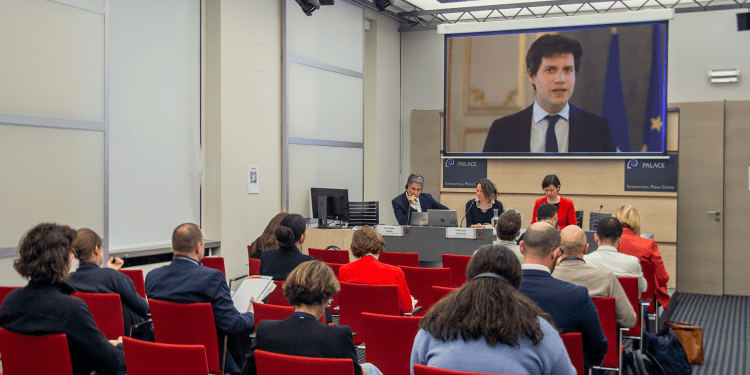
On February 15, the European Parliament (EP) adopted the Implementation report on on-farm animal welfare with 496 votes in favour, 140 against and 51 abstentions. 

Eurogroup for Animals, along with its members Compassion in World Farming and Four Paws, strongly opposed the adoption of the final report asking Members of the European parliament (MEPs) to adopt the alternative ENVI opinion instead. 

Despite the use of “animal welfare” in its title, the adopted report focuses more on farmers’ economic interests rather than improving the conditions of animals in EU farming systems.

When the report was announced civil society had great hopes that the European Parliament would pay full attention to a fundamental issue, close to citizens hearts and EU policy makers, as reflected in the European Commission’s Farm-to-Fork Strategy and their commitment to revise animal welfare legislation, as well as in the Parliament’s own position to phase out the use of cages.

The final Resolution – the adopted form of the report – even goes as far as contradicting what was adopted in previous Parliamentary Resolutions, specifically: 

  • Foie gras, which involves force-feeding, is presented as respecting animal welfare criteria despite the fact that the EP recognised the incompatibility of foie gras production and animal welfare in its recent resolution on the ECI “End the Cage Age”.
  • The report suggests focusing on more clarity rather than improving standards. This is not in line with the EP’s resolution on the Farm to Fork Strategy which considers it important to set higher legal standards for animal welfare.
  • The report erroneously claims that some measures believed to improve animal welfare may in fact be counterproductive and undermine other aspects of sustainability, namely health and safety on farm, as well as the the fight against antimicrobial resistance and efforts to reduce greenhouse gas emissions. This is diametrically opposed to the Parliament’s own Resolution on the Farm to Fork Strategy, which clearly states that a high level of animal welfare is important to sustainable development and has the potential to strengthen the economic and environmental sustainability of European farmers.

An implementation report is, unsurprisingly given its name, supposed to assess the implementation of current on-farm animal welfare rules. In this, the adopted Resolution from the EP fails in two respects: it neither addresses the problems with the current rules, nor does it focus on welfare of the animals themselves. Instead it preoccupies itself with the maintenance of a broken system that incentivises the worst kinds of farming for the environment, health and, most of all, for the animals.

MEPs have sent contradictory messages to an ambitious and progressive European Commission. Earlier in the term, they wanted better welfare, new systems of farming and a shift in-line with the Commission’s Green Deal. Yesterday they voted for something that is nothing other than a defence of the status quo. Whilst we commend those MEPs who fought for the far more ambitious opinion from the Parliament’s Environment committee, who stood up for the welfare of animals in-line with citizens’ wishes, the European Parliament has, as a whole, backed down to the narrow interests of big agriculture.

Reineke Hameleers, CEO, Eurogroup for Animals

Regards Mark

EU: The Dog and Cat Meat Trade: Interview With MEP Petras Auštrevičius.

Office of Petras Auštrevičius

18 February 2022

Four Paws

As investigated by Eurogroup for Animals’ member, Four Paws, every year over 10 million dogs and cats are killed for their meat in Southeast Asia, with Indonesia, Cambodia, Vietnam hosting the most robust dog meat trade in the region.

Animals of unknown health status are sourced to supply the trade from multiple locations. Traumatised, diseased, with depleted immune systems and without food and water they are transported in poor hygiene conditions, in many cases, for thousands of kilometres and cross-border, often mix with other species at marketplaces, slaughterhouses and restaurants. Why should it matter to the EU to bring this trade to an end?

MEP Petras Auštrevičius, is Chair of Companion Animals Working Group of the European Parliament Intergroup on Animal Welfare and Conservation.

Many people do not realise that while in the EU most cats and dogs are treated as companion animals, there are other parts of the world where cats and dogs would be qualified as farm animals. Would you be able to elaborate on that? Why is such meat imported and what are the countries that import it?

It is estimated that annually 10 million dogs and cats are killed for human consumption in Vietnam, Cambodia and Indonesia. The trade involves extreme animal cruelty during capture, transport, holding and slaughter with dogs and cats often stolen or forcefully taken from their owners. In Vietnam the trade kills approximately 5 million dogs and 1 million cats, in Cambodia 3 million dogs and an unknown number of cats, and in Indonesia 1 million dogs and hundreds of thousands of cats. The trade is also existent in Africa, although poor data on the topic are available. The meat is largely found as a delicacy, however, there is quite poor social support for continuation of this trade. A great majority of Vietnamese, Cambodian and Indonesian citizens do not see the future for the cat and dog meat trade. The speakers and participants agreed that now is the time for ASEAN countries to ban the cat and dog meat trade and enforce their legislation on animal movement and rabies eradication to protect the consumers and prevent future pandemics.

Looking at the immediate impact on animals, why is it a particularly cruel trade for the animals?

Animals of unknown health status are sourced to supply the trade from multiple locations. Traumatised, diseased, with depleted immune systems and without food and water they are transported in poor hygiene conditions, in many cases, for thousands of kilometres and cross-border, often mix with other species at marketplaces, slaughterhouses and restaurants.

Why does the dog and cat meat trade matter to Europe? What risks does this trade bring?

The cat and dog meat trade and consumption pose a significant human health risk and severe diseases like rabies, cholera and trichinellosis are associated with it. Moreover, the meat contains high levels of antibiotic residues leading to antimicrobial resistance. Finally, mutated canine influenza or canine coronavirus carry a potential of infecting and spreading to humans giving sufficient ground to future pandemics. While human health risks are largest in the source countries, EU citizens can be affected as well. Disease outbreaks and zoonoses can jeopardise European travellers in Southeast Asia. Mutated viruses can be imported through pets rescued from the meat trade. Therefore, the EU has a direct interest to stop the cat and dog meat trade. Nobody expected the outcomes of COVID-19, that is why we must not be complacent.

Are there regulations in place at EU level to address this situation? Have these been sufficient?

ASEAN Delegation outlined the need for the European Parliament to address this issue, as well as for the ASEAN Delegation to commit relevant ambassadors to change. There are certainly things the European Parliament has and will be calling for, however the initiative for any concrete action lies with the European Commission. As there is currently no exchange of data on the movement of cats and dogs, as well as no tracking of animals, even across the EU, it is quite easy to imagine the worst case scenario. In particular, with the increase of demand for cats and dogs, and trends across the foreign rescue animals which is concerning when the health status of the animals is not properly screened.

Is there a way that we can encourage the EU and Member States to improve their response and finally put an end to this trade?

Certainly, the EU and the Member States must raise awareness among their citizens. A ban on the trade and consumption of dog and cat meat and introduction of legislation, as regulation would not resolve the cruelty involved therein and alleviate all health risks are the way forward. Such bans exist in China, the Philippines, Taiwan, Singapore, Hong Kong, and Thailand.

Want to learn more about the dog and cat meat trade? 

Visit Four Paw’s website

Regards Mark

Canada: Freedom Convoy protesters threatened with losing their pets! the new face of a dictatorship

Protesters arrested as part of “enforcement actions” could have their pets taken into care, Canadian authorities have warned
Canadians taking part in demonstrations against Covid-19 mandates were threatened with inadvertently relinquishing their pets if arrested by the police, authorities warned on Thursday.

According to an announcement on the Ottawa-By-law Twitter account, anyone arrested at demonstrations as part of “enforcement actions” by the government could have their animals placed in “protective care” for a week if they are unable to look after them.

The suspect must pay for the animal’s care. After eight days, if arrangements have not been made, the animal would be considered “relinquished.”
A tweet from Ottawa’s regulatory service included a photo of a dog hanging out of a truck window.

The ongoing protests in Canada began weeks ago as a convoy of truckers protesting vaccine and quarantine mandates for border crossings, but the movement has morphed into much larger demonstrations against Canadian Prime Minister Justin Trudeau’s handling of the Covid-19 pandemic.

Freedom Convoy protesters threatened with losing their pets“Attention animal owners at demonstration If you are unable to care for your animal as a result of enforcement actions, your animal will placed into protective care for 8 days, at your cost. After 8 days, if arrangements are not made, your animal will be considered relinquished. pic.twitter.com/OkbXc8RE3c”
— Ottawa By-law (@OttawaBylaw) February 17, 2022

The pets warning is the latest effort by the government to break up the protests, which have created “illegal blockades,” according to Trudeau, at busy border crossings and in major cities.

Trudeau recently invoked the Emergencies Act, giving police more scope to deal with protesters.
Canada also ordered a freeze on crypto donations to the Freedom Convoy, which has gained support from high profile pundits like Jordan Peterson.
The threat to seize pets has renewed criticism of the Canadian government, with some arguing that they are going too far.

“One possible, explicit punishment for participating in a peaceful protest in Canada — beyond freezing your bank accounts — is that the state will take your pet and, after 8 days, declare it “relinquished” if other “arrangements are not made.” https://t.co/9hrVSyHNlF”
— Glenn Greenwald (@ggreenwald) February 17, 2022

Police have issued warnings to protesters continuing to demonstrate, increasing their presence this week in cities like Ottawa, according to CBC.
Police in Ottawa also began erecting fences in front of government buildings, including Parliament Hill and the Senate on Thursday.
Police have also been issuing written warnings to protesters, promising harsher action in the future.

“You must leave the area now.
Anyone blocking streets, or assisting others in the blocking streets, are committing a criminal offence and you may be arrested,” a written notice handed out on Wednesday read.

https://www.rt.com/news/549762-ottawa-freedom-convoy-pets/

And I mean…The Canadian truck drivers are particularly impressed because the “Prime Minister” Justin Trudeau wants to prescribe the injection without exception.
This little thing leads to one of the largest motorized protest marches of all time in Canada.
We are on the side of the protesters and support them.

Trudeau’s policy is a much more dangerous virus than the SARS-COV-II virus and all its variants, which have now been totally wiped out.
Some comments copied from the article:

My god, how low can this government sink? Trudeau has no ethics, no morals, no brains. How can he treat people like this? I detest him and all he stands for!

Ottawa Police has lost their minds from incessant trudeau boot licking.

Trudeau is taking personal bank accounts and now their dogs. At some point, extreme, unsustainable Liberalism always turns into a far left controlled dictatorship and attacks it’s own people, just like the United States.

Threatening to remove their Kids and now their Pets, tyrants will be dictators, no doubt about that.

Yes! That’s just how dictators are; they use all means to achieve their goals!

My best regards to all, Venus

Free Tibet (London): Behind the Chinese Mask of the Winter Olympics. Actions.

WAV Comment:  Whilst China wants the world to watch the Winter Olympics and think how wonderful they are as a nation; there is a much more sinister side to it all.  The 10th March will be the 63rd anniversary of China invading Tibet; at the time, an autonomous nation and people, who for years now are gradually having their existence deleted by the power of China within another nation, named Tibet.

10th March in London, sees actions against Chinese actions and dominance in Tibet.  Effectively, one nation wishing to eradicate everything about the existence and history of another.  Below you will see links to issues, including the teacher Rinchen who has been removed by the Chinese authorities for teaching Tibetan, and who is being held despite no information of her situation or condition being given to her family.

This is the hidden side of the China that they want to lose under the veil of issues such as the Winter Olympics.  Until the people of Tibet are free from being the tortured and persecuted slaves of the Chinese system, we will support them and stand with them; demanding a FREE TIBET.

Regards Mark

Dalai Lama – The real leader of Tibet.

Mark, we are calling on you to join us for a day of resistance and celebration to mark the 63rd anniversary of the 1959 Tibetan uprising, remembered every 10th March by Tibetans and their supporters.

The past 12 months have seen the Chinese Communist Party (CCP) increase its campaigns of cultural destruction and surveillance in Tibet and attempt to use the Winter Olympics to sportwash its human rights abuses. We must stand together and resist!

But the past 12 months have also seen Tibetans and their allies show what is possible when we stand together. Making headlines around the world and achieving huge victories. Whilst we will not stop our resistance, we must celebrate our victories.

Join us on 10 March to commemorate those who resisted the CCP, to mark our victories over the past year, and to continue the struggle for a free Tibet.

Event Details

Resistance
When: 10th March, 10:00 am – 1:00 pm
Where: 10 Downing Street, London, SW1A 2AA
What: March from Downing Street to the Chinese Embassy

Commemoration
When: 10th March, 2:00 pm – 4:00 pm
Where: Indian YMCA, 41 Fitzroy Square, W1T 6AQ
What: An event to commemorate the Tibetan struggle for freedom and celebrate our victories over the past 12 months.

Website – Free Tibet |

On 1 August, Rinchen Kyi, a Tibetan school teacher, was taken from her home and arrested for “inciting separatism”, despite there being no hint of a recognisable crime. Inciting separatism has a minimum sentence of 5 years.

Since her arrest, Rinchen Kyi has effectively disappeared; she was transferred to an undisclosed location and there have been no details concerning her health or whereabouts. Rinchen’s family, including her 13-year-old daughter, have not been told where she is being held or when they will be allowed to talk to her.

The next few days will be crucial; demand Rinchen Kyi’s release now! Email the Qinghai local government and your nearest Chinese embassy and call for the immediate unconditional release of Rinchen.

Demand the Release of Rinchen Kyi | Free Tibet

THREE MONKS IN DRAGO SEVERELY ILL AFTER SIX YEARS OF TORTURE

Geshe Tsewang Namgyal, one of the three monks imprisoned for six years in 2012

Arrested after the 2012 Drago protests, three monks were subjected to forced labour and denied adequate food

Tibet Watch has learned that three senior monks from Drago Monastery are still severely ill after their release from prison four years ago. The three monks, Tsewang Namgyal, Dalha, and Tengya, served six-year prison sentences from 2012 until their release in January 2018. 

The news of their failing health comes as their home county of Drago faces rising tensions due to a series of arbitrary detentions and demolitions. The county is also under close surveillance by Chinese authorities.

The monks are suffering from a range of serious conditions as a result of inadequate food, torture, and forced labour in prison including crippled legs, organ damage, insomnia, constant headaches, and loss of mobility.

More and actions – Three monks in Drago severely ill after six years of torture | Free Tibet

We stand with the good people of Tibet;

Regards Mark

Sweden bans whipping in horse racing

At the end of January 2022, the Swedish horse racing authority Svesk Galopp announced that new regulations on the use of whips in horse racing will come into force with the start of the new season: From April 2022, whips may no longer be used in gallop races to ‘encourage’ the horses and drive to maximum performance.
The whips may continue to be carried, but only used to ward off dangerous situations.

Exemplary decision by the Swedish Equestrian Authority in horse racing

In Sweden, the use of the whip has been discussed for years.
In the past, the regulations were gradually changed.
For example, foam-padded sticks were introduced a few years ago.
Now the use of whips in horse races is to be banned altogether.

The Swedish authority writes: “Using the whip in horse racing is just not going to be a thing in 2022.”
(Helena Gärtner, Project Manager at the Scandinavian Racing Regulations Committee).

Previously, Swedish rules allowed the whip to be used three times in most races.
However, the use of the whip in show jumping and gallop races was not allowed for two-year-old horses.

In trotting races, such “aids” contrary to animal welfare may still be used: According to this, it is permitted to “maneuver” and “correct” the horses with the whips up to 400 meters from the finish line, as long as the animal is not put under excessive pressure.

The decision of the Swedish authorities to ban the use of whips in horse racing is a big step in the right direction and long overdue not only for Swedes.
Germany and many other countries must also take this step and speak out against the suffering of horses in so-called “equestrian sport”.
Horses deserve a life free of exploitation and violence – regardless of state borders and horse racing variants.

Not only the use of animal cruelty “aids” should be forbidden, but a general ban on exploitative equestrian sport is required.

Horse racing: exploitation and violence for profit

The multi-million dollar equestrian industry is based on the systematic exploitation of horses.
The animals are often sent to the starting line in horse races at a much too young age of two to three years.

Horses can be growing up to the age of seven – high-intensity training and the stress of competition then often lead to serious injuries, examples being irreparable damage to tendons and bones.

The use/use of horses that are too young, whose physique is still soft and not suitable for the strains of “modern” training in “equestrian sport”, and the enormous psychological stress on the animals ensure that many horses after only a few years of everyday exploitation and also die early or are killed due to physical and psychological damage.

Horses are prey animals that are often violently driven to maximum performance during races and forced to take risks that they would never be willing to take voluntarily.
When the sensitive animals fall during a race, they are usually seriously injured or even fatal.

In the industry, bleeding from the lungs, ruptured aorta and gastric ulcers are accepted for profit reasons: the psychological stress promotes gastric ulcers, and bloody nostrils can be observed in many animals after the race as a sign of bleeding in the lungs.

Cases are becoming known again and again in which riders have doped the horses: the animals are often given medication so that they can withstand the stress at all.

As soon as the animals no longer perform as expected, they are “sorted out”.
What then happens to them remains mostly unknown.

– Never attend equestrian events such as horse races.
– Please sign our petition and ask the federal government to finally ban the dangerous races.

https://www.peta.de/themen/pferderennen-petition/

https://www.peta.de/neuigkeiten/schweden-peitschen-pferderennen/

And I mean…Every lash, no matter how strong, is associated with pain. They cause the horses to literally run for their lives in pain and fear.
None of the animals would voluntarily achieve this unnatural peak performance.
In addition to the physical pain, the whip produces something akin to psychological terror.

It is unknown how many horses are injured during training.

“Training” includes cutting nerves (neurectomy) on the legs of jumping horses, inserting pointed objects into leg bandages, using electrical aids, or active, passive, and chemical parallel bars. This includes hitting the horse’s legs with wooden or iron bars.

If an injured horse stays alive, such injuries usually mean the end of a career in racing, that’s for sure.
The animals are then either used for breeding or sold.
If they are not (anymore) registered for racing or breeding, the association will not pursue the horses.
It is therefore unclear how many racehorses survive with consequential damage – or whether they are also euthanized.

This “industry” (horse “sport”) is just a part of the whole animal cruelty industries!
It’s about the abuse of animals as sports and fun equipment.

The horse is and will always be a device in the racing industry.
If the device is broken, it’s gone, it costs money and that’s what it’s all about.
As long as there are people paying for it, there will never be an end.

Not only whips and other tortures in horse racing but in principle this brutal, unscrupulous system – horse racing – should be banned

My best regards to all, Venus

How Better Animal Welfare Could Stop Millions of People Dying by Damian Carrington.

Spanish flu, bird flu, Marburg virus, Lassa fever, Ebola, HIV, Nipah, West Nile, Sars, Chikungunya, Zika and Covid-19. That is just a partial history of the viruses that have spilled over from animals to humans in the last century.

The outbreaks are coming more frequently, as humanity’s growing population drives its destructive path further into wild areas. An average of 3 million people a year die from these zoonotic diseases.

But the world’s focus on preventing the next pandemic has so far been confined to boosting the detection of new diseases after they have infected humans and speeding the development and rollout of vaccines. That is of course necessary, but it is not sufficient.

Since the Covid-19 outbreak, there have been repeated warnings that action to stop spillovers at source is also vital, and extremely cost-effective. That means ending the destruction of forests that brings people and wildlife into contact, and a crackdown on the wildlife trade. Inaction has left the world playing an “ill-fated game of Russian roulette with pathogens”, experts say, and protecting nature is vital to escape an “era of pandemics”.

But tacking spillover is not mentioned in reports and strategies from the Global Preparedness Monitoring Board (GPMB), a joint initiative of the World Bank and the World Health Organization, or from a G20 high-level panel on financing for pandemic preparedness.

A new report from experts at the International Union for Conservation of Nature provides another angle on the issue. While all zoonotic diseases ultimately come from wildlife, the IUCN report says few spillover into people directly. More commonly the diseases transfer via livestock, or animals like rats that thrive in places despoiled by humans.

So culling wildlife could not be justified, and could perversely make viruses spread more rapidly and animals flee. The IUCN report also says its examination of the scientific evidence suggests that tougher rules, or a ban, on the trade in wildlife would not have much impact on preventing future epidemics. Such moves could also harm the livelihoods of indigenous peoples and local communities, unless alternative ways to make a living are provided.

But the IUCN report comes to the same broad conclusion as the previous reports: preventing increasing rates of outbreaks is feasible, especially if “primordial prevention issues, rather than just preparedness and rapid response” are addressed. “The challenge rests in better understanding how our domesticated animals and human-dominated landscapes create opportunities for the emergence of infectious diseases,” says Jon Paul Rodríguez, chair of the IUCN Species Survival Commission.

So what is the livestock industry doing to cut pandemic risk? Not nearly enough, according to another new report, which rates two-thirds of 60 major meat, dairy and fish companies as “high risk”. The analysis is based on seven, criteria including welfare conditions for both animals and workers, waste management and deforestation.

“Intensive farming environments, housing most of the 70 billion farm animals reared every year, are a known breeding ground for disease,” says Jeremy Coller, chair of the FAIRR Initiative, which produced the report and is backed by investors managing $48 trillion of assets.

“Aggravating factors like low genetic diversity, cramped enclosures and poor conditions for workers that do not offer adequate sick pay amplify [the pandemic] risk many times over,” he said. “It’s time for meat companies and policymakers to learn from Covid-19 and to invest in preventing the next pandemic.”

Another take on pandemic risk is on its way from Bill Gates in his new book, How to Prevent the Next Pandemic. “The plan is three elements,” he says. “First is to constantly improve health systems. The second is to build a global pathogen surveillance capacity so that no matter which country it shows up in, we can apply resources and understand what’s going on very quickly. And finally, innovation across diagnostics, therapeutics, and vaccines that will get us far better tools far quicker than we did this time.”

“I think it’s exciting that we have this opportunity to use our best ideas to stop pandemics for good,” Gates concludes. But there’s no mention of what is to my mind the very best idea of all – trying to stop pandemics at the source. The same was already true of reports from the Global Preparedness Monitoring Board (GPMB), a joint initiative of the World Bank and the World Health Organization, and from a G20 high-level panel on financing for pandemic preparedness.

Tackling the root of the issue by protecting forests and wildlife would cost just a tiny fraction of the terrible losses caused by pandemics, and such action is of course already vital for ending both the climate and biodiversity emergencies. “In the midst of every crisis, lies great opportunity,” said Albert Einstein.

But the world has yet to grasp the opportunity presented by Covid-19.

Regards Mark

The Humble Pangolin’s Heartbreaking Tale.

15/2 Is World Pangolin Day – Learn More About These Wonderful Animals – Now Critically Endangered Due To Man. – World Animals Voice

Search Results for “pangolin” – World Animals Voice

The humble pangolin’s heartbreaking tale.

Were you to follow the life of a pangolin, you’d begin life riding around the jungle clinging to your mother’s scaly tail, eating ants, climbing trees and generally keeping yourself to yourself.

When danger approached she’d wrap you under her tummy, forming a barrier impenetrable to bear claws and tiger teeth alike – a technique that’s kept pangolins alive since the dinosaurs disappeared.

But from then – if you were like over 1,000,000 others in the last 20 years – you’d be headed for a whole new world of horror.

You’d enter the world of humans.

It would begin as you curled up in fear at the sound of approaching human footsteps. Exploiting your inability to fight or flee, the owner of those footsteps would pick you up, imprison you, and proceed to trade your existence to a wildlife dealer.

You’d then be frozen and shipped across the world to have your corpse floated in wine or caged alive outside a restaurant ready to be slaughtered at a dinner table in front of wealthy diners hoping to impress their guests.

Your scales – just like those of your mother you clung to – would be ripped from your body, ground to a powder and uselessly consumed as a mythical medicine

.

Joint operation leads to three arrests, 7 tonnes of pangolin scales seized

Almost every step of this obliteration of your species would be formulated and facilitated by networks of ruthless traffickers, fattening their purses at the expense of pangolin after pangolin after pangolin after pangolin.

This has to end – we must bring this crooked industry down.

Friend, you took our survey to support pangolins, so I know you’re passionate about saving these creatures. That’s why I want to ask you to make an urgent £25 donation today.

Your £25 could help support undercover operatives taking on those traffickers and putting them where they belong – prison. That way we can bring down the barbaric networks and save countless pangolin lives.

So please donate now, because unless we act – unless we end this spiral of utter destruction – it will be ended for us. By extinction.

Kind regards,
Mark Todd
newsletter@fauna-flora.org

PS With the rate of slaughter so unbearably high, the clock is ticking. Please send whatever you can afford. We do not have much time to turn this dreadful situation around, and save elephants from total extinction.

Regards Mark

Cultivated Meat – Parts 1, 2 and 3. Questions Answered.

Part 3: Everything you always wanted to know about Cultivated Meat – and beyond

16 February 2022

Cultivated meat does not yet fully exist on a commercial level and market introduction will happen stepwise, starting with specialised restaurants. It is currently at the pilot scale progressing towards up-scaled production, currently comprising more than 70 startups.

Read our detailed FAQ here.

Are consumers ready to eat cultivated meat? 

The acceptance studies of the past years show a worldwide positive attitude towards cultivated meat. The consumer groups with the most positive attitude towards cultivated meat are flexitarians or carnivores. A recent study on Belgian consumer attitudes indicates that different protein alternatives are needed. Taste and textures were the main barriers to plant-based meat alternatives for meat-eaters. The main motivations for meat-eaters to shift to cultivated meat were social goods such as avoiding animal suffering, minimising environmental impact, and mitigating global hunger.

Will cultivated meat be as nutritious as conventional meat? 

Yes, it will be vital to pass the comparison with conventional meat. There are even opportunities to ameliorate the nutritional profile. However, cultivated meat developers still need to prove that their products are or will be as nutritious.  

Is cultivated meat halal/kosher?  

It could be, but at this point, there are no clear rulings yet. A lot will depend on the final production process that will need to be inspected by delegates from the religious communities. And it is very possible that there will be multiple contradicting rulings and religious labels, as is the case today for conventional meat.

Will/can farmers play a role in cultivated meat production? What is the social impact of cultivated meat? 

Cultivated meat can be produced by a wide range of companies of different sizes, including local small-scale farms. Future scenarios can involve both large-scale facilities as well as small cultivators on rural farms as a complement to small-scale regenerative farming. For this to happen, it is important to make the production of cultivated meat accessible to SMEs.

While private investments have been crucial in pioneering research on cultivated meat, private investments need to be combined with public funding to expand the possibilities of small enterprises. It is important that public funding for open-access research is made available by governments and the EU so that the future development of cultivated meat production is not left in the hands of large companies but can reach its full transformative potential as part of a sustainable food system.

Did you miss Part 1 and Part 2 of our series?

For more details, you can read our FAQ here.

Related news

Part 3: Everything you always wanted to know about Cultivated Meat – and beyond

New investigation exposes deformities, broken legs and crushed birds at chicken farm

Part 2: Everything you always wanted to know about Cultivated Meat – and beyond

Regards Mark

UK: Vegan Ad Shown On National Television For First Time 14/2/22. – World Animals Voice

NZ / UK: New Zealander Based in UK, Sir Mark Todd, has Been Handed a Suspension by the British Horseracing Authority After Horse Striking Video Footage.

FILE PHOTO: Equestrian - Eventing Individual Cross Country
© Reuters/Gonzalo Fuentes FILE PHOTO: Equestrian – Eventing Individual Cross Country

New Zealander based in UK, Sir Mark Todd, has been handed a suspension by the British Horseracing Authority (BHA) after a video emerged showing him striking a horse with a branch.

Horse racing-Olympic champion Todd suspended for horse-striking video (msn.com)

Previous posts relating to this:

Sir Mark Todd has issued a grovelling apology after he hit a horse with a branch ten times. – World Animals Voice

England: Racing chiefs investigate Sir Mark Todd horse whipping video after public outrage. – World Animals Voice

Regards Mark