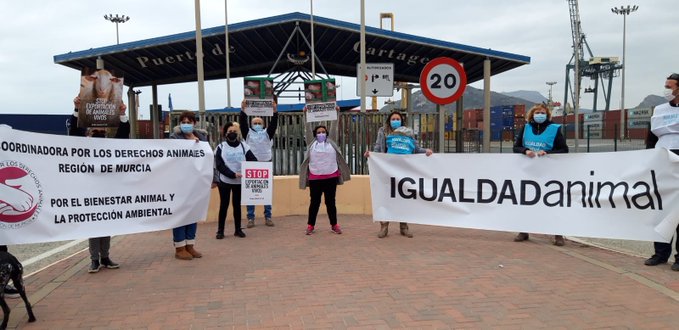
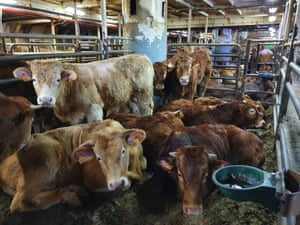
WAV Comment – we are very much trying to get news and information from Spain re the ‘Karim Allah’, which docked at the south-eastern Spanish port of Cartagena last week. We think that (and via other groups also) that all the cattle started to be slaughtered at the port commencing 6th or 7th of March 2021. When we get confirmation of the exact situation, we will publish more.
Horsemeat from overseas: animal welfare and consumer protection at risk
8 March 2021
AWF
Press Release
The latest NGOs investigations and EU audits in Australia and North and South America have, again, revealed massive problems with animal welfare and food safety. Today, the Intergroup on the Welfare and Conservation of Animals of the EU Parliament hosted a meeting on the import of horsemeat from overseas to analyse the problem.
FOR IMMEDIATE RELEASE: Brussels, 8 March, 2021
New video footage proves that horses are systematically abused, mistreated and neglected. Severely injured and sick horses do not receive veterinary care or euthanasia. Downer horses are pulled off the trucks with chains and left to die. In Canadian feedlots, newborn foals still freeze to death at temperatures as low as minus 36° Celsius
Horsemeat imports from overseas have been criticised by international animal welfare organisations for many years. The Animal Welfare Foundation (Germany) and Tierschutzbund Zürich (Switzerland) published their first comprehensive investigation report about horsemeat production in North and South America in 2013.
As a result, all Swiss supermarkets took horsemeat from overseas off their shelves. Several Belgian, Dutch and French retailers followed their example. In 2015, the biggest Swiss meat importer GVFI (Basel) also stopped these imports on the ground that the equines’ traceability is not ensured. Yet, around 17,000 tons of horsemeat from overseas continue to be imported every year to the EU and Switzerland.
An international animal welfare coalition, via a petition which has already gathered nearly 120,000 signatures, is currently calling on the European Commission to immediately suspend the imports of horsemeat from countries where EU requirements on food safety and animal welfare are not respected.
“Since 2015, European importers have been trying to get to grips with the blatant animal welfare violations in their partner slaughterhouses overseas by producing new manuals and arranging on-site visits”, added Gurtner. However, the importers’ attempts to control the production conditions have been ineffective to this day, as confirmed by recent NGOs investigations and EU audit reports.
The malicious trade and slaughter of horses of unclear origin is causing serious animal welfare issues as well as health- and food safety risks. Horsemeat ends up indistinguishable in processed products, often sold in snackbars and cafetaria’s, so consumers may even be unaware of what they are actually eating. Besides, the animal abuse uncovered in the NGO’s documentaries is horrific. There are no excuses for the European Commission to look the other way any longer. The import of horsemeat from overseas has to be immediately stopped
The most recent EC audit reports on horsemeat production in Uruguay (2018) and Argentina (2020) confirm “serious questions about animal welfare at the time of killing” and that “the shortcomings identified in the operation and effectiveness of the control system at these facilities do not allow the CCA (Central Competent Authority, ed) to provide guarantees that they are under adequate control, and thus to provide assurances that they meet relevant EU standards”.
The same EU audit reports also indicate that the audits did not reflect the everyday situation. “The inspections are announced in advance and slaughterhouses and horse dealers have developed a system to mislead the inspectors”, explains Gurtner. Footage recorded by NGOs shows that pens are emptied before the audits, or that sick and injured horses are exchanged with healthy animals.
The EU suspended Mexican horsemeat imports, following issues similar to those that occured in Uruguay, Argentina, Canada or Australia, and it led to a decrease in production and exports. Yet, now we witness an increase of Argentinian horsemeat imports into the EU, so any positive impact has been hindered by the lack of coherence of the EU approach on this dossier. The EU should send a clear message to its trading partners stressing that respecting the rules matters, and suspend imports where requirements are not met. Then, it should use its trade negotiations to incentivise progress and only restore imports if rules are respected
Concluded Reineke Hameleers, CEO, Eurogroup for Animals.
WAV Comment – As always, I want to thank Stacey at ‘Our Compass’ Stacey | Our Compass (our-compass.org) for supplying this info to me. For Regan Russell, and for Jill Phipps, killed here in England when murdered by a livestock truck carrying calves for export, there will never be any so rightly deserved justice. The ‘system’ is fine tuned to stop the law doing what it rightly should. But we, in the animal activism world will always look and remember Regan and Jill for what they were and for what they did; paying the ultimate price for simply showing compassion to those who had never experienced it before. Mark.
Animal exploitation perpetuates normalized violence, towards all, I have never witnessed so much hostility, anger, and belligerence than from the purveyors of animal consumption. To disregard animals in such incalculable numbers and in unimaginable ways, inflicting intentional, massive, and relentless suffering and pain on trillions of animals per year, taking their lives willingly and indifferently, promotes violence towards all animals, including humans. You cannot deal in bloody violence, perpetuate and sanction it, and not have it affect others.
I can attest I saw relentless activism on behalf of the killer and not the victim, fundraisers where people happily provided thousands of dollars to the killer, not to the victim, as per normal in the animal agriculture industry: the victims are hidden and society excuses such because it personally profits and benefits from the victimization. There was no expressed remorse, regret, genuine condolences, only anger, ridicule, and mockery towards those very humans who are opposed to exploitative violence.
Even if you disagree, your opinion is meaningless to the victims, who suffer, feel pain, and die violently and unwillingly. Regan Russell is another victim of the brutal, violent, and despicable animal agriculture industry.
The trucker who killed Regan Russell was cited with careless driving, a non-criminal charge.
Anita Krajnc was charged with criminal mischief, facing up to 10 years in prison, for giving water to pigs.
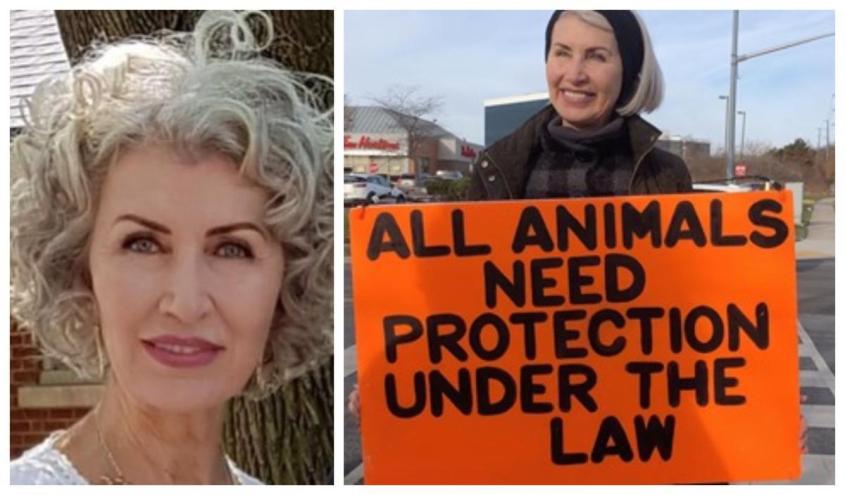
Regan Russell, 65, was violently struck and killed by a pig transport truck in front of Sofina’s Fearmans slaughterhouse on Friday, June 19, 2020. She was at a Toronto Pig Save vigil with six other activists giving pigs water on one of the hottest days of the year. She regularly attended pig vigils and on this particular day Regan was there to oppose Ontario’s “ag-gag” Bill 156, which had passed two days prior.
On the morning of June 19th, 2020, seven activists from the love-based animal rights group Toronto Pig Save were demonstrating outside Sofina Foods’ Fearmans slaughterhouse in Burlington, Ontario. What began as a peaceful vigil (giving water to pigs and offering them comfort moments before their death) and protest against “ag-gag” Bill 156 soon ended in horror for vegan activist Regan Russell.
It was a little after 10 am as another truck carrying pigs appeared on the horizon, but something was off. Though the truck would be turning right onto a service road, the driver remained in the left lane, not moving, holding up traffic for several light-cycles. Russell, waiting at the crosswalk on the far side of the service road, eventually decided to join her companions. Suddenly, the truck lurched forward and the other activists heard a terrifying scream, but the driver kept going until security guards waved him down.
By then, 65-year old Regan Russell, a decades-long pioneer in Canadian animal rights activism had been dragged more than the entire length of the truck, and she was dead.
No criminal charges were brought against the driver due to the passing of Bill 156 just one day before, a statute designed to protect transporters from animal rights activists. Dubbed an ag-gag, Bill 156 is an undemocratic and unconstitutional piece of legislation that allows force to be used against protesters. It also infringes on the right to assemble and criminalizes activists and whistleblowers working to expose violence against animals on farms, at slaughterhouses, and in transport trucks.
Directed by award-winning filmmaker Shaun Monson (Earthlings, Unity), and featuring never-before-seen footage, There Was a Killing provides first-hand accounts and in-depth analysis from attorneys Robert Monson, Lisa Bloom, and David Simon exposing corruption and a cover-up that has allowed the animal agriculture industry to avoid the legal and economic consequences of their behavior through a law some may see as a license to kill.
Regan Russell spent the final moments of her life providing comfort to pigs who had never experienced the touch of a kind hand. While her tragic death has brought upon deep sorrow in the Animal Save [Movement] community, we will honor her memory by vigorously confronting the cruelties she fought so hard to prevent by marching with Black Lives, protecting Indigenous rights, fighting for LGBTQ equality, and living a compassionate vegan life. The Ontario government can attempt to silence us with the passage of its Ag-Gag bill -Bill 156 – but we will never go away and we will never back down.
Take PETA’s Cruelty-Free Shopping Guide along with you next time you head to the store! The handy guide will help you find humane products at a glance. Order a FREE copyHERE
Searching for Cruelty-Free Cosmetics, Personal-Care Products, Vegan Products, or more? Click HERE to search.
Free PDF of Vegan & Cruelty-Free Products/Companies HERE
Want to do more than go vegan? Help others to do so! Click below for nominal, or no, fees to vegan literature that you can use to convince others that veganism is the only compassionate route to being an animal friend:
You know, people do things and take actions in many different forms, because they know that what is being seen by everyone is simply not right. Many know it is true, and yet continue to do nothing about it; others do get up off their butt and decide to take action; and that action comes in many forms; that is what makes us all different; and what often makes the difference in getting change. A while back I was asked why I have always been so involved in campaigns against live animal transport. It is a very long story, but the reply I gave hopefully explains a little about it. For me, when I was 8 or 9 years of age, it was that simple day, but a different one, when I witnessed something as a young lad all those years ago and decided that what I was witnessing was simply not right; so time for action. 50 years later we still have not won on this disgusting issue, but we have hell made a dent and have the vast majority of the worlds public support behind us ! – and that is positive for any campaign.
Regards Mark.
So what made you get into live animal exports so much Mark ?
I have really been an animal activist since the age of about 16. I am into the rear end of my 50’s now; but fighting for animals every day for so many years has always been a challenge and an enjoyment; I don’t regret one single day of trying to make a difference for them despite some failures (which you always get) with some issues. To say every day was ‘an enjoyment’ is probably wrong; you see a lot of bad stuff; but fighting for animals, yes, that is a total enjoyment.
Live exports; yup; lets go back to when I was around 8 or 9 years old. Like most young lads, I lived on my bike and went anywhere and everywhere I could on it, day in, day out. At the time, we lived close to one of the major motorways (freeway, autoroute; many names in many different places) that went on to the Channel port of Dover. Kent is the nearest part of England to Europe, and is still known as the ‘Gateway to Europe’ for freight and holiday traffic.
So one Sunday I was out on my bike; it was raining and quite windy, but what the hell; that was biking ! – at one specific location on this major motorway, which was a regular on my route, the official ministry staff were pulling over Dover bound freight heading for Europe, to check they were roadworthy and had all the necessary taxes and documentation that was required by law.
As a young lad; and things have not changed much ever since; I am still a bit of a truck ‘Diesel Head’ – I still love anything truck and heavy freight; I would sit on the grass near to these officials and revel in being able to see all this heavy freight being pulled over and stopped just a few metres from where I sat on the grass. This ‘official’ pull over and stop place used on the motorway was on a gradual upwards incline; so in a way, many loaded trucks were naturally going slower; which was ideal for the officials to select their ‘victims’.
Then, on that day, in a matter of seconds; things changed; and my life really has never been the same since. Looking back (down) the incline at the trucks clambering up the slope; out of the gloom and rain I saw this ‘slow goer’. The plod (policeman) stepped into the first lane of the motorway just ahead of it, pointed at the truck and then pointed towards the small lay by area where we were. In compliance with what was being said to him through hand signals, this same truck steered left onto the lay by area; where it stopped a few metres from me.
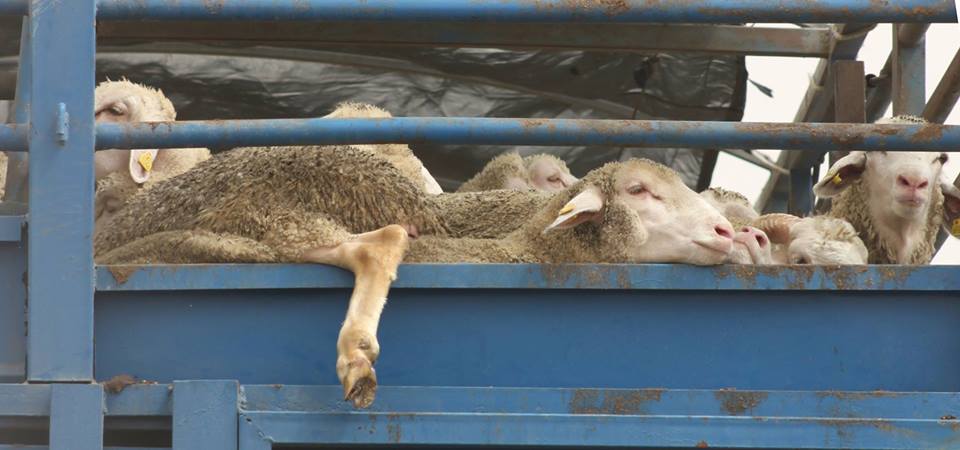
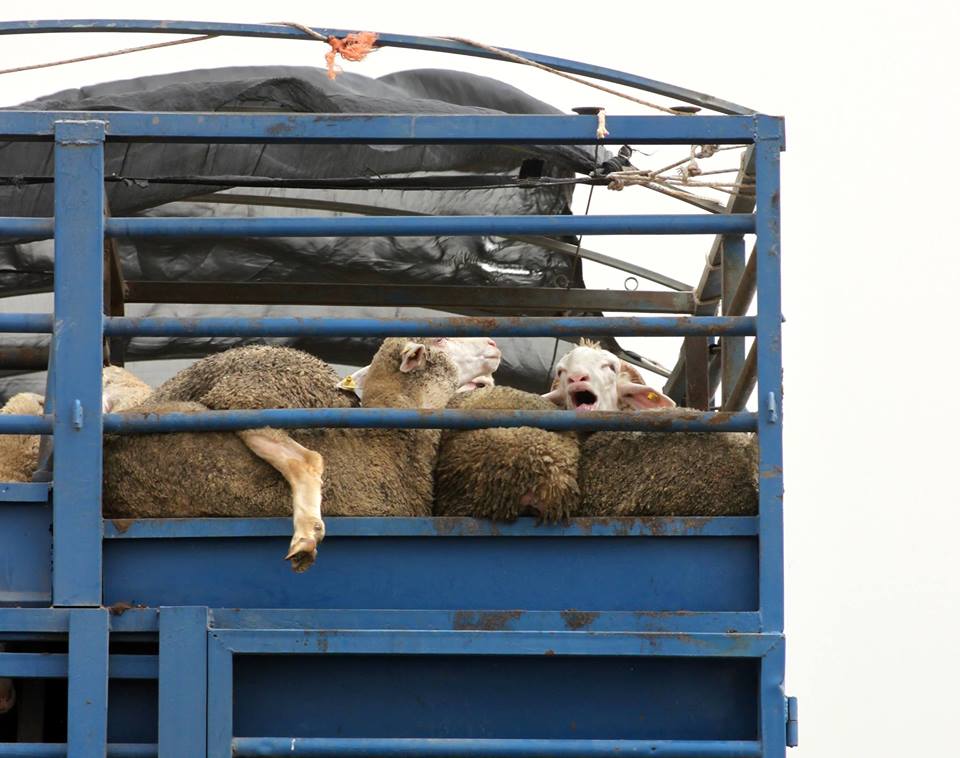
Bloody hell; I had never witnessed anything like it before. It was the big; 3 axle trailers as you often see; but instead of the usual box or tilt type; this was loaded up with 4 tiers of live sheep. In those days, (which is illegal now); the top tier had no roof for animal protection, and so the poor unfortunates on the top deck were trying to hide down below the end and side panels of the trailer; in order to get a little protection form the wind and rain which the elements threw at them. Those located in the middle of the pack were hemmed in due to stock densities; and had no chance of getting to the sides; so they simply endured all the wind and the rain; it was a simple as that.
I sat there for the five minutes or so that this truck stopped; mesmerized by what I was seeing; whilst the driver, T shirt laden in his warm and cosy cab, went through his paperwork with the officials.
I was only 8 or 9; but I knew there and then that what I was witnessing was sheer animal abuse; and the immense suffering that was being imposed on the animals on this truck that were unable to defend themselves or their rights from ‘mighty man’. Within minutes; the paperwork was obviously declared as correct, and the animal carrier pulled back out onto the motorway from its stop point to continue its journey; with so many innocent and suffering sheep aboard.
For me; that was it; mentally, I declared to myself there and then that one day when I got bigger and had a chance to do it; I would do whatever I could to stop this disgusting business that I had just witnessed – the transport of live and sentient animals over long distances.
Fifty years later, I have probably grown up now (?), and am still doing the fight. Now, public awareness of the suffering of the live trade, and the huge public support through many years of education, is so much behind us and giving the drive. That boyhood vision of taking action as a ‘grown up bloke’ eventually arose, and I never ever looked back and considered that it was time to call it a day.
When I got into my teens I was pretty level headed, but when it came to animal abuse and suffering; I became an ‘angry young Turk’; trying most things to stop their suffering. My first ever ‘proper’ demonstration was at the age of 16 when I went ‘up the road’ into London town to take part in well organised campaigns against the barbaric dog and cat meat trade in the far East.
The more I started learning about other different issues of animal suffering, as you do at such events, the more I became involved with different campaigns against the abuse. But those visions of the live export sheep that day from my childhood stayed with me; I never forgot them or their suffering; and I guess that speaking up in their defence against live transport years later became my real No.1 issue; and still is.
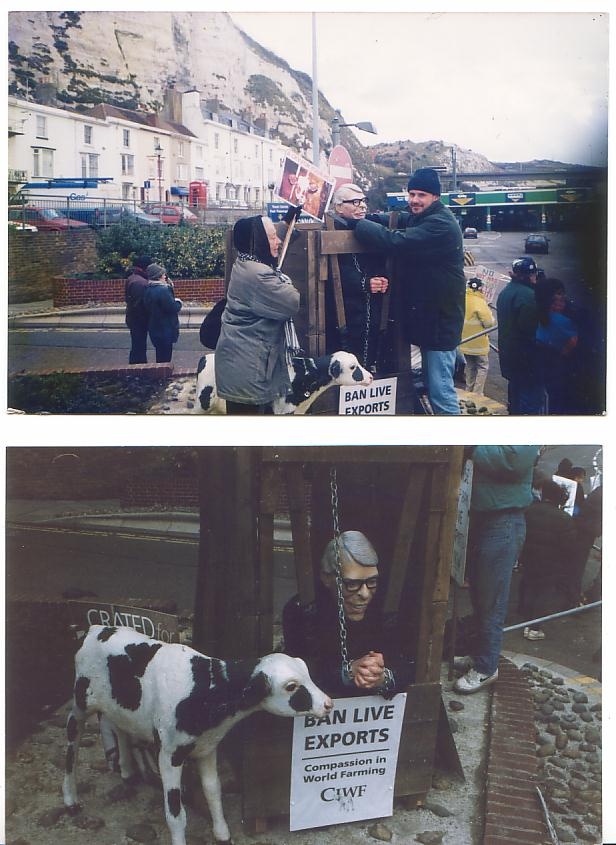
A cold day in Dover, England – fighting for the crated veal calves. Putting the Prime Minister in the crate to experience his authorisation of such a system.
As time went on, the angry Turk became very involved with 2 animal rights groups locally; and as a group we were effective. At that time; animal rights was a huge thing in the UK, as it still is, but some in political circles then wanted to brand us, the animal rights advocates, as terrorists; as in those days, with bombing and killings by the IRA being a big thing in the UK; it was (probably) ‘politically convenient’ to include animal activists in the same ‘terrorist’ corner; which was wrong, as animal activists were trying to stop killing rather than supporting it; a thing which has never changed with them.
Over the years, and living near to London town, I and others from the group would often go into central London city to take part in demonstrations against the fur trade – at places like Harrods and other major fur retailers. As part of a local group, I also became very involved with trying to get travelling circuses (with animals) to stop using them in their performances. I have nothing at all against performing circuses; they can be great and fun for any family; but I do have a problem with big cats being kept in check in the ring with whips and elephants etc having to walk round on balls just to get a clap – it is pathetic and needs stopping everywhere. To this day I still campaign a lot to try and get animals freed from travelling circuses wherever it still happens in the world.
It continues; another day, another time …………………….
Above – Exposing the export of live sheep from Serbia
Live transport update: the Elbeik vessel change course
4 (and 5) March 2021
AWF
No longer headed to Cartagena, the vessel carrying nearly 2,000 bovines is now directed to Piraeus. The animals’ conditions and destiny are still unclear.
After stopping near Crete to refuel and get feed for the animals, the Elbeik vessel was supposed to navigate to Cartagena, where the Karim Allah is still docked with all the bovines onboard.
Today its final destination changed, as it’s heading to the Piraeus port (Greece), which is approved for Border Inspection.
This recent move does not shine light on the animals’ destiny. Our member Compassion In World Farming is in direct contact with the Greek veterinarian authorities, asking them to get onboard if the vessel docks.
The Treaty on the Functioning of the European Union states that animals are sentient beings. In line with this basic EU principle, we call on the support of the Greek Authorities and the European Commission to take all the necessary steps to get the Elbeik to dock at Piraeus.
After three months at sea, as sentient beings, these animals deserve to be unloaded, checked by veterinarians and relieved from their suffering.
————————————————————————-
WAV Comment – This is news from the AWF dated 4/3. We also did a post yesterday also in which we declared the Elbeik was heading to Piraeus (Greece).
5/3/21 – We are currently monitoring the movement of the vessel, and can confirm that the Elbeik is currently underway and due to arrive at Piraeus at around 1500hrs local time; 5/3/21.
Temperature in the region is 16 degrees C, 61 degrees F.
Live transport: the Elbeik vessel is on the move but with no clear direction
3/2/2021
Animals onboard the vessels, after nearly three months, are still waiting to be checked by a vet, rested and relieved from their suffering.
Back in December 2020 the Elbeik left Spain to reach Tripoli, (Libya) where the bovines were rejected due to bluetongue disease suspects. It moved around the Meditterean and some animals were offloaded.
After being stationed there for some time, the Elbeik left Famagusta (Northern Cyprus) heading to Cartagena.
Nearly three months after their journey started, the animals on board were supposed to go back to Spain to be killed, similarly to what is happening to the ones onboard the Karim Allah, expected to be killed in the next couple of days.
Yesterday Elbeik stopped near Kaloi Limenes (Crete). Eurogroup for Animals and its members are following the situation closely: Compassion In World Farming is in contact with the Greek Ministry, hoping to get veterinarian authorities on board, if the vessel docks at the port, and check the animals’ condition.
The stop in Greece was meant to provide more food and straw for the animals, however, according to our member Animal Welfare Foundation, the vessel’s Master is also trying to delay the return to Cartagena, in order to find another buyer and transport the bovines to a third country.
This, regardless of the animal welfare status which is very likely to have been seriously compromised. Indeed, Animal Welfare Foundation got confirmation that there are already more than 50 dead animals on board.
4/3/21 – From info we have this morning, the ‘Elbeik’ livestock ship is now on its way to Piraeus in Greece; scheduled to arrive the re in the afternoon 0f 5/3/21.
We are getting news that Spain (Cartagena port) has refused to take the Elbeik; and that this was its intended destination.
It will be interesting to see, given all the circumstances about this vessel and its animals cargo; if Pireus will allow it to dock.
The Port of Piraeus is the chief sea port of Athens, Greece, located on the Saronic Gulf on the western coasts of the Aegean Sea, the largest port in Greece
This is the only information we currently have on this at present. We will publish any updates accordingly.
1/3/21 – We also know now that the ‘Elbeik’ has left Cyprus, and is heading West in the Med Sea. We have a suspicion that this vessel may also be heading back to Spain. More news when we know.
See videos below:
Karim Allah’s cattle about to be killed
A structure to kill the animals has been set up just off the ramp
I have a feeling that lots of human heads are going to roll after all this – we will do all we can to get the animals some justice from the utter useless human tools involved in this; names will be named and photos posted.
Last year it was revealed that the partially existing bans on high-risk animal transports were deliberately circumvented because individual authorities and veterinarians nonetheless issued permits and specific bypass trips were taking place within Germany.
Knowing that the animals will be transported to Central Asia or North Africa under horrible conditions!
These regions are defined as “animal welfare high-risk states” because there are no EU standards for handling animals. Several federal states reacted at the time and initially prohibited all transports. Because if a country does not comply with EU standards, no transports are allowed there.
Now the editors of Panorama,Mittagsmagazin, and RBB report that even after the discoveries at the time, the transports to non-EU countries, which are regarded as illegal, continue to take place.
Animal welfare standards are apparently deliberately not implemented!
The requirements are thus deliberately disregarded and the governments deliberately left regulatory patchwork carpets – some speak of “loopholes”, but many states that there are corrupt and illegal machinations here.
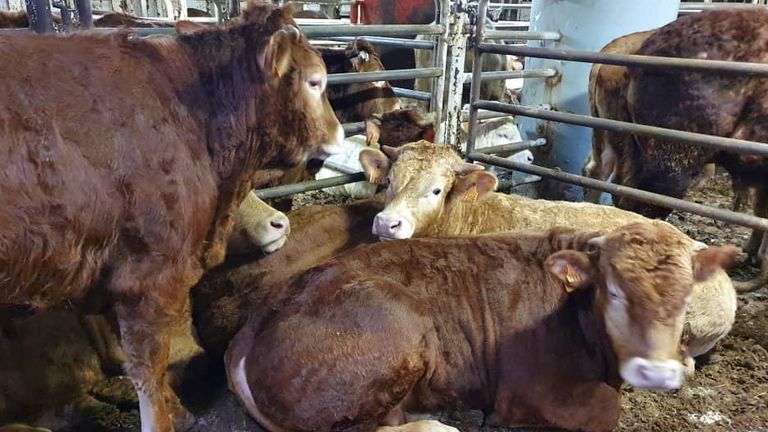
More than 850 cattle that have spent months adrift in the Mediterranean are no longer fit for transport and should be killed, according to a confidential report by Spanish government veterinarians.
A lawyer for the cattle ship’s management company told the Guardian on Saturday that he planned to resist the move, even as a video from the port appears to show preparations being made to unload the cattle.
The report, compiled after Spanish officials were able to board the vessel earlier this week, said that the captain had told them of 22 deaths among the 895 calves on-board.
Another nine cattle were not accounted for, it said. The ship’s management said the calves, all bulls, are about seven to eight months old now.
The report concluded that the animals had suffered from the lengthy journey and were generally in a poor state. Some of them were unwell and not fit for transport outside of the European Union, nor should they be allowed into the EU, it said. Euthanasia would be the best solution for their health and welfare, it concluded.
The animals were rejected by several countries over fears they had bovine bluetongue virus. The report did not say if the cattle had bluetongue disease but it noted a range of other skin, eye and leg conditions including alopecia, flaking, scabs and joint inflammation compatible with septic arthritis.
The lawyer, Miquel Masramón who represents the ships’ management company, said on Saturday that it appeared preparations to kill the cattle were being made at the port. In a video Masramón sent to the Guardian, a metal ramp can be seen leading down from a ship toward a series of metal containers lined up along a dock wall.
The lawyer said the ship’s managers will attempt to resist any move to unload the cattle and that he is in the process of contacting Lebanese authorities.The vessel is owned by Khalifeh Livestock Trading and managed by Talia Shipping Line, both based in Lebanon, while the cattle are owned by a third party.
“In the video you see the closed containers, they are not for living livestock,” said Masramón on Saturday. “We have no official information, but we think they will discharge the animals and then kill them with electrical guns.”
He added that blood samples taken from the cattle on Wednesday night by Talia Shipping Line, to test for a bovine disease called bluetongue, had been blocked at the port by Spanish authorities and were not allowed to proceed to a lab for analysis.
The insect-borne bluetongue virus causes lameness and haemorrhaging among cattle but does not affect humans. The Spanish ministry’s report counted 864 animals alive on board the Karim Allah this week. Twenty-two cows had died at sea with two corpses still onboard, it noted, adding that the remains of the others that died were chopped up and thrown overboard during the journey.
Spain’s agricultural ministry did not reply to a request for comment on Saturday.
Masramón previously told the Guardian the shippers aimed to resell the cattle outside the EU if they tested negative for bluetongue. Talia Shipping Line estimates that current losses on the cattle transport could be up to €1m. Spanish authorities have said the company was also liable for the cost of killing the animals and destroying the carcasses. The company estimates this will cost them a further €1m.
“We are trying to resist, if they take the animals, and to get a new private expert animal health report,” said Masramón. He added, however, that if Spanish authorities were to remove the animals on health grounds they would probably succeed.
“In my opinion the animal health regulations will prevail [over maritime ones] and they, [the] Spanish officials, will be able to take the animals and cull them,” he said.
Masramón said although he was not an animal health technician, he did not agree with the official Spanish veterinary report released on Friday. “From what I understand, none of the diseases [noted in the report] are worth euthanizing the cattle for. They are normal after two months at seas and the animals could recover.”
In an interview, a source close to a second cattle ship, the Elbeik, which has similarly been at sea for two months since leaving the Spanish port of Tarragona with a cargo of nearly 1,800 cows, said he was watching the Karim Allah developments closely.
The Elbeik is currently moored off the Turkish Cypriot port of Famagusta having loaded animal fodder and straw. The source said that once the loading was complete, the Elbeik would probably sail to Greece to load bunker fuel for the ship.
Asked about apparent moves by the Spanish authorities to begin unloading and killing the cattle, the source said the health problems identified by the official Spanish vet report could “easily heal”. He said the decision, if taken, to kill all the animals was “amazing”. He added: “If the animals can heal why would they want to do that?”
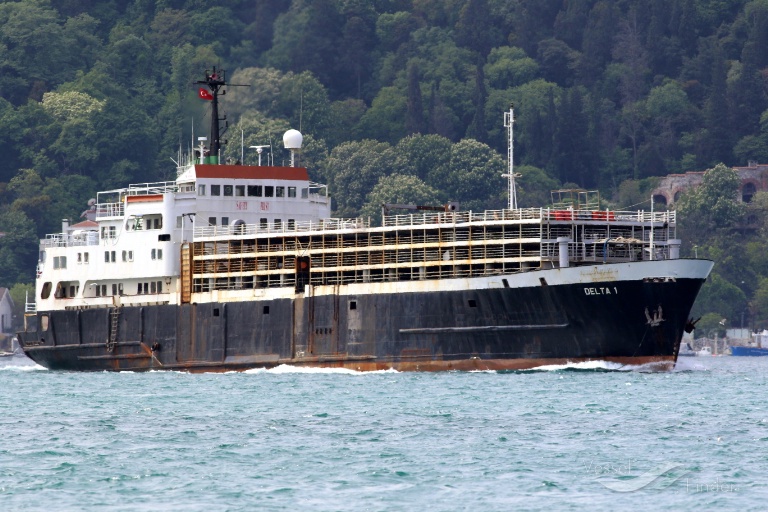
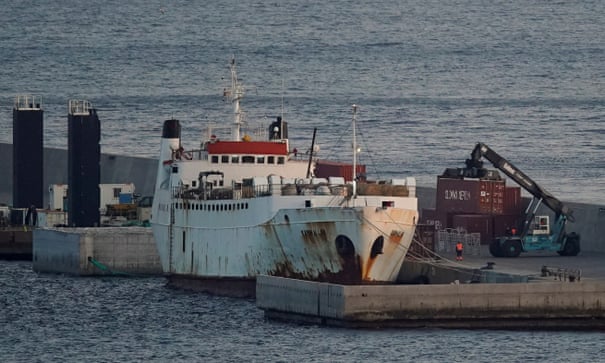
There is an old saying which goes “a picture says a thousand words”. Have a look at these 2 pictures of the ‘Karim Allah’: are they not fairly indicative of the majority of the live animal transport maritime situation now ? – rust bucket ships that should have been scrapped years ago still transporting innocent, sentient beings to their (often) barbaric deaths the world over.
Have a look at this picture – this is Mr Bernard Van Goethem.
Here below is the (link for the) organizational chart for the Commission of Health and Food Safety – Sante. Mr Van Goethem is the ‘leader’ responsible for ‘Crisis Preparedness in Animals’, which includes ‘section G2 – Animal Health’. You can see all of this on the right hand side of the chart.
Health and Food Safety Organizational chart link –
In 2015, the European Commission launched a three-year Pilot Project aiming at improving animal welfare during transport by developing and disseminating Guides to Good and Best Practice for the transport of the main livestock species.
In September 2017, the contractor of the project published five extensive guides to good practices (only in English) as well as 17 technical fact sheets focusing on the most practical information in A4 format. Fact sheets are available in eight EU languages (English, French, German, Greek, Italian, Polish, Romanian and Spanish).
This publication is followed by a road show in eight Member States and presenting the guidelines to the professionals concerned (transporters, drivers, farmers, official veterinarians, etc.). The project will also produce five videos (one per species in eight languages).
Council Regulation EC 1/2005 defines the responsibilities of all actors involved in the transport chain of live animals entering or leaving the EU. It lays down efficient monitoring tools and stricter rules for the transport and for the specific checks to be carried out by officials. It also provides for non-discriminatory inspections of animals, means of transport and accompanying documents.
EU countries are required to submit to the Commission, by 30 June each year, an annual report for the previous year on the non-discriminatory inspections together with an analysis of the major deficiencies. Click here to access the annual reports.
In order to reduce the administrative burden on EU countries, Commission Implementing Decision 2013/188/EU, which came into force on 1 January 2015, established an harmonised model form for the annual reports.
We at WAV, as of 28/2/21, make the following statement: Is the situation where hundreds of live EU animals have been stranded in the Mediterranean on 2 different ships not a ‘crisis’ ? – and should we have not seen intervention by the EU ‘Crisis Preparedness in Animals’ team, led Mr Mr Van Goetyhem, on this issue several weeks ago ? If this is not a crisis, then what is ?
If the EU crisis team are not going to get involved and take action at times of a crisis, then what is the point of them even existing ?
As you can see from the various EU links above; they at EU Commissions are specialists at blowing their own trumpets; leading the reader / web site visitor all over the place to find information (or maybe confuse them !) on their highly constructed, expensive, and detailed website; (at EU taxpayers expense); in some wildly bland attempt to make the reader think that they are completely and utterly in charge of the situation when it comes to controls and regulations for the welfare of animals in transport.
Well they are not – the website and all the sub sections and statements are simply massive smokescreens because they, the EU Commission, are utterly incapable of having any controls over the international situation of ensuring live animals welfare during transport throughout the EU, and way beyond into third countries such as Turkey and Libya.
This was in relation all those years ago to the EU having no control of the welfare of animals during transport; here is a video produced at the time to show that:
Here are a few other links we published on this issue at the time:
So what changes over all these years at the EU ? – very little it seems. Plenty of waffle; plenty of PR; plenty of web news; people are doing this, and people are doing that; when in reality, nothing actually changes for animals in transport.
As you can see in the above links, in the past we have called for the resignation of Mr Van Goethem; we think that with these terrible situations over the last few months and not a whisper from the EU on the crisis from the crisis management section of the EU Commission; maybe it is time to get another petition underway calling for resignations due to incompetence. When we get this organised we will publish.
Regards Mark
Latest news:
Saturday 27/2/21:
More than 850 cows that have spent two months at sea on a ship crossing the Mediterranean are facing slaughter, following a report from Spanish vets.
The cattle have suffered “hellish” conditions, according to animal rights activists.
The Karim Allah vessel originally left the Spanish port of Cartagena to deliver the cattle to Turkey but were refused entry due to fears over bluetongue.
The insect-borne bovine virus causes lameness and haemorrhaging among cattle but does not affect humans.
After being turned away from Turkey, owners failed to find a new buyer for the animals.
Advertisement
The ship was subsequently rejected by several more countries, even to replenish animal feed, leaving the cows to go several days with just water.
The ship became a pariah vessel and it has now returned to its starting point in Cartagena.
The confidential report by Spanish government veterinarians and seen by Reuters says the animals have suffered from the long journey and should be killed.
While it did not confirm whether the animals were suffering from bluetongue or not, it said they should not be allowed into the EU.
Ownership of the cattle is unclear.
Animal rights activist Silvia Barquero, director of the Igualdad Animal NGO, called the crossing “hellish” for the cattle and questioned what had happened to the waste produced by the cows during the crossing.
“We are sure they are in unacceptable sanitary conditions.”
Twenty-two cows are believed to have died at sea, and while 20 of the corpses have been chopped up and thrown overboard, two dead cows remain on board.
A lawyer representing the ship owner Talia Shipping Line, which is registered in Lebanon, said he believes the slaughter will now definitely go ahead.
Meanwhile, a second ship, the ElBeik, which also set sail from Spain in December with a cargo of nearly 1,800 cows, is currently moored off the Turkish Cypriot port of Famagusta.
The agriculture ministry has been approached for comment
ANDA and Animals‘Angels report animal welfare violations during the transport of ‘slaughter’ horses in Spain
On February 23, ANDA and Animals’ Angels filed a complaint against Spain because the regulations for the protection of horses during transport are regularly not observed there.
The complaint initially relates to the transport route from Spain to Italy.
The NGOs have been monitoring the conditions of horse transport on this route since 2007.
In 14 years we have noticed the same violations again and again.
To this day, the responsible regional and national authorities in Spain are not doing anything to stop them sustainably.
The EU Animal Welfare Transport Regulation stipulates that horses that are not used to a halter may not be transported for more than eight hours.
Still, the vast majority of horses transported from Spain to Italian slaughterhouses have never worn a halter in their short life.
In addition, the regulation stipulates that horses must be transported in individual boxes on long journeys. This rule is not observed when transporting horses between Spain and Italy, as they are almost always transported in groups.
The complaint also includes non-compliance with EU rules for shorter journeys within Spain, where too many horses are often loaded and the ceiling height of the vehicles is too low.
The disregard of the legal regulations leads to stress and suffering for the transported horses.
Their safety and physical integrity are not guaranteed.
This is far from the dignified and fair treatment horses deserve on their last journey.
According to Alberto Díez, ANDA …” the animal welfare laws are the guarantors for the dignified treatment of animals.
If they are not observed, this guarantee is void and the animals have to bear the consequences. We hope that the lawsuit against Spain at the European Commission will serve as an incentive to finally enforce the law and respect animal welfare. “
And I mean…When it became known in 2013 that ready-made meals were incorrectly declared in various EU countries and contained horse meat instead of beef, the outrage was great
Eating horse meat is taboo for many meat-eaters.
In Germany too, but in the first half of 2017, 940 tons of horse meat were “produced” in this country.
There is a large market for this in the EU, particularly in Italy.
The largest exporters are Romania, Lithuania, and Poland.
In Poland alone, resourceful traders buy 60,000 horses for slaughter every year.
They are loaded with large transport vehicles across the country and transported to Spain, France, and, above all, Italy.
Some of the animals are already being slaughtered in Padua in northern Italy.
But numerous transporters continue to drive and spend the horses on a day-long journey over 2000 kilometers to the south.
From a purely legal point of view, this is still legal, because the applicable EU Regulation 1/2005 “for the protection” (!!) of animals during transport only provides for rest periods for the animals, but no limitation of the pure transport times.
The European Food Safety Authority found during controls in 2011 that every third horse suffers injuries during transport. 40 percent of the animals were in such bad shape at their destination that they should not have been transported.
The largest horse market in Europe is not in Spain but in the southeastern Polish village of Skaryszew.
Up to 10,000 horse dealers in the town of 4,000 souls on the largest and cruelest horse market in Europe.
Horses are sold in huge numbers every year and then transported across Europe to Italy, France, and other countries.
In part, this happens with subsidies from the EU, where they usually end up on the slaughterhouse.
Reports indicate that horses are repeatedly treated brutally and that no veterinarians can be found in the whole market.
Polish animal rights activists refer to Skaryszew as the “horse hell of Poland”.
Most of the horses that are sold on this market go to fatteners and slaughterers and some of them are transported to Italy, mostly under animal welfare conditions. But many horses end up in the hands of Romanian intermediaries who unscrupulously sell them for slaughter …
The law situation within Europe for animal transport does not protect animals from such cruelty.
And on the part of the EU- Commission, there is no interest in limiting animal transports.
The responsible EU politicians are primarily concerned with economic interests and they don’t give a shit about animal suffering.
But one of the worst things is that there is a high “corruption” among “politicians and officials” in”horse”- countries, and for “looking away at the innumerable cruelty to animals” the latter collect countless “bribes” from the “horse dealer mafia”.



![everybody[1]](https://serbiananimalsvoice.files.wordpress.com/2008/03/everybody1.jpg?w=225)