Reuters reported on September 27, 2021, “South Korea’s President Moon Jae-in said on Monday there might be a need to prohibit dog meat consumption amid debate over the controversial practice and growing awareness of animal rights.
While no longer as common as before, dog meat is eaten mainly by older people and is served in some restaurants and can be bought at specific markets.
Moon made the remarks after being briefed by Prime Minister Kim Boo-kyum on efforts to improve the handling of abandoned animals and a mandatory registration system for dogs.
“After the briefing, he said time has come to carefully consider imposing a dog meat ban,” Moon’s spokeswoman Park Kyung-mee said in a statement.”
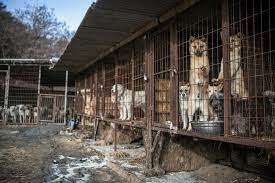
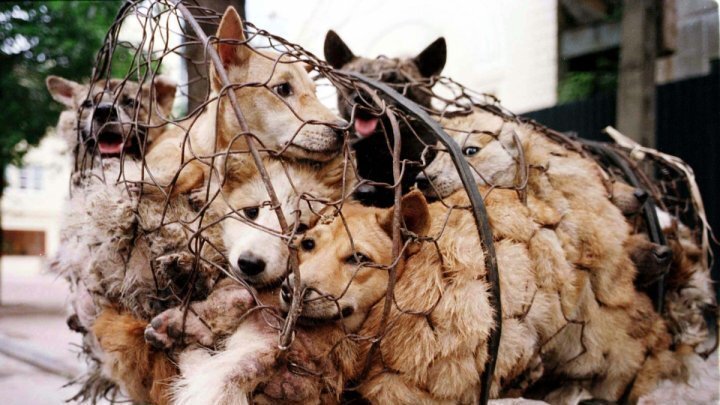
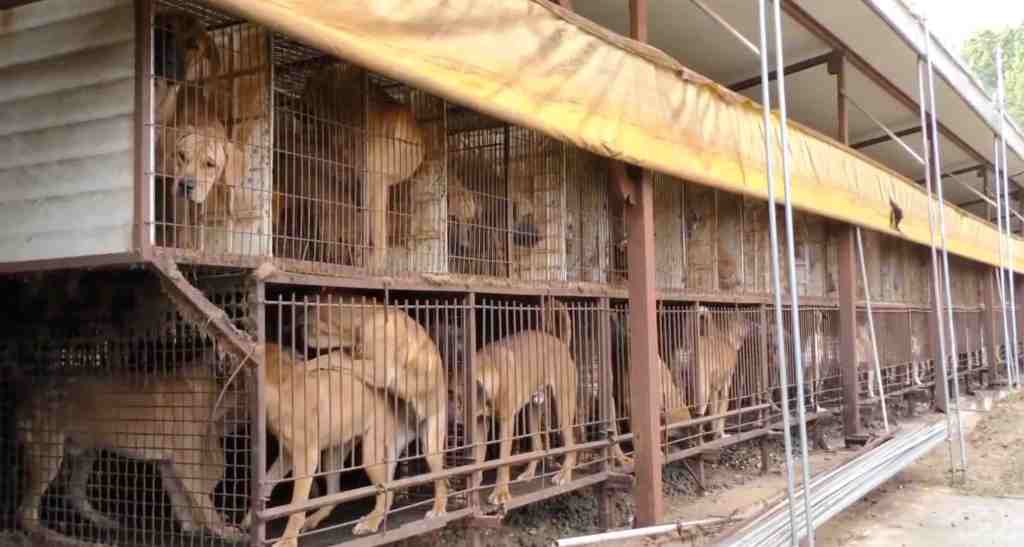
This is great news and gives us hope that perhaps finally changes will come and we will see the end of the horrific dog meat industry in South Korea. This is a sign that the Korean government is starting to feel the pressure from many decades of campaigns and hard work by animal advocates both in and outside of South Korea to end the shameful and cruel dog and cat meat cruelty.
However, while we celebrate this good news, this is not the time to slow our campaign and lose momentum.
Unfortunately, we have heard similarly encouraging news in the past, with few actual results. For example, while he was campaigning for the Presidential elections, Moon Jae-In made a campaign pledge to strengthen animal welfare.
But as President, he has done nothing to address the dog meat issue. It now seems like he may have suggested reforming the dog meat industry as a way to appeal to a domestic and international population which has become increasingly concerned with the cruelty to dogs and cats in South Korea. Regardless of his actual intentions, considering he will only be in office until May 10, 2022, at this point it is obvious that there is very little time remaining for him to actually bring the end to the dog meat consumption.
WAV Comment: This wonderful news, and we send congratulations to our animal friends at KARA (Korean Animal Rights) and all other campaigners who have worked tirelessly and shown endless tenacity in their work to help suffering animals.
This bill should now allow a lot more to be done in the defence of animals rights.
Thanks to everyone; global supporters; who have taken actions in the past – this is your victory.
As we said recently, with elections inn S. Korea next March, politicians need to get the message – you vote for them; and they can be dismissed as well as re elected if they do the things you aim for.
This is a scenario which applies globally; and in the end, often makes long fought campaigns end in legislative reality; as we can see here.
Keep up the pressure on your issue(s) and continue to fight the fight – in the end success will come.
Regards Mark
——————————————————–
Cabinet passes revision bill to grant legal status to animals
The Korea Herald (by Yonhap) News reported on September 28, 2021, “The Cabinet approved a revision to the civil law Tuesday that would grant animals legal status as individuals with lives that deserve to be protected.
The revision was proposed by the Ministry of Justice in July to add the new clause, “animals are not objects,” to Article 82 of the Civil Code.
Currently, animals are identified as “an object that takes up space” and are not separated from inanimate things, so animal abusers have been punished only for damaging property if they face a penalty at all.
The revision came after social consensus was reached on the need to improve animal protection amid a steady rise in the number of companion animals and heightened awareness of animal welfare. It will be submitted to the National Assembly Friday for a vote on its passage. The ministry expects relevant laws to get tough on animal abuse and mistreatment once the revision comes into force.”
ALSO:
SEOUL, Aug 19 (Reuters) – Jin-hui, a cream-coloured Pomeranian, was buried alive and left for dead in 2018 in the South Korean port city of Busan.
No charges were filed against its owner at the time, but animal abusers and those who abandon pets will soon face harsher punishment as South Korea plans to amend its civil code to grant animals legal status, Choung Jae-min, the justice ministry’s director-general of legal counsel, told Reuters in an interview.
The amendment, which must still be approved by parliament, likely during its next regular session in September, would make South Korea one of a handful of countries to recognise animals as beings, with a right to protection, enhanced welfare and respect for life.
The push for the amendment comes as the number of animal abuse cases increased to 914 in 2019 from 69 in 2010, data published by a lawmaker’s office showed, and the pet-owning population grew to more than 10 million people in the country of 52 million.
South Korea’s animal protection law states that anyone who abuses or is cruel to animals may be sentenced to a maximum of three years in prison or fined 30 million won ($25,494), but the standards to decide penalties have been low as the animals are treated as objects under the current legal system, Choung said.
Once the Civil Act declares animals are no longer simply things, judges and prosecutors will have more options when determining sentences, he said.
The proposal has met with scepticism from the Korea Pet Industry Retail Association, which pointed out there are already laws in place to protect animals.
“The revision will only call for means to regulate the industry by making it difficult to adopt pets, which will impact greatly not only the industry, but the society as a whole,” said the association’s director general, Kim Kyoung-seo.
Choung said the amended civil code will also pave the way for follow-up efforts such as life insurance packages for animals and the obligation to rescue and report roadkill.
It is likely the amendment will be passed, said lawmaker Park Hong-keun, who heads the animal welfare parliamentary forum, as there is widespread social consensus that animals should be protected and respected as living beings that coexist in harmony with people.
Animal rights groups welcomed the justice ministry’s plan, while calling for stricter penalties for those who abandon or torture animals, as well as a ban on dog meat.
“Abuse, abandonment, and neglect for pets have not improved in our society,” said Cheon Chin-kyung, head of Korea Animal Rights Advocates.
Despite a slight drop last year, animal abandonment has risen to 130,401 in 2020 from 89,732 cases in 2016, the Animal and Plant Quarantine Agency said. South Korea has an estimated 6 million pet dogs and 2.6 million cats.
Solemn with large, sad eyes, Jin-hui, which means “true light” in Korean, now enjoys spending time with other dogs at an animal shelter south of Seoul.
“Its owner lost his temper and told his kids to bury it alive. We barely managed to save it after a call, but the owner wasn’t punished as the dog was recognised as an object owned by him,” said Kim Gea-yeung, 55, manager of the shelter.
“Animals are certainly not objects.”
Click here for the full Korean Dogs latest newsletter:
We reported on the then President elect, Mr Moon; back in 2017. You can see some of our articles that were published at the time on ‘Serbian Animals Voice’.
So where are we now ? – surprisingly, 2022 sees the election of a new President to South Korea; and suddenly, the dog farm / dog meat trade rears its head yet again. Mr. Moon, the man who was elected as President with so many promises for the dog meat trade back in 2017 is NOT allowed to run again for President under the South Korean constitution.
We remember, and publish here, pictures of the then to be President Moon informing us all that the dog meat trade was going to be a priority issue. We remember all the promises of things going to be done, and the pictures of Mr Moon cuddling up to dogs; who he alleged he was going to protect.
Well, to be basic, Moon has not really done much at all in his presidency. Now we are rolling along to new elections in March 2022. The issue of the dog meat trade is suddenly rearing its campaign head again.
We hope that the next elected president will do a great deal better than Mr. Moon; who we see as being all puff and no wind when it came down to reality. We greatly hope that the coming months will see legislation introduced which will put an end to South Korean dog meat farms for once and for all. We, and many other welfare groups will never let this abhorrent issue die; an issue which could have been resolved years ago had the president lived up to his promises of doing something about the trade.
For the first time in a long time we are hearing rumblings of changes in the dog meat trade. We welcome this, but based on past election promises, we are taking nothing for granted; we have been duped with false hopes and promises before.
Lets see what the next few months actually bring !
Regards Mark
President Moon kisses a dog – and gives election promises that were never kept.
Under the South Korean constitution, the president is restricted to a single five-year term in office, meaning the incumbent president Moon Jae-in is ineligible to run for a second term.
The 2022 election will determine the office of the President of the Republic of Korea. It is expected to be held by 9 March 2022.
S.Korea’s Moon hints at dog meat ban amid debate over animal rights
SEOUL, Sept 27 (Reuters) – South Korea’s President Moon Jae-in said on Monday there might be a need to prohibit dog meat consumption amid debate over the controversial practice and growing awareness of animal rights.
While no longer as common as before, dog meat is eaten mainly by older people and is served in some restaurants and can be bought at specific markets.
Moon made the remarks after being briefed by Prime Minister Kim Boo-kyum on efforts to improve the handling of abandoned animals and a mandatory registration system for dogs. read more
“After the briefing, he said time has come to carefully consider imposing a dog meat ban,” Moon’s spokeswoman Park Kyung-mee said in a statement.
It was the first time that Moon raised a ban, which is likely to give fresh momentum to debate over whether to curtail the practice.
To boost their popularity, several presidential hopefuls have pledged to ban dog meat in recent weeks, especially as dogs have become popular as pets and advocacy groups have urged South Korea to close down restaurants and markets selling dog meat.
Lee Jae-myung, governor of the country’s most populous province of Gyeonggi and a leading presidential contender from Moon’s party, has vowed to push for a ban through social consensus.
But Yoon Seok-youl, an opposition frontrunner, has said it was a matter of people’s personal choice.
A poll commissioned by animal welfare group Aware released this month said 78% of respondents believed the production and sale of dog and cat meat should be prohibited and 49% supported a consumption ban.
But, another survey by polling firm Realmeter found people were divided over whether the government should ban eating dog meat, though 59% supported legal restrictions on dog slaughter for human consumption.
Dog meat sellers have insisted on the right to their occupation, saying their livelihoods are at risk.
Reporting by Hyonhee Shin; Editing by Christian Schmollinger
Report of the organization “Together for Animals” (Gemeinsam für Tiere)
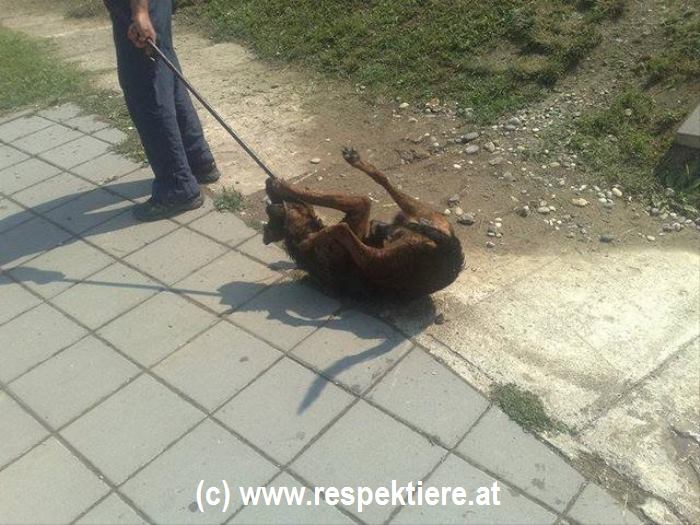
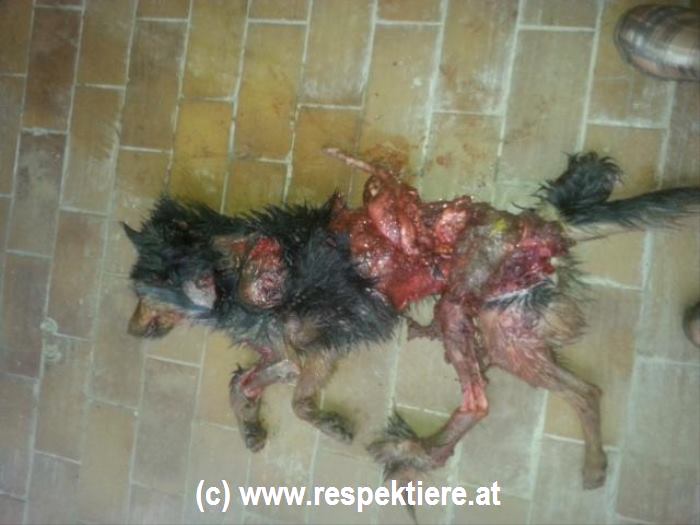
DOG’S FAT – MAFIA’S DOG CATCHING CONTINUES UNBELDED!
Exactly a year ago, an undercover video exposed horrific animal cruelty and organized crime in Slovakia.
A mafia ring there kills strays to obtain dog fat.
We reported:
In 2021, a year later, the situation has not improved.
Although the authorities promised to drain the swamp of the dog-catching mafia, they continue to go about their hideous craft undisturbed and countless dogs are still caught and killed for this animal product, and in some cases even stolen from their adoptive parents. We still strongly condemn the massacre of innocent dogs for dog fat.
These people have completely given up their humanity in favor of the disdainful mammon and organized crime.
The ring of these animal killers should finally be dug up and those who were prayed behind bars for a long time.
We appeal to Mario Kern, Director of the Department for Environmental Crime in Slovakia, the promise he made in 2020 to stop this madness, finally to make it come true and to act before even more innocent animal souls fall victim to the diabolical hustle and bustle. Strays are also sensitive creatures, and not a commodity.
What they desperately need is a family with a daily can opener and a forever home to shelter.
That is why it is all the more important for expectant dog mums and dog dads to adopt animals from animal welfare and not to buy them from the breeder.
And I mean…It is claimed that dog fat is said to be effective against tuberculosis bacilli. Against psoriasis, against wounds, against lung diseases … Dog fat is the miracle cure, and as always, animals fall victims to the altar of hocus-pocus medicine.
Almost anything can cure dog fat – except stupidity.
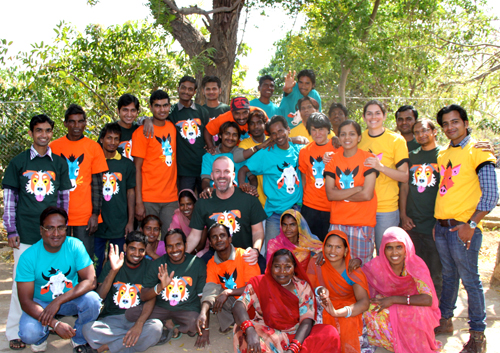
The expression “rain or shine” gets a whole new meaning in the intense weather of Rajasthan. We’re experiencing a late monsoon, and we want to take a moment to thank our incredibly cheerful, often drenched, staff. Our kennels and animal treatment areas are protected, but because we have nearly year-round sun and extreme heat most areas are outside and do get muddy when it rains. The smiling faces we see, with rain sometimes soaking right through their rain gear, not only boosts the spirits of the other staff, but it affects the animals too with the loving encouragement they need. Thank you for appreciating our tenderhearted and stalwart crew.
Elvis’s sadness lifted as he healed,and then he started singing!
Precious Elvis, a teenaged puppy, screamed in pain when his rescuers tried to lift him.
His feet had been run over by a vehicle, andone paw was crushed. His toes were splayed and swollen to twice their normal size. Standing was too excruciating to bear. Had he been an older dog with more brittle bones, Elvis might have been facing an amputation, but since puppy’s bones heal much faster than adults we decided it was worth trying to save his legs. We treated his wounds and wrapped his intensely painful feet in thick bandages, which we changed every day. The little guy was one of the most careful young patients we’ve ever had. He seemed determined to cause no fuss. But he was so inward we wondered if he was depressed. Then, when he’d progressed a bit on his healing journey, well, this boy burst out in song.
A wild piglet was seriously hurt with multiple puncture wounds from an animal attack. Even hours after her wounds were cleaned and bandaged, this young sweetheart trembled with fear. She would need incredible bravery, but snuggled deep into her blanket for the feeling of the comfort she had known sleeping with her siblings against her mother’s big body. Now she was all alone. Though she ate well, she was facing a long recovery, and she may have been significantly depressed. But someone very special was waiting for her, though none of us would have guessed.
Just one week after her admission, we rescued another little piglet with similar puncture wounds–a little boy piglet full of his own noisy squeals and twirls. As we treated his wound, we told him he was in for a beautiful surprise. As soon as we had secured his bandages, we delighted in introducing him to his new friend. Though they were a few weeks different in age, pigs are such social and emotional beings that no questions were asked! They bonded within minutes. We felt we could see their healing accelerate from the sheer joy in each other’s comfort and…play! Meet Luke and Leia, tumble-bunnies in action.
Mauled by a leopard,but Beesie’s love of life won!
We can only imagine that the leopard was interrupted, though no one saw the attack–maybe Beesie fought back too hard.
He was in utter shock for hours after the attack to his throat and chest. Residents from a nearby village hurried him to our hospital. Saving his life seemed an almost impossible task. But his strength was phenomenal, and the jaws of the leopard had closed on him just millimeters short of killing him. His astonished eyes stayed wide as adrenalin ran through his body long after arriving in our hospital.
A great amount of flesh had been simply taken, and there was insufficient skin remaining to stitch closed the wounds. We kept them clean and snuggly bandaged, and changed them every day for 2 months. To our amazement, this dignified boy completely healed. Meet Beesie today!
This sweet little baby was injured so seriously she couldn’t move or even really cry out in pain. Her mother and siblings seemed to sense something was wrong, and when our rescuers arrived, they were completely cooperative as they reached down and lifted up the limp little bundle.
When we cleaned her wound and bandaged her up, she started feeling much better and we were delighted to find she had a good appetite and was “all heart” when it came to healing. Within just 10 days her strength was completely restored and she could be reunited with her family again. We were so delighted by her great recovery.
In the Romanian capital derby there was a special action over the weekend. The Dynamo Bucharest players ran onto the pitch with dogs in their arms.
To draw attention to animals without a home, the Romanian Football Association has come up with something very special.
At the derby of the two city rivals of the Romanian capital Bucharest, Dynamo and Steaua, the players of the former team showed a heart for animals.
Four football players from Dynamo Bucharest before the game with their dogs from the shelter and from the street.
Before the match, they marched with dogs from the Romanian public shelter Branesti on the stadium lawn to draw attention to the suffering of the Romanian strays.
This campaign aims to encourage fans to adopt dogs from the often hopelessly overcrowded animal shelters.
Throughout the season, footballers will run into games with dogs from the shelter or from the street with the goal to find new owners for the four-legged friends.
Romania has had a significant problem with street dogs for many years, and stray dogs have a difficult time in Romania.
There are hardly any comprehensive, effective castration projects and unfortunately there are still killing stations.
The goal: respect and love for the dogs
Under the name “Fill the void in your life”, the beginning of the unique project was made last weekend in Bucharest. The dogs come from the local animal shelters or from the street and each have a small scarf with their name around their necks.
If viewers want to adopt one of the four-legged friends, they can easily get in touch with the initiators of the project.
The prerequisites have also been created within the stadium so that the dogs can attend the games without any major problems. All fireworks and pyrotechnics were banned.
At the weekend, the fans also adhered to these requirements.
A nice action that will definitely make one or the other dog’s life a lot nicer!
And I mean…When footballers walk into the stadium before the game, there is usually a familiar image: They almost always have small children on their hands who can come into contact with their idols and fulfill a childhood dream.
Now Romania gives us a new message: All animal lives matter!
We hope that their action has touched many people and will lead to the adoption of a stray dog from one of the animal shelters.
THANK YOU, DYNAMO !!!
The Green Animal Welfare Forum and the RespekTiere association from Salburg (Austria) demonstrated against the unbearable animal rights situation in the Balkan state in front of the Serbian embassy in Vienna.
Animal rights and animal welfare are not part of the Serbian government’s agenda. The policy of the Balkan state is attested to inactivity in animal welfare.
Dogs, cats, etc. are being hawked and are condemned to a dreary, unlawful life that is at the mercy of any human arbitrariness. Like domestic animals, wild animals in private zoos, large and small, are condemned to all the agonies of pathetic animal husbandry.
“It’s great that Serbia wants to join the European Union. Now is the perfect opportunity to prove that this country is ready for real change, “explains Cosma Stöger, chairwoman and spokeswoman for the Green Animal Welfare Forum, a network organization of Green Vienna, on the sidelines of the demo.
She adds: “I was allowed to accompany ‘RespekTiere’ to Serbia last year to get a picture of the situation.
What I saw there was at times indescribably shocking.”
“RespekTiere” Association has now* written a letter to the Serbian government in the Serbian language that supporters can send to Belgrade!
Serbia, the II. – concrete cases! Letter to the President, NOW !!
Now, after several protests in front of the embassy or consulate of Serbia, let’s move on to the next stage of the campaign!
We have drawn up a friendly but specific letter which is to be addressed to the decisive points; to the embassies in our countries, to the President of Serbia, to the Prime Minister and to the veterinary authority! Please help everyone, from now on every vote counts!
Here is the letter to copy, please send it in the Serbian version!
Ladies and gentlemen! Have a wonderful, good day!
I would like to ask you to finally give animal welfare a higher priority in your country! The reward is certain: for people will know how to appreciate any such effort! Animal welfare is a major concern of the population – don’t look the other way and take action!
As a candidate for accession to the European Union, it must be high time to introduce the corresponding reforms. Take the appropriate steps and you can be sure of applause from all sides!
If you do not do it, the protests against Serbia’s accession to the EU will not subside. There is no excuse for cruelty to animals, you will surely agree! Stop Cruelty to Animals Now !!!
with best regards
Please put your letter in your own words or copy the template (wording as above):
Poštovane dame i gospodo! Želim Vam prelepi dan!
Ovom prilikom bih želela da Vas zamolim da pružite svoju pomoć, da bi zaštita životinja u Vašoj zemlji konačno dobila veći značaj. Nagrada za to je izvesna: drugi ljudi će znati da cene svaki takav trud! Zaštita životinja je važno pitanje za stanovništvo – nemojte skretati pogled, nego budite aktivni! Za državu koja je candidate za pristupanje Evropskoj uniji sada je krajnje vreme da se pokrenu odgovarajuće reforme. Napravite odgovarajuće korake i biće Vam osiguran aplauz sa svih strana! Ako to ne učinite, protesti protiv pristupanja Srbije Evropskoj uniji neće utihnuti. Ne postoji opravdanje za mučenje životinja – sigurno ćete se složiti s time! Zaustavite mučenje životinja – zaustavite ga odmah !!!
Sa srdačnim pozdravom
Please write today !!! ** The animals have no voice, they need us !!!
Serbian Embassy in Vienna: consulate.vienna@mfa.rs
Serbian Embassy in Berlin: info@botschaft-serbien.de
Serbian Embassy in Bern: info@ambasadasrbije.ch
President Serbia, Aleksandar Vucic:
predstavkegradjana@predsednik.rs
Prime Minister Serbia, Ana Brnabić: predsednikvlade@gov.rs
Ministry of Veterinary Affairs (Uprava za veterinu, v.d. direktora: Emina Milakara) e-mail: vetuprava@minpolj.gov.rs
P.S: (Incidentally, this “now *” means a while ago, exactly two years. But the letter remains as a good letter to those responsible and can be sent at any time. The same applies to the “today !!! **”)
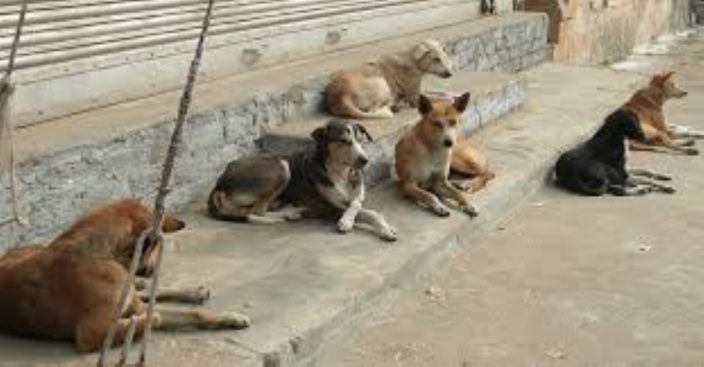
And I mean…The street dogs in Serbia (perhaps with the weak exception of Belgrade) are among the poorest of the poor: the city does not take care of them or catch them, the residents complain about the strays, they are run over or mistreated in rows.
The status of four-legged friends in Serbia is rather low in terms of legislation.
The urban dog catchers, who continue to go about their “business” despite the Corona crisis, collect stray dogs and bring them to the urban institutions, a practical hell for animals.
All measures that endanger the life of the stray animals are actually illegal, because the stray problem was created by humans.
But there is also one thing to keep in mind: it’s not that people don’t like dogs, it’s that they are scared of them. In a country like Serbia, problems with dogs quickly become political problems. Fear is deliberately stoked in the population in order to justify government actions.
It is very likely that the catastrophic situation with the stray in Serbia will be interpreted as a reason to refuse the country entry into the EU.
For the Serbian government it is still a national disgrace, which became known thanks to the massive protests across Europe, and is considered a grave disgrace for a country that has been standing at the EU door for a long time and begging to come in.
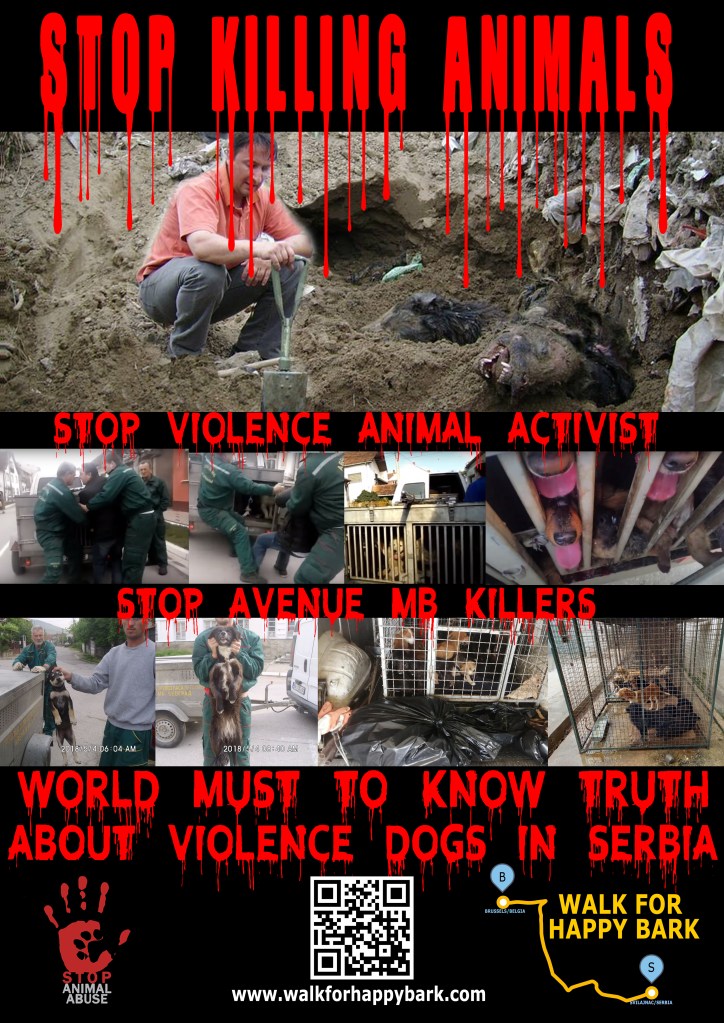
We do not have much info at present and have asked Goran for more. All we know is that it involves a walk for animals from Serbia to Brussels, Belgium, where formal letters of protest, demanding action in Serbia, will be handed in. This will probably be late in the year – awaiting response for confirmation.
Serbia is not an EU member state yet but is a ‘candidate country’ to join up.
This is all we have at present, but will publish more when we have further info.
The situation for strays has always been bad for in Serbia, and still is; here below is a video made by Goran which shows a Serbian street dog which HAS been sterilised by welfare group Vier Pfoten and has been fitted with a red ear tag to clearly show this. As the animal cannot reproduce more strays, it should be left alone. But you can clearly se in the video that the dog has been darted by ‘shinters’ (dogcatchers) who are wearing balaclava masks and are opposite the dog, waiting to collect it and take it away to be killed. As it is sterilised, and is clearly identified as such with the ear tag the shinters should leave animals such as this alone. They do not – they kill everything.
We also have a SAV Facebook page with many hundreds of members. It is a ‘talk shop’ for Serbian activists, as well as showing shelters and animals up for rehoming.
WAV Comment – we communicate all the time with Erika, a founder of AAU. Hopefully, we think she knows we respect and admire all the work and rescues which are undertaken by the AAU crew.
So here are a few videos of some latest rescues, as well as one where you can join the street treatment team as they go about their fantastic work. Love and respect to all at AAU.
Regards Mark
Dear Mark,
Earlier this month India celebrated Rakhi, honoring the bond between brothers and sisters, whether blood family, or chosen family.
Nanhi, featured in the little videohere,has a “chosen family” too. Her neighbor feeds her, loves her, and makes sure if she is ill, she will get the help she needs. Because Nanhi gets plenty of petting, she was relaxed during the treatments she needed in Animal Aid after a painful ear wound. When animals are calm and secure, they also heal much faster.
For all for loving care you have made possible to those far from you in Animal Aid, thank you.
At first, Micky was afraid to be touched. Then everything changed!
Little Micky’s wound on his backside was large and extremely painful. Still energetic and optimistic, this precious boy seemed to have no idea that he was in grave danger and would have died without urgent rescue. His mother’s love would be a vital comfort to him, so of course we rescued them together, and his Mom’s face, within moments, seemed to express relief that they were now in safe, healing hands.
Watch now, as Micky’s fear turned into love.
Helping someone who is hurting feels so good. Please donate.
Join our Street Treatment team for the day!
Join us on the road as our Street Treatment medical team makes their daily rounds in the neighborhoods of Udaipur, Rajasthan, India!
You’ll see how much good medical care can be administered while sparing an animal the stress of entering the hospital, avoiding contact with infectious diseases and staying close to their friends and families. This video might also be especially interesting for those who don’t live in Udaipur to get a glimpse of the neighborhoods we work in.So hop on in and join us for a fascinating few minutes of loving care.
Sammy needed urgent help for his eye, and Animal Aid needed Sammy!
Few injuries are more horrible to imagine than a ruptured eye. The injury was likely caused by a passing vehicle hitting his head from behind. Exhausted from the pain, he put up no resistance to being rescued.
His eye could not be saved and needed to be surgically removed. Sammy woke from the procedure seeming to be immediately relieved, but only then did we realize, Sammy was blind in the other eye.
We’ve welcomed him to live for the rest of his life in the happy sanctuary of Animal Aid. What a snugglebug he has become, and we hope you’ll join us in falling in love with Sammy.



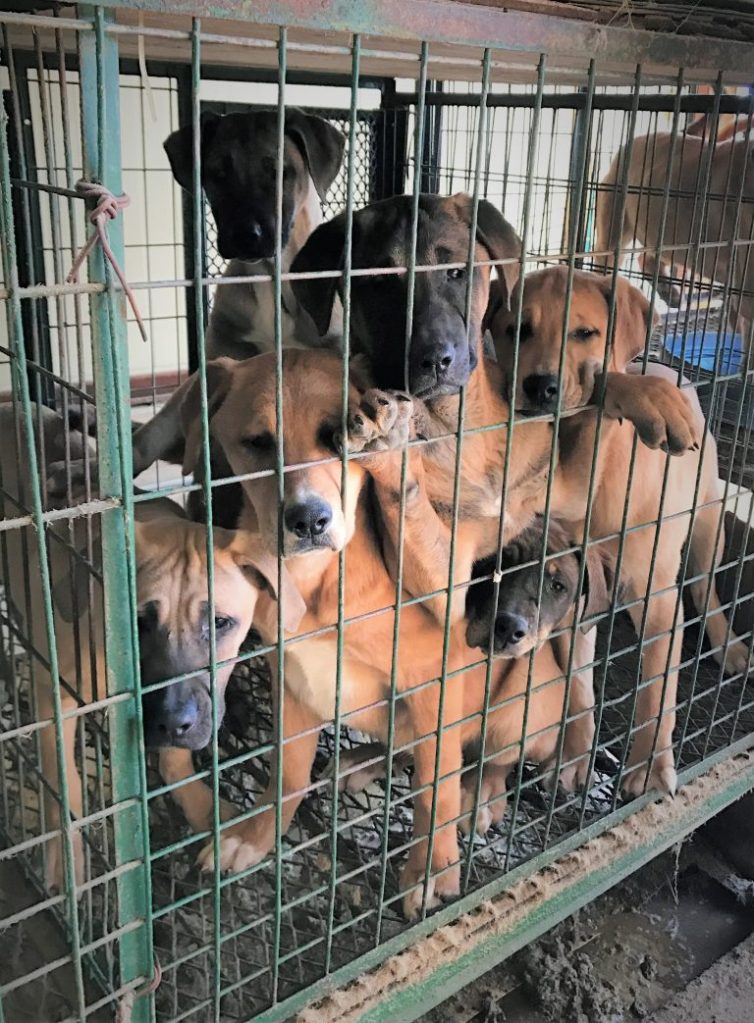




 What they desperately need is a family with a daily can opener and a forever home to shelter.
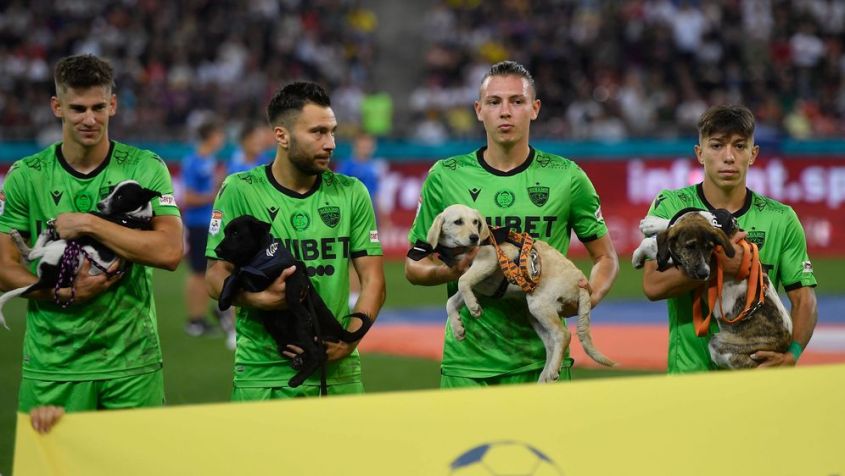 Four football players from Dynamo Bucharest before the game with their dogs from the shelter and from the street.