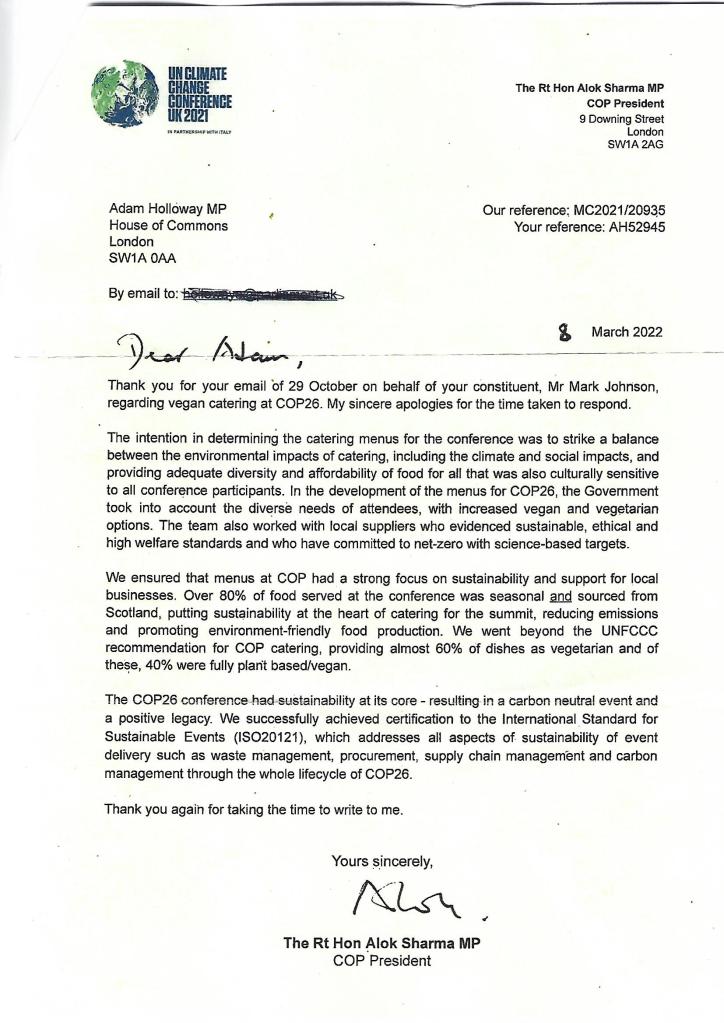
Last year, October 2021 to be precise, I wrote to my MP asking him to contact Alok Sharma regarding what appeared to be a distinct lack of veggie and vegan food at the COP26 (Climate) conference.
You can read the original letter and information here:
Welcome to the Vegan Recipe Club newsletter! We’ve got a new sweet/savoury crêpe recipe for you, perfect for all the March celebrations! Enjoy our new super-quick ramen dish which works in every season. We’re delighted to welcome our friends at The Word Forest Organisation who are doing some amazing work and have provided us with their favourite recipes!
‘Ham’ & ‘Cheese’ Crêpes
Fill your savoury crêpe with lovely melty ‘cheese’ and ‘ham’ for the ultimate quick comfort meal.
This crêpe batter is extremely plain and simple so it can be used to make sweet or savoury pancakes! We’ve got lots of filling ideas for you so pick your favourites and enjoy 🙂
This is one of Tracey’s favourite bread recipes to teach. It looks complicated but it’s dead easy and it pulls all sorts of colourful seasonal veg into play!
Ever wondered what a week of vegan food looks like for us at Viva!’s Vegan Recipe Club? Our social media coordinator, Pia, is lifting the lid on her foodie-habits and offering some fabulous tips to make every day filled with delicious plant-based delights!
I always find it revealing how videos demonstrating the violent death required of ALL exploited animals, are typically restricted, labeled graphic, and warning of disturbing images, completely opposite to what the agriculture adverts and propaganda deceptively promote, but you’ll NEVER get an agriculture industry employee, supporter, representative, or apologist (ie, all who comprise >90% of the human population) provide the truth of the suffering and violence necessary of animals, who are denied all opportunity to defend their bodies, their children, their lives. Conversely, nobody-in-the-history-of-ever has restricted footage or images of crop harvesting or apple picking.
Don’t let the explicit content that you so effortlessly inflict on vulnerable, defenseless animals prevent your education and hypocritically challenge your ethics.
And for all the radical cat-and-dog extremists who vilify the cat-and-dog-meat trades and relentlessly share the graphic footage of dogs being butchered alive and cats being boiled while conscious: why are you so happy to participate in the same torture, torment, and cruelties inflicted on other animals?
The USA routinely boils chickens alive, as well as other animals including lobsters and crabs and pigs, whose flesh and body parts you piously pass around on your nice dinnerware; I think people spend so much time picking out china patterns because pretty plates and other weapons of destruction deflect from the required violence and suffering of those on them.
And before you virtuously scream about “quick, ethical killing”: killing is inherently unethical, regardless of method or place, you don’t kill animals because you actually believe NOT killing animals is UNETHICAL, there is NO form of killing that is more humane than NOT killing. All killing causes suffering and destroys life, which can NEVER be “ethical”. Why you think that your transient taste preference validates the END OF LIFE is the epitome of privilege, arrogance, hubris, and selfishness. It’s not like you have to literally hold yourself back from eating your dog or cat or rabbit or whatever-animal-you-claim-to-like, if you can prevent killing your dog as “food”, you can prevent killing pigs.
There are those who ask, “Why should I listen to vegans?” … Which makes me wonder if you also ask, “Why should I listen to people opposed to child exploitation?” Really? This SHOULD be a no-brainer: Less harm is ALWAYS better. But for the GOP-ers and apologists who simultaneously cause and dismiss the suffering of others (I have no room to unpack the screaming hypocrisy of leftists who also ignore the suffering of others), you’d perhaps be more interested in the financial aspect: Me? I make NO money advocating on behalf of animals, I actually spend money on this blog. But, for the people who relentlessly oppose using gas “euthanasia” on cats and dogs, but who consume pigs who are predominantly slaughtered using gas, the former CEO and president of Smithfield Foods (that kills and profits from the suffering of pigs, in case you missed the association, because nonvegans are often naive and willfully ignorant about the animals they inflict with pain and fear and the entities they pay to cause such), which is actually owned by a Hong Kong, China-based company (the irony), earned $14,000,000.00 in approximately 5 years ……………………………
Who’s fooling whom? Why do you listen to the ones who depend on your complacency and conformity to take your money to kill? (Not to mention the subsidies used to prop up the death industry, if it wasn’t subsidized, a pound of “ground beef” would be about $35.) This also should be a no-brainer.
We are ALL animals who have the capacity to experience emotions and pain, if you enjoy “bacon” but condemn cat and dog flesh, guess what? You enable others to consume cats and dogs by your very support of animal exploitation of other animals: it’s all related, you just define the suffering of some animals in ways that provides you comfort causing it. To care for one species requires you reject the exploitation of all.
Don’t like facts? Too bad, you must not actually like cats or dogs either, then. Was that offensive? Too bad again, the violent torment forcibly endured by animals is what is ACTUALLY “offensive”. Have you ever seen the morally outraged masses absolutely verbally eviscerate and threaten with actual harm, others who kill cats and dogs? If your immediate reaction to my words is, “iF VEgaNs wERe mOrE NiCE I’d Be vEgAn…”: Cry more, who do you normally blame for your inability to be a decent human animal since you either don’t actually know any vegans, or you ignore the super nice ones? I posted a video just last week of nice, respectful Ed Winters encouraging veganism while destroying carnist arguments, if you won’t be vegan for the actual animals, be vegan for Ed.
And, too, what other social justice issues do you require personal benefit and niceties to support? Veganism is for animals, not your ego, you ignore the trillions of “nice” animals whose throats are stabbed and are therefore incapable of respectfully asking for your support, so don’t pretend reading a 5-minute vegan plea or watching a 30-second video had such a negative influence on you that you feel forced to continue greedily supporting the death industry, which includes dogs and cats. SL
A controversial vegan advertisement debuted on UK television channels over the weekend. Tom Bursnall, director of plant-based food company Miami Burger and producer of the advert, expects it will spark conversation and backlash. Bursnall created the 30-second ad in collaboration with the charity Vegan Friendly
Take PETA’s Cruelty-Free Shopping Guide along with you next time you head to the store! The handy guide will help you find humane products at a glance. Order a FREE copyHERE
Searching for Cruelty-Free Cosmetics, Personal-Care Products, Vegan Products, or more? Click HERE to search.
Free PDF of Vegan & Cruelty-Free Products/Companies HERE
Want to do more than go vegan? Help others to do so! Click below for nominal, or no, fees to vegan literature that you can use to convince others that veganism is the only compassionate route to being an animal friend:
Cultivated meat isreal meat but more beneficial for public health
24 February 2022
In a series of 5 videos, we will address and debunk the most important myths surrounding cultivated meat. In today’s video we explain why cultivated meat is real meat and why it is beneficial for public health.
Yes, cultivated meat is real meat.
As long as cultivated meat has the same characteristics and nutritional value as conventional meat it is real meat.
The name ‘meat’ is culturally and individually determined. In the past, meat used to be rather a general term for simply food. And, even today, asking consumers living in the same region whether certain products are meat or not, would provide a variety of answers. A steak is definitely meat, but nuggets and hybrid products could be a matter of debate. Some people do not even consider chicken meat as true meat.
On the question about cultivated meat, the American Meat Science Association (AMSA) came to the following conclusion:
Ultimately to be considered meat, in vitro meat must be originally sourced from an animal cell, be inspected and considered safe for consumption, and be comparable in composition and sensory characteristics to meat derived naturally from animals. In particular, the essential amino and fatty acid composition, macro- and micronutrient content and processing functionality should meet or exceed those of conventional meat.’
Yes, cultivated meat is beneficial for public health.
The cultivated meat production process has a great advantage over livestock: it is performed under sterile and closed conditions, so the risk of pathogens is far less. This is important because of the concerns about antibiotic resistance and infectious diseases.
After all, current meat production is by far the largest consumer of antimicrobial agents.
Moreover, industrial farming is a breeding ground for pathogens and COVID-19 has made very clear to the wide world that zoonoses pose an existential risk.
Studies in other sectors show that in sterile and closed conditions, the incidence of contaminations via bacteria and fungi is very low. This aspect is also important considering foodborne illness. Due to the lack of enteric food pathogens, the risk for foodborne diseases is much lower and it potentially increases shelf lives and reduces spoilage (which means less food wasting).
A final advantage of cultivated meat concerning public health is the absence of trace chemicals. Pesticides, antibiotics, veterinary drugs, heavy metals, among others, are a matter of concern for conventional meat.
These residues are unlikely to appear in cultivated meat.
Despite the 2013 horse meat scandal, it is still not mandatory for operators and authorities to provide and control information on the origin of horse meat. As a result, to put it simply, there is no certainty on where your meat is coming from.
For the past 10 years, alongside BEUC, the European Consumer Organisation, we have been demanding mandatory country of origin labelling for horse meat regardless of its shape and form.
Today, the European Commission runs a public consultation on the revision of food information to consumers (FIC) Regulation and we call for the inclusion of horse meat within the scope of the regulation introducing mandatory Country of Origin Labelling (COOL).
In 2020, around 60 million horses were registered as livestock worldwide by the Food and Agriculture Organisation for the United Nations (FAO), and just over 5 million of them are slaughtered every year.
Below we present to you three reasons in favour of mandatory labelling requirements on horse meat.
Labelling to empower EU consumers
In 2013, the horse meat scandal exposed that numerous food in the EU sold as beef actually contained horse meat. Despite the public outcry, the situation has not changed as in 2021, Europol and Interpol investigations identified horse meat sold as veal. Mandatory COOL requirements would constraint industry stakeholders to give accurate information so that consumers can make informed decisions. Such requirements are already in place and indicate country of origin, raising and slaughter, for beef, swine, sheep, goats and poultry demonstrating the feasibility of the measure. Furthermore, investigations conducted by a consumers’ association show that origin-labelling provisions for these types of meat were implemented without unnecessary burdens on the meat supply chain and on national administrations.
Labelling to recognise production standards
Investigations conducted by animal welfare organisations have revealed shocking conditions and maltreatment of horses at assembly centres, during transport and at slaughterhouses in Argentina, Uruguay, USA and Canada. Some animals are kept in horrifying conditions in open-air feedlots, without any protection from the weather or veterinary care for six months until they can be slaughtered. The introduction of COOL requirements in the EU giving the possibility for EU citizens to choose local meat will incentivise horse meat industry operators to improve the living conditions of these horses so that they comply with EU animal welfare standards.
Labelling to enhance public health
Consumers build an association between the origin information of meat and a perceived level of food safety. Consumers also question the safety of their food and are particularly concerned about antibiotic residues and hormone levels in meat. Recent investigationshave revealed the presence of EU banned chemicals in horse meat samples such as diclofenac or thiabendazole. In addition, issues around traceability and horse passports, as well as number of horses slaughtered for meat and not registered as livestock raise a question of veterinary medicines in human consumption. These consumer concerns are therefore legitimate and it is essential to improve labelling and traceability of horse meat to ensure food safety for EU citizens.
What can you do?
You can reply to a European Commission public consultation on the food information to consumers Regulation until 7 March 2022. Raise your voice and demand the horse meat labelling.
*According to the French report, the argument of higher food prices due to traceability does not hold, since the impact on the price is minimal.; it represents only an additional cost of + 0.7% or only + 0.015 Euro for a tray of lasagna, for instance. Indeed, these increases are much smaller than the price differences usually observed between retail chains.
Part 3: Everything you always wanted to know about Cultivated Meat – and beyond
16 February 2022
Cultivated meat does not yet fully exist on a commercial level and market introduction will happen stepwise, starting with specialised restaurants. It is currently at the pilot scale progressing towards up-scaled production, currently comprising more than 70 startups.
The acceptance studies of the past years show a worldwide positive attitude towards cultivated meat. The consumer groups with the most positive attitude towards cultivated meat are flexitarians or carnivores. A recent study on Belgian consumer attitudes indicates that different protein alternatives are needed. Taste and textures were the main barriers to plant-based meat alternatives for meat-eaters. The main motivations for meat-eaters to shift to cultivated meat were social goods such as avoiding animal suffering, minimising environmental impact, and mitigating global hunger.
Will cultivated meat be as nutritious as conventional meat?
Yes, it will be vital to pass the comparison with conventional meat. There are even opportunities to ameliorate the nutritional profile. However, cultivated meat developers still need to prove that their products are or will be as nutritious.
Is cultivated meat halal/kosher?
It could be, but at this point, there are no clear rulings yet. A lot will depend on the final production process that will need to be inspected by delegates from the religious communities. And it is very possible that there will be multiple contradicting rulings and religious labels, as is the case today for conventional meat.
Will/can farmers play a role in cultivated meat production? What is the social impact of cultivated meat?
Cultivated meat can be produced by a wide range of companies of different sizes, including local small-scale farms. Future scenarios can involve both large-scale facilities as well as small cultivators on rural farms as a complement to small-scale regenerative farming. For this to happen, it is important to make the production of cultivated meat accessible to SMEs.
While private investments have been crucial in pioneering research on cultivated meat, private investments need to be combined with public funding to expand the possibilities of small enterprises. It is important that public funding for open-access research is made available by governments and the EU so that the future development of cultivated meat production is not left in the hands of large companies but can reach its full transformative potential as part of a sustainable food system.
14/2/22 – As many of you will know, donors from the animal rights movement, and others, have been donating money to get a vegan advert put on British television. Click on the above link to watch the ad.
Well last night (4/22) we saw the ad go live onto British television at 8-30pm (UK time); half way through the Jamie Oliver programme on food and cooking; so it was an excellent time to air the ad, especially as lots and lots of people tune in to watch the programme – Jamie O is one of the UK’s top chefs and his programme is watched by millions.
Over the next couple of weeks, the ad will be shown around 220 times across the Channel 4 network on channels including Channel 4, Dave, E4 and HGTV
Please be aware that, due to the dynamic nature of TV scheduling, these spots and times are subject to change at short notice. To keep up to date with the latest schedule please visit our website.
WAV Comment: we are really pleased to have donated twice towards the reaching the target amount required to show this advert on UK television and make many non vegans get a grip into understanding that meat comes from live animals.
Regards Mark
You have helped us exceed our £40,000 target, which means over 16 million Channel 4 viewers will get to see it!
Thank you so much to every single one of you who has donated, shared, or spread the word about this campaign. You’ve helped to make this Viva!’s biggest crowdfunder to date. But we’re not finished yet… we still have 8 hours before the campaign officially ends and we want to give it one final push.
The more money we raise, the longer we will be able to air our ad, and the more people we will reach with our vegan message.
This is the biggest opportunity Viva! has ever had to reach the UK public on such a massive scale.
If you haven’t already, please donate today because this really is the final countdown!
£ 40,644 raised (and increasing) towards the goal of £40,000.
You have helped us exceed our £40,000 target, which means over 16 million Channel 4 viewers will get to see it!
Thank you so much to every single one of you who has donated, shared, or spread the word about this campaign. You’ve helped to make this Viva!’s biggest crowdfunder to date. But we’re not finished yet… we still have 8 hours before the campaign officially ends and we want to give it one final push.
The more money we raise, the longer we will be able to air our ad, and the more people we will reach with our vegan message.
This is the biggest opportunity Viva! has ever had to reach the UK public on such a massive scale.
If you haven’t already, please donate today because this really is the final countdown!
The following tasty treats have come to us through liaison with the Viva! Vegan recipe club.
Why not give them a try (for Veganuary) when you have some time.
Speedy One Pot Kale, Bean & Lemon Stew
This is a lovely, hearty, healthy stew which is very quick to make – perfect for busy evenings or for taking to work in a thermos for the office lunch.
These seasonal pies are mmmnn delicious! You can choose whether to make 1 large pie, 6 medium-sized (using pie cases or ramekins) or 12 little pies (using a muffin tin).
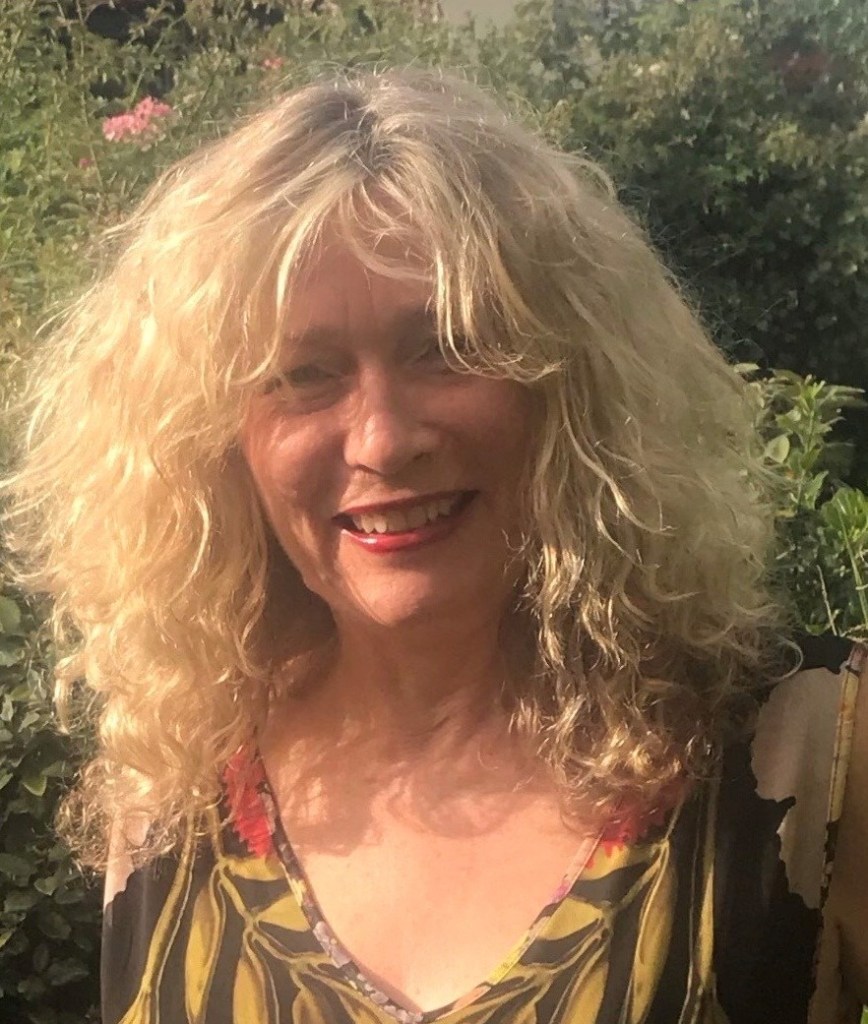
Krimsey Lilleth was born in Baton Rouge, LA and raised in the rich, celebratory culture of the deep south. She spent a good deal of her childhood in the great outdoors and swampy, magical forest teeming with all sorts of critters she came to love and respect.
Krimsey’s mission is to inspire others to care for themselves, animals and the environment through food. She is the founder of the late-and-great Los Angeles restaurant, Krimsey’s Cajun Kitchen, the world’s first vegan Cajun restaurant!
We can’t wait to try Krimsey’s incredible recipes – perfect for a post-Christmas pick-me-up.












 World Animals Voice