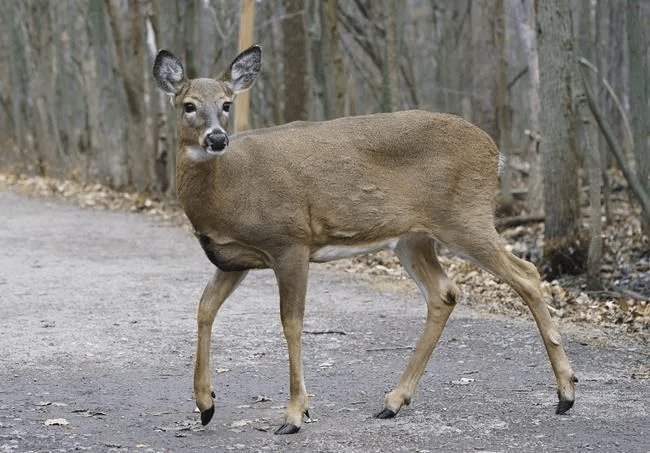
MONTREAL — A well-known Quebec lawyer is going before the Superior Court to prevent the cull of white-tailed deer living in a forest on Montreal’s South Shore.
Lawyer Anne-France Goldwater, who has previously voiced her opposition to the plan, has filed a court petition on behalf of herself, a wildlife rescue organization called Sauvetage Animal Rescue, and a local animal-rights activist.
Goldwater is asking the court to prevent Quebec’s Wildlife Department and the City of Longueuil from killing the deer until the case is heard.
Last November, Longueuil Mayor Catherine Fournier said the city would kill all but about 15 deer in order to protect the Michel Chartrand Park, which can’t support the roughly 70 deer living there.
Sauvetage Animal Rescue had proposed to relocate the animals, but the committee said last year the only short-term solution was to kill them.
Longueuil’s previous administration had planned to cull the deer in the fall of 2020, but the city relented after a strong backlash that included a petition, a protest and threats against the former mayor.
Goldwater says the case is expected before a judge next month.
This report by The Canadian Press was first published May 18, 2022.
The worsening climate crisis. Rising energy prices due to Russia’s invasion of Ukraine. Shameful oil and gas industry exploitation of the war to lock in more drilling. A health crisis in communities plagued by persistent pollution, compounded by the ongoing Covid-19 pandemic.
These are big challenges we’re facing — but a critical part of the solution is to break free from fossil fuels, shift to 100% clean energy, and invest in clean air, safe drinking water, and healthy communities.
Yet, fossil fuel corporations and their allies in Congress are doing everything they can to block progress. That’s why it’s all the more critical for the president and congressional leaders to use the power and the tools at their disposal to crack down on pollution, advance clean energy, and protect our health.
In the weeks and months ahead, we expect a raft of important regulatory proposals from the EPA, the Interior Department, and the Department of Transportation. These include plans to:
Clean up pollution from cars and heavy-duty trucks and expand zero-emission and electric vehicles, as transportation is the #1 source of climate emissions in the U.S.
Crack down on emissions from dirty, outdated, fossil fuel power plants, the #2 source of climate emissions and a major driver of the air pollution affecting public health
Stop new offshore oil and gas drilling, which threatens coastal communities with devastating oil spills and keeps us addicted to dirty fossil fuels
Eliminate lead in drinking water that’s poisoning children across America, and clean up polluted lakes, rivers, and streams
Together with strong climate legislation from Congress, these safeguards are critical to meeting the nation’s goal of cutting climate pollution 50-52% by 2030 and building a cleaner, healthier, and more equitable world.
This is a leadership moment for Congress and the White House.
NRDC will be working hard to ensure that strong federal climate legislation passes, and that these federal standards are strong enough to address our climate crisis and improve public health. Backed by millions of supporters like you, we will:
Keep building massive public support for these policies through grassroots action to counter the destructive influence of fossil fuel industry lobbying power.
Turn to the federal courts if necessary to block illegal actions that harm our climate and ensure the law is upheld.
Fire up NRDC’s rapid response machine to mobilize our millions of members and supporters like you when the Biden administration releases proposed regulations, most of which will be open for public comment, public hearings, and more, in support of strong action.
The science is clear — we don’t have much more time to avert the worst effects of climate change. The impacts of the climate crisis and our dangerous fossil fuel addiction are all around us. Rising temperatures, worsening extreme weather and wildfires, and rising fuel costs hit low-income and middle-class communities the hardest, especially communities of color.
Our leaders in Washington need to hear that the country expects them to stand and deliver on bold action to confront the climate crisis and set the stage for a generation of prosperity.
It’s time to close the deal. It’s time for Congress and the White House to act. And it’s time to let them know we’ve got their back when they do.
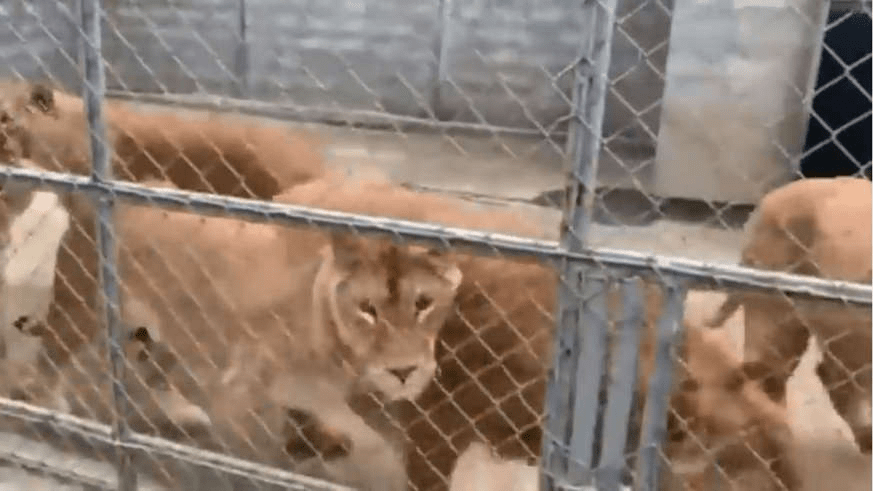
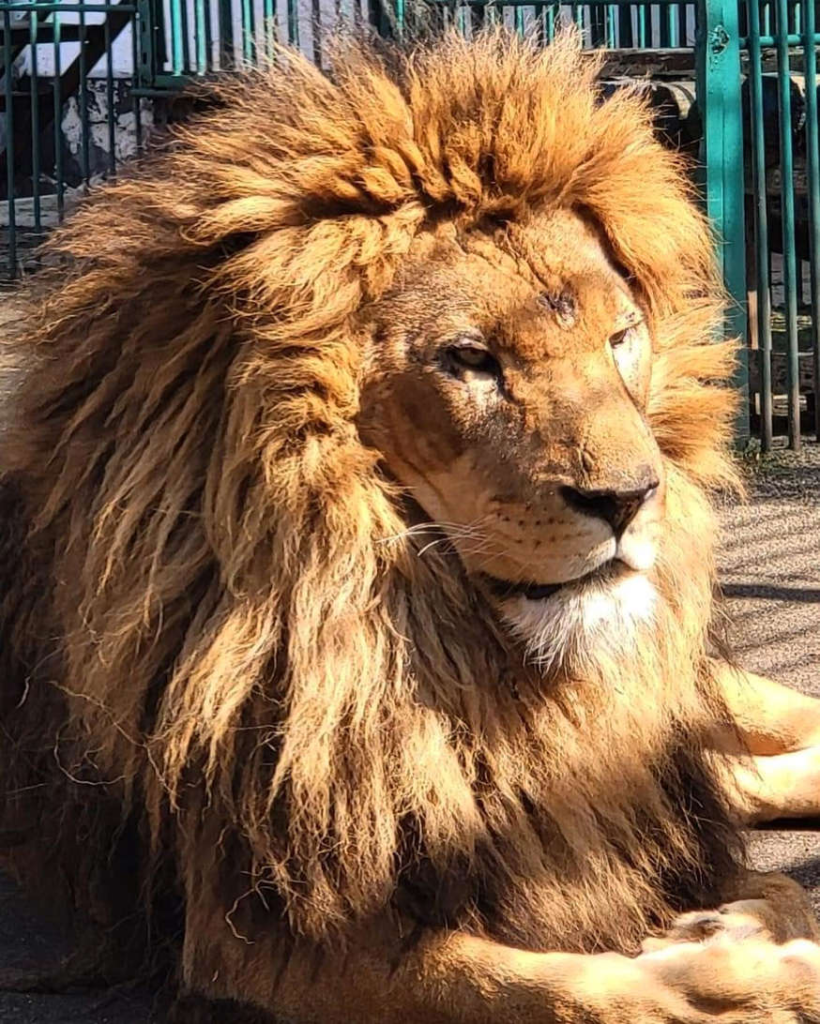
An animal rescuer is due to travel from South Africa to Ukraine this week to rescue nine lions from a zoo in a city that is under attack.
Lionel De Lange is today preparing to travel to the war zone via Romania in a convoy of vehicles to save the pride from Russian fire as well as the possibility of starvation as funds for their upkeep run out.
They will be temporarily relocated to a municipal zoo in Romania awaiting paperwork for relocation to a ‘forever home’ abroad, which could mean being flown out to Mr De Lange’s reserve in South Africa.
The intention is to move the pride to the temporary holding facility over the border in Radauti, north-eastern Romania, where another two lions rescued since the outset of the Russian invasion are also awaiting relocation.
Mr De Lange, who is due to fly to Romania tomorrow, is the founder and director of non-profit group Warriors of Wildlife (WoW) and runs the large, open-air sanctuary in the Eastern Cape. He has so far relocated 28 lions and a tiger from Ukraine in rescues carried out since 2019.
He told Metro.co.uk: ‘We know that we are going into an area where there could be attacks at any time, but this is what I’m committed to do, we have to get these animals out.
‘Hopefully we’ll be able to go in and out without any issues. We will check the latest intelligence and speak to people on the ground and the safest time of the day to go, when there are no attacks.
‘Then our intention is to take them back over the border. It’s going to be a long, long journey.’
The mission involves first going to the zoo in Romania, where Mr De Lange will check if the crates are ready and get the vehicles together, before driving on into Ukraine.
He is being joined by videographer Daron Mann, who will be providing content and updates on his YouTube channel as they embark on a round trip which will involve more than 12,000 air and road miles.
The route involves a complex navigation of border posts and checkpoints, with the team travelling in around six to seven vehicles to and from the city, which Mr De Lange is not publicly naming for security reasons. The largest truck will handle about four crates each containing a lion.
As well as the mortal danger from Russian guns, which also creates stress and restricts the animals’ movement, the big cats face food shortages from the private zoo’s lack of funds. On average, an adult lion needs five kilograms of meat a day, roughly equivalent to a bag of potatoes.
Racking up 2,600 road miles, they spent five days on the road, which involved using a crane to place the living cargo in the Ford Transit.
The big cats are set to be repatriated to Simbonga Game Reserve and Sanctuary, with Mr De Lange in the process of securing paperwork to give the pair a home at the 14,000 square metre haven.
The fate of zoo animals has been a side note to the unfolding horrors of the invasion, which has included a massive exodus of refugees and widespread evidence of war crimes by Russian troops.
However, Mr De Lange has said that, compared to humanitarian groups, there are few organisations dedicated to rescuing animals, and humans have a responsibility to animals in captivity that are in the line of fire.
In a Facebook update, WoW said: ‘The rescue is a go. We have our visas to enter Romania and then travel by road into Ukraine with a convoy of vehicles to evacuate 9 lions from a zoo in an area that is under attack.
‘We will then relocate the lions to a temporary holding facility in Romania while we wait on permits for them to travel to their forever home.
‘We will not divulge the zoo’s name or city in Ukraine for security reasons but will keep you informed of our progress all the way.
‘We have to complete the mission before the 30th May but hope to do so in the week before. It’s logistics and paperwork that we are now waiting on.’
*For more about Warriors of Wildlife and to donate click here
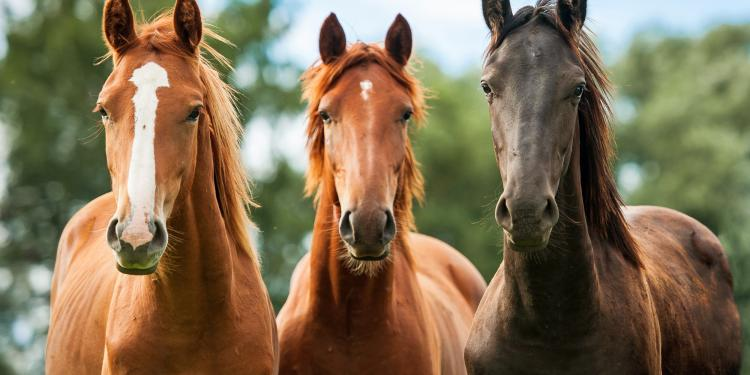
Equine chorionic gonadotropin (eCG), also called Pregnant Mare Serum Gonadotropin (PMSG), is a hormone extracted from the blood of pregnant mares. It is used in intensive agriculture to increase the reproductive performance of farm animals such as pigs, sheep, goats and cattle.
Repeated investigations by our member organisation Animal Welfare Foundation (AWF) since 2015 have shown that the production of eCG entails serious welfare issues: up to a quarter of an animal’s blood is routinely extracted at one time, resulting in weakness and anaemia.
The blood is taken by force, which causes stress and fear. eCG used in the EU is mainly imported from Iceland, Uruguay and Argentina. In Iceland, semi-wild mares are repeatedly traumatised by violent handling and tight fixation in small boxes. In Uruguay and Argentina, mares are kept constantly pregnant and aborted to speed up the next pregnancy, as eCG is only produced in the early stages of gestation.
In Germany, where a Haflinger stud farm has been extracting blood from pregnant mares for 40 years, 16 litres of blood are extracted per week, which poses serious health risks to the mares.
The use of eCG on farm animals also raises a number of concerns. In Europe, eCG is mainly used in pigs, to increase fertility and to stimulate and synchronise oestrus. The sows have no time to recover in between pregnancies, which leads to early slaughter. In addition, the use of eCG leads to bigger litter sizes. If the sows have more piglets than teats, surplus piglets often starve or are killed.
In an Open Letter, Eurogroup for Animals, AWF, Welfarm, Green REV Institute, Dier&Recht, Deutscher Tierschutzbund, Animal Protection Denmark, DSPCA, along with 12 other animal welfare organisations call on the European Commission to:
Recognise and communicate that the production of eCG in the EU is in breach of EU legislation,
Build on future opportunities to ban the production, import and use of eCG.
Procedures such as blood collections are classified at European and international level as animal experiments. Several alternatives to eCG are available on the European market making this hormone dispensable and in breach of the Three Rs principle (3Rs: Replacement, Reduction and Refinement) as provided by Directive 2010/63/EU on the protection of animals used for scientific purposes that applies in the EU and in the European Economic Area (EEA). Production of eCG in Germany and Iceland, both EEA countries, therefore violates EU law.
In brief, eCG production and use is cruel and unnecessary! To put an end to this practice, the EU must include strong animal welfare standards for the production of veterinary medicines in the revised Good Manufacturing Practice (GMP). Such provisions will ensure that eCG exporters into the EU, and domestic producers, must comply with these minimum standards. The revised animal welfare legislation should also introduce a clear ban on the use, import and production of eCG.
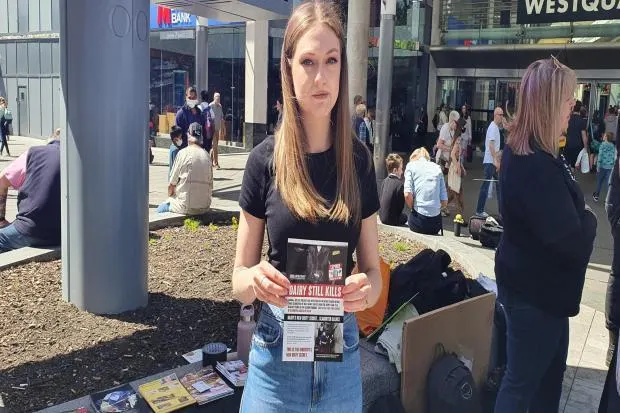
ANIMAL right activists are protesting in Southampton city centre today.
Activists from pressure group Animal Justice Project are taking a stand against the dairy industry to mark National Day of Action.
They have set up stands in Above Bar Street to show a 2020 undercover video titled ‘Dairy Still Kills’ to expose the mistreatment of livestock.
The video showing the slaughter of calves is being shown in 20 cities across the UK.
Hope Weatherell, a volunteer campaigner and a vegan for nearly seven years, said that Southampton was chosen as a location for the campaign due to it being a central hub and having “lots of open minded people and young people”.
The activist group says that action was being taken in order to “educate” the public about thinking ethically and giving out free samples of dairy free options.
McDonald’s storm over antibiotics in its beef: Burger giant faces showdown with investors who say it broke promise to tackle health fears
Fast food chain McDonald’s is under fire for its reliance on antibiotics used in beef farming that critics warn is contributing to a public health crisis.
The burger giant vowed four years ago to publish plans to reduce its use of the drugs amid fears that the practice is putting millions of lives at risk. However, campaigners say the company has still not honoured its promises.
Now an unlikely alliance of investors led by Trinity College, Cambridge and legendary corporate raider Carl Icahn – the inspiration for Gordon Gekko in the film Wall Street – are preparing to challenge the firm at its annual meeting later this month.
McDonald’s is one of the world’s biggest buyers of beef and its influence on the use of antibiotics in intensive farming worldwide is substantial. It says it is committed to an ‘overall reduction’ in the use of the drugs.
There is growing evidence that the excessive consumption of antibiotics is fuelling the rise of drug-resistant superbugs. Trinity College holds shares in the company via its £1.9billion endowment fund. It has tabled a motion to force McDonald’s to disclose the environmental and public health costs of its continued use of antibiotics in its meat production.
The proposal says antimicrobial resistance (AMR) ‘poses a systemic, global threat to public health and the economy.’ Two-thirds of antibiotics used worldwide are fed to farm animals.
Other major investors – including Legal & General Investment Management, which is also a McDonald’s shareholder – have also publicly recognised the AMR threat. The pension fund giant, which voted in favour of a similar motion last year, said in a recent report that AMR may be the next global health event and the financial impact could be significant.
The World Bank has warned that entrenched resistance to antibiotics could cause up to ten million deaths a year by 2050 unless more is done to combat drug-resistant superbugs. The economic impact could be as bad as the 2008 financial crisis, it said.
The threat posed by these superbugs may have been underestimated. A study in The Lancet medical journal recently revised the number of AMR-linked deaths in 2019 to at least 1.2million, against previous estimates of 700,000 fatalities.
The Trinity motion says: ‘These appalling numbers characterise a world in which common medical procedures such as caesarean sections, knee replacements, chemotherapy and organ transplantation come with a massively increased risk of untreatable, lethal infection.’
The college, which is led by the special envoy on AMR Dame Sally Davies, received a boost when its proposal won backing from billionaire investor and activist Carl Icahn.
He is behind a separate resolution to appoint two directors to the company’s board in an attempt to hold it to account over a promise to improve the treatment of pigs.
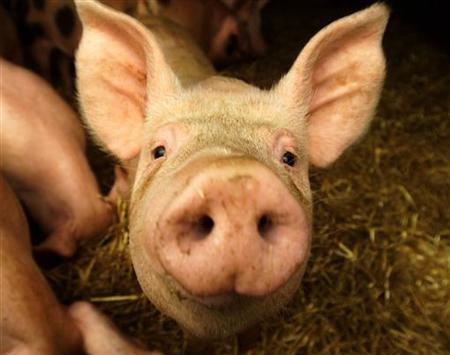
Icahn, 86, is focusing on the use of ‘gestation stalls’ – cages used by pork producers to hold pregnant pigs. This increases the number of animals that can be held in a limited space. Animal rights activists complain that the sows are confined so tightly that they cannot even turn around.
The Trinity motion notes: ‘Pigs can only survive such grotesquely cramped conditions if they are awash with antibiotics.’
McDonald’s is continuing to use suppliers which employ the stalls despite having vowed a decade ago to eliminate them by 2022. Gestation crates have been banned in the UK since 1999.
Icahn’s recent interest in animal welfare stems from his vegetarian daughter, Michelle Icahn Nevin, who has worked with the Humane Society of the United States.
McDonald’s insists it has made ‘commitments and progress across its global supply chain,’ adding: ‘We are engaged in global partnerships across our supply chain to gather data on antibiotic use helping to inform the development and implementation of responsible antibiotic use policies for chicken, beef and pork.’
It has rejected the Trinity College proposal, saying it is committed to ‘the overall reduction of medically important antibiotics where appropriate and measurable.’
McDonald’s dismissed Icahn’s claims, saying to source all of its pork from suppliers that never use gestation crates is ‘completely unfeasible’ since such companies represent a tiny fraction of the pork industry.
A spokesman for the company described Icahn’s intervention as ‘distasteful contortion’ and ‘a thinly veiled, opportunistic attempt to gain relevancy.’
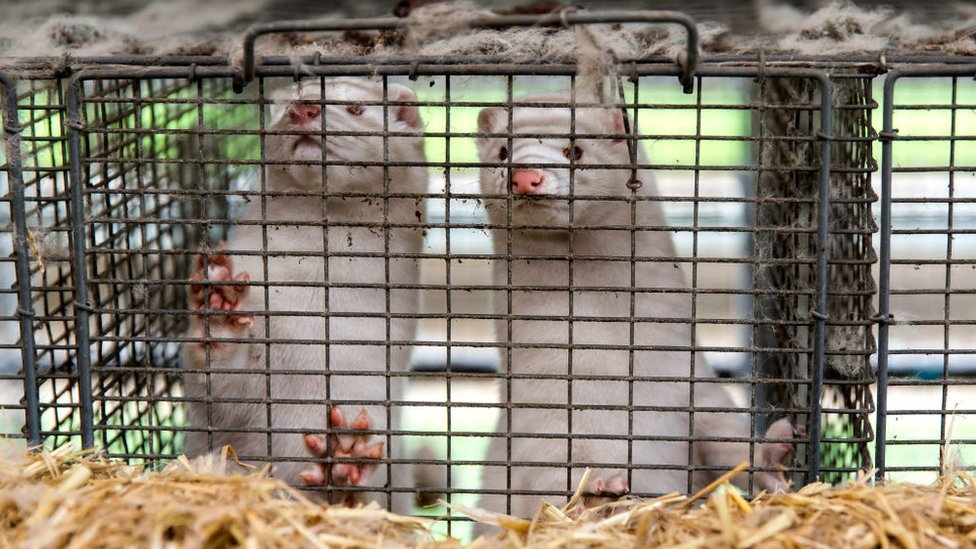
The Statens Serum Institut has published their long-awaited health assessment regarding the reopening of Danish mink farms. The government of Denmark currently has a temporary ban on mink breeding in place until 2023 following a COVID-19 outbreak in several hundred mink farms, which resulted in the country’s entire mink population being culled.
The health risk assessment from the Statens Serum Institut was commissioned by the Minister of Food, Agriculture and Fisheries Rasmus Prehn. In the report, the potential dangers to public health in various scenarios following the reopening of the mink industry in Denmark are assessed.
The report concludes that, in principle, public health is not in imminent danger, but variants of COVID-19 could arise in mink populations, resulting in viral “reservoirs” which vaccines may not effectively protect against. This scenario presents a high public health risk.
Earlier this year the Food and Agriculture Organisation (FAO), World Organisation for Animal Health (OIE) and World Health Organisation (WHO) issued a joint statement confirming the risks of “animal reservoirs” of SARS-CoV-2. Farmed mink have been shown to be capable of infecting humans with the virus.
Although the probability of a new variant of concern is very low, why take the chance at all? Mink production will be reopened, where predators will be locked in small cages to use their fur. Why run a risk at all when there are so many good reasons not to take it.
Britta Riis, Director, Animal Protection Denmark
According to Animal Protection Denmark, mink breeders themselves have little incentive to continue production: only 15 mink breeders, about one percent, have chosen the dormancy scheme, where they can reopen their mink farms following the temporary ban. The remaining Danish mink breeders have chosen expropriation.
1243 mink breeders have applied for compensation for shutting down their operations completely, while 15 have applied for the dormancy scheme. The latter may still change their decision and opt for expropriation until 21 December 2023.
Animal Protection Denmark has long argued that mink production is unethical. The organisation points out that mink are active predators, which in the wild defend territories, often covering several kilometres and stretches of water. On mink farms, however, they spend their entire lives in very small and barren wire cages, where they are deprived of their basic natural behaviour.
Our past links relating to the Danish fur situation:
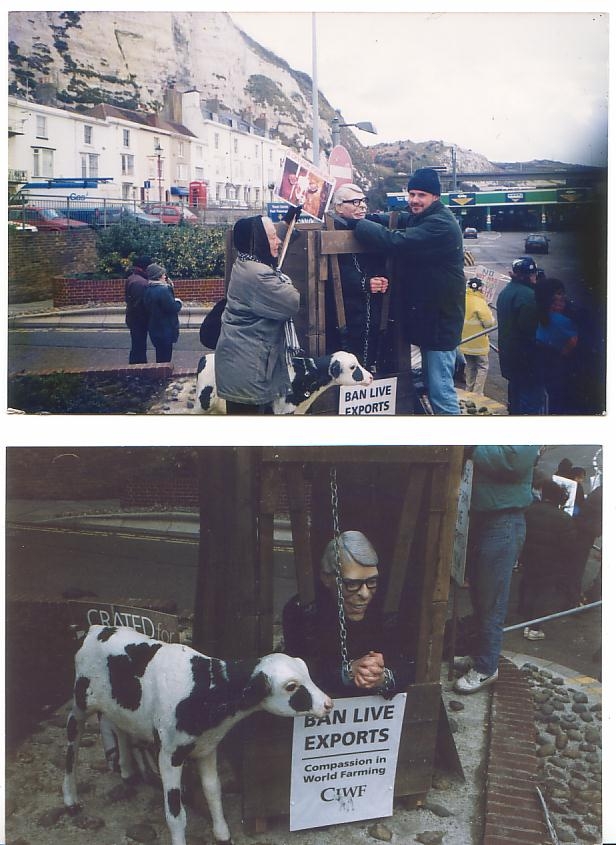
Get your banners at the ready! Join us for Ban Live Exports: International Awareness Day on 14th June 2022. The UK Government has promised to ban live exports from Britain for slaughter or fattening. But the Bill that would end this trade has stalled in Parliament. What are they waiting for?
So, on the seventh annual Ban Live Exports: International Awareness Day, we’ll be demanding the Government keeps its promise and ends this cruel trade. Add Ban Live Exports: International Awareness Day on June 14th to your diary now.
Over the last two years we’ve been unable to meet in person due to restrictions on gatherings, so we’re excited to tell you we’re going to be organising a rally in Central London.
But don’t worry if you’re not able to get to London. We plan to live stream at the event as well as having other activities you can take part in online.
We hope you’ll be able to get involved in any way you can in June. I’ll be back in touch soon with more news on our Ban Live Exports: International Awareness Day.
I look forward to marking this important date with you this year. Best wishes,
Sarah Moyes Senior Campaign Manager
PS: Don’t forget to head over to our Facebook event and let us know if you’re able to join us for this day of action.
India is experiencing an unusual and dangerous heat wave.
It’s 42 degrees Celsius (107° F) and it’s sweltering.
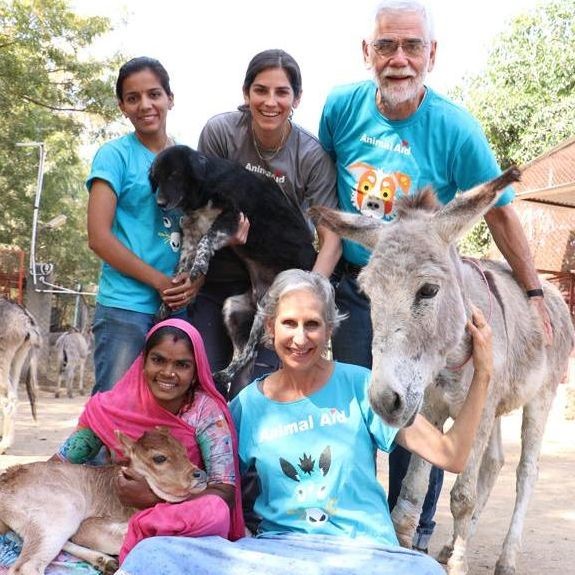
To keep the animals as cool as possible we have air coolers, tubs full of water for animals to lie in, fans and wet towels all around the shelter.
Our amazing staff are working harder than ever,despite the exhausting weather, to protect our animals from over-heating.
Working in Rajasthan’s climate extremes takes perseverance, creativity, material resources and ready helpers.
Thank you for giving us what it takes to make this season bearable, and as much as possible sweet for the animals.
Just-Wouldn’t-Quit Kenny!
When a veterinarian in a nearby government hospital called us to rescue a dog someone had dropped there after finding him unconscious on the road, we hurried to help.
And so lucky that we did, because this sweetheart didn’t have much longer to live.We rushed him back to Animal Aid where we gave him emergency treatment for shock, dehydration and difficulty breathing.
He seemed to have a broken jaw but otherwise no broken bones. With so much blood loss, we weren’t sure he would ever fully wake up. But within a few hours, his eyes brightened and ever so slowly he seemed to absorb the idea that he was in a new place, and that he would be safe here, beginning a second chance at life. This boy’s road to recovery included 2 months of daily therapy to learn to walk again, eat and regain his cognition.
Meet our awe-inspiring little hero, Kenny, today! For angels who just won’t give up,
Magic is about to change your idea of The Possible
When we rescued this little love, we found the biggest wound on a small cat we’ve ever had the challenge to treat. During his first days, it was incredible that he would even eat. As the large and complicated wound closed, Magic’s mind-blowing recovery gave new life to the phrase “I can’t believe my eyes.”
Out with the pain and starvation, and in with an Ocean of love.
Maggots had made an enormous wound on his neck. His pain must have been so gripping that he couldn’t eat, and malnourishment had weakened him. His striking blue eyes were bright with pain and worry. We hurried him to Animal Aid and started his treatment immediately. We boosted him with a hydration drip and started a vigorous feeding schedule, delighted that he loved his food and gained strength rapidly.
With such a large wound, it took two months for him to heal,but long before his healing was complete this loving angel had made friends with every staff member in his area, and most of the dogs too! As he recovered, his amazing eyes revealed intelligence deep as the ocean. And that’s what we’ve called him.
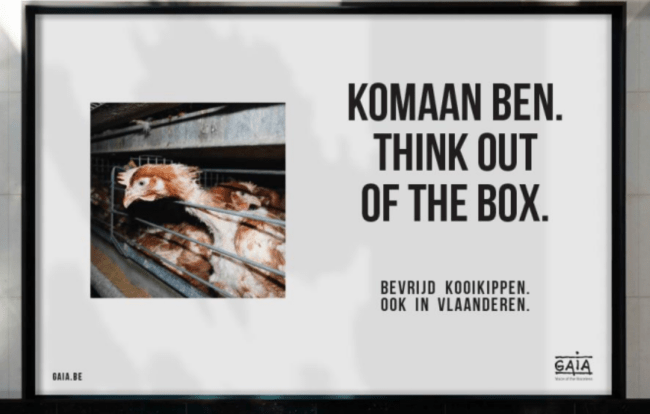
GAIA have sent an open letter in Flemish newspapers calling on the Flemish Animal Welfare Minister to finally ban caged systems for laying hens in Flanders. They also launched a poster campaign throughout the region to raise extra visibility for the issue.
In the previous legislature, Flemish Animal Welfare Minister Ben Weyts announced his intention to introduce a ban on cages for laying hens. Under the Flemish coalition agreement (animal welfare policy note, 2019-2024) the government undertakes to phase out these cage systems. Frustrated by these empty promises, GAIA sent an open letter to the Minister yesterday, urging him to introduce the ban:
You hold the key to open those thousands of cages and give millions of chickens a better life. Let them breathe, stretch their wings and lay eggs without a bad taste. “Think out of the box”, as you’ve done before, and put an end to this misery. The 3,000,000 Flemish chickens thank you.
In Flanders, more than 3.2 million laying hens are housed in so-called ‘enriched’ cages. In such cages, the space per chicken is approximately 1 A4 page with little free-range material. Conventional battery cages, in which chickens only have two-thirds of an A4 space, have been banned in the EU since 2012, but the so-called enriched cages, with about an A4 space per chicken, are still allowed. Wallonia already banned enriched cages in 2018.
More than 70% of Flemish people agree that keeping chickens in cages should be banned. Only 8% disagree with the ban, with the remaining 20% being neutral. This is shown by the opinion poll by Ipsos, which was conducted in April 2022.
“Come on Ben. Think out of the box. Free caged hens in Flanders too.