EU citizens have until 31 January 2022 to collect the final 100,000 votes out of the 1 million needed for a successful EU Citizens’ Initiative to demand the end of the shark fin trade in the EU.
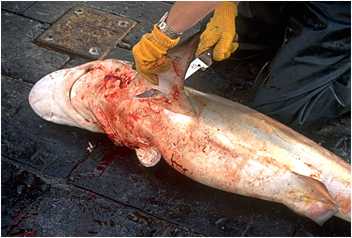
Shark finning refers to cutting off the fins of live sharks on board a fishing boat and throwing the shark overboard to die in the water.
While shark finning is prohibited on EU vessels and in EU waters, and sharks must be caught with fins attached to their bodies, the EU is one of the world’s largest exporters of fins and a significant transit area for the global fin trade.
The EU exports approximately 3,500 tonnes of fins per year, with a total value of around 52 million euros. 73 million sharks are slaughtered each year for this purpose.
So far, 900,000 EU citizens call to “end the trade of fins in the EU including the import, export and transit of fins other than if naturally attached to the animal’s body”. Should they reach 1 million by 31 January, the European Commission could then decide to propose a new regulation to achieve this goal.
Following our lawsuit in 2020,Sanderson Farms scrubbed its false and misleading advertising and labels. But the underlying problems remain — terrible suffering for over 1 million animals who they kill every day.
Now the company is set to merge with Wayne Farms, another chicken flesh-selling company with its own history of animal abuse. We must speak up now!
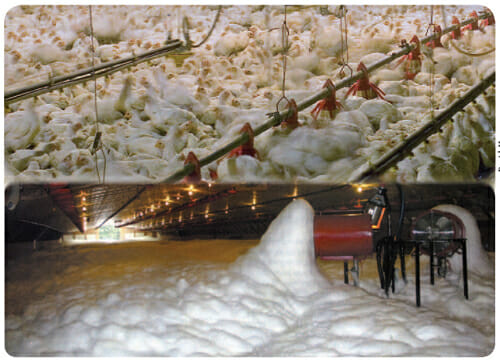
Chickens in Sanderson’s industrial plants are held captive in filthy, overcrowded, inhumane conditions.
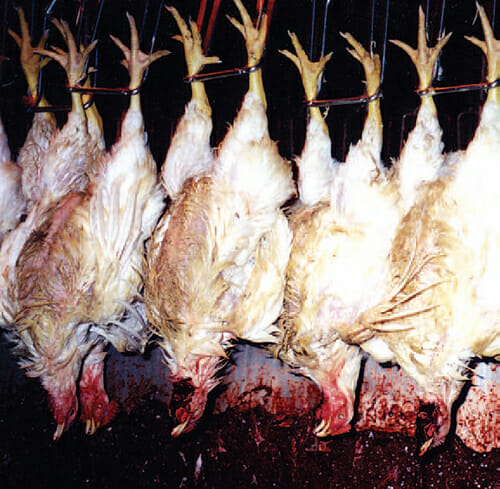
When slaughter time comes, the industry standard is that they are violently hung upside down in metal shackles;
dunked in a tank of electrified water (which often fails to render them unconscious); have their throats cut (this step too is performed at a breakneck pace and the birds often survive it);
lastly, they are dunked in boiling water to defeather them.
Tragically, over 500,000 birds reach the water alive each yearand are drowned in boiling water while still conscious.
According to a former slaughterhouse worker, when chickens are scalded alive, they “flop, scream, kick, and their eyeballs pop out of their heads. They often come out of the other end with broken bones and disfigured and missing body parts because they’ve struggled so much in the tank.”
As if that weren’t enough, chicks who hatch later than expected have been documented being born alone in barren plastic creates, gasping for air and the warmth and comfort of their absent mother.
The corpses of dying and dead chicks end up scattered around, including near the living. The final stage of the process for unwanted chicks is the metal macerator, which grinds them up. Truly it is a nightmare scenario.
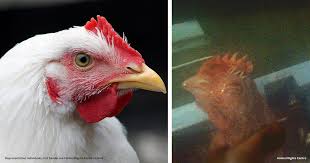
Enough is enough. Chickens are sentient creatures, capable of feeling love and happiness, as well as suffering and feeling fear and terror.
It is inexcusable to treat them as if they are inert matter, as is currently being done by Sanderson Farms and Wayne Farms.
And I mean…There were more than half a million chickens drowned alive in scalding water tanks last year, according to the USDA.
That’s 1,400 birds boiled alive each and every day right on US soil!!
Why don’t more people know about this?
Sanderson Farms and other meat industry giants in the US like National Chicken Council,Tyson Foods, Foster Farms, Koch Foods, who are collectively responsible for slaughtering 70-80% of birds each year—need to end this animal cruelty now and have to understand that consumers demand real changes for chickens.
It’s time for these corporations to transition away from the cruel, outdated practices of factory farming, adopt much stronger animal welfare policies, and ultimately focus their energy on expanding their plant-based alternatives in order to improve the treatment of animals and workers suffering within their supply chains.
These meat industry giants have a unique power—and responsibility—to make these changes that will impact billions of animals every year. By phasing out live-shackle slaughter in their supply chains, countless chickens will be spared from one of the greatest causes of suffering in slaughterhouses today.
Because even one bird boiled alive is too many.
For too long, the meat industry has put profits before people and animals, with devastating consequences.
But now, pressure is mounting, more than 180 major food companies have already adopted the Better Chicken Commitment.
With these two petitions we refuse to support, with our taxes, an industry that is unable to find humane and effective solutions, an industry that persists in its mistakes, without respect for animal welfare or long-term human health.
We demand that governments – national, European and international – take their responsibilities and stop perpetuating this dangerously failing system. Please sign and share
Parabéns!!
ao Supermercado Baggio, no Passo de Torres, pela iniciativa de colocar esse tipo de carrinho de compras, onde podemos levar nosso pet, a Mel, para fazermos compras, sem causar qualquer incômodo.
Iniciativas assim poderiam ser copiadas.
(Translation) Congratulations!
to the Baggio Supermarket, in Passo de Torres, for the initiative of placing this type of shopping cart, where we can take our pet, Mel, to shop, without causing any inconvenience.
Initiatives like this could be copied.
And I mean…When you take your baby to the supermarket in the special baby buggy, people accept it and take it for granted.
Why complain about pets, who are usually cuter, more groomed and well behaved than small children? Congratulations also from us to the innovative supermarket.
Times change, people evolve
On 23 December 2021, German retailer Kaufland made a commitment to end the sale of live carp in Slovakia,taking effect in January 2022. The commitment was made following a dialogue with our member, Humánny Pokrok.
The sale of live carp is part of the Christmas tradition for some people in Slovakia, Poland and the Czech Republic. This includes a bathtub ritual, whereby the Christmas carp is taken home alive in a plastic bag and then put in the family bathtub for at least one or two days before being killed, often by a repeated blow to the head with a blunt object or by cutting off the head with a knife.
A recent survey showed that 20% of Slovaks buy live carp to kill at home at Christmas, 15% buy live carp to be killed on the spot, 21% buy processed carp and 44% do not buy carp at Christmas.
Humánny Pokrok launched the campaign ‘Carp Hell’ in December 2021 to demand an end to the sale of live carp in Slovakia, gathering 7,500 signatures in a petition so far. The organisation is highlighting the sentience of carp and calling for both retailers and policymakers to put an end to this cruel practice.
In light of the latest scientific knowledge, the holidays of peace are difficult to associate with suffocating in a plastic bag or cutting off heads in full consciousness. The sale of live carp, from the beginning of the transport to the killing at home in the kitchen, is a real hell for carp
Martin Smrek from Humánny Pokrok
In neighbouring Poland, retailers Kaufland, Tesco and Lidl have already made the commitment to stop selling live carp.
This is a crucial step in the fight against atrocities committed every year. We are very pleased that Kaufland has once again shown that it is a market leader who is becoming more sustainable through its commitments and listening to its customers who care about animal protection. I think it is also an inspiration for other companies in Slovakia, which with their standards should also take the side of carp and improve their living conditions, as Kaufland has done today.
What a PETA eyewitness documented at Liberty Research, Inc.—a New York–based facility that conducts experiments on animals for pharmaceutical giants such as Bayer and Merck and churns out thousands of animals for use in other deadly tests—is horrifying.
In one experiment, workers used a drill to bore holes into the skulls of 30 beaglesso that distemper virus could be injected directly into their brains. Some dogs blinked and even whimpered during the painful procedure, and they woke up moaning. In the days that followed, they banged their heads against the walls of the cages, causing blood to spurt from their wounds.
Following PETA’s exposé of the suffering that dogs and cats endured at Liberty, the U.S. Department of Agriculture and state officials cited the company for failing to provide some of the approximately 3,000 animals in its “care” with adequate veterinary care. The laboratory was also suspended from experimenting on animals for three months after its renewal application was denied.
But despite evidence of rampant cruelty and a laundry list of citations, pharmaceutical companies and universities are still commissioning tests and ordering live animals from Liberty—and the animals locked inside its windowless buildings need your help.
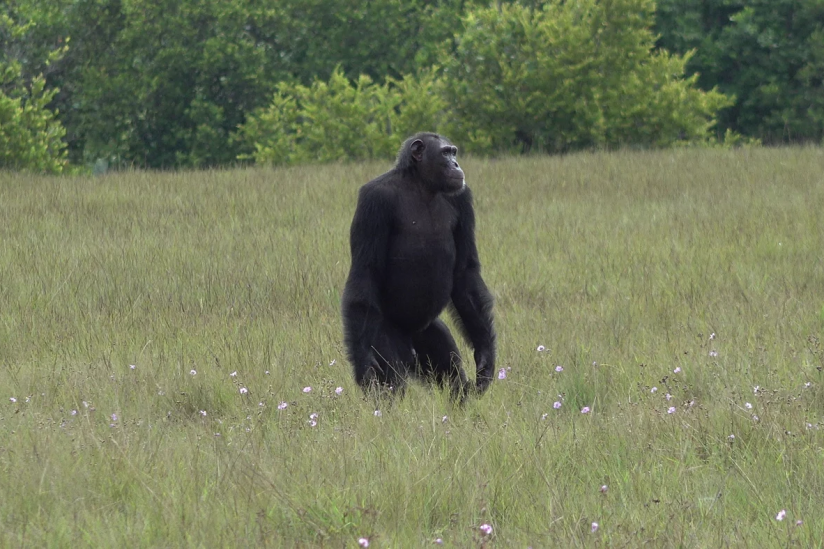
Actually, the two live peacefully side by side (??) But now a group of chimpanzees has shown themselves surprisingly aggressive towards the larger apes.
Researchers have observed for the first time how they attack gorillas and even killed two.
Two adult male chimpanzees in Loango National Park in Gabon.
Chimpanzees have long been considered peaceful fellows.
But at least since the 1970s we have known that they can do things differently – when Jane Goodall documented extremely brutal and bloody attacks by the great apes.
They usually go after rival conspecifics in territorial disputes.
In addition, chimpanzees prey on smaller animals, including other species of monkeys. However, it was not previously known that they also attack other hominids.
But researchers observed two deadly attacks by chimpanzees on gorillas in 2019.
“Interactions between chimpanzees and gorillas were previously considered relaxed,” says behavioral biologist Simone Pikafrom the University of Osnabrück, Germany, describing the relationship between the primates in a press release:
“We have regularly observed both species peacefully in foraging trees, and our Congolese colleagues have even witnessed chimps and gorillas playing together”.
In the Loango National Park in Gabon, Africa, the monkeys lived happily side by side until the brutal attacks took place.
Since 2005, scientists from the Max Planck Institute for Evolutionary Anthropology in Leipzig and the University of Osnabrück have been researching the behavior of around 45 chimpanzees in relation to their social relationships, interactions with other groups, their hunting behavior, their tool use and their communication.
In the journal Scientific Reports they describe the disturbing incidents and remember the first one in February 2019: “At first we only heard screams from the chimpanzees and thought we were observing a typical encounter between neighboring chimpanzee communities. But then we heard chest drumming, a display behavior characteristic of gorillas, and realized that the chimpanzees had encountered a group of five gorillas.”
Silverback on chest drums.
A total of 18 chimpanzees attacked a silverback, three adult females and a baby for 52 minutes.
The second time, in December 2019, 27 chimpanzees attacked seven gorillas, including one adult male and three females, one cub and two children, for 79 minutes.
In both attacks, the gorillas tried to defend themselves and fought back. However, they had no chance against the majority of the chimpanzees.
The adult animals were able to escape, but two gorilla babies were killed, one of them even being eaten by the chimpanzees.
Only three of the attackers were injured.
How did the attacks come about?
The researchers don’t know for sure. Attacks and killings between different animal species usually occur because of hunting for prey or competition for food.
“It could be that the coexistence of chimpanzees, gorillas and forest elephants in Gabon’s Loango National Park has led to greatly increased competition for food, which in extreme cases erupts in deadly conflicts between the two great ape species,” explains co-study author and primatologist Tobias Deschner from the Max Planck Institute for Evolutionary Anthropology.
Climate change may also have contributed, as it makes food and other resources increasingly scarce.
The researchers have several possible explanations for the observed aggression.
“Interspecies kills can be interpreted as either foraging behavior or competition for food. We are only beginning to understand the impact of food competition on the interactions between the two great ape species,” says Simone Pika.
“Our study shows that there is still a great deal to explore and discover about our closest living relatives and that Loango National Park, with its unique mosaic habitat, is a unique place to do so”.
And I mean..Here the following must be said: The two species have never lived side by side peacefully because they don’t usually meet in the wild.
The human species is expanding, and its fellow animal inhabitants are left with less and less living space.
It`s about distribution struggle for increasingly scarce resources, obviously that’s man-made, man has a decisive part to play in it.
The term “murder” does not apply to killings within the animal kingdom because it comes from the human world of consciousness and animals are not capable of the complexity of categorical thinking.
They give themselves no moral and ethical account of why they do or don’t do something.
Precisely this characteristic of conscience is also part of the qualification of a homicide: whoever kills insidiously and with full calculation is a murderer.
The characteristic cannot be applied to animals. And chimpanzees belong in the animal world.
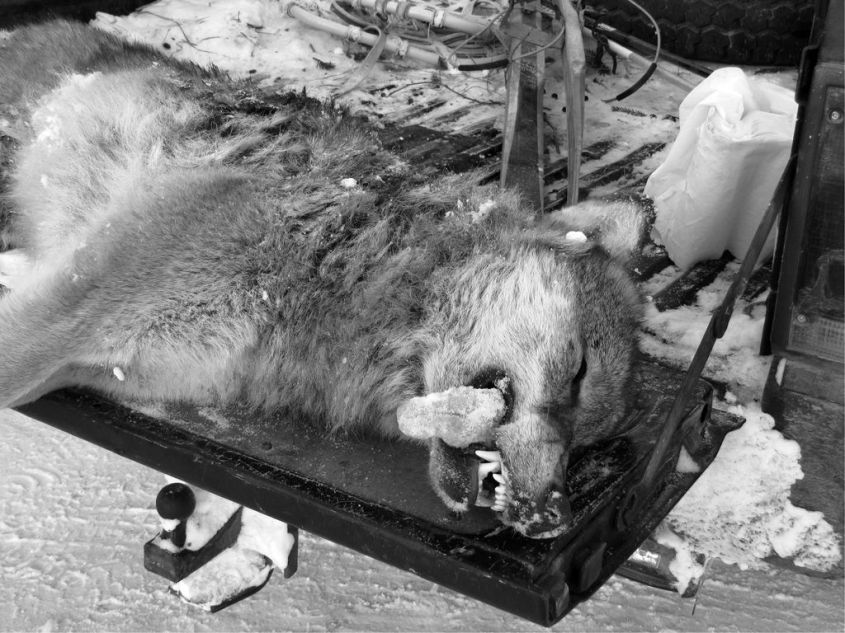
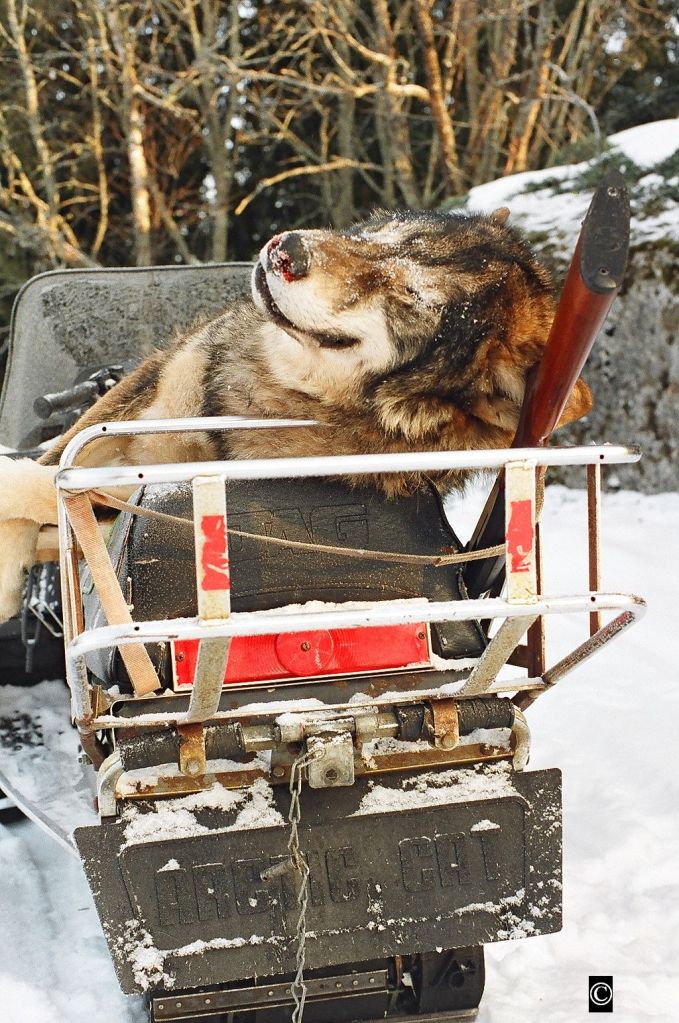
The current 2022 hunt is even more gruesome than usual as various local county governments work together to eradicate entire families of wolves from their territory and habitat.
Norway (a non-EU country where the hunt for54 wolves can continue until May 31) and Sweden are cooperating in this grotesque eradication effort and creating a wolf holocaust.
Almost 2,000 hunters have signed up on the Swedish side to kill 27 wolves. Finland has also launched a hunt for 20 wolves.
Thus, in Scandinavia in 2022 more than 100 wolves will be slaughtered in the most gruesome ways.
The intentional killing of predators goes against the spirit and spirit of the EU’s Habitats Directive protecting endangered species.
NGOs in Sweden, Norway and Finland have called for the hunt to stop. Not in line with modern nature conservation: Sweden has been involved in the cruel business of trophy hunting for brown bears, lynx and wolves since 2010.
Wolves and other predators were nearly wiped out by human persecution in the late 19th century. At the beginning of the 19th century, the love of nature and the movement of people to urban areas contributed to a renewed appreciation for a diverse range of animals. The Hunters’ Association also contributed to the protection of certain species.
Unfortunately, in the late 1930s the Hunters’ Association was entrusted with the management of wild animals by the state and received enormous economic resources, linking the state and hunting interests, on a model then used in authoritarian Germany.
This model is still valid and gives them a budget of about $5.6 million each year.
This created an institution that would exercise control over wildlife and act as a lobbying force infiltrating government and the hunting political agenda at all levels. And this despite the fact that hunters make up less than 3% of the population.
Why is there a trophy hunt in a developed country like Sweden?
Wolves were fully protected starting in 1966 to save the species.
But as we can see, that has changed, even though Sweden has been subject to EU safeguards since joining the EU in 1995.
Since 2010, licensed hunting has expanded trophy hunting in Sweden as hunters are now allowed to kill bears, lynx and wolves. Foreign hunters are also welcome.
WAV Comment – As if the UK government is not in enough deep water with their Covid drinks parties ! – another issue to anger the general public and to head them deeper down to road to election loss next time round. Pathetic by ignoring scientific advice – but then they, the fools, have always thought of themselves as better. The people will decide.
The government has ignored the advice of its scientific advisers to allow sugar beet farmers to deploy abanned bee-killing neonicotinoid pesticide in 2022.
British Sugar has successfully applied for an exemption to permit the banned pesticide, known as Cruiser SB, to be used in England this year because of the threat to sugar beet posed by a virus transmitted by aphids.
The decision by the environment secretary, George Eustice, to allow the “emergency” use of the neonicotinoid thiamethoxam came despite the Health and Safety Executive and the government’s expert committee on pesticides concluding that the requirements for an emergency authorisation had not been met, and that pollution from the pesticide would damage river life.
Announcing the decision, the environment secretary said that farmers would be forbidden from growing flowering plants for 32 months after the sugar beet crop to reduce the risk to bees, but admitted: “It was not possible to rule out completely a degree of risk to bees (and this is the case even with a 32-month exclusion) from flowering plants in or near the field in the years after neonicotinoid use.”
Environmental charities condemned the move as “shameful” and “a betrayal”.
Sandra Bell, campaigner at Friends of the Earth, said: “Allowing a bee-harming pesticide back into our fields is totally at odds with ministers’ so-called green ambitions, not to mention directly against the recommendation of their own scientists. This decision comes just two months after the government enshrined in law a target to halt species loss by 2030.”
Stephanie Morren, senior policy officer for the RSPB, said: “As we tackle the nature and climate emergency on our doorsteps we need decision-makers to support our farmers in delivering sustainable farming. This means upholding the ban on highly toxic pesticides like neonicotinoids, and instead working to support our farmers in reducing their reliance on these harmful chemicals.”
Matt Shardlow, chief executive of Buglife, said: “Neonicotinoids approved under the current pesticide approval process devastated populations of wild bees and heavily polluted rivers. It is shameful that no action has been taken to ensure that bee and wildlife destroying pesticides are properly assessed as being pollinator safe before they are approved or derogated for use.”
Neonicotinoids were banned for agricultural use across the EU and Britain in 2018 due to their devastating impact on bee populations. Tiny traces of these toxic chemicals in crop pollen or wildflowers damage bees’ ability to forage and navigate. A recent scientific study found that even a single exposure to a neonicotinoid insecticide could significantly damage future generations’ ability to reproduce.
The exemption for Cruiser SB was also granted in 2021 but was not needed by sugar beet farmers because modelling indicated that the yellows virus carried by aphids would pose no threat. In 2020, according to the government, the virus destroyed a quarter of the national crop.
A Defra spokesperson said: “This decision has not been taken lightly and is based on robust scientific assessment. We evaluate the risks very carefully and only grant temporary emergency authorisations for restricted pesticides in special circumstances when strict requirements are met.
“Last year the threshold was not met so the authorisation was never exercised. Strict criteria remain in place meaning this authorisation will only be used if necessary.”
Ministers have given the go-ahead for farmers to use a banned bee-harming pesticide in England for the second year running.The government went against the advice of its own scientific advisers, who said they did not see the justification for applying the neonicotinoid to sugar beet this year.
A single teaspoon of thiamethoxam is toxic enough to kill 1.25 billion bees, according to biology professor and insect expert Dave Goulson, and wildlife chiefs warned the decision could devastate already-struggling bee populations.
Environment officials announced they will permit the use of the pesticide to try to combat a virus transmitted by aphids.
They say the UK’s sugar harvest could otherwise be at risk this year and that “its exceptional temporary use will be tightly controlled and only permitted in very specific circumstances when strict requirements are met”.
Neonicotinoids are considered so harmful that they were banned by the UK and the EU in 2018, but since then 12 countries, including France, Denmark and Spain, have also granted emergency permits for neonicotinoid treatments to go ahead.
This time last year there was an outcry when ministers first gave beet farmers the green light to apply the pesticide, although eventually it was not used because a cold winter killed off the aphids.
Wildlife experts warned the decision “sounds a death knell for millions of bees and other insects” and flies in the face of government pledges to halt biodiversity loss.
The Pesticide Collaboration, which encompasses environmental organisations the RSPB, Friends of the Earth, Buglife and the Wildlife Trusts, said the would harm of wildlife and that the government should increase protection for bees and other wildlife from the harm caused by pesticides.
Minutes from a meeting of the Expert Committee on Pesticides say members agreed that the requirements for emergency authorisation had not been met and that pesticide water pollution caused by the decision would harm river life.
Even minute traces of neonicotinoid chemicals in crop pollen or wild flowers “play havoc with bees’ ability to forage and navigate, with catastrophic consequences for the survival of their colony”, according to the RSPB.
A recent study showed that even one instance of exposure of a “neonic” insecticide significantly harmed bees’ ability to produce offspring.
A third of the UK bee population is thought to have vanished in a decade, yet up to three-quarters of crop species are pollinated by bees, studies show.
Thiamethoxam is a seed treatment, taken up by the whole plant, including the flower, pollen and juices from the plant insects forage on, wildlife experts say.
Sandra Bell, of Friends of the Earth, said: “Allowing a bee-harming pesticide back into our fields is totally at odds with ministers’ so-called green ambitions.”
Joan Edwards, of The Wildlife Trusts, said the decision was “a clear betrayal of promises made to protect the natural world and comes at a time when nature declines are worse than ever”, adding: “Less than two months ago the government adopted a legally binding commitment to halt the decline of wildlife by 2030 within its flagship Environment Act – the authorisation of this neonicotinoid flies in the face of this commitment and sounds a death knell for millions of bees and other insects.”
A Defra spokesperson said: “This decision has not been taken lightly and is based on robust scientific assessment. We evaluate the risks very carefully and only grant temporary emergency authorisations for restricted pesticides in special circumstances when strict requirements are met.
“Strict criteria remain in place meaning this authorisation will only be used if necessary.”
The government also says work on gene editing will help develop crops that are more resistant to aphids.
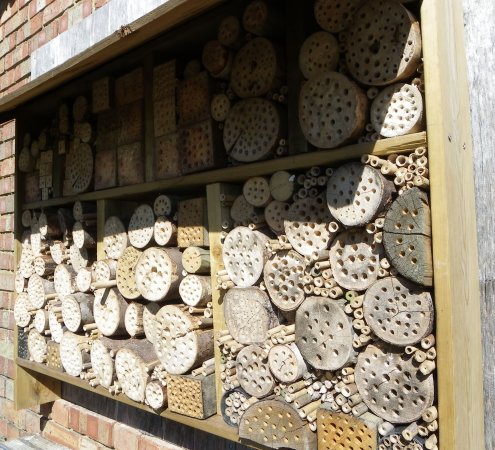
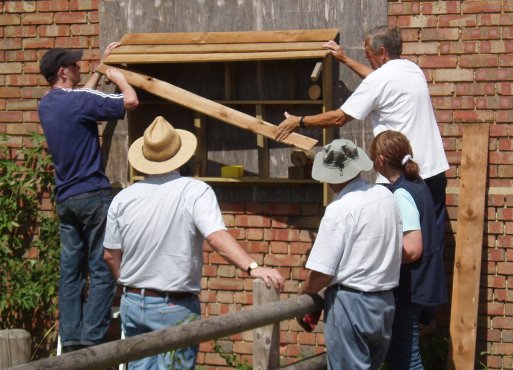
WAV Comment – I (Mark) am so angry about this; we are trying so hard to encourage bee reproduction and increase numbers with our ‘Bee Hotels’; and yet here we have a dickhead government that simply appears to give the green light to the deaths of millions more. Dickhead government by name, dickhead government by nature.
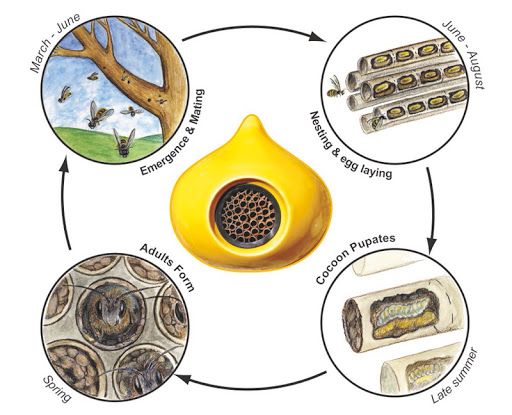
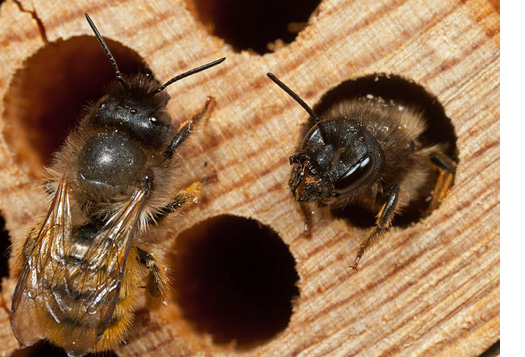
Here below you can see a few pictures of our bee hotel once we had made it. The little chambers in each log act as breeding tunnels for new bees to develop and then go into the wild as pollinators.



 When slaughter time comes, the industry standard is that they are violently hung upside down in metal shackles;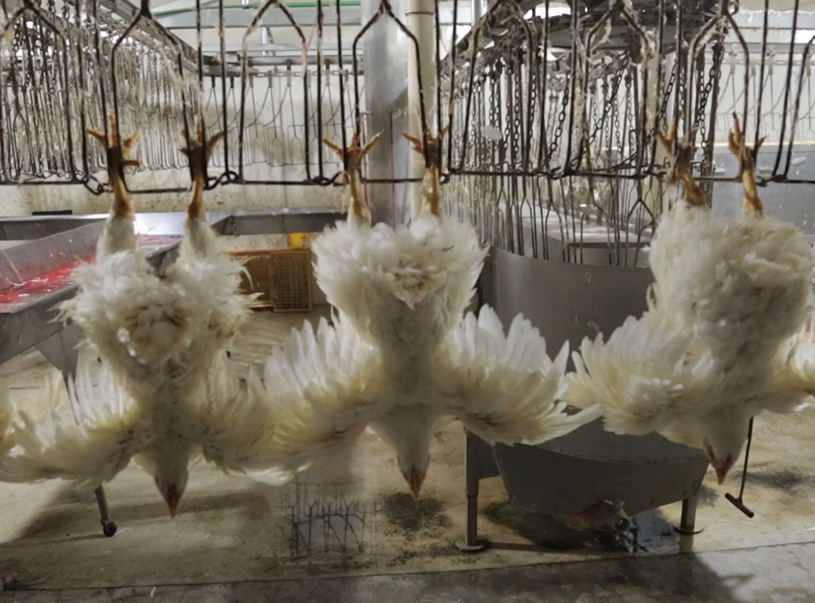
 lastly, they are dunked in boiling water to defeather them.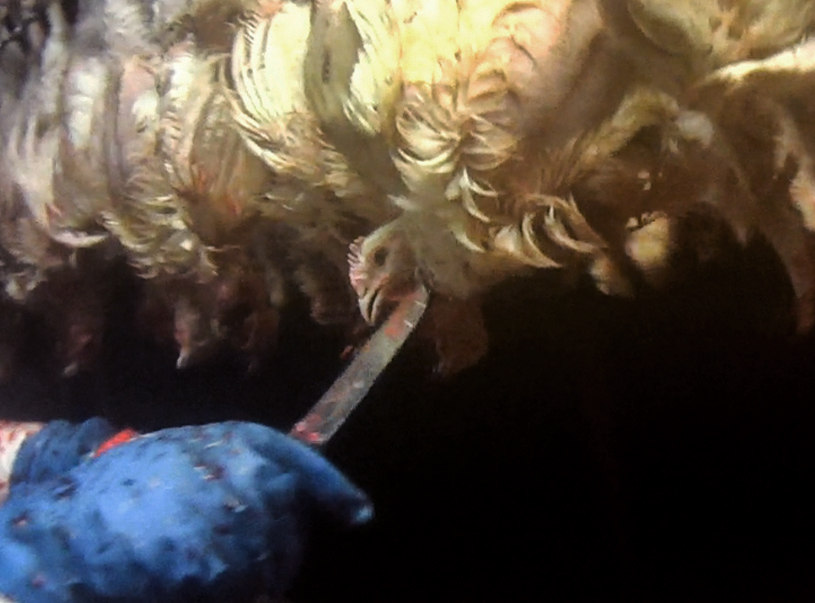
 For too long, the meat industry has put profits before people and animals, with devastating consequences.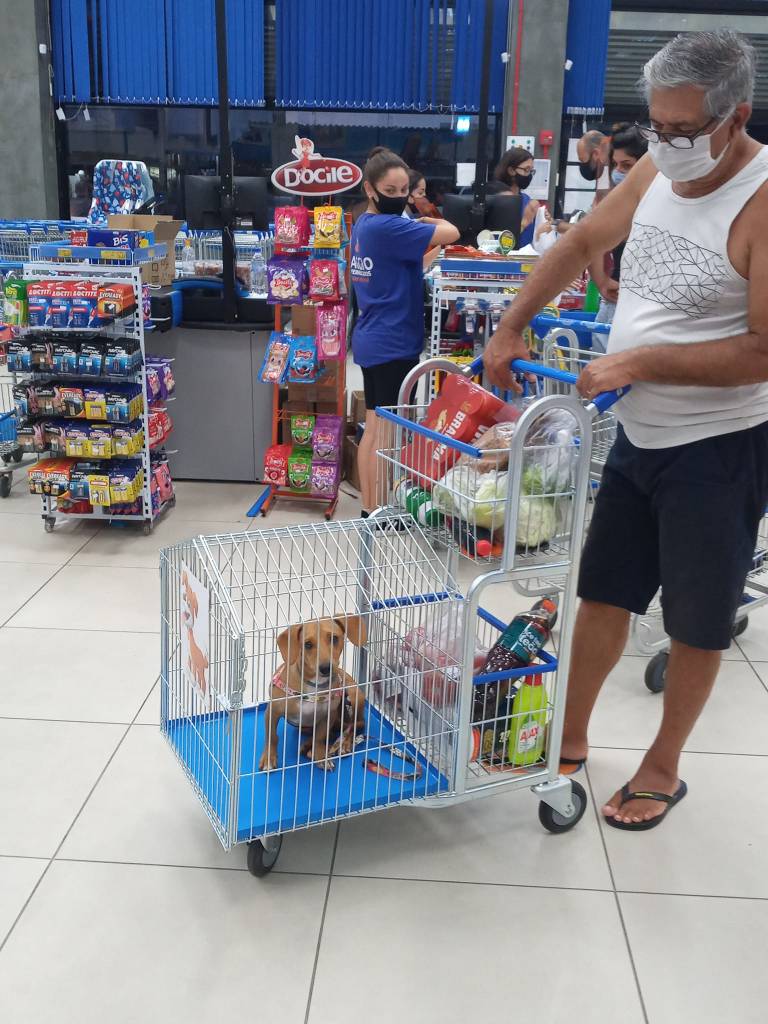







 Almost 2,000 hunters have signed up on the Swedish side to kill 27 wolves.
 This created an institution that would exercise control over wildlife and act as a lobbying force infiltrating government and the hunting political agenda at all levels. And this despite the fact that hunters make up less than 3% of the population.