Webinar On Why Britain Should Ban Hunting Trophies – 11/1/22 at 11.00AM GMT. See Below for Details.

Hello Mark!

I know it’s short notice, but TUESDAY, January 11th at 11:00AM GMT is Ban Trophy Hunting’s webinar…  Jane Goodall and the former Pres. of Botswana (who banned trophy hunting) are both listed as speakers)

(20+) Why Britain should Ban Hunting Trophies ASAP | Facebook

Event by All-Party Parliamentary Group on Banning Trophy Hunting

Public  · Anyone on or off Facebook

The UK Government has pledged to ban hunting trophies – but isn’t able to say when.

A new report by the All-Party Parliamentary Group on Banning Trophy Hunting (APPG) reveals that British imports of hunting trophies from protected species may be going up – and that official figures may be just the tip of the iceberg.

The APPG is calling on the government to name a date for the introduction of its bill, or to instead adopt the Hunting Trophy Import (Prohibition) Bill promoted by backbencher John Spellar MP which has won cross-party support and is scheduled for debate on Friday, 14 January.

On Tuesday 11 January, the APPG launches its new report ‘Shooting up – Are Britain’s Trophy Imports & Hunting Companies Booming?’ in a webinar open to the public, and challenges the government to bring a swift end to imports of hunting trophies into Britain.

Panelists include world-famous conservationist Dr Jane Goodall; Lt Gen Serestse Khama, former President of Botswana; Professor Phyllis Lee of the Amboseli Trust; Sir Roger Gale MP (Con); Baroness Sue Hayman (Lab); Dave Doogan MP (SNP); Lord Chris Rennard (Lib Dems); Hywel Williams MP.

Join us on:

Zoom –
https://us02web.zoom.us/j/87432433558

Facebook Live – Link to be posted on the day of the event.
YouTube – Link to be posted on the day of the event. 

Regards Mark

Drought in Africa

Drought in Africa-By Martin BuschmannMEP

The rain doesn’t come any more. It has not rained in eastern Kenya for over a year.
Somalia, South Sudan and Ethiopia are also affected. The ground has dried up, nothing grows anymore.
Millions of people in East Africa are at risk of starvation.

The animals are also affected. Giraffes die of thirst in the wildlife parks, the wildebeest and zebras never migrate.
Without water, nothing grows along their migration corridors.

First it hit the hippos, which need large amounts of water and mud to live.
60 carcasses could be counted.
40 bodies of Grevy’s zebras were also found. They became infected with anthrax, the spores of which remain in the dry soil for decades.
All herbivorous animals struggle to survive during the drought.

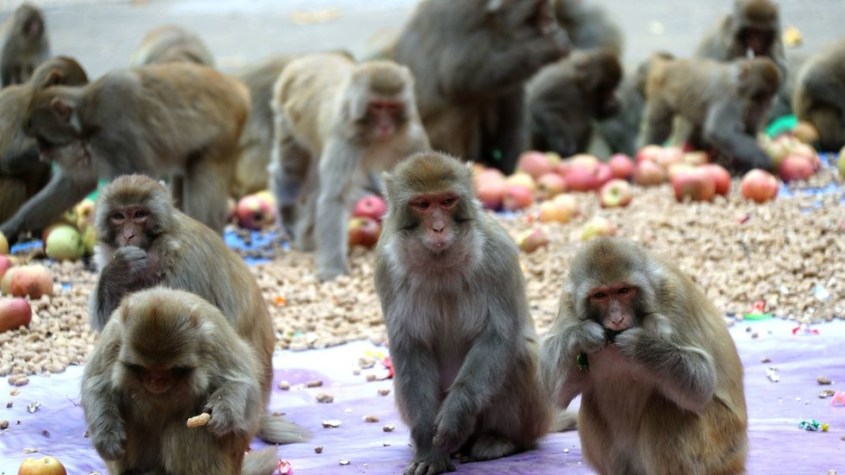
Monkeys band together and attack water tankers or food vans along the streets.
Because of man-made climate change, the rain cycle is permanently disrupted.
And if it does rain a bit, the rock-hard ground cannot absorb the water.
Disastrous floods are the result.

Large parts of the country are becoming uninhabitable and people can no longer make a living.
Disaster seems inevitable.

https://www.facebook.com/Tierschutzabgeordneter/

And I mean... drought in Kenya, tornadoes in the USA … Europe / Germany will be soon the next one.
Germany produces more Co2 than the entire continent of Africa.

Such droughts are undeniably caused by climate change; therefore we MUST understand such reports not as NATIONAL, but as INTERNATIONAL disasters.

But every time people find a different excuse that someone else is to blame and that we don’t have to / can’t do anything.
That is simply wrong and only works in a conspiratorial dream world without any reference to reality.

If you think you have “nothing” to do with what is going on around you and whether it is a meter or a thousand away from you, then you are just that, one … one who pollutes the environment!

It’s time to pull the emergency brake.
Otherwise, potentially catastrophic climate change and the sixth mass extinction of biodiversity can no longer be prevented

My best regards to all, Venus

Will the dairy industry be out soon?

A number of dairy farmers in the US are already turning their backs on the industry.

Among them, California’s oldest dairy farm, Giacomazzi, which has existed for 125 years, is closing down.
It gets rid of the cows and will instead grow almonds.

He is not alone.
A number of dairy farmers are turning their backs on the industry.
His colleague Cornell Kasbergen told ABC: “It is better if you invest your money in trees…. Almonds, pistachios, grapes… ”. There are many alternatives that produce a higher yield than milking cows. “

On the other side of the pond, in the UK, dairy farmers are also giving up their businesses.
According to new research, one dairy farmer leaves the industry every week.

More and more studies show that cow’s milk is good for calves, but not for us humans.


More and more consumers are therefore opting for milk alternatives such as oat, soy or almond milk.
There was already an outcry from the milk lobby and so the European Court of Justice (ECJ) decided in 2017 that the designation “soy milk” is no longer permissible.
However, the names coconut milk and Leberkäs, but also peanut butter, were spared the madness.

Not only the oldest dairy farm in California has opted for an alternative to conventional milk, there is also a dairy in Germany that has recognized the nutritional trend and will also offer a plant-based milk alternative.
There are many reasons why more and more people are choosing an alternative to milk, from their own health to ethical reasons to environmental protection.

Germany is one of the world’s leading milk producers and can look forward to ample subsidies.
So much milk is being produced that it has resulted in an enormous surplus.
“Milk made in Germany” has long been landing in Africa, India, Latin America and China.
Around 33 million tons of milk are produced in Germany each year.
The turbo cows make it possible.

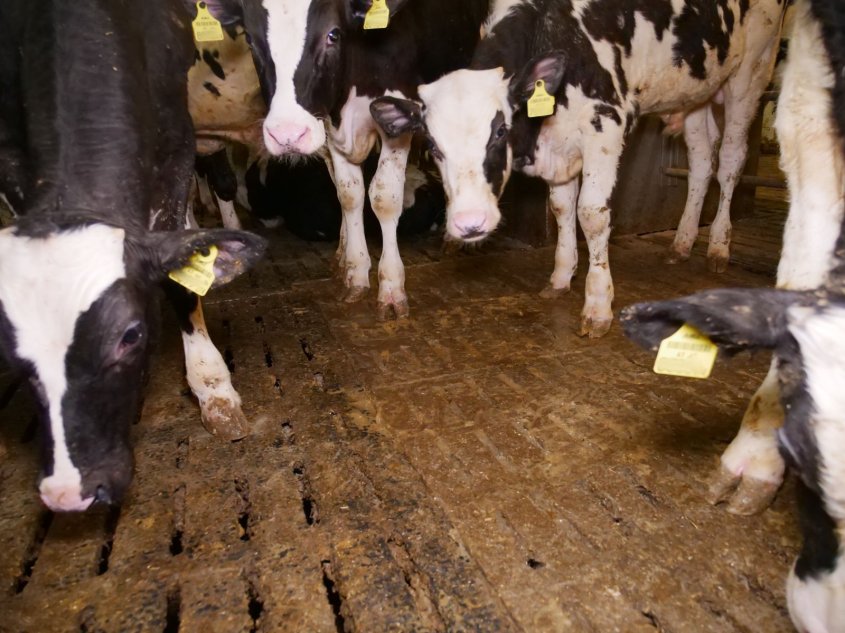
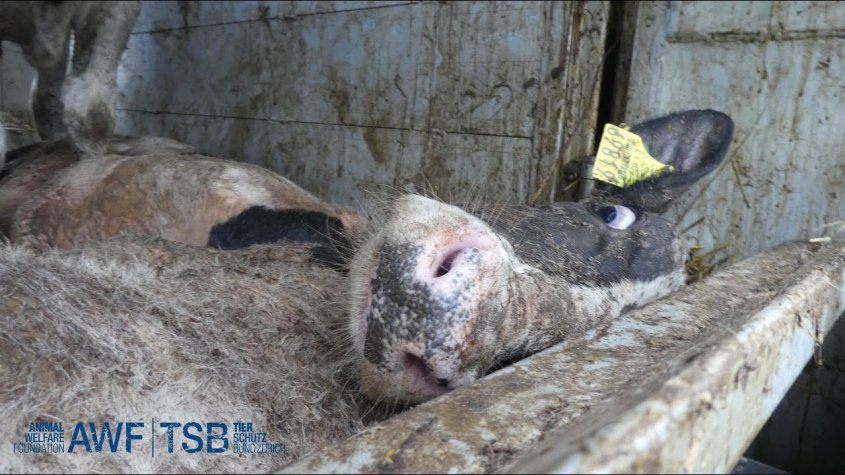
Everyone should be familiar with the grievances in factory farming by now.

Incidentally, the production of a glass of milk leads to almost three times the greenhouse gas emissions compared to non-dairy products, according to a study by the University of Oxford.

According to a study, it takes 5 liters of water to make 1 liter of milk and 650 square meters of land are required to produce one glass of milk a day. That corresponds to two tennis courts.

According to a study by the University of Oxford, the production of one glass of milk leads to almost three times the greenhouse gas emissions of non-dairy products.

Germany is one of the largest milk producers in the world. Around 33 million tons of milk are produced in Germany every year! Animal suffering is subsidized with taxpayers’ money.

A lot of money is involved, as the sales of the largest dairies show.

For example, the largest dairies come from France. Before Danone with a turnover of 18 billion euros, the French dairy Lactalis is even bigger with an annual turnover of 20 billion euros.

The largest dairy in the world is Nestlé. The group generates over 24 billion euros.
https://netzfrauen.org/2019/11/07/dairy-3/

And I mean…In reality, nothing is true about the image of the idyllic dairy farming, which has been romantically transfigured to this day.
Instead, the milk business has turned into a multi-billion dollar industry, which ensures that milk consumption is constantly increasing all over the world.
And the suffering of the animals that produce the milk too.

And this despite the fact that almost two thirds of all adults worldwide are lactose intolerant.
A huge branch of industry has developed, the dairy industry is even the largest in the German food industry.
And for a few years now, the lactose intolerance business has also been flourishing
The new, lucrative trend towards lactose-free dairy products, however, serves less health than the manufacturers’ wallet.

But what is really behind the milk production?
How did the cows become suppliers for a high-tech dairy industry?
How are they suffering?
Who are the people behind it?
What effects does milk have on our health?

The dairy industry goes to great lengths to keep its secrets.
But thanks to the numerous undercover investigations in recent years, the reality and truth about this industry are becoming more and more public.

Regardless of whether in Europe, Asia or Africa – through this continued milk consumption we keep the infant in a permanent state. By nature, it is not intended that we can still process milk as adults.
Humans are the only mammals that will continue to consume milk in adult life.
And many people feel this in their lactose intolerance.

Therefore, myths and other long-established fairy tales of “oh so healthy milk” should each of us banish from our adult lives.

My best regards to all, Venus

Protest in arena against the #corrida- we thank the brave activists!

Protest against the #corrida, September 28, 2021

(click on the picture)

Congratulations to these volunteers who threw themselves into the arena to save the lives of the bulls.
Thanks for your courage !!
Animals are not objects for our enjoyment but living beings to be respected.
Boycott anything involving the use of animals.

 Credit: @rob__banks

And I mean…In November 2013, bullfighting in Spain was declared an “intangible cultural heritage” and the bloody slaughter was protected by law.
Til today.
At the time, this decision could only be justified by the fact that the highly corrupt Spanish People’s Party ( PP ) (under the then Prime Minister Mariano Rajoy) tried to save the dying business of the bullfighting industry from collapse
It must be said that this has made it possible to promote the struggles with public money to this day.

According to a Spanish MP, around 130 million euros flow from the EU to Spanish fighting bull breeders every year.
Around 31 million euros of this came from Germany.

According to ANOET, the umbrella organization for bullfighting events, sales rose to over 3.5 billion euros in 2014; an estimated 200,000 people are directly employed by the organizers and the arenas.

Bullfighting is therefore much more than an “intangible cultural heritage” – it has been an industry that has been functioning well for years and makes billions in profits every year.

Where there is blood, pain, and torture, there will never be art, valor, and culture.

According to recent surveys, around 70 percent of Spaniards are against bullfighting. In fact, the majority of the audience is now reduced to retirees, visitors over the age of 60 and tourists.

We are now thousands, and thousands upon thousands, who want to abolish the bloody spectacle.
We are fighting to finally put an end to the corridas. The brave activists should know that they are not alone.
More and more anti-corrida people are standing behind them.

We thank you!
There is no other way to put it, people like you will make history!

My best regards to all, Venus

Trophy Hunters – Exposed, and A Psychological Perspective – Books.

TROPHY HUNTERS EXPOSED – Inside the Big Game Industry by Eduardo Goncalves

Thousands of animals threatened with extinction were shot by trophy hunters last year. Attempts to protect dwindling lion and elephant populations have been thwarted by hunters. They are now allowed to shoot twice as many critically endangered black rhinos. How has this happened?‘

Inside the Big Game Industry’ is an explosive investigation into the trophy hunting industry, its key players and donors, and how it is stripping endangered animals of the protections they need.  It reveals how a top fundraiser for Donald Trump, Vladimir Putin’s right-hand man, the head of a paramilitary death-squad and a former WWF Director have shot record-breaking lions, elephants, rhinos and leopards.  It exposes the identities of over 500 hunters who have won industry awards for shooting all the ‘African Big Five’; the leading figures in the UK industry including a salesman who helps hunters shoot juvenile lions in enclosures; and the extraordinary kill tallies and trophy collections of hunters around the world.  It also lifts the lid on how household brands – and our taxes – are funding lobbyists, how the Boy Scouts and Salvation Army in the US are helping the industry recruit a new generation of child hunters, how lobbyists are posing as ‘conservation’ groups … and how the industry boasts it ploughs more money into US elections than some of the world’s biggest corporations.  Read how psychologists and criminologists fear trophy hunting could be fuelling violent crime, and how the industry could spark devastating outbreaks of diseases in local communities …The author, Eduardo Goncalves, is an award-winning campaigner, journalist and conservationist. He has been a consultant to WWF and CEO of a national animal welfare charity. In 2018, he founded the Campaign to Ban Trophy Hunting (CBTH) which is today supported by some of the world’s biggest names in music, sport, film and TV. In 2019, CBTH persuaded the UK government to support a ban on imports of hunting trophies. 

Proceeds from the sale of ‘TROPHY HUNTERS EXPOSED – Inside the Big Game Industry’ will be donated to the Campaign to Ban Trophy Hunting http://www.bantrophyhunting.org

Trophy Hunting: A Psychological Perspective by Geoffrey Beattie

Explores the psychology of trophy hunting from a critical perspective and considers the reasons why some people engage in the controversial activity of killing often endangered animals for (so called) sport.

This book explores the psychology of trophy hunting from a critical perspective and considers the reasons why some people engage in the controversial activity of killing often endangered animals for sport.

Recent highly charged debate, reaching a peak with the killing of Cecil the lion in 2015, has brought trophy hunting under unprecedented public scrutiny, and yet the psychology of trophy hunting crucially remains under-explored. Considering all related issues from the evolutionary perspective and ‘inclusive fitness’, to personality and individual factors like narcissism, empathy, and the Duchenne smiles of hunters posing with their prey, Professor Beattie makes connections between a variety of indicators of prestige and dominance, showing how trophy hunting is inherently linked to a desire for status. He argues that we need to identify, analyse and deconstruct the factors that hold the behaviour of trophy hunting in place if we are to understand why it continues, and indeed why it flourishes, in an age of collapsing ecosystems and dwindling species populations.

The first book of its kind to examine current research critically to determine whether there really is an evolutionary argument for trophy hunting, and what range of motivations and personality traits may be linked to this activity. This is essential reading for students and academics in psychology, geography, business, environmental studies, animal welfare as well as policy makers and charities in these and related areas. It is of major relevance for anyone who cares about the future of our planet and the species that inhabit it.

Additional Links –

Safari Club International

About Us – Safari Club

Dallas Safari Club

Home – Dallas Safari Club (biggame.org)

National Rifle Association

Home of the NRA | National Rifle Association

Regards Mark

Trophy Hunting – Time For Global Action To Stop It NOW !

The photos and many of the words are taken directly from the Campaign to Ban Trophy Hunting site which can be visited at:

About – Campaign to Ban Trophy Hunting

WHAT IS TROPHY HUNTING?

The UK All-Party Parliamentary Group on Banning Trophy Hunting defines it as “as a ‘sport’ by those who practice it. It consists of killing an animal for recreation, and then displaying its body as an expression of a hunter’s ‘prowess’. It is distinct from the control or management of wildlife populations, which should be carried out humanely by trained professionals.”

WHAT ARE ‘HUNTING TROPHIES’?

Trophies include whole bodies of animals, their heads or skulls, skins, tails, feet and even genitalia.

In the case of elephants they can include trunks and ears too.

CANNED’ LIONS

There are over 300 Lion ‘Factory Farms’ breeding thousands of lion cubs for trophy hunters to shoot in enclosures.

They are also killed for their bones to make ‘lion wine’ and ‘lion cake’ for wealthy Asian businessmen.

SICK PRIZES

In recent years, over 800 Trophy Hunters have won prizes for having shot lions, elephants, leopards AND rhinos.

The hunting industry hands out special awards every year to hunters who kill over 125 different species of animal.

HUNTING HOLIDAYS

There are thousands of hunting companies, mainly in South Africa and the US.

Some make millions of dollars a year.

Some offer Black Friday deals and even ‘free’ animals for hunters to shoot, such as monkeys.

EXOTIC CREATURES

Many Trophy hunters like to shoot kangaroos, camels, seals, beavers, wild cats, reindeer, and sheep.

In the US, there are estates which import and breed animals such as zebras – so hunters don’t have to fly to Africa to shoot their favourite animal.

In some places, hunters can drive around in tanks, take young children hunting, and even shoot animals from helicopters using a machine gun.

SUFFERING

Studies suggest at least 50% of animals shot by Trophy Hunters are not killed instantly and instead die slow, painful deaths.

Evidence presented to the UK Parliament

Witness(es): Dr Mark Jones, Head of Policy, Born Free Foundation; Eduardo Goncalves, Founder, Campaign to Ban Trophy Hunting; Dr Audrey Delsink, Wildlife Director, Humane Society International UK

Environment, Food and Rural Affairs Committee

Tuesday 2 November 2021 

Watch the committee presented with evidence from the above by clicking on the following link:

Parliamentlive.tv – Environment, Food and Rural Affairs Committee

Visit the (UK) campaign to ban trophy hunting working to expose and end trophy hunting all over the world; see lots more at:

Campaign to Ban Trophy Hunting

KILLING ANIMALS FOR PLEASURE IS CRUEL, UNNECESSARY, AND HAS NO PLACE IN A CIVILISED SOCIETY.

Humans have no right to take the life of an animal for recreation. Animals experience suffering and pain when they are hunted for trophies. Killing endangered wildlife for pleasure only helps push them even further towards extinction.

The Campaign to Ban Trophy Hunting calls for:

-Governments to ban trophy hunting and the import and export of hunting trophies

-Effective enforcement of existing national and international laws against trophy hunting, with tough penalties for offenders

-An immediate halt to the trade in trophies of vulnerable, threatened or endangered species

-Trophy hunting exemptions to be removed from existing international conservation agreements

-Negotiations to commence on a comprehensive global agreement banning trophy hunting

News – News – Campaign to Ban Trophy Hunting

View the huge range of well known supporters calling for a ban – Supporters – Campaign to Ban Trophy Hunting

Actions – Including Petitions:  Action – Campaign to Ban Trophy Hunting

Donations to help the fighting fund – Donate – Campaign to Ban Trophy Hunting

Investigations – Investigations – Campaign to Ban Trophy Hunting

Why its time to ban trophy hunting – Opinion – Campaign to Ban Trophy Hunting

Shop for merchandise – SHOP – Campaign to Ban Trophy Hunting

Regards Mark

Elephant riding is not a holiday experience -it is animal cruelty

Elephants are being abused for tourist rides at Amber Fort, India

In his first guest blog, Shubhobroto Ghosh, our Wildlife Projects Manager in India, writes about elephant abuse witnessed at Amber Fort, the popular tourist attraction in Rajasthan
Unfortunately, the scale of the elephants’ abuse and the hidden suffering behind these rides is lost on many.

Captured from the wild, often as babies, these animals undergo a brutal training process called ‘the crush’ whereby they are beaten and starved into submission by their handlers.

They are next brought into these venues such as Amber Fort, to carry humans on their backs and become props in an entertainment display.

An Amber Fort elephant, with damaged feet from carrying tourists, kneels on a concrete floor

Studies have shown that the elephants at Amber Fort in Jaipur – numbering in excess of 100 – show multiple health problems. These include foot injuries, damaged eyes and general fatigue caused by their unnatural activity.

The elephants’ diet is often nutritionally inadequate, barely fueling them for the steep slope they are forced to climb. They are forced to walk over concrete surfaces which cause them pain and distress.
Bearing in mind this immense cruelty – that is often promoted by travel and tour operators – a petition has been filed to the Supreme Court of India to stop this suffering and improve elephant welfare.

The petition has been led by Wildlife Rescue and Rehabilitation Centre (an NGO), in a bid to stop these elephant rides.

The elephant is India’s National Heritage Animal, but the way they are treated shows complete lack of concern for a wild animal that is extremely social, sentient and walks across a range of over 20 km in the wild every day.
We are working with travel companies to urge them to remove elephant rides and shows from their itineraries, and promote animal friendly tourism.

We are also looking into a sustainable solution for these elephants in Rajasthan, so that they can experience some dignity after a lifetime of abuse.

The elephant has a rich history in India, worshipped and revered in culture and then ironically killed for ivory and illegally traded as objects of entertainment.
World Animal Protection strongly urges people to treat this majestic animal with respect so that as a wild animal, the elephant stays in the wild and does not become a cog in the relentless wheel of entertainment.

https://www.worldanimalprotection.org/blogs/elephants-are-being-abused-tourist-rides-amber-fort-india

https://www.peta.de/aktiv/elefantenreiten-indien-petition/#petition

And I mean…In 13 Asian countries (Bangladesh, Bhutan, Cambodiascha, China, India, Indonesia, Laos, Malaysia, Myanmar, Nepal, Sri Lanka, Thailand and Vietnam) still live between 44,000 and 49,000 wild elephants (CITES, 2017).
At the same time, according to official figures, at least 15,000 elephants are kept in captivity in these countries, most of them in Myanmar.

The actual number of animals caught is probably significantly higher because not all individuals are officially registered (CITES, 2016). The information on animals in captivity as well as in the wild also differ greatly depending on the source.

Originally, elephants were mainly used as work animals.
The elephants now in captivity are mainly used in tourism.

Like all wild animals, elephants never give up their nature.

A wild elephant would never let a human ride on its back.

In order to achieve that elephants submit to humans, allow direct contact and obey orders, they are broken by force.

The use of elephants for work or entertainment is enforced and based on the concept of negative reinforcement. Physical and mental punishment as well as the deprivation of vital things such as water, food and sleep are supposed to break the will of the elephant.

It is no coincidence that the method used for this is called “breaking” and is reminiscent of methods used in torture prisons.
The herd animals are isolated and starved, and water is often withheld from them until they are ready to do what their mahout says.
Sometimes young animals are also torn from their mothers and made compliant with fire.
According to the Pro Wildlife organization, the black market value of an elephant calf in Thailand is 24,500 euros.

The mahout mostly uses metal hooks that are stuck into the sensitive ears or trunk areas.
The blows often in the face and eyes leave painful wounds.

After the “crush” procedure (breaking of will) the suffering of the animals is far from over: Even during their further life in captivity, the animals are continuously abused physically and mentally.

The wooden frames in which the holidaymakers usually sit are also a torture for the animals.
In some cases, metal chains with pointed hooks are tied around the elephants’ feet, with the help of which the “mahout” forces the elephant to move in the direction of travel.

Cruelty to animals for the business with the holidaymakers, who then quite routinely rate the show program on the Internet with “the elephant ride was very nice”.

There can be no show, no favor, no football game with the free will of a wild animal.
Even the dumbest tourist should finally get that.

My best regards to all, Venus
England: Veganuary Vegan Bites.

The following tasty treats have come to us through liaison with the Viva! Vegan recipe club.

Why not give them a try (for Veganuary) when you have some time.


Speedy One Pot Kale, Bean & Lemon Stew

This is a lovely, hearty, healthy stew which is very quick to make – perfect for busy evenings or for taking to work in a thermos for the office lunch.

Click here for the full recipe details:

Speedy One Pot Kale, Bean & Lemon Stew – Vegan Recipe Club

Golden ‘Chicken’ & Leek Pies 

These seasonal pies are mmmnn delicious! You can choose whether to make 1 large pie, 6 medium-sized (using pie cases or ramekins) or 12 little pies (using a muffin tin).

Click here for the full recipe details:

Golden ‘Chicken’ & Leek Pies – Vegan Recipe Club

Quick & Creamy Black Eyed Bean Curry

This curry is healthy, delicious, easy to make and certainly not lacking in flavour. Add to the list of weekly staples 🙂

Click here for the full recipe details:

Quick & Creamy Black Eyed Bean Curry – Vegan Recipe Club

Guest Chef Specials:

Krimsey Lilleth was born in Baton Rouge, LA and raised in the rich, celebratory culture of the deep south. She spent a good deal of her childhood in the great outdoors and swampy, magical forest teeming with all sorts of critters she came to love and respect.

Krimsey’s mission is to inspire others to care for themselves, animals and the environment through food. She is the founder of the late-and-great Los Angeles restaurant, Krimsey’s Cajun Kitchen, the world’s first vegan Cajun restaurant! 

We can’t wait to try Krimsey’s incredible recipes – perfect for a post-Christmas pick-me-up. 

Deep South Pasta Casserole

Click here for the full recipe details:

Deep South Pasta Casserole – Vegan Recipe Club

Cinnamon S’mores French Toast Roll-ups

Click here for the full recipe details:

Cinnamon S’mores French Toast Roll-ups – Vegan Recipe Club

Sign up to the Vegan recipe club by clicking here:

Delicious Vegan Recipes | Vegan Recipe Club

Download the Vegan recipe club app by clicking here;

Vegan Recipe Club App – Vegan Recipe Club

Some Veganuary specials for you to try – just click here:

Advance recipe search – Vegan Recipe Club

Happy Munching !

Regards Mark

Tennessee in 1916- the execution of Mary, the elephant

Today we commemorate the grizzly death of Mary the elephant.
Mary was a member of Sparks Bro. Circus, paying a visit to East Tennessee in 1916, when she attacked and killed her handler.

It was September 13, 1916, when the world that existed in tiny little Erwin, Tenn., changed forever.
It was a peaceful time on Main Street in Erwin.
The world was at war, but America wasn’t.

People were watching silent films, and King Lear was one of the most popular films of the year. Talking pictures were almost a decade away, and most people were seeking entertainment where they could find it.
It was a good time for the circus to come to town.

The Sparks Brothers Circus came to the area and brought with it all the wonders of any circus. This included entertaining sea lions, clowns, a man who walked on his head and of course, elephants.

These five-ton creatures were the stars of the circus, and Sparks Brothers was proud to have five of them.
Mary was the star among stars as she was billed to be the largest land animal in the world.
Sparks Brothers even said that she was larger by two inches than Jumbo, a giant elephant owned by P.T. Barnum and his circus.

To drum up business, Sparks Brothers billed Mary as one of the most dangerous animals in the world, having killed from two to 20 men.

No doubt this part of the story is pure myth, and it is highly doubtful that Mary had ever killed anyone before.
On September 11, 1916, Sparks Brothers made it to Kingsport, Tenn., and set up camp.
Drifter Red Eldridge was traveling with them and worked as a janitor and an elephant handler.

He had no formal training as an elephant handler and had just gotten this job to pass the time and make a few dollars before he hopped on a train and moved on to the next town on the line.

The story goes that Eldridge was told to take all five of the elephants to a large ditch that ran down the town to let them splash in the water.

On the way back, Eldridge drove her by using a stick.

Here is where the story takes on some controversy.

One version has Mary reaching over for a watermelon rind, and Eldridge jerked her chain to make her keep moving. It is said Mary picked Eldridge up with her trunk and threw him against a drink stand.
She then walked over to the already lifeless body and stepped on his head, mashing the poor man’s head flat.
Another version has Mary throwing Eldridge 10 feet in the air, slamming him to the ground, running her tusks through him and then stepping on his head.
Still another version says she swiped her tail at Eldridge. Her tail struck him in his head killing him instantly.

The final version says she had two abscessed teeth and was in extreme pain. When Eldridge pulled on her chain or struck her with the stick, she got mad and went for Eldridge, eventually killing him.

Regardless of the reason, Mary had killed a man, and she was going to have to pay a price.
As valuable as Mary was, she had to go.

The problem was how do they execute her?
No one had a gun large enough to execute her quickly and humanely. A local blacksmith shot her with his 32-20 rifle, and it had little effect. A local sheriff shot her with his .45 handgun and only “knocked chips out of her.”

They thought about electrocuting her, but that seemed too cruel.
Then someone had an idea that they would hang her. The result was one of most famous events in east Tennessee history and an event that put one quiet little community on the map.

Mary didn’t perform for the matinee performance the day she died. She was chained outside the circus tent, and folks say she spent the entire performance time swaying nervously.

The crowd’s dissatisfaction with her absence was mollified by the announcement that Mary would be hung in the Clinchfield Railyards later in the afternoon — with no additional charge for admission.

Despite the close emotional bond, the two had shared for years, Sparks severed the relationship in a way that would at least save his business’ life: he staged a public execution.

More than 2,500 people gathered to watch Mary swing near the turn-table and powerhouse on that drizzly afternoon; perhaps the number of eyewitnesses, as well as the unforgettable, sad spectacle of the event, explains the consensus on this part of the story.

The next day, Sparks World Famous Shows entered the town of Erwin, ready to hang their star pupil from a 100-ton crane located on the railroad tracks.

Followed by four other elephants, walking trunk-to-tail as they did in countless shows, Mary entered the “gallows,” where circus employees fitted a chain around her neck.

The chain, which was attached to a crane, would hoist her into the air.

As with the bullets, the first chain failed to work on Mary. After lifting her five feet, the chain snapped, sending the elephant falling to the ground and breaking her hip in the process.

Circus employees had the time getting the chain around her neck. Then they hooked the boom to the neck chain, and when they began to lift her up, one could hear the bones and ligaments cracking in her foot.

They lifted her once more, where she shrieked and thrashed about until going limp.. this way they did that.

A remaining elephant who had worked with Mary for years escaped his pen later that night, running toward the railway yard where Mary took her last, pained breaths.

Perhaps it is mimicking the behavior of wild elephants back bone of fallen members of the family for many years. Or maybe it was just looking for Mary.

This elephant, too, was captured and returned to the circus which killed his companion.

https://www.elizabethton.com/2020/05/05/east-tennessee-history-murderous-mary/

We’re not blaming Mary for what happened.
We blame those who have put her against their will in the circus for years and made her docile through torture.
It’s their fault.

My best regards to all, Venus

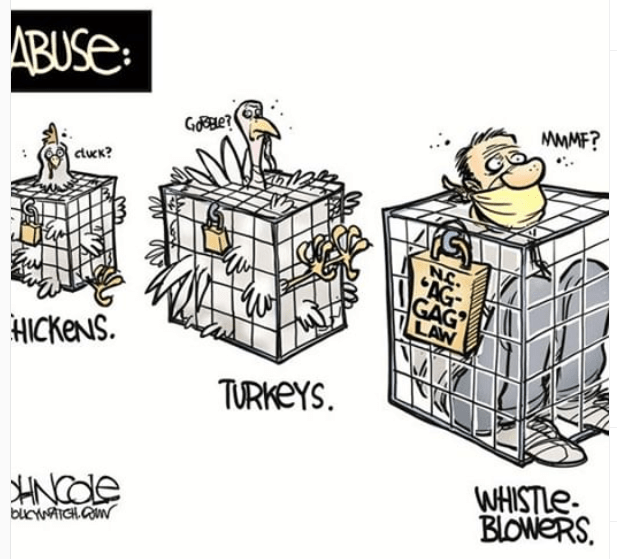
USA: The Upcoming Trial Of Matt Exposing Pig Farming Animal Cruelty Could Be The National Opportunity To Challenge The Constitutionality Of Ag-Gag Laws.

USA: Pigs To The Slaughter – What Man Will Do To Intelligent, Sentient Beings. – World Animals Voice

“I’m heading to Iowa later this week to visit my family for possibly the last time in a while. Later this month, I start a felony trial where I’m facing up to 8 years in prison for investigating Iowa’s largest “pork” producer and rescuing a sick piglet named Gilly.

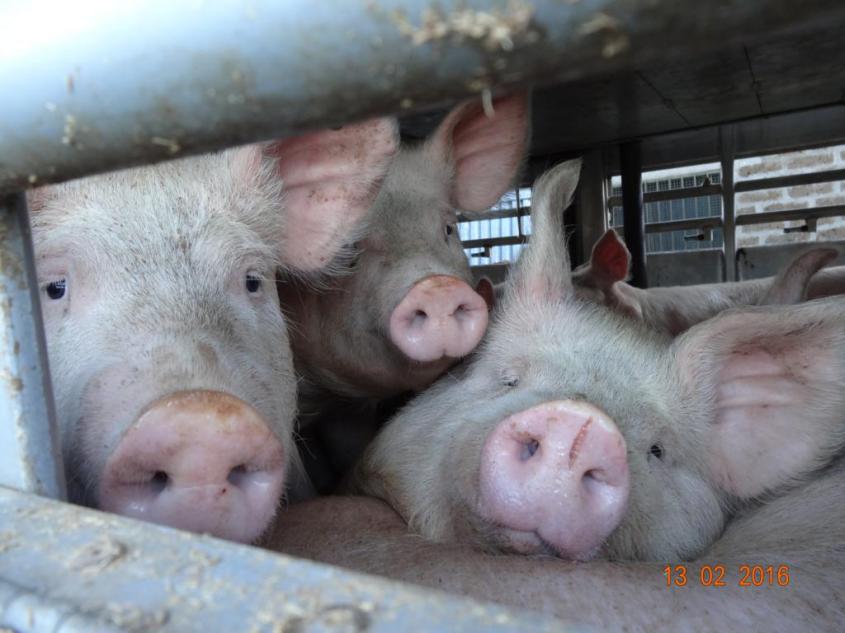
It happened in the spring of last year amid widespread COVID outbreaks at slaughterhouses nationwide. An employee whistleblower tipped us off about Iowa Select Farms — unable to send pigs to slaughter — using a gruesome mass kill method called “ventilation shutdown” or VSD. Thousands of pigs were loaded into a shed, the vents were sealed off, and heat and steam were pumped inside to kill them in an agonizing, slow death. With a team of investigators, I helped capture the horrific process on camera and sent it to the media.

The exposé garnered support from millions of people, but the authorities in Iowa decided to prosecute me instead of the animal-abusing company. And Iowa Governor Kim Reynolds stood by the factory farms too. Less than 2 weeks after the investigation was publicized, Governor Reynolds signed Iowa’s third ag-gag law, creating a new crime called “food operation trespass” which I was later charged under.

But you know what? I consider it a blessing in disguise.

My trial now has the opportunity to challenge the constitutionality of ag-gag laws and establish a precedent for a new wave of anti-ag-gag legislation.

Imagine if instead of covering up animal cruelty, our laws gave ordinary people the right to see inside these places, and even the right to rescue sick and suffering animals. That’s what is at stake in this trial.

And that’s why I want to ask you…

Will you join me in Iowa for this groundbreaking trial?

Sign up here to register for court support during my trial and get important updates about the event.
Whether you’re supporting in person or online, stay tuned for more updates and ways you can help.

Thank you for your support.

Matt”

Further links to read on this case:

After Pork Giant’s Cruel Killings Exposed, FBI Pursued Critics (theintercept.com)

Breaking: Gruesome Footage Shows Pigs Roasted Alive At Iowa’s Leading Pork Supplier Amid Coronavirus Crisis (directactioneverywhere.com)

https://docs.google.com/forms/d/e/1FAIpQLSewmlouYweqeszzTywfv2sqoH6s9_3Fy2Uw97wjRu_-PyqTDw/viewform

(9) Matt Johnson (@DxE_Matt) / Twitter

(20+) Watch | Facebook

Matt Johnson & DxE Protest Smithfield Foods Planning Commission Meeting – Sh*tt*ist Company Awards – YouTube

Direct Action Everywhere – Wikipedia

Animal Rights Extremists Take Their Cause to the Courtroom | Pork Business

Pigs to the Slaughter – Tablet Magazine

USA: DxE investigator Matt Johnson was just arrested in Iowa. He’s in jail right now charged with three felonies for documenting factory farms roasting pigs alive. – World Animals Voice

USA: Full Solidarity From Us (at WAV) To Matt – Re Iowa Factory Farms Roasting Pigs Alive. – World Animals Voice

USA: After pork giant was exposed for cruel killings, the FBI pursued its critics. – World Animals Voice

Regards Mark