Despite the fact that dog and cat meat consumption is an everyday occurrence and is being carried out all over South Korea, it is NOT LEGAL in that country. Their Government does nothing to stop this illegal practice and they seem happy to ignore it; many Korean citizens are just as apathetic and must also be held accountable.
This is the 21st Century, and it is high time that all South Koreans, leaders and general public alike, stand up and take responsibility to enforce their own country’s laws. South Korea and South Koreans cannot continue to ignore these brutal and unethical trades, so let us campaign to urge each of South Korea’s cities to enforce their laws and to put an immediate end to these illegal dog and cat meat trades.
Your voice is a great tool for compassion. They don’t have a voice but you do. Be their voice, speak out! 📣 👉 Click HERE to see the full list of our campaign.
If you have been filing e-People petitions, you have received dishonest and incomplete responses from the South Korean government. They continue to deceive us with lies and excuses.
The first video is age restricted due to graphic content, and it’s not just the “abuse” that’s considered inappropriate, it’s the standard treatment of animals who you eat. What about being inflicted with pain and fear and violent death is NOT inhumane and cruel and abusive?
The second video is five years old, a news story about THE SAME FOSTER FARMS, also for “abusive” practices. The video has been heavily edited and includes disingenuous validation from company execs who pander to the masses, claiming that “humane treatment” is paramount. Again, what part of being violently, fearfully killed is NOT INhumane? If treating animals humanely is important, than NOT KILLING them is more so. And, too, that they have been caught AGAIN just substantiates that all animal “agriculture” is abusive, you cannot conclude in any other rational manner.
Conversely, you can watch endless hours/days/years of plants being harvested with no negative effects and no warnings.
That should tell you something.
The Humane Slaughter Act specifically exempts billions of animals, including chickens, but since the few animals “protected” are violently killed in fear the exact way that the animals “not protected” are killed, it’s meaningless. To be fair, I did try to screenshot the “best practices” “standards” but was warned on two browsers that it wasn’t a “safe site” to visit, even insentient computers know they suck:
And by the way, factory farms were birthed by small farms, there will never be a “return” to what has been destroyed by consumer demand, greed, and entitlement, which exists regardless of population. The ONLY humane is vegan. SL
CHICKENS SEVERELY MISTREATED AT “HUMANE” CALIFORNIA SLAUGHTERHOUSE, NEW VIDEO ALLEGES: Activists arrested while protesting Foster Farms are being held in county jail on $50,000 bonds
This article and the below video include graphic images some readers may find disturbing.
In June 2015, the animal rights organization Mercy for Animals sent two investigators to work as undercover employees at a slaughterhouse run by Foster Farms. They documented workers throwing live chickens against metal shackles, birds being scalded alive, and other treatment that the group argued amounted to animal cruelty. Mercy for Animals complained to the Federal Trade Commission that Foster Farms’ labeling of its products as certified by the American Humane Association, or AHA, deceived consumers. The agency declined to take action, though, noting that the company fired employees suspected of abuse, passed an audit, and installed its own video monitoring system.
New footage from Foster Farms, California’s largest poultry producer, shows the company continuing to engage in similar behavior that activists allege amounts to cruel treatment of live chickens. Foster Farms, which was recertified by the AHA earlier this year, has been on the receiving end of millions of dollars in state and local subsidies to expand its product lines in California.
The recent footage, obtained by an anonymous videographer and provided to The Intercept by animal rights group Direct Action Everywhere, or DxE, shows workers throwing live chickens on the concrete floor; discarded yet conscious birds under the weight of one another; some chickens missing electrical waterbaths designed to stun them before slaughter — all under the supervision of employees working dangerous and long shifts in the dark. The videographer, who requested anonymity to avoid repercussions for sharing the footage, entered the company’s facility in Livingston, California, to set up miniature infrared cameras and obtain hundreds of hours of footage, recorded over the past several weeks. Foster Farms did not respond to a request for comment.
The world’s leaders are meeting in Glasgow for COP26 this November. They are supposed to be tackling the climate crisis – and yet the world’s governments are not addressing animal agriculture, a driving force behind the climate catastrophe.
Governments will only act if the public demands change. We need to show people, the media and world leaders that we can’t fix climate change without diet change.
1. Join us at the Global March for Climate Justice in Glasgow
If you can’t make it to Glasgow, represent Viva! at your local march on 6 November. There are climate marches taking place across the UK, from Brighton to Newcastle, and you’re bound to live near a march!
Get in touch to represent Viva! and we’ll provide you with a striking banner and leaflets.
Sign our letter calling on the Government to End Factory Farming Before It Ends Us. This is your last chance before we hand our letter in to Prime Minister Boris Johnson and COP26 President Alok Sharma.
Join us in Glasgow, York, Leeds and Liverpool from 1 – 6 November. Volunteers make a huge difference in terms of how many people we’re able to reach. Have a look at all our events and join us to stand for the animals and planet!
Even though grocers Wegmans and Harris Teeter were made aware of PETA’s recent investigation revealing rampant cruelty to turkeys at Plainville Farms suppliers, they continue to sell the animals’ flesh with misleading “humane” labels.
A PETA investigator recorded workers kicking, stomping on, and beating turkeys with a heavy rod. Birds received no treatment for their illnesses or injuries and were left to die in misery.
Please contact Wegmans and Harris Teeter today to urge them to reconsider their business relationship with Plainville Farms.
It feels like forever since the smiling faces of wonderful volunteers could be seen in all corners of our shelter, spreading joy to so many animals. We’re reading in the newspapers that tourist visas and flights to India will soon be opening up again. The Indian Home Ministry has not issued an official statement yet but the murmurings seem hopeful.
What a thrill it gives us to imagine welcoming our friends back (that means you!), and to witness the magical effect you’ll have on the animals, who will wag and wiggle at the sound of your voices even as you enter the gates!
Blessing’s beautiful recovery
Meet beautiful Blessing. He is one of the gentlest angels we’ve ever met.He’s healthy now, after weeks of daily wound cleaning and new bandages, good food and cheerful days. But oh, has he suffered. Bred for and born into labor, this young donkey never had a chance to experience life as a care-free little soul. He would have spent every day under an almost unbearable load, often managed by children too young for such immense responsibility, who are not educated about animal sentience or welfare.
Thanks to your help we continue to rescue and rehabilitate injured donkeys, educate their owners and sensitize the community about animal welfare.
Meet the most gracious, polite little dear on earth.
Mange Survivor Monty!
Even when this darling old boy was in excruciating pain, he was gentle, kind and considerate. From the first moment he saw our rescue team, he seemed to want to put his life in our hands. Every day of his 6 week treatment for severe mange, his humble nature only gave pleasure to others. Cured of mange, neutered and a little fattened up, meet mighty old Monty now!
Pixie is a bounding, beautiful little girl. But she wouldn’t have survived without lots of helping hands. We rescued Pixie’s mother for a wound on her hoof and later she gave birth at Animal Aid. Sadly, Pixie’s mother was too weak and she passed away a few days later, leaving her beautiful newborn baby in our care to raise.
Pixie has flourished with the other orphans who snuggle together day and night. Many of her new friends are baby bulls who were cast out by owners, often just days old, because allowing them to feed from their mother would cost the owner in milk sales. Bull calfs have no value in the dairy business and are usually sold for leather, or cast out onto the street to die.
Pixie will live permanently in our love and care thanks to your kindness, with zero commercial use, and 100 percent love.
Please donate to support Pixie and other animals in sanctuary.
Kindness, patience and a little luck:
Dena’s Recovery
How this beautiful girl managed to drag herself out of the road after being hit by a vehicle, we will never know. She suffered a serious spine injury that left her completely unable to bear weight. Not just for a few days, but for 8 weeks of physiotherapy and bed-rest. We named her Dena, which means “to give” in Hindi.No matter how low she felt, when she couldn’t move her legs or her body, her eyes showered her caregivers with love.Her rehabilitation was so slow that we were losing hope: with full sensation in her toes, we expected her to try to stand long before she did. But one fine day, 2 months after the accident with very little apparent progress, Dena was ready. All by herself, this brave girl stood and took her first trembling steps. And that was just the beginning of what has become a complete, beautiful recovery. Meet strong sweetheart Dena now!
Yesterday, October 19 one of our teams on Gozo observed a masked man who illegally set up a safety net for finches.
The police were called to the scene, but the suspect had enough time to collect six live decoys and flee as the police slowly approached the scene without even following the suspect.
The trapper has now been identified as our team has also been able to determine the license plate of his vehicle. Four more bird trappers were caught yesterday alone based on reports from the committee to the police.
Just a few days ago, the Maltese governmentagreed to repeal the controversial law on “bird trapping for scientific purposes”after the European Court of Justice initiated infringement proceedings against Malta for 2020.
But today the Valletta government has made another complete U-turn and announced that it will in fact allow more than 3,000 registered trappers to proceed with the so-called “Finch-Trapping Research Project“ – under the promise of strict enforcement and enforcement (!!!)
Here’s an impression of that promise! does it look like strict surveillance?
And I mean…Clear case of cooperation between the criminal and the police: they let him escape.
What is still missing is the explanation of the police officers for this complicity: Yes, the guy looks hard like a “researcher”!
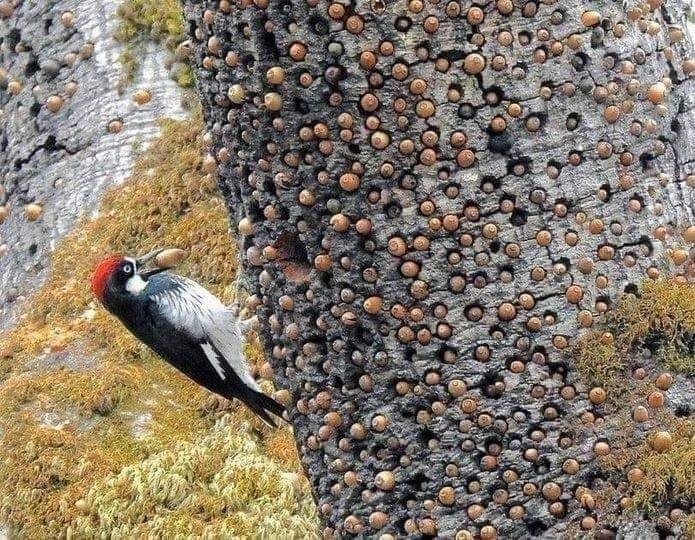
First he finds a dead tree and starts making holes for the acorns. Each hole is made very thoughtfully, because if the hole is large, other birds can easily steal the acorn.
If the hole is narrow, the nut can break and deteriorate.
By the end of summer, the woodpecker’s “jewelry” work ends, by this time the acorns ripen and take their places in the tree. The trunk of a large tree can hold about 50,000 acorns, allowing the bird a satisfying winter.
I don’t know about you friends, but I had no idea about it.
And now I am very happy with the thought that the many nuts that I cleared off the road and put in the forest might have contributed to the construction of a woodpecker
You learn something different every day…
Emergency services have discovered dogs trapped in the middle of the lava flows of the Cumbre Vieja on the Spanish island of La Palma.
The overland route to the animals is cut off by volcanic activity. Helpers now take care of the four-legged friends from the air by drone.
The Cabildo de La Palma thanked two local companies, Ticom Soluciones and Volcanic Life, who had been using a drone to transport food and water for the animals trapped by the lava in the Todoque plateau for five days.
The Councilor for Security and Emergencies, Nieves Rosa Arroyo, said in a statement that this situation was discovered five days ago and that after the relevant security studies were carried out, Ticom Soluciones SL. and Volcanic Life were entrusted with the task of supplying water with the help of drones.
The city councilor also highlighted the work of these companies, which selflessly made themselves available for emergencies and whose work was of fundamental importance in locating and caring for the animals.
📌El agua y la comida está garantizada a los animales atrapados en Todoque
➡️Las empresas Ticom Soluciones S.L y Volcanic Life llevan cinco días alimentando a los animales mediante un dron que transporta comida y agua
— Cabildo de La Palma (@CabLaPalma) October 12, 2021
They also have veterinary advice on how to choose the most appropriate feed and water supply in this type of situation.
Both companies have announced that they will continue this work as long as weather and safety conditions permit, as these areas cannot be reached by land due to the high temperatures near the lava flows.
The steering committee of the Volcanic Emergency Plan of the Canary Islands (Pevolca), once received the formal request for rescue of the dogs trapped in the exclusion zone by the eruption and after analyzing the action plan presented by the entity, has decided to authorize the possible rescue of animals with drones
Leales.org points out that more than two tons of the latest technology worth 60,000 euros have been transferred to La Palma.
There are three drones, one of cargo for the transfer of materials or rescue of the dogs, another drone with a 30x camera to scan the area and verify the safety of the operation, and the third is a specific drone with a thermal camera to know which is the route where there is less heat, in addition to the study of the terrain.
We want to express great praise to the rescue workers on the island, but also to city councilor Nieves Rosa Arroyo! Apparently for these people it is not only human life that counts as worthy to save, but every life on the island.
And they did it quickly, effectively and professionally.
The subject of cruelty to animals is taken up again and again by various organizations.
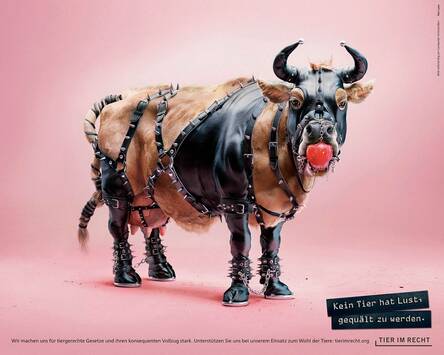
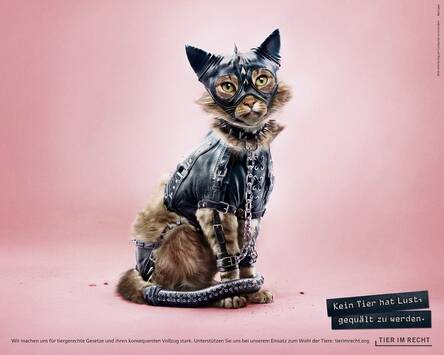
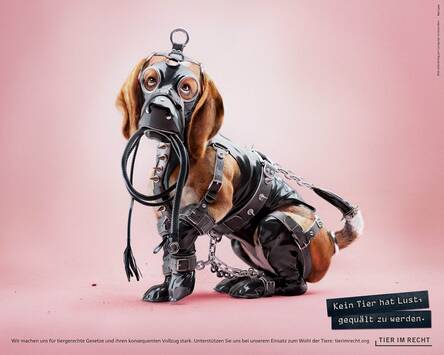
The Foundation for the “Animal in Law”,TIR, draws attention to this with posters showing animals in sadomasochism.
This three-year-old campaign by the“Animal in Law” foundation draws attention to animal cruelty with four eye-catching posters.
“In this country, too, countless animals live under illegal conditions and many animal welfare crimes are not investigated and punished appropriately or not at all. The public and the authorities must constantly raise awareness of these abuses », explains the foundation of its campaign in a message.
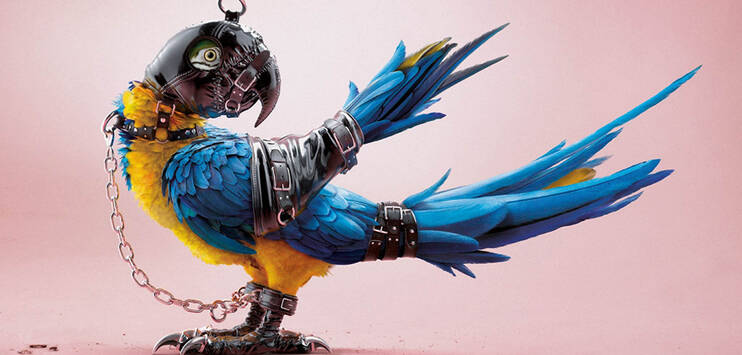
Under the slogan “No animal wants to be tortured”, the foundation designed four posters depicting animals in sadomasochistic costumes.
In order to attract attention with this concern, unusual and controversial ideas are always required.
“In contrast to humans, animals never have the opportunity to give their consent to a torturous act. Rather, they are at the mercy of us and cannot stand up for their concerns themselves », so the thought behind the posters.
These show a cow, a dog, a cat and a parrot, wearing a leather suit, a whip and a gag.
The aim of the campaign is to implement animal-friendly laws and their «consistent enforcement».
The agency behind the posters, Ruf Lanz, has now designed a campaign for TIR for the fourth time.
The pictures were “of course all created on the computer”. TIR, based in Zurich, (Switzerland) has been campaigning for animal welfare on a national and international level for over twenty years.
In addition: It is the fourth campaign that Ruf Lanzhas created for TIR. The previous campaigns such as “Some animals are treated like rubbish”, according to TIR manager Gieri Bolliger, “caused a lot of attention and sparked valuable debates about animal welfare – online and offline.”
In addition, the campaigns have received numerous awards, including with gold from the Art Directors Club Switzerland or twice with the Poster of the Year.
For the implementation of this campaign, Ruf Lanz was once again able to win over the Carioca Studio in Bucharest via Visualeyes International, which is one of the world’s best in CGI (Computer Generated Images).
In close cooperation with Ruf Lanz, all images were created entirely on the computer – not a single animal was twisted.
And I mean…Animals are at our mercy and cannot ward off violence and abuse by human hands themselves.
That is why it is very important, in addition to laws that are supposed to protect them, also to educate a population that does not look the other way when it comes to animal cruelty, but resolutely opposes it.
The images are shocking, but make injustice visible, trigger emotions, appeal to our conscience and activate it






 First he finds a dead tree and starts making holes for the acorns. Each hole is made very thoughtfully, because if the hole is large, other birds can easily steal the acorn.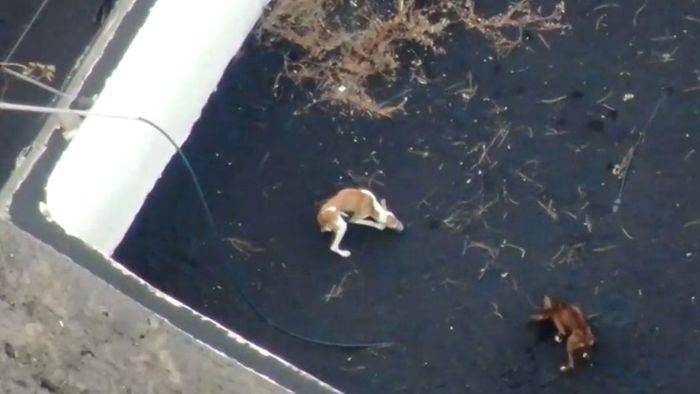


 “In this country, too, countless animals live under illegal conditions and many animal welfare crimes are not investigated and punished appropriately or not at all. The public and the authorities must constantly raise awareness of these abuses », explains the foundation of its campaign in a message.