Dynamo football players of Bucharest- respect and love for the dogs

In the Romanian capital derby there was a special action over the weekend. The Dynamo Bucharest players ran onto the pitch with dogs in their arms.

To draw attention to animals without a home, the Romanian Football Association has come up with something very special.

At the derby of the two city rivals of the Romanian capital Bucharest, Dynamo and Steaua, the players of the former team showed a heart for animals.

Four football players from Dynamo Bucharest before the game with their dogs from the shelter and from the street.

Before the match, they marched with dogs from the Romanian public shelter Branesti on the stadium lawn to draw attention to the suffering of the Romanian strays.
This campaign aims to encourage fans to adopt dogs from the often hopelessly overcrowded animal shelters.

Throughout the season, footballers will run into games with dogs from the shelter or from the street with the goal to find new owners for the four-legged friends.

Romania has had a significant problem with street dogs for many years, and stray dogs have a difficult time in Romania.
There are hardly any comprehensive, effective castration projects and unfortunately there are still killing stations.

The goal: respect and love for the dogs

Under the name “Fill the void in your life”, the beginning of the unique project was made last weekend in Bucharest.
The dogs come from the local animal shelters or from the street and each have a small scarf with their name around their necks.
If viewers want to adopt one of the four-legged friends, they can easily get in touch with the initiators of the project.

The prerequisites have also been created within the stadium so that the dogs can attend the games without any major problems.
All fireworks and pyrotechnics were banned.
At the weekend, the fans also adhered to these requirements.

A nice action that will definitely make one or the other dog’s life a lot nicer!

https://www.ran.de/fussball/international/news/rumaenien-fussballer-laufen-mit-hunden-auf-den-platz-damit-sie-adoptiert-werden-131461

And I mean…When footballers walk into the stadium before the game, there is usually a familiar image: They almost always have small children on their hands who can come into contact with their idols and fulfill a childhood dream.
Now Romania gives us a new message: All animal lives matter!

We hope that their action has touched many people and will lead to the adoption of a stray dog from one of the animal shelters.
THANK YOU, DYNAMO !!!

My best regards to all, Venus

Animal abuse on social media: making money from misery

SMACC- Report 2021

A recent report by SMACC (Social Media Animal Cruelty Coalition) documents how animal cruelty is being promoted.

Videos on the social media platforms TikTok, YouTube and Facebook were analyzed for 13 months.

Perhaps the most amazing revelation is that the approximately 5,480 individual videos that were documented were viewed a total of 5,347,809,262 times at the time the report was written.
89.2% of them were hosted on Youtube because they are easier to find there.

In one of the many staged animal rescue videos on YouTube, a dark tiger python wraps around a gibbon.
The great ape is freed by a man who appears at the scene with a video camera, apparently “by chance”.

This staggering number is associated with extreme agony for the animals concerned – and the platforms that host such content have benefited by millions, according to the report.
The data clearly confirm that online content that is cruel to animals is a major global problem.

The five most commonly shown animal species were birds of various species, dogs and cats, wildlife, snakes, and primates.

Social Media Animal Cruelty Coalition (SMACC)

In 2020, founded the Asia for Animals (AfA) network – SMACC – to answer the hundreds of inquiries its member organizations have received.

The main SMACC organizations include: Action for Primates, AnimalsAsia Foundation, Humane Society International, PETA Asia and World Animal Protection.

E-mails and phone calls described horrific animal cruelty to organizations, including the burial of live animals, the mistreatment of companion animals, the setting on fire and the recent fake rescue videos – all posted freely on social media.

According to the SMACC report, the videos found on social media platforms showed animals being drowned, broken limbs, and even how mothers were killed and their babies stolen from them.

The report states that “animals have become silent victims of the hunt for clicks and advertising dollars as videos promoting, encouraging, and benefiting from their abuse become rampant”.

Hunt

The hunting videos regularly feature foxes, hundreds of species of birds and wild boar, as well as animal fights.

Of the 5,480 videos that were recorded, 2,634 were assigned to the topic of “hunting”. These videos often show protracted deaths, extreme suffering, and both legal and illegal hunting methods used by the hunters.

The availability of thousands of hunting videos on social media platforms encourages this cruelty.
It is actively encouraged and normalized while the activity is being sold as “fun and exciting” and at an extreme cost to the wildlife.

The report quotes Nick Stewart, World Animal Protection’s Global Head of Wildlife Campaigns, as saying, “Wild animals are not props, toys, or entertainers; they are sentient beings with a right to life.”

Adam Parascandola of Humane Society International said, “The devastating data uncovered by this research only scratches the surface to reveal the shocking levels of animal cruelty on social media.”

Fake Animal Rescue Videos

Continue reading “Animal abuse on social media: making money from misery”

Tattoos for animals is cruelty to animals

Text: Together for the Animals (“Gemeinsam für die Tiere”)

In the past you were considered a criminal with a tattoo, but today you are often looked at wrong if you don’t wear one.
But what is common to all people who have the color in the flesh?

They do it voluntarily and accept the associated pain for their little work of art.
Forcing a person to have a tattoo or forcing them to tattoo is coercion, mutilation and grievous bodily harm. And of course punishable!

WHY NOT ALSO IN ANIMALS?
A new trend is emerging among mindless pet owners: Tattoos for Animals.
They have their pigs, dogs, cats etc. decorated with painful pictures.
An animal does not even want a tattoo, nor has it consented to the pain associated with it.

No animal voluntarily lets a needle penetrate its flesh thousands and thousands of times until the injected color forms an image determined by the animal owner.
So it happens with coercion and violence, whereby both the animal keeper and the “artist” can be described as perpetrators.
It’s not a fashion trend, it’s just pure cruelty to animals.

Giving an animal pain for no good reason is against the law: For example, the administrative courts in Germany and Austria have decided – Ergo, it is illegal and must be severely punished, apart from the fact that it is morally reprehensible.

The passage “justified reason” in the legal text can be disputed because, strictly speaking, there is never a justifying reason for violence against other living beings.

We strictly reject this form of alleged art.
Tattoos are for people who get it done of their own free will, but never for animals.
There must be international action here and an offense punished accordingly, for animal keepers and tattooists.

Prison sentences and a lifetime prohibition of practicing the craft of tattooing seem to us only more than fair.
Leave tattoos where they belong: under human skin !!!

Please also all of you sign this petition against this cruel cruelty to animals, the animals will thank you:
https://www.change.org/p/government-stop-animal-tattooing-4c84b801-2bba-4d54-b195-cde4005a4729

And I mean…There are countless photos circulating on the Internet showing dogs and cats with tattoos and nose rings.
How does one get this perverse idea to do something like this to his pet?

Who says animals would agree to wear tattoos? 
There is no question that something like this is reprehensible for ethical reasons and that it is animal cruelty to do such a thing to an animal, because tattooing is pretty painful.

In some countries and after years of pressure from animal rights activists, tattooing or piercing of animals is already banned

In Mexico, for example, animal rights activists campaigned for a ban on tattoos and piercings on animals.
After this pressure, a new draft law should prohibit tattooing on pets for aesthetic reasons and punish the tattooing or piercing of animals with the equivalent of more than 1,000 euros.
The environmental protection commission of the Congress of Mexico City had already unanimously approved the new ban.

In Germany and Austria it is forbidden to have animals tattooed for aesthetic reasons and to cause them pain for no reason.

In New York there has even been an official ban since this year. According to the law, pets are no longer allowed to be tattooed or pierced.
“It’s cruelty to animals, it’s that simple,” said Andrew Cuomo, ex-governor of New York.

In the twenty-first century, after years of fighting over a ban on docking ears and tail for aesthetic reasons, we are still forced to look at shameful photos like these that are still circulating on the internet.
It’s not cool, it’s not aesthetics, it’s a degradation of animal dignity and a cruelty to animals that gets under the skin.

My best regards to all, Venus
Basque-Animal Liberation Front: “Hunting licenses go up, but hunting towers go down”

Received anonymously by Animal Liberation Pressoffice

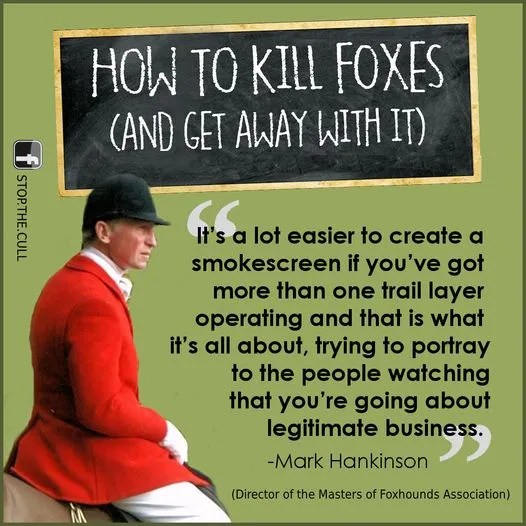
Fifteen hunting towers and seven posts attacked in Jaizkibel, Jarindo, Kastañarri, Gorbeia, Arrikurutz and mount Kintoa. The Basque Animal Liberation Front denounces the “deplorable state” and the slaughter of animals by hunters.

“We will not be passively looking elsewhere as long as the sensitive creatures of other species are exploited, oppressed, or killed,” the members of the Basque People ‘s Animal Liberation Front stated in a communique about the attacks on the hunting towers and posts on the night of 31 August and 1 September.

“Hunting licenses go up, but hunting towers go down”.

“As long as violence, domination, and murder of human and other animals continues to be normal, we see “legitimate and necessary” to attack companies, institutions, or structures that promote and reproduce such oppression.”

The Animal Liberation Front is a clandestine organization operating in various countries worldwide, with no known leader or public face, and carrying out direct action for animal rights.
The last few days are not the only actions the Front has taken in the Basque Country.

For example, in December 2018, several hunting stations were also damaged and in May and June of the same year, cement was dumped on the runway at Iruñera to create obsstruction and a fire was set in the bull fighting stadium.

https://animalliberationpressoffice.org/NAALPO/2021/09/06/basque-alf-destroys-22-hunting-stands-2/

And Imean…Hunters are psychopaths and as we know psychopaths have tremendous criminal energy and endurance.
Instead of locking them up in a psychiatric institution (which would also cause costs for the family), I find it much more economical to destroy their criminal craft.

Many thanks to the activists ♥ Great Job!

My best regards to all, Venus

 

Environmental Articles To Read.


Climate change: UN warning over nations’ climate plans

https://www.bbc.co.uk/news/science-environment-58600723

US and EU pledge 30% cut in methane emissions to limit global heating

https://www.theguardian.com/environment/2021/sep/17/us-and-eu-pledge-30-cut-in-methane-emissions-to-limit-global-heating

Hole in the ozone layer that develops annually is ‘rather larger than usual’ this year – and is currently bigger than Antarctica, scientists say

https://www.dailymail.co.uk/sciencetech/article-10001063/Ozone-layer-Hole-develops-annually-larger-usual-year-scientists-say.html

Regards Mark

Lebanon-hunters target anything that comes within range of the rifle.

Lebanon – end point of bird migration: Around 500,000 hunters are officially registered in Lebanon, they are allowed to shoot 12 species of birds.

But the hunting law in the “cedar state” is mostly only on paper.
In reality, many hunters target anything that comes within range of the rifle.

Now, during the peak of the bird migration, we receive photos every day, which the perpetrators themselves post on social media.

Almost all of them show strictly protected species in Lebanon – from bee-eaters and blue-nails to ortolans and orioles to barn owls and short-toed eagles.

Fortunately, there are many nature lovers in Lebanon who do not just watch the hunters go by.
They search social media for such posts, report the perpetrators’ profiles to us and the authorities, and thus ensure prosecution.

Together with its Lebanese partner associations SPNL and MESHC, the Committee against Bird Murder will again be on site with an international bird protection team from next week.

The economic crisis in the country and the political unrest make the operation a risk – wish us luck!
The pictures are all up-to-date – they show protected migratory birds illegally shot.

The animals with which the heart is laid are ortolans, which are highly endangered almost everywhere in Europe!

https://www.facebook.com/Komitee.CABS/

And I mean…The birds are eaten – as a “second use”, so to speak.
But the motivation is the pleasure of hunting! whoever hunts, kills for sheer pleasure.
And that applies to hunters all over the world.

What state of mind can we expect in someone who cowardly shoots an animal while it is eating or breeding, although he does not need its flesh and skin to live and then call it as a “hobby”, “nature conservation”, “protection of species”, “epidemic protection” “or” tradition “?

“Hunting is just a cowardly paraphrase for particularly cowardly murder of chanchenless fellow creatures.
Hunting is a side form of human mental illness”
(Theodor Heuss, former Federal President)

We agree, it couldn’t be better said!

My best regards to all, Venus

EU subsidies and aquaculture – the weakened link.

Photo – Artur Rydzewsk

EU subsidies and aquaculture – the weakened link

13 September 2021

Opinion

Over 1 billion fish are being raised on fish farms in the EU at any one time. These are undomesticated species quite new to being captive in production systems, which are often highly intensive and are themselves new technologies undergoing development. 

While European aquaculture doesn’t have the transparency mechanisms to measure or report welfare conditions and outcomes, mortality rates of 15% to 20% are reported in cage farming in the mediterranean and in third countries that report mortality figures, and the Commission found very limited uptake of the effective stunning technologies commercially available for several fish species.

EU aquaculture and animal welfare policies are pursuing fish welfare objectives, while a new regime governing EU financial support to fisheries and aquaculture has weakened the links between EU investment and EU policy objectives. 

National aquaculture strategies and the implementation of EU financial support mechanisms need a smooth and coordinated implementation by Member States for subsidies to operate in support of policy initiatives and realise improvements in fish welfare. 

When compared to terrestrial farm animals, scientists, producers, policy makers and animal advocates alike were late to understanding fishes’ needs and applying animal welfare approaches to fish in aquaculture. Some milestones were:

  • 2005 the Council of Europe adopted guidelines for fish welfare during farming
  • 2008 EFSA scientific opinion on fish sentience
  • 2009 EFSA scientific opinion on welfare during husbandry and slaughter
  • 2009 The OIE adopted standards for fish welfare during transport and at slaughter
  • 2020 EU Platform on Animal Welfare adopts fish welfare guidelines

With the many EU and external research projects in the intervening years, we now have a wealth of knowledge for practical implementation. Initiatives from sector organisationsthird party certifiers, and policymakers seek to apply knowledge to provide a better life and death for farmed fish, improve product quality and resource efficiency, and better meet consumers’ expectations.

In May 2021 the European Commission published its new aquaculture strategy until 2030 which includes fish welfare priorities including developing best practice codes and guidelines, setting validated indicators, providing training, and supporting a transition to lower-trophic species. 

The Farm to Fork Strategy previously committed the EU’s aquaculture policy to being a part of its animal welfare initiatives, and in August 2021 the inception impact assessment of the revision of all EU farm animal welfare legislation included specific options for fish welfare.

The European Maritime, Fisheries and Aquaculture Fund (EMFAF) 2021 – 2027 regulation seeks to simplify Member States’ administration and programming. One approach to simplification is to only reference high level Union priorities such as sustainable economies and communities, and to maintain weaker links between national and EU aquaculture policies. Opening up the fund for investments to meet legal obligations has also weakened the incentive to invest it now in policy areas marked as important next priorities. This is where the link between the spending of EU funds and the delivery of EU policy is weakened. 

Maintained from the previous regulation is the requirement that financial support is consistent with Member States’ own multiannual national strategic plans, and those plans must themselves use the EU’s aquaculture strategy as their basis. However there is no real requirement that national priorities contribute to specific EU objectives, or even that Member States update their national plans now. Then the EU’s aquaculture strategy is referenced as a more complete set of policy priorities, but there is less impetus for Member States to direct financial support for the delivery of EU policy priorities.

Aquaculture is not an area of exclusive EU competence and Member States operate national policies and licensing regimes specific to their varied geographical and market contexts. Member States should take the fish welfare objectives from the EU’s aquaculture strategy as priorities in their national strategies in support of the moves to advance animal welfare in aquaculture.

The Commission funds aquaculture research and facilitates Member States’ coordination of aquaculture policies, and it needs to do more to provide substance and cohesion for its aquaculture priorities. It needs to look beyond the small portion of the EMFAF that it controls directly and to activate mechanisms in other policy areas including animal welfare. 

Animal welfare policy could consolidate knowledge into implementable indicators and guidelines through a dedicated Animal Welfare Reference CentreThe Commission could mandate EFSA to provide the necessary knowledge, since its last opinion on fish welfare was more than ten years ago. 

The alternative path is that intensive aquaculture systems continue to evolve without accounting for the needs of the animals. Aquaculture takes the production and reputational losses that are seen with intensive terrestrial agriculture systems, and the fish continue to suffer unnecessarily.

The EU has identified the right fish welfare policy priorities, and they are aligned with voluntary measures being taken widely in the market. The new EU financial support regime (EMFAF) has weakened the explicit links between EU financial support and specific EU aquaculture policy objectives, but Member States can take up the common EU priorities and the Commission should use other mechanisms to provide the necessary resources and cohesion.

 Op-ed by Douglas Waley, Fish Welfare Programme Leader at Eurogroup for Animals

Regards Mark

Even locals outraged as 1400 dolphins die in Faroese hunt.

Even locals outraged as 1400 dolphins die in Faroese hunt

There has been widespread condemnation after over 1400 Atlantic white-sided dolphins were killed in the Faroe Islands last weekend, believed to be the largest number of dolphins ever killed in the country.

Much of the criticism has come from within the country where usually there is a strong defence of the hunts, which are portrayed by locals as a long-standing tradition providing a necessary supplement to their diet.

The dolphins were herded into a bay on the island of Eysturoy on Sunday after being encountered far out to sea. Even though the hunt was sanctioned by local authorities, it appears there was confusion over the number of dolphins being driven to shore with first estimates putting the number at around 200.

As a result, local reports suggest there were not enough people on the beach to kill the dolphins when it became apparent how many there actually were. The process took several hours as dolphins were left in a distressed state while their fellow pod members were killed with knives.

The meat from the hunt is traditionally distributed to local people but with so many dolphins killed, there are concerns that much of it may have to be discarded.

Find out more about whaling in the Faroe Islands

Even locals outraged as 1400 dolphins die in Faroese hunt – Whale and Dolphin Conservation (whales.org)

Regards Mark