SIGN: DON’T EXECUTE MOTHER BEAR AND CUBS JUST FOR LIVING CLOSE TO ROAD
PETITION TARGET: U.S. Fish and Wildlife Service
Agrizzly bear nicknamed Felicia and her two cubs could be killed just for living near a highway in Jackson Hole, Wyo., according to USA Today.
Wildlife Advocate Savannah Rose Burgess said the bear family has no record PETITION: Don’t Execute Mother Bear and Cubs Just for Living Close to Road (ladyfreethinker.org)of acting aggressively, charging, or taking food from humans who have been spotted approaching them. Felicia also caught the attention of award-winning photographer Thomas Mangelsen, who has documented her for more than six years and said she has always been calm and collected.
But wildlife officials are saying that “human-conditioned behavior” — through no fault of Felicia’s or her family’s– could lead to human-wildlife conflict. They propose relocating or killing the bear family as the only possible solutions.
If park rangers fail to scare the bears off with “targeted hazing operations” — which could include loud noise or rubber bullets — theseinnocent wild animals could pay with their lives, according to a U.S. Fish and Wildlife Service (FWS) statement.
Killing an entire family of bears who have no history of acting aggressively must not be allowed.
Felicia and her cubs must be protected.
Sign this petition urging the U.S. Fish and Wildlife Service to find an alternative solution for Felicia and her cubs that does not involve killing them.
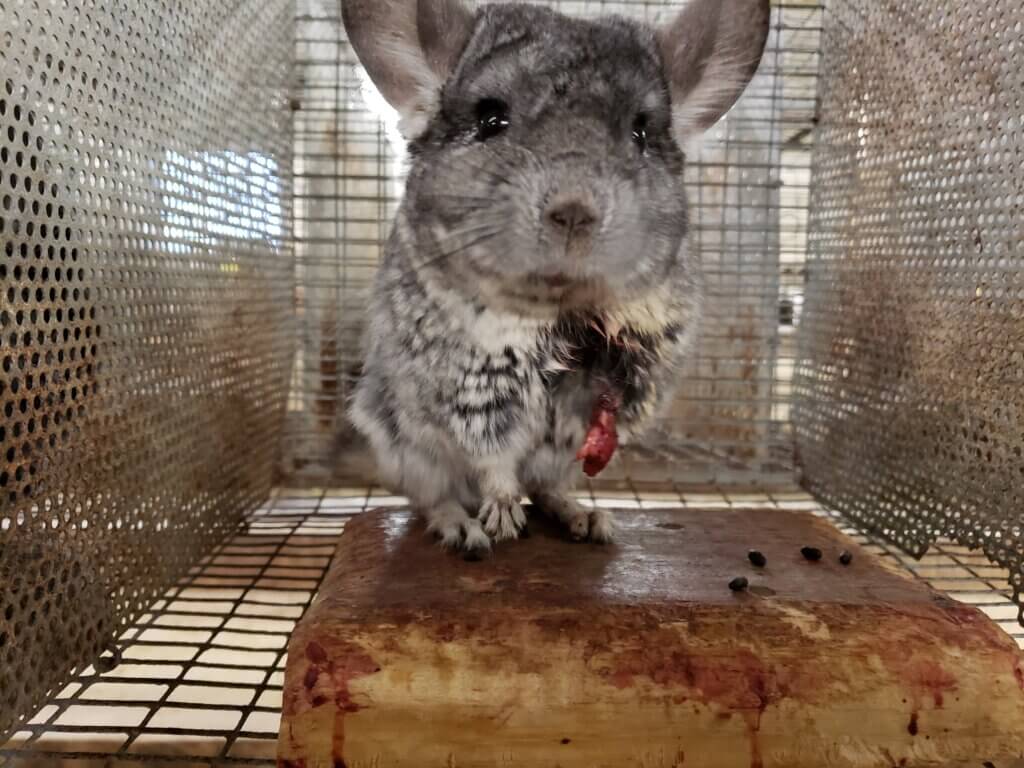
A PETA undercover investigation into Moulton Chinchilla Ranch (MCR)—a massive breeding mill near Chatfield, Minnesota, that kept approximately 1,000 chinchillas confined to wire-floored cages in a shed reeking of ammonia—found that these sensitive exotic animals were denied not only everything natural and important to them but also the basic necessities of life, including effective veterinary care for chronic infections and severe, life-threatening injuries that caused them to suffer and even die.
Based on PETA’s evidence, law-enforcement officials executed a search warrant at MCR and opened a criminal investigation.
Charlene was denied veterinary care for this excruciatingly painful foot injury, which left a bloody stump with bones exposed. PETA’s investigator rescued her. She was rushed for emergency veterinary care, underwent surgery, and continues to heal.
Chinchillas are active, inquisitive animals who love to run, jump, and climb—activities that are extremely important to their physical and psychological health—but at MCR, they were kept constantly confined to small, barren, rusty wire-floored cages. They had nowhere to burrow or hide, which to these nocturnal prey animals was extremely stressful and terrifying.
There were piles of feces just outside the shed, and some even flowed back inside through a door. Many of these social animals—who naturally live in herds of up to 100, high up in the Andes Mountains—were kept all alone in solitary cages. Others were crammed together in cages so tightly that they could barely move. Some only had a block of wood to sit or gnaw on. There were no toys, bedding, or environmental enrichment.
Deprived of everything meaningful to them, the chinchillas in these highly stressful, inhumane conditions mutilated themselves and their cagemates, which is a sign of severe distress. One young animal’s ears were nearly chewed off.
Others, including one named Casper by PETA’s investigator, suffered from severe fur loss. Metal collars prevented the female chinchillas from escaping from the males, who were allowed to impregnate them over and over so that their babies could be sold to laboratories and into the pet trade. One baby chinchilla was found dead.
The last known 800 Tapanuli orangutans on Earth face having their Indonesian forest home ripped from beneath them — by a British company’s thirst for gold.
Jardine Matheson and its gold mining company want to destroy this precious ecosystem in Batang Toru, Northern Sumatra out of pure greed — driving the rarest great ape to extinction.
Just in the past month, satellite images revealed a new expansion of the Martable Mine into the heart of orangutan territory. But if we act fast with a massive public campaign exposing Jardine Matheson, we can stop the mine’s expansion and protect the orangutans and their habitat before it’s too late.
The Tapanuli orangutan, which is the rarest great ape in the world, was first documented by scientists in 2017. It’s the first great ape to be recorded for a century and it only lives in the Batang Toru Forest in Indonesia.
Sadly, there are only 800 of the charismatic primates left.
Unfortunately for the newly identified and already endangered great ape, its forest home sits on top of a rich seam of gold – which is currently being mined by a British company.
Jardine Matheson has been run by the same British family, the Keswicks, since the Victorian era. It bought the Martabe gold mine in 2018 and has expanded it further into the habitat of the Tapanuli orangutan ever since.
So far, the Martabe mine has already destroyed at least 30 ha of Tapanuli orangutan forest habitat — an area of the Batang Toru forest equivalent to at least 42 football fields.
If we don’t act now, scientists warn that the entire Tapanuli orangutan population could be decimated in less than 10 years.
The survival of the Tapanuli orangutan truly is a test for humanity, but in reality it’s a simple one. All that Jardine Matheson needs to do is to halt any future expansion projects in Batang Toru and work with the International Union for Conservation of Nature on a plan to preserve the rarest great ape and its habitat.
When SumOfUs members come together, we achieve wonders. In May 2015, we got together to tell Jardine Matheson and its luxury hotel subsidiary Mandarin Oriental to save and protect the Sumatran Elephant, and it listened to all of us. Today, an even greater threat is looming over the last Tapanuli orangutans and we must ramp up the pressure on Jardine Matheson to do the right thing once again.
TAKE ACTION NOW red Rubber Stamp over a white background.
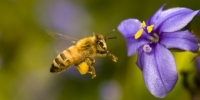
It’s estimated that we have pollinators to thank for one in every three bites of food we eat, but they are increasingly threatened by the widespread use of toxic pesticides and disappearing at unprecedented rates. Not only is this bad news for us, it’s bad news for them and the other wild animals who depend on them, and for the environment. However, food retailers have an opportunity to change things by sourcing products from pollinator- and environmentally-friendly sources. Please join us in telling the retail grocery chain Kroger that you will shop elsewhere until it commits to improved ecological farming methods and stops selling products produced with pollinator-toxic pesticides.
While there are a number of factors contributing to bee and other pollinator declines, scientists have continued to point to the dangers posed by pesticides, such as chlorpyrifos and glyphosate, which are widely used in agriculture. At low doses, these pesticides can weaken them and make them more vulnerable to diseases, pests and other stressors, while higher levels are enough to kill them directly. Death by pesticide is a grisly, painful affair, with pollinators suffering from vomiting, wing paralysis, and uncoordinated movements.
The threat posed by pesticides is so grave, and so black and white, that even Walmart, the largest food retailer in the world, has implemented a major new policy with the aim of protecting pollinators. Walmart has announced that moving forwards, it will be sourcing “100%” of the fresh produce and flowers it sells from suppliers that adopt Integrated Pest Management (IPM) — an effective and environmentally sensitive approach to “pest” management that strives for the least possible hazard to animals and the environment — as verified by a third party. Moreover, it has committed to encouraging its suppliers to establish pollinator habitats on at least 3% of the land they own, and to work with local organizations to establish pollinator habitats in major pollinator migration corridors. Lastly, it is encouraging its suppliers to label pollinator-friendly plants with special tags to help their customers grow pollinator-promoting gardens. To date, this is the farthest-reaching commitment made by any U.S. food retailer to protect pollinators.
As the world’s largest supermarket chain, Kroger is a powerhouse of a store, with the ability rivalling Walmart to change things for the better for bees and other pollinators. While Kroger updated its pollinator policy in 2019, it doesn’t go nearly far enough, nor does it include any commitments to eliminate pesticides or help suppliers expand ecological farming methods that protect pollinators. Walmart has shown the way forward. It is time for Kroger to follow suit.
Join us in telling Kroger you’ll be shopping elsewhere until it commits publicly to a clear, time-bound policy that defends pollinators, by calling, posting on social media, and submitting our letter!
1. Please call Kroger to politely let the store know that Walmart shares your concern over pollinators, and that you’ll be shopping there until you hear that Kroger has also made a public commitment to improved ecological farming methods and to stop selling products produced with pollinator-toxic pesticides.
Call Kroger Customer Service 1-800-576-4377 Press 8, then press 3
Some talking points you can mention:
Bees and other pollinators are the foundation of our food system. 75% of all staple crops, and 80% of all flowering plants, require the help of pollinators.
Pollinators are currently dying at unprecedented rates, and their very survival is threatened.
Death by pesticide is a grisly affair, with pollinators suffering from vomiting, wing paralysis, and uncoordinated movement.
Walmart, the largest food retailer in the world, has implemented a major new policy with the aim of protecting pollinators.
You will be shopping at Walmart until Kroger commits publicly to a policy that defends pollinators.
2. Comment on Kroger’s social media accounts.
On Kroger’s Facebook page, please let the store know how impressed you are that Walmart cares so much about pollinators, and that you will be shopping there until Kroger commits publicly to protecting pollinators.
On Twitter, please send the following message to Kroger:
@Kroger #Walmart cares about #pollinators. Why not #Kroger? I will be shopping at Walmart until Kroger stops selling products produced with pollinator-toxic #pesticides. #SaveTheBees #InsectsAreAnimals #EcoFriendly #Extinction
3. Please fill out the form on this page (use link at top) to send our letter to Kroger telling the company that you care about pollinators, and won’t be shopping there again until it announces a new pollinator-friendly policy.
Xavier Bought, a retiree from Gommenec’h, France, befriend a pigeon when it was a chick and now it tags along with him everywhere, sitting on his shoulder or walking along beside him.
“Whoever does not love animals cannot be a philanthropist.
The love of animals has nothing to do with sentimentality.
It is a natural brotherhood on earth, and it must be equally clear to Christians who have heard of St. Francis and to non-Christians who believe in development through the forces of nature”.
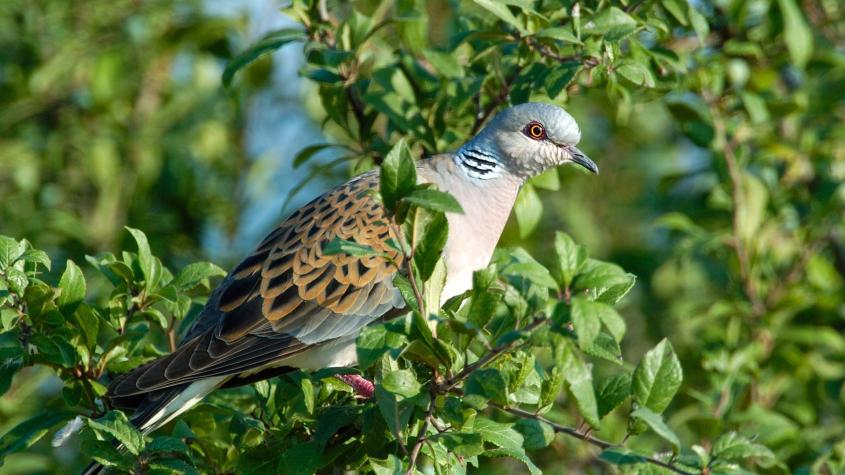
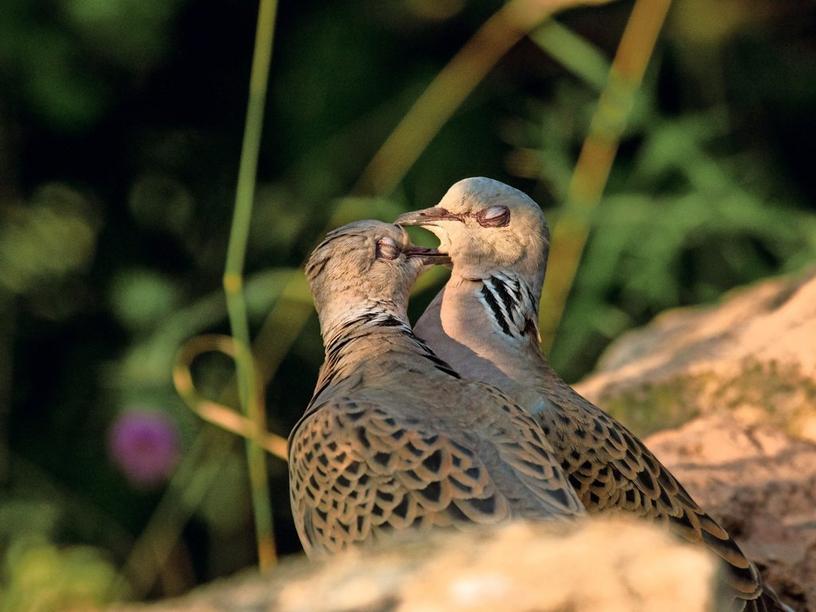
The Spanish regions have agreed to completely stop the hunt for the turtle dove this autumn.
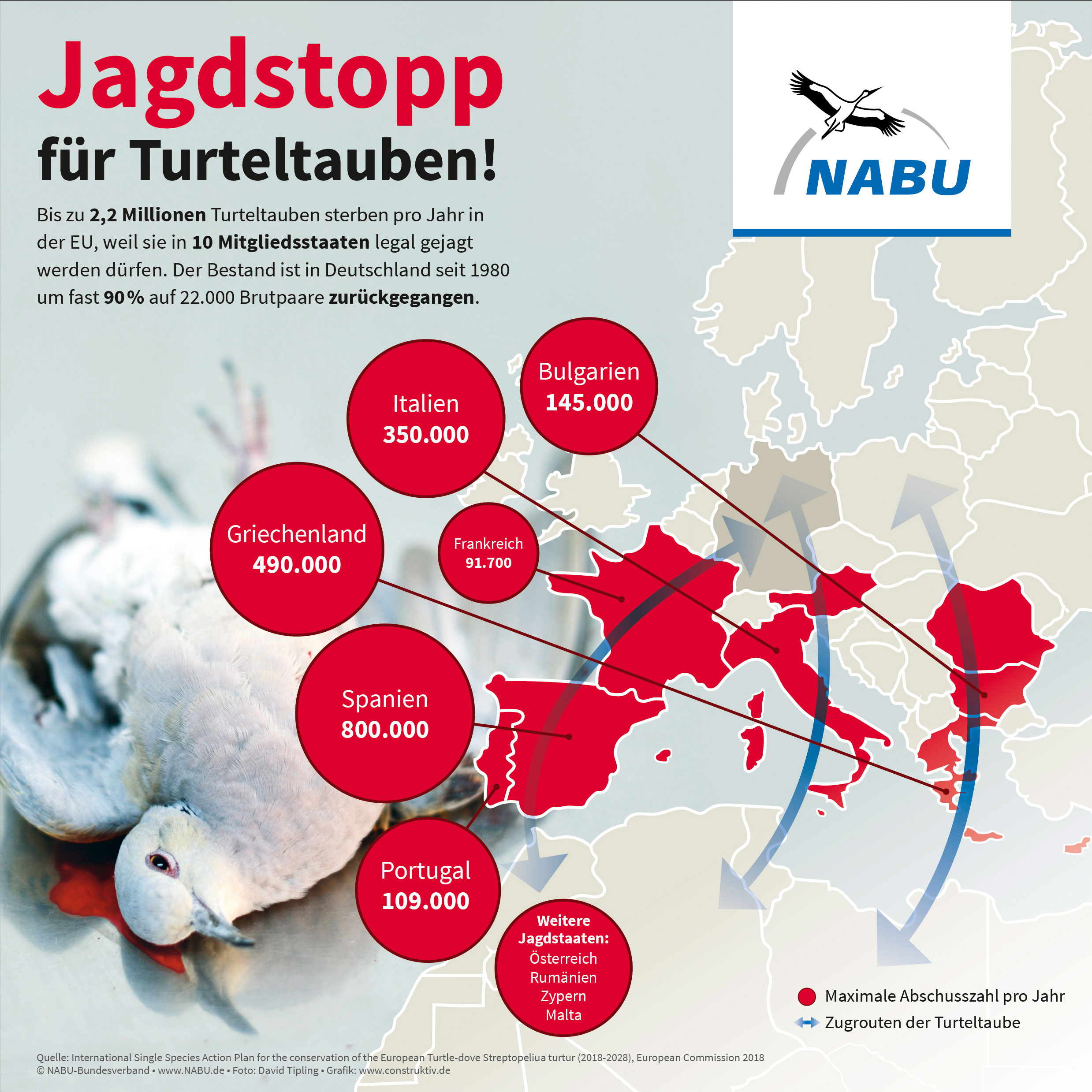
Their populations are in free fall across Europe – today only around 3 to 6 million pairs breed in the EU, the Spanish hunters alone shoot 800,000 individuals of the endangered migratory bird each season.
After France, Spain is the second major country to initially suspend the hunt for the turtle dove.
Italy, on the other hand, had only recently decided to release millions of animals for shooting again this year.
The Committee against Bird Murder has long been campaigning for an end to the hunt for the turtle dove and other threatened migratory birds – only last year we filed a complaint against France and Spain with the EU Commission, thus accelerating the current decision from Madrid.
And I mean…The lovebird population in Germany has been around since 1980 decreased by almost 90 percent. It is estimated that it is 22,000 breeding pairs at most.
In some regions the species is almost extinct.
The main reason for this is the intensification of agriculture.
It has the effect that the birds find too little food and fewer young birds grow up.
Around two million lovebirds a year are shot in south and south-east European EU countries, including Spain, Greece and Italy, and never return home from their journey from the wintering areas
Malta is the only EU country to enforce exemptions every year for hunting migratory birds in the spring, despite declining numbers.
The hobby hunters of the Mediterranean island of Malta are particularly interested in the turtle dove.
The effects of the corona pandemic are now making it even easier for legal and illegal hunters to shoot the animals.
Controls of the hunters in the field are therefore not carried out at all or completely inadequately.
In spring 2020, under the guise of a quail hunt, thousands of lovebirds were illegally shot on the train into their breeding areas in Malta.
In Spain, France, Italy and Greece only exceptions are made to the rule on lovebird hunting.
Lovebirds are hunted mercilessly!
In 2019 the hunting route for France was 45,000 to 138,000, in Spain 437,000 to 806,000 and in Italy 250,000 to 300,000 lovebirds.
Bans like this one in Spain, which make hunting that was previously legal, illegal, are another important step against poaching and the protection of birds.
And we can only hope that the new law will be closely guarded.
We are not getting mush through about Yulin this year – but here are a few links we have found mainly from the Press sources – Warning GRAPHIC videos and images.
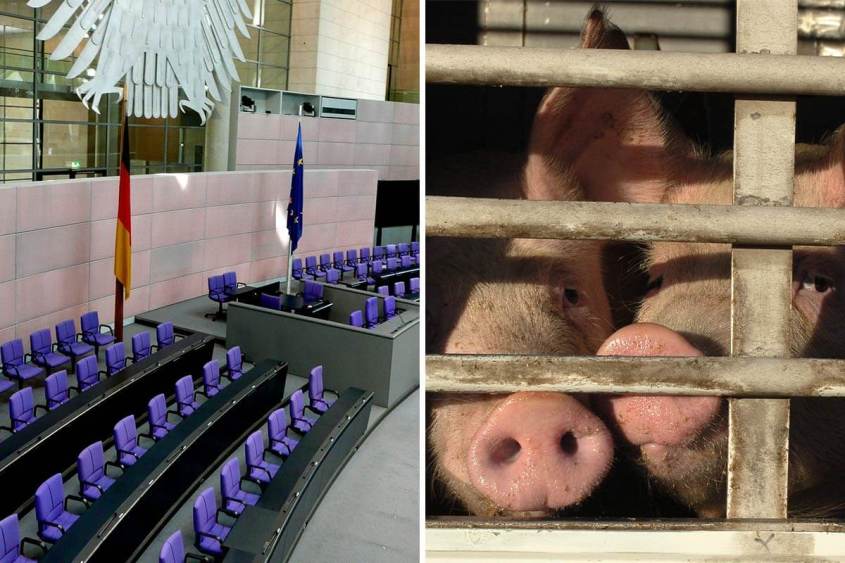
“Today is a bad day for animals – it is shocking that the Federal Council has rejected the initiatives of its own committees for a third country animal transport ban and an extended wild animal ban.
We are dismayed that Agriculture Minister Julia Klöckner and the Union-led countries were able to assert their anti-animal interests”. “Peter Höffken, PETA Germany)
On June 25, 2021, the Federal Council voted on an expansion of the Animal Welfare Ordinance – with no good result for the animals.
A ban on long-distance animal transports in 17 non-EU countries was rejected.
The Federal Council also rejected the Animal Welfare Circus Ordinance for a ban on certain wild animals in the circus.
Animal transporters are allowed to continue driving to third countries
Animal transport to non-EU countries means enormous animal suffering.
In many countries there are not enough supply points.
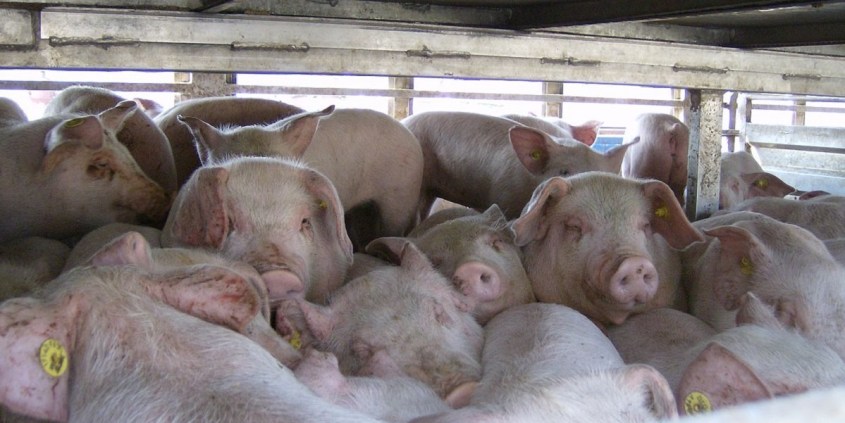
The animals often have to endure horror journeys of days and weeks without rest or food.
Cattle, sheep, pigs and other animal species suffer enormously from heat, cold, hunger, thirst, tightness, stress and exhaustion in their own excrement during transports.
When they arrive at their destination, they die in agony, because even when they are killed, EU standards are often not complied with.
No wildlife ban in the circus
Germany, Hanover | 2018 09 05 | animal show with wild animals in the circus Krone in Hanover.
Although the Federal Council’s agricultural and environmental committees initially requested an amendment to the new circus ordinance, this has now been rejected.
It was planned to ban the further acquisition of certain animal species such as elephants, big cats or giraffes for circuses.
The requirements for animal husbandry, accommodation and transport should also be specified.
However, the ordinance submitted by Federal Minister Julia Klöckner was so bad that it would not have brought any significant improvements.
Wildlife dressage is often associated with violence and beatings. Many countries have therefore banned at least certain animal species for circuses – Germany is one of the few EU countries where circuses can still do what they want with animals.
And I mean...We live in a country where animal ethics do not matter, because those responsible either do business with animals or are indifferent to animals.
One scandal follows the other: illegal conditions in slaughterhouses, illegal animal transports to third countries, criminal animal researchers ensure Germany’s reputation as the “world’s animal testing laboratory” ….
We are ruled by a pack of lobbyists in this banana republic
Dec 2020 Update: The New York Times published a story featuring our investigation, asking “Is Dairy Farming Cruel to Cows?” Our answer: Unequivocally, yes. “Some farms might be less cruel than others, but there is no such thing as cruelty-free milk.” – Erica Meier, President of Animal Outlook
VICTORY: Shortly after we released our hard-hitting footage inside Dick Van Dam Dairy, Dairy Farmers of America dropped this facility as a supplier. While this is a big step in the right direction, we’re not letting DFA off that easily. Join us in urging the dairy giant to shift 20% of its supply chain to plant-based alternatives.
After a two-year career working undercover inside several factory farms, Animal Outlook investigator Erin Wing now reveals her identity, stepping out of the shadows to shine a light on the stomach-churning horrors she witnessed at her most recent — and last — investigation at Dick Van Dam Dairy, a factory farm in Southern California.
Investigations
Dairy: Dead On Arrival
Animal Outlook investigator reveals her identity and exposes the truth behind the closed doors of the dairy industry.
Dec 2020 Update: The New York Times published a story featuring our investigation, asking “Is Dairy Farming Cruel to Cows?” Our answer: Unequivocally, yes. “Some farms might be less cruel than others, but there is no such thing as cruelty-free milk.” – Erica Meier, President of Animal Outlook
VICTORY: Shortly after we released our hard-hitting footage inside Dick Van Dam Dairy, Dairy Farmers of America dropped this facility as a supplier. While this is a big step in the right direction, we’re not letting DFA off that easily. Join us in urging the dairy giant to shift 20% of its supply chain to plant-based alternatives.
After a two-year career working undercover inside several factory farms, Animal Outlook investigator Erin Wing now reveals her identity, stepping out of the shadows to shine a light on the stomach-churning horrors she witnessed at her most recent — and last — investigation at Dick Van Dam Dairy, a factory farm in Southern California.
What Erin witnessed was one of many dairy farms in its death throes with innocent cows caught in the middle of a battle between a world progressing and an industry fighting tooth and nail to keep us entrenched in the past.
This shocking footage underscores the urgency to end this inherently cruel industry once and for all. It’s time for consumers to ditch dairy, and for companies like Dean Foods to pivot to vegan products.
Animal Outlook’s undercover footage revealed:
• Cows so sick or injured they are unable to walk subjected to extremely cruel treatment by workers who sprayed them in the face with high powered water hoses; kicked, jabbed and shocked them; and closed metal gates on them.
• Workers routinely lifting these so-called “downer” cows with a tractor and dragging them with a metal device called a “hip clamp.” They lifted one suffering cow this way and dangled her almost 20 feet in the air to move her over a wall, and then dragged her backward over a cement slab.
• Sick cows left to suffer without medication, veterinary care or euthanasia. They languished for days until they died on their own, with no access to food or water while they were unable to stand.
• Workers and a manager hitting cows with wooden canes and metal pipes in daily acts of extreme aggression and violence, sometimes as a form of retaliation against the animals.
• Workers and managers punching and kicking cows, and twisting their tails.
• Squalid and filthy conditions – cows forced to walk through thick feces and newborn calves unable to escape thousands of flies covering their fragile bodies.
• Shocking mortality rates of cows and calves, as well as high rates of injuries and illnesses – likely resulting from the putrid conditions and lack of care and treatment. One calf was born dead, and was pulled roughly from his or her mother. The mother cow didn’t have the benefit of pain management during this incredibly painful and rough incident.
• Cows repeatedly shocked with an electric prod as they were taken away to slaughter.
• Workers cruelly using automated gates to try to force cows to move in tightly packed spaces.
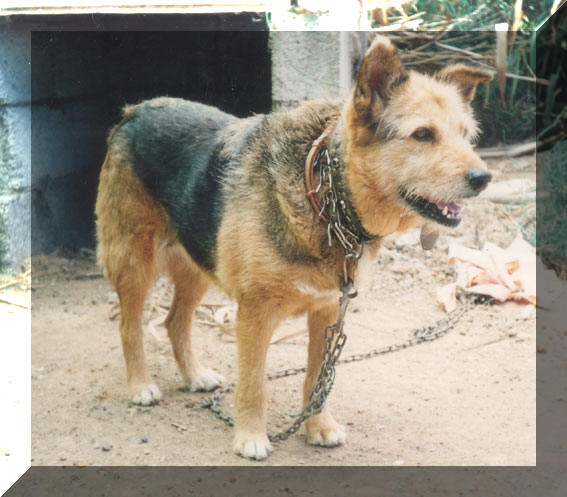
Excellent news for animals: Yesterday, Parliament approved a ban on keeping dogs on a chain !!!
Congratulations to the activists of the animal rights organization Animal Freedom, which is behind the ‘No to Chains’ initiative 👏💙.
They won a ban on chains for dogs in Slovakia, for which they deserve one huge thank you 🐾!
96 of the 117 deputies present voted in favor of the ban, saying NO to the chains! The petition was signed by up to 97,000 Slovaks who so clearly expressed their disagreement with the injustice committed on dogs in Slovakia ✊.
👉 The amendment to the Veterinary Care Act prohibits the breeding and keeping of a dog tethered in a breeding facility, except for the breeding or keeping of a dangerous dog, tethering a service dog and a special purpose dog during guarding or work for which the dog is intended, or during training , and short – term tethering of the dog under supervision during the cleaning of the breeding area, feeding or during the treatment of the dog.
The law applies to newborn dogs from January 1, 2022, to dogs born before this date from January 1, 2024.
We from Humane Progress, we look forward to being one step closer to better animal welfare in Slovakia!
Source: TS Sloboda zvířat
And I mean…As in many other areas, Germany is lagging behind in this area.
If you see this photo it is assumed that it was taken in Poland, Hungary or any other country without a large animal welfare lobby.
But that’s the way it is here in Germany, this type of dog keeping still exists.
On farms (“that’s how we always kept our dogs like this”) or in small villages where no one would dare to “blacken” their neighbors, unfortunately, chain dogs can still be found. But this type of dog keeping is not only a thorn in the side of animal lovers, it is also prohibited by law
One doesn’t own dogs like a collection of art or books.
Dogs cannot be switched on or off depending on what you want at the moment, and then ignore them and lock them away the rest of the time.
There will never be a real human-dog relationship on this basis.
If you keep your dog on a chain, your animal will suffer!
Chaining – social isolation – is the worst thing a person can do to his friend, his dog.
“whoever keeps his dog on a chain is an asshole!!!”
We condemn chain binding for ALL animals as cruelty to animals, and loathe people who do it.
We fight against them, and therefore the decision of Slovenia is a small success to our fight








 Their populations are in free fall across Europe – today only around 3 to 6 million pairs breed in the EU, the Spanish hunters alone shoot 800,000 individuals of the endangered migratory bird each season.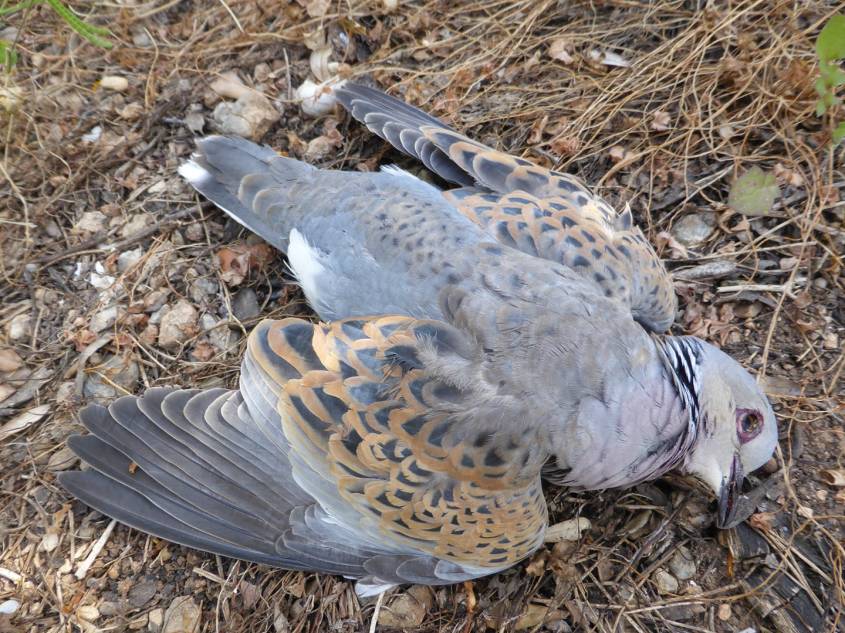




 “whoever keeps his dog on a chain is an asshole!!!”
