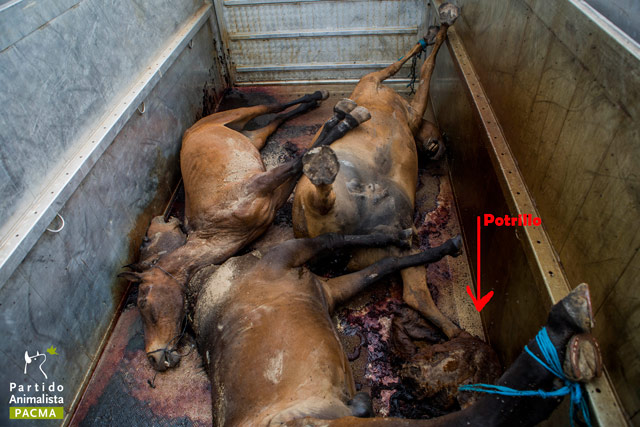
Mass infection with corona in a German slaughterhouse

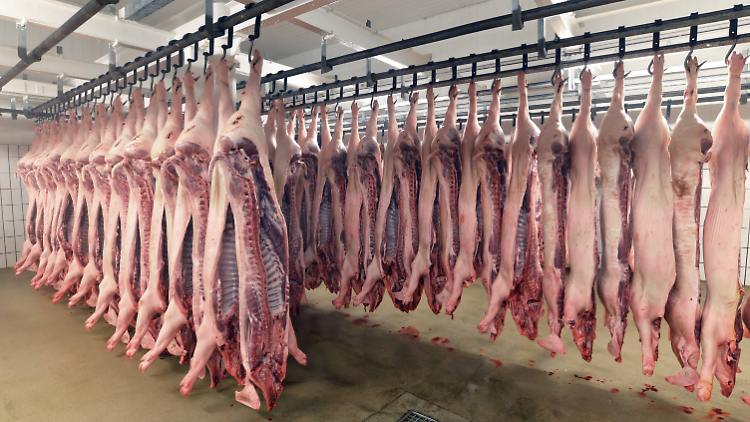
Communication offensive at Müller-Meat-Company: Around three weeks after the start of the massive corona infection among employees with 300 people affected, the management responded to the “most serious crisis” in the company’s 50-year history by telephone conference.

OLYMPUS DIGITAL CAMERA

Almost at the same time, the DGB (German trade union federation) also takes cell phones in hand and calls the family business in Birkenfeld the “cause of the catastrophe”.

According to the government in Bucharest, more than 200 Romanian workers have been infected with the corona virus. The Foreign Ministry said that they are not seasonal workers, but employees of subcontractors of the German meat company.

fleischkörper hängendpg

In addition to the Romanians, around 100 other local workers had also tested positive for the corona virus, the ministry also said, citing information from the German authorities. All infected people are in quarantine. According to the local authorities, about five infected people are being treated in hospital, and one is being ventilated with machines.

A total of 500 Romanians are employed in the slaughterhouse, but also from Poland and Hungary.

“No foreign employee is threatened existentially”, say the miller’s bosses against the rumors about the social situation. All are covered by health and social insurance – this is also part of the audit guidelines. The fact that there are so many foreign workers is due to the situation in Germany. Regionally there are hardly any butcher jobs.

The operation with a total of 1100 employees continues to run “somewhat reduced”, said a spokesman for the company. 50 new employees are coming.

At Müller-Company, the effects of the major infection are that “the meat products are fully marketable and can be consumed safely”.

The slaughtering capacities had been adjusted to the lower workforce, delivery obligations could be “fully” fulfilled.

Companies and the health department see no risk to consumers.

images.-vegan humorjpg

https://bnn.de/lokales/pforzheim/noch-mehr-corona-infizierte-bei-mueller-fleisch-in-birkenfeld

I have no comment, but…The German animal rights organization (“Animal Peace”) has written a humorous and very enlightening comment on this incident:

Animal-Peace curious:

Commissioned by animals, we have the following questions for the corona experts:

1. Can viruses be transmitted to the body parts of the murder victims?

2. How long does the virus survive on corpses?

3. Up to what temperature can corpses be heated so that the virus remains active when consumed?

4. Can the human get infected through virus consumption?

In anticipation of positive news, we remain with kind regards,

ANIMAL PEACE

My best regards to all, Venus

Animal ethics our society: use and throw away!

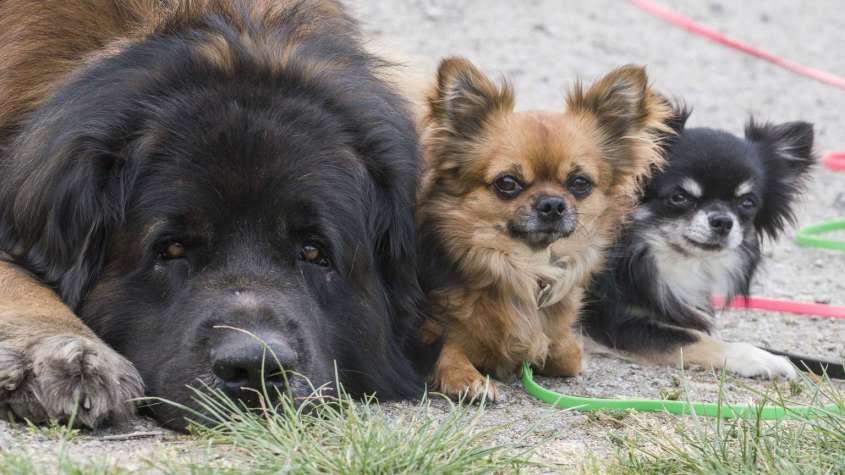
In the corona quarantine, a dog or a cat as a playmate? Sounds like fun, but the bizarre trend is causing trouble in the shelter.

-hund-katze-haustier-corona-

Ban on contact, keeping distance and little prospect of loosening in times of the corona crisis. Sitting at home is often particularly difficult to bear, especially for single people. But also families with children often hardly know how to keep the little ones busy.

How good that there are dogs and cats, many think. A bizarre trend has developed in Hessen, Germany.

banane rep deutschlandpg

Coronavirus is the trigger: A dog or a cat forbidding contact – the phone does not stand still in the shelter!!

Shortly after the Corona ban on contact was also introduced in Hesse, the telephone of the “Animal Protection Association Frankfurt am Main”  suddenly does not stand still in the shelter!!
And the staff at the shelter were amazed when the first request reached them: Whether it is possible to rent dogs and cats. Temporary – because of the corona crisis.

The pet, dog or cat would then be returned when the corona measures were relaxed again.

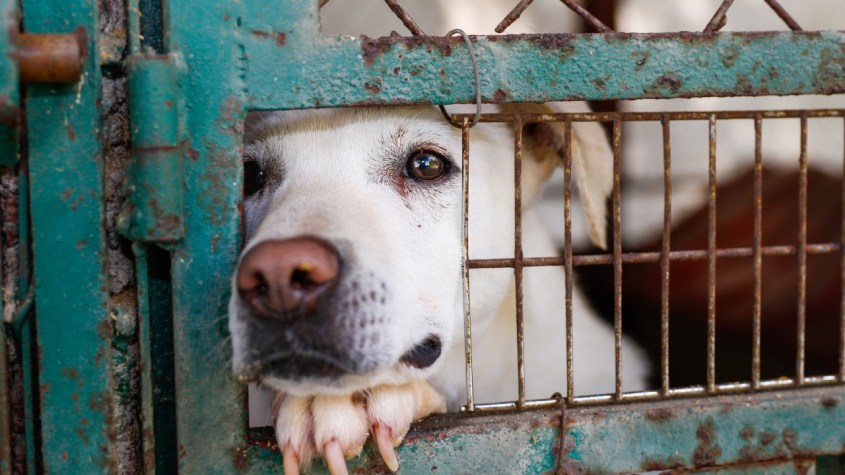
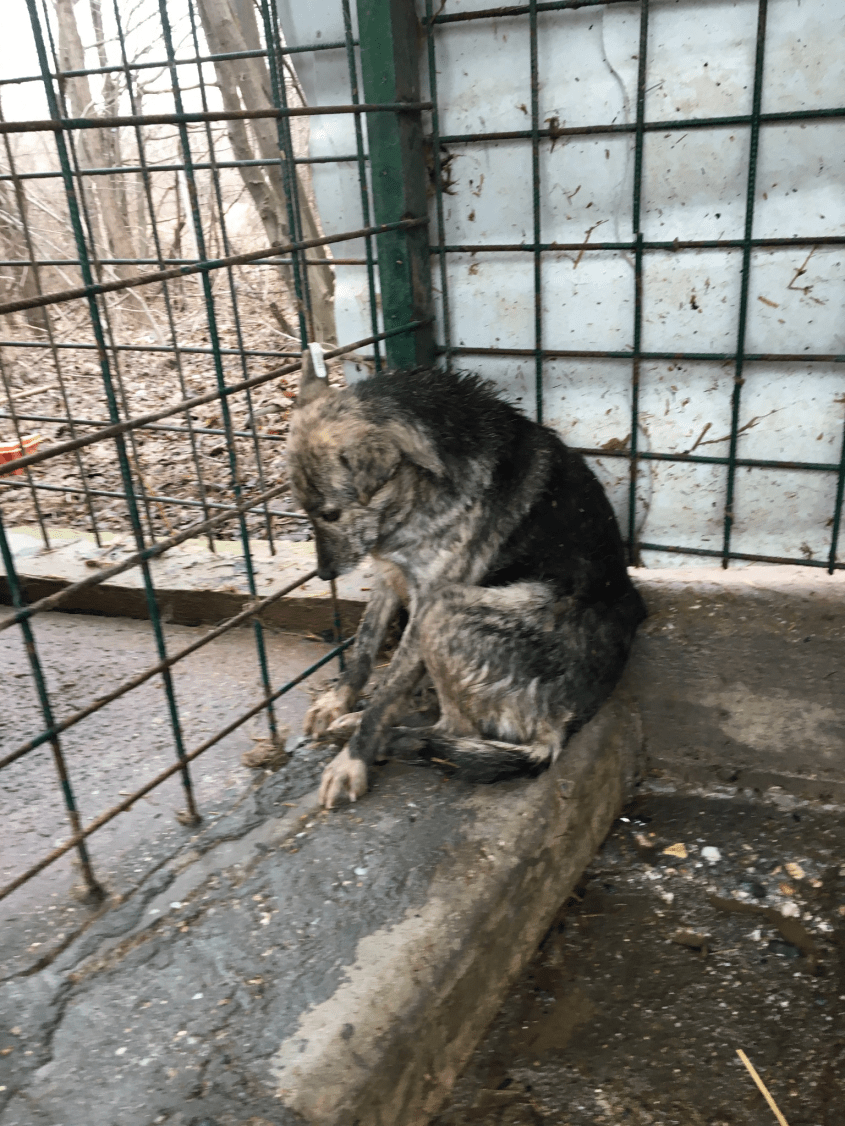
hund hinter shelter gitterjpg

And it was far from the case of individual inquiries, explains Sabine Urbainsky from the Frankfurt animal shelter: “It was really a lot, it was actually so bad at the beginning that the phone rang almost only because of that. The most popular loan pet was the dog, and cats were only asked occasionally”.

Corona crisis: temporary pets – and if the corona measures are relaxed, the animal can be given back.

With sentences like “I would have a lot of time for a dog in the home office right now,” and “with me the pet is better off than in the kennel”, people of all stripes justified their request.

Even a father called, says the animal shelter manager from Frankfurt.

Because his son is in front of his computer all the time, a dog would be great (!!!). Then the son would finally go out again.

But if the school started again after the corona measures were relaxed, the family would want to give the dog back because there was no time for a pet.

hund im Heimjpg

Of course no dog and cat or other pets will be arranged on a temporary basis, says the shelter manager Sabine Urbainsky.

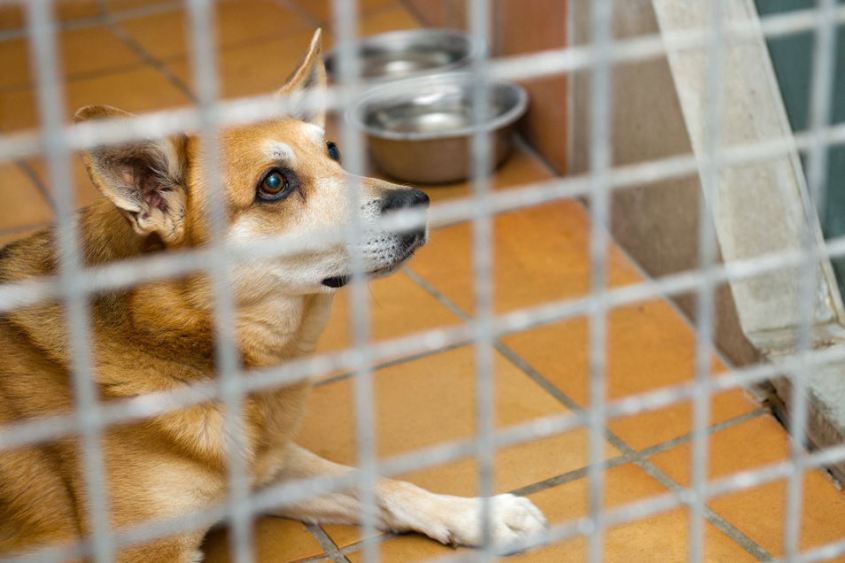
“The pet doesn’t understand the whole thing. It thinks it has a new home and then suddenly ends up in the shelter again. There are pets that break down mentally, ” explains the shelter manager.“Dogs or cats that suddenly lose their homes often develop lethargic behavior and refuse to eat. The animal shelter staff then have their hands full to pep up the animal again”.

streune in shelterspng

https://www.fnp.de/frankfurt/hund-katze-corona-tierheim-frankfurt-ausleihen-trend-haustiere-coronavirus-kontaktverbot-zr-13714548.html


And I mean..We can see what the current moral of this society is: use and throw away.
There is nothing worse for an animal than losing its home.
The joy, the conviviality, the security that is built up while living together is gone in one day.

This is man’s betrayal of the animal!

If some feel lonely and underemployed, have to go to animal shelters themselves and lead the – also lonely – dogs to a walk. Or help with the amount of work that the stressed employees do for the animals.

The loneliness in Corona times is temporary.
The loneliness of the animals in the animal shelters is lifelong.

Be a responsible adopter and give an animal love and partnership for life!

FOR LIFE!

hund-strand-fraujpg

My best regards to all, Venus

Latvia: organized hunting criminality

The Baltic wolf population is scientifically estimated at 3,600 individuals, of which 600 live in Latvia.

lettische-Flagge

There was a premium for wolf shootings until 1999, and wolf hunting was fully open until 2003. That means there were no requirements in terms of a shooting plan. Over 200 wolves were killed annually in the 1990s, and nearly 400 in 1996.
On average, half of the gray dogs killed in the Baltic States fall in Latvia.

letland_1

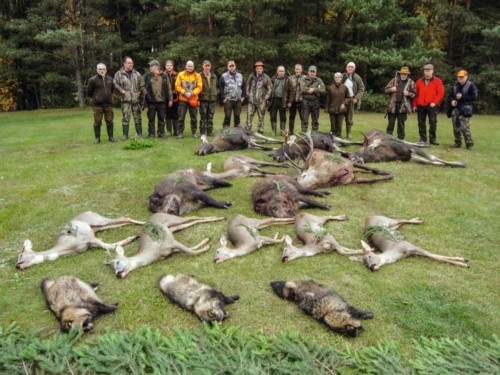
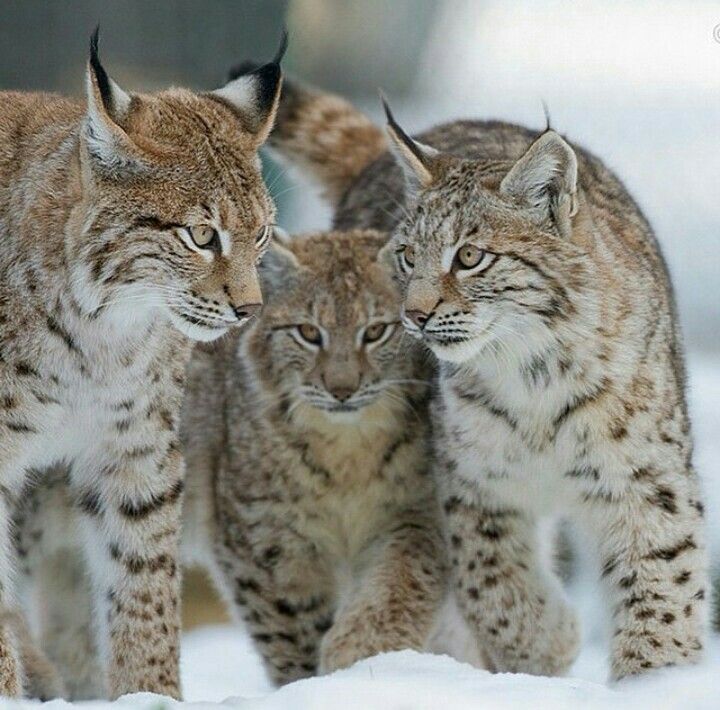
Latvia has it all: lynx, wolf, elk, deer, sow, deer – and everything can be hunted in Latvia.
Latvia is a member of the EU but has not signed the species protection directives.

lux family

Do you wonder? Nobody in the country does that. The wolves are hunted as usual, like in four other EU countries, namely in Lithuania, Finland, Greece and parts of Spain.

In 1997, Latvia acceded to the Bern Convention, an agreement to conserve European wild flora and fauna and their natural habitats, provided that no special protection was granted to the wolf.

In the accession negotiations with the EU, the Baltic States achieved a so-called geographical exception, namely: Wolf was recognized as a population with a favorable conservation status.

Wolf hunting is legal under the following conditions:
1. application of the hunting methods permitted in the directive,
2. continuous population surveillance,
3. Implementation of more suitable protective measures

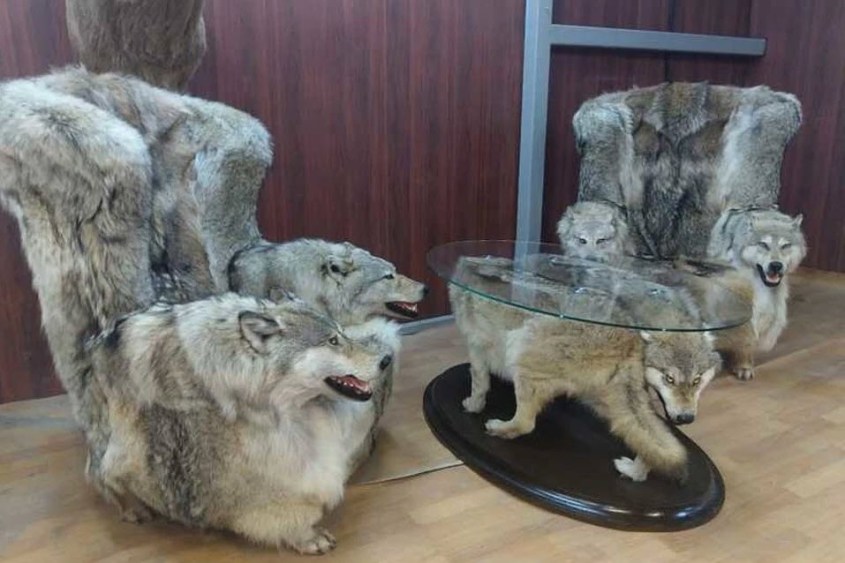
Wolf-trophäenrussisch

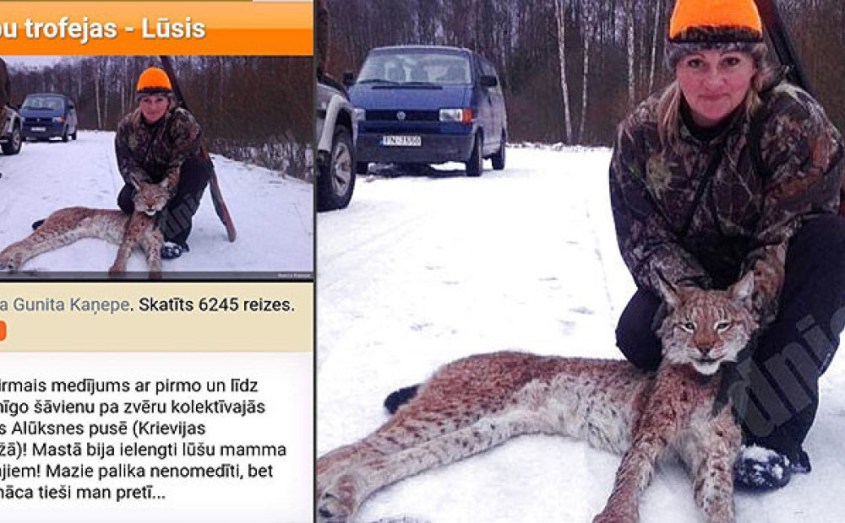
There are psychopaths who dream of killing a lion in the African steppe, a polar bear in the eternal ice or a magnificent lynx in Latvia!

For many serial offenders, it is a great feeling when the trophy is stuffed over the fireplace at home or used as a bed mat.

In fact, there are a number of organizers worldwide who handle such requests – for a lot of money. Hunting a polar bear in Canada costs up to 40,000 euros, elephants and lions in Africa up to 60,000 euros and black rhino even up to 280,000 euros. A shot at the wolf in Macedonia costs 3,000 euros.
Nevertheless, there is great interest.

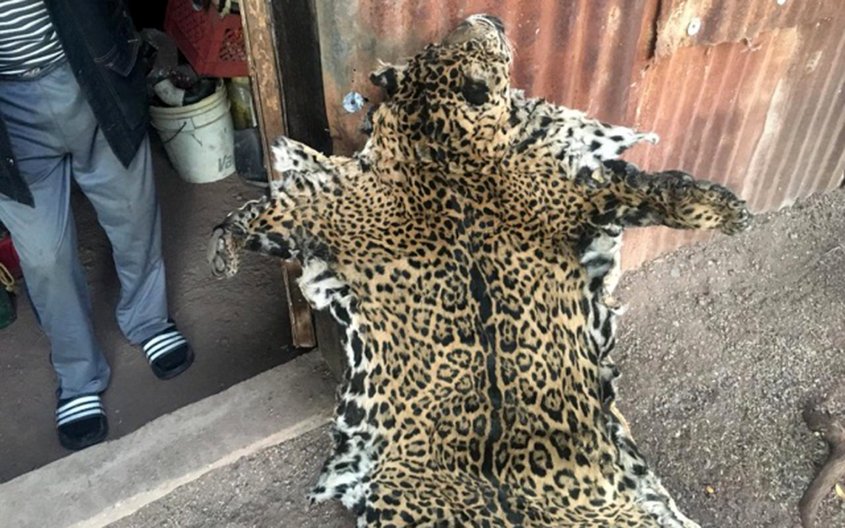
der Letzte Jaguar ist erschoßen worde-Jaguar Fell

In Bulgaria and Romania, this primitive pleasure of killing the wolf for pleasure is far cheaper. There the hunt for the wild animal costs 400 to 500 euros. And if one of these hunting tourists shot a wolf in an EU member state, he is also allowed to import it into Germany, according to customs officials.

Quote from the story of a German hunter who took part in a hunting tour against wolf: “Latvia is not only the cheaper alternative, no, in Latvia you can legally hunt wolves. Captured wolf trophies can be prepared and taken to Germany with CITES- approval *! It was clear to all of us: we will be back “!

* (CITES: Convention on International Trade in Endangered Species of Wild Fauna and Flora)

letland

P.S: We got a call for help from blog readers.
They asked us to write a separate article about the brutality and unscrupulousness of the lynx and wolf hunters in Latvia.

Hunting is legal in this country and psychopaths make shameless use of it.
We therefore only see the possibility of petitioning:

(a) to the Government of Latvia and
(b) to the EU Commission.

Of course, we have to say in advance that the results of a petition are not always positive, even if they are widely accepted.
However, a petition brings up unknown crimes that most countries want to avoid.
In any case, we must not give up, we have to keep fighting, we owe it to the animals.

Best regards to all, Venus

EU;; Have the Welfare Lobby Been Saying This for Years ? – DG SANTE audit reveals major problems with live export from Romania !

Pro-Brexit supporters burn an EU flag during a UKIP demonstration in central London


WAV Comment – when it comes to the enforcement of EU animal welfare regulations, the EU is basically a chocolate fireman, melting away with do nothings, but putting out press statements which, if you are not involved with EU ‘ways’, would lead the normal person to think that they are on top of the situation. Believe us, when it comes to live animal transport, the EU never has, is currently not, and never will be able to enforce its own slapdash Regulation 1/2005, on the ‘protection of animals during transport’. The regulation is a simple, formal EU smokescreen which all its officials and Commissioners can hide within whilst the reality is that the abuse and suffering of animals in transport continues within the EU (and globally) on a daily basis.


‘After the serious violations of the EU Regulation 1/2005 (Transport Regulation) by Romania in sending nearly 70,000 sheep to the Persian Gulf last summer, an audit by DG Sante has found that the country’s central competent authority did not provide the necessary information, instructions or access to suitably qualified staff to support official veterinarians in checking the technical requirements of livestock vessels’.


So what is actually new here ? – DG Sante investigations now finding out what EU animal welfare organisations have been telling, and showing (with undercover investigations) for the last 25 years or more.

The real question now is ‘what are the EU going to do about it all ?’. We think the response from the EU will be a fairly simple one – ‘nothing really’.

And now at a time when the Coronavirus can be used as an excuse, not a reason, for not taking action. Actions; if there ever were any, by the EU have probably been put back at least another year or more regarding live animal transport (fortunately for the EU) due to a virus called ‘Coronavirus’. And yes, Cornavirus appears to have originated in animal wet markets in China due to the non enforcement of regulations by the Chinese authorities. Spot the link ? – we can.


Bernard Van Goethem (@VanGoethemB) | Twitter

So now are we going to witness Bernard Van Goethem (pictured above) – DG Sante section ‘G’ – ‘Crisis management in food, animals and plants’ actually step up to the plate and do something; or is he going to do his usual, of waving his arms in the air whilst making statements about not being able to do anything !

We know a little about his ineffectiveness; and have had personal interactions with him in the past:


https://serbiananimalsvoice.com/2016/12/03/romania-take-action-for-romanian-live-exports-a-useless-van-goethem-eu-as-always/


https://serbiananimalsvoice.com/2016/09/05/nl-the-situation-in-turkey-gets-no-better-in-fact-even-worse-blame-mr-van-goethem-and-his-in-effective-team-at-the-eu/


Bernard Van Goethem (@VanGoethemB) | Twitter

https://serbiananimalsvoice.com/2016/07/21/mr-van-goethem-and-eu-others-all-talk-and-no-action-a-real-head-in-the-sand-situation/


https://serbiananimalsvoice.com/2016/06/29/mr-van-goethem-resign-now/


https://serbiananimalsvoice.com/2016/06/07/eu-must-ensure-animal-welfare-or-mr-van-goethem-will-get-you-and-the-next-joke-is/


We don’t ask for your money, never have done and never will. We don’t ask for your cash to undertake yet more investigations to gather evidence which as a result, is continually ignored by the EU ‘chocolate brigade’ under the smokescreen of Reg 1/2005.

We don’t need yet more supporter funds to keep on gathering information which forever results in nothing from the EU; we have had experience of this filthy trade for over 30 years; and we know how it works. If legislators cannot enforce the legislation; then possibly it needs a virus to shut the entire system down and make them think what they are going to do next.

A ban on live animal transport throughout the EU by the EU regulators would be more than welcome; but then we have the national financial implications, the meat mafia and the meat lobbyists to contend with. Then again, the huge downturn in milk consumption, combined with the massive decline in meat eating – one could say that the industry is doing a pretty good job in killing itself, without the need for presenting further evidence to the ‘do nothing’ officials at the EU.

Lets now await what action the EU takes with regard to EU member state Romania and the non enforcement of EU Regulation 1/2005 for the ‘protection of’ animals during transport.


Sadly, I think I will be holding my breath for a long time !

But, we keep on fighting;

Regards Mark.

———————————————————————–


https://www.eurogroupforanimals.org/news/dg-sante-audit-reveals-major-problems-live-export-romania


DG SANTE audit reveals major problems with live export from Romania

27 April 2020

EurogroupforAnimals


After the serious violations of the EU Regulation 1/2005 (Transport Regulation) by Romania in sending nearly 70,000 sheep to the Persian Gulf last summer, an audit by DG Sante has found that the country’s central competent authority did not provide the necessary information, instructions or access to suitably qualified staff to support official veterinarians in checking the technical requirements of livestock vessels. Eurogroup for Animals urges the EU Commission to start infringement proceedings against Romania.


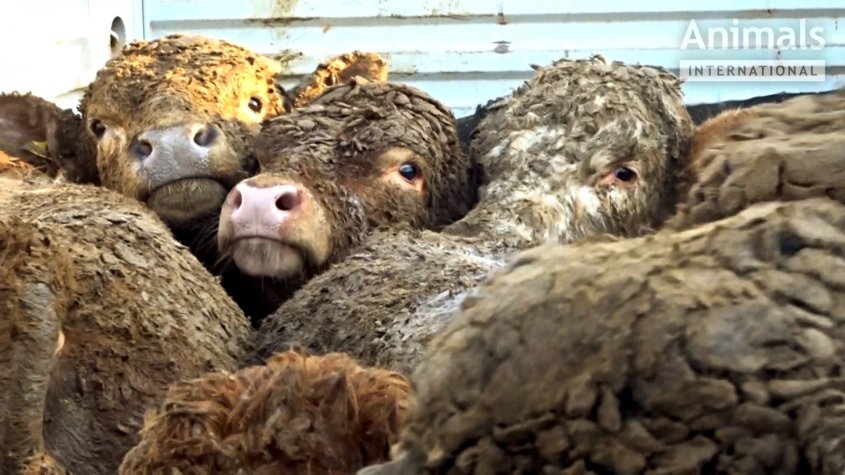
The lack of proper checks translated into animals transported alive with inadequate equipment to ensure their welfare during transport, and on a vessel with serious structural problems. Worryingly, this is likely to have affected many more animals: as highlighted in the report, the authority in one port inspected by DG SANTE is responsible for the approval of 43 of the 79 (56%) livestock vessels approved by the Member States, so “there is a distinct possibility that animal welfare issues arise during sea transport on board these vessels”.

Indeed, past investigations have shown that during such voyages, heat and humidity combinations reach levels that cause heat stroke, resulting in animals literally cooking alive in the holds of vessels. Eurogroup for Animals’ member organisation Animals International, who were following this particular 2019 Romanian shipment’s progress last summer, found the vessel stopping at Gulf ports in temperatures of 47°C.

Auditors tasked with assessing the level of enforcement of the Transport Regulation at the Romanian port also found that there is a general lack of records in the system of controls to ensure animal welfare during transport by sea to non-EU countries. There is no evidence of checks confirming that the animals are fit to continue the journey, or of the adequacy of vessels’ drainage systems. Given the absence of documented procedures, records and support to official veterinarians in checking vessels, auditors concluded that “there is little assurance of the effectiveness of most controls carried out”. 

“We welcome the decision of the European Commission to carry out an audit after the tragedy of last summer, and given the results, Romania should stay under strict scrutiny,” says Reineke Hameleers, CEO at Eurogroup for Animals. “Now we call on the Commission to start infringement proceedings against Romania and to start the process of a revision of the Transport Regulation to limit the duration of journeys and end these horrific sea transports for good”.


——————————————————————————————–


We (WAV) covered this shipment of sheep from Romania to the Middle East every day; providing updates of ship positions, temperatures and ports used if applicable. Here are a few links to just a few of our posts so that you can see what we undertook.


https://worldanimalsvoice.com/2019/09/20/eu-finally-after-a-second-try-we-get-one-response-out-of-10regarding-our-concerns-for-romanian-sheep-exports-now-we-wait-to-see-what-happens-if-anything/


https://worldanimalsvoice.com/2019/09/04/nightmare-comes-true-for-romanian-sheep-exported-to-the-gulf/


https://worldanimalsvoice.com/2019/08/02/2-8-19-copy-of-the-letter-from-the-eu-do-nothing-commissioner-to-the-animal-welfare-ignorant-romanian-minister/


https://worldanimalsvoice.com/2019/07/31/romanian-sheep-transporter-ship-update-31-7-19/


https://worldanimalsvoice.com/2019/07/26/eu-does-the-eu-enforce-its-own-regulations-no-what-planet-are-you-from/


Regards to all – Mark.


tiere schmutzig im schif milchgrenzen5_gal


Spain: the “pilgrimage of dew” is suspended

The governing board of the Brotherhood of Almonte (Huelva) has decided to suspend the pilgrimage of El Rocío, scheduled between May 29 and June 1, 2020, due to the situation caused by the coronavirus pandemic.

spanien-flagge-spaniens-r531xg

As reported by the brotherhood in a statement, “due to responsibility” and due to the evolution of the scenario caused by the covid-19, the government board has decided to also suspend all previous acts scheduled in Almonte such as the procession of the Virgen del Rocío through its streets on the 17th or the return to the village of El Rocío on the 24th of the same month.


It is a decision that the governing board of the Matriz de Almonte brotherhood has taken “with pain but with strength” and above all “out of responsibility”, taking into account the recommendations of all the authorities and considering “the highest priority in these Moments should be the only reason for everyone’s attention and concern: health. ”

maltrato-animal-el-rocio2015-37

https://cadenaser.com/emisora/2020/03/23/radio_huelva/1584964080_198844.html


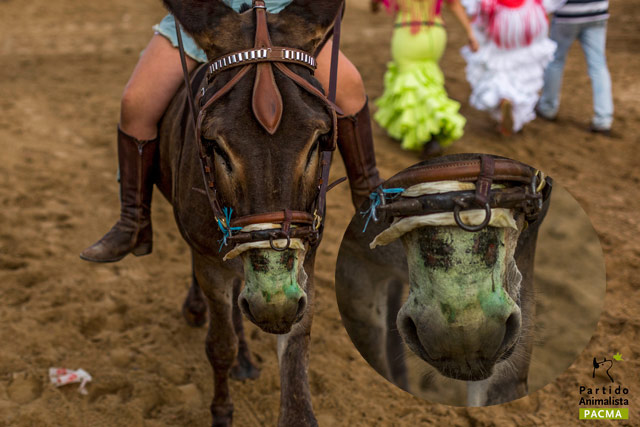
And I mean…More than 20,000 animals are used each year in the Romería del Rocío among horses, oxen and donkeys.

More than 20,000 animals know exhaustion, mistreatment, lack of water and rest, injuries, and also death every year.

maltrato-animal-el-rocio-35

This year, and thanks to Corona they won’t have to go through that.
Go, Corona, Go!

My best regards to all, Venus

USA: Virginia Bans Public Contact with Captive Big Cats, Monkeys and Other Exotic Animals.

american-flag-120402148


Virginia Bans Public Contact with Captive Big Cats, Monkeys and Other Exotic Animals

Posted by Jane Wolfe | April 22, 2020


Virginia Bans Public Contact with Captive Big Cats, Monkeys and Other Exotic Animals

Image Credit: PublicDomainPictures/Pixabay


In a victory for animal welfare, the General Assembly of Virginia has passed a new law banning public contact with captive wild animals, including lions, tigers, bears and monkeys.

Signed into law on April 2 by Gov. Ralph Northam, Senate Bill 1030 makes it illegal for any animal “keeper” to provide or offer direct contact with a “dangerous captive animal” to any member of the public, whether in exchange for payment or not.


In effect, the new legislation will prevent people in Virginia from “petting” these captive animals or posing for photos at cruel roadside zoos and tourist attractions, helping to bring an end to the suffering of innocent animals carelessly used for human amusement.


The bill was passed before the airing of Netflix documentary Tiger King: Murder, Mayhem and Madness, which offers a glimpse into the big cat industry’s greed and exploitation. It will come into effect on July 1, 2021. Anyone violating the law will be guilty of a Class 3 misdemeanor and subject to a fine of up to $500.


The Commonwealth already has a ban on the private ownership of big cats, but shockingly, there are thousands still being kept as “pets” in the United States. To help save these lions, tigers and other wild felines from unnecessary suffering, please sign LFT’s petition urging House and Senate leaders to pass The Big Cat Public Safety Act (BCPSA).


SIGN: Save Tigers and Lions from Miserable Captivity As ‘Pets’

Posted by Carly Day


SIGN: Save Tigers and Lions from Miserable Captivity As ‘Pets’


Petition Link –

https://ladyfreethinker.org/sign-pass-the-big-cat-safety-act-to-save-tigers-and-lions-from-cruel-ownership/


PETITION TARGET: United States House and Senate Leaders


Thousands of big cats are wasting away as “pets” in the United States. These majestic animals are torn from their mothers while only babies and may spend their lives pacing miserably in tiny, cramped cages with no hope of a natural life.


Not only do these animals suffer mentally and physically, but they are also a threat to people, with hundreds of dangerous incidents involving big cats and humans occurring over the last 30 years.


The Big Cat Public Safety Act (BCPSA) seeks to ban private individuals from owning any big cat species and restrict direct contact between these animals and the general public.


“Big cats are powerful predators, not pets, and pose a particular threat to public safety,” said the bill’s sponsor, Senator Richard Blumenthal.


Only licensed facilities would be allowed to house big cats, effectively removing these animals from roadside zoos.


The BCPSA is currently moving through the Senate (S. 2561) and House of Representatives (H.R. 1380) and needs your support!


Sign this petition urging House and Senate leaders to pass this bill, saving thousands of big cats from suffering.


China: Following Shenzhen’s historic ban in April, Zhuhai has now become the second city in China to introduce a law banning the consumption of cats and dogs.

China


Following Shenzhen’s historic ban in April, Zhuhai has now become the second city in China to introduce a law banning the consumption of cats and dogs.

This welcome legislation, originally reported by China News, comes shortly after a public statement from China’s Ministry of Agriculture and Rural Affairs recognizing dogs as companion animals and not “livestock.”


After May 1 — the date the law goes into effect — anyone selling or consuming dog or cat meat could face financial penalties of up to 20 times the value of that meat, according to a report from Xinhua.


“As the second city in China to ban dog and cat meat, Zhuhai is helping pave the way to a more compassionate future,” said Lady Freethinker founder Nina Jackel. “Activists in China and across the globe have fought so hard to end this cruel and needless industry, and it’s exciting to see true progress happening.”


Shenzhen was the first Chinese city to prohibit its residents from eating cat and dog meat, and this could be the beginning of a domino effect that will lead to a nationwide ban.


As encouraging as this ban is, there are still millions of dogs and cats slaughtered in China’s cruel dog and cat meat trade, which continues throughout other Chinese cities. Lady Freethinker (LFT) is doing everything possible to end this barbaric practice.


If you haven’t yet added your voice, please sign LFT’s petition to save these innocent animals.


Germany: wasted money and animal suffering in laboratories

Germany has released an unscheduled 305 million euros for research funding for the new corona virus. While part of the funding is spent on animal testing, it is not clear whether and to what extent the development and application of modern animal testing-free in vitro methods such as human organoids are being funded.

tierversuch-ratte-d-27459718
The nationwide association Doctors Against Animal Experiments asked about the distribution of the funds and received only unsatisfactory answers. The association criticizes the lack of transparency and the flow of public funds in expensive and lengthy animal experiments as ethically and economically irresponsible for humans and animals.

Tierversuche-Mauese-Ratten-USA

The Federal Ministry of Education and Research (BMBF) has announced that, in view of the current COVID-19 emergency situation, it will provide additional funding both for research into the SARS-CoV-2 virus and for the development and testing of medicines and vaccines .

corona Impfung peg

The corona virus cannot infect the usual “laboratory animals”, nor can it cause a severe course of disease in other animal species as in humans. Nevertheless, there is strong evidence that a large part of this special funding is used in animal experiments.

mäuser aufs geldn

The international vaccine initiative CEPI (Coalition for Epidemic Preparedness Innovations) provides a large portion of this special funding, namely EUR 145 million.

CEPI is a public-private partnership that works with government sponsors as well as private foundations and companies. It coordinates and supports a wide range of projects for the development of various vaccines and vaccine technologies.

At the request of doctors against animal testing, CEPI was unable to provide any information about the proportion of the COVID-19 funding used for animal testing or for animal testing-free procedures. Since animal testing is generally much more expensive than the human-relevant in-vitro methods, it can be assumed that a lot of money will be invested in animal testing.

The strategic COVID-19 plan, which was developed by the international funding network GLOPID-R (Global Research Collaboration for Infectious Disease Preparedness), of which the German Ministry of Education and Economy is a sponsoring member, together with the World Health Organization, is also unsettling.

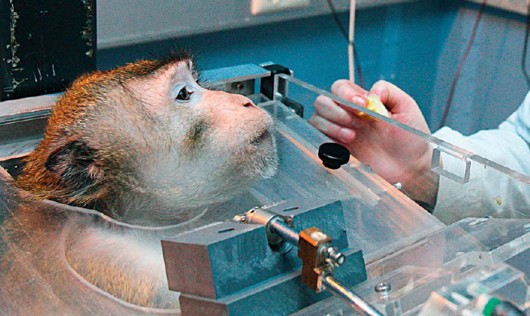
In this plan, various animal experiments, especially those with mice and monkeys, are provided and described as milestones that should be encouraged and supported.

Affenversuche

The German Ministry of Education and Economy supports projects from basic research with a total of up to 10 million euros – in addition to the 145 million for CEPI.

The following are listed as funding points for financing:
– Research into the genesis of the virus and its transmission between animals and humans
– Approaches to testing the transferability of existing animal models to CoV-2 and ”
-Development of new clinically relevant animal models and human cell models “(for example, lung infection model).
All three points are based on animal experiments.

In contrast to this, the human-based animal-free methods with the exception of the briefly mentioned “human cell models” are not listed as funding points.

corona

We asked the German Ministry of Education and Economy what the distribution of these special funds between projects with and without animal experiments looks like, but our request has not yet been answered. This is an indication that more funding can be invested in carrying out cruel and fruitless animal experiments with a wide variety of animal species than in the development of in-vitro high-tech technologies with human tissue.

Labor maus mit Tumor
The German Ministry of Education and Economy is investing 150 million in the establishment of a scientific network from German university clinics.

Although the focus should be on clinical work with patients, there are indications in the report that this money is partly also attributed to preclinical research, including animal experiments.

Ärzte gegen Tierversuche e.V.


My comment: CEPI was founded in 2017 by several governmental and non-governmental donors in response to the 2014 Ebola crisis.
The German Ministry of Education and Research (BMBF) supports CEPI for up to 90 million euros for five years.
Other supporters so far have been Norway, Japan, Great Britain, Canada, Belgium and Australia, the Bill and Melinda Gates Foundation and the Wellcome Trust (!!!)

With a bit of bad luck, a (compulsory) vaccination that is already being planned will not save us from the swamp.
This could be because we will be suffering from the next patented virus in about 18 months, when the Bill-Gates vaccine is available, so that we can no longer get out of this quarantine spiral.

But “good propaganda” protects us fairly reliably from “unhealthy information”, and all Corona stressed citizens can hardly wait for a vaccine, which is reliably tested on animals.

The rescue comes from a substance that has been tested just on these animals that are not infected by the virus.
Dead safe vaccination!

So the question remains whether there can be such a thing as learning resistance in medicine?

Yes, this question does indeed arise. And we can assume that it is so.
Or worse: the mafia-like structures from the laboratory – pharmaceutical industry inclusive – are highly motivated to make money again.

It is again about billions, with the suffering and senseless massacre of sentient beings.
This is how the laboratory mafia has always worked; now  it’s “business with the fear”.

My best regards to all, Venus

U.S: “Model” high -speed- slaughterhouse: a nightmare!


USDA inspector describes filth and mistreatment at “MODEL”
high -speed- slaughterhouse

Inspector files sworn statement in support oflLegal challenge to pig slaughter deregulation.

 

USA Flagge
Press release

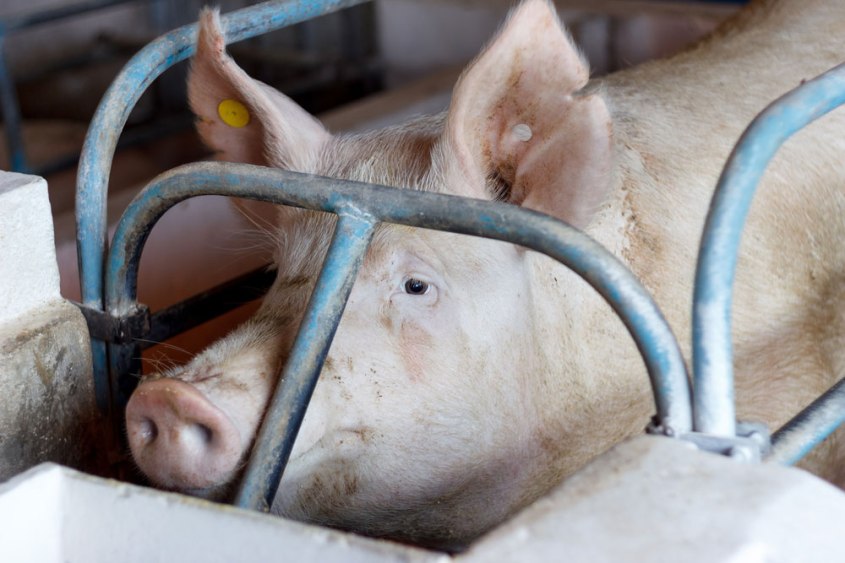
Rochester, NY: A New Trump administration rule that largely deregulates pig slaughter operations will increase fecal contamination; diseased pigs being allowed for human consumption; toenails, hair and abscesses allowed into meat; and animal mistreatment, according to a new sworn statement by a federal slaughterhouse inspector.

schweine in USAjpg

The statement was filed in federal court late last Friday, April 10, in support of a lawsuit brought by seven animal and environmental protection organizations to challenge a U.S. Department of Agriculture (USDA) rule, and comes as slaughterhouses across the country shutter due to COVID-19 outbreaks, including Smithfield Foods’ Sioux Falls, South Dakota plant that is slated to increase line speeds and reduce federal oversight under the challenged rule.

The inspector, Jill Mauer, works inside Quality Pork Processors, a large Minnesota slaughterhouse that has served as a model for the USDA’s controversial move to reduce oversight of pig slaughter nationwide.
schwein. USjpg

In December, the Animal Law Litigation Clinic at Lewis & Clark Law School filed a lawsuit challenging the rule in federal district court for the Western District of New York in Rochester.

The plaintiffs are Farm Sanctuary, Animal Equality, Animal Legal Defense Fund, Animal Outlook, Center for Biological Diversity, Mercy For Animals, and North Carolina Farmed Animal Save.

The Center for Biological Diversity and Earthrise Law Center at Lewis & Clark Law School serve as co-counsel in the case.

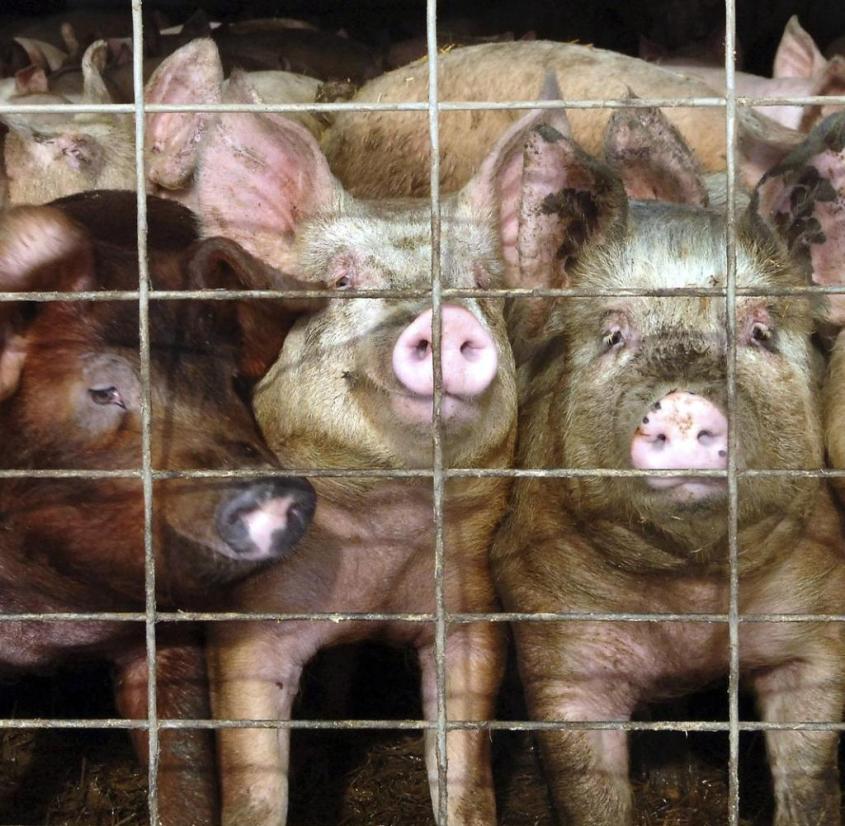
The USDA recently asked the court to dismiss the challenge, arguing that the rule’s harms are speculative—even though the agency itself determined that slaughterhouses responsible for 93% of pigs killed for food in the United States will take advantage of the rule, and will slaughter about 11.5 million more pigs annually.
Schweine-in-den-USA

In response, the plaintiffs on Friday fired back with a legal brief detailing why these harms are imminent. The brief was supported by a declaration from veteran USDA inspector Jill Mauer, which was obtained with the help of the whistleblower advocacy organization Government Accountability Project Food Integrity Campaign.
Mauer, who has worked under both the traditional inspection system and the deregulated system notes that under the deregulated system:

-Line speed increases consistently resulted in a greater number of hogs slaughtered daily and annually.
-Citations for fecal contamination have increased, exacerbating food safety concerns.
-Defects including toenails, hair, and abscesses are routinely allowed in meat intended for human consumption.
-Diseased pigs, including those with conditions that can trigger serious health problems in humans, have been allowed for human consumption.
schweine-stv

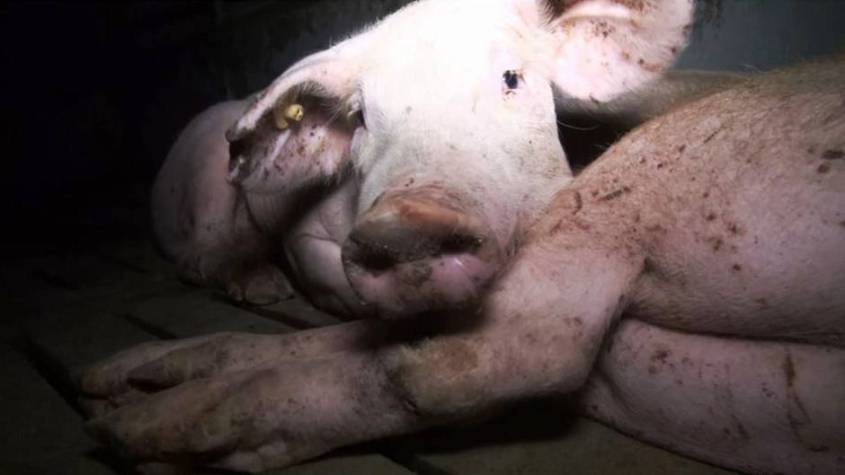
She has regularly observed pigs who were “driven to move faster than a normal walking speed, workers who have raised their paddles over their heads to strike the hogs, hogs vocalizing (a sign of stress) while moving, and heavy crowding of hogs.”
60361379_470564067050093_5629130201385402368_n
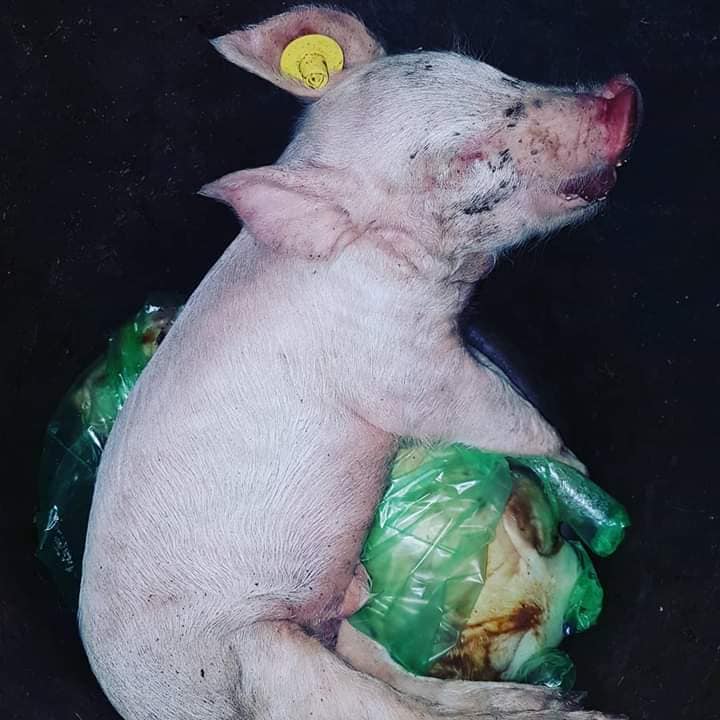
She has seen an increase in pig carcasses with scalding tank water in their lungs—an indication that they may have still been breathing when dropped in the tank.

The concerns set forth in her statement go beyond those that she expressed when featured on NBC late last year.
“The conditions Ms. Mauer observed are straight out of a nightmare,” says Sarah Hanneken, legal counsel for plaintiff Animal Equality. “But it isn’t a nightmare, it’s reality—a living nightmare for the animals and workers exploited at these facilities.”
60257546_884148911923358_2137264327369949184_n_002

As Delcianna Winders, who directs the Animal Law Litigation Clinic and, with her students, represents the plaintiffs, notes, “This inspector’s statement makes clear that this deregulatory rule sentences untold numbers of pigs to being beaten in an effort to keep pace with ever-increasing kill lines, and to have their throats slit and possibly even be boiled while still fully conscious. It also ensures that the number of potentially life-threatening pork products on the market will increase.”

“Ms. Mauer’s chilling observations of the increased harms to hogs and risks to human health drives home why this rule must be reversed,” said Hannah Connor, an attorney at the Center for Biological Diversity representing the plaintiffs. “Increasing slaughter line-speeds at these dangerous facilities will cause more animal suffering and pollution, degrade ecosystems, and speed the extinction crisis.”

slogan über schlachthof

Mauer’s attorney, Amanda Hitt of the Government Accountability Food Integrity campaign, added, “Jill is just the tip of the iceberg. Many more meat inspectors have reached out to my office echoing the same and more concerns about the new inspection system.”

The USDA has until April 24 to respond to this new filing.


https://animalequality.org/news/animal-equality-continues-to-push-back-on-usdas-controversial-slaughterhouse-rule/


My comment: Across the U.S., more than two-thirds of the water is contaminated with agricultural pollutants. Pig breeding in particular has skyrocketed in the past 25 years.

Female pigs are at their limit in the United States. On average, they have to give birth to 23 piglets a year. Their body can no longer withstand this. Sows mortality is increasing rapidly. It has almost doubled in the past three years!

Germany is the world’s third largest producer of pork – with 57 milion pigs in the year- after China and the USA.

As long as politics deliberately refuses to ban the production and trade of animal cruelty in factory farming, only the consumer can initiate change.

Those who boycott animal products and, instead of these, buy animal-friendly products damage the bloody business of traders and producers in the animal industry.

If no meat, milk and egg-containing products are eaten, the fewer animals are tortured (at least in the long term).
This is not even difficult, because today there is a wide range of animal-friendly and delicious plant-based products. They are now available in every supermarket.

schweine in ChinaThis picture is from 2007 and belongs to a report about a mysterious pig death in southern China:

“An unknown disease had killed hundreds of pigs at the time, the cages are indeed transport cages, probably to minimize contact”.

This is not how we, human animals, have been treated to minimize the risk of corona transmission.
Wherever in the world, animals have no rights and if epidemics like Corona break out among them, they are treated like a piece of shit.

My best regards to all, Venus