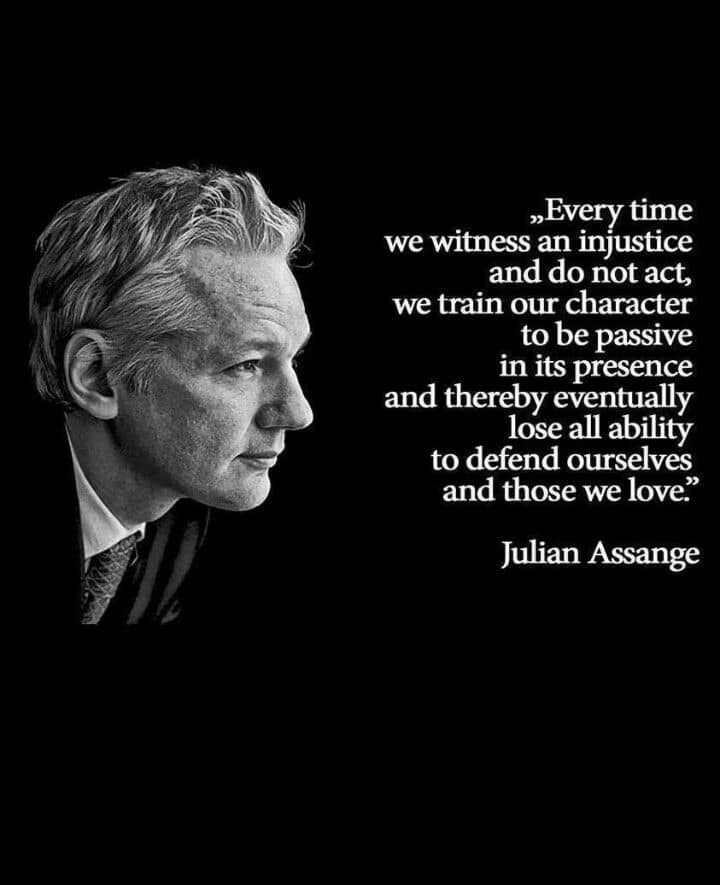
…therefore we fight against injustice, racism, and speciesism.
The defense of human rights is just as important to us as that of animal rights.
Have a good night, Venus
…therefore we fight against injustice, racism, and speciesism.
The defense of human rights is just as important to us as that of animal rights.
Have a good night, Venus
An action by the radical environmental movement Extinction Rebellion (XR) causes trouble in Great Britain. Now the government wants to take action against the group.
Activists ( more than 100 XR demonstrators) blocked two printing plants belonging to the Rupert Murdoch group (“The Sun”, “The Times”) on Saturday, which is why many British people did not get a daily newspaper.
“It is totally unacceptable to restrict public access to news in this way,” Johnson tweeted on Saturday.
The newspaper “The Telegraph”, which was itself affected by the blockade, now reports, citing government circles, that one of the considerations is to classify Extinction Rebellion as a criminal organization(!!).
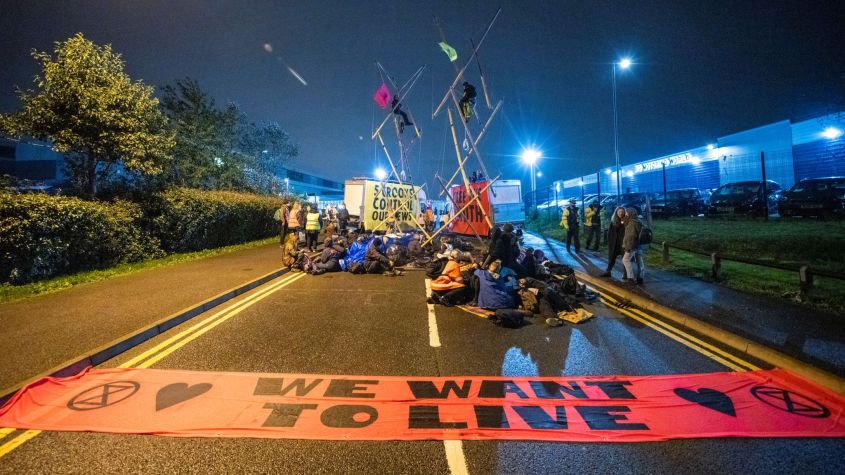
Prime Minister Boris Johnson and Home Secretary Priti Patel have asked their officials to take a “fresh look” at how this group should be classified by law.
Responding to criticism from Ms. Patel that their actions were an “attack on our free press” (!!!), XR said: “Our free press, society, and democracy is under attack – from a failing government that lies to us consistently, is becoming increasingly authoritarian, and is leading us towards four degrees of warming.”
Extinction Rebellion activist Gully Bujak, 27, said: “You cannot have a functioning democracy with a mainstream media that is ruled by a small, unrepresentative sect of society, who are in bed with politicians and the fossil fuel industry.
“The climate emergency is an existential threat to humanity. Instead of publishing this on the front page every day as it deserves, much of our media ignores the issue and some actively sow seeds of climate denial.
“They thrive off of polarization and division. They sow hatred in order to distract us, actively profiting from this division.
“To these papers, we say this: you will not come between us anymore. For a night we’re going to filter out the lies and take the power back. For a night we’re going to show the world that you are vulnerable, just like us.”
 The demonstrations prevented the distribution of millions of papers. Pic: XR
Statement from the organization XR UK about its action
5 Billionaires control over 70% of the British Media. Last night Extinction Rebellion groups blockaded the printing presses of The Sun, The Times, The Sun on Sunday, The Sunday Times, The Telegraph, The Sunday Telegraph, as well as The Daily Mail, Mail on Sunday, and The London Evening Standard.
These people and their corporations have purposefully failed to accurately report on the climate & ecological emergency.
Their consistent manipulatIon of the truth to suit their own personal and political agendas must be stopped.
We’re not moving forward at the speed we need to turn the climate and ecological emergency around. We’re trapped somewhere between acceptance and the reality of just how bad the situation is.
The right-wing media is a barrier to the truth, failing to reflect the scale and urgency of the crisis and hold governments to account. Coverage in many of the newspapers printed here is polluting national debate on climate change, immigration policy, the rights and treatment of minority groups, and on dozens of other issues.
They distract us with hate to maintain their own power and wealth, profiting from our division. We can’t move forward until this barrier falls.
The truth is being held hostage and so are we. We need to Free the Truth.
We Want To Live | UK Rebellion | https://rebellion.earth/uk-rebellion-…
On my part … bravo #Extinction Rebellion! excellent work!
And Prime Minister Boris Johnson, actually a faithful copy of Trump, must release Julian Assange if he wants to prove to us that he is a supporter of the free press.
Because Assange, as a fair journalist, did nothing else than bring the truth to light.
My best regards to all, Venus
Despite the global plunge in oil prices, a major pipeline that would carry oil 900 miles across East Africa is moving ahead. International experts warn that the $20 billion projects will displace thousands of small farmers and put key wildlife habitat and coastal waters at risk.
 The East African Crude Oil Pipeline will stretch 900 miles from Lake Albert in western Uganda to the Tanzanian port of Tanga on the Indian Ocean. Map: Yale Environment 360 / Source: Total
Imagine a tropical version of the Alaskan oil pipeline. Only longer. And passing through critical elephant, lion, and chimpanzee habitats and 12 forest reserves, skirting Africa’s largest lake, and crossing more than 200 rivers and thousands of farms before reaching the Indian Ocean — where its version of the Exxon Valdez disaster would pour crude oil into some of Africa’s most biodiverse mangroves and coral reefs.
Such a project is ready for construction, to bring to the world oil from new oil fields in the heart of Africa.
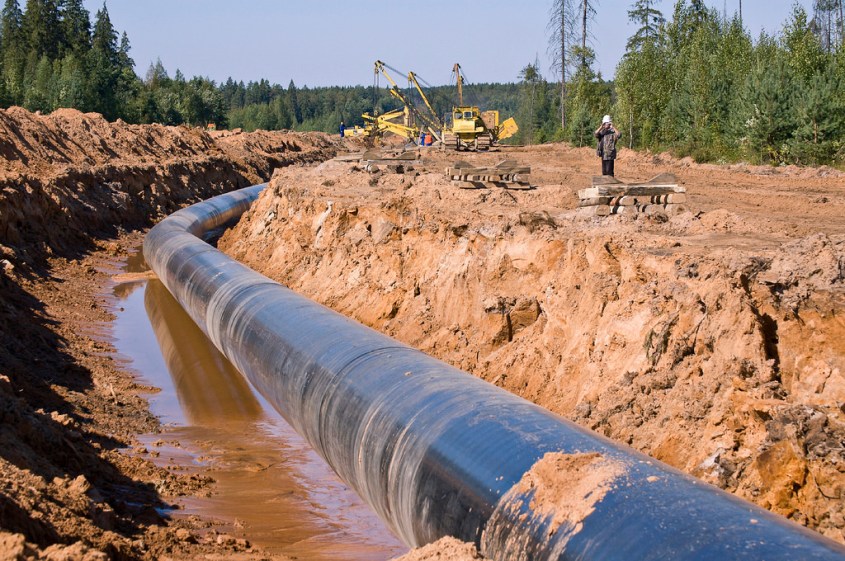
It is the East African Crude Oil Pipeline.
The middle of a global pandemic, during which oil demand is in freefall and prices at rock bottom, might seem an odd moment to boost the world’s oil production.
But the petrochemicals industry is always looking for new reserves to replace those being exhausted. And two oil fields discovered on the shores of Lake Albert, which straddles the border between Uganda and the Democratic Republic of the Congo, are currently among the biggest and cheapest new reserves available. They contain an estimated 6 billion barrels, roughly half the size of Alaska’s Prudhoe Bay field.
Construction work has begun at the Kingfisher and Tilenga oil fields, where the China National Offshore Oil Corporation and French giant Total intend to sink 500 wells.
They have already spent an estimated $4 billion on infrastructure and made enemies among local communities by grabbing land and providing paltry compensation.

NGOs estimate the carbon footprint of the oil from the pipeline, once burned, will be rough that of Denmark, and thousands of farmers will lose their land.
WWF Uganda, in a 2017 report, warned that the pipeline “is likely to lead to significant disturbance, fragmentation and increased poaching within important biodiversity and natural habitats” populated by elephants, lions, and chimpanzees that are on the international Red List of threatened species.
It “has a greater environmental and social risk” than other pipelines planned in the region, said Paolo Tibaldeschi of WWF Norway, and author of the 2017 report. It is “longer, and crosses a hilly and seismic region near Lake Victoria, and several biodiversity habitats down to the coast,” he noted.
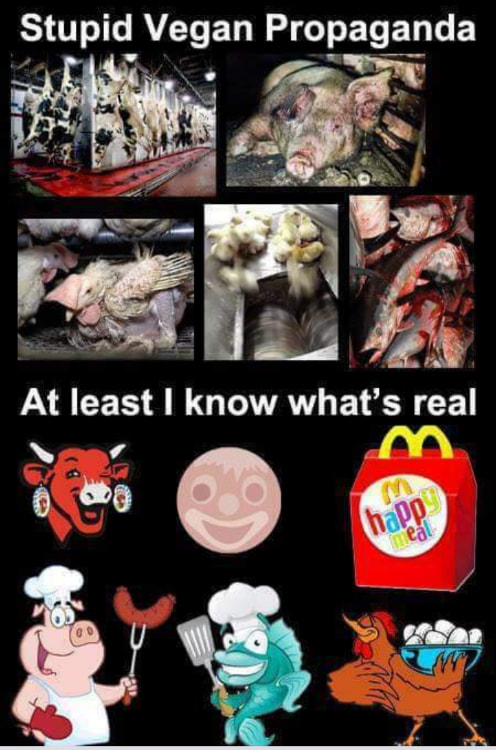
…then people will end up believing them
Propaganda for meat consumption must be made popular
It is successful when it has reached the lowest level of intelligence for which is actually planned for
Have a good night, Venus
This is the story of a chic, fluffy wool sweater. It belonged to a lamb. And this little lamb had a butt.
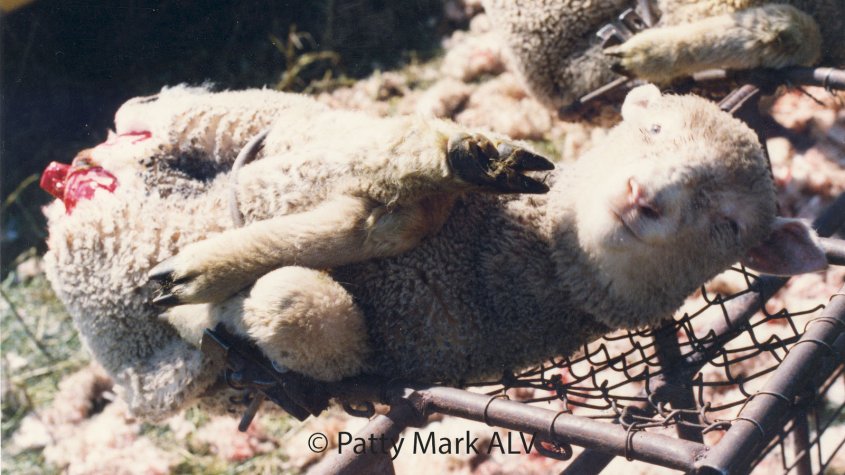
They once lived in Australia, which is where 90% of the fine wool used in the clothing industry worldwide comes from.
But the fluffy lambs have natural enemies. Flies that lay their eggs in the many folds of skin around the lamb’s butts. Parasites.
Mulesing / ˈmjuːlziŋ / is the method that wool producers want to prevent this fly infestation.
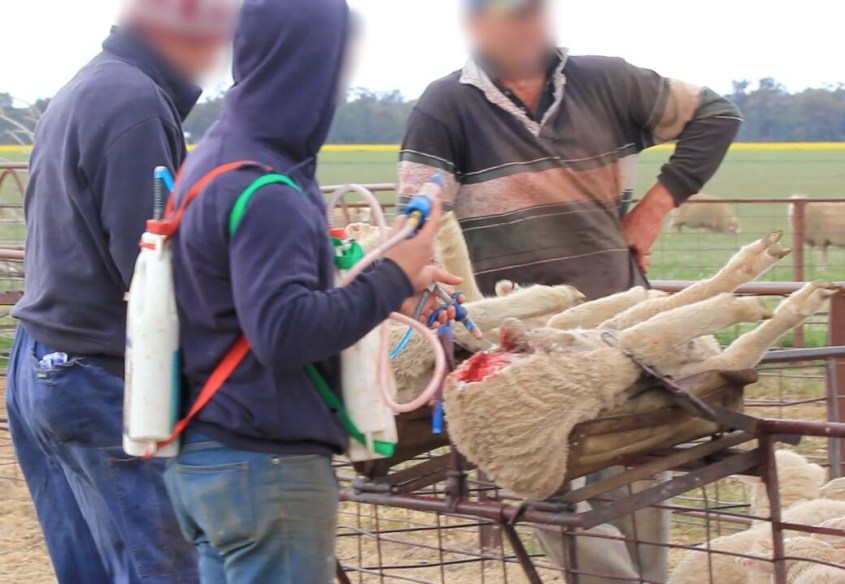
They strap on the little lamb, who is a few weeks old, and cut off the skin around his but. This is done with scissors and usually without anesthesia.
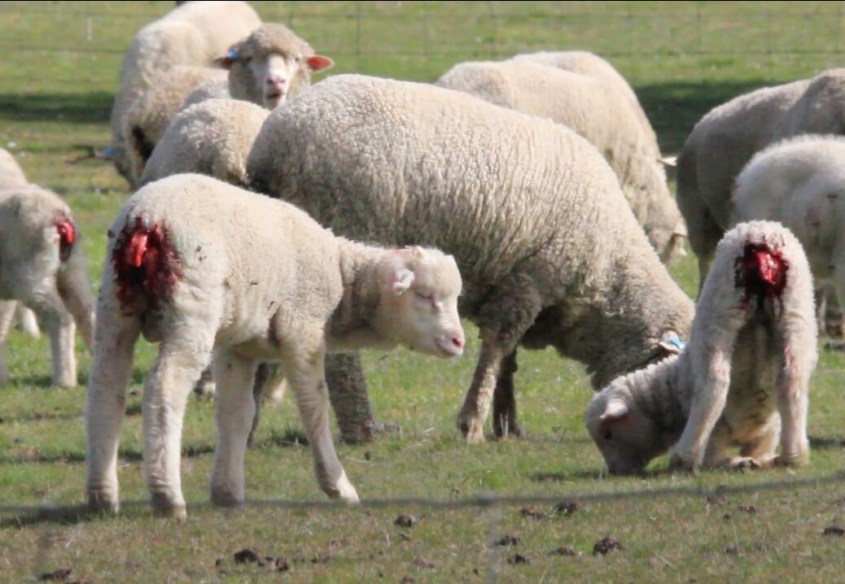
The bleeding lamb runs back to his flock in shock. In many cases, despite the mutilation, the flies come back.
The lamb suffers for our clothing. The wool sweater was once part of a living being with emotions, fear, and pain.
But there is a solution: sheep that are naturally less prone to fly attacks.
Switching to these sheep is an expense for wool producers, but it is feasible.
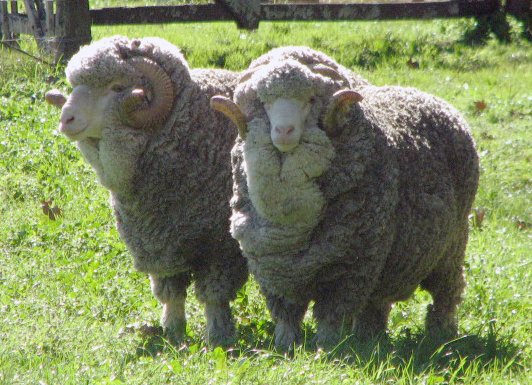
Result: “Wool with butt”
The more people ask for “wool with butt”, the more brands will fall back on this wool. And no fluffy lamb has to endure mulesing anymore.
Do you only consider “wool with butt?
https://wollemitpo.vier-pfoten.de/
Petition: https://help.four-paws.org/de-DE/jetzt-mulesing-stoppen
(Petition text, also as information): Very few people know that part of a sheep’s butt was cut away without anesthesia to make your woolen sweater or coat. In fact, this is a common practice on the many sheep farms where merino sheep live for wool production.
But there are already painless alternatives.
Much of the wool used by international clothing brands comes from Australian sheep. These suffer from a problem: in recent years they have been bred to have as many skin folds as possible. Because it was assumed that a lot of skin folds meant more wool.
It is precisely these skin folds that become a problem for animals.
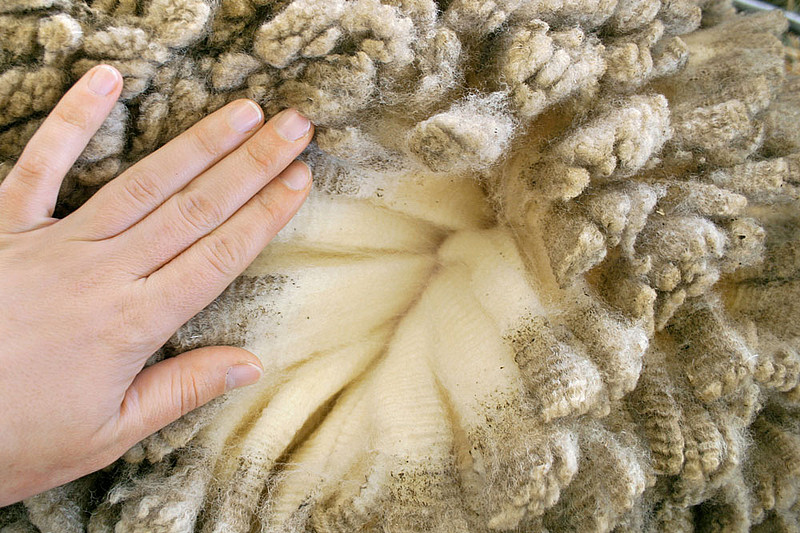
Fly maggots settle in the region around the butt and cause painful inflammation and can even be fatal.
The farmers, therefore, resort to so-called mulesing: In this practice, large folds or strips of skin are cut away from the butt with knives. Without anesthesia and in tremendous pain!
However, there are already alternative methods that make mulesing superfluous and can curb fly maggot infestation without pain and trauma to the animals.
Many consumers are unaware that by buying merino wool clothing they are supporting the cruel process of mulesing.
Many producers of merino wool have already taken the right step and no longer allow this outdated practice. However, the rest of the industry has to follow suit. The time has come for more brands to step up their supply chain and get rid of mulesing.
With your signature, call on clothing brands to work with the wool industry to end the cruel practice of mulesing. Together we can rethink the industry and save countless sheep from the pain.
Thank you for signing our petition
Petition: https://help.four-paws.org/de-DE/jetzt-mulesing-stoppen
One more Petition on the same subject but from Humane Society International: https://action.hsi.org.au/page/47045/petition/1
And I mean…New Zealand introduced a ban on mulesing on October 1, 2018.
In Australia, there is only a voluntary ban in which each sheep farmer can decide for himself whether his sheep are mulched or not.
Many large fashion chains, including H&M, Hugo Boss, and Adidas, distance themselves from “mulesing wool”.
However, I wonder how these many and large chains can control this.
Australia is the world’s largest wool exporter, so it cannot be guaranteed whether wool that comes from this country is really mulesing-free or not.
This animal suffering can be ended for good by not buying wool.
Materials such as organic cotton, modal, hemp, or polyester fleece also keep us warm and are also a great alternative for knitting enthusiasts.
My best regards to all, Venus

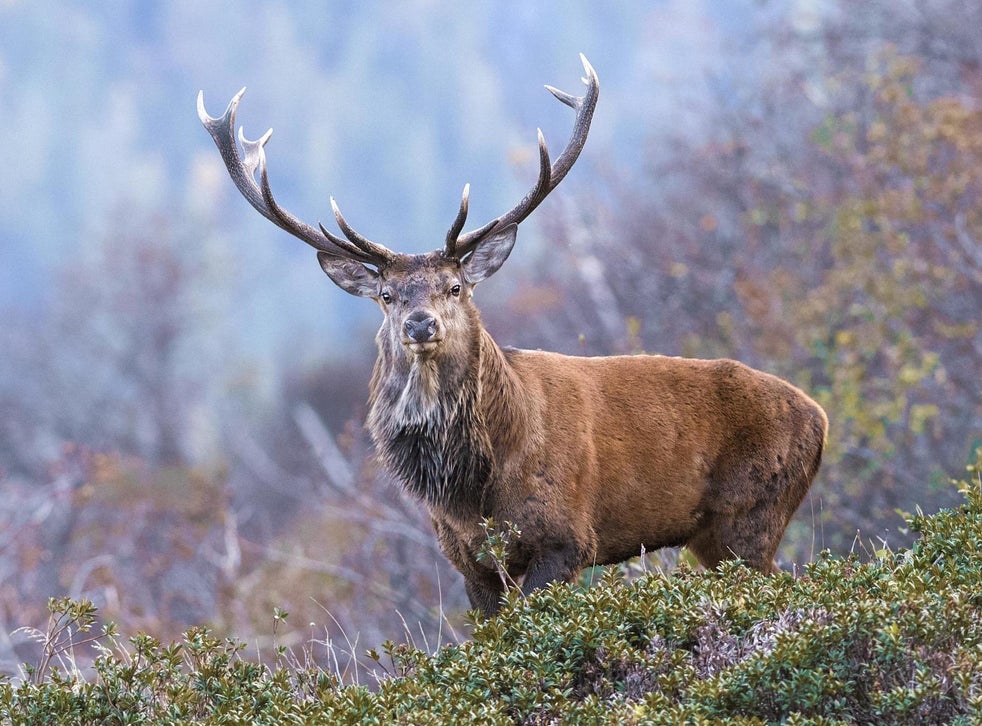
The Devon and Somerset Staghounds met three times a week before the coronavirus lockdown(iStock)
WAV Comment – I think we can speak for the majority of UK citizens who will be very bummed off when they hear about this. Ex hard working older folk around the country cannot afford to pay a TV license; and yet government money is handed out like sweets to hunt scum. There is something wrong big time ! – and its called ‘a government’.
Exclusive: Numerous hunts around UK believed to have used government lending schemes during pandemic
2 days ago
A stag hunt has been handed a £10,000 grant and a £50,000 loan from taxpayer-backed schemes that help struggling businesses survive the coronavirus pandemic.
The Devon and Somerset Staghounds is understood to be one of a number of hunts that have won grants or taken out loans through government programmes during the Covid-19 crisis.
During lockdown, hunts have been unable to carry out their usual fundraising activities such as point-to-point horseracing, which pays for expenses such as hound kennels and staff wages.
The Devon and Somerset pack – which rides on horseback to chase and shoot deer – earlier this year applied to its local district council for £10,000 of public cash, which it was awarded, a hunt report revealed.
The hunt, which already had £40,000 in bank accounts, does not have to repay the grant.
Local authorities administer emergency grants for businesses in England, through the small business grant fund and the discretionary grant fund, set up to try to keep traders afloat as economic activity crashed.
The Devon and Somerset Staghounds also used the government “bounce back” loan scheme to borrow £50,000.
The scheme is aimed at businesses that are losing income because of the Covid-19 outbreak. The borrower does not have to make any repayments for the first 12 months, during which the loan is interest-free.
The pack said its income from April to June had been down by 34 per cent on the same period last year but that some of its lost income had been replaced by the £10,000 grant from Somerset West and Taunton district council.
The report by the masters states: “The hunt has taken advantage of a government-backed unsecured Bounce Back loan of £50,000, which is free money for 12 months. This money will be paid back before the interest-free 12-month period ends.
“The money will sit as a form of overdraft facility should it be needed during the next year. Excluding this loan, the hunt has £30,000 in the bank plus a further £10,000 sitting in the Hunt Club account.”
about:blank about:blank javascript:void(0) The League Against Cruel Sports says it understands that hunting groups have encouraged packs to apply for government support to to recover lost income during the pandemic, and that they have widely been accepted.
“Most hunts trade as companies or commercial organisations that make a profit,” said spokeswoman Emma Judd.
Somerset Wildlife Crime, a group that monitors and reports hunts, illegal badger persecution, trapping, snaring and poaching on Exmoor, told supporters: “Bet you’re all delighted to know your council tax is propping up the stag hunts.”
Although the Hunting Act 2004 outlawed the hunting of wild mammals with dogs, it allows hunters to use up to two dogs to hunt wild animals for “observation and study”.
The Devon and Somerset uses this legal exemption to chase deer across Exmoor and the Quantock Hills, helped by supporters in vehicles, before shooting them, insisting it is not illegally hunting for sport.
The group, which usually meets three times a week in season, says it has the support of farmers and landowners in managing the large deer herd on Exmoor.
Dozens of social-media users were outraged at the grant and loan.
One Facebook user commented: “Money should go into public services – never right.”
Others argued residents should withhold some of their council tax.
One said: “Outrageous when we have so many people needing help at this time.”
The Independent has asked the Devon and Somerset Staghounds to comment on the grant and the loan, and has asked the Countryside Alliance to clarify how many hunts in the UK have been given coronavirus support loans.
The Independent also asked Somerset West and Taunton district council on what basis the £10,000 grant was awarded.
None of the three groups had responded before publication.

Australia’s environment department gave permission for 232 birds to be exported to Germany, including threatened species such as Carnaby’s black cockatoos. Photograph: blickwinkel/Alamy.
Sussan Ley announces audit after Guardian Australia revealed her department allowed the birds to be exported to Germany
The environment minister, Sussan Ley, has appointed an auditor to investigate her own department over the export of hundreds of native and endangered parrots to Germany over a three-year period.
Guardian Australia revealed in 2018 that the Australian government permitted the export of hundreds of birds to a German organisation despite concerns they were being offered for sale rather than exhibited.
The Berlin-based Association for the Conservation of Threatened Parrots (ACTP) received permission to receive 232 birds between 2015 and November 2018. It was more than 80% of all the live native birds legally exported from Australia in the same period.
The exports included threatened species such as Carnaby’s and Baudin’s black cockatoos, worth tens of thousands of dollars each.
Ley said on Wednesday she had asked the secretary of the department of agriculture, water and environment, Andrew Metcalfe, to launch an independent investigation into all decisions by officials relating to the export of native and exotic birds, specifically those that went to the ACTP. Financial services firm KPMG is conducting the audit.
She said Australians needed to be able to have faith that the system was protecting wildlife. “I am disgusted by suggestions of native animals being sold overseas for exhibition, and then actually being used for profit,” Ley said.
The review will examine management of native bird exports, the circumstances in which permits were issued allowing exports to ACTP, and the department’s capacity to regulate the system.
Guardian Australia’s investigation revealed the environment department approved the transfer of more than 200 birds to Berlin over three years on the grounds they would be used for a zoo exhibition despite the organisation having no facilities that were freely open to the public.
Private messages on social media showed native Australian birds apparently from ACTP had been offered for sale for hundreds of thousands of dollars. The German federal agency for nature conservation said at the time it was aware of those offers. With respect to advertisements for a pair of glossy black cockatoos imported from Australia by ACTP it said it had looked into the offers and found the birds had been legally imported and bred, and there were no limits on trade.
Both Australia and Germany are signatories to the convention on international trade in endangered species (Cites), which governs the importing and exporting of rare and endangered birds.
Australian law says no native species can be exported for commercial purposes.
The parrots in this case were purchased legally from local breeders and birdkeepers, and exported after the environment department recognised ACTP as a zoo.
The species exported included glossy black cockatoos, yellow-tailed black cockatoos, and a variety of lorikeets.
Multiple emails from the Australian environment department to ACTP, obtained by Guardian Australia under freedom of information laws, revealed concerns that exported birds, or their offspring, would be sold.
They showed department officials repeatedly relied on statements written by Cites officials at the German federal agency for nature conservation, and by ACTP itself, to verify the nature of the organisation.
Departmental correspondence noted that the Australian aviculture industry had expressed concerns about the number of birds sent to ACTP. A briefing addressing these concerns was sent to the then environment minister, Josh Frydenberg, in October 2017.
Responding to the previous investigation the head of ACTP said the organisation was “extremely careful to follow all the rules and regulations set by both our German authorities and those of the other countries whom we deal with”. He accused Guardian Australia of harassing ACTP associates and fabricating stories about the organisation
The environment department told Guardian Australia in May that its inquiries had not uncovered any evidence of breaches of permit conditions or international environmental law.
Ley said on Wednesday that she did not know whether there had been breaches, but there had been “too much conjecture for too long”.
“We need to put a line under it once and for all,” she said. “If there are lessons to be learned, we need to learn them. Ultimately, I want people to have confidence in the process.”
The Queensland Coalition MP Warren Entsch, who raised concerns about the issue as early as 2017 and has repeatedly called for an independent investigation, welcomed Ley’s decision and said an audit was long overdue.
“What I want to come out of this review is that we return integrity to the process of zoo to zoo transfers,” Entsch said. “And I want the officers that facilitated this process to be held accountable.”
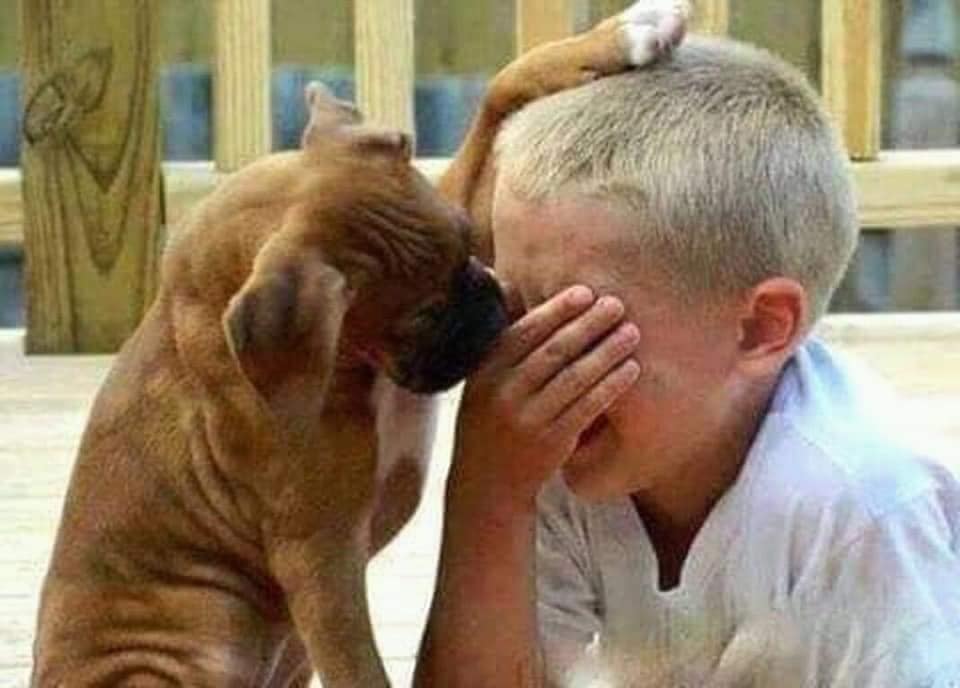
and when you are sad..
and when all the good spirits have left you …
only your loyal friend stays with you.
Never betray him!
Have a good night , Venus

The carcass of a cow floats in waters, about 120 kilometers northwest of Amami Oshima in the East China Sea. Japanese rescuers found a second crew member and multiple dead cows Friday in waters where a livestock ship capsized and sank during stormy weather two days earlier.
Photo: The 10th Regional Japan Coast Guard Headquarters via AP
4/9/20
We have been doing a bit more work into the very recent sinking of the ‘Gulf Livestock 1’ vessel near to Japan.
Our Links:
https://worldanimalsvoice.com/2020/09/03/gulf-livestock-1/
Latest news –
Japan’s coast guard rescued a second ‘survivor’ who was unconscious and floating face down in a dinghy on Friday. The man, whose identity was unknown, was taken to a hospital where he was later pronounced dead, said Takahiro Yamada, a spokesman for the regional coast guard headquarters. Mr Yamada also stated that rescuers had spotted dozens of cow carcasses floating in the area. We know the crew of ‘Gulf Livestock 1’ originally sent a distress signal early Wednesday.
Regarding the vessel before the incident, there are a few interesting issues that have arisen from further investigation:
AMSA’s website showed Gulf Livestock 1 was detained by the Australian authorities for three days in May 2019, because of issues related to its navigation Electronic Chart Display and Information System. The report cited both a lack of up-to-date charts and training for officers using the system.
Today, 4/9/20, it appears that Maritime New Zealand found no issues with the livestock ship, Gulf Livestock 1, before it left the port of Napier (New Zealand) last month. The ship with 43 crew and nearly 6000 cattle on board sailed from Napier on 14 August bound for China.
Maritime New Zealand said the vessel was checked on arrival and prior to departure from Napier, and no irregularities were found.
The marine regulator said livestock carriers were checked for stability and the conditions of the livestock pens.
At the same time, the animal activist group SAFE is calling for the minister of agriculture Damien O’Connor to be held to account over the sinking of Gulf Livestock 1.
We wonder why ? – So far, O’Connor has declined all media requests on the issues.
Yesterday, the Ministry for Primary Industries (MPI) temporarily suspended consideration of cattle livestock export applications.
Video footage supplied to us today by activist Jane in England shows another issue which English campaigners have been attempting to get official UK authority action on for many years. It concerns an ex Soviet battle tank RIVER vessel called the ‘Joline’ which is operated by a Dutchman to take British livestock across the English Channel into Europe for slaughter. It should be remembered that the Joline is a river use vessel and was not designed for crossing the English Channel as it does now.
UK activists have raised concerns about the use of the Joline as an animal transporter carrier for many years. At WAV it is thought that as long as it (Joline) does not bury human victims on the sea floor; the vessel and its animal ‘cargo’ will continue to be used. In our opinion; the authorities do not have the guts to stop it by taking action.
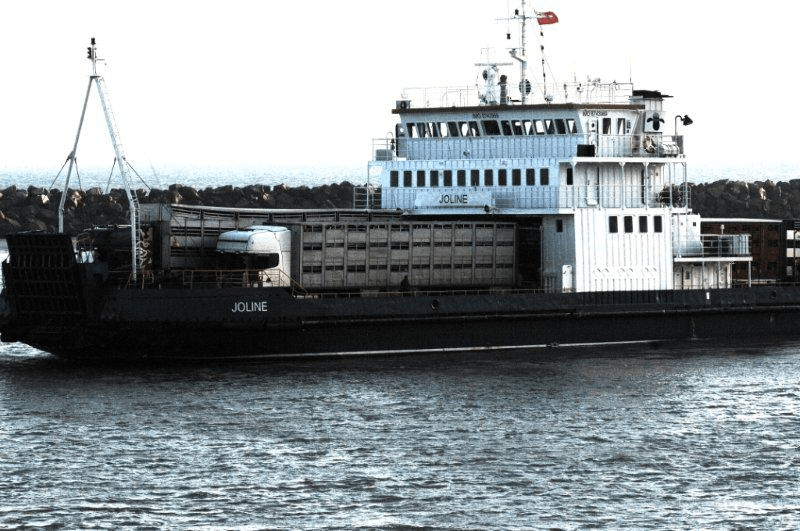
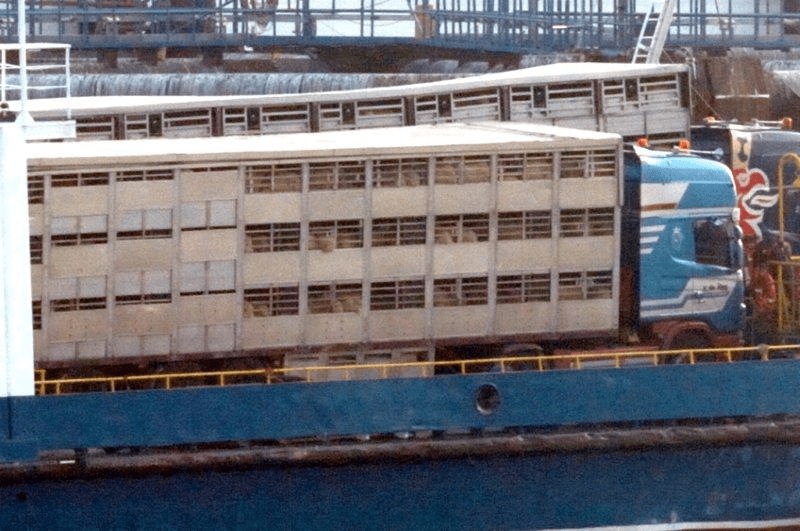
Above – the Joline. Note openess and low level of deck. Trailers are loaded with live animals, Photos: Val Cameron.
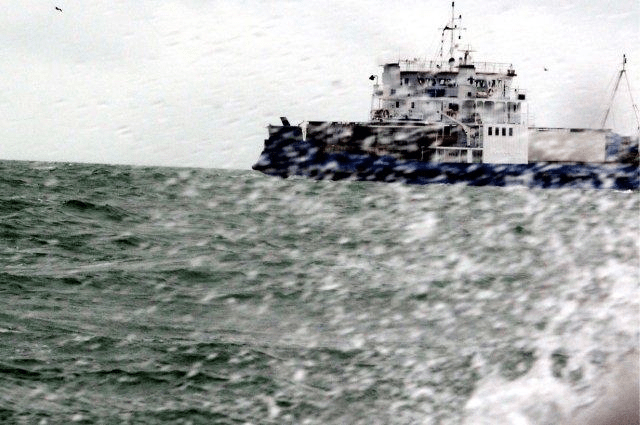
Above – the Joline in the English Channel in rough weather. Note loaded livestock transporters on deck.
Here at WAV it is also considered that the New Zealand Minister would never have banned a single animal transport if the accident off Japan had not drowned 43 human animals. There are just a few basic, simple words for the other 6,000 non human animals that drowned and died such terrible deaths. The ban in NZ now, in which O’Connor has declined all media requests on the issues we mention, has been done solely out of public pressure, and not out of philanthropy, or ensuring the welfare of animals. Very little is said for the 6,000 sentient beings who lost their lives; only for the 43 human beings carried by the vessel.
We would hope that the relatives and families of the lost crewmen who vanished the other night would show solidarity with us simply because we have a common enemy; the live export mafia. Sadly, but probably; the shipping industrialists will compensate and comfort them with the fact that their loved ones were ‘victims of a typhon’, that seldom happens, but it can happen.
Very little, or nothing, will be said about the technical defects or as we show above, for June 2019, the vessel’s departure was delayed for a week because of “stability and navigation issues identified by the Australian Maritime Safety Authority (AMSA).” Most of the crew who perished are Filipino; their families; probably like them, are most likely poorer people who cannot pay lawyers.
So it looks as if the mafia of the animal transport industry will win again, by banging out a few nice words; making excuses for defects, and as always; simply ignoring the deaths of thousands of animals they are allegedly responsible for. Words mean little; but actions mean a lot.
We will continue to fight for the paltry injustice served to the animals – the victims of the money grabbing meat makers. I have done it with many others for the last 30 years; so tomorrow will be no different for me.
Regards Mark
The hunt for dolphins and other small whale species begins again off Japan’s coasts. In the run-up to the drive hunt, which lasts from September to March, measures were taken against possible protests in the whaling town of Taiji, where most of the dolphins are caught.
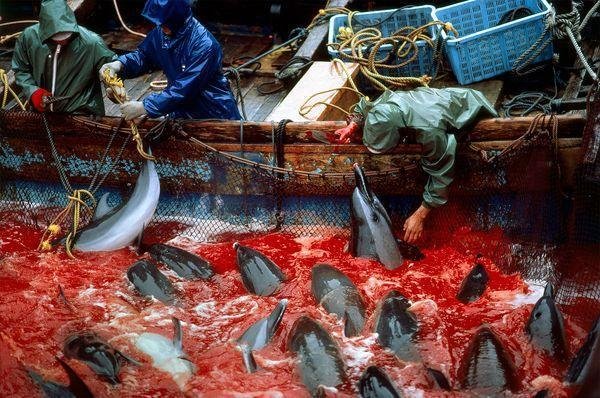
The animals are cornered by several fishing boats in driven hunts. The fishermen hit metal pipes that protrude into the water to frighten the dolphins. The dolphins try to escape this noise and flee to nearby bays.
There they are encircled – and their traders can choose the most beautiful and strongest animals for dolphin shows. Dolphins that are not selected for the dolphinariums are easy prey for fishermen. They are brutally slaughtered with harpoons, spears, or knives.
A live dolphin is worth up to $ 150,000, one dead 600 dollars.
According to local media, emergency services trained to intercept small boats.
Drones were also banned in this year. The police set up a temporary guard for the duration of the hunt.
In the picturesque lagoon near the small whaling town of Taiji around 700 kilometers south of Tokyo, animal trainers sort out the most beautiful specimens on behalf of dolphinariums at home and abroad.
Animal rights activists call prices of up to $ 150,000 each. Then a brutal slaughter begins.
Fishermen drag the wildly wriggling animals, which were not sorted out for sale, in three or four groups, hanging on the side of motorboats, into a neighboring lagoon – while doing turning maneuvers they drive over the captured dolphins. Others are slaughtered with spears, hooks, and knives in the bay, which is closed to the public.
These gruesome scenes repeat themselves year after year between September and March.
Continue reading “Japan, Taiji: Genocide of another species”
 World Animals Voice